Wasp nest under ground in Blue Mountains
While wandering around the Blue Mountains yesterday, I came across a patch of ground that had lots of little holes in it. Ants, I thought. To my surprise, a flying insect zoomed down to the ground near me, descended into one of the holes, then came out again backwards and ejected a stream of sand, before going back down the hole. This happened a number of times, so I took a video:
A number of other insects arrived too, and dived into the surrounding holes. I think they’re wasps. Evidently Australia has around 10,000 wasp species, so it’s a little hard to identify this particular one. If anyone knows, I’d love to hear more about this insect.
Date spotted: 1 December 2019 (summer)
Location: The track up to Anvil Rock Lookout, Blue Mountains: 33°35’43.8″S 150°20’17.8″E
Honeydew crystalised into lerp on Australian bushes
Yesterday I was walking through an area of bush near Sydney, when I noticed that a few of the bushes were encrusted with small white blobs:

These are lerps, created by tiny psyllid bugs as a protective covering. The psyllids absorb sap from leaves, process the nutrients in the sap, then excrete the excess sugars as honeydew. The honeydew crystalises to form a kind of hut, the lerp, which the bugs can shelter in.
I’ve seen lerps before, but never in such abundance. We’ve had a number of days of hot, dry weather, followed by a cooler night with some rain. Perhaps the bugs needed protection from the hot weather and dry winds? Or perhaps the relief of the cooler night with rain meant that the bugs could absorb more fluid and thus produce more sugary waste.
Whatever the reason, the little sugary blobs are pretty when viewed from close up:
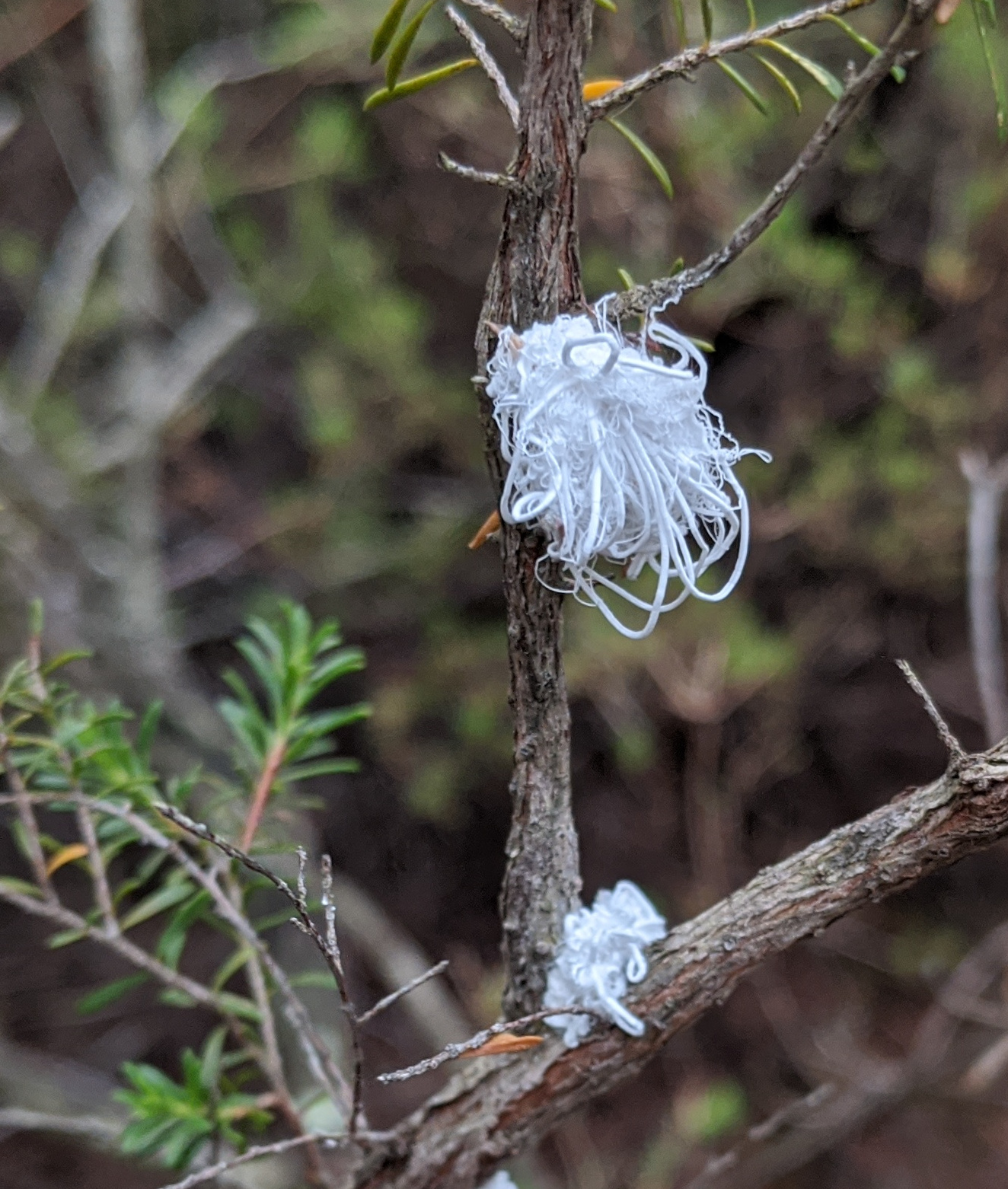
This one looks like a fairy hat:
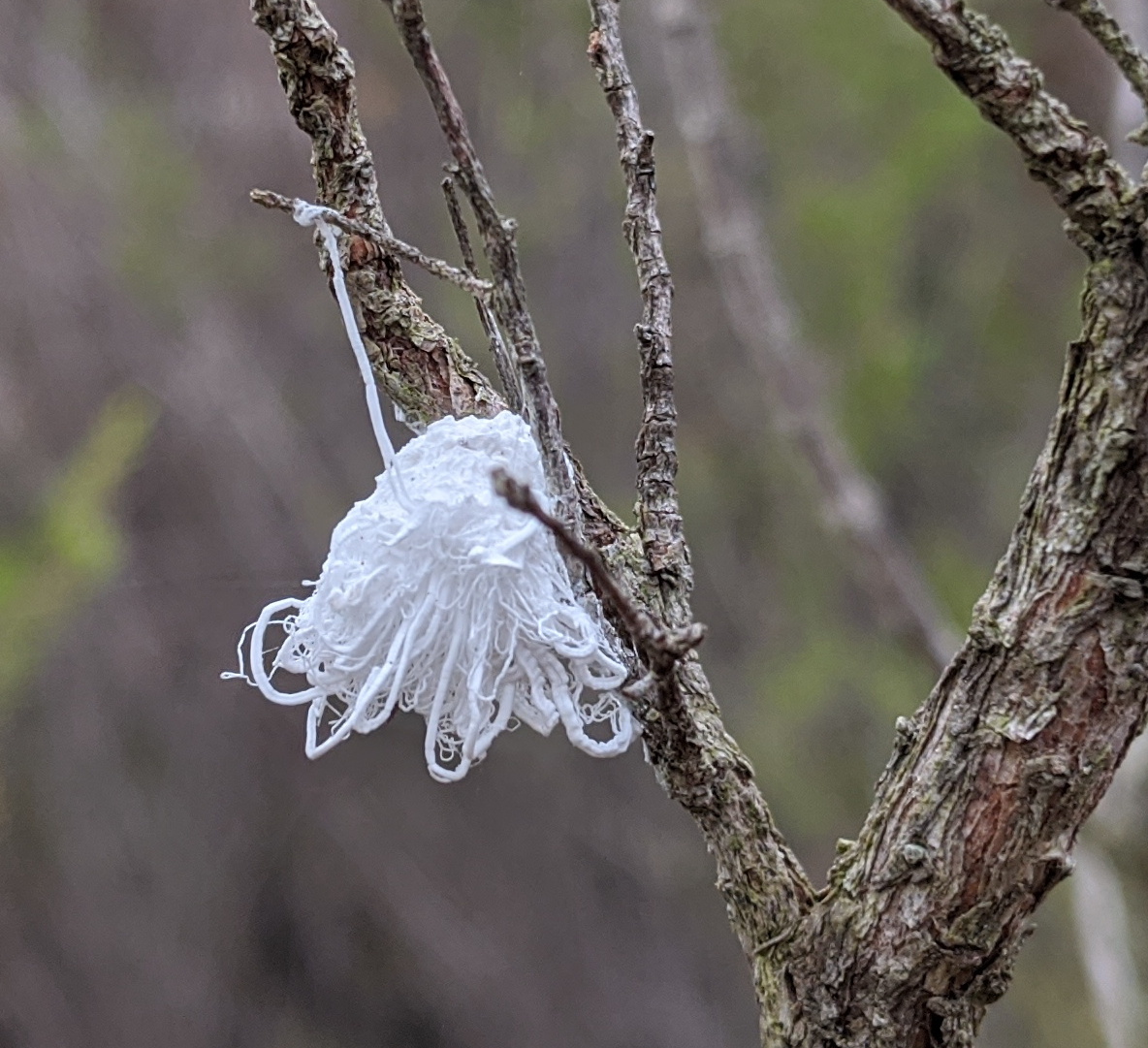
And another:
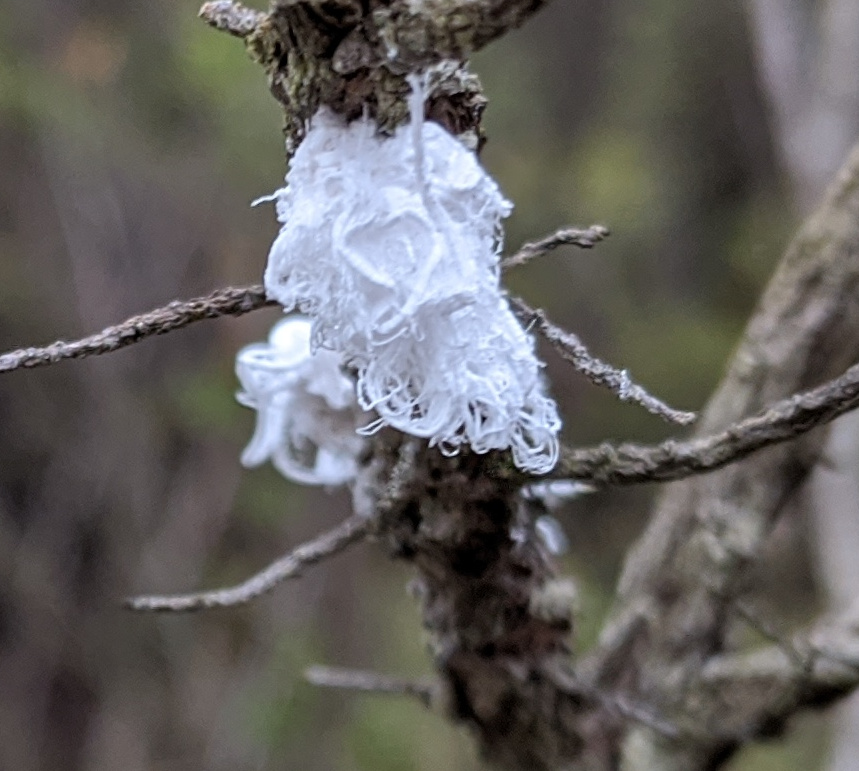
The psyllid bug’s strategy of hiding inside the lerp is not entirely fail safe. The sugary substance is deliciously sweet, and birds are very fond of it. I’ve seen a Red Wattlebird with lerp stuck to its beak, and a Spotted Pardalote busily snapping lerp off leaves.
Yellow-tailed Black Cockatoo calling while keeping a lookout
Yesterday I saw a group of four Yellow-tailed Black Cockatoos. I love coming across these large birds, as they impart a feeling of calm and grace. I took a video of the bird that seemed to be the designated lookout, sitting on a branch while the others foraged on the ground. You can hear the eerie call that the bird makes. It sounds rather like a door opening on rusty hinges!
Common name: Yellow-tailed Black Cockatoo
Scientific name: Calyptorhynchus funereus
Approximate length: 65 cm
Date spotted: 9 November 2019 (spring)
Location: Manly Dam Reserve, New South Wales, Australia: 33°46’40.0″S 151°14’50.2″E
White-cheeked Honeyeaters and New Holland Honeyeaters hanging out together
Until today, I didn’t realise that we have two very similar types of honeyeaters in the area. I’ve seen and photographed New Holland Honeyeaters before. Yesterday, I took some photos of a number of birds, thinking they were all the same type.
Looking at the photos today, I noticed that some birds in the group have black eyes, some white, and the black-eyed birds seem shorter and more compact than the others. It turns out that the group included White-cheeked Honeyeaters, which I haven’t knowing seen before. They’ve probably been around all along, but I just didn’t notice.
This is a New Holland Honeyeater. Notice the white eye, and the smallish white patch near the beak:

Another New Holland Honeyeater:

Whereas the next one is a White-cheeked Honeyeater. Notice the black eye and the large white patch on the cheek:

This video shows a couple of White-cheeked Honeyeaters. You can hear the calls of the other birds around them:
While I was watching the group of birds, they would all hang out together in their chosen area of bushy cover, then emerge to go foraging in the nearby trees. Every now and then, something would alarm them, and they’d all dive for cover again. Standing near them was a little alarming, as they move extremely fast and I could hear them hitting the leaves all around. After a few moments, they’d emerge and repeat the pattern. The next video shows one such episode:
Common name: White-cheeked Honeyeaters and New Holland Honeyeaters
Scientific name: Phylidonyris nigra and Phylidonyris novaehollandiae
Approximate length: 16-19 cm and 17-19 cm
Date spotted: 9 November 2019 (spring)
Location: Manly Dam Reserve, New South Wales, Australia: 33°46’55.8″S 151°15’26.2″E
The strange case of the hooded Variegated Fairy-wren
I spotted this bird at Manly Dam this morning. It’s a female Variegated Fairy-wren, cunningly positioned half in shadow to give itself a dark grey hood. I was excited, thinking I may have found a very unusual bird, until I realised what was happening!


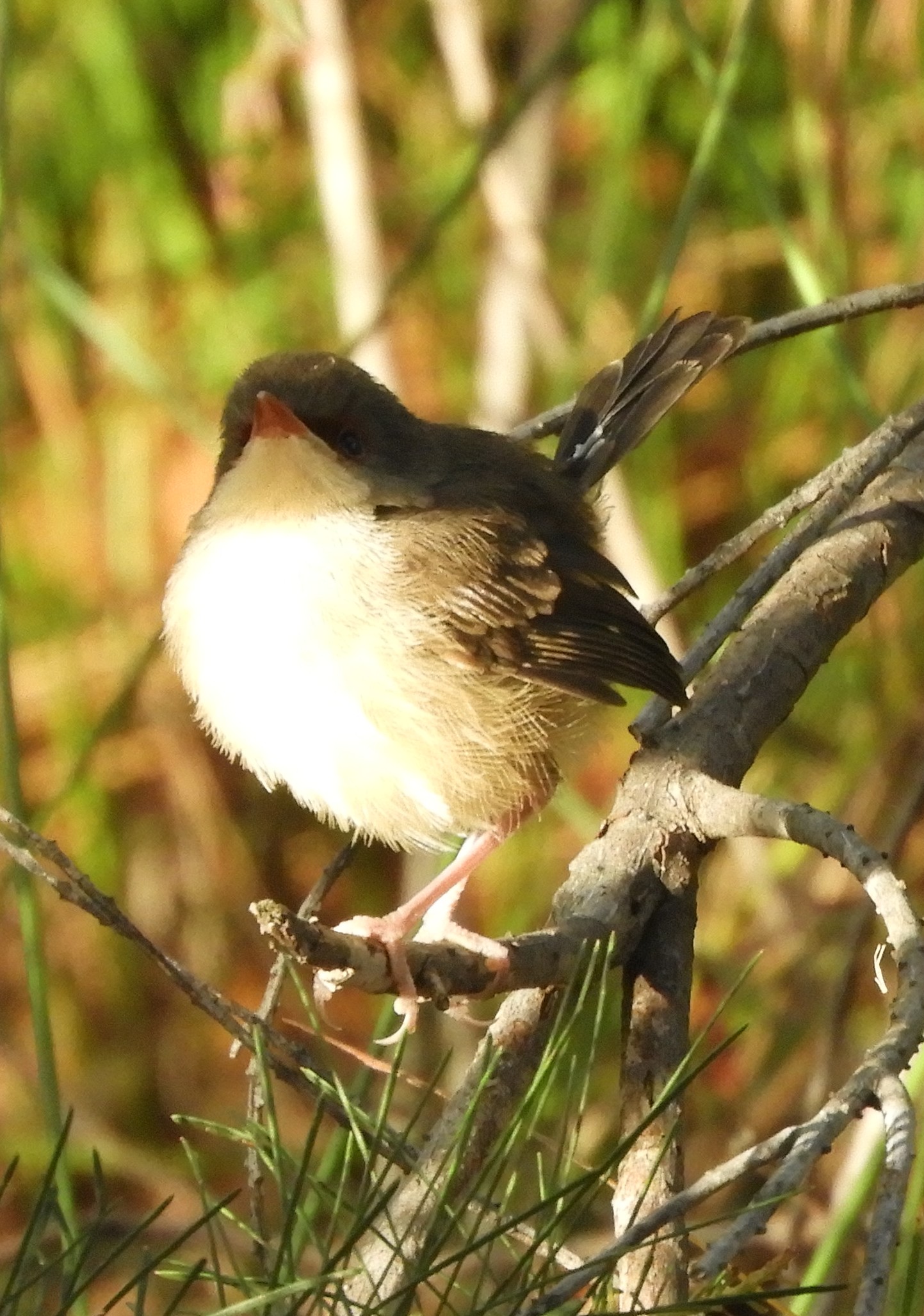
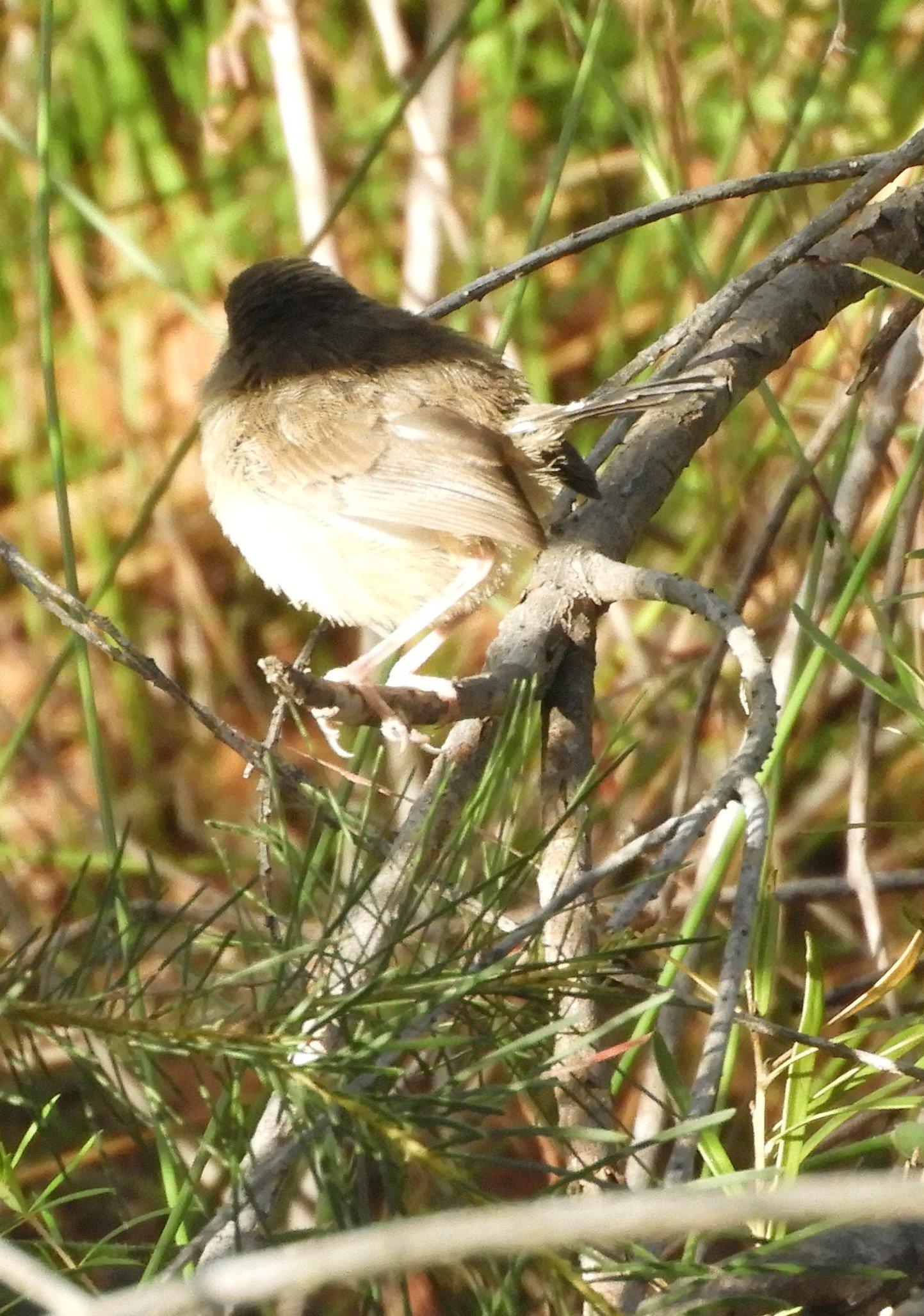

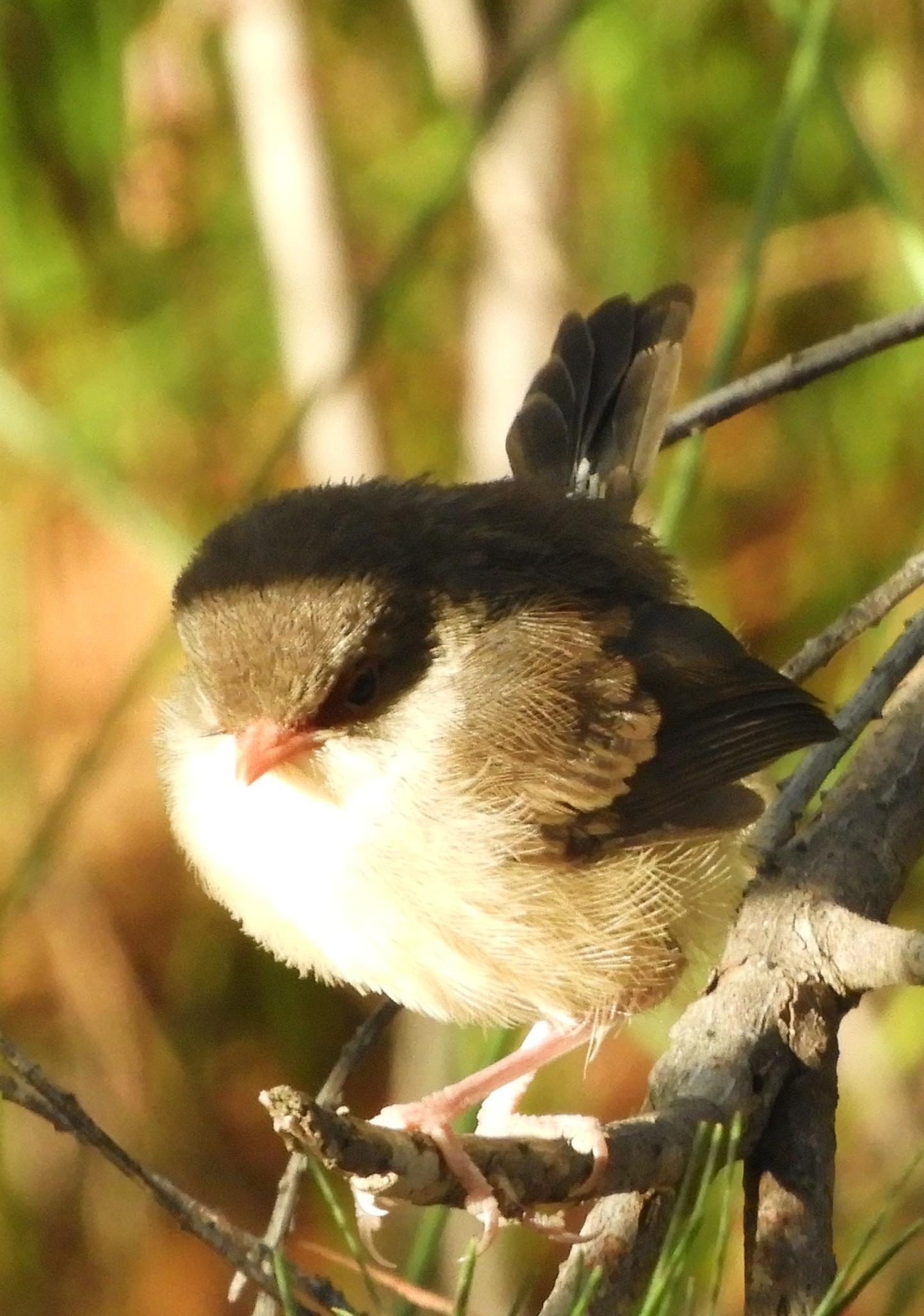
Common name: Variegated Fairy-wren
Scientific name: Malurus lamberti
Approximate length: 13 cm
Date spotted: 3 November 2019 (spring)
Location: Manly Dam Reserve, New South Wales, Australia: 33°46’44.8″S 151°14’57.9″E
Rescued a Powerful Owl from Australian Ravens
As I was walking in the bush this morning, I heard a lot of noise coming from an open space just off the track. Currawongs chiming, ravens yowling, miners bleating. I went to investigate, and found a Powerful Owl under attack.
Here’s the Powerful Owl, looking decidedly jaded after facing off the most recent jabs from a couple of Australian Ravens:
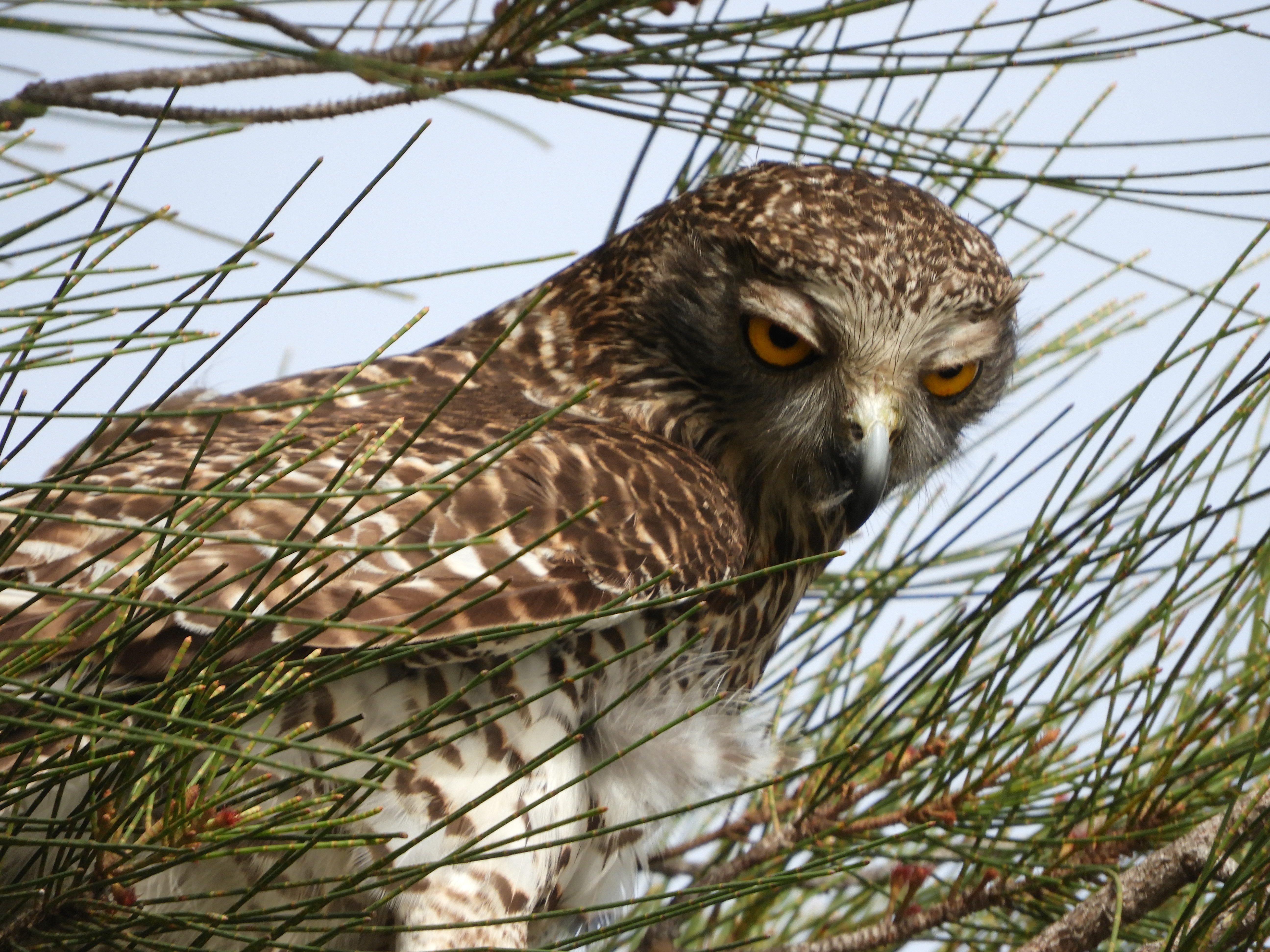
The Australian Miners and Currawongs were making a lot of noise, and even a couple of kookaburras swooped in to join the fight. But the principal attackers were the Australian Ravens.
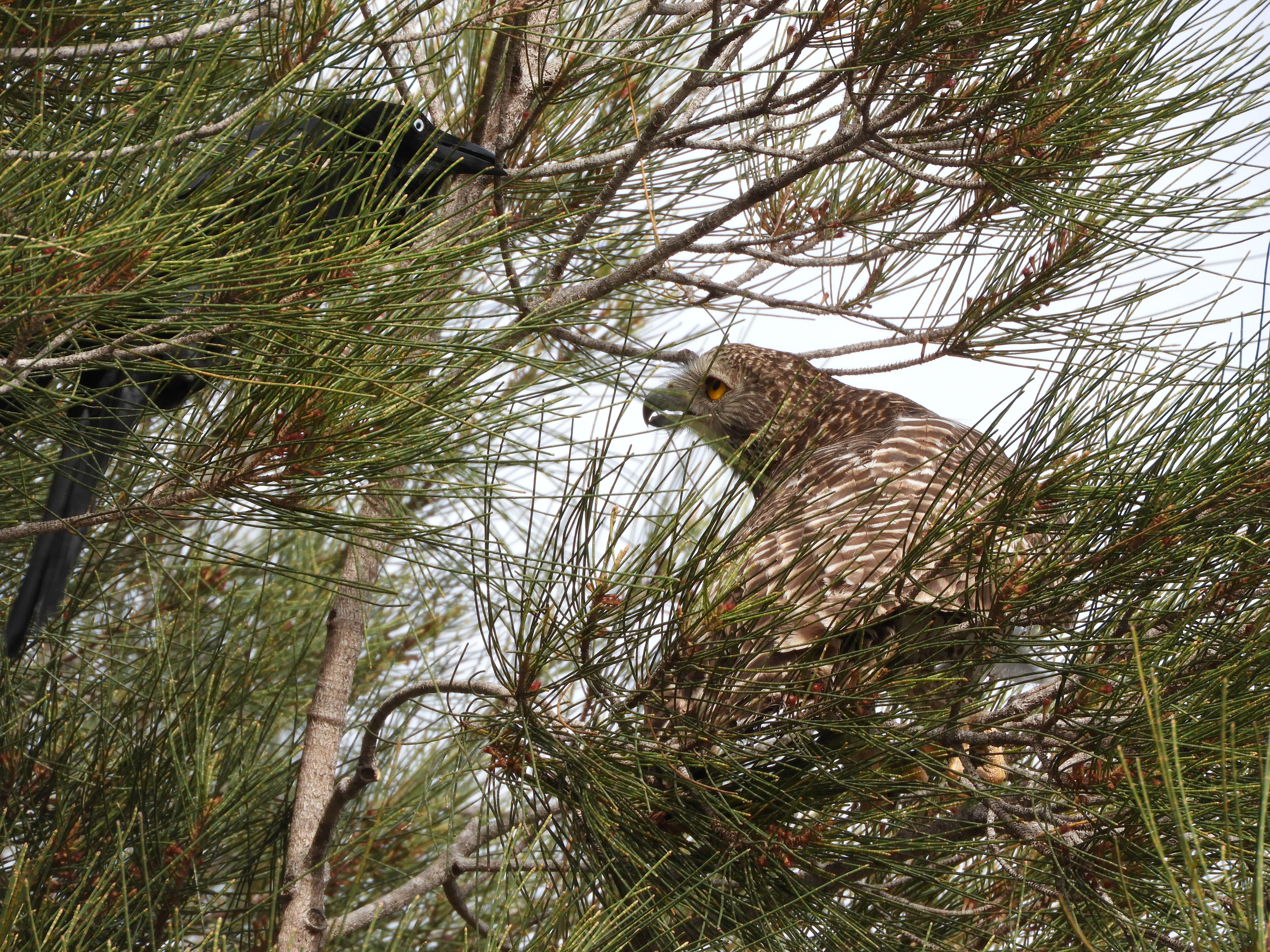

At first, the Powerful Owl was able to fend off the attack:
But the ravens were pretty vicious. The owl was high in the tree at this point, and there was nothing I could do to scare off the attackers.
I phoned the Manly Dam bush ranger centre and reported the problem. A ranger promised to come immediately. In the meantime, the owl was suffering and it was distressing not to be able to help:
At last, the owl ceded ground and flew to a lower spot in the tree:
At the same time, the attacks became more vicious, with the ravens grabbing both wings and pulling at the same time, stretching out the owl’s wings.
The owl was at this point only about 2.5 metres above the ground. A jogger came rushing in to help, and together she and I were able to scare off the ravens and other attackers.
The bush ranger arrived soon afterwards. After a bit of discussion, we decided the best thing was to phone WIRES for advice. WIRES is the Australian Wildlife Information, Rescue and Education Service.
In the meantime, we had to keep chasing away the ravens. They were extremely persistent, returning every few minutes to see if the coast was clear for another attack. The owl looked on, more relaxed than when under attack, but still alert:
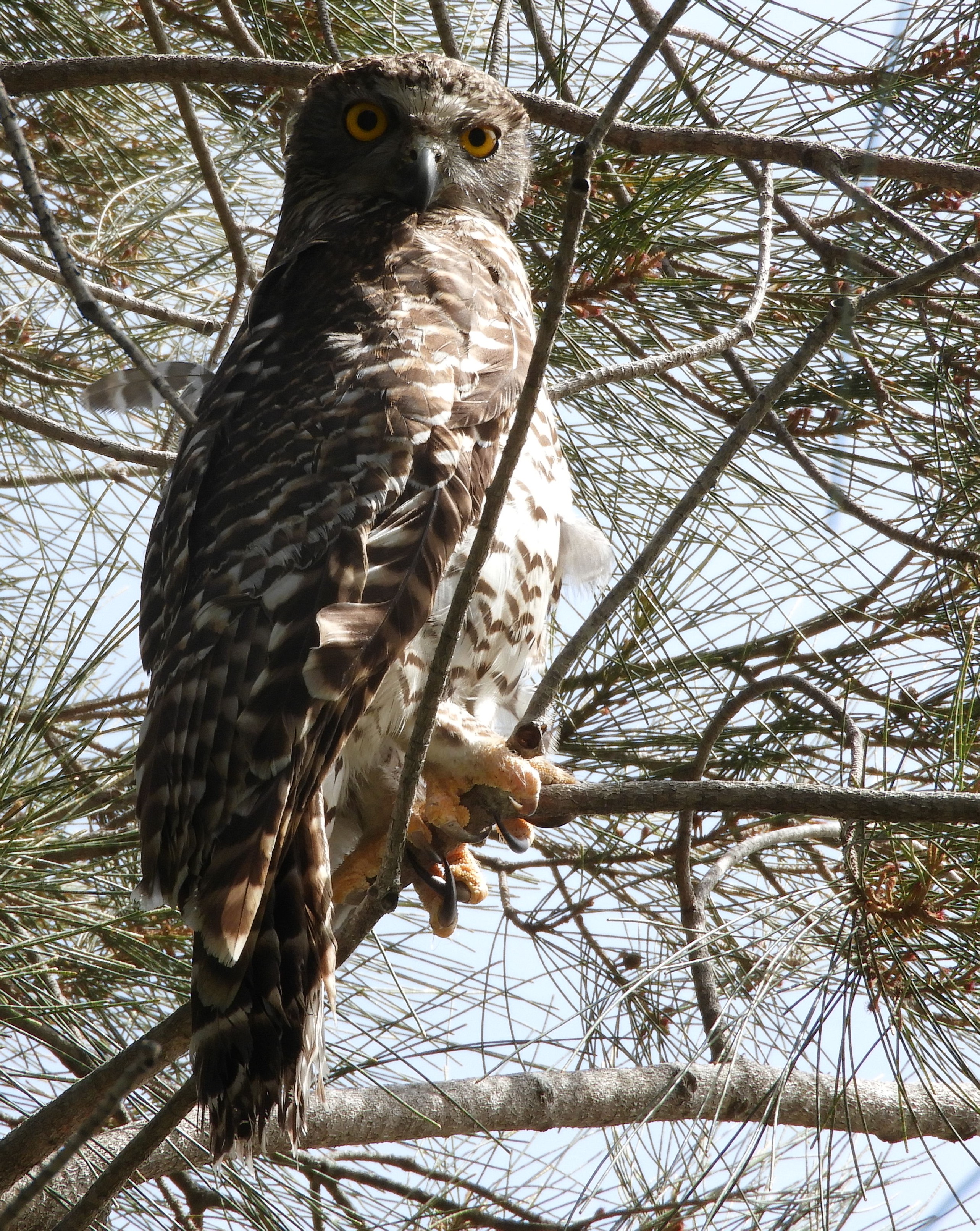
Common name: Powerful Owl
Scientific name: Ninox strenua
Approximate length: 65 cm
Date spotted: 7 October 2019 (spring)
Location: Manly Dam National Park, New South Wales, Australia: 33°46’55.8″S 151°15’12.1″E
The advice from WIRES was to leave the owl where it was (don’t try to scare it into flying away) and to keep chasing away the ravens. Evidently Powerful Owls tend to stay in one place during the day, even when under attack. Besides which, the jogger had seen the owl flying from one tree to another earlier that morning, with the ravens dive-bombing it in flight. So flying off was probably not a good option anyway.
So we kept chasing away the ravens. After a couple of hours, two families arrived and settled in for a day of boating and picnicking. We handed over the job of raven-scaring to them, and the bush ranger said she would drop by every couple of hours to check up on the owl.
Not a restful day for this nocturnal bird. But at least this is one case where it was a good thing for the bird that people were around. I do hope the Powerful Owl had a more peaceful time for the rest of the day.
Hummingbird hawk-moth in Cappadocia
Not a bird, and not in Sydney. I’m currently travelling in Cappadocia, Turkey. Standing next to a lavender-like bush, I was startled by an odd creature. Tiny it was, making a loud hum, wings moving so fast they were a blur, abdomen hanging still in the air. My first instinct was that it was an insect, some type of wasp perhaps. Run! On second thoughts, maybe it’s a tiny humming bird. Stay!
This ten-second video gives a reasonable side view of the creature:
A slightly longer video gives a view from behind as well as some side views:
A bit of investigation revealed that it’s a hummingbird hawk-moth, also called a bee moth.
The next picture shows the spectacular backdrop for the flowery bush on which the moth was feeding. The pointy hills are the fairy chimneys in Uçhisar, in the province of Cappadocia in Turkey:

It was hard to catch a photo of the hummingbird hawk-moth, as they dodge around and their wings are basically just a blur. The next two shots give you some idea, in case the videos don’t work for you:

This one nicely shows the moth’s long proboscis dipping into a flower to suck up nectar:

Not a bird, but it had me fooled until I could examine the photos in detail!
Call of the Pale-yellow Robin is a bit dull
From high above the bush path came an insistent cheep-cheeping. After a bit of searching amongst the swaying branches (it was a windy day) I spotted the noise-maker: a Pale-yellow Robin:
Pale-yellow Robins are very similar in appearance to Eastern Yellow Robins. I’ve seen a few of the latter (see all my robin posts) but if my identification is right then this is the first time I’ve spotted a Pale-yellow Robin. Pale-yellows are smaller than Eastern Yellows (12 cm in length as opposed to 15) and have more white around the beak and throat. My bird book says they’re sedentary and common. They like rainforest and dense eucalypt forests.

Common name: Pale-yellow Robin
Scientific name: Tregellasia capito
Approximate length: 12 cm
Date spotted: 7 September 2019 (early spring)
Location: Manly Dam National Park, New South Wales, Australia: 33°46’27.0″S 151°15’01.5″E
Australian Brush-turkey, so ugly it’s beautiful
An Australian Brush-turkey pops its head up from a sea of fern fronds. Up periscope!

I was walking the Gibberagong trail in Ku-ring-gai parkland when the brush-turkey appeared. The bird puttered around me for a while, went down to the creek, then came back past me:
Just look at the size of those feet. The bird is a member of the megapode family. Megapode means “big feet”.
The Australian Brush-turkey is not a very pretty bird, but its surrounds made up for that. On one side of the path was Cockle Creek:
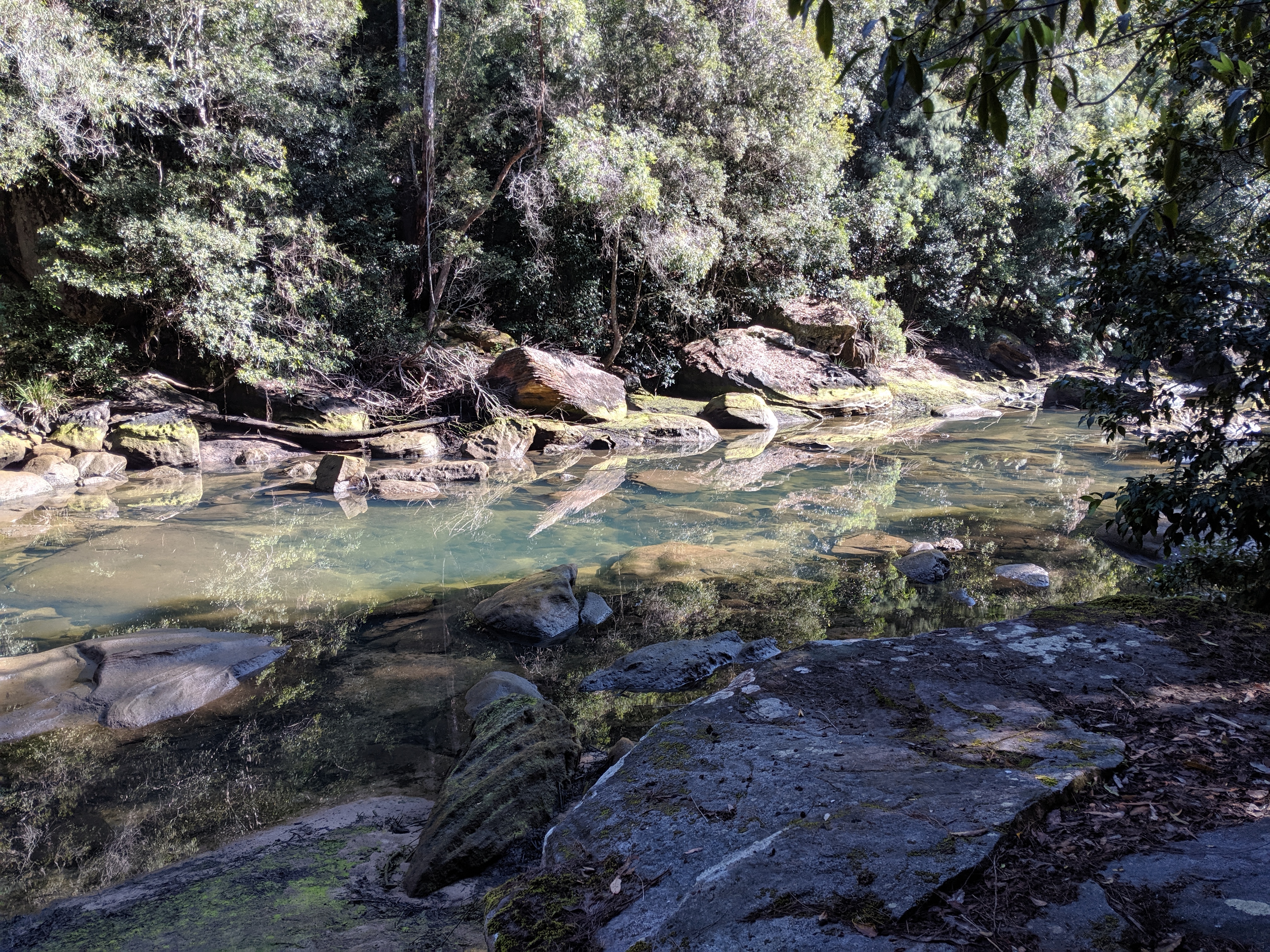
On the other side of the path, and in fact all round, the Australian forest:

Common name: Australian Brush-turkey
Scientific name: Alectura lathami
Approximate length: 60 cm
Date spotted: 28 August 2019 (late winter)
Location: Bobbin Head, Ku-ring-gai Chase National Park, New South Wales, Australia: 33°40’11.0″S 151°08’59.5″E
Sulphur-crested Cockatoos at Bobbin Head
A group of Sulphur-crested Cockatoos gathered on the mud amidst the mangrove stalks at Bobbin Head:

It’s the first time I’ve been to Bobbin Head. I started with the Mangrove Boardwalk and also walked part of the Gibberagong Track, which follows on from the boardwalk. This is the sign at the start of the Mangrove Boardwalk:

The cockatoos had gathered next to this bridge at the start of the Mangrove Boardwalk:

From time to time the birds flew up into the surrounding trees to have a peaceful snack:


And a bit of mutual grooming:

Common name: Sulphur-crested Cockatoo
Scientific name: Cacatua galerita
Approximate length: 50 cm
Date spotted: 28 August 2019 (late winter)
Location: Bobbin Head, Ku-ring-gai Chase National Park, New South Wales, Australia: 33°39’48.5″S 151°09’21.3″E


 Sydney Birder