Blog Archives

Sculpted feathers of the Great Cormorant
A Great Cormorant sat on a rock at a Manly Dam picnic area. Out of one turquoise eye, it watched me as I approached. I took care to stick to the furthest edge of the picnic area, so that the bird wasn’t alarmed. The feathers of its wings look sculpted, so beautifully arranged are they in their muted colours.
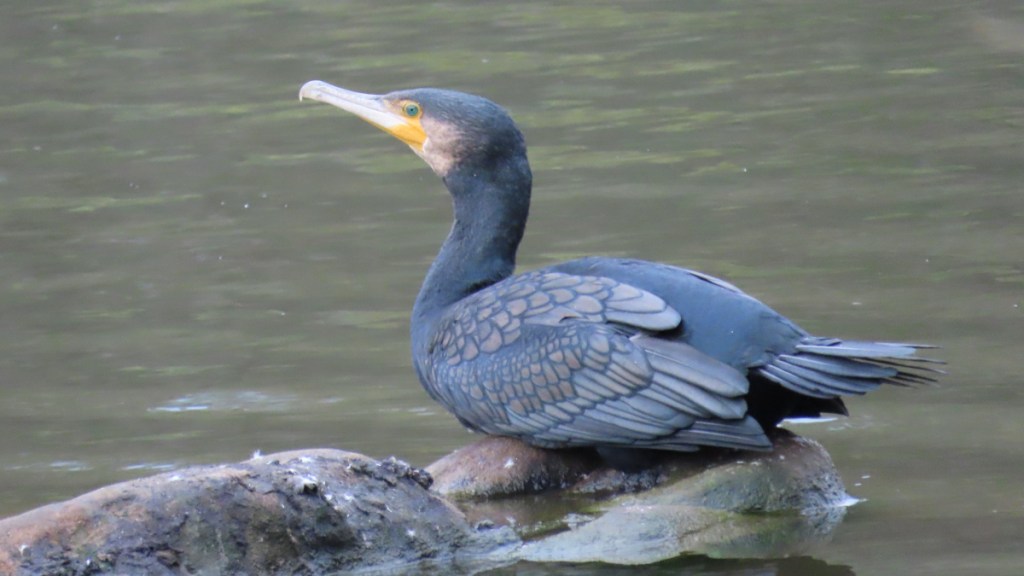
Common name: Great Cormorant
Scientific name: Phalacrocorax carbo
Approximate length: 85 cm; wing span 1.5 m
Date spotted: 2 September 2026 (spring)
Location: Manly Dam, New South Wales, Australia: 33°46’34.5″S 151°14’50.5″E

Royal Spoonbill at Manly Dam
It’s rare to see a Royal Spoonbill at Manly Dam. In fact, this is only the second time I’ve seen one, over the many years that I’ve been walking at the dam.
This one is a lovely bird, with those yellow stripes above its eyes that make it look a little supercilious, and those intriguing patterns on its beak:
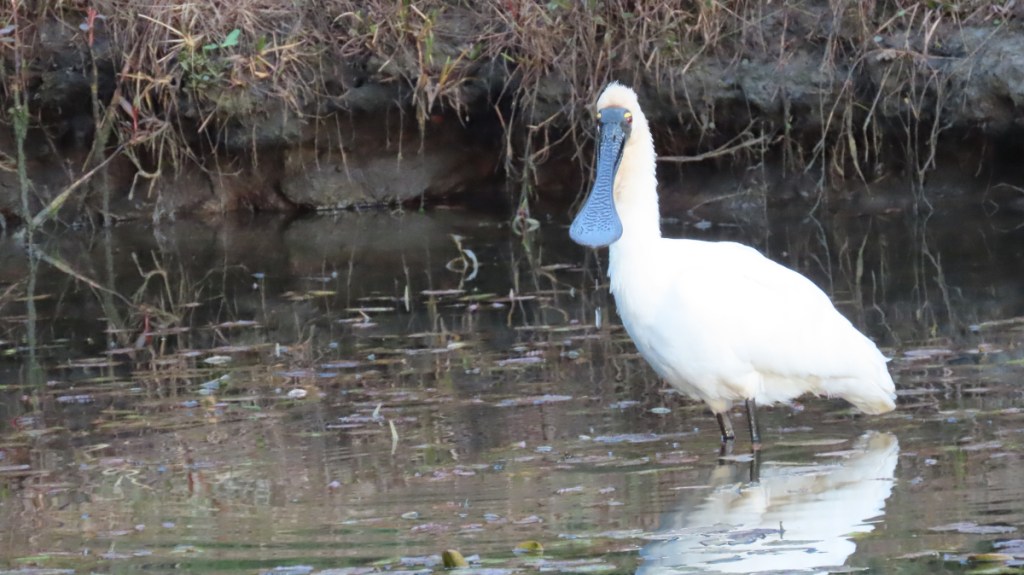
Common name: Royal Spoonbill
Scientific name: Platalea regia
Approximate length: 75-80 cm
Date spotted: 28 July 2026 (winter)
Location: Manly Dam, New South Wales, Australia: 33°46’34.8″S 151°14’48.1″E

Little Heron poised on Brisbane river bank
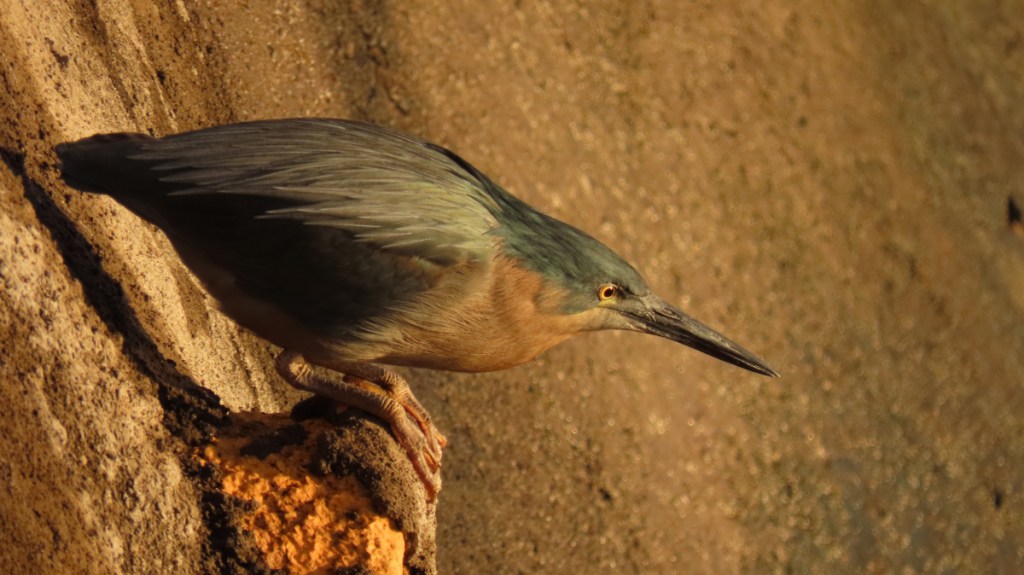
This is my first sighting of a Little Heron. Exciting! At first I thought it was a Nankeen Night Heron, but the folks at eBird sent me a note correcting my entry.
I’m in Brisbane for a few days. This morning early, I went for a walk along the river bank. This gorgeous Little Heron was perched on the opening of a pipe in the river bank, poised to leap off and grab a fish or other unwary river dweller:
This short video shows the bird’s environment: the river and its bank, and the runners pounding past on the riverside path above:
Here’s another view of the bird. I love the long dark plumes on the back of its head:
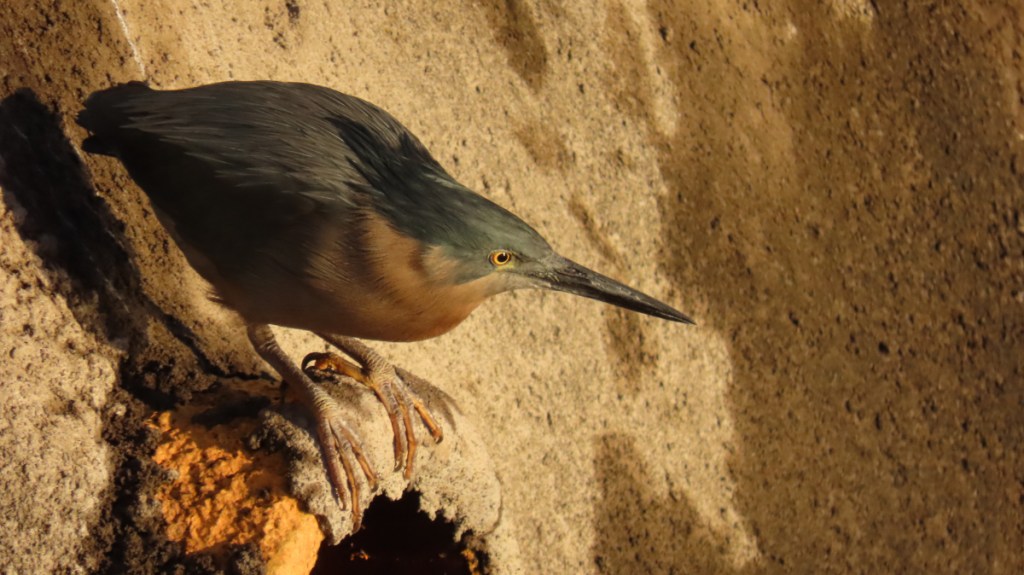
Common name: Little Heron
Scientific name: Butorides atricapilla
Approximate length: 44 cm
Date spotted: 27 June 2025 (winter)
Location: Brisbane River, New Farm, Brisbane, Australia: 27°27’55.3″S 153°03’09.6″E

Birds in Hoedspruit, South Africa
I recently spent a few days in the little town of Hoedspruit, South Africa. The town is close to several wild-life parks, including the well-known Kruger National Park. There’s a rich diversity of wild life in the area, including birds and other creatures. This post is about just a few of the birds that I saw while in the area.
[If you want to see more of the wildlife, take a look at my bookworm’s post: Hoedspruit predators and pretties.]
A common and fascinating bird is the Southern Red-billed Hornbill. They’re cheeky and curious, and would fit in well as a friendly but slightly dangerous little character in Jurassic Park. This video shows some young Southern Red-billed Hornbills with a Starling (I think it’s a Cape Starling, though the area hosts several varieties of Starlings):
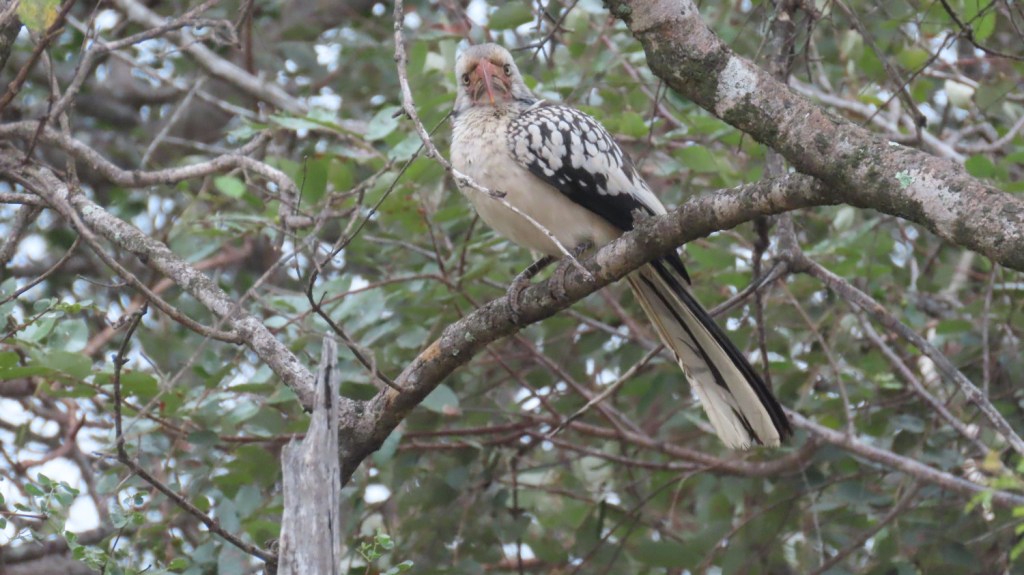
Early one morning, I came across another group of Southern Red-billed Hornbills feeding on the ground. After I’d taken a couple of shots of the birds, this one flew up onto a branch and stared at me. “It’s too early in the morning for this, mate!“
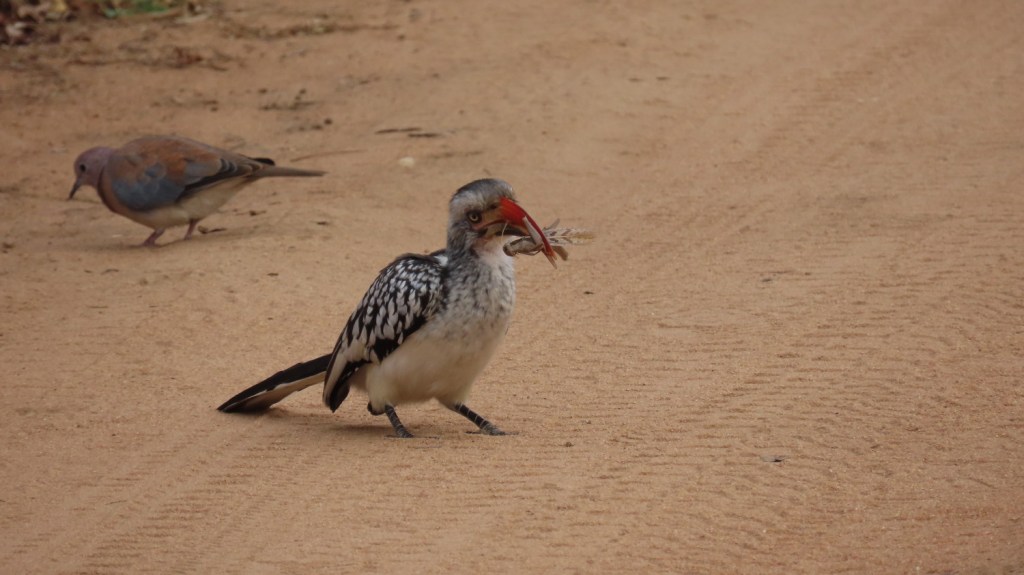
This one had caught a grasshopper or locust:
Mites in your feathers? A dust bath is just the ticket:
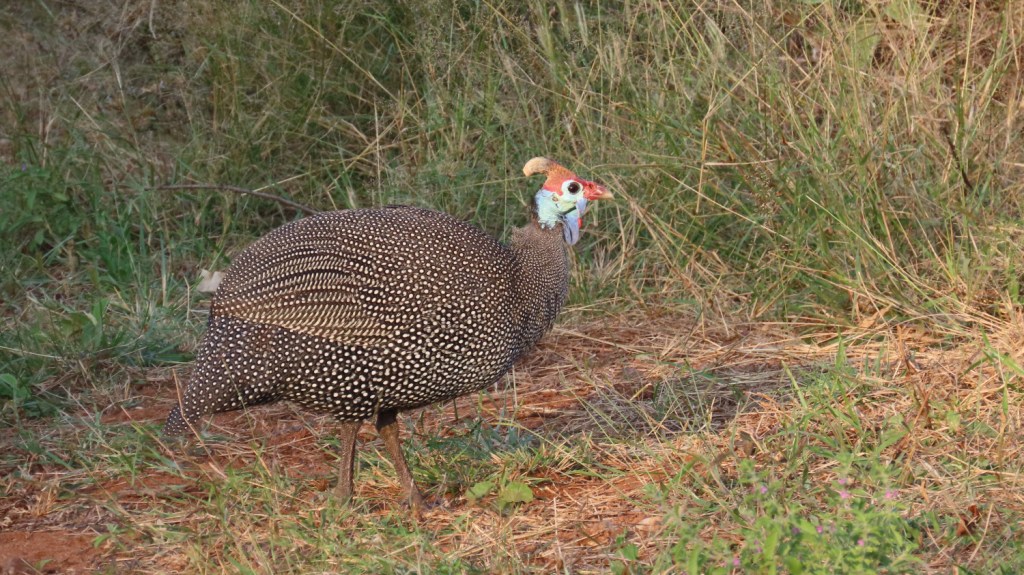
Helmeted Guineafowl patrolled the area in flocks of up to twenty birds. A Helmeted Guineafowl sports a chiffon-like coat of grey with dizzyingly-aligned white spots worthy of haute couture. The effect is somewhat spoiled by the bare-skinned head topped with a bony casque:
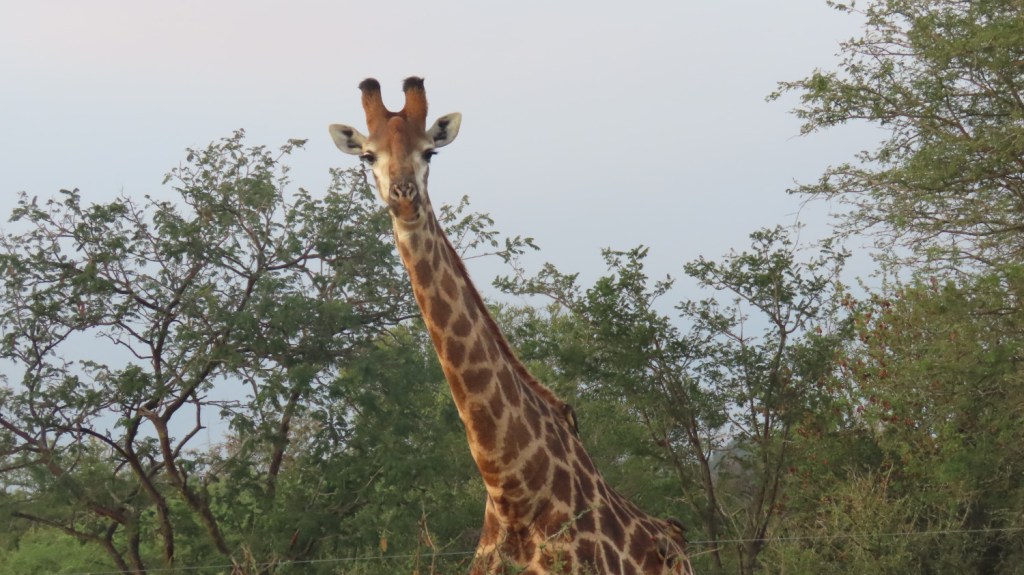
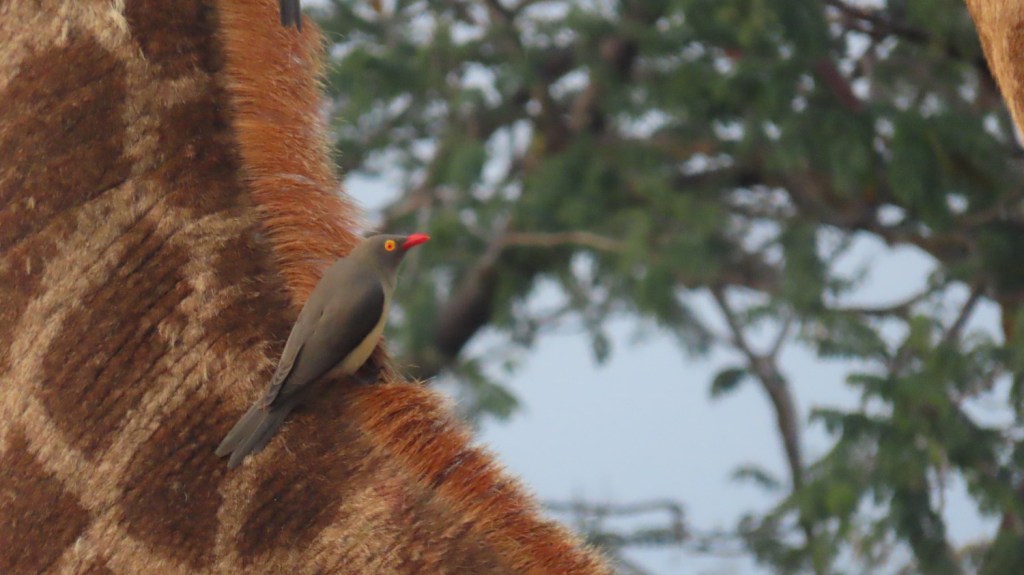
Early one morning, we went on a game drive at Khaya Ndlovu on the Rietspruit Big 5 Game Reserve. That’s a private reserve close to the Kruger National Park. Among the creatures we saw were several giraffes. It was interesting to see the little birds, called Red-billed Oxpeckers, that spend their time perched on the giraffes’ necks and flanks. The birds feed on ticks, mites, and other parasites on the animals’ skin. They even sometimes drink the animals’ blood. The birds are hard to see in this picture — one is above the giraffe’s shoulder and two are near the back of the giraffe, one on its flank and another perched near its tail:
Here’s a closeup of an Oxpecker, showing its red bill and red eye surrounded by a yellow wattle:
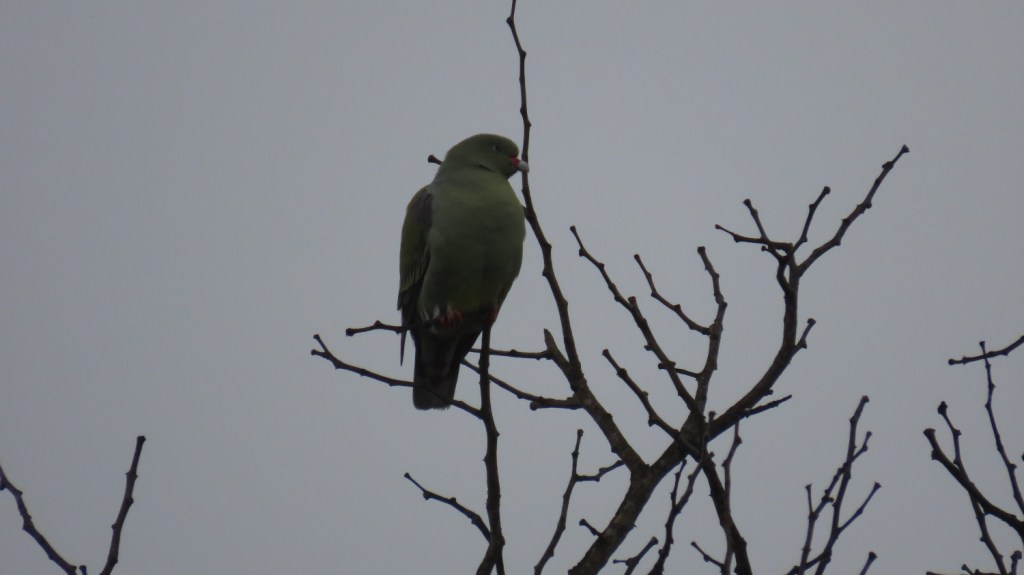
Have you ever seen a green pigeon? Here’s an African Green-Pigeon, looking plump and happy in the morning dimness:
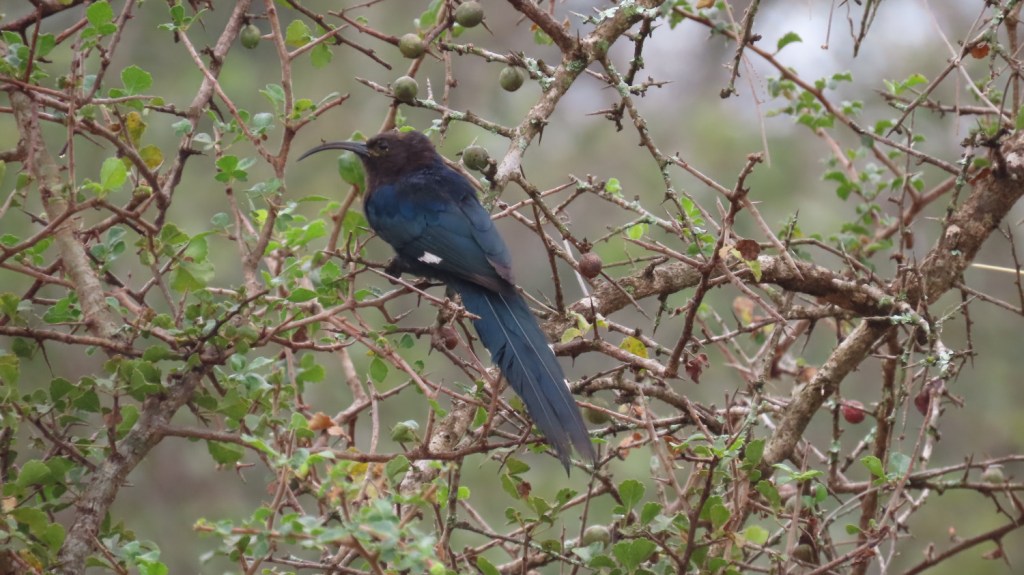
A Common Scimitarbill swooped from tree to tree, difficult to spot and identify despite its relatively large size. The bird has a distinctive thin, curved beak, hence its name. It uses the beak to poke into crevices and cracks in trees, prying out insects and grubs:
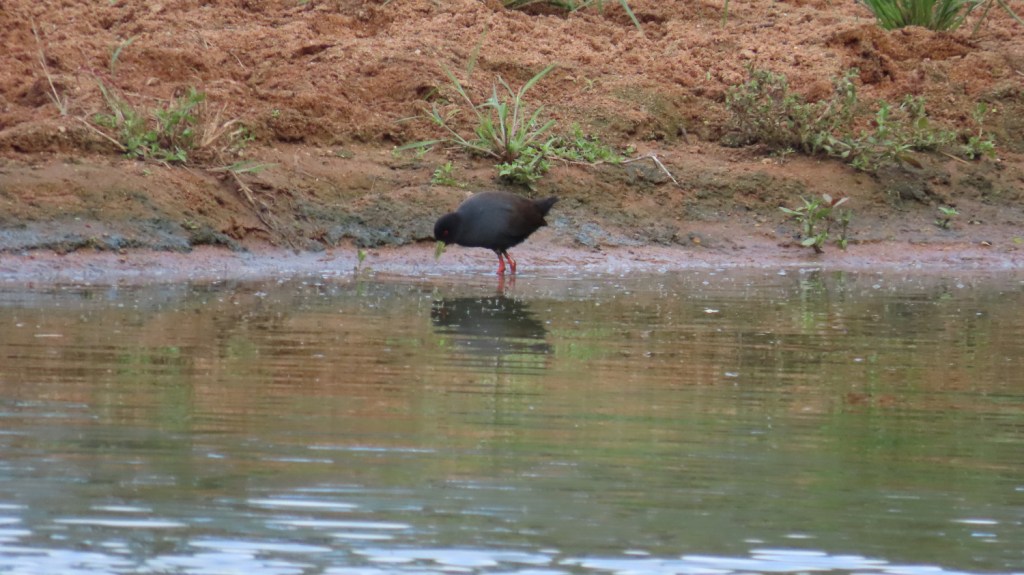
At a small dam, a Black Crake bustled up and down at the water’s edge. According to my Merlin bird app, these birds are listed as uncommon in the area:
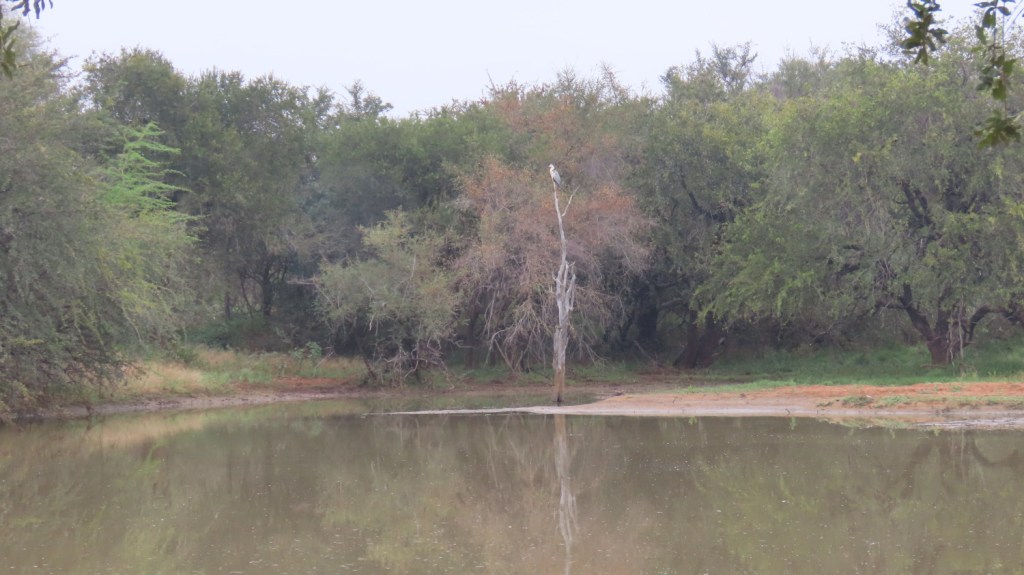
The dam was quiet and restful. I visited it twice and saw a variety of birds there. This photo shows more of the dam, with a Gray Heron visible on a tall dead tree trunk in the distance:
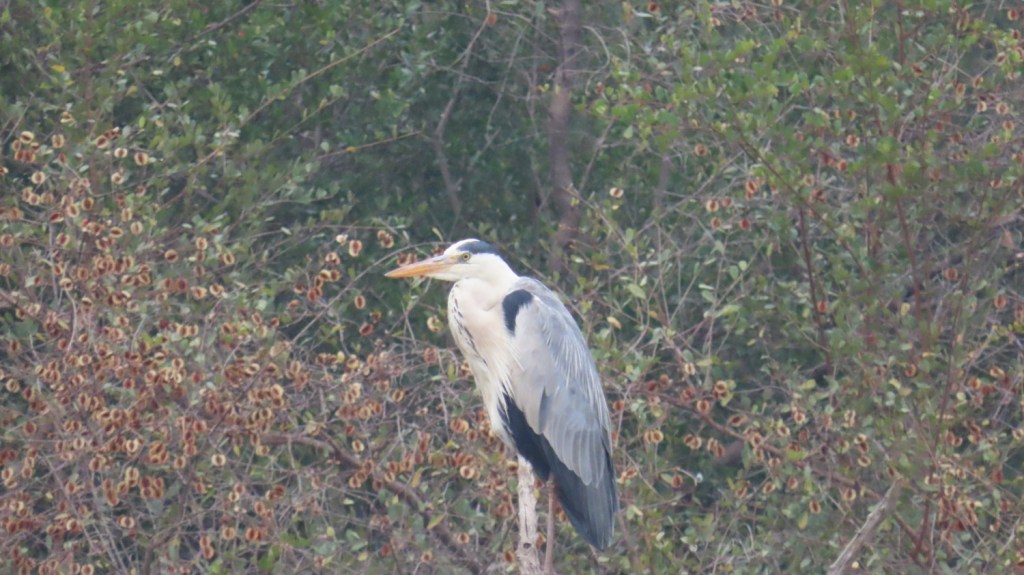
Here’s a closeup of the Gray Heron:
Like the Lapwings in Australia, Blacksmith Lapwings are brave and aggressive guardians of their young. These two, however, were peacefully patrolling their turf:
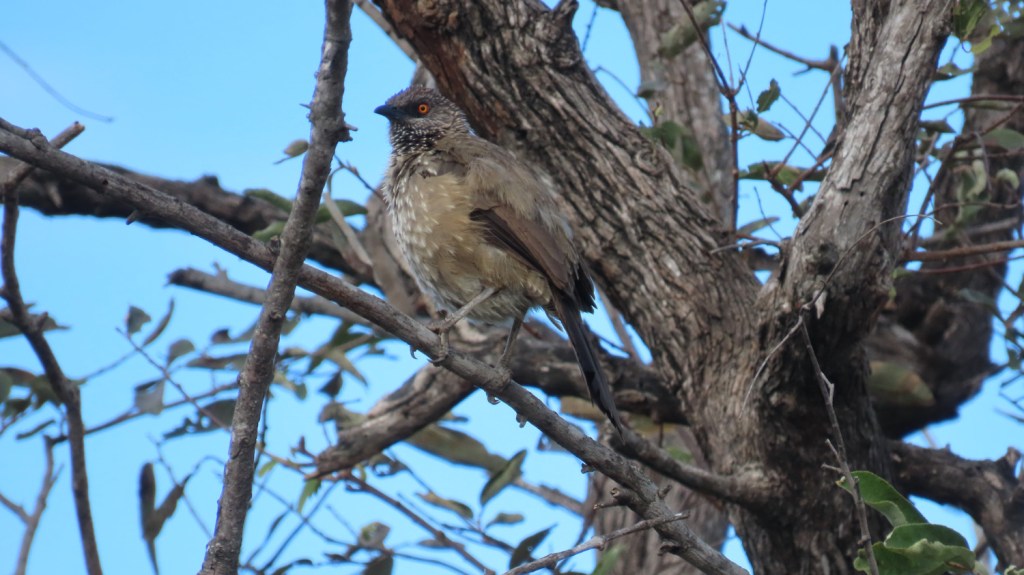
The markings on the next bird reminded me of the Little Wattlebirds that we get in Australia. The South African bird is an Arrow-marked Babbler. Look at that fierce red-rimmed, orange eye:
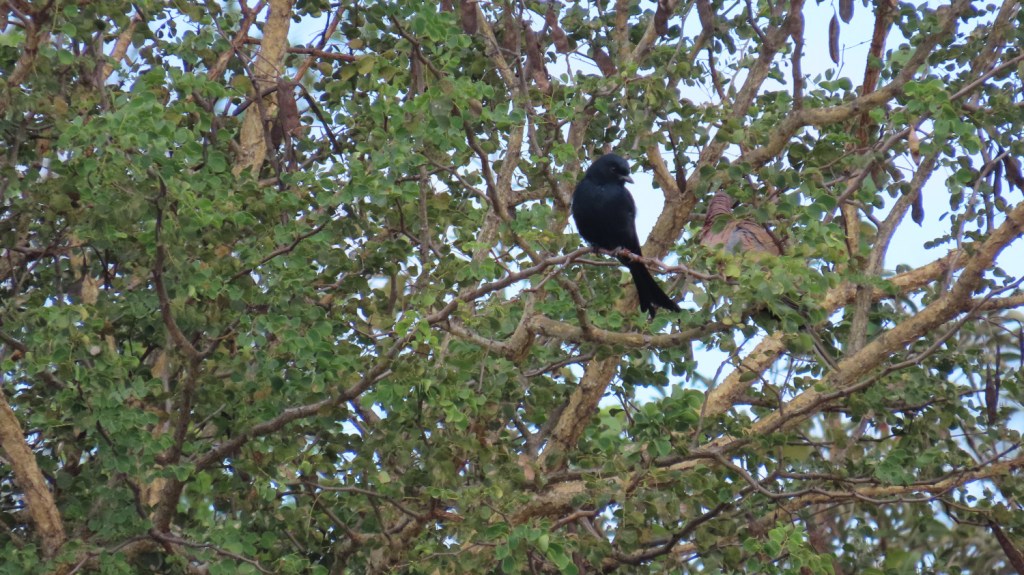
A Fork-tailed Drongo perched high in a tree, chatting to a half-hidden pigeon of some sort:
Sounding like a husky buzzsaw, a Grey Go-away-bird (also known as a Grey Lourie) uttered its call: “Go-waaayyy!” The call is just audible at the beginning of the video, just before another starts a repetitive honking off-camera:
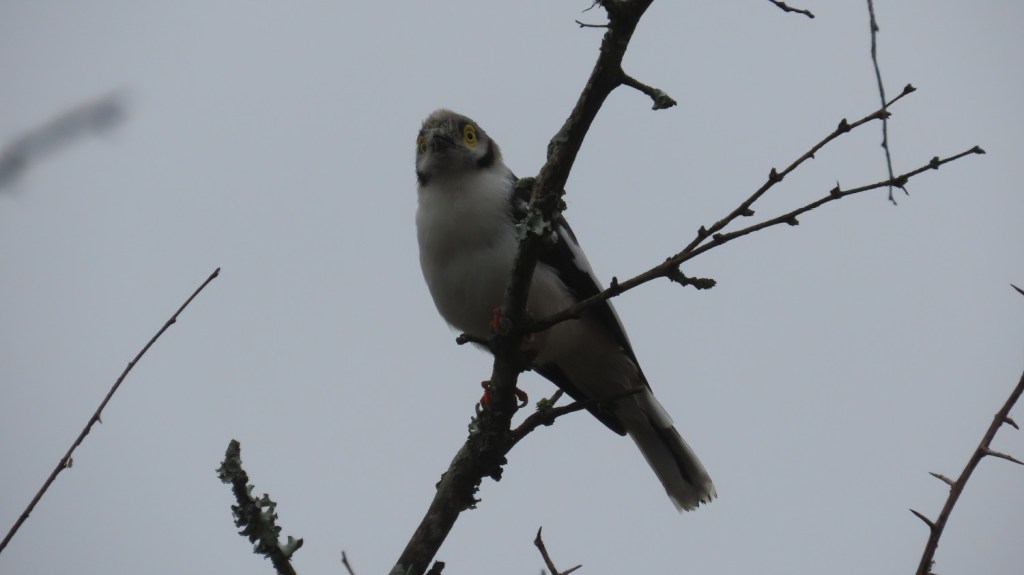
A White-crested Helmetshrike peered down at me from eyes that appear sunken into its face feathers:
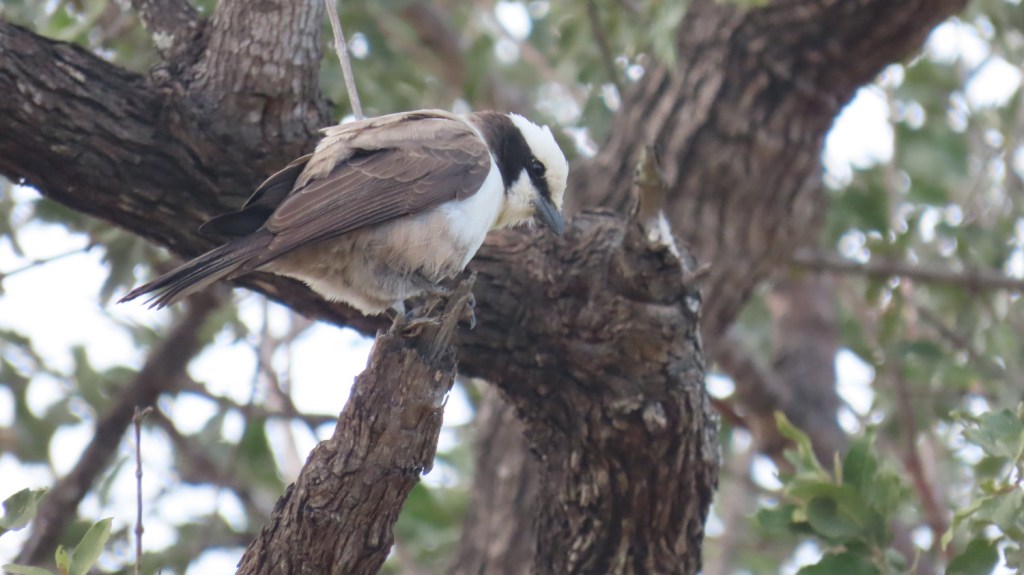
Here’s a White-crowned Shrike:
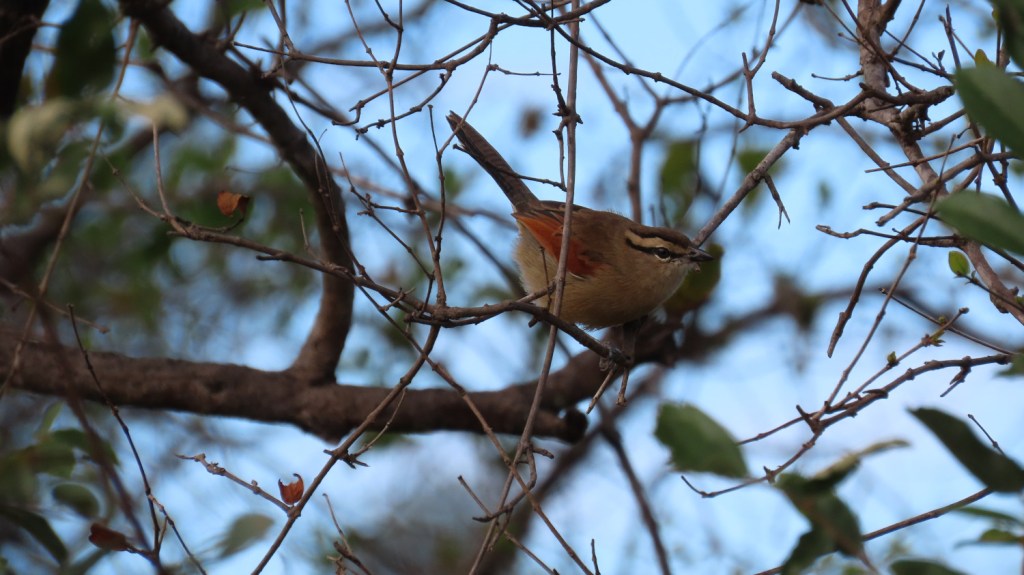
Adding to the list of shrikes is a Brown-crowned Tchagra, a type of bush shrike:
Among the waxbills and finches was a darkly mottled little bird, which I think is a Dusky Indigobird. These birds are nest parasites that lay their eggs in the nests of African Firefinches:
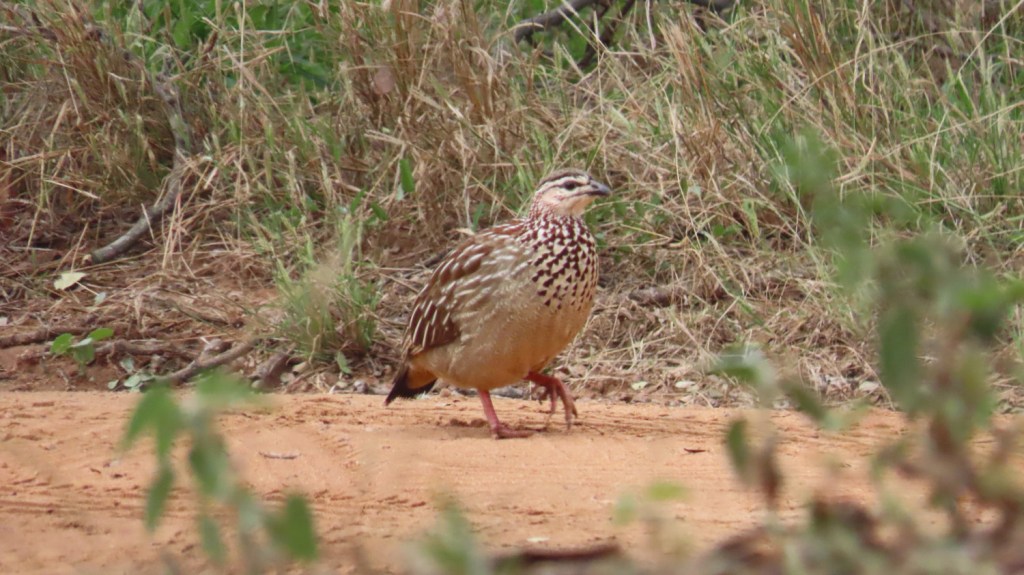
Evidently Crested Francolins have a bushy crest which they raise occasionally. It’s not in evidence in this photo:
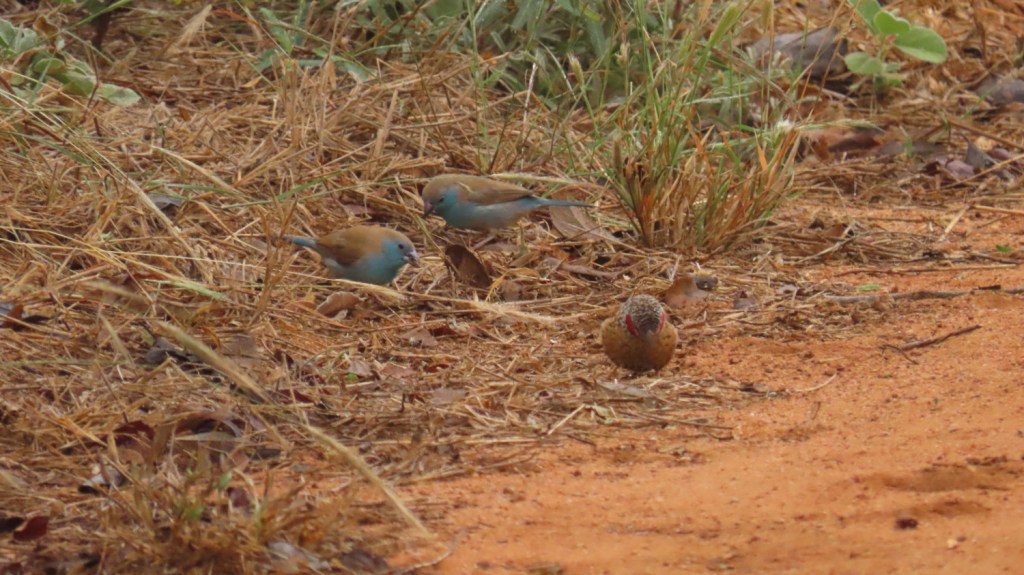
One of the prettiest little birds in the area is the Blue Waxbill. The next photo shows two Blue Waxbills and a Cut-throat:
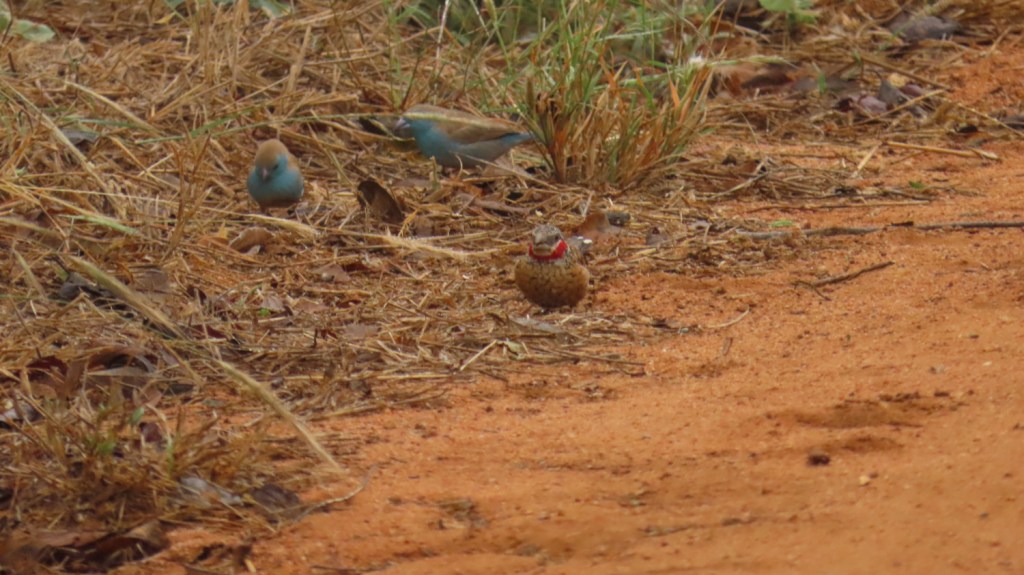
The next photo shows the same birds, with a clearer view of the Cut-throat:
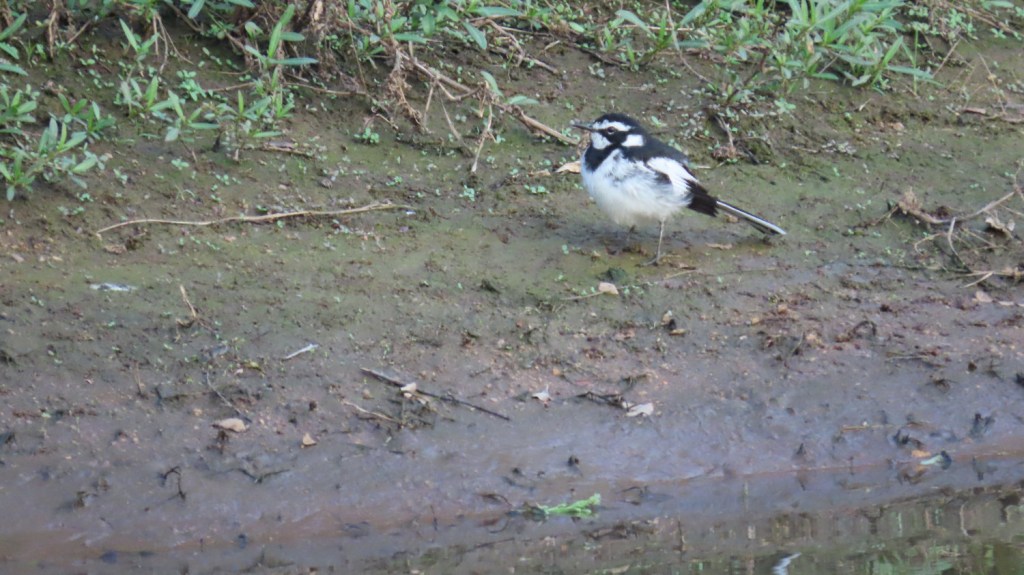
Last is an African Pied Wagtail, the only black and white wagtail in Africa. It made me think of the Willy Wagtails (which are actually fantails) that we get in Australia:
Although I’m based in Sydney, Australia, I love seeing the birds in other areas too. I hope you’ve enjoyed this look at some of the birds in and around Hoedspruit, South Africa.

Fun facts about Grebes
Yesterday, this beautiful little Australasian Grebe was pottering about in an inlet of Manly Dam:
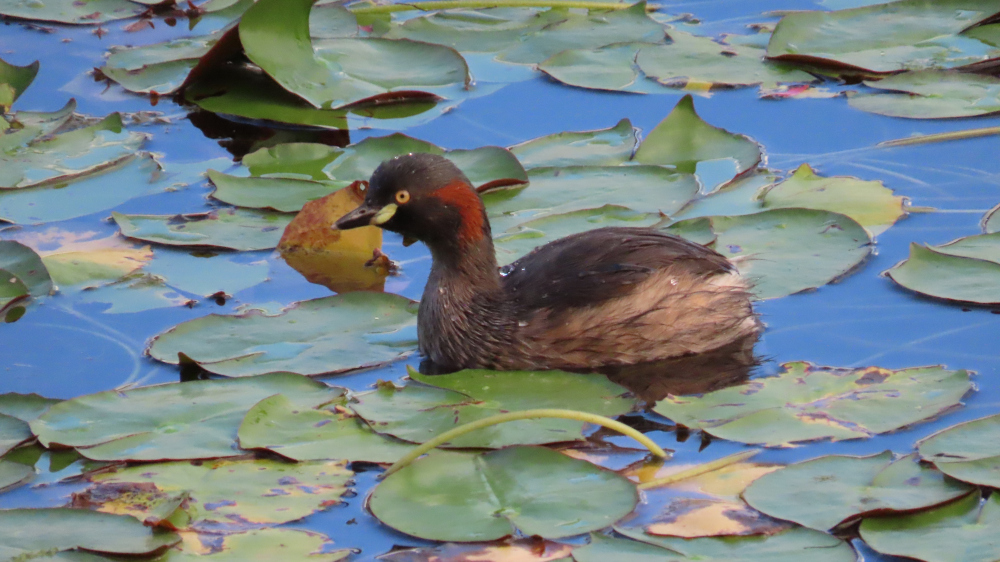
This grebe is wearing its breeding plumage, with a large chestnut patch stretching from its eye down its neck, and that odd yellow patch at the base of its beak. Outside the breeding season, the yellow patch turns white and the bird’s neck is a dark grey-brown to match its back.
Fun fact: Grebes eat their own feathers and also feed their feathers to their young. People think the goal is to make it easier to swallow fish bones, by wrapping around the bones and preventing injury to the bird.
Another fun fact: Grebes have big feet with lobed toes, more like those of coots than ducks. I’ve never seen a grebe out of the water, but I do have a picture of a coot’s feet, which are rather adorable: The foot of the Coot.
Common name: Australasian Grebe
Scientific name: Tachybaptus novaehollandiae
Approximate length: 23-25 cm
Date spotted: 25 March 2026 (autumn)
Location: Manly Dam Park, near Sydney, Australia: 33°46’34.8″S 151°14’49.6″E

Black Swan baby is no longer an ugly duckling!
Back in November, I posted some pictures of a lone Black Swan cygnet with its parents. The baby was actually very cute, not an ugly duckling at all, unless you’re a duck, I guess. Since then, I’ve been keeping an eye on the young family and hoping that the little one makes it through its first difficult months. So far, so good.
Here’s the little one in December, just a few weeks after I first saw it:
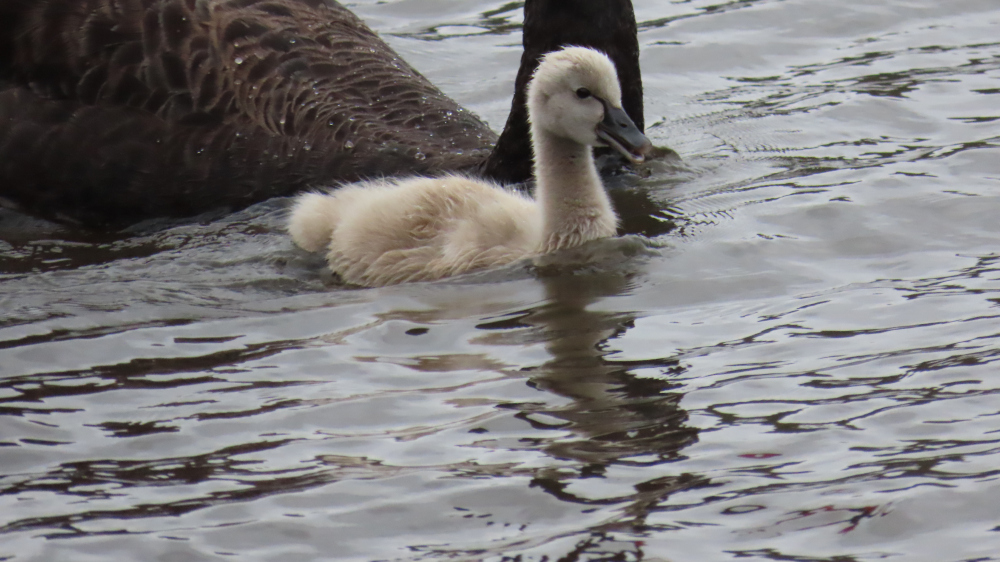
It’s very small next to its parents, and doesn’t look much like a swan:
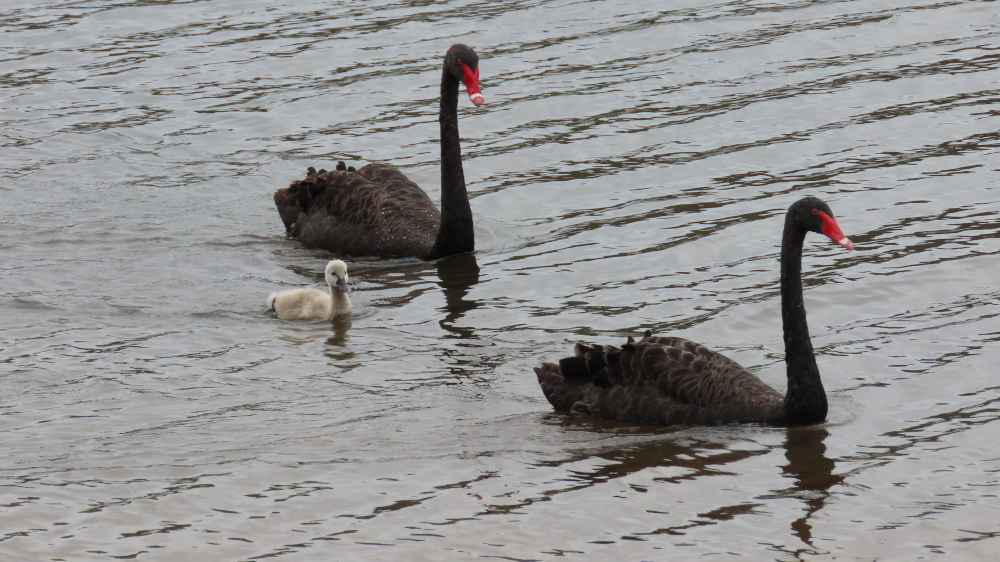
Now we’re in early February, three months after I first saw the baby, and what a difference! The little one is nearly the size of its parents and already looks more like a swan than a bundle of fluff:
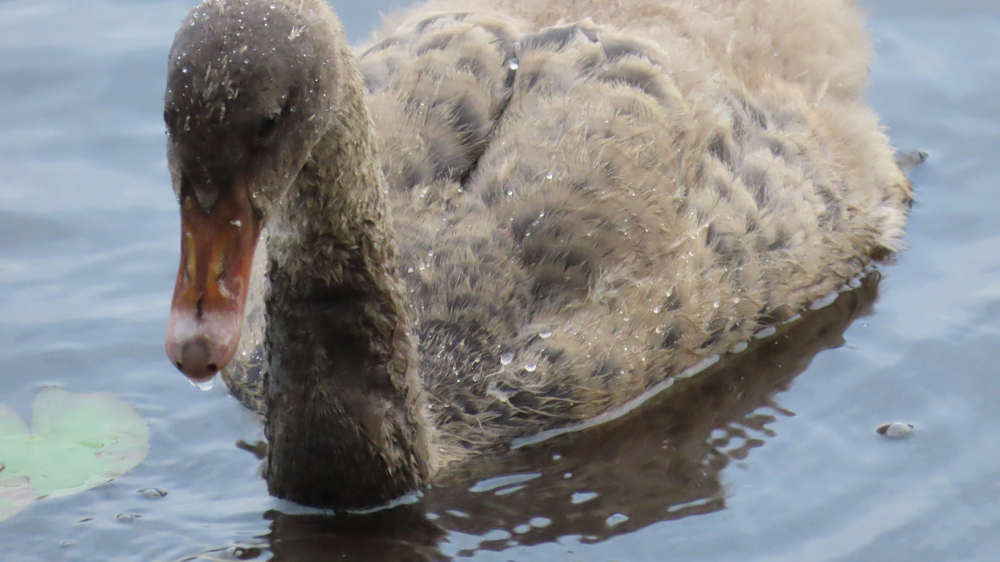
Black Swans face several dangers: foxes, dogs, getting snagged and injured by fishing line, boats, and pollution. I don’t know how many there were in the brood, but it’s great to see one youngster doing well.
This video from December shows the little one bravely battling the choppy waters of the dam where they live. If you listen carefully, you’ll hear the cygnet cheeping continually. The rushing sound is the wind:
Now, in February, the youngster sails majestically around the adult birds. The noisy birds off-camera are Rainbow Lorikeets:
Common name: Black Swan
Scientific name: Cygnus atratus
Approximate length of adult bird: 120 cm
Date spotted: 3 February 2026 (summer)
Approximate location: Sydney’s Northern Beaches, New South Wales, Australia

Lone cygnet for this Black Swan couple
A pair of Black Swans in my neighbourhood has a single cygnet this year. Baby black swans are so cute! An adorable bundle of grey-cream fluff with black beaks, eyes, and legs:
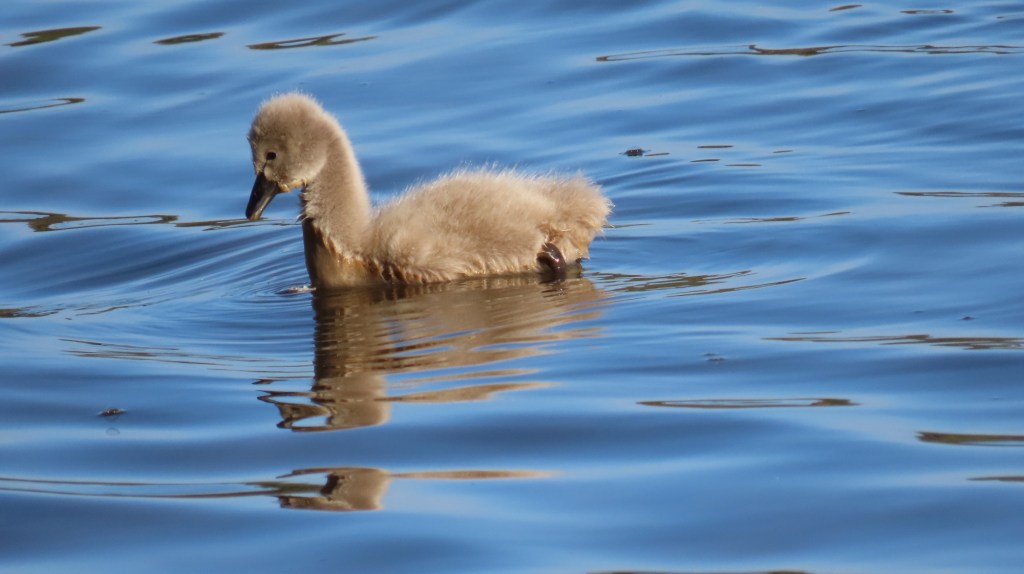
I don’t know how many eggs there were in the brood, nor how many of them hatched. Alas, baby swans are prey to several natural predators, especially hawks and eagles, as well as to introduced animals like dogs, cats, and foxes.
Here’s the baby and one of the adults, in a lovely mellow lighting:

It’s good to see any young swans at all — I didn’t spot any last year. In fact, I watched a pair of swans devotedly tend their nest for eight months without hatching any eggs! It’s possible they were both males, practising their nesting skills together in the absence of any females. I wrote about their vigil in two posts: part 1 and part 2.
So it’s great to see these two adults looking after the little one:
Common name: Black Swan
Scientific name: Cygnus atratus
Approximate length of adult bird: 120 cm
Date spotted: 25 November 2025 (spring)
Approximate location: Sydney’s Northern Beaches, New South Wales, Australia

Sooty Oystercatcher
Every now and then, I spot an Oystercatcher on one of the rocky plates on our sea shores. They’re usually hard to photograph, being such a sooty black and usually keeping far away from humans. This weekend, two of them broke the pattern.
I was in Wollongong, on the east coast of Australia just south of Sydney. Two Sooty Oystercatchers were pottering around on the rocky plate right next to the beach, prying food out of the crevices. This video shows only one of the birds:
They have long thin beaks, a striking orange in colour. Their eyes are ringed in a matching orange, and their legs are pinky-orange too, turning to yellow around the toes.
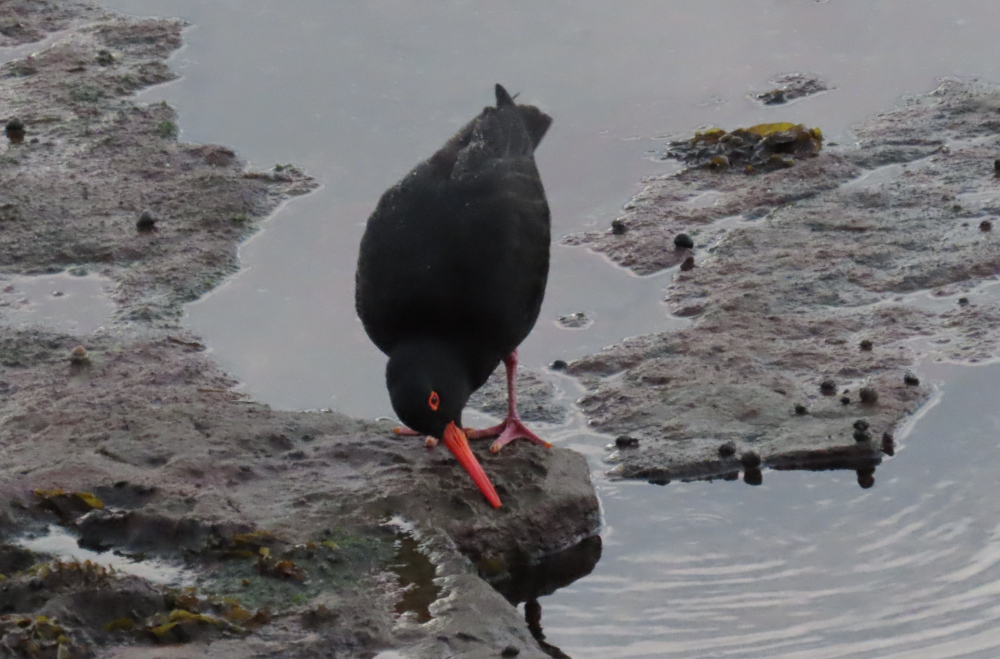
These birds are listed as uncommon, and scarce on disturbed beach areas. It’s good to see them just doing what Oystercatchers do.
Common name: Sooty Oystercatcher
Scientific name: Haematopus fuliginosis
Length: 40-52 cm
Date spotted: 9-10 August 2025 (winter)
Location: Wollongong, New South Wales, Australia: 34°25’04.4″S 150°54’08.8″E

White-faced Heron stretching
In the morning sun, a White-faced Heron stretches his wing. The decaying wood of his perch mirrors the pattern of his stretch.

Common name: White-faced Heron
Scientific name: Ardea novaehollandiae
Approximate length: 66-69 cm
Date spotted: 20 June 2025 (winter)
Location: Manly Dam, New South Wales, Australia: 33°46’34.0″S 151°14’48.5″E
Muscovy ducks meet a Brush-turkey
Two Muscovy ducks hiss and wag their tails to warn off an Australian Brush-turkey. The Brush-turkey had been investigating my shoes, then it decided to see what the two interesting ducks were up to. The encounter ends peacefully. No feathers flying this time!
Muscovy ducks come from the Americas, and are actually more like a cross between a goose and a duck than just a duck. They hiss like geese, although it’s a very quiet hiss. Their faces and heads look like geese, but their body shape is more like a duck’s.
I’ve seen this pair of Muscovies at Manly Dam often — they’ve made this area their home.
Common name: Australian Brush-turkey and Muscovy duck
Scientific name: Alectura lathami (Brush-turkey) and Cairina moschata (Muscovy)
Approximate length: 60-70 cm (Brush-turkey) and 76–84 cm (Muscovy)
Date spotted: 29 April 2025 (autumn)
Location: Manly Dam park, New South Wales, Australia: 33°46’44.9″S 151°14’58.4″E


