Category Archives: Outside Australia

Birds in Hoedspruit, South Africa
I recently spent a few days in the little town of Hoedspruit, South Africa. The town is close to several wild-life parks, including the well-known Kruger National Park. There’s a rich diversity of wild life in the area, including birds and other creatures. This post is about just a few of the birds that I saw while in the area.
[If you want to see more of the wildlife, take a look at my bookworm’s post: Hoedspruit predators and pretties.]
A common and fascinating bird is the Southern Red-billed Hornbill. They’re cheeky and curious, and would fit in well as a friendly but slightly dangerous little character in Jurassic Park. This video shows some young Southern Red-billed Hornbills with a Starling (I think it’s a Cape Starling, though the area hosts several varieties of Starlings):
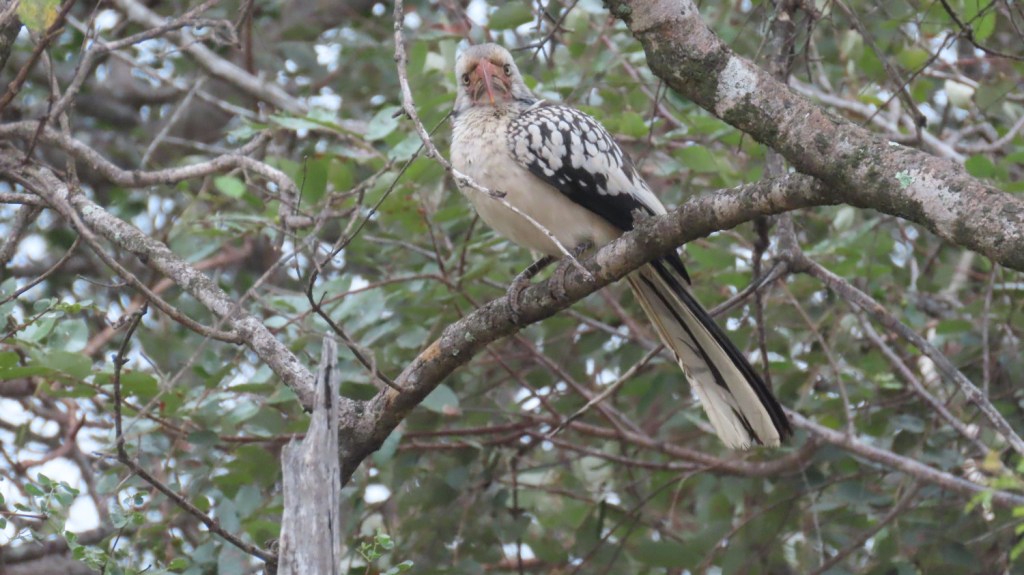
Early one morning, I came across another group of Southern Red-billed Hornbills feeding on the ground. After I’d taken a couple of shots of the birds, this one flew up onto a branch and stared at me. “It’s too early in the morning for this, mate!“
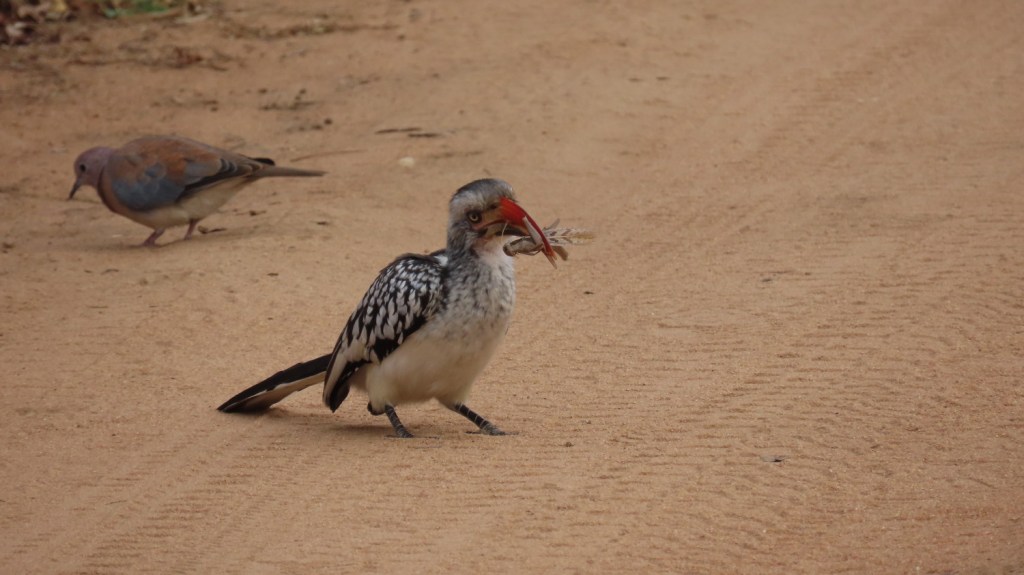
This one had caught a grasshopper or locust:
Mites in your feathers? A dust bath is just the ticket:
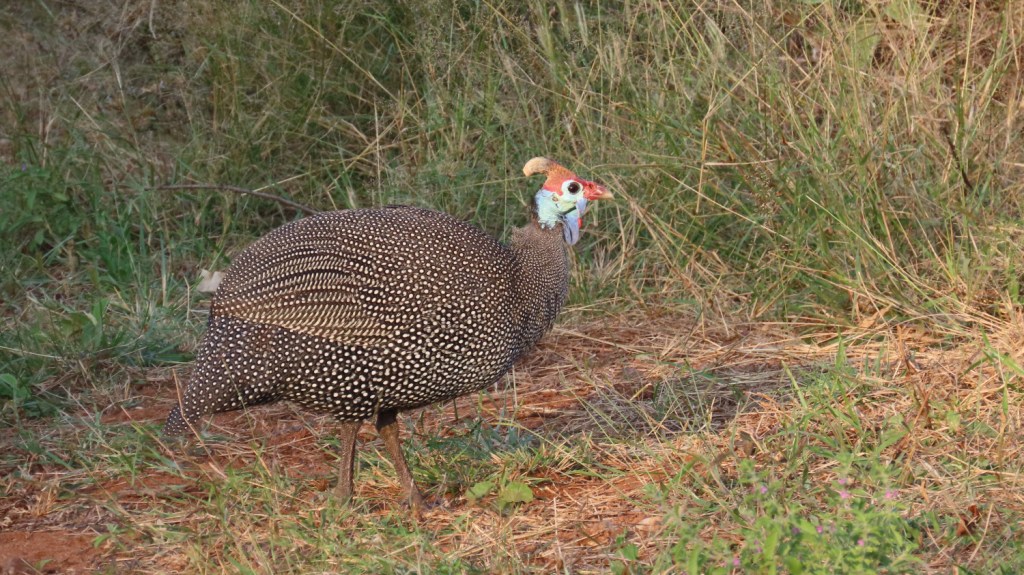
Helmeted Guineafowl patrolled the area in flocks of up to twenty birds. A Helmeted Guineafowl sports a chiffon-like coat of grey with dizzyingly-aligned white spots worthy of haute couture. The effect is somewhat spoiled by the bare-skinned head topped with a bony casque:
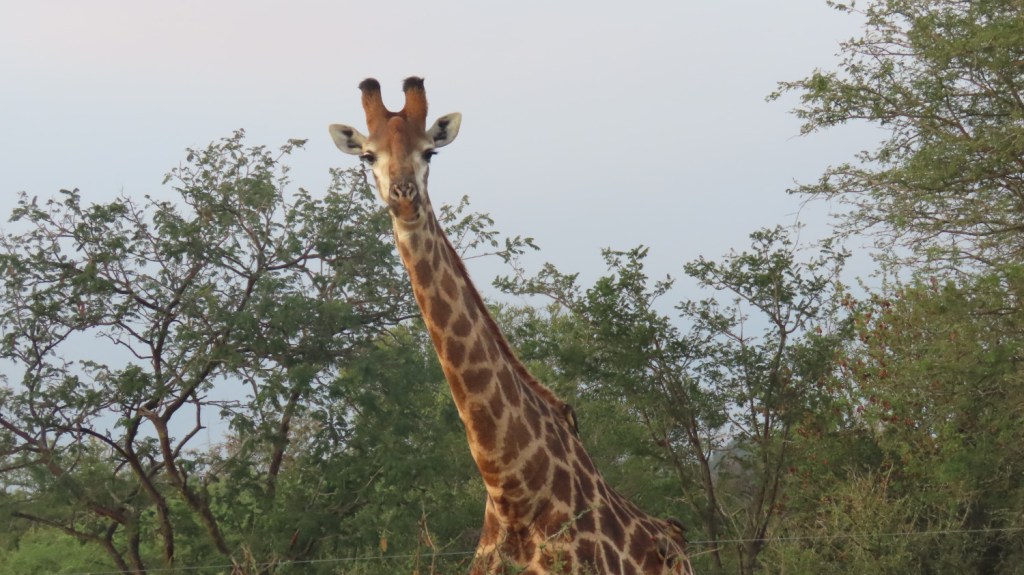
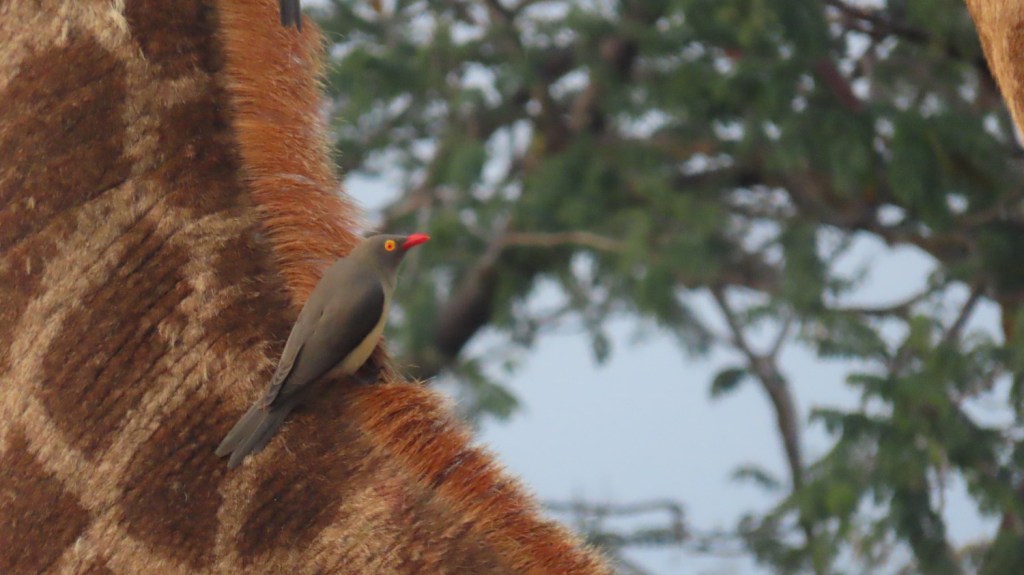
Early one morning, we went on a game drive at Khaya Ndlovu on the Rietspruit Big 5 Game Reserve. That’s a private reserve close to the Kruger National Park. Among the creatures we saw were several giraffes. It was interesting to see the little birds, called Red-billed Oxpeckers, that spend their time perched on the giraffes’ necks and flanks. The birds feed on ticks, mites, and other parasites on the animals’ skin. They even sometimes drink the animals’ blood. The birds are hard to see in this picture — one is above the giraffe’s shoulder and two are near the back of the giraffe, one on its flank and another perched near its tail:
Here’s a closeup of an Oxpecker, showing its red bill and red eye surrounded by a yellow wattle:
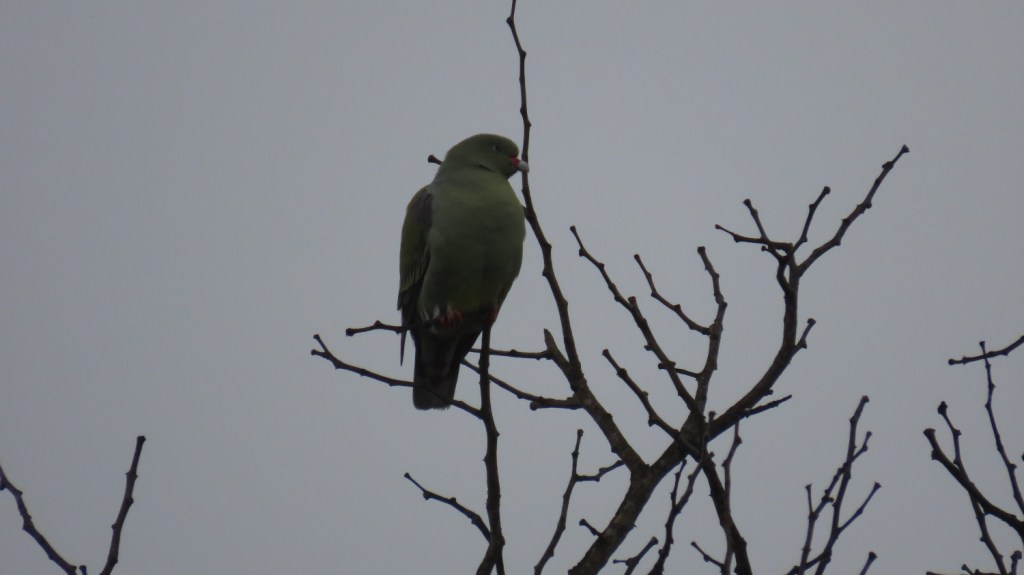
Have you ever seen a green pigeon? Here’s an African Green-Pigeon, looking plump and happy in the morning dimness:
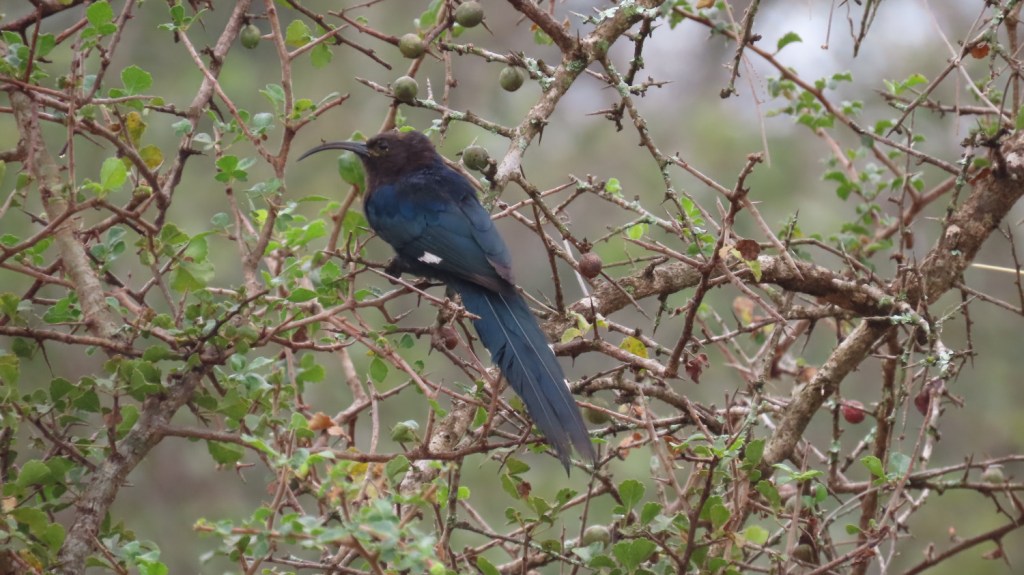
A Common Scimitarbill swooped from tree to tree, difficult to spot and identify despite its relatively large size. The bird has a distinctive thin, curved beak, hence its name. It uses the beak to poke into crevices and cracks in trees, prying out insects and grubs:
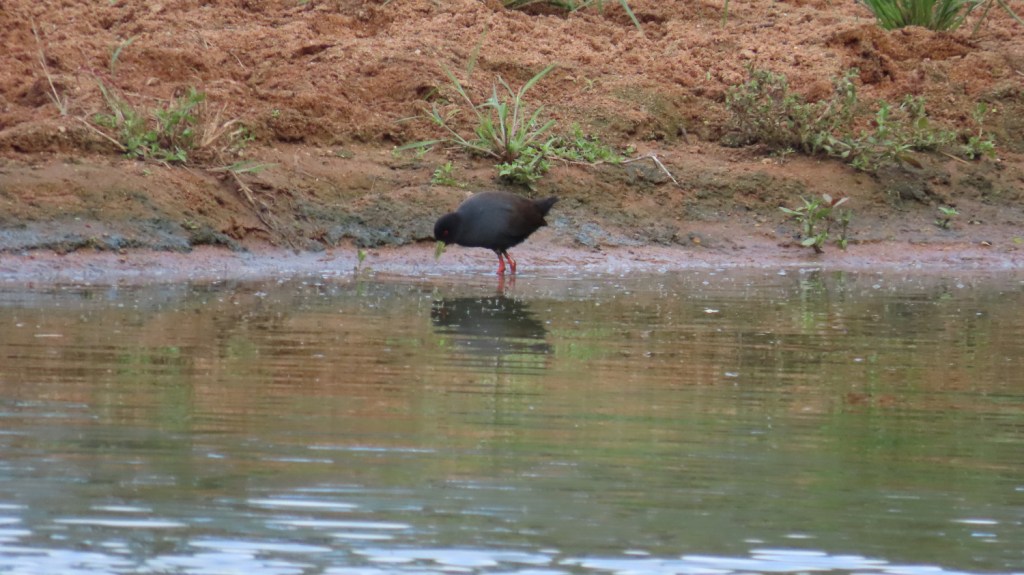
At a small dam, a Black Crake bustled up and down at the water’s edge. According to my Merlin bird app, these birds are listed as uncommon in the area:
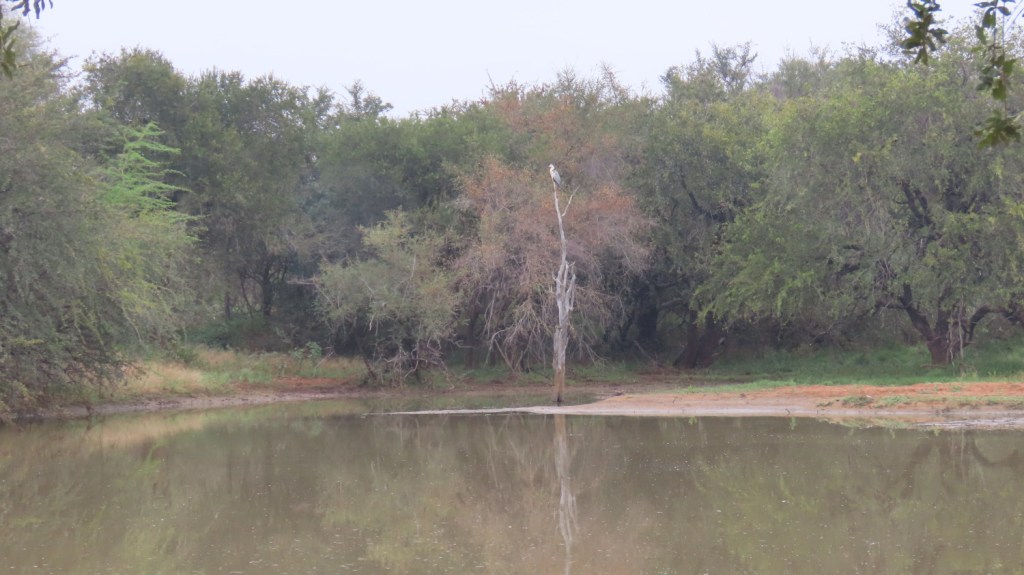
The dam was quiet and restful. I visited it twice and saw a variety of birds there. This photo shows more of the dam, with a Gray Heron visible on a tall dead tree trunk in the distance:
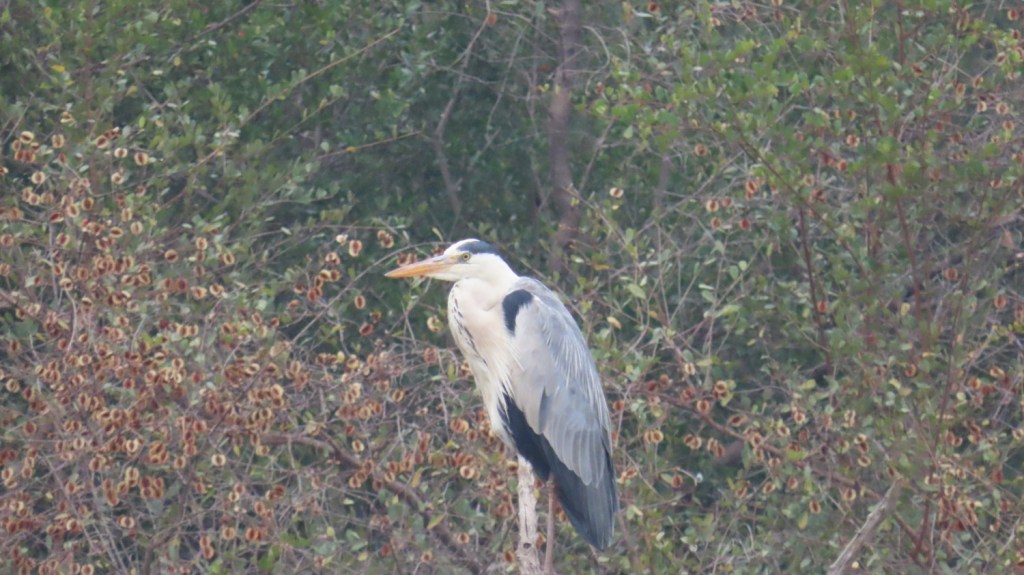
Here’s a closeup of the Gray Heron:
Like the Lapwings in Australia, Blacksmith Lapwings are brave and aggressive guardians of their young. These two, however, were peacefully patrolling their turf:
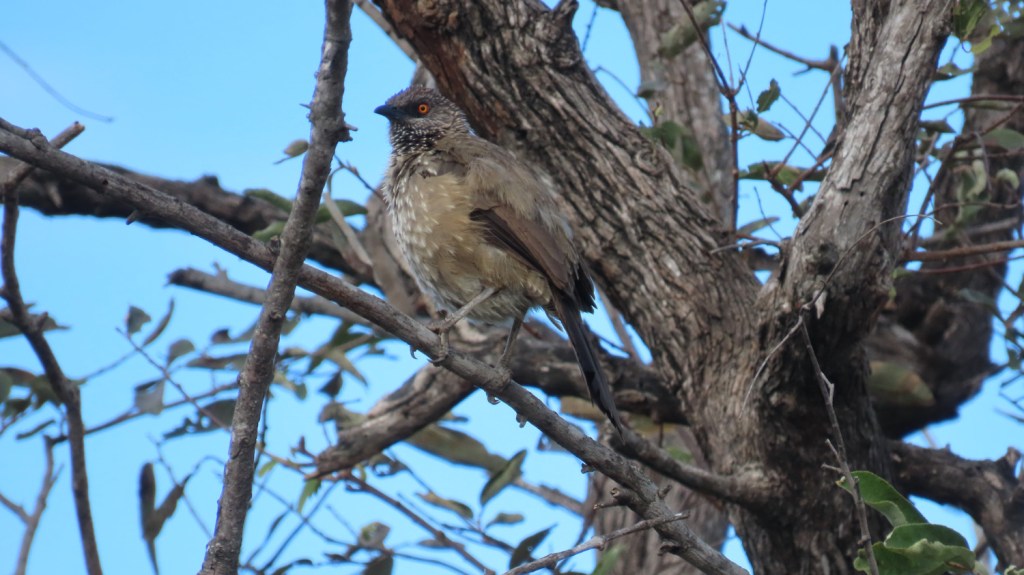
The markings on the next bird reminded me of the Little Wattlebirds that we get in Australia. The South African bird is an Arrow-marked Babbler. Look at that fierce red-rimmed, orange eye:
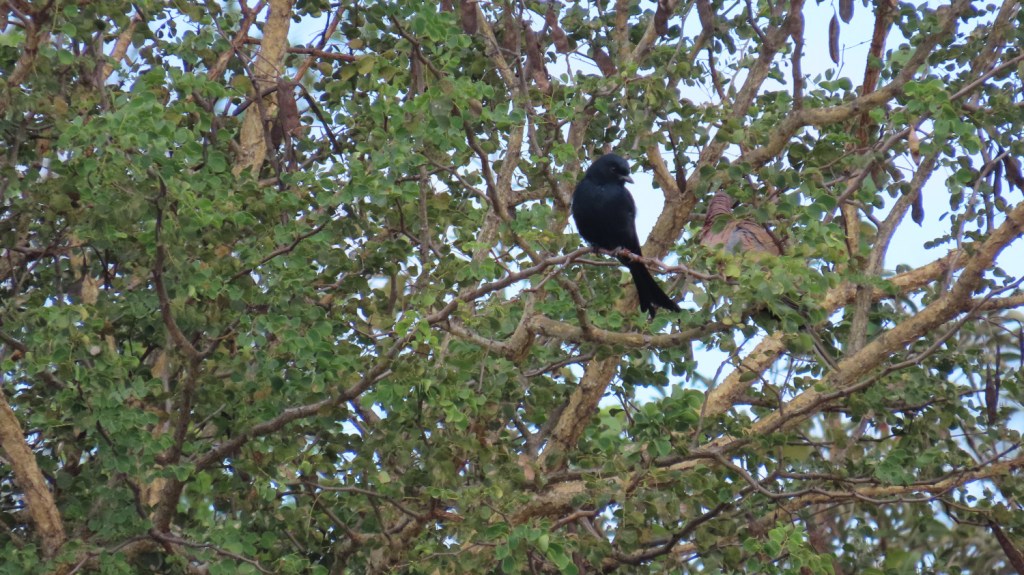
A Fork-tailed Drongo perched high in a tree, chatting to a half-hidden pigeon of some sort:
Sounding like a husky buzzsaw, a Grey Go-away-bird (also known as a Grey Lourie) uttered its call: “Go-waaayyy!” The call is just audible at the beginning of the video, just before another starts a repetitive honking off-camera:
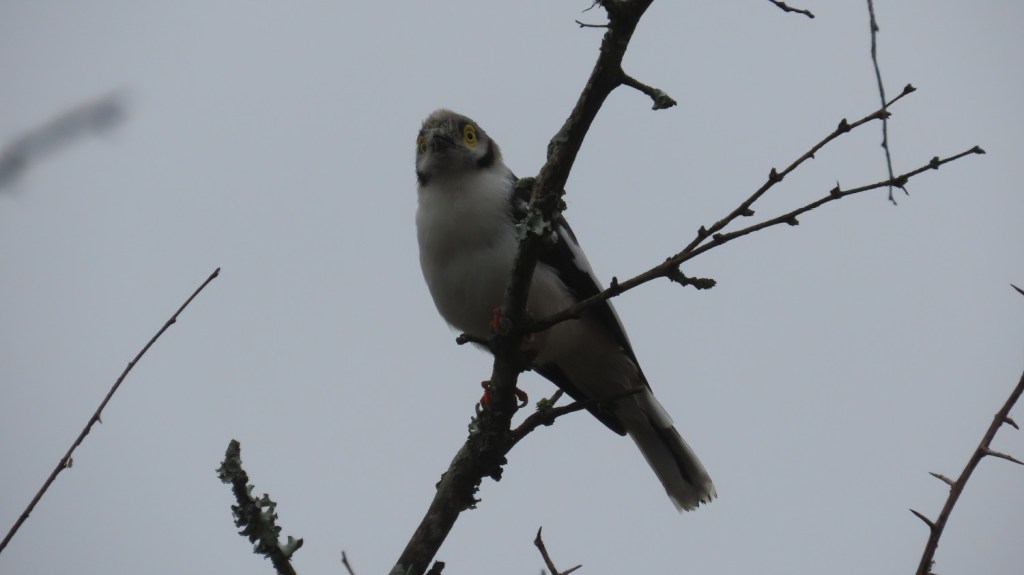
A White-crested Helmetshrike peered down at me from eyes that appear sunken into its face feathers:
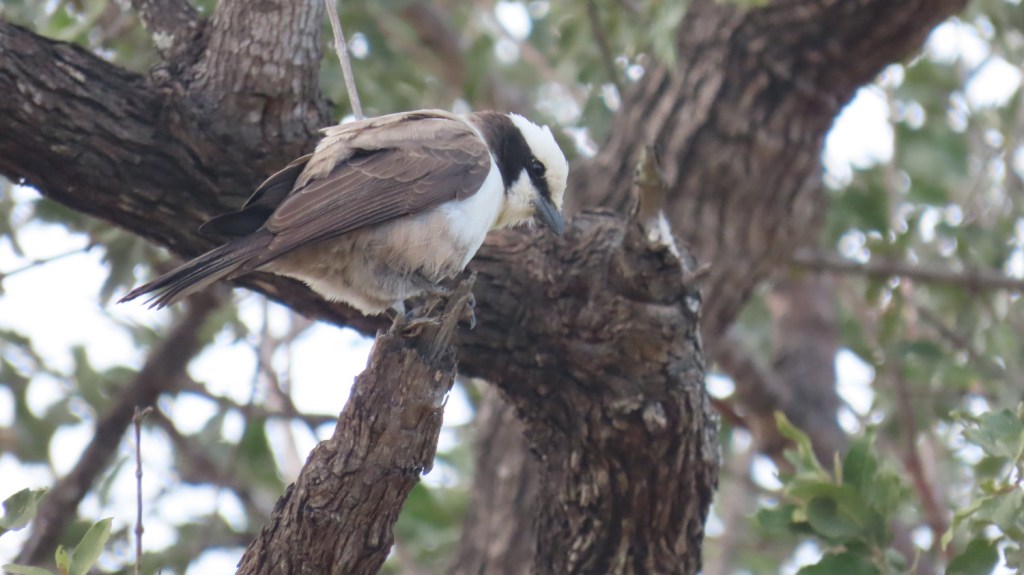
Here’s a White-crowned Shrike:
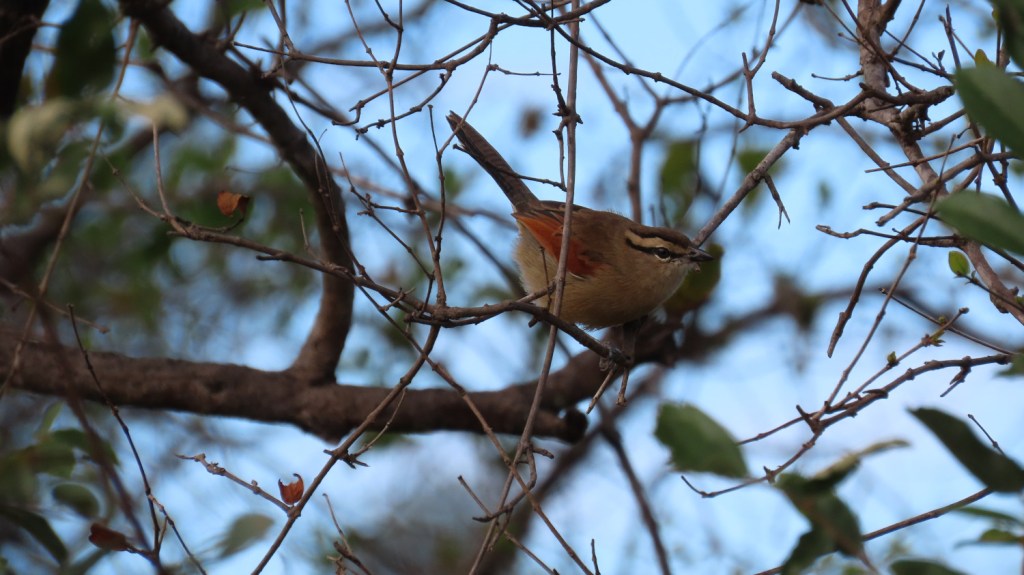
Adding to the list of shrikes is a Brown-crowned Tchagra, a type of bush shrike:
Among the waxbills and finches was a darkly mottled little bird, which I think is a Dusky Indigobird. These birds are nest parasites that lay their eggs in the nests of African Firefinches:
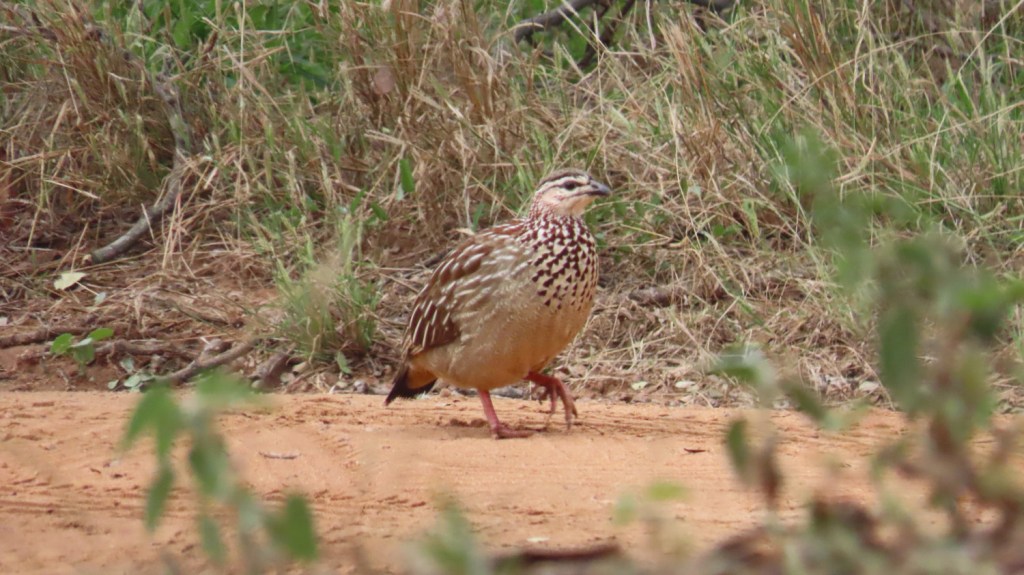
Evidently Crested Francolins have a bushy crest which they raise occasionally. It’s not in evidence in this photo:
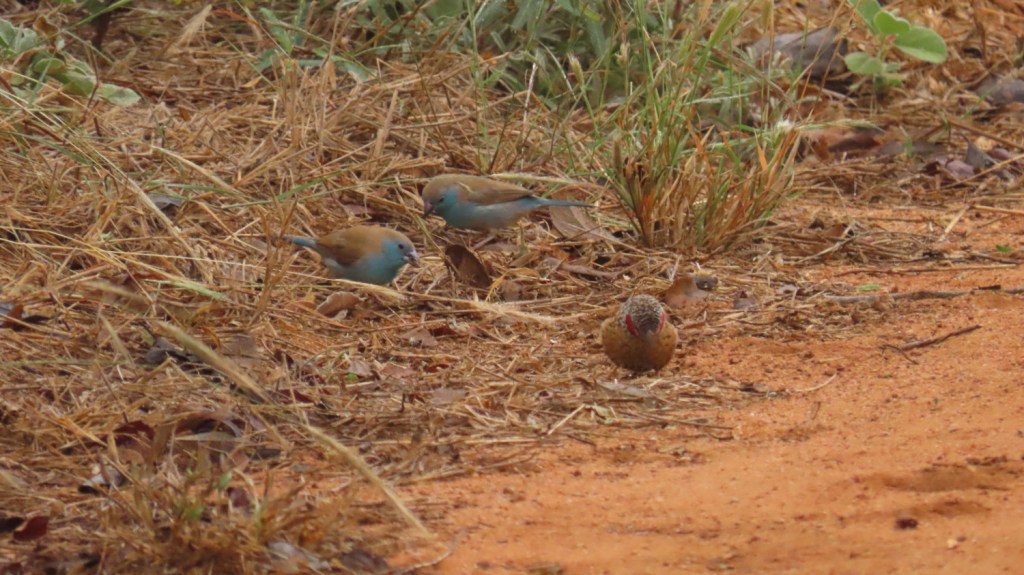
One of the prettiest little birds in the area is the Blue Waxbill. The next photo shows two Blue Waxbills and a Cut-throat:
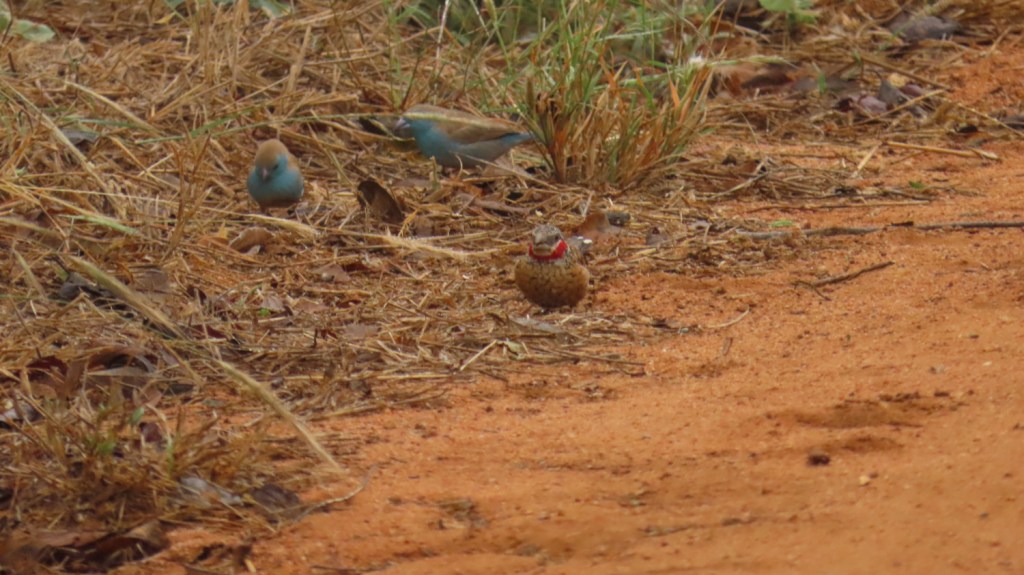
The next photo shows the same birds, with a clearer view of the Cut-throat:
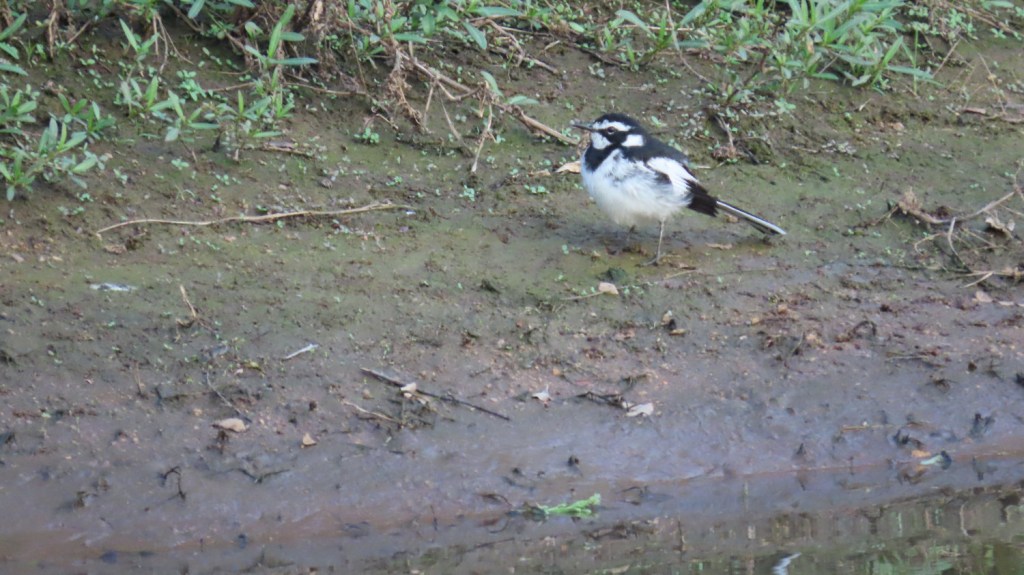
Last is an African Pied Wagtail, the only black and white wagtail in Africa. It made me think of the Willy Wagtails (which are actually fantails) that we get in Australia:
Although I’m based in Sydney, Australia, I love seeing the birds in other areas too. I hope you’ve enjoyed this look at some of the birds in and around Hoedspruit, South Africa.

Orange-breasted Sunbird sticks out its tongue
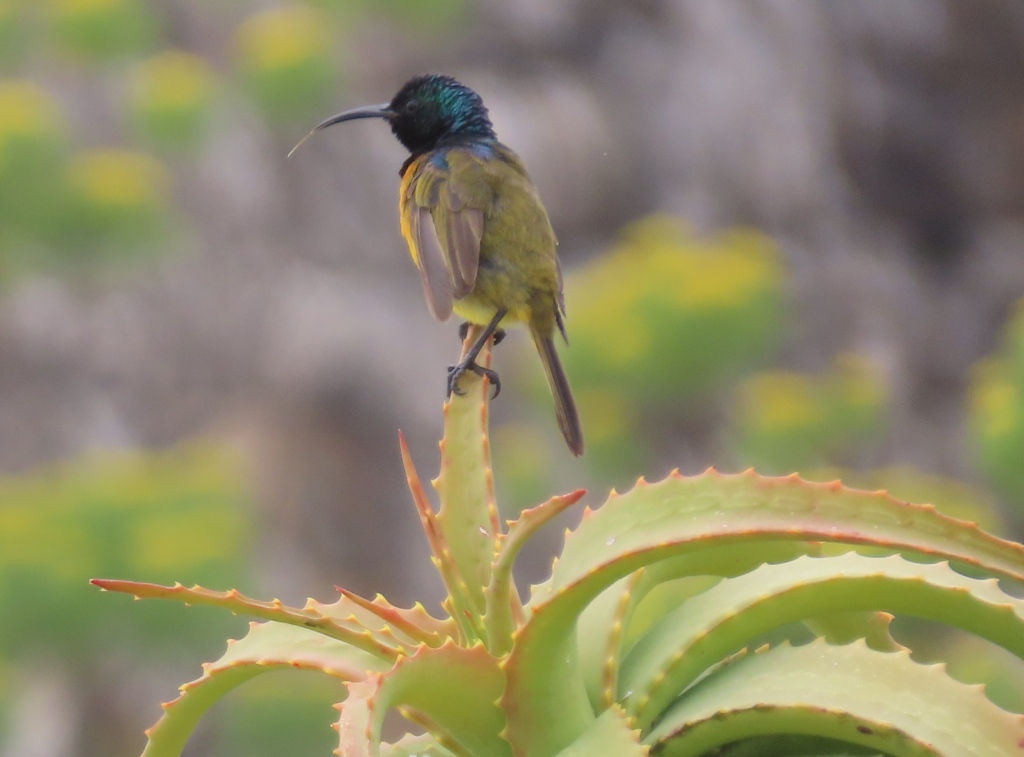
A couple of weeks ago, I was on top of Table Mountain in South Africa. One of the birds I saw was an Orange-breasted Sunbird:
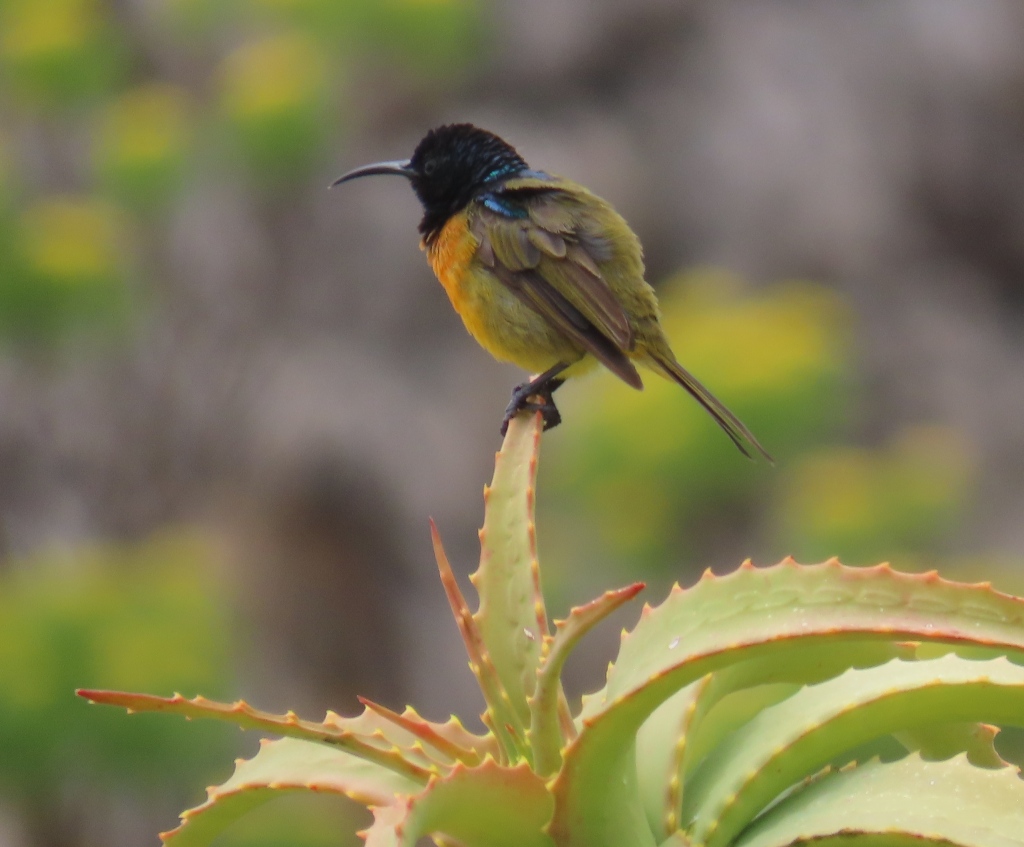
It’s a small bird with a black head, orange chest fading to yellow lower on the front, and iridescent blue markings above olive and brown wings. Super pretty!
Sunbirds have long, tubular tongues that they use to suck nectar from flowers. This next picture shows the bird’s tongue protruding from its beak:
Being up on Table Mountain is one of my favourite experiences. If you’d like to see more about being there, take a look at my bookmark’s blog: Atop Table Mountain in the clouds.

White-capped Red-winged Starling on Table Mountain
A couple of weeks ago, while on a short visit to South Africa, I saw this bird on Table Mountain:

I didn’t know what type of bird it was, but it looked to have a messy white cap.
Then the bird started poking its beak into the nearby flowers:

See how the flower touches the top of the bird’s head? The flower is dumping pollen grains — a handy way to get its genes transferred to the next plant visited by the bird!

The bird is a Red-winged Starling. The male is black with red flares on its wings. It typically doesn’t have a white patch on top of its head! The female’s colouring is softer, with a grey head and blue hues in the rest of the plumage. She also has orange-red wing flares:
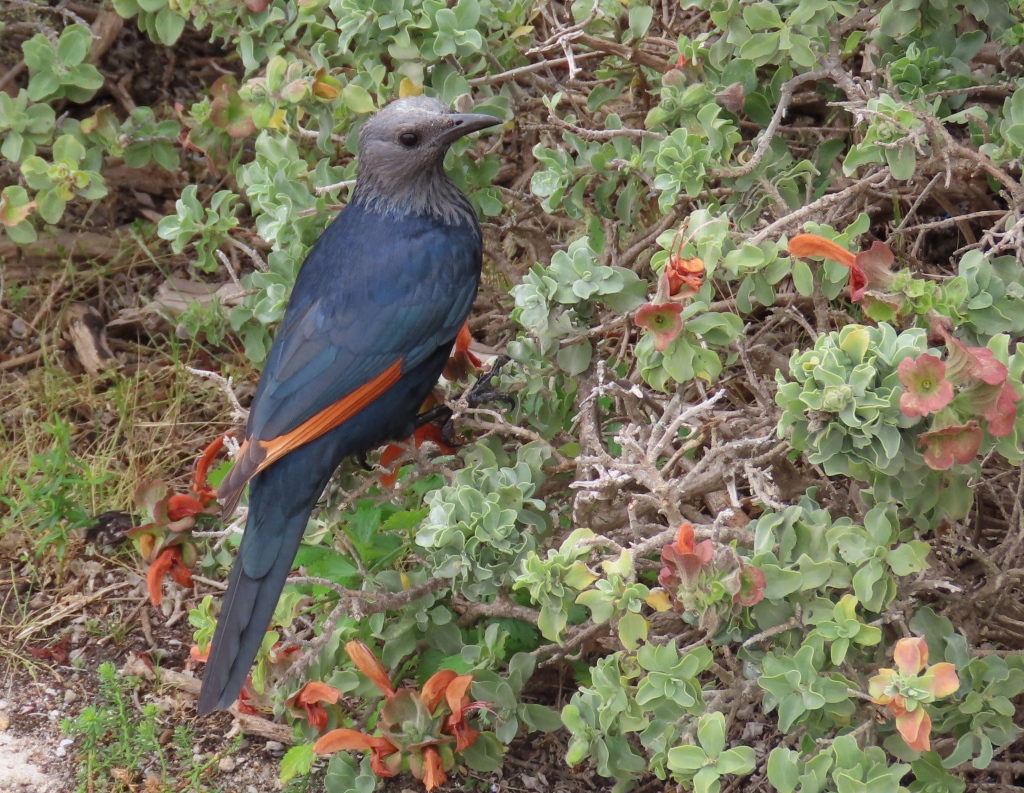
The two birds spent some time playing together on the edge of the mountain. In the next photo, the male shows the red wing flares nicely as it comes in to land:

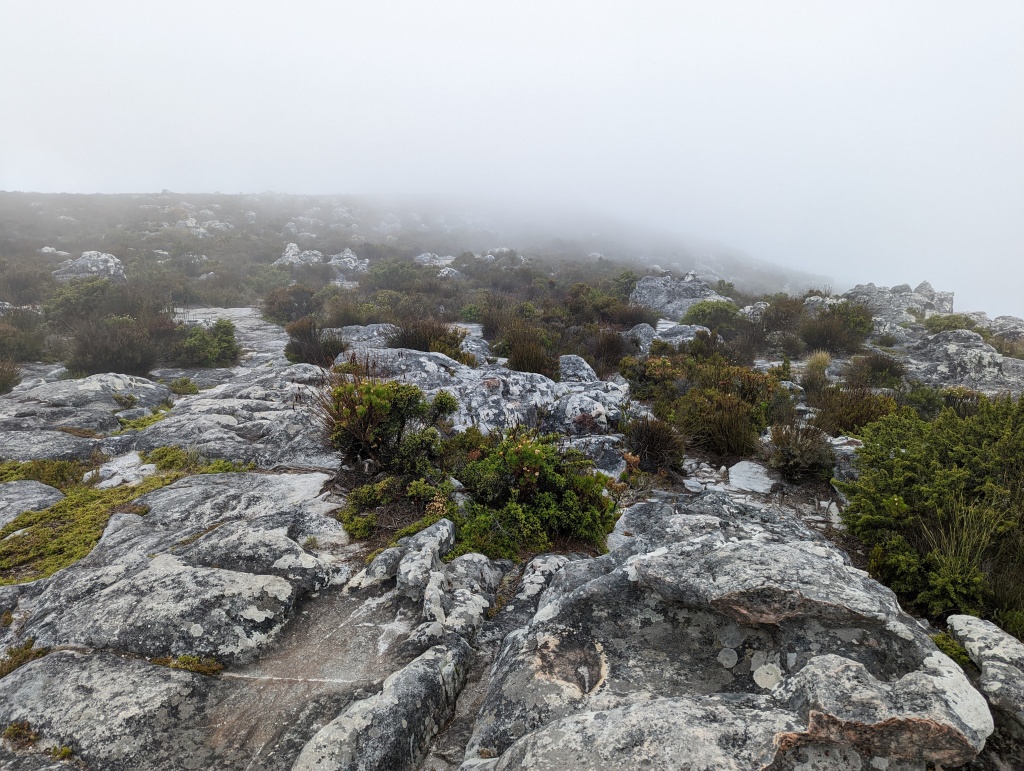
Being on top of Table Mountain is a magical experience. It really is flat up there, like a table top. The morning that we were up there was misty and quiet:
If you’d like to see more about being there, take a look at my bookmark’s blog: Atop Table Mountain in the clouds.

Cape Gulls at Melkbosstrand, South Africa
This is my last post from my holiday in sunny South Africa. The photos in this post come from my frequent early-morning walks along the beach at Melkbosstrand, about 40 minutes’ drive up the west coast from Cape Town.
Most of the seagulls on the beach were Cape Gulls. Here’s a group of them with Table Mountain as a backdrop:
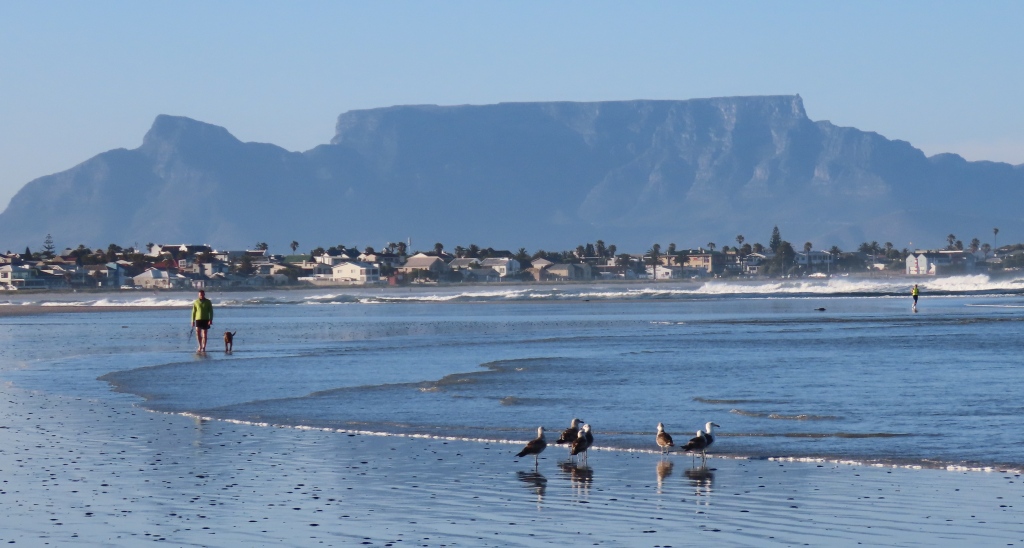
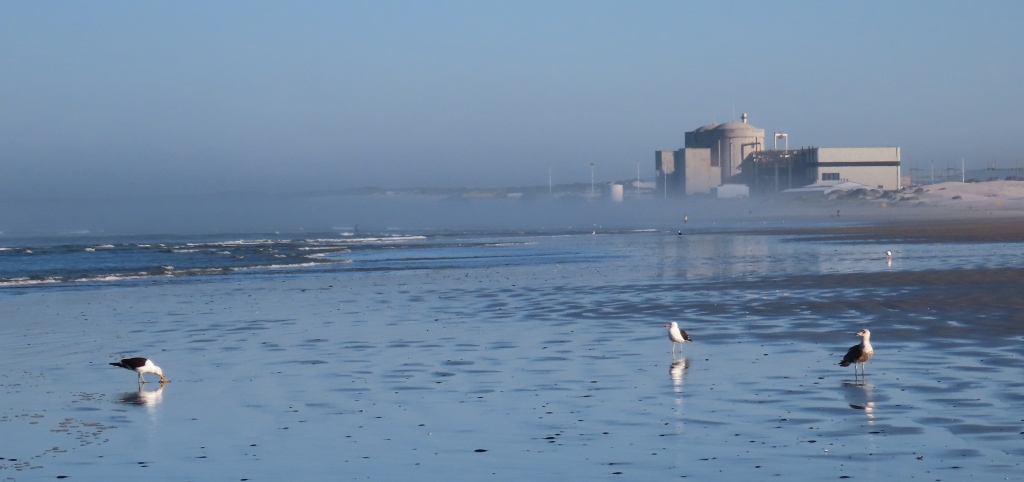
Looking in the other direction along the beach on a clear day, the backdrop is Koeberg nuclear power station:
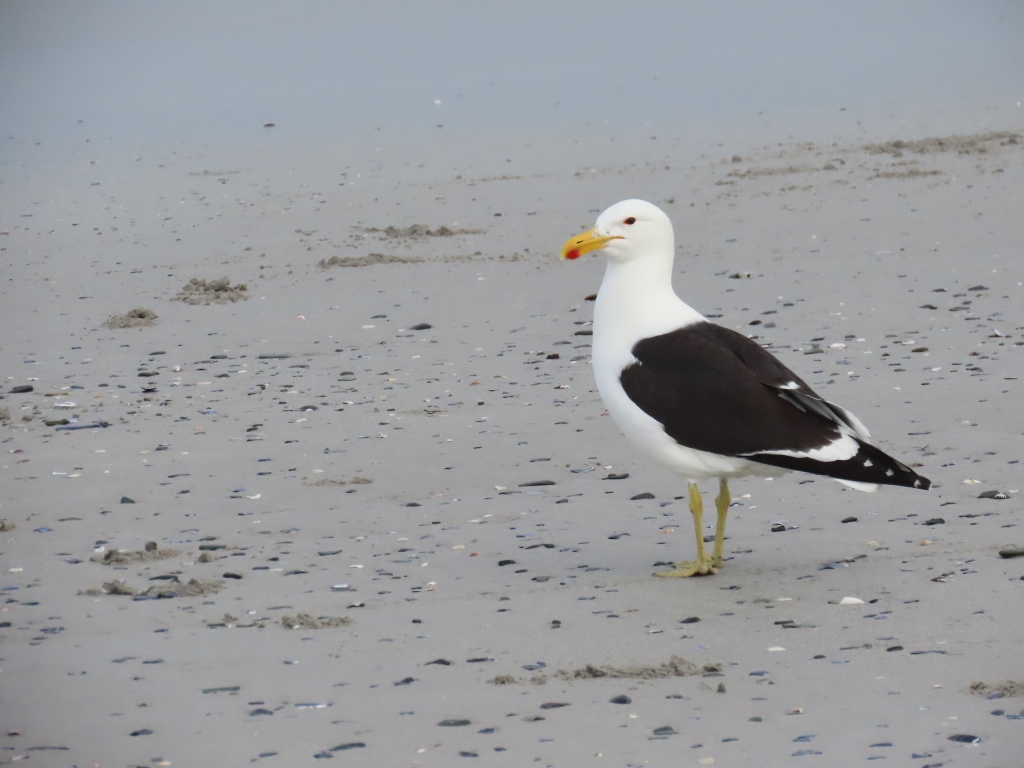
At first I thought I was seeing two different types of gulls, because the juveniles are large and have very different colouring from the adults. The adult is a neat black and white. The yellow beak ends with a distinctive red splotch:
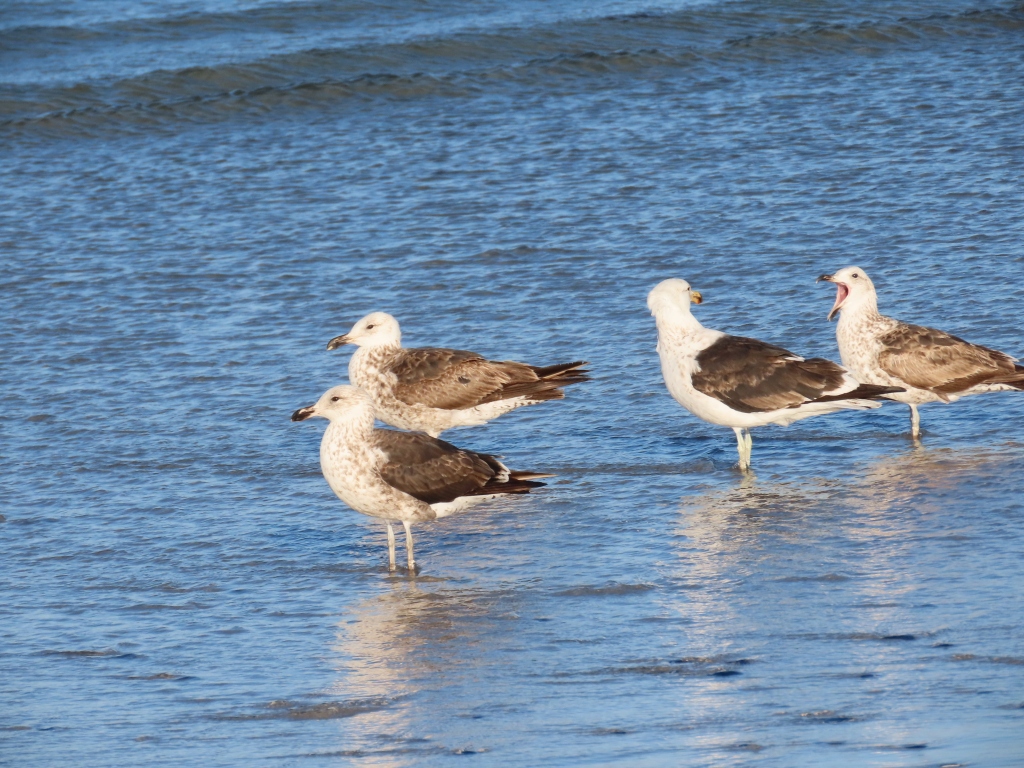
The juveniles are a soft, mottled brown and cream:
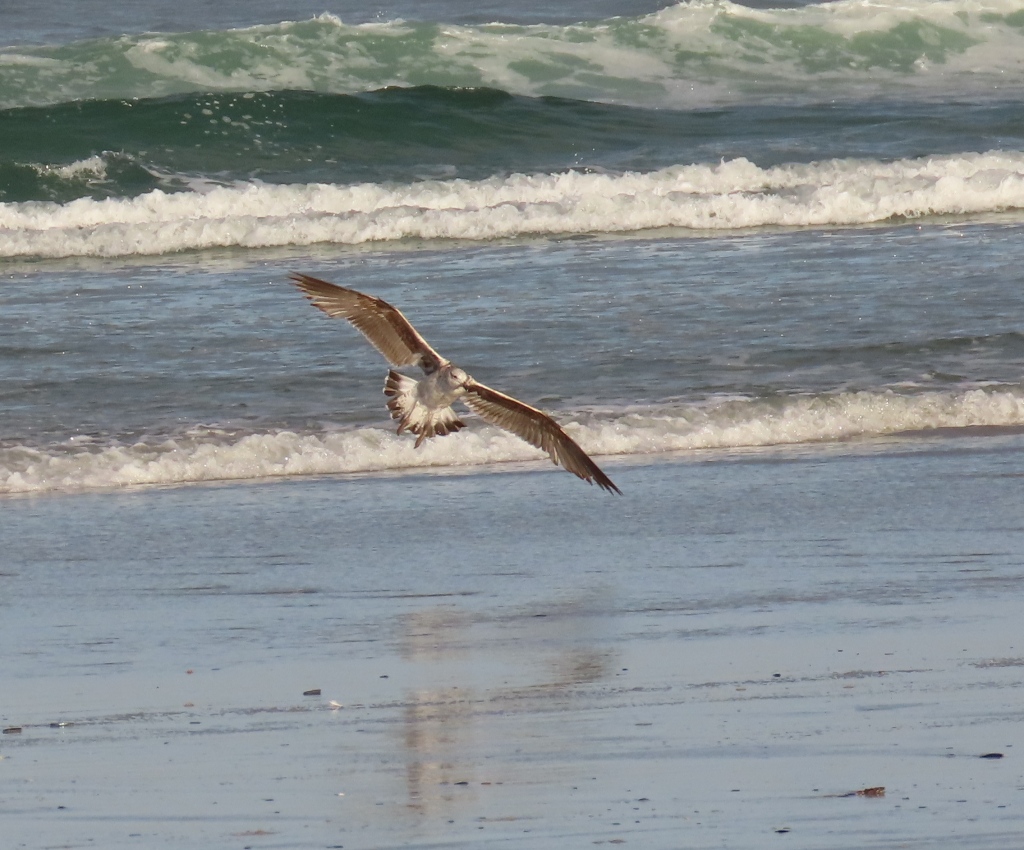
Junior coming in to land:
An adult performing a similar manoeuvre:

A story of a crab: I spotted a crab upside-down on its back, with its legs embedded in the wet sand. It was quite large, the body about the size of the palm of my hand. I picked up a shell and used it to gently tap the crab. Instantly, the pincers swung round and tried to grab the shell. Ah, it’s alive! I used the shell to flip the crab over. It immediately dug itself into the sand with its back legs, until just the top of its shell was showing:

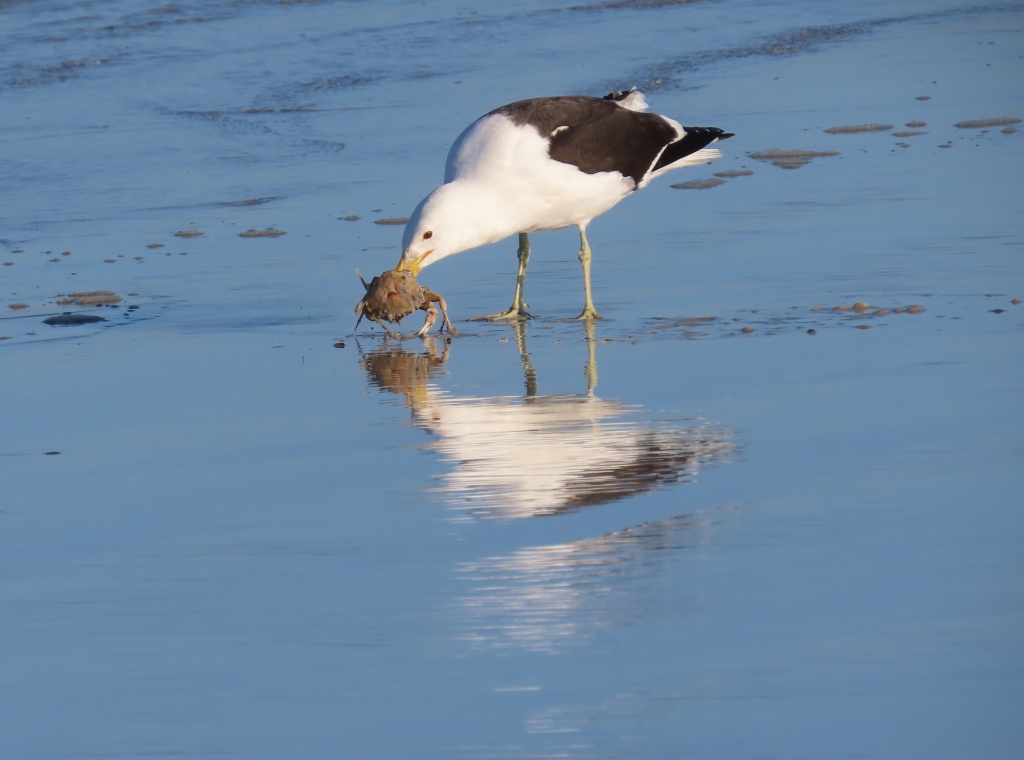
A little while later, this scene made me doubly glad that I’d rescued that particular crab. Another crab had become a seagull’s meal:
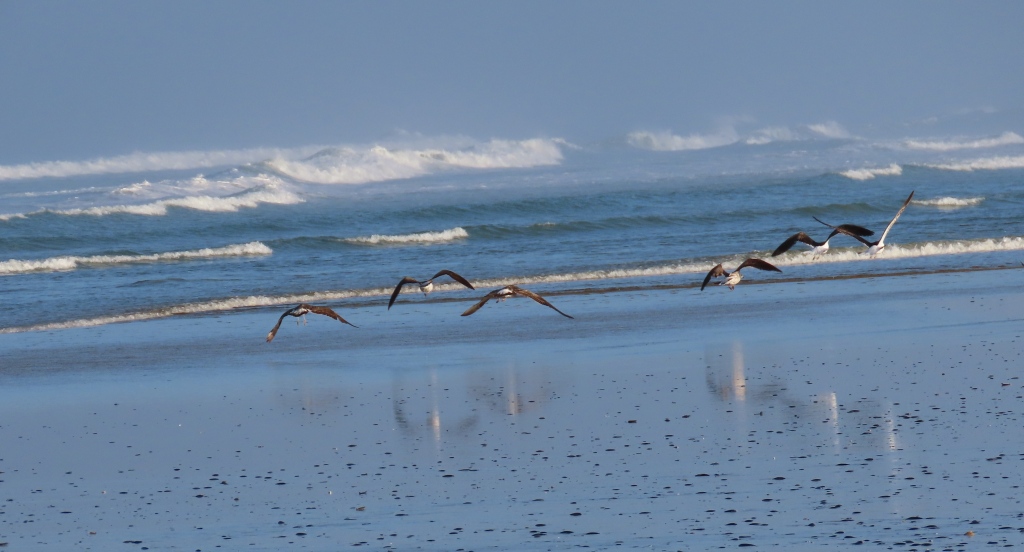
Cape Gulls in motion:
A moody, misty shot:
As a parting shot, seagull footprints on the sand:

My next post will be from back home in Australia!

White-fronted Plover on Melkbosstrand, South Africa
After initially mis-identifying one White-fronted Plover a few days ago (I thought it was an Oystercatcher chick), I was lucky enough to spot another of the little plovers on the beach at Melkbosstrand today:
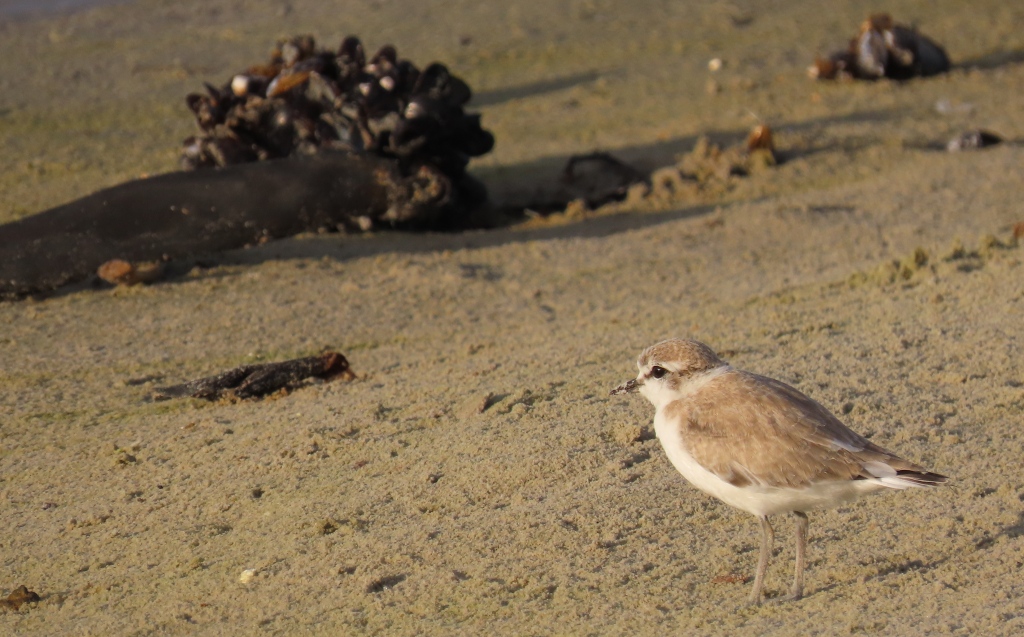
The plover moves in short dashes from one spot to another, freezing for a while after each move until it thinks the coast is clear. In this video, see how fast the little bird’s heart beats as it waits for its next dash!
The next shot shows how well the plover is camouflaged, especially when it hides behind a piece of seaweed:

The bird is behind the nearest clump of seaweed at the bottom of the photo, just to the right of centre.

Crowned Cormorants on Melkbosstrand, South Africa
I’m in the Western Cape, South Africa, for a few days. On my early morning stroll along the beach at Melkbosstrand, I pass a cluster of rocks called Slabbert Se Klippe. This is where the Crowned Cormorants hang out!
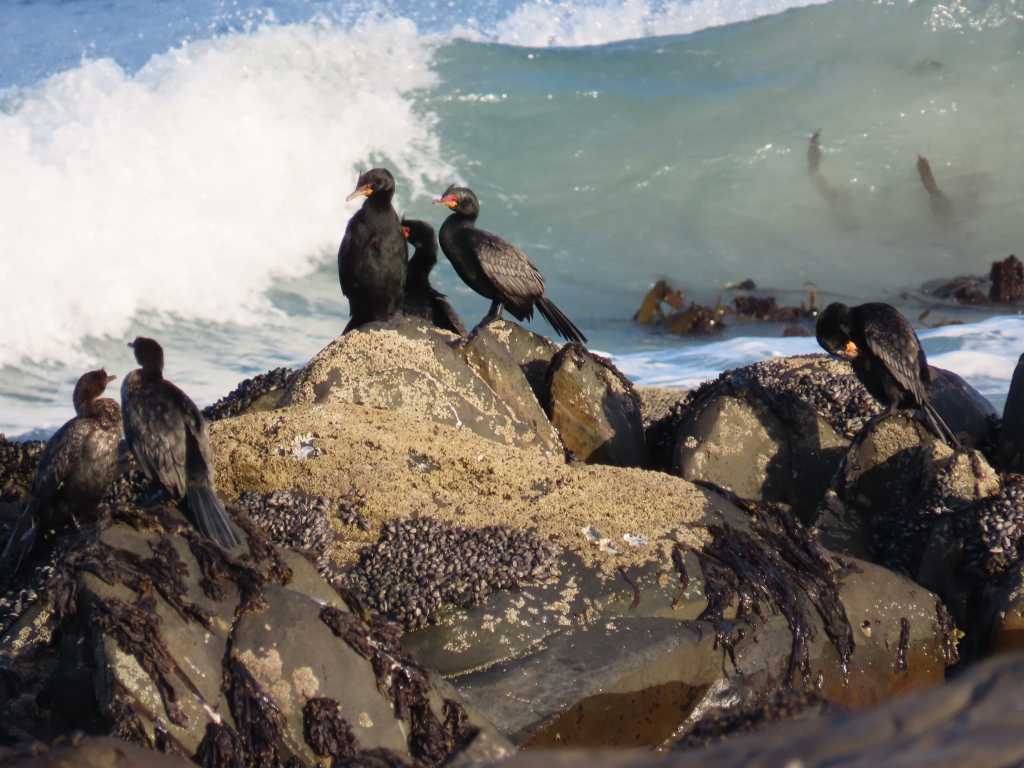
It’s interesting to compare these South African cormorants with the cormorants that I’ve spotted around Sydney.

Oystercatchers and White-fronted Plover at Melkbosstrand, South Africa
I’m in South Africa for a few days (so, not in Australia!). This morning I went for a walk along the beach at Melkbosstrand, which is on the west coast of Africa, about half an hour’s drive north of Cape Town.
Four African Oystercatchers roamed the beach. One of the birds was alone, patrolling the rocks for mussels and other shellfish:
African Oystercatchers, also called African Black Oystercatchers, are considered a threatened species. There are about 6,000 adult birds in the wild. Here’s a photo of the same bird:

Zooming out a bit to see more of the bird’s environment:

Further along the beach was a trio of Oystercatchers:

When I zoomed in on the birds, I noticed that they seemed rather solicitous about a specific patch of seaweed on the beach. I zoomed the camera in to the seaweed and spotted what I thought must be an Oystercatcher chick using the seaweed for shelter:
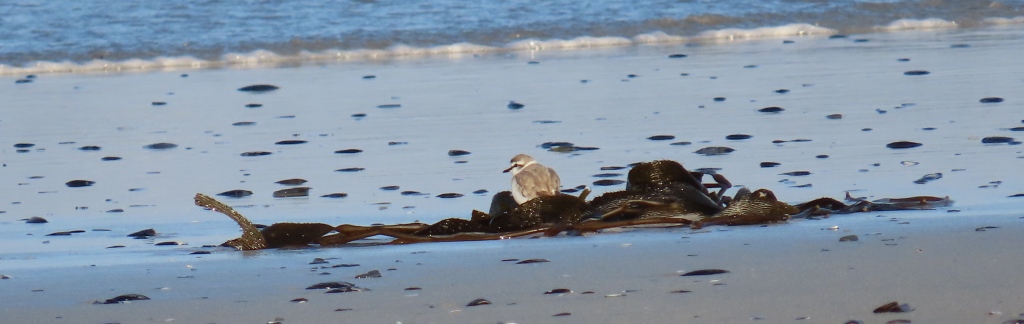
Update on 8 November 2022: Thank you to my friend Hamish Robertson who identified the little bird as an adult White-fronted Plover!
Here are two of the Oystercatchers with the Plover:

What’s the view like from the beach at Melkbosstrand? Looking one way, you have a view of Table Mountain:
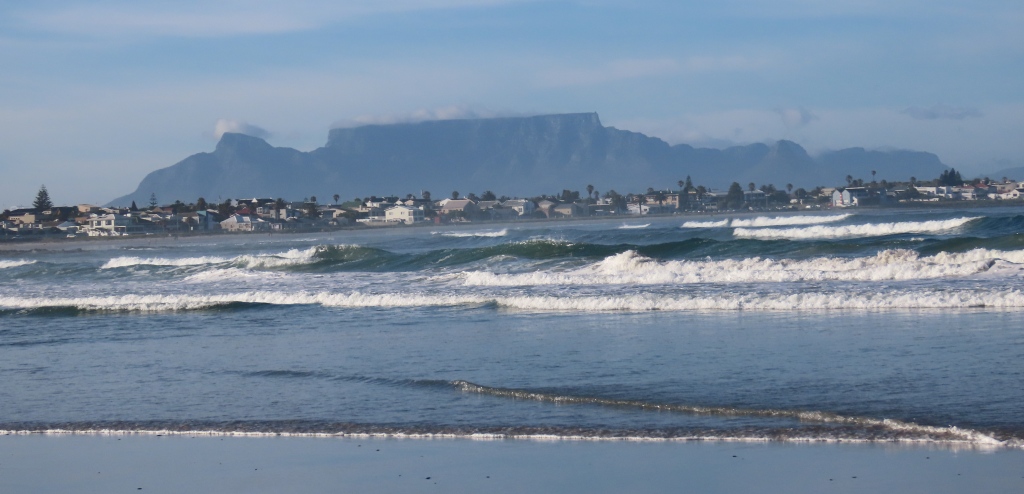
Turning round, you have a view of Koeberg nuclear power station in the distance:
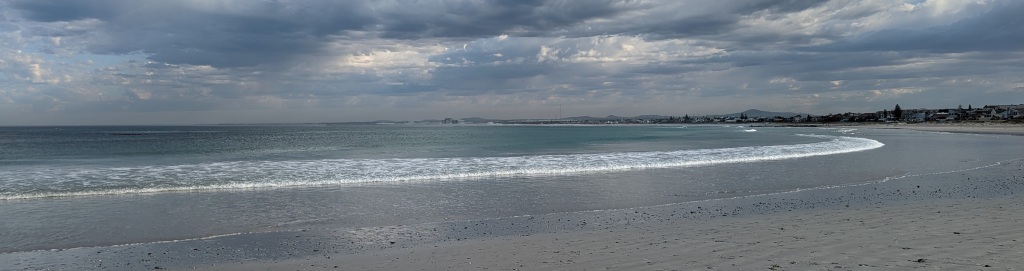
Here’s a zoomed in view of Koeberg:

I hope you’re enjoying my brief foray into South African birds. I’ll be back when I spot another bird!
Birds in Lonehill, South Africa
I’m in South Africa for a few days, enjoying the birds as well as other aspects of this interesting country. I photographed most of the birds in this post while on a short stroll through Lonehill Park. Lonehill is an outer suburb of Johannesburg, neighbouring on Witkoppen, and many of the bird species make their homes in both places. This post shows only the birds that I didn’t include in my earlier post about birds in Witkoppen Spruit Park.
First up, absorb the atmosphere of the park by watching this short video:
The centrepiece of the park is a large pond surrounded by reed beds and trees. In the background is the lone hill that gives the suburb of Lonehill its name:
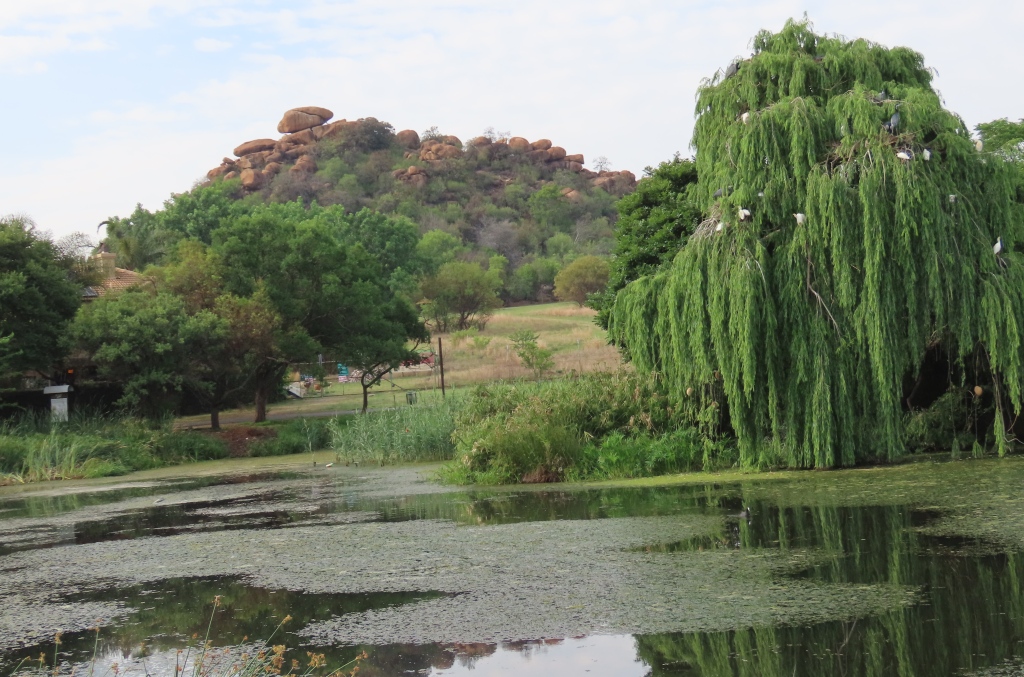
The tree on the right is home to several herons and egrets. They’re quite busy and noisy, as it’s breeding season. From the very top of the tree, a Black-headed Heron surveys its domain:

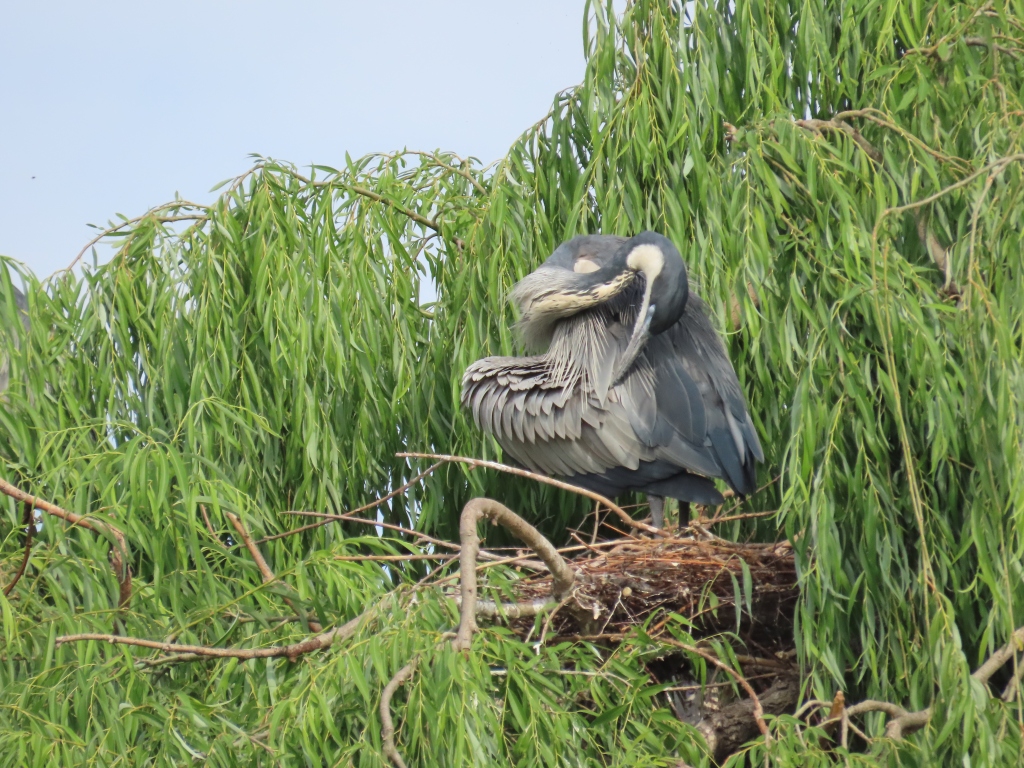
Lower down, another Black-headed Heron combines preening with sitting on a nest:
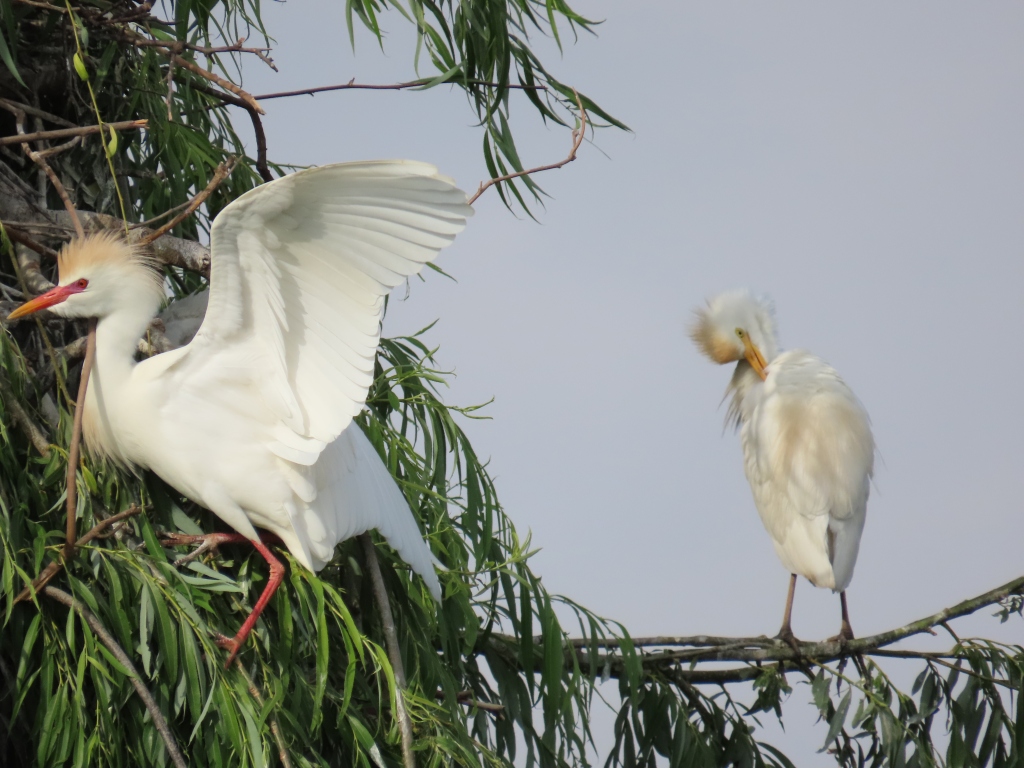
Two Cattle Egrets groom and strut their stuff:
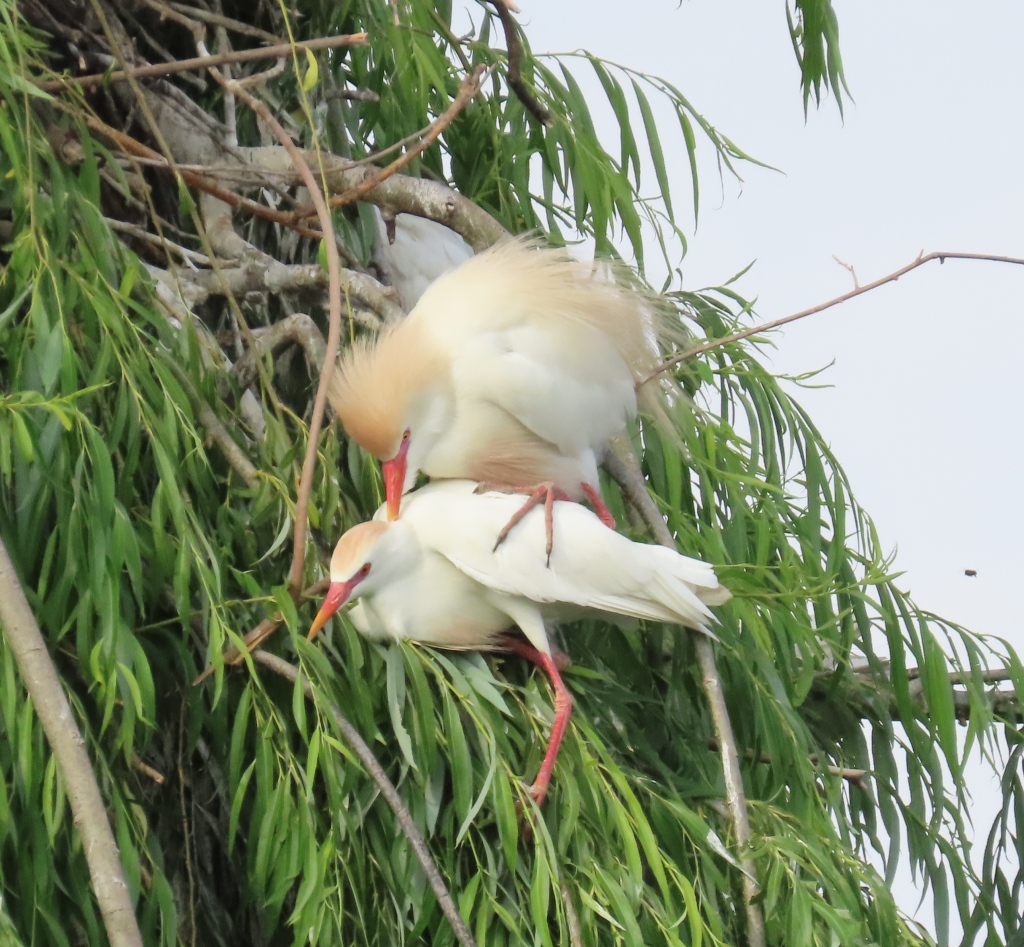
After a few more preliminaries, they get good and cosy:
Down below, a Bronze Mannikin perches on a reed stem. I love the colouring of this little finch, especially its two-tone beak:
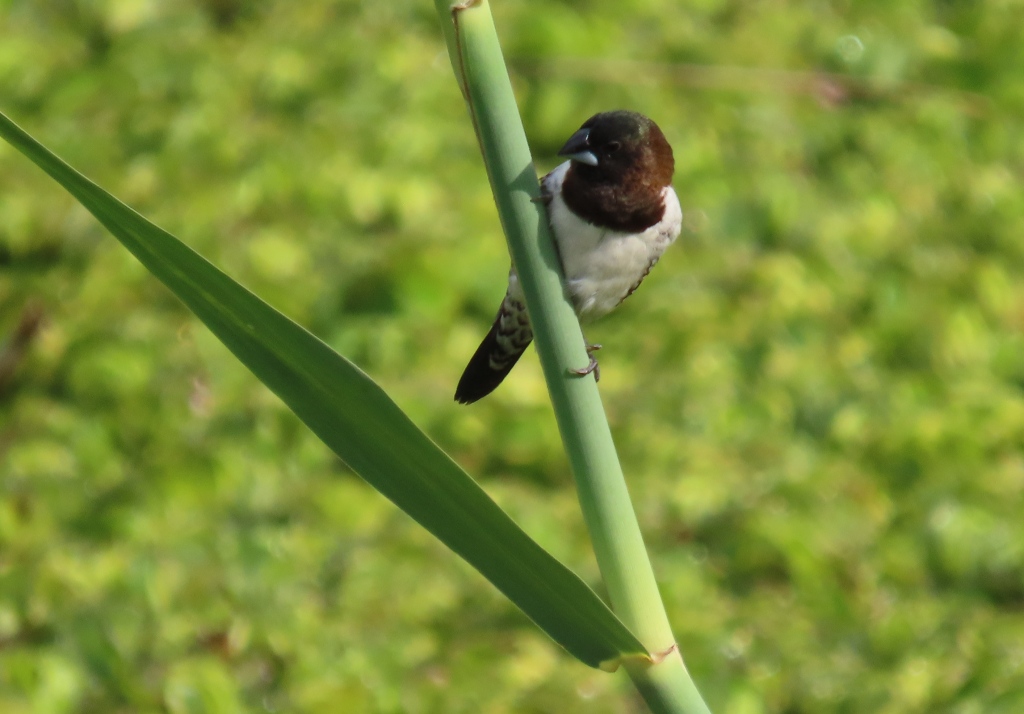
Several Bronze Mannikins were walking on the plants that covered part of the lake. Using my camera’s zoom, I managed to get this shot that shows the water droplets glistening on the plants around the bird:

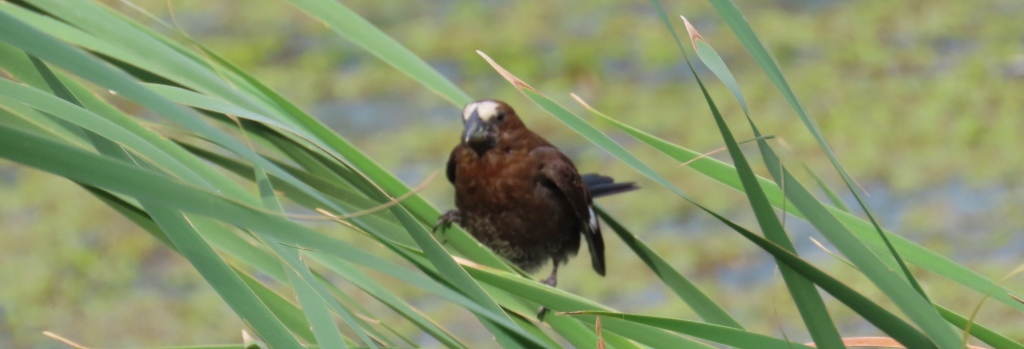
The next little fellow is a Thick-billed Weaver. Like the Red Bishops and Masked Weavers shown in my earlier post, Thick-billed Weavers build intricate woven nests from reeds and grass:
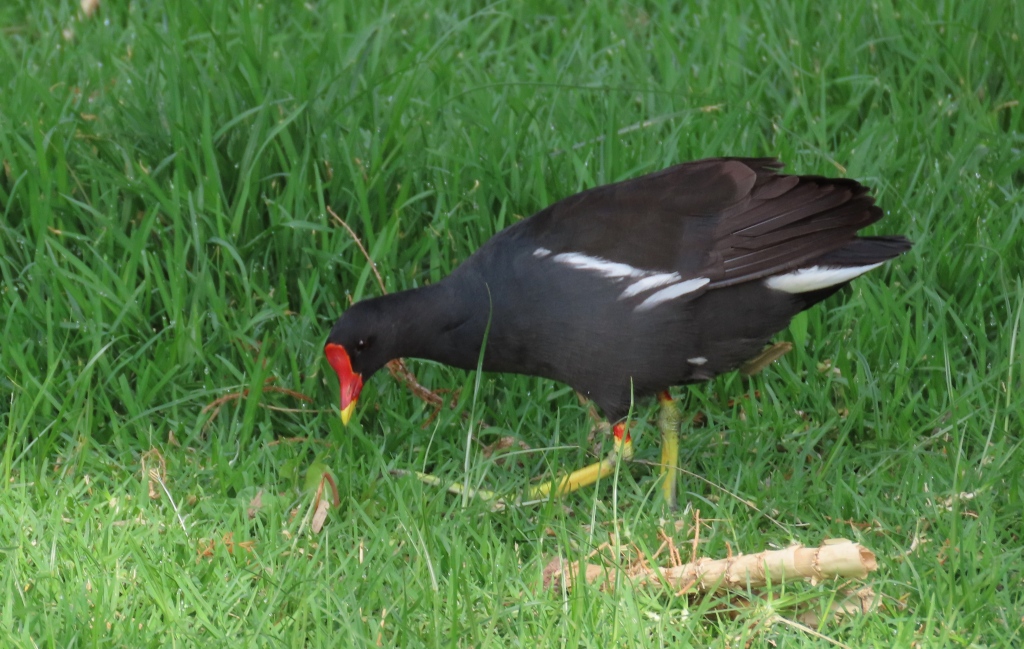
A Common Moorhen shows its red garters:
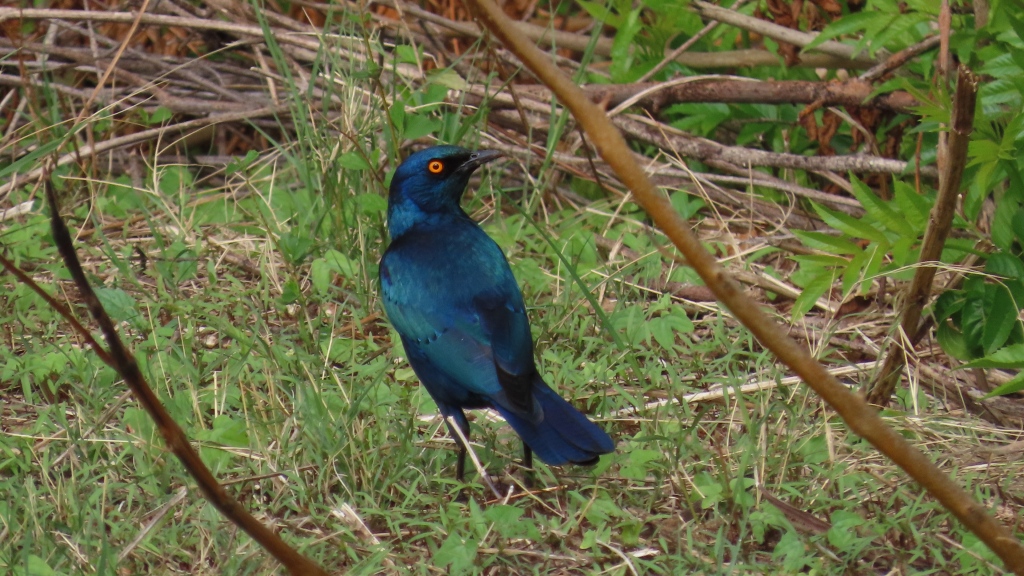
Striking in its coat of electric blue is a sharp-eyed Greater Blue-eared Starling:
A Laughing Dove and a Rose-ringed Parakeet brighten up some bare branches:

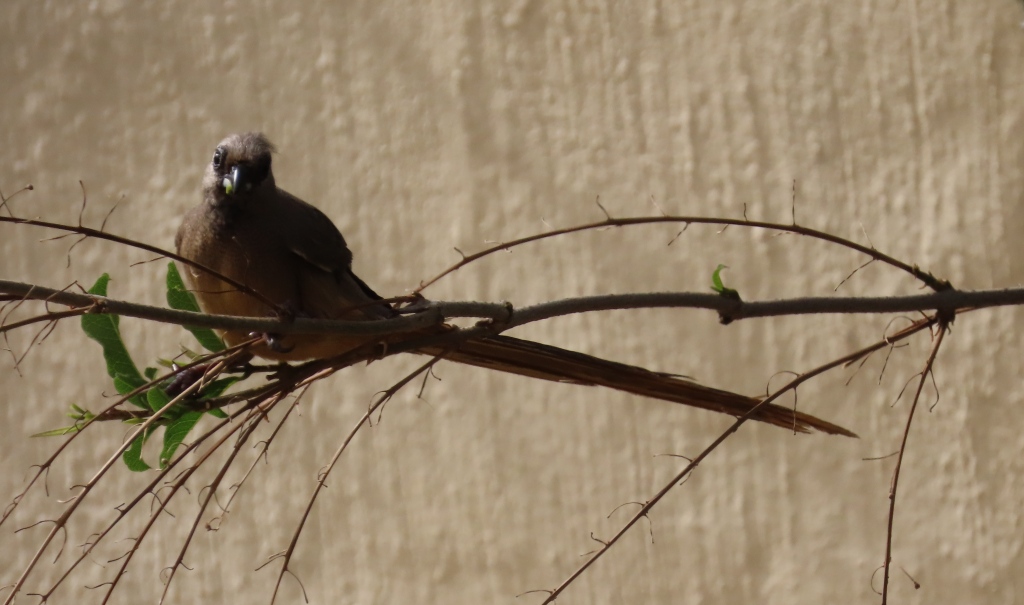
Next up is a Mousebird. I saw this particular bird not in the park, but in the garden of a friend in Lonehill:

Mousebirds get their name from the way they scurry around gathering food, which reminds people of mice. Here’s another shot of the same bird:
Also in a Lonehill garden, we saw a pretty pair of Rosy-faced Lovebirds, which are native to south-western Africa. There are feral colonies in various parts of South Africa. These two are frequent visitors to our friends’ bird feeder:

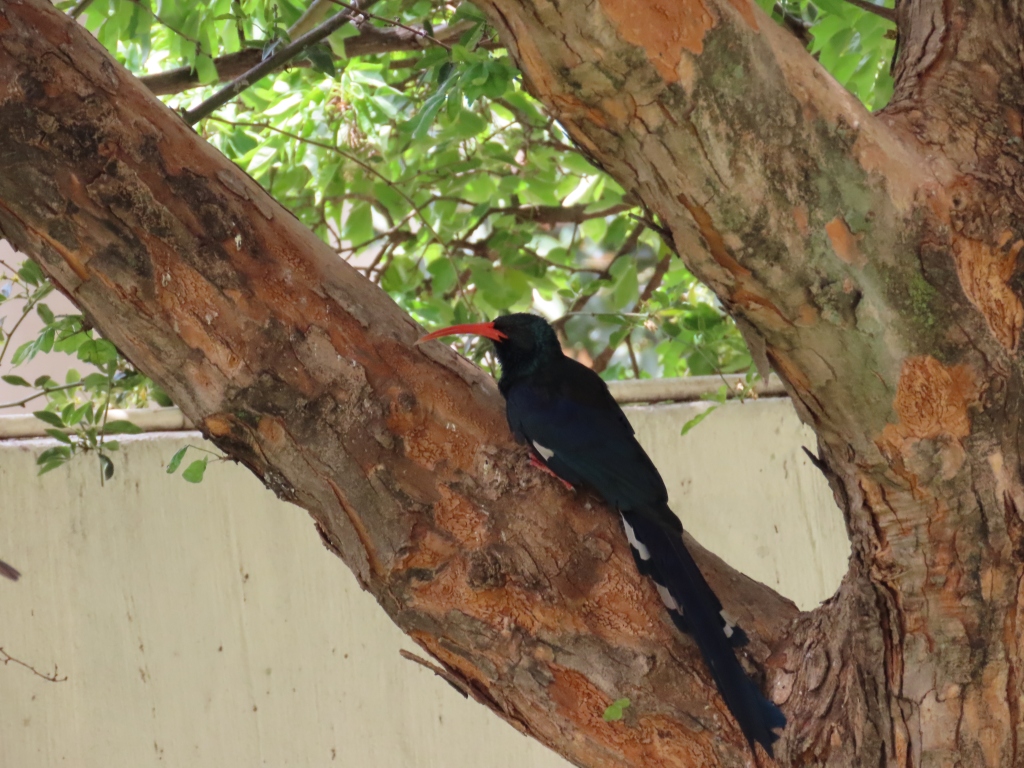
Another frequenter of the bird feeder is this Wood Hoopoe, also called a Scimitarbill. Like most of the birds in this post, Wood Hoopoes are native to this part of South Africa. They’re striking birds, almost entirely black with orange bills and feet, and white flares in their wings and tails:
That’s it That’s it for my collection of birds from the suburbs around Sandton. I’ll be back when I spot another bird!
Birds in Witkoppen, South Africa
I’m currently in South Africa, a little outside the usual geographical range of this blog! While here, I’m taking in a bit of the bird life. I photographed the birds in this post in a little patch of green called Witkoppen Spruit Park. Witkoppen is an outer suburb of Johannesburg, near Sandton. For such a small piece of land surrounded by residential suburbs, there’s an amazing variety of birds in the park. Well worth a visit, if you’re in the area.
To get in the mood, watch this short video and listen to the sounds of the birds all round:
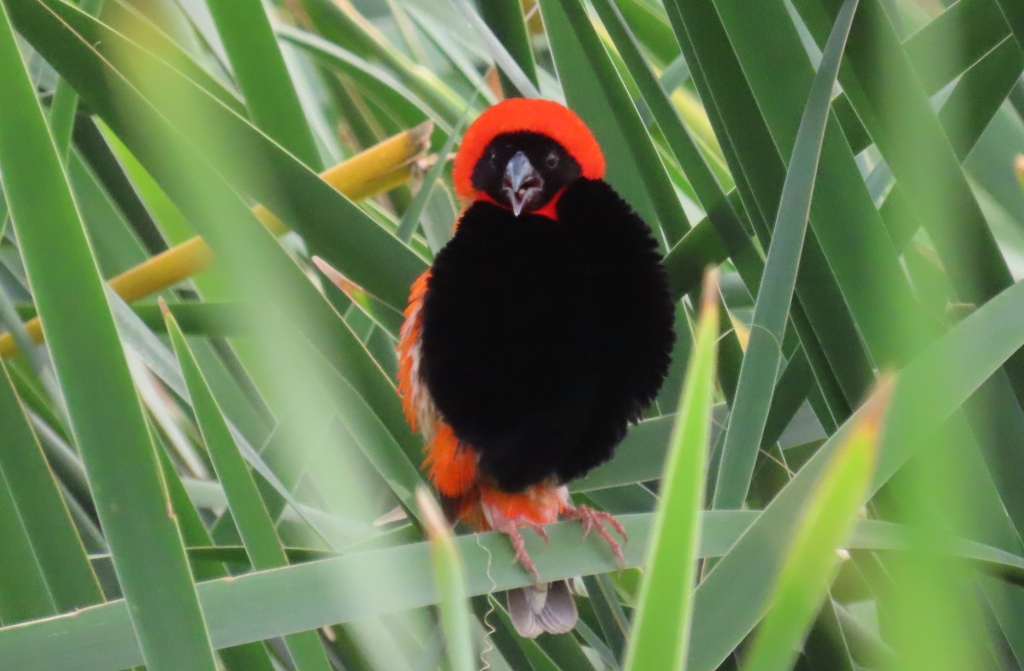
The flashes of red that you see in the video are Southern Red Bishops, a little bird in the weaver family. Here’s one of them caught in a rare moment of stillness:
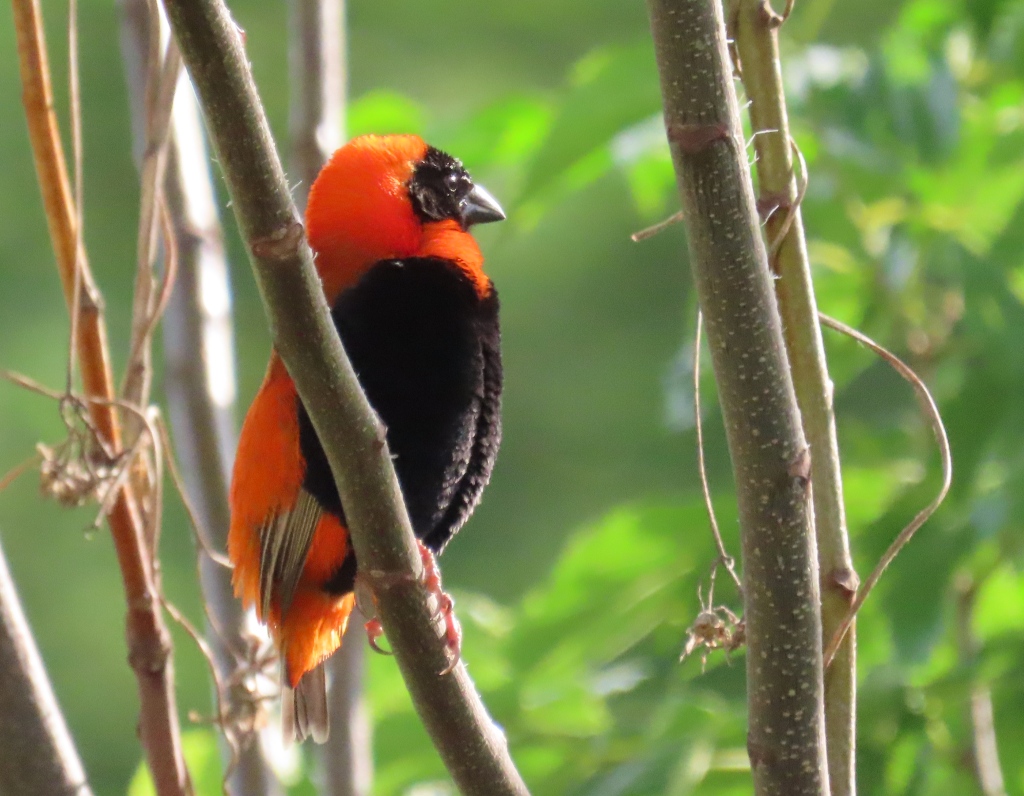
Like other weavers, Southern Red Bishops build nests of intricately woven reeds hanging from tree branches or tall reed stems:

Here’s one of the birds in a quarrelsome mood:
Nearby, a Southern Masked Weaver peers out from behind the leaves of a tree:
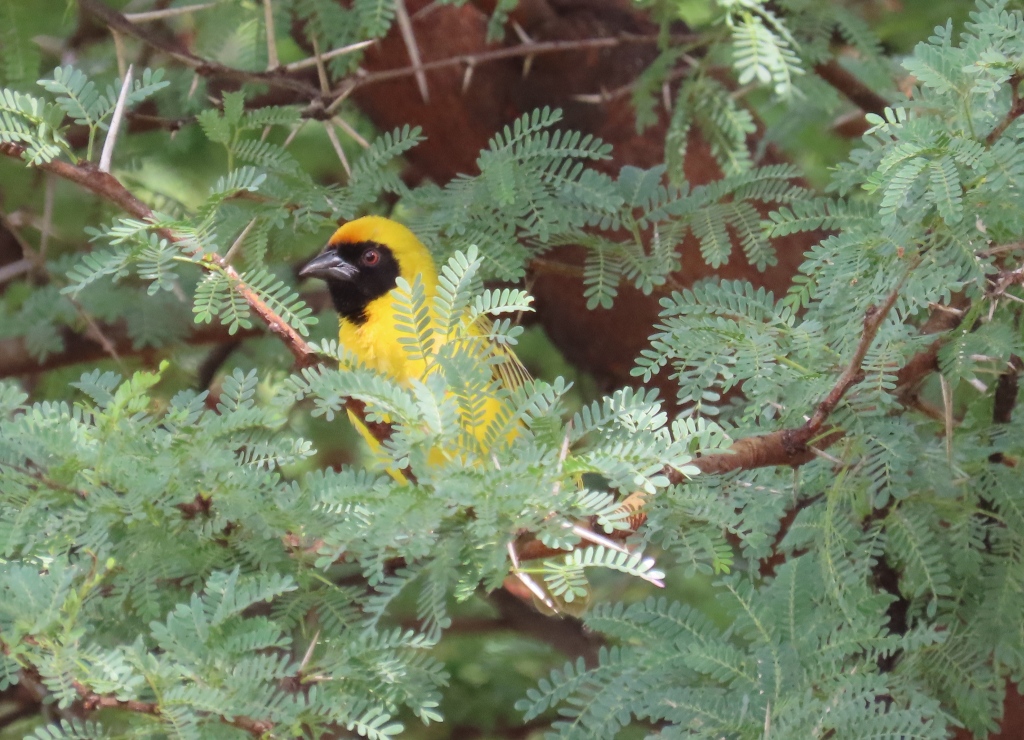
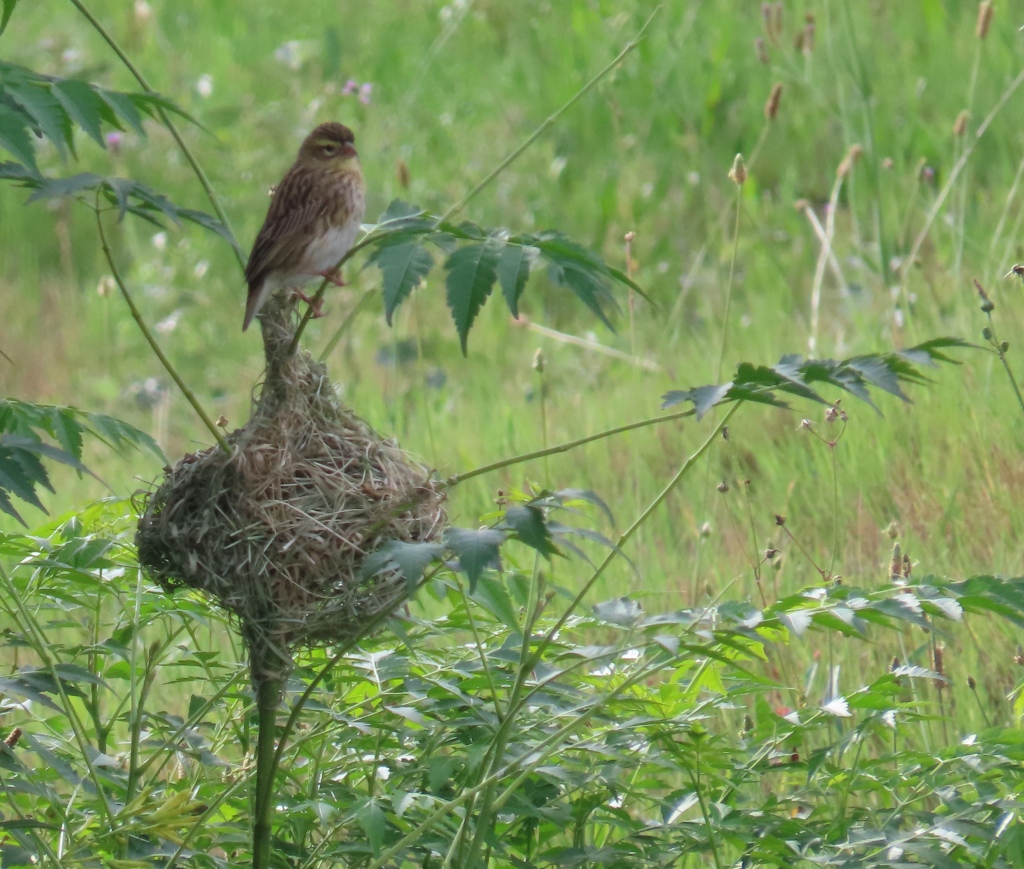
The bright colours belong to the males of the species. Here’s a female weaver perched above a nest. I don’t know if it’s a Red Bishop or a Masked Weaver:
Perched high in a tree, a Grey Lourie shows that you can look smart even in a low-key colour:

Grey Louries are also called the grey go-away bird. Here’s another one:

A Pin-tailed Whydah sports its long tail. This tiny bird’s body is about 12 cm long, while the tail adds another 20 cm to the bird’s overall length:

Some Lesser Striped Swallows gather around a small puddle in the middle of the path:
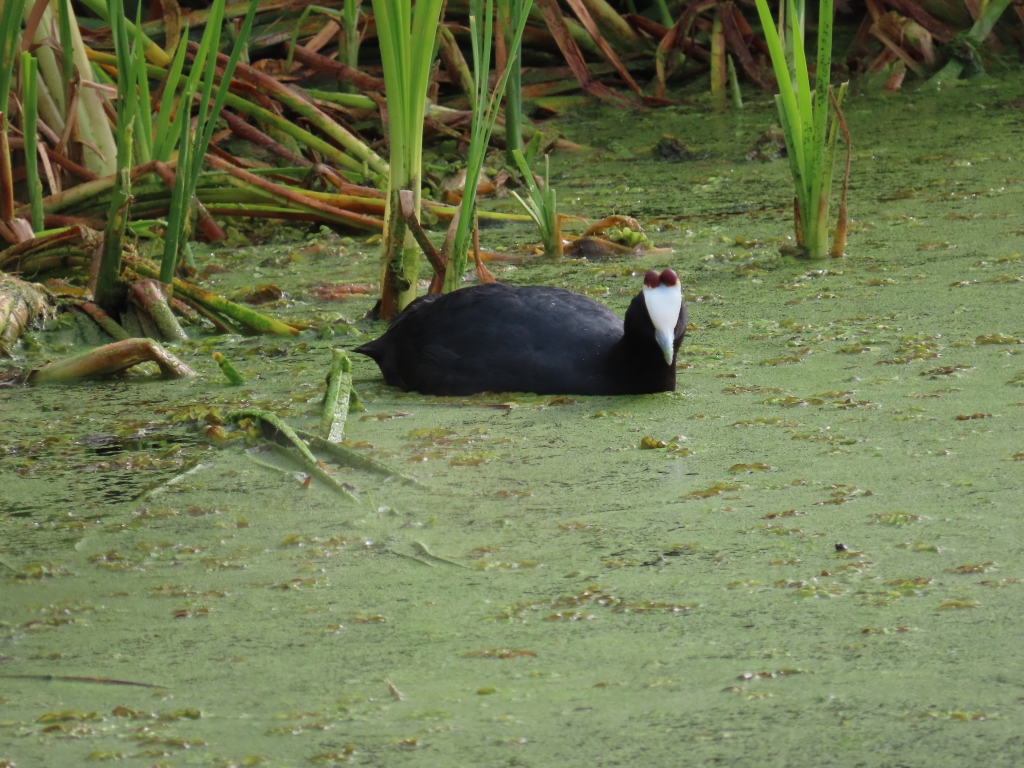
In the nearby pond, a Red-knobbed Coot feeds in the algae-rich water:
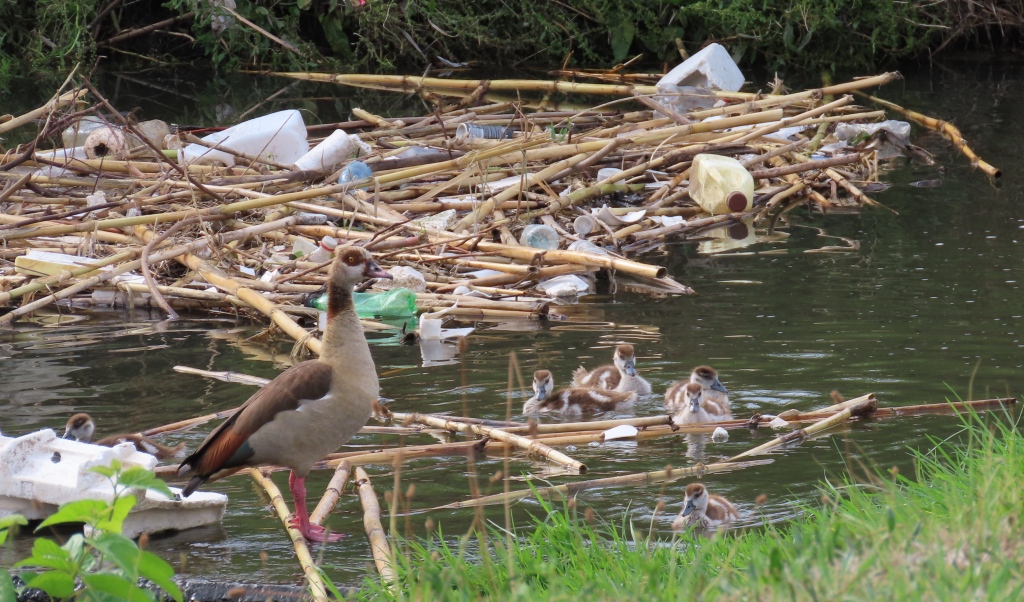
An Egyptian Goose shepherds its chicks through the flotsam and jetsam of the surrounding suburbs:
Sunlight adds a gloss to the plumage of a Hadada Ibis:

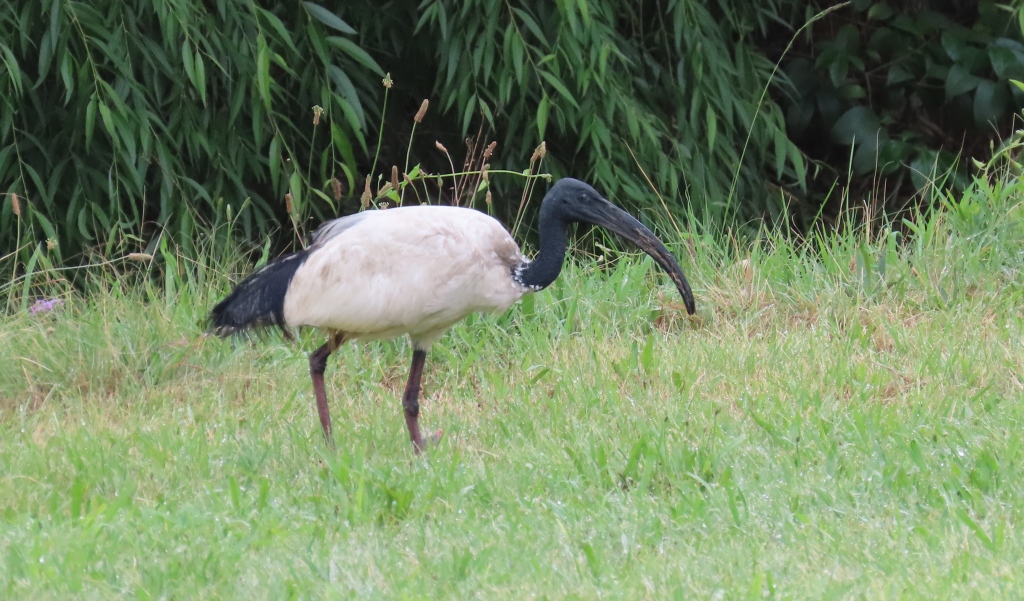
An African Sacred Ibis stalks through the undergrowth:
Another bird stalks the undergrowth, sometimes standing so still that it was almost impossible to spot. My camera’s super zoom brings it close enough to see that it’s an African Wattled Lapwing:

Fiscal Shrikes, also known as Butcher Birds, zoom from cover to cover. Here’s one that stayed still long enough to be caught in a photograph:

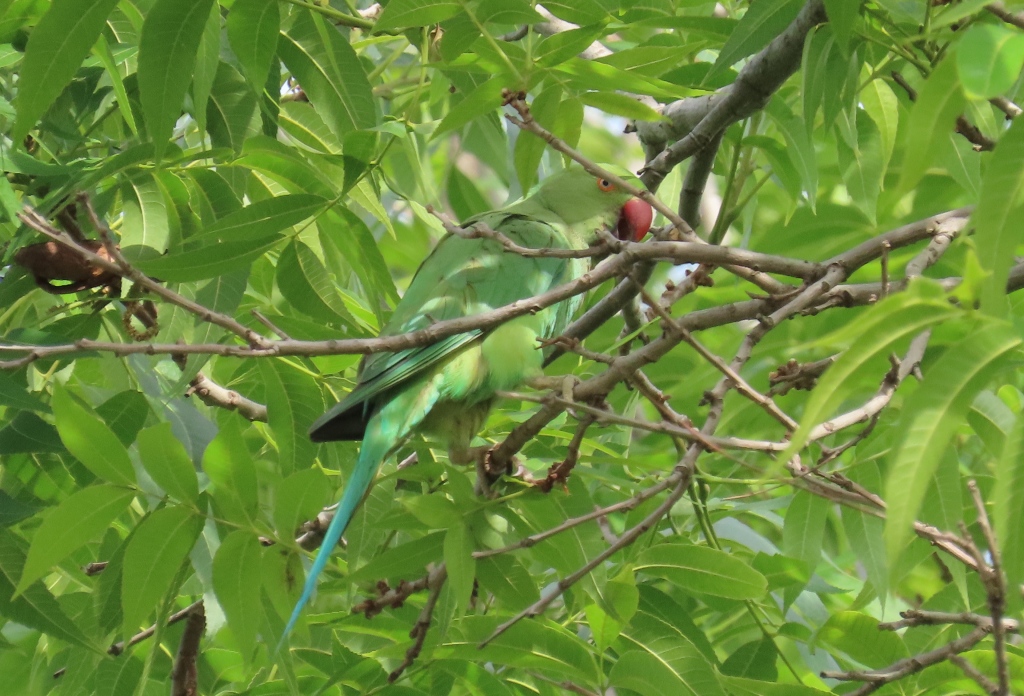
High in the trees, Rose-ringed Parakeets chat and screech. These little parrots aren’t native to South Africa. They established themselves in the suburbs after escaping from captivity in numbers large enough to start breeding:
In my next post I’ll show you some birds in Lonehill, a neighbouring suburb to Witkoppen.


