Blog Archives
Channel-billed Cuckoo’s gift for his mate
A Channel-billed Cuckoo has found a substantial tasty treat (a large stick insect) for his lady love. He purrs and growls, looking for her in the tree where they were last together. Ah, there she is. She’s flown off to another tree, being pestered non-stop by Noisy Miners and Currawongs.
The male cuckoo flies over to her and shows her the treat. She’s keen, but he doesn’t give it to her until she consents to mate with him. As the deed is done, she grabs the proffered treat and then eats it with evident enjoyment.
Channel-billed Cuckoos are large, odd looking birds, with red eyes, huge curved bills, and snake-like necks. They’re migratory, arriving on Australia’s south eastern coast in spring and leaving for more northern climes in autumn.
Like most cuckoos, they lay their eggs in the nests of other birds and relay on those birds to feed and care for their young. They eat mostly fruit, but are also partial to insects, like this stick insect, and to small animals and reptiles. They’ll occasionally prey on the chicks of other birds. It’s not surprising that the Noisy Miners and Currawongs chase them away!
If you like, you can see some good photos and read more about these birds in my posts about Channel-billed Cuckoos.
Common name: Channel-billed Cuckoo
Scientific name: Scythrops novaehollandiae
Approximate length: 58-65 cm
Date spotted: 27 October 2026 (spring)
Location: Allambie Heights, New South Wales, Australia

There’s always a stick in the way!
A Variegated Fairy-wren, in his bright plumage for the breeding season. He’s in focus for once, but then, there’s that obligatory stick!
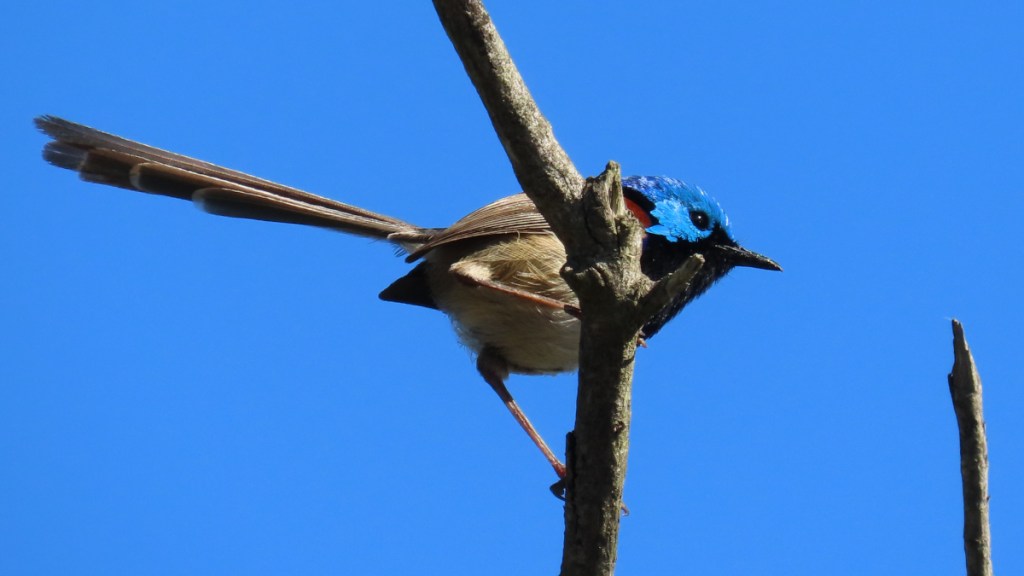
Common name: Variegated Fairy-wren
Scientific name: Malurus lamberti
Approximate length: 13 cm
Date spotted: 20 October 2026 (spring)
Location: Manly Dam park, near Sydney: 33°46’27.6″S 151°14’45.0″E

Sorry Mr Brush-turkey
This morning I unwittingly walked straight through a mound that a male Brush-turkey is building. The mound (currently just a small heap of leaves) is in the middle of the path up ahead in the photo.
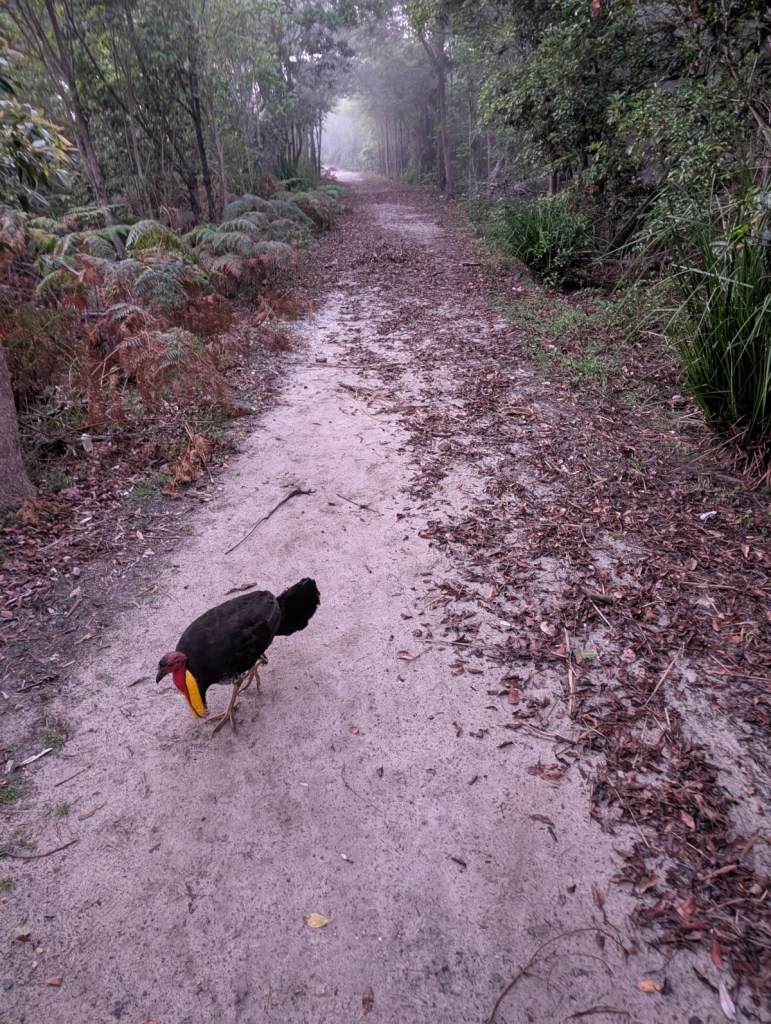
I only realised there was a mound there when the Brush-turkey suddenly rushed off to chase away another male. The Brush-turkey then came up to me, but it didn’t seem too bothered by my mistake. I apologised anyway.
See more Brush-turkey posts, including pictures of the mounds they build.
Common name: Australian Brush-turkey
Scientific name: Alectura lathami
Approximate length: 60-70 cm
Date spotted: 12 October 2026 (spring)
Location: Manly North Head, New South Wales, Australia: 33°48’37.4″S 151°18’01.9″E
Call and wing-shuffle of the Black-faced Cuckoo-shrike
Black-faced Cuckoo-shrikes are often called Shufflewings, because of their odd habit of flipping their wings up and down each time they land. When I was out walking the other day, I followed their call to see three of these birds in a tree, shuffling their wings energetically as they hopped from branch to branch. This video focuses on one of the birds:
Common name: Black-faced Cuckoo-shrike, also called a Shufflewing
Scientific name: Coracina novaehollandiae
Approximate length: 35 cm
Date spotted: 30 September 2026 (spring)
Location: Manly Dam Park, New South Wales, Australia: 33°46’54.8″S 151°15’04.2″E
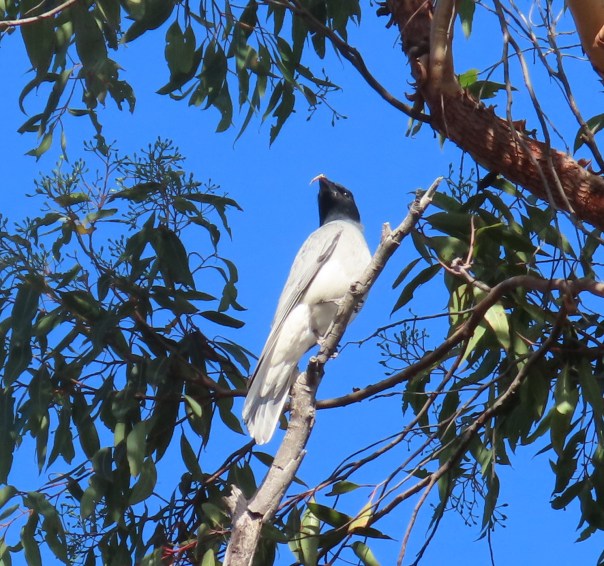
Here’s a still photo of a Black-faced Cuckoo-shrike, from an earlier post in December 2023:

Call of the Singing Honeyeater
I spotted this Singing Honeyeater at Bendleby Ranges in the Flinders Ranges area of South Australia. It’s only my second sighting of a Singing Honeyeater, and the first time I managed to record its call. I believe that these birds make a variety of sounds, of which I’ve captured only one.
Singing Honeyeaters are found across most of Australia, except the eastern and northern coastal regions. This means that I don’t see them very often, as I live on the east coast.
Here’s a photo of the bird:
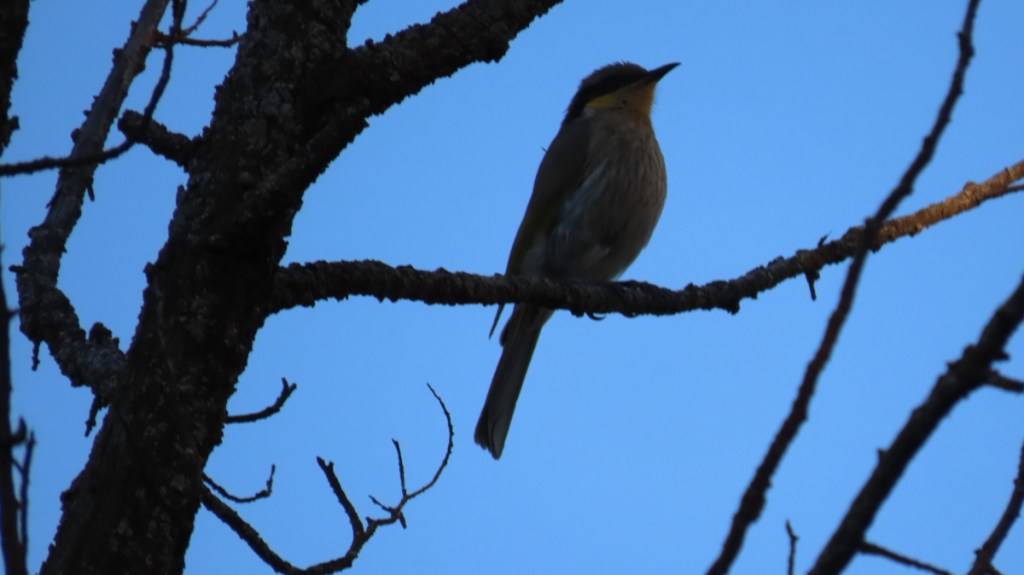
Apologies for the poor quality of the photo. If you’d like to see a better one, check out my first sighting of a Singing Honeyeater.
Common name: Singing Honeyeater
Scientific name: Lichenostomus virescens
Approximate length: 18-22 cm
Date spotted: 10 September 2026 (spring)
Location: Bendleby Ranges in the Flinders Ranges, South Australia: 32°21’13.7″S 138°47’34.8″E

Sculpted feathers of the Great Cormorant
A Great Cormorant sat on a rock at a Manly Dam picnic area. Out of one turquoise eye, it watched me as I approached. I took care to stick to the furthest edge of the picnic area, so that the bird wasn’t alarmed. The feathers of its wings look sculpted, so beautifully arranged are they in their muted colours.
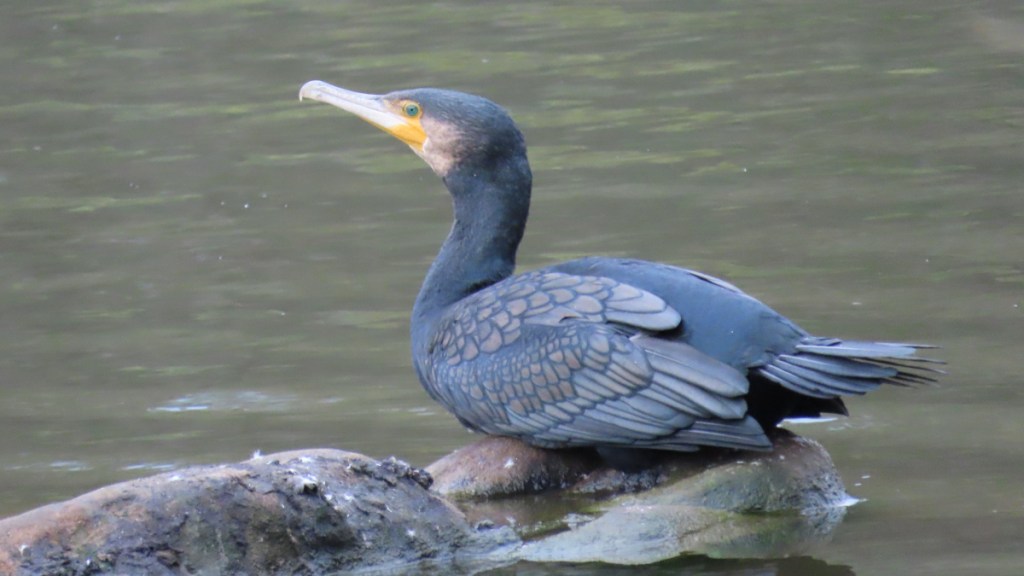
Common name: Great Cormorant
Scientific name: Phalacrocorax carbo
Approximate length: 85 cm; wing span 1.5 m
Date spotted: 2 September 2026 (spring)
Location: Manly Dam, New South Wales, Australia: 33°46’34.5″S 151°14’50.5″E

Royal Spoonbill at Manly Dam
It’s rare to see a Royal Spoonbill at Manly Dam. In fact, this is only the second time I’ve seen one, over the many years that I’ve been walking at the dam.
This one is a lovely bird, with those yellow stripes above its eyes that make it look a little supercilious, and those intriguing patterns on its beak:
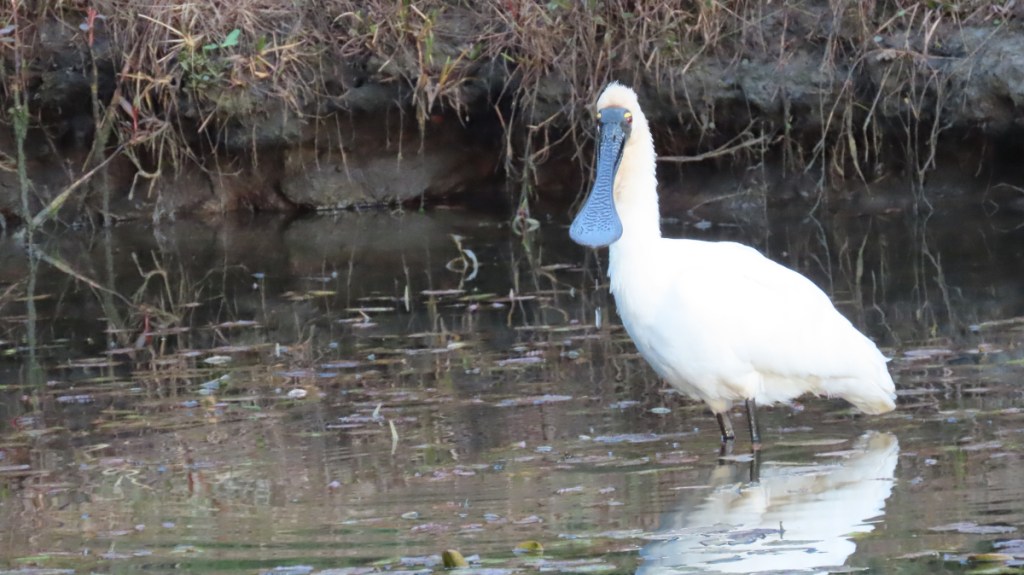
Common name: Royal Spoonbill
Scientific name: Platalea regia
Approximate length: 75-80 cm
Date spotted: 28 July 2026 (winter)
Location: Manly Dam, New South Wales, Australia: 33°46’34.8″S 151°14’48.1″E

Pacific Baza eating a stick insect
This morning, the alert calls of Noisy Miners alerted me to the presence of a predator. I looked up and spotted this beautiful Pacific Baza:
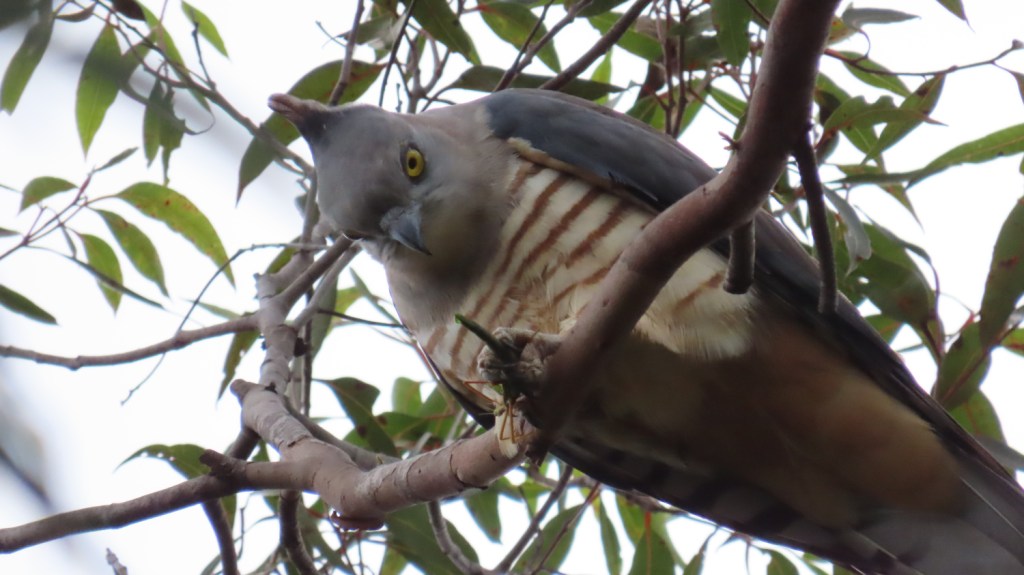
In the above photo, the bird grasps a stick insect in its claw. Pacific Bazas eat large insects such as stick insects (their favourite), praying mantises, and grasshoppers. Sometimes they’ll take a tree-frog or even some fruit.
If you see more than one of these birds, are they Pacific Baza or Pacific Bazas? I don’t know what the official plural is. I’m going with “Bazas” but my spelling checker keeps correcting it to “Baza”!
Another name for this bird is the Crested Hawk, due to the rather odd-looking crest on the top of its head.
Here’s another shot of the bird, this time annoyed by the shrieking Noisy Miners swooping it from above (not visible in the photo):
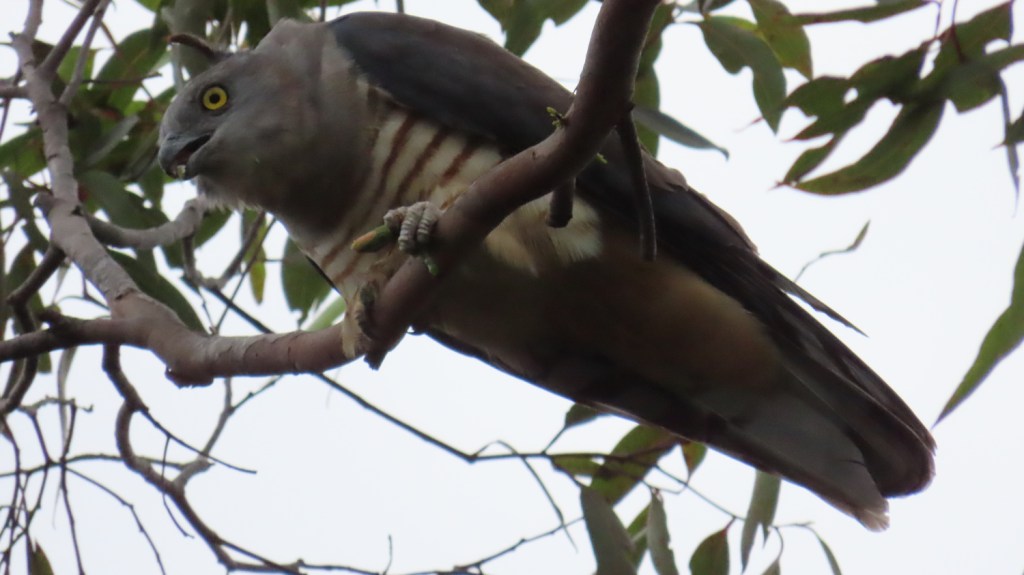
Common name: Pacific Baza
Scientific name: Aviceda subcristata
Length: 35-45 cm
Wing span: 1 metre
Date spotted: 2 June 2026 (winter)
Location: Manly Dam Park, near Sydney, Australia: 33°46’37.2″S 151°14’51.3″E

Fun facts about Grebes
Yesterday, this beautiful little Australasian Grebe was pottering about in an inlet of Manly Dam:
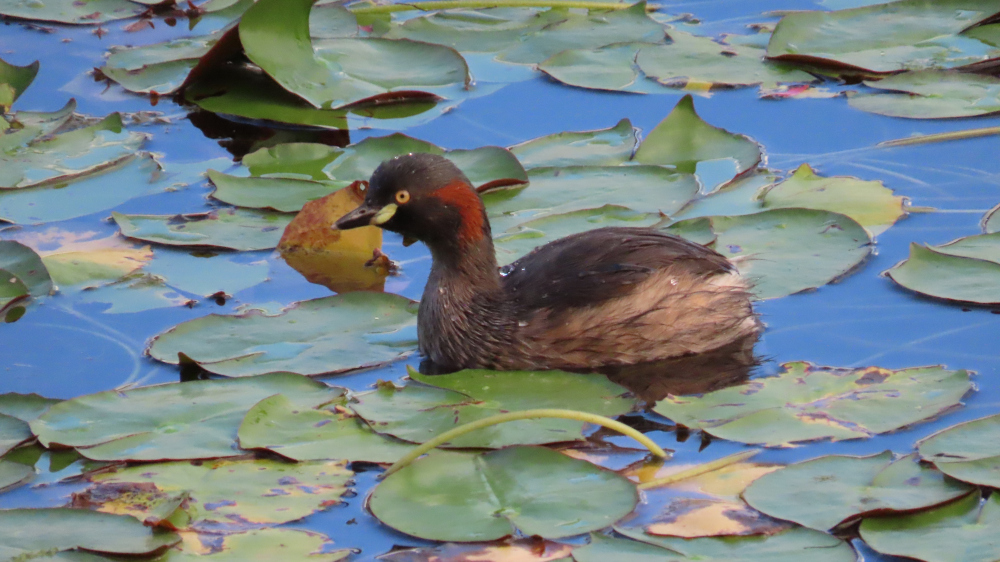
This grebe is wearing its breeding plumage, with a large chestnut patch stretching from its eye down its neck, and that odd yellow patch at the base of its beak. Outside the breeding season, the yellow patch turns white and the bird’s neck is a dark grey-brown to match its back.
Fun fact: Grebes eat their own feathers and also feed their feathers to their young. People think the goal is to make it easier to swallow fish bones, by wrapping around the bones and preventing injury to the bird.
Another fun fact: Grebes have big feet with lobed toes, more like those of coots than ducks. I’ve never seen a grebe out of the water, but I do have a picture of a coot’s feet, which are rather adorable: The foot of the Coot.
Common name: Australasian Grebe
Scientific name: Tachybaptus novaehollandiae
Approximate length: 23-25 cm
Date spotted: 25 March 2026 (autumn)
Location: Manly Dam Park, near Sydney, Australia: 33°46’34.8″S 151°14’49.6″E
Local group of Glossy Black-Cockatoos now six strong!
Every now and then over the last few years, I’ve seen a group of Glossy Black-Cockatoos on the banks of Manly Dam. They have a few favourite spots, always where the Casuarina trees are in seed.
For the first couple of years, there were always three birds in the group. I don’t know if they were the same birds each time. Then suddenly there were five. And yesterday, for the first time, there were six. Glossies are rare compared to the other types of cockatoos in our area (Sulphur-crested, Yellow-tailed Black, and Corellas), so it’s wonderful to see this group growing in size.
Yesterday was a muggy, grey day. My camera kept misting up due to the high humidity. Every now and then the mist turned to light, drifting rain that settled into blotches on the lens. Still, the video gives you and idea of the gentle, calm presence of these large birds.
Glossies are a type of parrot. In Australia we have 56 species of parrots, including cockatoos, lorikeets, rosellas, ringnecks and budgerigars. Check out my previous sightings of Glossy Black-Cockatoos.
Common name: Glossy Black-Cockatoo
Scientific name: Calyptorhynchus lathami
Approximate length: 50cm
Date spotted: 19 March 2026 (autumn)
Location: Manly Dam Park, near Sydney: 33°46’23.8″S 151°14’39.5″E


