Channel-billed Cuckoo’s gift for his mate
A Channel-billed Cuckoo has found a substantial tasty treat (a large stick insect) for his lady love. He purrs and growls, looking for her in the tree where they were last together. Ah, there she is. She’s flown off to another tree, being pestered non-stop by Noisy Miners and Currawongs.
The male cuckoo flies over to her and shows her the treat. She’s keen, but he doesn’t give it to her until she consents to mate with him. As the deed is done, she grabs the proffered treat and then eats it with evident enjoyment.
Channel-billed Cuckoos are large, odd looking birds, with red eyes, huge curved bills, and snake-like necks. They’re migratory, arriving on Australia’s south eastern coast in spring and leaving for more northern climes in autumn.
Like most cuckoos, they lay their eggs in the nests of other birds and relay on those birds to feed and care for their young. They eat mostly fruit, but are also partial to insects, like this stick insect, and to small animals and reptiles. They’ll occasionally prey on the chicks of other birds. It’s not surprising that the Noisy Miners and Currawongs chase them away!
If you like, you can see some good photos and read more about these birds in my posts about Channel-billed Cuckoos.
Common name: Channel-billed Cuckoo
Scientific name: Scythrops novaehollandiae
Approximate length: 58-65 cm
Date spotted: 27 October 2026 (spring)
Location: Allambie Heights, New South Wales, Australia

There’s always a stick in the way!
A Variegated Fairy-wren, in his bright plumage for the breeding season. He’s in focus for once, but then, there’s that obligatory stick!
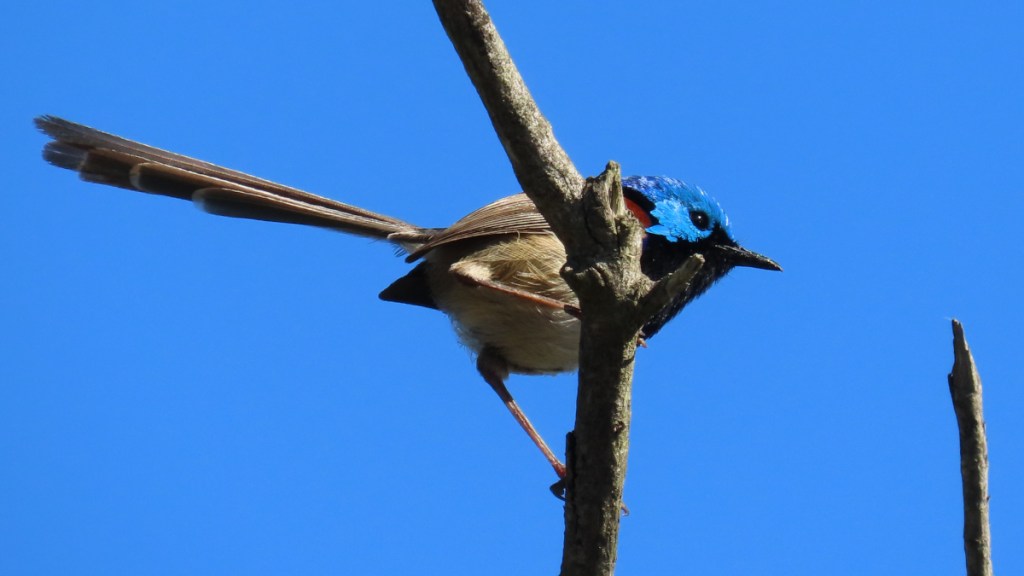
Common name: Variegated Fairy-wren
Scientific name: Malurus lamberti
Approximate length: 13 cm
Date spotted: 20 October 2026 (spring)
Location: Manly Dam park, near Sydney: 33°46’27.6″S 151°14’45.0″E

Sorry Mr Brush-turkey
This morning I unwittingly walked straight through a mound that a male Brush-turkey is building. The mound (currently just a small heap of leaves) is in the middle of the path up ahead in the photo.
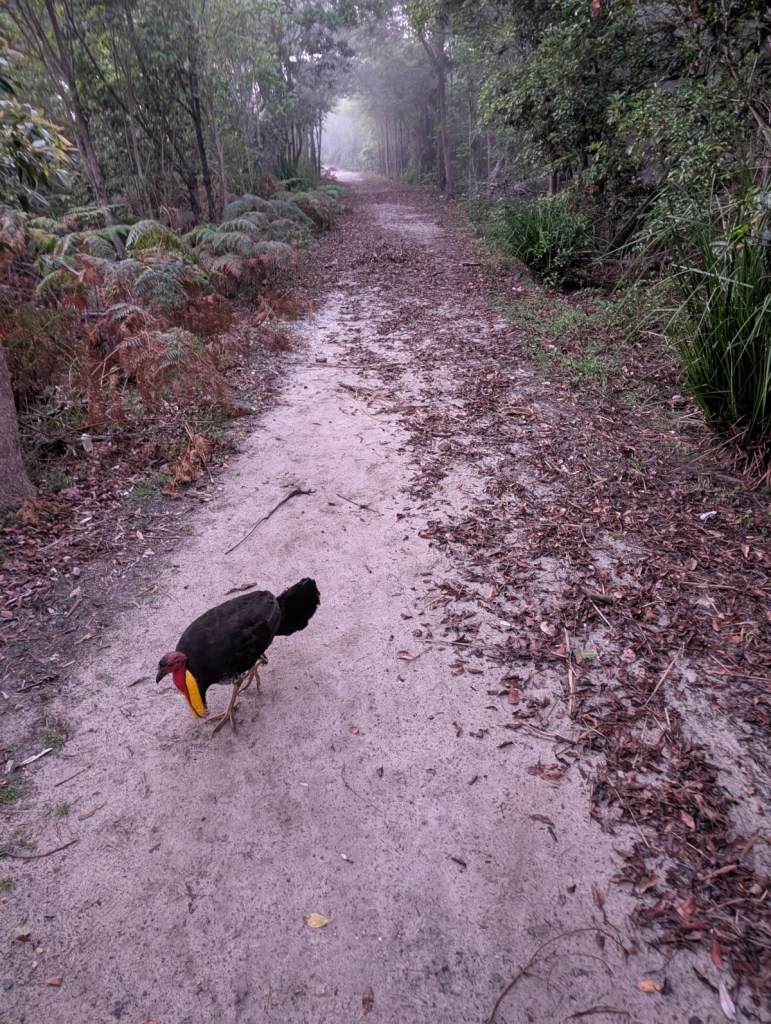
I only realised there was a mound there when the Brush-turkey suddenly rushed off to chase away another male. The Brush-turkey then came up to me, but it didn’t seem too bothered by my mistake. I apologised anyway.
See more Brush-turkey posts, including pictures of the mounds they build.
Common name: Australian Brush-turkey
Scientific name: Alectura lathami
Approximate length: 60-70 cm
Date spotted: 12 October 2026 (spring)
Location: Manly North Head, New South Wales, Australia: 33°48’37.4″S 151°18’01.9″E
Call and wing-shuffle of the Black-faced Cuckoo-shrike
Black-faced Cuckoo-shrikes are often called Shufflewings, because of their odd habit of flipping their wings up and down each time they land. When I was out walking the other day, I followed their call to see three of these birds in a tree, shuffling their wings energetically as they hopped from branch to branch. This video focuses on one of the birds:
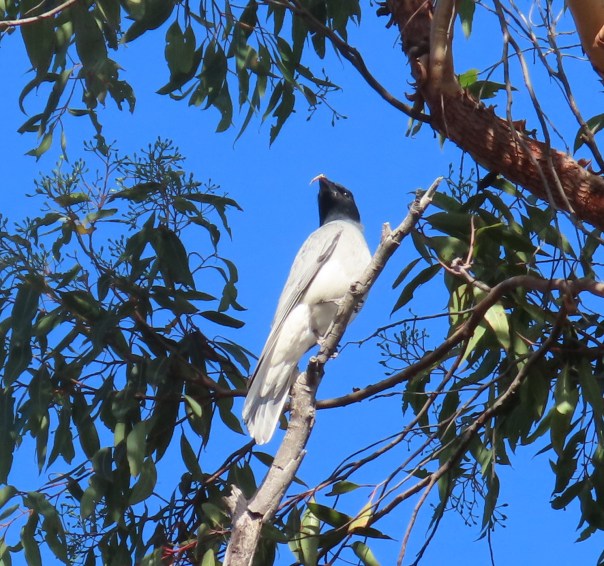
Common name: Black-faced Cuckoo-shrike, also called a Shufflewing
Scientific name: Coracina novaehollandiae
Approximate length: 35 cm
Date spotted: 30 September 2026 (spring)
Location: Manly Dam Park, New South Wales, Australia: 33°46’54.8″S 151°15’04.2″E
Here’s a still photo of a Black-faced Cuckoo-shrike, from an earlier post in December 2023:

Galahs have pink or dark eyes
What a setting for this gorgeous Galah! She looks dozy and very floofy, framed by the blue blue Outback sky:
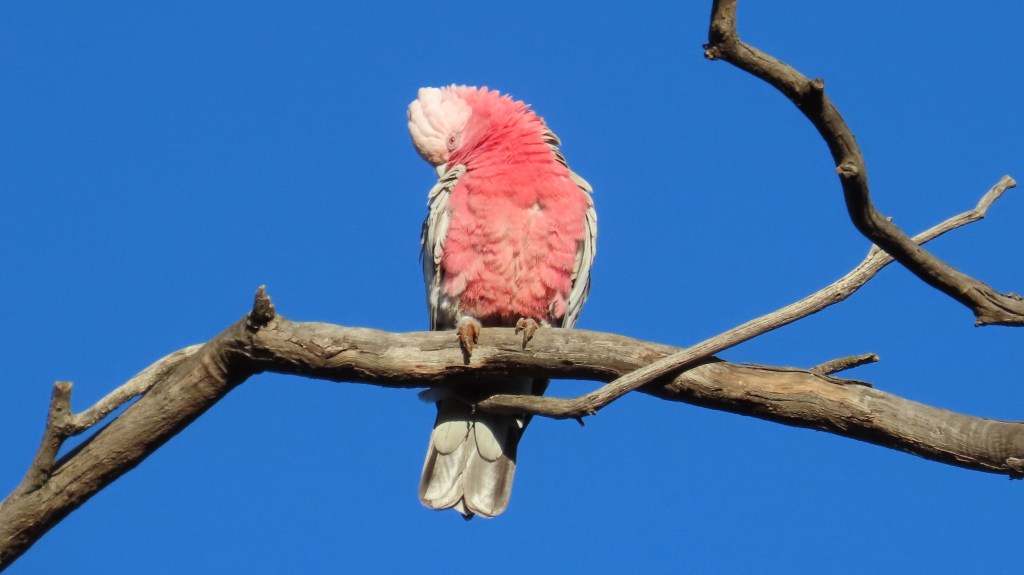
Male and female Galahs are very similar. The easiest way to tell a female from a male is that the females have pink eyes, like the one in my photo, whereas the males have dark eyes. (You can see the difference in this post, which has both male and female birds.)
Common name: Galah
Scientific name: Cacatua roseicapilla
Approximate length: 35-38 cm
Date spotted: 11 September 2026 (spring)
Location: Bendleby Ranges in the Flinders Ranges, South Australia: 32°21’13.7″S 138°47’34.8″E

My first Rufous Songlark
The Merlin app identifies this bird as a Rufous Songlark. I’ve done quite a bit of research and can’t find a better match. The bird was perched on the bare branches of a tree at Bendleby Ranges near Belton, South Australia:
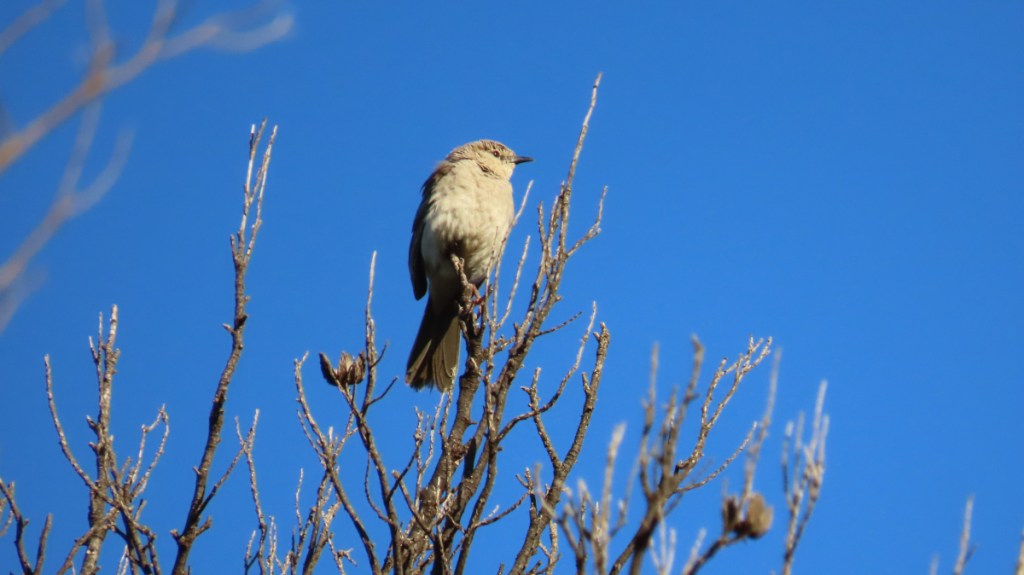
I didn’t get a photo of the bird’s back, so we can’t see whether it has the reddish patch above its tail that gives it its name. According to my bird book, they’re found across the Australian continent. They migrate southwards for the summer and return to the north in the autumn.
Common name: Rufous Songlark
Scientific name: Concloramphus mathewsi
Length: 16-19 cm
Date spotted: 11 September 2026 (spring)
Location: Bendleby Ranges in the Flinders Ranges, South Australia: 32°21’13.7″S 138°47’34.8″E

My first Black Kite
I’ve seen a few types of kite over the years (I was surprised when I looked at the “kite” category on this blog), but this is the first Black Kite in my list. The bird circled our camp site at Bendleby Ranges, South Australia, a few times before flying off into the setting sun.
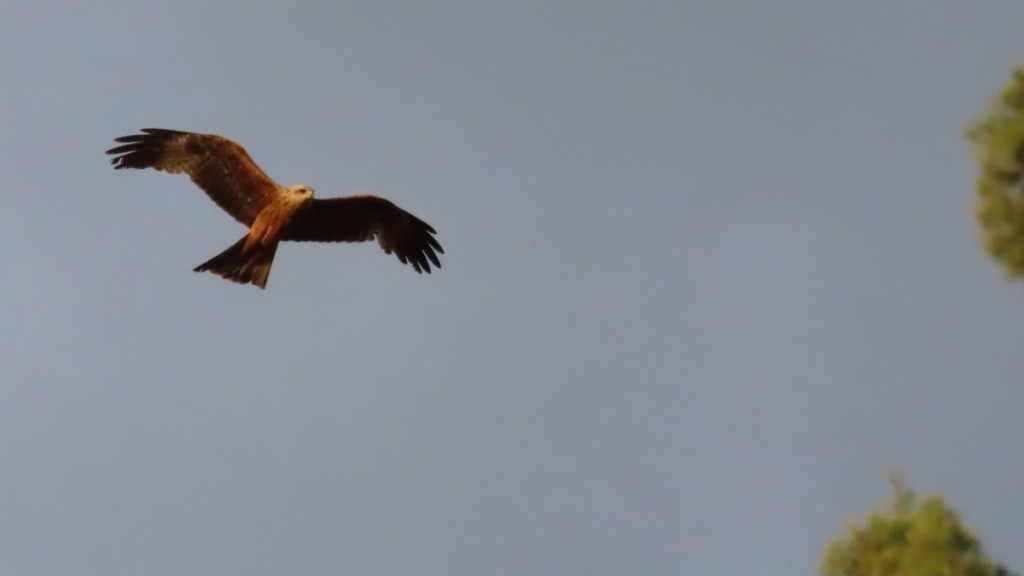
Common name: Black Kite
Scientific name: Milvus migrans
Length: 50-55 cm
Date spotted: 13 September 2026 (spring)
Location: Bendleby Ranges in the Flinders Ranges, South Australia: 32°21’13.7″S 138°47’34.8″E

Chestnut-crowned Babblers gathering nest material
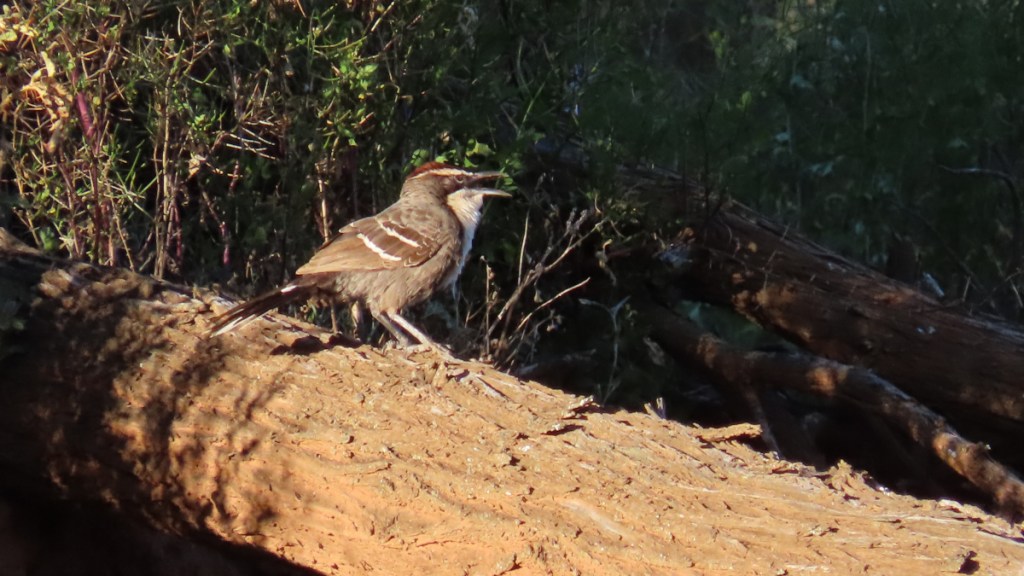
This is only the second time I’ve seen a Chestnut-crowned Babbler. These birds were in a dry creek bed at Bendleby Ranges, South Australia. They were very busy gathering material for their nests, babbling away to each other at the same time:
Here’s one of the birds that stayed still long enough for me to snap a photo. It’s beak is open in mid-babble:
Common name: Chestnut-crowned Babbler
Scientific name: Pomatostomus ruficeps
Approximate length: 21-23 cm
Date spotted: 11 September 2026 (spring)
Location: Bendleby Ranges in the Flinders Ranges, South Australia: 32°21’13.7″S 138°47’34.8″E

Nankeen Kestrel at Bendleby Ranges
With any luck, one day I’ll get a good photo of a Nankeen Kestrel! This is only the third one I’ve seen, though they’re quite common across mainland Australia. They’re lovely looking birds, and beautiful in flight too. This one was perched on a far-away bush:
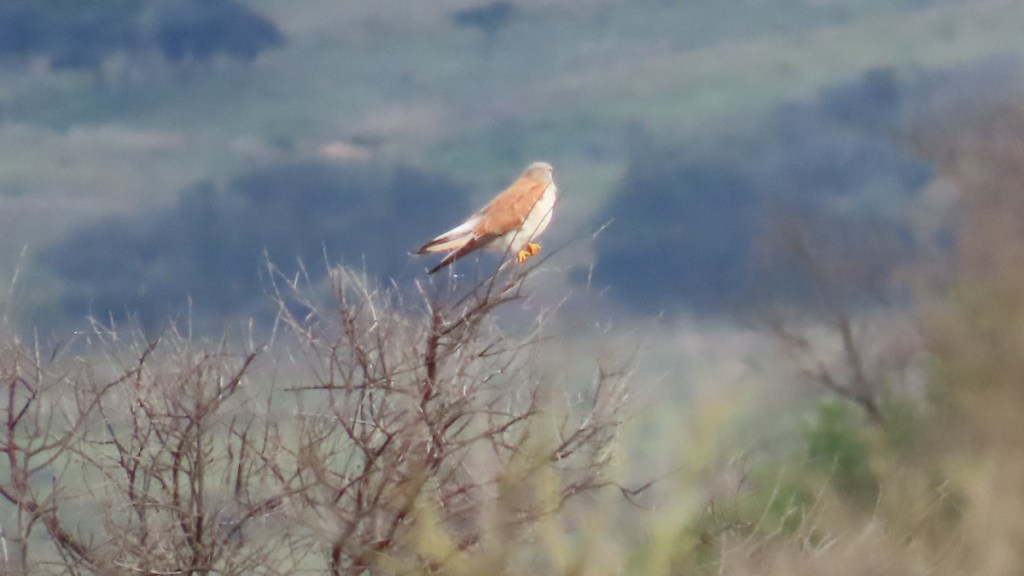
A kestrel is a type of falcon, along with Hobbies and birds like Peregrine Falcons which have the word “falcon” in their name. Kestrels tend to be smaller than other falcons, and catch their prey on the ground by swooping down onto it. As far as I can tell, Nankeen Kestrels are the only type of kestrel in Australia.
Where does the name “Nankeen” come from? In Australia, we have Nankeen Herons as well as Nankeen Kestrels. Evidently the tawny colouring of these birds reminded the Australian settlers of the Chinese cotton cloth called Nankeen.
Common name: Nankeen Kestrel
Scientific name: Falco cenchroides
Length: 30-35 cm; wing span: 60-80 cm
Date spotted: 13 September 2026 (spring)
Location: Bendleby Ranges in the Flinders Ranges, South Australia: 32°21’13.7″S 138°47’34.8″E

Chestnut-rumped and Yellow-rumped Thornbills
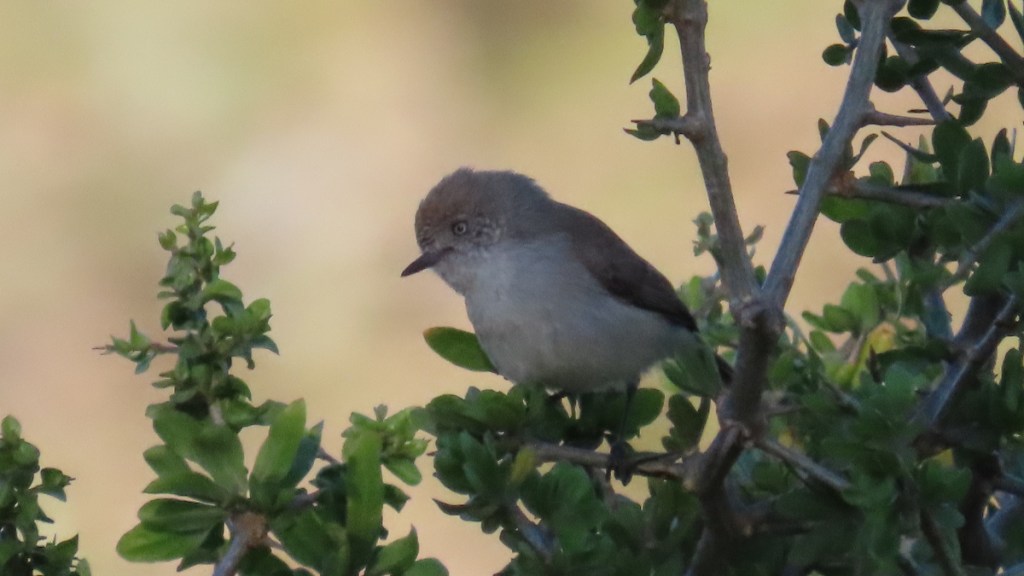
While at Bendleby Ranges in the Flinders Ranges recently, I logged my first Chestnut-rumped Thornbill. I also logged a Yellow-rumped Thornbill for only the second time.
First, the Chestnut-rumped Thornbill. I love the clear, inquisitive eyes of these little birds:
This shot shows the chestnut-coloured patch above its tail that gives the bird its name:
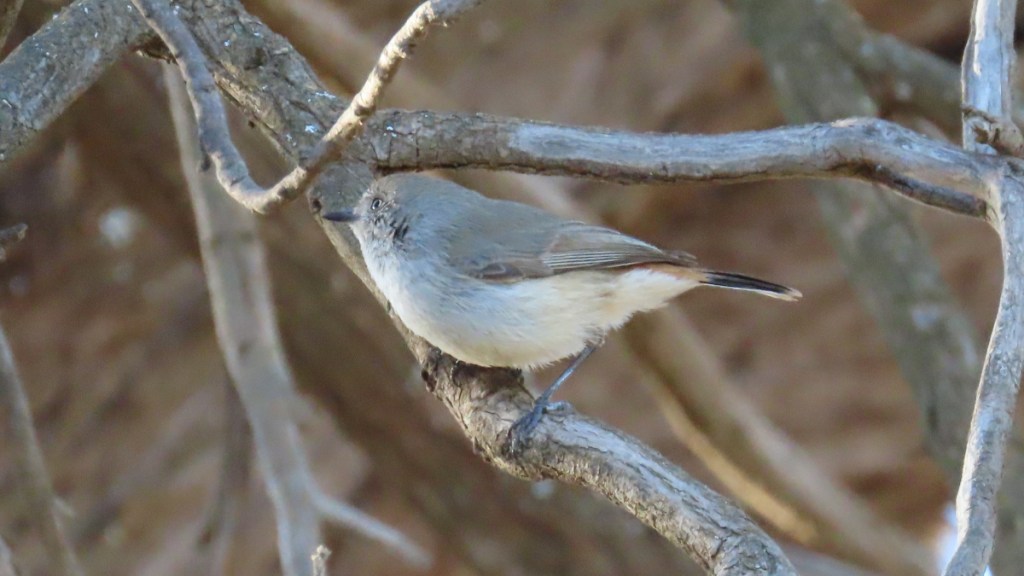
Common name: Chestnut-rumped Thornbill
Scientific name: Acanthiza uropygialis
Length: 9-10 cm
Date spotted: 11 September 2026 (spring)
Location: Bendleby Ranges in the Flinders Ranges, South Australia: 32°21’13.7″S 138°47’34.8″E
The next bird is a Yellow-rumped Thornbill. It’s easily identifiable by the yellow patch above its tail and the black streak through its eye:
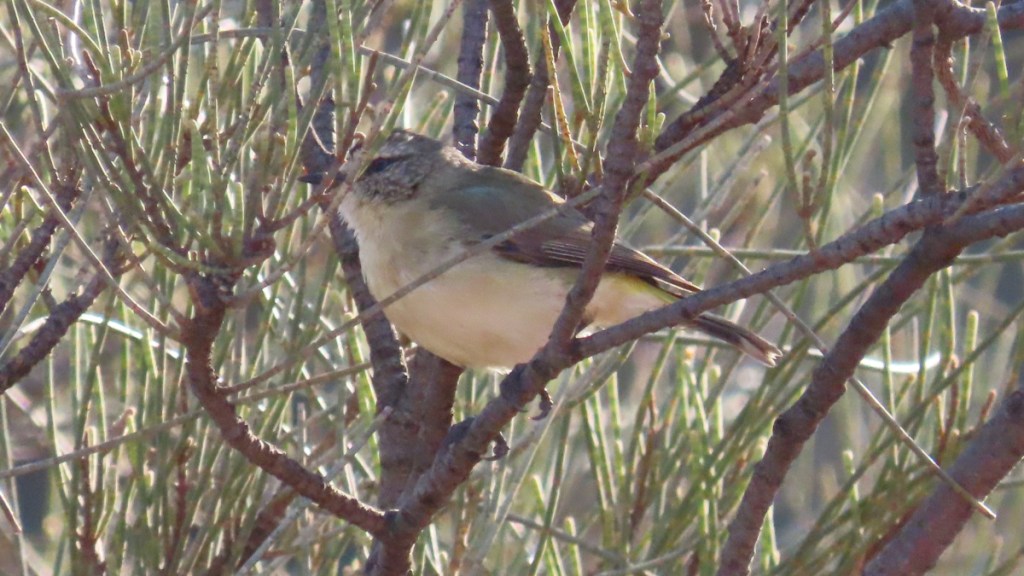
Common name: Yellow-rumped Thornbill
Scientific name: Acanthiza chrysorrhoa
Length: 11-12 cm
Date spotted: 12 September 2026 (spring)
Location: Bendleby Ranges in the Flinders Ranges, South Australia: 32°21’13.7″S 138°47’34.8″E


