Blog Archives

Call of the Singing Honeyeater
I spotted this Singing Honeyeater at Bendleby Ranges in the Flinders Ranges area of South Australia. It’s only my second sighting of a Singing Honeyeater, and the first time I managed to record its call. I believe that these birds make a variety of sounds, of which I’ve captured only one.
Singing Honeyeaters are found across most of Australia, except the eastern and northern coastal regions. This means that I don’t see them very often, as I live on the east coast.
Here’s a photo of the bird:
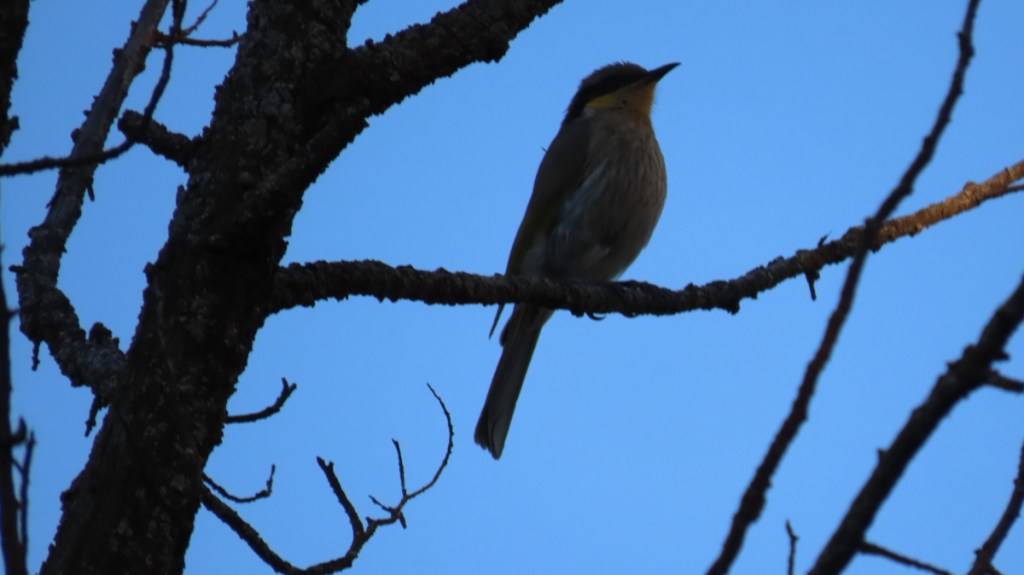
Apologies for the poor quality of the photo. If you’d like to see a better one, check out my first sighting of a Singing Honeyeater.
Common name: Singing Honeyeater
Scientific name: Lichenostomus virescens
Approximate length: 18-22 cm
Date spotted: 10 September 2026 (spring)
Location: Bendleby Ranges in the Flinders Ranges, South Australia: 32°21’13.7″S 138°47’34.8″E

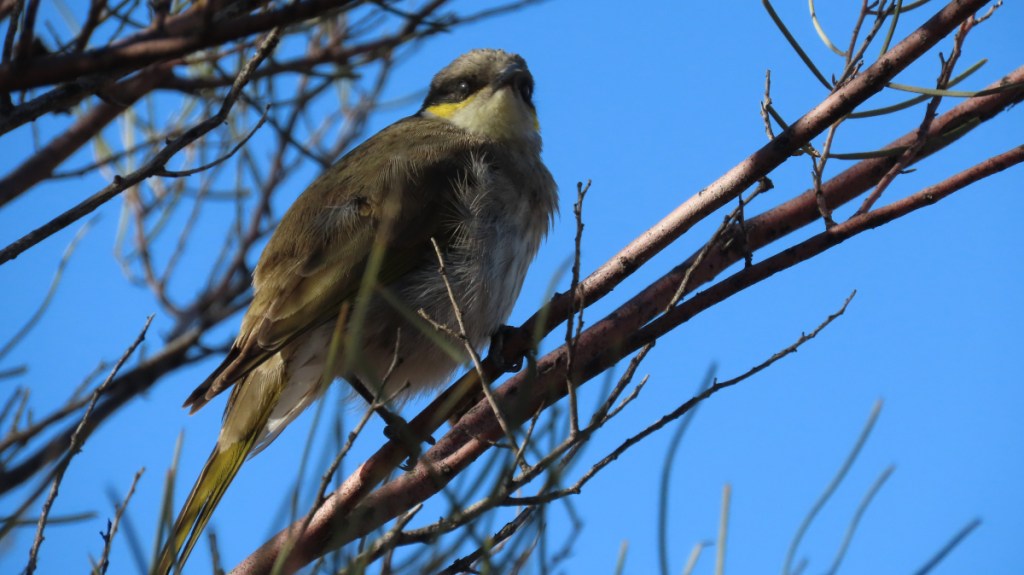
Singing Honeyeater unusually ruffled
This is my first sighting of a Singing Honeyeater. According to my bird book, they’re abundant and widespread, but not on the east coast of Australia where I live.
Australia has many species of Honeyeater. So many that I wonder if I should split up the category of Honeyeater on this blog, to make them easier to find. My bird book lists 56 species under “Honeyeater” and there are more, like the Miners which are listed separately.
Most of the Honeyeaters that I see look suave and confident. This particular Singing Honeyeater, though, looks as if it’s awakening from a bad night. Or maybe it’s going for a raptor look:
Common name: Singing Honeyeater
Scientific name: Lichenostomus virescens
Approximate length: 18-22 cm
Date spotted: 21 July 2026 (winter)
Location: Living Desert State Park near Broken Hill, NSW, Australia: 31°54’03.2″S 141°26’23.1″E


