Blog Archives
Cockatoos cleaning out a tree hollow
Two Sulphur-crested Cockatoos were very busy cleaning out a hollow in a tree trunk when I walked past them today. The tree is in Manly Dam National Park. I often see cockatoos strutting up and down this tree trunk, raising their crests and squawking, and flying from tree to tree. The area is where they hang out. It’s a cockatoo playground.
In this video, one of the cockatoos gets into the cleaning in a big way, disappearing into the hollow and kicking out chunks of debris. The other cockatoo watches from above, then goes down to join the fun:
It seems an odd time of year to be preparing to build a nest. I’ve seen a few swarms of bees in this particular hollow from time to time over the years. I wonder if the cockatoos are looking for left over honeycomb?

Common name: Sulphur-crested Cockatoo
Scientific name: Cacatua galerita
Approximate length: 50 cm
Date spotted: 10 March 2019 (late summer)
Location: Manly Dam National Reserve, near Sydney: 33°46’50.5″S 151°14’51.1″E
Eastern Rosella calling and dancing
This has turned out to be parrot weekend in our garden. Yesterday four black cockatoos dropped by. Today it was two Eastern Rosellas. This is the first time I’ve managed to get a photo of one of these lovely birds. Its characteristic call drew me to the window. There it was on our Scribbly Gum tree right outside the window, dancing and chattering to its mate:
Knowing that these birds usually go about in pairs, I looked for the other one but didn’t see it until they both flew away, several minutes later. (The mate was higher up in the tree, hidden by the foliage.)
At 30 cm in length, Eastern Rosellas are slightly smaller than the Crimson Rosellas that we see more often in our area. This still shot shows the bird in all its beauty:

Common name: Eastern Rosella
Scientific name: Platycercus eximius
Approximate length: 30 cm
Date spotted: 21 October 2018 (Spring)
Location: Allambie Heights, NSW, Australia
Four Yellow-tailed Black Cockatoos come to visit
Today I arrived home from a long overseas trip. An hour or so after getting home, I was delighted to hear the haunting calls of a group of Yellow-tailed Black Cockatoos. They came to visit our Old Man Banksia tree, which is currently covered in dried seed pods. A tasty snack for a cockatoo!
I love the comfortable nibbling noises the birds make. Every now and then they chatter to each other too, as you can hear towards the end of this next video:
Yellow-tailed Black Cockatoos are large birds, quite a lot bigger than the more common white cockatoo. They have a dignified, graceful presence. It feels like a privilege to have them drop by. We planted the Old Man Banksia (Banksia serrata)a few years ago, with the goal of feeding the local bird life. It looks like our plan is working.
Two of the birds flew up into a Sydney Red Gum that towers over our house, for a quiet grooming session. It’s cute how attentive the groomer is, even returning to her job when she notices that her companion still has an intractable itch. When she stops for the second time, he reprimands her and she returns to the task yet again.
The bird with the pinkish-red ring around his eye is the male. The females have grey eye rings and a lighter-coloured bill. Here’s a still shot of the male, looking content after a good grooming from his mate:
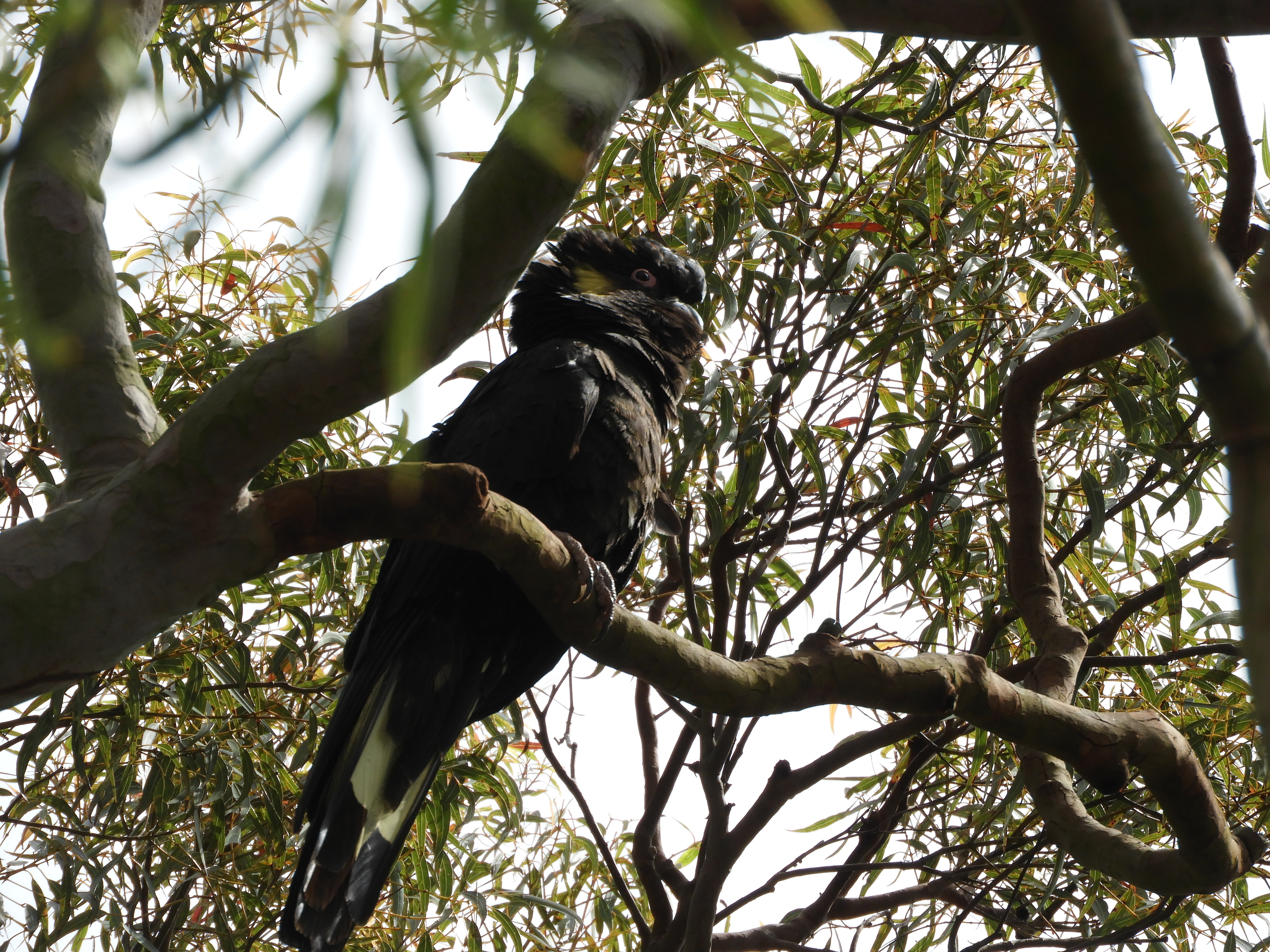
Common name: Yellow-tailed Black Cockatoo
Scientific name: Calyptorhynchus funereus
Approximate length: 65 cm
Date spotted: 20 October 2018 (Spring)
Location: Allambie Heights, NSW, Australia
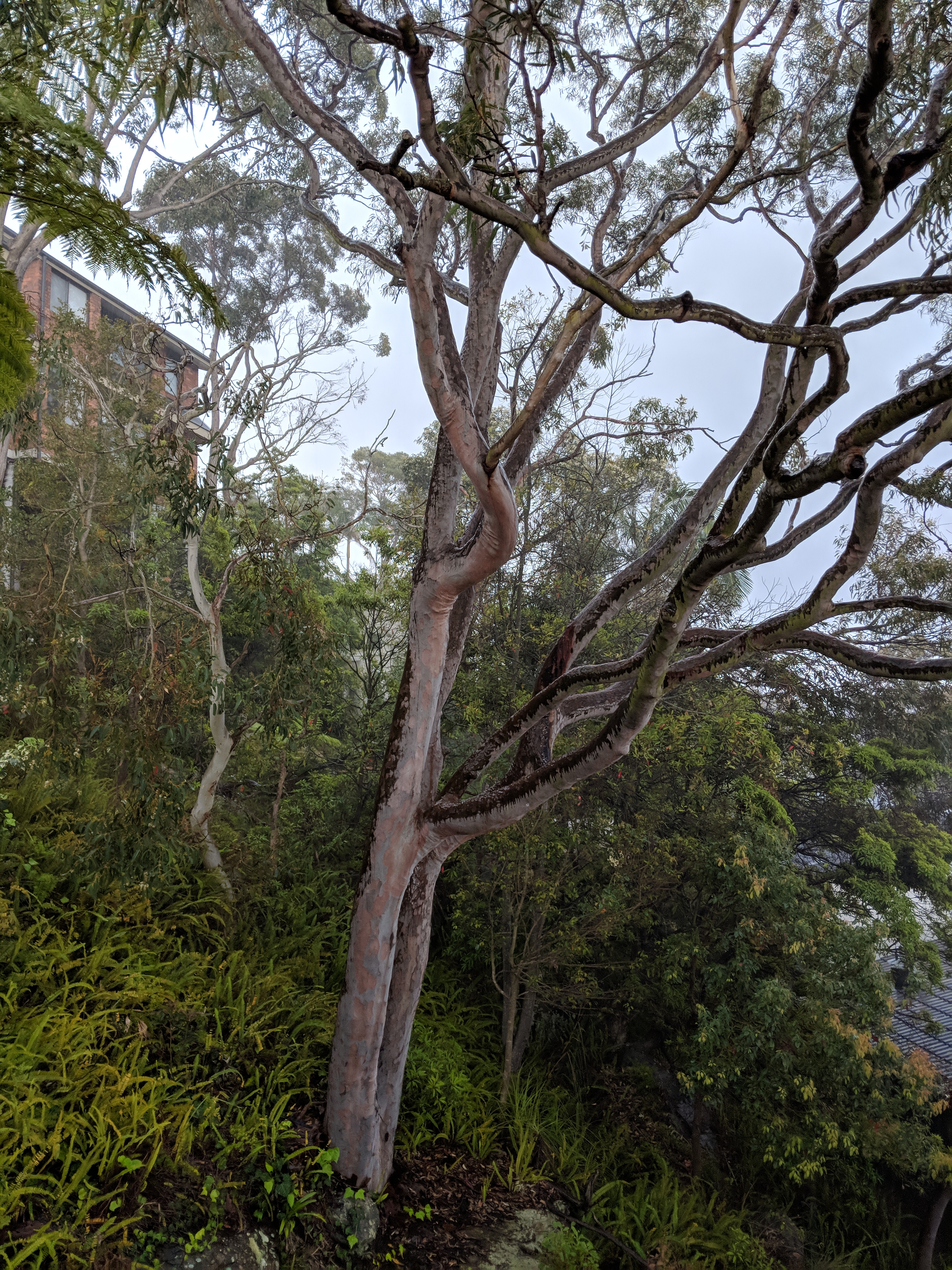
The Sydney Red Gum (Angophora costata) is a beautiful tree. I took this shot of it a couple of weeks ago, when the rain was making interesting patterns on the bark:
King Parrot on neighbour’s tree
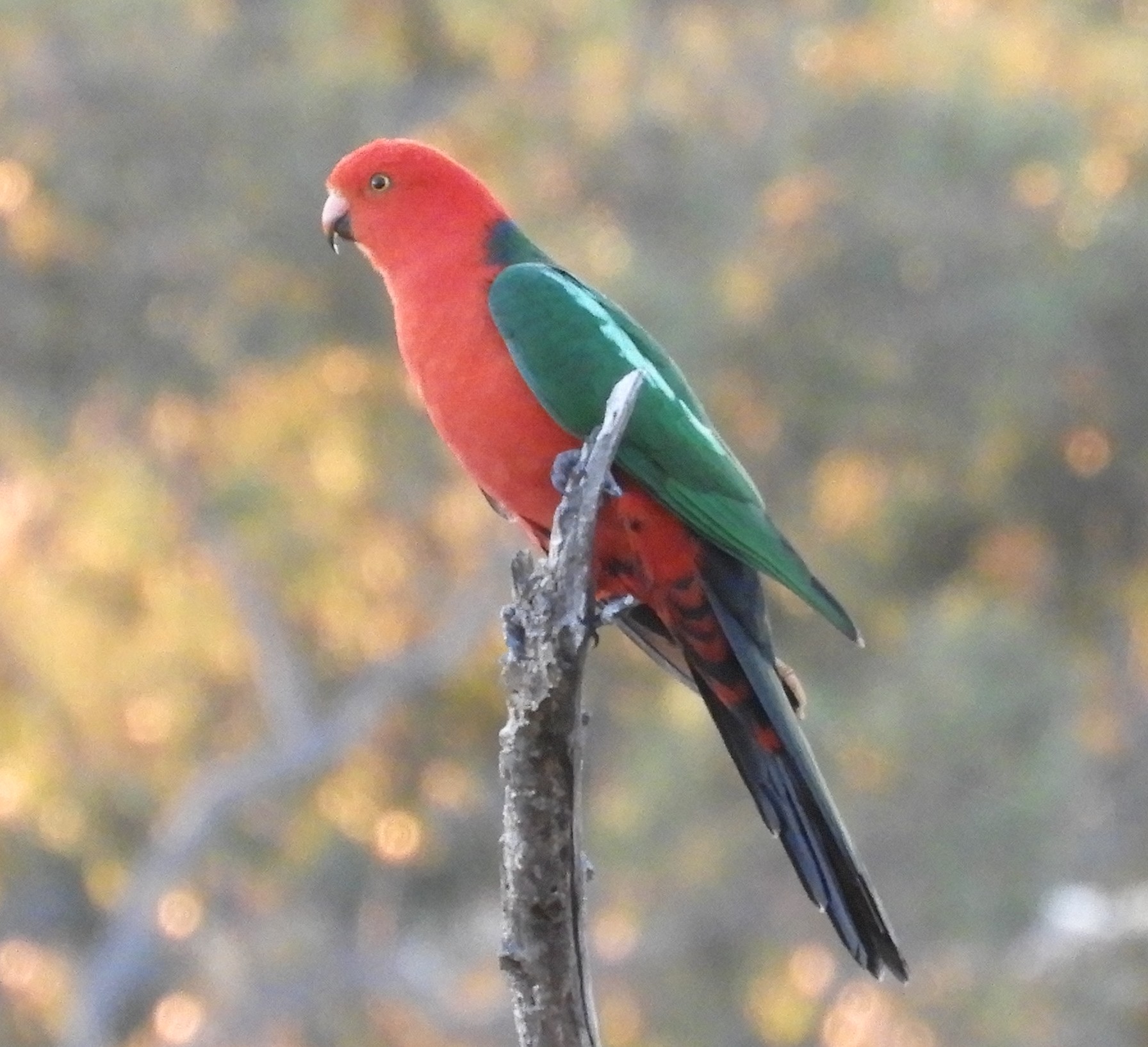
A high-pitched whistle drew me to the window early on Friday morning. A King Parrot perched on a nearby tree to take stock of the neighbourhood.
Here’s a zoomed-in view of the same photo:
Common name: Australian King Parrot
Scientific name: Alisterus scapularis
Approximate length: 44 cm
Date spotted: 6 July 2018 (Winter)
Location: Allambie Heights, New South Wales, Australia
Sharing a treetop shower with King Parrots
This was one of those magical moments that happen when you walk in the Aussie bush. I was strolling along under the canopy of tall gum trees…
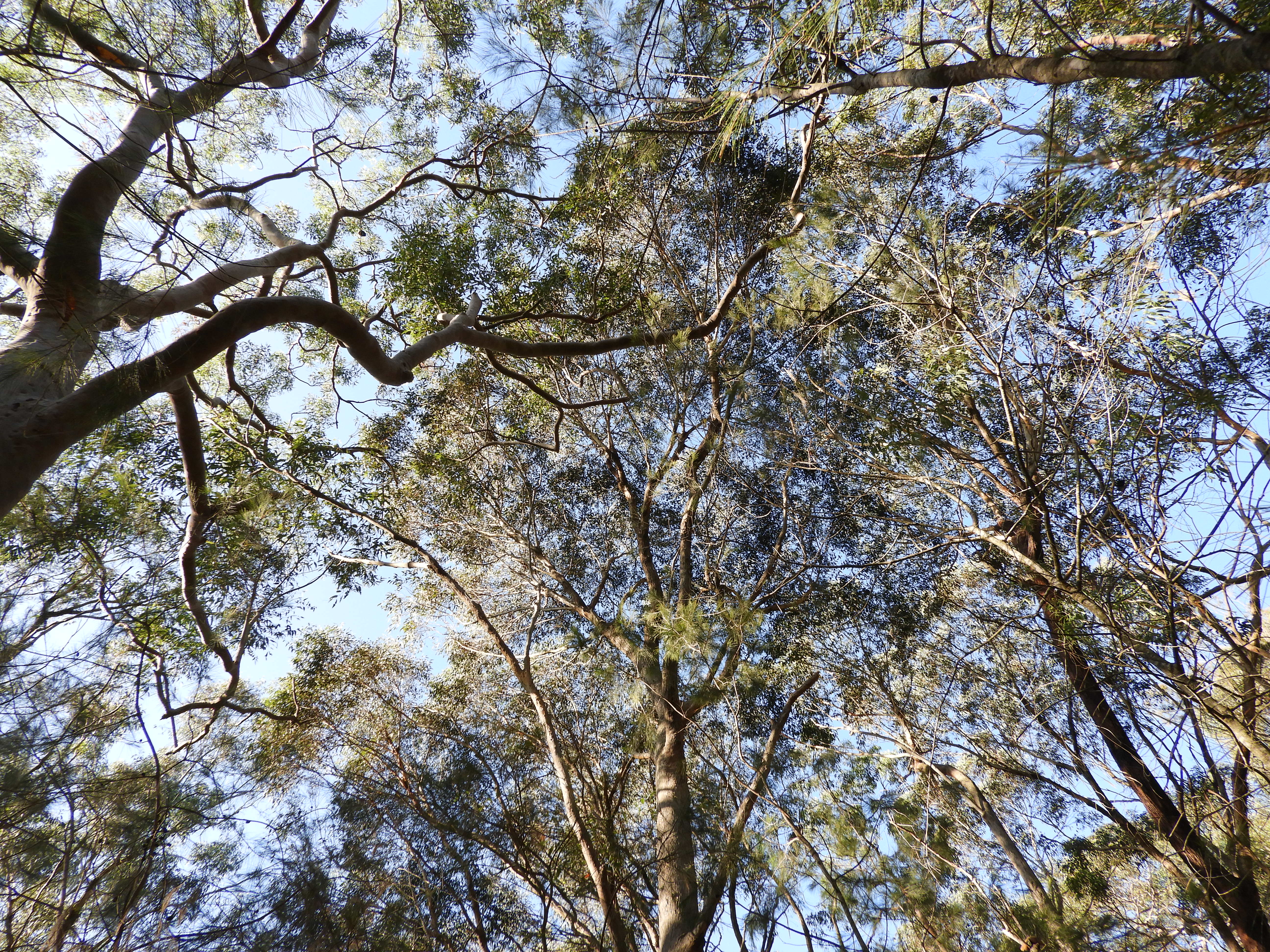
… when I heard a swooshing and clattering of wings. I looked up, just in time to receive a spattering of large droplets on my face.
Oops, I thought, some bird had a little accident.
But then it happened again. And I saw this face looking down from high in a leafy cluster:

Looking around, I saw four or five other birds – all Australian King Parrots.
(The birds were very high up indeed. My camera’s zoom has done a good job, though some of the images are a little fuzzy.)

They were swooping through the wet clusters of leaves at the top of the trees, then coming to rest for a good grooming session.

And I was lucky enough to share the resulting shower of droplets!
Here’s a female King Parrot. It’s interesting how short her tail is in comparison with the male birds. It’s perhaps a trick of perspective:
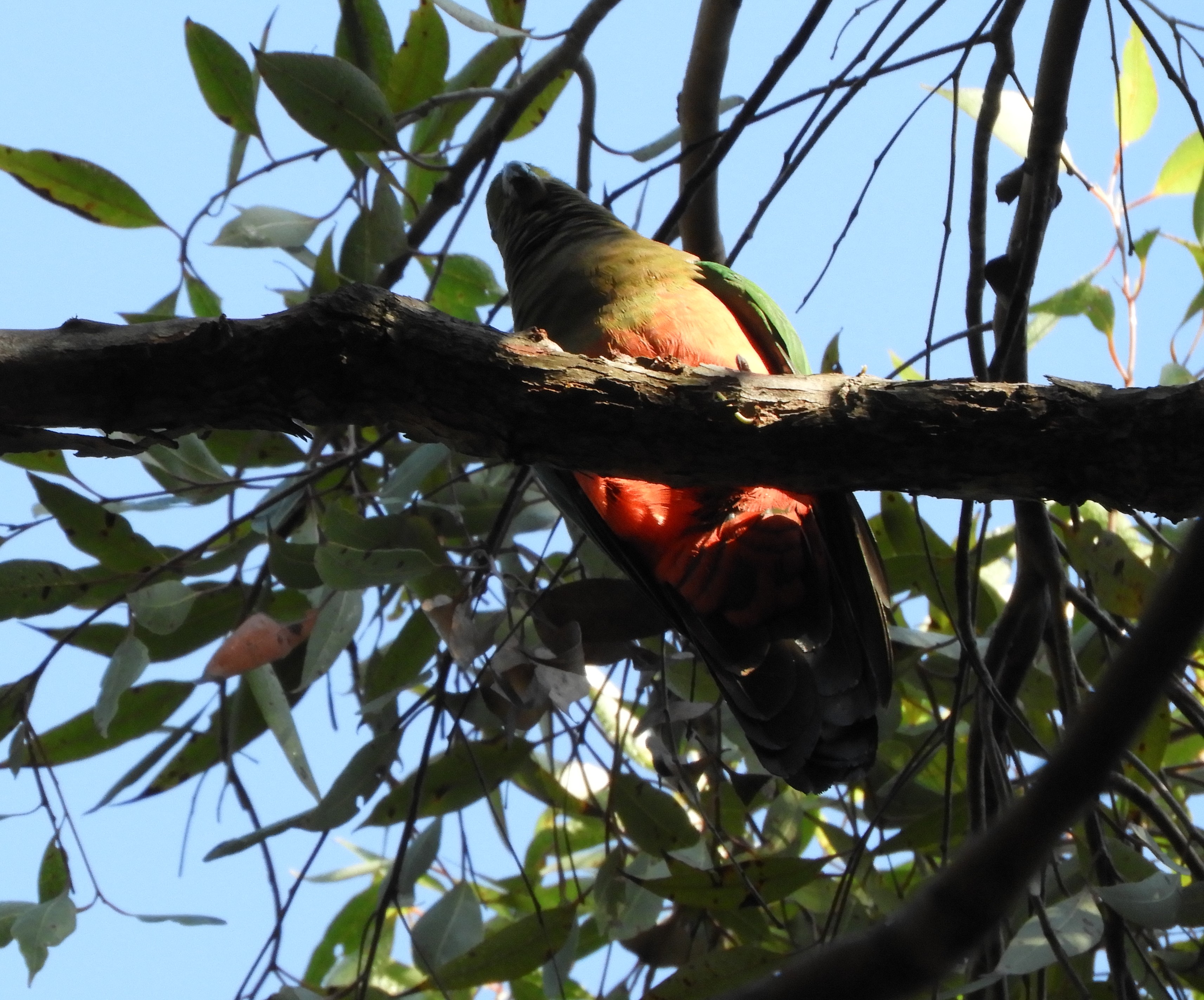
Common name: Australian King Parrot
Scientific name: Alisterus scapularis
Approximate length: 44 cm
Date spotted: 1 April 2018 (Autumn)
Location: Manly Dam National Park, New South Wales, Australia: 33°46’51.3″S 151°14’52.3″E
Call of the Glossy Black-Cockatoo
Today I spotted a group of Glossy Black-Cockatoos, and I recorded a video so you can hear them chatting to each other. For two consecutive weeks I’ve seen a group of these birds at Manly Dam Reserve. I guess they’re the same birds each time, though on opposite sides of the dam. According to my bird book, this bird is reasonably uncommon, perhaps declining in number.
It’s a short video. As I was recording it, a bush ranger drove up and startled the birds. They flew off and came towards me, which gives you a good view of the orange-red flashes in their tails.
Last week’s post has still pictures of a Glossy Black-Cockatoo, probably from the same group.
Common name: Glossy Black-Cockatoo
Scientific name: Calyptorhynchus lathami
Approximate length: 50cm
Date spotted: 3 March 2018 (Summer)
Location: Manly Dam National Reserve, near Sydney: 33°46’49.2″S 151°15’04.1″E
Glossy Black-Cockatoo spotted near Sydney
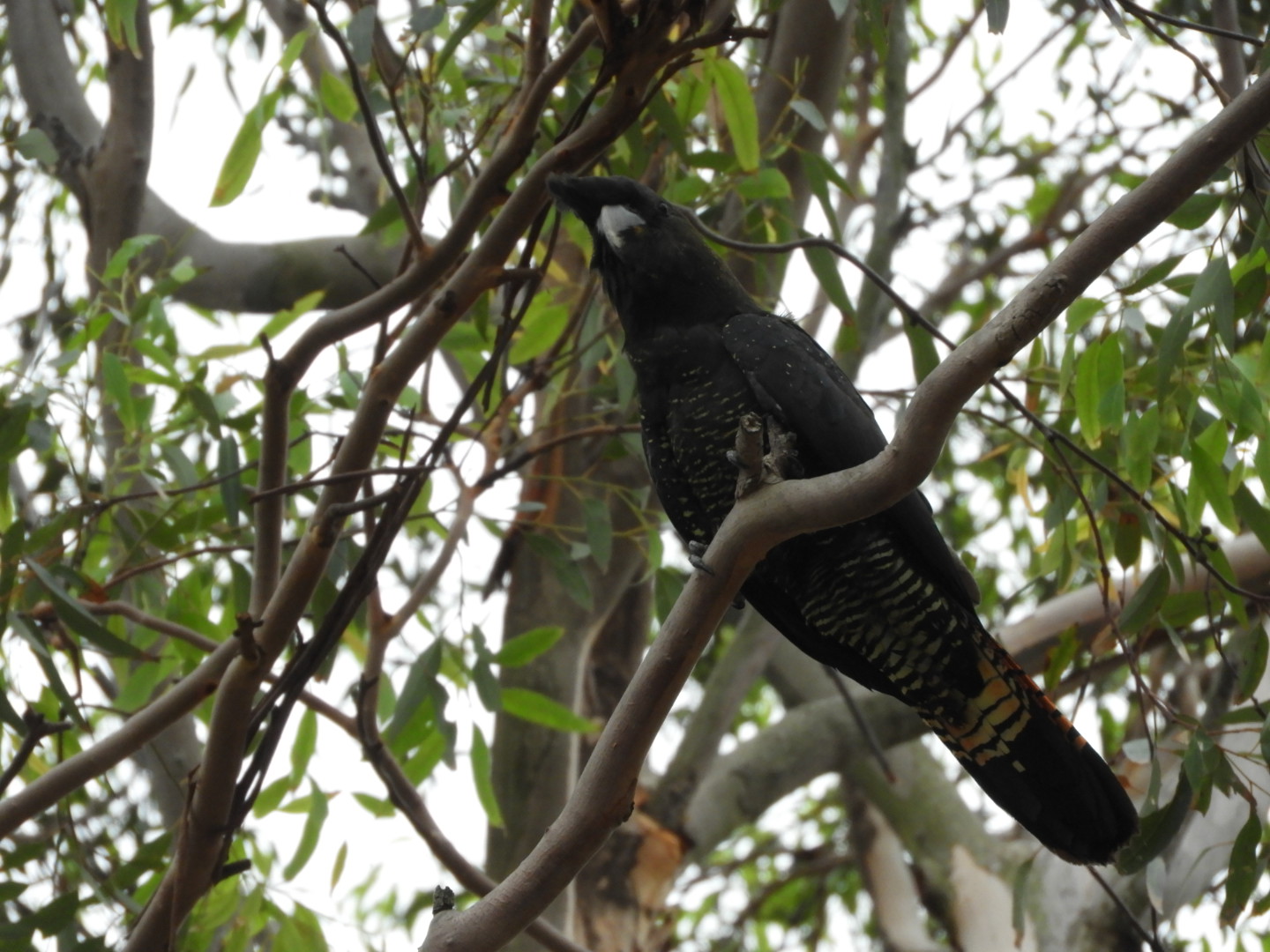
Quite exciting! According to my bird book, this bird is reasonably uncommon, perhaps declining. It’s a Glossy Black-Cockatoo, and I saw three of them for the first time ever this morning.
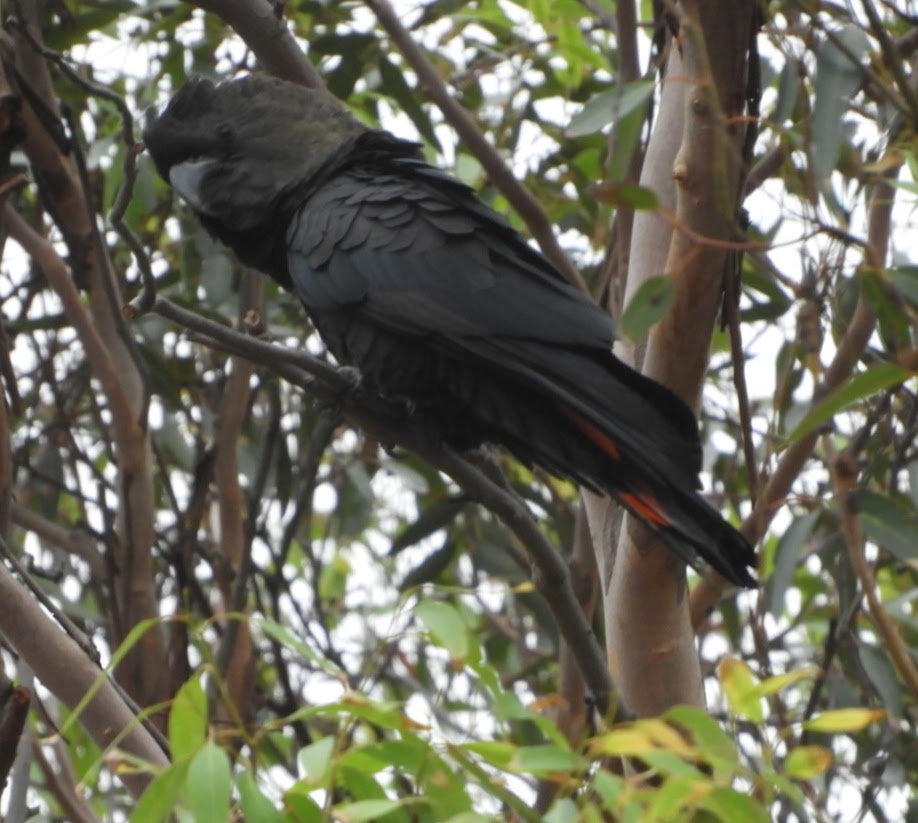
The raised crest gives the bird a typical look of parrot curiosity:
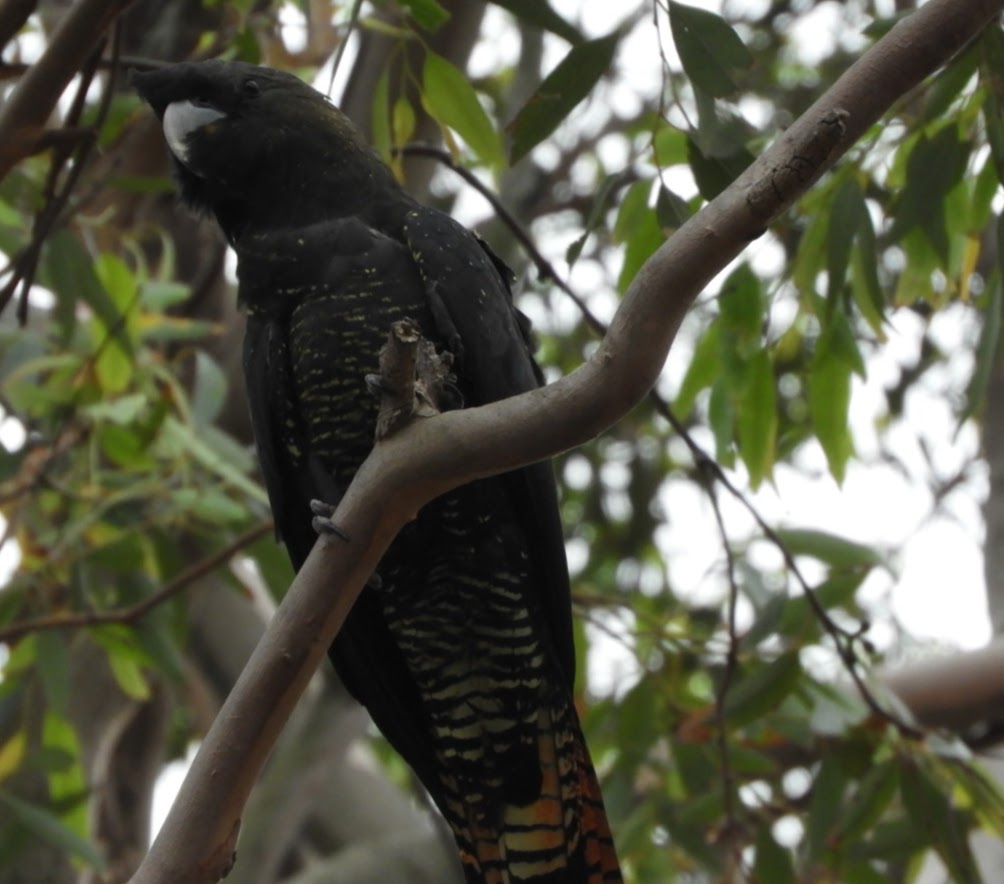
In this photo, the bird did a bit of grooming and showed the orange-red flares in its tail feathers:
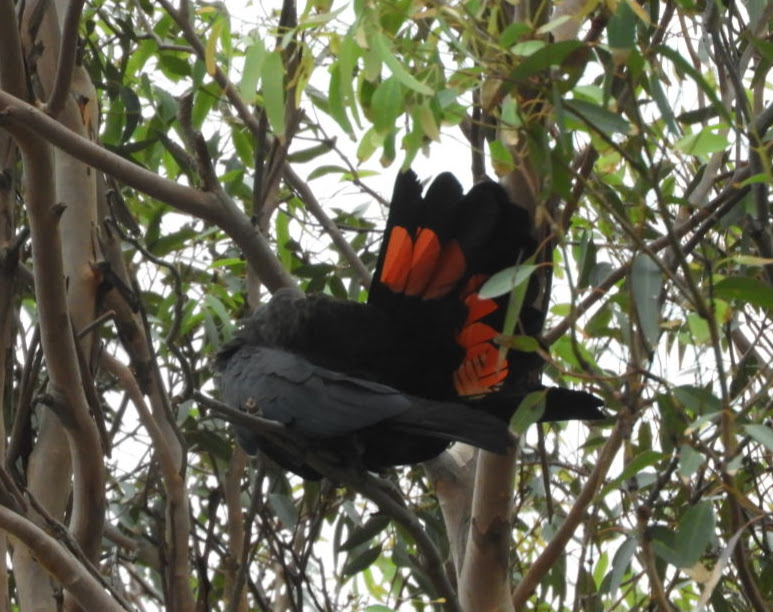
In our area we see a lot of the white sulphur-crested cockatoos. Occasionally the yellow-tailed black cockatoos pay us a visit, when their favourite trees are in flower. I’ve never before seen any of these glossy black cockatoos.
From underneath, the tail feathers look entirely yellow, white, and black:
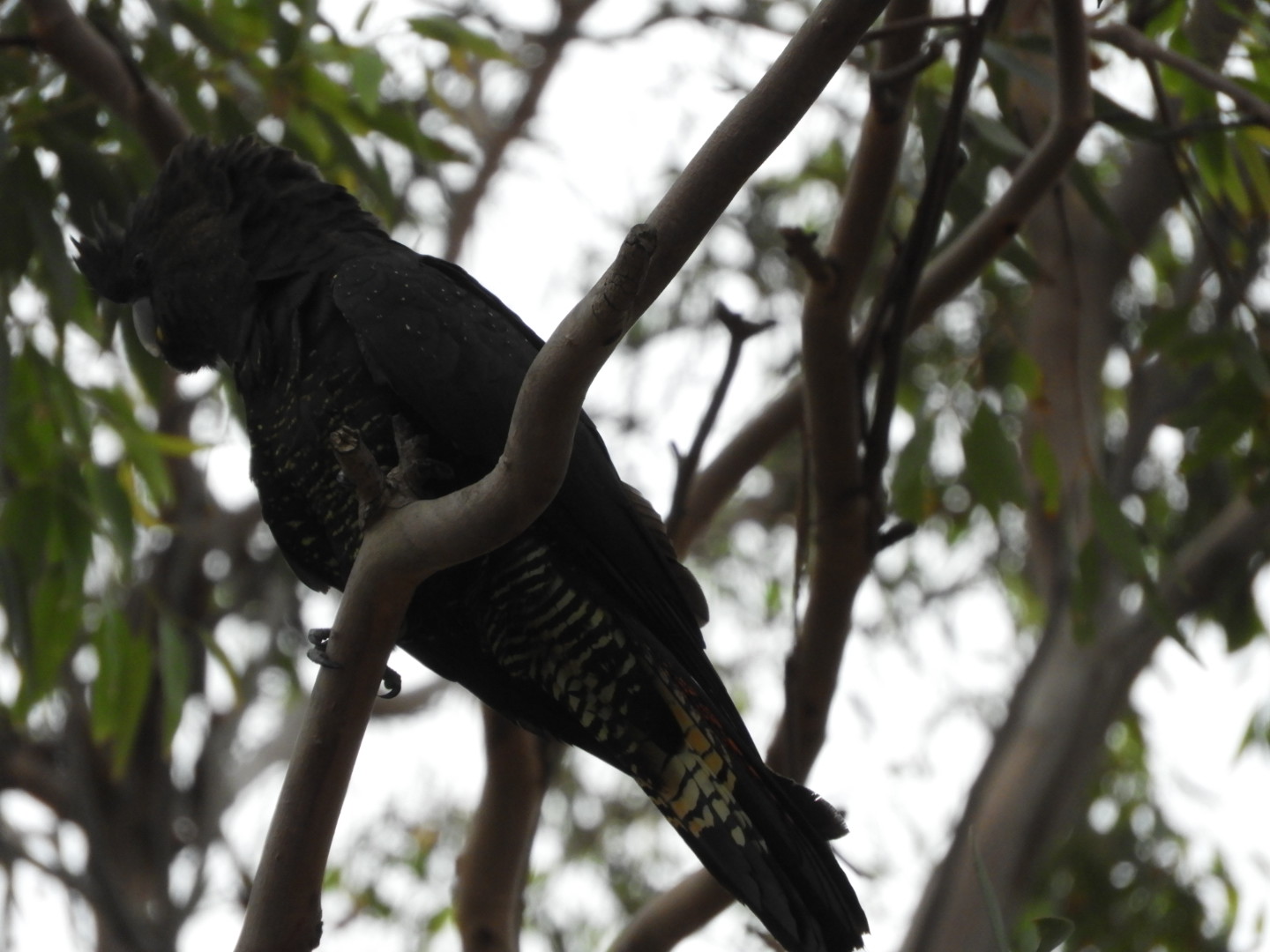
In the photo below, you can see more of the orange in the tail, and the small crest on the bird’s head:
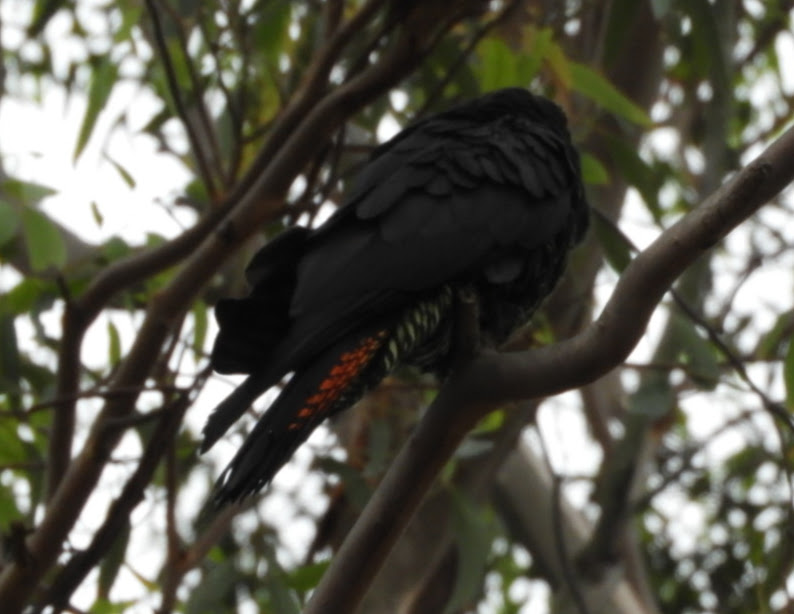
From the rear, the orange is more visible:
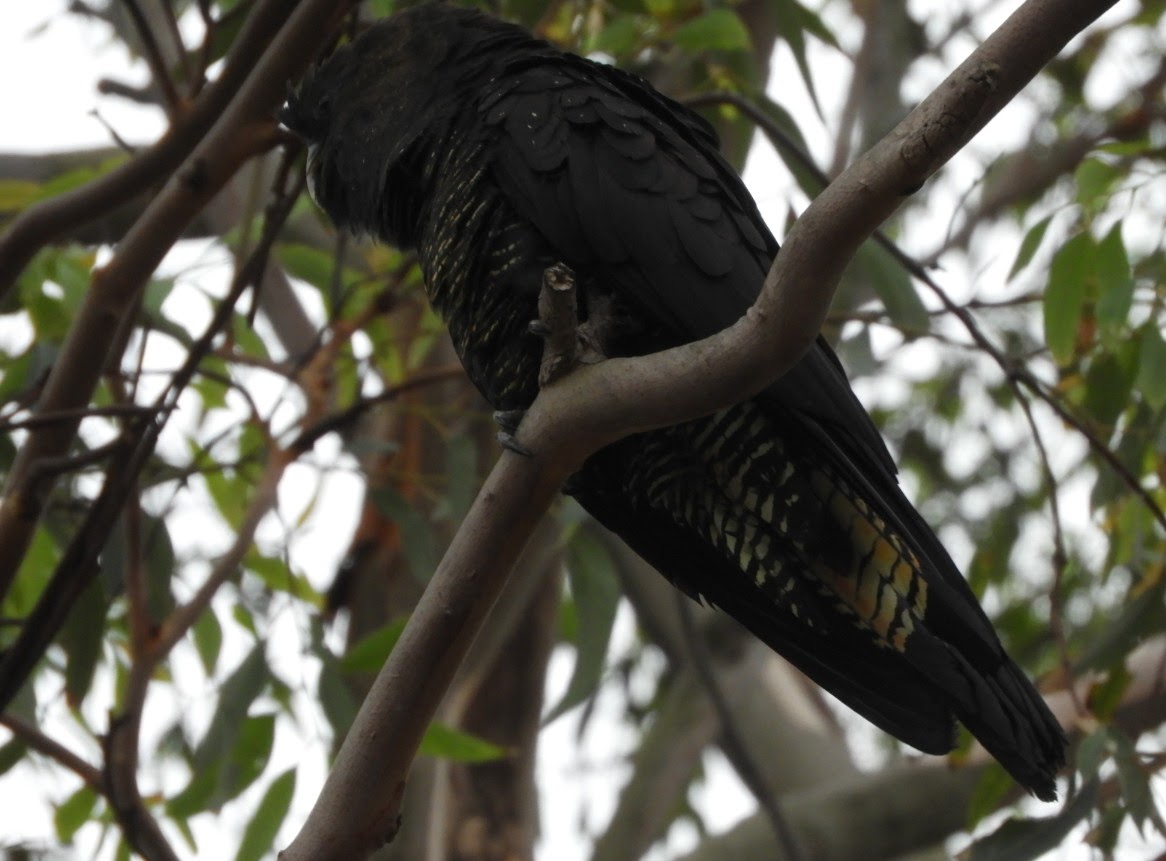
Another frontal view:
Common name: Glossy Black-Cockatoo
Scientific name: Calyptorhynchus lathami
Approximate length: 50cm
Date spotted: 25 February 2018 (Summer)
Location: Manly Dam National Reserve, near Sydney: 33°46’36.5″S 151°15’18.2″E
King Parrots on the pavement
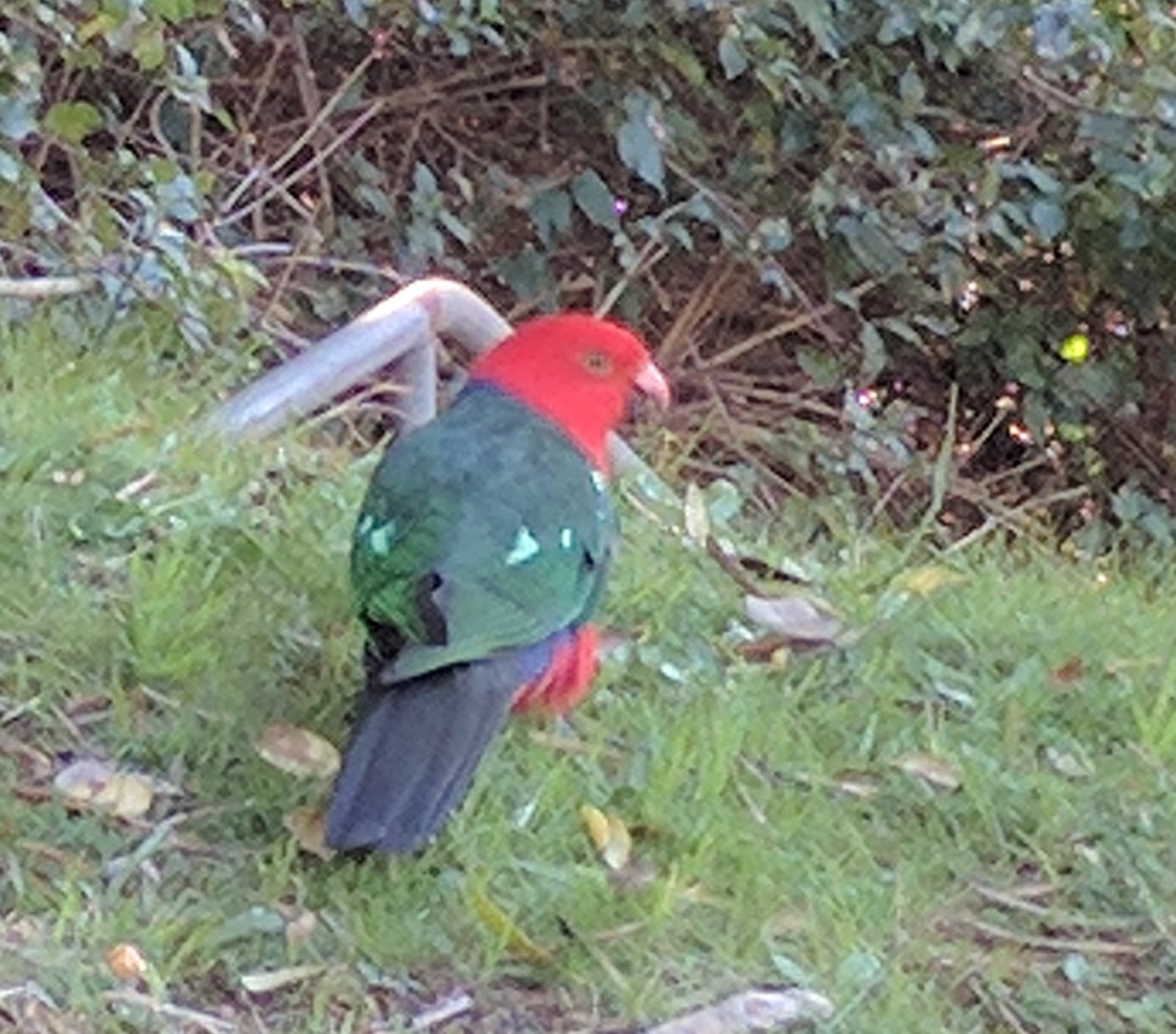
A pair of King Parrots surprised me today. They were quietly feeding on a grassy pavement as I walked by. At first they took a careful look at me, then they decided I was harmless and went back to their browsing. The photos aren’t great quality, because I had only the camera on my mobile phone with me.
The male of the pair has a red head and chest, and dark green on his back. The female bird has a green head and softer red colouring on her chest. The video shows them feeding quietly then flying off with a characteristic chirp.
It wasn’t me that scared them away, but rather a big bird flying overhead. The big scary bird turned out to be just a currawong, so the parrots came back quite quickly. Here they are together:

Here’s the male, showing the pretty colouring and markings on his back:
Common name: Australian King Parrot
Scientific name: Alisterus scapularis
Approximate length: 44 cm
Date spotted: 7 July 2017 (Winter)
Location: Allambie Heights, New South Wales, Australia: 33°46’13.2″S 151°15’41.1″E
Rainbow Lorikeets and a flowering grass tree
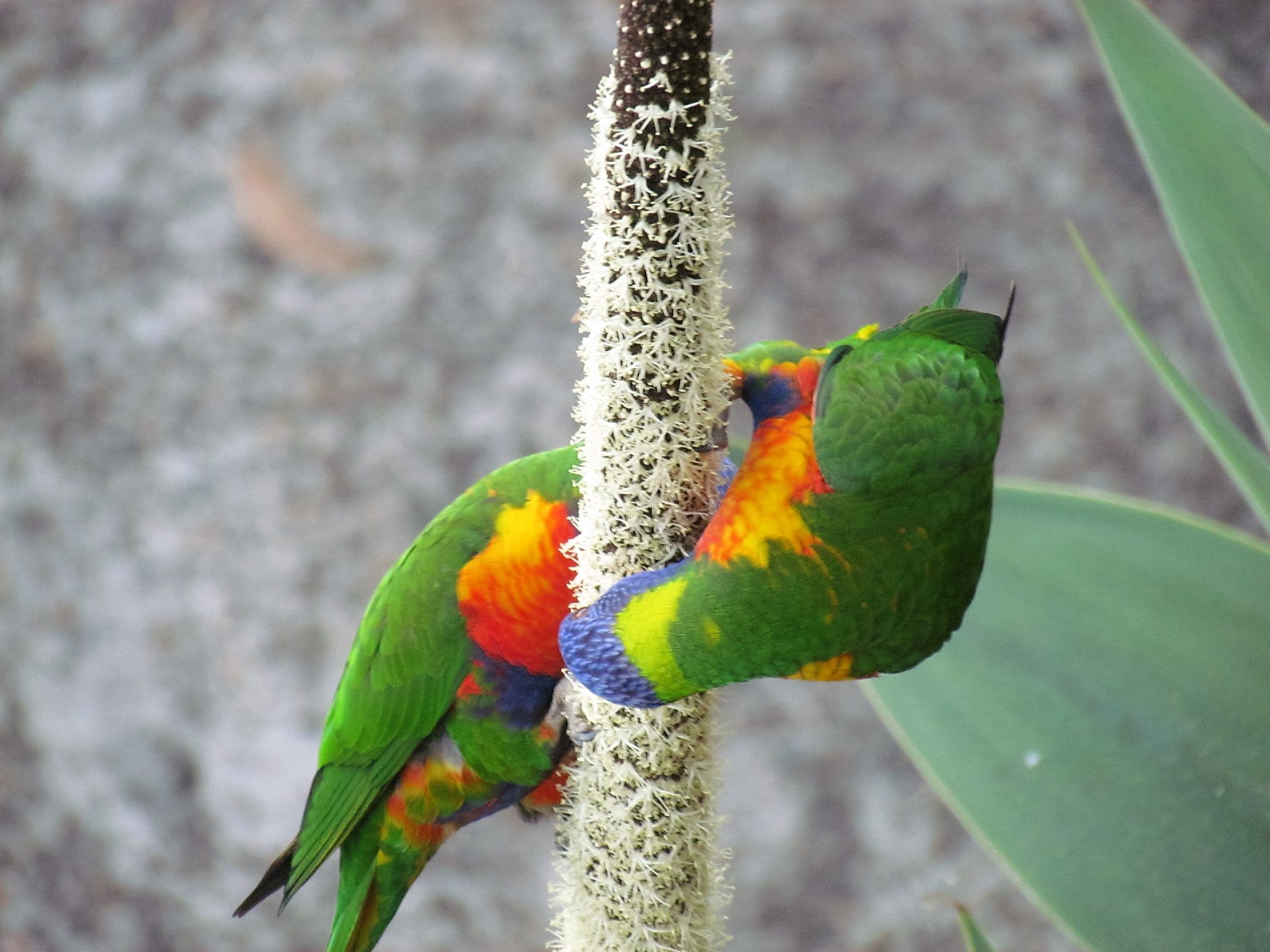
A grass tree (Xanthorrhoea) perches precariously on the edge of a cliff in our garden. Every couple of years, the grass tree throws up a flower spike—much to the delight of the Rainbow Lorikeets in the area. Here’s a closeup of a couple of the birds on the flower spike:
Here’s the grass tree on the cliff, with the flower spike shooting up. The grass tree is the one with long, thin, spiky leaves at the base of the flowering spike, not the fleshy big-leafed succulents that surround it:

You can only fit so many lorikeets on a flower spike at once. So, the trick is to line up on the nearest power line and take turns. This video shows the interaction between the birds as they wait in line:
Evidently the nectar from the flowers on the spike is deliciously sweet. Australian Aboriginal people use it to make a sweet drink. Europeans used to burn it as incense in churches. The birds feel it’s worth waiting in line:
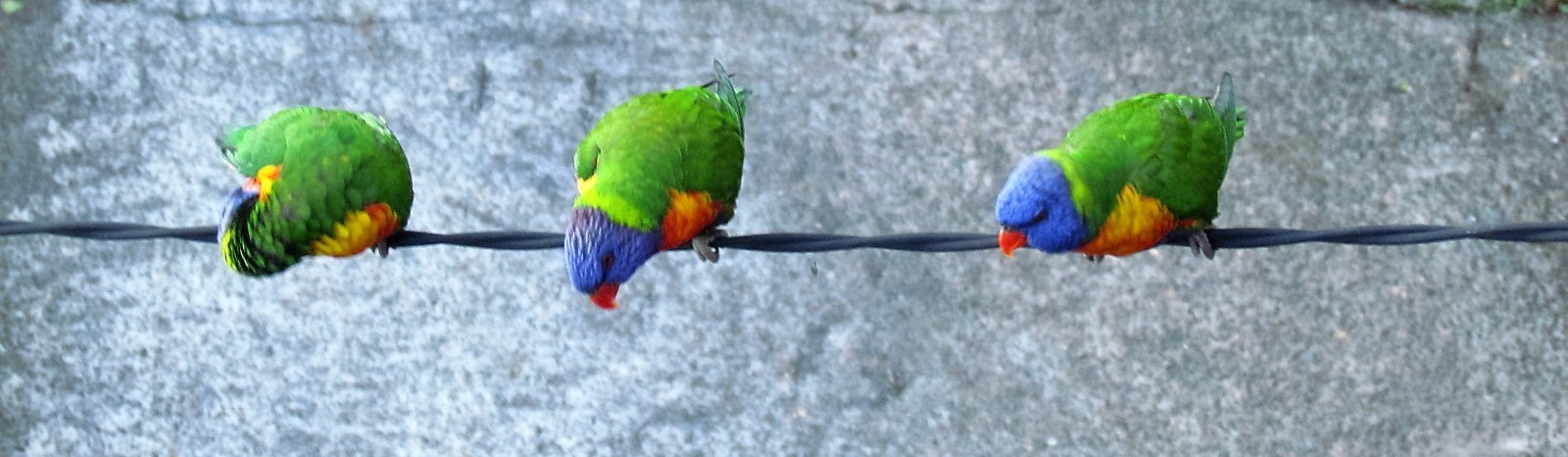
It turns out you can fit quite a few lorikeets on a flower spike:

Common name: Rainbow Lorikeet
Scientific name: Trichoglossus haematodus
Approximate length: 30 cm
Date spotted: 7 July 2017 (Winter)
Location: Allambie Heights, New South Wales, Australia
Musk Lorikeets feeding and chatting
A tree outside our house is in flower, and attracting many avian visitors. This is the first time I’ve seen a Musk Lorikeet. They’re pretty little birds, very fast moving and well camouflaged amongst the green leaves. They chatter to each other constantly, often making a pleasant trilling sound. For some reason, that sound makes me of a phone ringing in a sunlit roof-top apartment.
You can also hear water running down the hill, as it’s been raining a lot recently.
Common name: Musk Lorikeet
Scientific name: Glossopsitta concinna
Approximate length: 23 cm
Date spotted: 27-28 February 2017 (Summer)
Location: Allambie Heights, New South Wales, Australia
In this second video, an Australian Miner joins the lorikeet in the floral feast. The miners and lorikeets usually have a bit of a squawking match over feeding territory, but they managed to co-exist on the same branch for a short period.
The loud chirping you can hear is a Rainbow Lorikeet flying by. (There’s a picture of one further down in this post.)
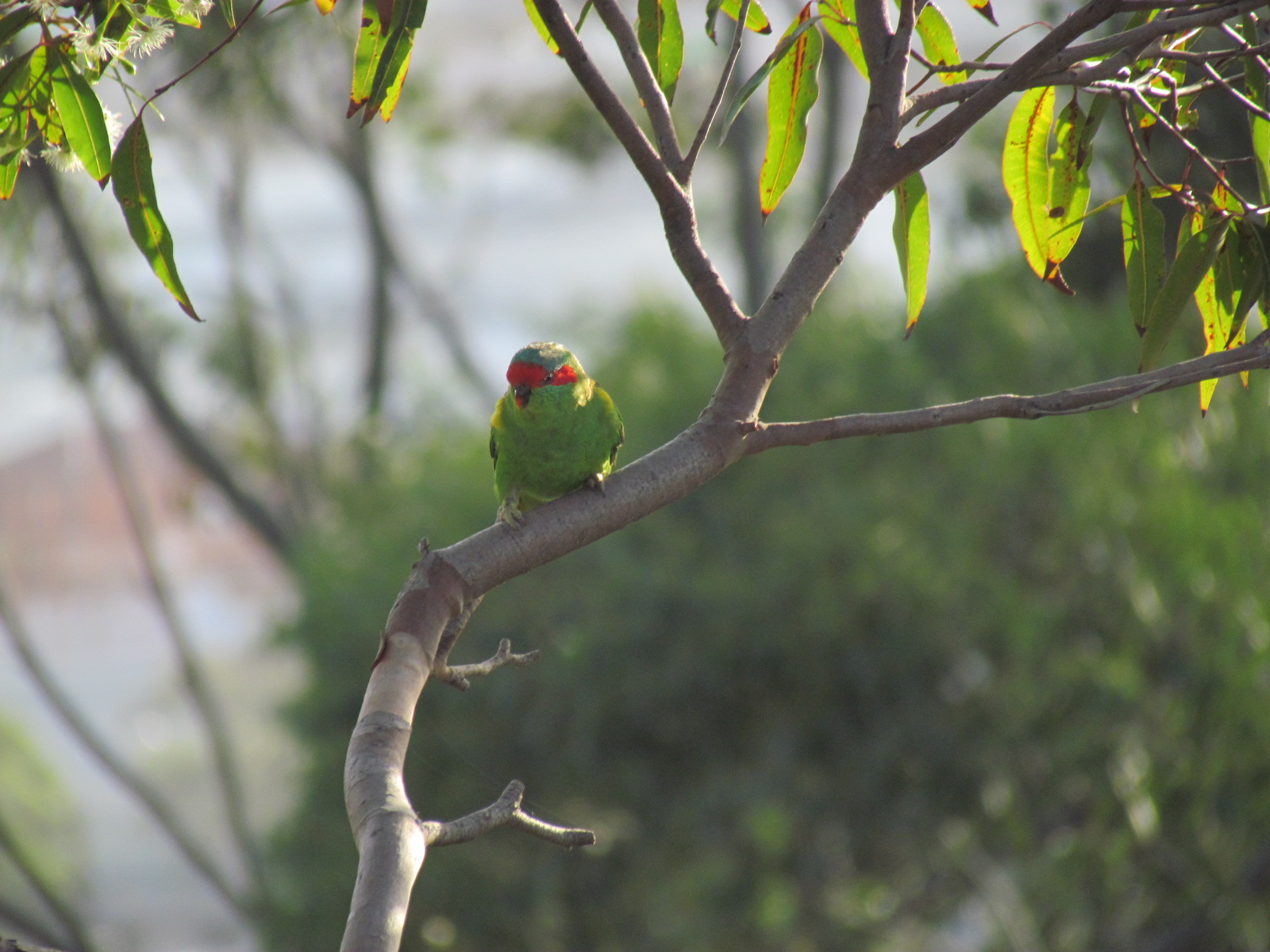
Musk Lorikeets are mainly green, with a red mask around the eyes, a blue cap, and a yellow stripe along the wing:
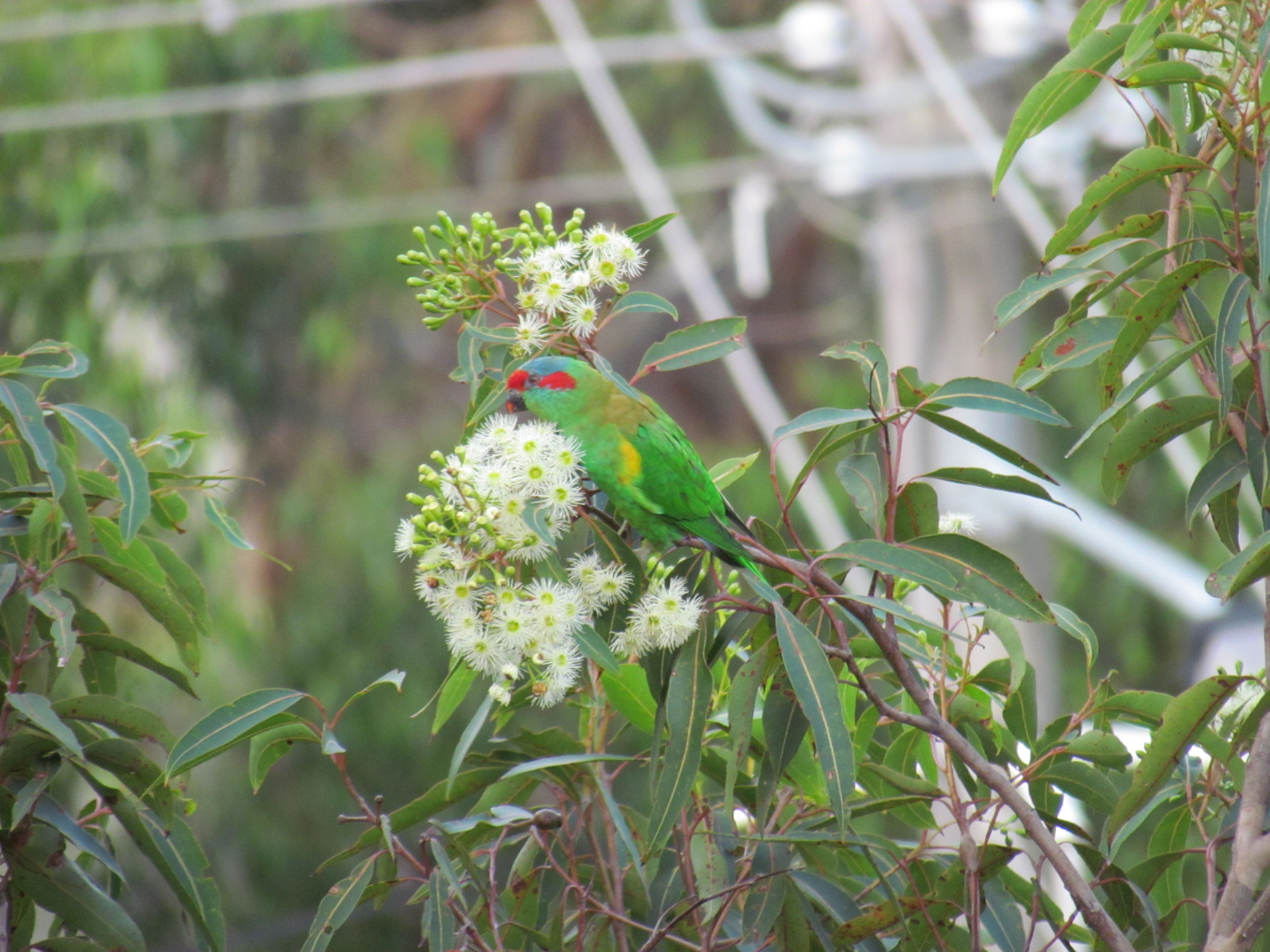
They never seem to stop moving! This one stood still for a short time, but you can see it’s thinking of launching itself into the air any time:
Other visitors to the tree include Rainbow Lorikeets like this one:
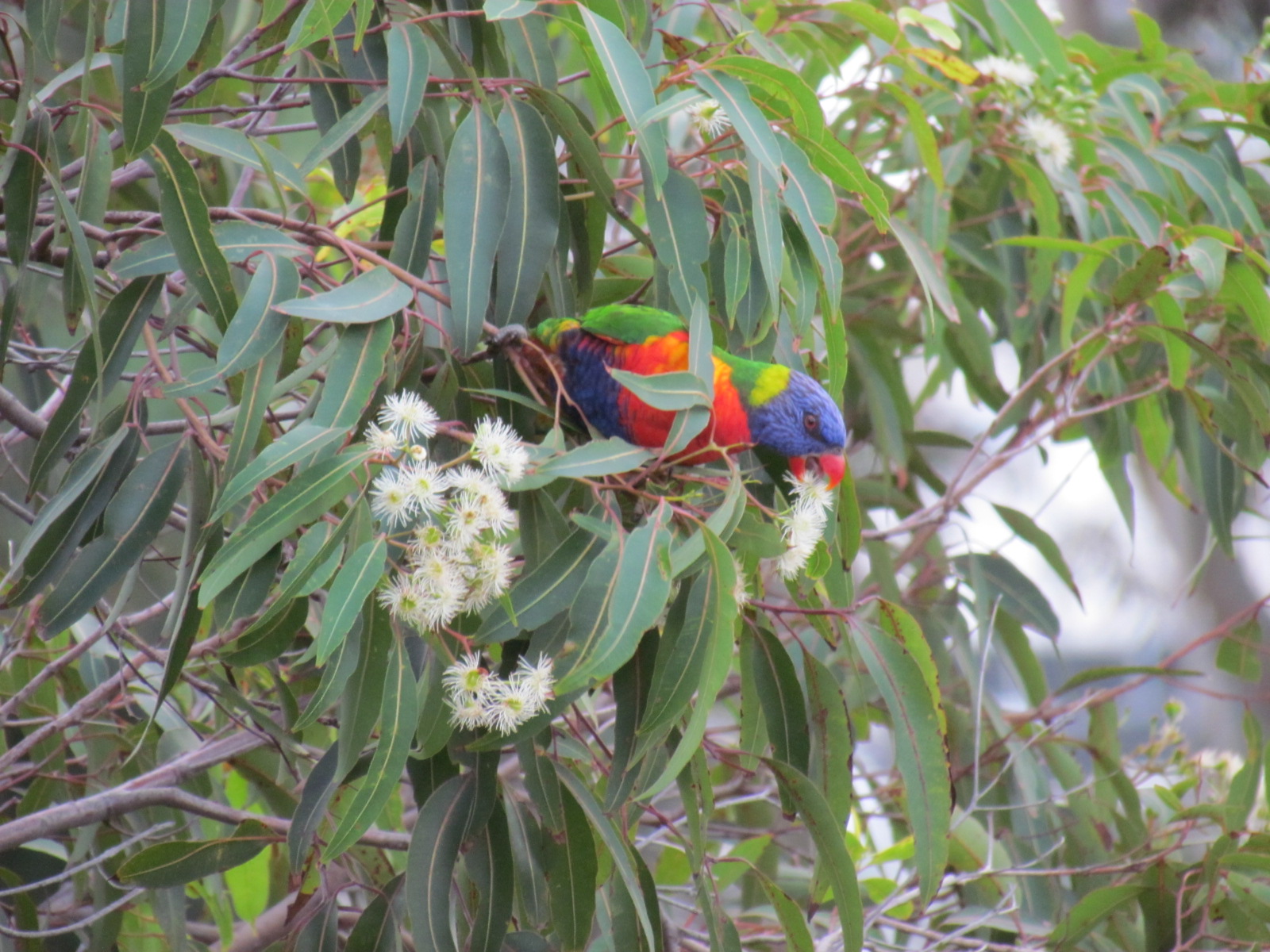
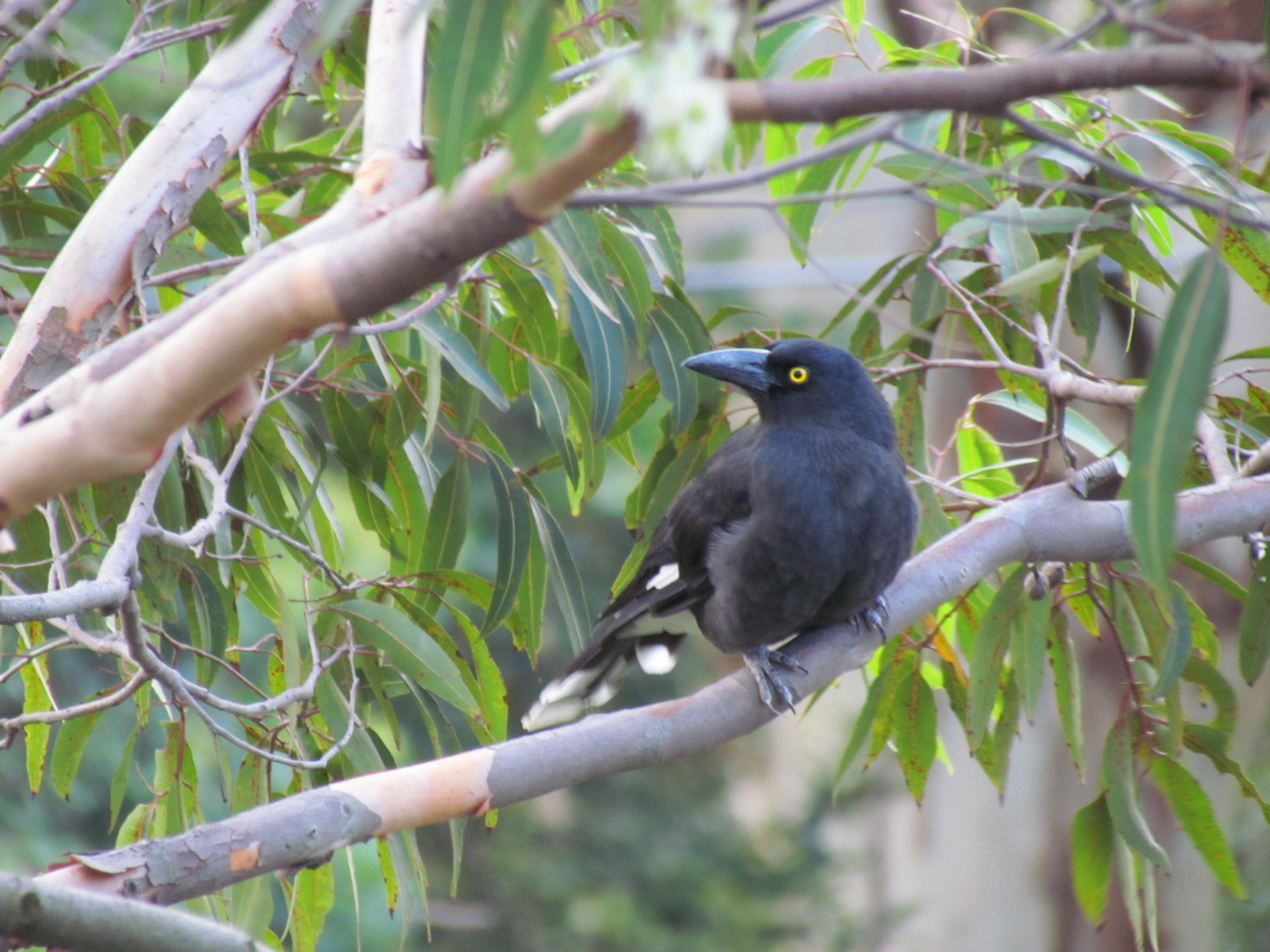
They’re much more common around here than the Musk Lorikeets. Also Currawongs:


 Sydney Birder