Blog Archives
Call of the Glossy Black-Cockatoo
Today I spotted a group of Glossy Black-Cockatoos, and I recorded a video so you can hear them chatting to each other. For two consecutive weeks I’ve seen a group of these birds at Manly Dam Reserve. I guess they’re the same birds each time, though on opposite sides of the dam. According to my bird book, this bird is reasonably uncommon, perhaps declining in number.
It’s a short video. As I was recording it, a bush ranger drove up and startled the birds. They flew off and came towards me, which gives you a good view of the orange-red flashes in their tails.
Last week’s post has still pictures of a Glossy Black-Cockatoo, probably from the same group.
Common name: Glossy Black-Cockatoo
Scientific name: Calyptorhynchus lathami
Approximate length: 50cm
Date spotted: 3 March 2018 (Summer)
Location: Manly Dam National Reserve, near Sydney: 33°46’49.2″S 151°15’04.1″E
Glossy Black-Cockatoo spotted near Sydney
Quite exciting! According to my bird book, this bird is reasonably uncommon, perhaps declining. It’s a Glossy Black-Cockatoo, and I saw three of them for the first time ever this morning.
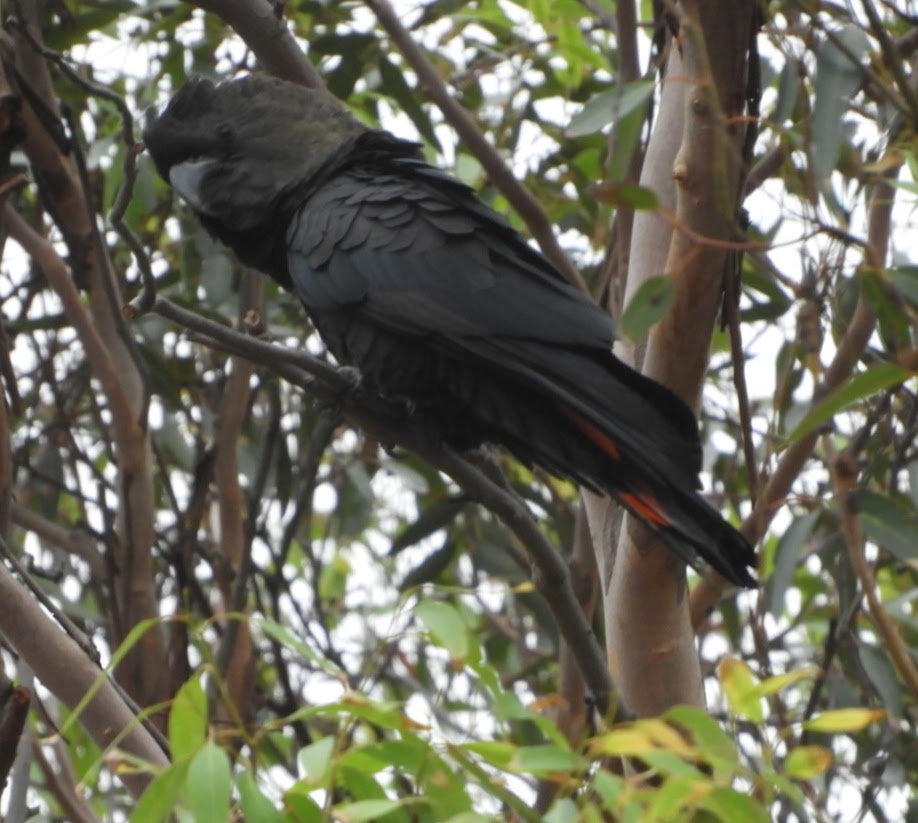
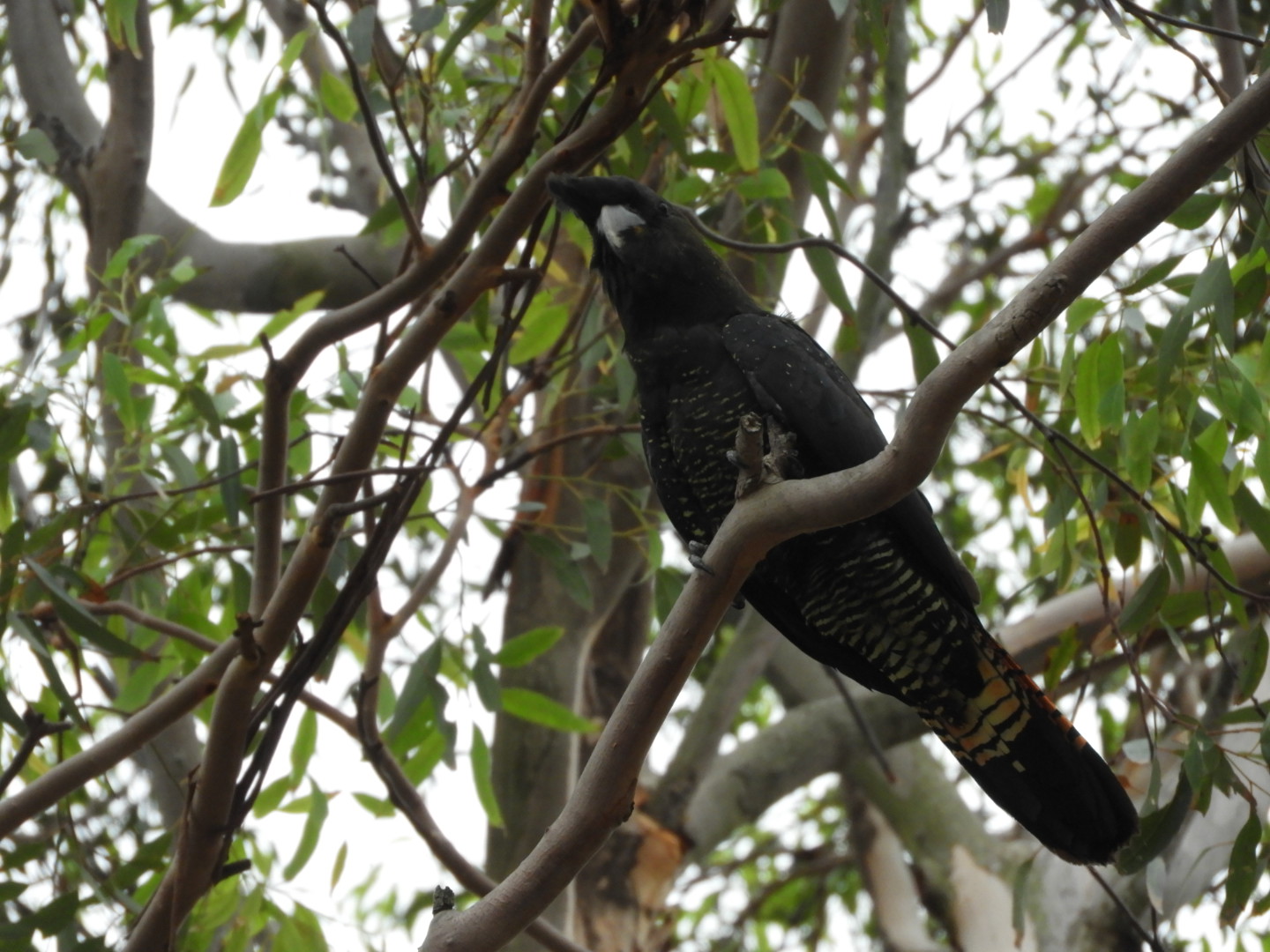
The raised crest gives the bird a typical look of parrot curiosity:
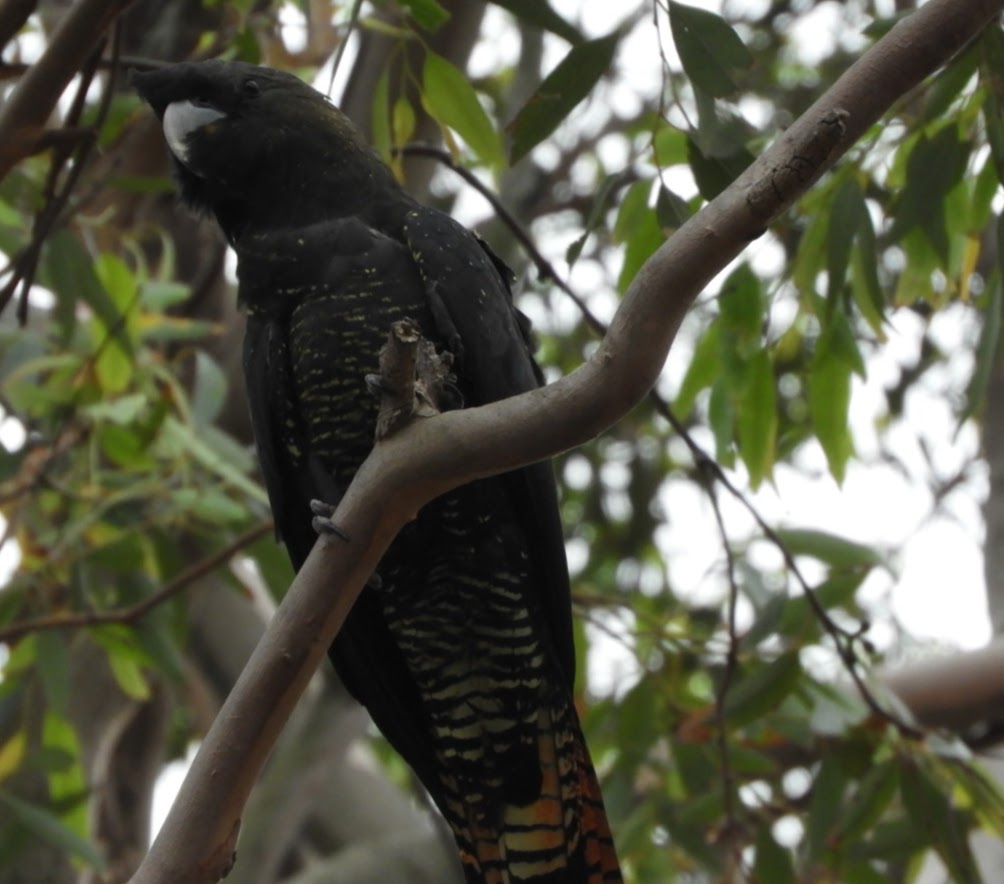
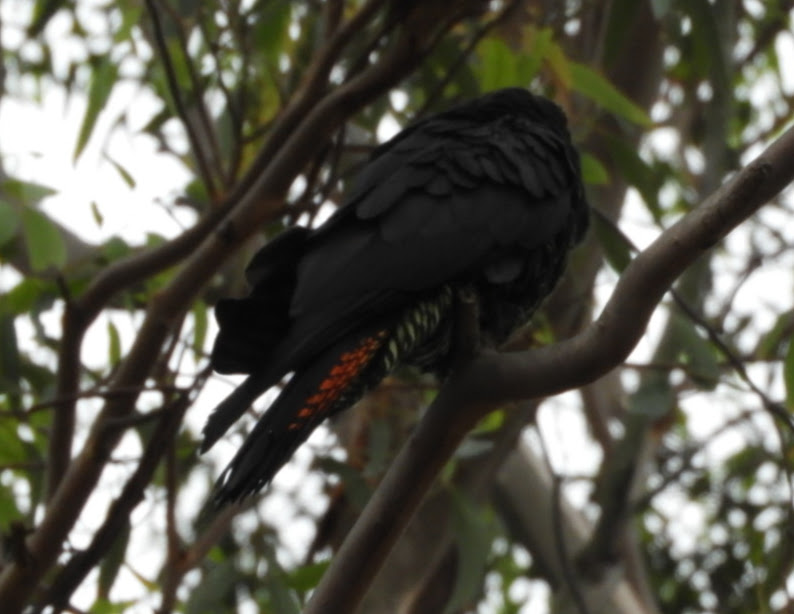
In this photo, the bird did a bit of grooming and showed the orange-red flares in its tail feathers:
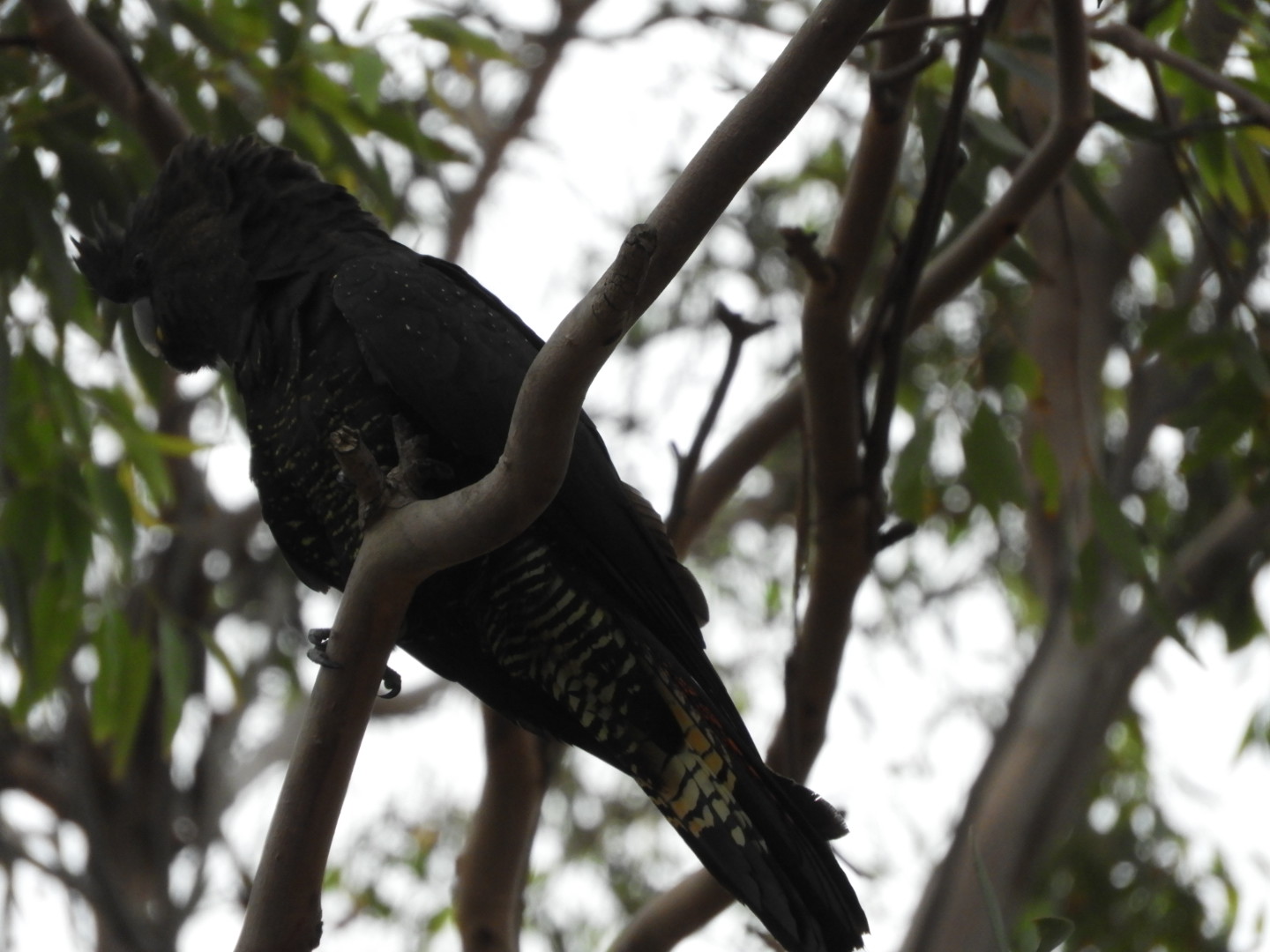
In our area we see a lot of the white sulphur-crested cockatoos. Occasionally the yellow-tailed black cockatoos pay us a visit, when their favourite trees are in flower. I’ve never before seen any of these glossy black cockatoos.
From underneath, the tail feathers look entirely yellow, white, and black:
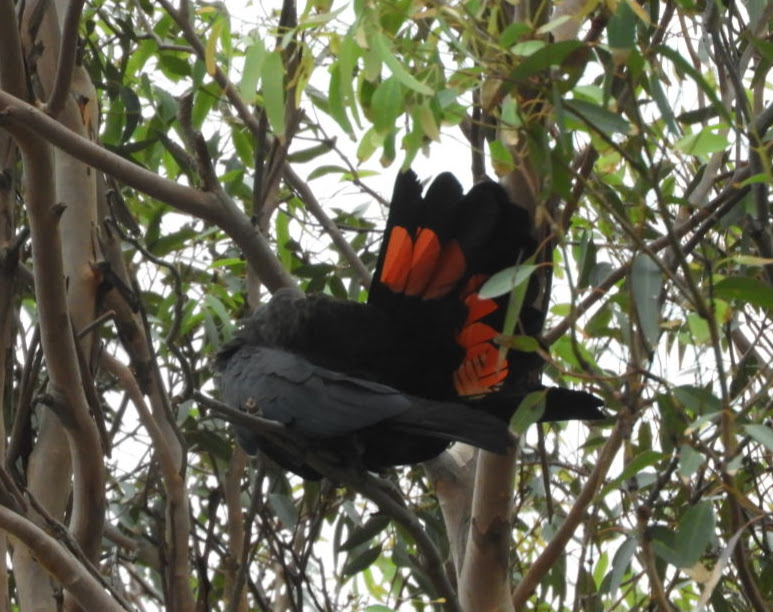
In the photo below, you can see more of the orange in the tail, and the small crest on the bird’s head:
From the rear, the orange is more visible:
Another frontal view:
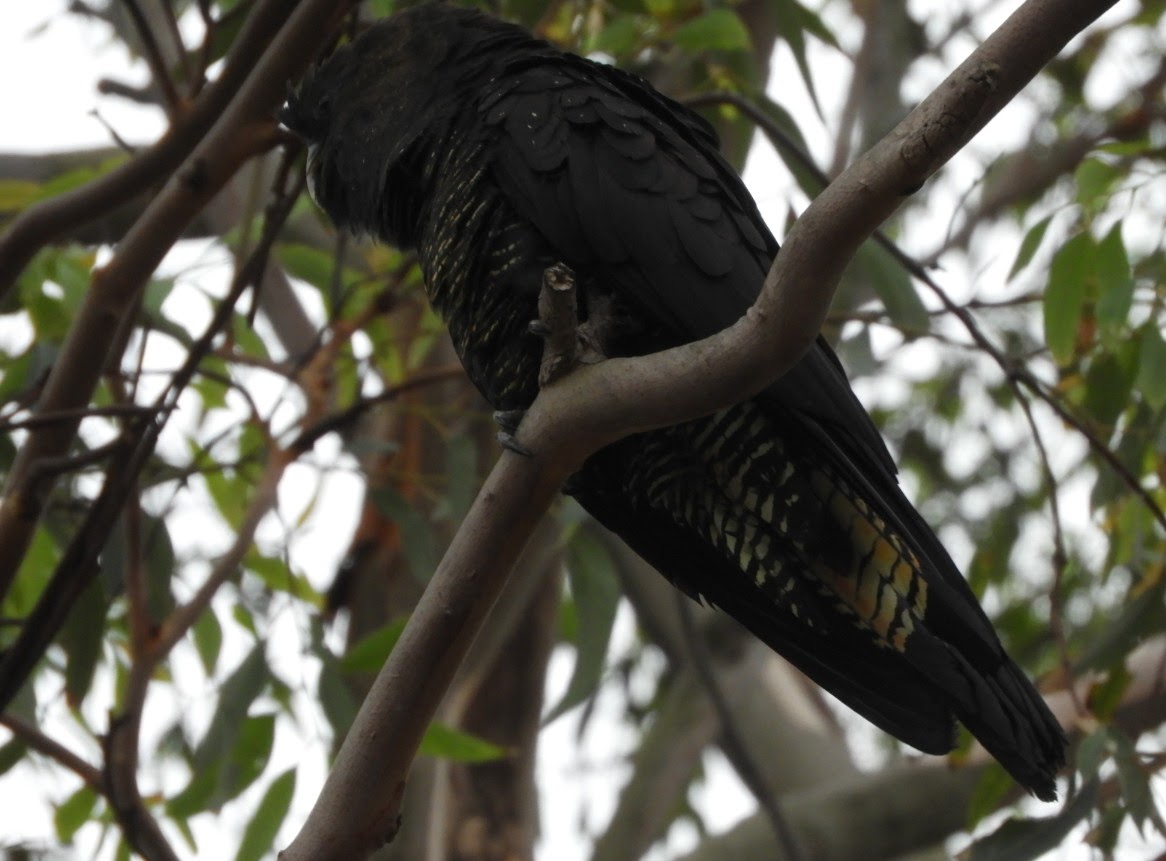
Common name: Glossy Black-Cockatoo
Scientific name: Calyptorhynchus lathami
Approximate length: 50cm
Date spotted: 25 February 2018 (Summer)
Location: Manly Dam National Reserve, near Sydney: 33°46’36.5″S 151°15’18.2″E
King Parrots on the pavement
A pair of King Parrots surprised me today. They were quietly feeding on a grassy pavement as I walked by. At first they took a careful look at me, then they decided I was harmless and went back to their browsing. The photos aren’t great quality, because I had only the camera on my mobile phone with me.
The male of the pair has a red head and chest, and dark green on his back. The female bird has a green head and softer red colouring on her chest. The video shows them feeding quietly then flying off with a characteristic chirp.
It wasn’t me that scared them away, but rather a big bird flying overhead. The big scary bird turned out to be just a currawong, so the parrots came back quite quickly. Here they are together:

Here’s the male, showing the pretty colouring and markings on his back:
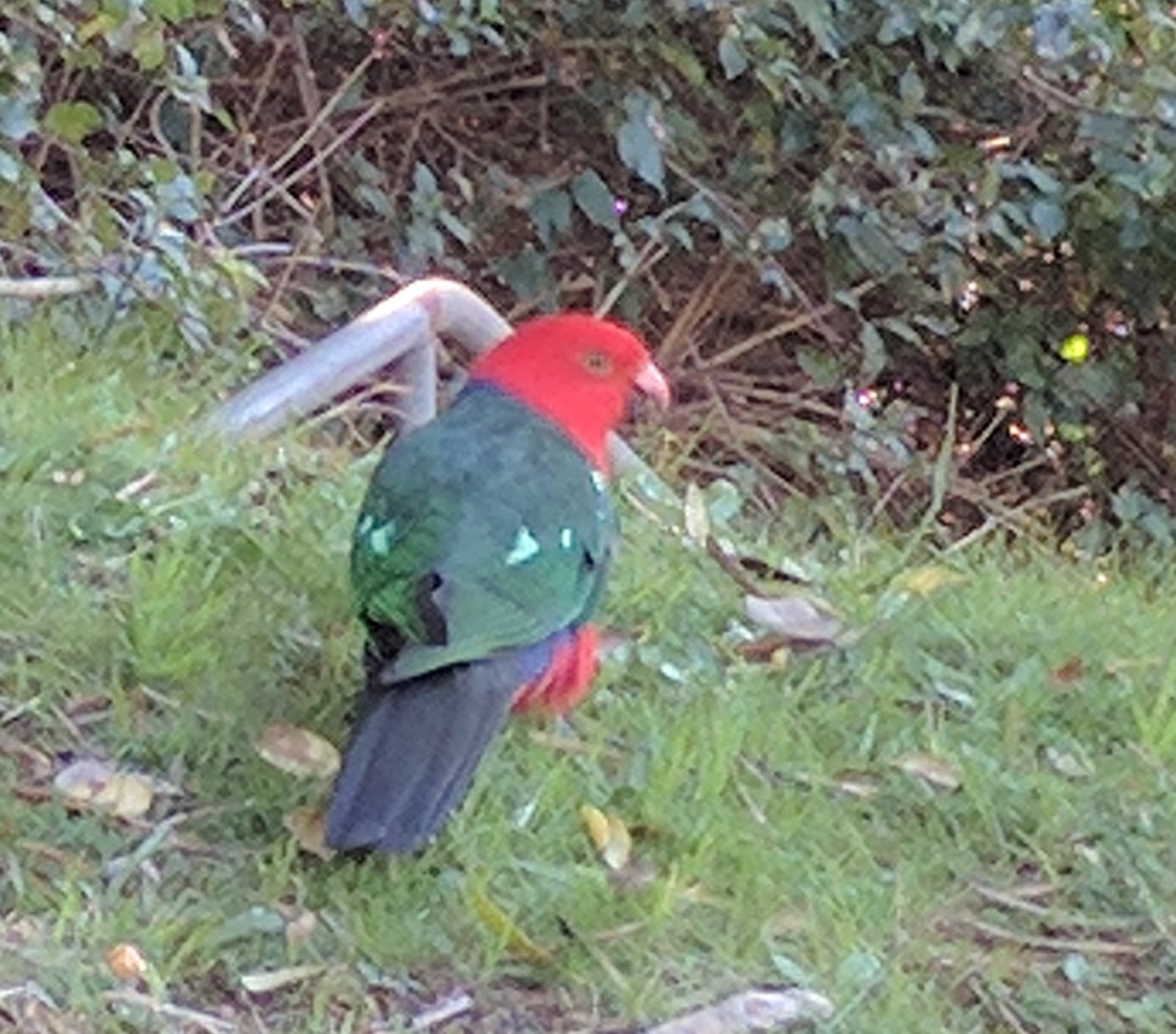
Common name: Australian King Parrot
Scientific name: Alisterus scapularis
Approximate length: 44 cm
Date spotted: 7 July 2017 (Winter)
Location: Allambie Heights, New South Wales, Australia: 33°46’13.2″S 151°15’41.1″E
Rainbow Lorikeets and a flowering grass tree
A grass tree (Xanthorrhoea) perches precariously on the edge of a cliff in our garden. Every couple of years, the grass tree throws up a flower spike—much to the delight of the Rainbow Lorikeets in the area. Here’s a closeup of a couple of the birds on the flower spike:
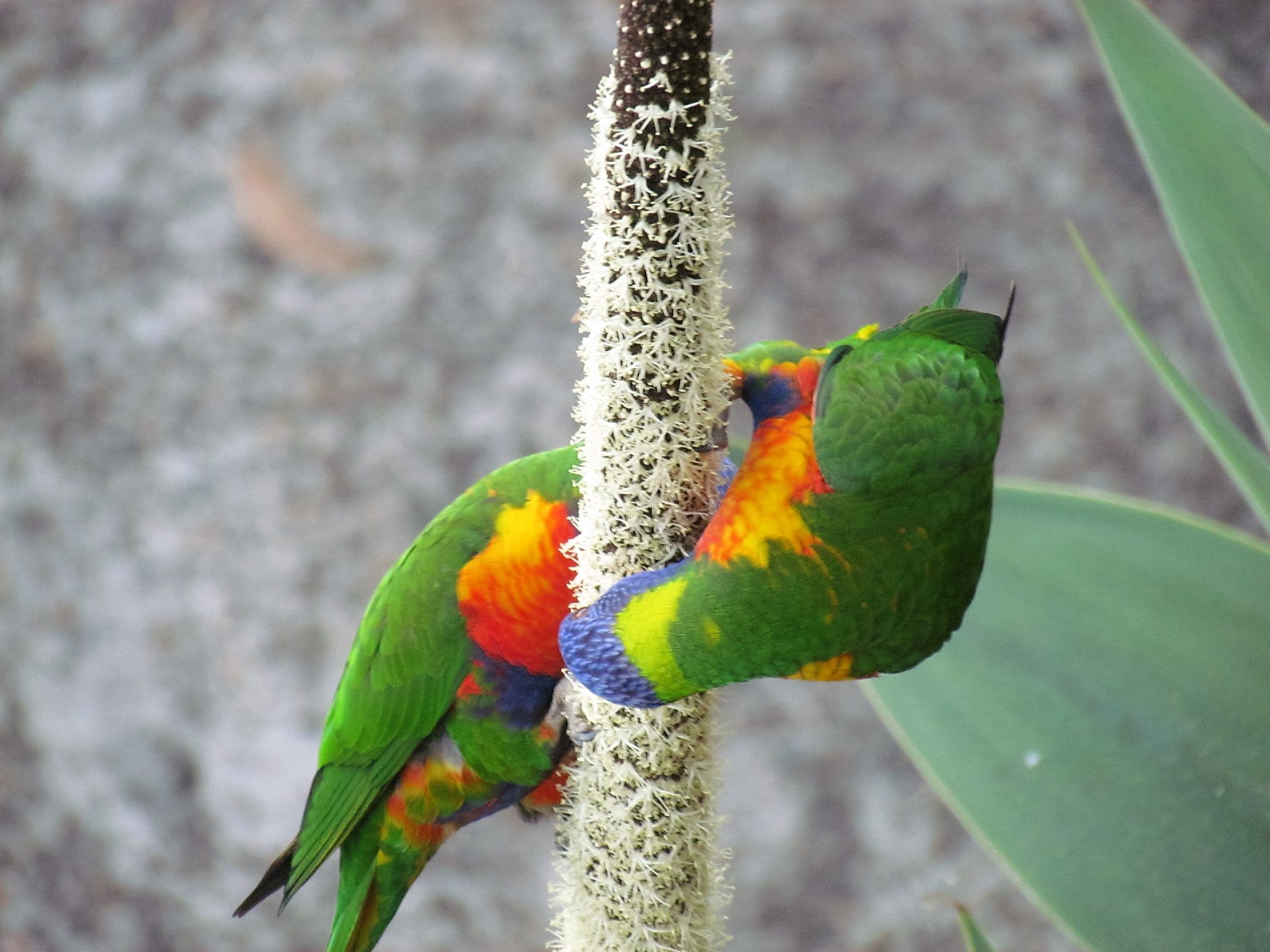
Here’s the grass tree on the cliff, with the flower spike shooting up. The grass tree is the one with long, thin, spiky leaves at the base of the flowering spike, not the fleshy big-leafed succulents that surround it:

You can only fit so many lorikeets on a flower spike at once. So, the trick is to line up on the nearest power line and take turns. This video shows the interaction between the birds as they wait in line:
Evidently the nectar from the flowers on the spike is deliciously sweet. Australian Aboriginal people use it to make a sweet drink. Europeans used to burn it as incense in churches. The birds feel it’s worth waiting in line:
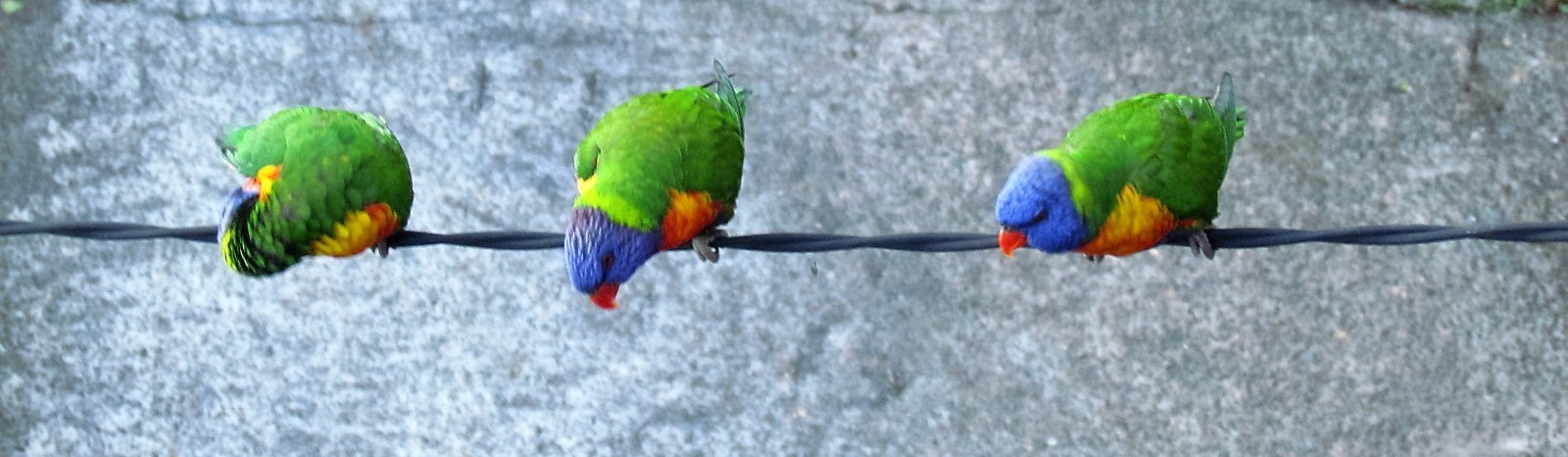
It turns out you can fit quite a few lorikeets on a flower spike:

Common name: Rainbow Lorikeet
Scientific name: Trichoglossus haematodus
Approximate length: 30 cm
Date spotted: 7 July 2017 (Winter)
Location: Allambie Heights, New South Wales, Australia
Musk Lorikeets feeding and chatting
A tree outside our house is in flower, and attracting many avian visitors. This is the first time I’ve seen a Musk Lorikeet. They’re pretty little birds, very fast moving and well camouflaged amongst the green leaves. They chatter to each other constantly, often making a pleasant trilling sound. For some reason, that sound makes me of a phone ringing in a sunlit roof-top apartment.
You can also hear water running down the hill, as it’s been raining a lot recently.
Common name: Musk Lorikeet
Scientific name: Glossopsitta concinna
Approximate length: 23 cm
Date spotted: 27-28 February 2017 (Summer)
Location: Allambie Heights, New South Wales, Australia
In this second video, an Australian Miner joins the lorikeet in the floral feast. The miners and lorikeets usually have a bit of a squawking match over feeding territory, but they managed to co-exist on the same branch for a short period.
The loud chirping you can hear is a Rainbow Lorikeet flying by. (There’s a picture of one further down in this post.)
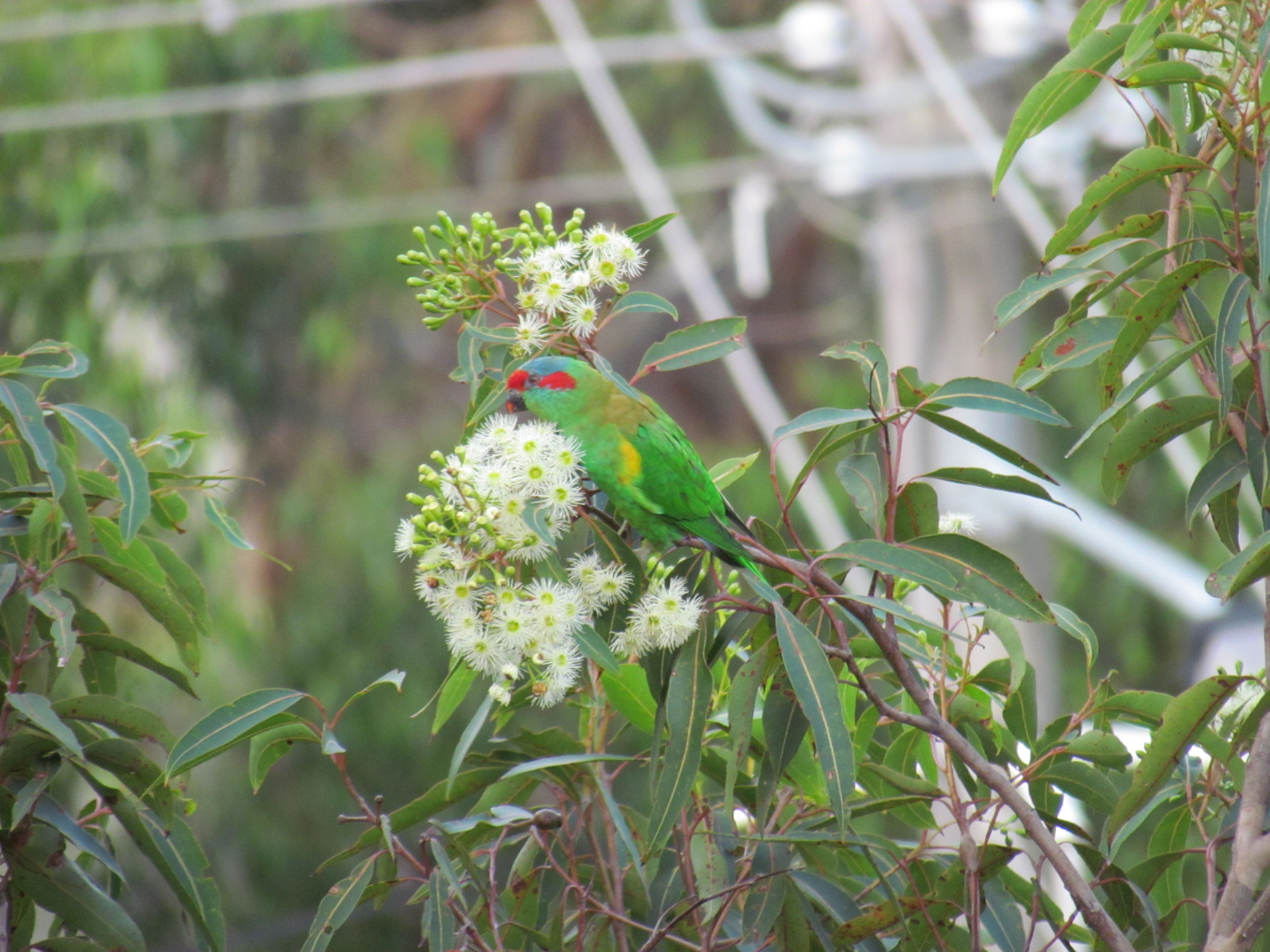
Musk Lorikeets are mainly green, with a red mask around the eyes, a blue cap, and a yellow stripe along the wing:
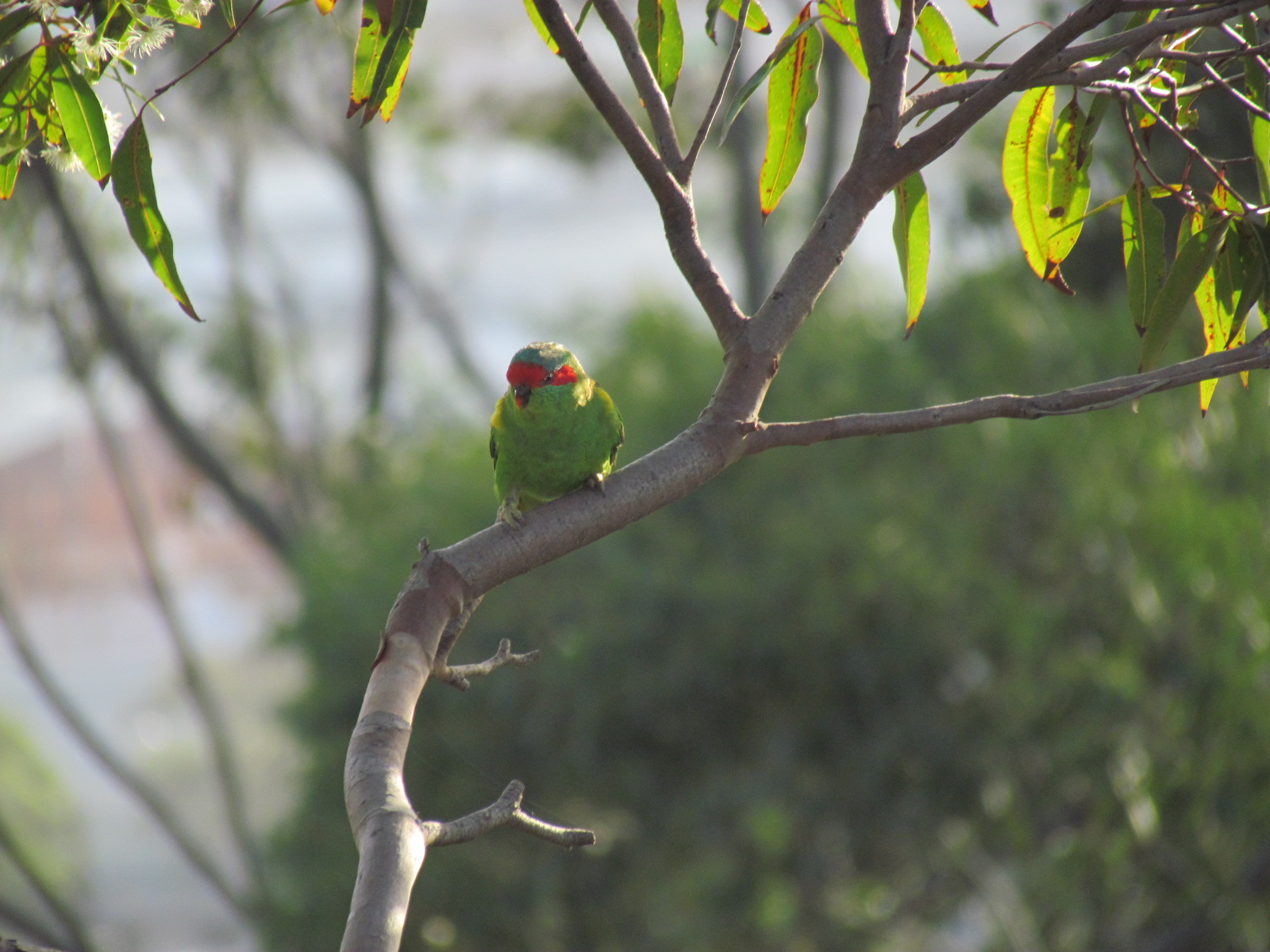
They never seem to stop moving! This one stood still for a short time, but you can see it’s thinking of launching itself into the air any time:
Other visitors to the tree include Rainbow Lorikeets like this one:
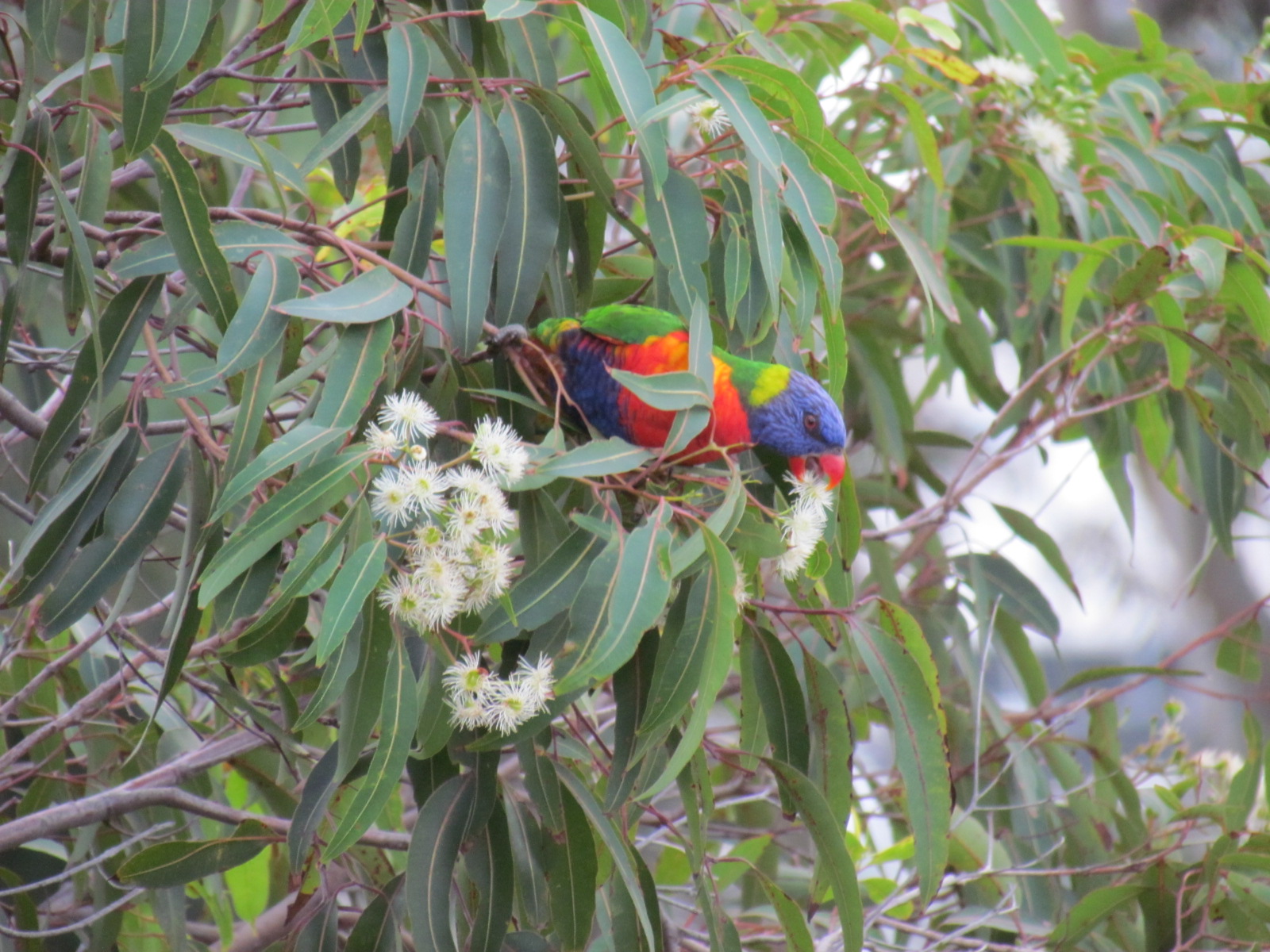
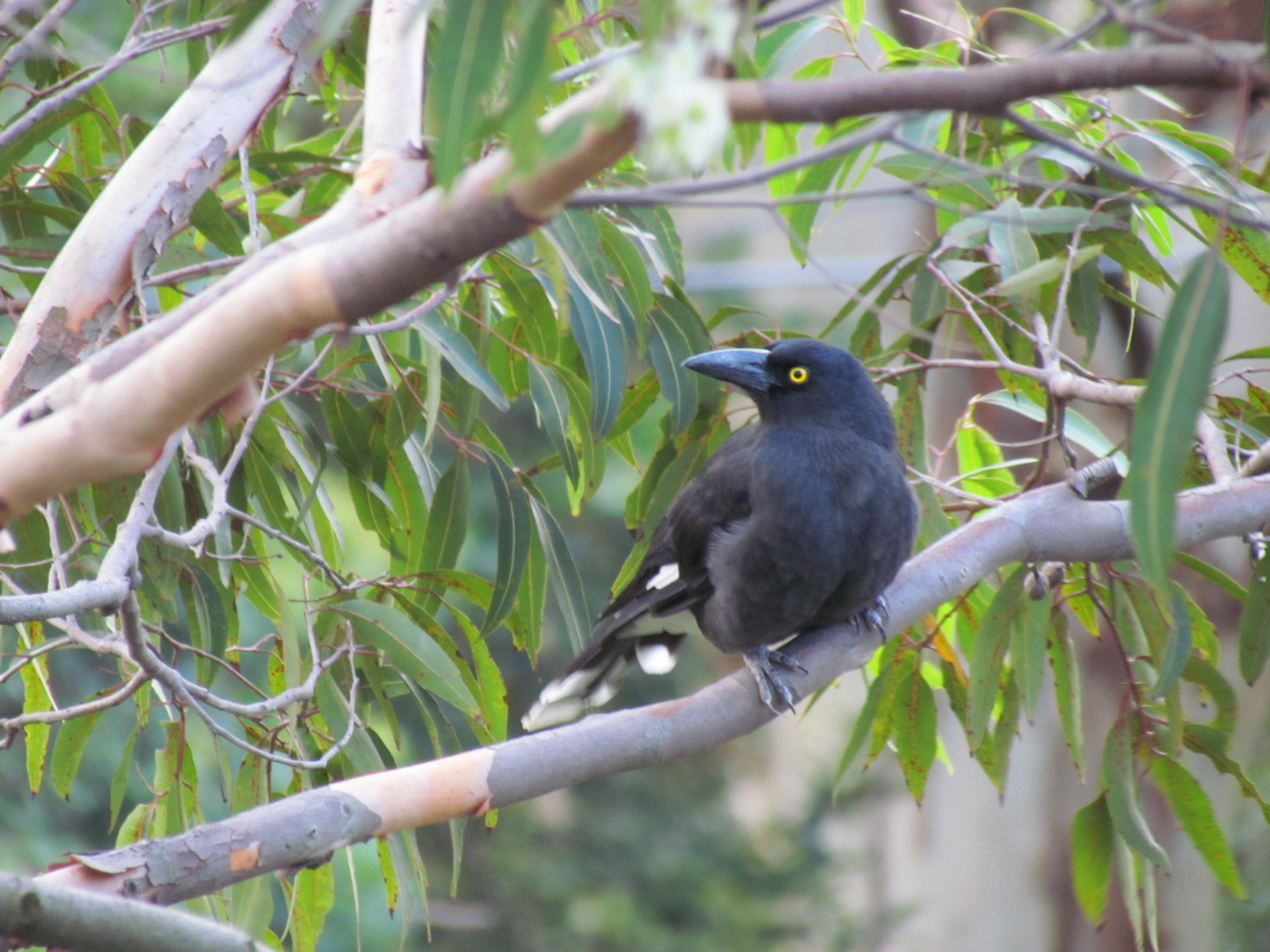
They’re much more common around here than the Musk Lorikeets. Also Currawongs:
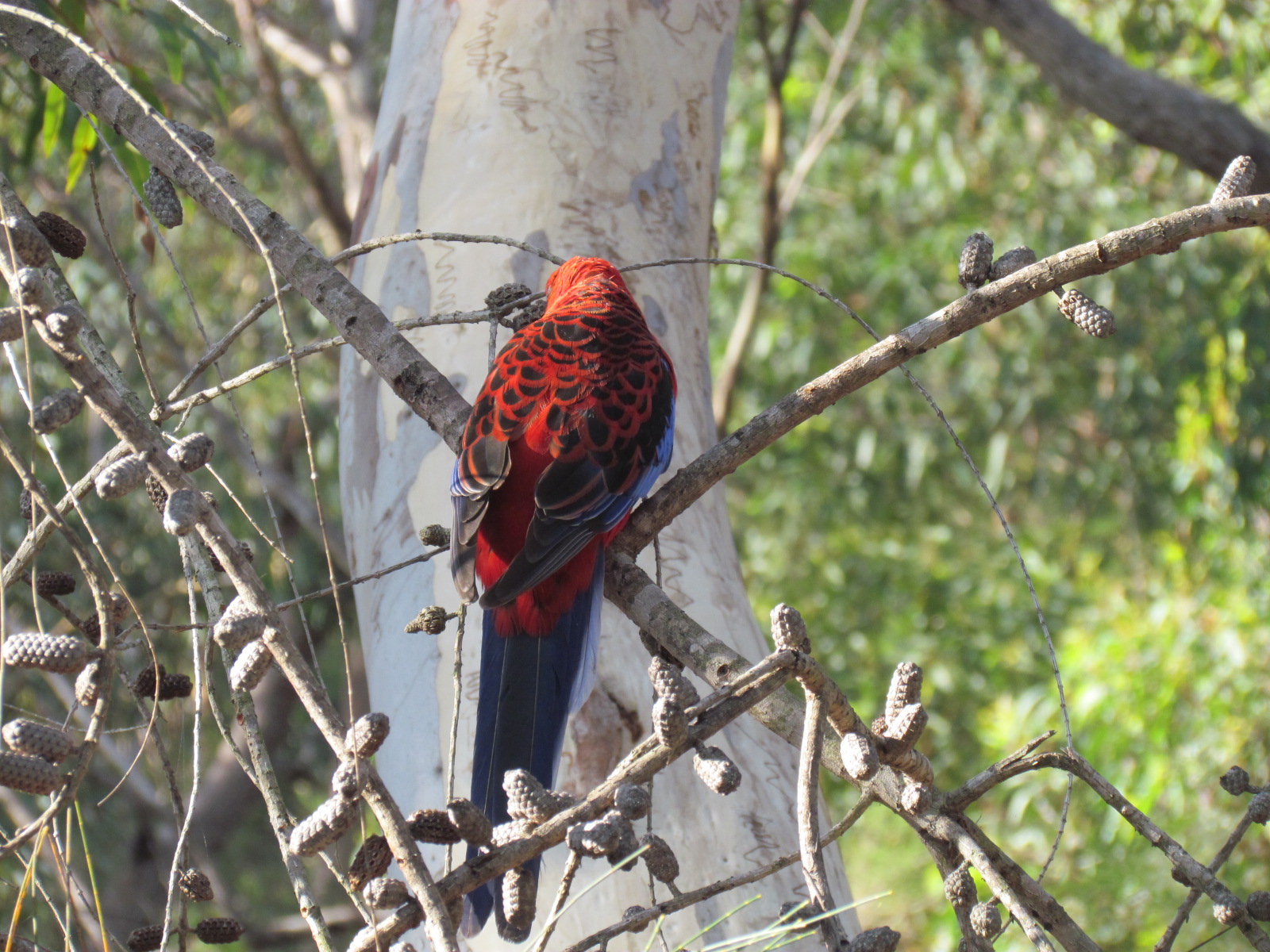
Crimson Rosella feeding on bottlebrush seeds
Usually when you spot a Crimson Rosella, there’s another one close by. This time, though, I could only see one. It was contentedly nibbling at the seeds on a bush – a bottlebrush, I think. [Update on 24 April: It’s not a bottlebrush, but Scrub She-oak, Allocasuarina distyla. Thanks to Carol Probets for the comment!]
The male and female Crimson Rosella look very similar, with the male being larger. I don’t know whether this one was male or female.

These birds are so pretty, even though this one was moulting, so a little shabby in places.

From the rear, the feathers are quite intricate in pattern:
Common name: Crimson Rosella
Scientific name: Platycercus elegans elegans
Approximate length: 35 cm
Date spotted: 12 February 2017 (Summer)
Location: Manly Dam Reserve, New South Wales, Australia: 33°46’58.4″S 151°15’11.8″E
Cockatoos teasing
Cockatoos are playful, sociable creatures. Yesterday I watched a pair of Sulphur-crested Cockatoos high in a gum tree. One of them was grooming. The other was teasing its companion, prodding it and seeming very satisfied with the startled response.
A couple of minutes later both of them flare their wings and crests, squawking gleefully.
Common name: Sulphur-crested Cockatoo
Scientific name: Cacatua galerita
Approximate length: 50 cm
Date spotted: 8 October 2016
Season: Spring
Location: Manly Dam Park, New South Wales, Australia
Latitude/longitude: 33°46’51.5″S 151°14’51.7″E
King Parrots on my commute
Not many people in the world are lucky enough to be able to say this: I bumped into a couple of King Parrots on my way home from work the other day.
We see a few different varieties of parrots around the neighbourhood. King Parrots aren’t a very common sight – I see them maybe two or three times a year. One of their charming characteristics is that they’re always in pairs. See one, and the other isn’t far away.
These two were investigating some seeds on the ground. They let me get quite close, and flew off when I was about a metre away.
Common name: Australian King Parrot
Scientific name: Alisterus scapularis
Approximate length: 44 cm
Date spotted: 5 October 2016
Season: Spring
Location: Allambie Heights, New South Wales, Australia
Approximate latitude/longitude: 33°46’13.2″S 151°15’41.1″E
Why we plant native bushes and trees
One of the reasons we plant native bushes and trees in our garden is to provide food and shelter for the birds and animals. So that they’ll drop in and share this tiny patch of Australia with us. We see possums, lizards, bats, and birds of many kinds. Last week a wallaby passed through on its way from somewhere to somewhere else – but that’s most unusual, as ours really is a very small patch.
Rainbow lorikeets are frequent visitors, snacking on the nectar from the flowers. They’re noisy and quarrelsome, and very pretty.
The bush is a grevillia that we planted a couple of years ago, specifically to attract birds. It works!

Common name: Rainbow Lorikeet
Scientific name: Trichoglossus haematodus
Approximate length: 30 cm
Date spotted: 3 September 2016
Season: Spring
Bird swathed in Christmas colours
This little Rainbow Lorikeet shows off its bright cloak of red, green, blue and yellow, perched on the greeny-white flower of an Old Man Banksia. Christmas colours indeed

Common name: Rainbow Lorikeet
Scientific name: Trichoglossus haematodus
Approximate length: 30 cm
Date spotted: 24 December 2015
Season: Summer
Location: Allambie Heights, New South Wales, Australia
Approximate latitude/longitude: 33°46’19.2″S 151°15’39.6″E


