Blog Archives
Territory! Ravens vs Lorikeets
The National Parks and Wildlife Service recently did a hazard reduction burn in the area where I often go for a walk. This morning, a group of Rainbow Lorikeets occupied some bare branches with a strategic view of the newly cleared area. Right next door, a collection of ravens had the same idea. They viewed each other for a while, then all hell broke loose.
Turn up the volume to get the full effect! Listen to the bawling ravens and the scolding parrots. When things really get hectic, hear the whop-whop-whop of wings swooping overhead.
Here’s a closeup of some of the ravens, in their best villain pose:
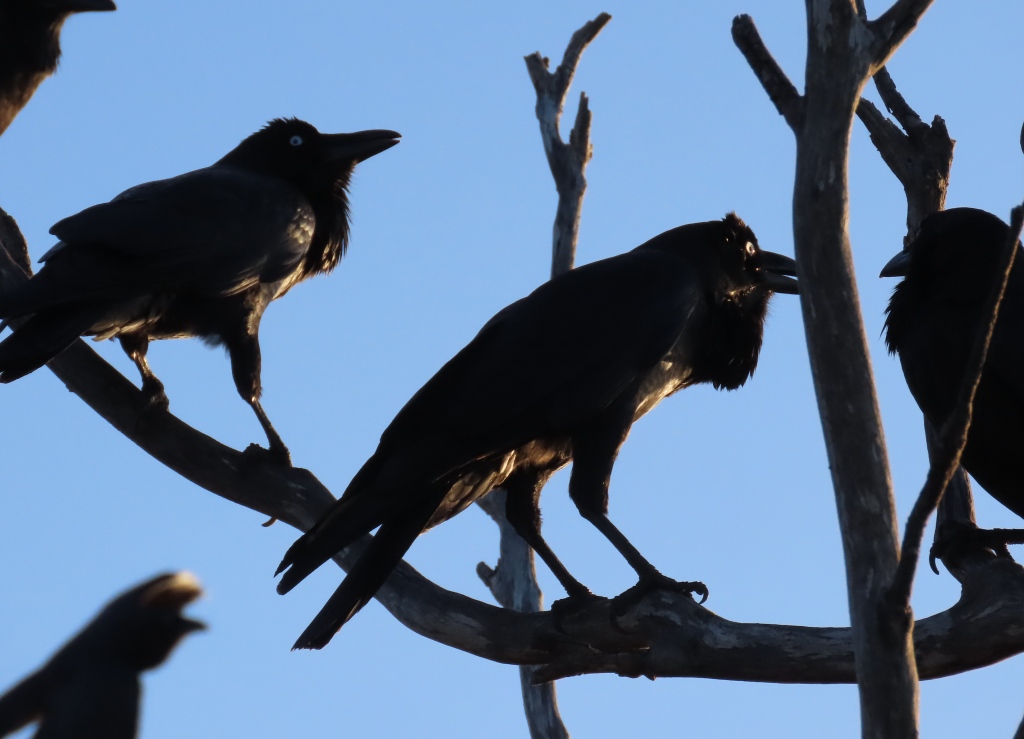
Common name: Australian Raven
Scientific name: Corvus coronoides
Approximate length: 50 cm
Date spotted: 10 June 2023 (winter)
Location: Dobroyd Head, New South Wales, Australia: 33°48’36.6″S 151°16’23.9″E
And the I’m-so-pretty, butter-wouldn’t-melt-in-my-mouth pose of the lorikeets:
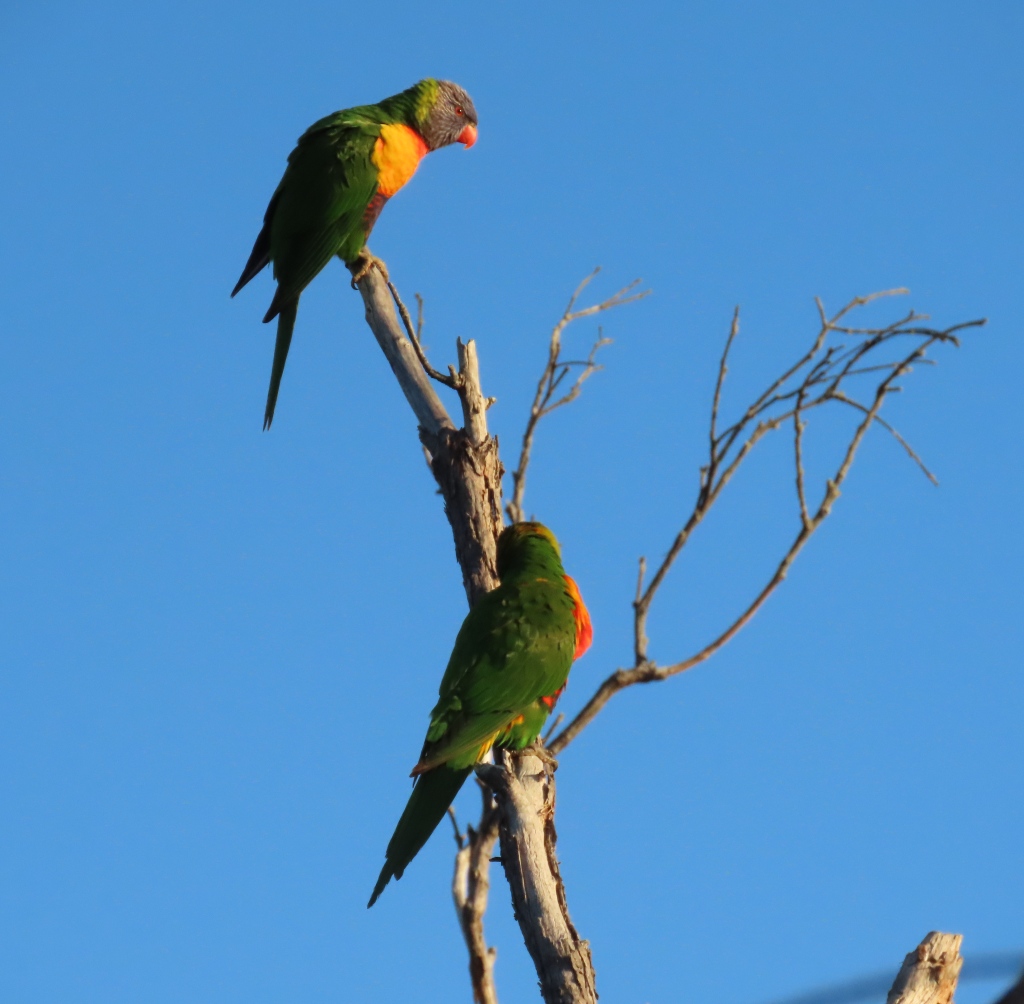
Common name: Rainbow Lorikeet
Scientific name: Trichoglossus haematodus
Approximate length: 30 cm
Date spotted: 10 June 2023 (winter)
Location: Dobroyd Head, New South Wales, Australia: 33°48’36.6″S 151°16’23.9″E
Rainbow Lorikeet practising its dance
A Rainbow Lorikeet swooped down onto the branch of a Casuarina tree and treated me to a little dance. I think it was practising, because there were no other lorikeets around, and the bird’s movements weren’t as fluid as others I’ve seen. A little practice was needed before trying out the dance on a potential breeding partner!
Common name: Rainbow Lorikeet
Scientific name: Trichoglossus haematodus
Approximate length: 30 cm
Date spotted: 28 April 2023 (autumn)
Location: Manly Dam, New South Wales, Australia: 33°46’38.6″S 151°14’55.6″E

Juvenile Crimson Rosella in Hazelgrove, NSW
A group of four young Crimson Rosellas gathered around a cabin that I was staying in this weekend, in the region of Hazelgrove. That’s west of the Blue Mountains, about three hours’ drive from Sydney.
At first, it was difficult to identify the birds. Other Crimson Rosellas that I’ve seen are red and blue, like the one in my earlier post. After some research, I discovered that the juvenile birds are mostly green instead of red, though they do have the characteristic red and blue markings on their heads.
Here are two of the birds that I saw this weekend:
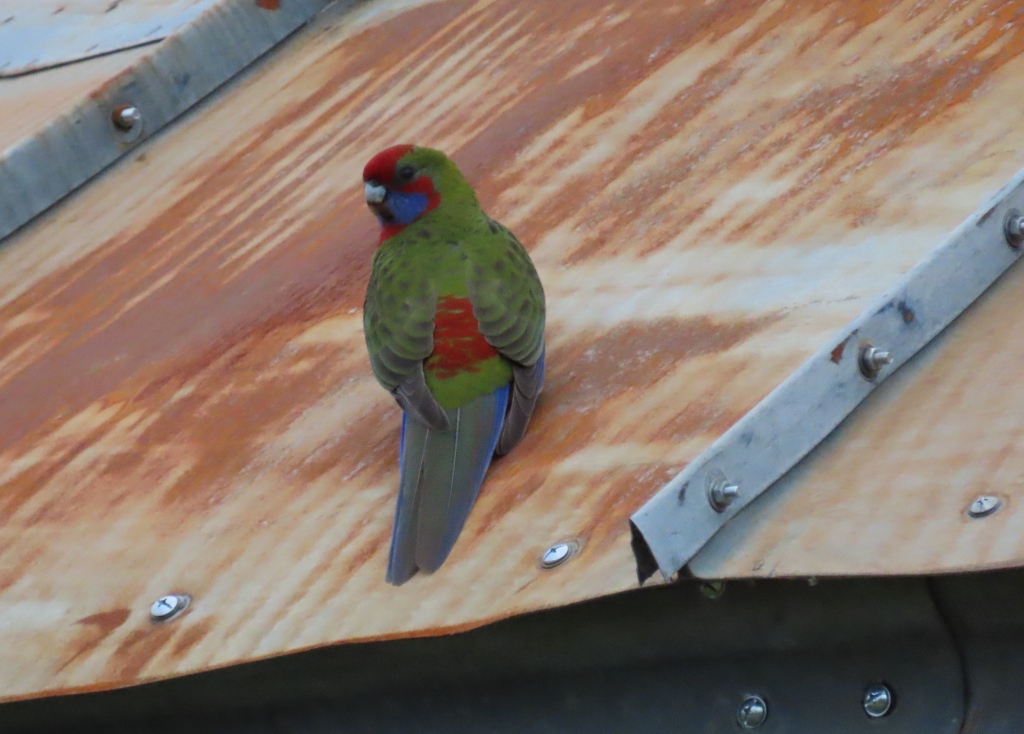
They were posing nicely on a rusty shed roof, for maximum warmth of colour!
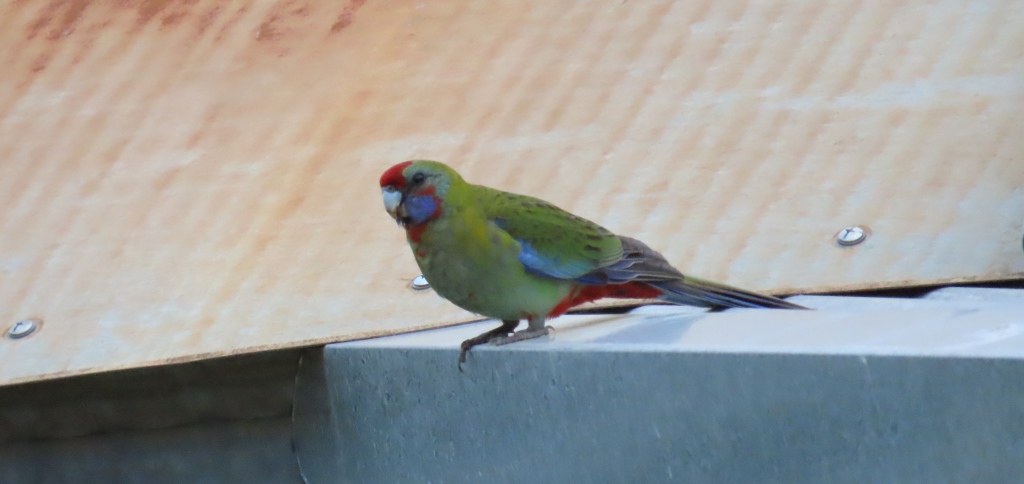
Common name: Crimson Rosella
Scientific name: Platycercus elegans elegans
Approximate length: 35 cm
Date spotted: 15 April 2023 (autumn)
Approximate location: Hazelgrove, New South Wales, Australia (map)

Musk Lorikeet drops by
Very occasionally, we’re lucky enough to see Musk Lorikeets in the gum trees around our house. Today was such a day:

They’re pretty little parrots, with a clearly-defined red mask around their eyes. Their predominant colour is green, with tinges of red, blue, and yellow.
The more boldly-coloured Rainbow Lorikeets are frequent visitors. It’s a treat when I hear the slightly different trilling call of the Musk Lorikeets, grab my camera, and am rewarded with a view like the ones in this post.
The lorikeets come to drink the nectar from the gum tree flowers. Here’s another view of the same Musk Lorikeet:
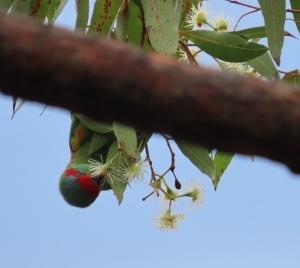
Common name: Musk Lorikeet
Scientific name: Glossopsitta concinna
Approximate length: 23 cm
Date spotted: 3 April 2023 (autumn)
Location: Allambie Heights, New South Wales, Australia

3 parrots on one walk
A few days ago I went for a walk and saw three different types of parrots all within a few paces of each other. How amazing is that!
First up, a trio of King Parrots. Two were males, the other a female. This is one of the males:

King Parrots are quite large, at 44 cm from head to tail. The females have a lot more green in their colouring. I think they’re prettier than the males, with their softer shading:
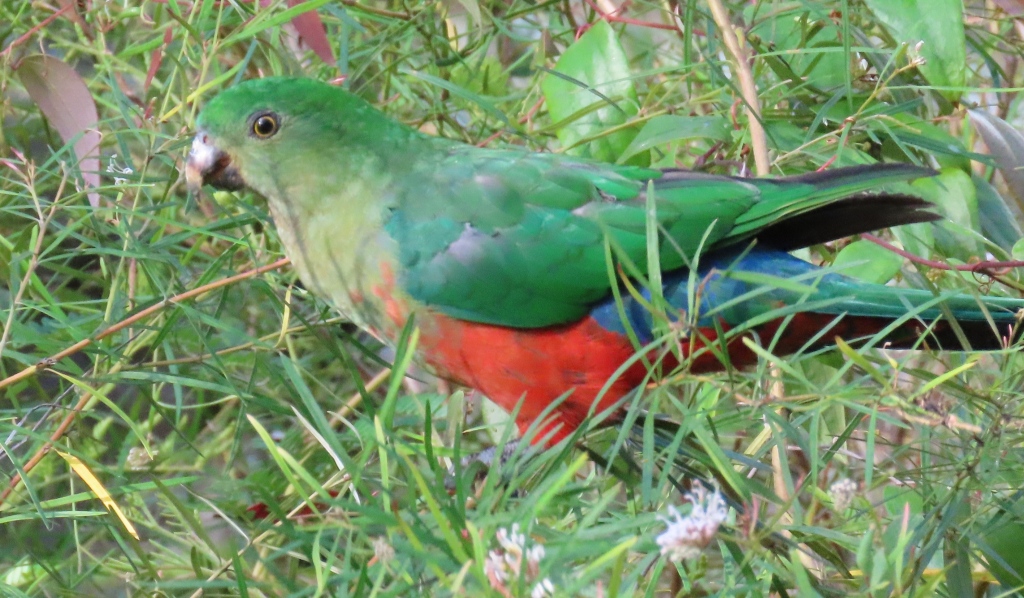
This video shows all three of the birds enjoying the flowers of a Grevillea bush. First you see the two males together. Then one of them flies over to join the female on the other side of the bush:
In the trees around the parrots, the smaller Rainbow Lorikeets chattered and scolded. Here’s one in a more contemplative mood than most:

One of them stood still for a while to examine me, before launching itself in my direction then swerving at the last moment as they are wont to do:
At the next tree, a group of Sulphur-crested Cockatoos examined a tree hollow. Perhaps a good place to raise a family? But competition is fierce!
Here’s one of the cockatoos making a point about ownership, or perhaps just being its usual excited self:

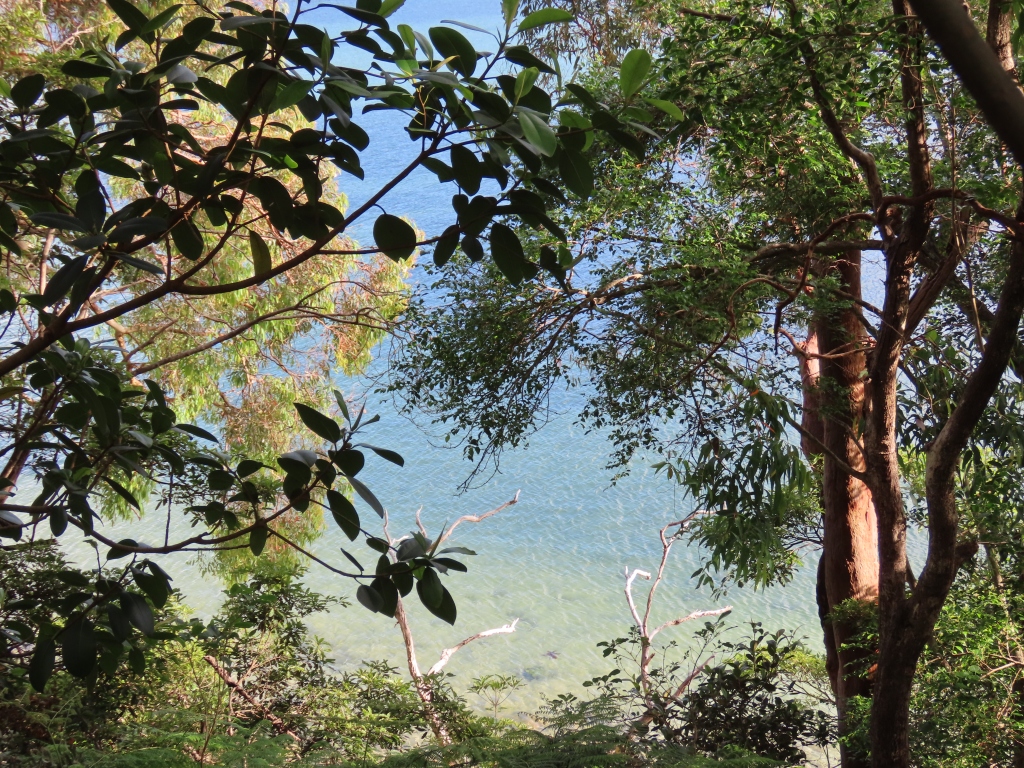
The walk itself is lovely, starting in Balgowlah and winding along the coast of Sydney Harbour, with bushland and forest on one side:

And pretty views of the waters of Sydney Harbour on the other side:
The birds:
Common name: Australian King Parrot
Scientific name: Alisterus scapularis
Approximate length: 44 cm
Common name: Rainbow Lorikeet
Scientific name: Trichoglossus haematodus
Approximate length: 30 cm
Common name: Sulphur-crested Cockatoo
Scientific name: Cacatua galerita
Approximate length: 50 cm
Date spotted: 26 November 2022 (spring)
Location: Near Forty Baskets beach, Sydney Harbour, New South Wales, Australia: 33°48’03.2″S 151°16’07.2″E
Birds in Witkoppen, South Africa
I’m currently in South Africa, a little outside the usual geographical range of this blog! While here, I’m taking in a bit of the bird life. I photographed the birds in this post in a little patch of green called Witkoppen Spruit Park. Witkoppen is an outer suburb of Johannesburg, near Sandton. For such a small piece of land surrounded by residential suburbs, there’s an amazing variety of birds in the park. Well worth a visit, if you’re in the area.
To get in the mood, watch this short video and listen to the sounds of the birds all round:
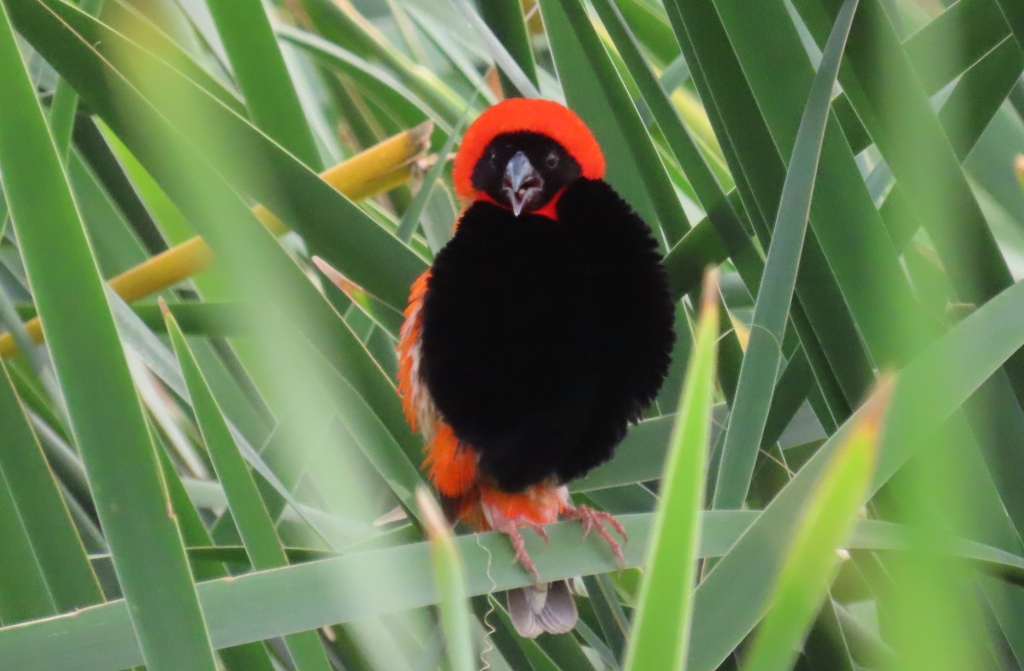
The flashes of red that you see in the video are Southern Red Bishops, a little bird in the weaver family. Here’s one of them caught in a rare moment of stillness:
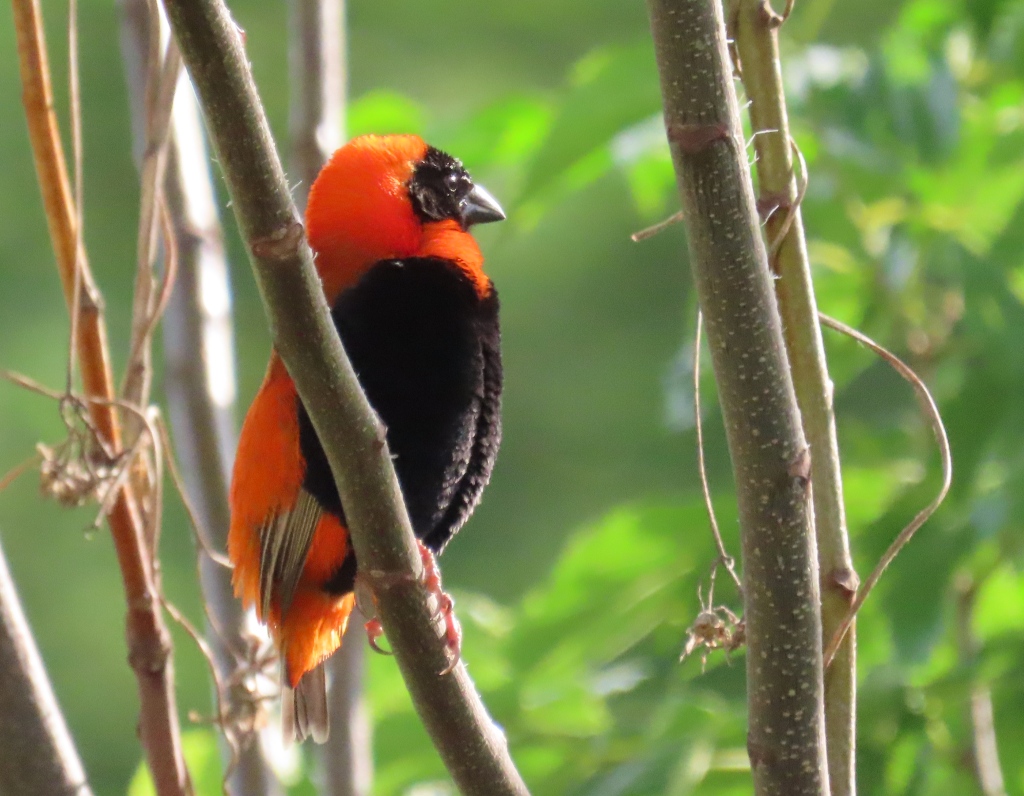
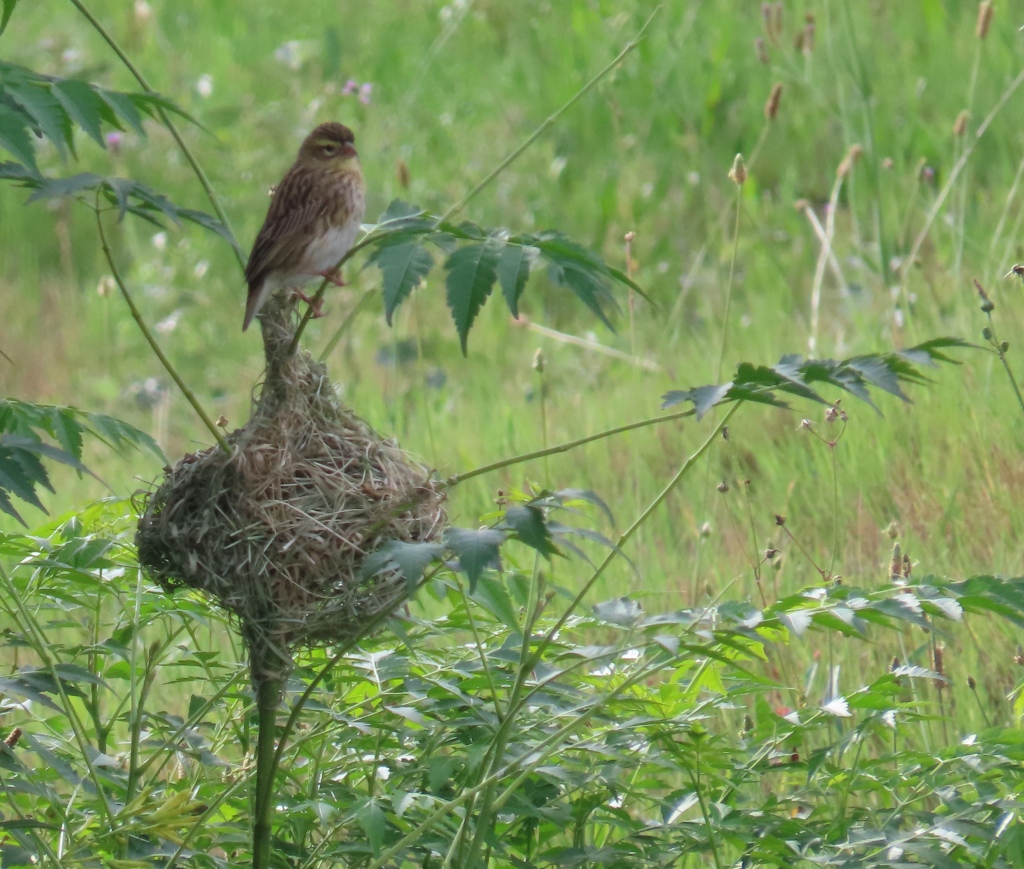
Like other weavers, Southern Red Bishops build nests of intricately woven reeds hanging from tree branches or tall reed stems:

Here’s one of the birds in a quarrelsome mood:
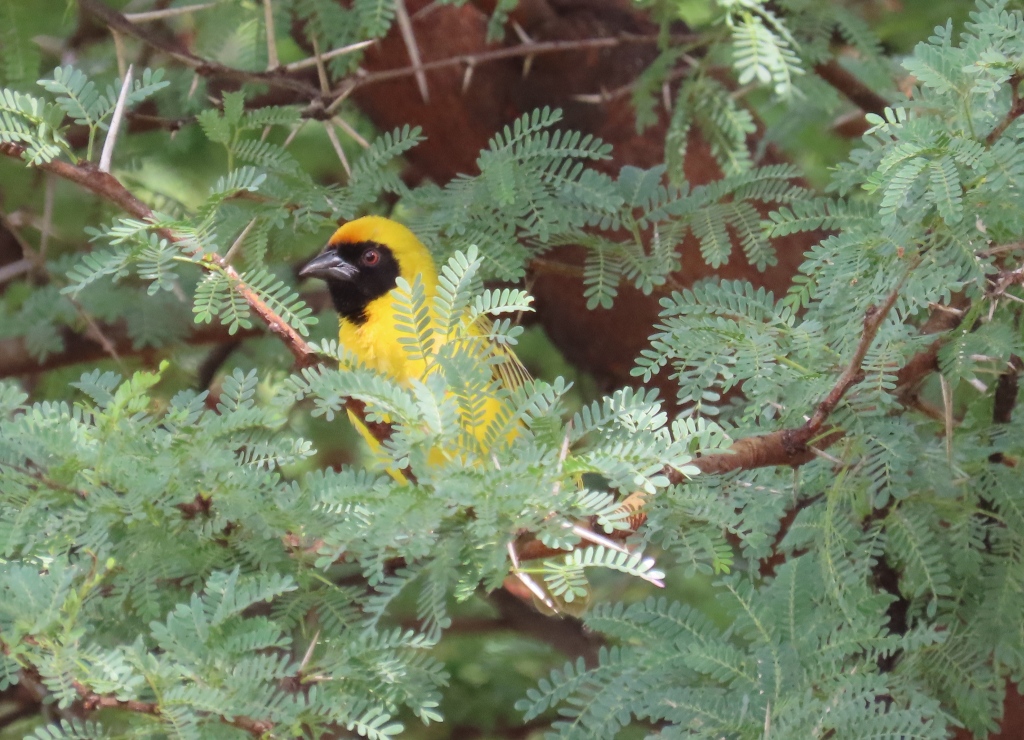
Nearby, a Southern Masked Weaver peers out from behind the leaves of a tree:
The bright colours belong to the males of the species. Here’s a female weaver perched above a nest. I don’t know if it’s a Red Bishop or a Masked Weaver:
Perched high in a tree, a Grey Lourie shows that you can look smart even in a low-key colour:

Grey Louries are also called the grey go-away bird. Here’s another one:

A Pin-tailed Whydah sports its long tail. This tiny bird’s body is about 12 cm long, while the tail adds another 20 cm to the bird’s overall length:

Some Lesser Striped Swallows gather around a small puddle in the middle of the path:
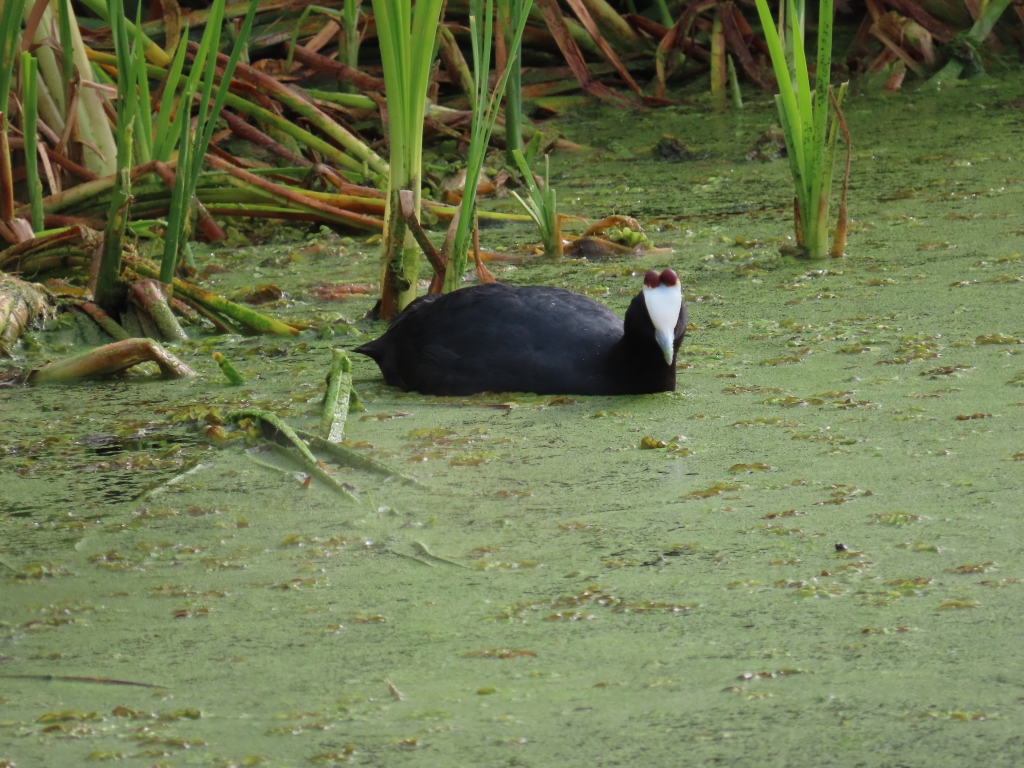
In the nearby pond, a Red-knobbed Coot feeds in the algae-rich water:
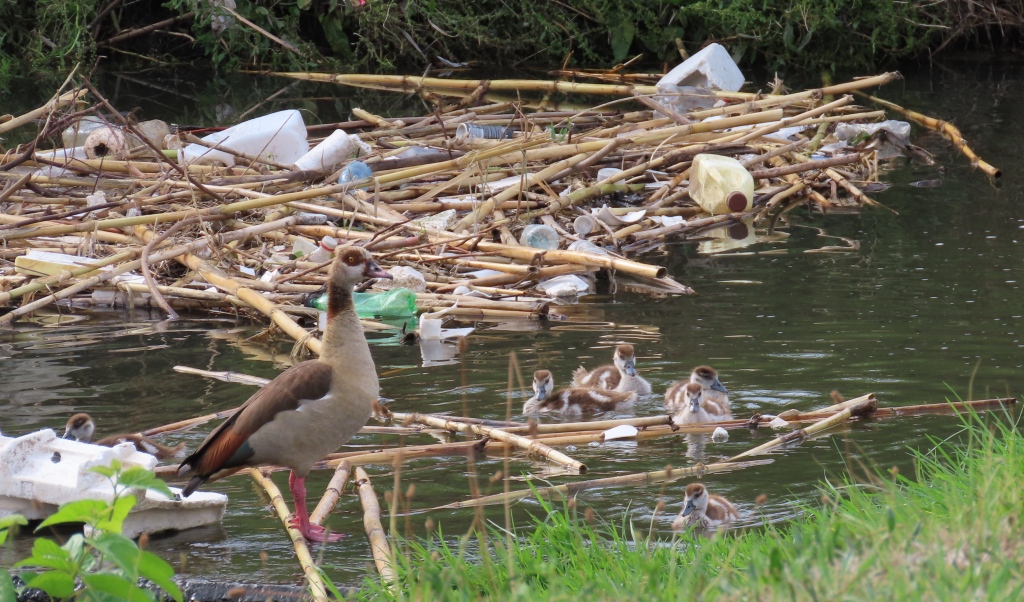
An Egyptian Goose shepherds its chicks through the flotsam and jetsam of the surrounding suburbs:
Sunlight adds a gloss to the plumage of a Hadada Ibis:

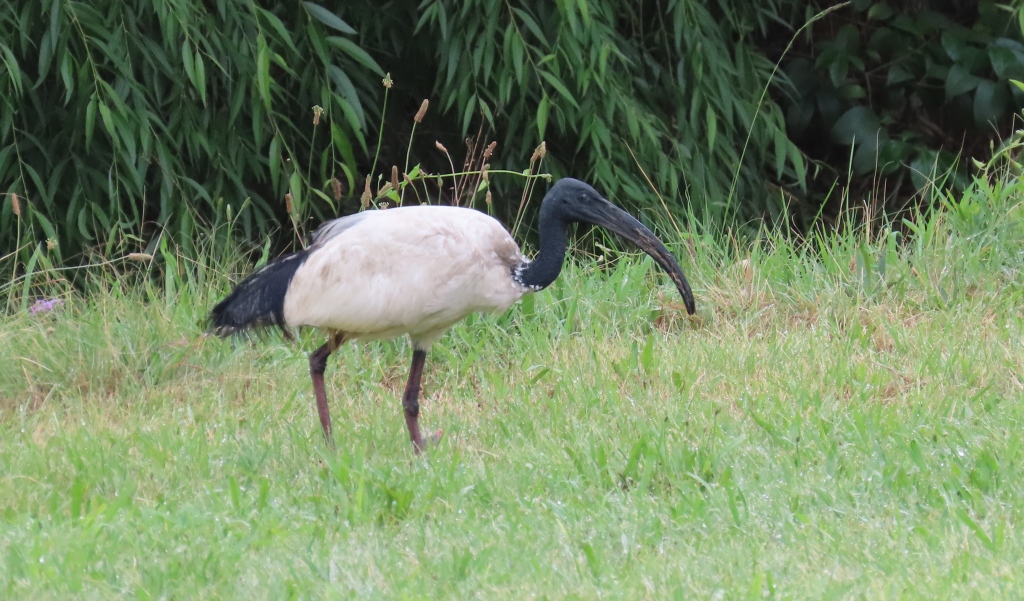
An African Sacred Ibis stalks through the undergrowth:
Another bird stalks the undergrowth, sometimes standing so still that it was almost impossible to spot. My camera’s super zoom brings it close enough to see that it’s an African Wattled Lapwing:

Fiscal Shrikes, also known as Butcher Birds, zoom from cover to cover. Here’s one that stayed still long enough to be caught in a photograph:

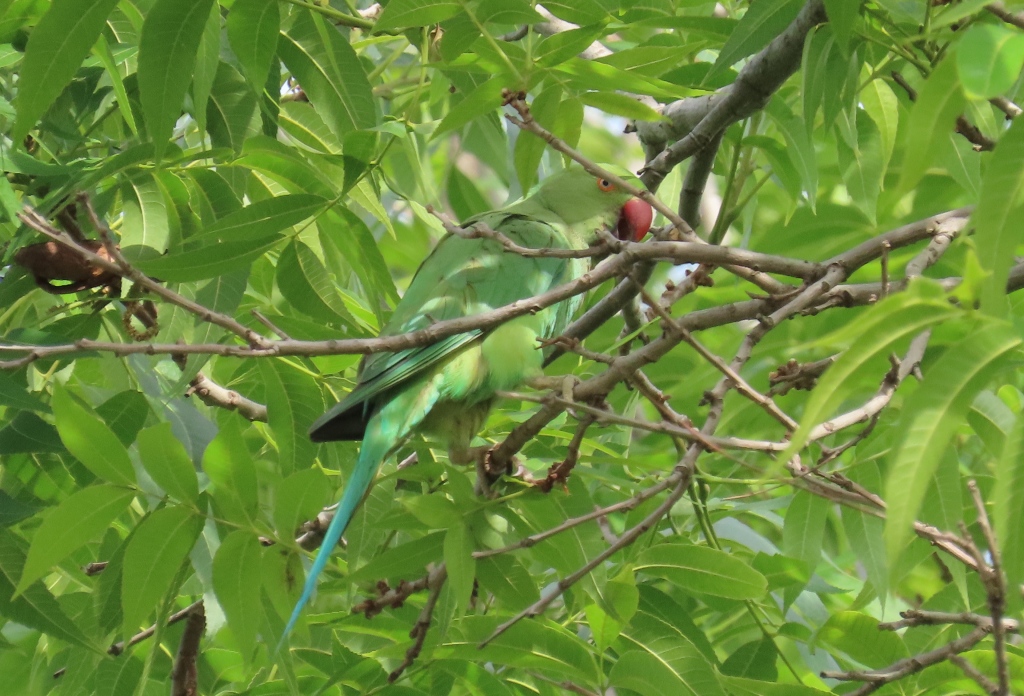
High in the trees, Rose-ringed Parakeets chat and screech. These little parrots aren’t native to South Africa. They established themselves in the suburbs after escaping from captivity in numbers large enough to start breeding:
In my next post I’ll show you some birds in Lonehill, a neighbouring suburb to Witkoppen.

Red-rumped Parrots in Sydney Olympic Park
Today I saw my first Red-rumped Parrots! These are very pretty little parrots that spend their time foraging on the ground among the flowers or sitting high in the trees. The male is a spectacular turquoise in colour, while the female is a more demure brown and fawn.
This video shows a male and a female walking through the grass and flowers, occasionally popping up their heads to check what’s going on around them:
At times in the video you get a glimpse of the browny-red patch at the base of the male’s back, which gives them the name “red-rumped”.
I saw the parrots in the area around Newington Armory – formerly the Royal Australian Navy Armaments Depot – at Sydney Olympic Park. I was doing the guided bird walk, offered by the BirdLife Discovery Centre. The walk happens on the last Sunday of every month. It’s fun and a good way to get out, meet some people, and see some birds.
Here’s the male Red-rumped parrot:

And this is the female:

The next picture shows the male high in a tree, showing his colourful front:

Common name: Red-rumped Parrot
Scientific name: Psephotus haematonotus
Approximate length: 26-28 cm
Date spotted: 28 August 2022 (winter)
Location: Sydney Olympic Park, Newington, New South Wales, Australia: 33°49’40.4″S 151°03’56.8″E

Those magnificent black cockatoos are back!
For the past couple of years, a group of Yellow-tailed Black Cockatoos has visited our garden to snack on our Banksia tree when the seeds are ripe. This happens around May-June and again in October. It’s a real privilege to have such magnificent birds in the garden. At approximately 65 cm (more than 2 feet) from head to tail, they’re much larger than the more common white Sulphur-crested Cockatoos (50 cm).
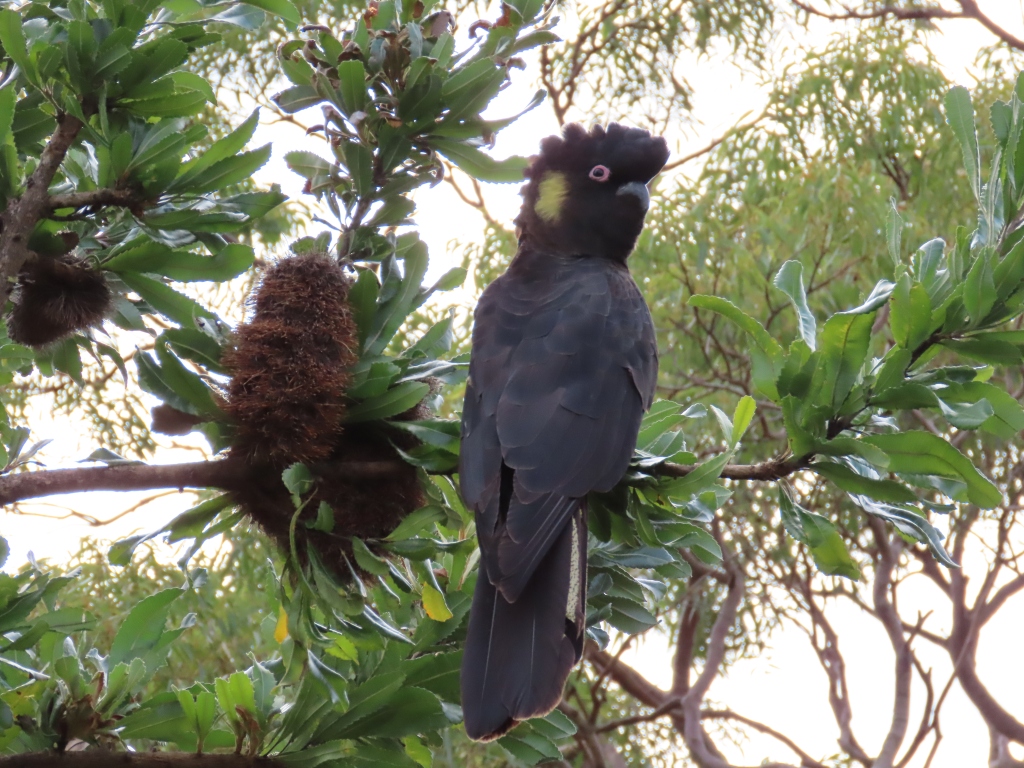
The bird on the left is a female. Toward the end of the video, you see the male higher up in the tree (he’ll be near the top right), keeping watch. You can tell the male by the pinkish colour of the ring surrounding his eye.
The bird on the right at the start of the video (in the middle when all three birds are in view) is making a constant low crooning sound. I think the noisy one must be a juvenile, because I’ve noticed that the juvenile birds of many species keep up a constant noise, perhaps to reassure their parents that they’re still around. Early on in the video, the female on the left calls out in that lovely, wild squeal that’s characteristic of these birds. They also chitter companionably to each other throughout.
Here’s a still picture of the male:
The next video shows one of the birds (probably the female, though it might be the juvenile) tucking into a Banksia seed pod:
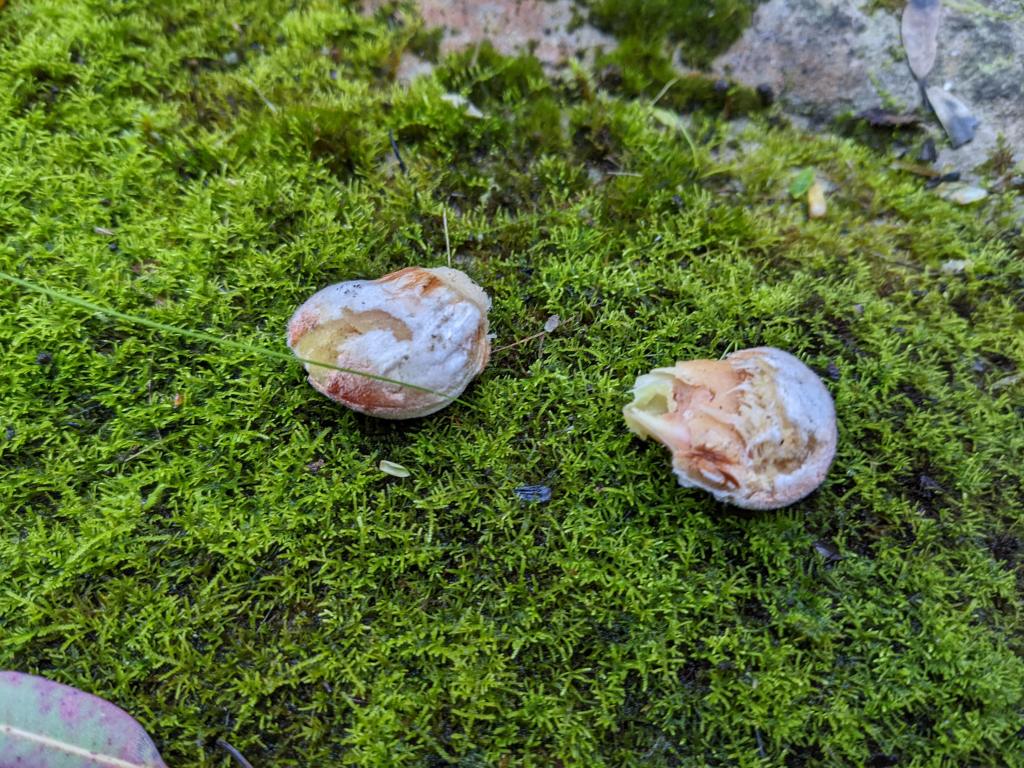
It’s funny to see how ruthless the bird is. She basically tears the dead flower apart, chucking bits onto the floor seemingly at random, until she finds a tasty morsel. Our neighbour was giggling from his verandah, from where he had a birds’ eye view of the feasting! Our garden quickly became littered with half-eaten seeds:
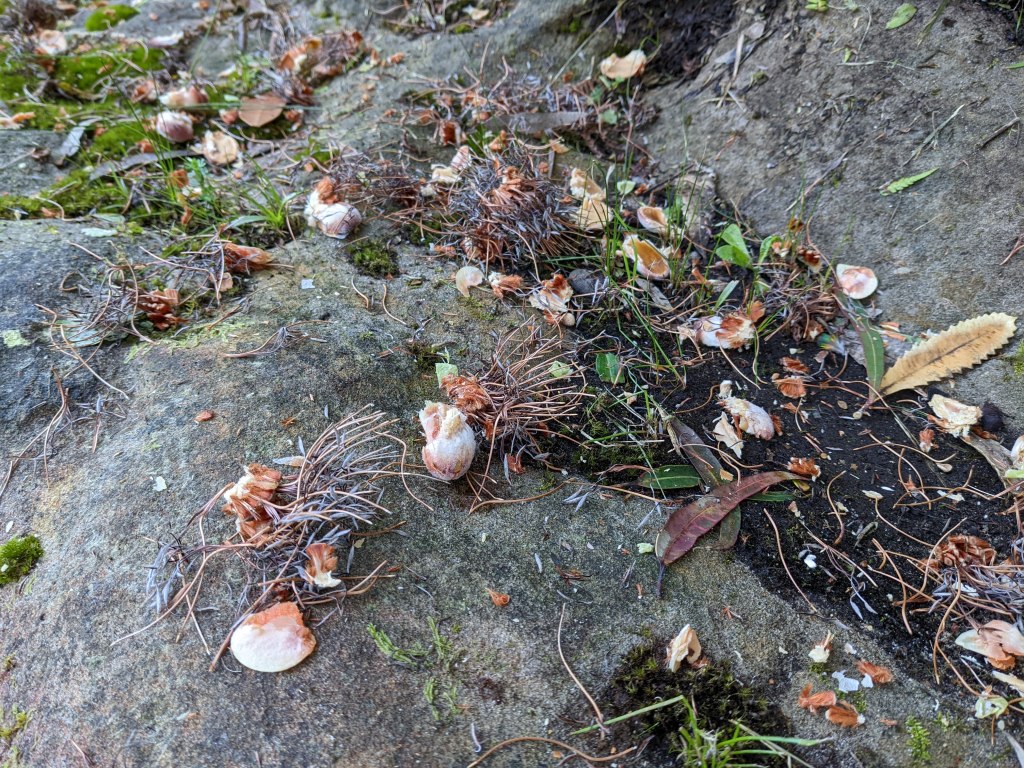
The tree is a Banksia serrata, also known as Old Man Banksia. See the marks of that huge beak on these seeds!
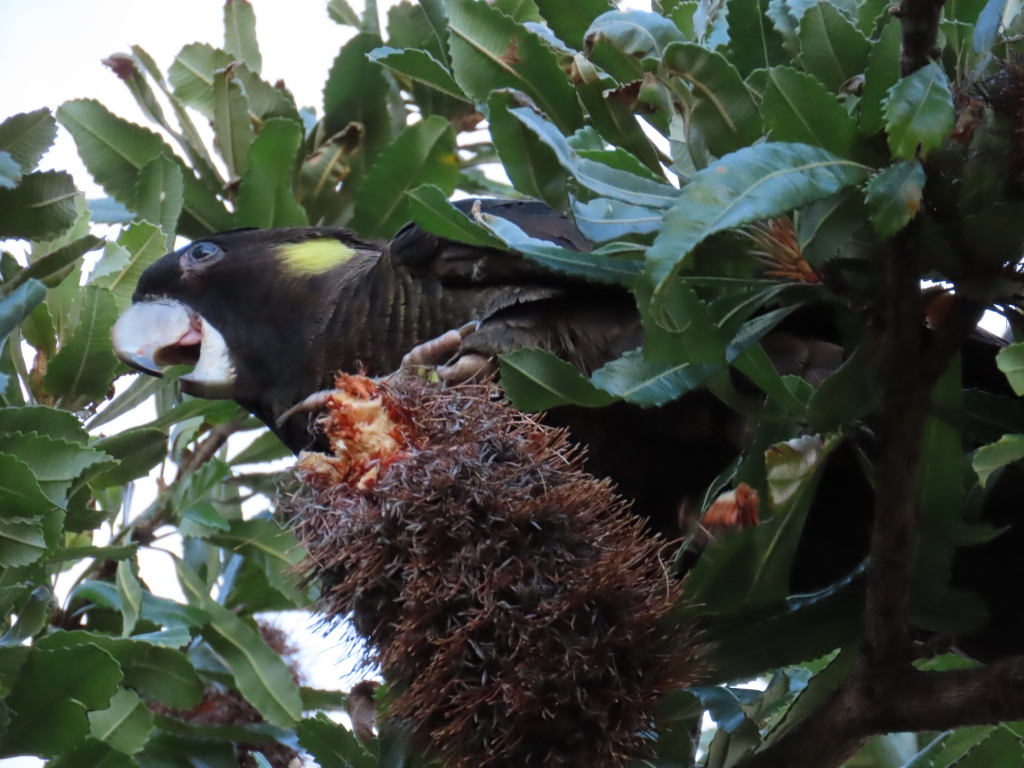
Here’s a closeup of a cockatoo on a seed pod:
The scientific name of these birds is Calyptorhynchus funereus. Evidently the funereus part of the name stems from the dark, somewhat gloomy colouring of the birds. George Shaw, the naturalist who first named the birds, thought that the colouring was suited to a funeral! The bird was even called the “funereal cockatoo” for a while.
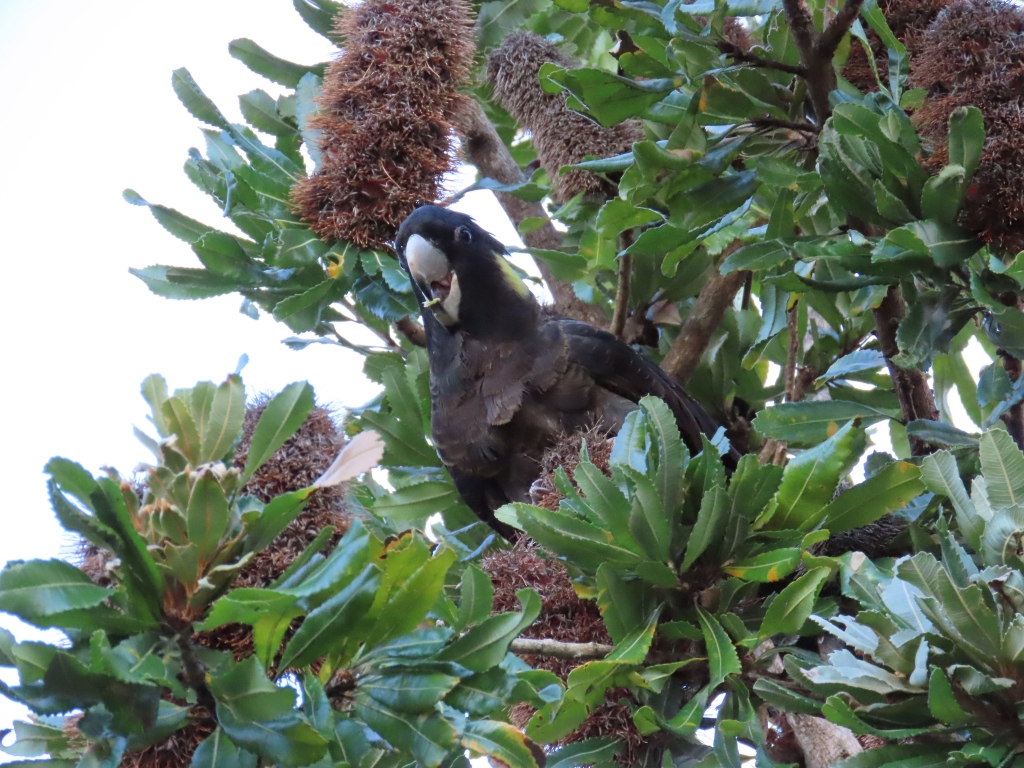
There’s also some dispute in the birding community about whether these birds are actually part of the genus Calyptorhynchus. Some people group them into a different genus, Zanda, based on genetic diversity.
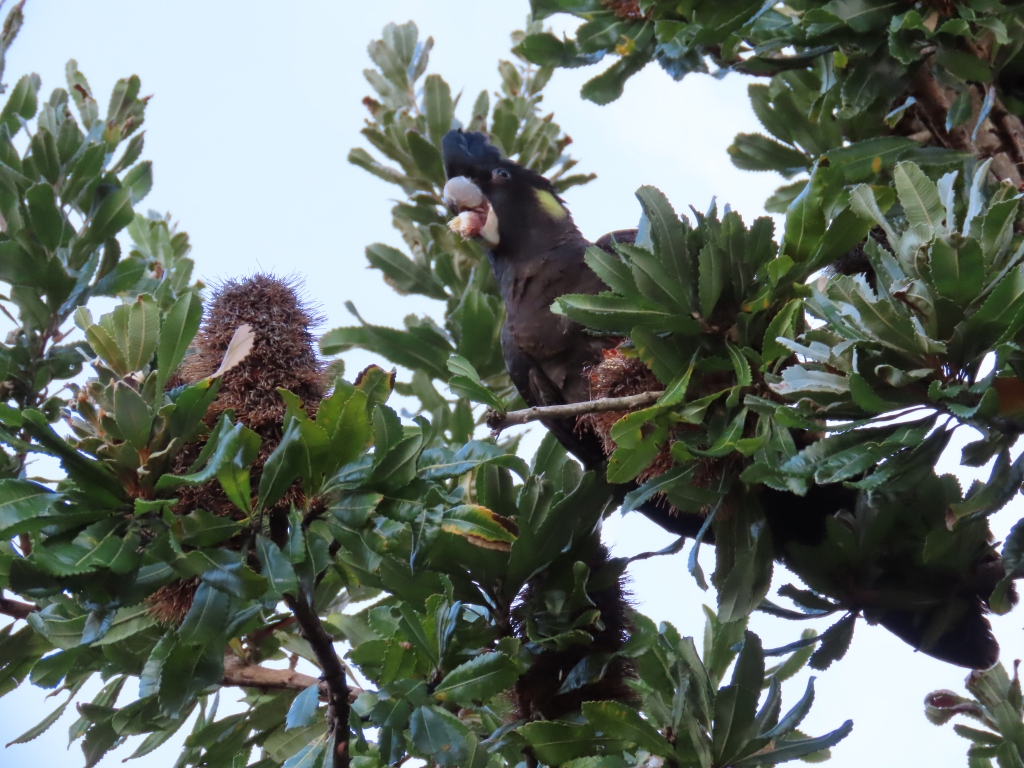
The next photo shows the bird that I think is a juvenile. With its beak feathers fluffed up, it seems to be sleepy or wanting attention!

A shot from the back gives a nice view of the crest on the bird’s head:
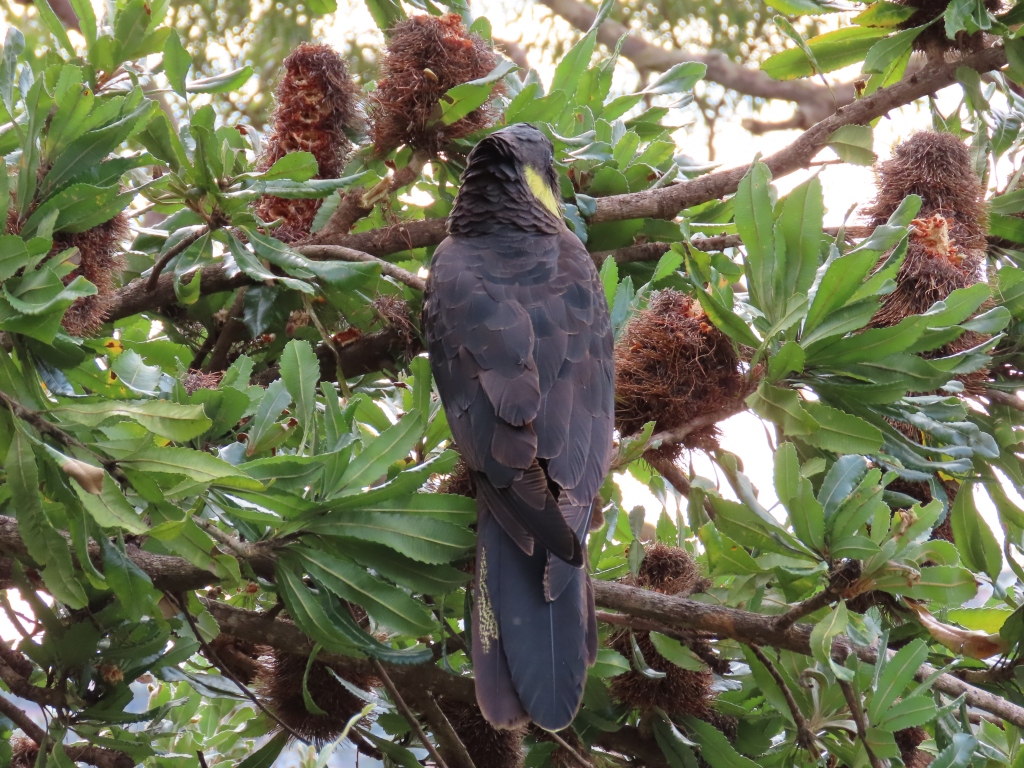
Common name: Yellow-tailed Black Cockatoo
Scientific name: Calyptorhynchus funereus or Zanda funereus
Length: 58-65 cm
Date spotted: 2nd and 3rd June 2022 (winter)
Location: Allambie Heights, NSW, Australia

Cockatoo sculpted by sunlight
It can be difficult to get a good photo of a white cockatoo, because they’re so uniformly white. My camera tends to treat them as an uninteresting blob of uniform colour, unless I can get really close to the bird. I was quite pleased with this shot. Even though the bird was high in a tree, the early morning sun glows nicely through the cockatoo’s yellow crest and adds contour to the bird’s body:

The video of the same cockie is also rather nice. The bird is screeching and waving its head around, as they often do. It’s having fun with a small pool of water in a tree hollow, dipping its beak in and throwing water droplets around:
Common name: Sulphur-crested Cockatoo
Scientific name: Cacatua galerita
Approximate length: 50 cm
Date spotted: 3 April 2022 (autumn)
Location: Angophra Track, Balgowlah Heights, New South Wales, Australia: 33°48’20.9″S 151°16’17.8″E

Sleepy Corellas in Newcastle
A few days ago, I was in the city of Newcastle on Australia’s east coast. The city lies about two hours’ drive north of Sydney. Like its namesake in the UK, this Newcastle too is known as a coal-shipping port. A river runs through the city. In a small green area on the river bank, in the middle of the city, a large number of Corellas roost.
When we saw them, most of the Corellas looked sleepy:

This one looks like a cuddly toy nestled in a Christmas tree:

Little Corellas are a type of cockatoo. To me, they look rather ghostly, with their pale beaks and that ring of pale blue around their eyes.
The next one looks more interested in what’s happening:

If you’d like to see more pictures of the city of Newcastle itself, take a look at my travelling bookmark’s blog.
Common name: Little Corella
Scientific name: Cacatua sanguinea
Approximate length: 36-39 cm
Date spotted: 11 March 2022 (late summer)
Location: Newcastle, New South Wales, Australia: 32°55’32.3″S 151°46’45.4″E


