
Emu
For the last five days, I’ve been travelling in the Outback regions of central New South Wales. It’s been very exciting to see all the birds out there. Stay tuned for some blog posts!
First up is the Emu. This one was in captivity at Mungo Lodge in Mungo National Park, which meant that I could see it from up close. It was pretty interested in me too:
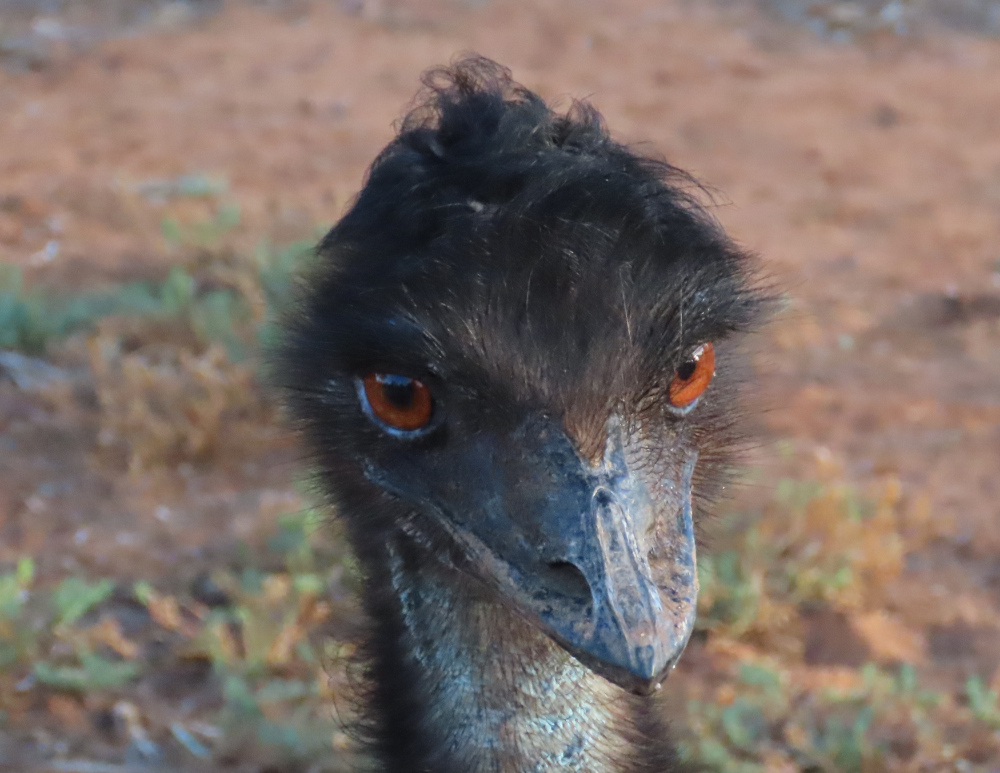
Emus are the second-largest bird in the world, and the largest Australian bird. They’re nearly 6 feet tall (ranging from 1.6 to 1.9 metres). Females weigh up to 37 kilograms, while the male is smaller (up to 32 kg).
These birds can run at a speed of 50 km per hour (30 miles per hour). We had proof of that when a bird charged out of the bush, ran behind one of the cars in our convoy, hugging the bumper so that the driver had no idea it was there, then spun around the car and dashed in front of it. Luckily, bird and driver avoided a collision.
We saw several groups of Emus throughout out trip. These were on the Barrier Highway, spotted while we were driving from Cobar to Wilcannia:
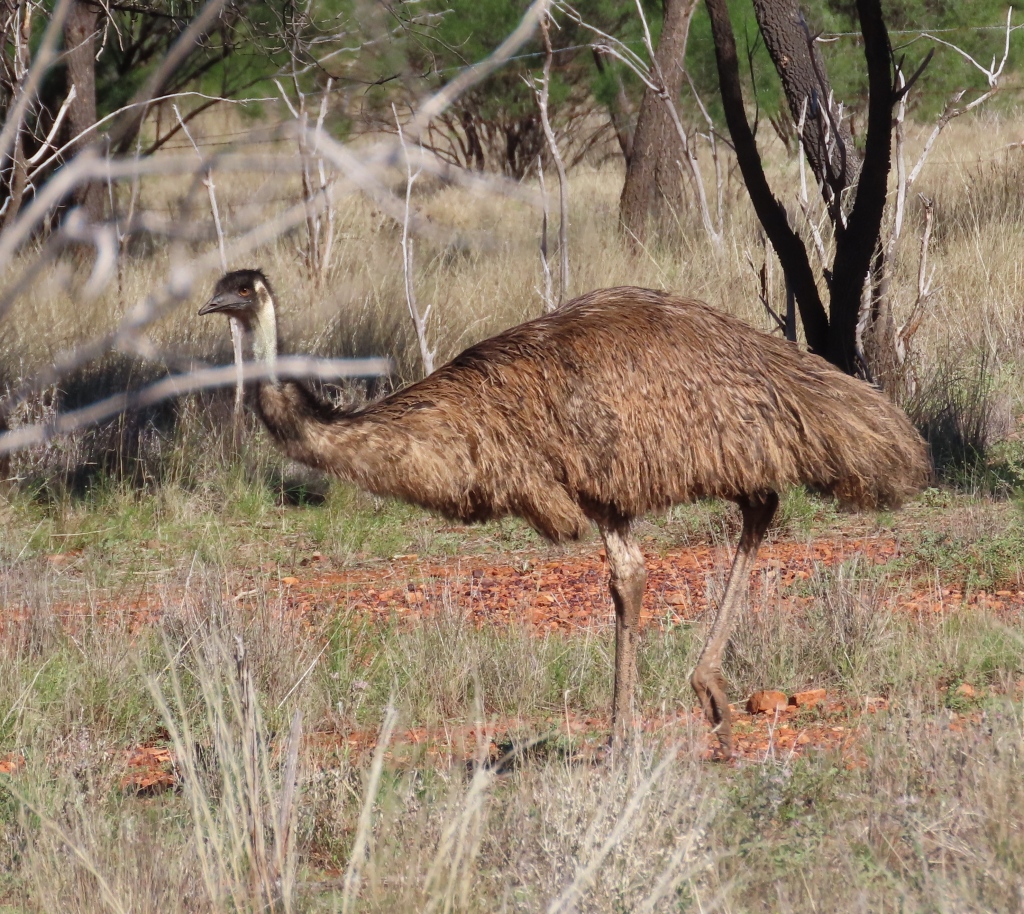
The above photo shows one of the bird’s tiny wings. It’s a stub really, pointing down next to the leg that’s in front in the picture.
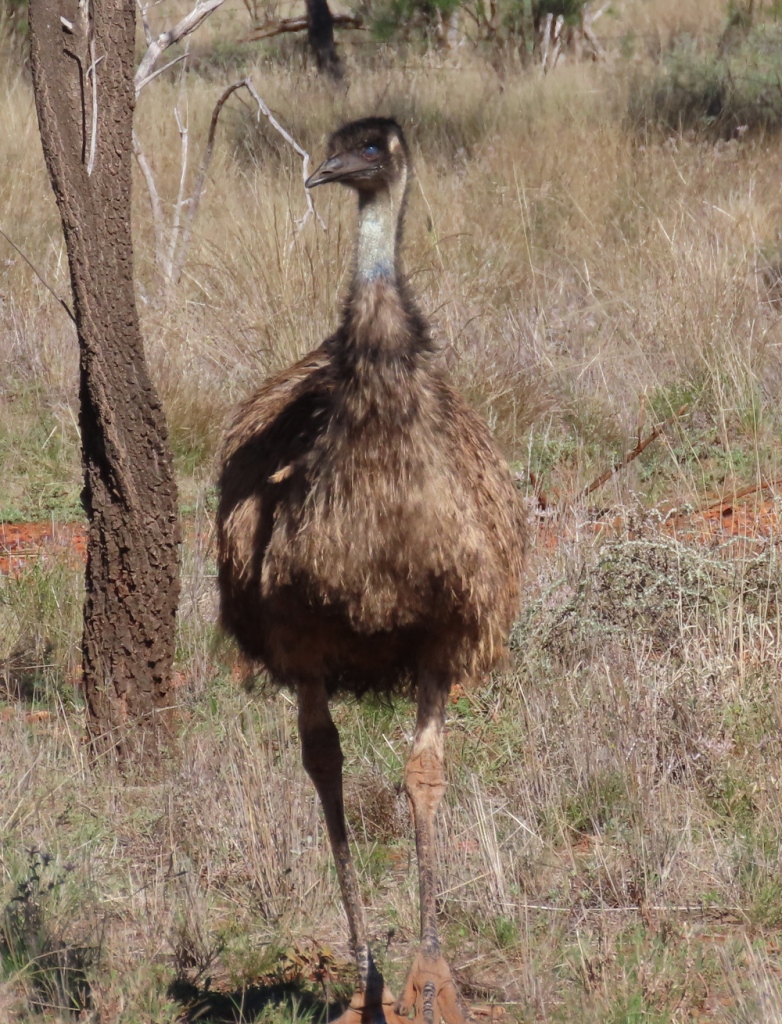
This shot caught the bird in mid-blink:
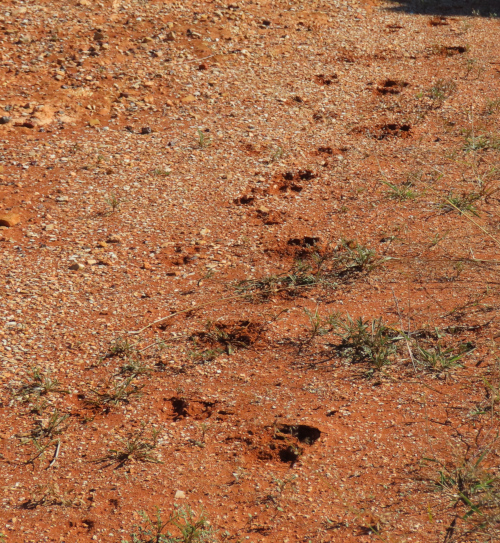
If you’re out walking, you might spot their tracks in the dirt:
Let’s close with another close-up of an Emu at Mungo Lodge, showing its rather endearing coiffe:
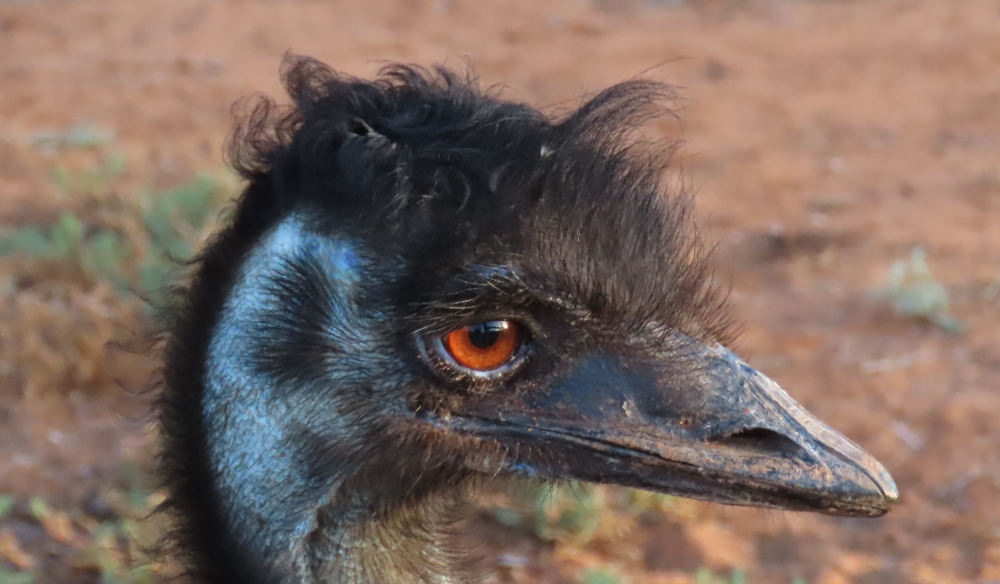
Common name: Emu
Scientific name: Dromaius novaehollandiae
Approximate height: 1.5 – 2 metres
Date spotted: 18 and 20 May 2024 (autumn)
Locations: Barrier Highway (approximate location on map) and Mungo National Park (map), New South Wales, Australia

Peregrine Falcon drops in to chat
This was such a wonderful experience! It was early one morning. I was strolling along the top of a cliff on North Head in Manly, and stopped to film some birds swooping around the cliff and the sea far below. To my surprise and delight, a Peregrine Falcon landed a few metres away and started calling.
You can see and hear the moment, at about 45 seconds into this video, when the falcon starts calling and the camera swings round to find it:
I don’t know if the birds swooping around the cliffs were Peregrine Falcons too. I suspect they were, as I heard their call, which came from a section of the cliff face that’s out of sight behind an outcrop. I’d been watching the birds for a while when one dropped in so suddenly.
The falcon stayed where it was, perched on a branch at the edge of the cliff, for a long time — at least 15 minutes. It was I who left in the end, not the bird.
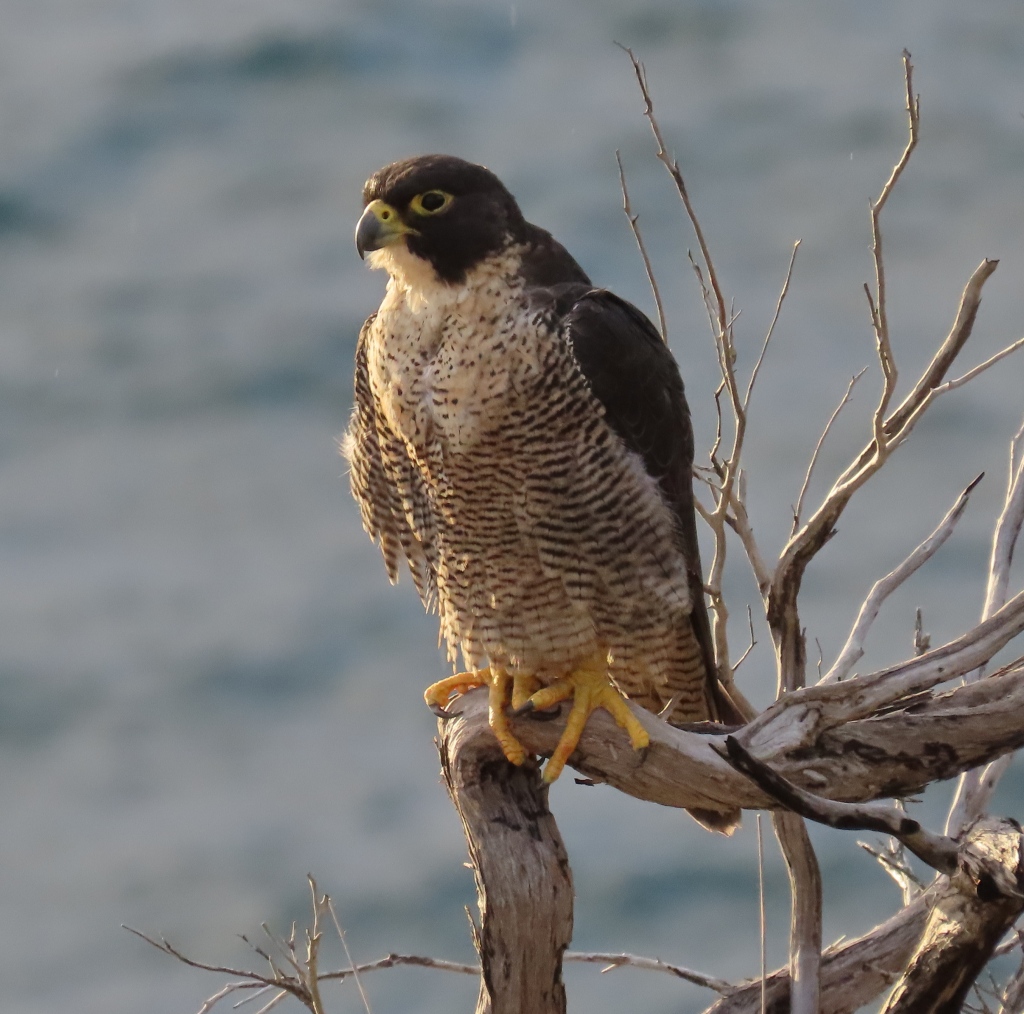
In the middle of a feather shuffle:
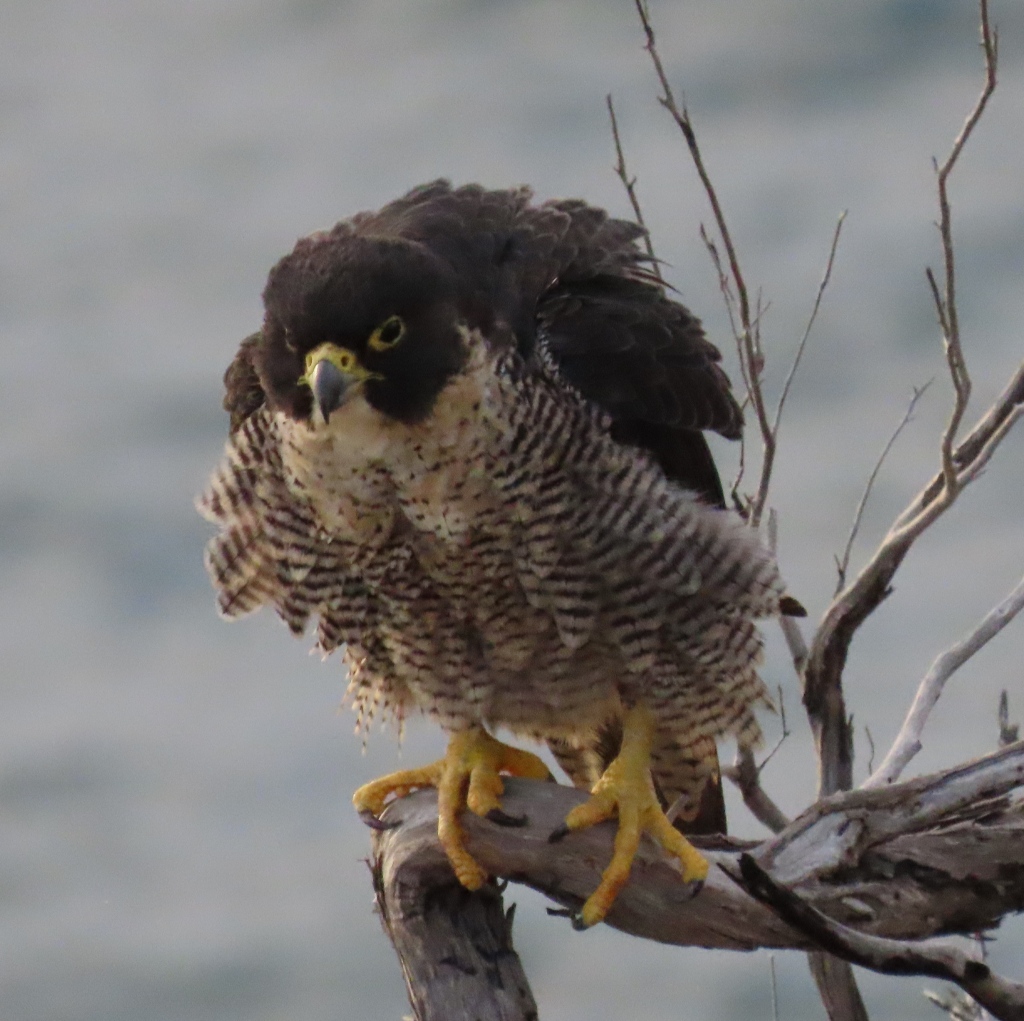
In the next video, the bird calls a few times (little chirps at the beginning; longer squeals at time stamp 1:02; squeals, hiccoughs, and chirps at 2:03; more at 2:35). It spends most of its time preening its feathers, which do seem to be in a bit of a state. Perhaps it’s a juvenile.
At about 50 seconds into the video, the view moves off the falcon to take in the ocean and the cliffs, but the bird calls attention back to itself quite soon.
At time stamp 2:16, both the falcon and I hear another bird calling overhead. The view wanders up into the sky to spot the other bird. Towards the end of the video, at 2:55, an aeroplane passes overhead and the bird quints up at it.
Although the falcon checked me out several times, it wasn’t in the least bit worried about me:

Common name: Peregrine Falcon
Scientific name: Falco peregrinus
Approximate length: 35-50 cm; wing span 85-100 cm
Date spotted: 7 May 2024 (autumn)
Location: Fairfax Track, North Head, Manly, New South Wales, Australia: 33°49’16.9″S 151°18’01.7″E

Soft colours of the Crested Pigeon
A Crested Pigeon explores ground that was very recently underwater due to flooding. I like the lighting in this shot, and the way the pink of the uncovered roots echoes the colour of the bird’s feet:

The orange blush on the bird’s shoulders is a pretty accompaniment to the grey-blue of the head and breast feathers:

Common name: Crested Pigeon
Scientific name: Ocyphaps lophotes
Approximate length: 31-35 cm
Date spotted: 6 May 2024 (autumn)
Location: Manly Lagoon, New South Wales, Australia: 33°47’05.4″S 151°17’00.0″E

Battlestar Grebe
This little Australasian Grebe looks quite fierce, but cute at the same time:
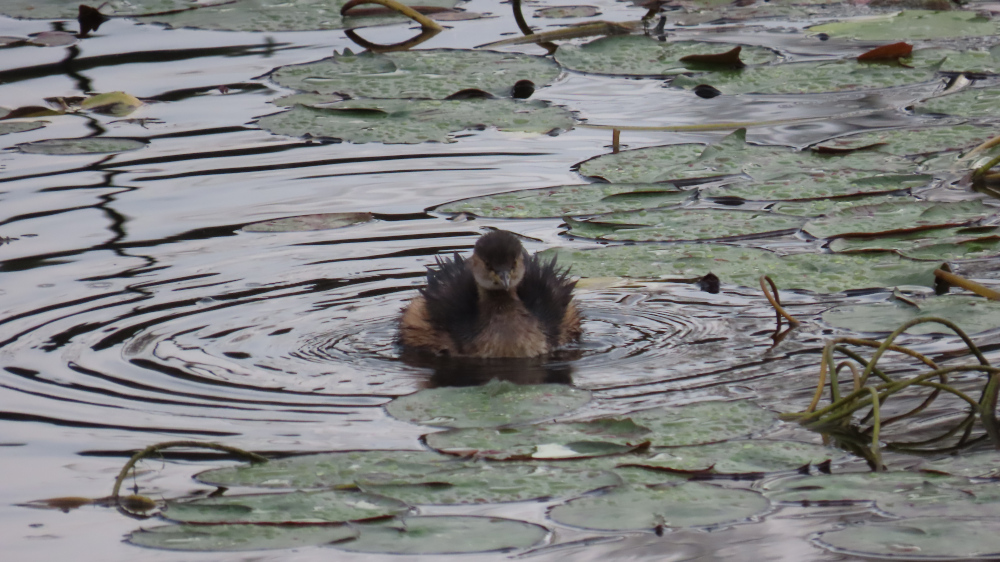
Here’s another pic of the same bird:
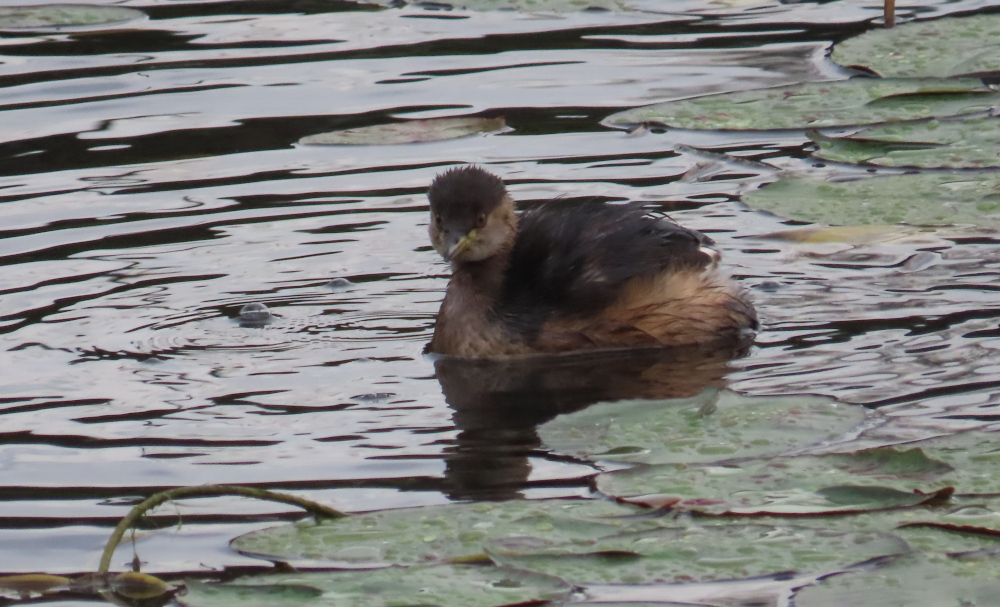
I’ve seen a Grebe once before, way back in April 2020. It was in the same location as this one. Despite my few sightings, these birds are evidently common. They have lobed feet, like the Coot, rather than webbed feet like a duck, and they’re adept divers despite their plump appearance.
Common name: Australasian Grebe
Scientific name: Tachybaptus novaehollandiae
Approximate length: 23-25 cm
Date spotted: 4 May 2024 (autumn)
Location: Manly Dam Park, near Sydney, Australia: 33°46’34.8″S 151°14’49.6″E

Australasian Gannet high above Manly Beach
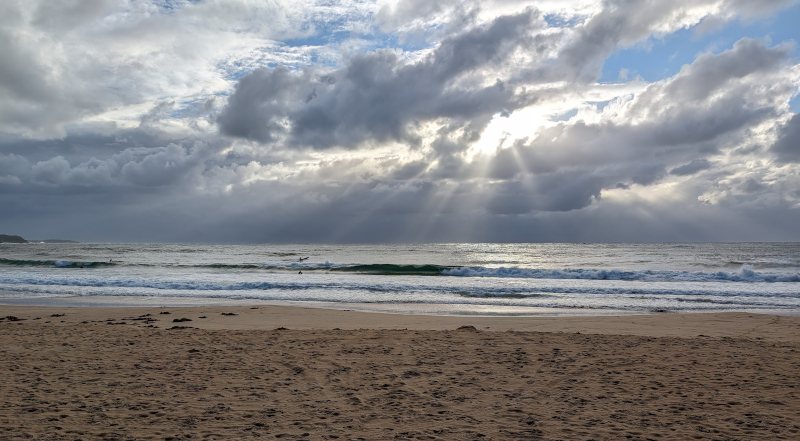
It was a stormy morning at Manly Beach. Birds circled high above the sea, swooping on the air currents.
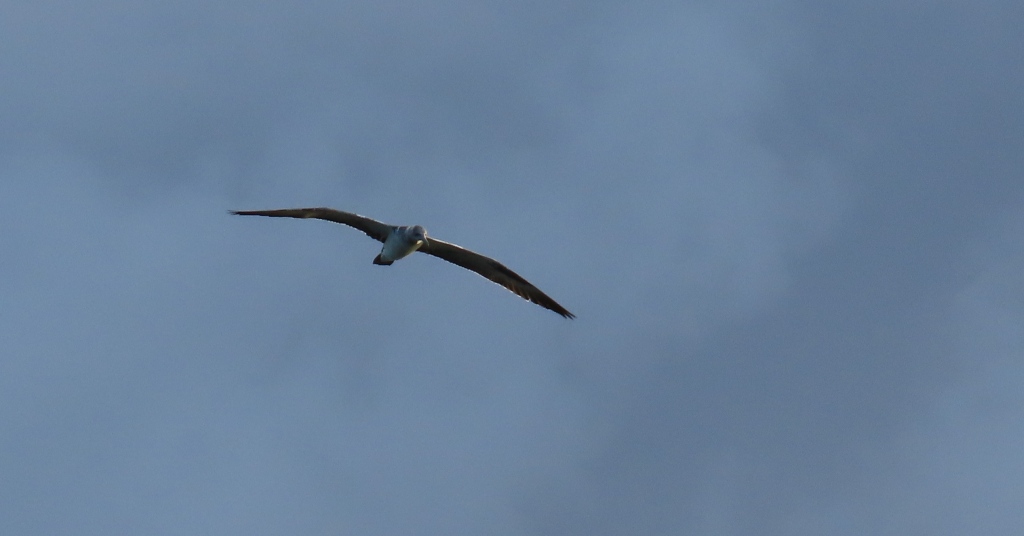
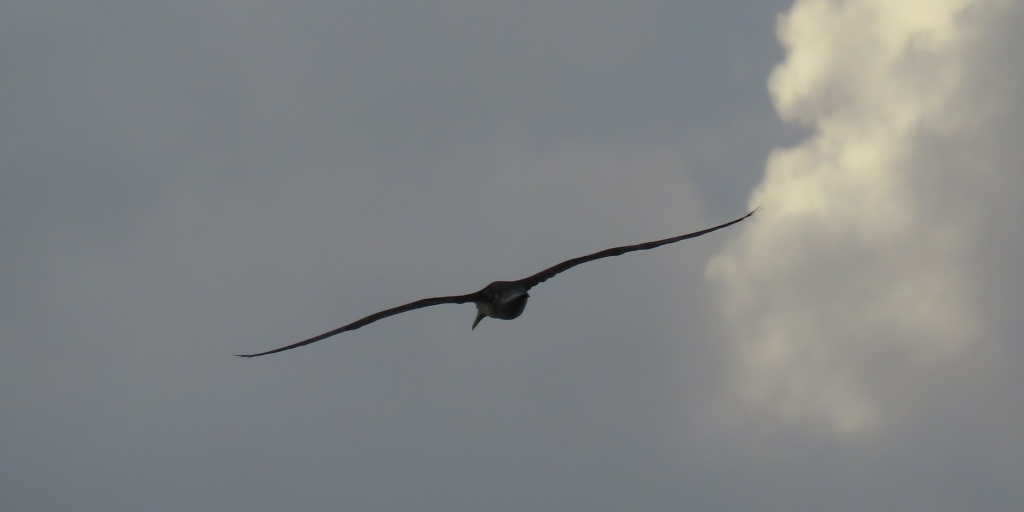
My camera was at maximum zoom, so the pictures are fuzzy. I could see that this bird wasn’t a seagull. Is it an albatross, I wondered? I posted the question on Reddit, and got the answer that the bird is most likely an immature Australasian Gannet.
Here’s another shot of the bird:
Common name: Australasian Gannet
Scientific name: Morus serrator
Approximate length: 85-90 cm; wingspan: 1.7-1.9 m
Date spotted: 6 May 2024 (autumn)
Location: Manly Beach, New South Wales, Australia: 33°47’43.5″S 151°17’25.2″E
This is a first sighting for me! The description for Australasian Gannet in my bird book says that the gannets enter estuaries, bays, and harbours to shelter from rough seas. That would certainly fit the weather this morning. On Reddit, I learned that it’s quite common for the birds to come close to shore in autumn and winter.
There are more pics of the bird on my Reddit post, for those who want more details. In the meantime, I’ll leave with you with a view of the stormy sky and sea:

Pied Cormorant: first sighting!
Cormorants and other water birds seem to be my thing at the moment! This is the first time I’ve spotted a Pied Cormorant:

Pied Cormorants look quite similar to Little Pied Cormorants, of which I’ve seen a few. Here’s a Little Pied from an earlier post of mine:

The Pied Cormorants are bigger, and they don’t have that endearing tuft of feathers on their heads. They also have a bright yellow patch on the inside of each eye, which the Little Pied Cormorants lack.
There are five types of cormorants to be found in south eastern Australia. I’ve now sighted four of the five! Just the Black-faced Cormorant still to go.
The Pied Cormorant was on a rock on the edge of the walkway that leads from Manly Beach to Shelly Beach. It’s quite a busy scene, with walkers, canoeists, and swimmers enjoying the water. The cormorant calmly watches the world go by:
Common name: Pied Cormorant
Scientific name: Phalacrocorax varius
Approximate length: 70-80 cm
Date spotted: 5 May 2024 (autumn)
Location: Marine Parade, Shelly Beach, Manly, New South Wales, Australia: 33°48’02.6″S 151°17’46.9″E
Now to spot a Black-faced Cormorant!

New website ready for more birds!
This bird blog has moved to a new address! You can now find the birds and me at sydneybirder.com. Don’t worry — if you go to the original birdsinsydney.wordpress.com, you’ll be redirected to this site. All the birds and readers comments have moved here too.
Did you notice some advertisements interrupting the bird pics in the past? Through the magic of commerce, the ads have disappeared now too.
Happy birding!

Little Black Cormorants in a row
A few days ago, at Forty Baskets Beach on Sydney’s Northern Beaches, seven Little Black Cormorants swam, fished, and sunned themselves.
Little Blacks are easy to distinguish from other types of cormorant in this area of Australia. Apart from being entirely black, they have green-blue eyes that can look quite eery at times.
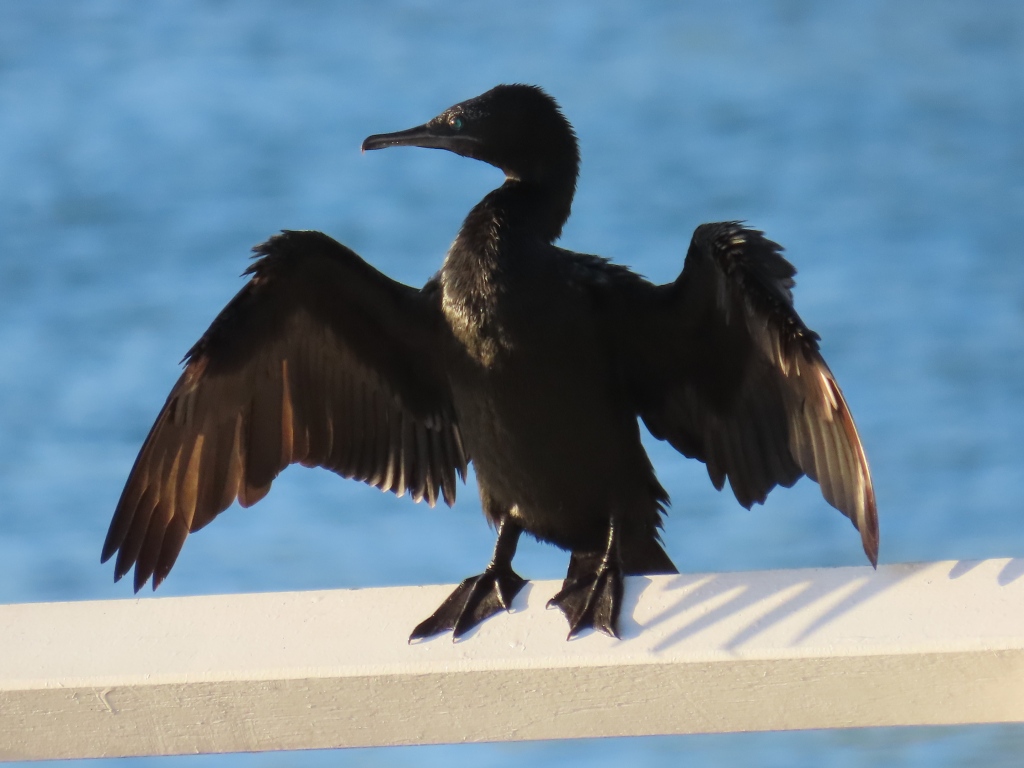
Here are six of the seven Little Black Cormorants, hanging their wings out to dry:

The group stayed together most of the time, both in and out of the water.

Here’s another of the birds showing that pretty blue eye.

Common name: Little Black Cormorant (see other cormorants)
Scientific name: Phalacrocorax sulcirostris
Approximate length: 65 cm
Date spotted: 25 April 2024 (autumn)
Location: Forty Baskets Beach, New South Wales, Australia: 33°48’12.6″S 151°16’12.2″E
Interestingly, a White-faced Heron and a few Silver Gulls followed the cormorants around.
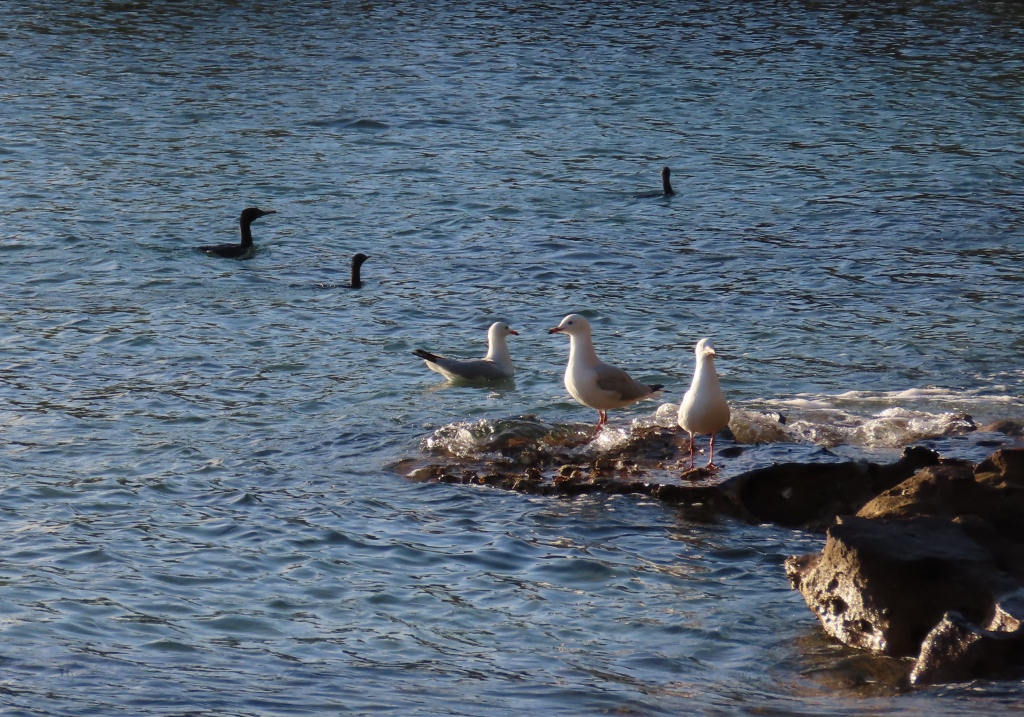
I guess they were interested in any fish that the cormorants might find!
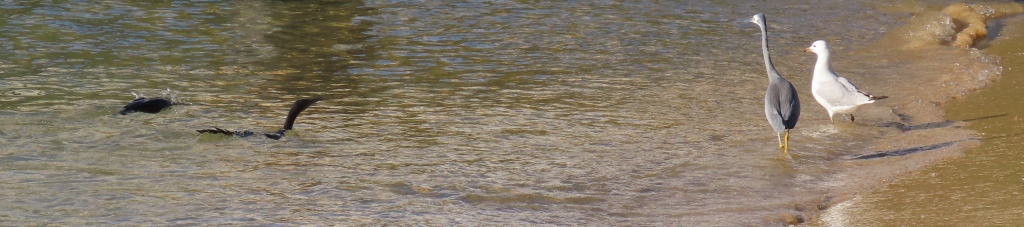
Here’s a better picture of the heron:


An intrepid Kookaburra and a fallen tree
A tree came down in our neighbourhood this week. A Kookaburra decided to keep an eye on the resulting activity, despite all the heavy machinery and noise.
If you look carefully, you can just make out the Kookaburra perched on the trunk of the fallen tree, right next to that big, thrumming truck:

After surveying the activity at ground level (and snacking on a passing worm or lizard), the bird flew up onto the street lamp on the newly-erected power post. The tree had taken down the old post and all the power lines. Getting a bird’s eye view:

The team of electricians down below needed to reset the switches at the top of the post. They used a long, bright green pole to do this. The bird stayed right where it was, checking the job with interest:

This video gives a good idea of the noise and machinery at work down below:
I’ve noticed before how fearless Kookaburras are, and how they seem to be interested in what we humans are doing. This particular Kookaburra takes the cake!
Common name: Laughing Kookaburra
Scientific name: Dacelo novaeguineae
Approximate length: 47 cm
Date spotted: 23 April 2024 (autumn)
Location: Near Sydney, New South Wales, Australia

Black swans asleep on one leg
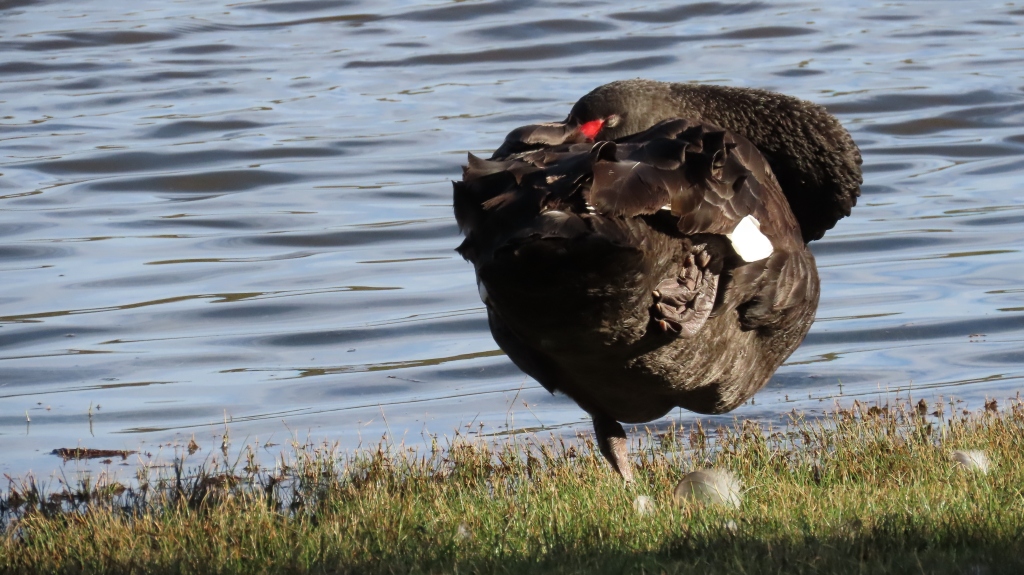
In the early morning sunshine, two black swans sleep. Both swans sleep with one leg raised, one leg holding the bird up, and head tucked under a wing. This swan has a watchful eye open:
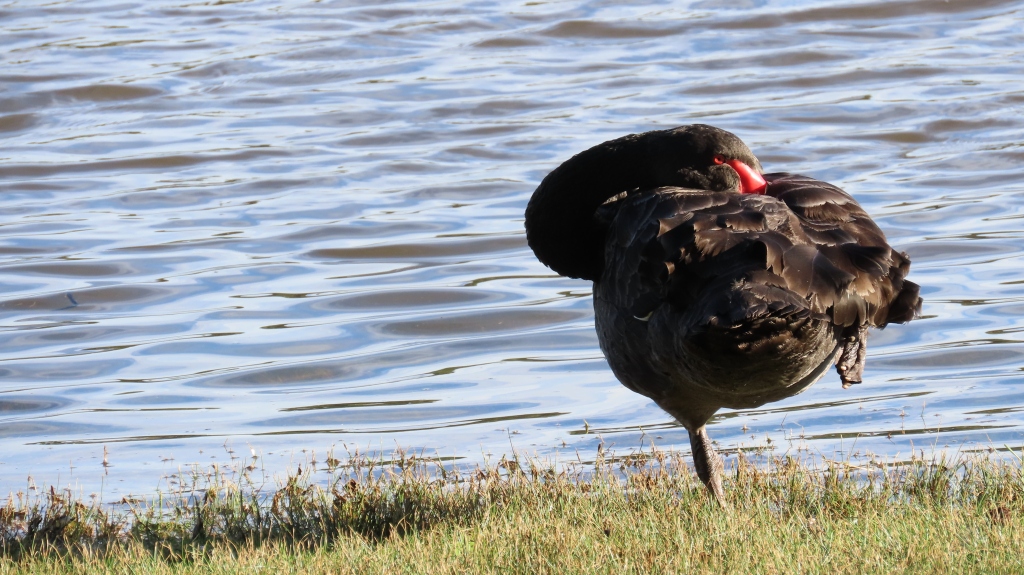
The other swan’s eyes are closed. Its foot is tucked close to its body:
When I pass the same spot a few days later, a swan drifts peacefully on the water:

Black Swans are native to Australia, and are common around Sydney.
Common name: Black Swan
Scientific name: Cygnus atratus
Approximate length: 120 cm
Date spotted: 8th and 17th April 2024 (autumn)
Location: Manly Dam Park, New South Wales, Australia: 33°46’35.4″S 151°14’49.8″E


 Sydney Birder