
Blue Bonnet: a new parrot for me
I love parrots, and it’s always exciting to see a new type. This is my first sighting of a Blue Bonnet. It was at Mungo Lodge, during our recent Outback trip.

Of course, as so often happens with birds, it was difficult to get a good shot. For the above photo, the bird turned its back. The next one is totally out of focus, but gives a good idea of the colouring around the bird’s face:

Common name: Blue Bonnet
Scientific name: Northiella haematogaster
Approximate length: 27-34 cm
Date spotted: 20 May 2024 (autumn)
Location: Mungo Lodge, Mungo National Park, New South Wales, Australia: 33°44’31.4″S 143°00’06.1″E
Little Crow at Mungo National Park
I think this handsome bird is a Little Crow. Its proportions and stance don’t look quite right for an Australian Raven or a Little Raven. But I’m open to correction!

Common name: Little Crow
Scientific name: Corvus bennetti
Approximate length: 45-48 cm
Date spotted: 20 May 2024 (autumn)
Location: Vigars Well Picnic Area, Mungo National Park, New South Wales, Australia: 33°41’32.6″S 143°06’20.0″E

Zebra Finches at Lake Mungo
This is my first sighting of these pretty little birds. A male and a female Zebra Finch were flitting around a bush at Red Top lookout, near the Walls of China in Mungo National Park. The male is hidden behind the twigs on the left, while the female is more visible on the right of the photo.
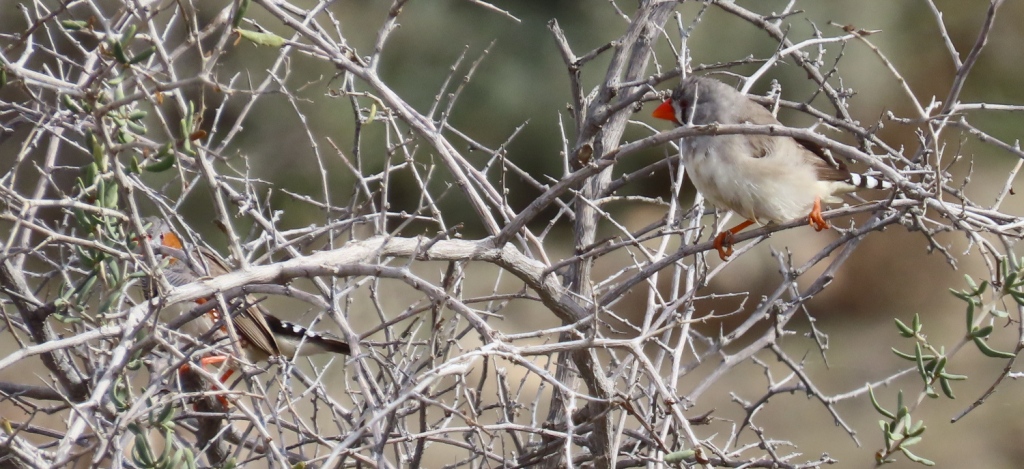
These birds like to hang around scrublands and salt marshes, but they also like to have water close by. I was surprised at how much water and greenery there was in the Outback areas that we visited. Lake Mungo itself is pretty much dried out (has been so for more than ten thousand years), but there were even puddles of water next to the sand dunes of the Walls of China.
Common name: Zebra Finch
Scientific name: Taeniopygia guttata
Approximate length: 10 cm
Date spotted: 20 May 2024 (autumn)
Location: Red Top lookout, Mungo National Park, New South Wales, Australia: 33°47’19.2″S 143°06’47.9″E

Apostlebirds nesting and grooming
It’s been a long-time wish of mine to see an Apostlebird. In our recent Outback trip, my wish came true. Several of these birds congregated around Mungo Lodge, where we stayed during our two-day exploration of Lake Mungo and surrounds.
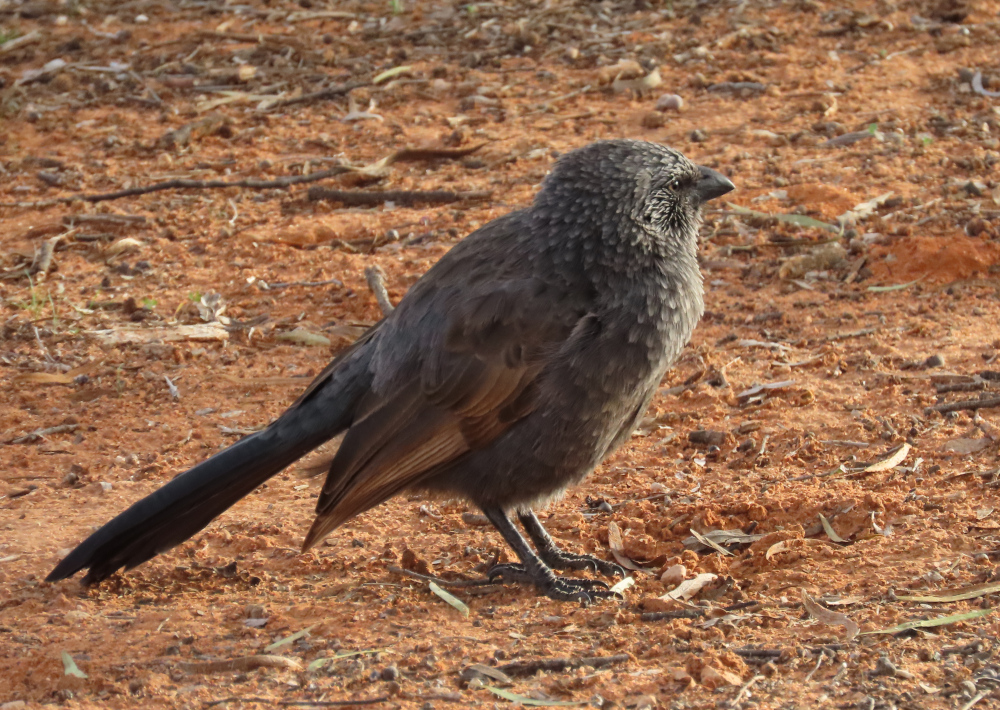
The birds have a characteristic dark mask around the eyes, which isn’t showing up as clearly as in some photos of these birds, because of the excellent mid-morning light. Here’s a half-profile shot, where you can just make out the mask leading from the beak and narrowly circling the eyes:

Two of the birds were nesting. I took the next shot in the early morning, when the sun was low in the sky. The photo shows one bird on the nest. Apostlebirds build their nests out of mud and clay. Since the soil is red in this area of the Outback, the nest is red too. It looks as if someone has put a round bowl in the tree, and the birds have hijacked it for a nest:

An early-morning grooming session was communal and chatty:
In the background sound of the above video, there’s a mournful falling whistle. This sound followed me around the area. I think it’s a Spiny-cheeked Honeyeater. I’ll blog about that bird soon.
The next video shows the two nesting birds again. It’s rather shaky and fuzzy, I’m afraid, due to my excitement and the poor light:
Common name: Apostlebird
Scientific name: Struthidea cinerea
Approximate length: 29-33 cm
Date spotted: 20-21 May 2024 (autumn)
Location: Mungo Lodge, Mungo National Park, New South Wales, Australia: 33°44’31.4″S 143°00’06.1″E

Welcome Swallows at White Cliffs
I was recently at the small opal-mining town of White Cliffs, in central New South Wales. Two Welcome Swallows perched on an old tin drum, which was serving to warn people about an open mine shaft:

Common name: Welcome Swallow
Scientific name: Hirundo neoxena
Approximate length: 14-15 cm
Date spotted: 19 May 2024 (autumn)
Location: White Cliffs, New South Wales, Australia: 30°50’13.9″S 143°05’24.2″E
This photo shows more of the landscape surrounding the birds. The white mounds are earth take up from underground, in search of opals:

If you’d like to see more of the town and surrounds, take a peek at my bookmark’s blog post: White Cliffs opal mines and underground motel.

Wedge-tailed Eagle soaring over the Cobb Highway
We were driving along the Cobb Highway in central New South Wales, between Wilcannia and Ivanhoe. I spotted this eagle during a stop for lunch. Unfortunately, my camera settings weren’t properly adjusted for the light. Still, it’s worth recording this sighting as I don’t often have the opportunity to see a Wedge-tailed Eagle. In fact, this is only my second sighting ever.
Common name: Wedge-tailed Eagle
Scientific name: Aquila audax
Approximate length: 0.9-1.1 m; wing span 1.8-2.5 m
Date spotted: 19 May 2024 (autumn)
Location: Cobb Highway near Ivanhoe, New South Wales, Australia: 32°23’55.4″S 143°54’02.0″E

Australian Ringneck parrot at Cobar
First sightings are rolling in for me, thanks to my recent trip into the Australian Outback. We stopped for lunch at a town called Cobar in central New South Wales. A couple of Australian Ringneck parrots hid in the shade near our picnic place.
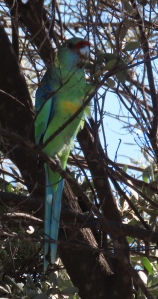
The shots are a little fuzzy, due to the lighting. Still, it’s worth sharing these shots as I’m unlikely to see these birds again for a while.
This particular variety of Australian Ringneck is called a Mallee Ringneck. The name “ringneck” comes from the narrow collar that this parrot shares with other varieties in the same species.

Common name: Australian Ringneck, subspecies Mallee Ringneck
Scientific name: Barnardius zonarius barnardi
Approximate length: 34-38 cm
Date spotted: 18 May 2024 (autumn)
Location: Cobar, New South Wales, Australia: 31°29’53.6″S 145°50’21.7″E

Whistling Kite on the Bogan River
Early one morning, on the banks of the Bogan River at Nyngan, I watched this raptor calling and flying. I was in the area, at the start of a trip heading west from Sydney into the Australian Outback.
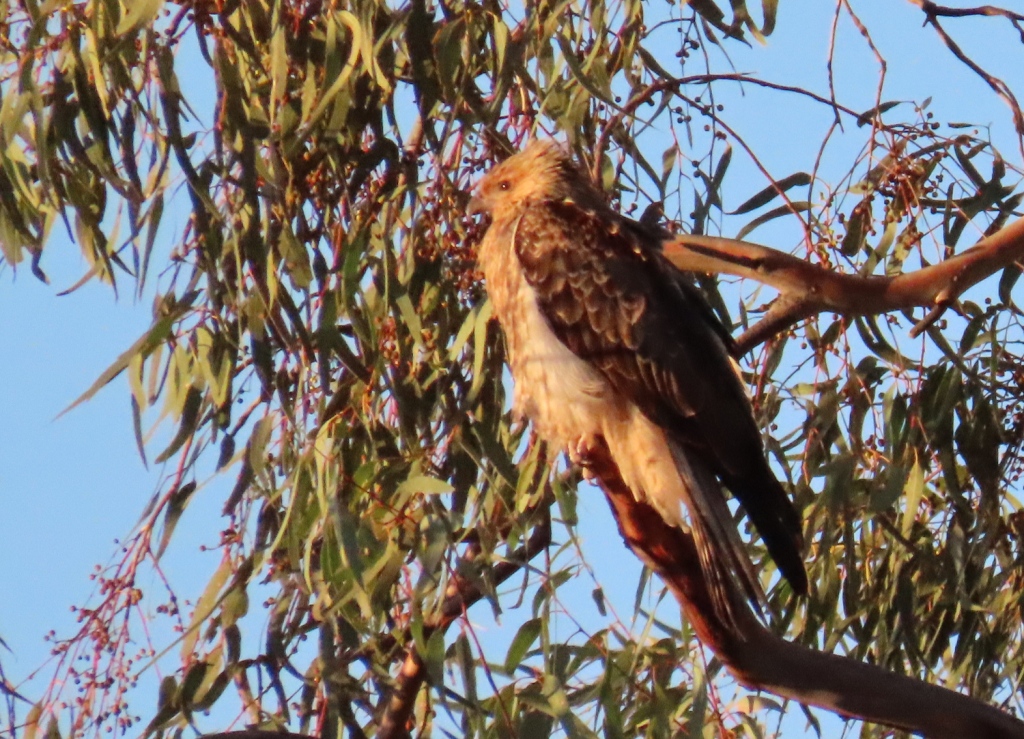
In this video, the piercing call of the bird echoes across the river. The background noise in the video is mostly from the wind. It was a cold and blustery morning:
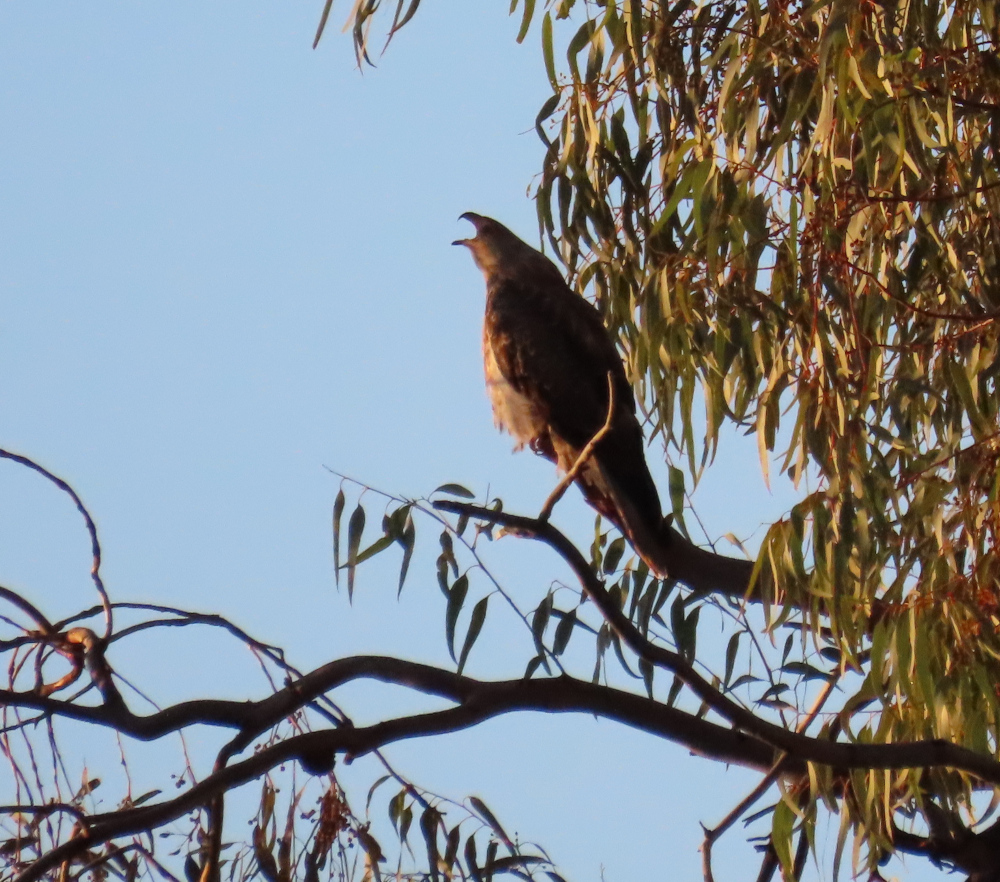
In the next shot, the bird’s head is up and its beak is opened wide, in the midst of making its call:
Nearby was the bird’s nest, a platform of loosely woven sticks:
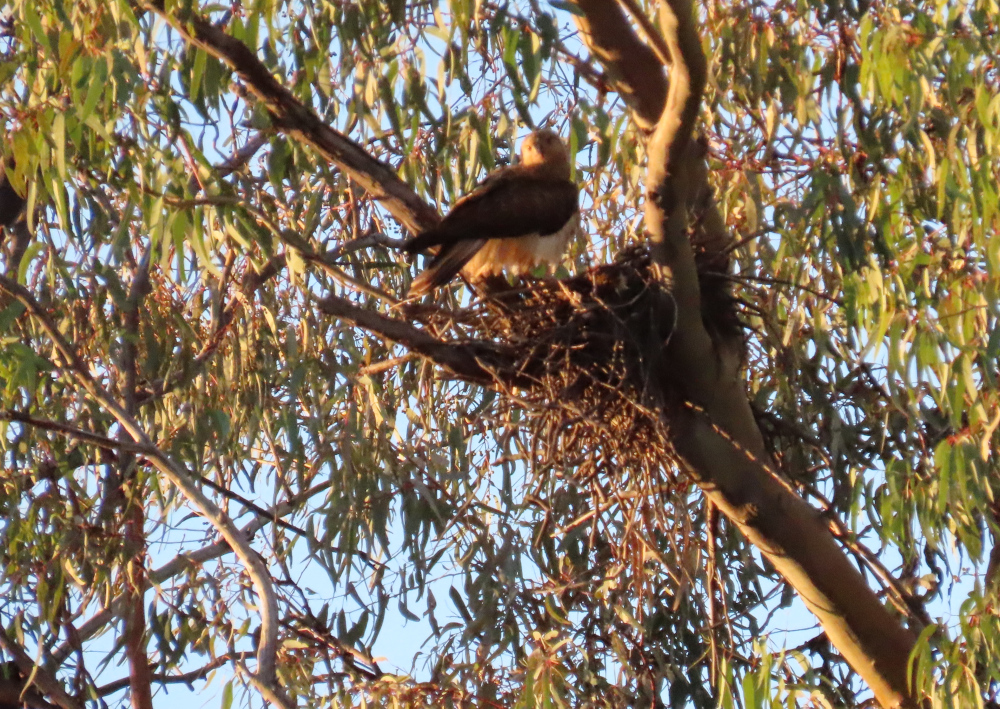
The bird departed from and returned to its nest a couple of times while I watched:
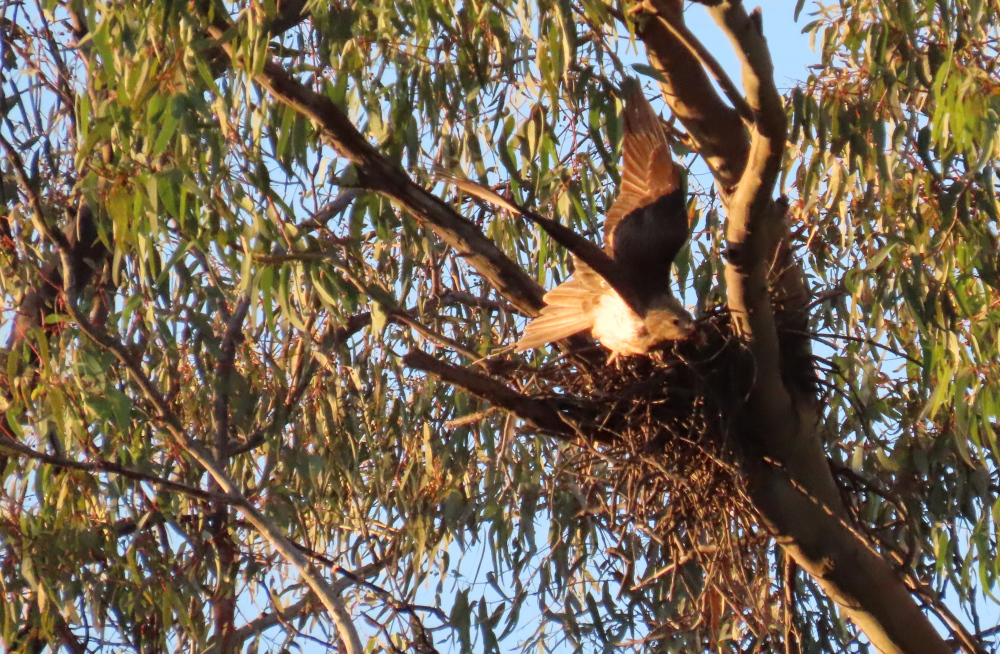
Each time it left the nest, the bird would circle high in the sky, or swoop down over the river. There were a few other birds circling too, so I can’t be sure that this is the same bird:
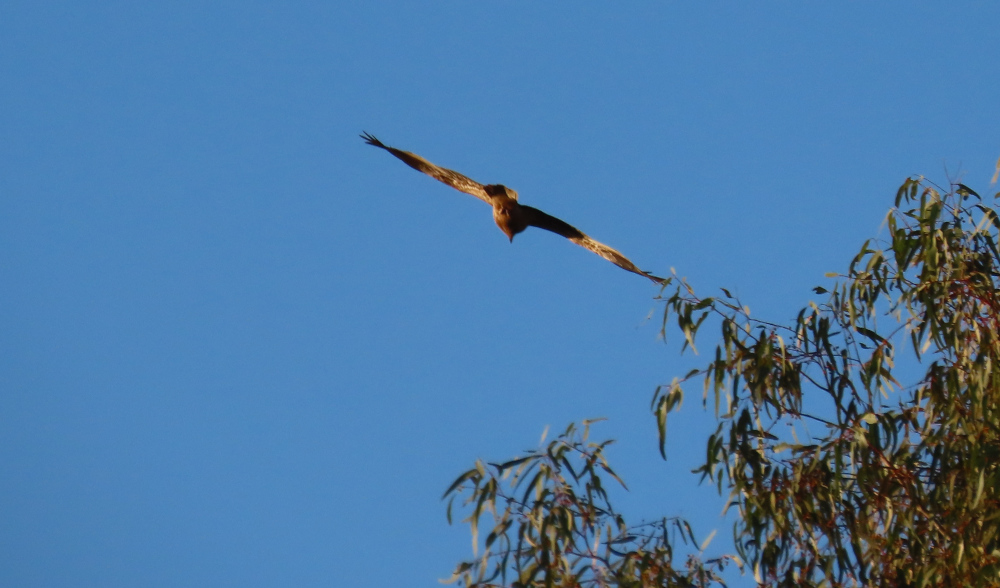
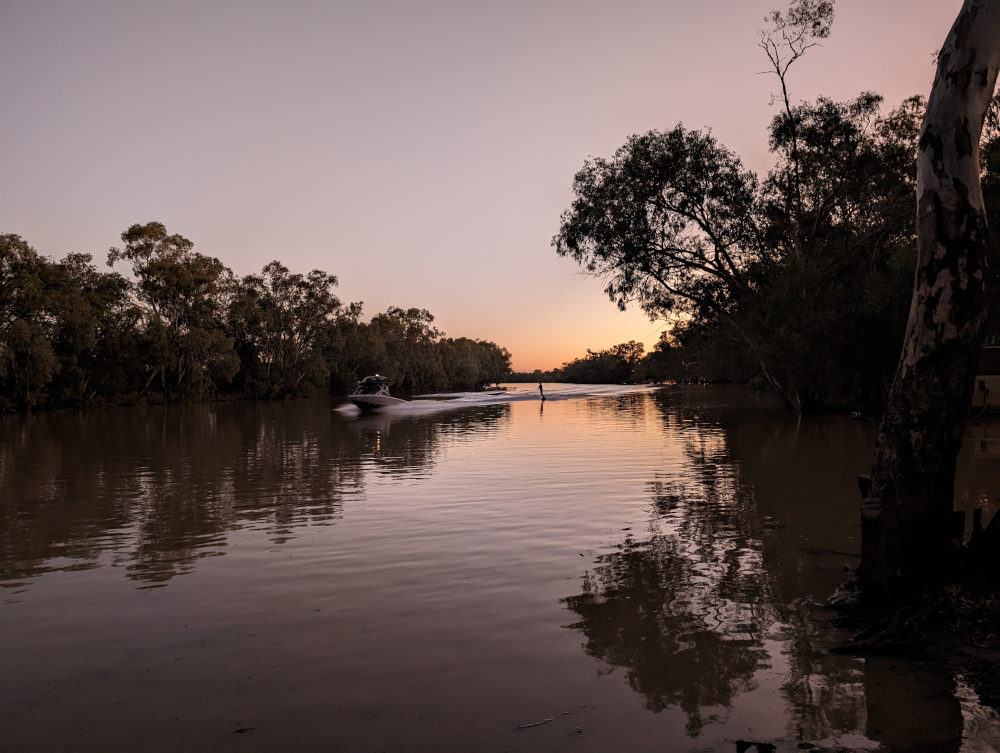
I saw the bird in the evening of 17 May, and then again the next morning. All my bird photos are morning shots. The next shot shows an evening shot of the Bogan River, near where the bird had built its nest. When taking all the photographs, I was on the opposite bank of the river from the bird and its nest:
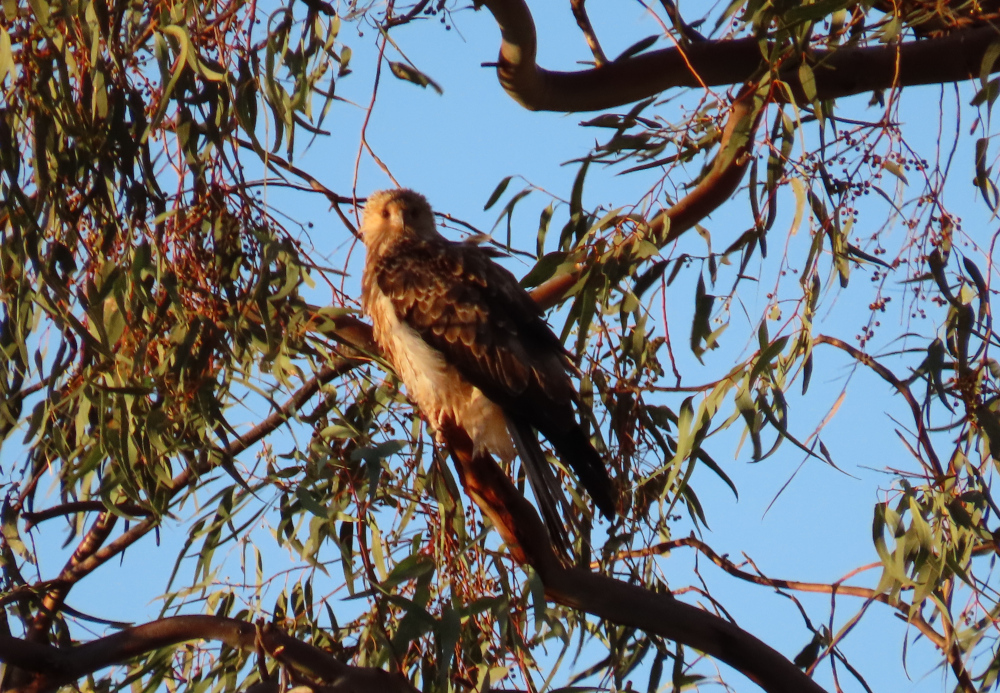
Here’s another shot of the same bird (again, a morning shot):
Common name: Whistling Kite
Scientific name: Haliastur sphenurus
Approximate length: 50-60 cm; wing span 1.2-1.5 m
Date spotted: 18 May 2024 (autumn)
Location: Nyngan Riverside Tourist Park, New South Wales, Australia: 31°33’39.1″S 147°10’45.2″E

Spoonbill grabbing breakfast at Nyngan
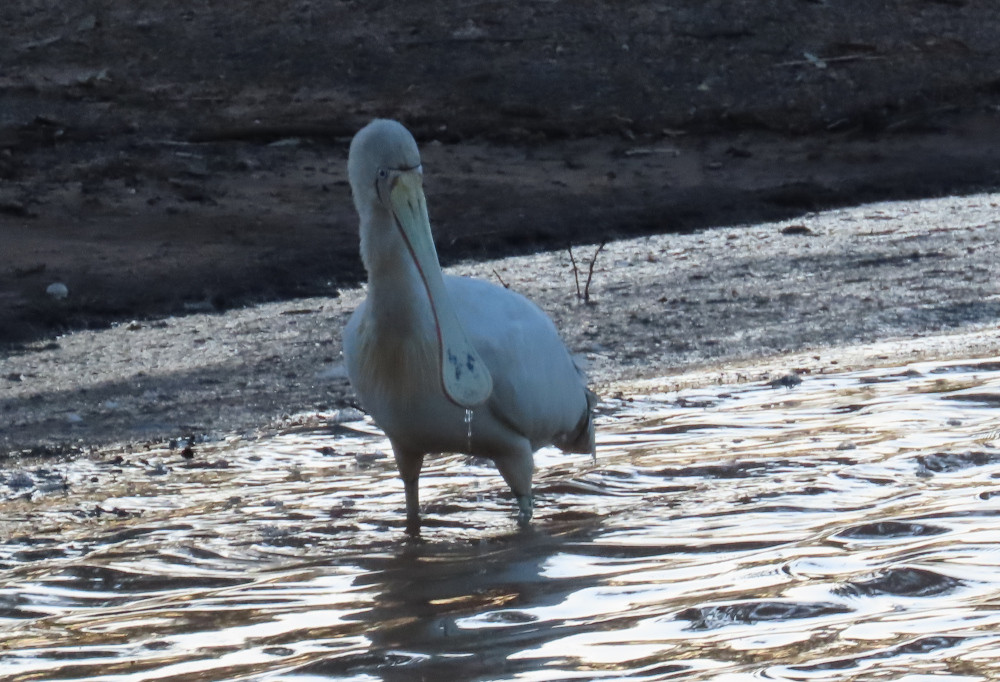
A Yellow-billed Spoonbill fishes for breakfast on a cold and blustery morning. We were at the Nyngan Riverside Tourist Park, on the Bogan River in central New South Wales. This is where we’d spent the first night of our trip out west from Sydney, before heading further into the Outback.
It was a cold and blustery morning. After half an hour or so of filming birds, I was pleased to return to my cabin for a hot coffee!
I’ve seen a couple of Royal Spoonbills before, but this is my first Yellow-billed. It’s duller than the black-and-white Royal, with its pale beak and yellow legs:
A side view shows the bird’s rather pretty tail:

If you’d like to know more about Nyngan and the Bogan Shire, take a look at my bookmark’s blog post.
Common name: Yellow-billed Spoonbill
Scientific name: Platalea flavipes
Approximate length: 75-90 cm
Date spotted: 18 May 2024 (autumn)
Location: Nyngan Riverside Tourist Park, New South Wales, Australia: 31°33’39.1″S 147°10’45.2″E

Thornbills at Lake Windamere
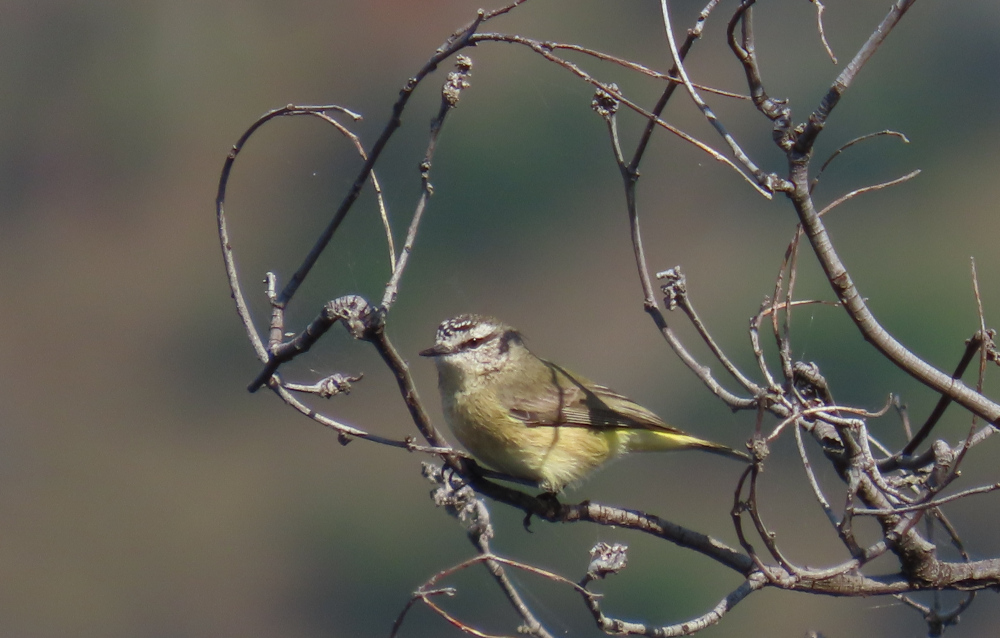
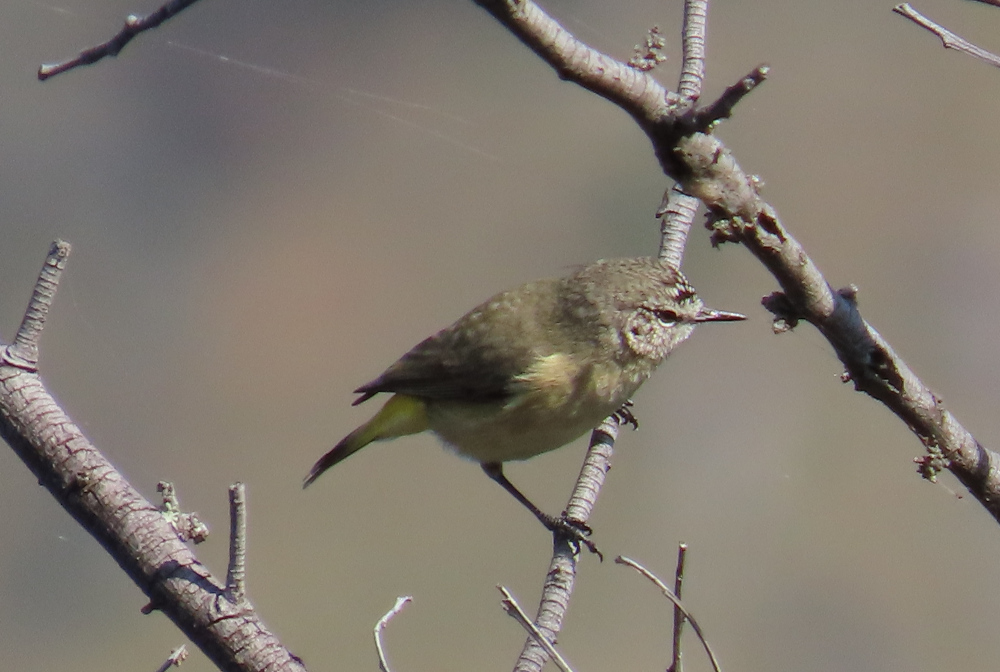
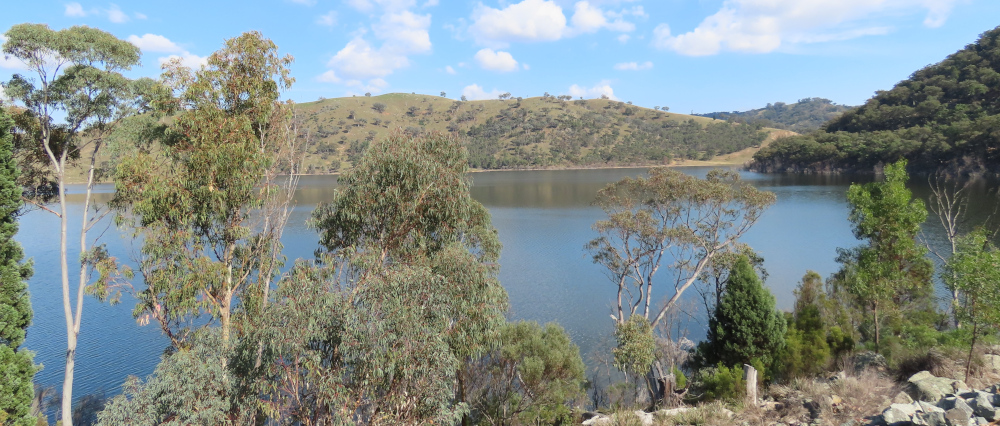
Lake Windamere is on the Cudgegong River, near Mudgee in the NSW Central Tablelands. We stopped there for a break while travelling westwards from Sydney at the start of our Outback trip. Several small birds flitted amongst the trees at the water’s edge, including Yellow-rumped and Yellow Thornbills. Although these are common birds, both are firsts for me. I’ve only sighted a Brown Thornbill before.
Here’s a Yellow-rumped Thornbill, looking spiffing with its black-and-white spotted forehead, dark eye stripe, and throat shading from buff to yellow:
Another Yellow-rumped Thornbill, looking not quite as smart:
Next is a Yellow Thornbill:

We were at the end of the lake near Windamere Dam:
Common names: Yellow-rumped Thornbill and Yellow Thornbill
Scientific name: Acanthiza chrysorrhoa and Acanthiza nana
Length: 11-12 cm and 9-10 cm
Date spotted: 17 May 2024 (autumn)
Location: Lake Windamere, Cudgegong, New South Wales, Australia: 32°43’35.7″S 149°46’14.2″E


 Sydney Birder