Blog Archives
Masked Lapwing’s face looks like a Lego model
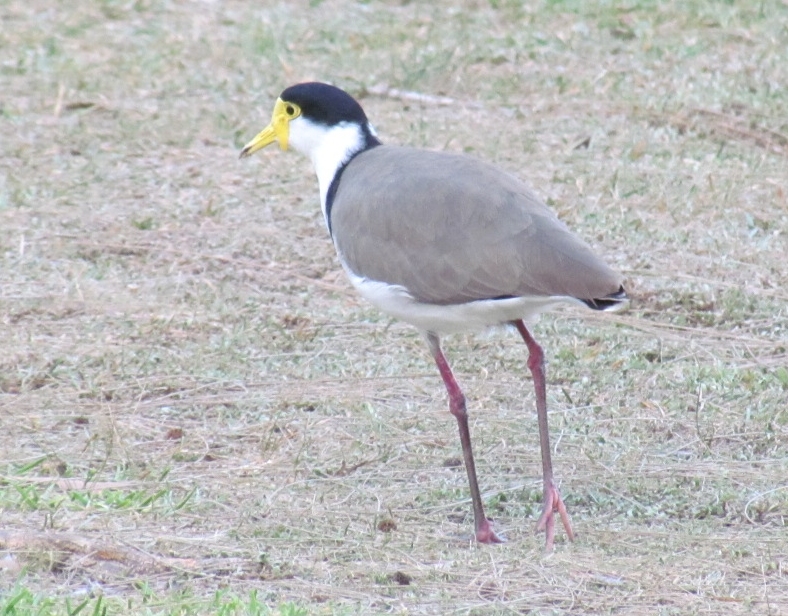
I spotted two Masked Lapwings at Manly Dam, near Sydney, Australia, this morning. They’re also known as Spur-winged Plovers. They can be quite aggressive, especially in nesting season. The name “spur-winged” is apt, because they have hooks on their wings, one on each, which they use as weapons, stretching the wings then dragging back to wound their enemy. But these two were quietly going about their business, pottering around the edges of Manly Dam.
Their faces make me think of a model put together with Lego. They’re so perfect, and yet they seem not quite real.

They have lovely knobbly knees and big pink feet:
In this video, one of the birds advances tentatively, testing each step:
Here’s a zoomed out shot showing the two birds in their environment:

Common name: Masked Lapwing, or Spur-winged Plover
Scientific name: Vanellus miles
Approximate length: 37 cm
Date spotted: 15 January 2017
Season: Summer
Location: Manly Dam Nature Reserve, New South Wales, Australia: 33°46’58.8″S 151°15’18.4″E
New Zealand Dotterel
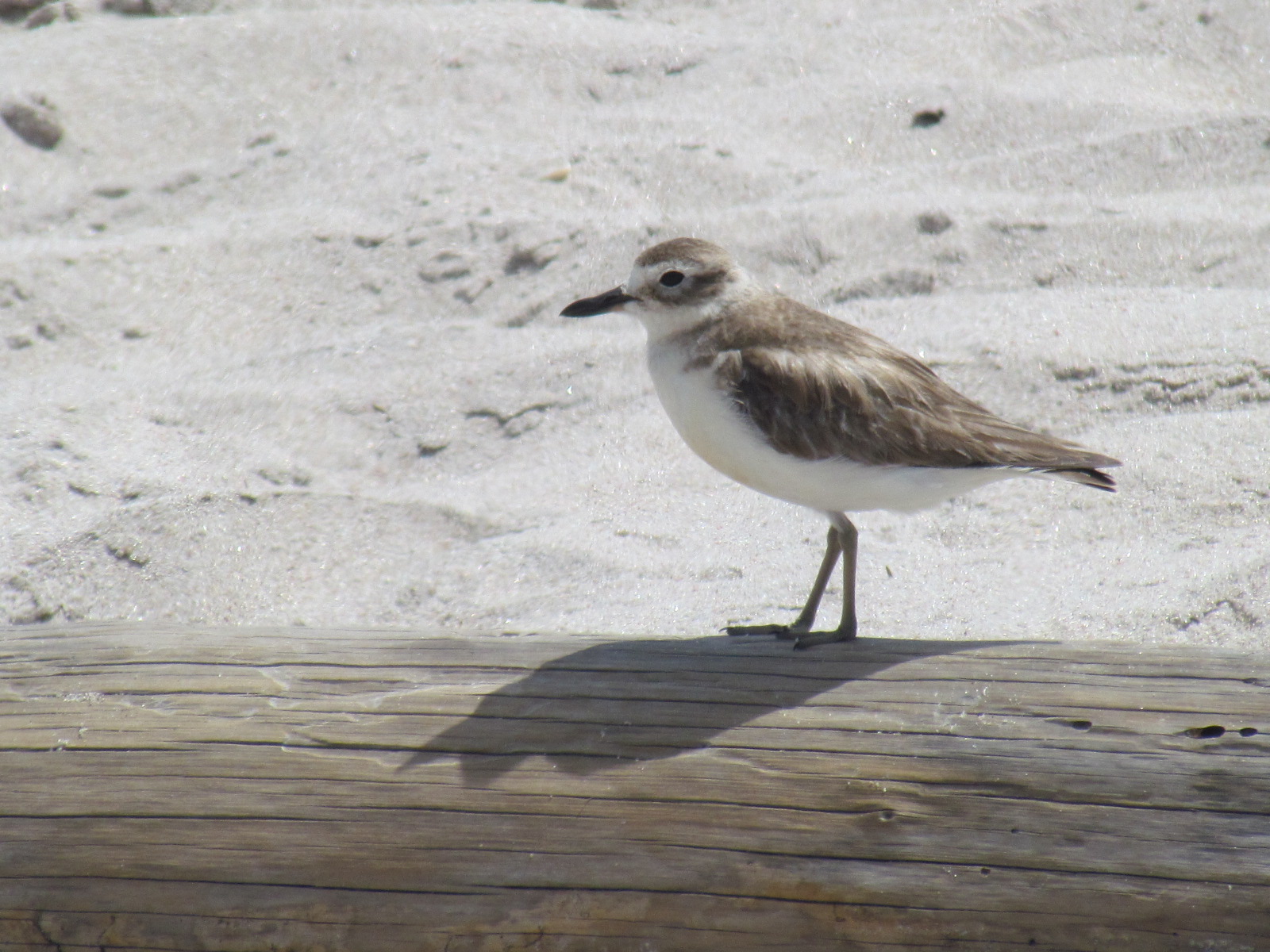
I’m travelling in New Zealand, so this post is a departure from my usual subject of birds in Sydney. While walking on Hahei Beach on the North Island, I came across a roped off area protecting a brood of New Zealand Dotterels.
Dotterels are native New Zealand birds, with a conservation status of nationally vulnerable. They’re also called New Zealand plovers, or tuturiwhatu.
This video shows one of the chicks exploring its environs. The shot then zooms out to show the gorgeous surrounds, and zooms back in to the mother or father bird and another little chick.
Here’s a still shot of the chick exploring:

The adult bird perches watchfully on a log:
Common name: Northern New Zealand dotterel
Scientific name: Charadriiformes charadriidae
Approximate length: 25 cm
Date spotted: 7 December 2016
Season: Summer
Location: Hahei Beach, North Island, New Zealand
Latitude/longitude: 36°50’10.2″S 175°48’10.3″E
Paradise Shelduck at Manly Dam, Australia
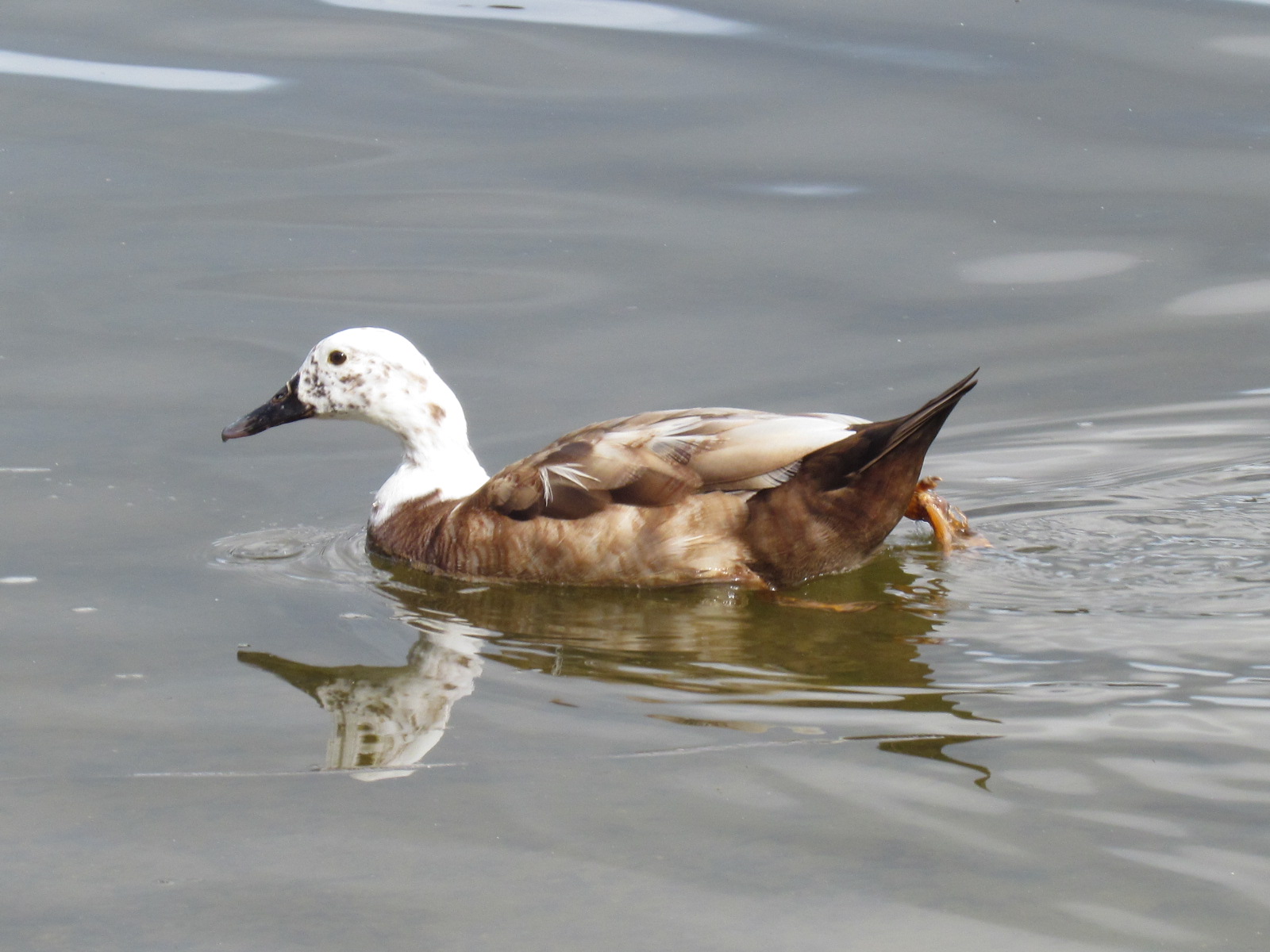
If this is a Paradise Shelduck, it’s rather far from its usual home in New Zealand. I spotted it at Manly Dam, near Sydney in Australia.
It’s a big duck. At first I wasn’t sure whether it was a duck or a goose. This one is a female, as you can tell from its white head and neck. The male has a dark head.
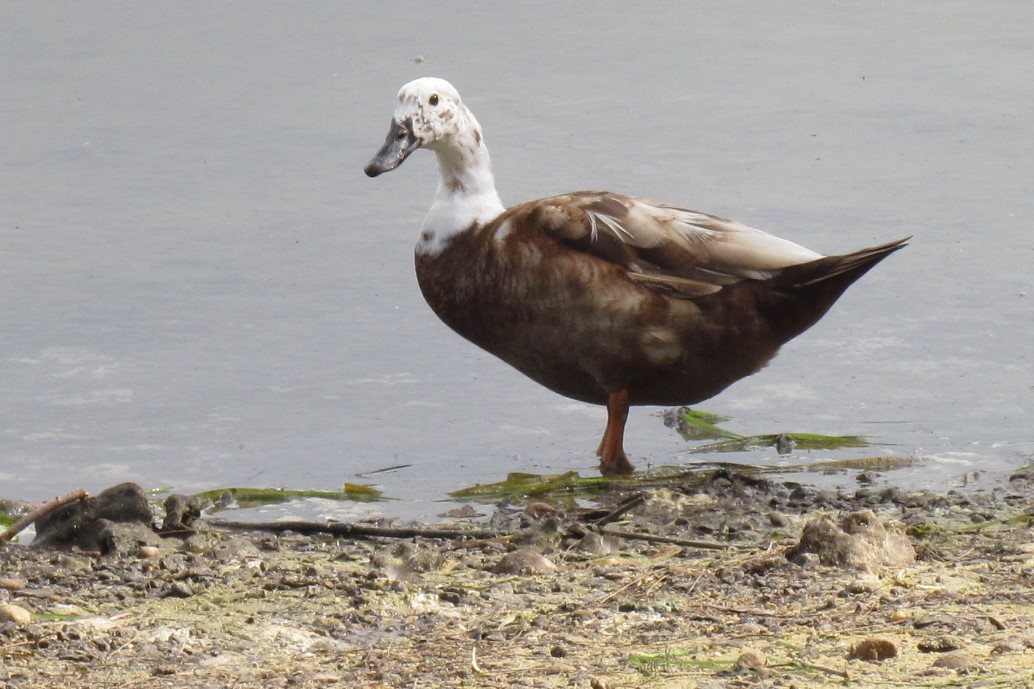
She took to the water:
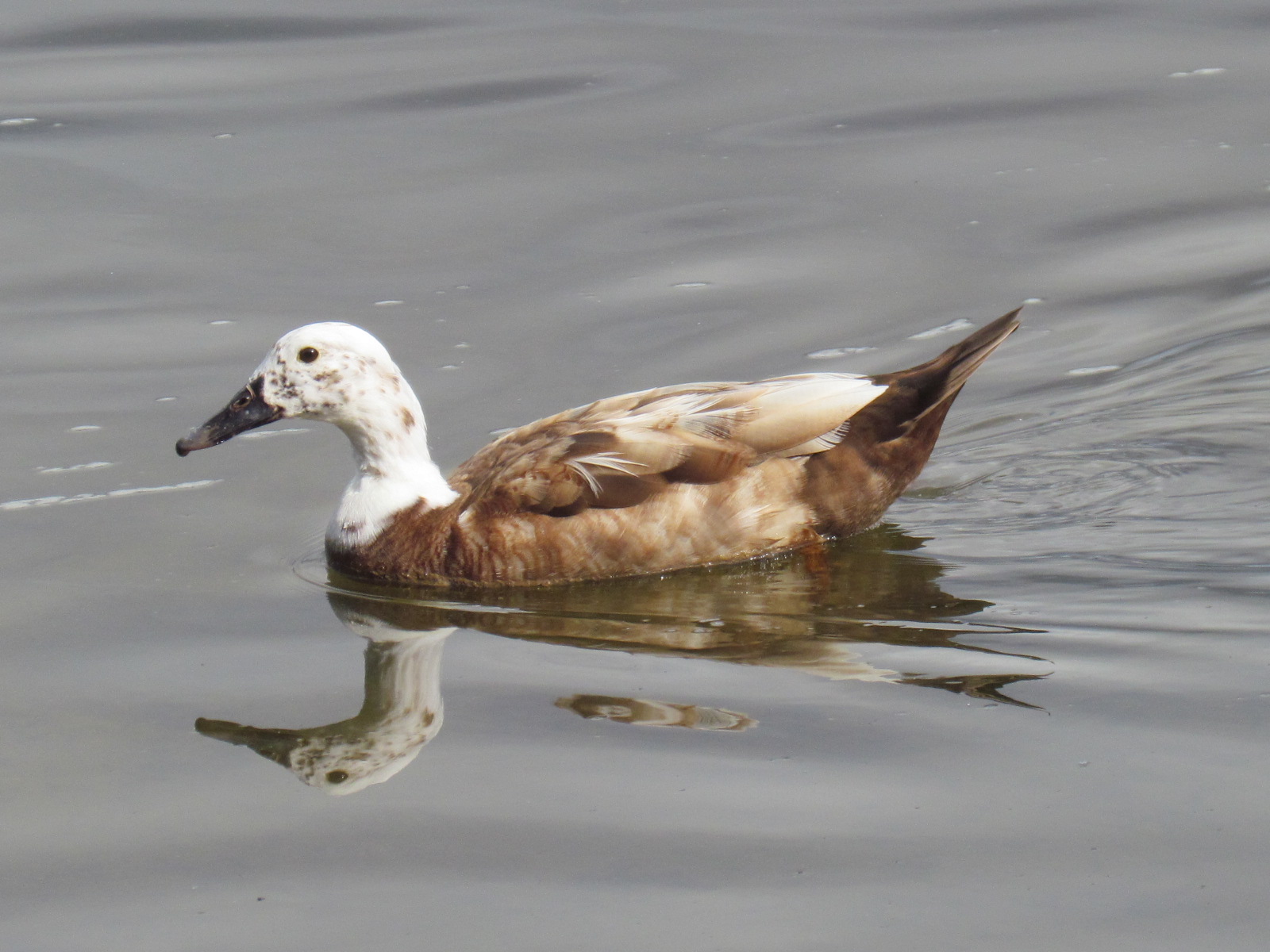
And showed a bit of ankle:
Common name: Paradise Shelduck
Scientific name: Tadorna variegata
Approximate length: 63-70 cm
Date spotted: 26 November 2016
Season: Spring
Location: Manly Dam Reserve, New South Wales, Australia
Latitude/longitude: 33°46’58.0″S 151°15’18.9″E
Purple Swamphen chick
So cute and fluffy! This little Purple Swamphen chick treads lightly on the lily pads, learning survival skills from its mother.
Here’s a nice shot of its stubby wings, and its well-developed feet under a couple of centimetres of water:

Setting off on a bit of exploration:

But staying close to mother:

Common name: Purple Swamphen
Scientific name: Porphyrio porphyrio
Approximate length: 50 cm
Date spotted: 30 October 2016
Season: Spring
Location: Manly Dam Reserve, New South Wales, Australia
Latitude/longitude: 33°46’36.1″S 151°14’48.8″E
Wood duck quacking high in a gum tree
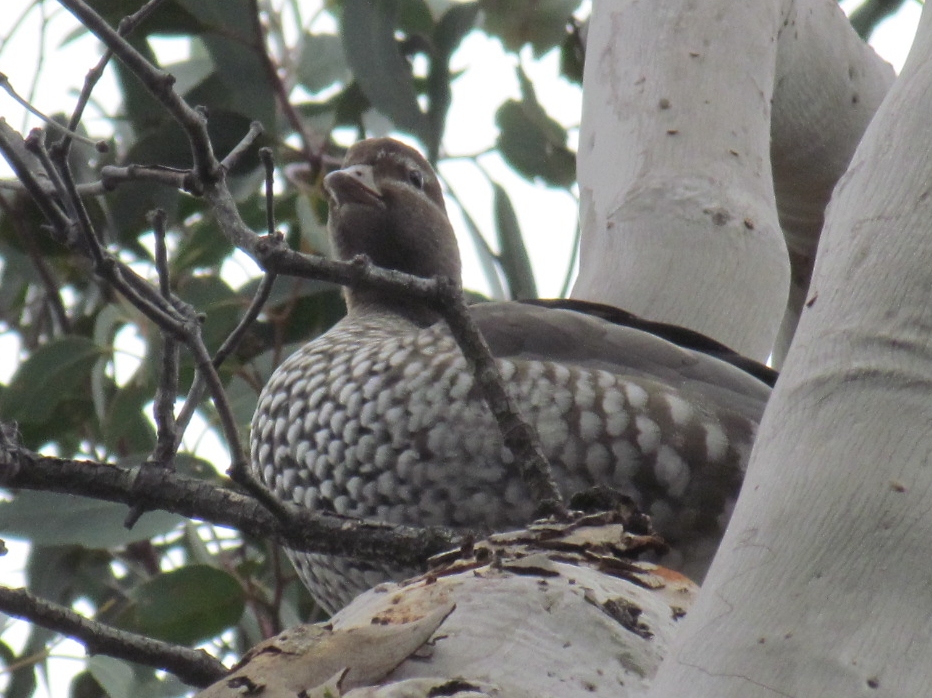
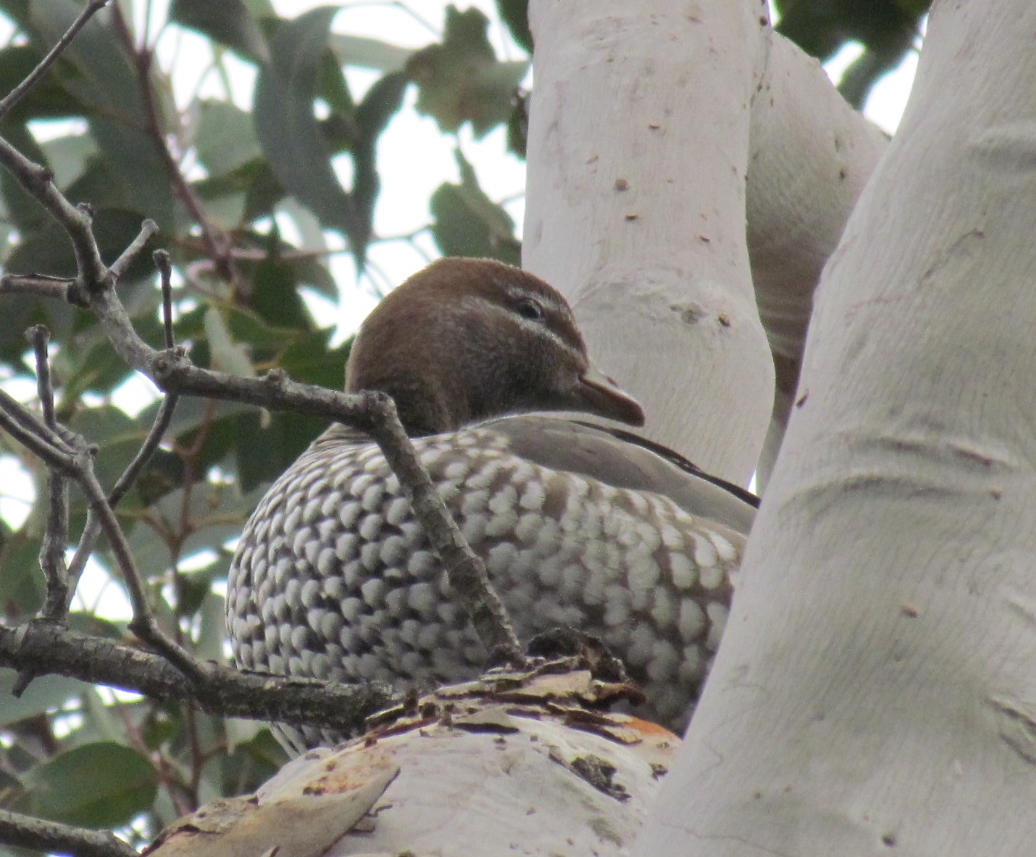
For some reason I’ve never expected to see a duck high up a gum tree. I know they fly, but somehow I think of them as spending their lives on the ground or on the water. Walking through the bush, I’ve occasionally heard a muttering, rolling sound coming from the tree tops. Imagine my surprise when I tracked it down to this Australian Wood Duck.
Here’s a still photo of the duck:
And in profile:
Common name: Australian Wood Duck
Scientific name: Chenonetta jubata
Approximate length: 50 cm
Date spotted: 31 July 2016
Season: Winter
Location: Manly Dam Reserve, New South Wales, Australia
Latitude/longitude: 33°46’41.1″S 151°14’54.9″E
Psyduck in Sydney
This blog is usually about birds in the real world, but I couldn’t resist posting this encounter with Psyduck from Pokémon Go. The game is a cute demonstration of irtual reality and the real world merging in augmented reality.
According to the description in Pokémon Go, Psyduck has a mysterious power to generate brain waves that only sleeping creatures should be able to emit. Useful, I guess?

Common name: Psyduck
Scientific name: Duck Pokémon
Height: 80 cm
Date spotted: 23 July 2016
Season: Winter
Location: Manly Dam Reserve, New South Wales, Australia
Latitude/longitude: 33°46’37.2″S 151°14’49.3″E
Purple Swamphens playing coy
The first sight of the Purple Swamphens in this video is their unique tracks in the sand. Then we hear a peeping and a squawking and a bit of a kerfuffle behind the reeds. A bird emerges for a quick appearance, before going back to the more interesting companionship of its fellows. A few minutes later, I came across another pair of birds out in the open, and filmed them too. Notice their big feet as they walk across the lily pads.
Common name: Purple Swamphen
Scientific name: Porphyrio porphyrio
Approximate length: 50 cm
Date spotted: 6 March 2016
Season: Late summer
Location: Manly Dam Reserve, New South Wales, Australia
Latitude/longitude: 33°46’26.6″S 151°14’44.3″E
Swimming across the sky
Reflections at Manly Dam.
In the background you’ll hear Australian Ravens cawing, Wattlebirds croaking, and Whipbirds whistling.
Pacific Black Duck
Common name: Pacific Black Duck
Scientific name: Anas superciliosa
Approximate length: 45-60 cm
Date spotted: 25 December 2015
Season: Summer
Location: Manly Dam, New South Wales, Australia
Latitude/longitude: 33°46’55.0″S 151°15’19.7″E
Eurasian Coot
My bird book calls this coot dumpy. An interesting fact is that the coot has flattened toes rather than webbed feet for efficient swimming.
Common name: Eurasian Coot
Scientific name: Fulica atra
Approximate length: 35 cm
Date spotted: 25 December 2015
Season: Summer
Location: Manly Dam, New South Wales, Australia
Latitude/longitude: 33°46’55.0″S 151°15’19.7″E
Heron catching fish at Manly Dam
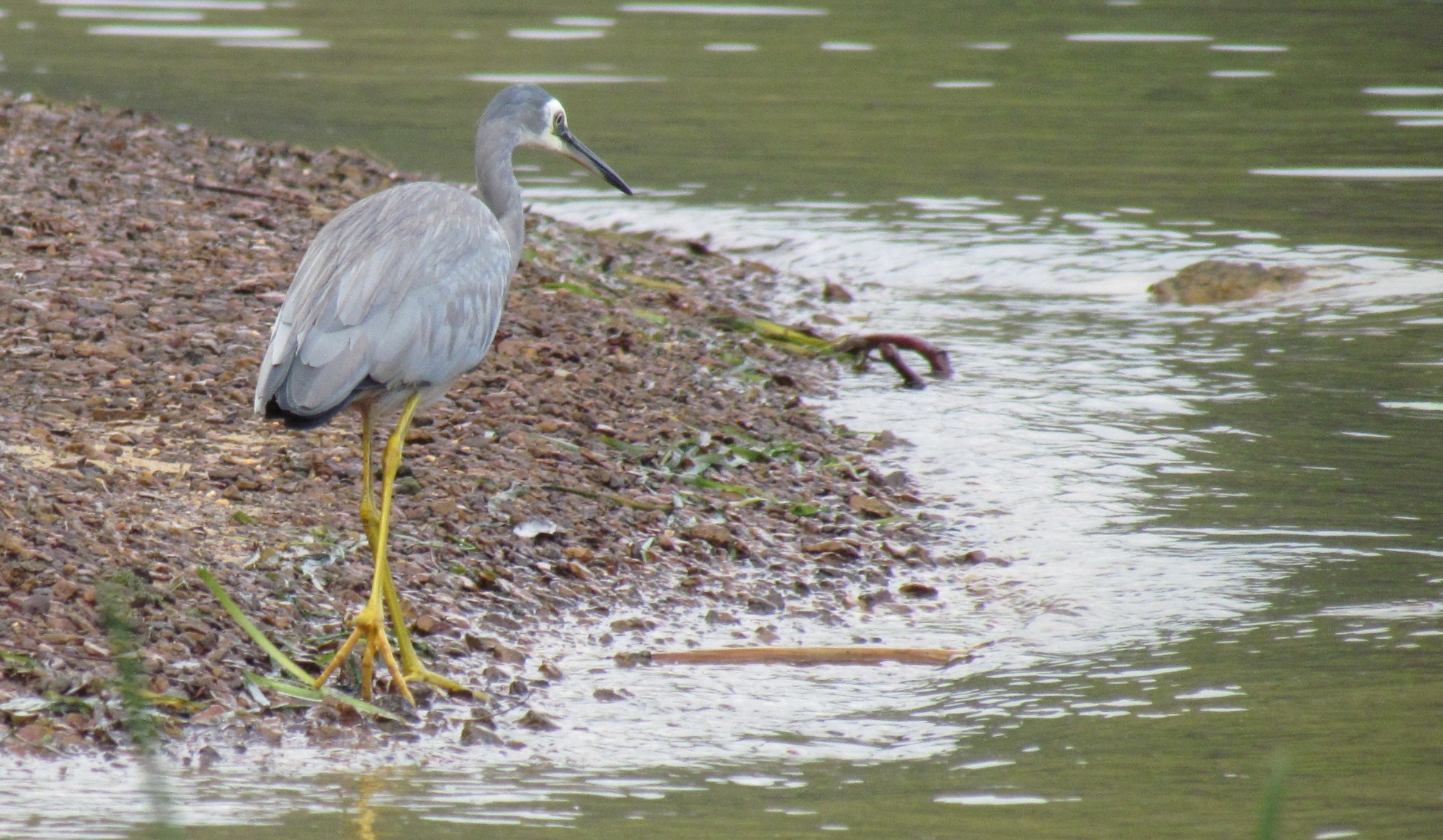
The smooth feathers of this White-faced Heron stand out nicely against the stripes made by the wind-ruffled water on Manly Dam. The heron strides out into the water, spots a fish, then spins around and jabs at the water in an amusing dance.
Here’s a still photo showing the bird’s yellow legs and big feet:
Here’s another photo which I like because of its impressionist mood and raindrop-scattered bushes:
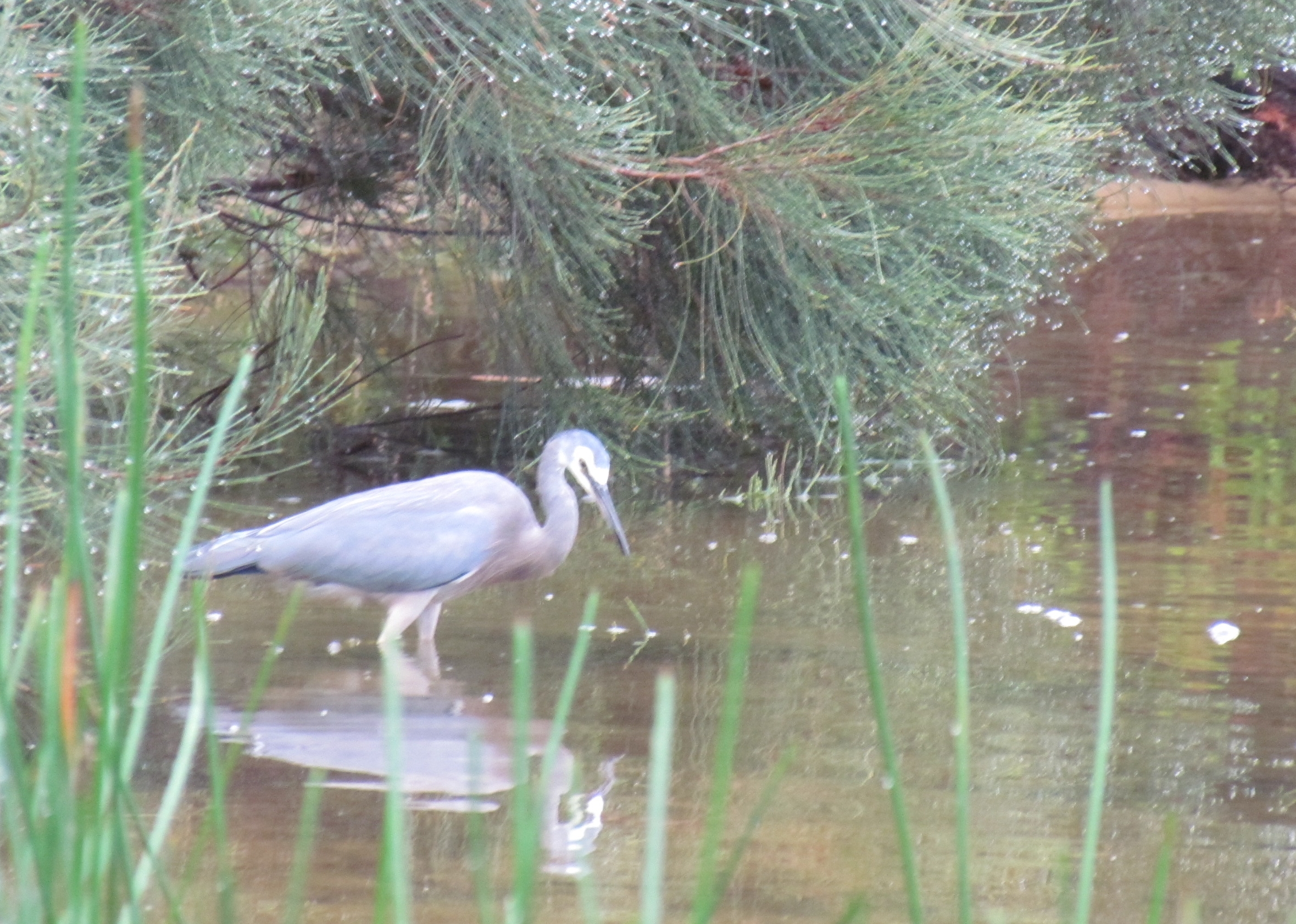
Common name: White-Faced Heron
Scientific name: Ardea novaehollandiae
Approximate length: 70 cm
Date spotted: 7 March 2015
Season: Late Summer
Location: Manly Dam, New South Wales, Australia
Latitude/longitude: 33°46’34.8″S 151°15’07.9″E
Pelican at Long Reef Headland, New South Wales
The closer you get to a pelican, the more beautiful it is. Those eyes are so huge and seem so wise. Then there’s that appealing fuzz of fine feathers on the back of the head and down the neck.

For more about these pelicans, see my post from March this year.
Common name: Australian Pelican
Scientific name: Pelecanus conspicillatus
Approximate length: 170 cm
Approximate wingspan: 2.5m
Date spotted: 1 January 2015
Season: Summer
Location: Long Reef Headland, New South Wales, Australia
Latitude/longitude: 33°44’15.2″S, 151°18’44.1″E


