Blog Archives
Crested Tern chilling out in Curl Curl
Amongst the wheeling Silver Gulls, joggers, and fishermen, a Crested Tern stood gazing over the rocks and sea.

I was walking along the cliff path when I passed the bird. Fifteen minutes later I was on my way back. The bird was still there. This picture shows the crest from which the bird’s name comes:
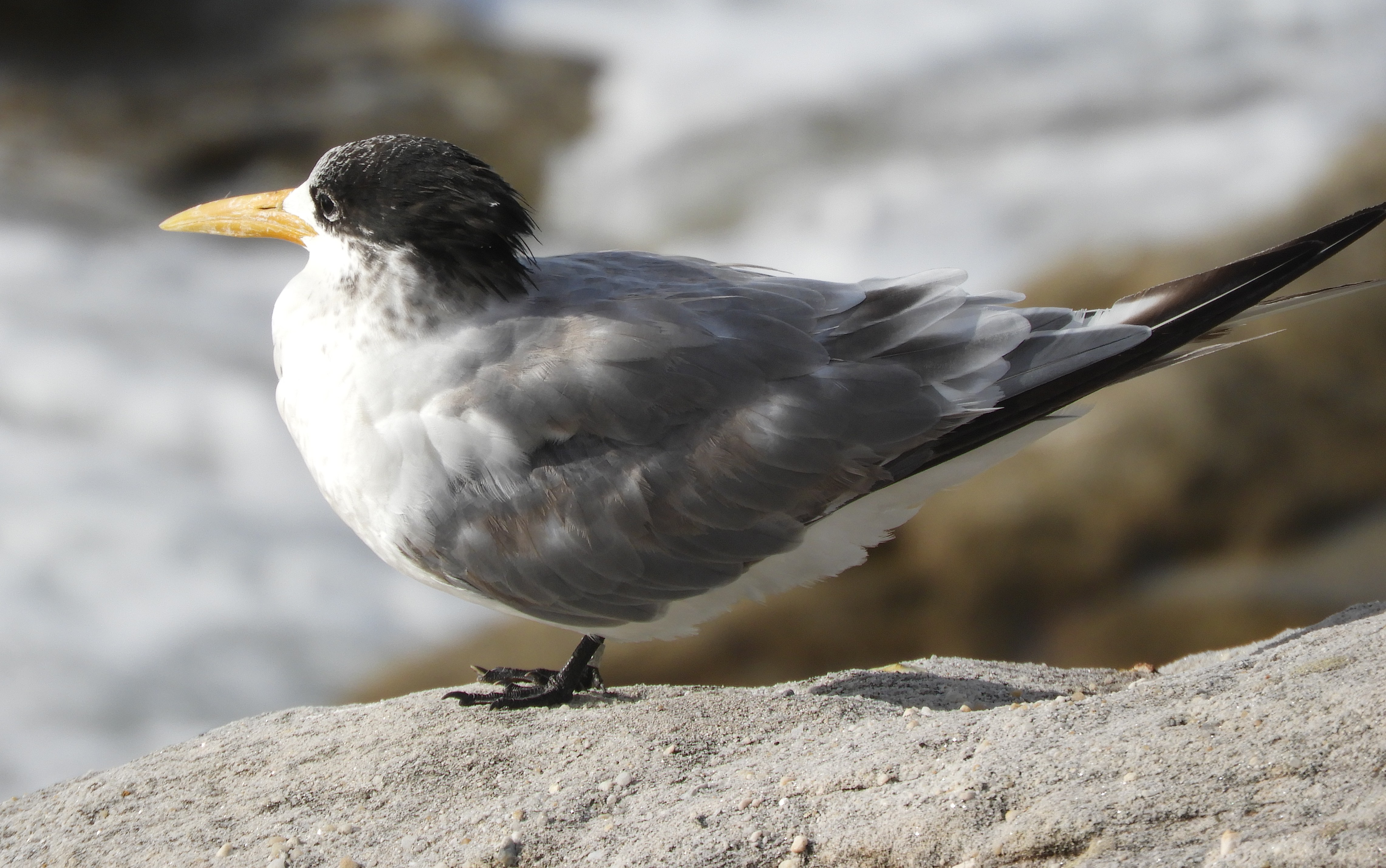
Crested Terns are a common sight around the shores of Australia. You may see them sitting on the sand with the gulls, or darting over the waves and diving to catch a fish. These are the seas and cliffs of Curl Curl where the bird and I were chilling out:

Common name: Crested Tern
Scientific name: Sterna bergii
Approximate length: 45 cm
Date spotted: 22 April 2019 (Autumn)
Location: Curl Curl, New South Wales, Australia: 33°46’36.9″S 151°17’36.8″E
Little Black Cormorant catching the sun
I went for a late afternoon walk near Spit Bridge today, and saw this Little Black Cormorant catching the last of the sun:
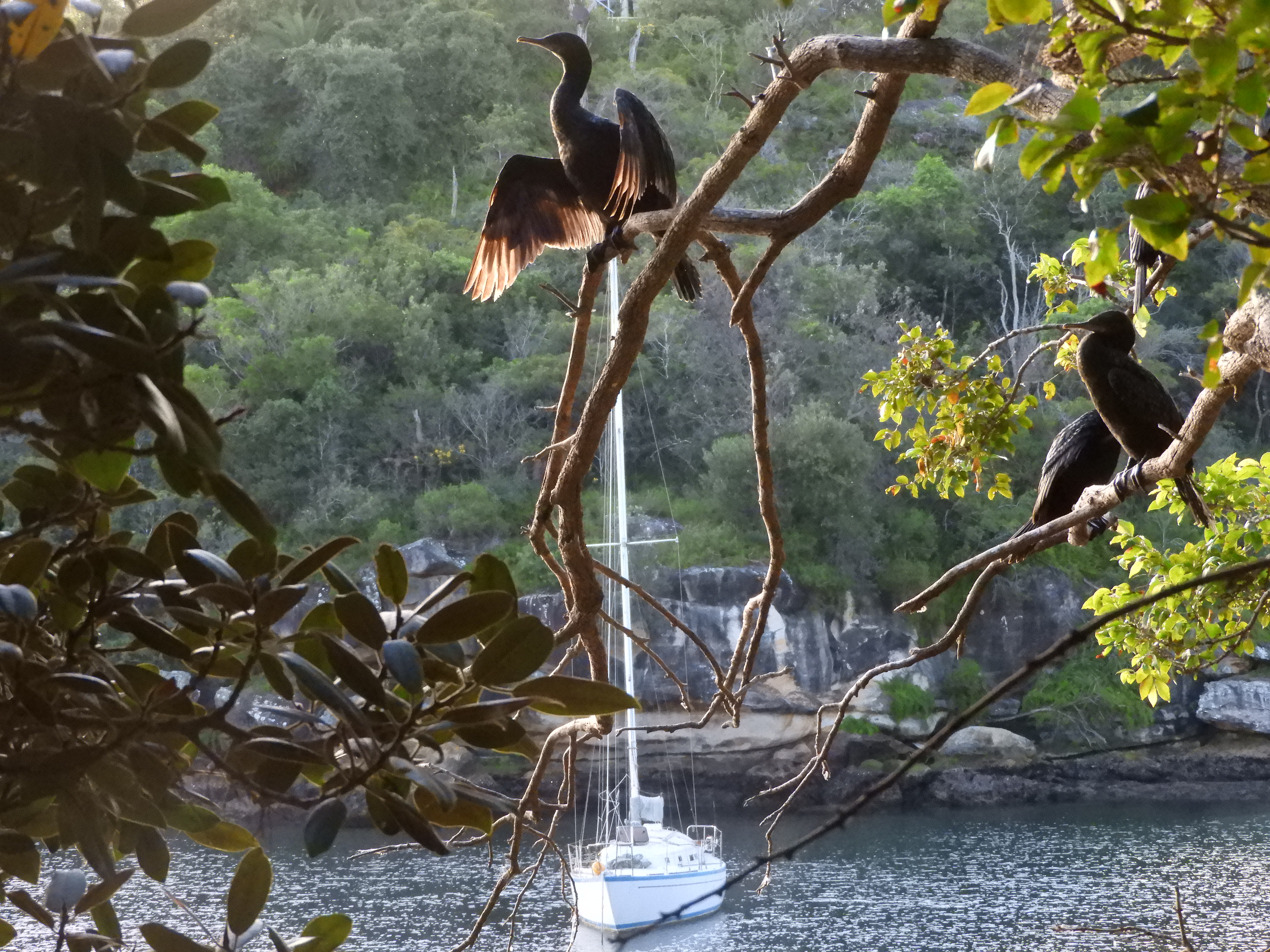
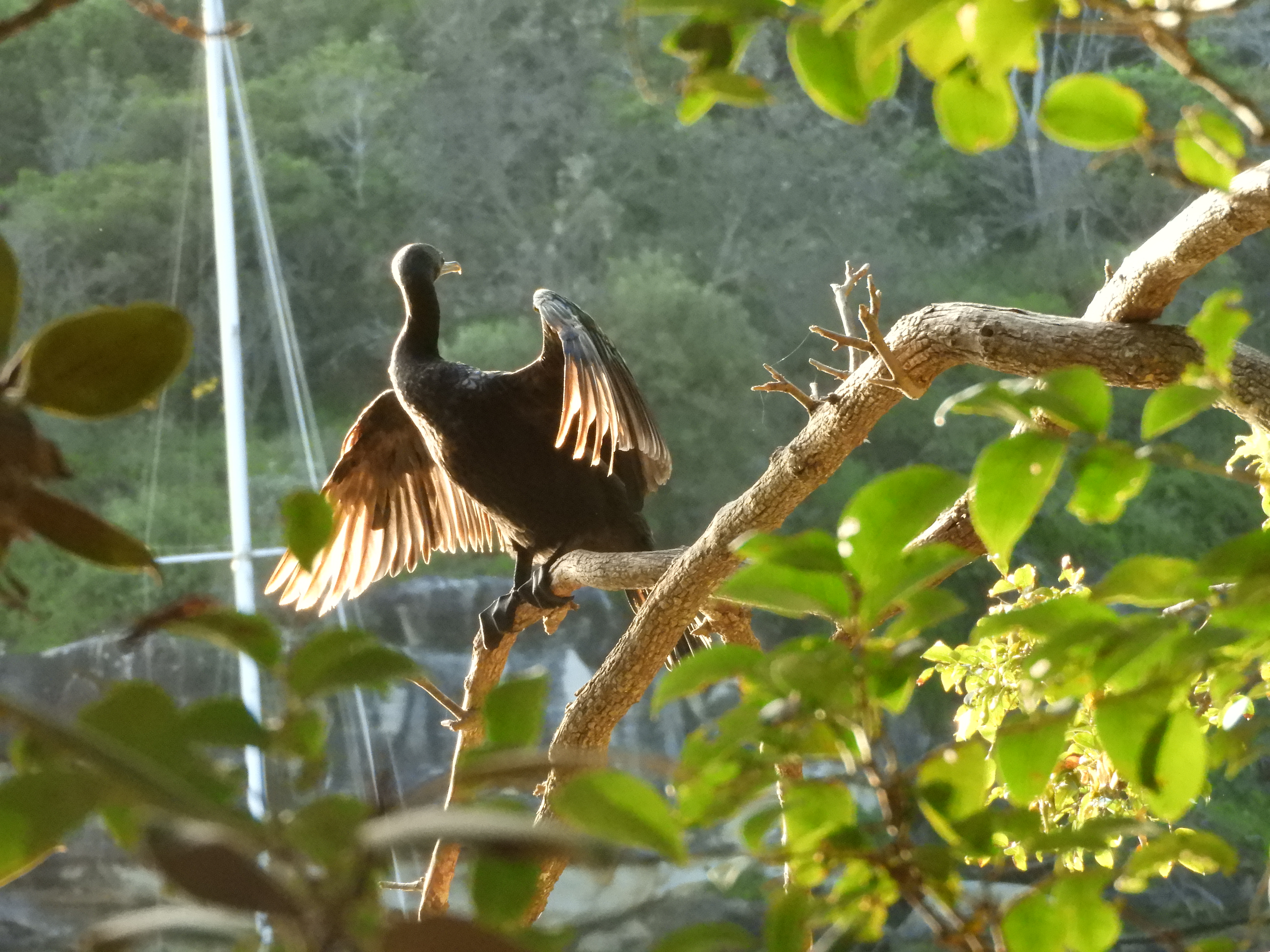
In the next photo you can see the bird’s webbed feet nicely. Cormorants are very fast and agile under water, where they catch their prey. Their feathers are not waterproof, which is why they spend so much time with their wings spread out to dry.
Common name: Little Black Cormorant (see other cormorants)
Scientific name: Phalacrocorax sulcirostris
Approximate length: 65 cm
Date spotted: 20 April 2019 (Autumn)
Location: Near Middle Harbour, Clontarf, New South Wales, Australia: 33°48’07.8″S 151°15’00.2″E
Cormorants at Long Reef Headland, Dee Why
This morning I took a walk along Dee Why Headland and followed the path down onto Long Reef. Far in the distance, perched on the rocks at the sea’s edge, was an assortment of cormorants.
Pretty cool: when I dropped the pin on Google Maps to mark the spot, the label came up as “Near South Pacific Ocean”!
Great Cormorants
First there were these four birds, which I think are Great Cormorants. The air was full of spray and the early morning sun was low in the sky, so it’s hard to be sure. One is holding its wings up in typical cormorant style. The birds seem to be just about entirely black, with yellow or white around the beak. At the end of the video, I zoom back out so that you can see just how far away the birds were. On cue, a yacht hoves into view too.
Common name: Great Cormorant
Scientific name: Phalacrocorax carbo
Approximate length: 85 cm; wing span 1.5 m
Date spotted: 29 December 2018 (Summer)
Location: Long Reef Headland, Dee Why, New South Wales, Australia: 33°44’30.6″S 151°19’04.2″E
Little Pied Cormorant
Next I saw this Little Pied Cormorant, looking a bit ruffled:
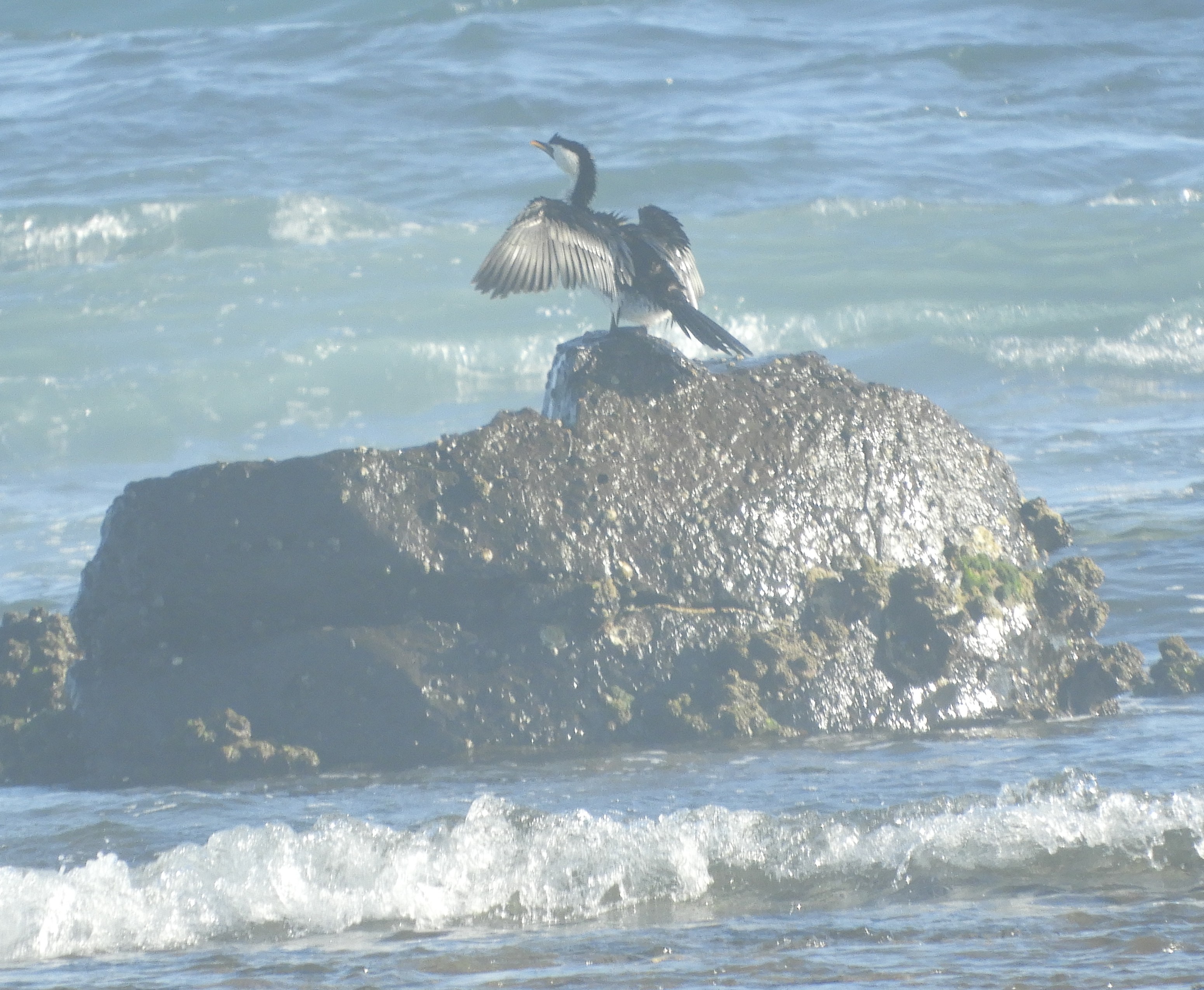
Here’s a video of the Little Pied Cormorant enjoying the waves and the sticky breeze:
Common name: Little Pied Cormorant
Scientific name: Phalacrocorax melanoleucos
Approximate length: 60 cm
Date spotted: 29 December 2018 (Summer)
Location: Long Reef Headland, Dee Why, New South Wales, Australia: 33°44’30.6″S 151°19’04.2″E
Misty coot
Mist over Manly Dam. You can’t really see the coot. But then, you don’t really need to see it. It’s just there, as coots are.
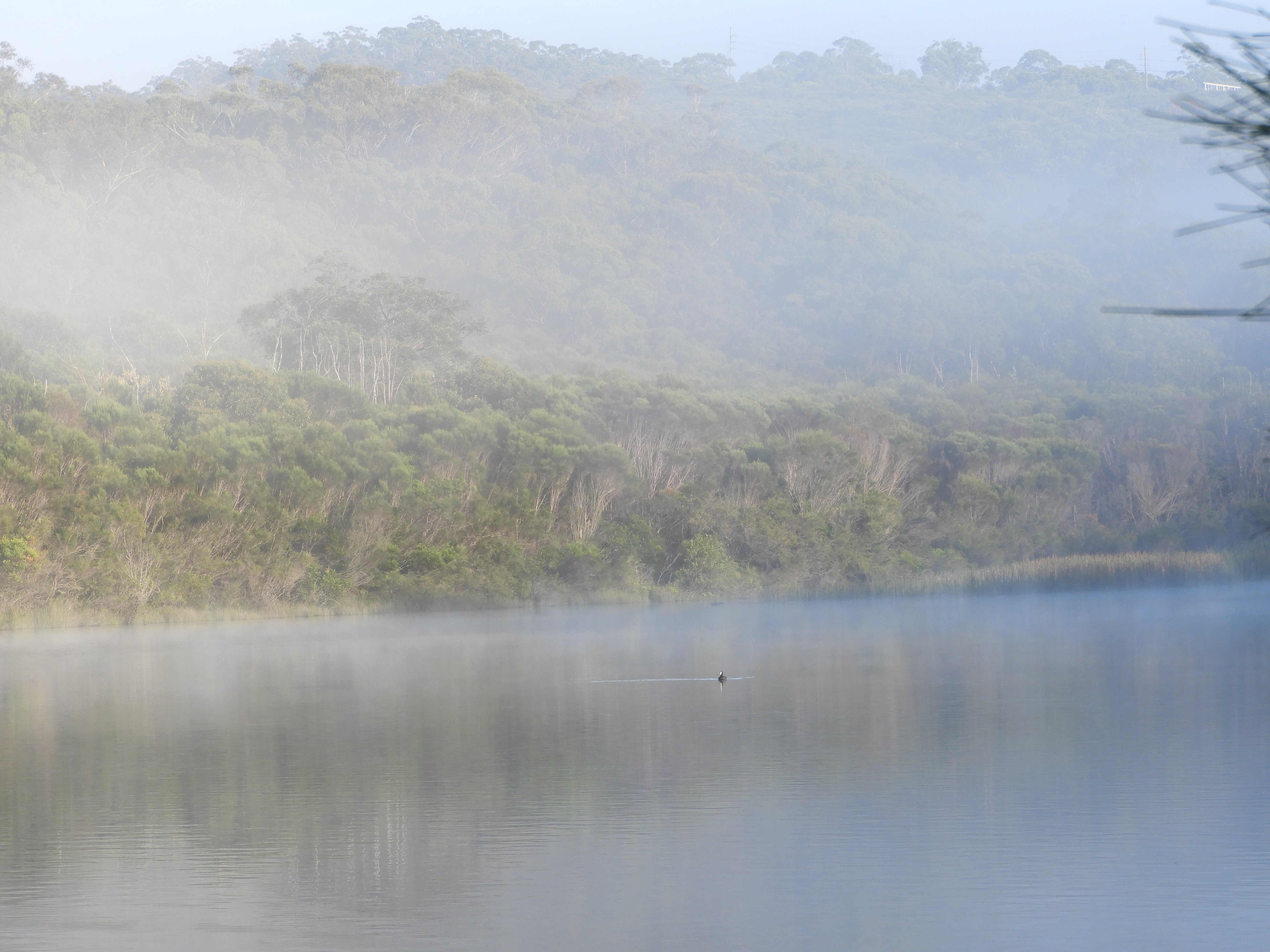
Common name: Eurasian Coot
Scientific name: Fulica atra
Approximate length: 35 cm
Date spotted: 26 December 2018 (Summer)
Location: Manly Dam Reserve, New South Wales, Australia: 33°46’27.7″S 151°15’05.9″E
Black Swans are back
It’s been a while since I’ve seen Black Swans on Manly Dam. Now they’re back, and four of them at that. Black Swans are native to New South Wales, Australia.
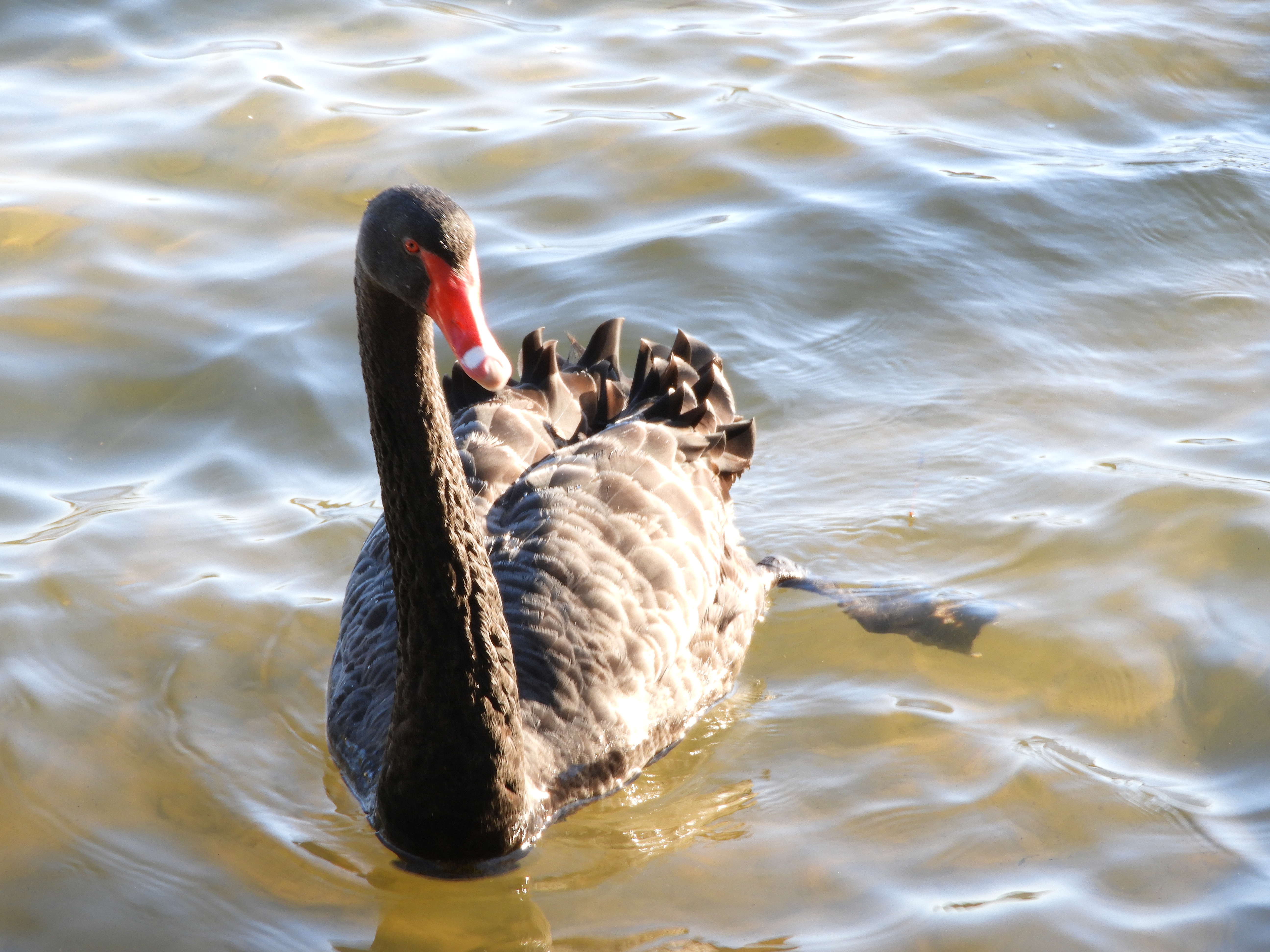
The call of a Black Swan is a soft hoot, a little like an apologetic cuckoo clock. You can hear it about 6 seconds into this video:
In the next video, the swans are caught in the converging melee of waterbirds when someone throws some scraps into the water. Again, the swans hoot about 6 seconds into the video:
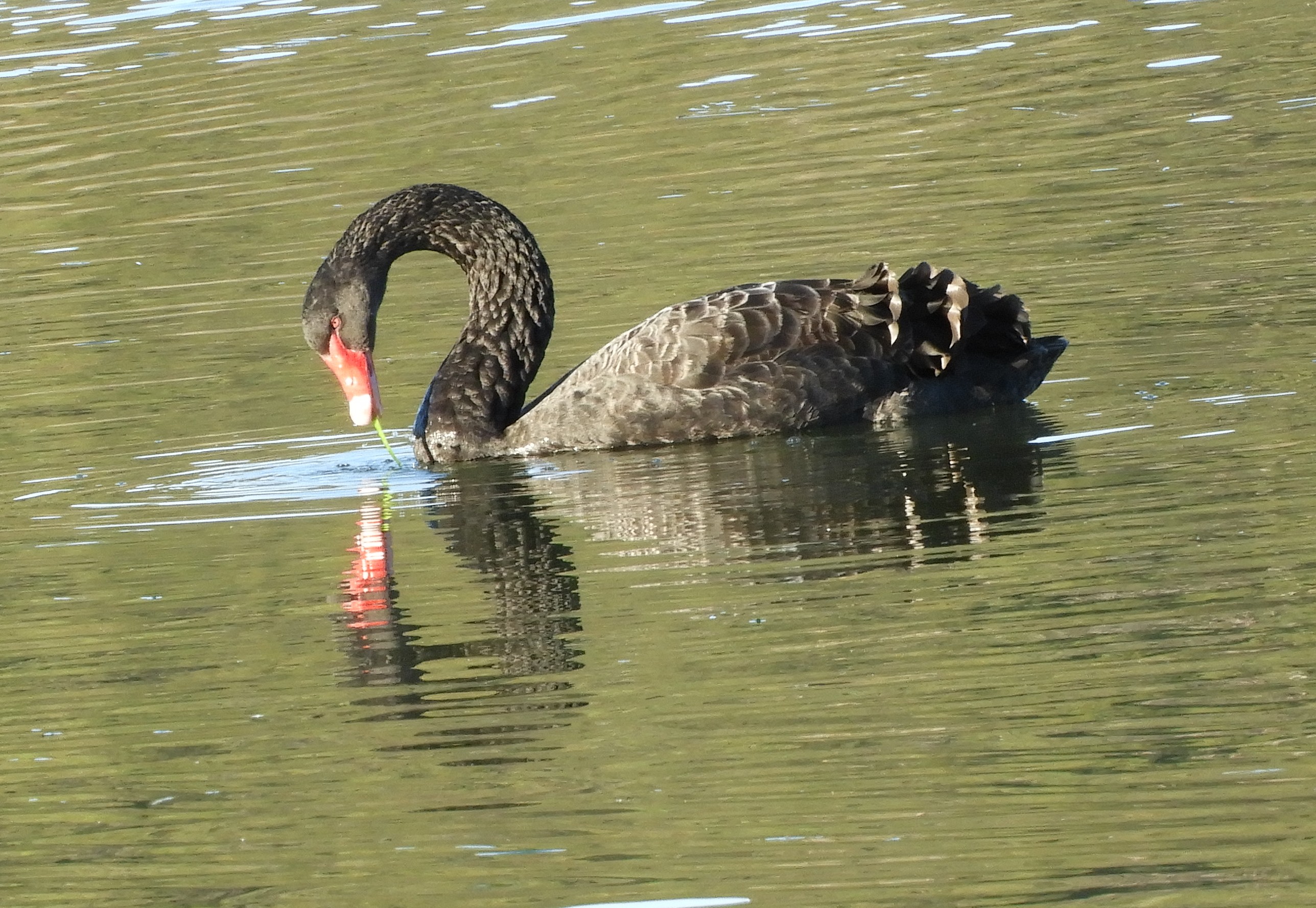
This swan slides a bit of green weed through its beak, presumably to scrape off slime and small creatures as food:
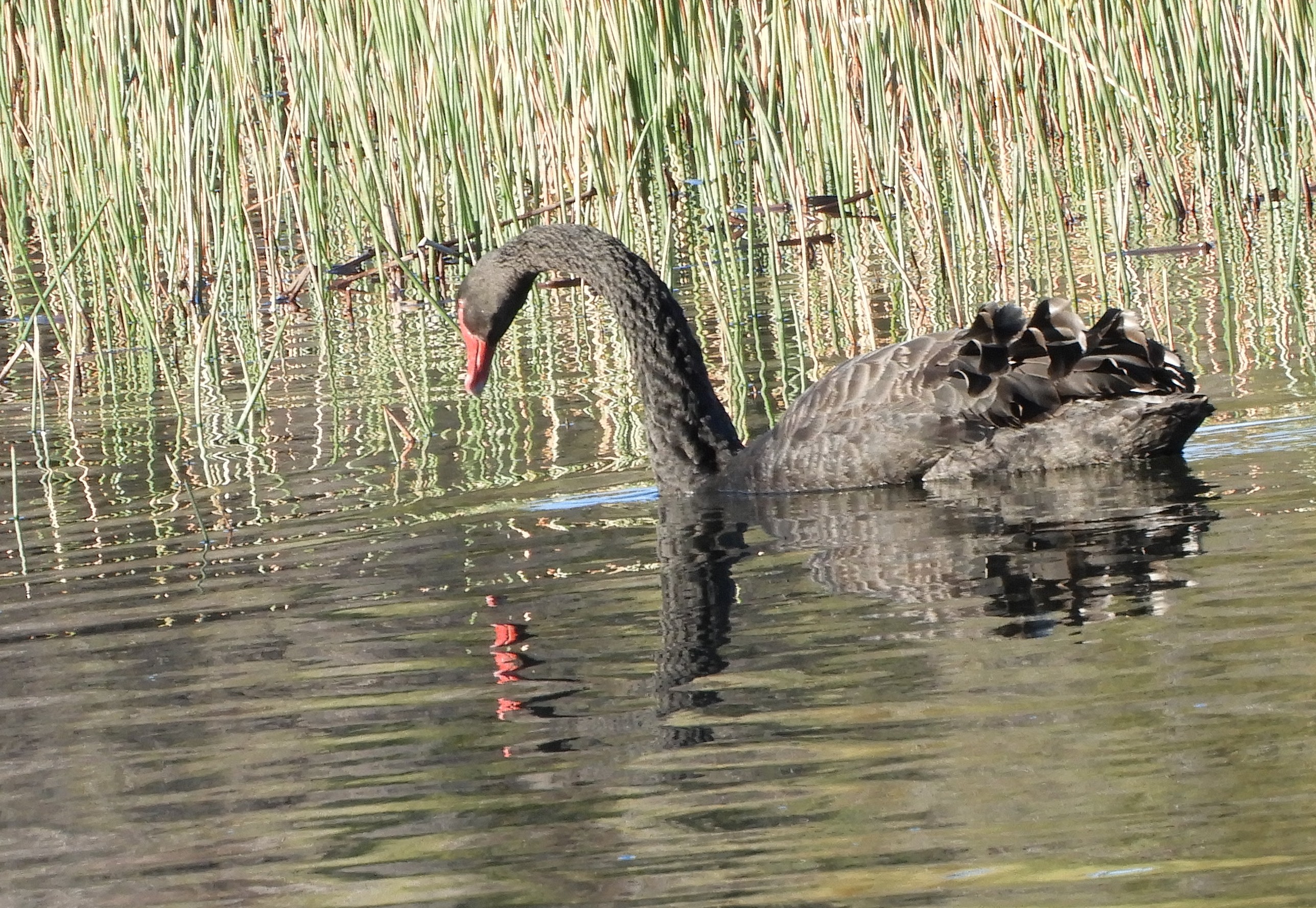
Reflecting on reeds:
Common name: Black Swan
Scientific name: Cygnus atratus
Approximate length: 120 cm
Date spotted: 7 July 2018 (Winter)
Location: Manly Dam National Park, New South Wales, Australia: 33°46’58.3″S 151°15’18.7″E
Australian Wood Duck
Australian Wood Ducks are a fairly common sight. They stand out, with their neat round head and short beaks. Up close, I noticed the soft frilly feathers on the sides of this bird’s body under the wings. This one is a male, as its head is dark brown and lacks the females’ white markings around the eyes.

Common name: Australian Wood Duck
Scientific name: Chenonetta jubata
Approximate length: 60cm
Date spotted: 3 June 2017 (Winter)
Location: Manly Dam Reserve, New South Wales, Australia: 33°46’58.1″S 151°15’14.7″E
A coot and a metaphor
At first there’s nothing but the universe. The water and the sky. Then suddenly, there you are, in the middle of it all.
Common name: Eurasian Coot
Scientific name: Fulica atra
Approximate length: 35 cm
Date spotted: 23 April 2017 (Autumn)
Location: Manly Dam Reserve, New South Wales, Australia: 33°46’27.7″S 151°15’05.9″E
White-bellied Sea-Eagle at Manly Dam near Sydney
Yesterday I spotted a White-bellied Sea-Eagle flying along the shore of Manly Dam. It flew up and down the shore a few times, and across the water, then landed at the edge of the water in a baylet, with its legs in the water.
I was on the opposite side of the dam, so I couldn’t get a close look at the bird. I did take some photos and videos, but they’re fuzzy and unsatisfactory, although they’re good enough to satisfy me about the identification of the bird. So I decided to record the sighting here, and hope I get to see this beautiful bird again soon.
Common name: White-bellied Sea-Eagle
Scientific name: Haliaeetus leucogaster
Approximate length: 85 cm. Wing span: 2.2 m
Date spotted: 22 April 2017 (Autumn)
Location: Manly Dam Reserve, New South Wales, Australia: 33°46’35.2″S 151°15’08.0″E
Darter drying wings then taking off
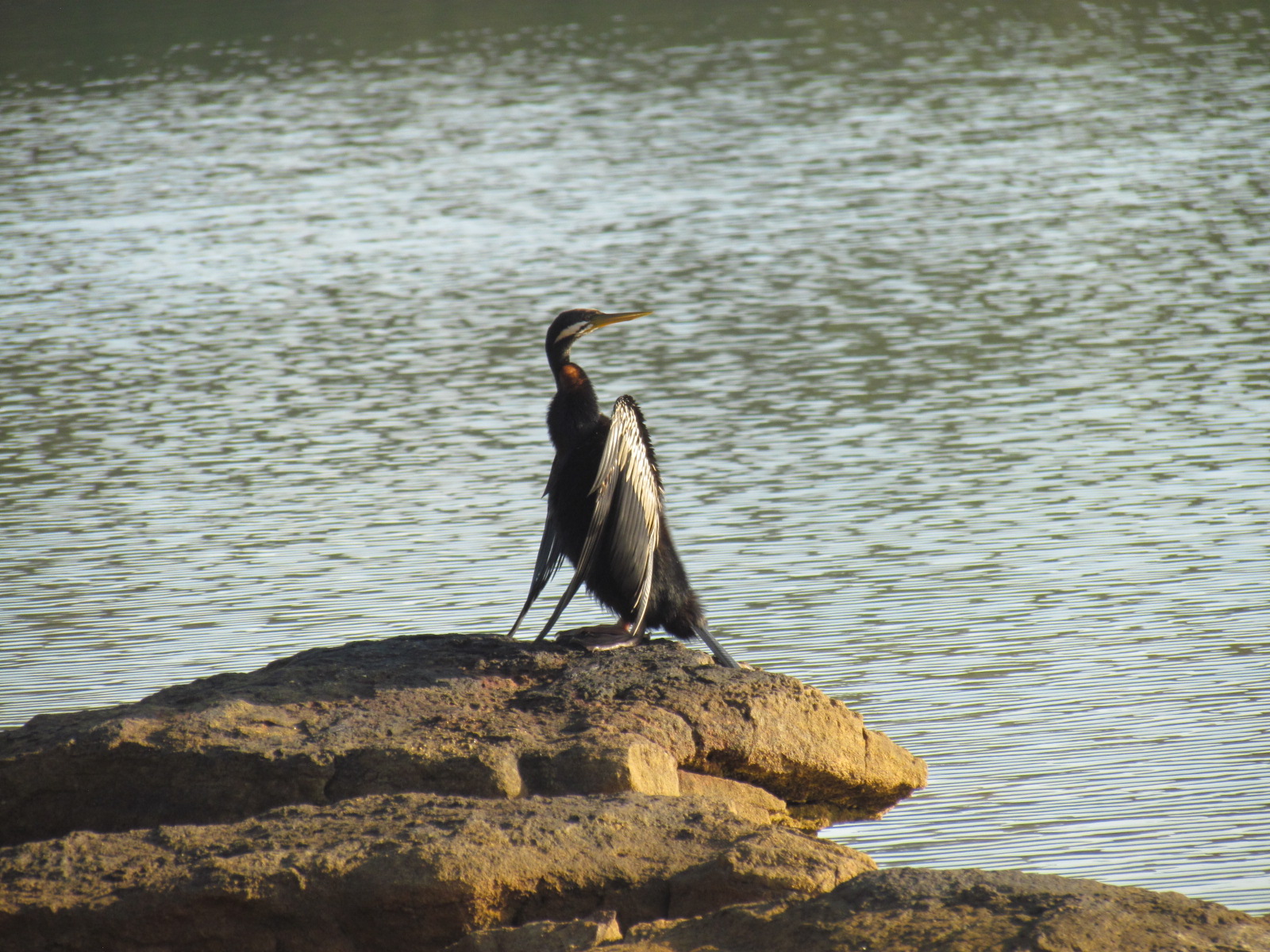
At first sight I thought this bird was a cormorant, but it’s actually a darter, also known as a snake bird because of its long, snake-like neck. Darters are related to cormorants, and also to boobies and gannets. They swim fast under water, hunting and impaling fish with their formidable long, thin beak.
Like cormorants, they sit on shore with their wings spread to dry. After I’d been watching this one for a few minutes, it decided to take off and fly over the water. It’s interesting to see how low it flies, with the wing tips actually tapping the water as it goes.
This pose reminded me of the ballet, the Dying Swan:

Here you can see the characteristic chestnut colouring at the base of the darter’s neck:
Common name: Darter
Scientific name: Anhinga melanogaster
Approximate length: 90 cm; wing span: 1.2 m
Date spotted: 12 February 2017 (Summer)
Location: Manly Dam Reserve, New South Wales, Australia: 33°46’49.6″S 151°15’05.7″E
Reflection symmetry and a coot
Manly Dam was quiet and calm when I strolled along its shores early this morning. I was struck by the patterns made by these reeds and their reflections in the water.

It’s a little mind boggling, isn’t it? Where does the real reed start and end? The finest of abstract art. Here’s the same set of reeds but with more around them:
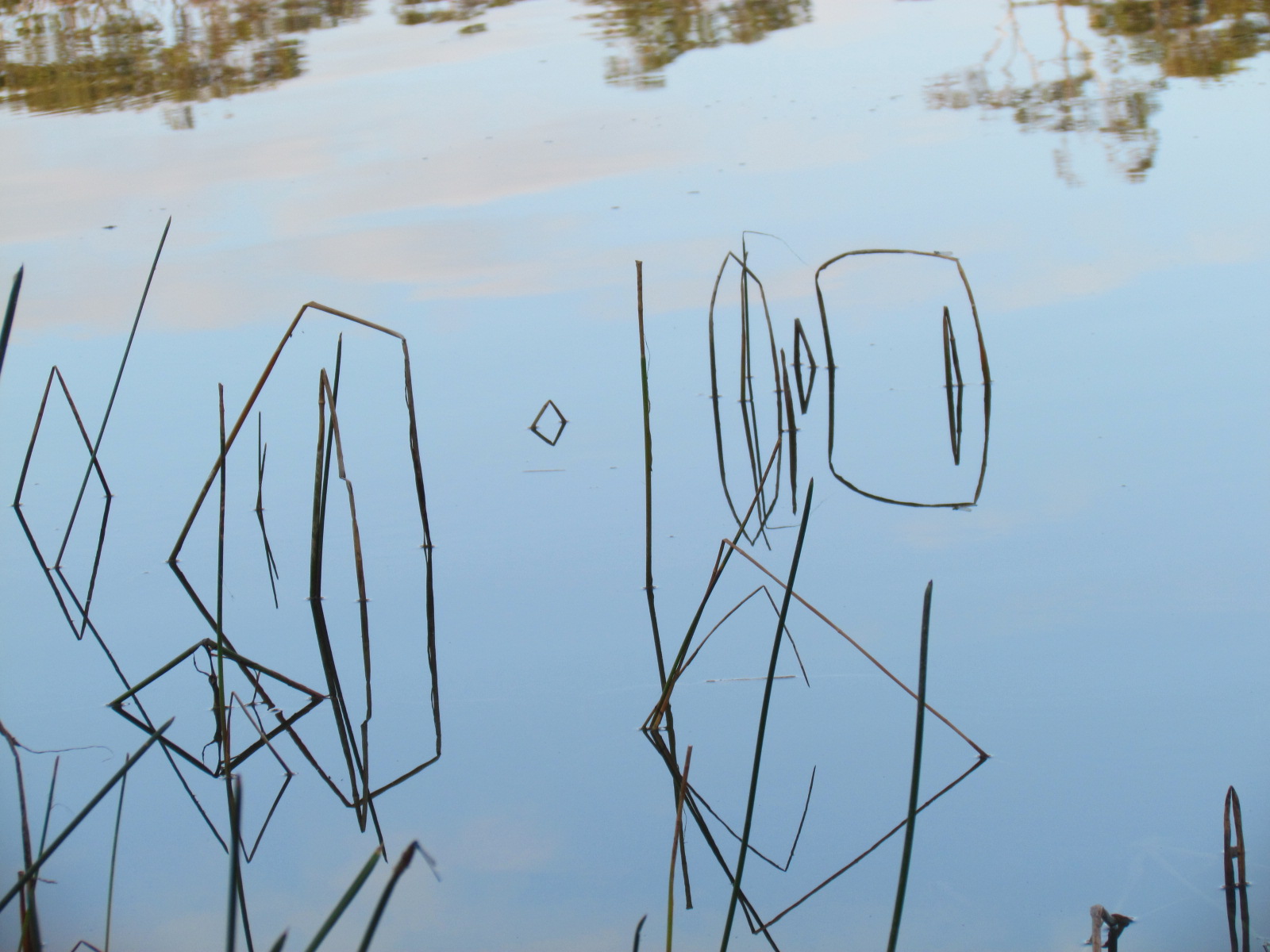
A different configuration:
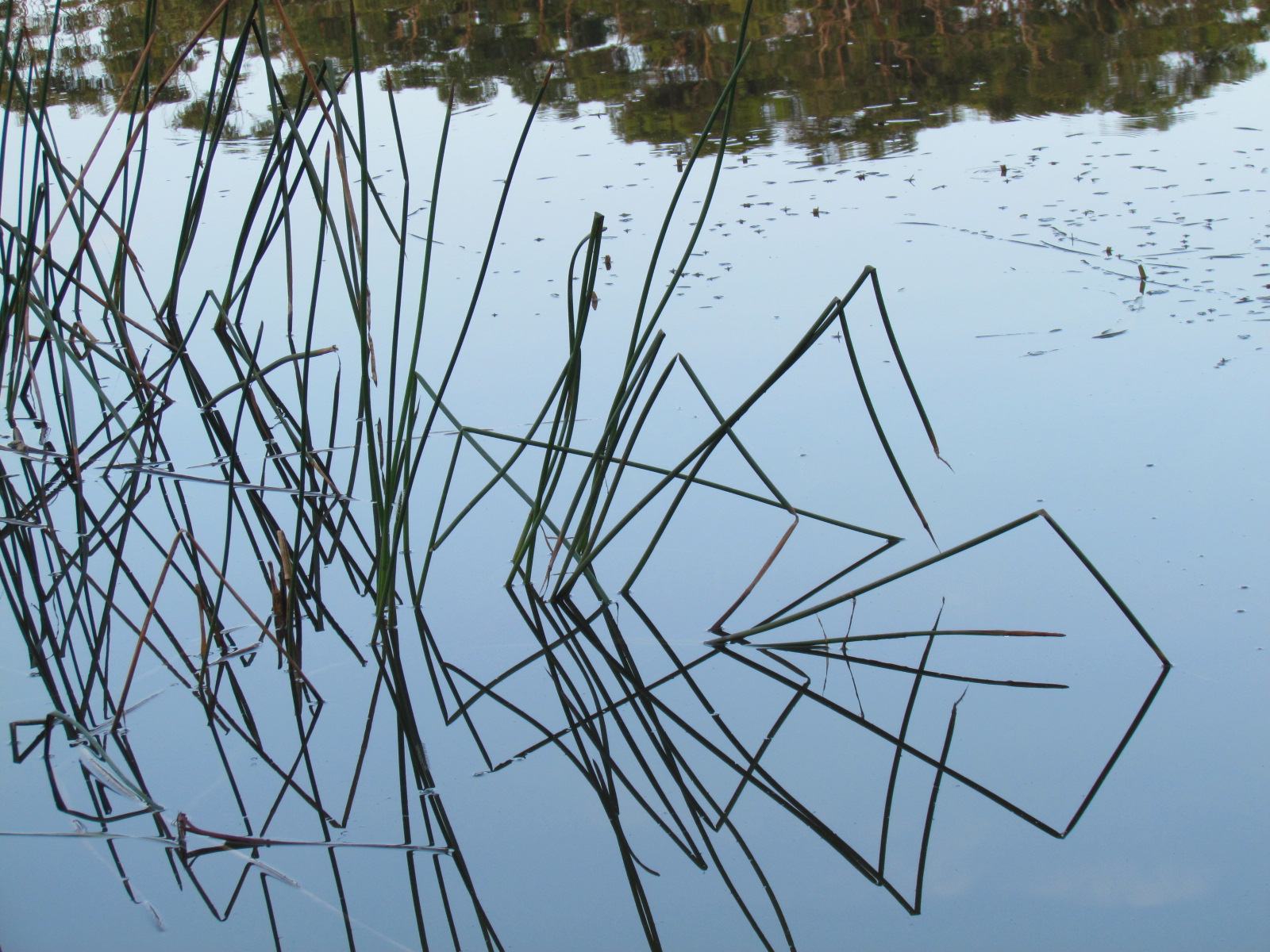
Another shape to bend your mind:

Bubbles had reflections too:

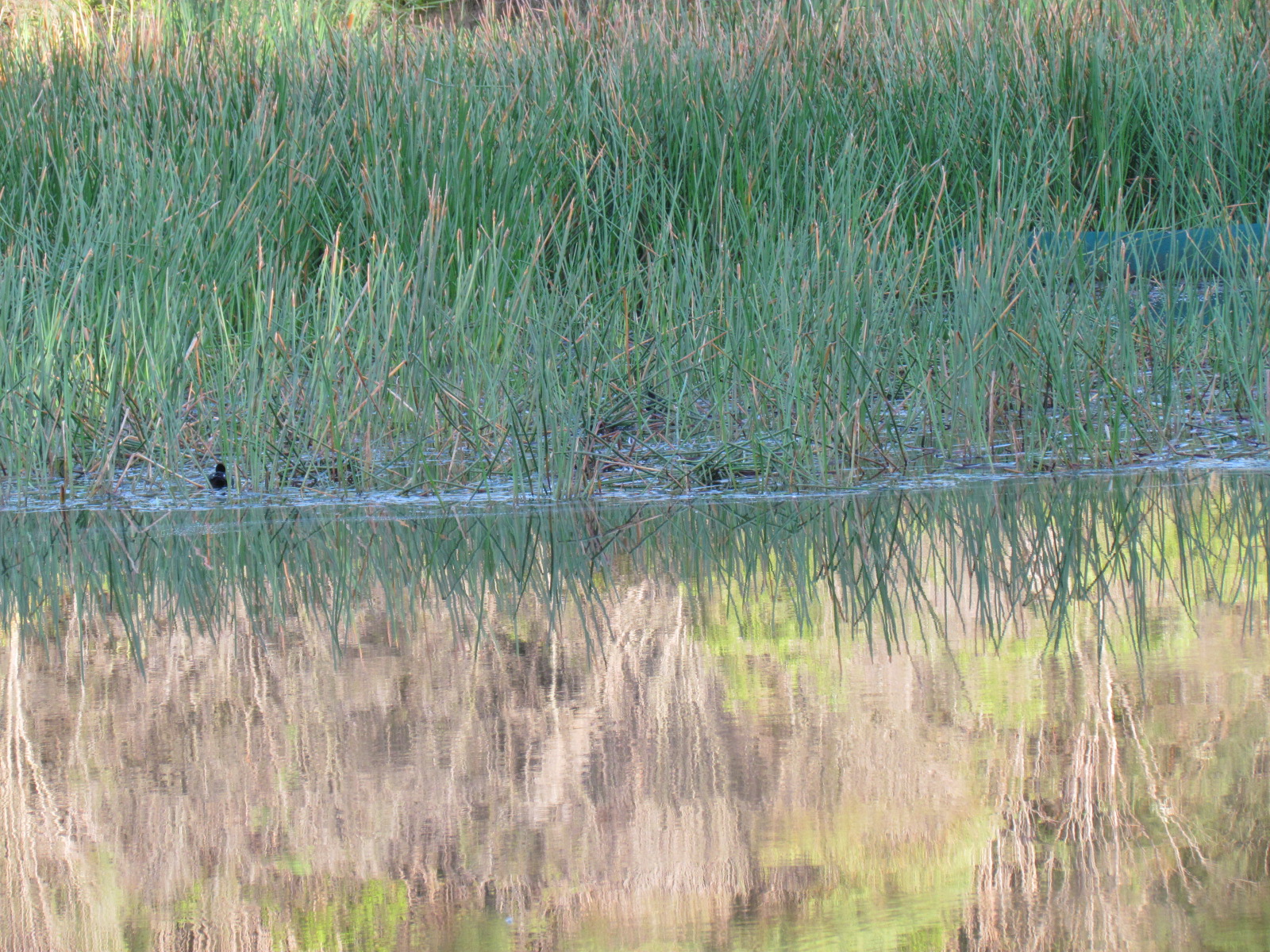
Since this is a blog about birds, I should probably include one. 😉 This Eurasian Coot was enjoying the morning quiet:

Here’s the bird again, tucked away in the centre left of this mass of reflections:
Common name: Eurasian Coot
Scientific name: Fulica atra
Approximate length: 35 cm
Date spotted: 22 January 2017
Season: Summer
Location: Manly Dam Nature Reserve, New South Wales, Australia: 33°46’27.9″S 151°15’05.5″E


