Blog Archives
Wood duck quacking high in a gum tree
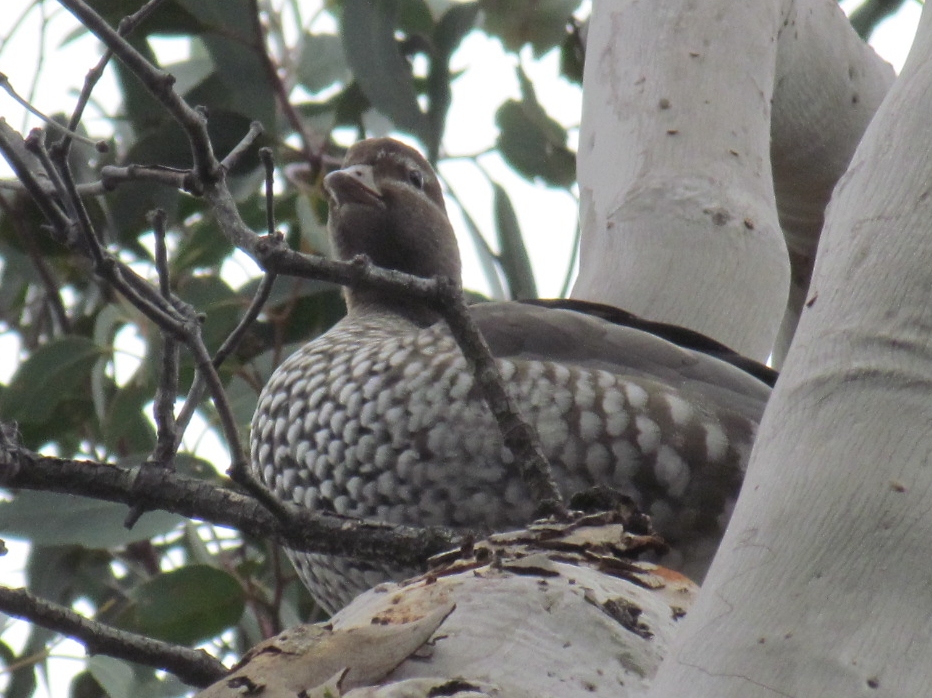
For some reason I’ve never expected to see a duck high up a gum tree. I know they fly, but somehow I think of them as spending their lives on the ground or on the water. Walking through the bush, I’ve occasionally heard a muttering, rolling sound coming from the tree tops. Imagine my surprise when I tracked it down to this Australian Wood Duck.
Here’s a still photo of the duck:
And in profile:
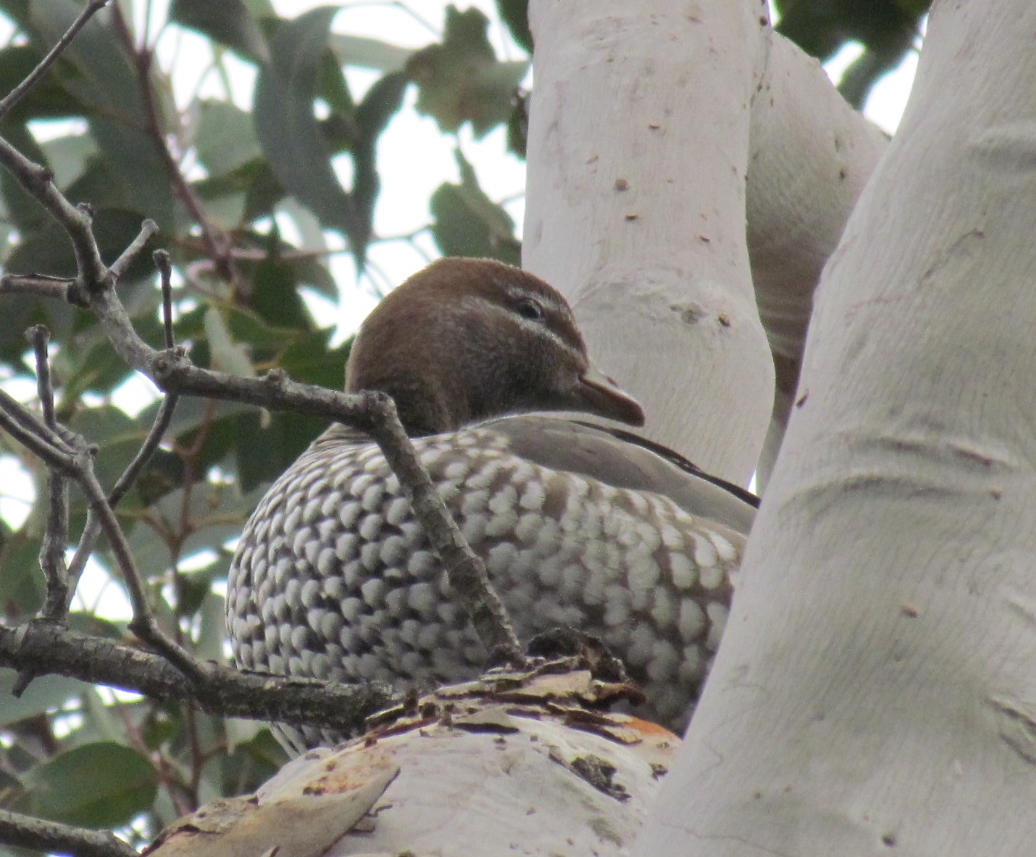
Common name: Australian Wood Duck
Scientific name: Chenonetta jubata
Approximate length: 50 cm
Date spotted: 31 July 2016
Season: Winter
Location: Manly Dam Reserve, New South Wales, Australia
Latitude/longitude: 33°46’41.1″S 151°14’54.9″E
Psyduck in Sydney
This blog is usually about birds in the real world, but I couldn’t resist posting this encounter with Psyduck from Pokémon Go. The game is a cute demonstration of irtual reality and the real world merging in augmented reality.
According to the description in Pokémon Go, Psyduck has a mysterious power to generate brain waves that only sleeping creatures should be able to emit. Useful, I guess?

Common name: Psyduck
Scientific name: Duck Pokémon
Height: 80 cm
Date spotted: 23 July 2016
Season: Winter
Location: Manly Dam Reserve, New South Wales, Australia
Latitude/longitude: 33°46’37.2″S 151°14’49.3″E
Purple Swamphens playing coy
The first sight of the Purple Swamphens in this video is their unique tracks in the sand. Then we hear a peeping and a squawking and a bit of a kerfuffle behind the reeds. A bird emerges for a quick appearance, before going back to the more interesting companionship of its fellows. A few minutes later, I came across another pair of birds out in the open, and filmed them too. Notice their big feet as they walk across the lily pads.
Common name: Purple Swamphen
Scientific name: Porphyrio porphyrio
Approximate length: 50 cm
Date spotted: 6 March 2016
Season: Late summer
Location: Manly Dam Reserve, New South Wales, Australia
Latitude/longitude: 33°46’26.6″S 151°14’44.3″E
Swimming across the sky
Reflections at Manly Dam.
In the background you’ll hear Australian Ravens cawing, Wattlebirds croaking, and Whipbirds whistling.
Pacific Black Duck
Common name: Pacific Black Duck
Scientific name: Anas superciliosa
Approximate length: 45-60 cm
Date spotted: 25 December 2015
Season: Summer
Location: Manly Dam, New South Wales, Australia
Latitude/longitude: 33°46’55.0″S 151°15’19.7″E
Eurasian Coot
My bird book calls this coot dumpy. An interesting fact is that the coot has flattened toes rather than webbed feet for efficient swimming.
Common name: Eurasian Coot
Scientific name: Fulica atra
Approximate length: 35 cm
Date spotted: 25 December 2015
Season: Summer
Location: Manly Dam, New South Wales, Australia
Latitude/longitude: 33°46’55.0″S 151°15’19.7″E
Heron catching fish at Manly Dam
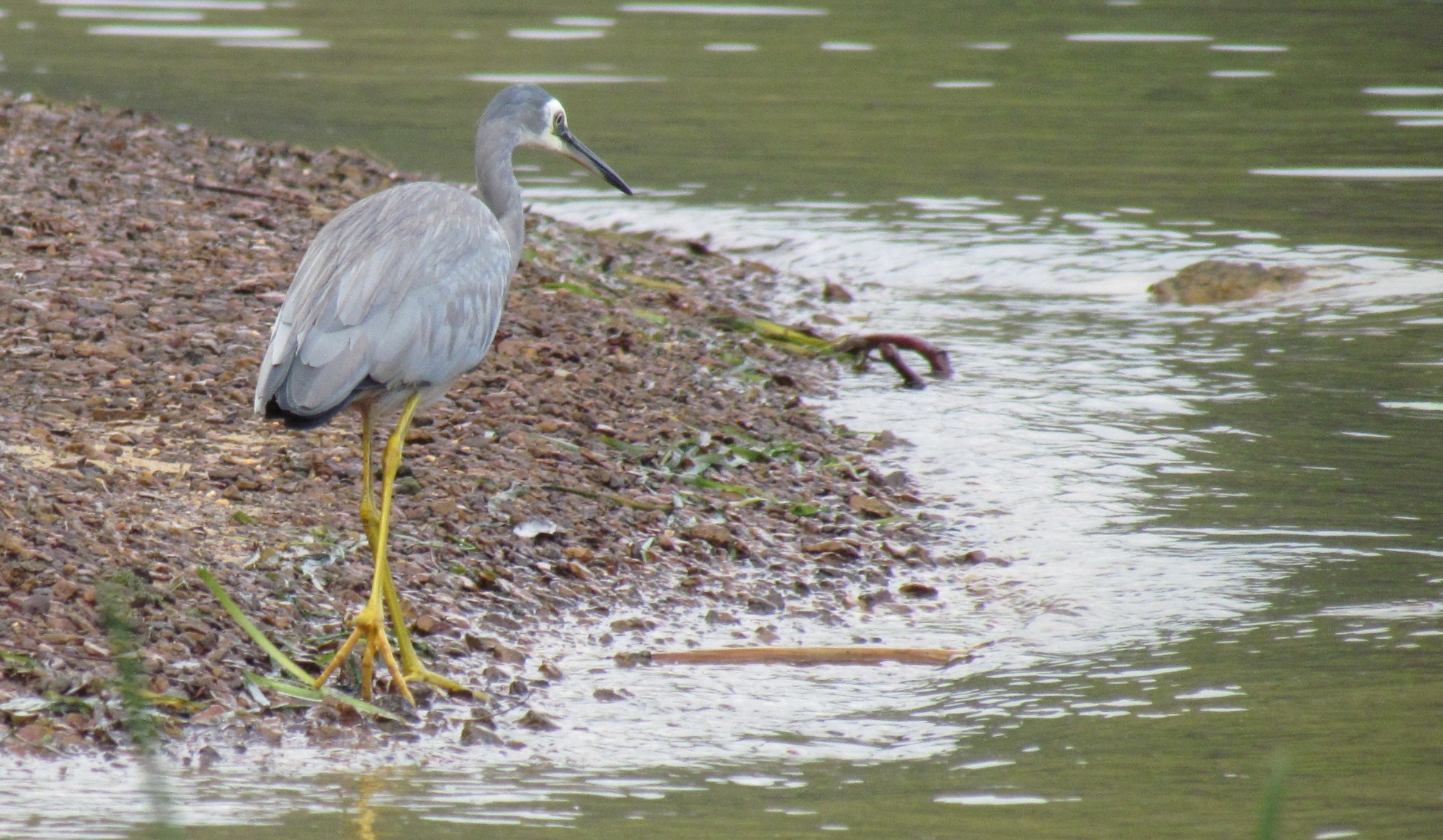
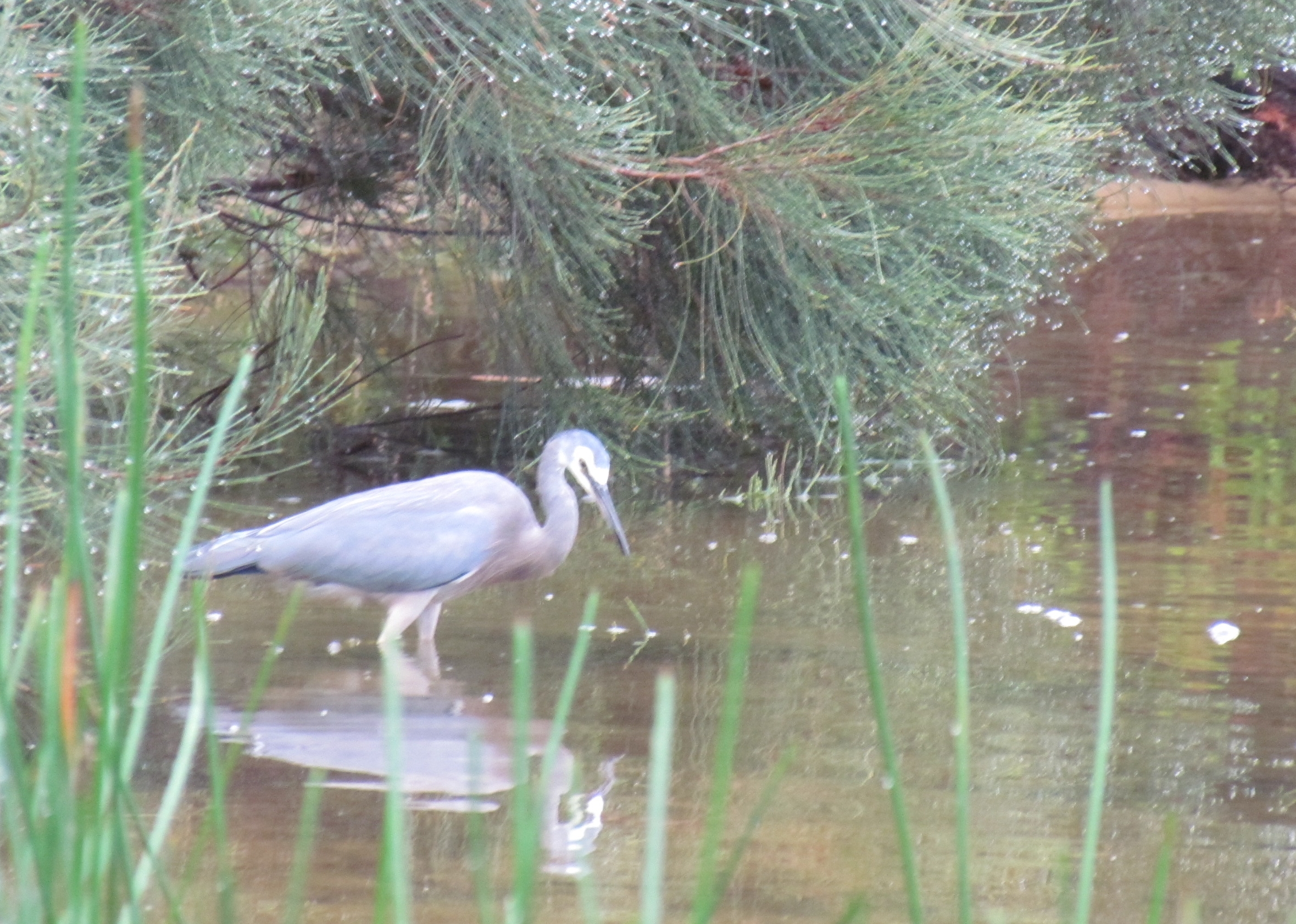
The smooth feathers of this White-faced Heron stand out nicely against the stripes made by the wind-ruffled water on Manly Dam. The heron strides out into the water, spots a fish, then spins around and jabs at the water in an amusing dance.
Here’s a still photo showing the bird’s yellow legs and big feet:
Here’s another photo which I like because of its impressionist mood and raindrop-scattered bushes:
Common name: White-Faced Heron
Scientific name: Ardea novaehollandiae
Approximate length: 70 cm
Date spotted: 7 March 2015
Season: Late Summer
Location: Manly Dam, New South Wales, Australia
Latitude/longitude: 33°46’34.8″S 151°15’07.9″E
Pelican at Long Reef Headland, New South Wales
The closer you get to a pelican, the more beautiful it is. Those eyes are so huge and seem so wise. Then there’s that appealing fuzz of fine feathers on the back of the head and down the neck.

For more about these pelicans, see my post from March this year.
Common name: Australian Pelican
Scientific name: Pelecanus conspicillatus
Approximate length: 170 cm
Approximate wingspan: 2.5m
Date spotted: 1 January 2015
Season: Summer
Location: Long Reef Headland, New South Wales, Australia
Latitude/longitude: 33°44’15.2″S, 151°18’44.1″E
Black Swans calling
Black swans are native to New South Wales, Australia. This morning I saw four of them swimming amongst the other water birds.

Two of them were calling to each other and raising their necks up and down in a stately dance. They make a slightly funny, bugling call, a bit like a child’s party tooter, as you can hear in this video:
Common name: Black Swan
Scientific name: Cygnus atratus
Approximate length: 120 cm
Date spotted: 27 December 2014
Season: Summer
Location: Manly Dam Reserve, New South Wales, Australia
Latitude/longitude: 33°46’58.4″S 151°15’18.6″E
White-Faced Heron at Long Reef Headland, NSW
A White-Faced Heron tiptoes across the bizarre landscape of Long Reef Headland on the New South Wales coast of Australia. The bird shakes the seaweed with its toes, dislodging worms and small fish which it then eats.
Here’s a still photo:
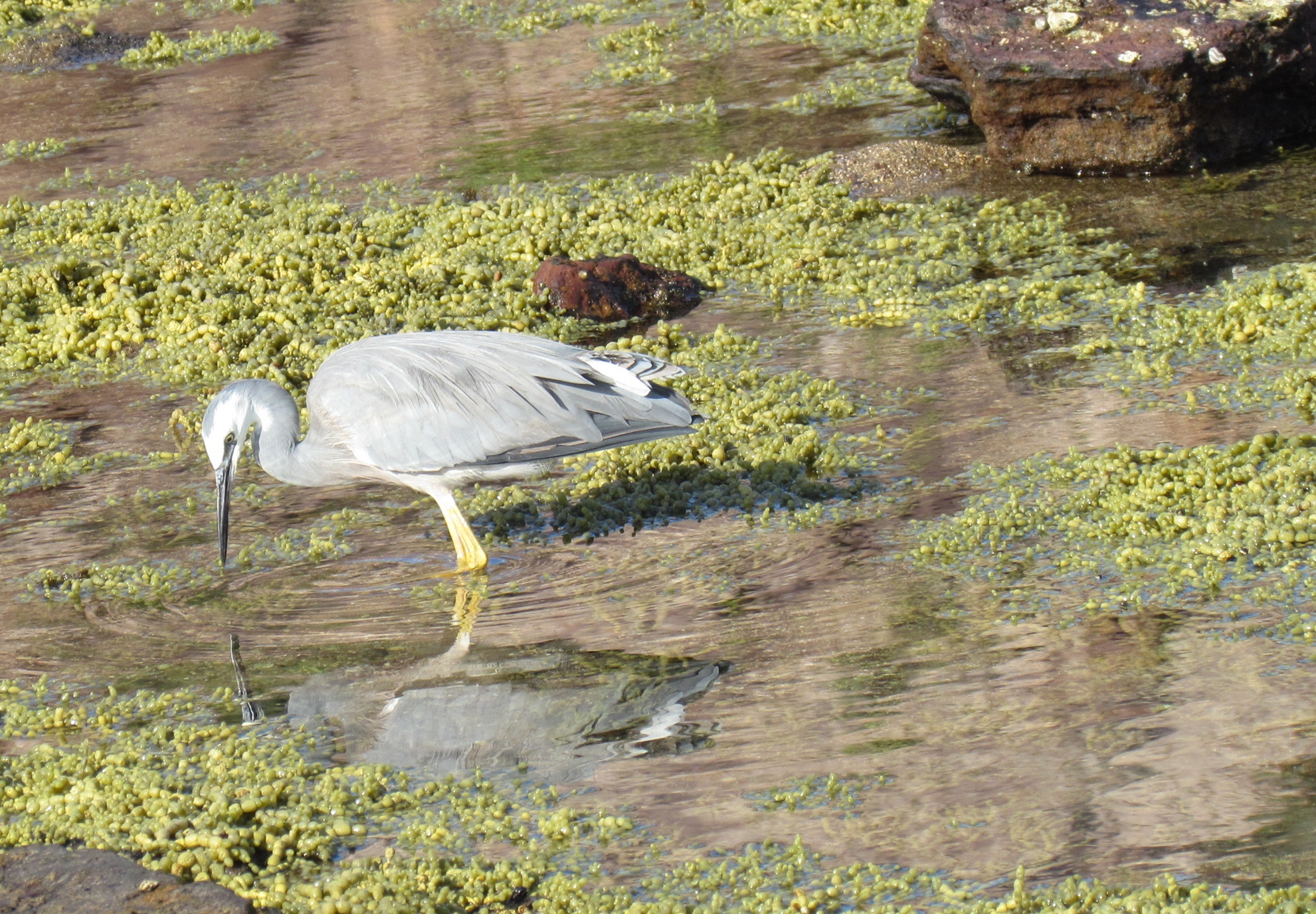
Common name: White-Faced Heron
Scientific name: Ardea novaehollandiae
Approximate length: 70 cm
Date spotted: 23 March 2014
Season: Late Summer
Location: Long Reef Headland, New South Wales, Australia
Latitude/longitude: 33°44’15.2″S, 151°18’44.1″E
Swamphens and Moorhens at Manly Dam
Purple Swamphens and Dusky Moorhens look similar, but are quite easy to tell apart once you’ve seen them together. Purple Swamphens are altogether showier: bigger, with brighter colours, and a more confident way of tackling the world. Dusky moorhens are smaller, and move in short dashes, accompanied by a lot of jerking of the head and tail. They almost seem to apologise for their presence. The Purple Swamphen’s beak is entirely red, whereas the Dusky Moorhen has a yellow tip to its beak.
I spotted both birds on the same patch of water at Manly Dam. First, a Purple Swamphen:
Here’s a close-up of those amazing feet, shot when the bird obligingly came up on shore close by me:
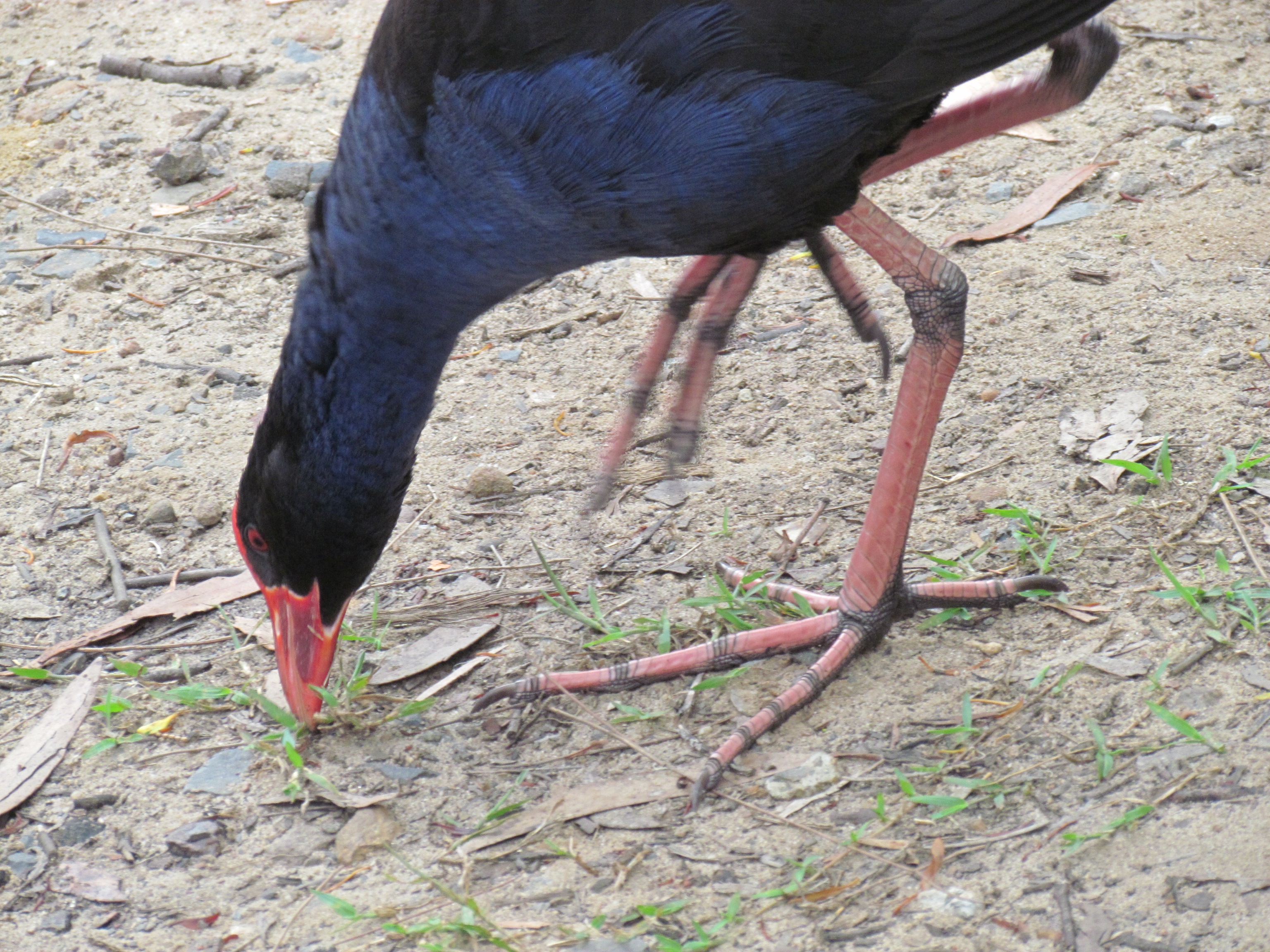
Common name: Purple Swamphen
Scientific name: Porphyrio porphyrio
Approximate length: 50 cm
Date spotted: 29 December 2013
Season: Summer
Location: Manly Dam Reserve, New South Wales, Australia
Latitude/longitude: -33.776626,151.246762
Next, a Dusky Moorhen:
Here’s a nice still of the moorhen sharing the shot with a water lily:
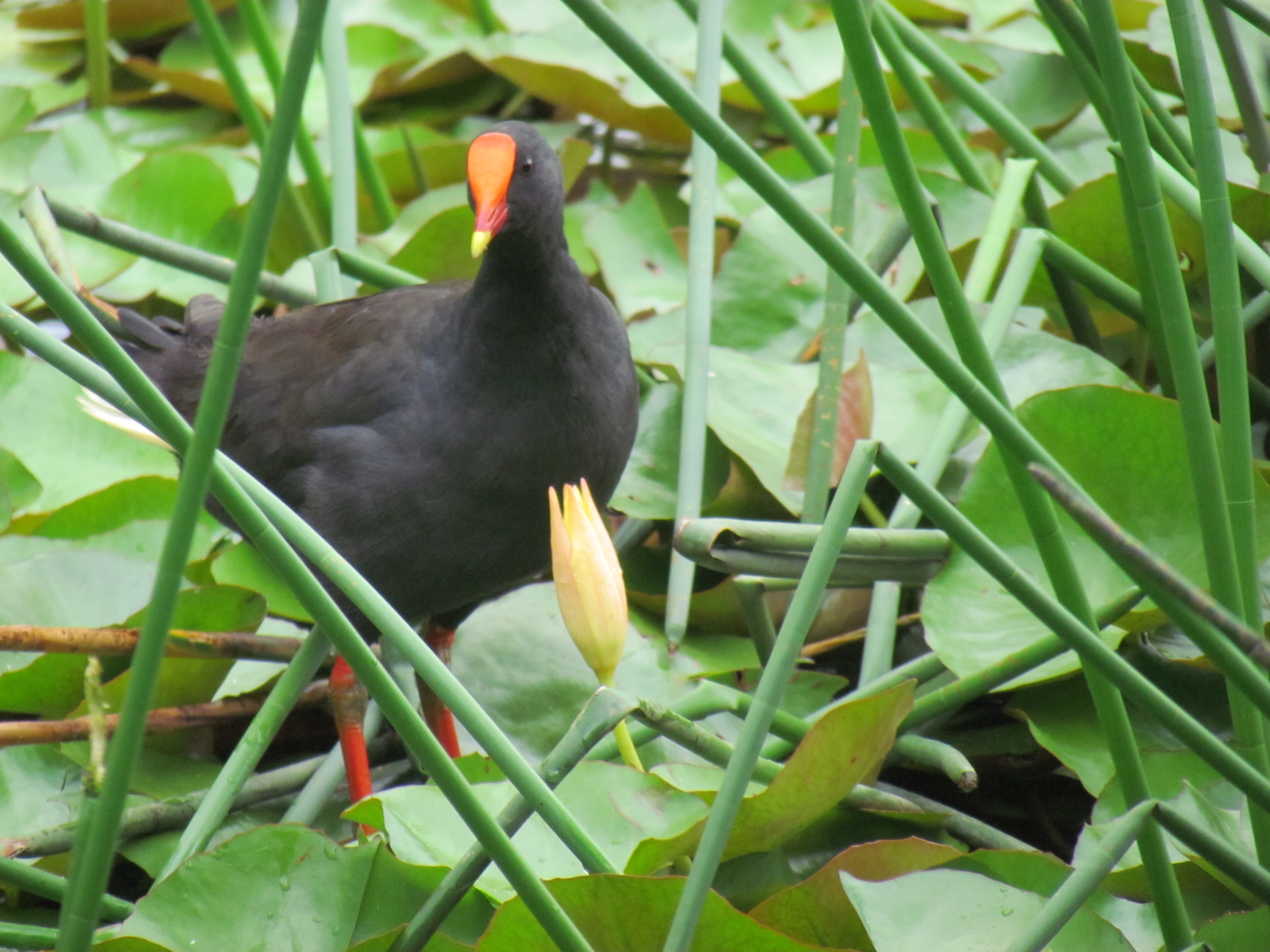
Common name: Dusky Moorhen
Scientific name: Gallinula tenebrosa
Approximate length: 40 cm
Date spotted: 29 December 2013
Season: Summer
Location: Manly Dam Reserve, New South Wales, Australia
Latitude/longitude: -33.776626,151.246762


 Sydney Birder