Blog Archives

Oystercatchers and White-fronted Plover at Melkbosstrand, South Africa
I’m in South Africa for a few days (so, not in Australia!). This morning I went for a walk along the beach at Melkbosstrand, which is on the west coast of Africa, about half an hour’s drive north of Cape Town.
Four African Oystercatchers roamed the beach. One of the birds was alone, patrolling the rocks for mussels and other shellfish:
African Oystercatchers, also called African Black Oystercatchers, are considered a threatened species. There are about 6,000 adult birds in the wild. Here’s a photo of the same bird:

Zooming out a bit to see more of the bird’s environment:

Further along the beach was a trio of Oystercatchers:

When I zoomed in on the birds, I noticed that they seemed rather solicitous about a specific patch of seaweed on the beach. I zoomed the camera in to the seaweed and spotted what I thought must be an Oystercatcher chick using the seaweed for shelter:
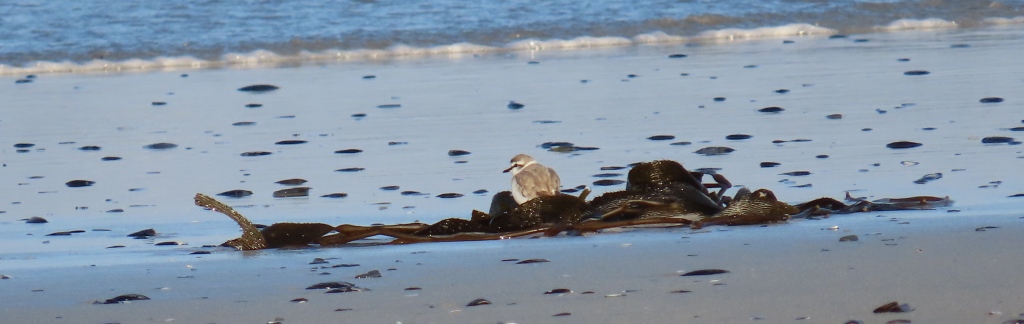
Update on 8 November 2022: Thank you to my friend Hamish Robertson who identified the little bird as an adult White-fronted Plover!
Here are two of the Oystercatchers with the Plover:

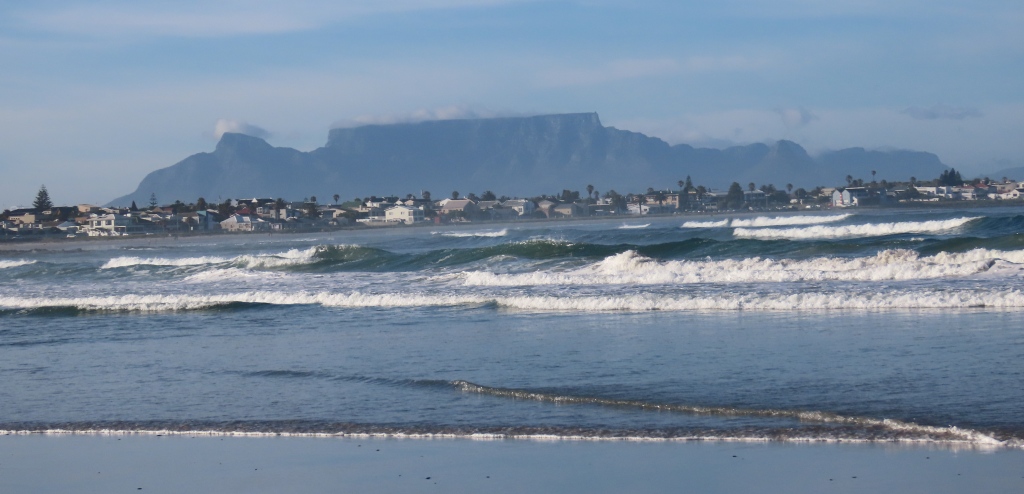
What’s the view like from the beach at Melkbosstrand? Looking one way, you have a view of Table Mountain:
Turning round, you have a view of Koeberg nuclear power station in the distance:
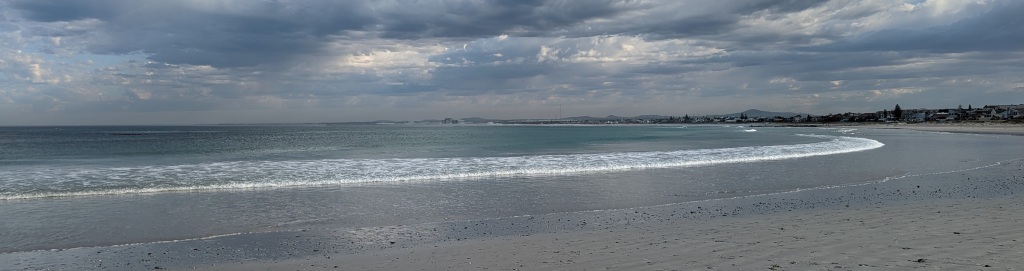
Here’s a zoomed in view of Koeberg:

I hope you’re enjoying my brief foray into South African birds. I’ll be back when I spot another bird!
Birds in Witkoppen, South Africa
I’m currently in South Africa, a little outside the usual geographical range of this blog! While here, I’m taking in a bit of the bird life. I photographed the birds in this post in a little patch of green called Witkoppen Spruit Park. Witkoppen is an outer suburb of Johannesburg, near Sandton. For such a small piece of land surrounded by residential suburbs, there’s an amazing variety of birds in the park. Well worth a visit, if you’re in the area.
To get in the mood, watch this short video and listen to the sounds of the birds all round:
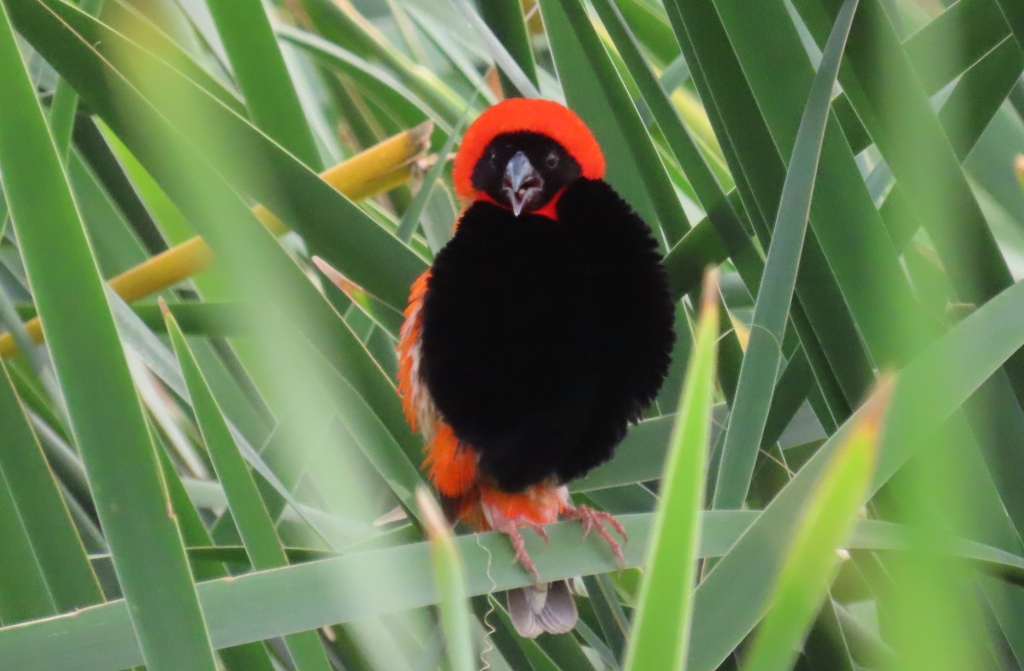
The flashes of red that you see in the video are Southern Red Bishops, a little bird in the weaver family. Here’s one of them caught in a rare moment of stillness:
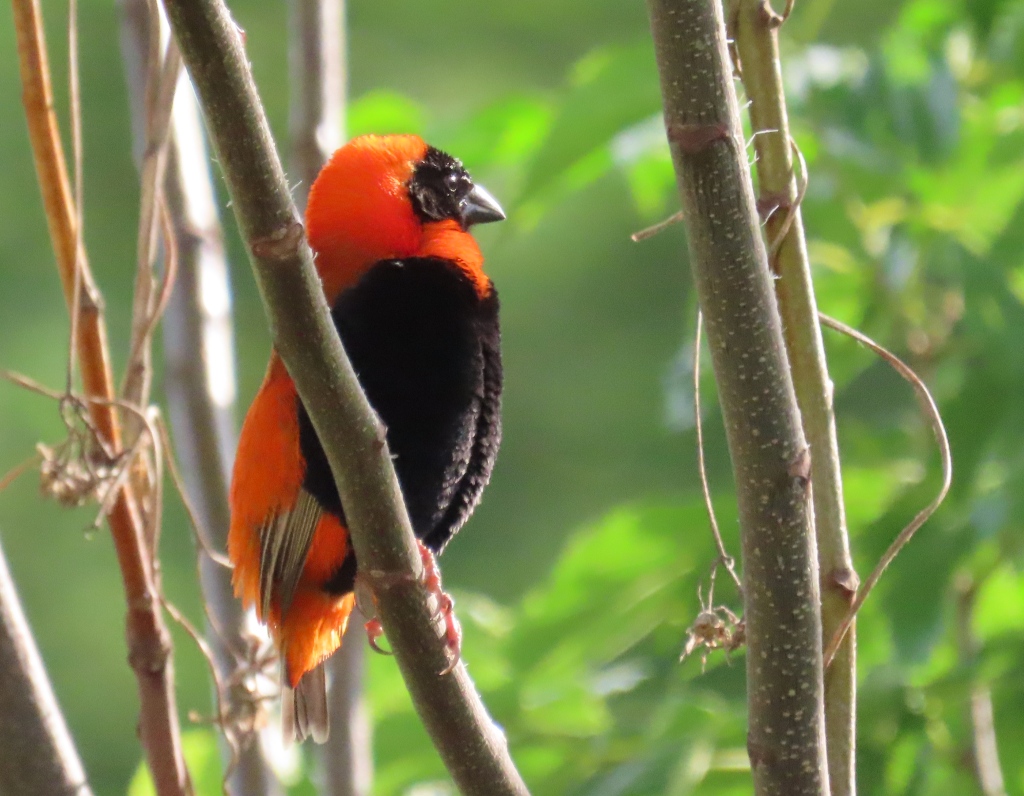
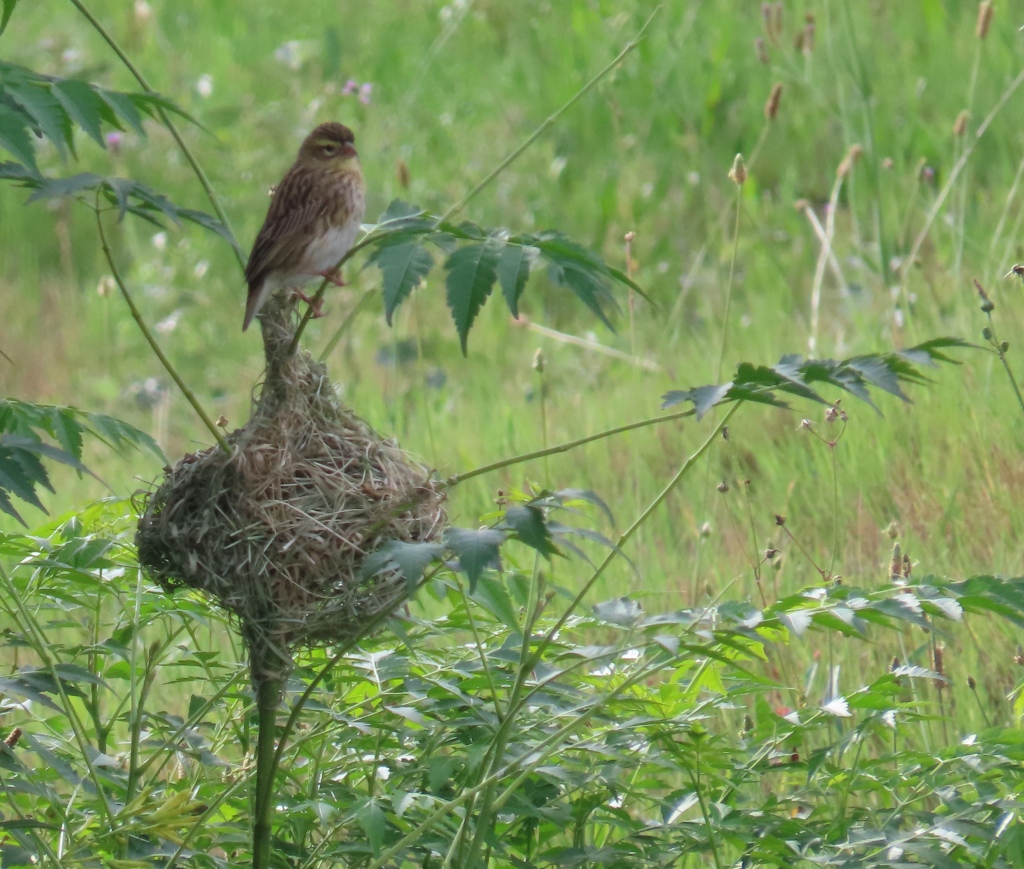
Like other weavers, Southern Red Bishops build nests of intricately woven reeds hanging from tree branches or tall reed stems:

Here’s one of the birds in a quarrelsome mood:
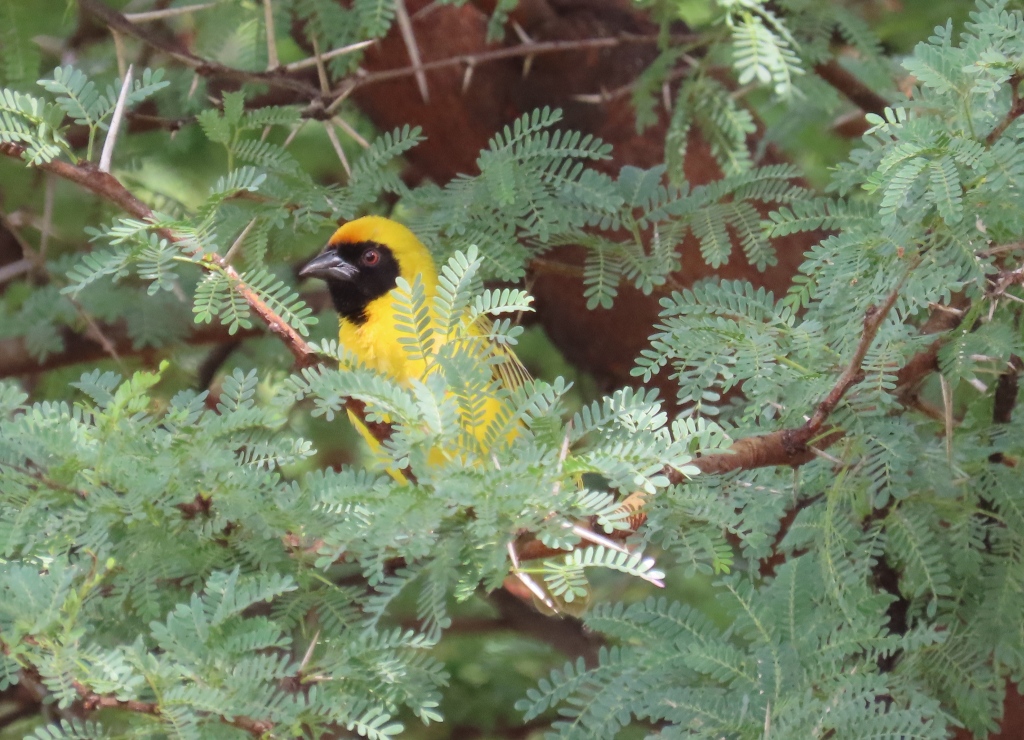
Nearby, a Southern Masked Weaver peers out from behind the leaves of a tree:
The bright colours belong to the males of the species. Here’s a female weaver perched above a nest. I don’t know if it’s a Red Bishop or a Masked Weaver:
Perched high in a tree, a Grey Lourie shows that you can look smart even in a low-key colour:

Grey Louries are also called the grey go-away bird. Here’s another one:

A Pin-tailed Whydah sports its long tail. This tiny bird’s body is about 12 cm long, while the tail adds another 20 cm to the bird’s overall length:

Some Lesser Striped Swallows gather around a small puddle in the middle of the path:
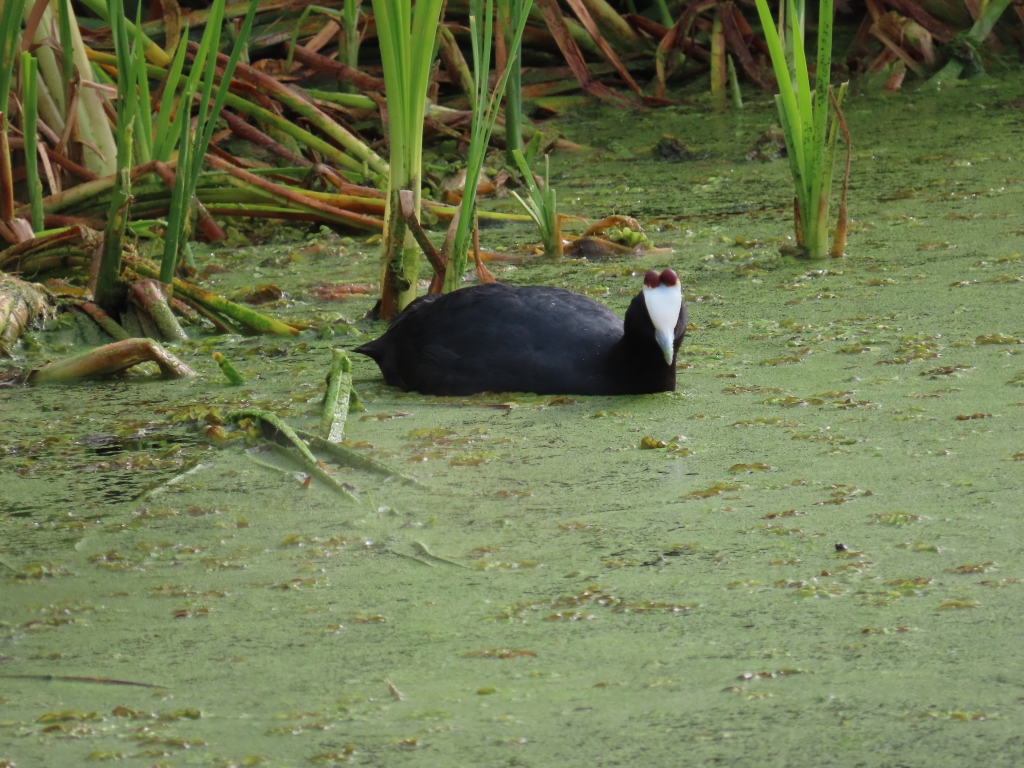
In the nearby pond, a Red-knobbed Coot feeds in the algae-rich water:
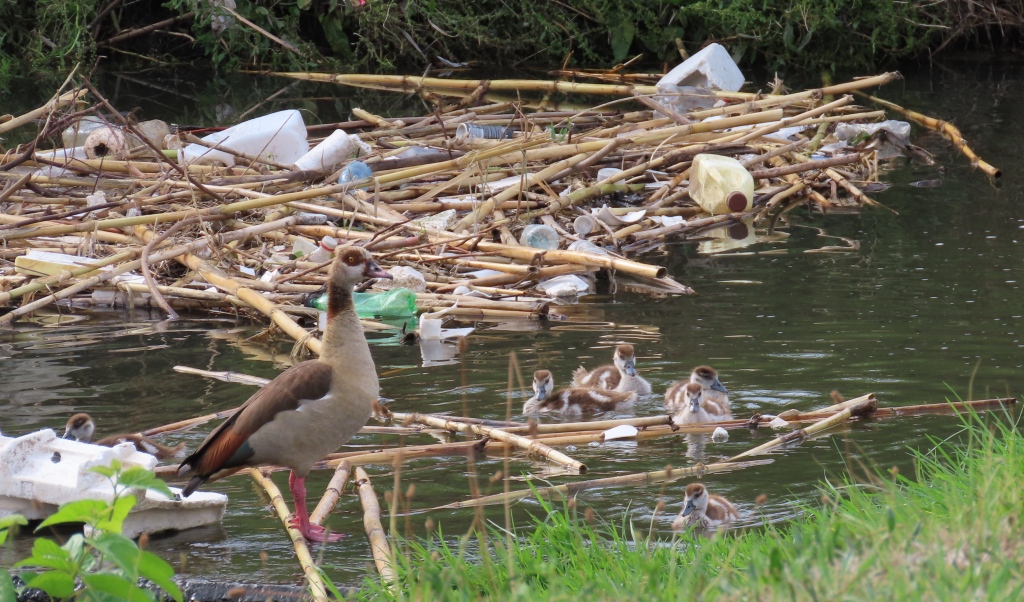
An Egyptian Goose shepherds its chicks through the flotsam and jetsam of the surrounding suburbs:
Sunlight adds a gloss to the plumage of a Hadada Ibis:

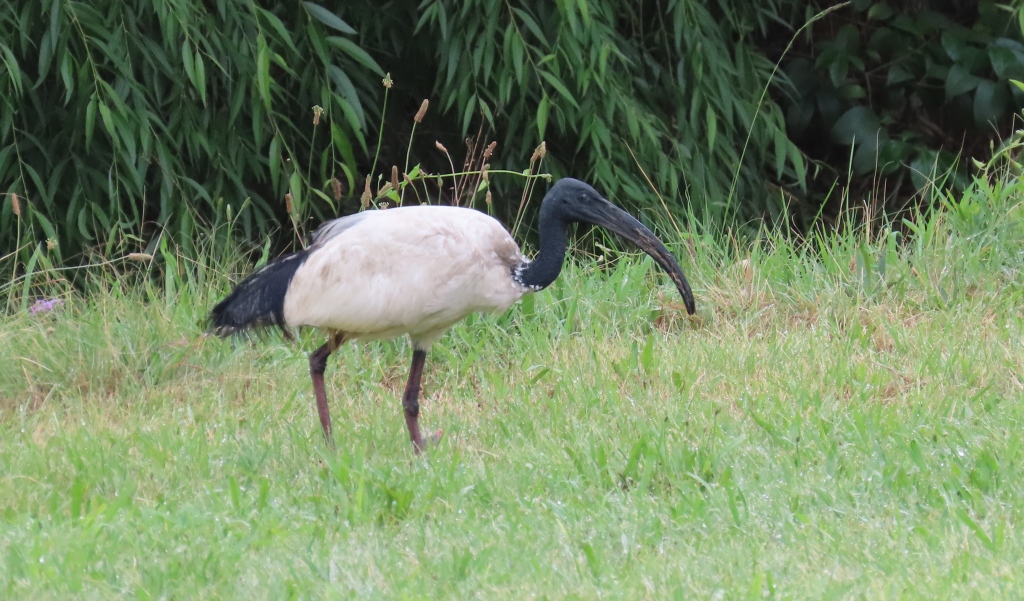
An African Sacred Ibis stalks through the undergrowth:
Another bird stalks the undergrowth, sometimes standing so still that it was almost impossible to spot. My camera’s super zoom brings it close enough to see that it’s an African Wattled Lapwing:

Fiscal Shrikes, also known as Butcher Birds, zoom from cover to cover. Here’s one that stayed still long enough to be caught in a photograph:

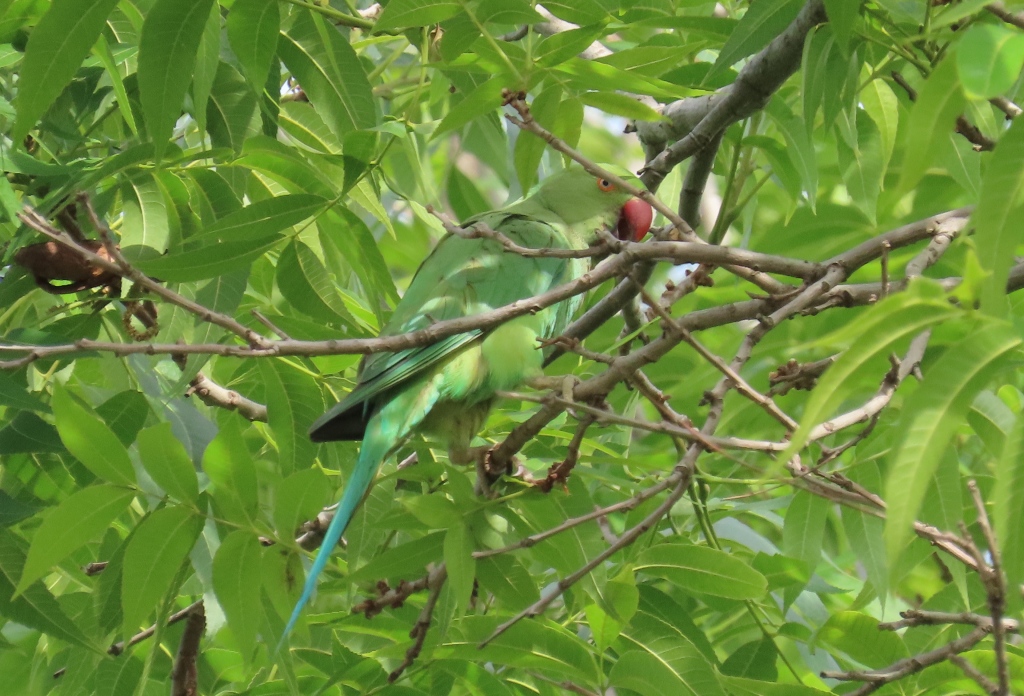
High in the trees, Rose-ringed Parakeets chat and screech. These little parrots aren’t native to South Africa. They established themselves in the suburbs after escaping from captivity in numbers large enough to start breeding:
In my next post I’ll show you some birds in Lonehill, a neighbouring suburb to Witkoppen.

Black-winged Stilt in pretty Australian pool
Update on 23 July 2024: When entering this bird into eBird, I discovered that the bird has been renamed from Black-winged Stilt (Himantopus himantopus) to Pied Stilt (Himantopus leucocephalus).
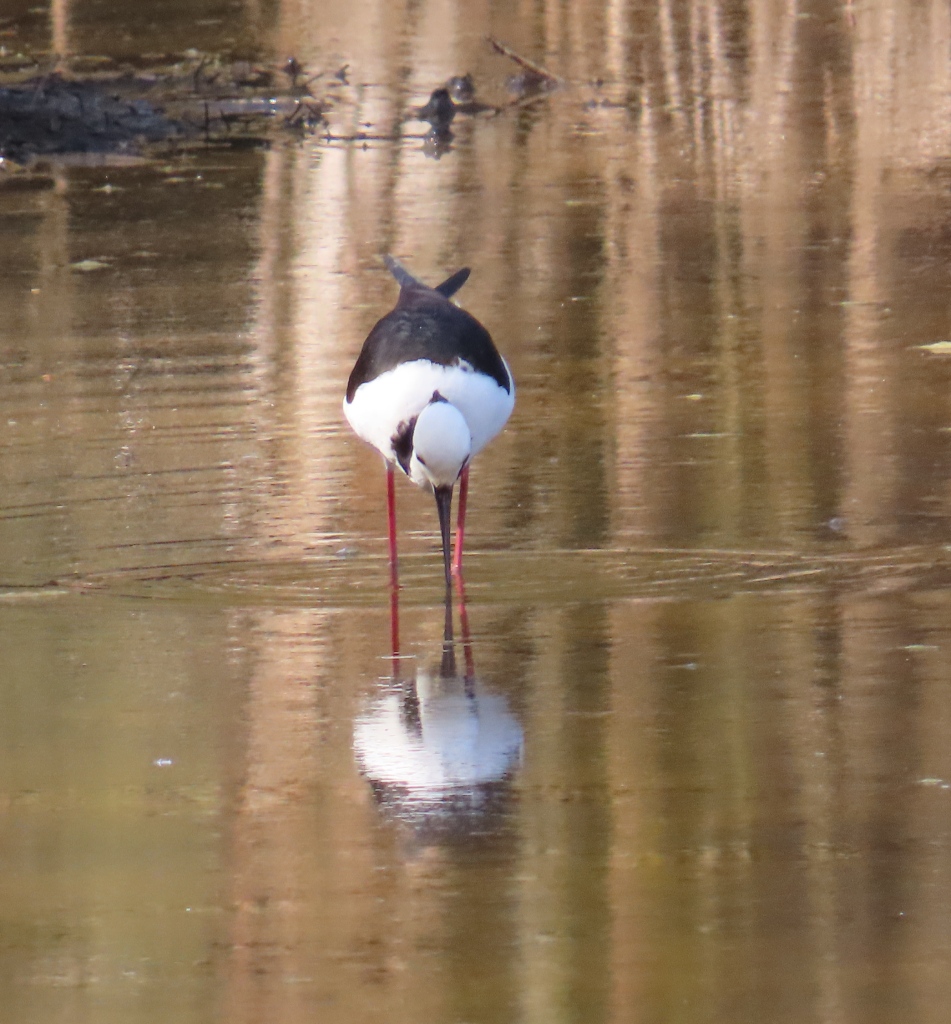
This Black-winged Stilt marked another first for me on the guided bird walk that I did last weekend. It was in the area around Newington Armory – formerly the Royal Australian Navy Armaments Depot – at Sydney Olympic Park.

Stilts are waders, with long thin legs and a beak made for poking into muddy pool bottoms. I saw a stilt flying overhead too, with its legs trailing out behind it.
The next photo shows a rather comical view of the bird and its reflection. It’s hard to tell where the real beak and legs end and the reflection begins:
The guided bird walk is offered by the BirdLife Discovery Centre on the last Sunday of every month. It’s fun and a good way to get out, meet some people, and see some birds.
Here’s a zoomed-out view of the stilt and the surrounding water. We’ve had a lot of rain recently, which means that the water covers more ground than usual. It’s a pretty site, with the typical Australian vegetation and the reflections:
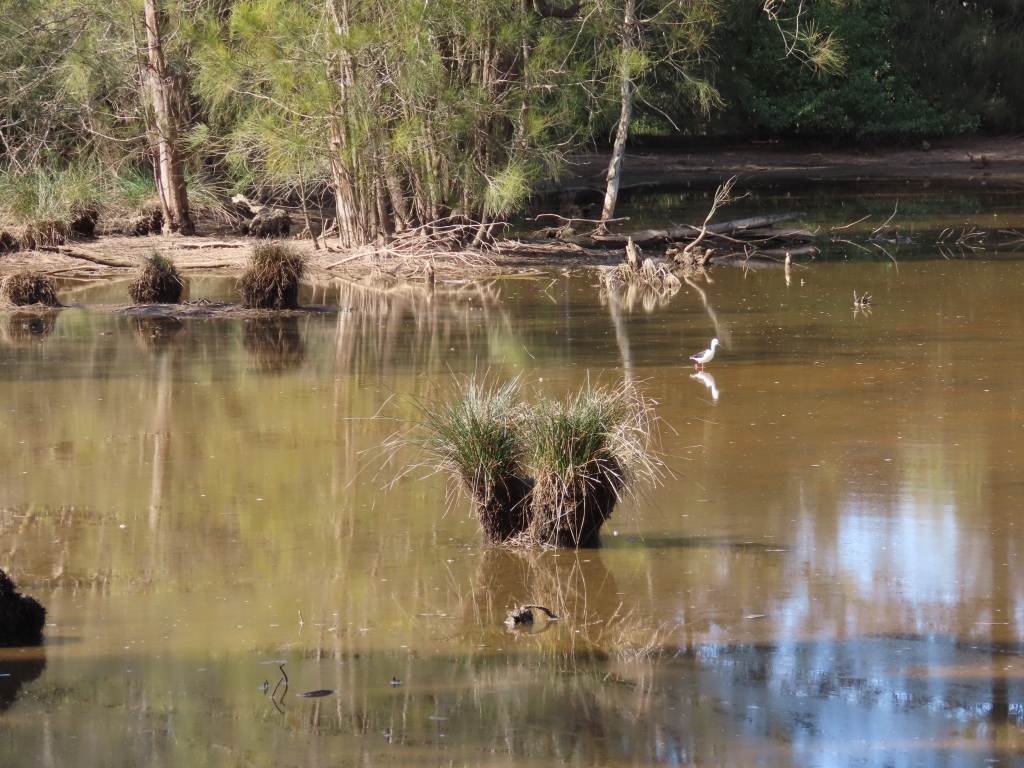
Common name: Black-winged Stilt — now Pied Stilt (Himantopus leucocephalus)
Scientific name: Himantopus himantopus
Approximate length: 33-37 cm
Date spotted: 28 August 2022 (winter)
Location: Sydney Olympic Park, Newington, New South Wales, Australia: 33°49’29.5″S 151°03’57.0″E

A few birds from my recent trip to Cairns
This post rounds off my series of bird photos from a recent trip to Far North Queensland. The birds in this post were in Cairns, a lovely city on the east coast of Australia near the Great Barrier Reef.
A Great Egret stalked the mudflats of the bay. At low tide, this area is a vast muddy plain. The tide was in when I took this photo:

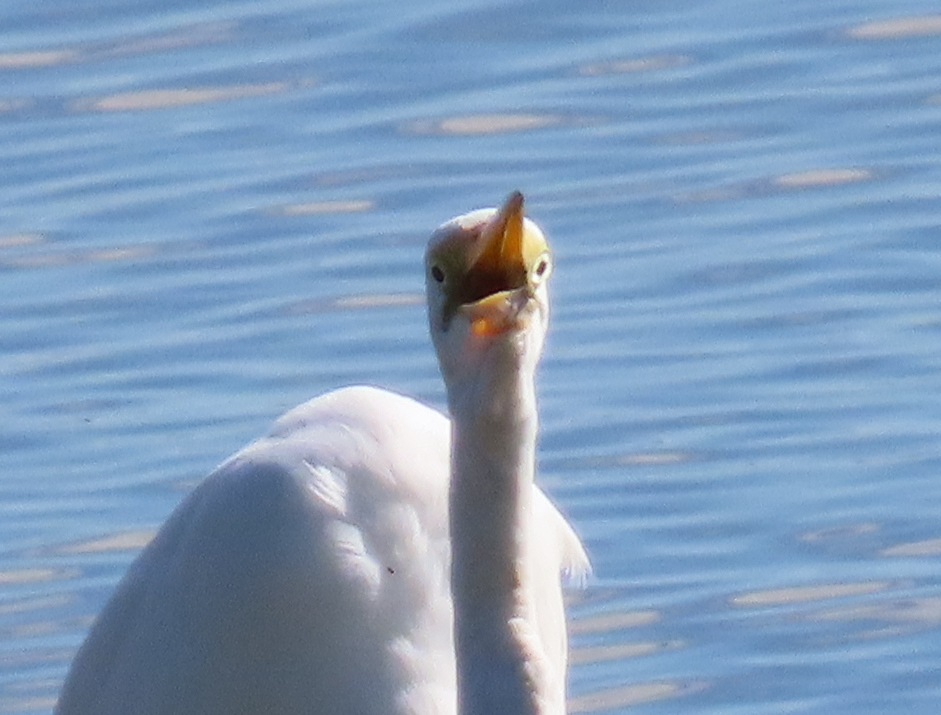
In this close up, the egret is looking rather alarmed. I think I just caught it at an inopportune moment. Perhaps a yawn, or a fish that went down the wrong way:
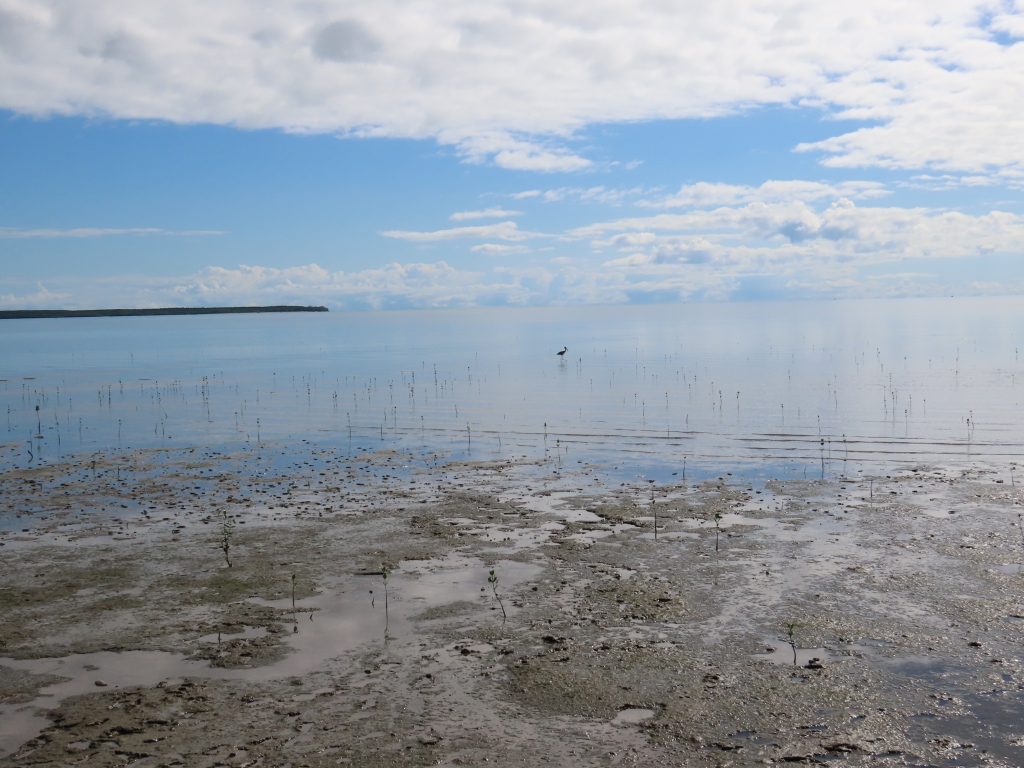
The next picture shows the bay when the tide is out. In the distance is a Black-necked Stork a first sighting for me:
Here’s a close-up of the same Black-necked Stork. These are large birds, at 1.5 metres tall with a wingspan of over 2 metres. They’re the only species of stork found in Australia:

Figbirds called from the trees lining the Cairns promenade. The males in this area have a bright yellow front, which is different from the more subdued colouring of the figbirds down near Sydney. Here’s a male Figbird:

Here’s a female Figbird, with her gentle olive-brown colouring and streaked front:
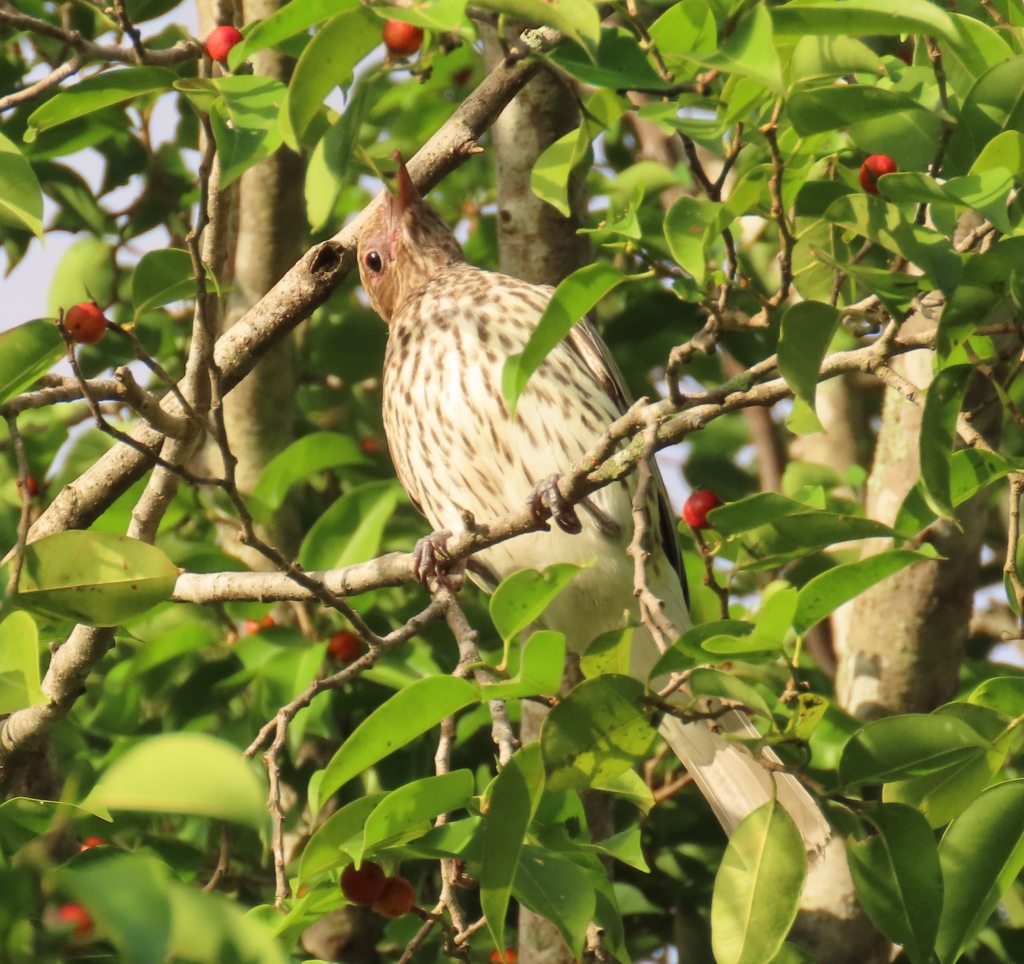
There were large numbers of Metallic Starlings, congregating in trees and shimmering in the sun. This is another first sighting for me! Unlike the Common Starling, which was introduced to Australia, these Metallic Starlings are indigenous to North East Queensland:
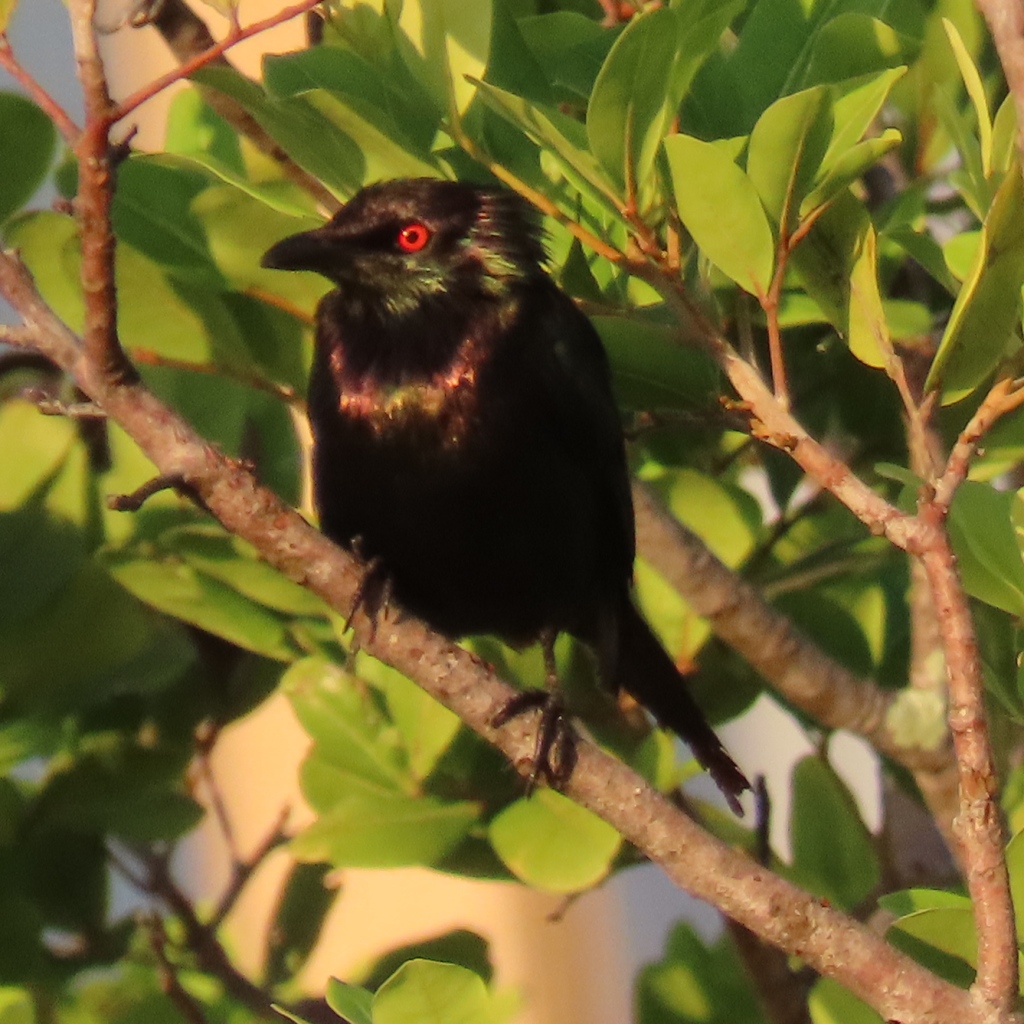
I hope you’ve enjoyed this brief glimpse into the birds of Far North Queensland. I hope to travel up there again sometime soon. It’s a unique area of the world.

Magpie Goose with chick
In May I visited Port Douglas in Far North Queensland. Strolling along a quiet road was this Magpie Goose and its chick:

These are large birds, at around 80 cm long with a wingspan of 1.5 metres in an adult. Even the chick is a large bird. Magpie Geese are easy to recognise, because of the weird knob on the top of their heads. I see that the baby doesn’t have a head knob yet.

Magpie Geese are found only in Australia and New Guinea. Evidently they’re not “true geese”. Their family branched off earlier than other ducks and geese, and so they’re considered to be a more ancient lineage. They do look a little prehistoric! Their feet are only partially webbed, they have strong claws, and they don’t moult all their flight feathers at the same time. As a result, they can fly all through their moulting.
Common name: Magpie Goose
Scientific name: Anseranas semipalmata
Approximate length: 75-90 cm
Date spotted: 17 May 2022 (dry season)
Location: Port Douglas, Far North Queensland, Australia: 16°30’42.2″S 145°27’44.2″E

Birds from a boat on the Daintree River
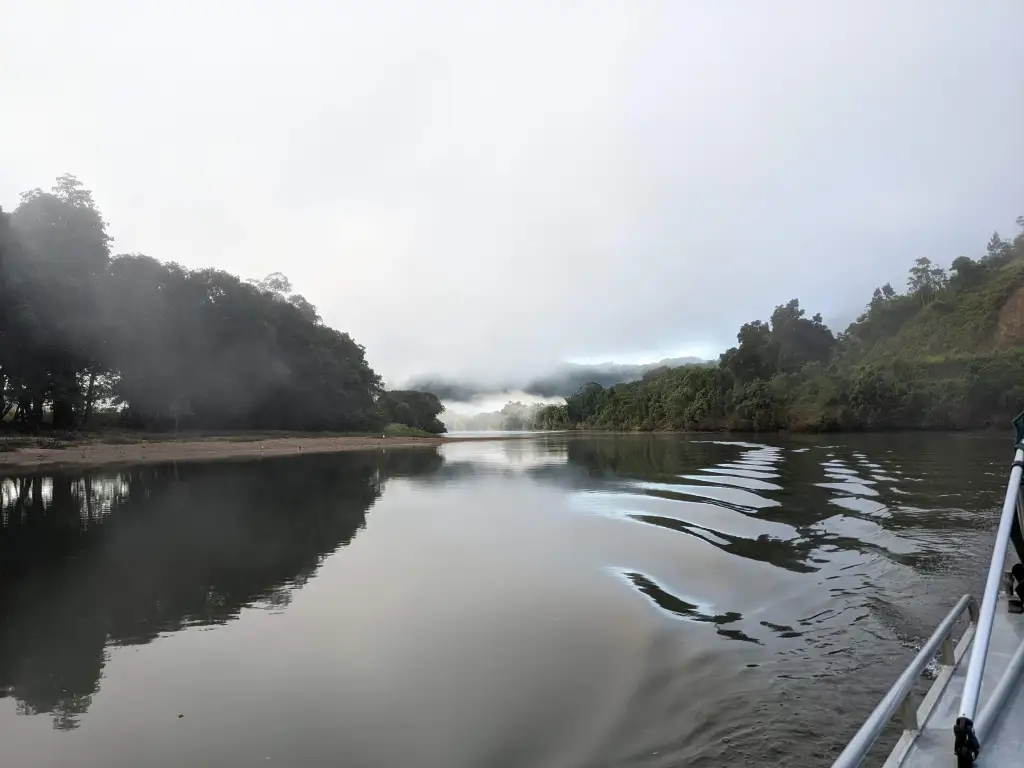
In May this year I was lucky enough to visit Far North Queensland. While there, I took an early morning boat trip on the Daintree River (map). The tour, run by Ian “Sauce” Worcester, was called the Daintree River Wild Watch. Highly recommended!
The river is gorgeous in the early morning chill:
We saw a number of kingfishers on the banks of the river. This one is a Sacred Kingfisher:
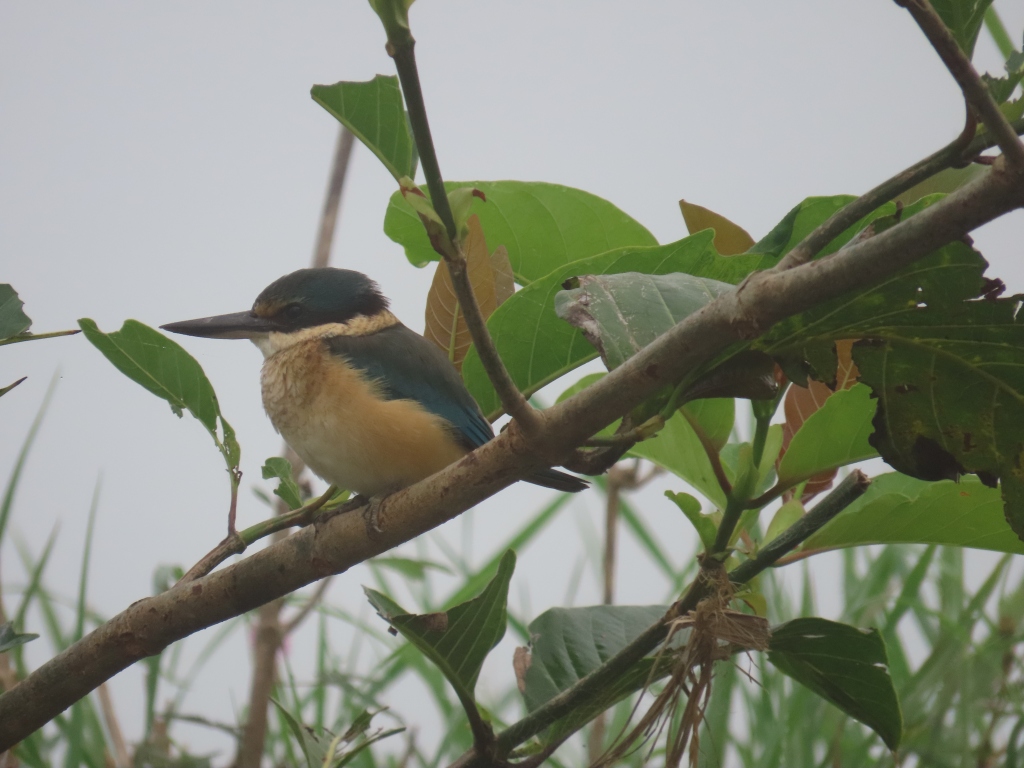
Another Sacred Kingfisher:

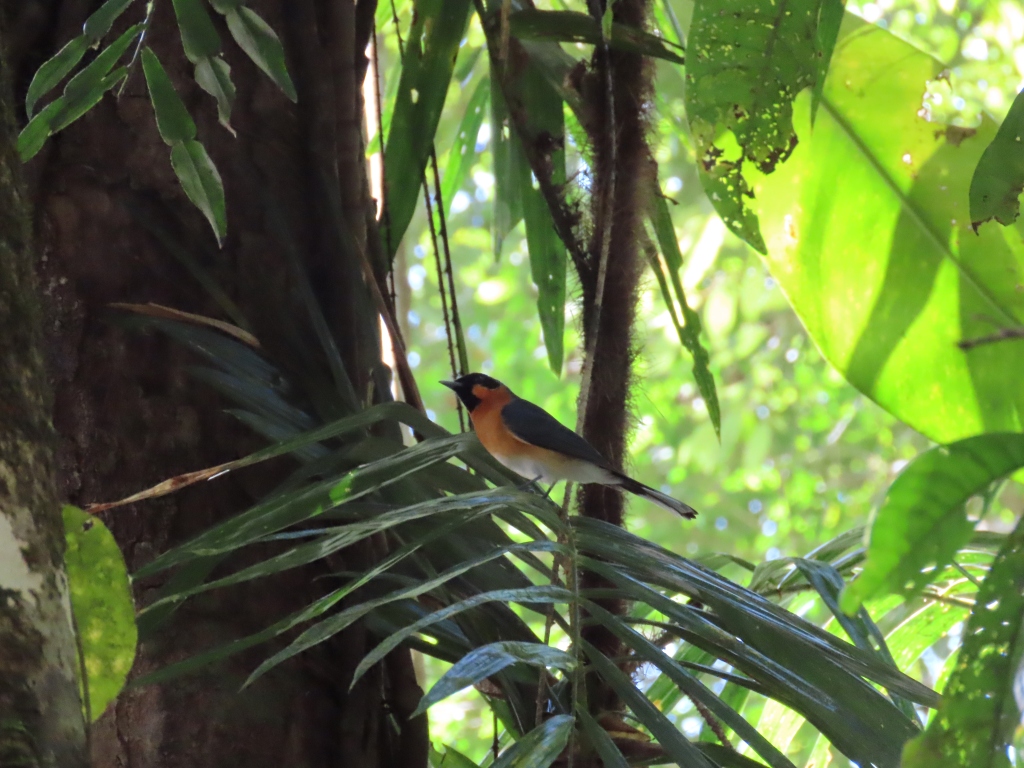
A Spectacled Monarch hid in the undergrowth of the mangrove forest. Our boat followed it quietly until it came into easy view:
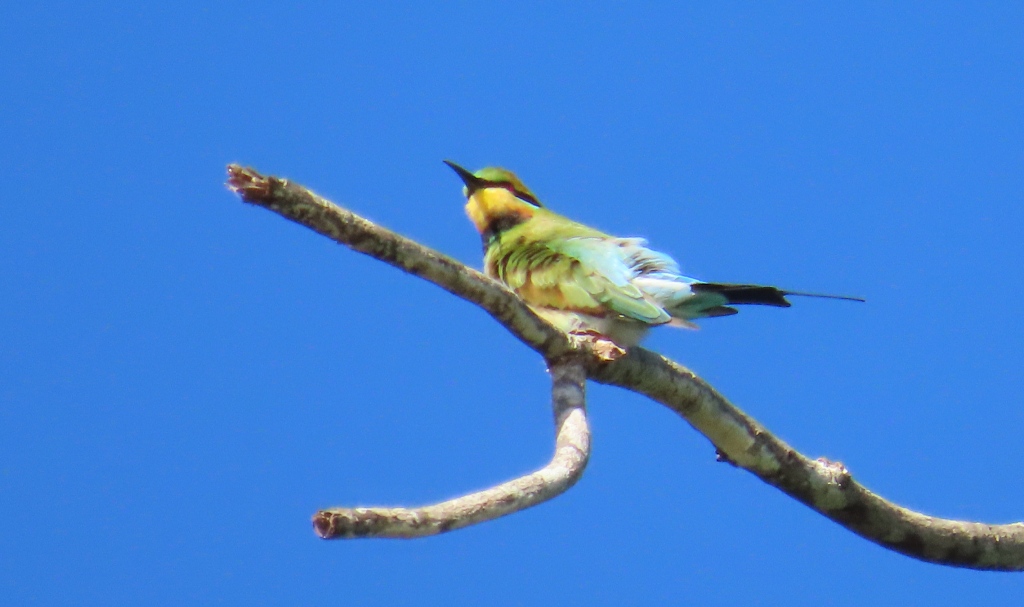
As the sun came up, a Rainbow Bee-eater landed on a high-up tree branch and fluffed out its feathers to take advantage of the warmth:
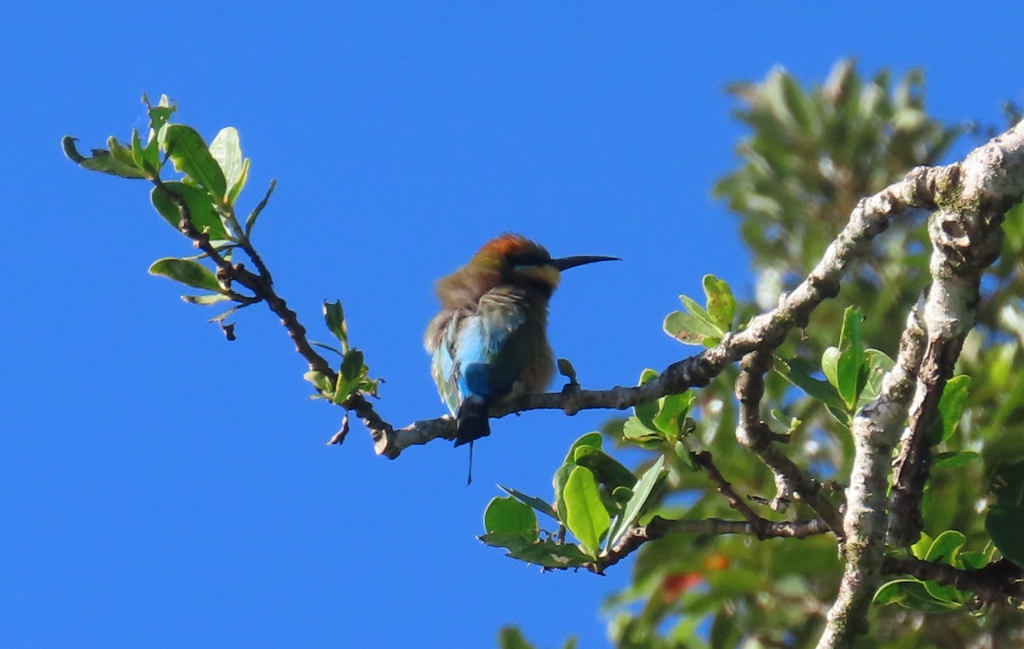
Here’s another view of the Rainbow Bee-eater:
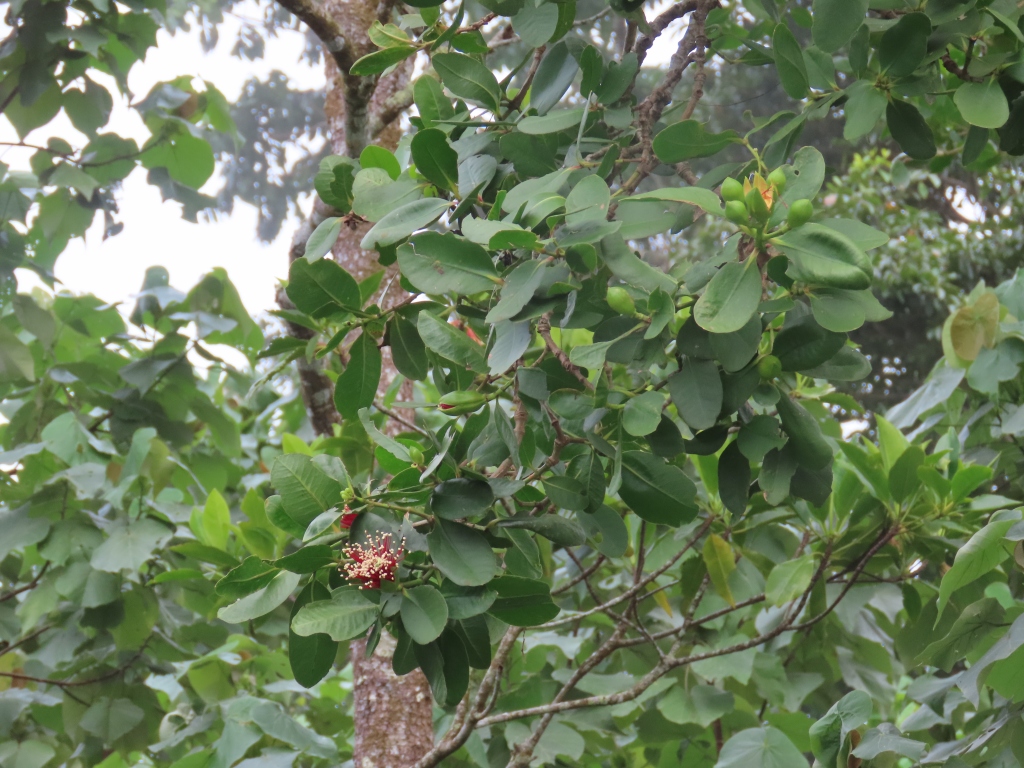
The river banks were at times covered in mangrove forests or fig trees. High above our heads, flowers bloomed:
Waterbirds included these colourful Radjah Shelducks, sometimes called Burdekin ducks:

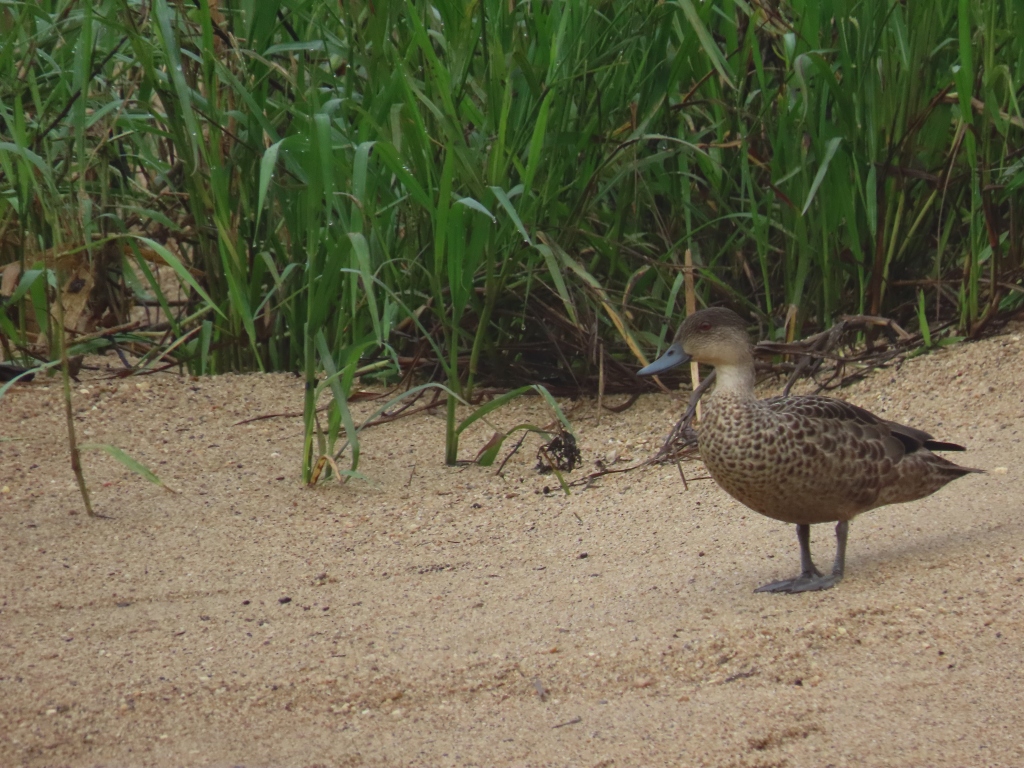
Another non-descript-looking duck caused some excitement, as our tour guide thought it might be a whistling duck but I can’t identify it. If anyone can say what it is, let me know:
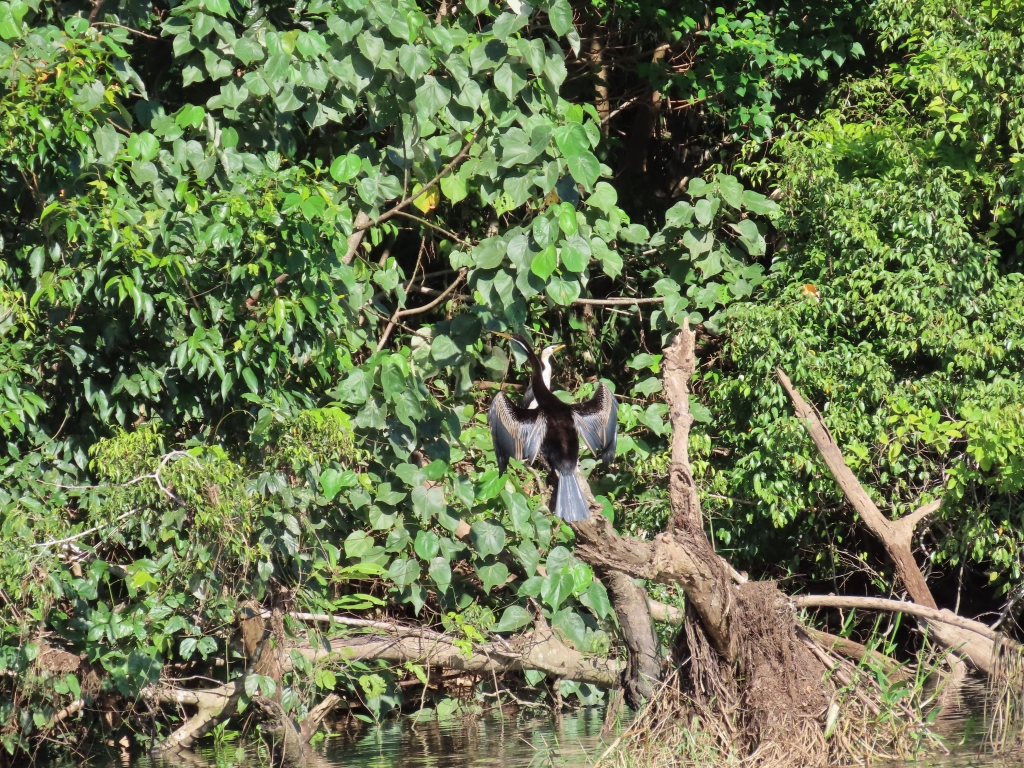
We saw a Darter roosting close to a Little Pied Cormorant. In this photo, the cormorant is behind the darter looking towards the right. The darter is in front, with its back to us, looking towards the left:
Three Little Pied Cormorants kept us company on the water. You can see the dense forest that covered much of the river bank:

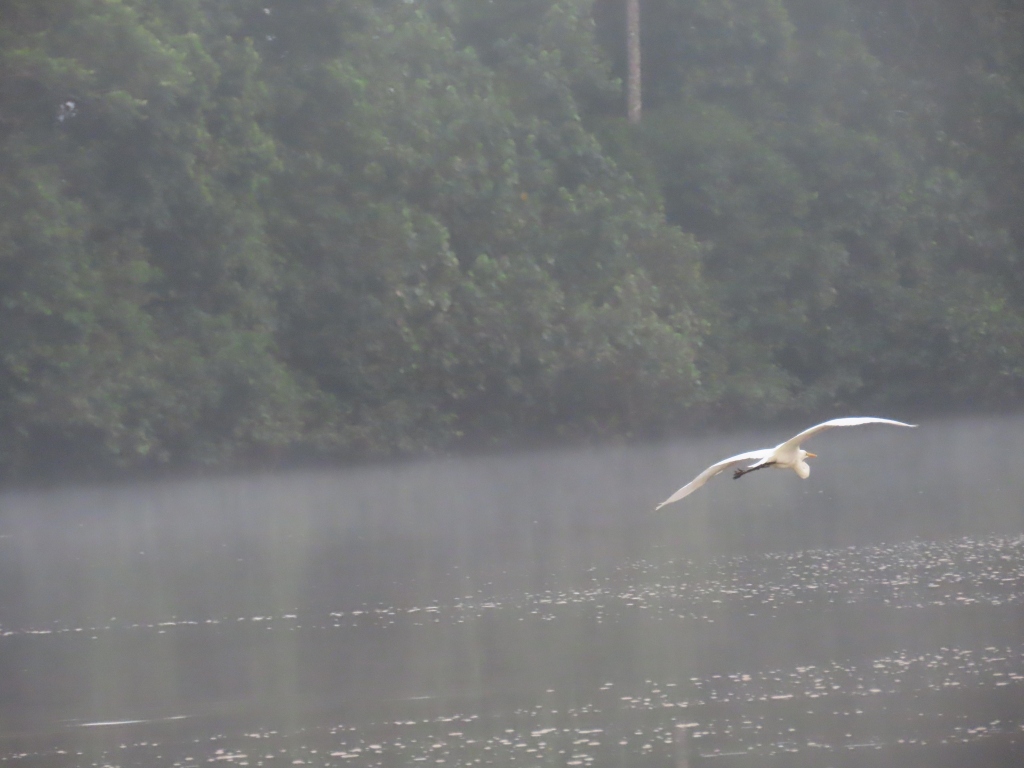
An egret kept pace for a while too:

Atmospheric pic of preening pelican in Cairns
I love the colours of this early-morning shot. The bird is an Australian Pelican, chilling out at the edge of the Coral Sea.
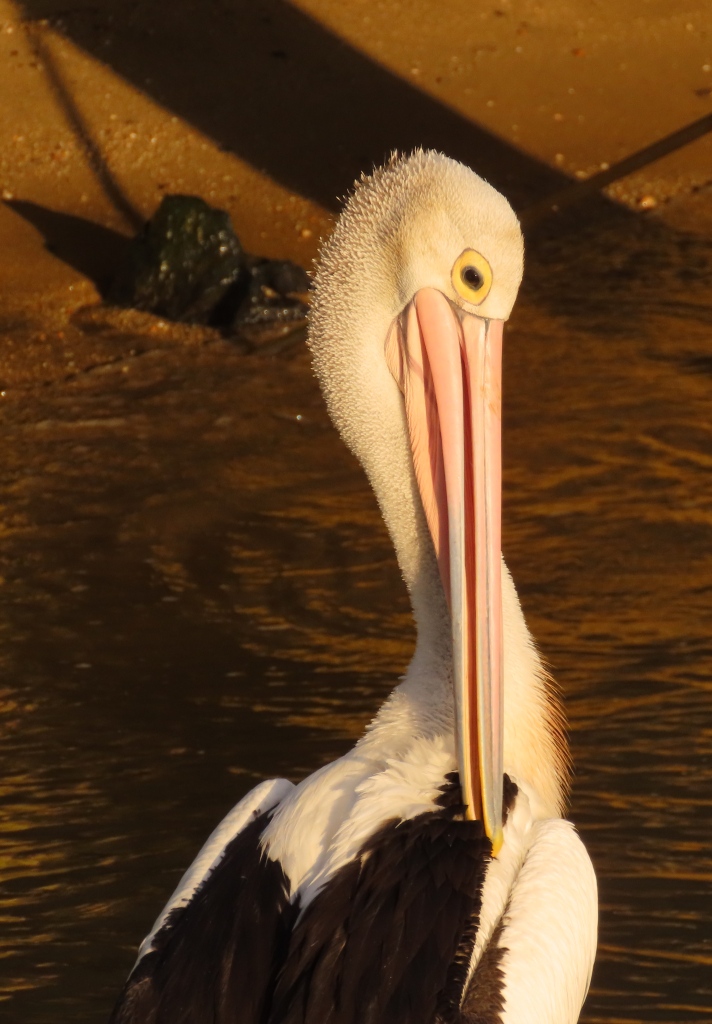
Common name: Australian Pelican
Scientific name: Pelecanus conspicillatus
Approximate length: 170 cm
Approximate wingspan: 2.5 m
Date spotted: 15 May 2022 (dry season)
Location: Cairns Esplanade, Far North Queensland, Australia: 16°55’05.0″S 145°46’33.3″E

Pelicans at Cairns Esplanade
I’m in Cairns for a couple of days! Cairns is in Far North Queensland, about 2,000 kilometres from Sydney as the crow flies. Early this morning, before the tropical heat set in, I took a stroll along the Esplanade.
This lovely sculpture by Brian Robinson is called Citizens Gateway to the Great Barrier Reef:

I love the way the artwork frames the bay and the entrance to the Coral Sea.
A little further along the Esplanade, two Australian Pelicans were chilling out in the shelter of the boardwalk:

Common name: Australian Pelican
Scientific name: Pelecanus conspicillatus
Approximate length: 170 cm
Approximate wingspan: 2.5m
Date spotted: 14 May 2022 (autumn)
Location: Cairns Esplanade, Far North Queensland, Australia: 16°55’05.0″S 145°46’33.3″E
Crested Tern taking a bath at Newcastle Ocean Baths
Yesterday I visited the city of Newcastle for the first time. This is Newcastle on the eastern coast of Australia, not the one in the UK. While strolling along the prom, approaching the Newcastle Ocean Baths, I saw a Crested Tern enjoying a bath in the rock pool that lies on one side of the baths:
Common name: Crested Tern
Scientific name: Sterna bergii
Approximate length: 45 cm
Date spotted: 11 March 2022 (late summer)
Location: Newcastle, New South Wales, Australia: -32.929794, 151.789490
Here’s a picture of the building that you glimpse at the end of the video — the Newcastle Ocean Baths:


Sea-Eagles at Manly Dam
For the second time ever, I spotted a White-bellied Sea-Eagle at Manly Dam, north of Sydney. This one was circling high in the sky:

Common name: White-bellied Sea-Eagle
Scientific name: Haliaeetus leucogaster
Approximate length: 85 cm. Wing span: 2.2 m
Date spotted: 3 July 2021 (winter)
Location: Manly Dam Reserve, New South Wales, Australia: 33°46’59.2″S 151°15’19.4″E
These eagles are large, imposing creatures. The last time I saw one at the dam was back in April 2017. I didn’t post any pictures then, but now I’ve gone back and rooted out a video of that bird. The eagle was very far away then too, and I had my camera on maximum zoom.
This video, from April 2017, shows the bird coming in to land at a small beach on the opposite side of the dam from where I was:
One day, with luck, I’ll see one of these eagles from closer by!


 Sydney Birder