Blog Archives

Two Sacred Kingfishers at Manly Dam
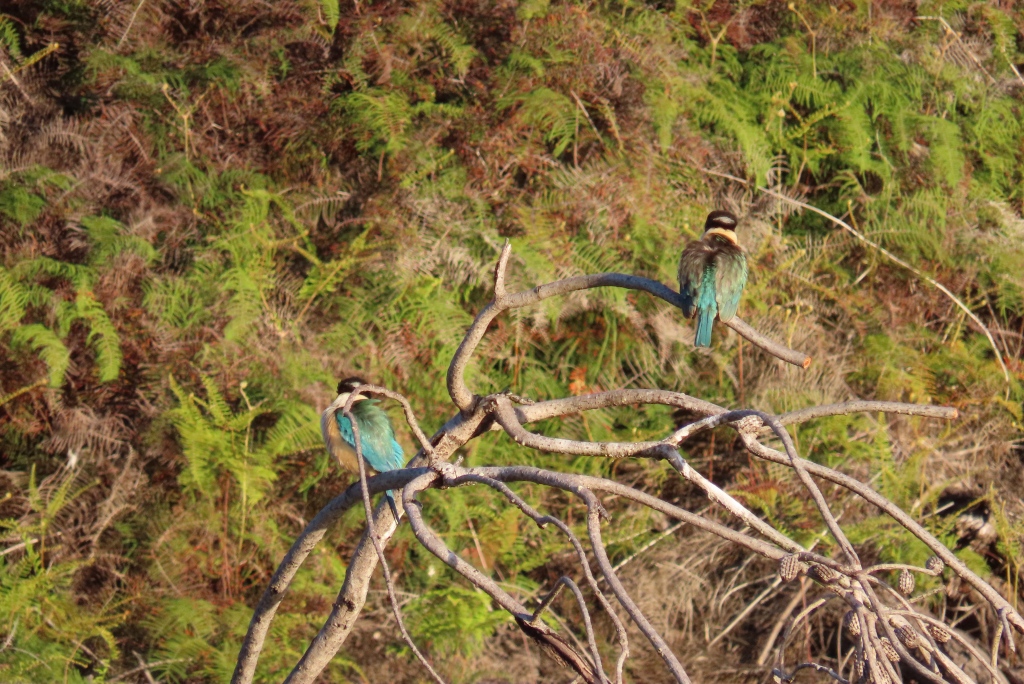
A rare treat! This morning I saw two Sacred Kingfishers resting on a clump of dry bush at the edge of Manly Dam. I’ve seen a kingfisher at Manly Dam twice before, both near the dam wall. These two were in a different area, at an inlet on the north west side of the dam.

Before I saw the birds, I’d heard their call, though I didn’t know what it was at the time. It was a fairly high-pitched, insistent sound, uttered in groups of two to four squawks: “kik-kik-kik-kik”.
I think the one on the left might be male, and the one slightly higher up on the right might be female. Females have more green and less blue on their wings than the males do.
Kingfishers are related to kookaburras. (See my earlier posts for pictures of kookaburras.) But whereas Laughing Kookaburras are quite large (47 centimetres from head to tail), Sacred Kingfishers measure only 20 centimetres.
For comparison, here’s a kookaburra from another day:

Back to today’s Sacred Kingfishers: At one stage, both birds turned round to show me the backs of their heads. They look much more like colourful kookaburras now:
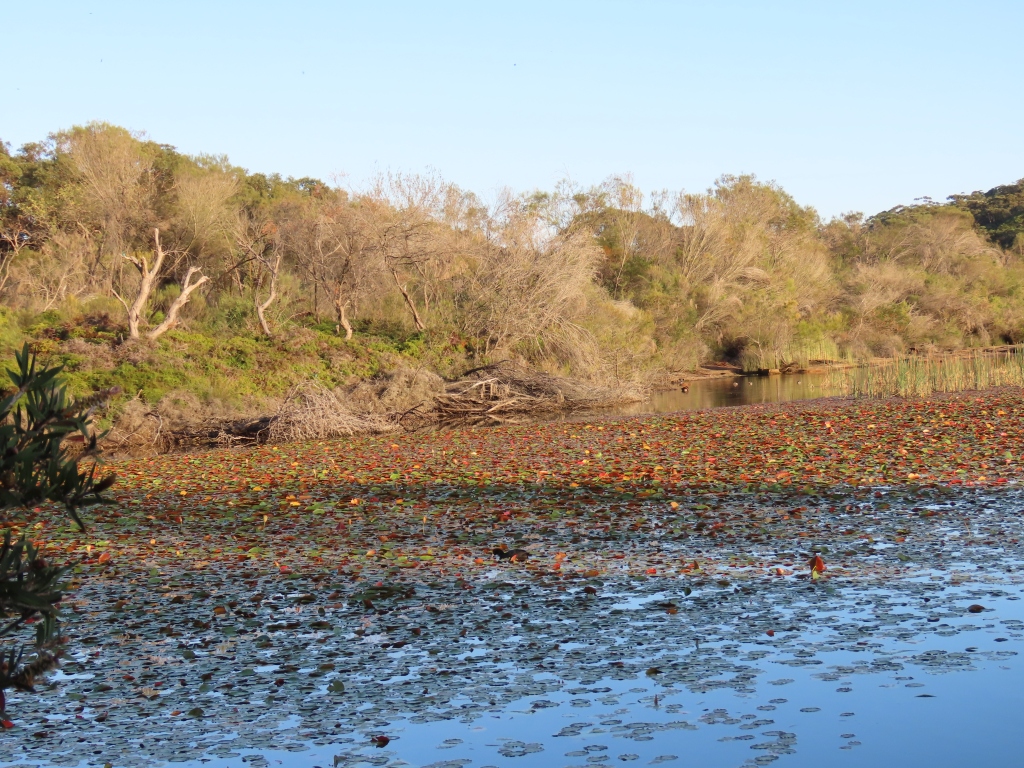
The next picture shows the bank of the dam where the birds were sitting. I was on the far side of the inlet. You might just be able to make out one of the kingfishers on the clump of dead bush towards the middle left of the picture. The other kingfisher had been chased away by a Willy Wagtail!
Common name: Sacred Kingfisher
Scientific name: Todiramphus sanctus
Approximate length: 20 cm
Date spotted: Saturday 14 October 2023 (spring)
Location: Manly Dam Park, New South Wales, Australia: 33°46’34.4″S 151°14’48.9″E
Pair of White-faced Herons in Sydney Harbour
A pretty pair of White-faced Herons were strutting their stuff at Forty Baskets Beach this morning. They were quite interested in each other, and the feathery plumes on their backs were quite noticeable. It looks as if breeding season has started.
In this video, the pair of herons are on a small boat moored just off the beach. All is peaceful until the seagulls start bullying the herons. After ducking a few incoming gulls, the herons take off and fly past me, landing on some rocks near by. Along comes a small dog (off scene). The dog owner tells the dog to wait. The dog doesn’t threaten the birds in any way, but they decide it’s politic to move to a different spot. They fly past me again, and come to rest in a quiet little bay.
Aside from the noise made by the seagulls and the sea, you can hear some raucous Sulphur-crested Cockatoos in the background. And, if you listen very carefully, you can hear the softer grunting croaks of the herons as they fly past me and then land on the rocks.
Scientific name: Ardea novaehollandiae
Approximate length: 66-69 cm
Date spotted: 5 August 2023 (winter)
Location: Forty Baskets Beach, Sydney Harbour, New South Wales, Australia: 33°48’15.8″S 151°16’13.9″E

Darter with cream-coloured neck
This lovely light-coloured Darter took me by surprise!
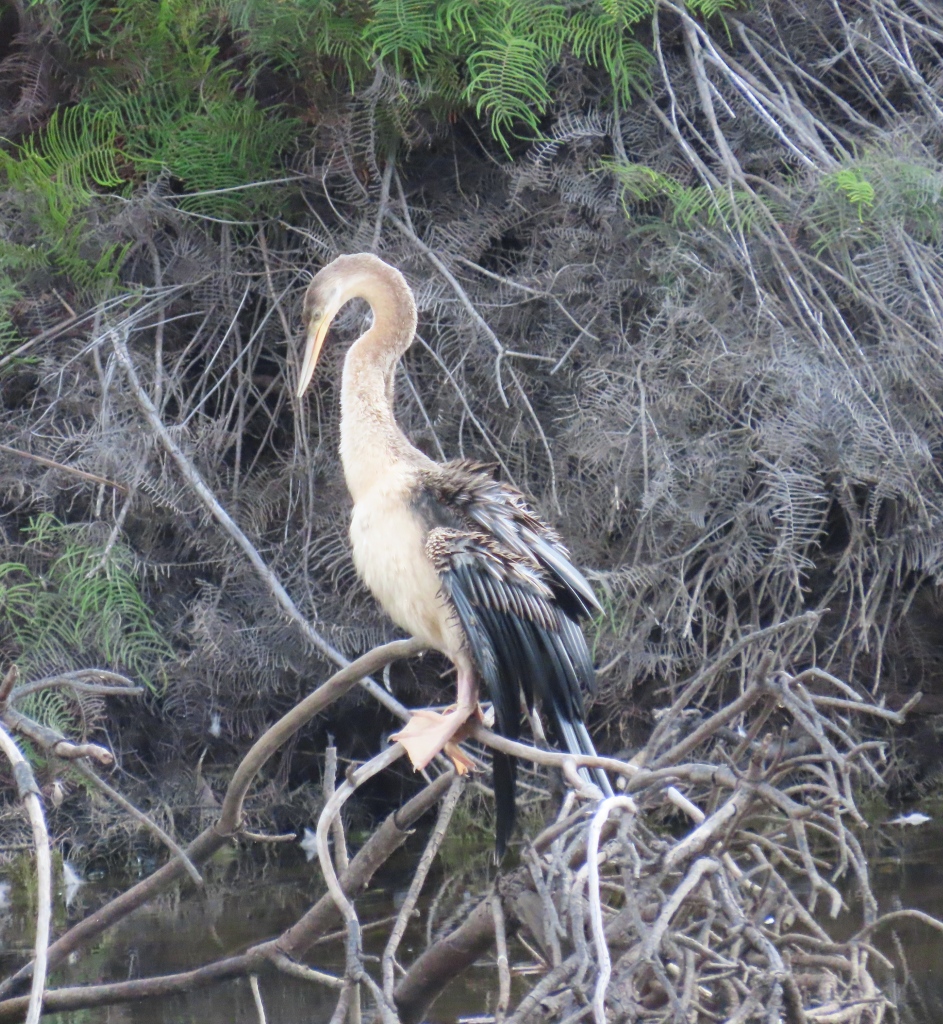
The only Darters I’ve seen up to now have been very dark in colour, with black necks and bodies. You can see them in my posts about the sinuous neck of a Darter and a Darter drying its wings then taking off.
Evidently it’s the males that are dark in colour, whereas the females and juveniles are lighter. Judging by the overall state of dishevelment of this bird’s feathers, I’d say it’s a juvenile.
This video shows the impressive length of the bird’s neck when the bird lifts its head to listen to an unusual sound:
The next video shows another neck stretch, with the bird looking in the direction of the camera:
Common name: Darter
Scientific name: Anhinga melanogaster
Approximate length: 90 cm; wing span: 1.2 m
Date spotted: 2 June 2023 (winter)
Location: Manly Dam Reserve, New South Wales, Australia: 33°46’34.7″S 151°14’48.9″E

Royal Spoonbill at Manly Dam
This is only the second time I’ve ever seen a spoonbill, and the first time I’ve seen one at Manly Dam. This picture shows the wide, flattened end of the beak that gives the bird its name:

Royal Spoonbills are large birds, about 80 cm tall. In the breeding season, they have long white feathers trailing from their heads and can look quite magnificent. This bird, though, doesn’t have its breeding plumage. It was quite sleepy, dozing in the autumn sun, and I was lucky to catch it moving around.
Here’s another picture showing the head and beak in profile:
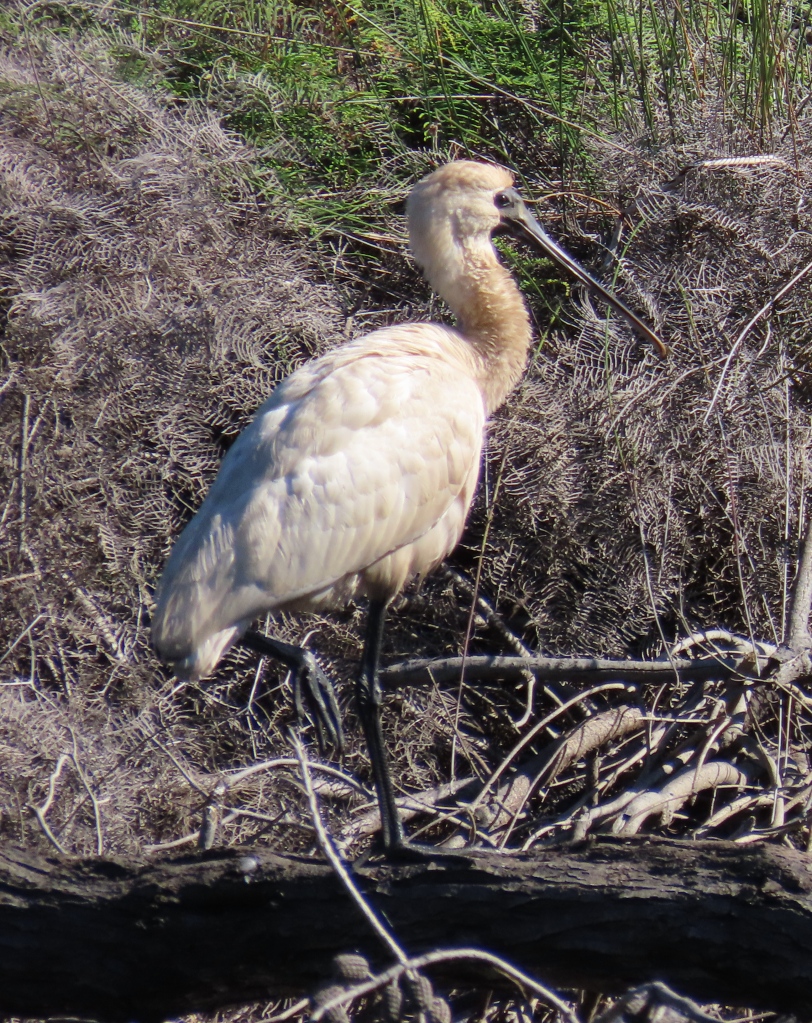
A while ago, I saw my first spoonbill at Manly Beach. That one did have its breeding plumage, and its feathers were a brighter white than today’s bird. Take a look at my post from October 2020. Today’s bird also lacks the white spot above the eye that adults have. It could be a juvenile, still to come into full plumage.
Common name: Royal Spoonbill
Scientific name: Platalea regia
Approximate length: 75-80 cm
Date spotted: 28 April 2023 (autumn)
Location: Manly Dam, New South Wales, Australia: 33°46’34.8″S 151°14’48.1″E
White-faced Heron in Sydney Harbour
This White-faced Heron sat on a branch overlooking a Sydney Harbour inlet. I think the bird is a juvenile, judging by its soft colouring:
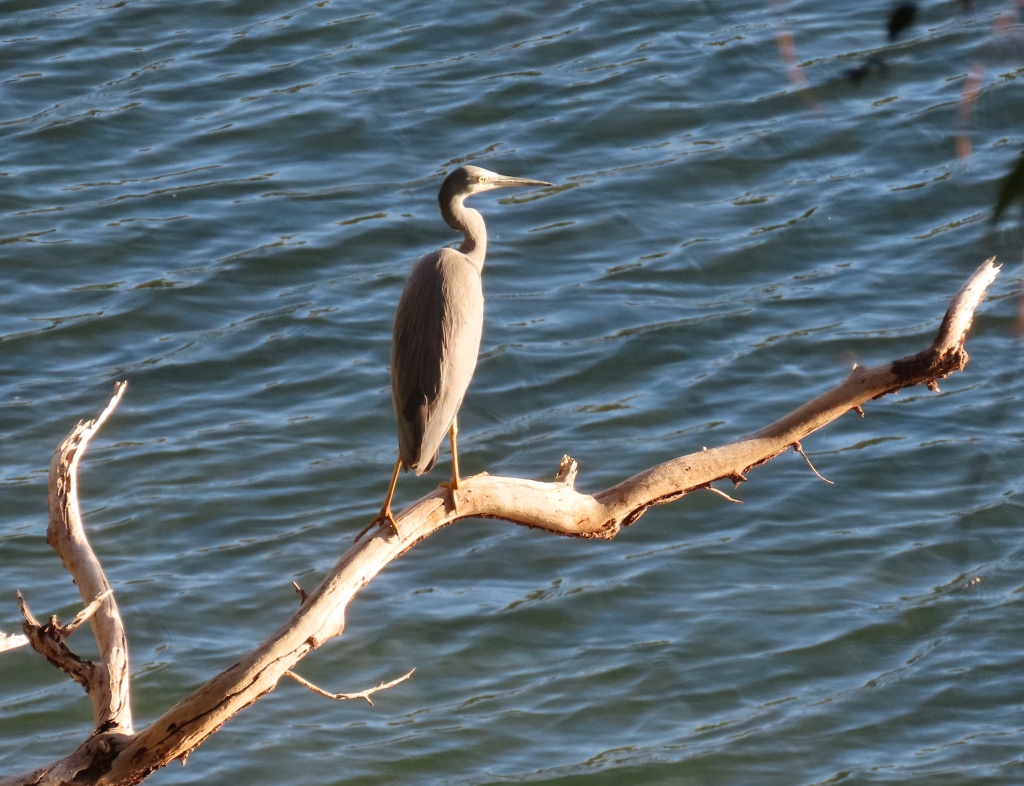
Common name: White-faced Heron
Scientific name: Ardea novaehollandiae
Approximate length: 66-69 cm
Date spotted: 1 April 2023 (autumn)
Location: North Harbour Walk, Sydney Harbour, New South Wales, Australia: 33°47’59.9″S 151°16’04.0″E

The quiet of the duck
It’s early morning on New Year’s Day in the park. The air is still, the crowds haven’t yet arrived. The ducks putter around as only ducks can do.
I’m at Manly Dam park near Sydney. On a quiet morning, the dam water reflects the hills and forest all round. The oranges, browns, and reds in this scene aren’t seasonal, though they do bring autumn to mind. They show the path of a recent fire — a hazard reduction burn conducted to reduce the risk of more damaging fires as summer draws on.
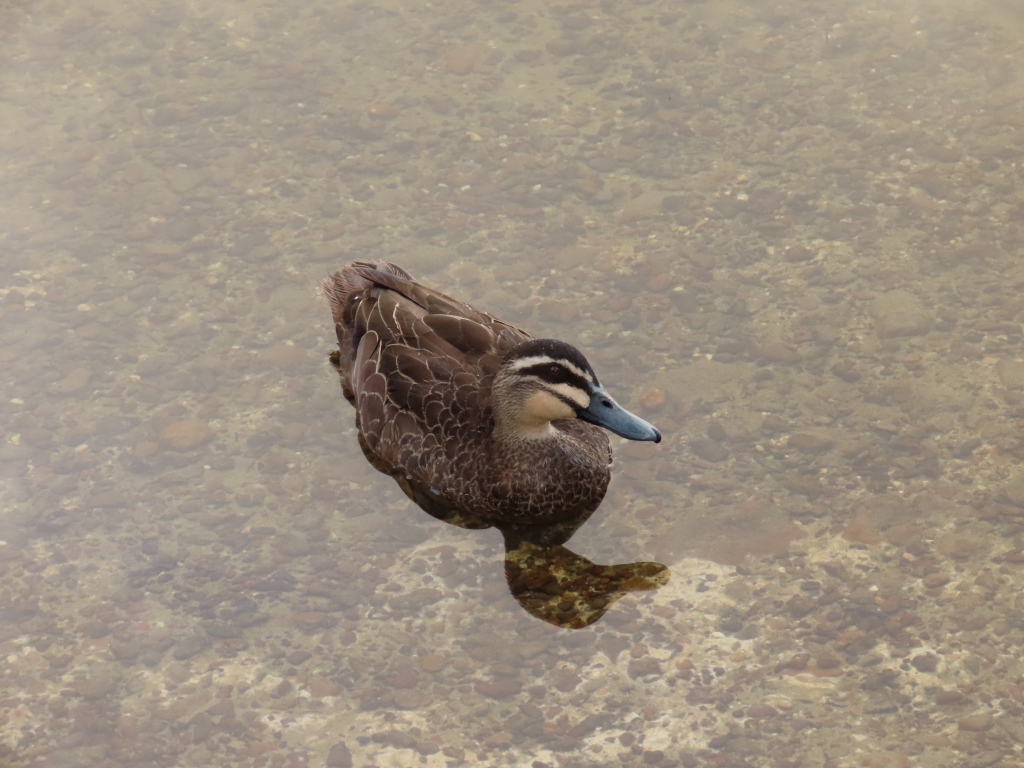
Among the ducks were this Pacific Black Duck:
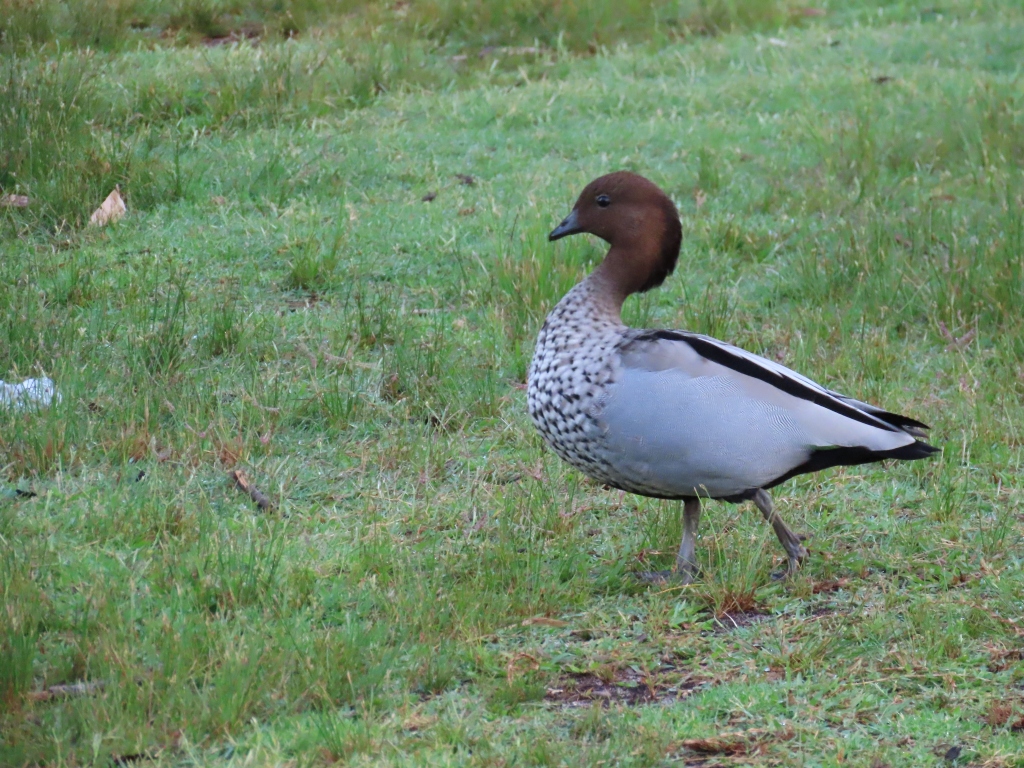
A male Australian Wood Duck:
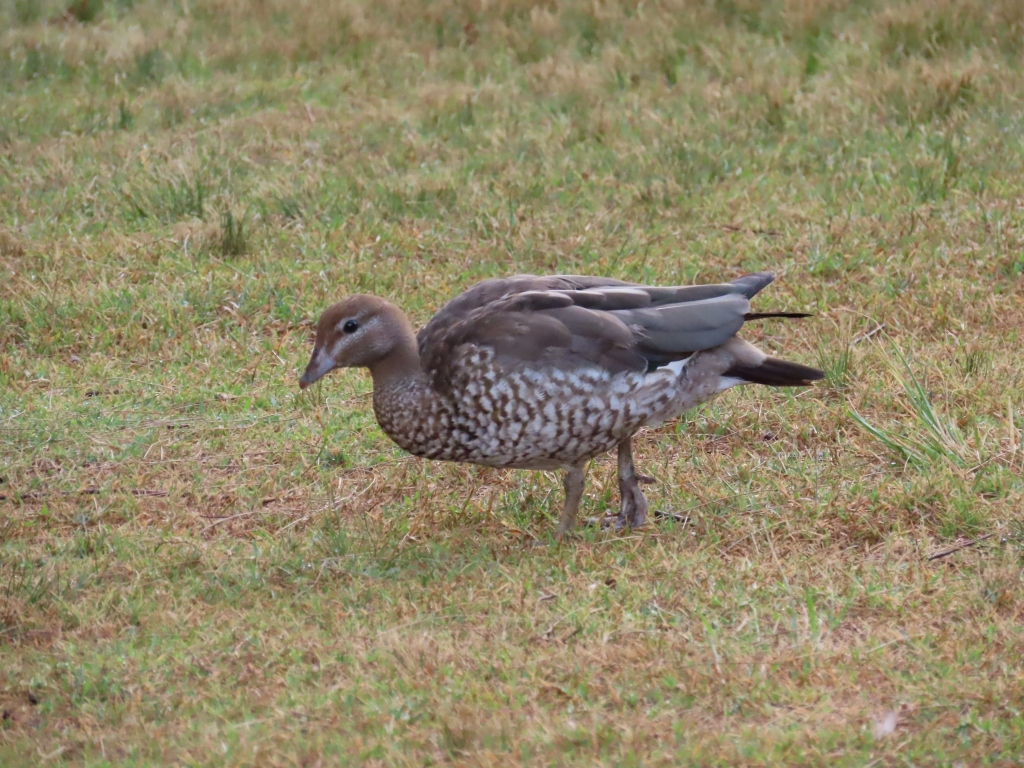
A female Australian Wood Duck:
And a female Mallard with a gorgeous yellow-green beak:

For me as watcher, the meanderings of the ducks enhanced the quiet of the early morning scene.
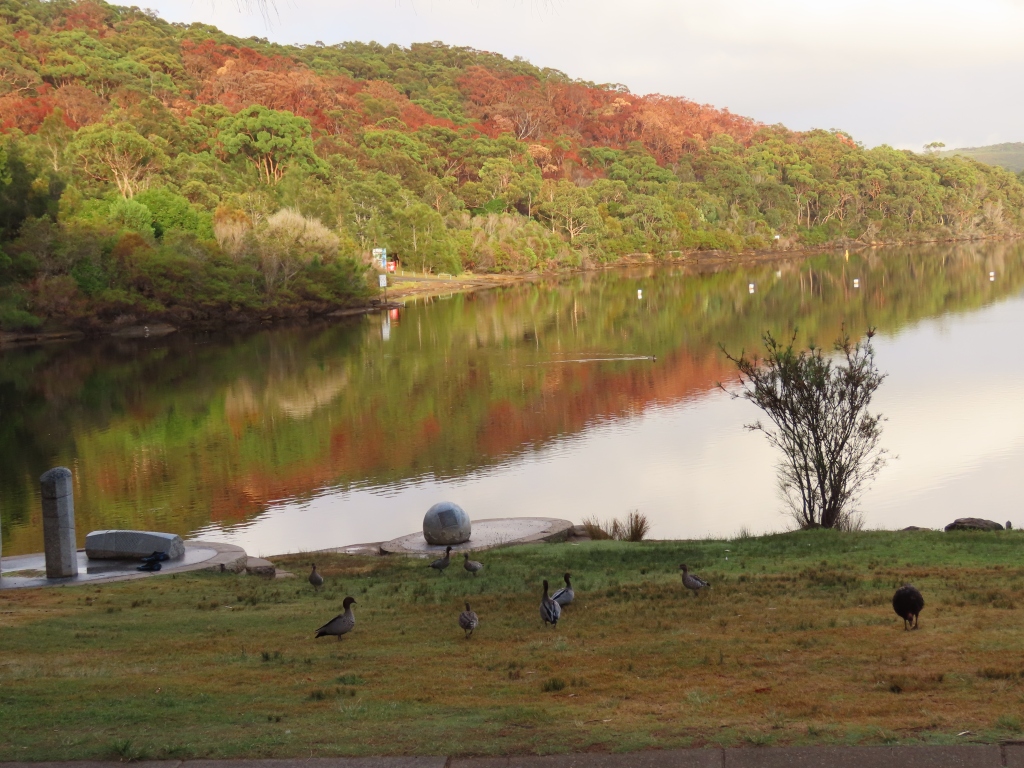
Oh yes, and there’s a Brush Turkey on the right too!
Great Cormorant reflections at Manly Dam
In the early morning, a Great Cormorant holds its wings up to dry:

The cormorant waves its wings gently in the still air. Every now and then, it turns to check the noisy Australian Ravens in the background. As I approach along the path, the cormorant decides to take off and head for a safer spot further up the dam:
Common name: Great Cormorant
Scientific name: Phalacrocorax carbo
Approximate length: 85 cm; wing span 1.5 m
Date spotted: 19 November 2022 (spring)
Location: Manly Dam, New South Wales, Australia: 33°46’34.5″S 151°14’50.5″E

Cape Gulls at Melkbosstrand, South Africa
This is my last post from my holiday in sunny South Africa. The photos in this post come from my frequent early-morning walks along the beach at Melkbosstrand, about 40 minutes’ drive up the west coast from Cape Town.
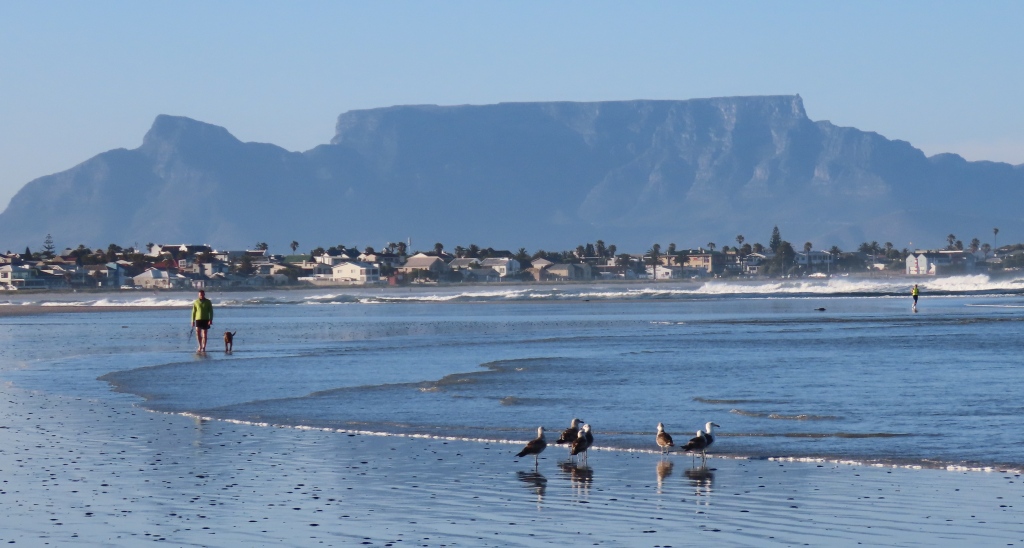
Most of the seagulls on the beach were Cape Gulls. Here’s a group of them with Table Mountain as a backdrop:
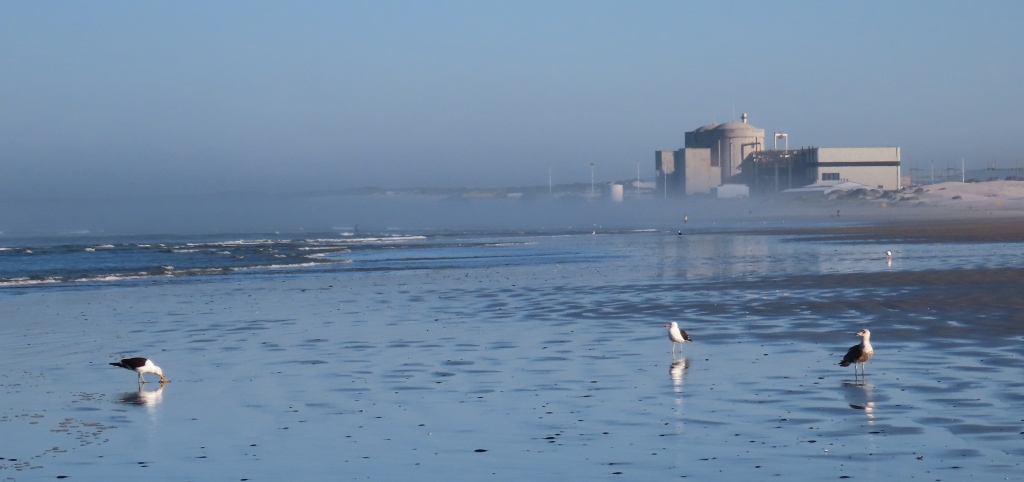
Looking in the other direction along the beach on a clear day, the backdrop is Koeberg nuclear power station:
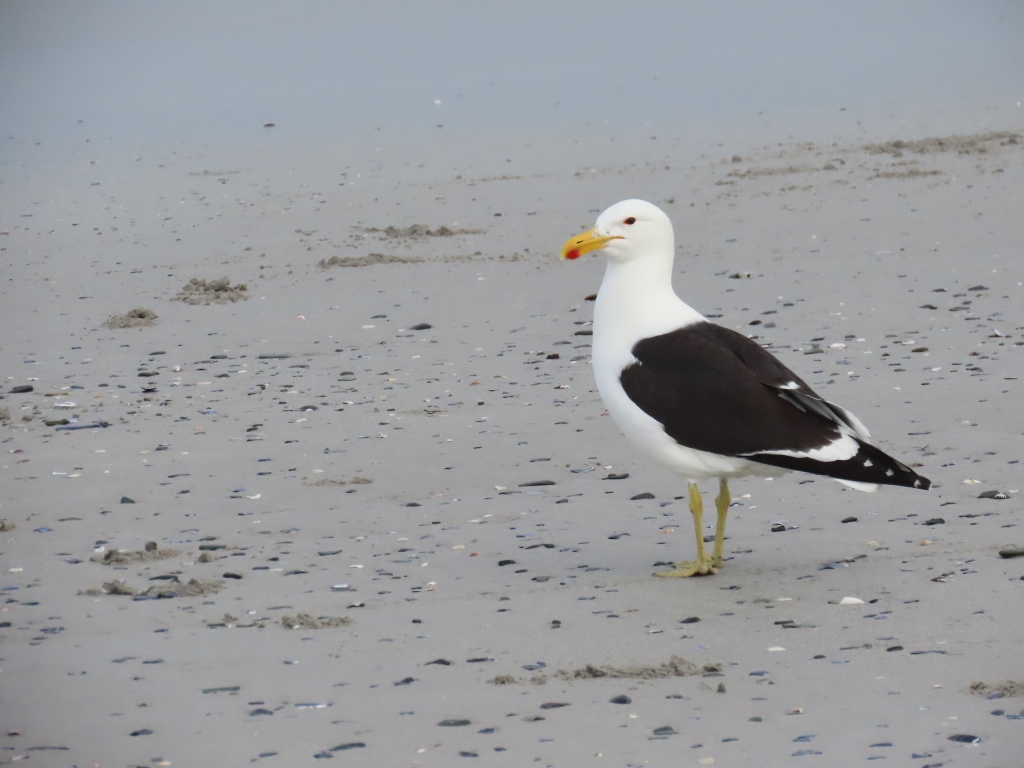
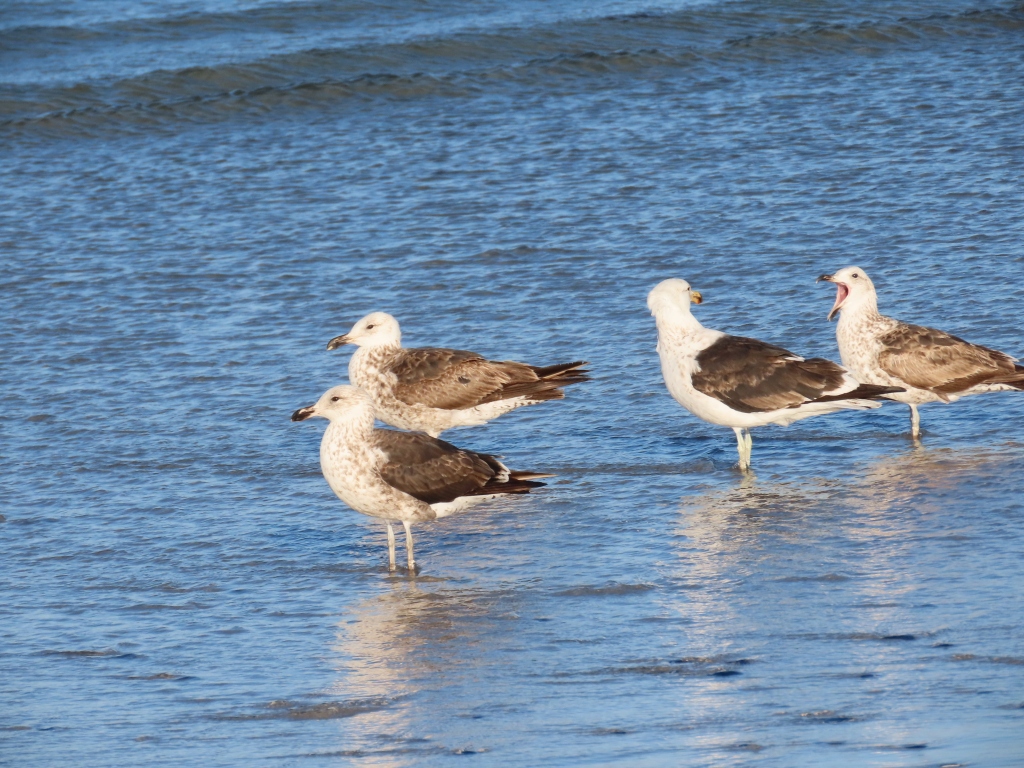
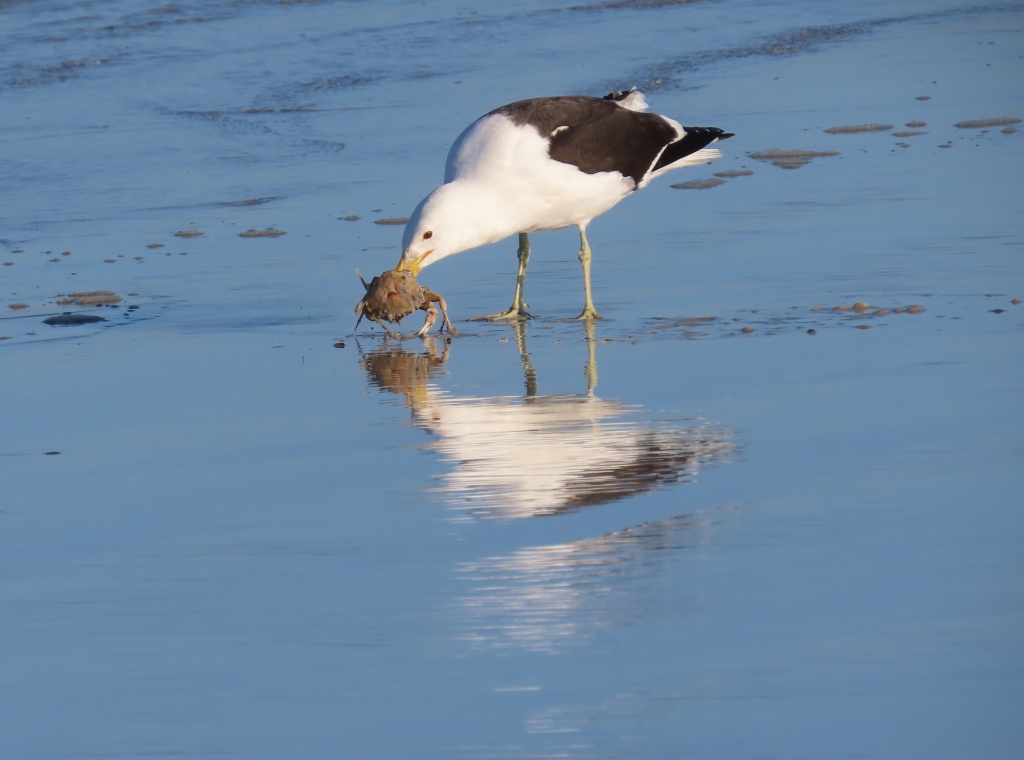
At first I thought I was seeing two different types of gulls, because the juveniles are large and have very different colouring from the adults. The adult is a neat black and white. The yellow beak ends with a distinctive red splotch:
The juveniles are a soft, mottled brown and cream:
Junior coming in to land:
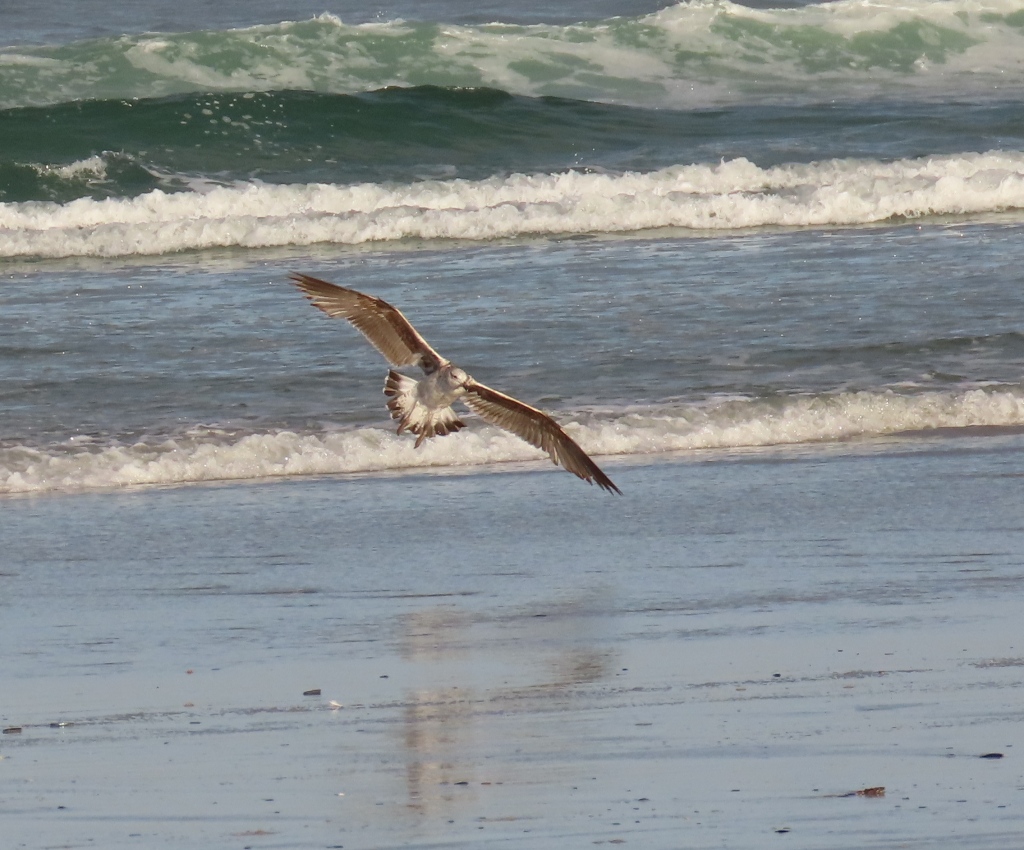
An adult performing a similar manoeuvre:

A story of a crab: I spotted a crab upside-down on its back, with its legs embedded in the wet sand. It was quite large, the body about the size of the palm of my hand. I picked up a shell and used it to gently tap the crab. Instantly, the pincers swung round and tried to grab the shell. Ah, it’s alive! I used the shell to flip the crab over. It immediately dug itself into the sand with its back legs, until just the top of its shell was showing:

A little while later, this scene made me doubly glad that I’d rescued that particular crab. Another crab had become a seagull’s meal:
Cape Gulls in motion:
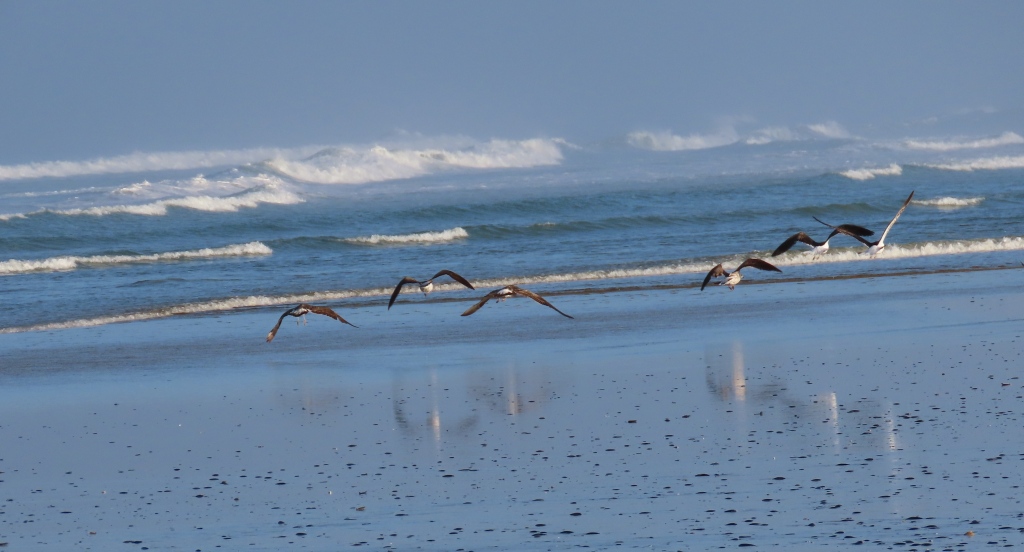
A moody, misty shot:
As a parting shot, seagull footprints on the sand:

My next post will be from back home in Australia!

White-fronted Plover on Melkbosstrand, South Africa
After initially mis-identifying one White-fronted Plover a few days ago (I thought it was an Oystercatcher chick), I was lucky enough to spot another of the little plovers on the beach at Melkbosstrand today:
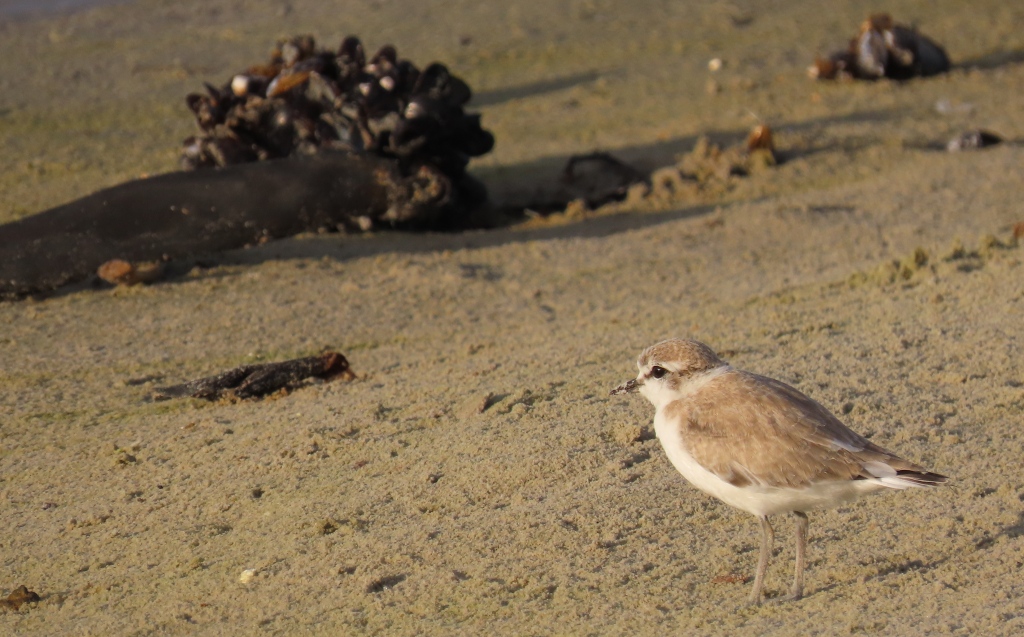
The plover moves in short dashes from one spot to another, freezing for a while after each move until it thinks the coast is clear. In this video, see how fast the little bird’s heart beats as it waits for its next dash!
The next shot shows how well the plover is camouflaged, especially when it hides behind a piece of seaweed:

The bird is behind the nearest clump of seaweed at the bottom of the photo, just to the right of centre.

Crowned Cormorants on Melkbosstrand, South Africa
I’m in the Western Cape, South Africa, for a few days. On my early morning stroll along the beach at Melkbosstrand, I pass a cluster of rocks called Slabbert Se Klippe. This is where the Crowned Cormorants hang out!
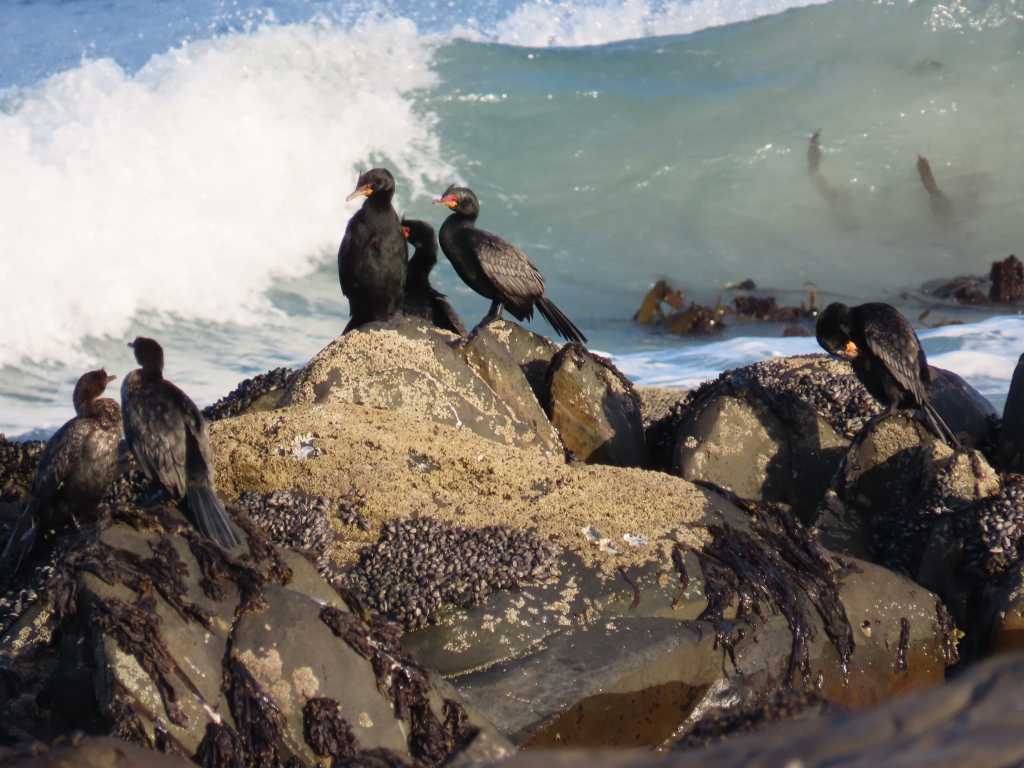
It’s interesting to compare these South African cormorants with the cormorants that I’ve spotted around Sydney.


 Sydney Birder