Blog Archives

Battlestar Grebe
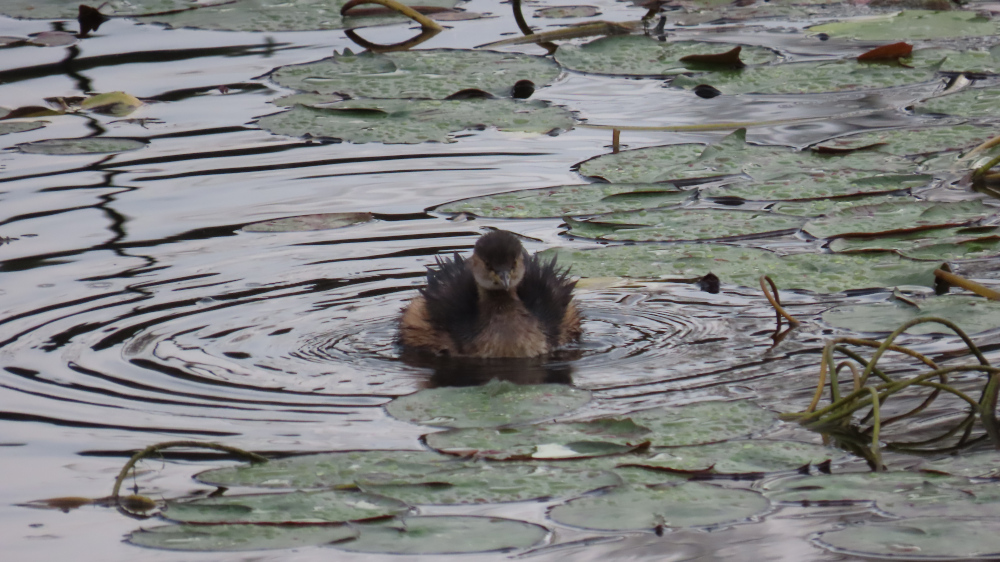
This little Australasian Grebe looks quite fierce, but cute at the same time:
Here’s another pic of the same bird:
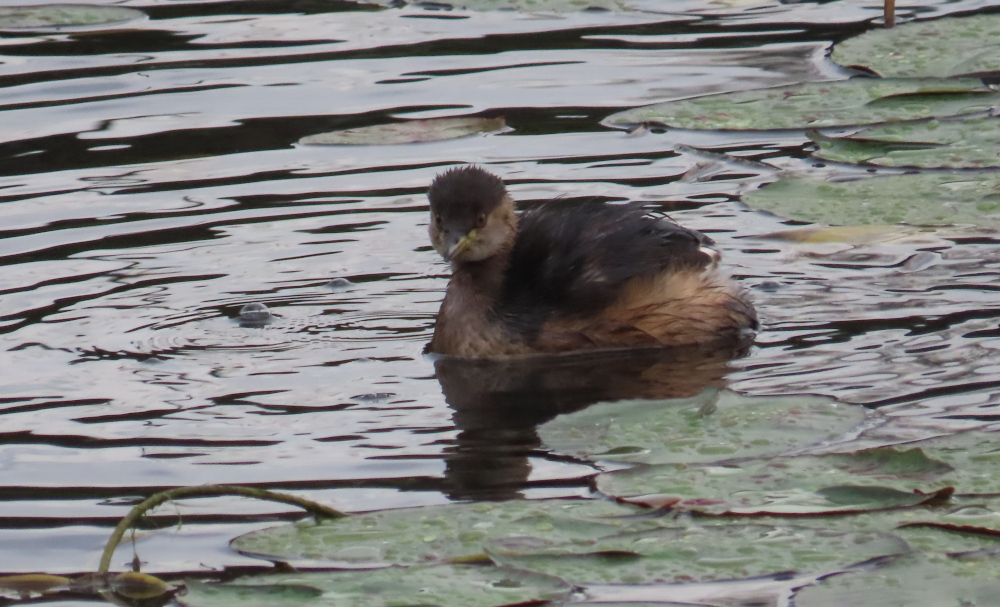
I’ve seen a Grebe once before, way back in April 2020. It was in the same location as this one. Despite my few sightings, these birds are evidently common. They have lobed feet, like the Coot, rather than webbed feet like a duck, and they’re adept divers despite their plump appearance.
Common name: Australasian Grebe
Scientific name: Tachybaptus novaehollandiae
Approximate length: 23-25 cm
Date spotted: 4 May 2024 (autumn)
Location: Manly Dam Park, near Sydney, Australia: 33°46’34.8″S 151°14’49.6″E

Australasian Gannet high above Manly Beach
It was a stormy morning at Manly Beach. Birds circled high above the sea, swooping on the air currents.
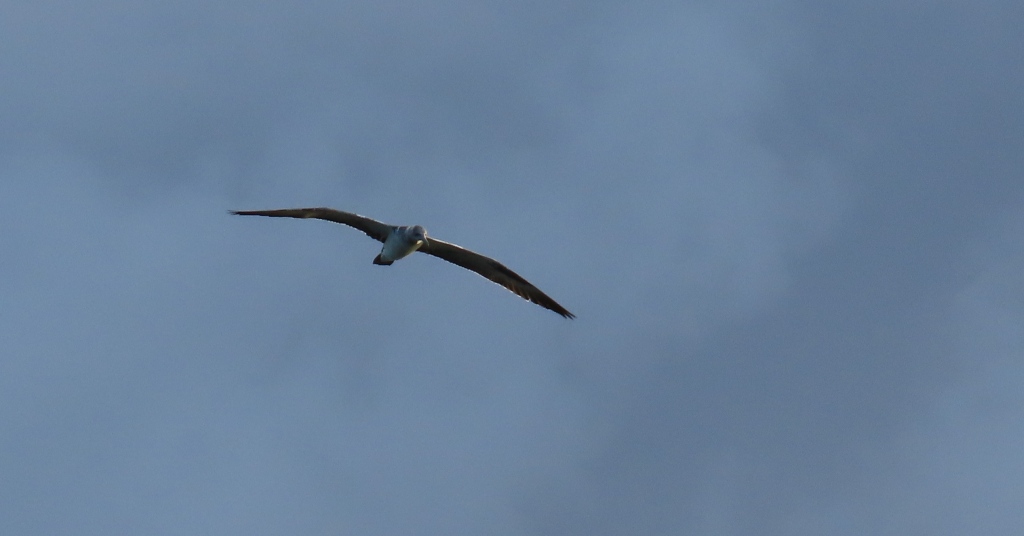
My camera was at maximum zoom, so the pictures are fuzzy. I could see that this bird wasn’t a seagull. Is it an albatross, I wondered? I posted the question on Reddit, and got the answer that the bird is most likely an immature Australasian Gannet.
Here’s another shot of the bird:
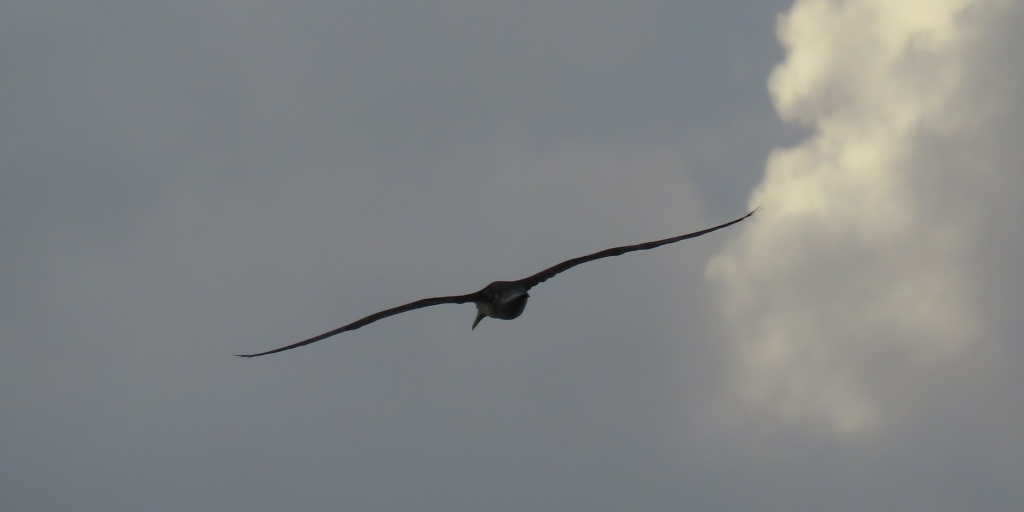
Common name: Australasian Gannet
Scientific name: Morus serrator
Approximate length: 85-90 cm; wingspan: 1.7-1.9 m
Date spotted: 6 May 2024 (autumn)
Location: Manly Beach, New South Wales, Australia: 33°47’43.5″S 151°17’25.2″E
This is a first sighting for me! The description for Australasian Gannet in my bird book says that the gannets enter estuaries, bays, and harbours to shelter from rough seas. That would certainly fit the weather this morning. On Reddit, I learned that it’s quite common for the birds to come close to shore in autumn and winter.
There are more pics of the bird on my Reddit post, for those who want more details. In the meantime, I’ll leave with you with a view of the stormy sky and sea:
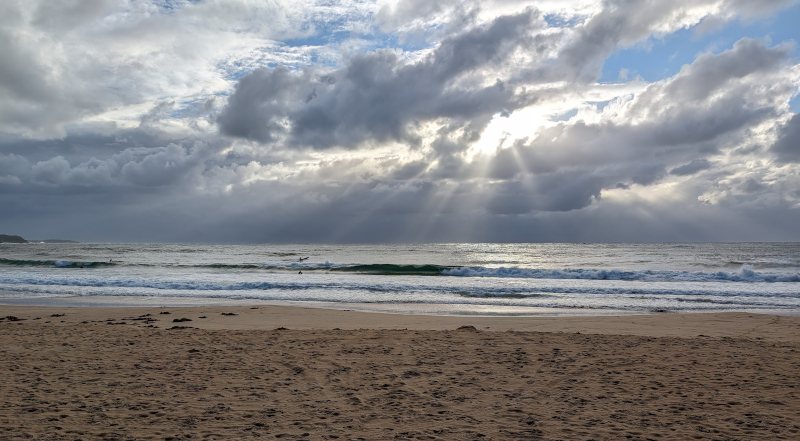

Pied Cormorant: first sighting!
Cormorants and other water birds seem to be my thing at the moment! This is the first time I’ve spotted a Pied Cormorant:

Pied Cormorants look quite similar to Little Pied Cormorants, of which I’ve seen a few. Here’s a Little Pied from an earlier post of mine:

The Pied Cormorants are bigger, and they don’t have that endearing tuft of feathers on their heads. They also have a bright yellow patch on the inside of each eye, which the Little Pied Cormorants lack.
There are five types of cormorants to be found in south eastern Australia. I’ve now sighted four of the five! Just the Black-faced Cormorant still to go.
The Pied Cormorant was on a rock on the edge of the walkway that leads from Manly Beach to Shelly Beach. It’s quite a busy scene, with walkers, canoeists, and swimmers enjoying the water. The cormorant calmly watches the world go by:
Common name: Pied Cormorant
Scientific name: Phalacrocorax varius
Approximate length: 70-80 cm
Date spotted: 5 May 2024 (autumn)
Location: Marine Parade, Shelly Beach, Manly, New South Wales, Australia: 33°48’02.6″S 151°17’46.9″E
Now to spot a Black-faced Cormorant!

Little Black Cormorants in a row
A few days ago, at Forty Baskets Beach on Sydney’s Northern Beaches, seven Little Black Cormorants swam, fished, and sunned themselves.
Little Blacks are easy to distinguish from other types of cormorant in this area of Australia. Apart from being entirely black, they have green-blue eyes that can look quite eery at times.
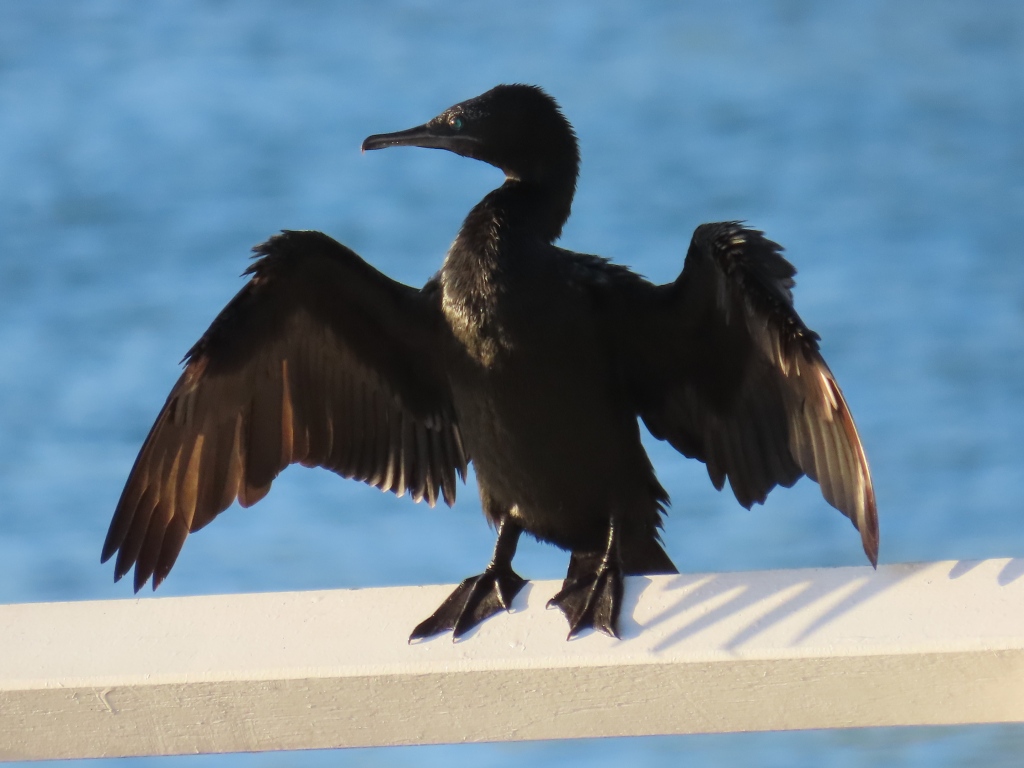
Here are six of the seven Little Black Cormorants, hanging their wings out to dry:

The group stayed together most of the time, both in and out of the water.

Here’s another of the birds showing that pretty blue eye.

Common name: Little Black Cormorant (see other cormorants)
Scientific name: Phalacrocorax sulcirostris
Approximate length: 65 cm
Date spotted: 25 April 2024 (autumn)
Location: Forty Baskets Beach, New South Wales, Australia: 33°48’12.6″S 151°16’12.2″E
Interestingly, a White-faced Heron and a few Silver Gulls followed the cormorants around.
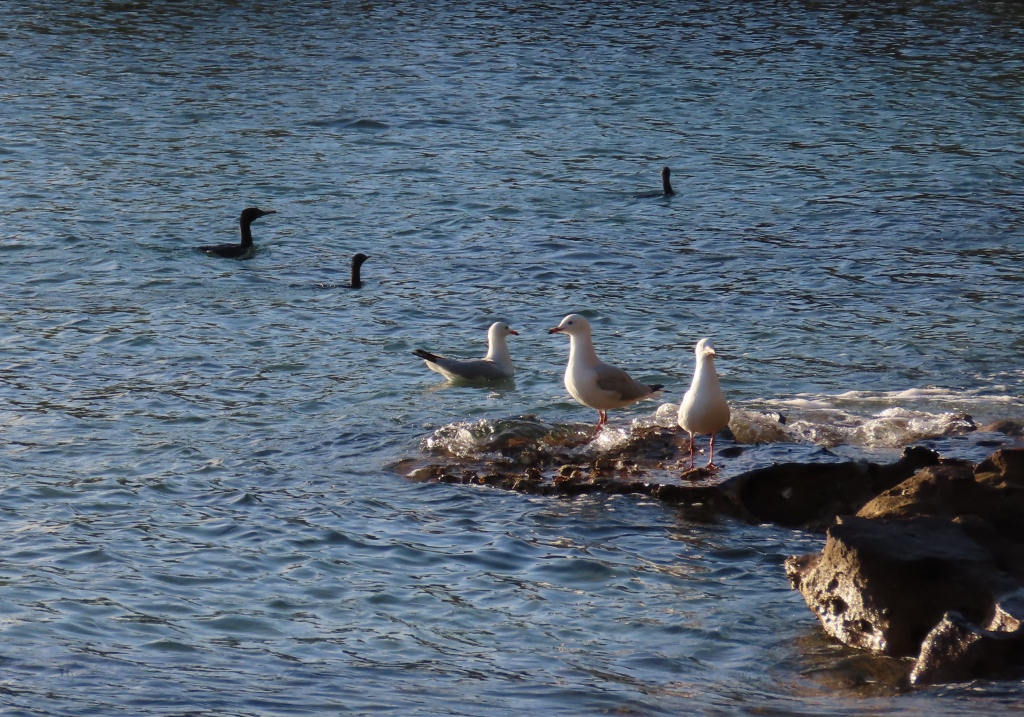
I guess they were interested in any fish that the cormorants might find!
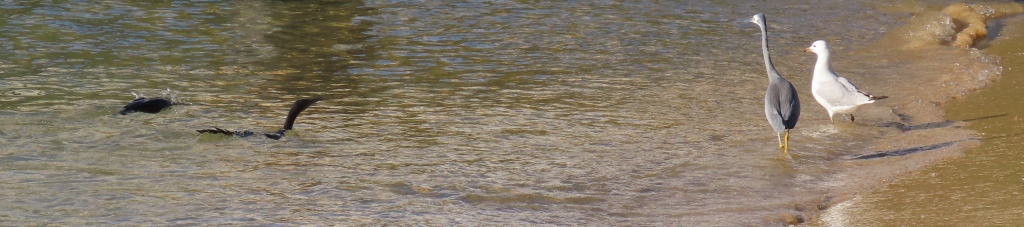
Here’s a better picture of the heron:


Black swans asleep on one leg
In the early morning sunshine, two black swans sleep. Both swans sleep with one leg raised, one leg holding the bird up, and head tucked under a wing. This swan has a watchful eye open:
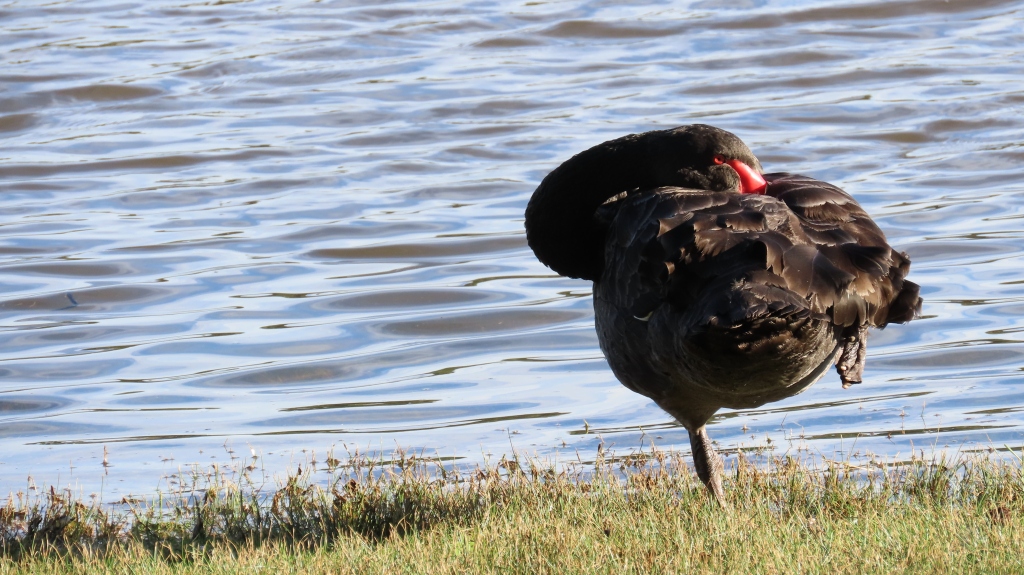
The other swan’s eyes are closed. Its foot is tucked close to its body:
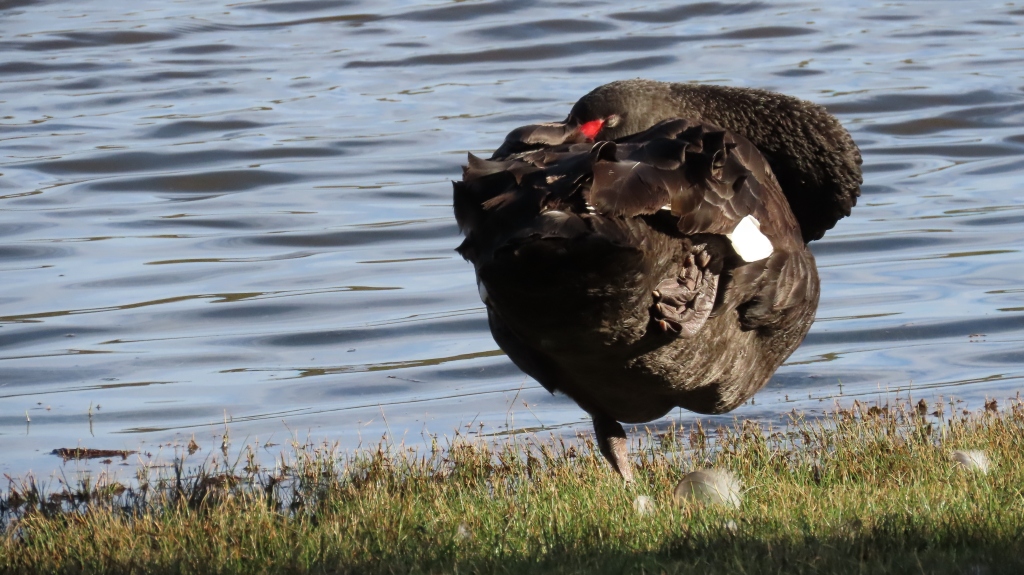
When I pass the same spot a few days later, a swan drifts peacefully on the water:

Black Swans are native to Australia, and are common around Sydney.
Common name: Black Swan
Scientific name: Cygnus atratus
Approximate length: 120 cm
Date spotted: 8th and 17th April 2024 (autumn)
Location: Manly Dam Park, New South Wales, Australia: 33°46’35.4″S 151°14’49.8″E

Birds galore at Long Reef Aquatic Reserve, Collaroy
Last week I spent a couple of hours at Long Reef Aquatic Reserve in Collaroy, NSW. I was there just for a walk with my partner, but I was delighted at the number and variety of birds we encountered.
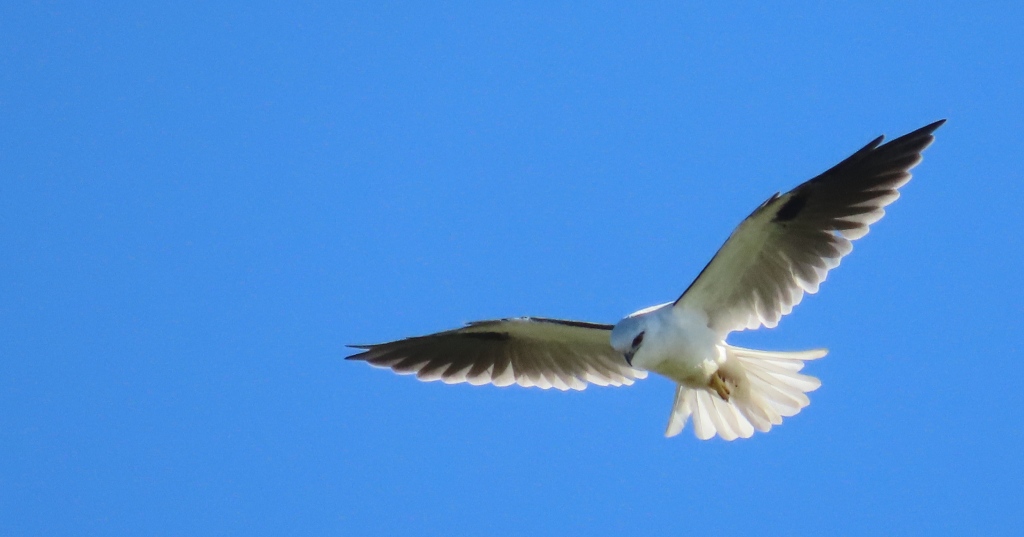
First up were two raptors, a real treat to see. A Black-shouldered Kite (Elanus axillarus) hovered in the air, effortlessly riding the currents and looking out for prey:
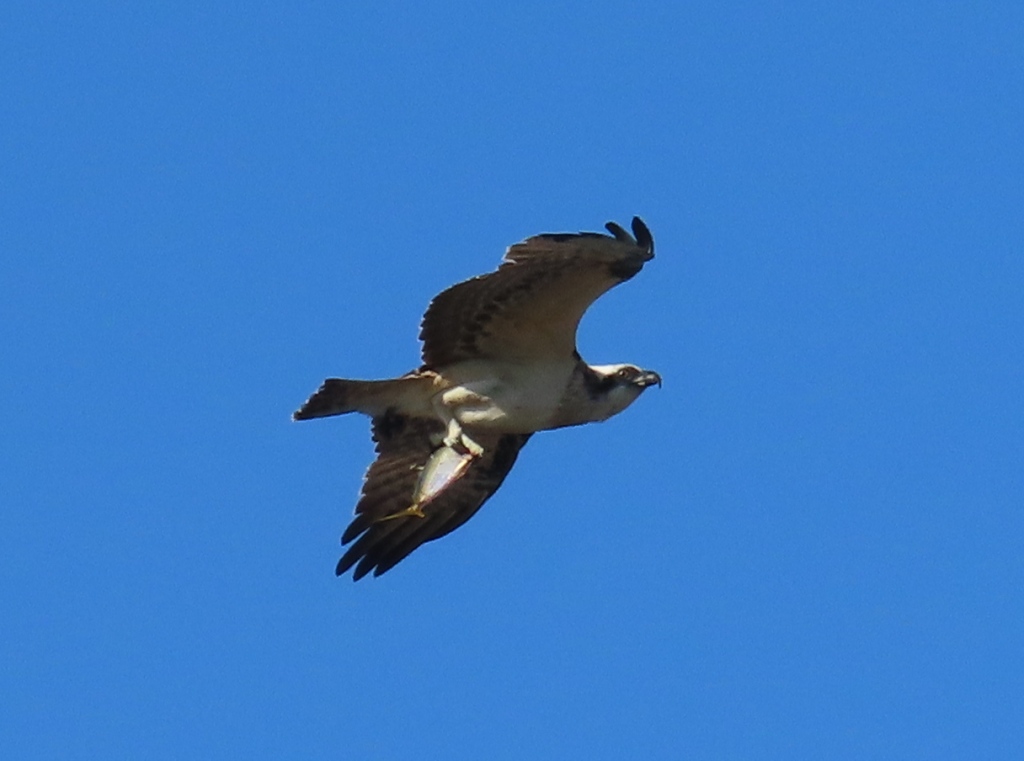
An Eastern Osprey (Pandion cristatus) soared in circles, grasping a half-eaten fish in its feet:
I’ve written a separate post about these two birds, a third raptor, and some paragliders who shared the air currents with the kite: Three raptors in one day.
Huge Pelicans (Pelecanus conspicillatus) perched on the lampposts and glided above my head. Here’s one of them, looking sad and wise:
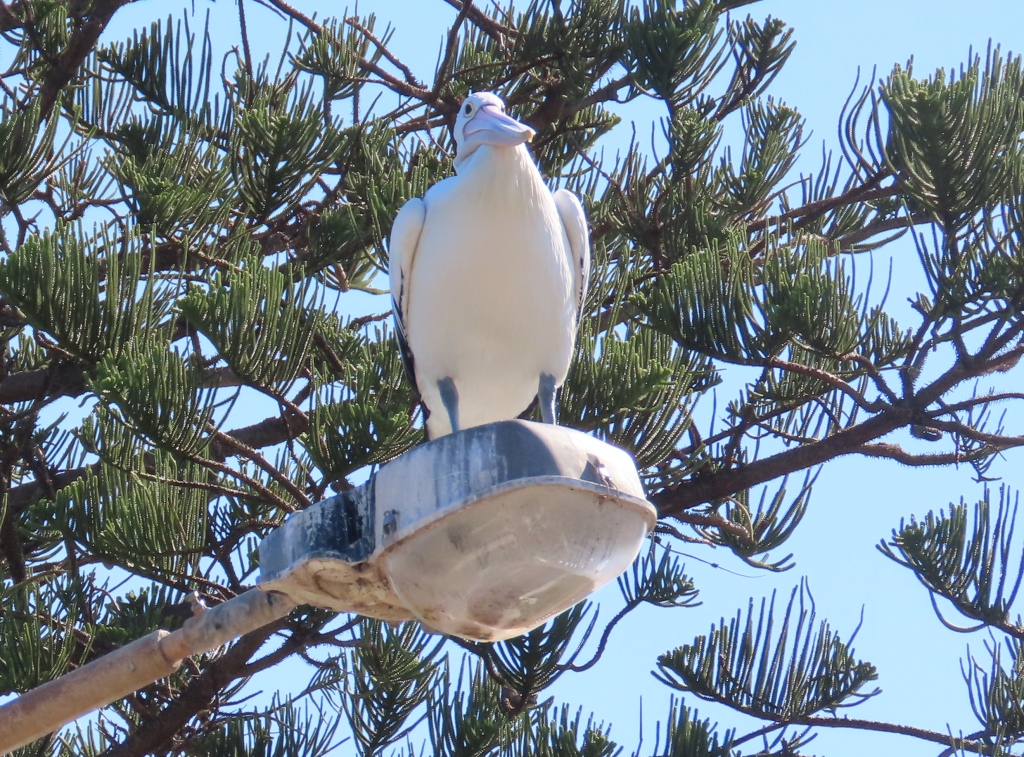
Another post has more pictures of these magnificent birds: Three pelicans on a lamppost.
A female Darter (Anhinga melanogaster) sat on a metal structure above the beach, surveying all the action with a cautious eye:

Silver Gulls (Larus novaehollandiae) wheeled around the fishermen at the edge of the rock plate:

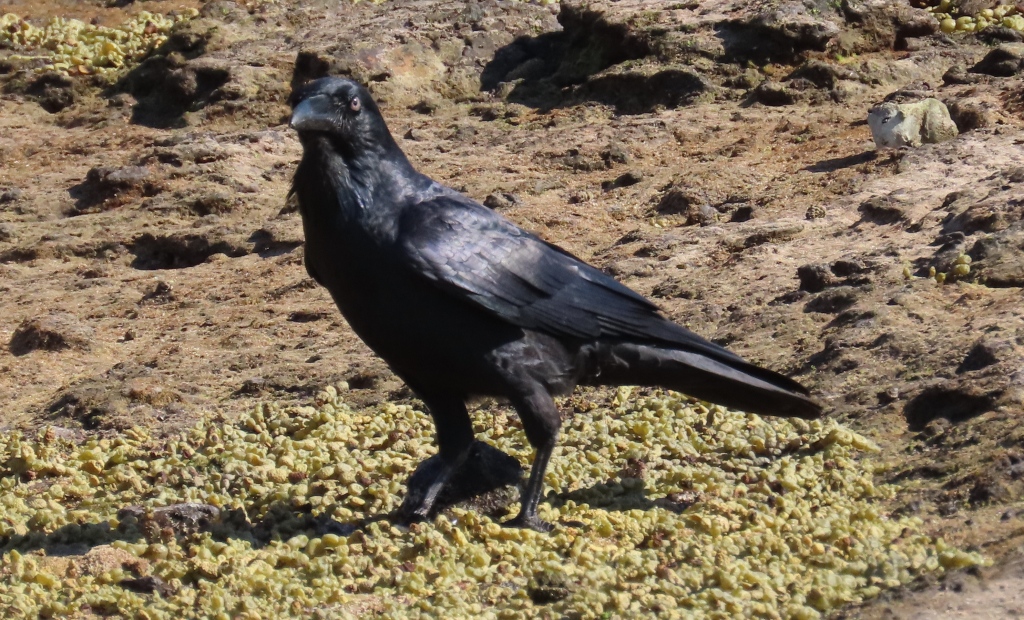
Australian Ravens (Corvus coronoides) picked through the stranded seaweed in search of a snack:

Here’s a close-up of one of the ravens:
Fish skulked in a nearby rock pool:

A crab came out from under a rock, ready to dash back in at the slightest sign of danger:

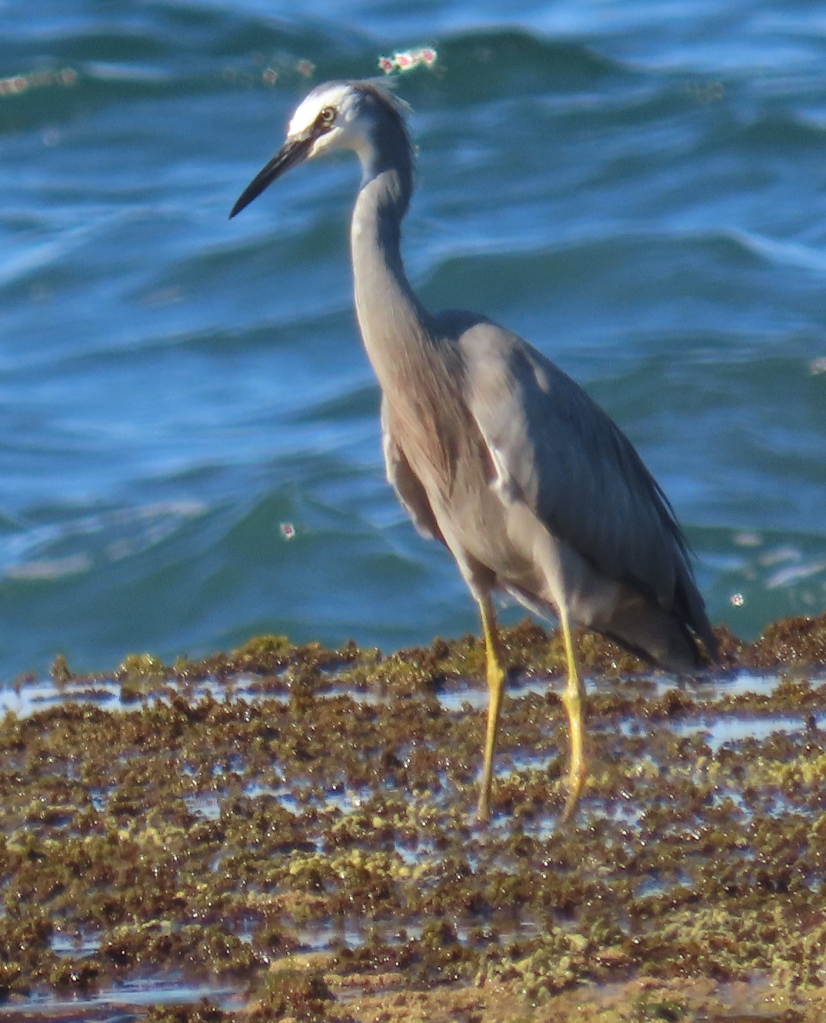
A White-faced Heron (Ardea novaehollandiae) patrolled the border between land and sea:
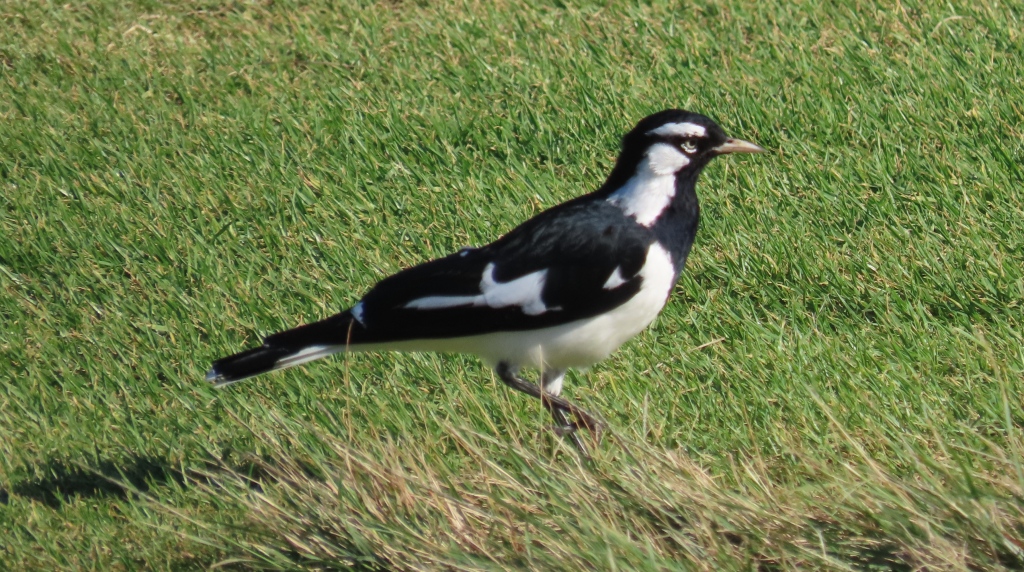
On the grassy headland above the beach, a Magpie-lark (Grallina cyanoleuca) owned the land. These birds are also called Peewees, because of the loud shrill call (peeee-wheee) that they make whenever a person or anything else comes too close:
To close off with, here are a couple of shots showing the colours and serenity of the Long Reef Aquatic Reserve that afternoon. First, looking from the rock plate towards the land:
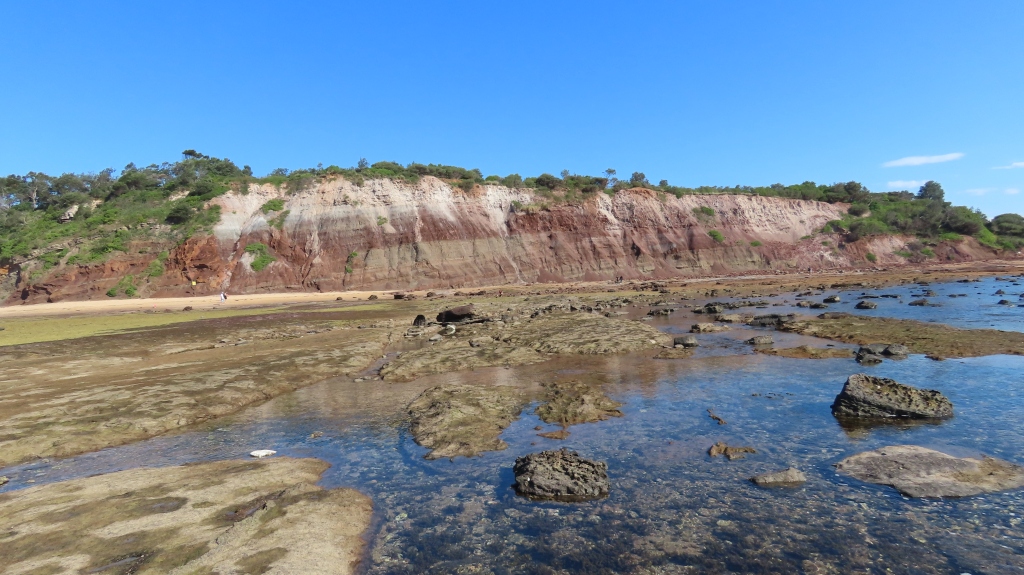
Then looking out to sea:


Three pelicans on a lamppost
Pelicans are very large and weighty birds: 1.7 metres from head to tail, weighing up to 13 kilograms. So, not a bird that you’d expect to see perched on a street lamp. The idea of three of them perched on the same lamp at the same time sounds unlikely, if not bizarre.
Yet, when I arrived at Long Reef Aquatic Reserve in Collaroy, I was greeted by this sight:

No wonder the street lamps are of sturdy construction!
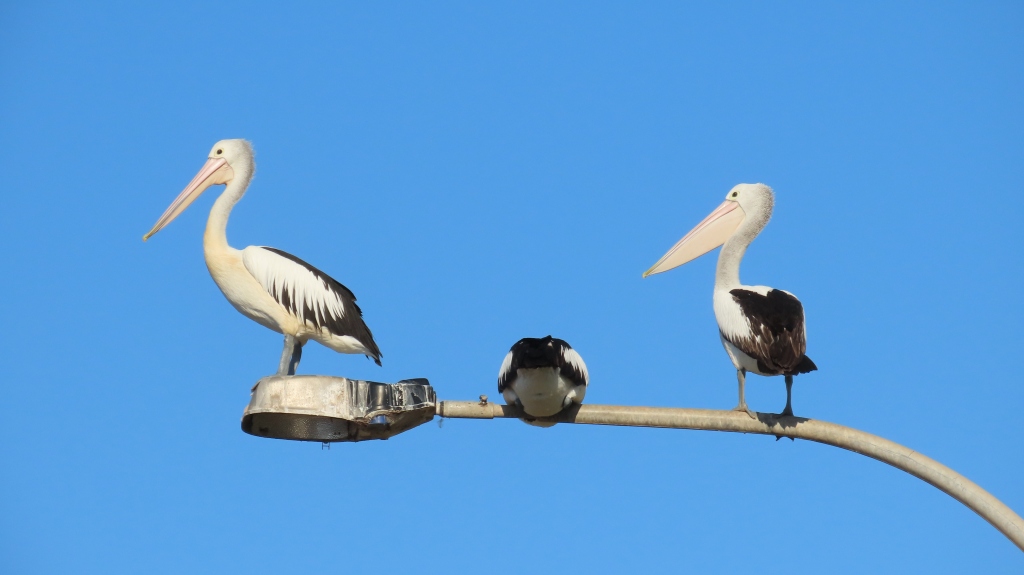
What a face! A little glum, a little world-weary, but so wise:
When flying, a pelican is graceful and beautiful. Even so, it reminds me of an armchair in the sky:
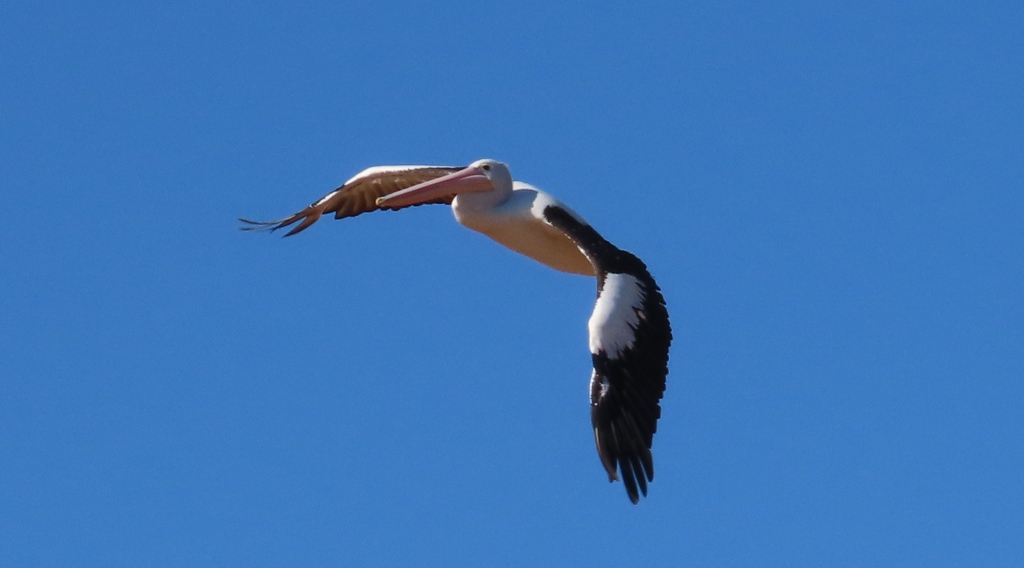
Three Australian Pelicans head off towards the ocean, with a White-faced Heron in the distance:

Common name: Australian Pelican
Scientific name: Pelecanus conspicillatus
Approximate length: 170 cm
Approximate wingspan: 2.5m
Date spotted: 24 March 2024 (summer)
Location: Long Reef Aquatic Reserve, Collaroy, New South Wales, Australia: 33°44’19.7″S 151°18’42.0″E

Three raptors in one day
A few days ago, I was super lucky: I saw three birds of prey in one afternoon. The first was an Eastern Osprey, holding a fish in its claws. The second was a Black-shouldered Kite, hovering above the grasslands near the beach. For a short time, there were two of these birds quite close to each other. The third was a Peregrine Falcon, soaring in the sky above the suburbs.
Eastern Osprey
The Eastern Osprey was exciting to see. It was quite large, flying high in the sky above Long Reef Aquatic Reserve in Collaroy. At first I thought this large bird was one of the pelicans that were floating about. When I saw it through my camera lens, I spotted the fish in the bird’s grip.
The next picture is fuzzy and only a partial shot of the bird, but it gives a good idea of the colouring of the underside:
The next picture shows the Osprey’s long wingspan — about 1.5 metres. The bird is flying away from the camera:
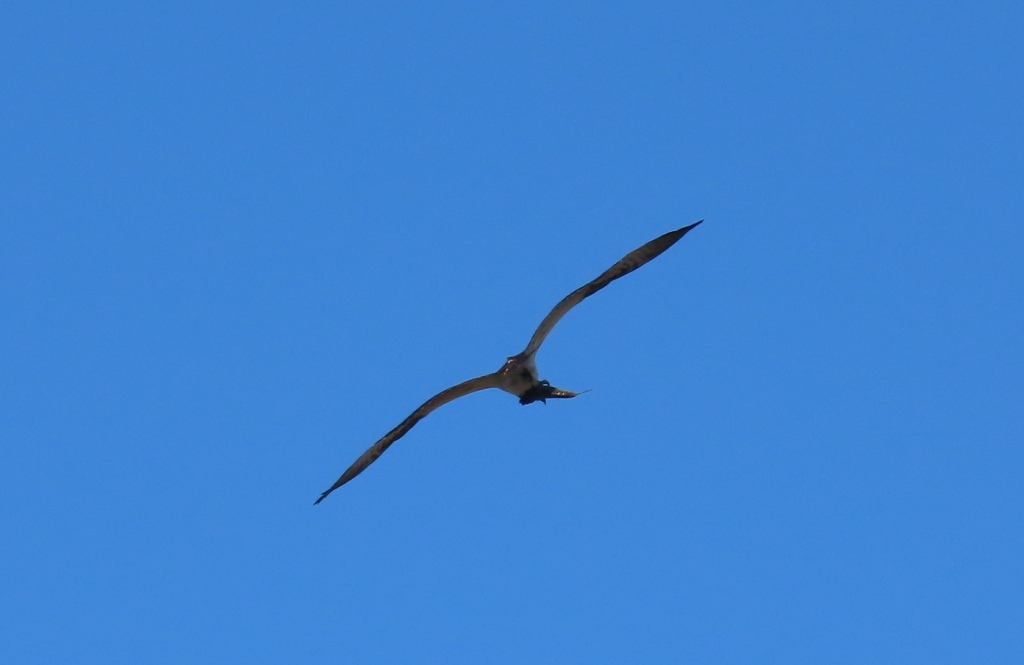
Common name: Eastern Osprey
Scientific name: Pandion cristatus
Approximate length: 57 cm
Date spotted: 24 March 2024 (summer)
Location: Long Reef Aquatic Reserve, Collaroy, New South Wales, Australia: 33°44’19.7″S 151°18’42.0″E
Black-shouldered Kite
Nearby, a Black-shouldered Kite hovered above the grassy, bushy stretch that runs along the coast. It was amazing how the bird hung almost motionless in the air, held aloft by the air currents:
The next photo shows a slightly different angle. It might be the same bird or a different one, as there were two in the area:
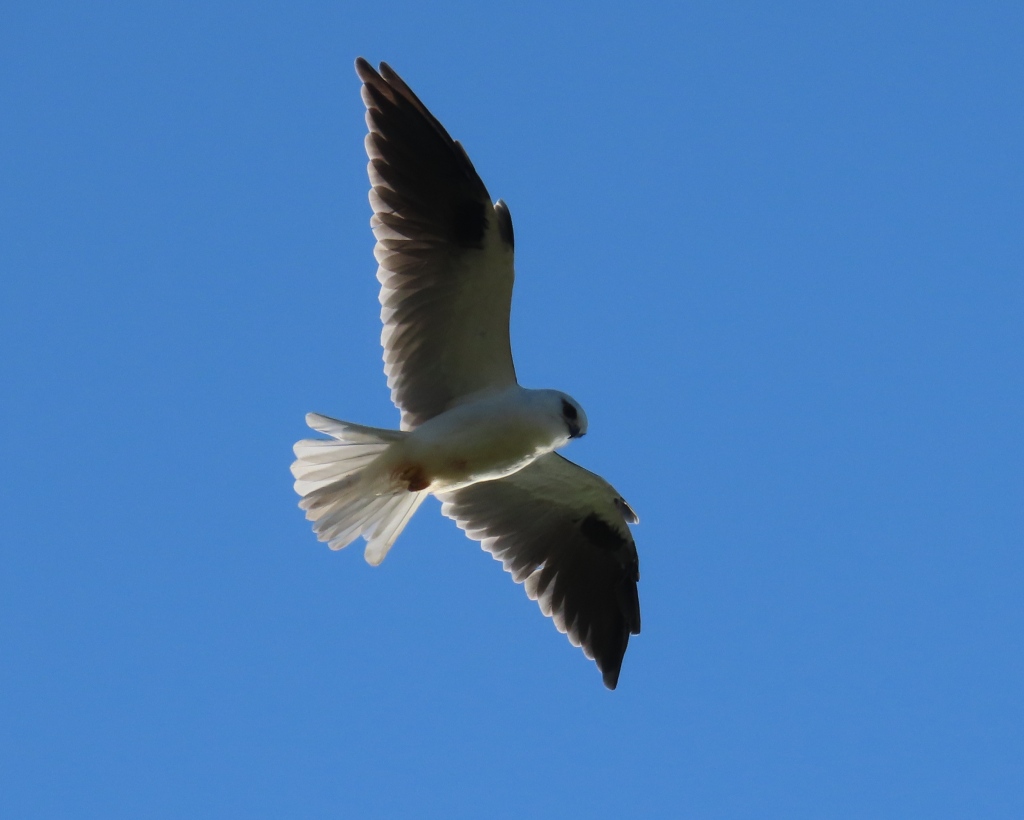
Also in the area were some paragliders, enjoying the same up currents as the birds. The gliders kept a respectful distance, and the birds didn’t seem worried at all, as you can see in the next video. The second Black-shouldered Kite makes a brief appearance part-way through:
Common name: Black-shouldered Kite
Scientific name: Elanus axillarus
Approximate length: 35 cm
Date spotted: 24 March 2024 (summer)
Location: Long Reef Aquatic Reserve, Collaroy, New South Wales, Australia: 33°44’19.7″S 151°18’42.0″E
Peregrine Falcon
On my way home, I saw a Peregrine Falcon soaring high in the sky. As I took the photo, the bird turned its head and looked down at me:

The images are fuzzy because my camera isn’t super powerful, but you can still make out the features of the Peregrine Falcon:
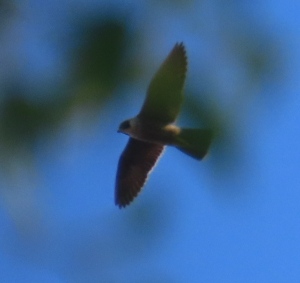
Common name: Peregrine Falcon
Scientific name: Falco Peregrinus
Approximate length: 42 cm
Date spotted: 24 March 2024 (summer)
Location: Allambie Heights, New South Wales, Australia: 33°46’18.2″S 151°15’39.4″E
It’s not often that I see one of Australia’s birds of prey. To see three different types in one day was a raretreat.

Little Pied Cormorant on honeycomb rock
Little Pied Cormorants are quite common in the waters around Sydney. Most often, you see them from afar, and they just look like another black and white bird. But when you see them through the camera zoom, they’re rather cute. They have big floppy black feet, a Tintin-like hairstyle, and a goofy smile:

Their tail is short and stubby, and seems to be useful in preventing them from teetering over backwards. That tuft of black hair extends down the back of their necks, adding a touch of sophistication:
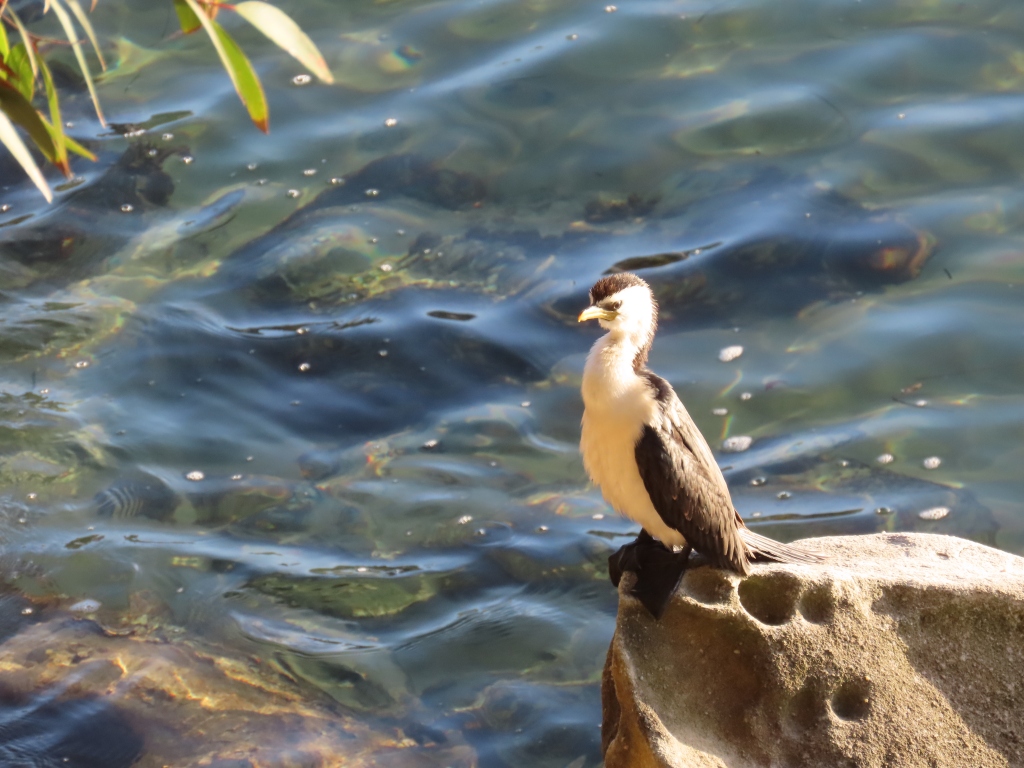
The rock that this cormorant is sitting on has attractive honeycomb weathering patterns:

In this video, the cormorant is stretching its neck and gulping to help its latest meal go down.
Common name: Little Pied Cormorant
Scientific name: Phalacrocorax melanoleucos
Approximate length: 60 cm
Date spotted: 25 February 2024 (summer)
Location: North Harbour Walk, Sydney Harbour, New South Wales, Australia: 33°48’05.9″S 151°16’10.1″E

Black Swan grooming
Early in the morning, a Black Swan was grooming.
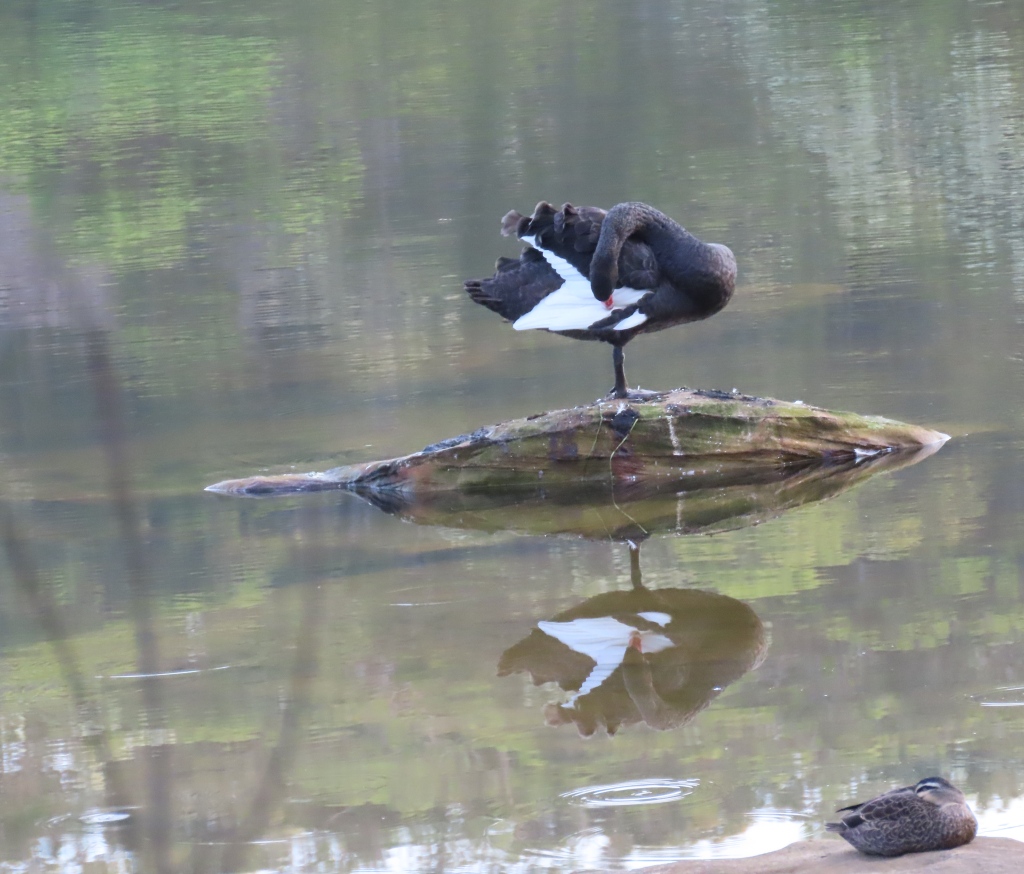
In the foreground, a Pacific Black Duck still sleeps.

Common name: Black Swan
Scientific name: Cygnus atratus
Approximate length: 120 cm
Date spotted: 4 February 2024 (summer)
Location: Manly Dam Park, New South Wales, Australia: 33°46’35.4″S 151°14’49.8″E


