Blog Archives

Masleep! Or, sleepy Pelican contortions
Early this morning, a pelican dozed on the banks of Manly Dam:

I’ve never seen a pelican asleep before. It looked a bit weird and back-to-front.

At one stage, the pelican decided a yawn was in order:
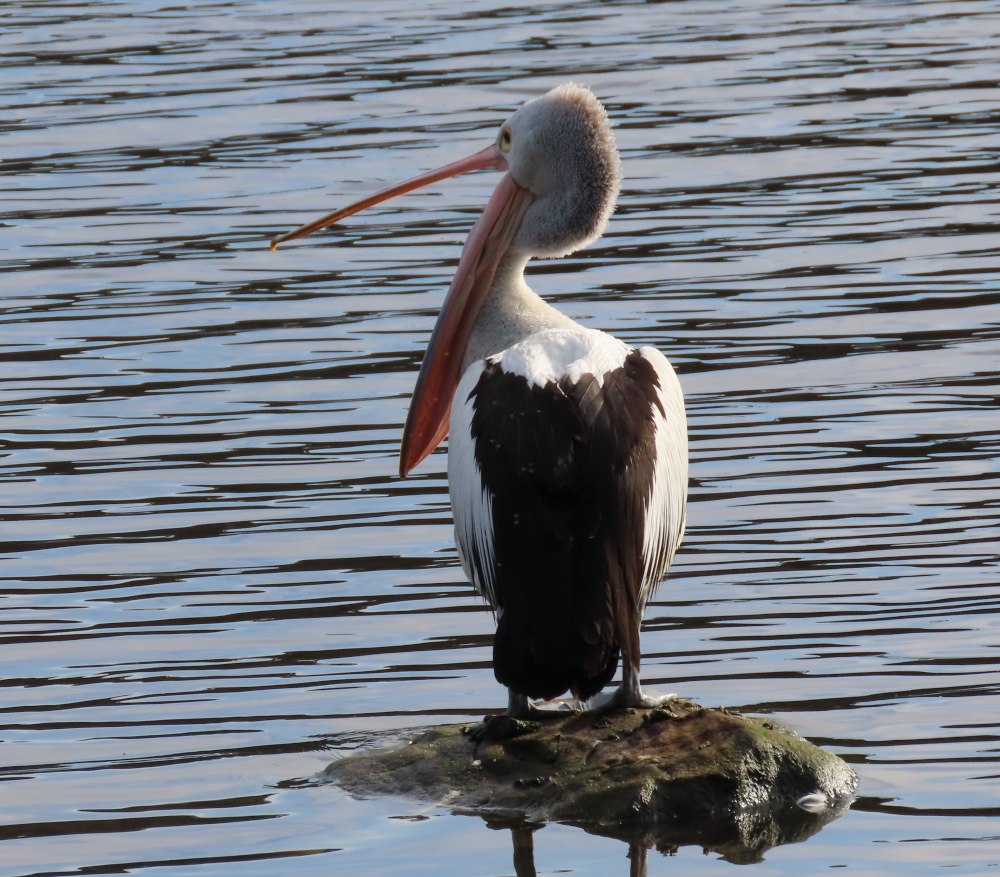
That pesky pouch beneath its beak got a bit tangled and inside-out:

Once that mess was sorted, the pelican manoeuvred its beak sideways onto its back:

With the beak nicely pointed straight down its back, the bird folded its wings over the beak. A bit like a bat, but the right way up!

Optimal sleeping position achieved:

Here’s the same bird, awake and looking as well put together as a pelican can:

It’s not often that you see a pelican at Manly Dam. I’m pretty sure this is a first for me, though I’ve seen them often on the beaches around Sydney.
Common name: Australian Pelican
Scientific name: Pelecanus conspicillatus
Approximate length: 170 cm
Approximate wingspan: 2.5m
Date spotted: 9 September 2024 (spring)
Location: Manly Dam Park, New South Wales, Australia: 33°46’31.2″S 151°14’46.6″E

Call of the Sacred Kingfisher
Ever wondered what a kingfisher sounds like? Well, you’ll know after watching this video, for a Sacred Kingfisher anyway. The call is a series of chirps, all on more or less the same note. Not very exciting really, for such a pretty bird! You hear them mostly around breeding time, when the calls can be quite insistent.
At the start of the video, you see and hear the kingfisher calling. The camera then zooms out to show the surroundings, including a Great Egret, a Darter, and a Coot. The scene is set at Manly Dam in Sydney’s Northern Beaches.
Set the video settings to HD for best results:
Despite their name, these kingfishers don’t often eat fish! Instead, they prey on small reptiles and large insects, and occasional crustaceans from the water’s edge.
Common name: Sacred Kingfisher
Scientific name: Todiramphus sanctus
Length: 20-23 cm
Date spotted: 8 September 2024 (spring)
Location: Manly Dam Park, New South Wales, Australia: 3°46’31.2″S 151°14’46.6″E

Looking great!
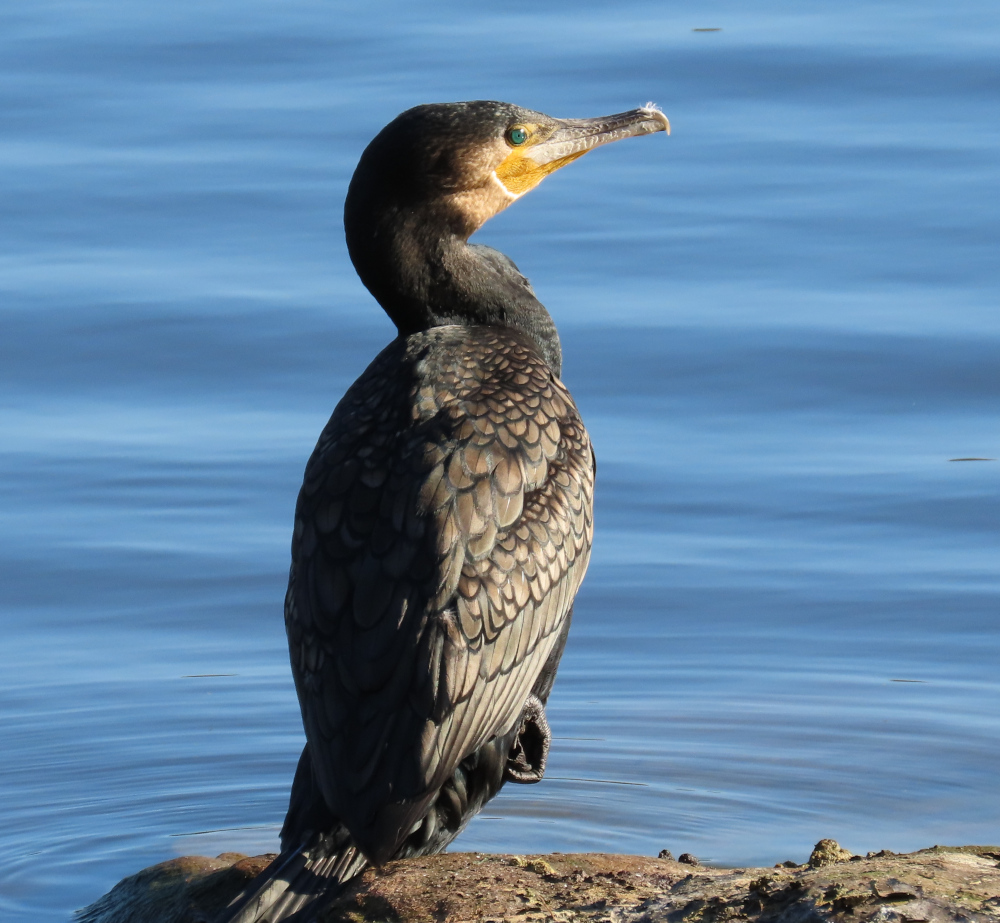
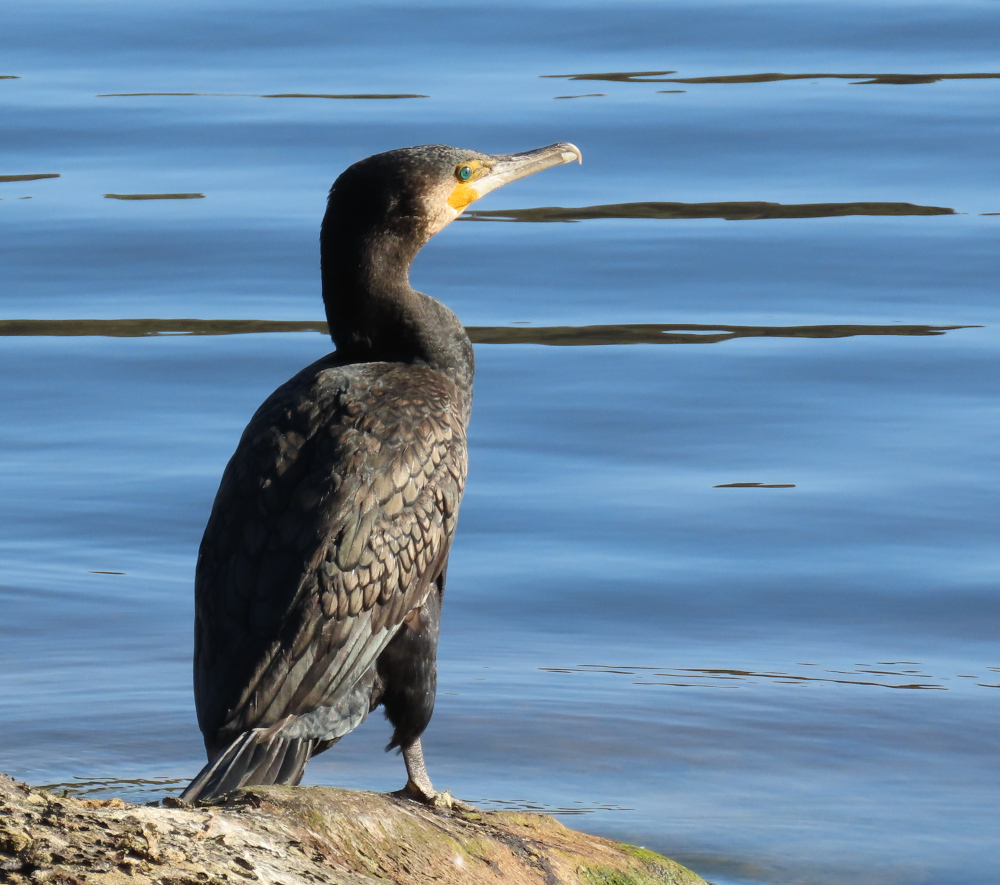
These two Great Cormorants were chilling at Manly Dam, in Sydney’s Northern Beaches. I didn’t realise how pretty their wing feathers are until I saw them through the camera zoom.
The first bird’s image is slightly spoiled by the bit of fluff on its nose, but check out those clear turquoise eyes and white-and-yellow face markings:
The second bird has no fluff problems, and stands proud:
Common name: Great Cormorant
Scientific name: Phalacrocorax carbo
Approximate length: 85 cm; wing span 1.5 m
Date spotted: 6 September 2024 (spring)
Location: Manly Dam, New South Wales, Australia: 33°46’34.5″S 151°14’50.5″E

White-necked Herons in Sydney’s Northern Beaches
Yesterday, walking at the north western end of Manly Dam, I saw four large water birds flying high above the trees. Here are two of them:

Intrigued, I followed them around the corner where, luckily, they landed high in a tree. I managed to photograph two of them, before they took off again:
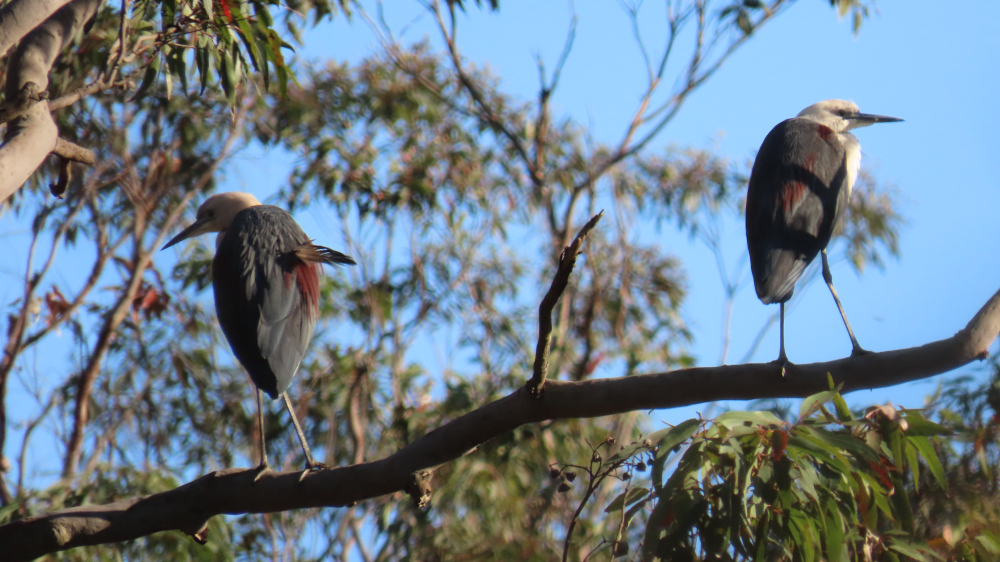
They’re White-necked Herons! This is my first sighting of these birds. They’re large and impressive, with those long legs and undertaker stance. The bird on the left has a misplaced feather that, combined with the reddish colouring on its wing tips, looks a little painful.
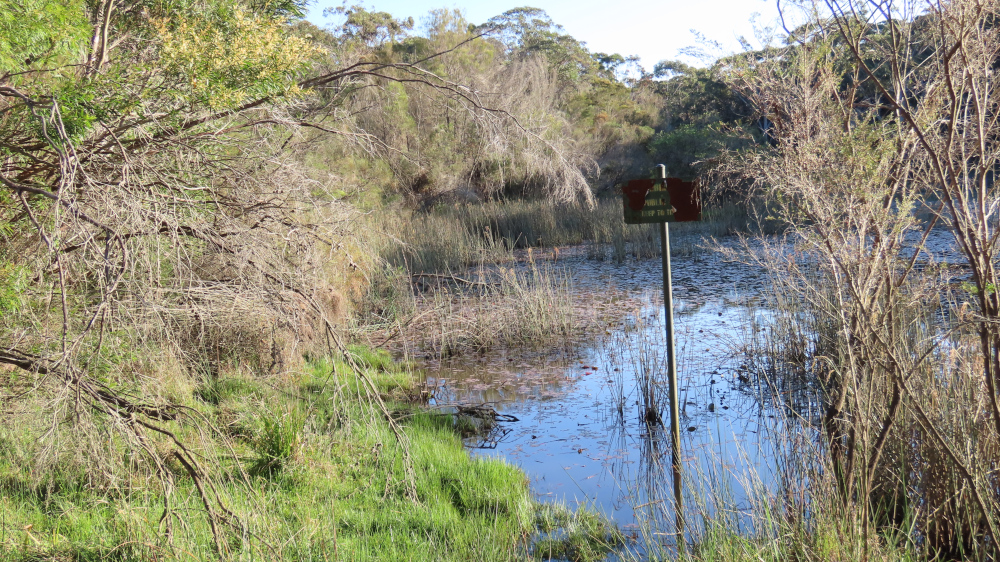
The birds were very high up, in the furthermost tree in this picture (though they had gone by the time I took the photo):
The left-most bird turned around at one stage, giving us a nice view of the spots running down its chest and the reddish marking at the top of its wings:
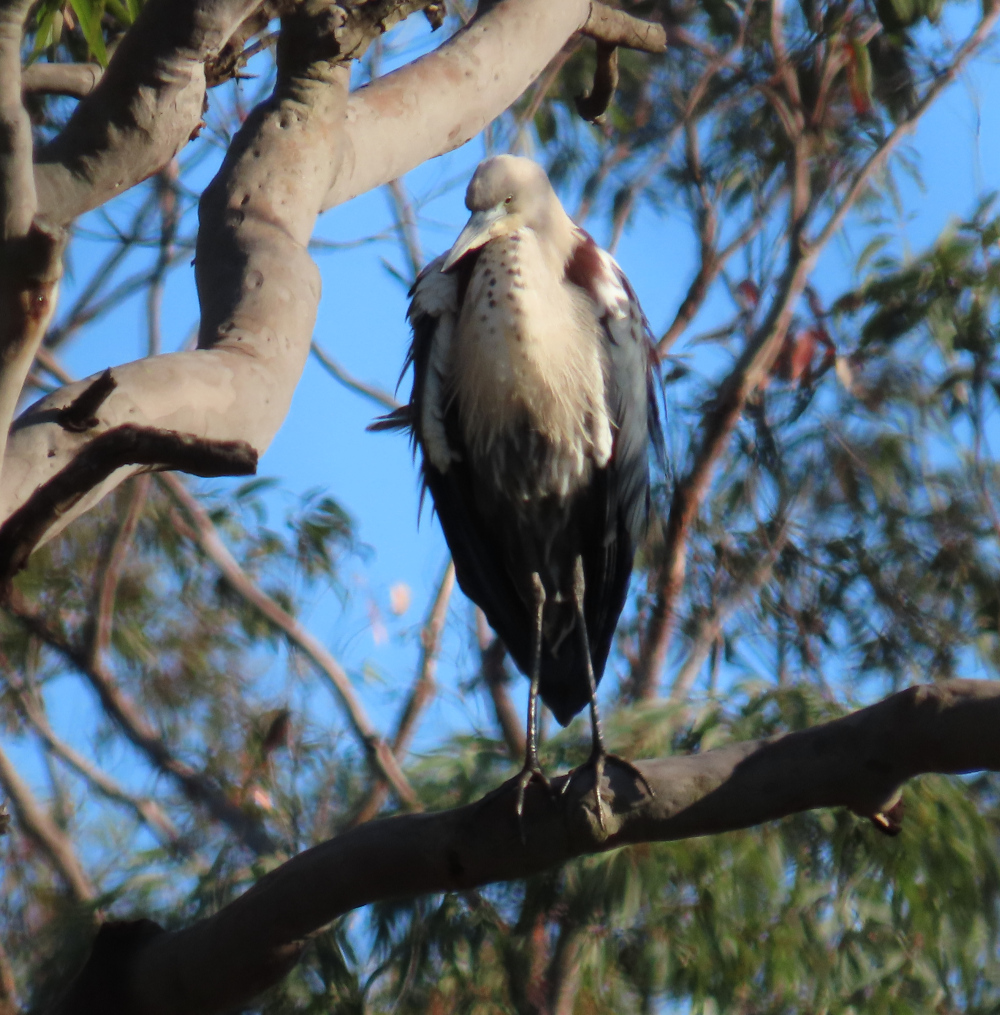
Another pose of the same bird:

This is the right-hand bird, looking altogether sleeker and fiercer:
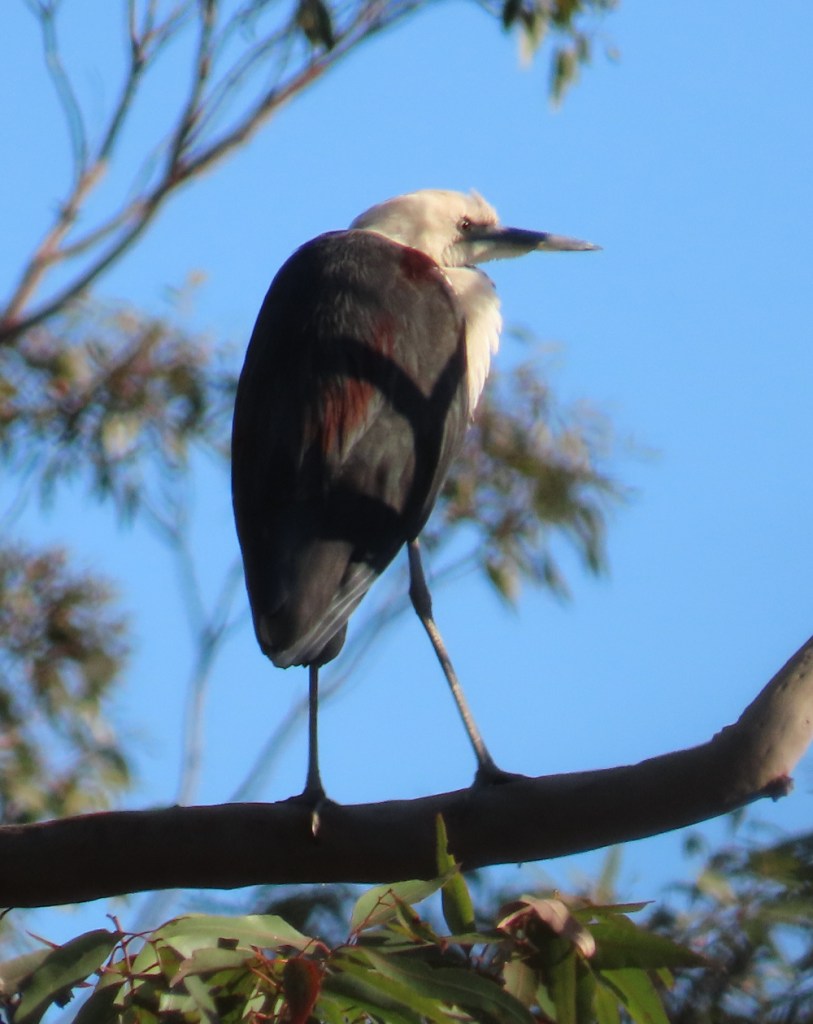
It’s exciting to see such large, impressive visitors at Manly Dam!
Common name: White-necked Heron
Scientific name: Ardea pacifica
Approximate length: 75-105 cm
Date spotted: 2 September 2024 (spring)
Location: Manly Creek in Manly Dam Reserve, New South Wales, Australia: 33°46’20.0″S 151°14’30.6″E

Great Egret at Manly Dam
This is the first time I’ve seen a Great Egret in this part of the world. My only other sightings were on a trip to Queensland a while ago.

They’re quiet and imposing birds. This one had a fluffy beak. I guess it had been doing some preening before I came along.

Common name: Great Egret
Scientific names: Ardea alba
Approximate length: 85 cm to 1.05 m
Date spotted: 26 July 2024 (winter)
Location: Manly Dam Park, near Sydney, Australia: 33°46’34.8″S 151°14’49.6″E

My first Tattler
A few weeks ago, I took some photos of a bird that I thought was a juvenile Oystercatcher. When I posted the pictures and location on eBird, a reviewer let me know that this is a Tattler, probably a Grey-tailed Tattler.
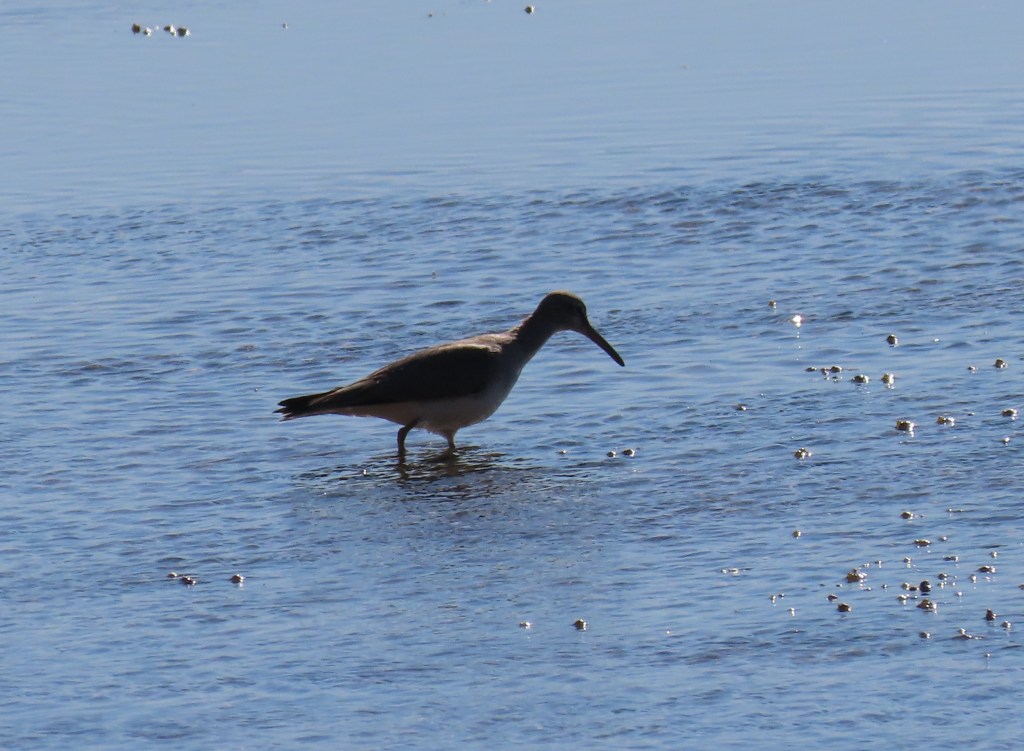
I was delighted to be corrected, and particularly so because this is the first time I’ve spotted a Tattler. These birds are uncommon in the south of Australia, particularly in winter.
The bird was wading in the shallows of the rocky plate that leads out into the ocean from Long Reef Headland. Every now and then, it probed the rocks below the water for food.
The lighting was harsh and the bird was far away, which made it difficult to get a good photo.

Common name: Tattler, probably a Grey-tailed Tattler
Scientific name: sp. Heteroscelus, probably Heteroscelus brevipes
Approximate length: 24-28 cm
Date spotted: 19 June 2024 (winter)
Location: Long Reef Aquatic Reserve, Collaroy, New South Wales, Australia: 33°44’19.7″S 151°18’42.0″E

The foot of the Coot
Coots are underrated. Their feet even more so.

Drama in monochrome and a touch of red:

How to own a reflection:

Common name: Eurasian Coot
Scientific name: Fulica atra
Approximate length: 35 cm
Date spotted: April and June 2024
Location: Manly Dam Reserve, New South Wales, Australia

Pelicans prowling around fisherman
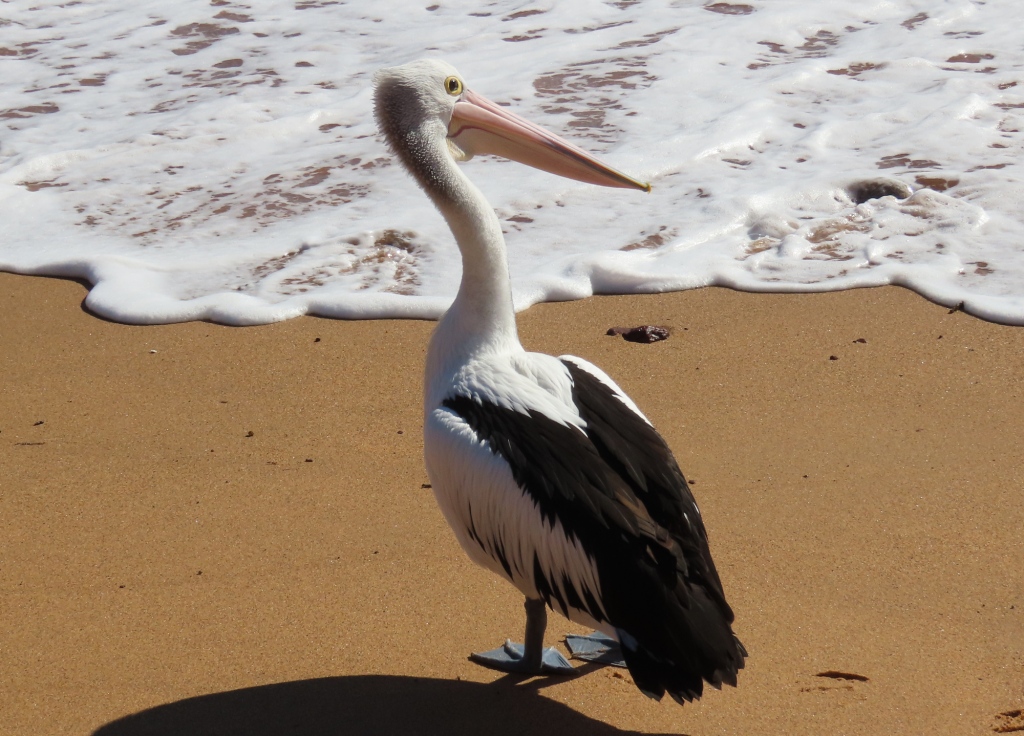
At Long Reef in Collaroy, a fisherman was washing out his bucket. Three pelicans followed in his footsteps, hoping for some tasty morsels to fall.
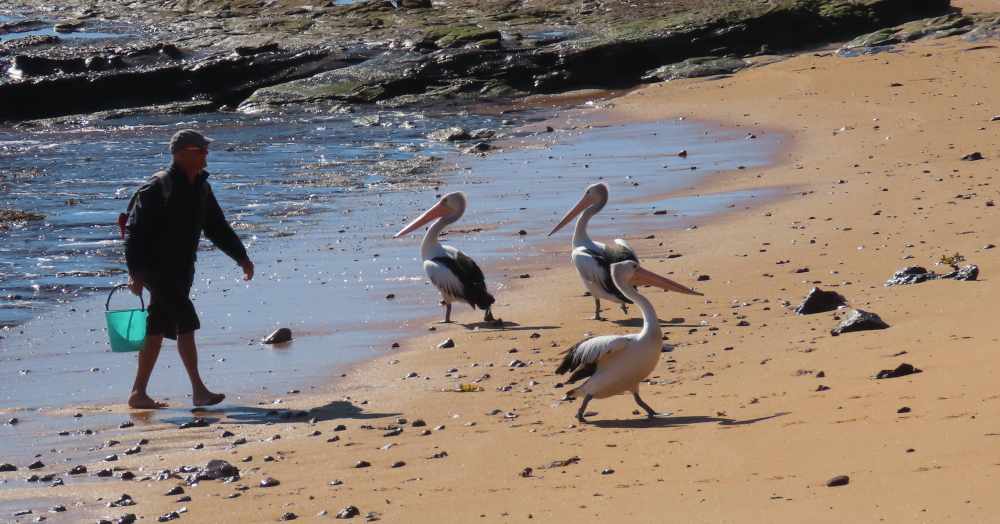
The birds weren’t too worried when I approached to take some photos.
Cosying up to a pair of sandals that someone left on the beach:
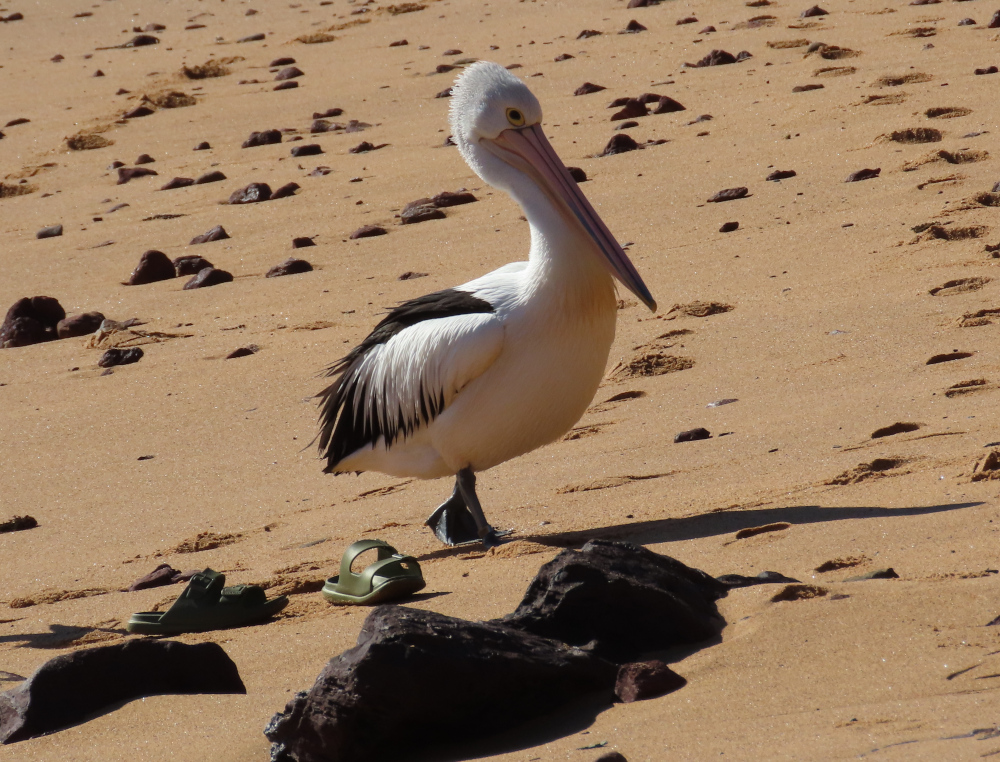
With a Silver Gull, giving some idea of scale:
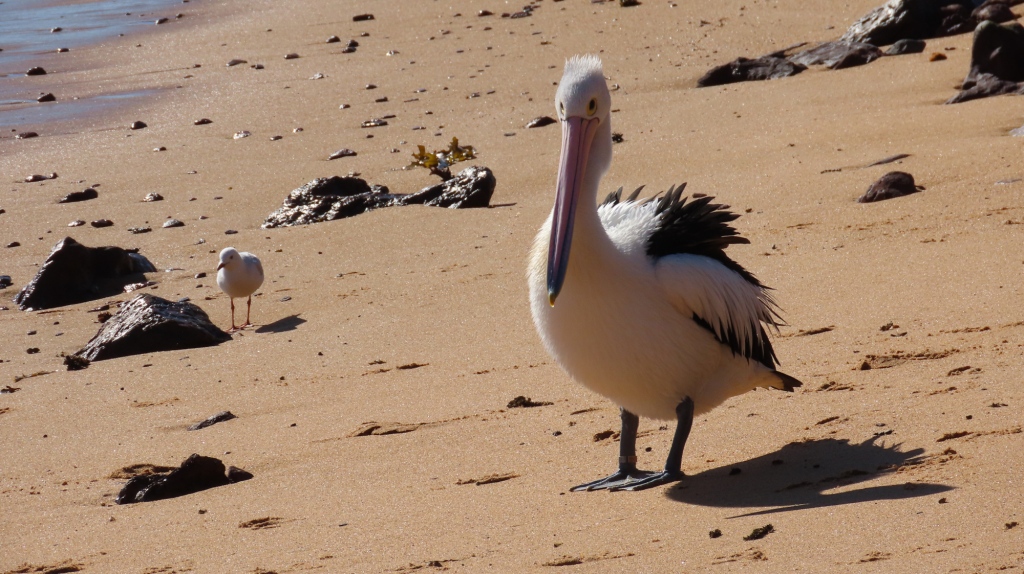
Three pelicans, three poses:
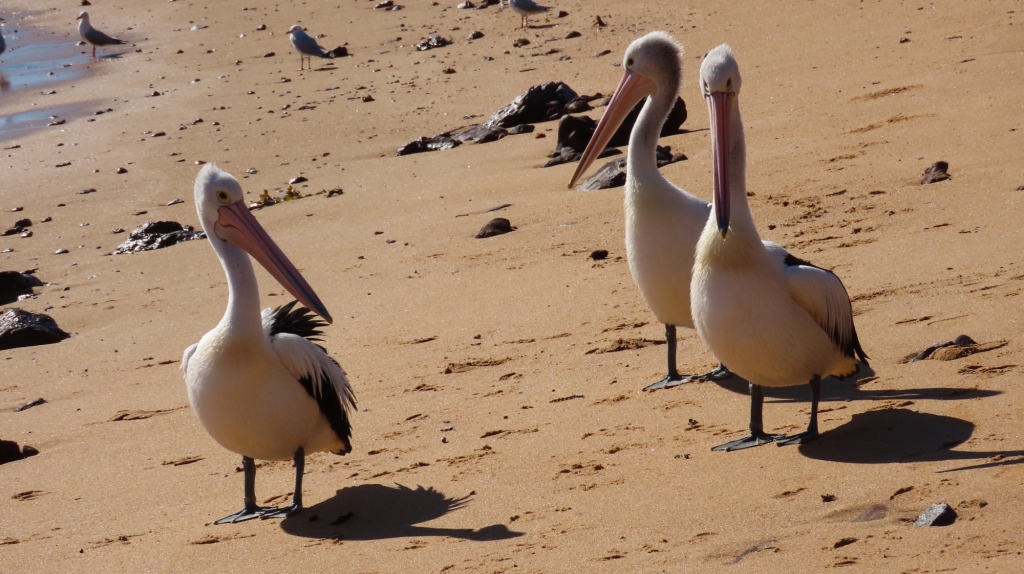
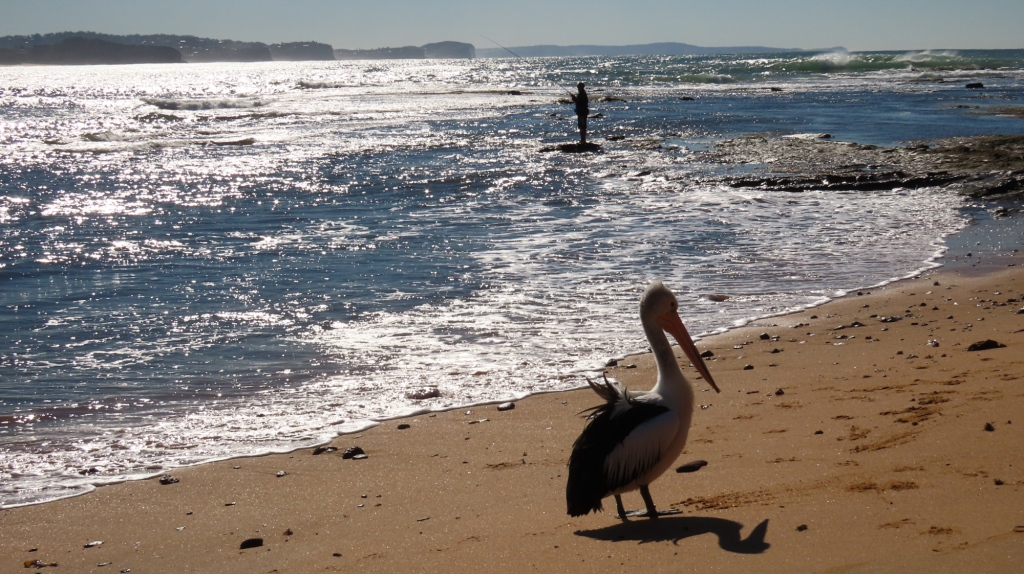
Surf as a backdrop:
A moody shot of fisherman and bird:
Common name: Australian Pelican
Scientific name: Pelecanus conspicillatus
Approximate length: 170 cm
Approximate wingspan: 2.5m
Date spotted: 19 June 2024 (winter)
Location: Long Reef Aquatic Reserve, Collaroy, New South Wales, Australia: 33°44’19.7″S 151°18’42.0″E

Willie Wagtail enchanted by Grebe
This little Willie Wagtail seems intrigued by the way a Grebe keeps disappearing under the water and popping up again:
My camera battery died as I was taking the above video, which is a pity because the birds were quite close to me. Here’s another video, a bit noisy due to a plane flying overhead, and the birds are further away:
It’s funny how the Coot seems to be surprised by the Grebe’s disappearance too. I love Coots!
I watched the two birds for about fifteen minutes, as the Willie Wagtail tirelessly followed the Grebe around this reedy inlet of Manly Dam. I wonder if the Willie Wagtail was hoping for some insects to fly up each time the Grebe surfaced. Perhaps the Grebe’s activities would disturb a lily pad and cause an insect to jump?

Common names: Australasian Grebe and Willie Wagtail
Scientific names: Tachybaptus novaehollandiae and Rhipidura leucophrys
Approximate length: 23-25 cm and 20 cm
Date spotted: 5 June 2024 (autumn)
Location: Manly Dam Park, near Sydney, Australia: 33°46’34.8″S 151°14’49.6″E

Spoonbill grabbing breakfast at Nyngan
A Yellow-billed Spoonbill fishes for breakfast on a cold and blustery morning. We were at the Nyngan Riverside Tourist Park, on the Bogan River in central New South Wales. This is where we’d spent the first night of our trip out west from Sydney, before heading further into the Outback.
It was a cold and blustery morning. After half an hour or so of filming birds, I was pleased to return to my cabin for a hot coffee!
I’ve seen a couple of Royal Spoonbills before, but this is my first Yellow-billed. It’s duller than the black-and-white Royal, with its pale beak and yellow legs:
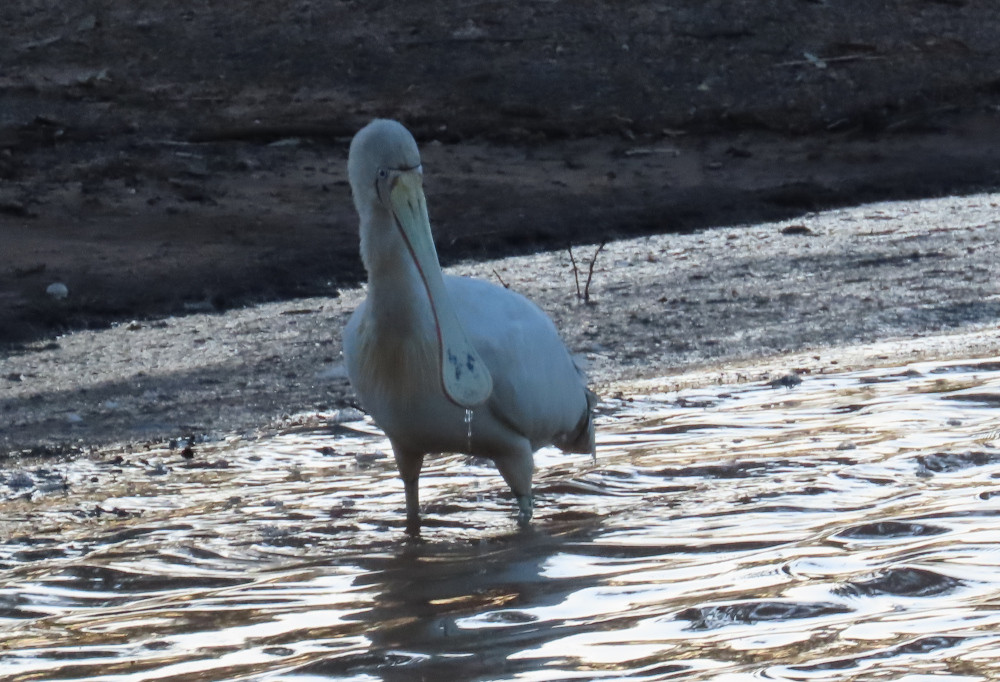
A side view shows the bird’s rather pretty tail:

If you’d like to know more about Nyngan and the Bogan Shire, take a look at my bookmark’s blog post.
Common name: Yellow-billed Spoonbill
Scientific name: Platalea flavipes
Approximate length: 75-90 cm
Date spotted: 18 May 2024 (autumn)
Location: Nyngan Riverside Tourist Park, New South Wales, Australia: 31°33’39.1″S 147°10’45.2″E


