Blog Archives

Little Corella enjoying a snack
This Little Corella was one of a group enjoying a tasty snack (fruit from a nearby fir tree of some kind):
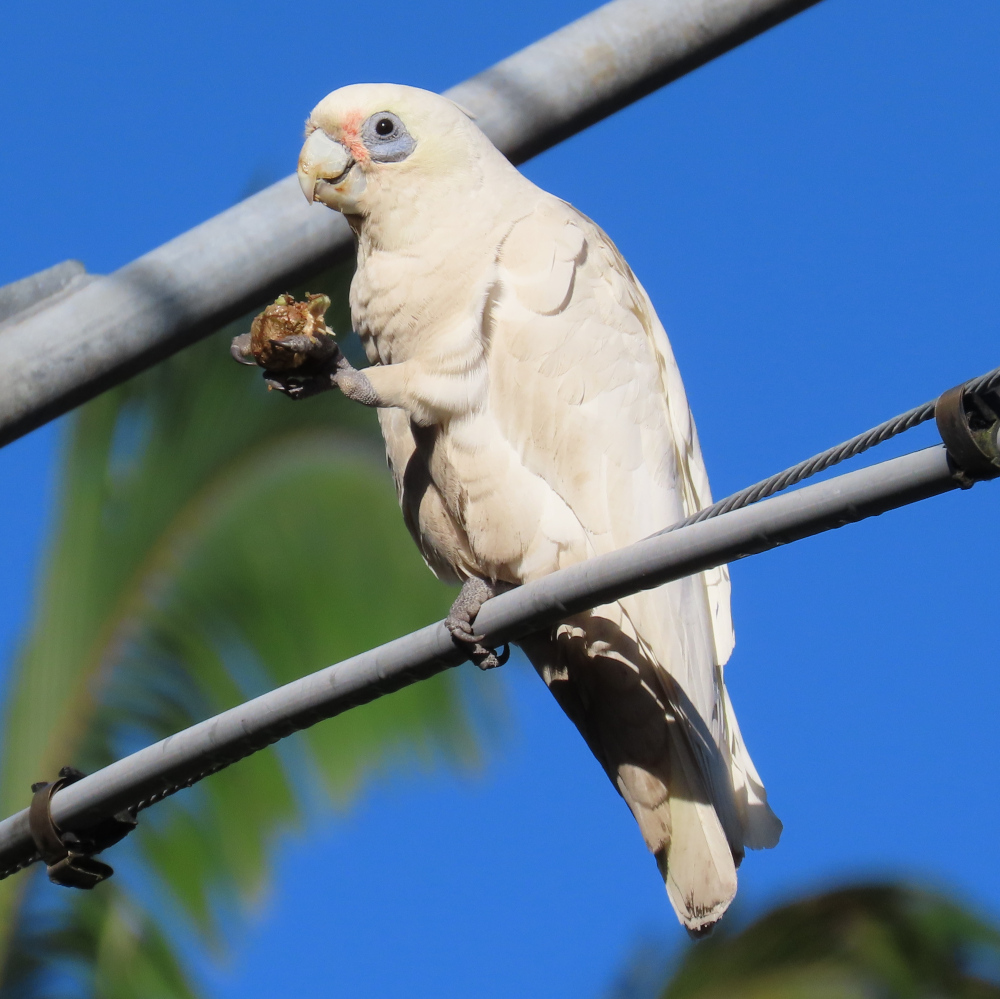
People have a love-hate with these birds. On the one hand, corellas are cute, pretty, and smart. On the other hand, they’re noisy and fiendishly good at destroying property!
Common name: Little Corella
Scientific name: Cacatua sanguinea
Approximate length: 36-39 cm
Date spotted: 22 April 2025 (autumn)
Location: Balgowlah, New South Wales, Australia: 33°47’57.2″S 151°15’50.9″E

Osprey nests at Rat Park
For a couple of years, I’ve been reading about the Ospreys that nest high on the lights at Rat Park in Warriewood, in Sydney’s Northern Beaches. The birds have earned their fame by returning year after year to the same spot. They build their nests and raise their young in what seems an unlikely and uncomfortable perch, twenty metres above the playing fields. So I went to take a look at them.

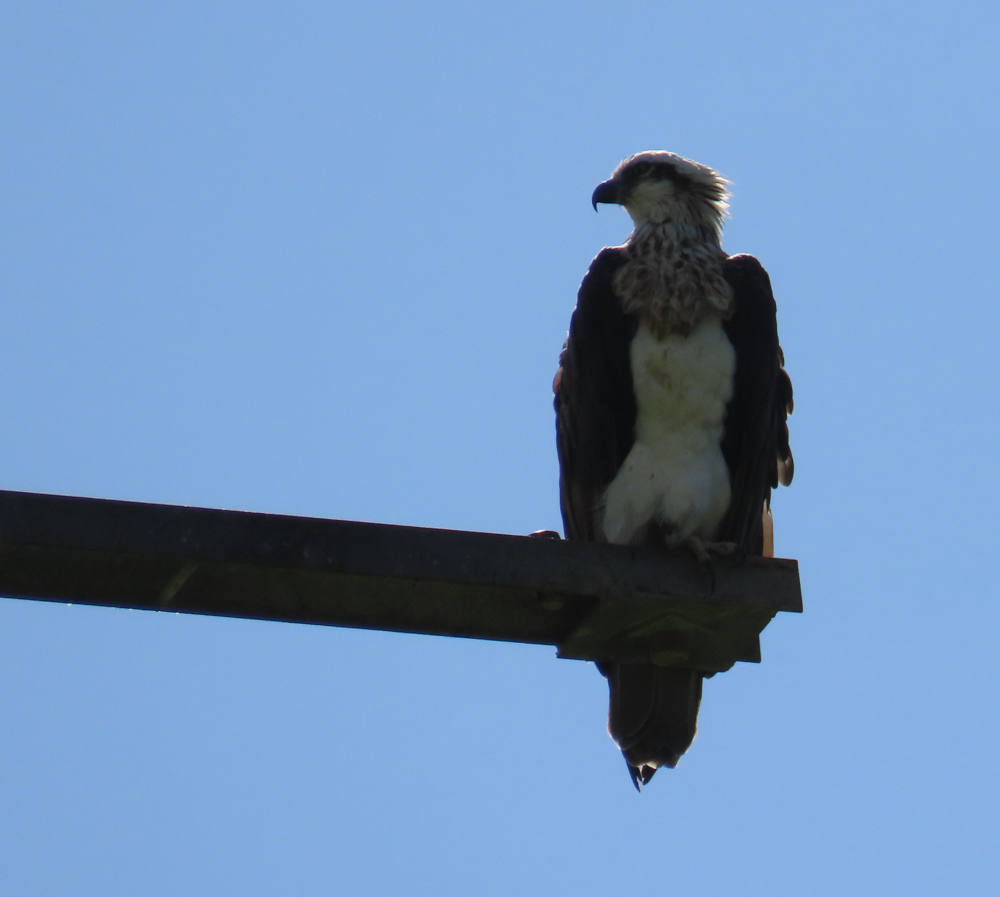
Ospreys are magnificent birds, with their large size and impressive fishing skills. They’re listed as vulnerable in NSW. Their numbers were in decline until the 1970s, but the great news is that they’re on the rise now.
Here’s a close-up of the same Osprey on the lamp post:

This photo shows the same nest from the other side:
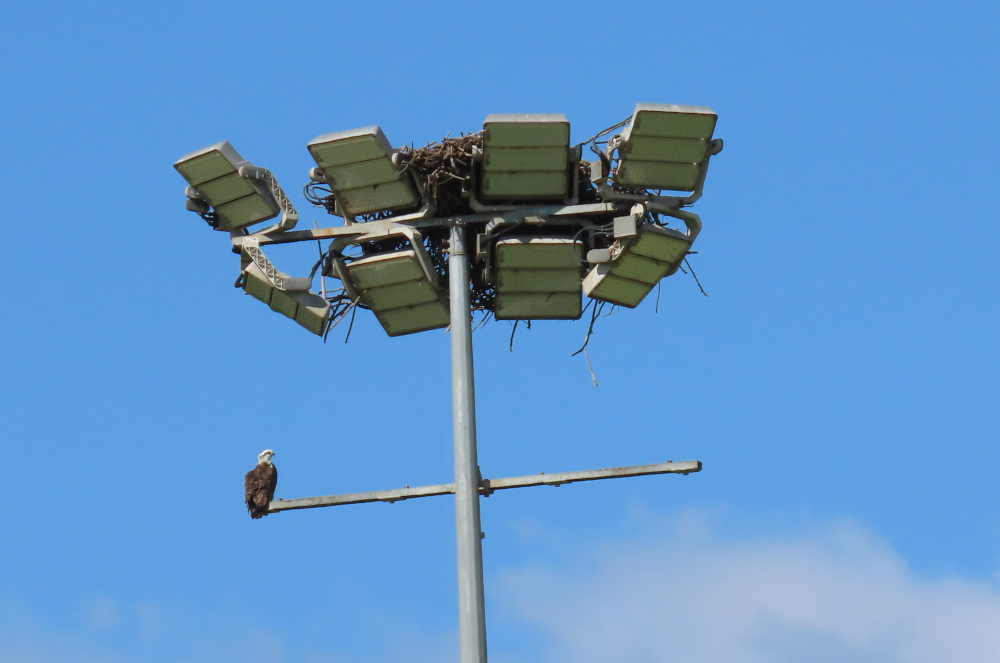
Zooming out to show the playing field and the 20-metre lamp post with the nest on top:

There were nests on top of a couple of the other lamp posts too, but no Ospreys tending them while I was there.
Here’s a front view of the Osprey with the sun behind it:
I’ve been lucky enough to see Ospreys a few times, most often at the Long Reef Aquatic Reserve in Collaroy. The Manly Observer has reported on the Ospreys of Rat Park, and they’ve featured on several other sites including Facebook.
Common name: Eastern Osprey
Scientific name: Pandion cristatus
Approximate length: 57 cm
Date spotted: 4 April 2025 (autumn)
Location: Rat Park, Warriewood, New South Wales, Australia: 33°41’50.6″S 151°18’21.8″E

Longest nest-sitting ever: Black Swans abandon nest after 8 months (part 2 of story)
Over the past 8 months, two Black Swans have been diligently tending a nest in Manly Dam Park, in Sydney’s Northern Beaches. In the early days (August 2024), spring was in the air. Nature was blooming and the swans were devoted and diligent. As spring turned to summer, the heat bore down. Cicadas shrieked, reeds grew up and died down again. Still, the pair tended the nest, rebuilding regularly, looking after each other, and clearing the water around their nest. (Story of two nesting Black Swans: Part 1)
Yesterday (9 April 2025), for the first time, the nest was empty when I walked past. The nest is the large circle of brown reeds lying horizontal behind the green reeds:

A hundred metres away, one of the swans was drifting on the water, hooting quietly and persistently:
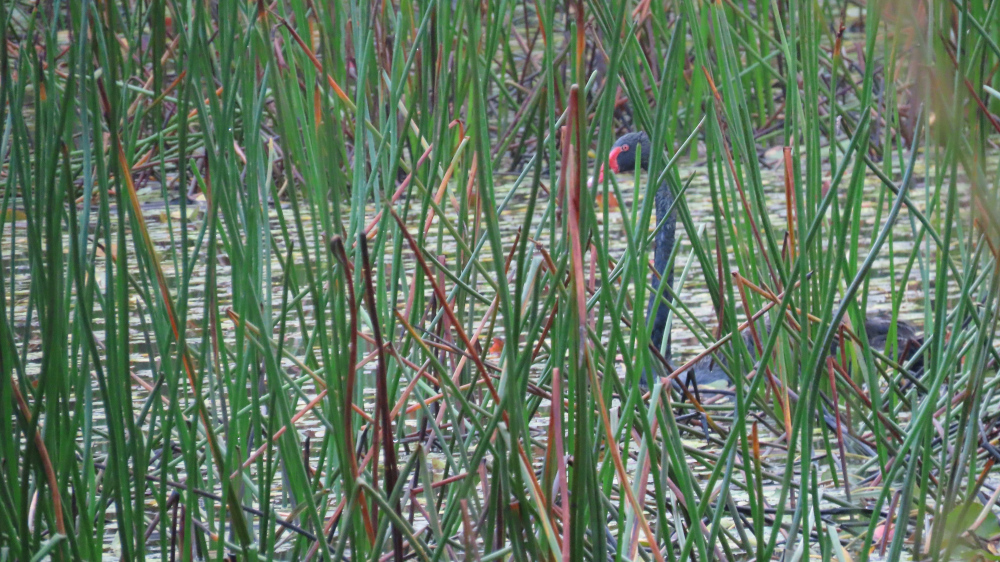
Once or twice I heard the other swan replying from deep in the reeds, but I didn’t see it.
At my previous visit a week ago, the swans had moved their nest to a slightly different location, just ten metres or so away from the original location. I wondered if this meant that at last, there was hope for an egg or two. Who knows, perhaps the pair will proudly emerge with a train of cygnets to show. Alas, though, I doubt that there were ever any eggs in the nest. From a discussion on Reddit, it seems that the most likely explanation is that the swans are two males, practising nest-building and nest-sitting in the absence of a female to lay an egg.
Here’s a photo from October 2024, showing both swans at the nest:

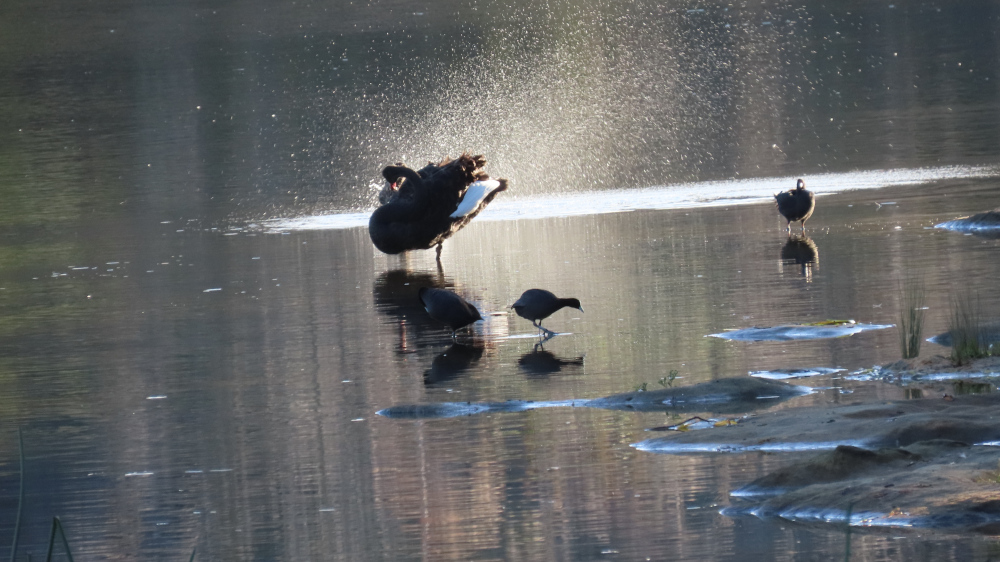
Here’s one of the swans in early February 2025, off shift for a moment while its partner sits on the nest:
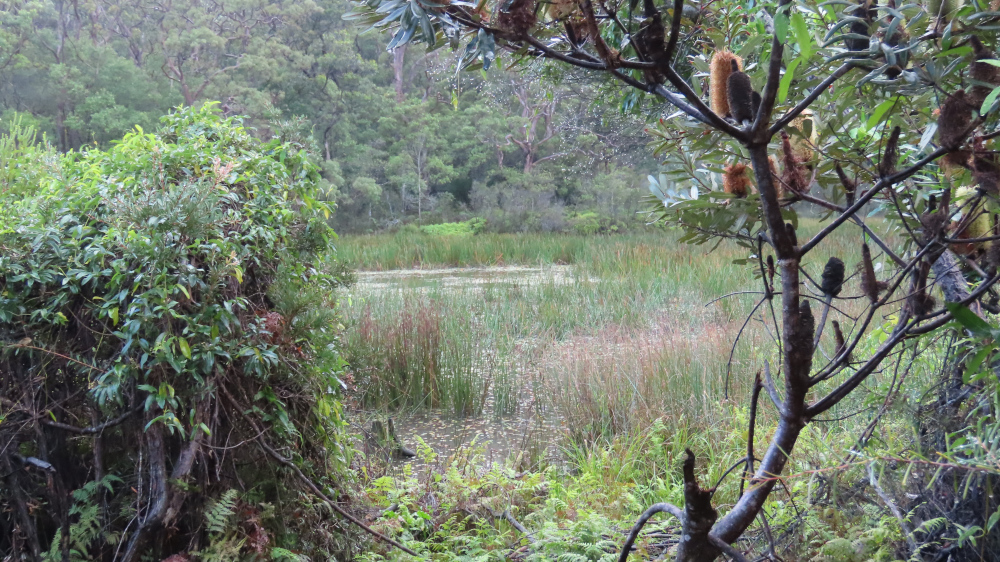
This is the tranquil site of the nest, now empty, but ready perhaps for a new attempt come spring:
Common name: Black Swan
Scientific name: Cygnus atratus
Approximate length: 120 cm
Date spotted: 23 August through to 9 April 2025 (late winter, through spring and summer, into autumn)
Approximate location: Manly Dam Park, New South Wales, Australia

A row of cockatoos and one raven

The arrival of the raven: It’s pouring with rain. Several Sulphur-crested Cockatoos line up on the wall of Manly Dam. Clumping together for company in the dismal weather. An Australian Raven joins the line-up. The cockatoos eye the interloper up and down, but don’t make too much of a fuss. Some of them get bored and head for a nearby tree:
Off camera: A runner arrives and the rest of the cockatoos depart for the tree. The raven doesn’t budge. Another raven arrives.
The return of the cockatoos: They need to reclaim their perch! The strategy seems to be simply to pile into the line-up until it becomes too uncomfortable for the ravens. One raven departs quickly, the other sticks it out for a while, then decides to retreat to a higher roost and gaze down at the silly, squawking cockatoos:
Common name: Sulphur-crested Cockatoo
Scientific name: Cacatua galerita
Approximate length: 50 cm
Common name: Australian Raven
Scientific name: Corvus coronoides
Approximate length: 50 cm
Date spotted: 28 March 2025 (autumn)
Location: Manly Dam, New South Wales, Australia: 33°46’55.3″S 151°15’20.1″E

Kookaburra reflecting on a reflector
I love the muted colours of this Laughing Kookaburra. The bird stood unmoving on a post above a red reflector disc, just thinking about life and stuff.

Common name: Laughing Kookaburra
Scientific name: Dacelo novaeguineae
Approximate length: 47 cm
Date spotted: 2 April 2025 (autumn)
Location: Manly Dam near Sydney, New South Wales, Australia: 33°46’36.9″S 151°14’48.8″E

More Noisy Friarbirds in Sydney’s Northern Beaches
Over the last couple of weeks, I’ve seen and heard several Noisy Friarbirds at Manly Dam in Sydney’s Northern Beaches. The birds seem to have moved in for the long haul. It’s exciting — I’ve only seen these birds further north and west before now.
Today I managed to actually get some images of the birds in a video, as well as their weird calls:
In the video, most of the noise is made by the friarbirds, but there are Rainbow Lorikeets chirping throughout, and the occasional Little Wattlebird too.
You can see more pictures of friarbirds in my other posts, taken in other areas of Australia.
Common name: Noisy Friarbird
Scientific name: Philemon corniculatus
Approximate length: 30-35 cm
Date spotted: 2 April 2025 (autumn)
Location: Manly Dam Reserve, New South Wales, Australia: 33°46’43.4″S 151°14’52.8″E
Noisy Friarbirds at Manly Dam!
I was excited to hear Noisy Friarbirds at Manly Dam park in Sydney’s Northern Beaches. I haven’t seen these birds in the area before — they’re more common further north and west.
Over the past couple of weeks, I’ve heard the unforgettable sounds that these birds make. Today I managed to take some photos. In the video, you can hear the odd sounds made by the Noisy Friarbirds amongst other bird calls, but you don’t actually see the friarbirds. They’re very hard to spot.
The first bird sound in the video is the chirping of Rainbow Lorikeets. The laugh-like cackle and chatter of the Noisy Friarbirds begins soon after the start, at about 0:02. The lorikeets continue chirping throughout. In the background is the cackle of some Little Wattlebirds, which is similar to the friarbirds’ call but less varied in tone and style.
I did manage to snap a few photos of two friarbirds, though they’re quite blurry. This photo shows one of the friarbirds perched briefly out in the open:

Another friarbird was having an altercation with a Rainbow Lorikeet. The friarbird was the one to cede ground:

You can see some better pictures of friarbirds in my other posts, taken in other areas of Australia.
Common name: Noisy Friarbird
Scientific name: Philemon corniculatus
Approximate length: 30-35 cm
Date spotted: 26 March 2025 (summer)
Location: Manly Dam Reserve, New South Wales, Australia: 33°46’42.5″S 151°14’54.3″E
Call of the Whipbird
An Eastern Whipbird does his morning grooming, stopping occasionally to call to his friends. The noise that whipbirds make is strange: “eeeuuw-phwit”. It reminds people of a whip whistling and cracking, and that’s what gives the bird its name.
In the background, you can hear other whipbirds replying. Each time, a bird off-camera echoes the long drawn-out call of the on-camera bird( “eeeuuw-phwit”) then another bird also off-camera replies immediately (“phit-phit-pheeuw”). These two off-camera calls sound like a single call, but they’re actually from two birds.
Common name: Eastern Whipbird
Scientific name: Psophodes olivaceus
Approximate length: 30 cm
Date spotted: 9 March 2025 (summer)
Location: Manly North Head, Sydney Harbour, NSW, Australia: 33°48’55.1″S 151°17’58.9″E

If you were a baby Brush-turkey
If you were a baby Brush-turkey strolling down The Corso in Manly …

… and you could choose between a summer hat, a list of summer reads, or something that might be a worm, which would you choose?

The baby Brush-turkey is quite cute and pretty. The adults are much larger and not very pretty, though they do have a certain dinosaur dignity. Here’s an adult male from one of my other posts about Australian Brush-turkeys.

Common name: Australian Brush-turkey
Scientific name: Alectura lathami
Approximate length of adult bird: 60-70 cm
Date spotted: 11 February 2025 (summer)
Location: The Corso, Manly, New South Wales, Australia: 33°47’51.8″S 151°17’12.9″E

Peregrine Falcon in the suburbs
It was good to see this Peregrine Falcon perched high in a tree above the rooftops in Sydney’s Northern Beaches.
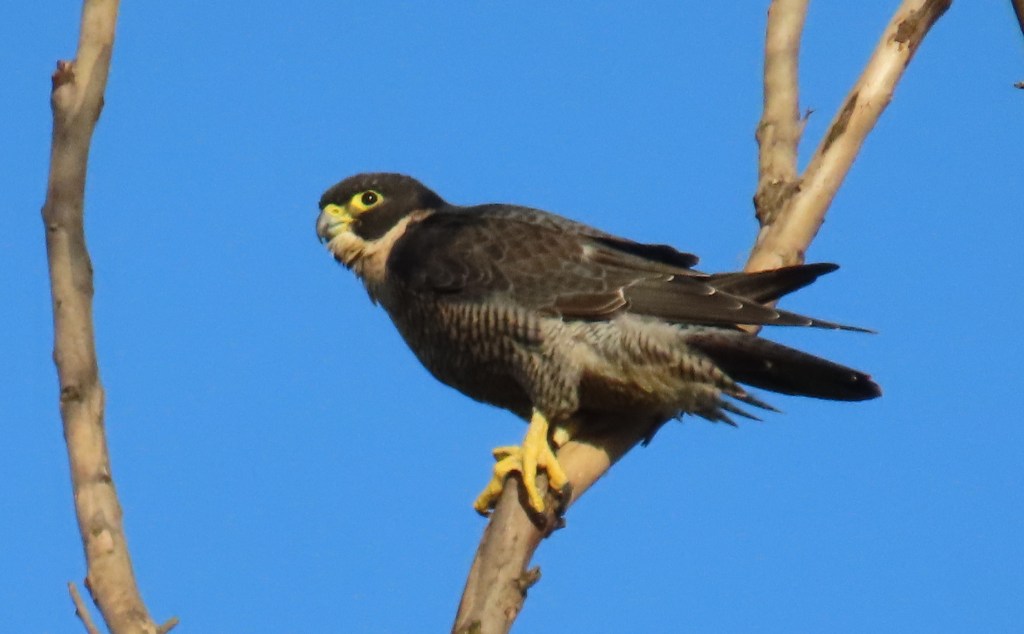
They’re beautiful birds, with that fierce eye and the contrast between yellow and black colouring. I’ve seen just a few Peregrine Falcons before, usually in a wilder setting. Check out the posts about my other sightings of Peregrine Falcons.
Common name: Peregrine Falcon
Scientific name: Falco Peregrinus
Approximate length: 42 cm
Date spotted: 15 February 2025 (summer)
Location: Allambie Heights, New South Wales, Australia. Approximate map reference: 33°46’18.2″S 151°15’39.4″E


