Blog Archives
Hybrid Spotted Turtle-Dove with Crested Pigeon?
Today I spotted a couple of interlopers in an area that’s the regular hangout for a group of Crested Pigeons. One of the interlopers looks like a regular Spotted Turtle-Dove. Here’s a Crested Pigeon on the left and the interloper on the right:

But nearby, on the same wire, is this rather interesting individual:

The bird looks like a Spotted Turtle-Dove but has a bit of feathery decoration on its head. Could it be a cross-breeding of a Spotted Turtle-Dove with a Crested Pigeon? Or is it just a Spotted Turtle-Dove having a bad hair day?
Here’s another pic of the same Crested Pigeon as in the first photo:

Crested Pigeons are native to Australia. When they take off, you hear the distinctive whistling noise from their wings that is characteristic of many pigeon types. When I first saw these birds, I thought how typical it is that even the common pigeons in Australia are different from those I’ve seen in other part of the world.
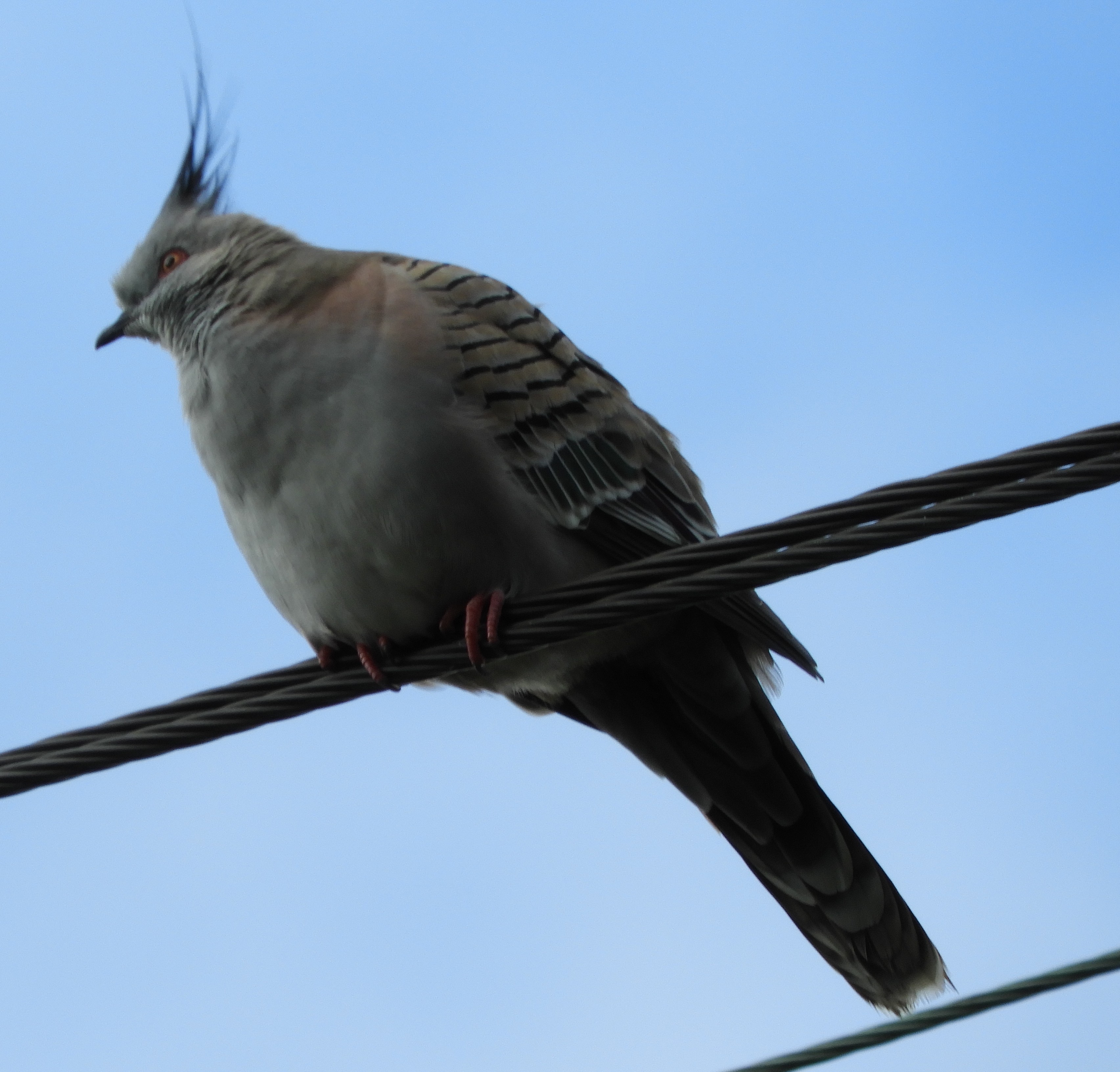
The group of birds later moved down to forage on the ground. Here’s one of the Crested Pigeons:

There was only one bird that looked like a Spotted Turtle-Dove with a vestigial crest. Here’s another pic of the same bird:
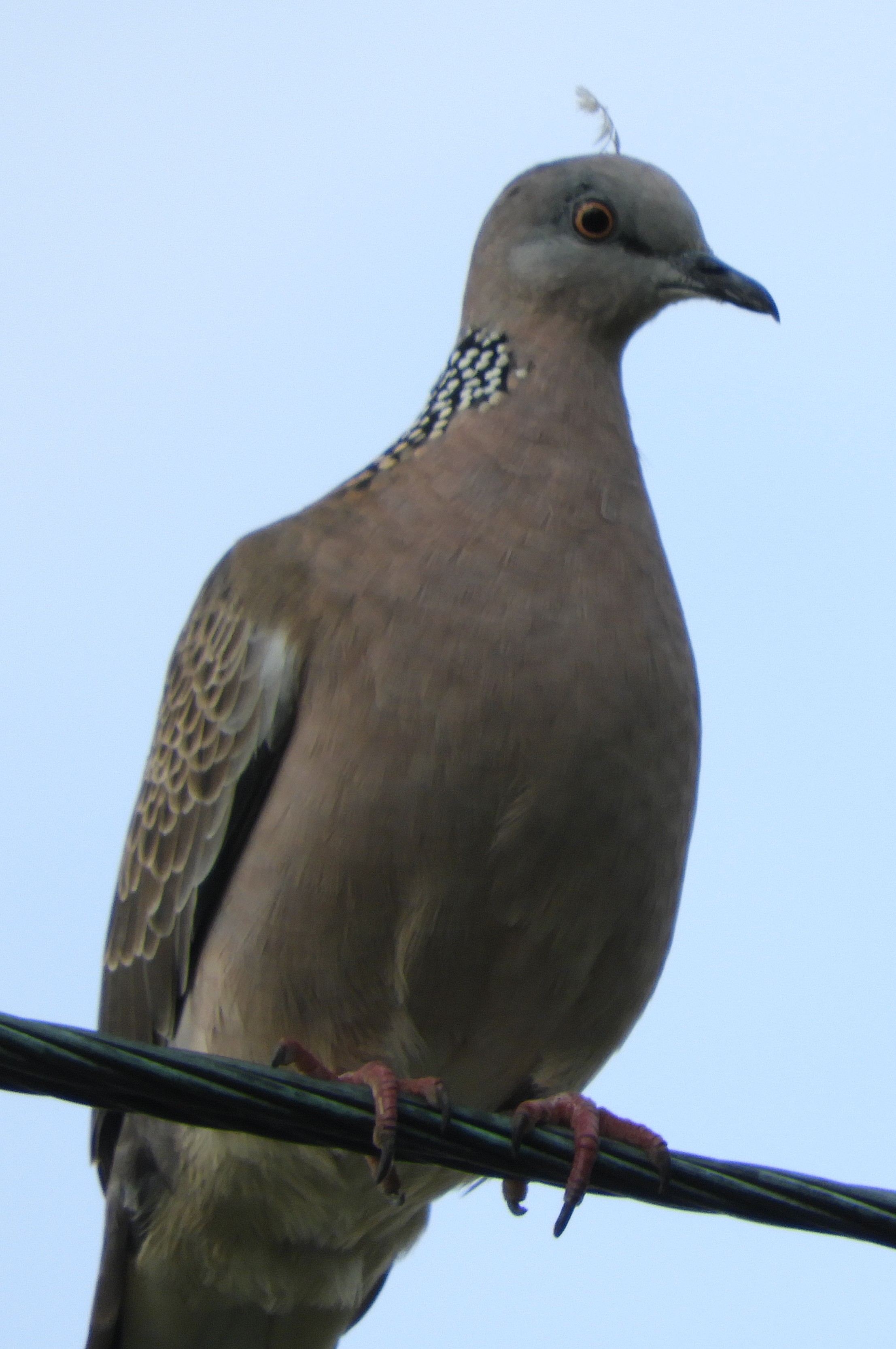
Spotted Turtle-Doves are not native to Australia. They were introduced in the late 1800s, and are seen as a pest in some regions of the country.
Pigeon or dove? The names “Crested Pigeon” and “Spotted Turtle-Dove” led me to wondering, not for the first time, what the difference is between a pigeon and a dove. I’ve asked various people over the years. Some say doves are white whereas pigeons are not. Other say that doves are smaller than pigeons. According to much of the internet, the two terms are interchangeable.
Here’s another view of the same bird with the miniscule crest (or perhaps it’s just a feather expressing its individual identity):

A wink, almost as if the bird knows that it’s presented me with a puzzle:

Spotted Turtle-Dove | Scientific name: Streptopelia chinensis | Approximate length: 30-32 cm
Crested Pigeon | Scientific name: Ocyphaps lophotes | Approximate length: 31-35 cm
Date spotted: 5 July 2019 (Winter)
Location: Allambie Heights, New South Wales, Australia
Little Corella sipping water from roof guttering
From a distance, Little Corellas look very similar to Sulphur-crested Cockatoos. It’s only when you get up close that you notice the differences. Corellas do have a crest on their heads, but it’s smaller than that of their sulphur-crested cousins and doesn’t have a yellow flare.
Up until a few months ago, it was unusual to see these birds in our neighbourhood on the east coast of Australia, but I’ve seen them three or four times recently. I filmed this one sipping water from the gutter on the roof of a house:
Little Corellas have big, rubbery-looking blue patches around and under their eyes. The first time I saw one of these birds, for a couple of seconds I thought it was a very sick Sulphur-crested Cockatoo!
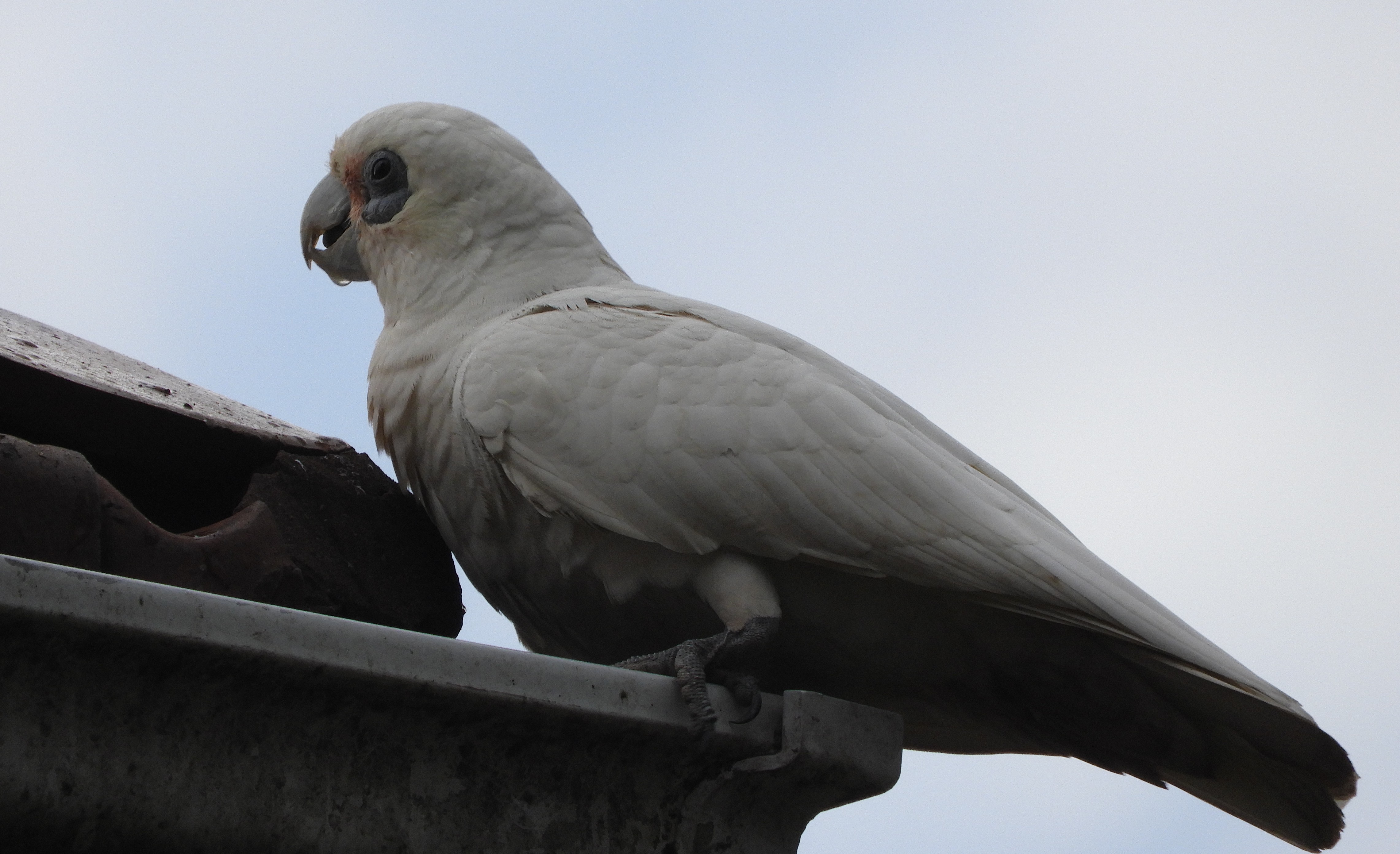
Often the crests on their heads are laid flat, as in the above photo. Here’s one with a raised crest, giving it that typically cheeky cockatoo look:

I’m delighted to add this bird to my posts about the various types of cockatoo that I’ve seen in our neighbourhood.
Common name: Little Corella
Scientific name: Cacatua sanguinea
Approximate length: 36-39 cm
Date spotted: 26 May 2019 (Autumn)
Location: Allambie Heights near Sydney, Australia
Crested Tern chilling out in Curl Curl
Amongst the wheeling Silver Gulls, joggers, and fishermen, a Crested Tern stood gazing over the rocks and sea.

I was walking along the cliff path when I passed the bird. Fifteen minutes later I was on my way back. The bird was still there. This picture shows the crest from which the bird’s name comes:
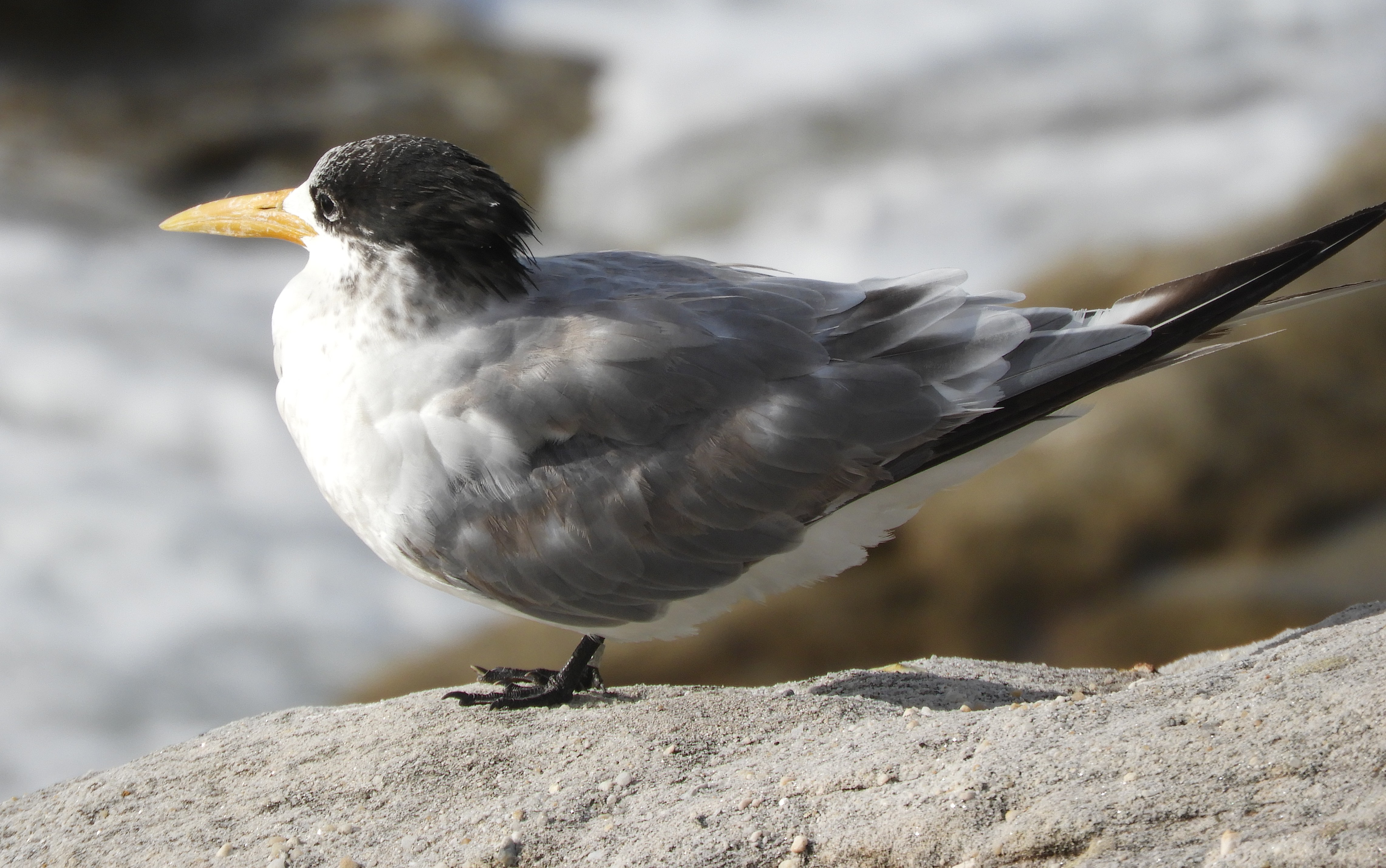
Crested Terns are a common sight around the shores of Australia. You may see them sitting on the sand with the gulls, or darting over the waves and diving to catch a fish. These are the seas and cliffs of Curl Curl where the bird and I were chilling out:

Common name: Crested Tern
Scientific name: Sterna bergii
Approximate length: 45 cm
Date spotted: 22 April 2019 (Autumn)
Location: Curl Curl, New South Wales, Australia: 33°46’36.9″S 151°17’36.8″E
Little Black Cormorant catching the sun
I went for a late afternoon walk near Spit Bridge today, and saw this Little Black Cormorant catching the last of the sun:
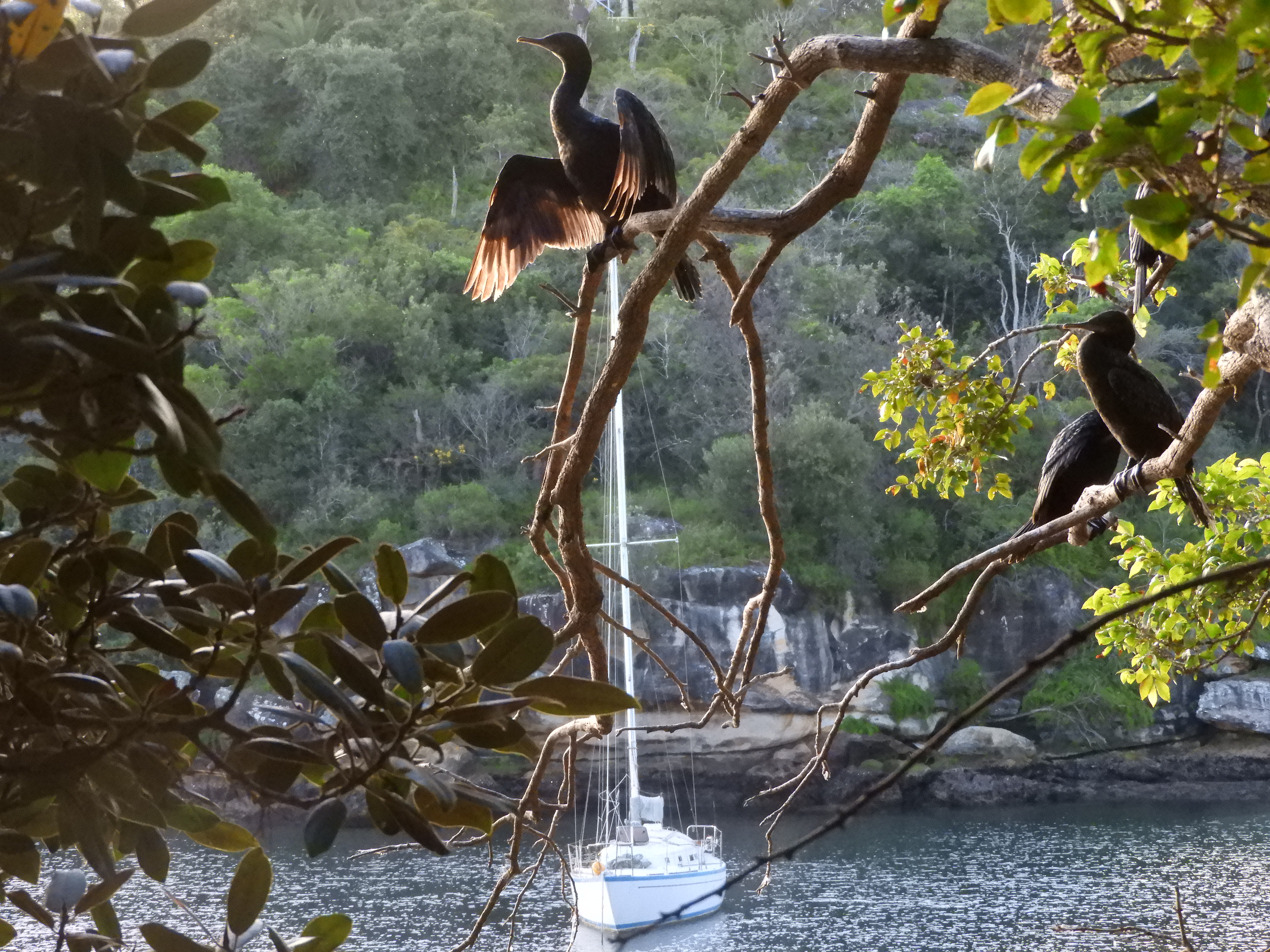
In the next photo you can see the bird’s webbed feet nicely. Cormorants are very fast and agile under water, where they catch their prey. Their feathers are not waterproof, which is why they spend so much time with their wings spread out to dry.
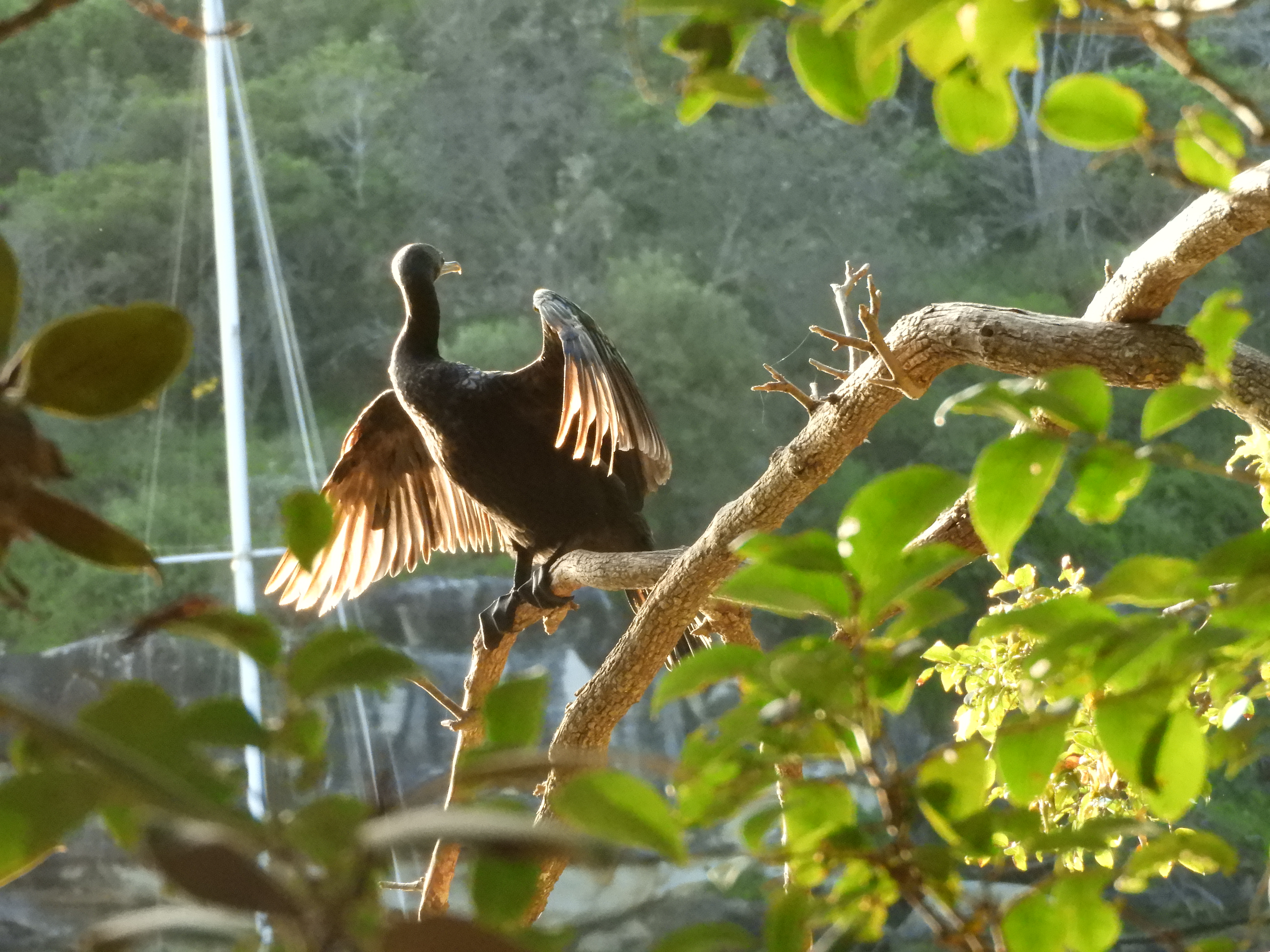
Common name: Little Black Cormorant (see other cormorants)
Scientific name: Phalacrocorax sulcirostris
Approximate length: 65 cm
Date spotted: 20 April 2019 (Autumn)
Location: Near Middle Harbour, Clontarf, New South Wales, Australia: 33°48’07.8″S 151°15’00.2″E
Wattlebirds’ tree bath
I’ve seen various birds dive through the treetops to clean their feathers. From the small New Holland Honeyeaters to the much larger King Parrots., they do it in the early morning to catch the dew, or after a rainfall. Today I managed to catch a couple of Wattlebirds performing their ablutions:
Common name: Little Wattlebird (see more pics of this bird)
Scientific name: Anthochaera chrysoptera
Approximate length: 30 cm
Date spotted: 20 April 2019 (Autumn)
Location: Manly Dam National Park, New South Wales, Australia: 33°46’16.5″S 151°14’53.5″E
Moody magpie on the Manly to Spit Bridge walk
Today I walked a small part of the trail that runs from Manly to Spit Bridge, on the east coast of Australia near Sydney. It was a lovely calm morning, early enough to avoid the late-autumn heat promised for the rest of the day. I came across a magpie perched on a tree. The early morning light combined with a recent burn in the area make for a nice moody, naturally monochrome shot:
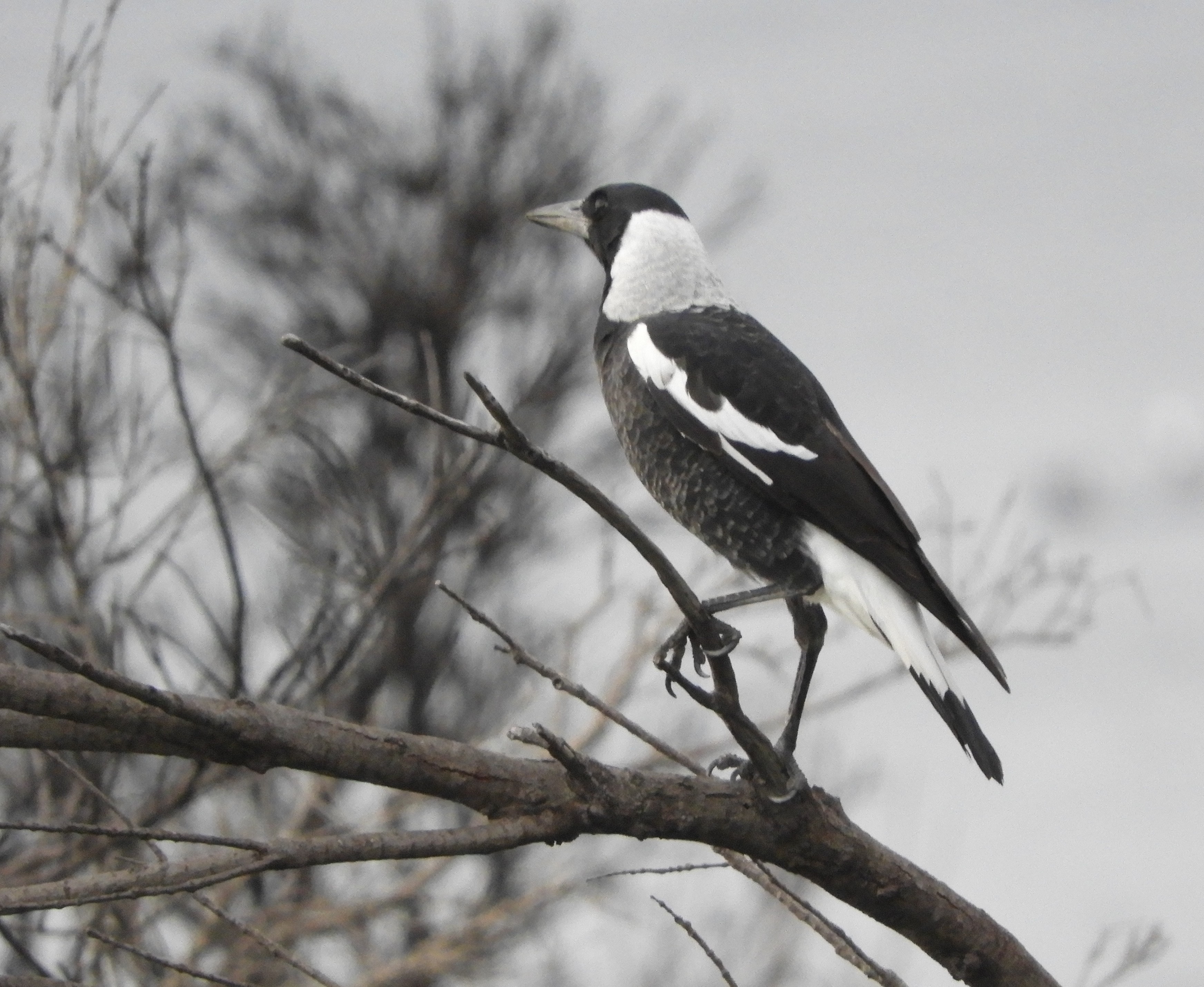
Common name: Australian Magpie
Scientific name: Gymnorhina tibicen
Approximate length: 40 cm
Date spotted: 24 March 2019 (late summer)
Location: Reef Beach Track, Balgowlah Heights, near Sydney: 33°48’29.7″S 151°16’27.4″E
Just a few minutes’ walk further along the track, I saw this magnificent view. The front stretch of water is part of Sydney Harbour. In the distance is Manly wharf. The thin strip of land is Manly town centre, with the Pacific Ocean in the distance beyond the town:

I wonder if the magpie was enjoying the view as much as I did.
Wakeful Southern Boobook at Manly Dam
A little Southern Boobook was wide awake when I walked beneath its tree this morning. This is the first time I’ve seen one of these owls, though I’ve heard them hoot during the night hours.
I sat down on the ground and watched the bird for a while. It wasn’t disturbed by my presence, and grew quite sleepy, as you can see in the next video. At the end of the video I zoomed out so that you can see a bit of the bush surrounding the bird:
Southern Boobooks are quite small, at around 30cm in length from head to tail. Compare that to the Powerful Owl, which is around 65cm.
Here’s a still photo of the bird, showing a deep yellow eye and fluffy white feathers above its beak:
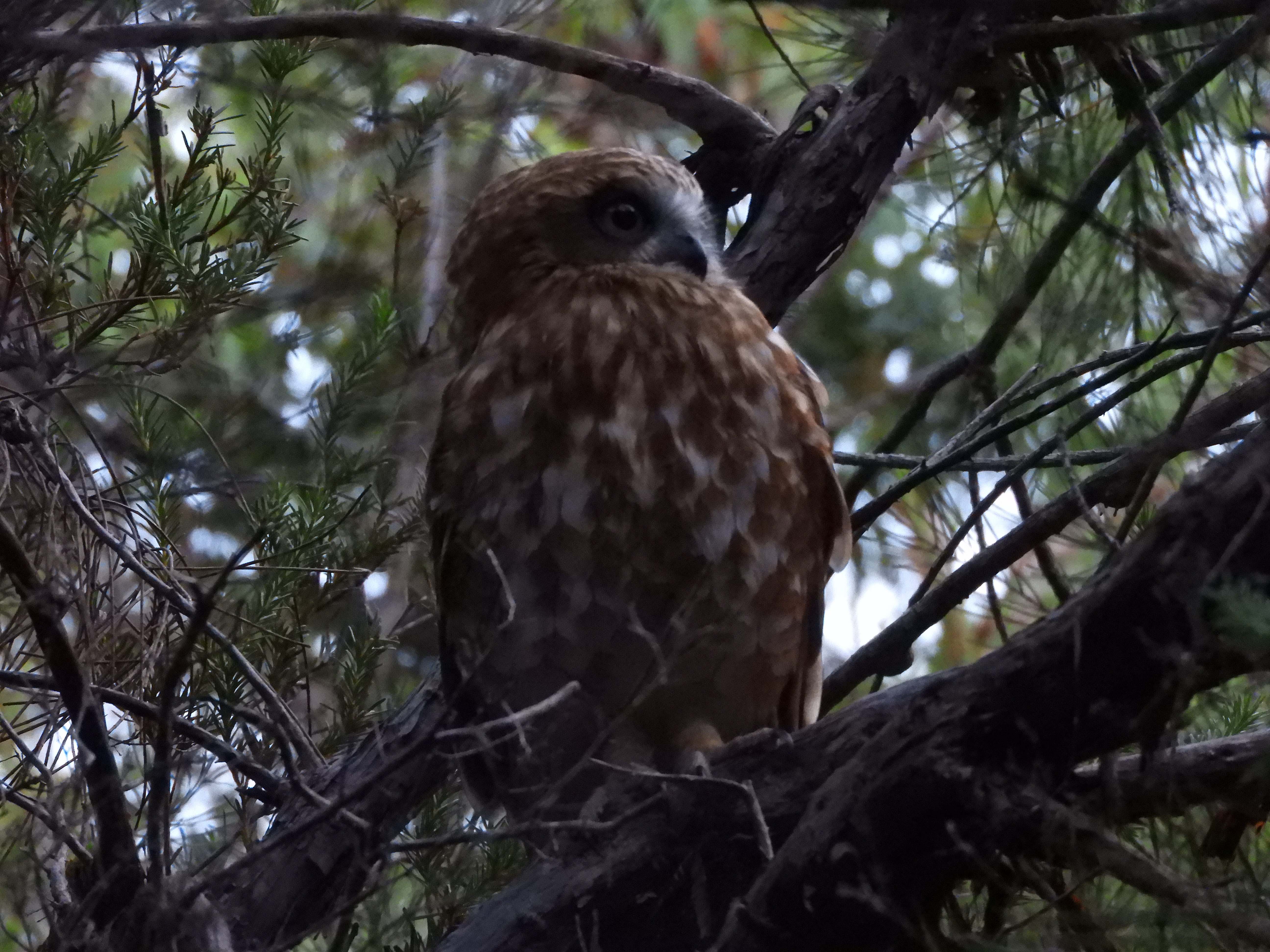
Southern Boobooks are quite common. They feed mostly on insects and spiders, but they do take the occasional small bird or animal too. Here’s a closeup of the owl’s face:

Common name: Southern Boobook
Scientific name: Ninox novaeseelandiae
Approximate length: 30cm
Date spotted: 20 March 2019 (late summer)
Location: Manly Dam National Reserve, near Sydney: 33°46’30.0″S 151°15’09.2″E
Cockatoos cleaning out a tree hollow
Two Sulphur-crested Cockatoos were very busy cleaning out a hollow in a tree trunk when I walked past them today. The tree is in Manly Dam National Park. I often see cockatoos strutting up and down this tree trunk, raising their crests and squawking, and flying from tree to tree. The area is where they hang out. It’s a cockatoo playground.
In this video, one of the cockatoos gets into the cleaning in a big way, disappearing into the hollow and kicking out chunks of debris. The other cockatoo watches from above, then goes down to join the fun:
It seems an odd time of year to be preparing to build a nest. I’ve seen a few swarms of bees in this particular hollow from time to time over the years. I wonder if the cockatoos are looking for left over honeycomb?

Common name: Sulphur-crested Cockatoo
Scientific name: Cacatua galerita
Approximate length: 50 cm
Date spotted: 10 March 2019 (late summer)
Location: Manly Dam National Reserve, near Sydney: 33°46’50.5″S 151°14’51.1″E
Powerful Owl pellet, also known as owl vomit or regurgitation
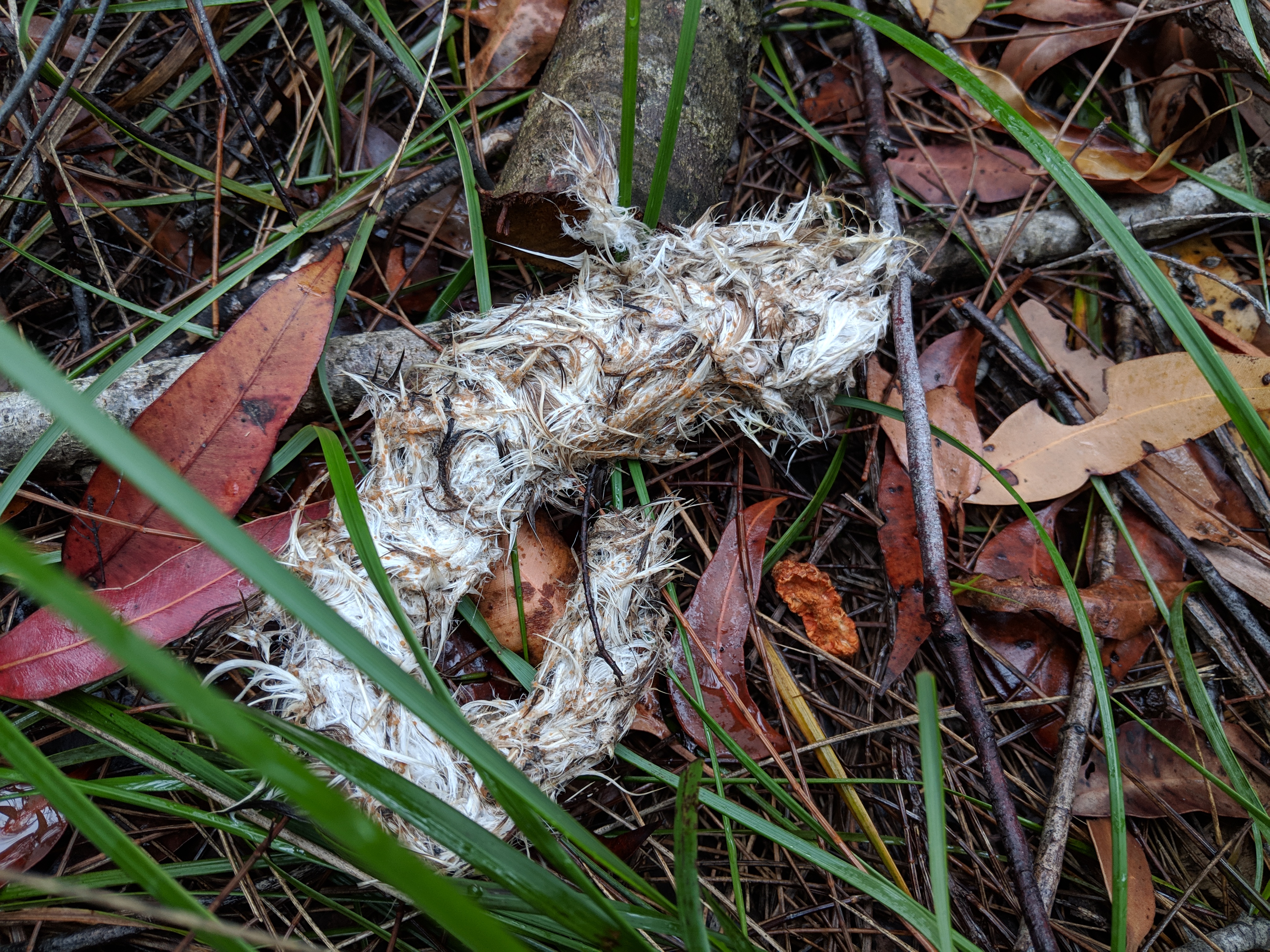
This morning I came across this weird-looking bundle of hair and stuff in the bush surrounding Manly Dam National Park near Sydney:
Date spotted: 20 January 2019 (Summer)
Location: Manly Dam National Park, New South Wales, Australia: 33°46’24.5″S 151°15’04.4″E
At first I thought it was some weird creature, but it had no visible eyes and didn’t really look alive, although it was obviously animal in nature. I picked up a stick and turned the object over gently. It didn’t try to move away. Definitely not alive. It looked the same on both sides. No obvious undercarriage.
So then I thought, maybe it’s some dead creature that’s become covered in a thick fungus. It’s summer here in Sydney—hot, humid, lots of fungus on the trees and mould on animal poo in the forest. In fact, I’ve seen animal poo that’s completely white and fuzzy, with long tendrils of mould standing up straight.
Still, the fungus idea didn’t quite fit the bill. The stuff covering this object looked more like fur than fungus.
So I took a photo and moved on.
When I got home and showed my husband the photo of this weird thing I’d seen, he suggested it might be owl’s vomit. They do that, he said. They regurgitate fur and stuff. So I looked it up. Indeed they do.
The official name for owl vomit is owl pellet. I think this one must be from a Powerful Owl (Ninox strenua), because I’ve seen those birds in the same area of the bush before, and because this pellet was big. It was around 6 inches long (15 cm) and 2 inches (5 cm) at its widest.
Here’s a Powerful Owl that I saw a while ago, also at Manly Dam. This owl has its prey (a dead possum) in its grip:

An owl’s pellet consists of fur, bones, and other bits and pieces of its prey that the owl can’t digest. An owl needs to regurgitate a pellet once or twice every night, six hours or more after the owl has eaten.
If you like, you can see more about the Powerful Owls I’ve seen around Manly Dam.
Butcherbird has whiskers!
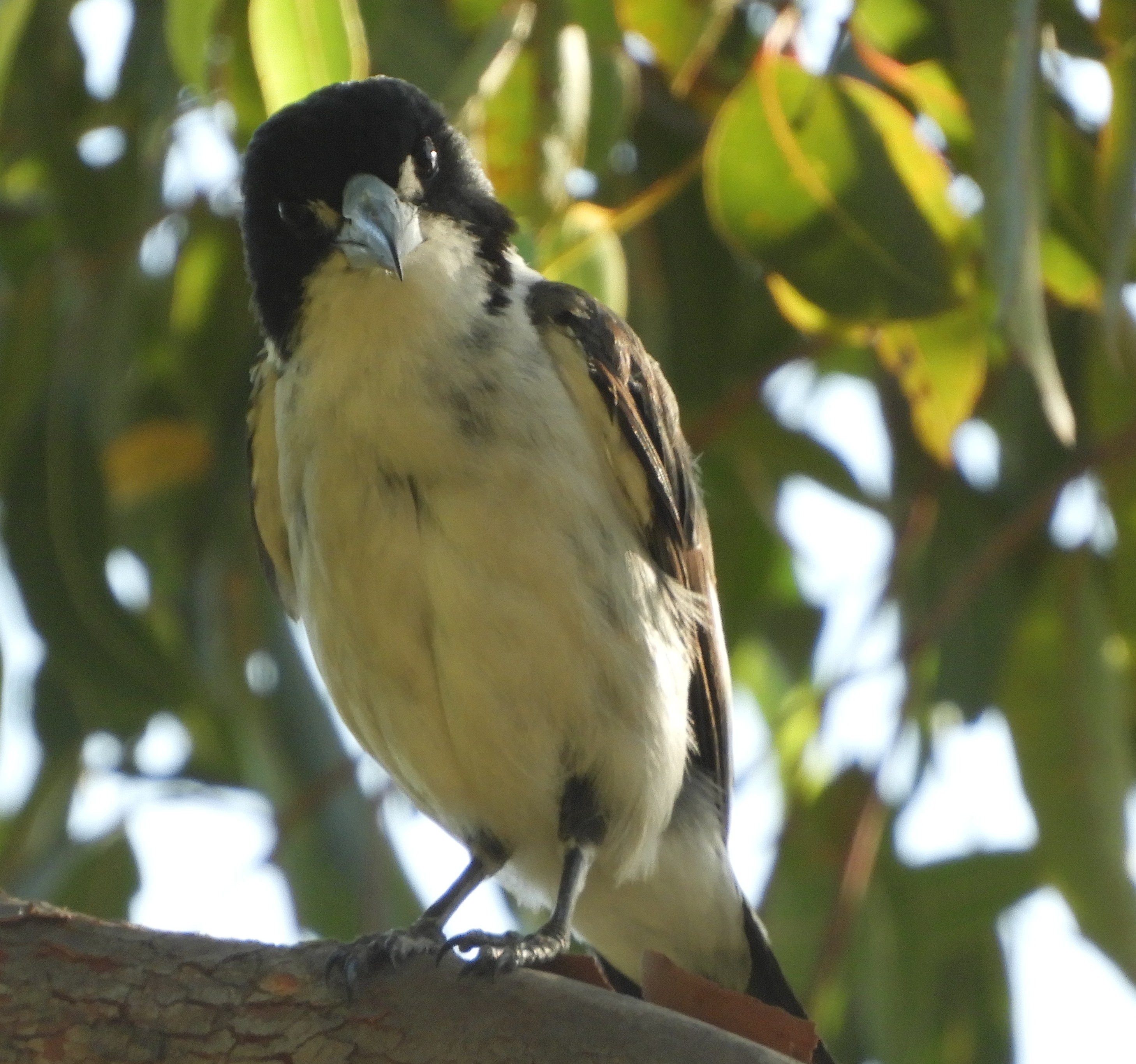
A few butcherbirds are frequenting my area at the moment. This one is a Grey Butcherbird:
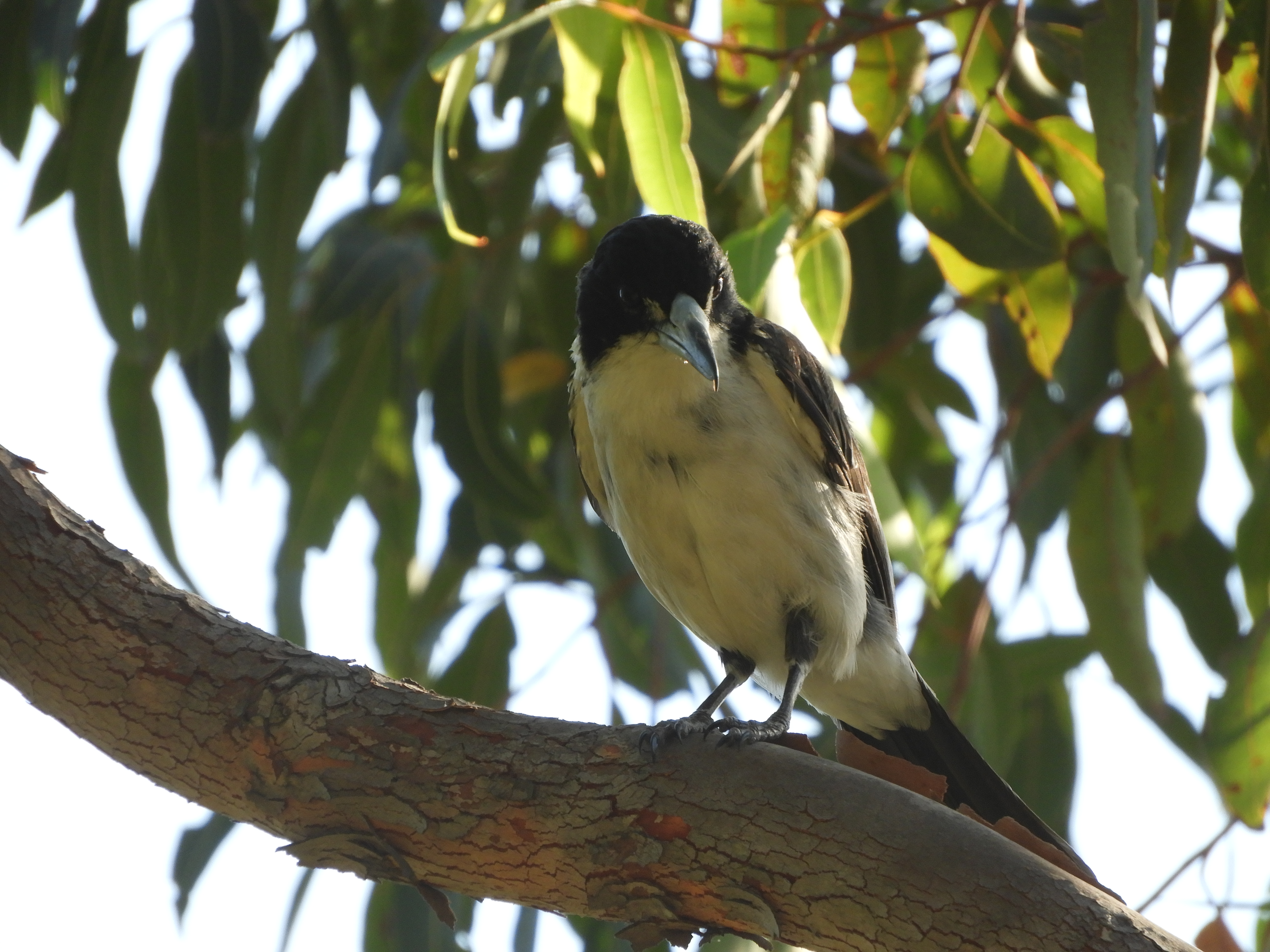
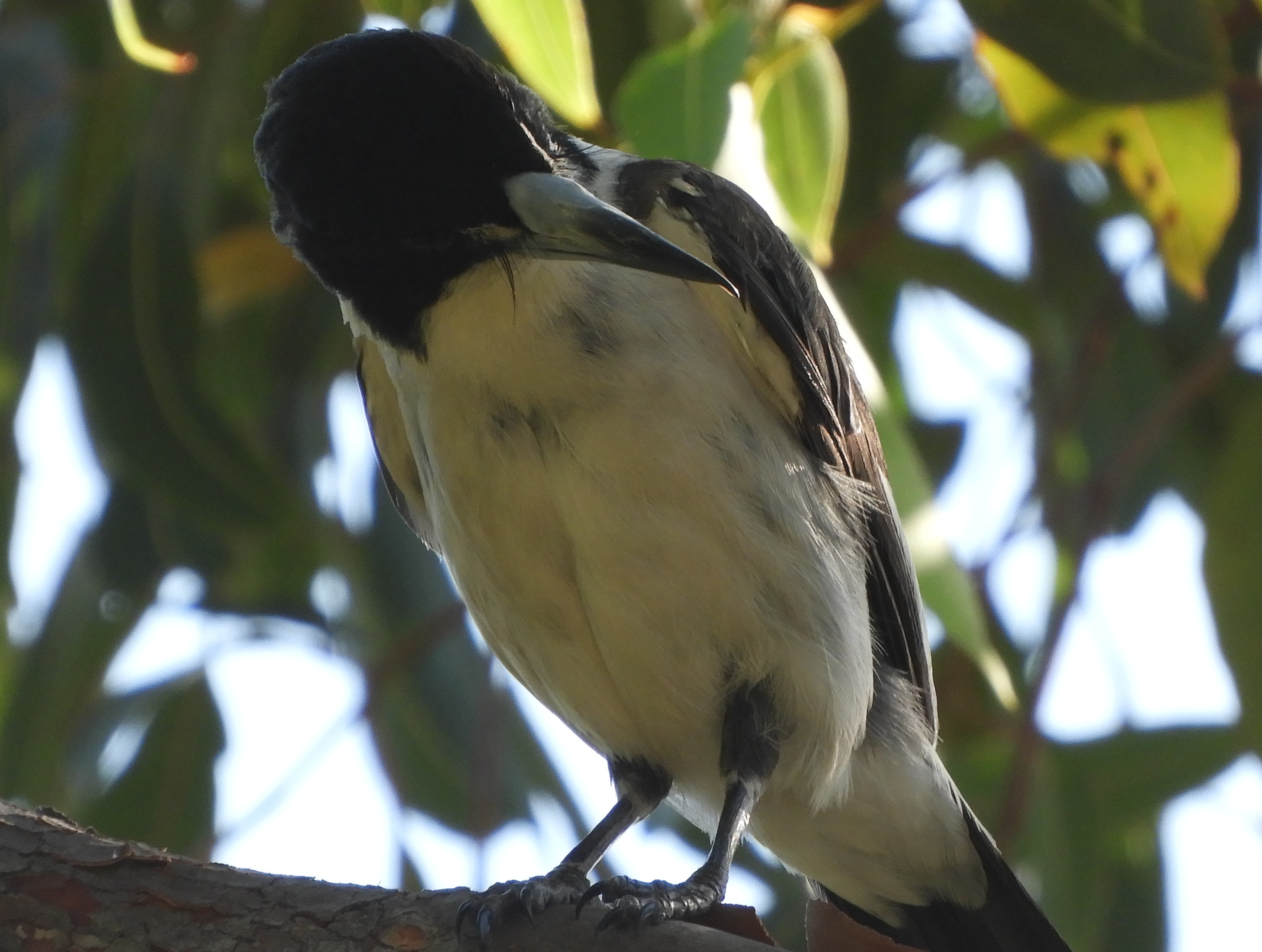
When it tilted its head, I noticed some dark whiskers below its eye:
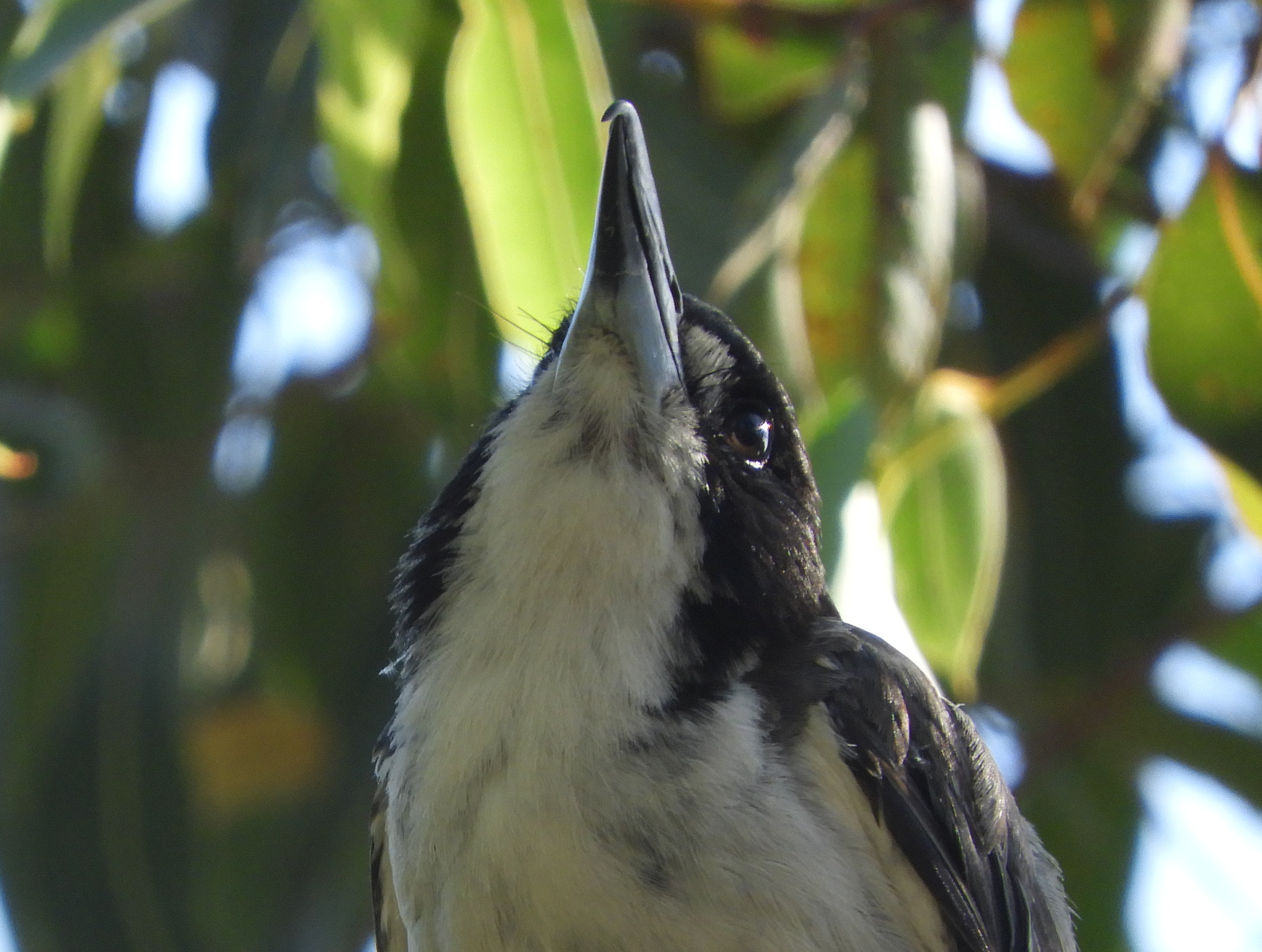
When it looked upwards, I could make out the whiskers on both sides of its beak:
A full-frontal gaze shows off the white patches (lores) in front of its eyes:
A yawn shows its tongue off nicely:

Here’s a profile to close the post. The hook on the end of the beak is for stabbing prey, which the butcherbird then hangs on a branch or a fence until it’s ready to eat:
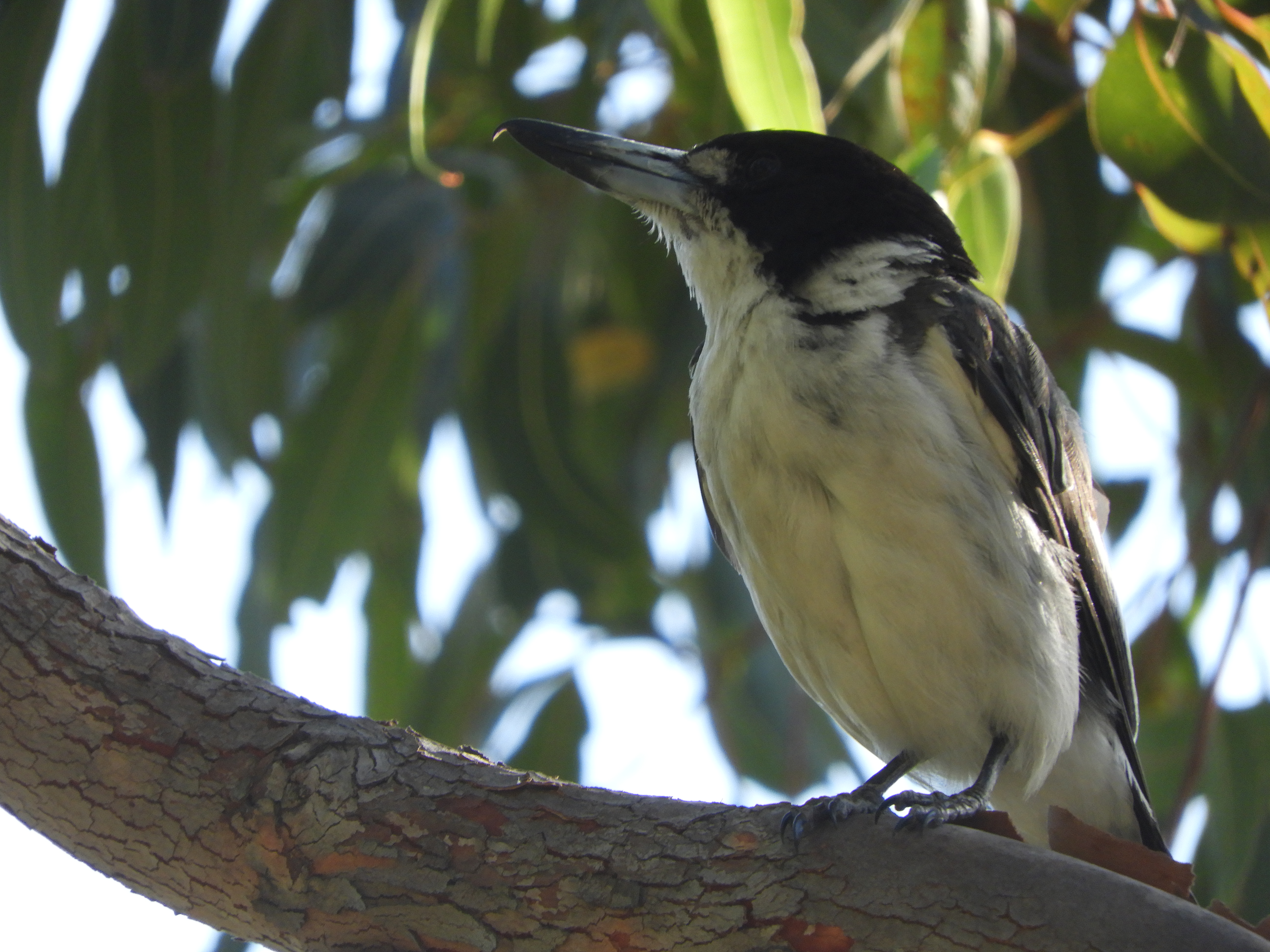
Common name: Grey Butcherbird
Scientific name: Cracticus torquatus
Approximate length: 30 cm
Date spotted: 5 January 2019 (Summer)
Location: Allambie Heights, New South Wales, Australia


 Sydney Birder