Blog Archives
Magpie song with a touch of Star Wars
A sociable magpie dropped by the other day to try out its song on me. I think the bird is still a youngster, as its eyes are not yet the bright red of an adult. The magpie let me get up to about two metres away, and still happily continued its song. I didn’t try to get any closer. After all, it’s a wild bird and entitled to its space. Plus, magpies are known to fly off the handle at times.
As well as the usual magpie warbles, this bird adds a few extra whistles and chirps. Sometimes it sounds as if it’s been listening to a Star Wars sound track!
Common name: Australian Magpie
Scientific name: Gymnorhina tibicen
Approximate length: 40 cm
Date spotted: 24 December 2018 (Summer)
Location: Allambie Heights, NSW, Australia (near Sydney
Koel cuckoos calling
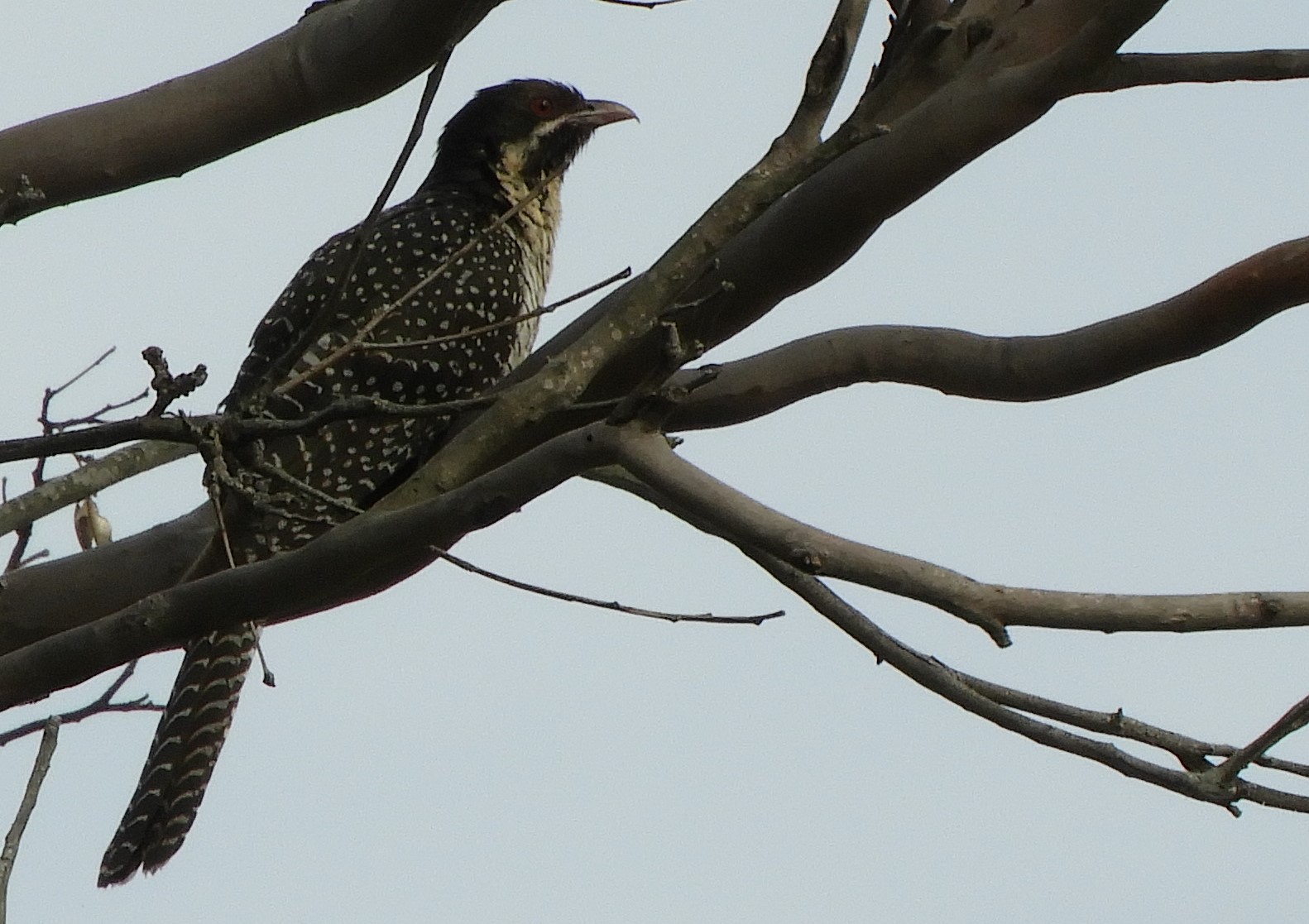
The Koel cuckoos are in town! They were diving through the treetops and calling all round me when I went for a stroll in the bush today. Here’s a picture of one of them – a female:
In the following short video you can hear the cuckoos calling to each other. You can’t actually see any birds:
Common name: Common Koel or Eastern Koel
Scientific name: Eudynamys scolopacea
Approximate length: 45 cm
Date spotted: 25 November 2018 (spring)
Location: Manly Dam National Park, New South Wales, Australia: 33°46’56.2″S 151°15’22.5″E
Eastern Rosella calling and dancing
This has turned out to be parrot weekend in our garden. Yesterday four black cockatoos dropped by. Today it was two Eastern Rosellas. This is the first time I’ve managed to get a photo of one of these lovely birds. Its characteristic call drew me to the window. There it was on our Scribbly Gum tree right outside the window, dancing and chattering to its mate:
Knowing that these birds usually go about in pairs, I looked for the other one but didn’t see it until they both flew away, several minutes later. (The mate was higher up in the tree, hidden by the foliage.)
At 30 cm in length, Eastern Rosellas are slightly smaller than the Crimson Rosellas that we see more often in our area. This still shot shows the bird in all its beauty:

Common name: Eastern Rosella
Scientific name: Platycercus eximius
Approximate length: 30 cm
Date spotted: 21 October 2018 (Spring)
Location: Allambie Heights, NSW, Australia
Four Yellow-tailed Black Cockatoos come to visit
Today I arrived home from a long overseas trip. An hour or so after getting home, I was delighted to hear the haunting calls of a group of Yellow-tailed Black Cockatoos. They came to visit our Old Man Banksia tree, which is currently covered in dried seed pods. A tasty snack for a cockatoo!
I love the comfortable nibbling noises the birds make. Every now and then they chatter to each other too, as you can hear towards the end of this next video:
Yellow-tailed Black Cockatoos are large birds, quite a lot bigger than the more common white cockatoo. They have a dignified, graceful presence. It feels like a privilege to have them drop by. We planted the Old Man Banksia (Banksia serrata)a few years ago, with the goal of feeding the local bird life. It looks like our plan is working.
Two of the birds flew up into a Sydney Red Gum that towers over our house, for a quiet grooming session. It’s cute how attentive the groomer is, even returning to her job when she notices that her companion still has an intractable itch. When she stops for the second time, he reprimands her and she returns to the task yet again.
The bird with the pinkish-red ring around his eye is the male. The females have grey eye rings and a lighter-coloured bill. Here’s a still shot of the male, looking content after a good grooming from his mate:
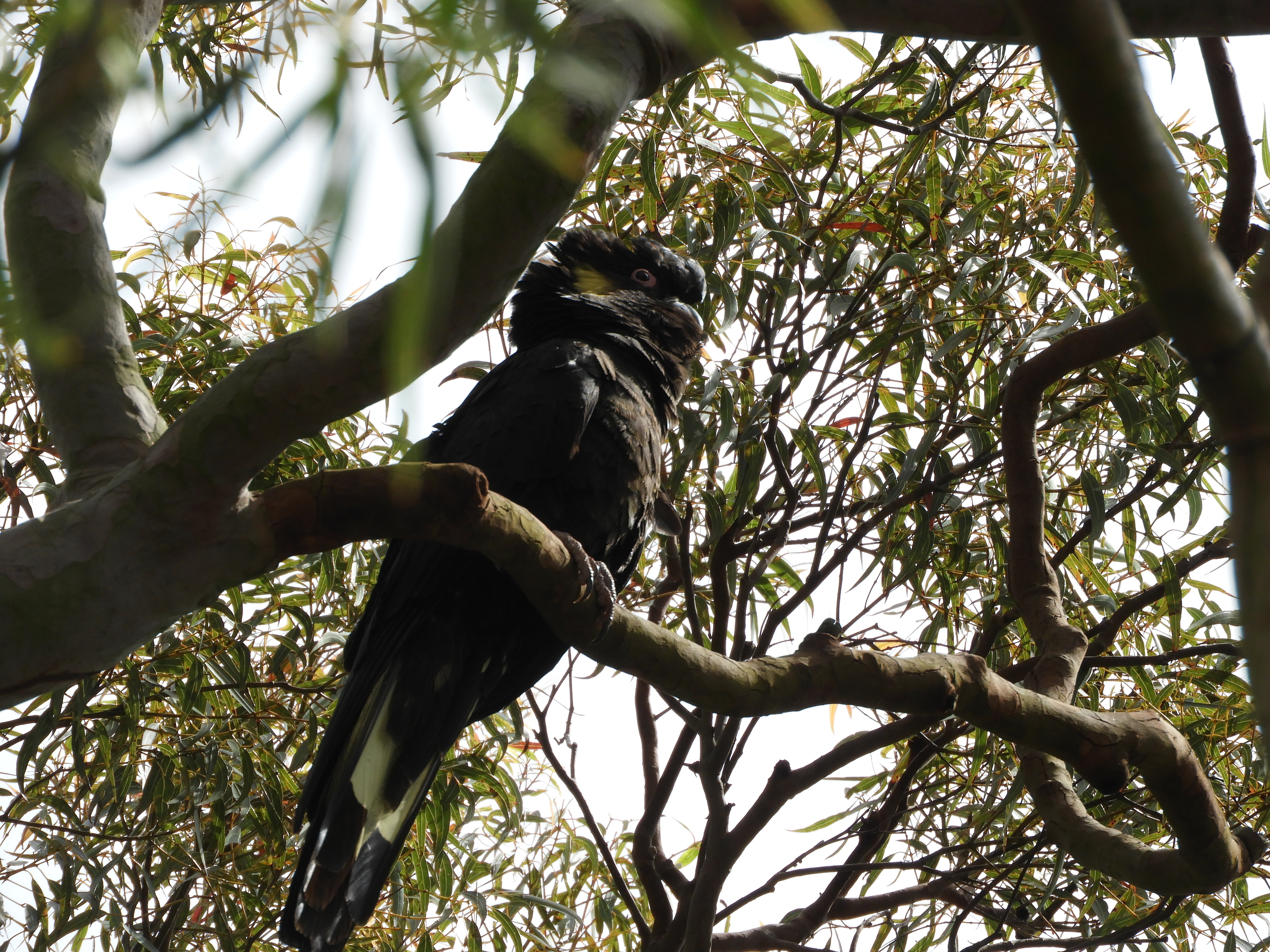
Common name: Yellow-tailed Black Cockatoo
Scientific name: Calyptorhynchus funereus
Approximate length: 65 cm
Date spotted: 20 October 2018 (Spring)
Location: Allambie Heights, NSW, Australia
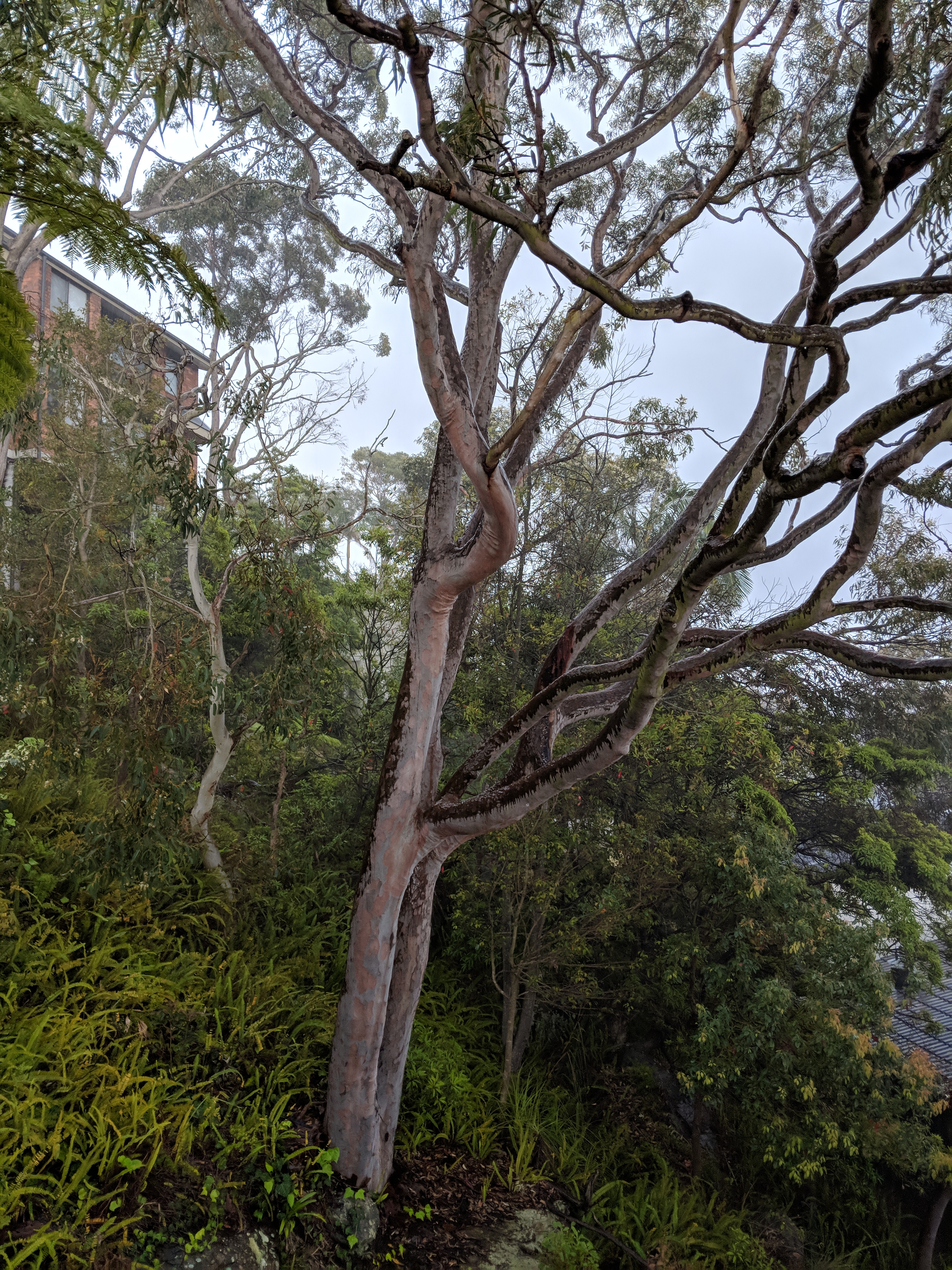
The Sydney Red Gum (Angophora costata) is a beautiful tree. I took this shot of it a couple of weeks ago, when the rain was making interesting patterns on the bark:
Raucous call of Channel-billed Cuckoos
They arrive in south eastern Australia in spring. They’re spooky to look at. In the early hours of the morning, their call puts even the kookaburras to shame.
In this video, you don’t see any birds – it’s too dark – but you can hear them!
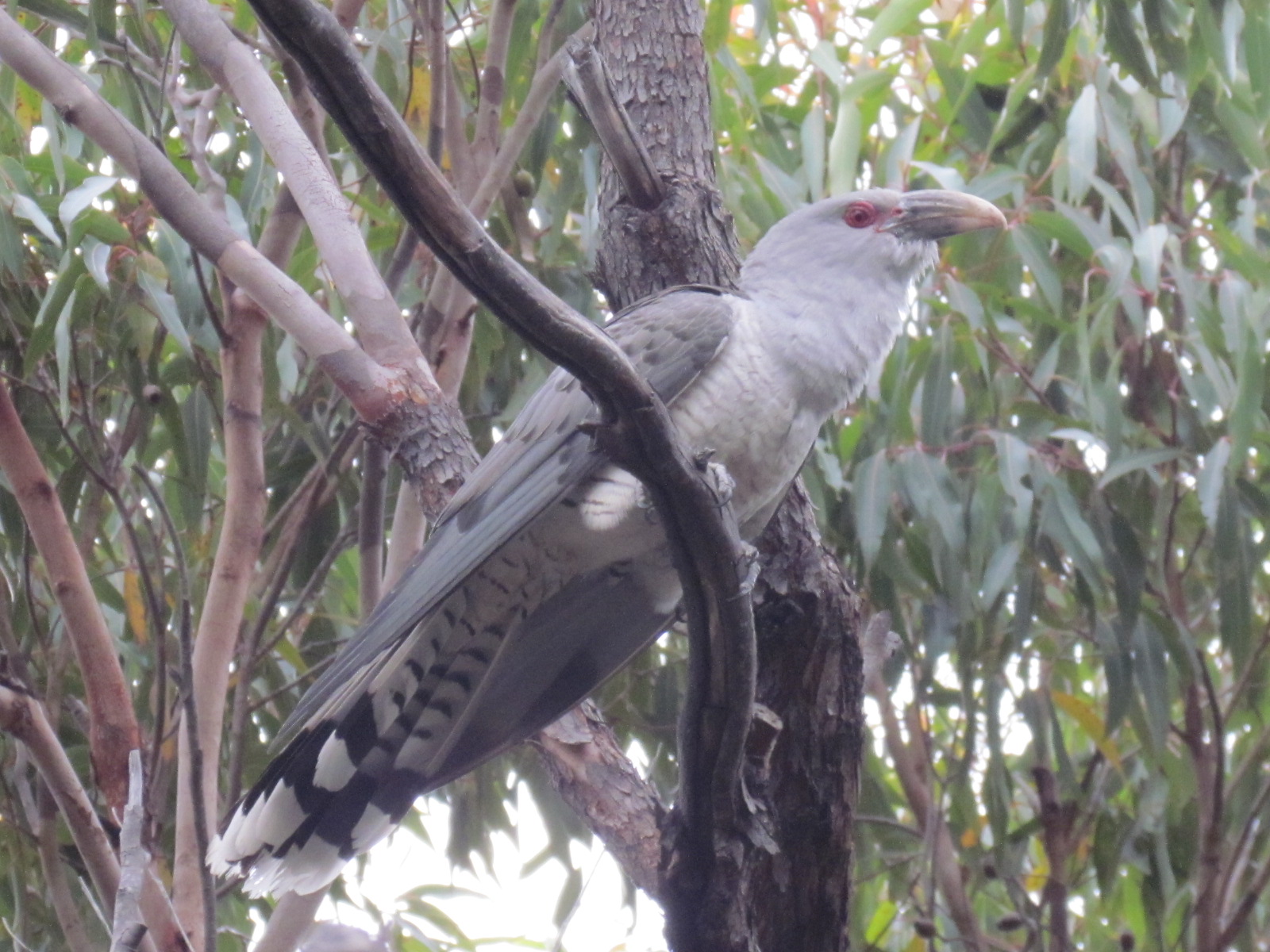
Here’s a picture of a Channel-billed Cuckoo from another date:
To see more pics and videos, check out my list of cuckoo posts.
Common name: Channel-billed Cuckoo
Scientific name: Scythrops novaehollandiae
Approximate length: 58-65 cm
Date heard: 22 September 2018 (Spring)
Location: Allambie Heights, NSW, Australia
Eastern Spinebills and peaceful patterns
Eastern Spinebills are pretty little birds, with dramatic white and dark grey markings at their throats, and soft orange chests. Their long thin beaks give them their name. They’re honeyeaters, feeding on nectar from flowers, with the occasional insect too.

This video shows what it’s like to be in the Australian bush surrounded by Eastern Spinebills. You can hear the spinebills and other birds all round. The video doesn’t zoom in on the birds, but every now and then you can spot them flitting through the foliage.
The birds were in one of my favourite spots in the Manly Dam national park. Here’s a pic showing the patterns and peace in the area of the bush where the spinebills hang out:

Common name: Eastern Spinebill
Scientific name: Acanthorhynchus tenuirostris
Approximate length: 16cm
Date spotted: 15 September 2018 (Spring)
Location: Manly Dam Reserve, New South Wales, Australia: 33°46’24.3″S 151°15’03.8″E
Black Swans are back
It’s been a while since I’ve seen Black Swans on Manly Dam. Now they’re back, and four of them at that. Black Swans are native to New South Wales, Australia.
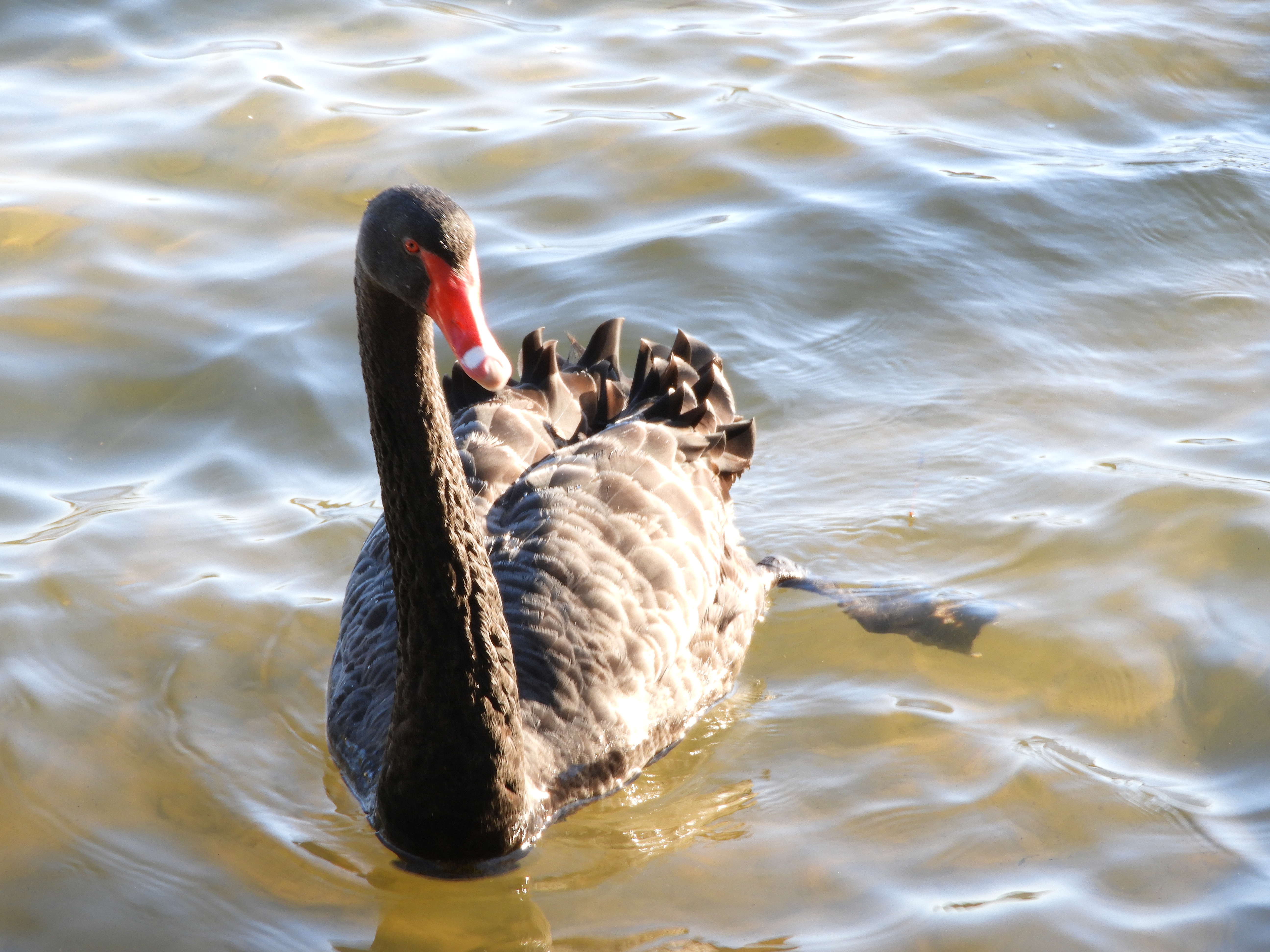
The call of a Black Swan is a soft hoot, a little like an apologetic cuckoo clock. You can hear it about 6 seconds into this video:
In the next video, the swans are caught in the converging melee of waterbirds when someone throws some scraps into the water. Again, the swans hoot about 6 seconds into the video:
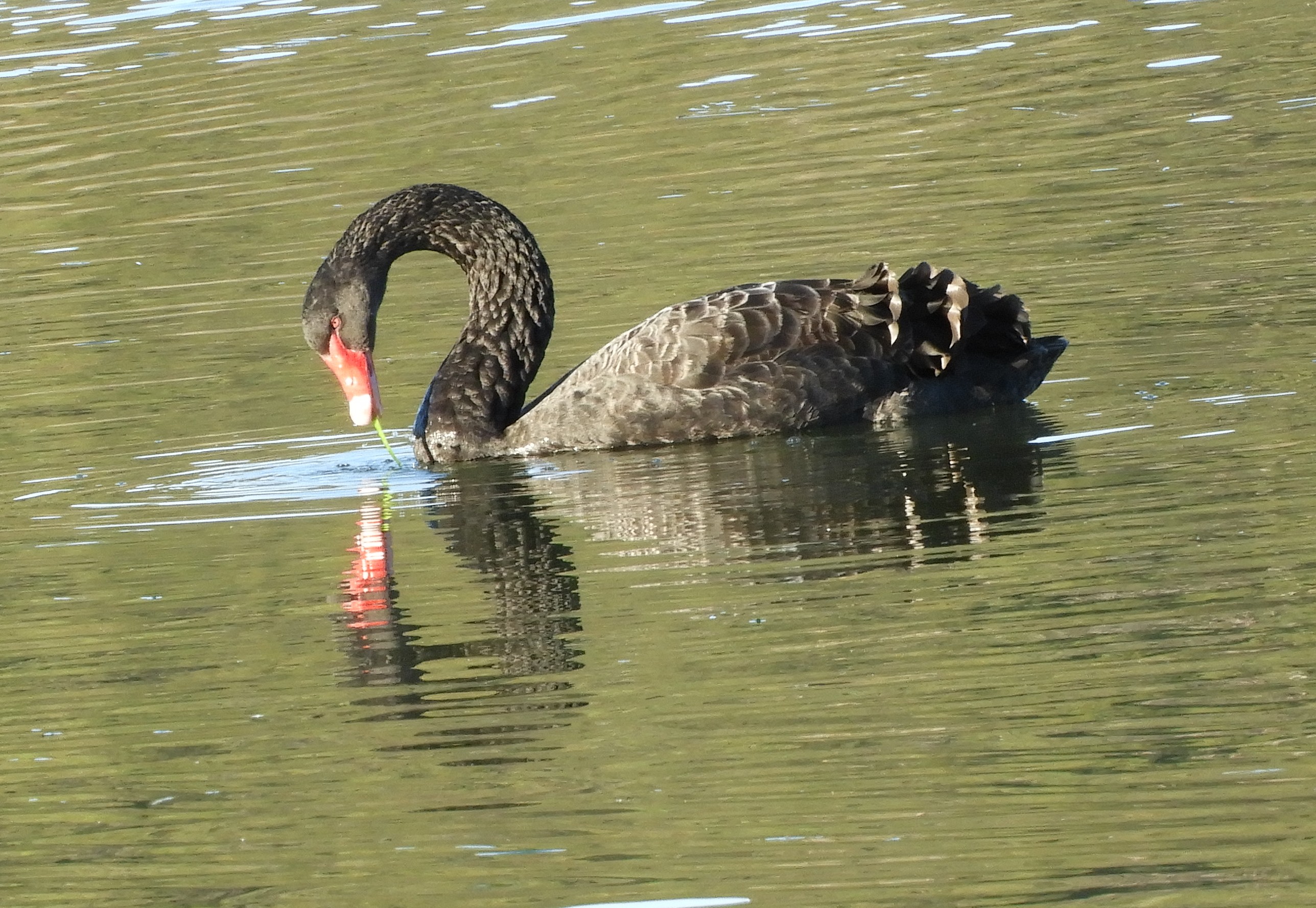
This swan slides a bit of green weed through its beak, presumably to scrape off slime and small creatures as food:
Reflecting on reeds:
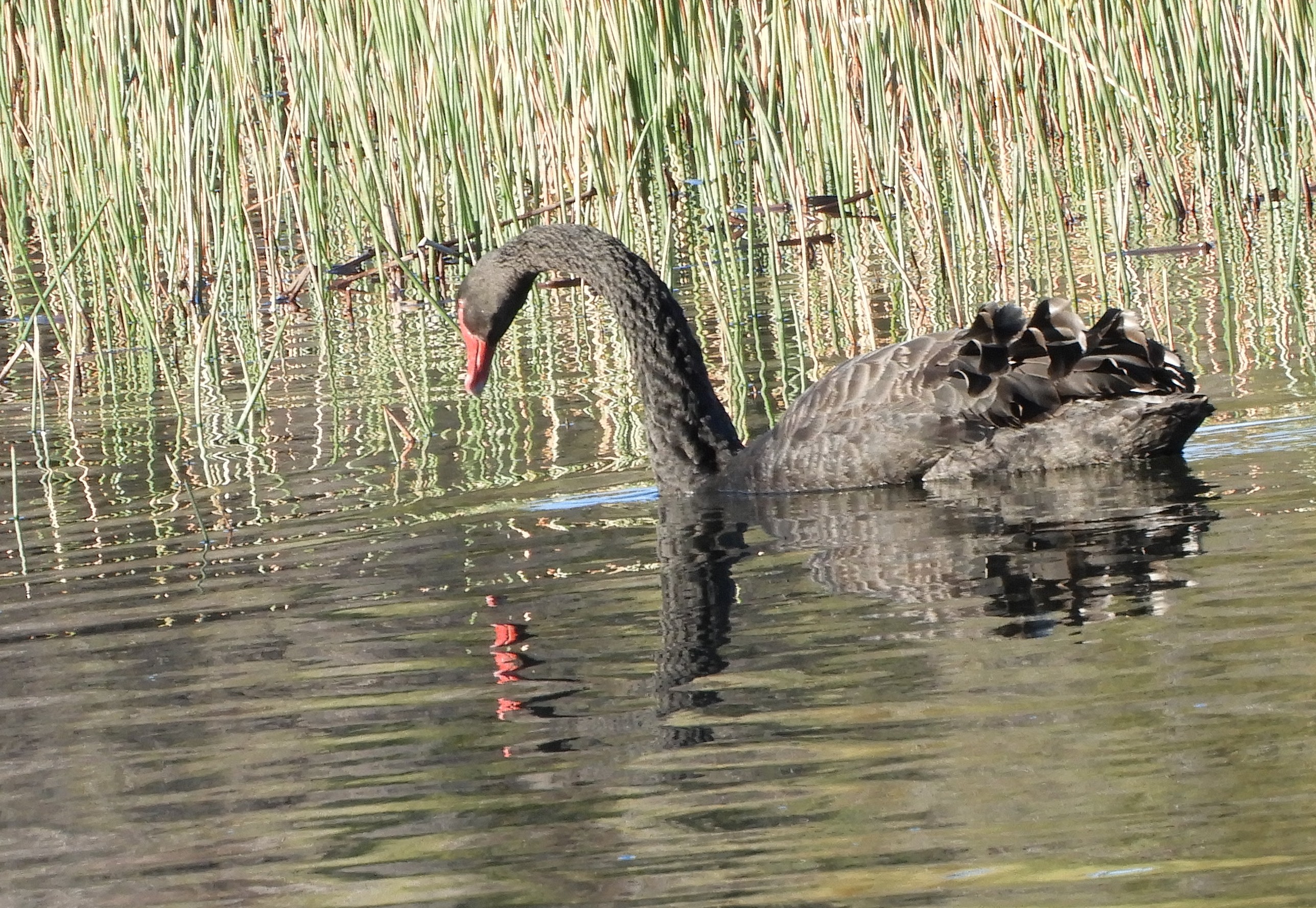
Common name: Black Swan
Scientific name: Cygnus atratus
Approximate length: 120 cm
Date spotted: 7 July 2018 (Winter)
Location: Manly Dam National Park, New South Wales, Australia: 33°46’58.3″S 151°15’18.7″E
Little Wattlebird calling, mate unimpressed
A male Little Wattlebird does its best to impress (or intimidate) the bird sharing its branch. The other bird is unimpressed. In fact, its reaction seems to be, “Oh, please, are you really going to keep doing that?”
The call of a Little Wattlebird is strange. It often starts with a click-clack, as if the calling mechanism is turning over before getting into full gear. Then out comes the harsh bray that’s characteristic of the male bird. It seems to take a fair bit of effort to make this noise, as you can see in the video:
I went back to the same spot a day later, and snapped a picture of this male Little Wattlebird. It’s probably the same bird, given their fierce territoriality:
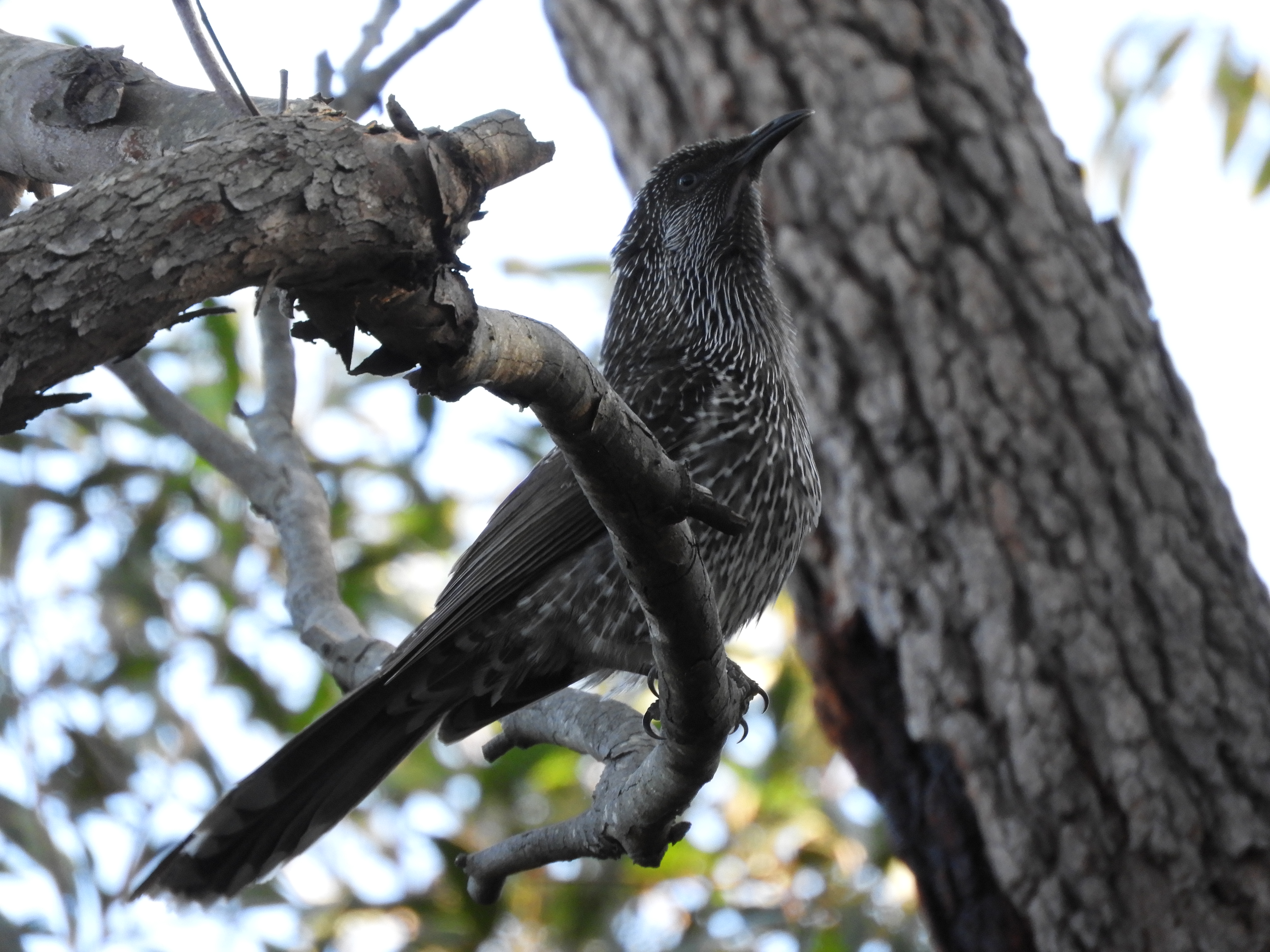
Common name: Little Wattlebird
Scientific name: Anthochaera chrysoptera
Approximate length: 30 cm
Date spotted: 7 July 2018 (Winter)
Location: Manly Dam National Park, New South Wales, Australia: 33°46’36.9″S 151°15’10.4″E
Olive-backed Oriole chirruping and looking for bugs
It was the unusual chirruping that made me look up into the trees and see this Olive-backed Oriole. At first I thought it was a Wattle Bird, but the sound it made was unusual. So I snapped a few shots and took them home to examine them on the big screen.
In the video, you can hear the sound the bird makes:
This is the first view I had of the bird. Very well camouflaged!

Here the bird looks with gimlet eye at a termite nest (out of shot above its head) no doubt hoping for some food to wander by.

This is a general picture of the trees in the area – the bird’s habitat:

Common name: Olive-backed Oriole
Scientific name: Oriolus sagittatus
Approximate length: 25-28 cm
Date spotted: 8 April 2018 (Autumn)
Location: Manly Dam National Park, New South Wales, Australia: 33°46’25.6″S 151°14’56.8″E
Call of the whipbird
The birds in Australia make strange noises, and the call of the Eastern Whipbird is one of the strangest.
A sound bite:
Common name: Eastern Whipbird
Scientific name: Psophodes olivaceus
Approximate length: 30 cm
Date spotted: 10 March 2018 (Early autumn)
Location: Manly Dam National Reserve, New South Wales, Australia: 33°46’36.5″S 151°15’16.0″E


 Sydney Birder