Blog Archives
Kookaburra enjoying the winter sunshine
It’s been very very wet and very very cold in Sydney over the last few weeks. This morning the mists cleared, the rain stopped, and Sydney-siders ventured out to enjoy the sunshine. This kookaburra grabbed a spot in the sun on a moss-covered electricity pole.
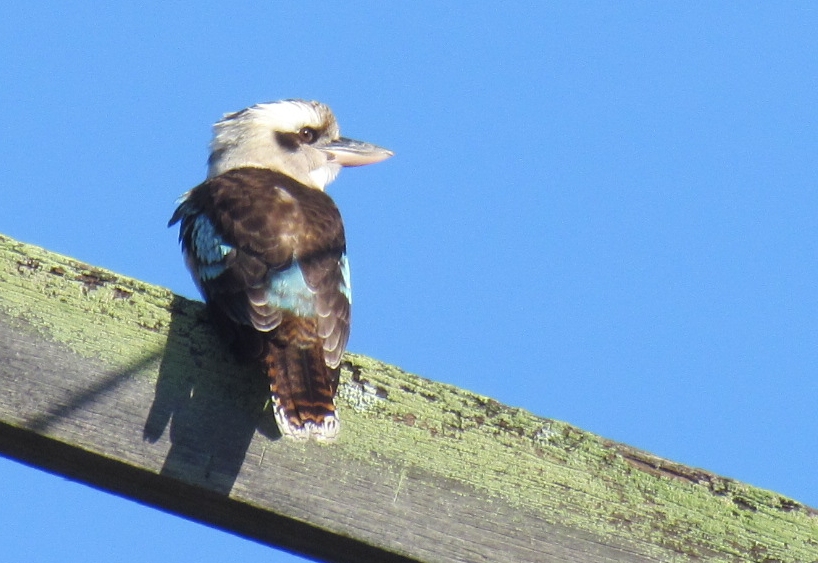
Common name: Laughing Kookaburra
Scientific name: Dacelo novaeguineae
Approximate length: 47 cm
Date spotted: 10 July 2016
Season: Winter
Location: Allambie Heights, New South Wales, Australia
Latitude/longitude: 33°46’35.7″S 151°15’25.6″E
Eastern Yellow Robin
Usually the little birds (robins, wrens, finches) flit fast through the bush, coming to rest for only a few seconds before moving on. That makes photography challenging. This morning, a little Eastern Yellow Robin stayed in one spot long enough for me to take a few photos.
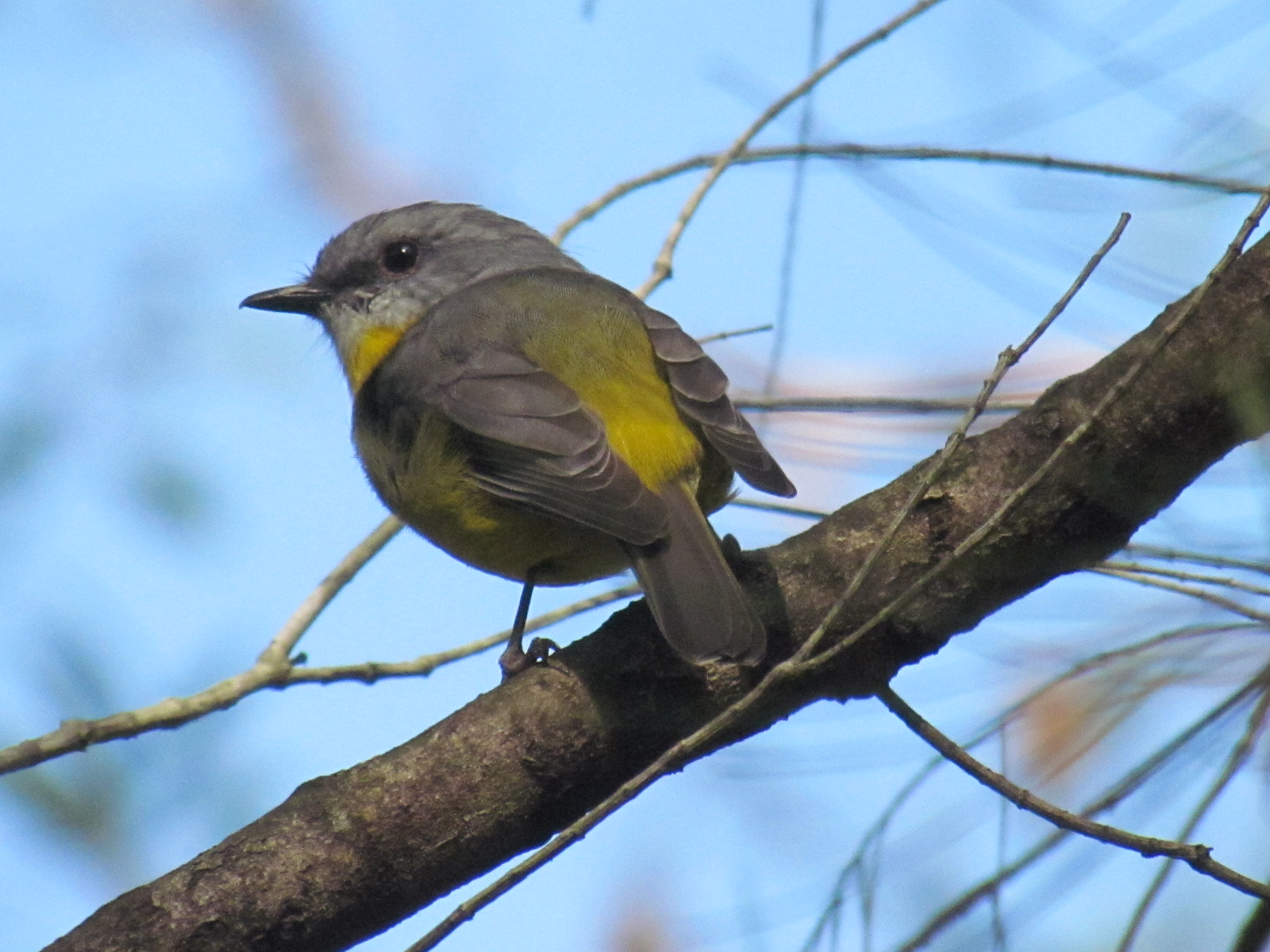
On the point of flight:
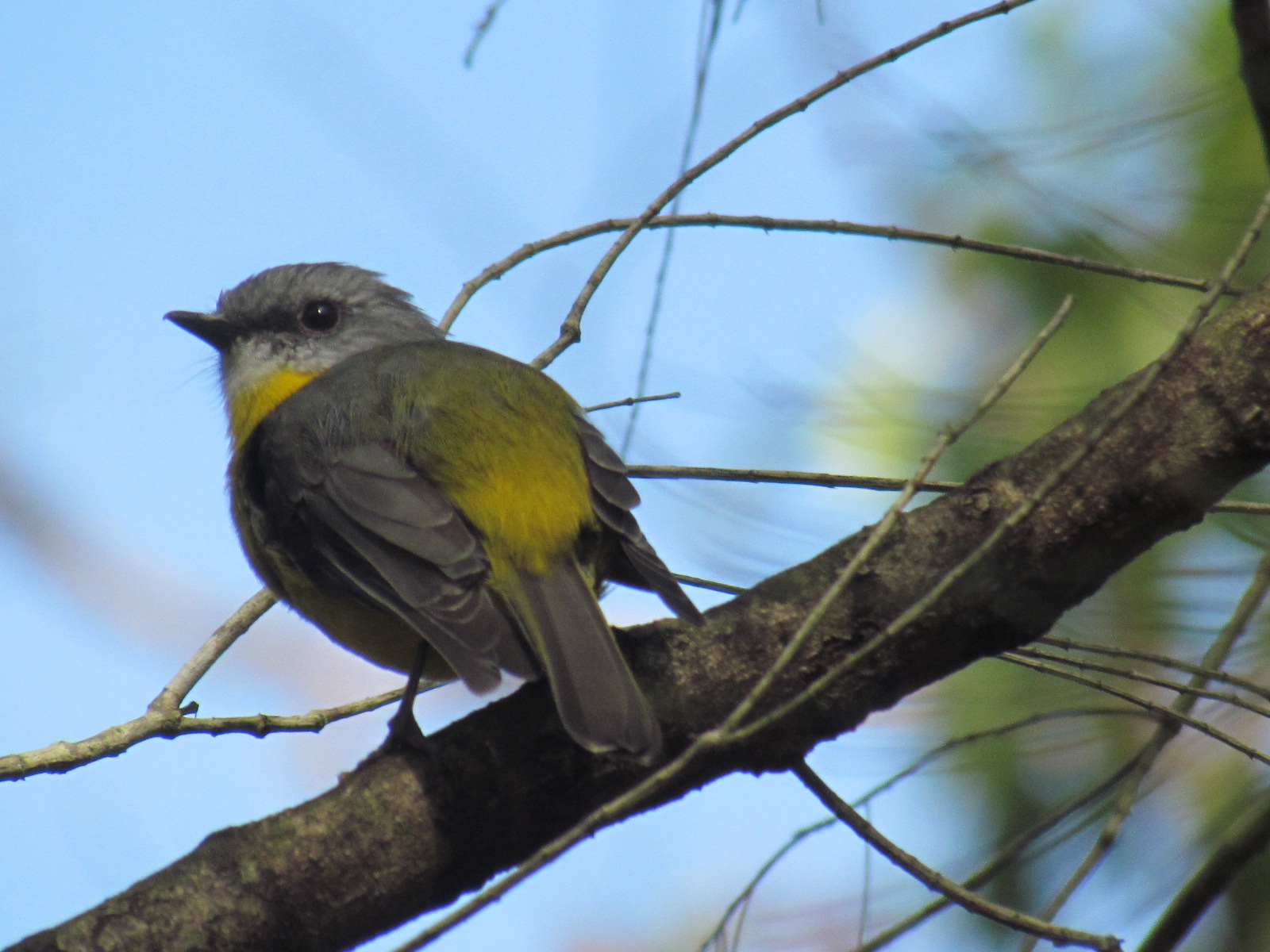
Common name: Eastern Yellow Robin
Scientific name: Eopsaltria australis
Approximate length: 15 cm
Date spotted: 13 March 2016
Season: Late summer
Location: Manly Dam Reserve, New South Wales, Australia
Latitude/longitude: 33°46’10.7″S 151°14’28.0″E
Purple Swamphens playing coy
The first sight of the Purple Swamphens in this video is their unique tracks in the sand. Then we hear a peeping and a squawking and a bit of a kerfuffle behind the reeds. A bird emerges for a quick appearance, before going back to the more interesting companionship of its fellows. A few minutes later, I came across another pair of birds out in the open, and filmed them too. Notice their big feet as they walk across the lily pads.
Common name: Purple Swamphen
Scientific name: Porphyrio porphyrio
Approximate length: 50 cm
Date spotted: 6 March 2016
Season: Late summer
Location: Manly Dam Reserve, New South Wales, Australia
Latitude/longitude: 33°46’26.6″S 151°14’44.3″E
Eastern Spinebill near Sydney, Australia
This pretty little bird is fast-moving and hard to photograph. The trickling noise in the background is the waterfall at Manly Dam Reserve. Towards the end of the clip, you’ll hear first a Whipbird and then some tweeting that may be the Spinebill itself.
Here it is, an Eastern Spinebill dancing around as it catches insects. At least, I think that’s what it’s doing.
Common name: Eastern Spinebill
Scientific name: Acanthorhynchus tenuirostris
Approximate length: 15 cm
Date spotted: 6 March 2016
Season: Late summer
Location: Waterfall at Manly Dam Reserve, New South Wales, Australia
Latitude/longitude: 33°46’08.5″S 151°14’29.1″E
Swimming across the sky
Reflections at Manly Dam.
In the background you’ll hear Australian Ravens cawing, Wattlebirds croaking, and Whipbirds whistling.
Pacific Black Duck
Common name: Pacific Black Duck
Scientific name: Anas superciliosa
Approximate length: 45-60 cm
Date spotted: 25 December 2015
Season: Summer
Location: Manly Dam, New South Wales, Australia
Latitude/longitude: 33°46’55.0″S 151°15’19.7″E
Eurasian Coot
My bird book calls this coot dumpy. An interesting fact is that the coot has flattened toes rather than webbed feet for efficient swimming.
Common name: Eurasian Coot
Scientific name: Fulica atra
Approximate length: 35 cm
Date spotted: 25 December 2015
Season: Summer
Location: Manly Dam, New South Wales, Australia
Latitude/longitude: 33°46’55.0″S 151°15’19.7″E
Bird swathed in Christmas colours
This little Rainbow Lorikeet shows off its bright cloak of red, green, blue and yellow, perched on the greeny-white flower of an Old Man Banksia. Christmas colours indeed

Common name: Rainbow Lorikeet
Scientific name: Trichoglossus haematodus
Approximate length: 30 cm
Date spotted: 24 December 2015
Season: Summer
Location: Allambie Heights, New South Wales, Australia
Approximate latitude/longitude: 33°46’19.2″S 151°15’39.6″E
Cuckoos are back in town
They’re noisy creatures, but I love it when the cuckoos arrive in Sydney. They herald the start of spring. They also send the local birds into a tizzy. Territorial disputes abound. The kookaburras have a rival for their 5am wake-up duties. And the noisy miners have another large bird to terrorise.
The cuckoos are migratory, spending the warmer half the year in Australia and the cooler half in Indonesia, Papua New Guinea and other northern climes. Two types of cuckoos make themselves known in our neighbourhood by their loud calls: the Channel-billed Cuckoos and the Koel Cuckoos.
Channel-billed Cuckoo
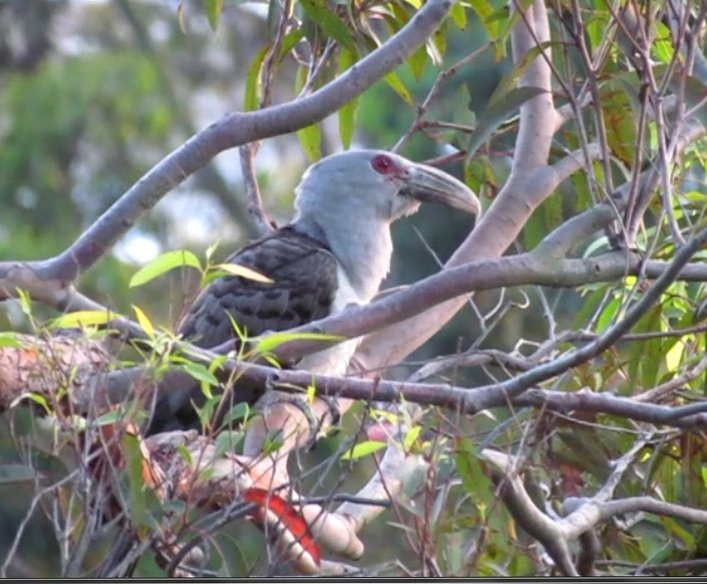
The Channel-billed Cuckoos are the largest cuckoos in the world. With their red eyes and large beaks, they’re an impressive sight. Today I was lucky to see one reasonably close by, and I was amazed by the way it moves. This one was being bothered by a noisy miner. The cuckoo was constantly bending and wriggling its neck to try and spot its tormentor. At the end of the video, you’ll see it looking up in alarm then disappearing with a flash of its tail, as the much smaller miner dive-bombs it.
Here’s a still photo of the same cuckoo peering out from underneath a canopy of leaves:
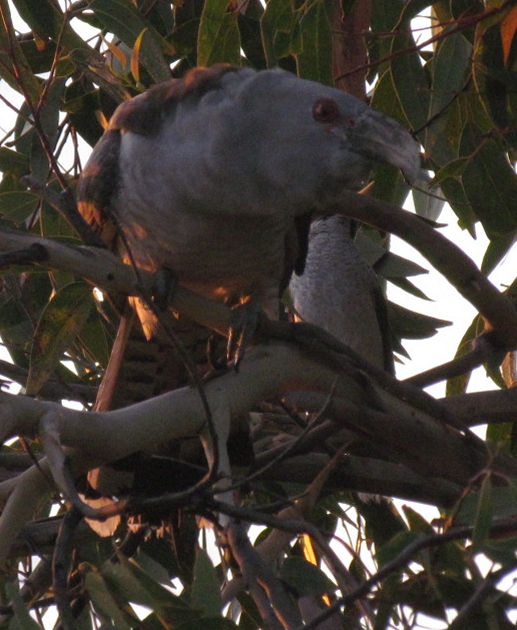
In this one, the cuckoo is looking reasonable relaxed but on the alert for attack:
And here it’s definitely wary:
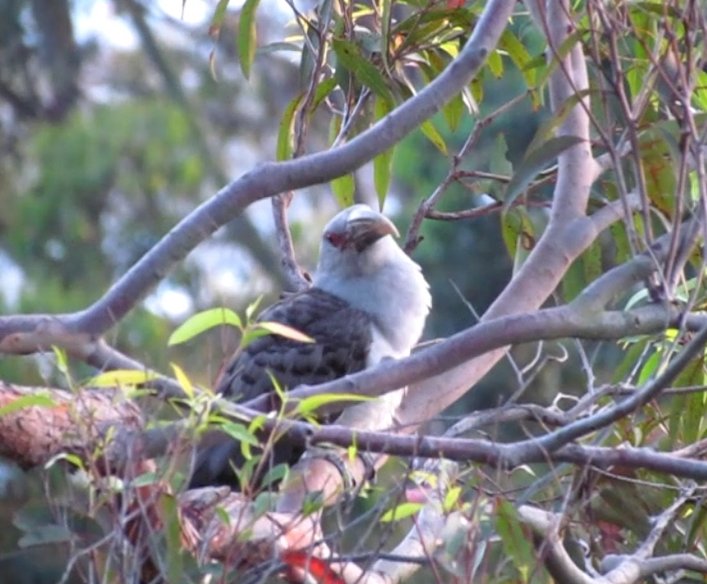
Common name: Channel-billed Cuckoo
Scientific name: Scythrops novaehollandiae
Approximate length: 58-65 cm
Date spotted: 1 November 2015
Season: Summer
Location: Allambie Heights, New South Wales, Australia
Latitude/longitude: 33°46’13.9″S 151°15’39.2″E
Koel Cuckoo
Then there are the Koel Cuckoos, like this one who came calling recently:
Here’s a photo of the Koel Cuckoo in full throat:
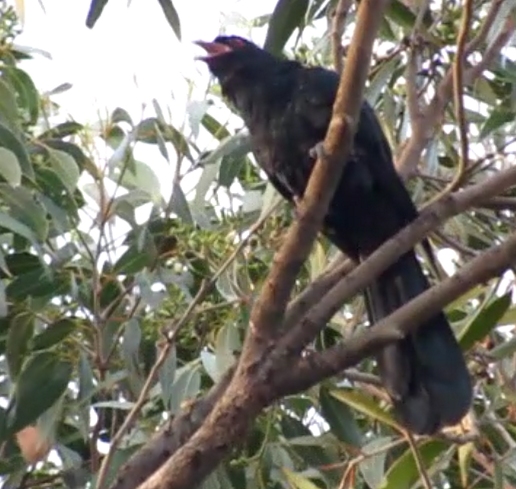
Common name: Common Koel or Eastern Koel
Scientific name: Eudynamys scolopacea
Approximate length: 45 cm
Date spotted: 11 October 2015
Season: Summer
Location: Allambie Heights, New South Wales, Australia
Latitude/longitude: 33°46’13.9″S 151°15’39.2″E
Crimson Rosella in the wet
A Crimson Rosella hangs out on a wire in a Sydney rain storm.

(Click the image to zoom in.)
The Rosella looks a little miffed. The rain’s been going on a while, and I guess the bird’s had enough of it.

Common name: Crimson Rosella
Scientific name: Platycercus elegans elegans
Approximate length: 35 cm
Date spotted: 26 September 2015
Season: Spring
Location: Allambie Heights, New South Wales, Australia
Latitude/longitude: 33°46’13.9″S 151°15’39.2″E
Female Superb Lyrebird at Katoomba
She was hanging out in a secluded glen at Katoomba in the Blue Mountains yesterday, when I happened by with my camera. She is a Superb Lyrebird, scratching through the undergrowth for food. She doesn’t have the fanned lyre tail of an adult male, and alas, she’s not making any interesting noises. Instead, she’s catching a quick snack with a couple of wrens in tow.
We arrived in Katoomba at around 9am, and took the Scenic Railway down into the valley. We were strolling along the wooden walkways when the Lyrebird came into view. They’re usually very shy and keep to the shadows, so it was a treat to see this one reasonably well.
Lyrebirds are amazing mimics. Check out a video about the sounds Lyrebirds make, by David Attenborough.
Common name: Superb Lyrebird
Scientific name: Menura novaehollandiae
Approximate length: 85 cm
Date spotted: 13 June 2015
Season: Winter
Location: Katoomba (down in the valley), New South Wales, Australia
Approximate latitude/longitude: 33°43’56.1″S 150°18’14.1″E
Galahs galore
I’ve posted a few pictures of galahs on this blog. They’re gorgeous birds, a type of parrot with a distinctive call and an endearing habit of walking around on the ground in large groups, bobbing their white-capped heads at each other. If you do something silly, an Australian might fondly say, “You silly galah” – an affectionate nod to the slightly bumbling behaviour of the birds.
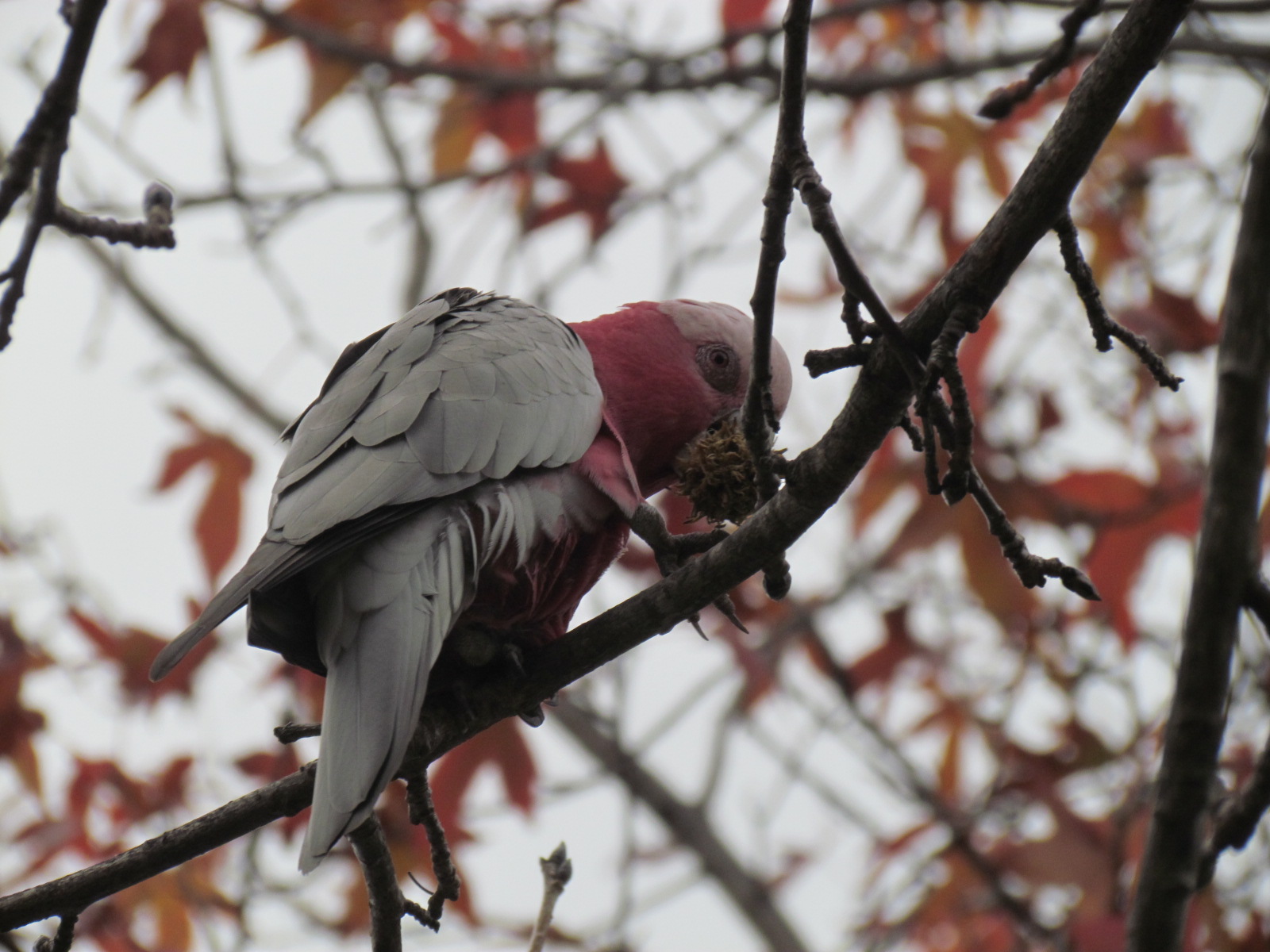
Yesterday I came across a group of them, all agog because a tree was dropping its seed balls. This bird peeks down at me while holding a seed ball in its beak:
In this video, you can hear the galahs chatting noisily to each other. Towards the end, something startles them and they take off, flying towards the camera with seed balls in their beaks:
Common name: Galah
Scientific name: Cacatua roseicapilla
Approximate length: 38 cm
Date spotted: 23 May 2015
Season: Winter
Location: Manly Vale, New South Wales, Australia
Latitude/longitude: 33°46’48.6″S 151°15’52.2″E
To find more about these pretty birds, see the galah category in this blog.


 Sydney Birder