Blog Archives
Ninja wattlebird – now you see it now you don’t
Spot the bird:

It’s a common sight to see a Little Wattlebird on a banksia flower, digging its beak between the florets to find the nectar. I hadn’t realised until now, though, how perfectly camouflaged the bird is on the grey branches of a mature banksia, particularly when surrounded by dead flowerheads.
Here’s a closeup pic of the bird, looking supremely confident though, dare I say it, not very well groomed:

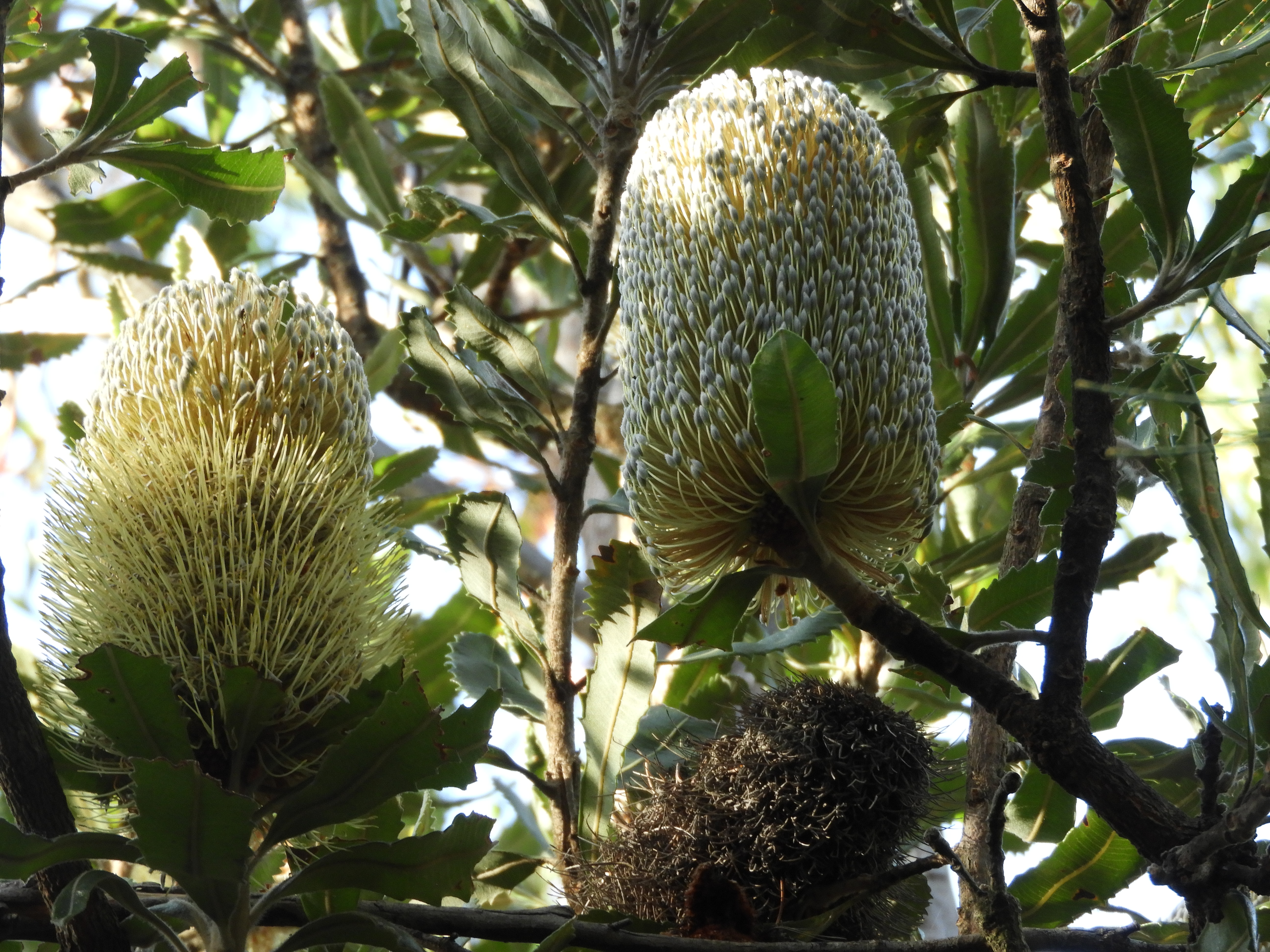
These are the flowers of the Banksia Serrata tree where I saw the bird:
The wattlebird later moved to a bare branch to do a bit of grooming. Caught in dishevelled silhouette against the morning sun:

Common name: Little Wattlebird
Scientific name: Anthochaera chrysoptera
Approximate length: 30 cm
Date spotted: 26 December 2018 (Summer)
Location: Manly Dam National Park, New South Wales, Australia: 33°46’15.4″S 151°14’45.0″E
Cormorants at Long Reef Headland, Dee Why
This morning I took a walk along Dee Why Headland and followed the path down onto Long Reef. Far in the distance, perched on the rocks at the sea’s edge, was an assortment of cormorants.
Pretty cool: when I dropped the pin on Google Maps to mark the spot, the label came up as “Near South Pacific Ocean”!
Great Cormorants
First there were these four birds, which I think are Great Cormorants. The air was full of spray and the early morning sun was low in the sky, so it’s hard to be sure. One is holding its wings up in typical cormorant style. The birds seem to be just about entirely black, with yellow or white around the beak. At the end of the video, I zoom back out so that you can see just how far away the birds were. On cue, a yacht hoves into view too.
Common name: Great Cormorant
Scientific name: Phalacrocorax carbo
Approximate length: 85 cm; wing span 1.5 m
Date spotted: 29 December 2018 (Summer)
Location: Long Reef Headland, Dee Why, New South Wales, Australia: 33°44’30.6″S 151°19’04.2″E
Little Pied Cormorant
Next I saw this Little Pied Cormorant, looking a bit ruffled:
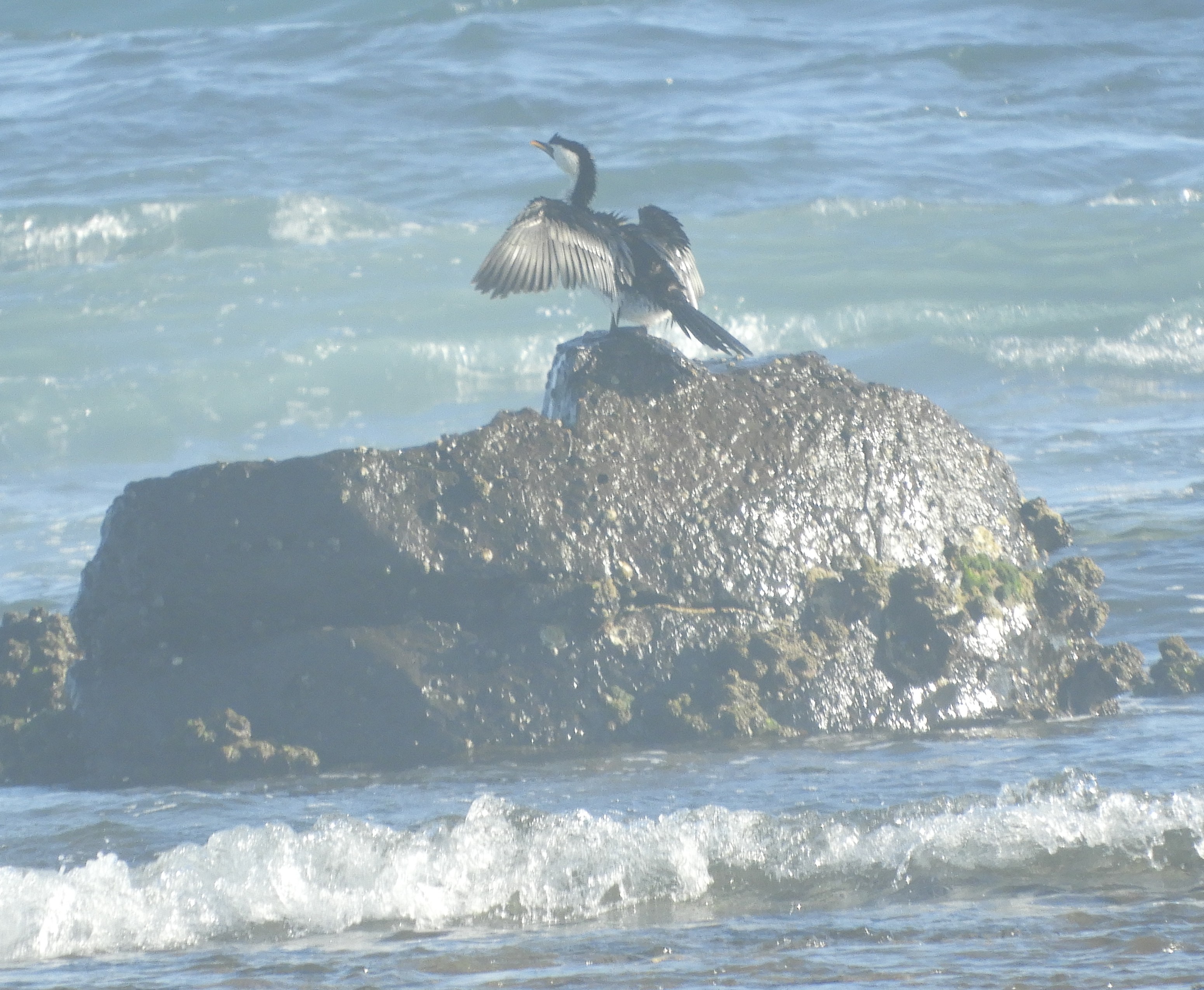
Here’s a video of the Little Pied Cormorant enjoying the waves and the sticky breeze:
Common name: Little Pied Cormorant
Scientific name: Phalacrocorax melanoleucos
Approximate length: 60 cm
Date spotted: 29 December 2018 (Summer)
Location: Long Reef Headland, Dee Why, New South Wales, Australia: 33°44’30.6″S 151°19’04.2″E
Male Koel Cuckoo in shot at last
Recently I’ve managed to snap a few shots of female Eastern Koels, also called Common Koels or Koel Cuckoos. Now a male has come into my sights:
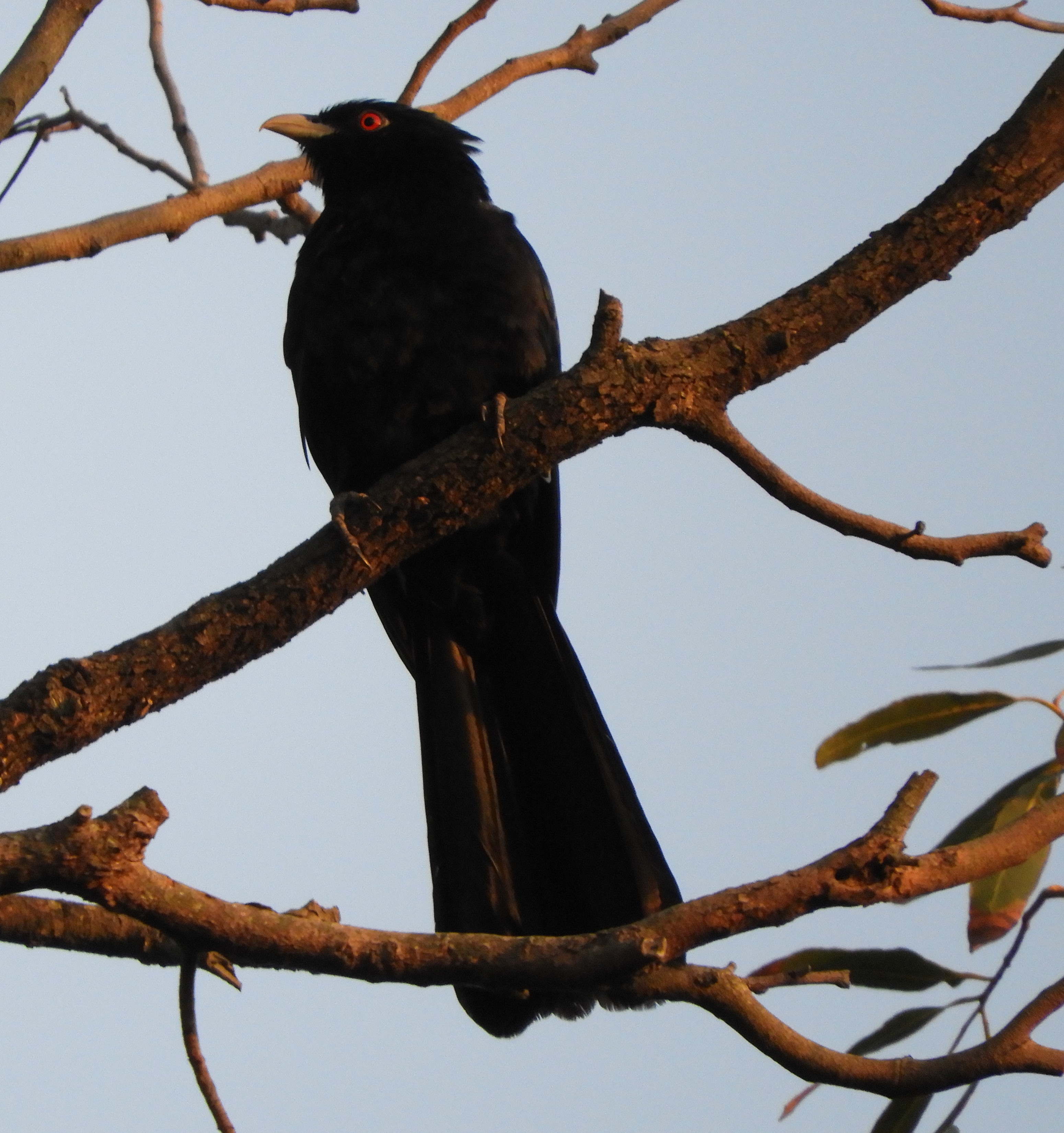
While the female is rather pretty, with shades of cream and brown overlaid with stylish spots, the male is primarily black. In fact, this photo shows more variation in colour than usual, because of the soft morning light.
If you’d like to see some shots of the females, or hear some of the cuckoos’ calls, take a look at this list of posts.
Common name: Common Koel or Eastern Koel
Scientific name: Eudynamys scolopacea
Approximate length: 45 cm
Date spotted: 28 December 2018 (Summer)
Location: Allambie Heights, New South Wales, Australia
Magpie song with a touch of Star Wars
A sociable magpie dropped by the other day to try out its song on me. I think the bird is still a youngster, as its eyes are not yet the bright red of an adult. The magpie let me get up to about two metres away, and still happily continued its song. I didn’t try to get any closer. After all, it’s a wild bird and entitled to its space. Plus, magpies are known to fly off the handle at times.
As well as the usual magpie warbles, this bird adds a few extra whistles and chirps. Sometimes it sounds as if it’s been listening to a Star Wars sound track!
Common name: Australian Magpie
Scientific name: Gymnorhina tibicen
Approximate length: 40 cm
Date spotted: 24 December 2018 (Summer)
Location: Allambie Heights, NSW, Australia (near Sydney
Growing up – juvenile Powerful Owls near Sydney
Two months ago I spotted a family of Powerful Owls in Manly Dam National Park, near Sydney. Last week I spotted two of them again in the same area of bush. Given their fluffiness, I think these are the two juveniles of the family.
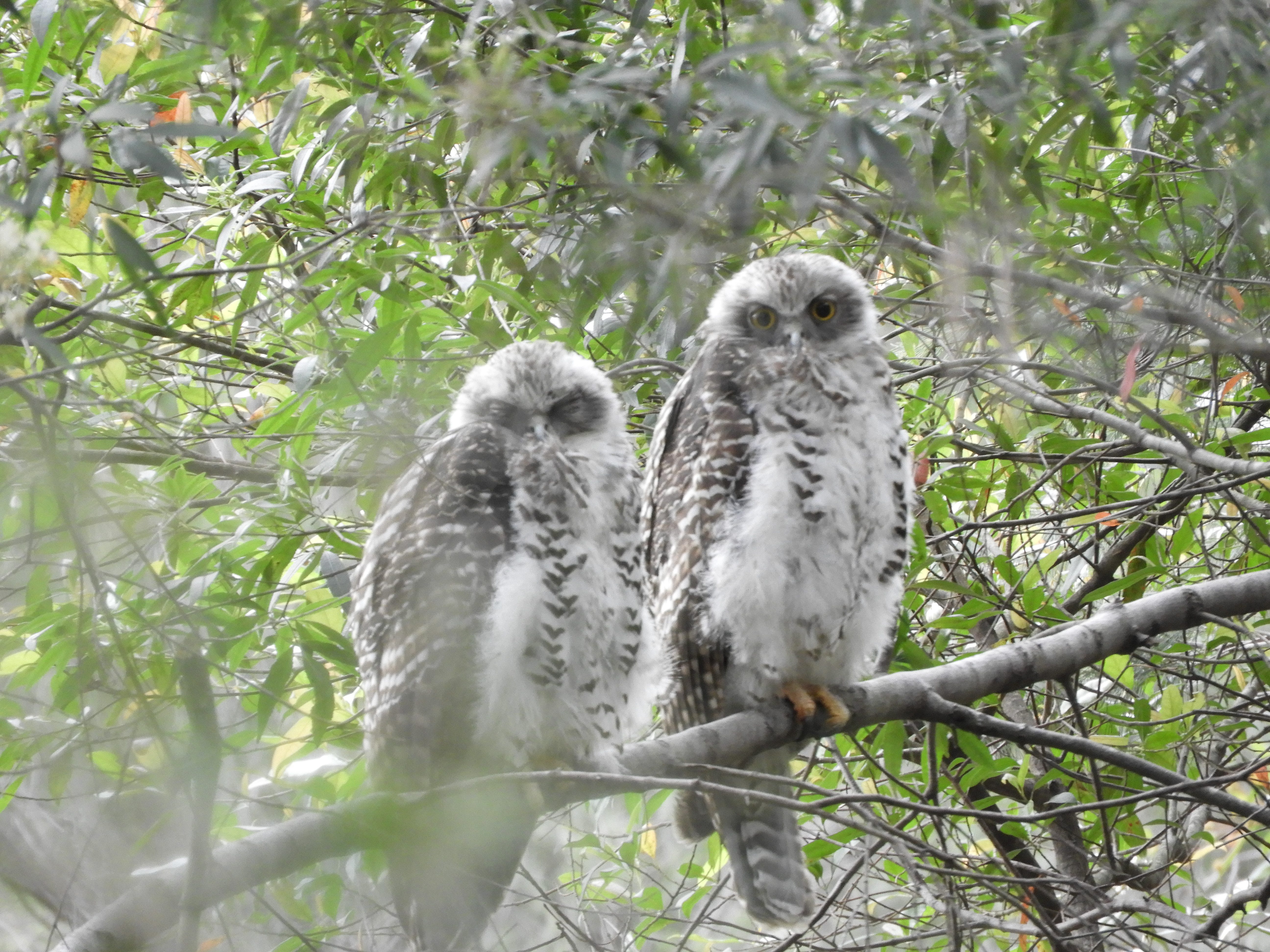
This is what the scene looked like without my camera’s powerful 60x zoom. If you look carefully, you can just make out the two owl-shaped dots in the centre of the picture:
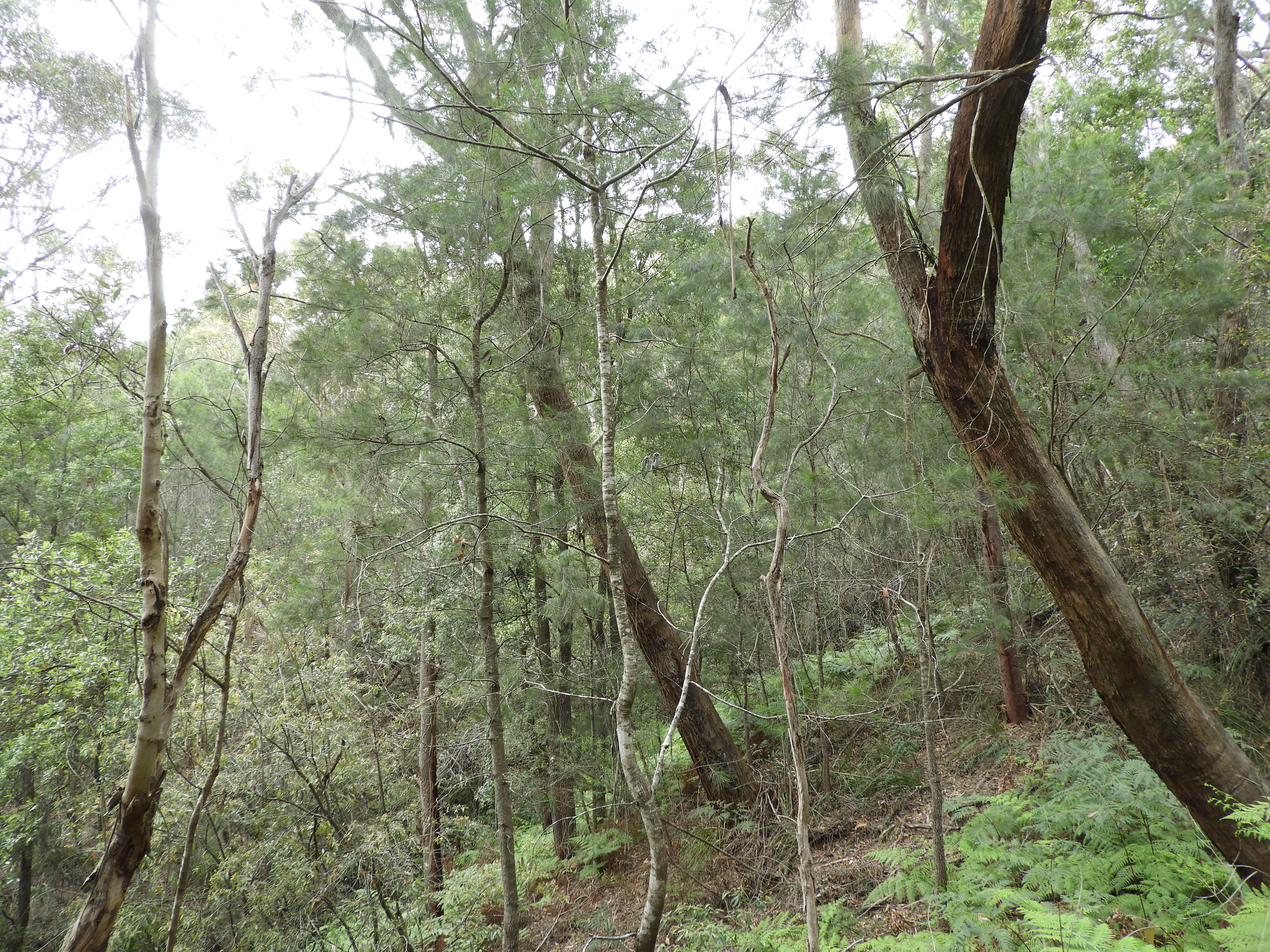
Below is a closer view. It seems to be usual for one bird to be awake and vigilant while the other sleeps:

In this video, the awake owl blinks a slow, wise blink and wiggles its head from side to side in that endearing yet terrifying manner they have. A little later, the call of a passing Currawong attracts the owl’s attention:
Common name: Powerful Owl
Scientific name: Ninox strenua
Approximate length: 65 cm
Date spotted: 25 November 2018 (Spring)
Location: Manly Dam Reserve, New South Wales, Australia
Koel cuckoos calling
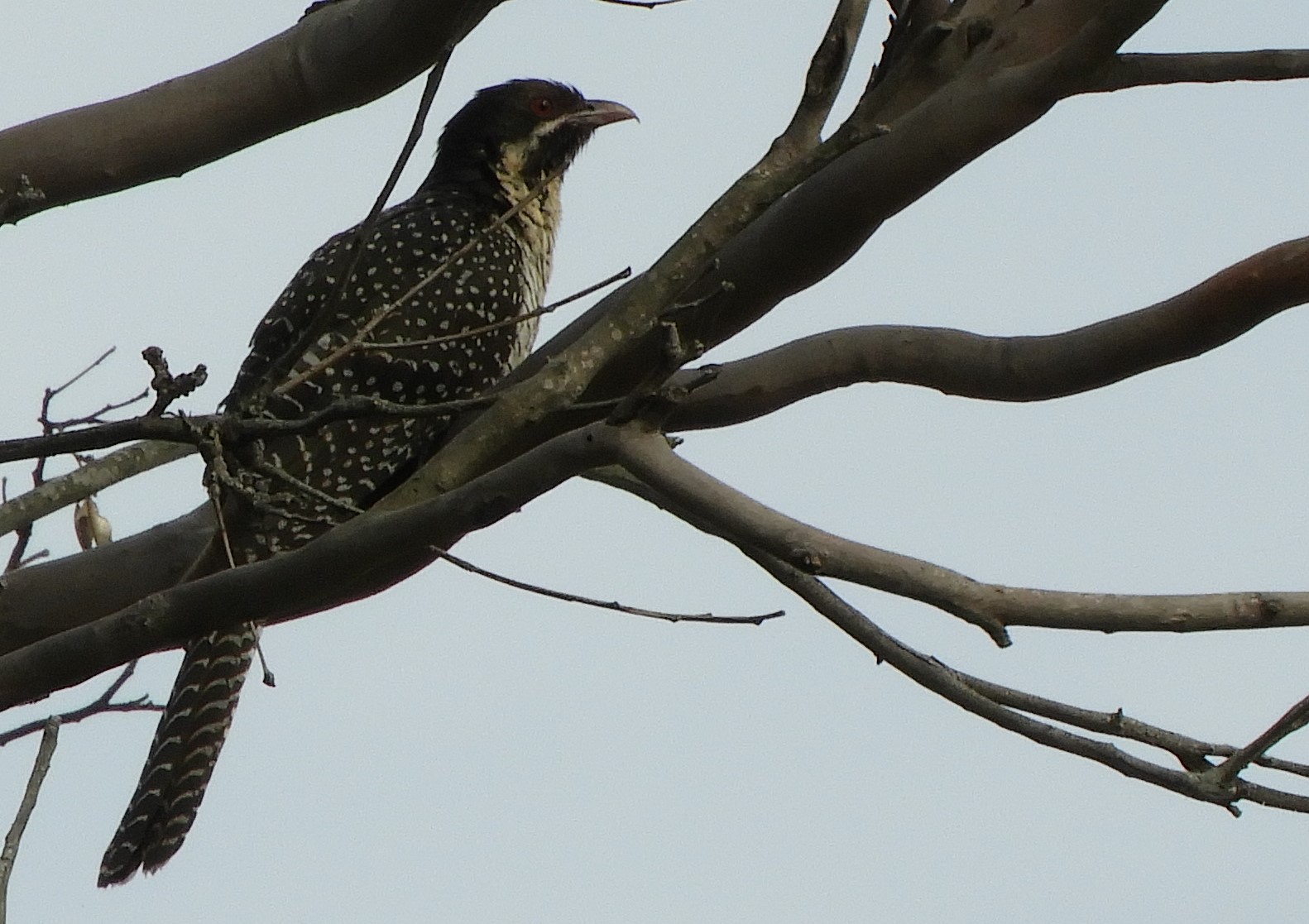
The Koel cuckoos are in town! They were diving through the treetops and calling all round me when I went for a stroll in the bush today. Here’s a picture of one of them – a female:
In the following short video you can hear the cuckoos calling to each other. You can’t actually see any birds:
Common name: Common Koel or Eastern Koel
Scientific name: Eudynamys scolopacea
Approximate length: 45 cm
Date spotted: 25 November 2018 (spring)
Location: Manly Dam National Park, New South Wales, Australia: 33°46’56.2″S 151°15’22.5″E
Red Wattlebird eating lerp
Red Wattlebirds are large honeyeaters, often seen diving through the foliage and chasing other birds away from a prized source of sugar. This one was making a lot of noise crashing through the branches. Probably on a sugar high. I think the white fuzzy stuff attached to its beak is lerp – crystalised honeydew exuded by bugs as a protective covering. A sweet treat for a bird. Red Wattlebirds get their name from the red wattles hanging below each cheek.

Common name: Red Wattlebird
Scientific name: Anthochaera carunculata
Approximate length: 35 cm
Date spotted: 11 November 2018 (Spring)
Location: Manly Dam National Park, New South Wales, Australia: 33°46’36.6″S 151°15’17.9″E
Female Koel cuckoo
Koel cuckoos have been swooping and calling around our house the last couple of days. They arrive in this neck of the woods in spring and head off again for northern climes in autumn. While here, they lay eggs in another bird’s nest and leave it up to the host family to feed the youngster. Typical cuckoo.
This is a female Koel cuckoo. They’re impressive to look at, and quite decorative in contrast to the completely-black male of the species.
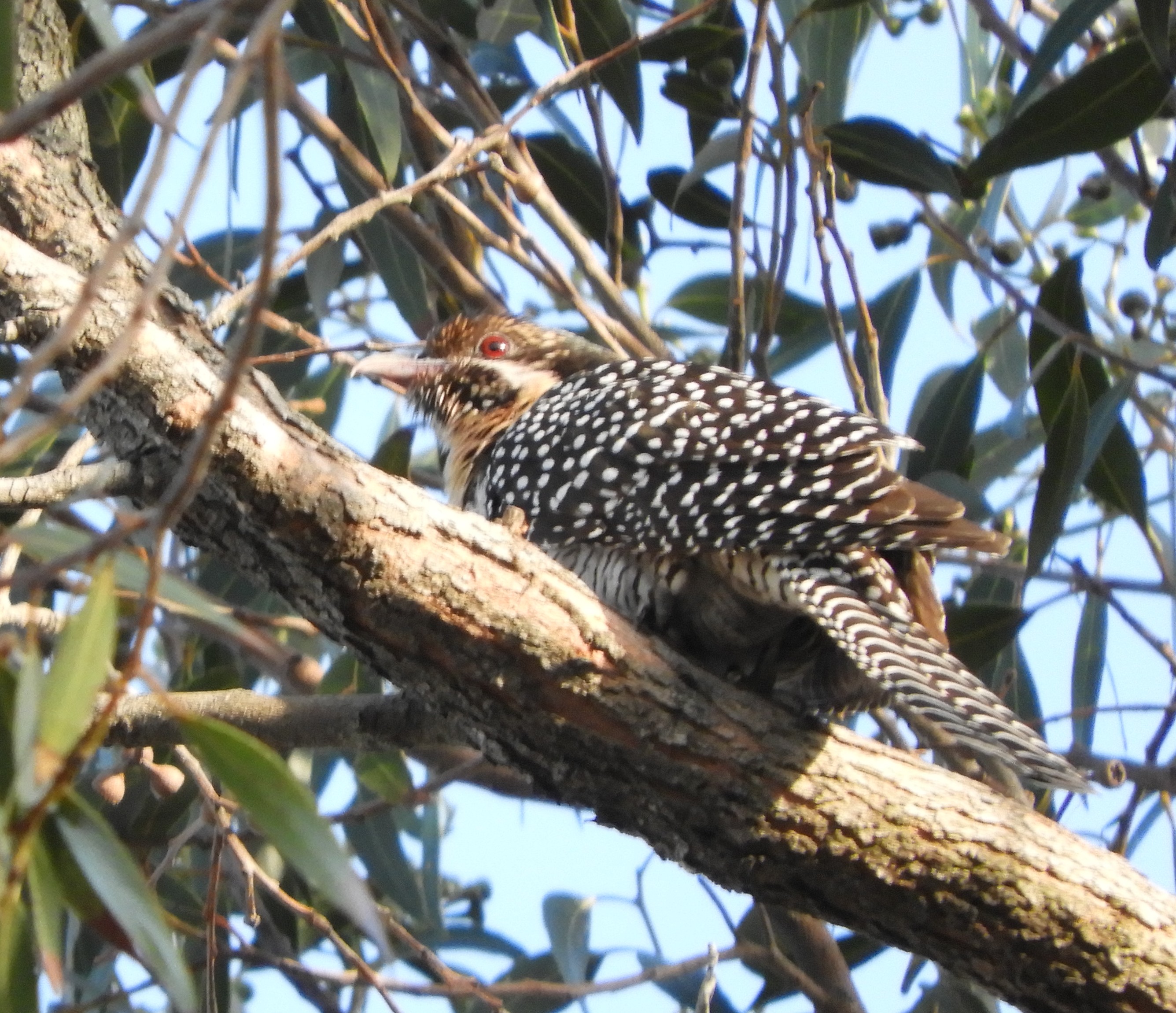
An earlier post shows a male Koel cuckoo, and you can play the video in that post to hear their call.
Common name: Common Koel or Eastern Koel
Scientific name: Eudynamys scolopacea
Approximate length: 45 cm
Date spotted: 10 November 2018 (spring)
Location: Allambie Heights, NSW, Australia
Eastern Rosella calling and dancing
This has turned out to be parrot weekend in our garden. Yesterday four black cockatoos dropped by. Today it was two Eastern Rosellas. This is the first time I’ve managed to get a photo of one of these lovely birds. Its characteristic call drew me to the window. There it was on our Scribbly Gum tree right outside the window, dancing and chattering to its mate:
Knowing that these birds usually go about in pairs, I looked for the other one but didn’t see it until they both flew away, several minutes later. (The mate was higher up in the tree, hidden by the foliage.)
At 30 cm in length, Eastern Rosellas are slightly smaller than the Crimson Rosellas that we see more often in our area. This still shot shows the bird in all its beauty:

Common name: Eastern Rosella
Scientific name: Platycercus eximius
Approximate length: 30 cm
Date spotted: 21 October 2018 (Spring)
Location: Allambie Heights, NSW, Australia
Four Yellow-tailed Black Cockatoos come to visit
Today I arrived home from a long overseas trip. An hour or so after getting home, I was delighted to hear the haunting calls of a group of Yellow-tailed Black Cockatoos. They came to visit our Old Man Banksia tree, which is currently covered in dried seed pods. A tasty snack for a cockatoo!
I love the comfortable nibbling noises the birds make. Every now and then they chatter to each other too, as you can hear towards the end of this next video:
Yellow-tailed Black Cockatoos are large birds, quite a lot bigger than the more common white cockatoo. They have a dignified, graceful presence. It feels like a privilege to have them drop by. We planted the Old Man Banksia (Banksia serrata)a few years ago, with the goal of feeding the local bird life. It looks like our plan is working.
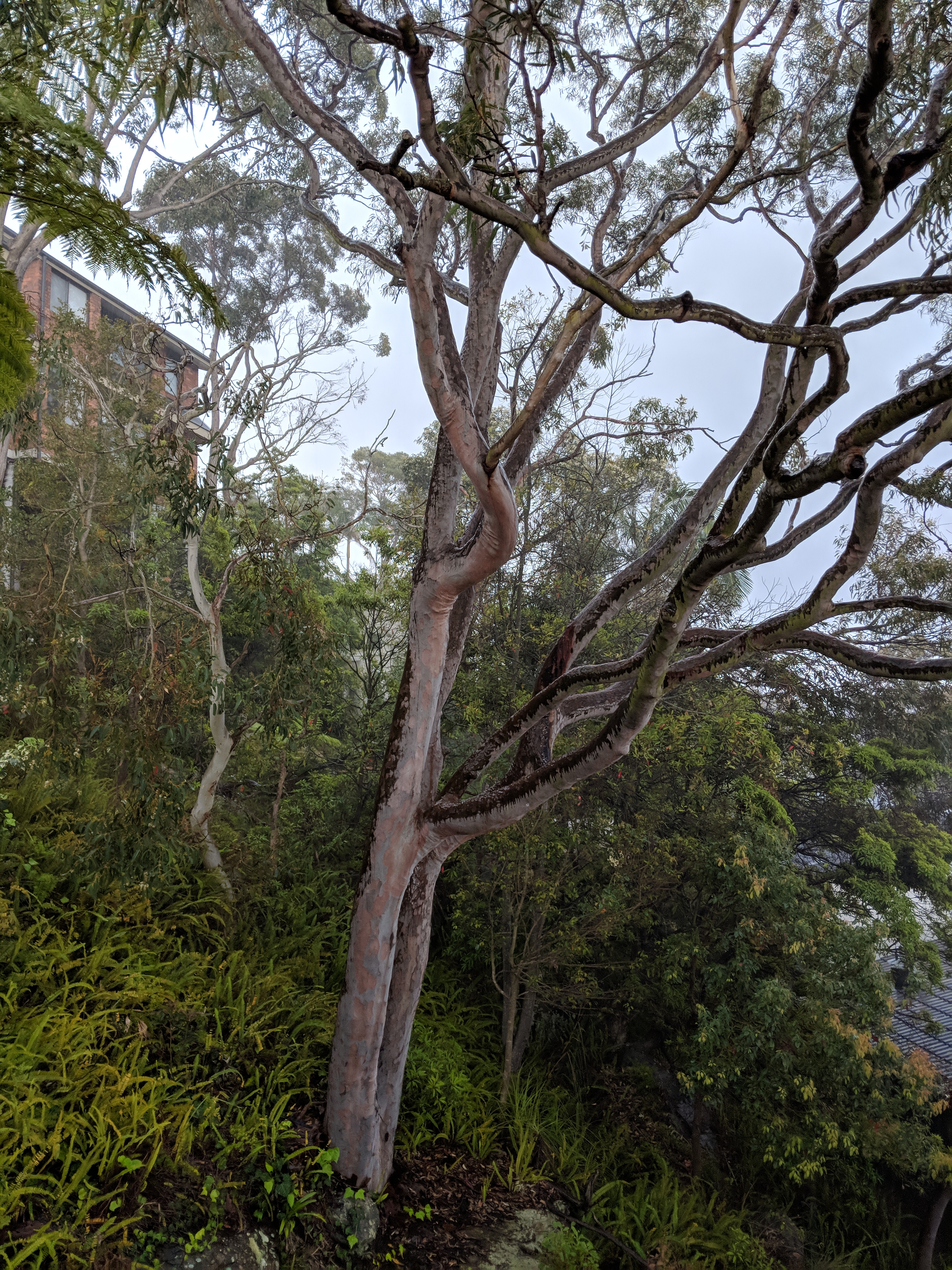
Two of the birds flew up into a Sydney Red Gum that towers over our house, for a quiet grooming session. It’s cute how attentive the groomer is, even returning to her job when she notices that her companion still has an intractable itch. When she stops for the second time, he reprimands her and she returns to the task yet again.
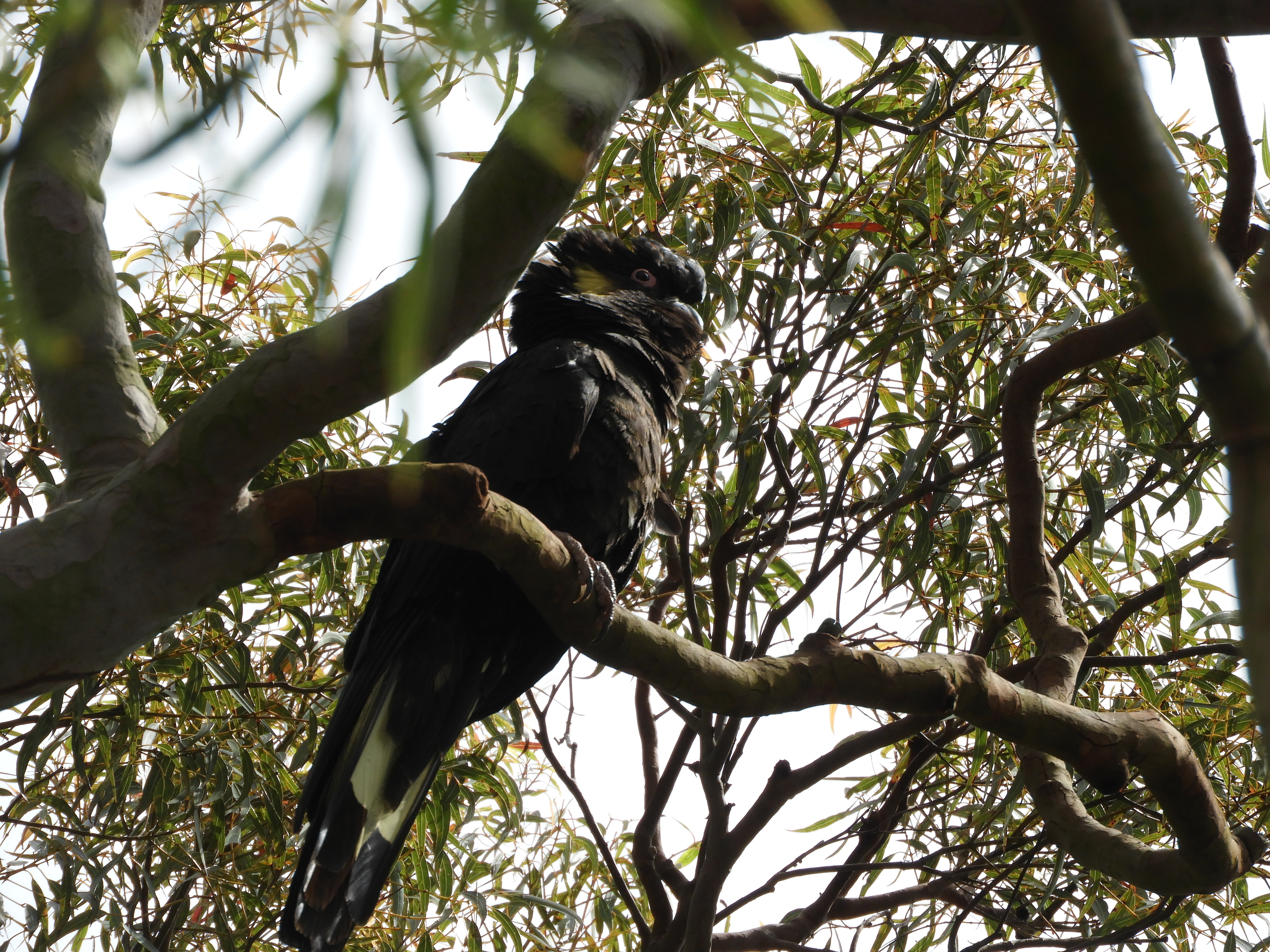
The bird with the pinkish-red ring around his eye is the male. The females have grey eye rings and a lighter-coloured bill. Here’s a still shot of the male, looking content after a good grooming from his mate:
Common name: Yellow-tailed Black Cockatoo
Scientific name: Calyptorhynchus funereus
Approximate length: 65 cm
Date spotted: 20 October 2018 (Spring)
Location: Allambie Heights, NSW, Australia
The Sydney Red Gum (Angophora costata) is a beautiful tree. I took this shot of it a couple of weeks ago, when the rain was making interesting patterns on the bark:


 Sydney Birder