Blog Archives

Oriole singing and mimicking other birds
A little Olive-backed Oriole had me intrigued for a while. I couldn’t see the bird, but I could hear a mixture of lyrical calls that seemed to come from a variety of birds. Eventually I tracked down the singer.

This looks like a young male bird. It has the dark head of a male, but its eyes are brown rather than red. It was lively and curious, hopping from branch to branch and examining its surrounds with evident interest. Or perhaps it was hungry and looking for food!
In this video, the oriole starts with a good preening session then launches into song. You can’t see the bird very well but you can hear its song:
Common name: Olive-backed Oriole
Scientific name: Oriolus sagittatus
Approximate length: 25-28 cm
Date spotted: 10 November 2020 (spring)
Location: Manly Dam Park, New South Wales, Australia: 33°46’52.3″S 151°15’07.9″E
Emu, turkey, and peacock at Walkabout Wildlife Sanctuary
Today we visited the Walkabout Wildlife Sanctuary, which is about 75 km north of Sydney (map). We spent the day among the animals and walking the bush trails. It’s a lovely, relaxing place to visit.
While there, I took some videos of the birds that stroll around the pathways. First, an emu. Emus are large native Australian birds. This one came a little closer than I was expecting when I started filming it!
Next, some turkeys. These birds are from North America rather than Australia. They’re busily showing off their tails to each other. A couple of emus stroll past in the midst of the show:
Encouraged by the turkeys’ display, a peacock showed its gorgeous tail and did a bit of strutting around too. This type of peacock originated in India:
It’s well worth a visit to the Walkabout Wildlife Sanctuary (map). There’s plenty to do, whether you like to sit and watch the birds walk by, or go for a stroll along the bush paths, or hear about the animals from the rangers in the park.

Baby black swans and ducklings
Baby swans are called cygnets. Pictures of cygnets from white swans are quite common, but what do baby black swans look like? Very similar to the white-swan babies, it turns out. They’re grey and fluffy, with black eyes, feet, and beak. I was delighted to spot a family of black swans while out walking a couple of days ago.

The parent swans were watchful, taking care to keep their little ones in a group. A male swan is called a cob, and a female is a pen. Five babies! That’s a lot of curiosity and cuteness to look after.

Did I say five babies? Yes. One of the cygnets was fossicking around in the undergrowth at the water’s edge. You can see the fifth little one in this video:
Common name: Black Swan
Scientific name: Cygnus atratus
Approximate length of adult: 120 cm
Date spotted: 9 October 2020 (spring)
Location: Manly Dam Park, New South Wales, Australia: 33°46’58.5″S 151°15’18.6″E
Nearby was a family of Australian Wood Ducks. The ducklings are almost as cute as the cygnets. But not quite!
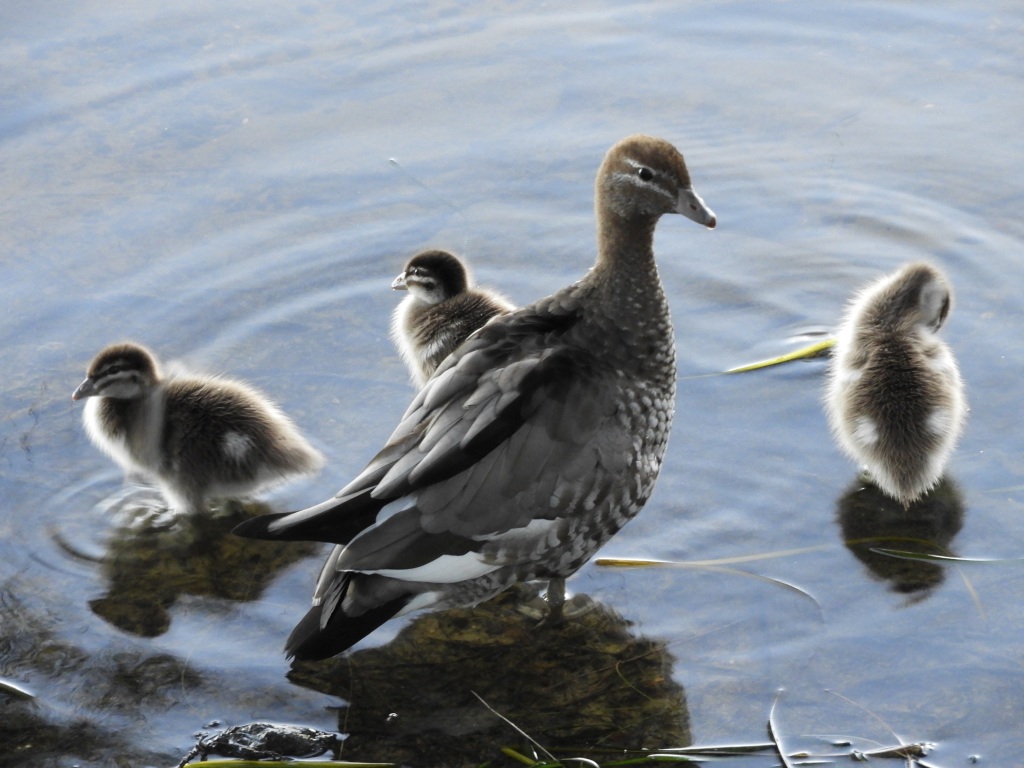
Common name: Australian Wood Duck
Scientific name: Chenonetta jubata
Approximate length of adult: 50 cm
Date spotted: 9 October 2020 (spring)
Location: Manly Dam Park, New South Wales, Australia: 33°46’58.5″S 151°15’18.6″E

Cormorant with view of Bantry Bay
This morning I went for a long walk along one side of Bantry Bay, an inlet of Sydney harbour. The area is in the lovely Garigal National Park. Along the way, I spotted this Little Pied Cormorant:
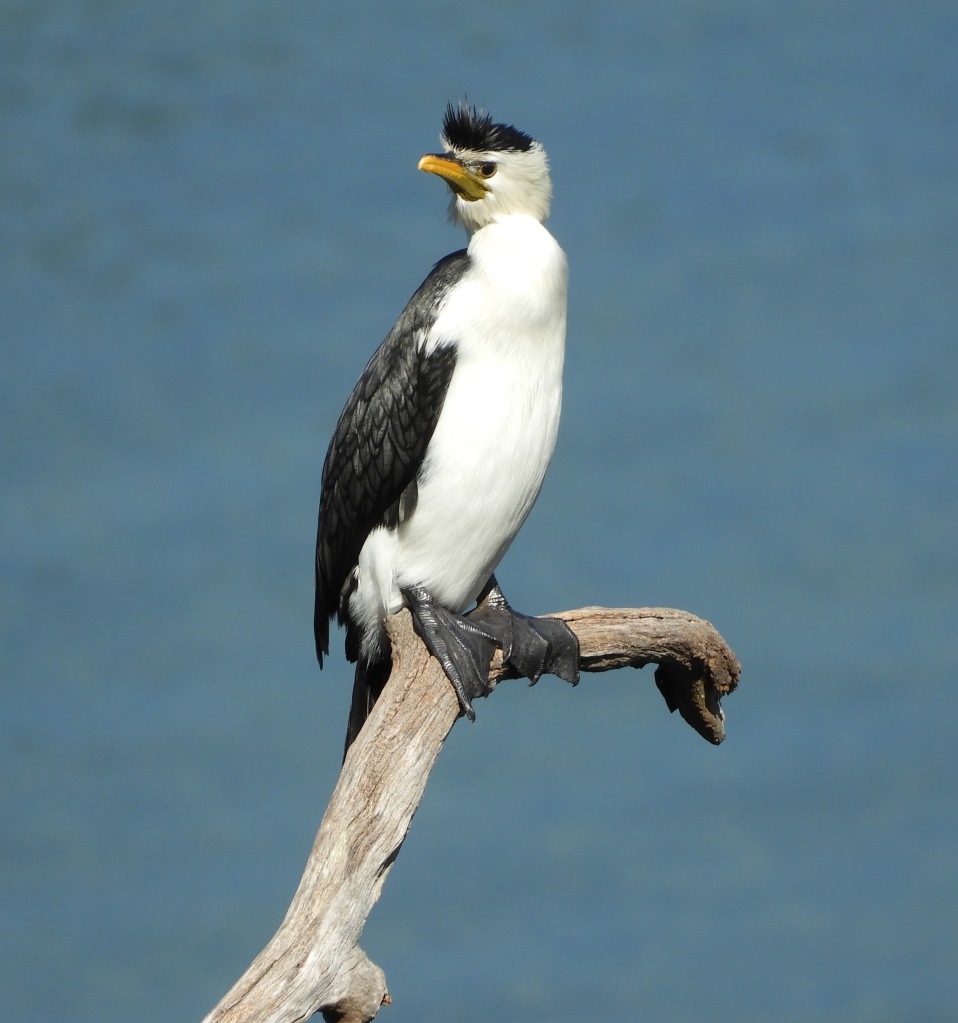
The bird had chosen a perch with a stunning view of Bantry Bay. Here’s a zoomed out picture of the bird on its skeleton-tree perch (the bird is at the end of the bottom branch on the right), with the clear water and mangroves of Bantry bay, and couple of canoeists in the distance:
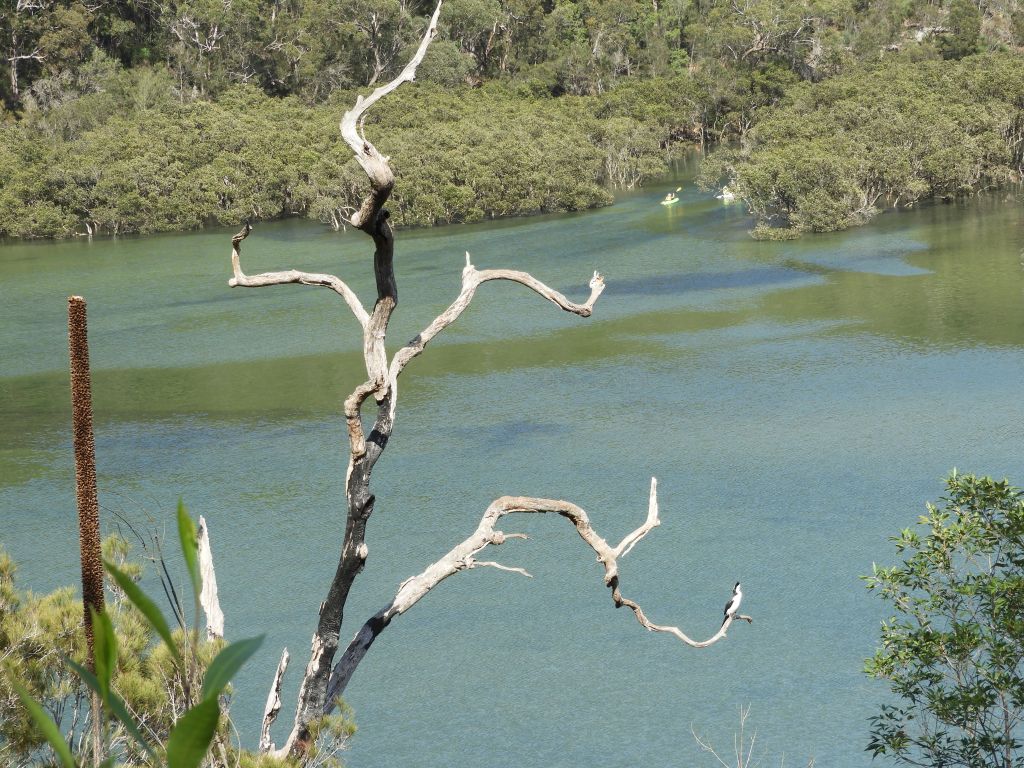
The next picture shows more of the view, following the bay inland:

Here’s a view of the bay taken (on another day) from The Bluff, the highest point overlooking the water:
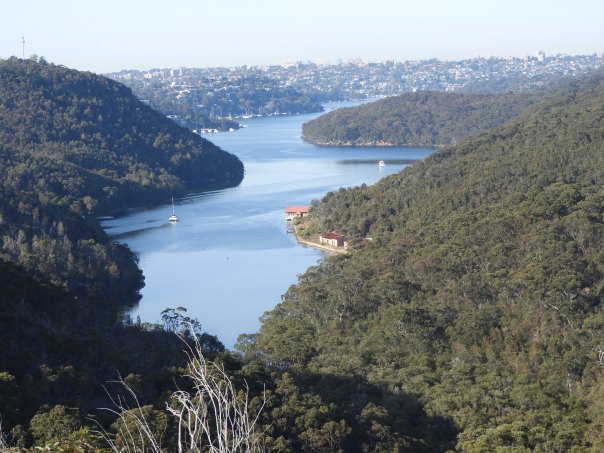
Common name: Little Pied Cormorant
Scientific name: Phalacrocorax melanoleucos
Approximate length: 60 cm
Date spotted: 4 October 2020 (spring)
Location: The Bluff Track, Middle Harbour, New South Wales, Australia: 33°46’23.9″S 151°13’52.8″E
Yaayyy a Fairy-wren
Fairy-wrens are a reasonably common sight in this area of Australia. What’s not common is my being fast enough to catch one of them in the camera lens! Most of my photos of Fairy-wrens show a blue blur or an empty branch.
Today I managed to catch this male Variegated Fairy-wren fairly and squarely in my sights:
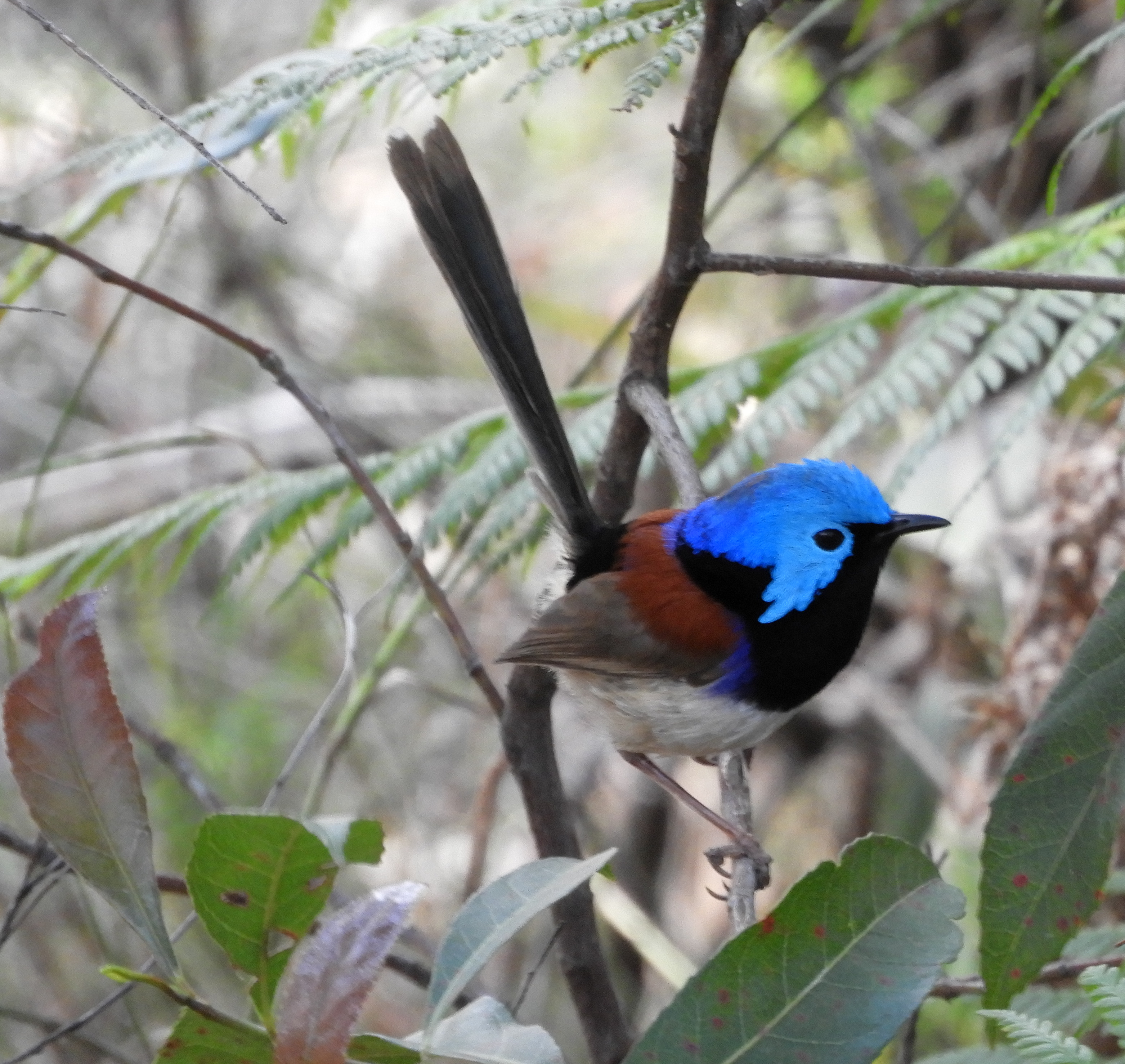
There’s something about the solid blocks of colour on this bird that makes it difficult to capture a clear image, even when the bird is still long enough for a photo.
The bird was with two other males, which is also fairly uncommon. Usually I’ve seen a male with a group of females.
That ridiculous tail, so much at odds with the round puffy appearance of the rest of the bird, makes you think there’s something wrong with the photo:
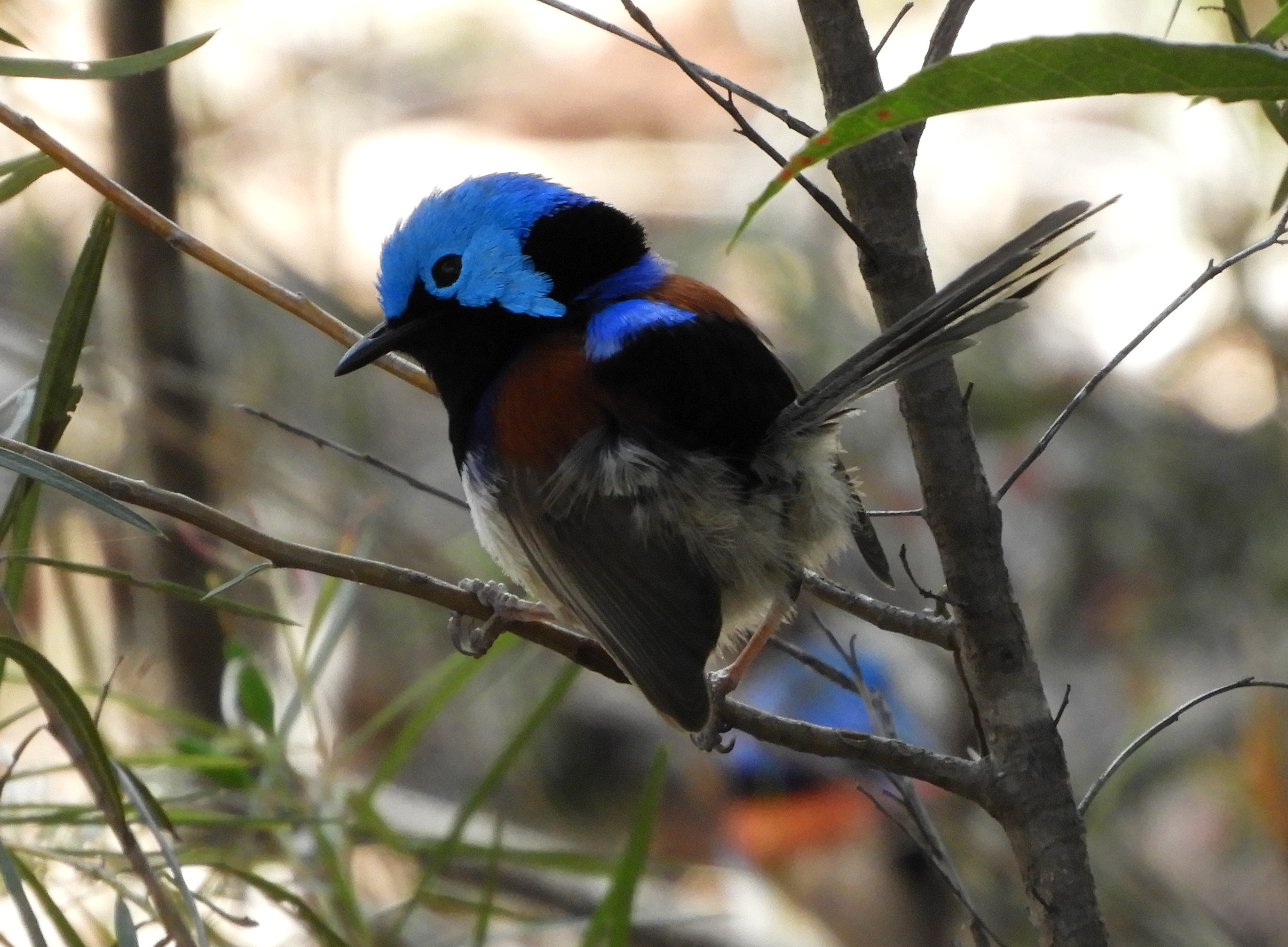
Common name: Variegated Fairy-wren
Scientific name: Malurus lamberti
Approximate length: 13 cm
Date spotted: 25 September 2020 (spring)
Location: Manly Dam Park, New South Wales, Australia: 33°46’50.6″S 151°15’04.7″E
Channel-billed Cuckoo in our garden
It seems to me that the Channel-billed Cuckoos were late in arriving from their annual migration this year. Some people were pleased about that, as these birds make a tremendous noise in the early morning hours! But I was pleased when I eventually heard their raucous calls earlier this week.
Today, one dropped in on a tree in our garden. As usual, the other birds were harassing it.
Channel-billed Cuckoos are impressive birds. They have fierce red eyes and a large, hooked beak. Like many other types of cuckoos, they lay their eggs in the nests of other birds rather than making their own nests. They also leave the task of caring for the young birds to the substitute parents!
This particular cuckoo was a little wet and bedraggled. What with the rain and the harassment of the other birds, the cuckoo doesn’t seem to be enjoying life much.
Common name: Channel-billed Cuckoo
Scientific name: Scythrops novaehollandiae
Approximate length: 58-65 cm
Date spotted: 20 September 2020 (spring)
Location: Allambie Heights, New South Wales, Australia
Pale-yellow Robin eating a spider
This robin was cheeping loudly enough to attract my attention. I snapped a shot of it, to see what it was up to. When I zoomed in to the picture, I could see that the bird had caught a spider. Perhaps the loud noise was a boast or an expression of glee at the coming feast.
I think this is a Pale-yellow Robin, though it could be an Eastern Yellow Robin. Pale-yellows are smaller than Eastern Yellows (12 cm in length as opposed to 15) and have more white around the beak and throat.
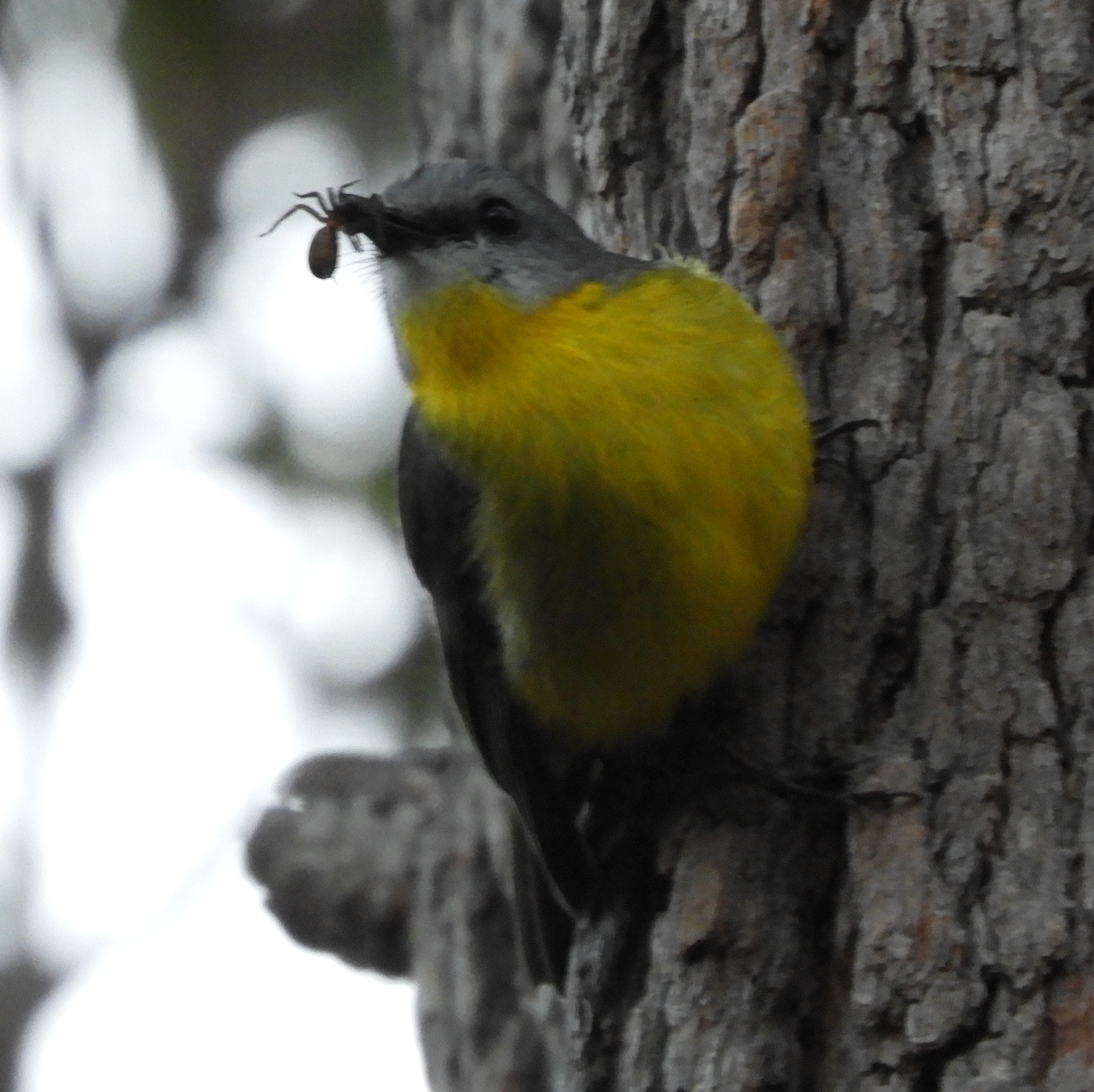
Common name: Pale-yellow Robin
Scientific name: Tregellasia capito
Approximate length: 12 cm
Date spotted: 12 September 2020 (spring)
Location: Manly Dam Reserve, New South Wales, Australia: 33°46’24.0″S 151°15’08.0″E
Grey Fantail
This is only the second time I’ve managed to get a picture of a Grey Fantail. Grey Fantails are smaller than Willie Wagtails, and softer in colouring. They make a similar squeaky call, but not quite as piercing as Willie Wagtail.
I’ll try to get a good photo of a Grey Fantail, if one of them will stay still long enough! In the meantime, here’s the earlier video that I took of one of these birds, about three years ago. The bird was showing off its tail-fanning skills.
Common name: Grey Fantail
Scientific name: Rhipidura fuliginosa
Approximate length: 14-17 cm
Date spotted: 4 September 2020 (spring)
Location: Manly Dam Reserve, New South Wales, Australia: 33°46’23.8″S 151°15’05.8″E
Two varieties of the Eastern Whipbird call
The call of the Eastern Whipbird is a fairly common sound, for those of us lucky enough to live near a patch of Australian bush. The birds make a weird whistling noise that ends in an abrupt burst of noise, a little like the crack of a whip. Hence the name whipbird.
In the first of these two videos, the bird ends its call with an upward tone, while in the second video it chooses a descending tone. First, the upward tone:
Next, the more squeaky downward ending:
The call seems to take a lot of effort, including a little hop and a flap of the wings. I was surprised at how short the bird’s wings are. They seem quite stubby, compared with the elegance of the rest of the body.
Whipbirds are shy, sticking to the undergrowth and making it difficult to get a good picture. Here’s a photo that shows the olive green colouring of the bird’s feathers:

Common name: Eastern Whipbird
Scientific name: Psophodes olivaceus
Approximate length: 30 cm
Date spotted: 3 September 2020 (early spring)
Location: Manly Dam National Reserve, New South Wales, Australia: 33°46’36.2″S 151°14’47.9″E
Blue Laughing Kookaburra at The Bluff above Bantry Bay
Today I hiked from Seaforth Oval to Natural Bridge. Phew! Almost 12,000 steps, 7.7 km, and three climbs down into the valley and back up again! It’s a good walk with lovely views of Bantry Bay, which is one of the inlets of Sydney Harbour.
Close to a lookout point called The Bluff was this fine-looking Laughing Kookaburra. It has a lot more blue in its feathers than most kookaburras that I’ve seen. Perhaps it’s clothed in its spring finery.

This is the view of Bantry Bay from The Bluff Lookout:

Common name: Laughing Kookaburra
Scientific name: Dacelo novaeguineae
Approximate length: 47 cm
Date spotted: 31 August 2020 (Late winter)
Location: Bluff Trail, Killarney Heights, New South Wales, Australia: 33°46’00.3″S 151°13’42.3″E


 Sydney Birder