Blog Archives
Moody magpie on the Manly to Spit Bridge walk
Today I walked a small part of the trail that runs from Manly to Spit Bridge, on the east coast of Australia near Sydney. It was a lovely calm morning, early enough to avoid the late-autumn heat promised for the rest of the day. I came across a magpie perched on a tree. The early morning light combined with a recent burn in the area make for a nice moody, naturally monochrome shot:
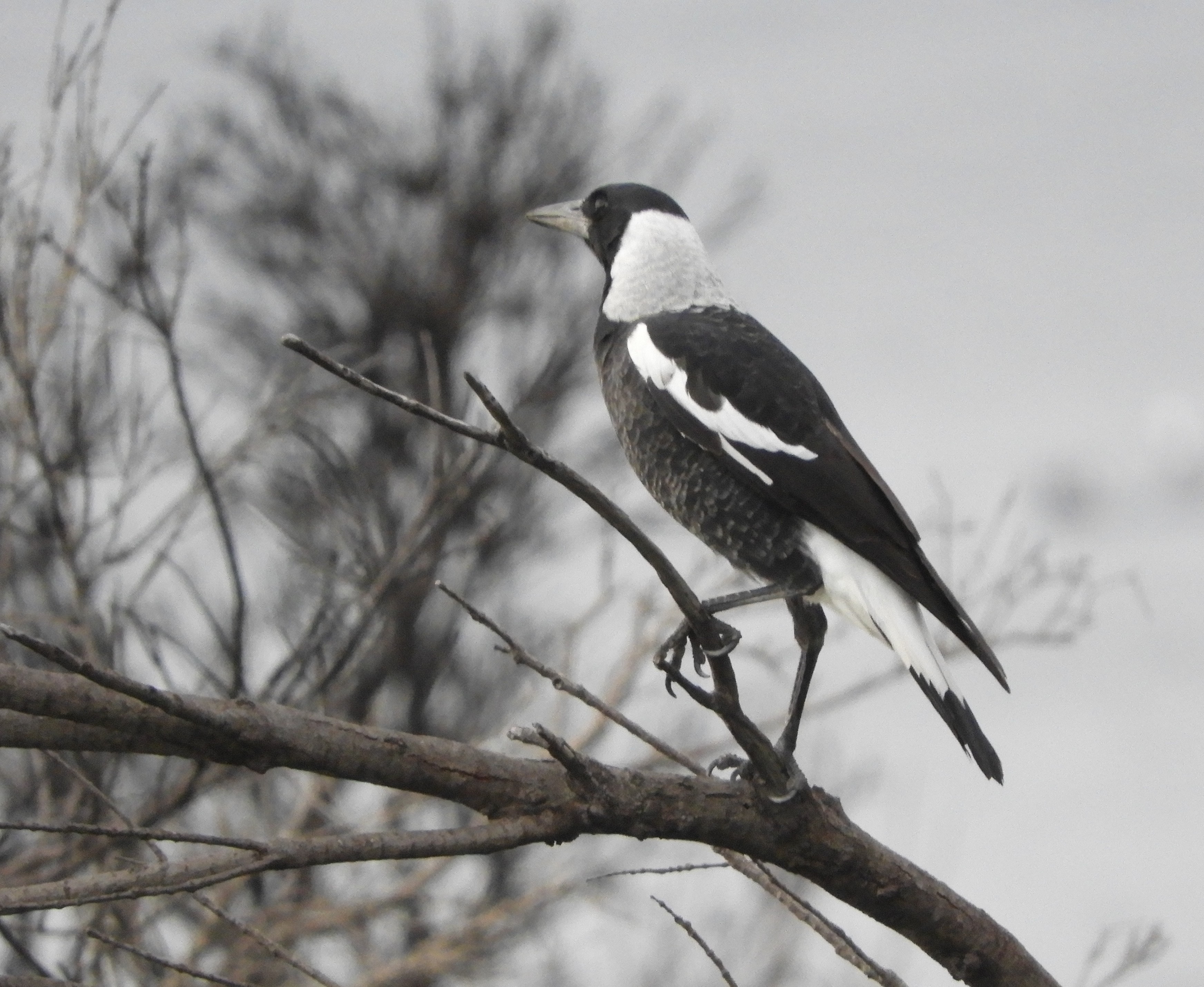
Common name: Australian Magpie
Scientific name: Gymnorhina tibicen
Approximate length: 40 cm
Date spotted: 24 March 2019 (late summer)
Location: Reef Beach Track, Balgowlah Heights, near Sydney: 33°48’29.7″S 151°16’27.4″E
Just a few minutes’ walk further along the track, I saw this magnificent view. The front stretch of water is part of Sydney Harbour. In the distance is Manly wharf. The thin strip of land is Manly town centre, with the Pacific Ocean in the distance beyond the town:

I wonder if the magpie was enjoying the view as much as I did.
Wakeful Southern Boobook at Manly Dam
A little Southern Boobook was wide awake when I walked beneath its tree this morning. This is the first time I’ve seen one of these owls, though I’ve heard them hoot during the night hours.
I sat down on the ground and watched the bird for a while. It wasn’t disturbed by my presence, and grew quite sleepy, as you can see in the next video. At the end of the video I zoomed out so that you can see a bit of the bush surrounding the bird:
Southern Boobooks are quite small, at around 30cm in length from head to tail. Compare that to the Powerful Owl, which is around 65cm.
Here’s a still photo of the bird, showing a deep yellow eye and fluffy white feathers above its beak:
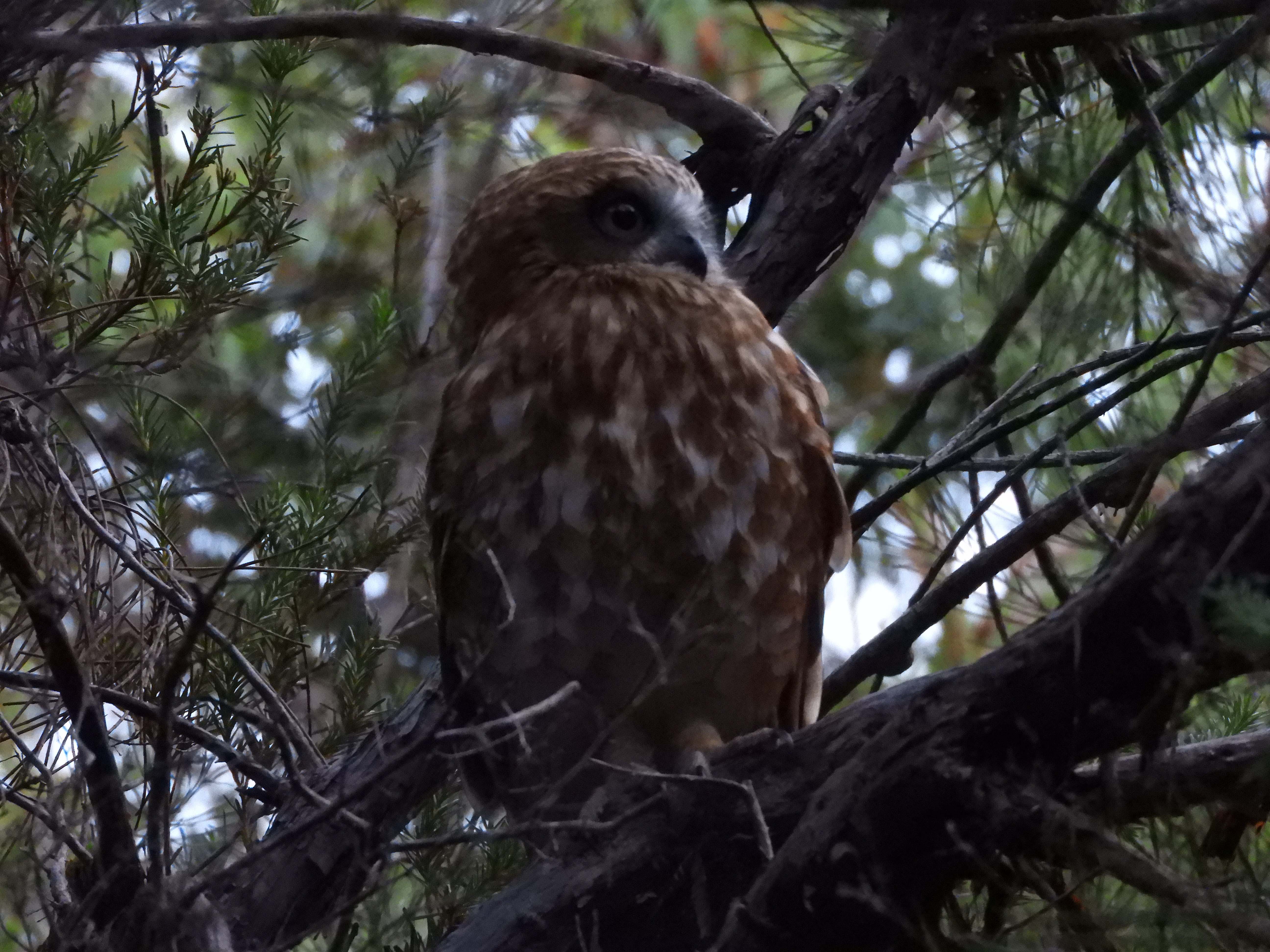
Southern Boobooks are quite common. They feed mostly on insects and spiders, but they do take the occasional small bird or animal too. Here’s a closeup of the owl’s face:

Common name: Southern Boobook
Scientific name: Ninox novaeseelandiae
Approximate length: 30cm
Date spotted: 20 March 2019 (late summer)
Location: Manly Dam National Reserve, near Sydney: 33°46’30.0″S 151°15’09.2″E
Cockatoos cleaning out a tree hollow
Two Sulphur-crested Cockatoos were very busy cleaning out a hollow in a tree trunk when I walked past them today. The tree is in Manly Dam National Park. I often see cockatoos strutting up and down this tree trunk, raising their crests and squawking, and flying from tree to tree. The area is where they hang out. It’s a cockatoo playground.
In this video, one of the cockatoos gets into the cleaning in a big way, disappearing into the hollow and kicking out chunks of debris. The other cockatoo watches from above, then goes down to join the fun:
It seems an odd time of year to be preparing to build a nest. I’ve seen a few swarms of bees in this particular hollow from time to time over the years. I wonder if the cockatoos are looking for left over honeycomb?

Common name: Sulphur-crested Cockatoo
Scientific name: Cacatua galerita
Approximate length: 50 cm
Date spotted: 10 March 2019 (late summer)
Location: Manly Dam National Reserve, near Sydney: 33°46’50.5″S 151°14’51.1″E
Floury Baker cicada so pretty
The cicadas are still making that dreadful noise all round. The noise is a nuisance, and by the end of summer I’ll be glad to welcome a relative silence back to the bush. And yet… I’ve grown a little fond of them too.
A couple of days ago I spotted this Floury Baker cicada in a Sydney suburb:

Its grey speckles caught my eye. At first I wondered if it was shedding its skin, but I did some research and found that cicadas don’t shed once they’ve emerged from the nymph stage of their life cycle. (I’ve written about the mysterious life of cicadas in other posts.) So I searched for “grey cicada” and found some information about Floury Bakers.
Here’s another view of the same bug, with a clearer view of its eyes (though the ends of the wings are a little blurry):

Did I mention they’re noisy? Yes! I’ve posted recordings of them in a couple of other posts.
Powerful Owl pellet, also known as owl vomit or regurgitation
This morning I came across this weird-looking bundle of hair and stuff in the bush surrounding Manly Dam National Park near Sydney:
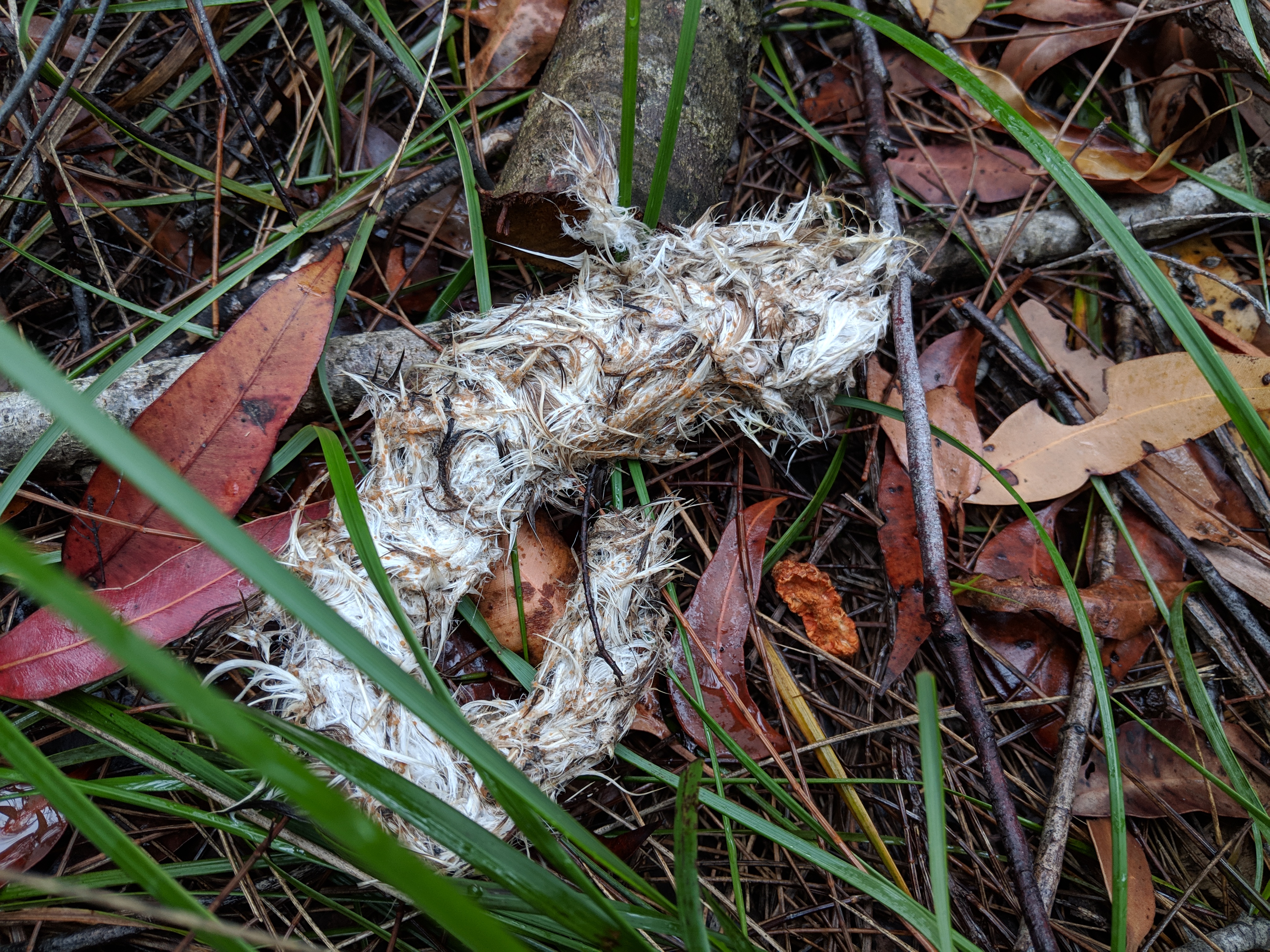
Date spotted: 20 January 2019 (Summer)
Location: Manly Dam National Park, New South Wales, Australia: 33°46’24.5″S 151°15’04.4″E
At first I thought it was some weird creature, but it had no visible eyes and didn’t really look alive, although it was obviously animal in nature. I picked up a stick and turned the object over gently. It didn’t try to move away. Definitely not alive. It looked the same on both sides. No obvious undercarriage.
So then I thought, maybe it’s some dead creature that’s become covered in a thick fungus. It’s summer here in Sydney—hot, humid, lots of fungus on the trees and mould on animal poo in the forest. In fact, I’ve seen animal poo that’s completely white and fuzzy, with long tendrils of mould standing up straight.
Still, the fungus idea didn’t quite fit the bill. The stuff covering this object looked more like fur than fungus.
So I took a photo and moved on.
When I got home and showed my husband the photo of this weird thing I’d seen, he suggested it might be owl’s vomit. They do that, he said. They regurgitate fur and stuff. So I looked it up. Indeed they do.
The official name for owl vomit is owl pellet. I think this one must be from a Powerful Owl (Ninox strenua), because I’ve seen those birds in the same area of the bush before, and because this pellet was big. It was around 6 inches long (15 cm) and 2 inches (5 cm) at its widest.
Here’s a Powerful Owl that I saw a while ago, also at Manly Dam. This owl has its prey (a dead possum) in its grip:

An owl’s pellet consists of fur, bones, and other bits and pieces of its prey that the owl can’t digest. An owl needs to regurgitate a pellet once or twice every night, six hours or more after the owl has eaten.
If you like, you can see more about the Powerful Owls I’ve seen around Manly Dam.
Butcherbird has whiskers!
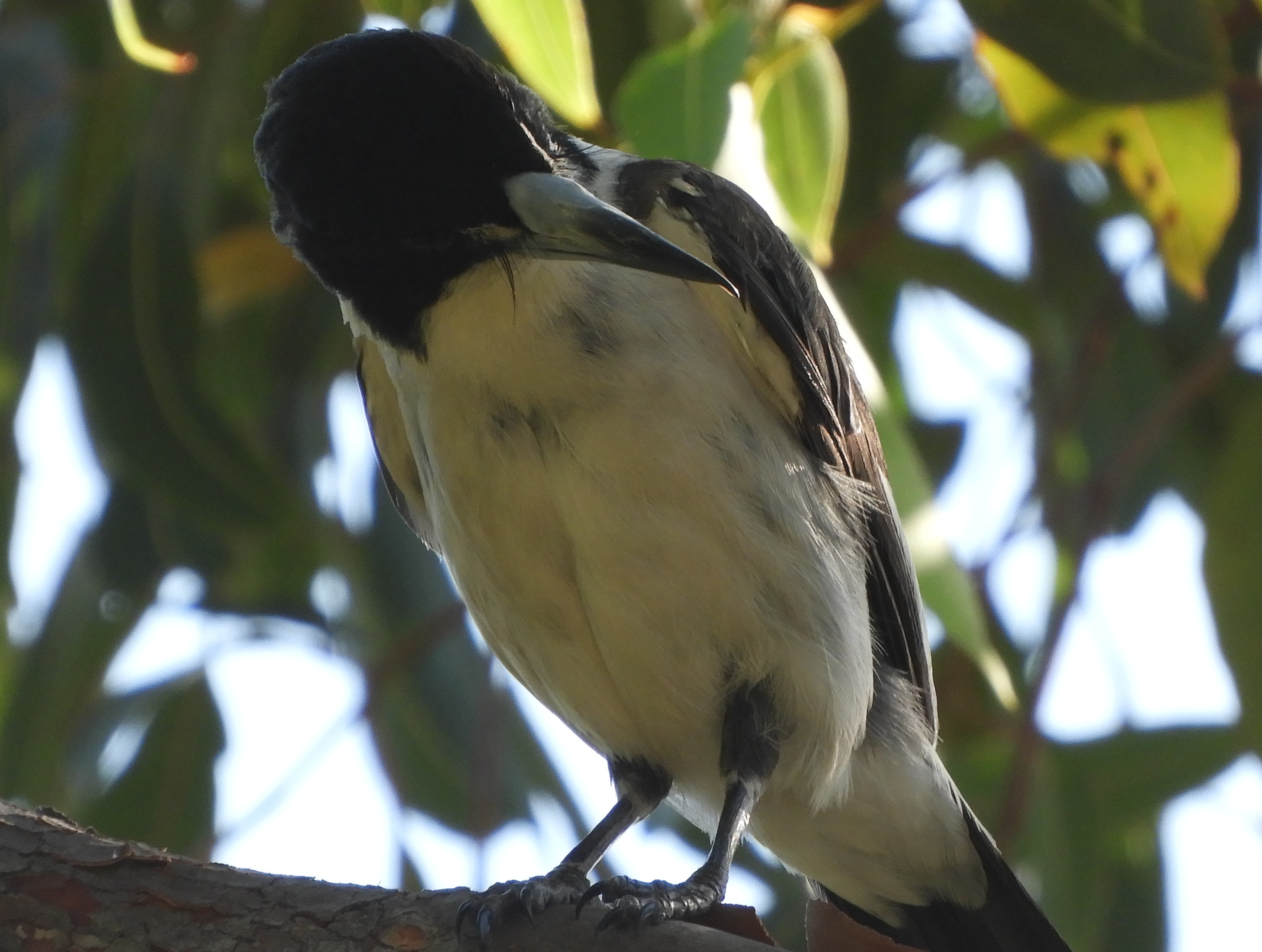
A few butcherbirds are frequenting my area at the moment. This one is a Grey Butcherbird:
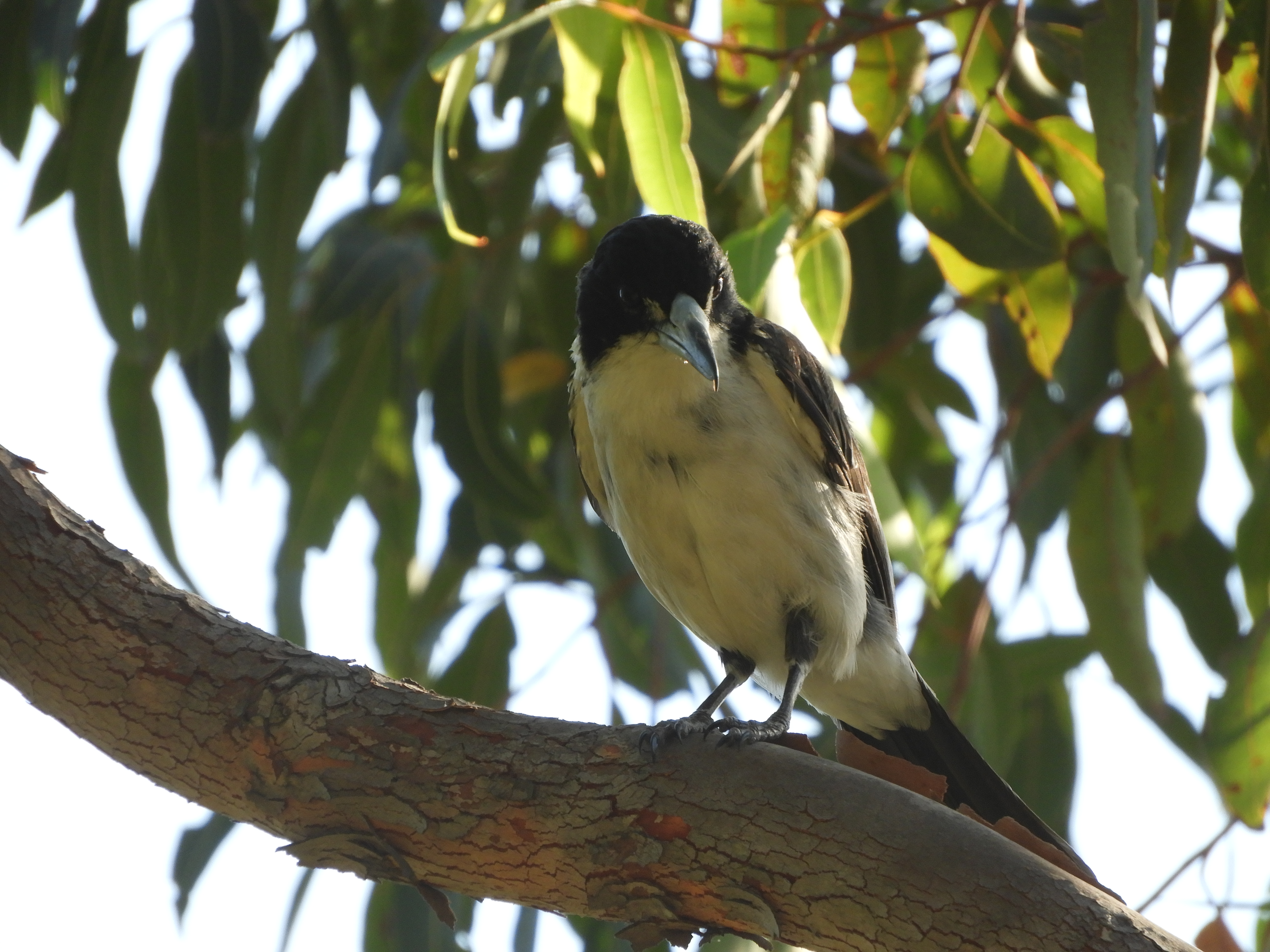
When it tilted its head, I noticed some dark whiskers below its eye:
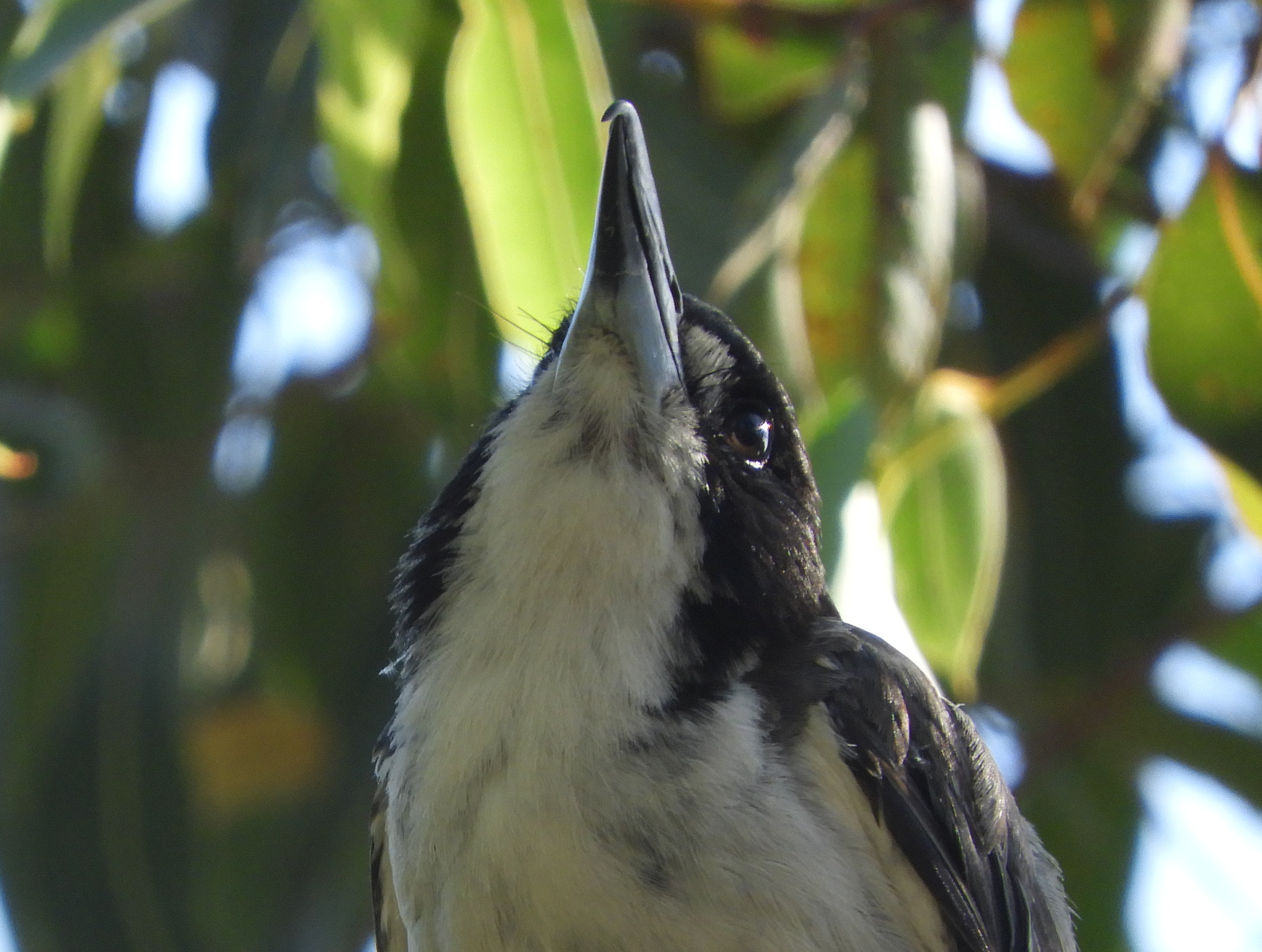
When it looked upwards, I could make out the whiskers on both sides of its beak:
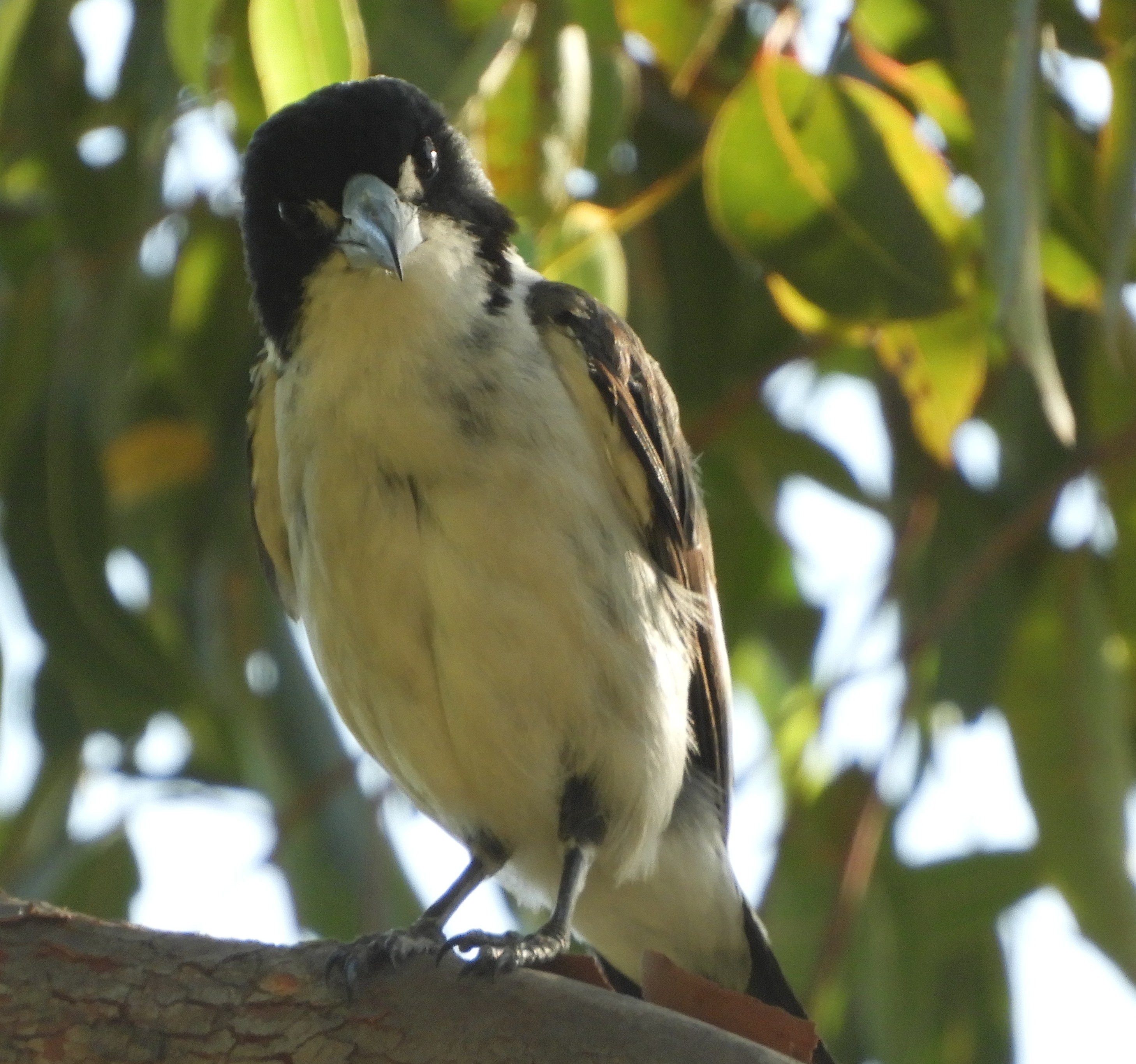
A full-frontal gaze shows off the white patches (lores) in front of its eyes:
A yawn shows its tongue off nicely:

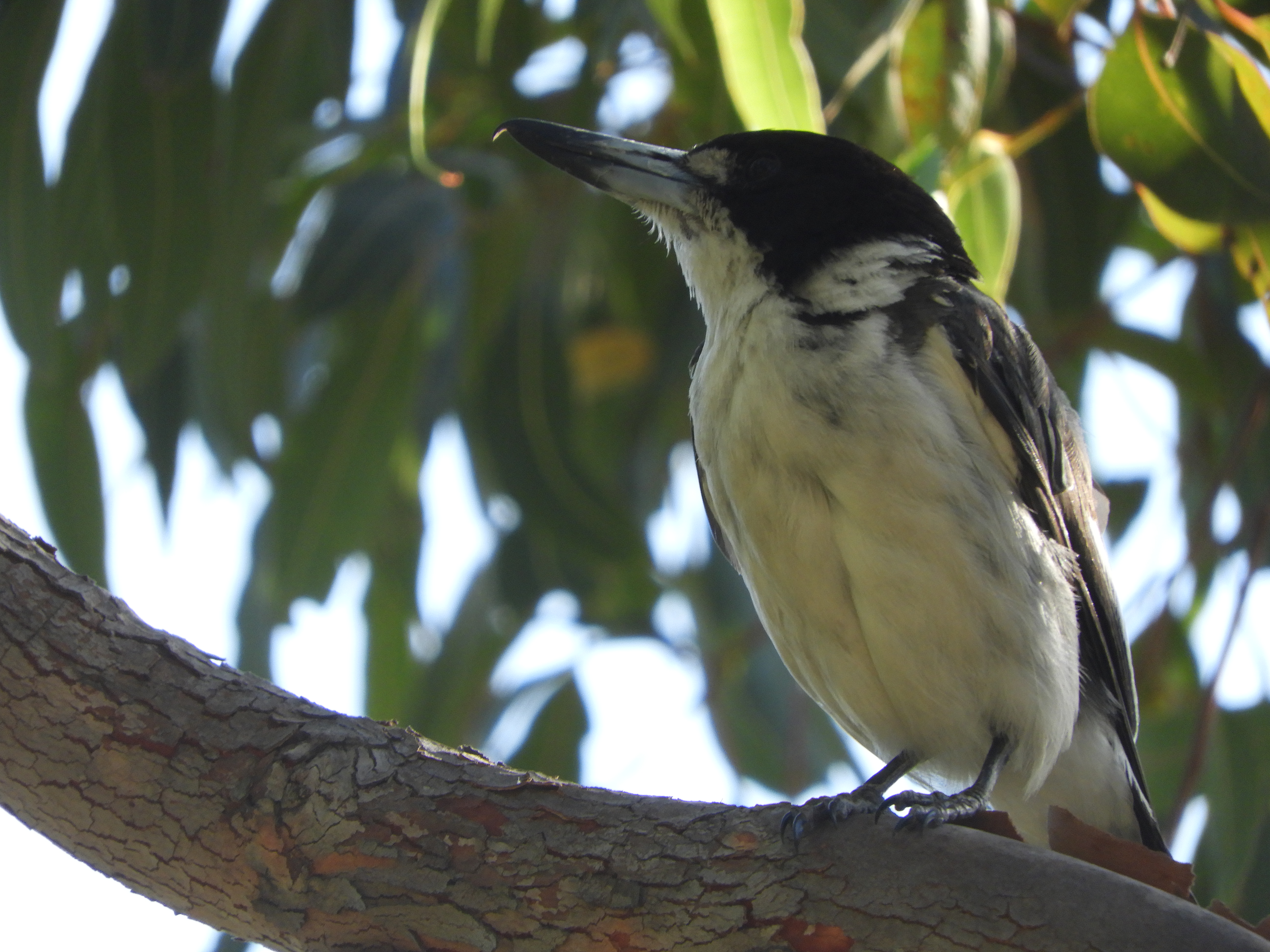
Here’s a profile to close the post. The hook on the end of the beak is for stabbing prey, which the butcherbird then hangs on a branch or a fence until it’s ready to eat:
Common name: Grey Butcherbird
Scientific name: Cracticus torquatus
Approximate length: 30 cm
Date spotted: 5 January 2019 (Summer)
Location: Allambie Heights, New South Wales, Australia
Case moth caterpillar or bagworm in Sydney
Occasionally we see strange little caterpillars dragging what looks to be some kind of shell or case around with them. Here’s one moving precariously across a wall:
The clothes peg at start and end of the video is for scale. The caterpillar and its case are just a few millimetres long. The head and thorax of the caterpillar stick out at the top of the case, with the rest of the body inside the case. There’s nothing holding the case against the wall except the caterpillar’s six tiny legs at the top!
After seeing the above caterpillar yesterday, I searched the internet to find out what it was. It looks to be a caterpillar of a case moth (Psychidae), also called a bagworm.
Then I remembered another odd case that I’d seen on the wall of our house a year or so ago. That turns out to be a case moth’s case too. This one is more decorative than the one above:
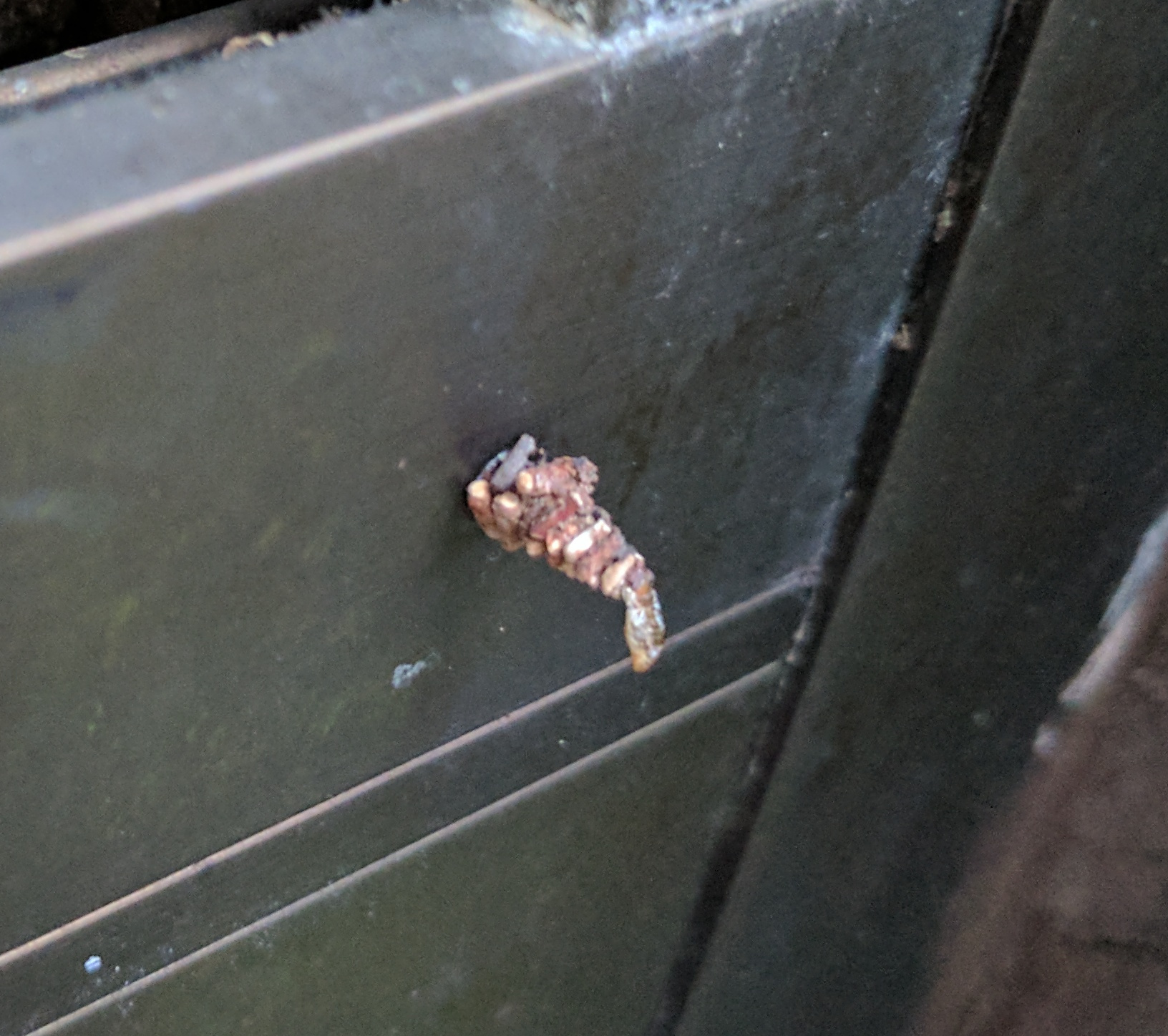
Evidently the caterpillar pupates within the case, and sometimes the female moth even lives her entire live within the case.
The Butterfly House has more pictures of the decorative cases of the case moth.
Common Myna picks a millionaire’s view
You’ll see Common Myna birds, also called Indian Mynas, throughout Sydney. They strut around restaurant tables, colonise balconies, peek into windows, and generally act like they own the place. They’re not original natives of Australia, but they’re so common a sight that most people assume they’re a native species nowadays.
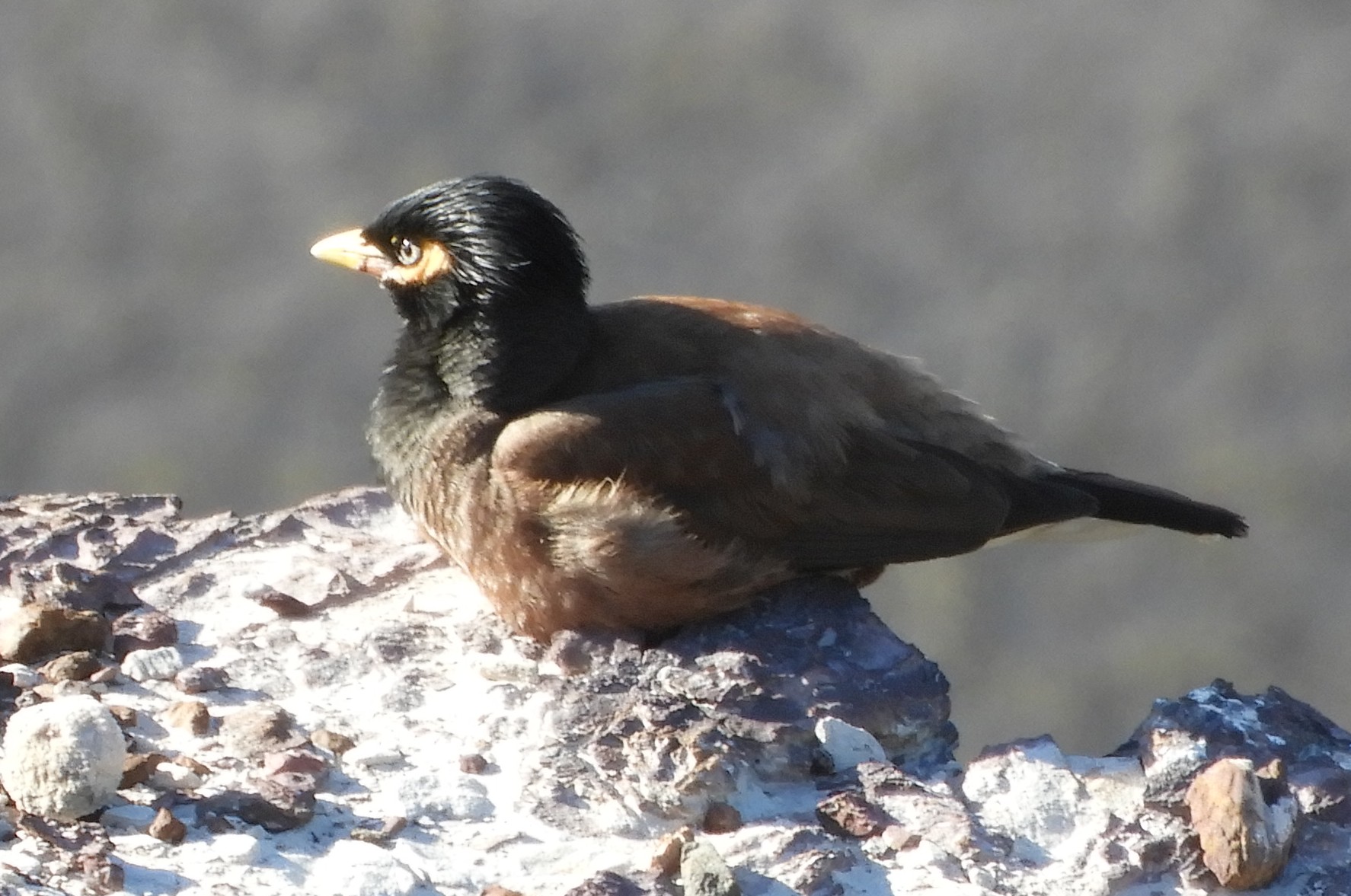
Often these birds look a little tatty, as if they’ve lived an interesting life. But a couple of days ago I saw this glossy bird roosting on the edge of a cliff at Dee Why Headland:
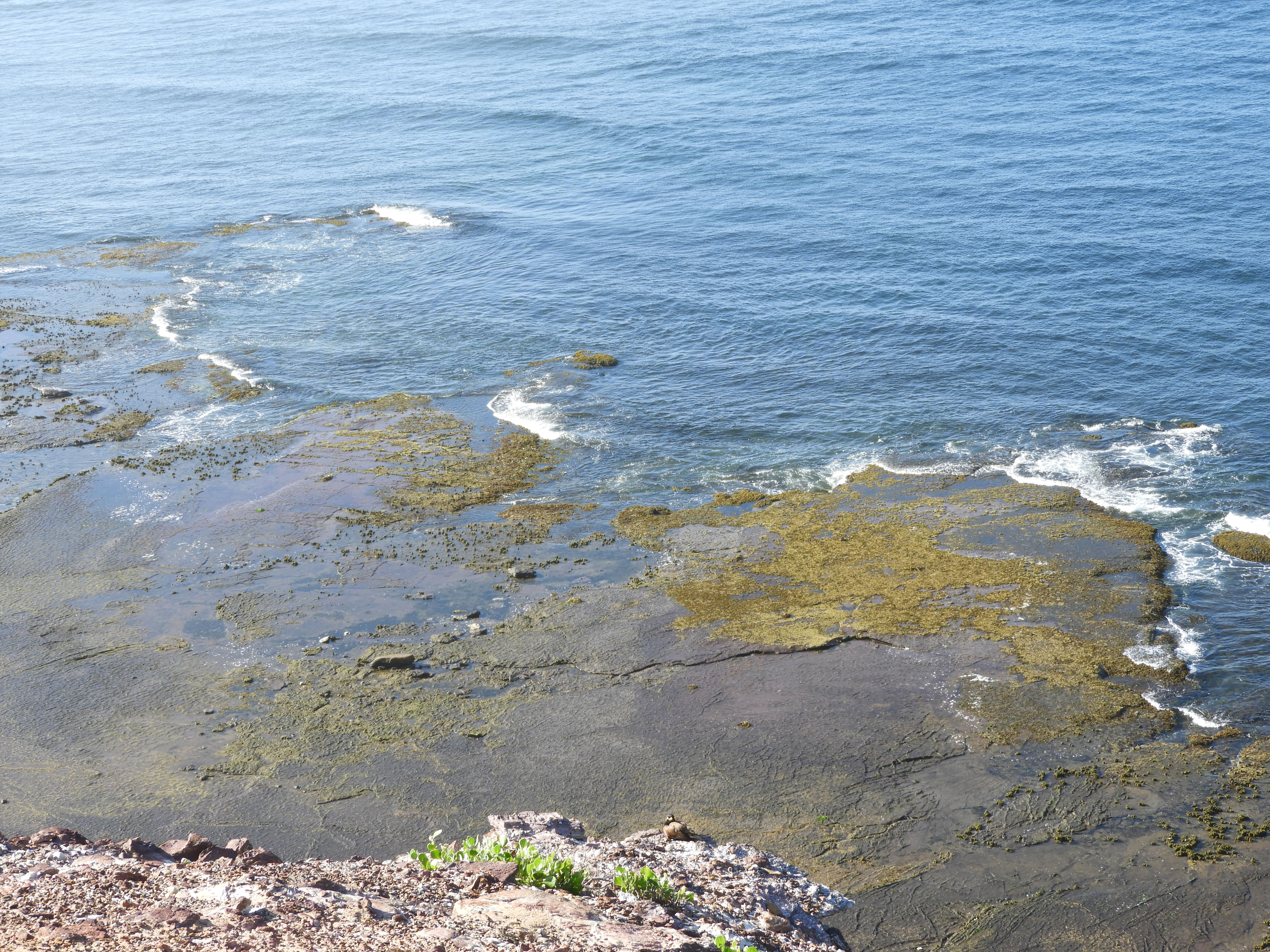
Zooming out, here’s the view that the bird is enjoying. If you look carefully, you’ll see the bird perched on the rocky outcrop at the bottom of the picture, to the middle right.
Not to be confused with the Australian Miner (“Noisy Miner”), the Common Mynas were introduced into Victoria in the late 1800s, to control the level of insects in market gardens. The birds have since made their way up the coast to New South Wales. Their original home is Asia (Kazakhstan, Turkmenistan, Iran, China, Indochina, Malay Peninsula, India).
Here’s another view of the same bird, still comfortably resting on the cliff edge:
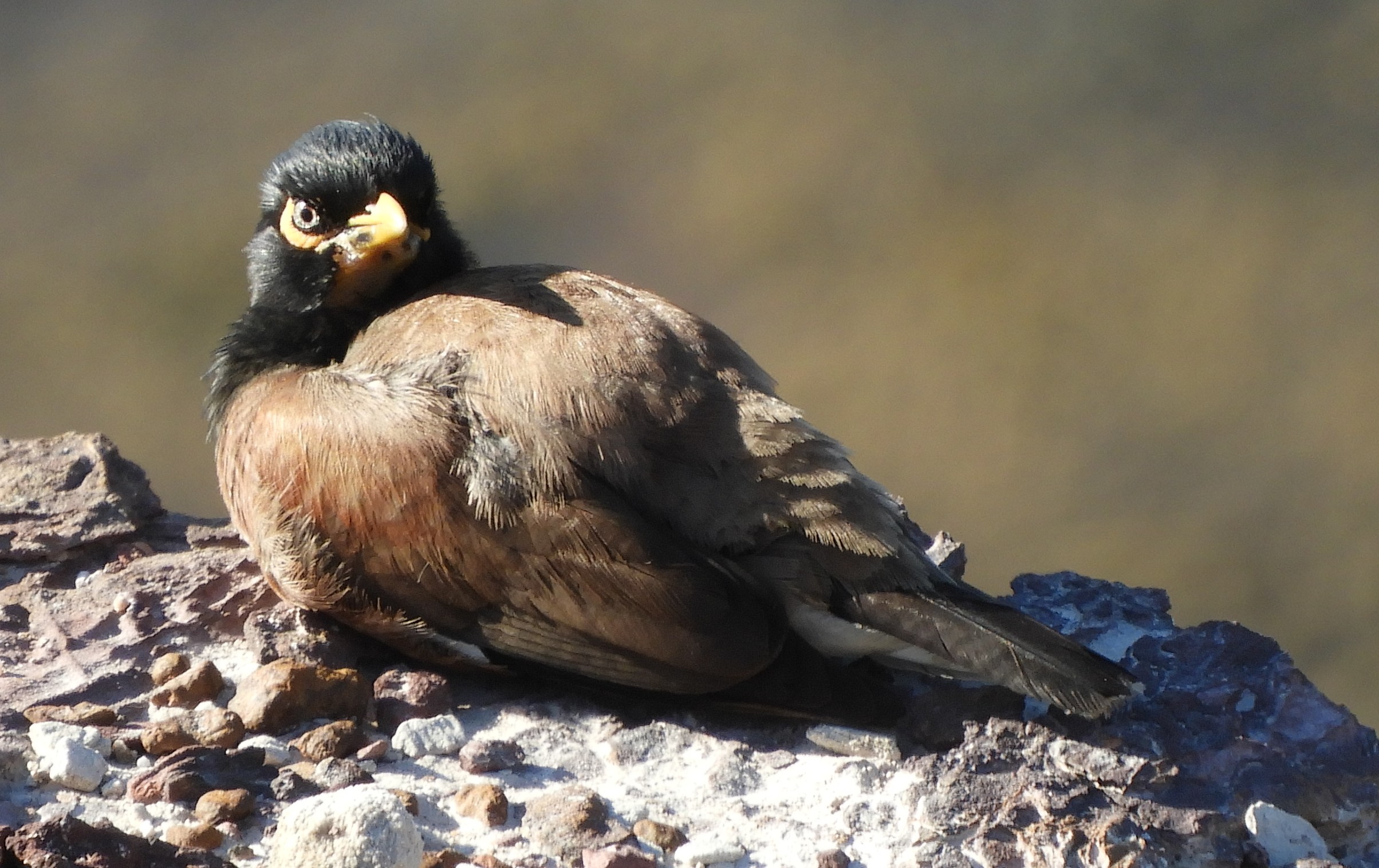
At first I wondered if the bird was sitting on a nest. But then it stood up when a friend arrived to share the view, and there’s no nest in sight:

What can they see from their perch? Here’s their view of Long Reef, with two people walking on the rocks far below:
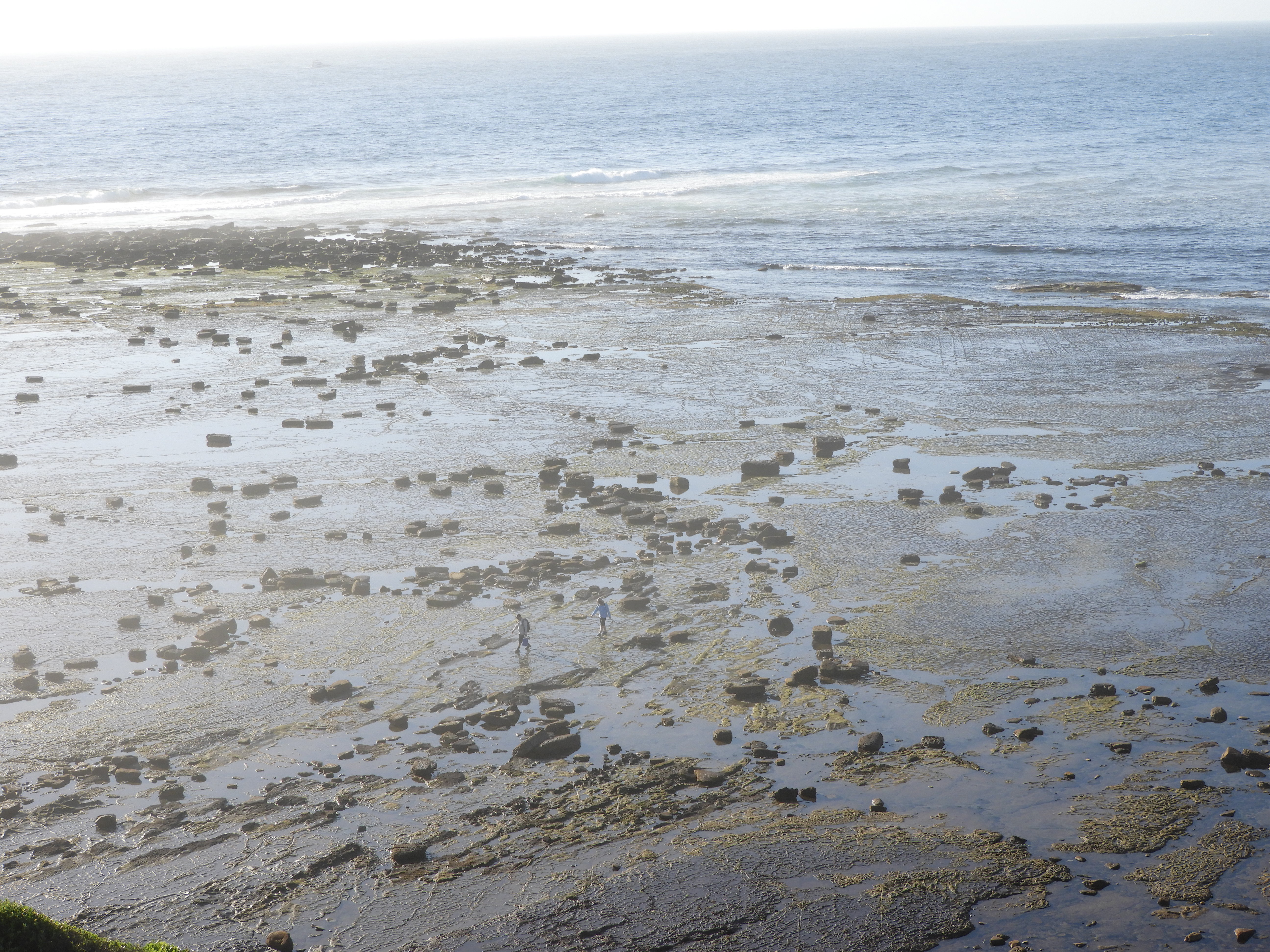
These little mynas are quite chatty and can make a wide variety of sounds. In this video of a group of birds on the same Dee Why Headland on the same day, you hear just some of the noises they make:
Common name: Common Myna, or Indian Myna
Scientific name: Acridotheres tristris
Approximate length: 25 cm
Date spotted: 29 December 2018 (Summer)
Location: Long Reef Headland, Dee Why, New South Wales, Australia: 33°44’30.6″S 151°19’04.2″E
Ninja wattlebird – now you see it now you don’t
Spot the bird:

It’s a common sight to see a Little Wattlebird on a banksia flower, digging its beak between the florets to find the nectar. I hadn’t realised until now, though, how perfectly camouflaged the bird is on the grey branches of a mature banksia, particularly when surrounded by dead flowerheads.
Here’s a closeup pic of the bird, looking supremely confident though, dare I say it, not very well groomed:

These are the flowers of the Banksia Serrata tree where I saw the bird:
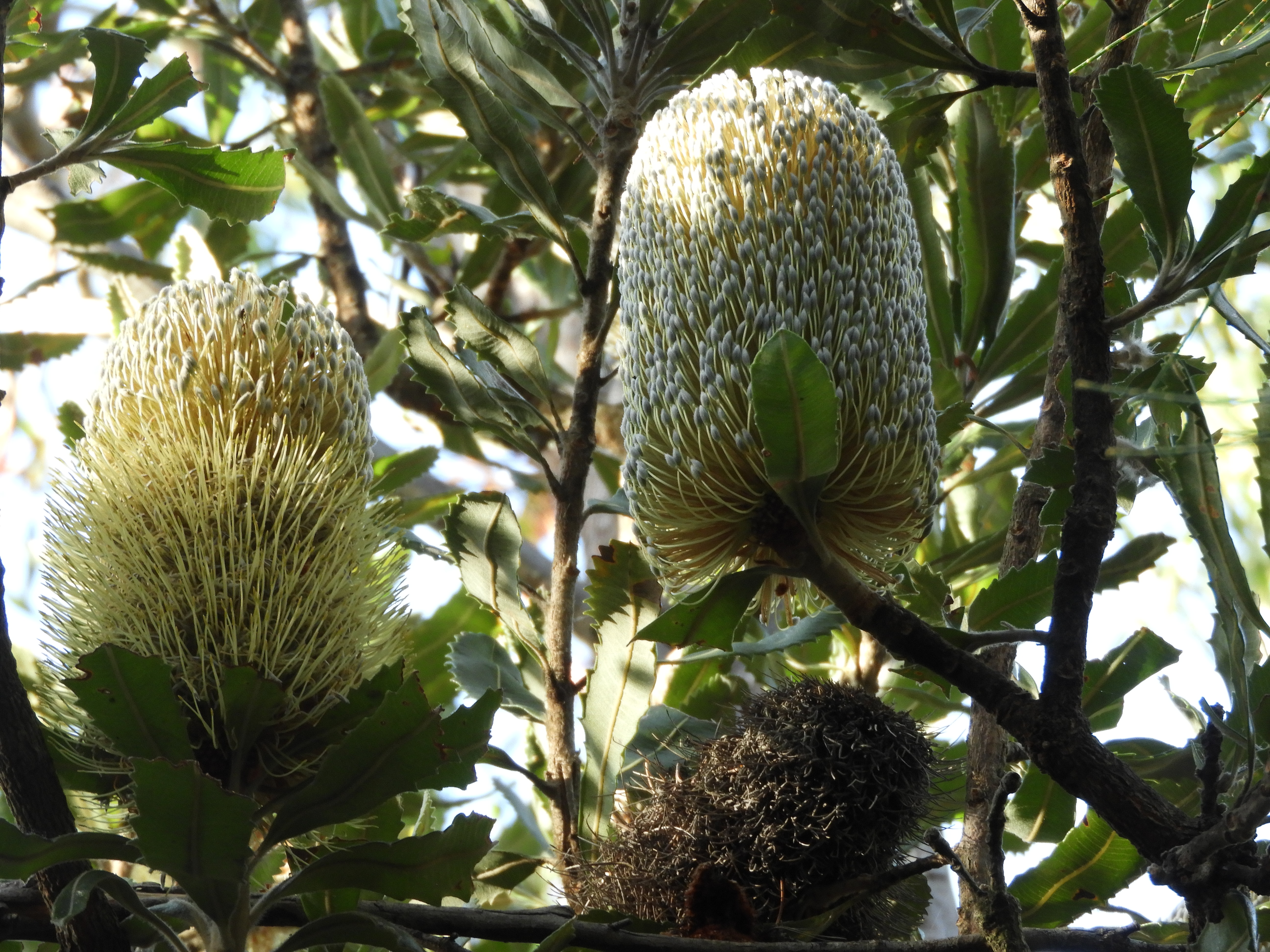
The wattlebird later moved to a bare branch to do a bit of grooming. Caught in dishevelled silhouette against the morning sun:

Common name: Little Wattlebird
Scientific name: Anthochaera chrysoptera
Approximate length: 30 cm
Date spotted: 26 December 2018 (Summer)
Location: Manly Dam National Park, New South Wales, Australia: 33°46’15.4″S 151°14’45.0″E
Cormorants at Long Reef Headland, Dee Why
This morning I took a walk along Dee Why Headland and followed the path down onto Long Reef. Far in the distance, perched on the rocks at the sea’s edge, was an assortment of cormorants.
Pretty cool: when I dropped the pin on Google Maps to mark the spot, the label came up as “Near South Pacific Ocean”!
Great Cormorants
First there were these four birds, which I think are Great Cormorants. The air was full of spray and the early morning sun was low in the sky, so it’s hard to be sure. One is holding its wings up in typical cormorant style. The birds seem to be just about entirely black, with yellow or white around the beak. At the end of the video, I zoom back out so that you can see just how far away the birds were. On cue, a yacht hoves into view too.
Common name: Great Cormorant
Scientific name: Phalacrocorax carbo
Approximate length: 85 cm; wing span 1.5 m
Date spotted: 29 December 2018 (Summer)
Location: Long Reef Headland, Dee Why, New South Wales, Australia: 33°44’30.6″S 151°19’04.2″E
Little Pied Cormorant
Next I saw this Little Pied Cormorant, looking a bit ruffled:
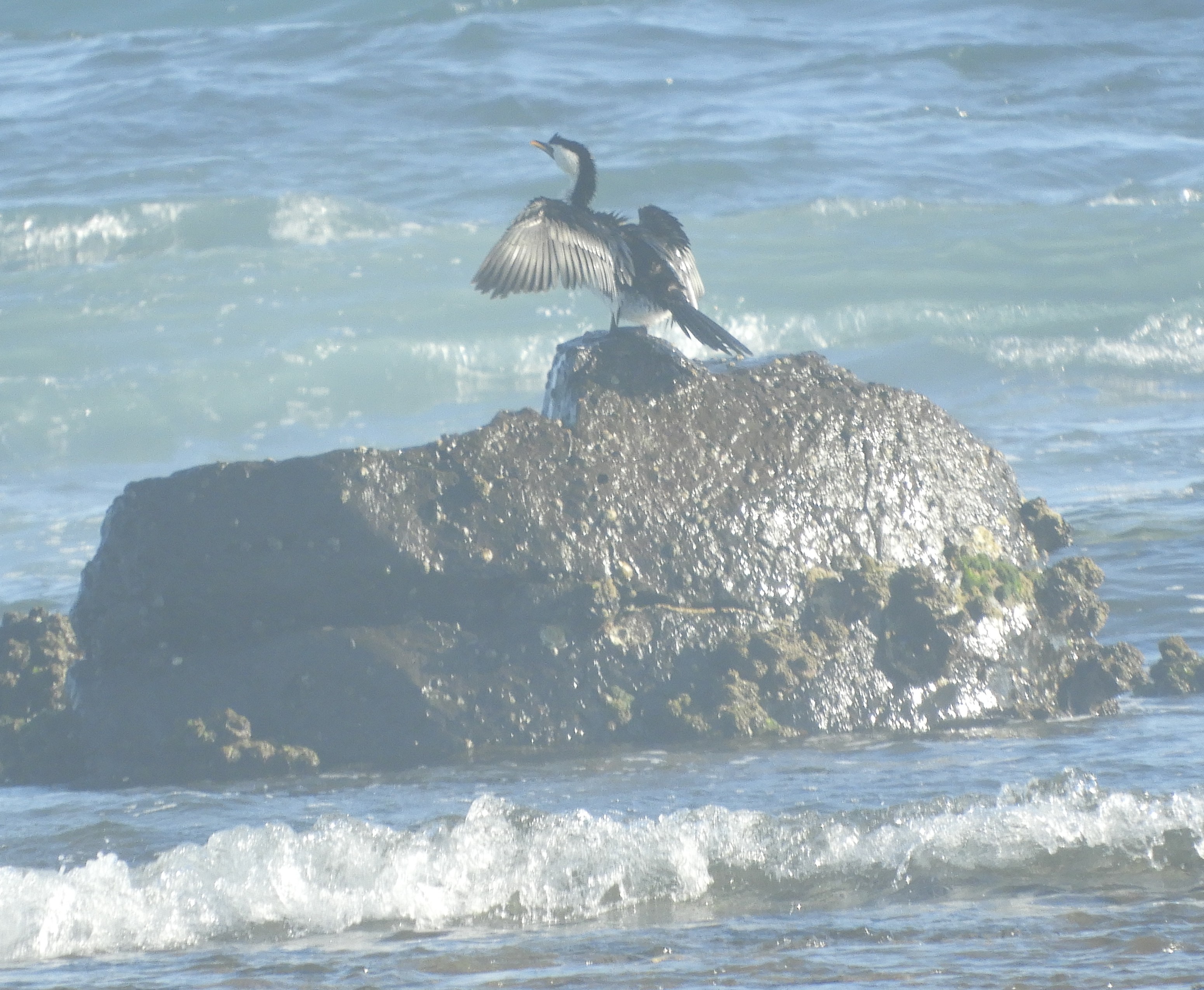
Here’s a video of the Little Pied Cormorant enjoying the waves and the sticky breeze:
Common name: Little Pied Cormorant
Scientific name: Phalacrocorax melanoleucos
Approximate length: 60 cm
Date spotted: 29 December 2018 (Summer)
Location: Long Reef Headland, Dee Why, New South Wales, Australia: 33°44’30.6″S 151°19’04.2″E


 Sydney Birder