Fairy-wren at last
I’ve been trying for ages to get a photo of a Fairy-wren. They’re tiny little puffballs of energy, never in one place long enough to focus the camera. I’ve managed plenty of blurs and smudges. Now at last here’s a recognisable picture.

Common name: Variegated Fairy-wren
Scientific name: Malurus lamberti
Approximate length: 13 cm
Date spotted: 31 July 2016
Season: Winter
Location: Manly Dam Reserve, New South Wales, Australia
Latitude/longitude: 33°46’55.7″S 151°15’26.9″E
Silvereyes at a mossy puddle
This photograph is more of a study in colour than a picture of a bird. I’d forgotten that I’d played with my camera settings on my previous outing. The result is rather Constable-esque.
Two tiny little Silvereyes at a mossy puddle:

A zoomed-in view, to make it easier to spot the birds:

Common name: Silvereye
Scientific name: Zosterops lateralis
Approximate length: 11 cm
Date spotted: 30 July 2016
Season: Winter
Location: Manly Dam Reserve, New South Wales, Australia
Latitude/longitude: 33°47’02.0″S 151°15’18.5″E
Psyduck in Sydney
This blog is usually about birds in the real world, but I couldn’t resist posting this encounter with Psyduck from Pokémon Go. The game is a cute demonstration of irtual reality and the real world merging in augmented reality.
According to the description in Pokémon Go, Psyduck has a mysterious power to generate brain waves that only sleeping creatures should be able to emit. Useful, I guess?

Common name: Psyduck
Scientific name: Duck Pokémon
Height: 80 cm
Date spotted: 23 July 2016
Season: Winter
Location: Manly Dam Reserve, New South Wales, Australia
Latitude/longitude: 33°46’37.2″S 151°14’49.3″E
Kookaburra enjoying the winter sunshine
It’s been very very wet and very very cold in Sydney over the last few weeks. This morning the mists cleared, the rain stopped, and Sydney-siders ventured out to enjoy the sunshine. This kookaburra grabbed a spot in the sun on a moss-covered electricity pole.
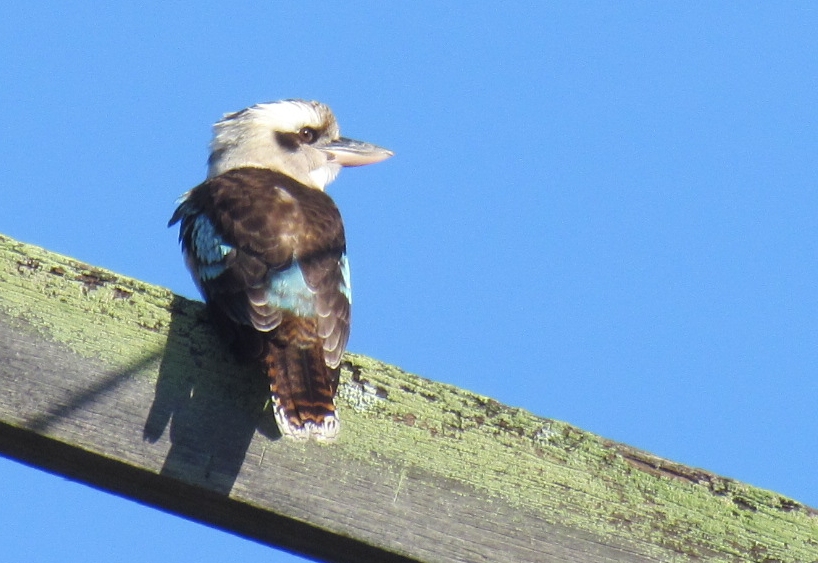
Common name: Laughing Kookaburra
Scientific name: Dacelo novaeguineae
Approximate length: 47 cm
Date spotted: 10 July 2016
Season: Winter
Location: Allambie Heights, New South Wales, Australia
Latitude/longitude: 33°46’35.7″S 151°15’25.6″E
Willie Wagtail at Manly Dam
So much restless energy. A Willie Wagtail flits from spot to spot, flicking and fanning his tail for anyone who may be watching.
Willie Wagtails are members of the fantail family. Most of those I’ve seen wave their tails from side to side, rather than fanning them. But this one does occasionally show a bit of fan action.
Here’s a still photo, with a nice view of the bird’s white eyebrow:

Common name: Willie Wagtail
Scientific name: Rhipidura leucophrys
Approximate length: 20 cm
Date spotted: 13 June 2016
Season: Winter
Location: Manly Dam Reserve, New South Wales, Australia
Latitude/longitude: 33°46’36.5″S 151°15’16.1″E
Eastern Yellow Robin
Usually the little birds (robins, wrens, finches) flit fast through the bush, coming to rest for only a few seconds before moving on. That makes photography challenging. This morning, a little Eastern Yellow Robin stayed in one spot long enough for me to take a few photos.
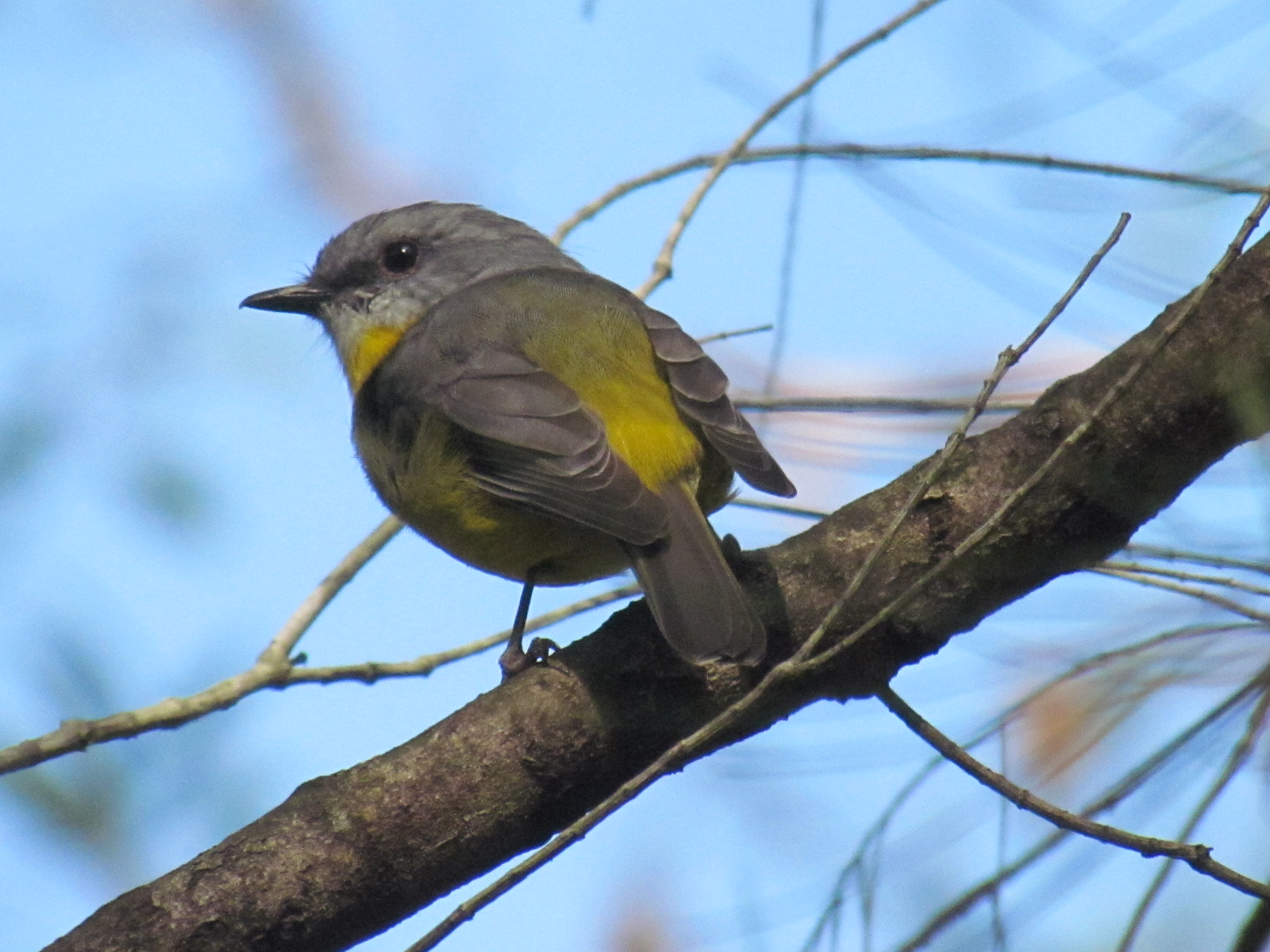
On the point of flight:
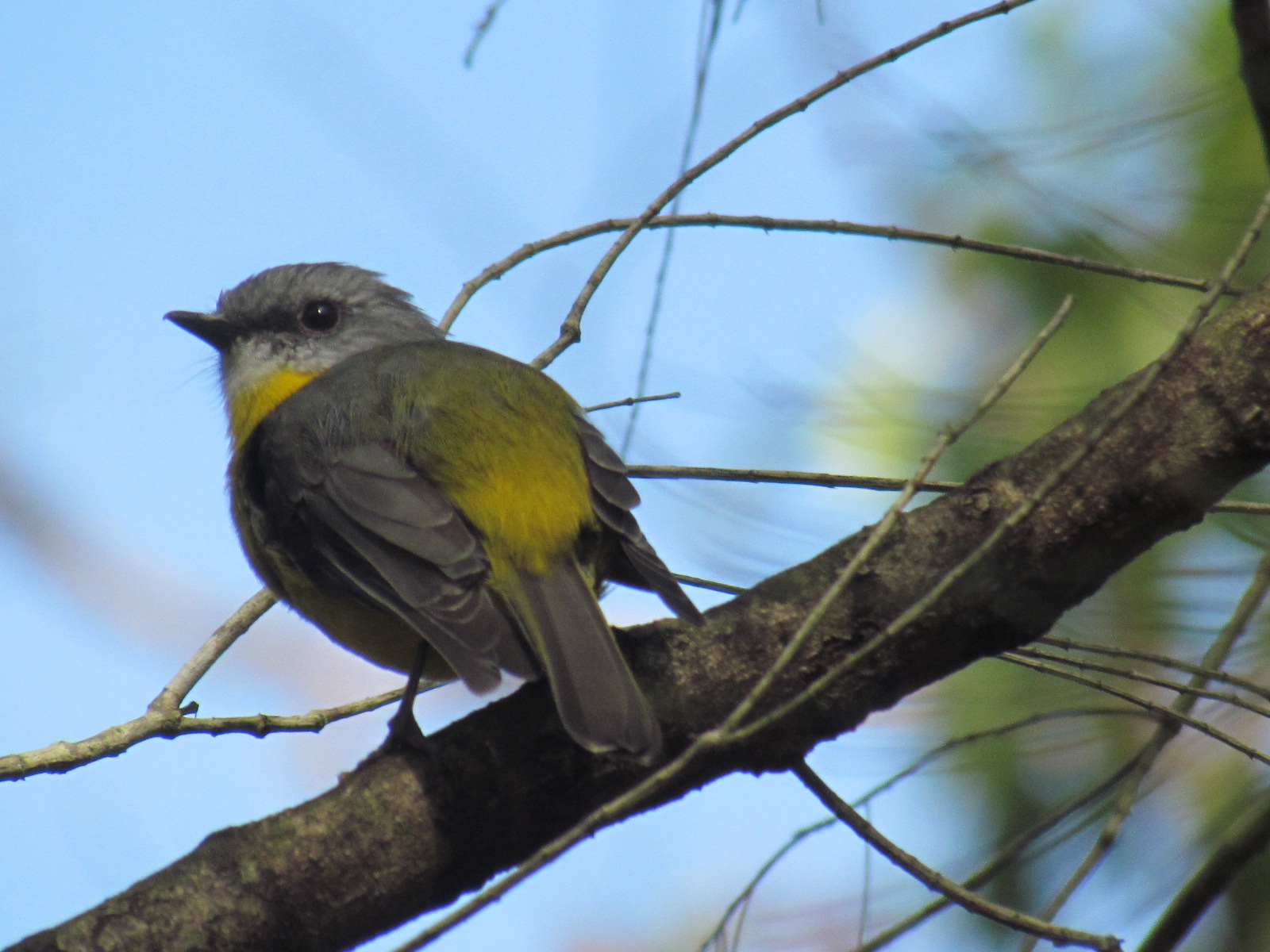
Common name: Eastern Yellow Robin
Scientific name: Eopsaltria australis
Approximate length: 15 cm
Date spotted: 13 March 2016
Season: Late summer
Location: Manly Dam Reserve, New South Wales, Australia
Latitude/longitude: 33°46’10.7″S 151°14’28.0″E
Purple Swamphens playing coy
The first sight of the Purple Swamphens in this video is their unique tracks in the sand. Then we hear a peeping and a squawking and a bit of a kerfuffle behind the reeds. A bird emerges for a quick appearance, before going back to the more interesting companionship of its fellows. A few minutes later, I came across another pair of birds out in the open, and filmed them too. Notice their big feet as they walk across the lily pads.
Common name: Purple Swamphen
Scientific name: Porphyrio porphyrio
Approximate length: 50 cm
Date spotted: 6 March 2016
Season: Late summer
Location: Manly Dam Reserve, New South Wales, Australia
Latitude/longitude: 33°46’26.6″S 151°14’44.3″E
Eastern Spinebill near Sydney, Australia
This pretty little bird is fast-moving and hard to photograph. The trickling noise in the background is the waterfall at Manly Dam Reserve. Towards the end of the clip, you’ll hear first a Whipbird and then some tweeting that may be the Spinebill itself.
Here it is, an Eastern Spinebill dancing around as it catches insects. At least, I think that’s what it’s doing.
Common name: Eastern Spinebill
Scientific name: Acanthorhynchus tenuirostris
Approximate length: 15 cm
Date spotted: 6 March 2016
Season: Late summer
Location: Waterfall at Manly Dam Reserve, New South Wales, Australia
Latitude/longitude: 33°46’08.5″S 151°14’29.1″E
Swimming across the sky
Reflections at Manly Dam.
In the background you’ll hear Australian Ravens cawing, Wattlebirds croaking, and Whipbirds whistling.
Pacific Black Duck
Common name: Pacific Black Duck
Scientific name: Anas superciliosa
Approximate length: 45-60 cm
Date spotted: 25 December 2015
Season: Summer
Location: Manly Dam, New South Wales, Australia
Latitude/longitude: 33°46’55.0″S 151°15’19.7″E
Eurasian Coot
My bird book calls this coot dumpy. An interesting fact is that the coot has flattened toes rather than webbed feet for efficient swimming.
Common name: Eurasian Coot
Scientific name: Fulica atra
Approximate length: 35 cm
Date spotted: 25 December 2015
Season: Summer
Location: Manly Dam, New South Wales, Australia
Latitude/longitude: 33°46’55.0″S 151°15’19.7″E
Bird swathed in Christmas colours
This little Rainbow Lorikeet shows off its bright cloak of red, green, blue and yellow, perched on the greeny-white flower of an Old Man Banksia. Christmas colours indeed

Common name: Rainbow Lorikeet
Scientific name: Trichoglossus haematodus
Approximate length: 30 cm
Date spotted: 24 December 2015
Season: Summer
Location: Allambie Heights, New South Wales, Australia
Approximate latitude/longitude: 33°46’19.2″S 151°15’39.6″E


 Sydney Birder