Purple Swamphen chick
So cute and fluffy! This little Purple Swamphen chick treads lightly on the lily pads, learning survival skills from its mother.
Here’s a nice shot of its stubby wings, and its well-developed feet under a couple of centimetres of water:

Setting off on a bit of exploration:

But staying close to mother:

Common name: Purple Swamphen
Scientific name: Porphyrio porphyrio
Approximate length: 50 cm
Date spotted: 30 October 2016
Season: Spring
Location: Manly Dam Reserve, New South Wales, Australia
Latitude/longitude: 33°46’36.1″S 151°14’48.8″E
Magpie-lark or Peewee
We don’t seem to quite know what to call these birds. Their most common name is Magpie-lark, but they’re neither magpies nor larks. They are sometimes called Peewees in imitation of their call, “pee wee, pee wee”. Other people call them Mudlarks, because they use mud to build their nests.
Magpie-lark usually look quite dapper, their feathers sleek and smooth. This one is a little ruffled, perhaps blown about by the strong wind.
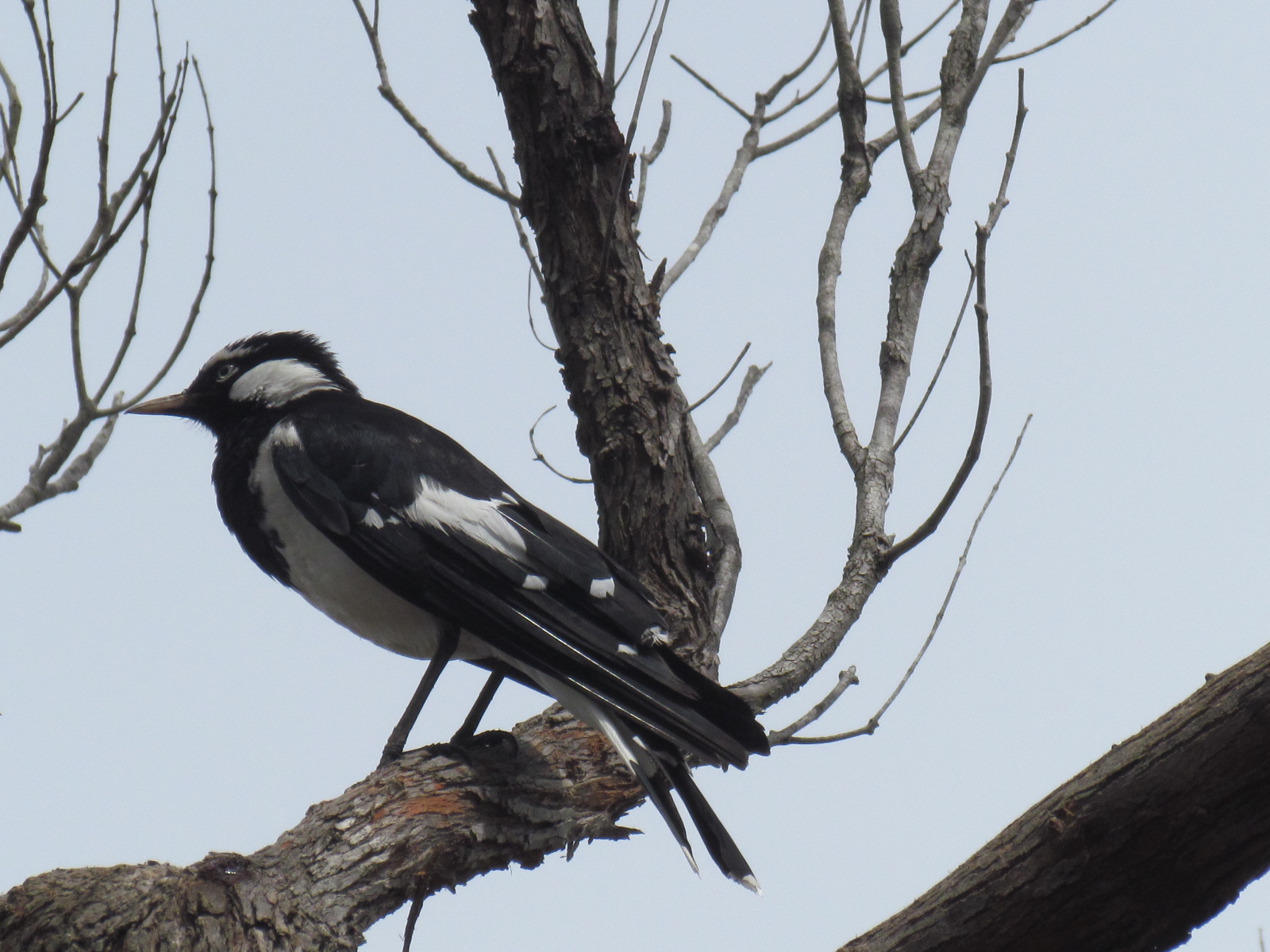
Common name: Magpie-lark
Scientific name: Grallina cyanoleuca
Approximate length: 30 cm
Date spotted: Sunday 30 October 2016
Season: Spring
Location: Manly Dam Reserve, New South Wales, Australia
Latitude/longitude: 33°46’35.5″S 151°14’50.3″E
Australian Raven with eyes like ice
Australian Ravens are fierce, proud birds. Their black plumage shimmers blue in the sunlight, and the icy cast of an eye is enough to send shivers down your spine. They’re inquisitive, intelligent, and sociable. This one perched on a rock at North Head near Manly, eyeing us with interest.
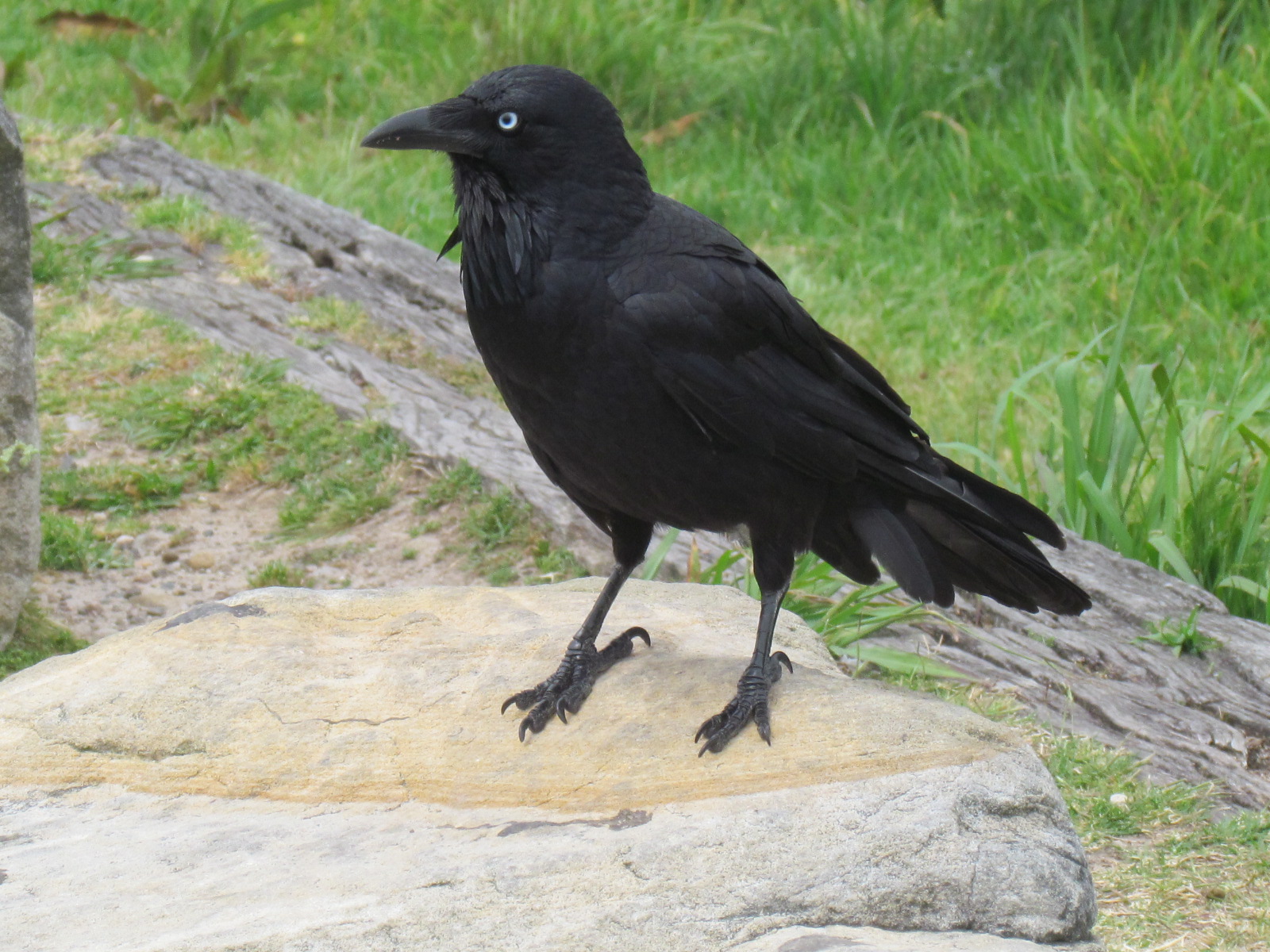
Common name: Australian Raven
Scientific name: Corvus coronoides
Approximate length: 50 cm
Date spotted: Sunday 30 October 2016
Season: Spring
Location: North Head, Manly, New South Wales, Australia
Latitude/longitude: 33°49’10.1″S 151°17’49.6″E
Currawong in song
Currawongs are medium-sized birds that look similar to magpies and butcher birds. An easy way to tell them apart is that currawongs don’t have white markings on their heads, where magpies and butcher birds do have white collars or caps. Currawongs have yellow eyes, where magpies’ eyes are red.
The song of the currawong is varied, with clear bell-like sounds, whistles, and yodels. This video shows a currawong listening to the song of others around him, and responding every now and then.
Common name: Pied Currawong
Scientific name: Strepera graculina
Approximate length: 45 cm
Date spotted: 16 October 2016
Season: Summer
Location: Manly Dam National Park, New South Wales, Australia
Approximate latitude/longitude: 33°46’42.1″S 151°14’59.3″E
Cockatoos teasing
Cockatoos are playful, sociable creatures. Yesterday I watched a pair of Sulphur-crested Cockatoos high in a gum tree. One of them was grooming. The other was teasing its companion, prodding it and seeming very satisfied with the startled response.
A couple of minutes later both of them flare their wings and crests, squawking gleefully.
Common name: Sulphur-crested Cockatoo
Scientific name: Cacatua galerita
Approximate length: 50 cm
Date spotted: 8 October 2016
Season: Spring
Location: Manly Dam Park, New South Wales, Australia
Latitude/longitude: 33°46’51.5″S 151°14’51.7″E
Channel-billed Cuckoo fending off Australian Miners
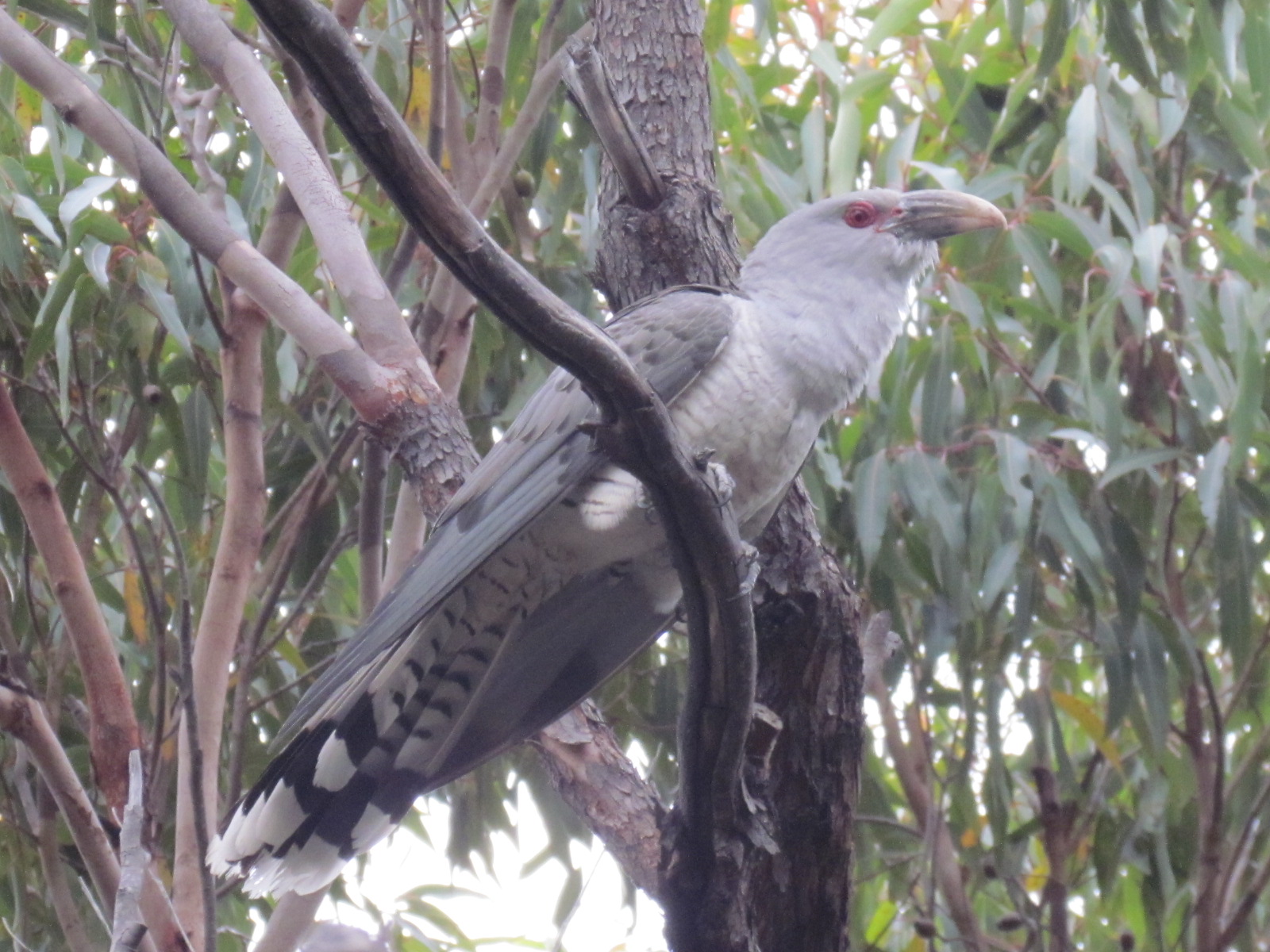
The call of the Channel-billed Cuckoo announces that spring has arrived. These large, ugly, yet splendid birds arrive in Eastern Australia in early spring every year, returning from their seasonal migration to Indonesia and New Guinea.
They’re the largest cuckoos in the world, at a length of around 60 cm and a wingspan of 1 metre. Yet, despite their size, they’re cowed by the little Australian Miner (length 25 cm, wingspan 40 cm). To those who know Australian birds, this isn’t surprising. The Miner, also known as the Noisy Miner, is aggressive and fearless, attacking birds and animals far larger than itself.
In this video you can hear the pesky Australian Miners chirping and heckling, and the cuckoo hissing and groaning in response:
This video shows a couple of Noisy Miners dive-bombing the cuckoo:
Here’s the cuckoo in a moment of quiet contemplation. Note the red eyes and the large, curved beak:
A view of the cuckoo from behind, surrounded by gum tree flowers:
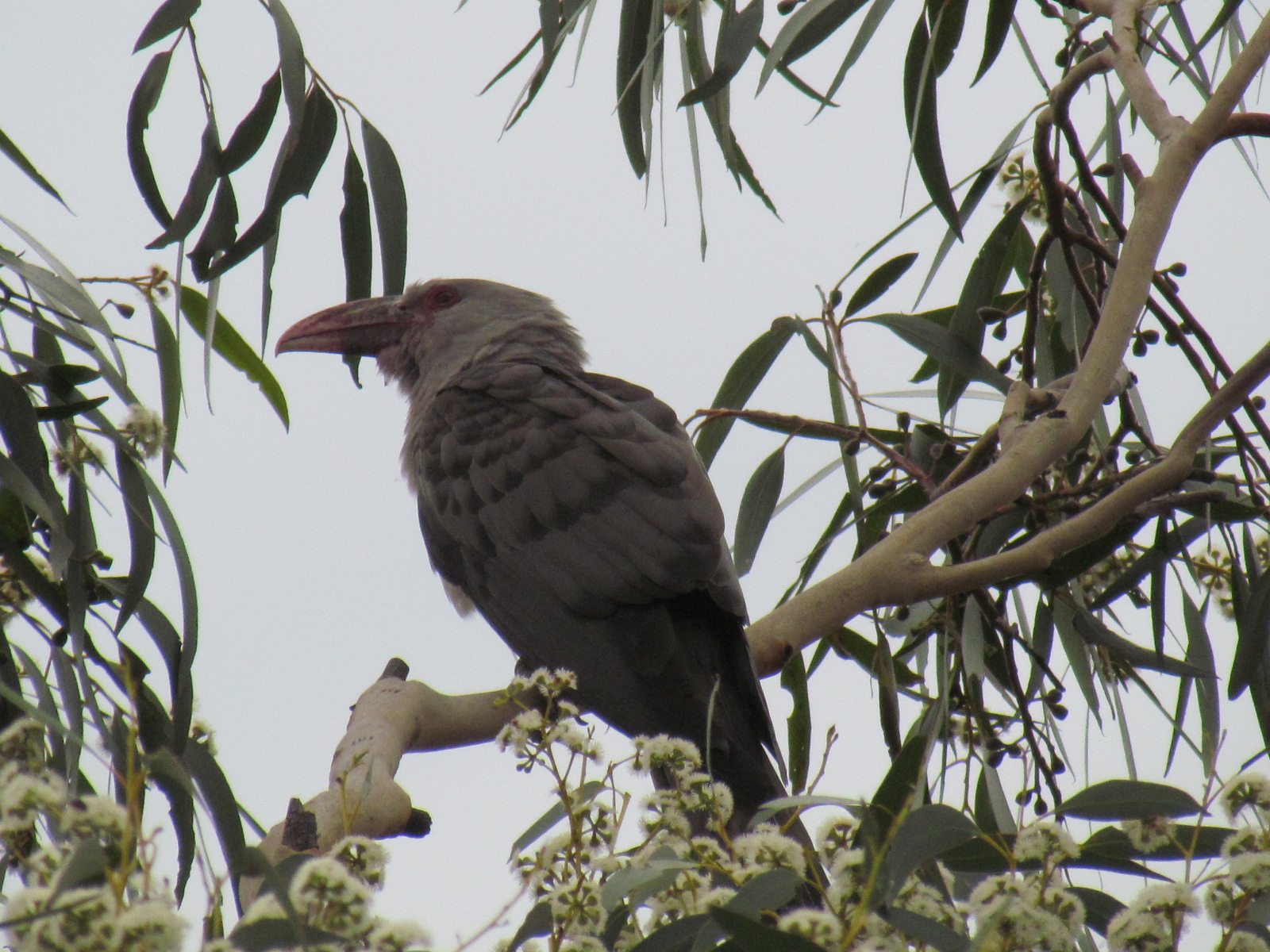
Common name: Channel-billed Cuckoo
Scientific name: Scythrops novaehollandiae
Approximate length: 58-65 cm
Date spotted: 8 October 2016
Season: Spring
Location: Manly Dam National Park, New South Wales, Australia
Latitude/longitude: 33°46’59.1″S 151°15’09.5″E
King Parrots on my commute
Not many people in the world are lucky enough to be able to say this: I bumped into a couple of King Parrots on my way home from work the other day.
We see a few different varieties of parrots around the neighbourhood. King Parrots aren’t a very common sight – I see them maybe two or three times a year. One of their charming characteristics is that they’re always in pairs. See one, and the other isn’t far away.
These two were investigating some seeds on the ground. They let me get quite close, and flew off when I was about a metre away.
Common name: Australian King Parrot
Scientific name: Alisterus scapularis
Approximate length: 44 cm
Date spotted: 5 October 2016
Season: Spring
Location: Allambie Heights, New South Wales, Australia
Approximate latitude/longitude: 33°46’13.2″S 151°15’41.1″E
Little Wattlebird plumage like shooting stars
This shy Little Wattlebird led me a merry dance before letting me snap a picture. It has an intricately patterned plumage. The little bursts at the end of each stripe remind me of shooting stars.

Common name: Little Wattlebird
Scientific name: Anthochaera chrysoptera
Approximate length: 30 cm
Date spotted: 25 September 2016
Season: Spring
Location: Manly Dam National Park, Sydney, Australia
Latitude/longitude: 33°46’30.7″S 151°15’09.1″E
Caterpillar nest high in a tree
Wandering through the bush looking at birds in my usual fashion, I saw this clump of something high in a tree. I zoomed in and took a photo. That’s when I discovered that the something is a web full of caterpillars! I’m deducing they’re caterpillars from the well-nibbled state of the nearby leaves.
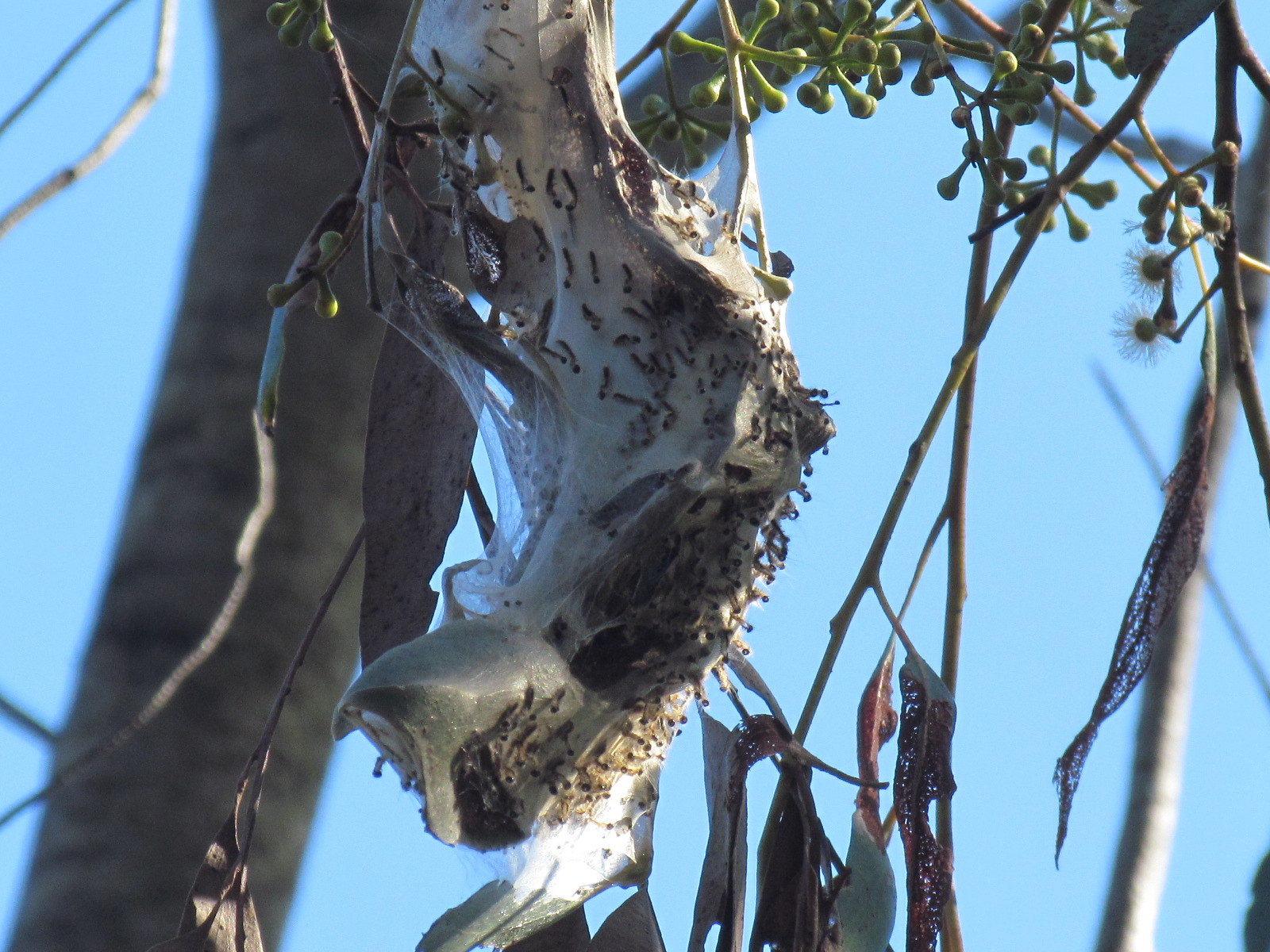
Date spotted: 24 September 2016
Season: Spring
Location: Manly Dam, New South Wales, Australia
Latitude/longitude: 33°46’45.9″S 151°14’59.4″E
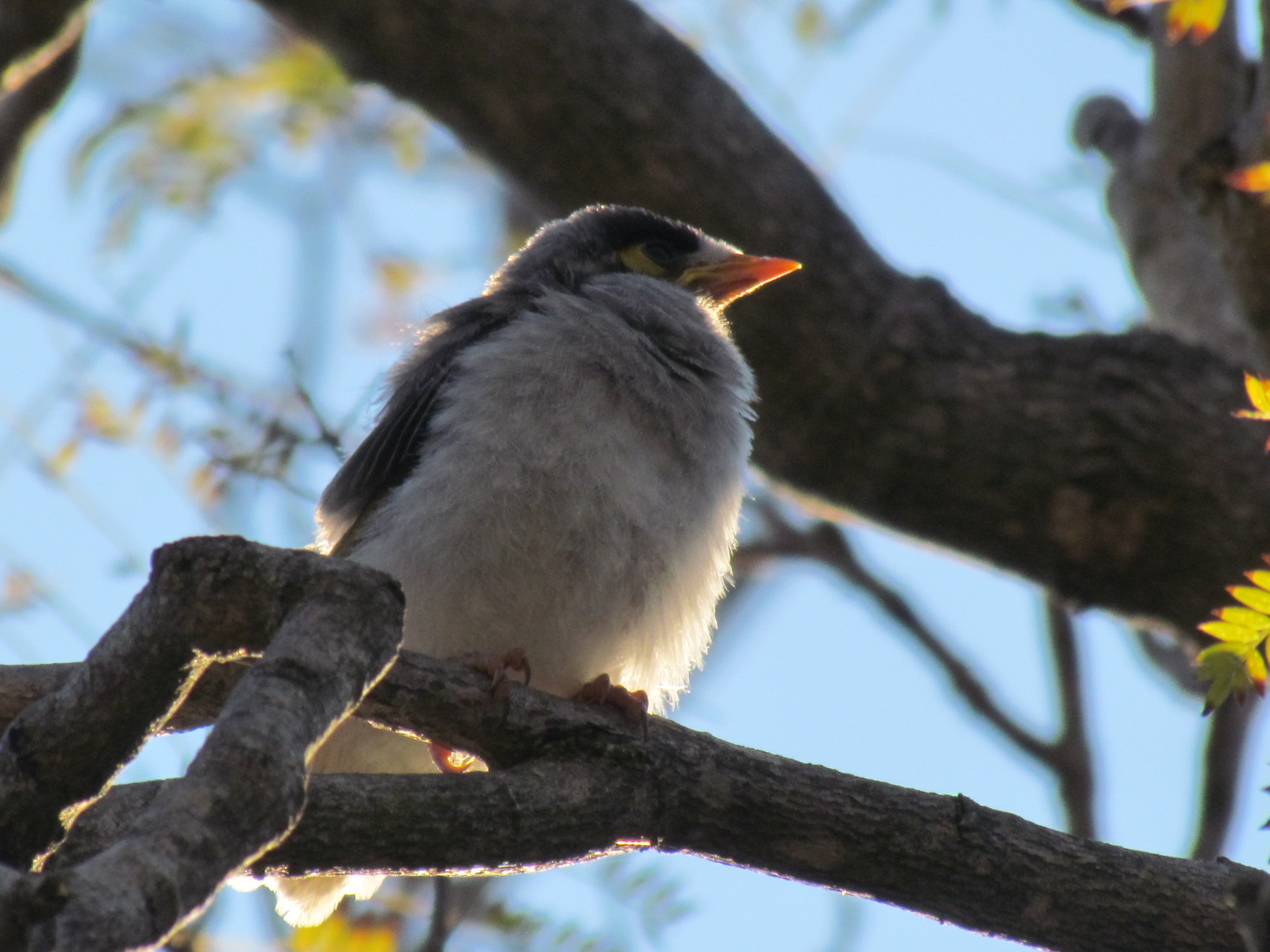
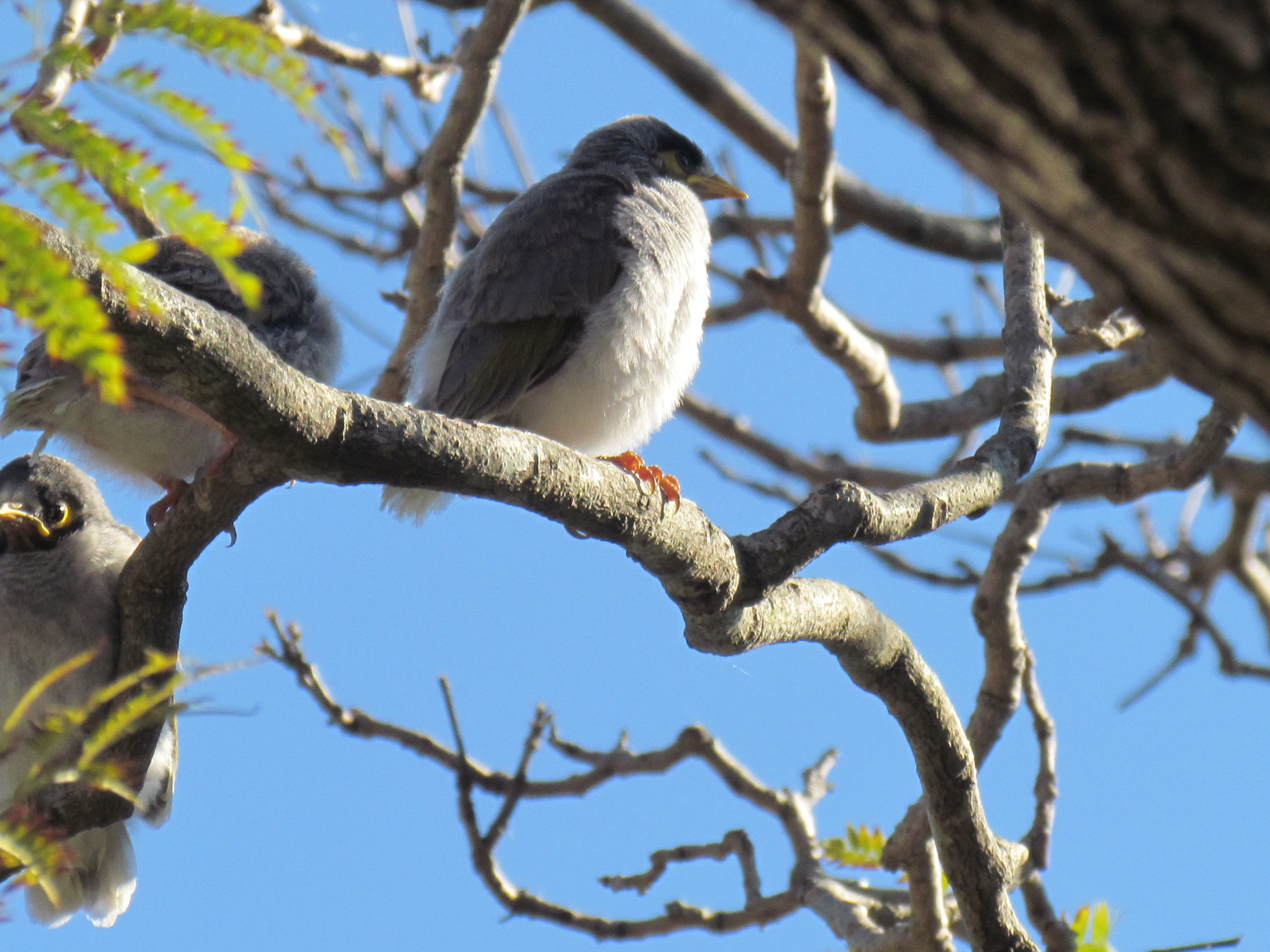
Noisy Miner chicks just out of their nest
All fluffy and chirpy, three little Noisy Miners have taken their first steps out of their nest.
My previous post showed the chicks being fed in the nest. Now, just four days later, they’re on a branch, bunched together, preening and demanding food. The adults are still very much in attendance.
This still shot shows a chick outlined in the early morning sun:
Here are the three chicks, looking fluffy and cute but with the characteristic gimlet glare of the Noisy Miner:
Common name: Noisy Miner, also called Australian Miner
Scientific name: Manorina melanocephala
Approximate length of adult bird: 26 cm
Date spotted: 17 September 2016
Season: Spring
Location: Allambie Heights, New South Wales, Australia
Latitude/longitude: 33°46’13.7″S 151°15’39.8″E


 Sydney Birder