Not all robins have red breasts
The Eastern Yellow Robin is a reasonably common sight in the bush around Sydney, Australia. This one was perched on a twig in a marshy area around a creek:

Common name: Eastern Yellow Robin
Scientific name: Eopsaltria australis
Approximate length: 15 cm
Date spotted: 22 July 2019 (Winter)
Location: Manly Dam National Park, New South Wales, Australia: 33°46’24.2″S 151°15’05.8″E
Who said a Pardalote isn’t a dinosaur?
Well, I guess maybe nobody has ever said “a Pardalote isn’t a dinosaur”. I mean, why would you? Still, this little Pardalote’s plucky pose made me think of a dinosaur in a Spielberg movie. At the very least, it was considering auditioning for the role:

Although they’re only 10 centimetres tall, Spotted Pardalotes don’t seem to be daunted by huge creatures like me standing close by. This one was on a twig a few metres away, singing its heart out with a pause to grab a bite to eat:
It seemed to find me as interesting as I found it:
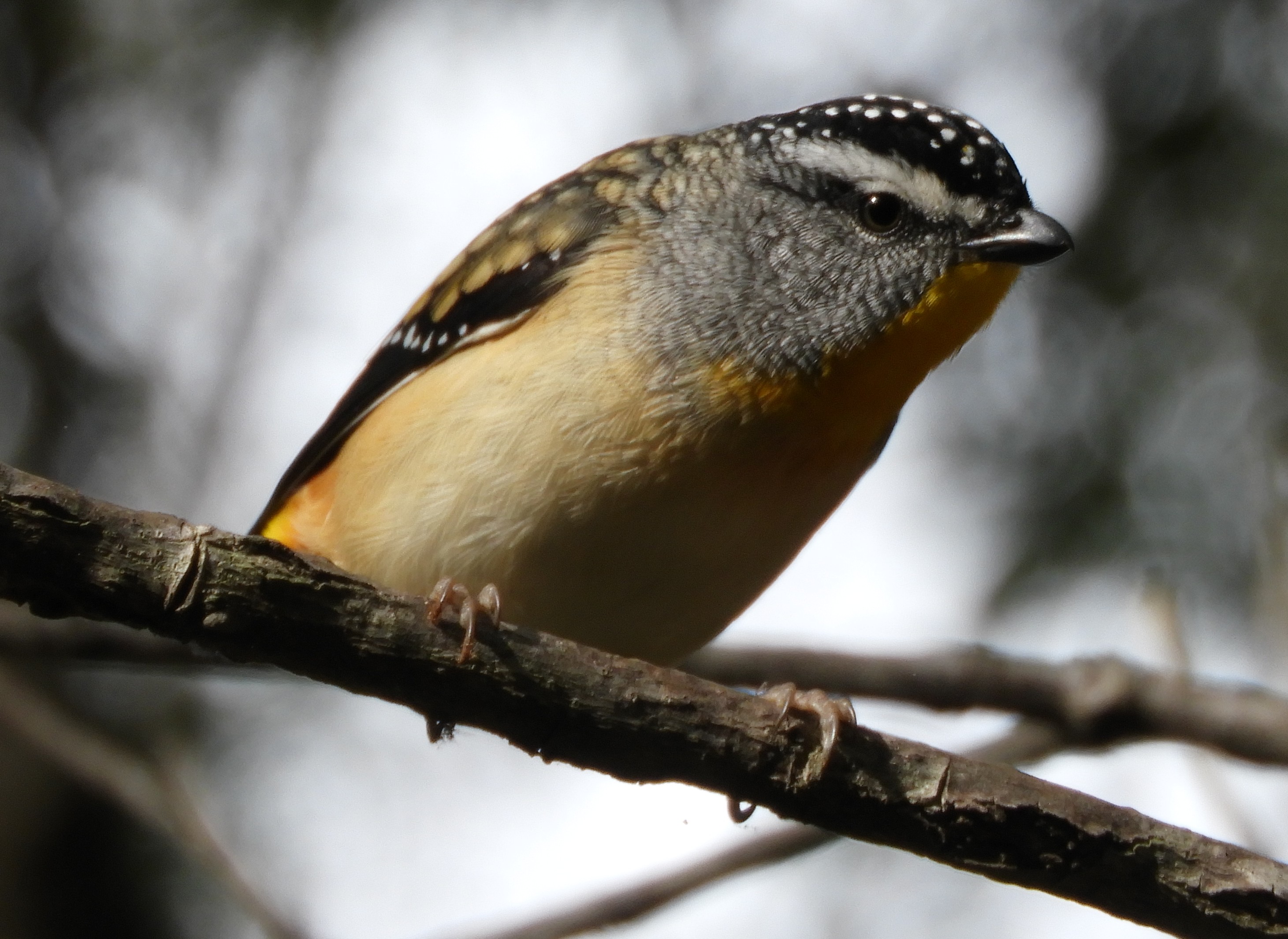
Did any dinosaur ever catch the sun as prettily as this?

Common name: Spotted Pardalote
Scientific name: Pardalotus punctatus
Approximate length: 10 cm
Date spotted: 22 July 2019 (Winter)
Location: Manly Dam National Park, New South Wales, Australia: 33°46’24.4″S 151°15’03.6″E
Hybrid Spotted Turtle-Dove with Crested Pigeon?
Today I spotted a couple of interlopers in an area that’s the regular hangout for a group of Crested Pigeons. One of the interlopers looks like a regular Spotted Turtle-Dove. Here’s a Crested Pigeon on the left and the interloper on the right:

But nearby, on the same wire, is this rather interesting individual:

The bird looks like a Spotted Turtle-Dove but has a bit of feathery decoration on its head. Could it be a cross-breeding of a Spotted Turtle-Dove with a Crested Pigeon? Or is it just a Spotted Turtle-Dove having a bad hair day?
Here’s another pic of the same Crested Pigeon as in the first photo:

Crested Pigeons are native to Australia. When they take off, you hear the distinctive whistling noise from their wings that is characteristic of many pigeon types. When I first saw these birds, I thought how typical it is that even the common pigeons in Australia are different from those I’ve seen in other part of the world.
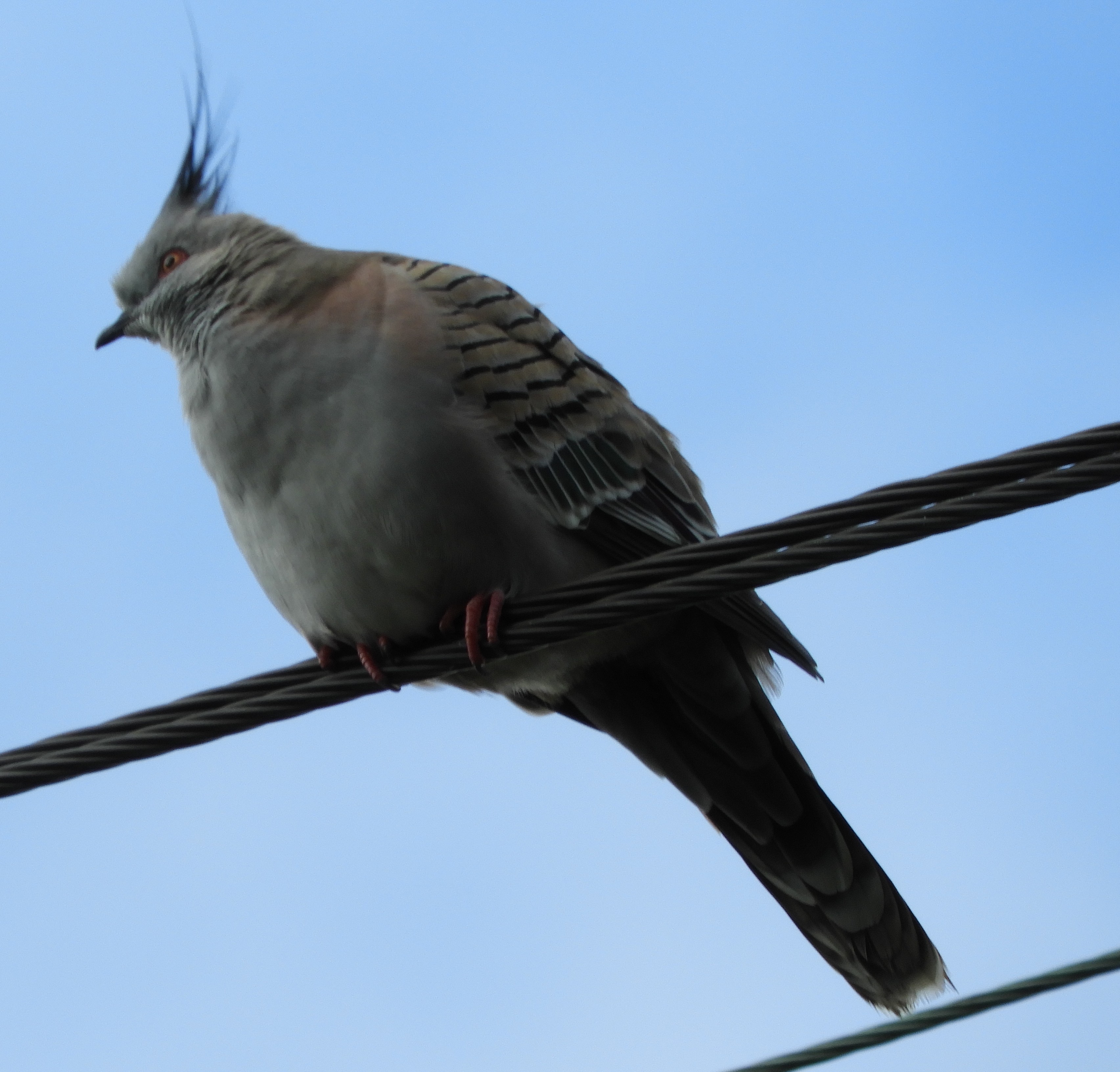
The group of birds later moved down to forage on the ground. Here’s one of the Crested Pigeons:

There was only one bird that looked like a Spotted Turtle-Dove with a vestigial crest. Here’s another pic of the same bird:
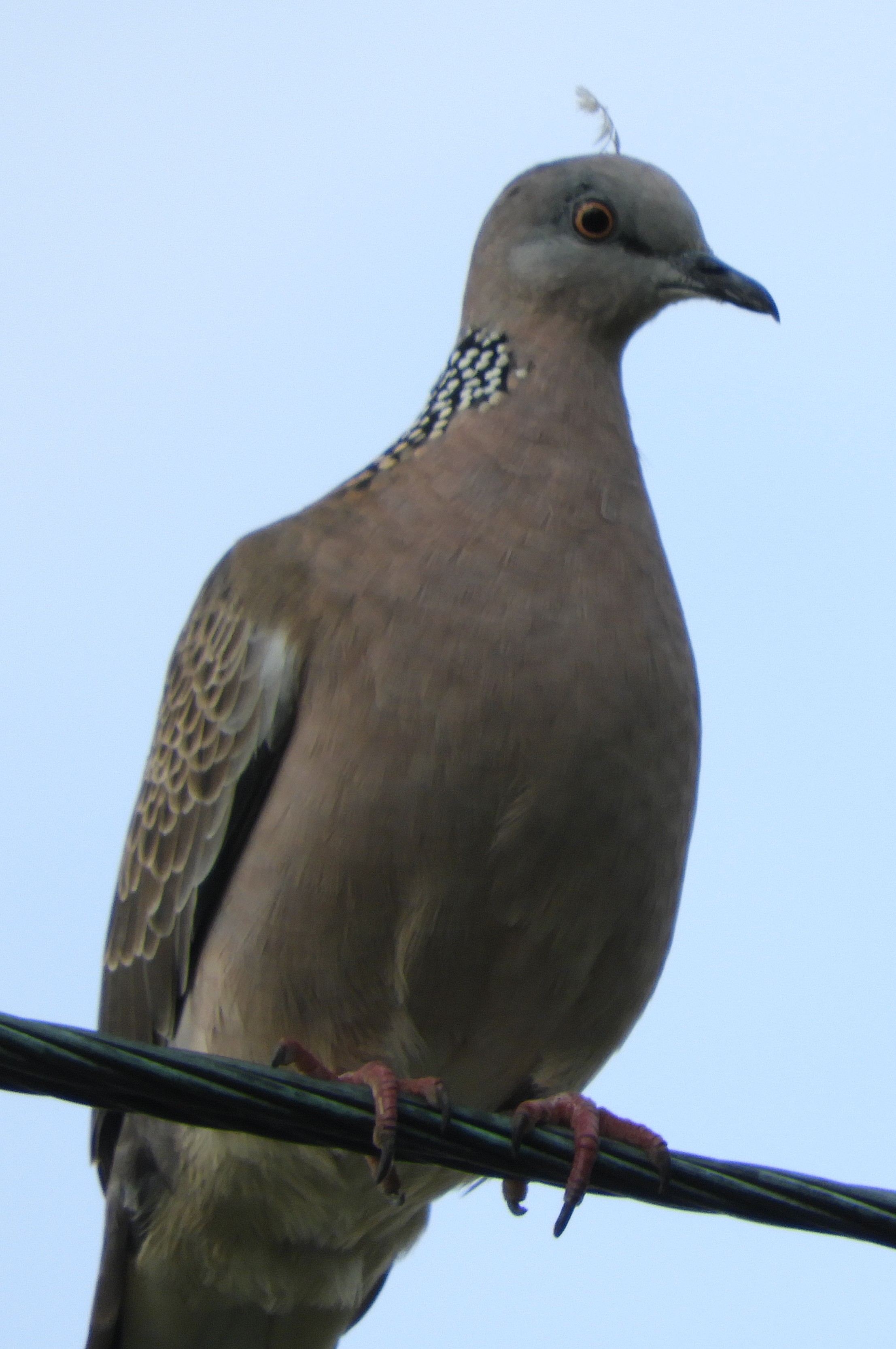
Spotted Turtle-Doves are not native to Australia. They were introduced in the late 1800s, and are seen as a pest in some regions of the country.
Pigeon or dove? The names “Crested Pigeon” and “Spotted Turtle-Dove” led me to wondering, not for the first time, what the difference is between a pigeon and a dove. I’ve asked various people over the years. Some say doves are white whereas pigeons are not. Other say that doves are smaller than pigeons. According to much of the internet, the two terms are interchangeable.
Here’s another view of the same bird with the miniscule crest (or perhaps it’s just a feather expressing its individual identity):

A wink, almost as if the bird knows that it’s presented me with a puzzle:

Spotted Turtle-Dove | Scientific name: Streptopelia chinensis | Approximate length: 30-32 cm
Crested Pigeon | Scientific name: Ocyphaps lophotes | Approximate length: 31-35 cm
Date spotted: 5 July 2019 (Winter)
Location: Allambie Heights, New South Wales, Australia
Birds on Magnetic Island
Last week I spent three days on Magnetic Island in North Queensland. Magnetic Island is a small island just offshore from Townsville. That’s approximately 2,000 km north of Sydney. The ferry ride from the mainland takes twenty minutes on the foot-passengers ferry, or forty minutes on the vehicle ferry. The island is a relaxing, lovely place to be.
Although I was on Magnetic Island for only a short while (two full days plus one evening and one morning) I encountered quite a few birds. Here are 16 of them, in rough order of size from small to large.
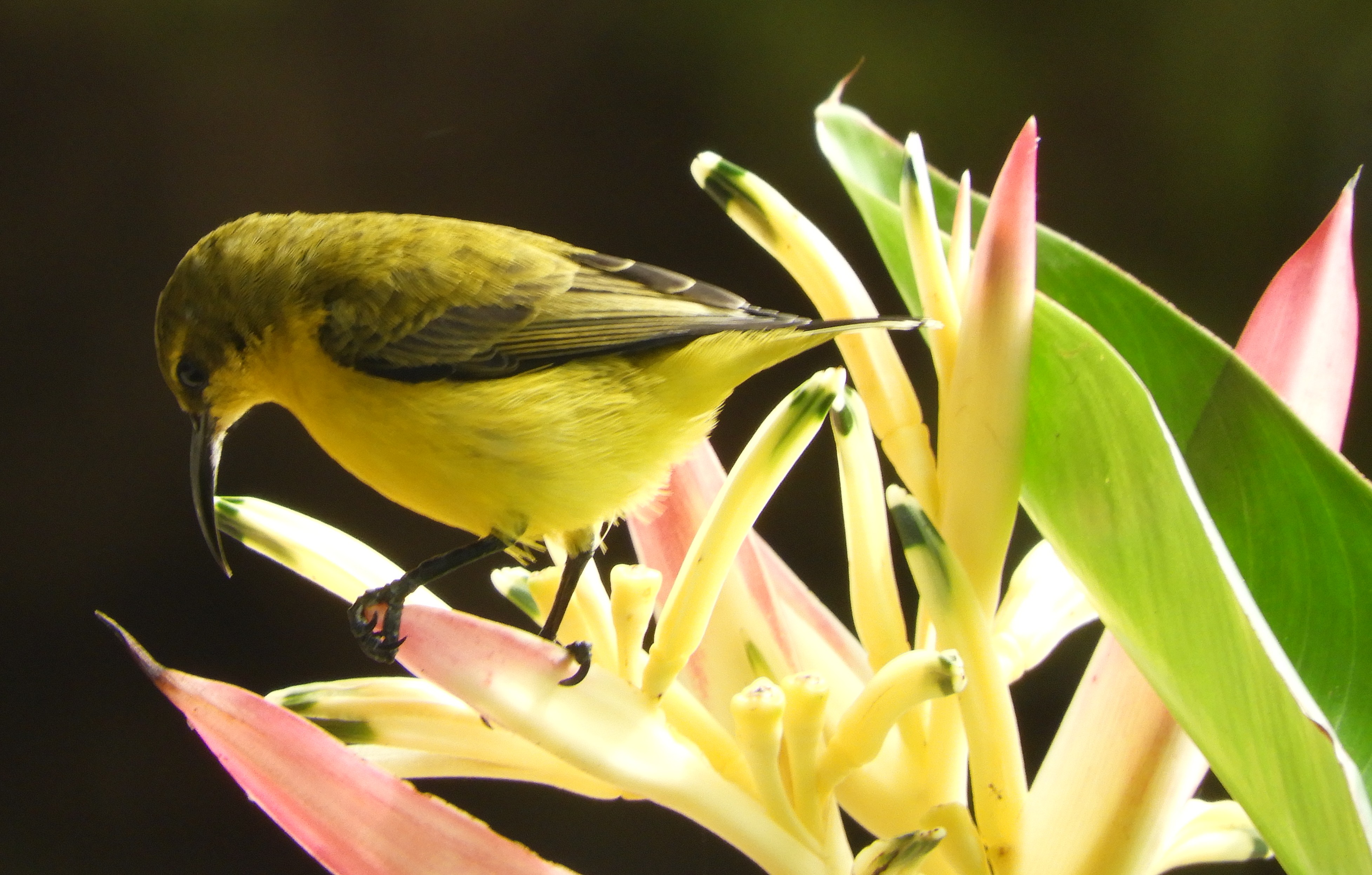
Yellow-bellied Sunbird
Scientific name: Nectarinia jugularis | Approximate length: 10-12 cm
This is a female Yellow-bellied Sunbird, spotted at Picnic Bay on Magnetic Island:

The beak of the Yellow-bellied Sunbird is long and curved, adapted for feeding from flowers:
White-breasted Woodswallow
Scientific name: Artamus leucorynchus | Approximate length: 16-18 cm
Three White-breasted Woodswallows clumping together. It was a chilly morning (well, chilly for the tropics, that is) so I guess they were sharing body heat:

Peaceful Dove
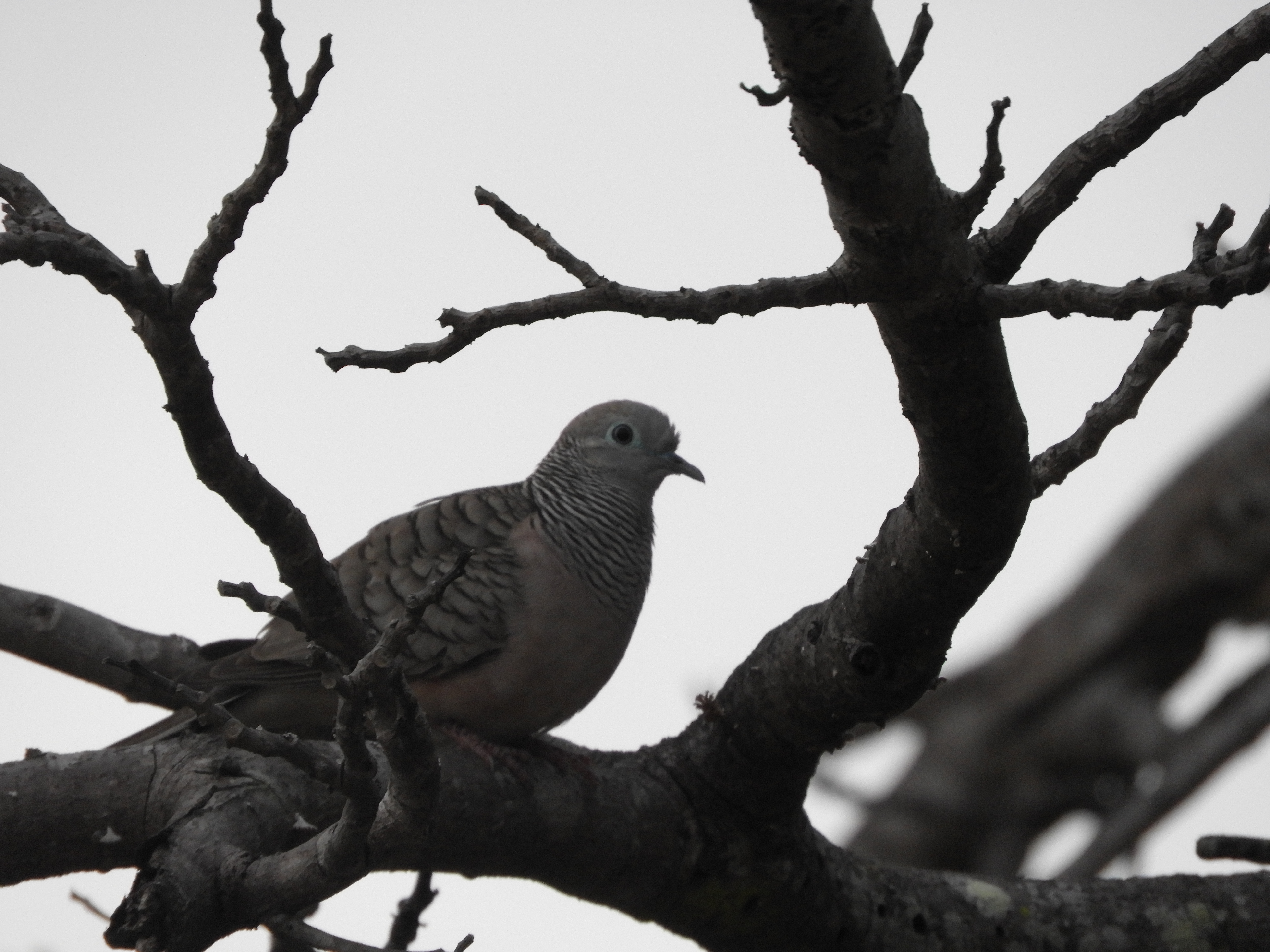
Scientific name: Geopelia placida (striata) | Approximate length: 20-24 cm
The Peaceful Dove is a small dove with an apricot tinge to its feathers. It has a soft, pleasant call as you can hear towards the end of this video:
Here’s a still shot of the same bird:
Rainbow Bee-eater
Scientific name: Merops ornatus | Approximate length: 23-27 cm
Given the name of this bird, I was particularly excited to snap one actually eating a bee!
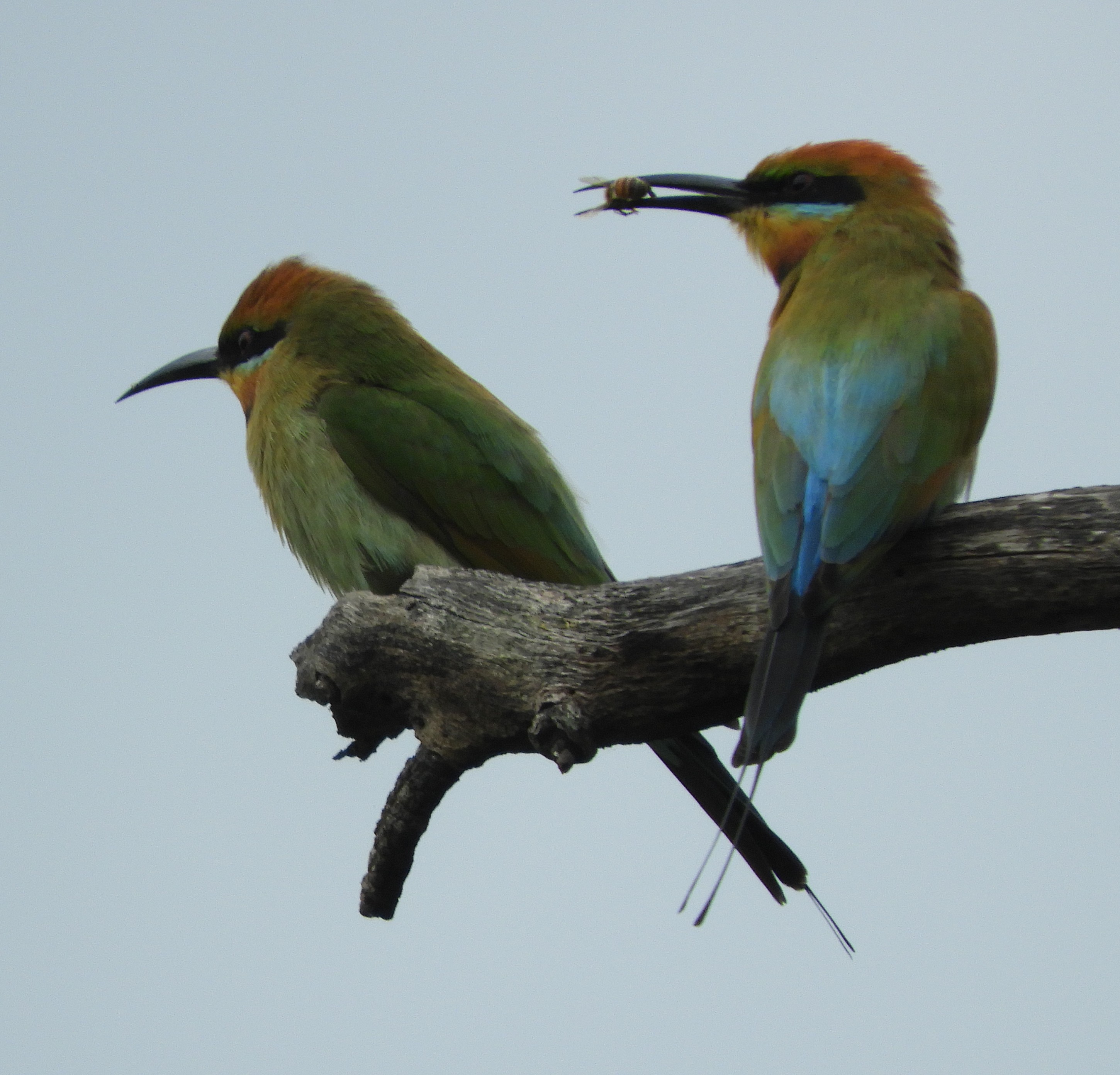
Here’s a bird in the act of catching a bug:
This trio of bee-eaters clumped cosily in the chilly air of the early morning. Even a tropical island can feel cold to inhabitants used to the warmer summer weather:

Rainbow Lorikeet
Scientific name: Trichoglossus haematodus | Approximate length: 26-31 cm
These colourful parrots are extremely noisy, especially when you have a tree full of them:
Spangled Drongo
Scientific name: Dicrurus bracteatus | Approximate length: 28-32 cm
Drongo – what a cute name! Yet in Australia if someone calls you a “Drongo” you want to look closely at them, as it’s a bit of an insult. It means they think you’re not all that bright.
This is a female Spangled Drongo, I think, as its eyes are brown whereas the male has red eyes:
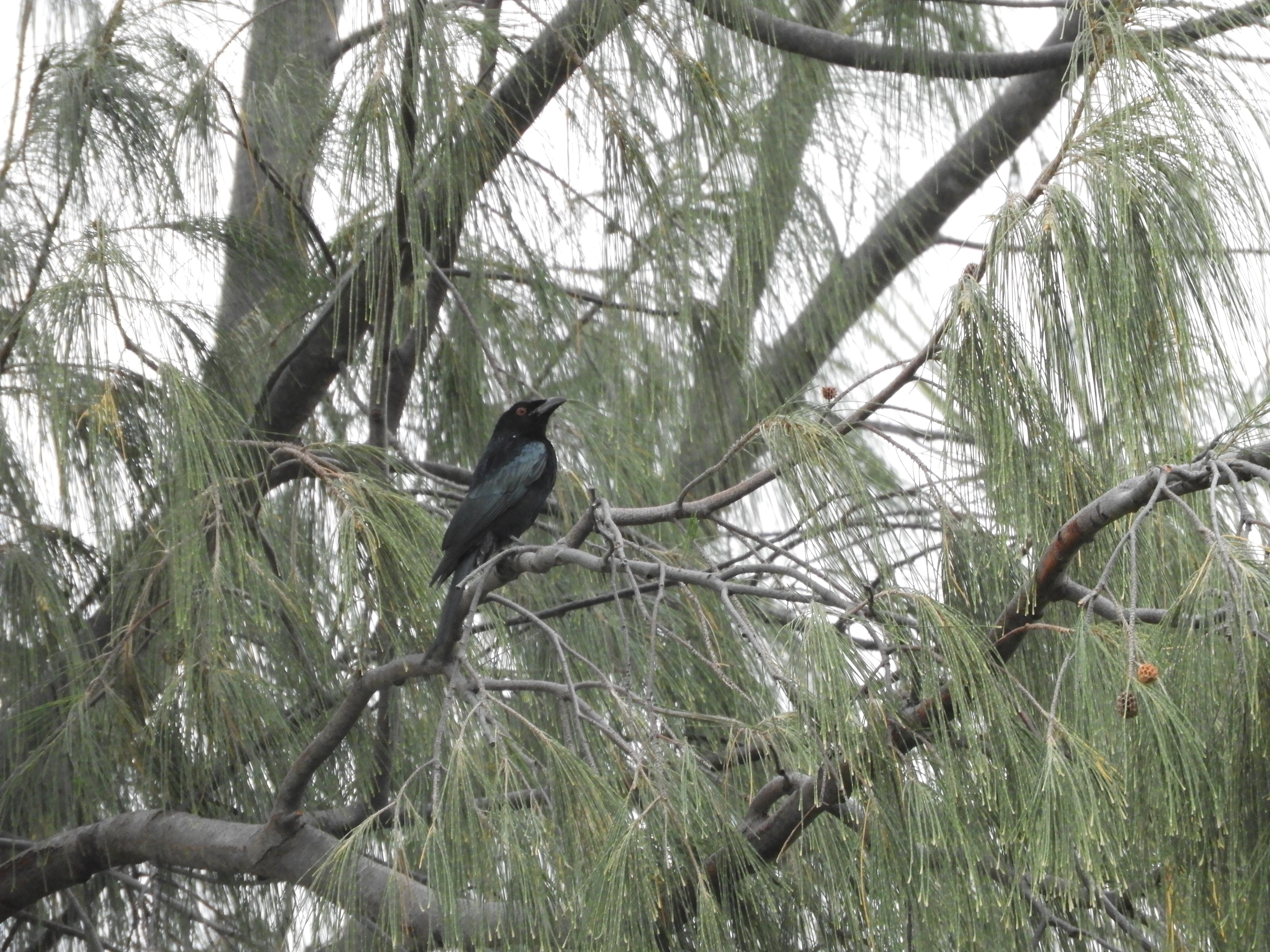
It’s easy to confuse these birds with crows and ravens. In fact, I heard Australian Ravens calling on the island, but didn’t get a photo of one.
The next photo is a pretty much a silhouette, but it shows off the Spangled Drongo’s forked tail:

Helmeted Friarbird
Scientific name: Philemon buceroides | Approximate length: 32-37 cm
This Helmeted Friarbird sat quietly on a branch listening to the birds all round. When it tilts its head you can see the odd-shaped knob on top of its beak:
Here’s another peering through the foliage:

Galah
Scientific name: Cacatua roseicapilla | Approximate length: 38 cm
Galahs are pretty pink and grey parrots. Australians sometimes call someone a “silly galah”, which I think is a slightly more affectionate term than “drongo”! I’ve seen Galahs in the Sydney area as well as up here on Magnetic Island. This one was picking up seeds on the ground. There’s another Galah nearby, which you can hear chirping to its mate towards the end of the video:
Here’s a still photo:

Masked Lapwing, also called a Spur-winged Plover
Scientific name: Vanellus miles | Approximate length: 35-39 cm
Masked Lapwings are strange-looking birds with yellow faces that seem to have been stuck on as an after-thought.
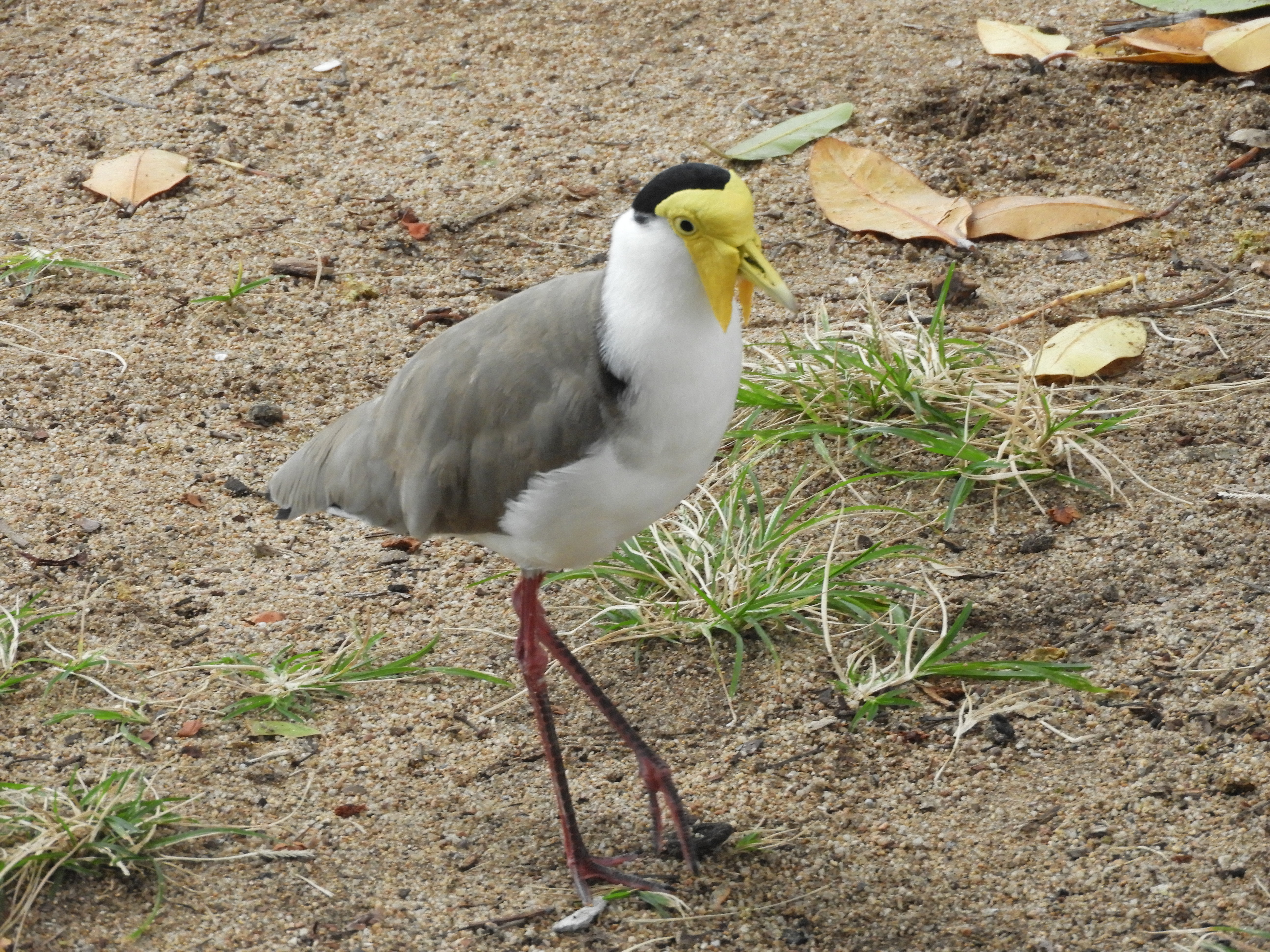
Their alternative name of “spur-winged” is apt, because they have hooks on their wings, one on each, which they use as weapons, stretching the wings then dragging back to wound their enemy.
In the next photo, the bird at the back is a juvenile. Its legs are brown instead of the red of the adult, and its mask has not yet fully developed:

Blue-winged Kookaburra
Scientific name: Dacelo leachii | Approximate length: 38-42 cm
The kookaburras up north are different from the Laughing Kookaburras that we see around Sydney. Blue-winged Kookaburras look leaner and meaner. They have bright blue markings on their wings, and they lack the wide dark strip that marks the eyes of Laughing Kookaburras. Here’s a Blue-winged Kookaburra on Magnetic Island:
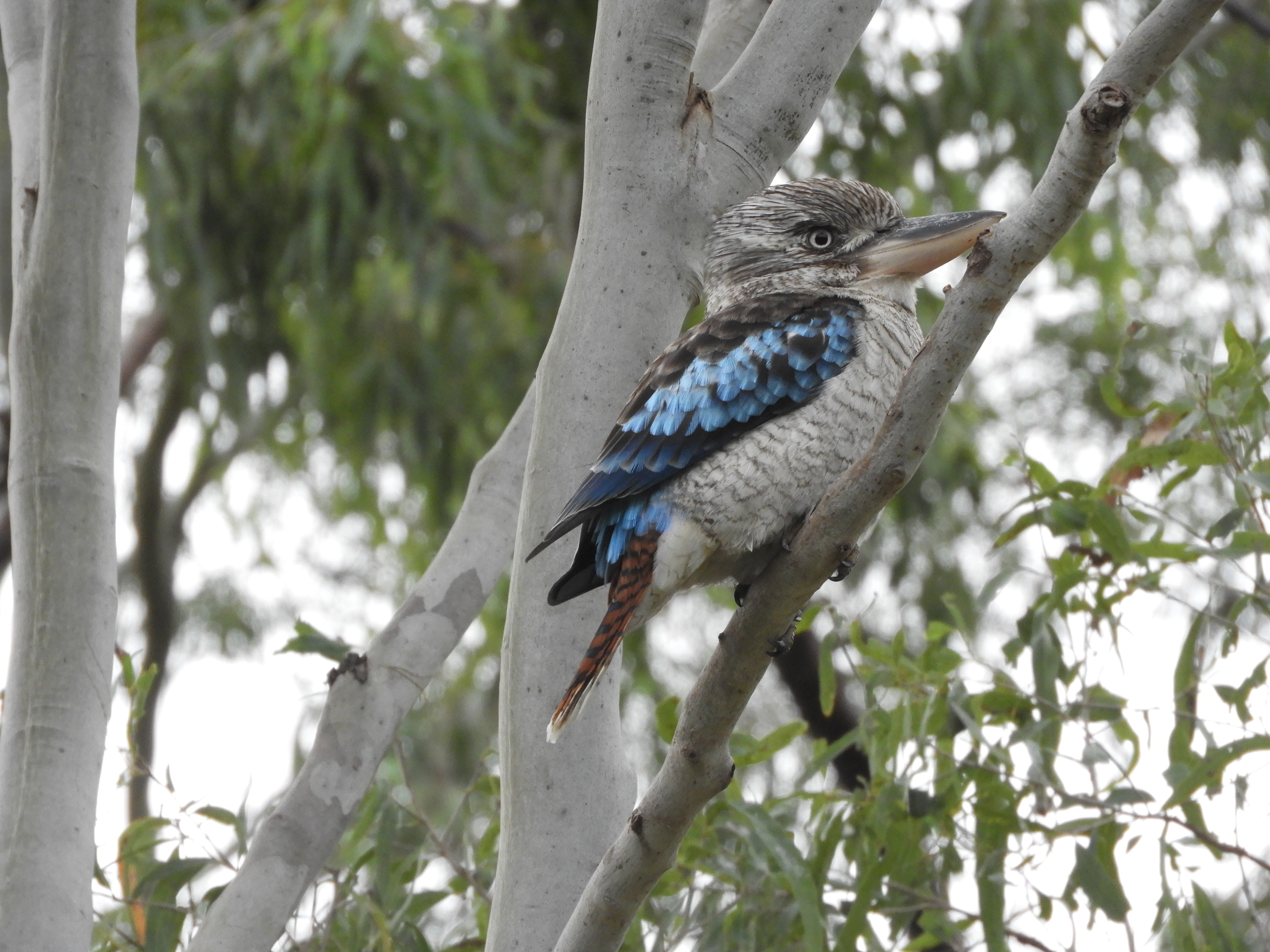
They do look just as silly as our local birds when they gaze at us straight on:

The cackling laughter of the Blue-winged Kookaburras seemed harsher and higher pitched to me. I didn’t manage to record any of the noise. This video shows a bird sitting on the top of a high post, swaying backwards and forwards as they do to retain their balance:
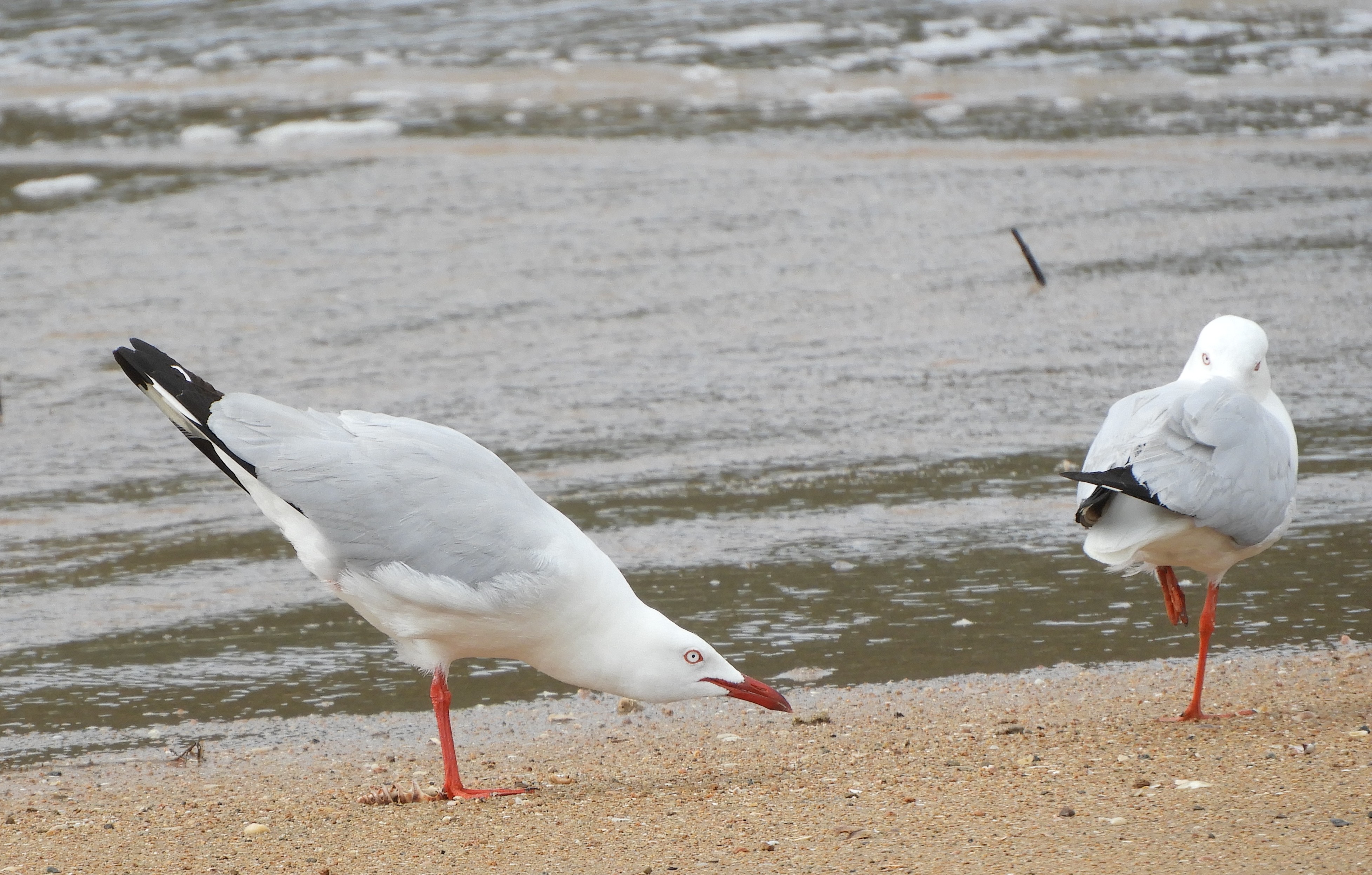
Silver Gull
Scientific name: Larus novaehollandiae (also called Chroicocephalus novaehollandiae) | Approximate length: 38-42 cm
A Silver Gull warning off another Silver Gull:
Sulphur-crested Cockatoo
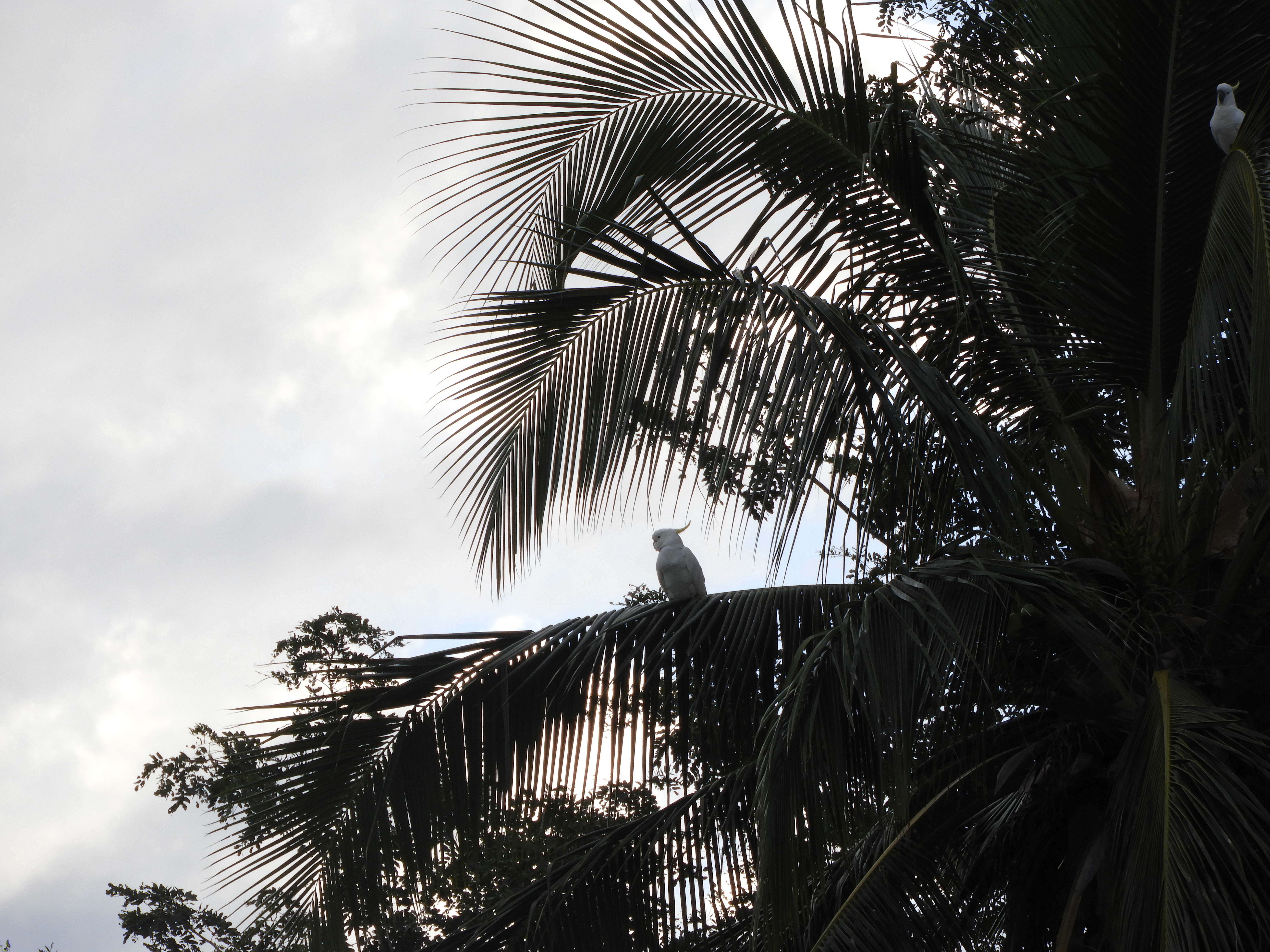
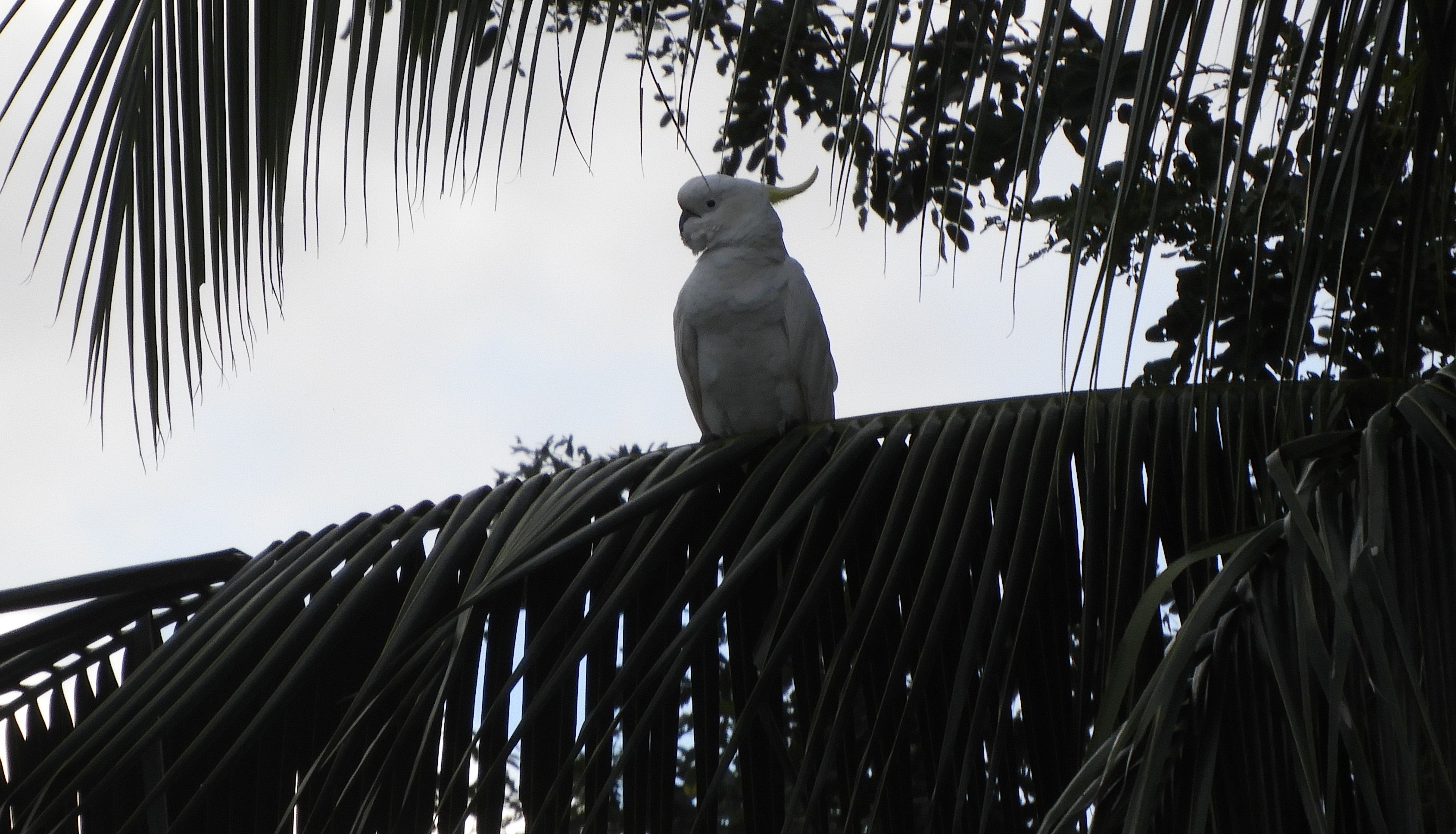
Scientific name: Cacatua galerita | Approximate length: 45-50 cm
Sulphur-crested Cockatoos abounded on the island. Here are a couple peeking out from the branches of a huge palm tree:
A closer look at one of the birds:
Bush Stone-curlew
Scientific name: Burhinus grallarius | Approximate length: 55-60 cm
If you’re lucky enough to be on Magnetic Island at night, you’ll hear an eerie wailing in the lonely hours. Report has it that the local police regularly receive calls from visitors to report screaming in the night. Don’t be alarmed. It’s just the Stone-curlews.
Bush Stone-curlews have amazing camouflage, even during the day. Spot the bird if you can (click on the image to zoom in):
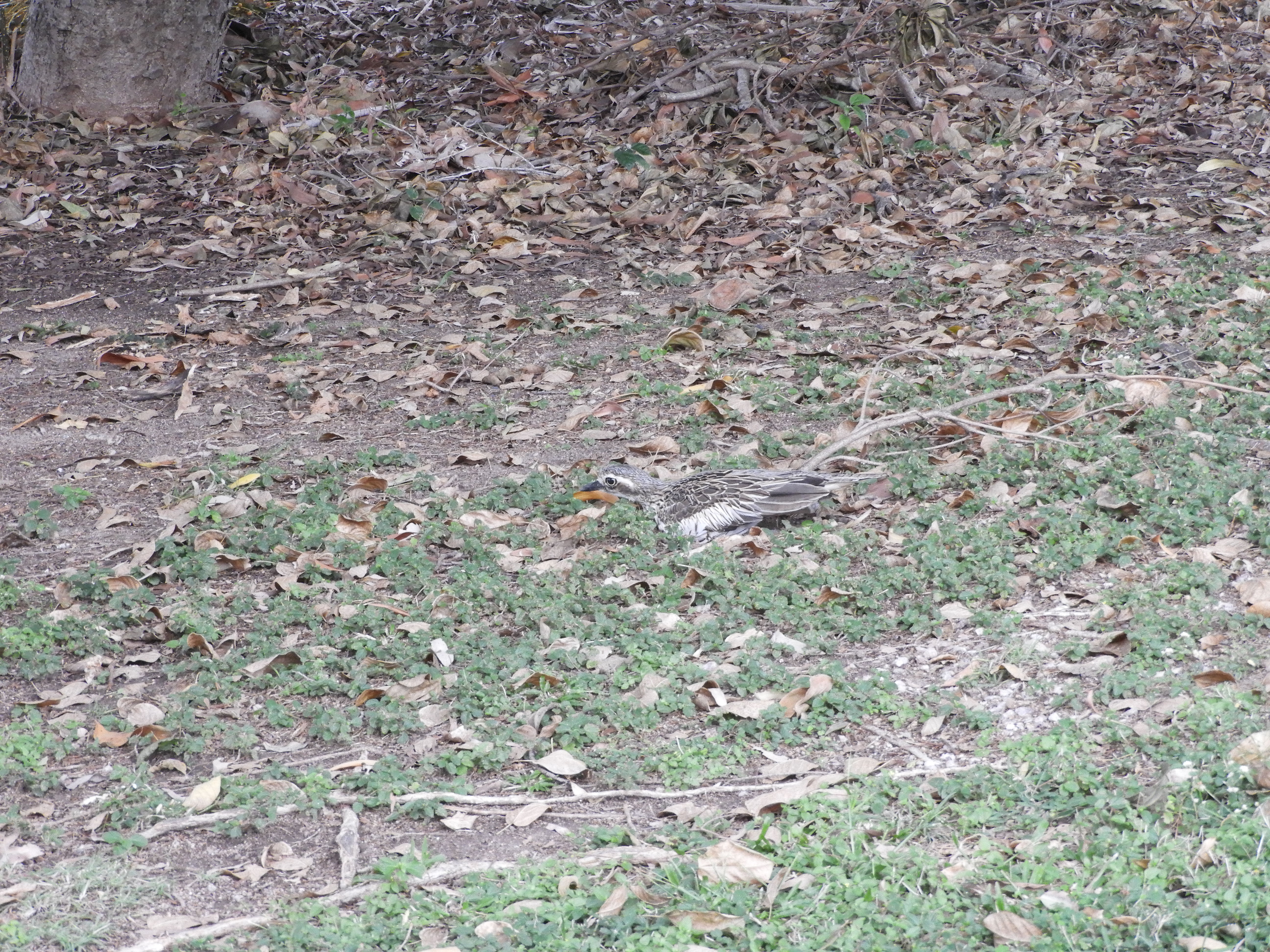
Here’s a close-up picture of the same bird:

Bush Stone-curlews have lovely big eyes:

Bush Stone-curlews tend to move slowly and timidly, then make a quick dash. Here’s one moving slowly along a fence:
Brahminy Kite
Scientific name: Haliastur indus | Approximate length: 55-60 cm; wing span 1.2-1.3 m
I watched this Brahminy Kite for a while early one morning. The bird was perched on top of a very high post above a stone jetty. I had to use full zoom on my camera, and the resolution isn’t wonderful. Still, the photo gives a good idea of the bird’s appearance:
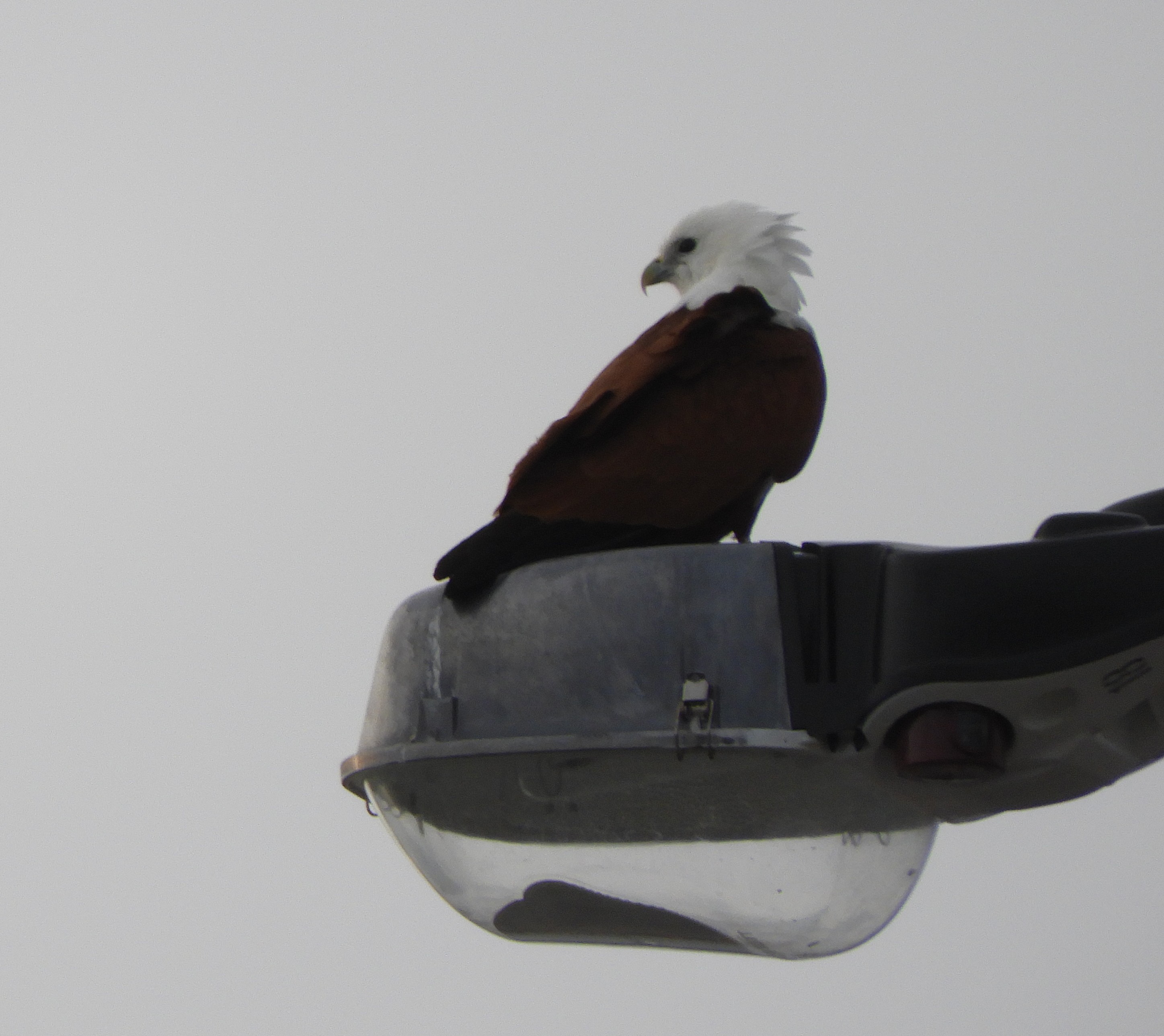
These kites are common around the northern shores of Australia. At first I confused the bird with an eagle, but then I noticed the striking white chest and head feathers, and the rich chestnut colour on the back and wings, which are characteristic of Brahminy Kites. Here’s a photo of the bird flying – again, fuzzy, but you get the idea of the shape and colour:

Whistling Kite
Scientific name: Haliastur sphenurus | Approximate length: 50-60 cm; wing span 1.2-1.5 m
This bird was high in the sky, circling above the ocean and the hills:
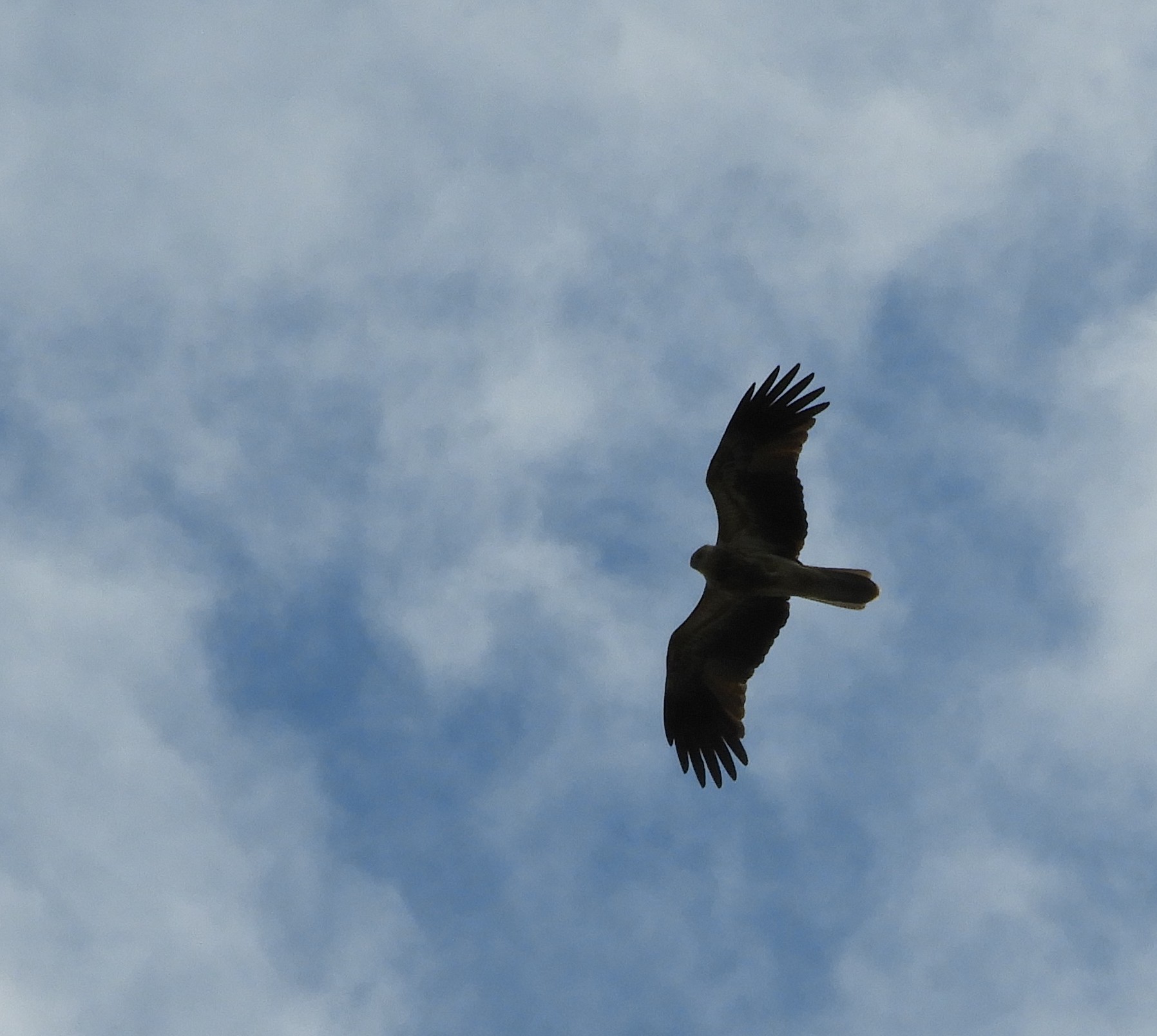
Here’s the same bird from another angle:

Australian White Ibis
Scientific name: Threskiornis molucca | Approximate length: 65-75 cm
These ibises are affectionately known as “bin chickens” because in cities they spend a lot of time raiding dustbins. This group was prowling around the beach area, no doubt in search of scraps from the nearby restaurants:

Koala
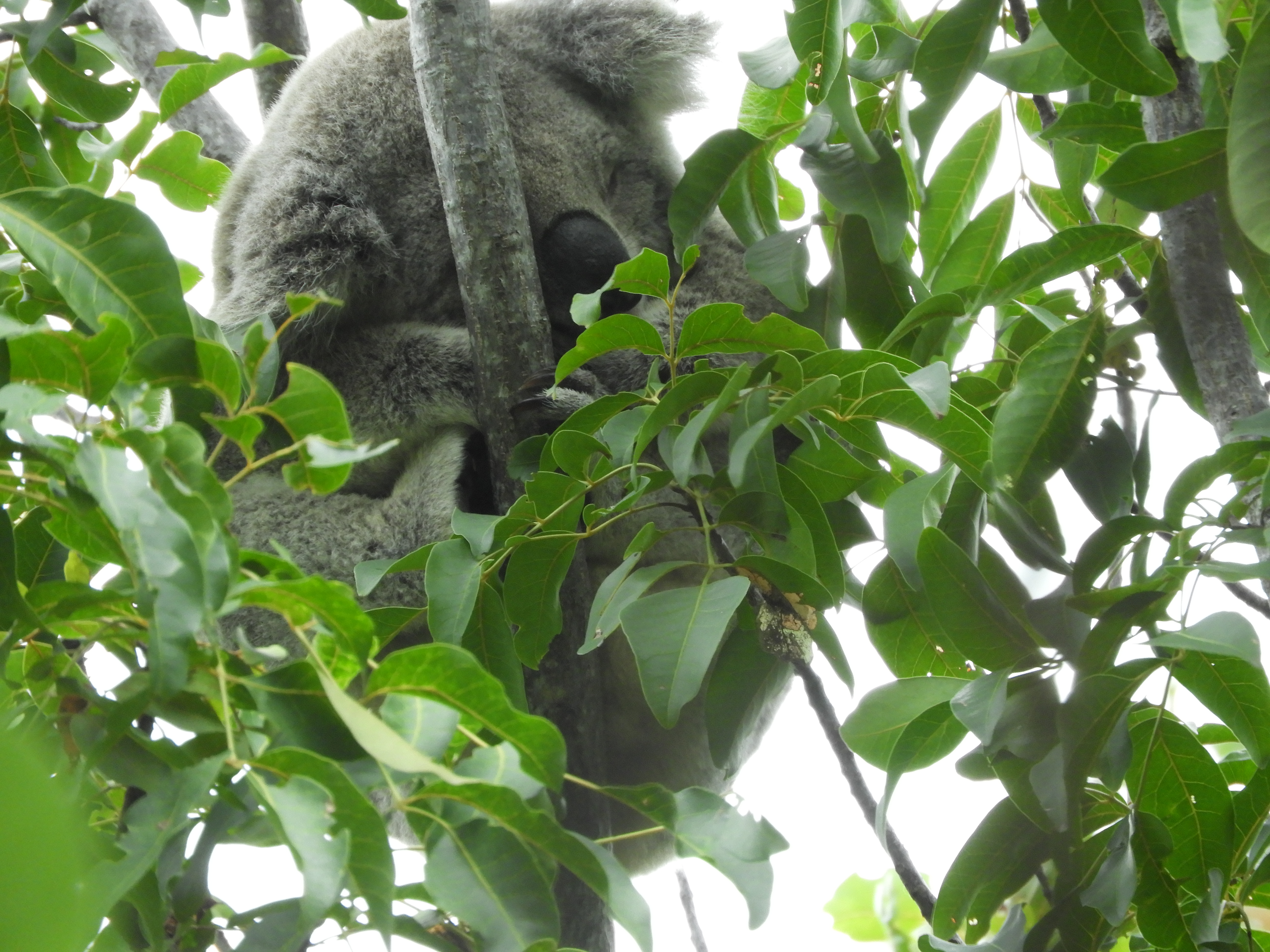
Not a bird! But I can’t leave a post about Magnetic Island without showing a picture of a Koala. The island has the largest population of wild koalas in Australia:
I hope you’ve enjoyed my post about the lovely Magnetic Island!
Little Corella sipping water from roof guttering
From a distance, Little Corellas look very similar to Sulphur-crested Cockatoos. It’s only when you get up close that you notice the differences. Corellas do have a crest on their heads, but it’s smaller than that of their sulphur-crested cousins and doesn’t have a yellow flare.
Up until a few months ago, it was unusual to see these birds in our neighbourhood on the east coast of Australia, but I’ve seen them three or four times recently. I filmed this one sipping water from the gutter on the roof of a house:
Little Corellas have big, rubbery-looking blue patches around and under their eyes. The first time I saw one of these birds, for a couple of seconds I thought it was a very sick Sulphur-crested Cockatoo!
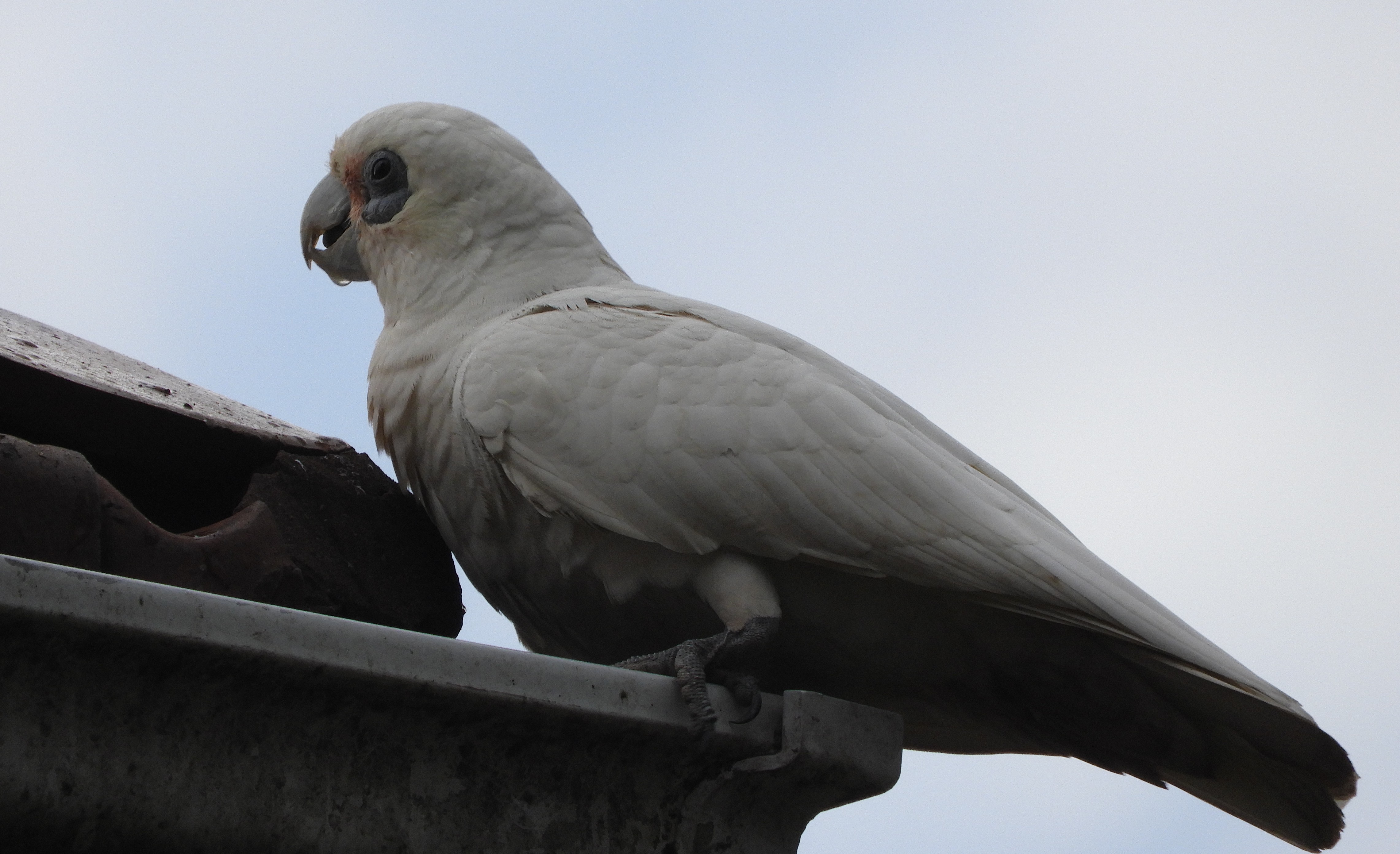
Often the crests on their heads are laid flat, as in the above photo. Here’s one with a raised crest, giving it that typically cheeky cockatoo look:

I’m delighted to add this bird to my posts about the various types of cockatoo that I’ve seen in our neighbourhood.
Common name: Little Corella
Scientific name: Cacatua sanguinea
Approximate length: 36-39 cm
Date spotted: 26 May 2019 (Autumn)
Location: Allambie Heights near Sydney, Australia
Crested Tern chilling out in Curl Curl
Amongst the wheeling Silver Gulls, joggers, and fishermen, a Crested Tern stood gazing over the rocks and sea.

I was walking along the cliff path when I passed the bird. Fifteen minutes later I was on my way back. The bird was still there. This picture shows the crest from which the bird’s name comes:
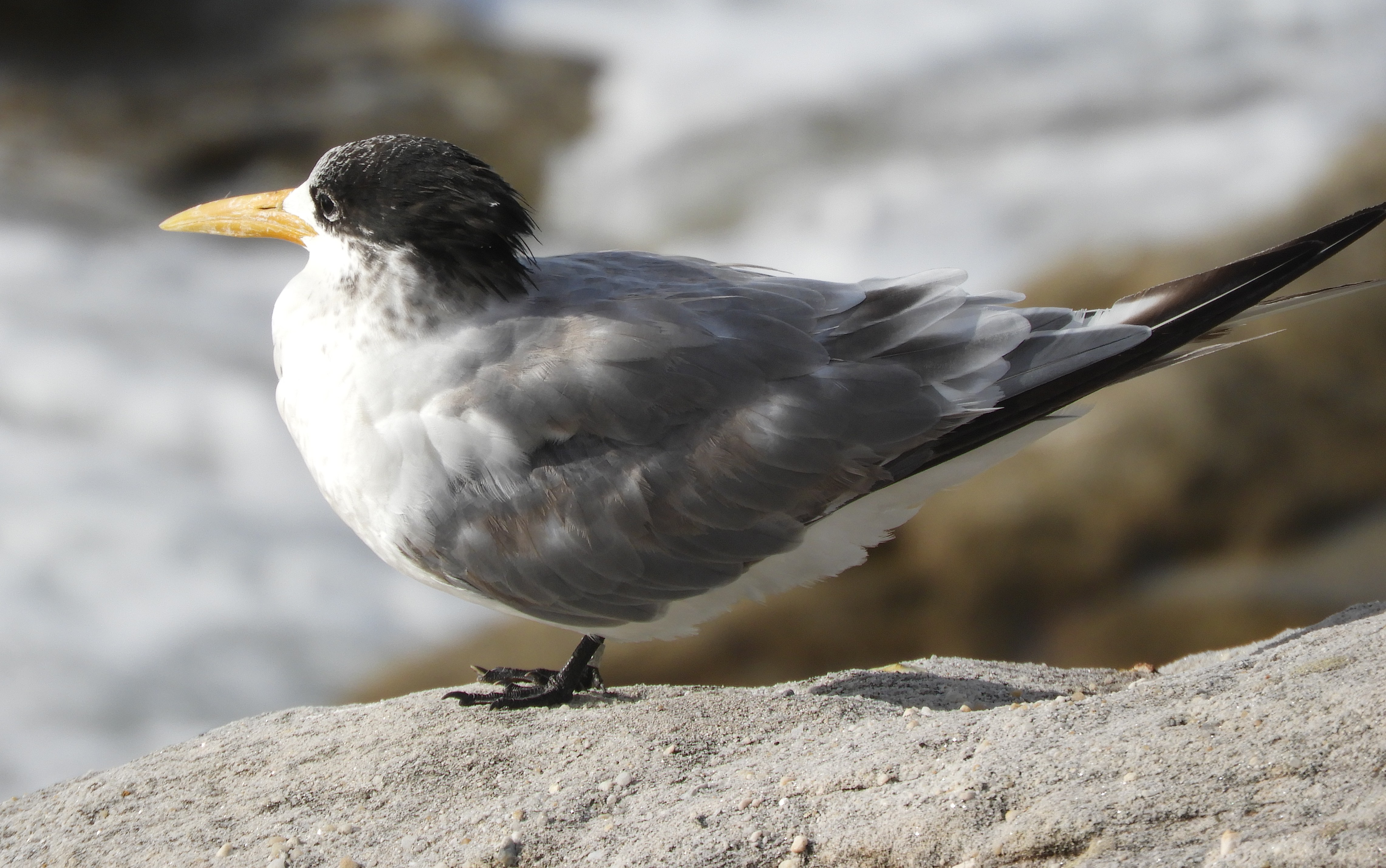
Crested Terns are a common sight around the shores of Australia. You may see them sitting on the sand with the gulls, or darting over the waves and diving to catch a fish. These are the seas and cliffs of Curl Curl where the bird and I were chilling out:

Common name: Crested Tern
Scientific name: Sterna bergii
Approximate length: 45 cm
Date spotted: 22 April 2019 (Autumn)
Location: Curl Curl, New South Wales, Australia: 33°46’36.9″S 151°17’36.8″E
Little Black Cormorant catching the sun
I went for a late afternoon walk near Spit Bridge today, and saw this Little Black Cormorant catching the last of the sun:
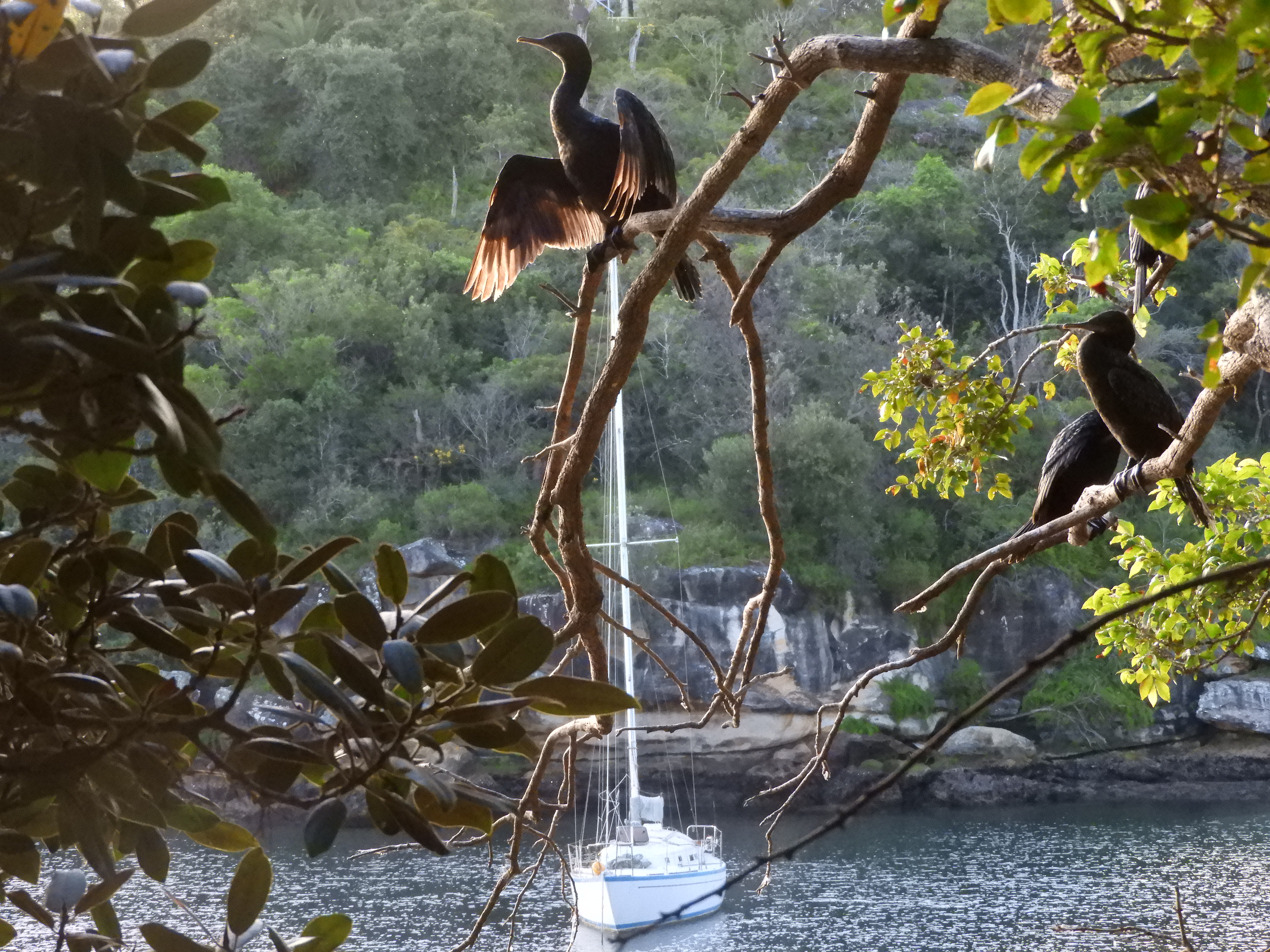
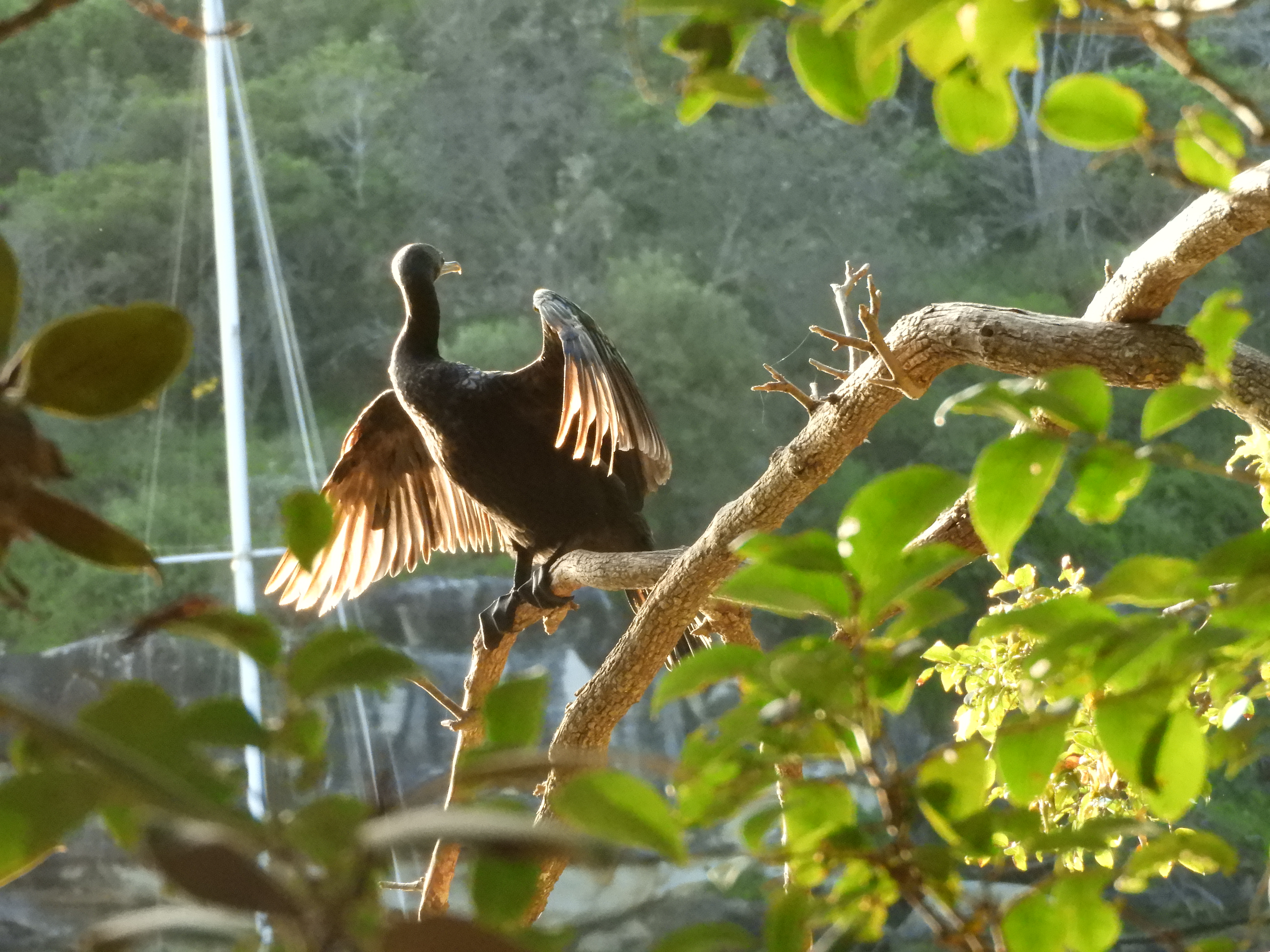
In the next photo you can see the bird’s webbed feet nicely. Cormorants are very fast and agile under water, where they catch their prey. Their feathers are not waterproof, which is why they spend so much time with their wings spread out to dry.
Common name: Little Black Cormorant (see other cormorants)
Scientific name: Phalacrocorax sulcirostris
Approximate length: 65 cm
Date spotted: 20 April 2019 (Autumn)
Location: Near Middle Harbour, Clontarf, New South Wales, Australia: 33°48’07.8″S 151°15’00.2″E
Wattlebirds’ tree bath
I’ve seen various birds dive through the treetops to clean their feathers. From the small New Holland Honeyeaters to the much larger King Parrots., they do it in the early morning to catch the dew, or after a rainfall. Today I managed to catch a couple of Wattlebirds performing their ablutions:
Common name: Little Wattlebird (see more pics of this bird)
Scientific name: Anthochaera chrysoptera
Approximate length: 30 cm
Date spotted: 20 April 2019 (Autumn)
Location: Manly Dam National Park, New South Wales, Australia: 33°46’16.5″S 151°14’53.5″E
Moody magpie on the Manly to Spit Bridge walk
Today I walked a small part of the trail that runs from Manly to Spit Bridge, on the east coast of Australia near Sydney. It was a lovely calm morning, early enough to avoid the late-autumn heat promised for the rest of the day. I came across a magpie perched on a tree. The early morning light combined with a recent burn in the area make for a nice moody, naturally monochrome shot:
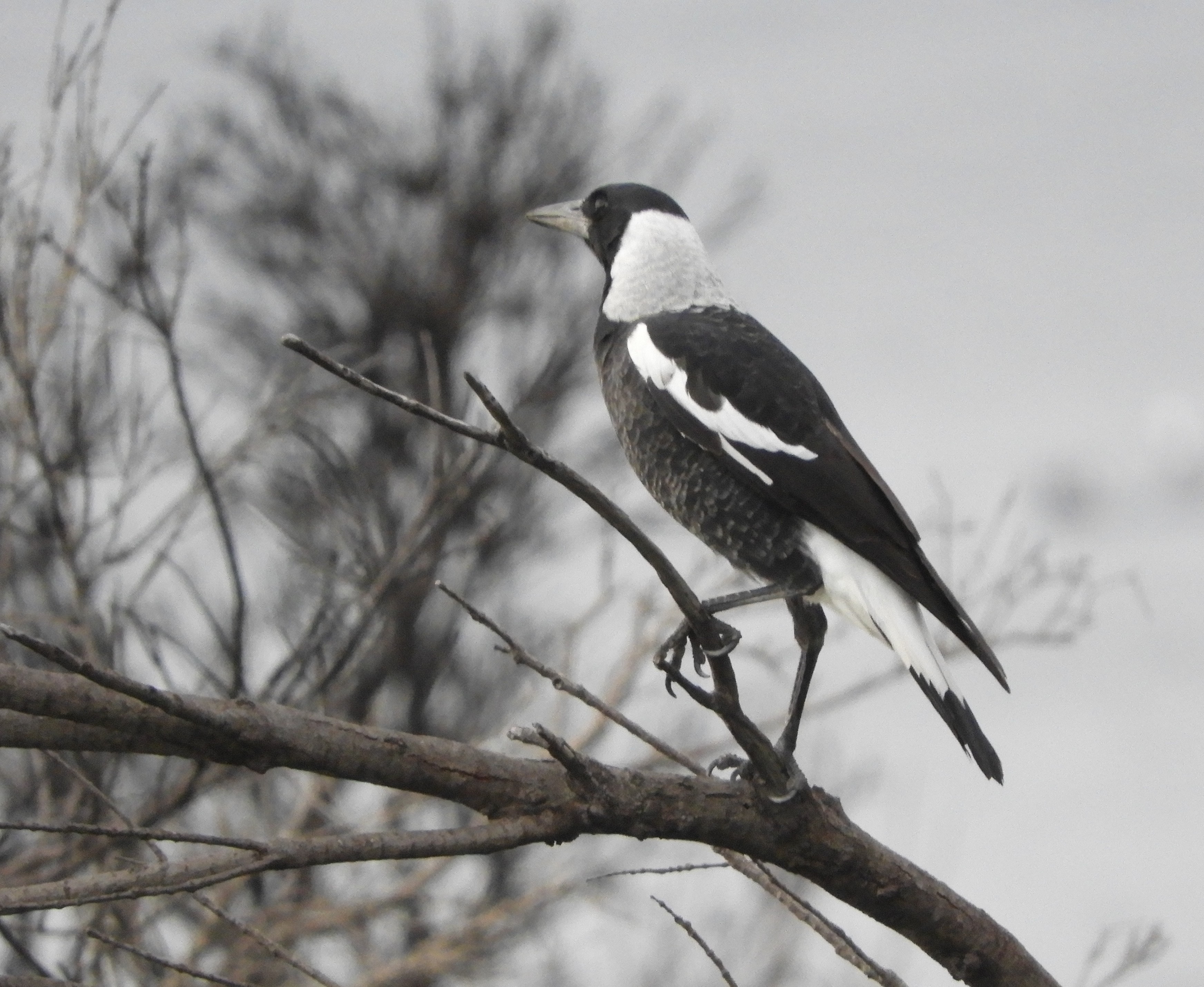
Common name: Australian Magpie
Scientific name: Gymnorhina tibicen
Approximate length: 40 cm
Date spotted: 24 March 2019 (late summer)
Location: Reef Beach Track, Balgowlah Heights, near Sydney: 33°48’29.7″S 151°16’27.4″E
Just a few minutes’ walk further along the track, I saw this magnificent view. The front stretch of water is part of Sydney Harbour. In the distance is Manly wharf. The thin strip of land is Manly town centre, with the Pacific Ocean in the distance beyond the town:

I wonder if the magpie was enjoying the view as much as I did.
Wakeful Southern Boobook at Manly Dam
A little Southern Boobook was wide awake when I walked beneath its tree this morning. This is the first time I’ve seen one of these owls, though I’ve heard them hoot during the night hours.
I sat down on the ground and watched the bird for a while. It wasn’t disturbed by my presence, and grew quite sleepy, as you can see in the next video. At the end of the video I zoomed out so that you can see a bit of the bush surrounding the bird:
Southern Boobooks are quite small, at around 30cm in length from head to tail. Compare that to the Powerful Owl, which is around 65cm.
Here’s a still photo of the bird, showing a deep yellow eye and fluffy white feathers above its beak:
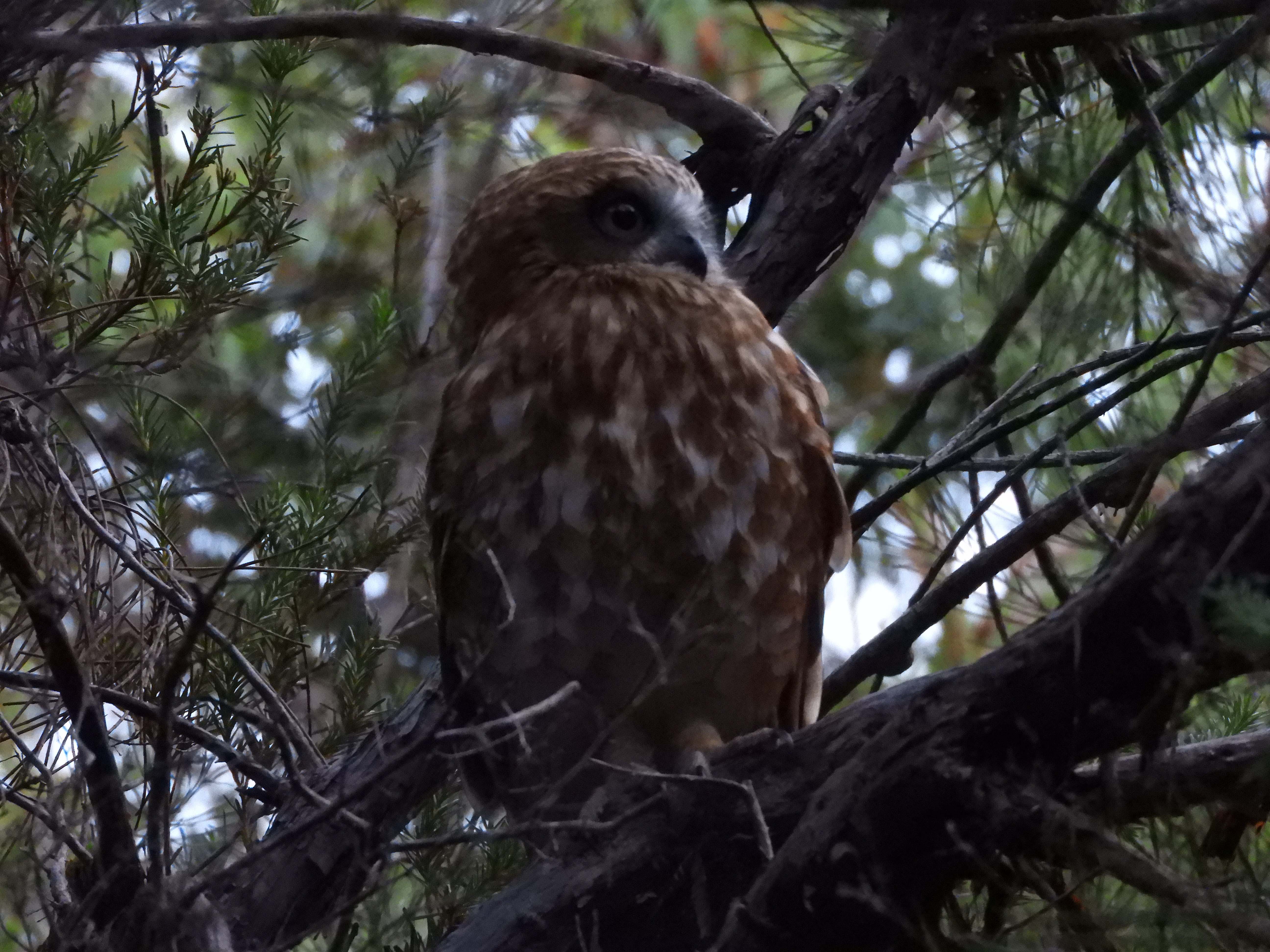
Southern Boobooks are quite common. They feed mostly on insects and spiders, but they do take the occasional small bird or animal too. Here’s a closeup of the owl’s face:

Common name: Southern Boobook
Scientific name: Ninox novaeseelandiae
Approximate length: 30cm
Date spotted: 20 March 2019 (late summer)
Location: Manly Dam National Reserve, near Sydney: 33°46’30.0″S 151°15’09.2″E


 Sydney Birder