Lace monitor lizard in a tree
I was walking along, my gaze in the treetops as usual, looking and listening for birds. I heard a frantic scurrying on the path ahead of me, and was just in time to see a lace monitor lizard scramble onto a tree. The lizard hid for a while at the base of the tree, observing me:
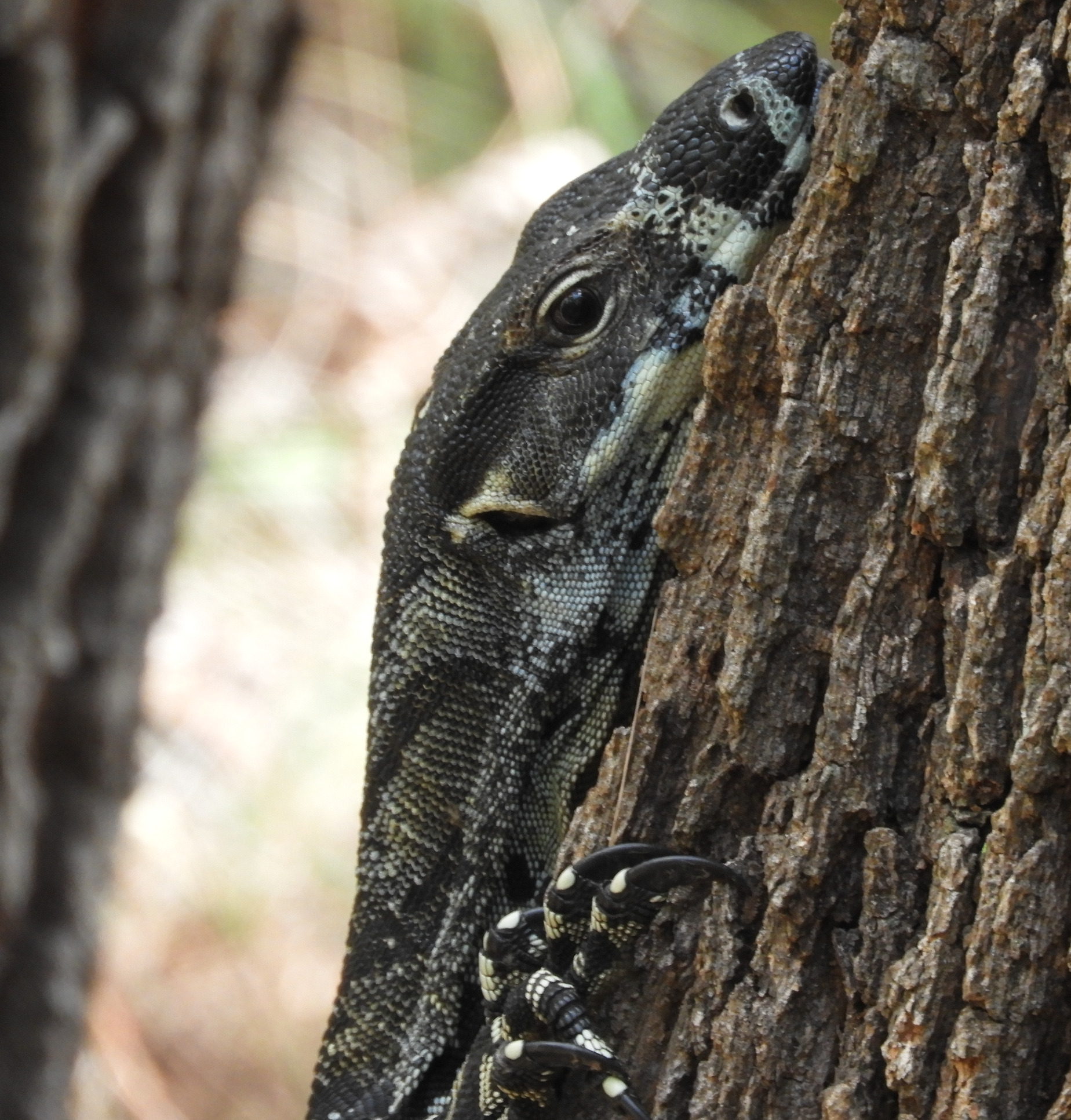
I was intrigued and a little nervous. This was a big lizard, about as long as I am tall. I’m close to 6 foot! Lace monitors are also known as tree goannas (Varanus varius). They can grow to two metres (seven feet) in length and weigh up to 14 kg (30 pounds). They’re predators, living off birds and eggs, other reptiles, and small animals.
I encountered this one a couple of days ago in Manly Dam National Park (map), on the east coast of Australia slightly to the north of Sydney.
The monitor made its way slowly up the tree, flicking its forked tongue in and out, as you can see in this video:
In the following picture, the lizard has reached a safe height and paused to observe me again:
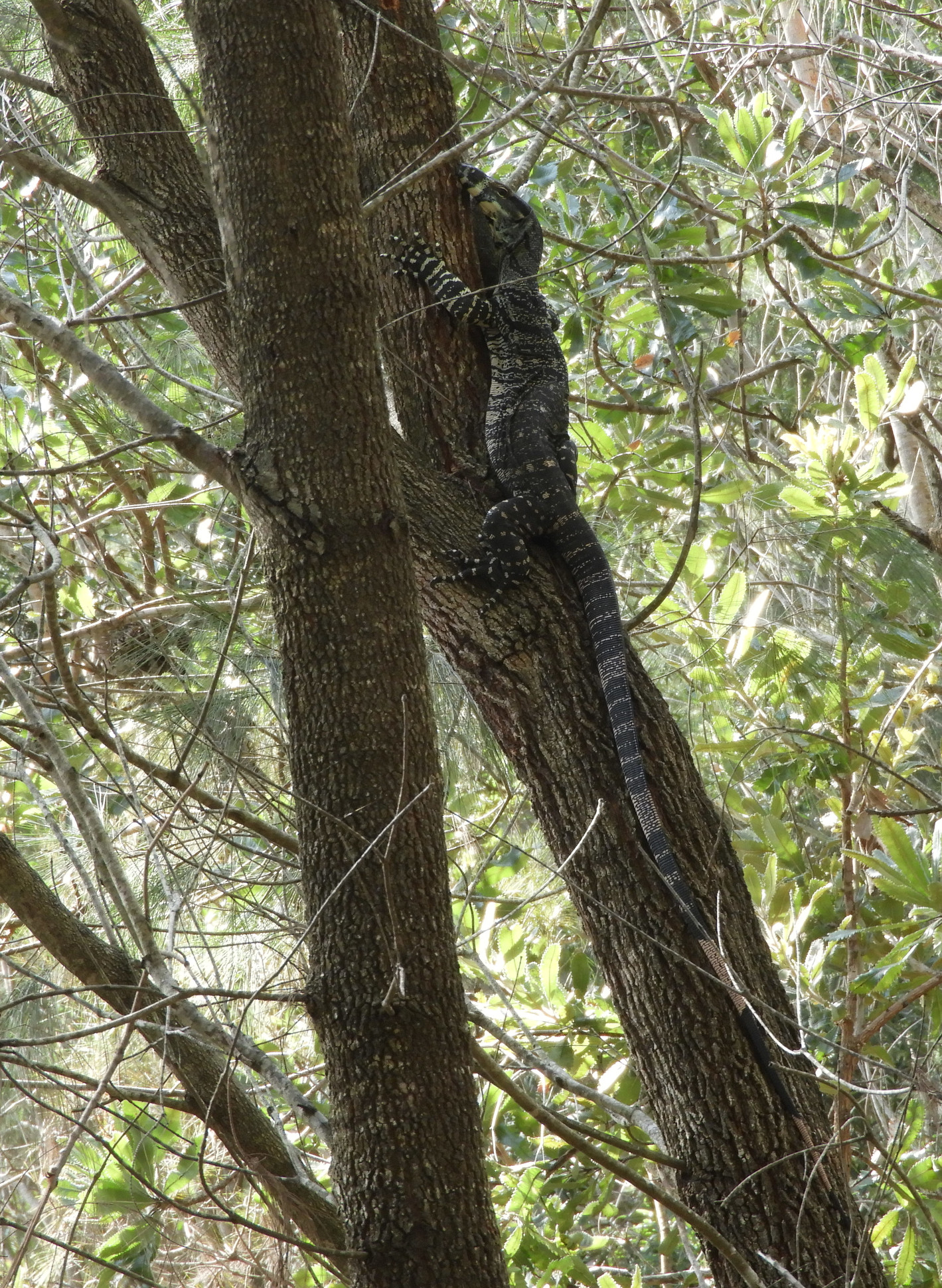
Look at those hands!
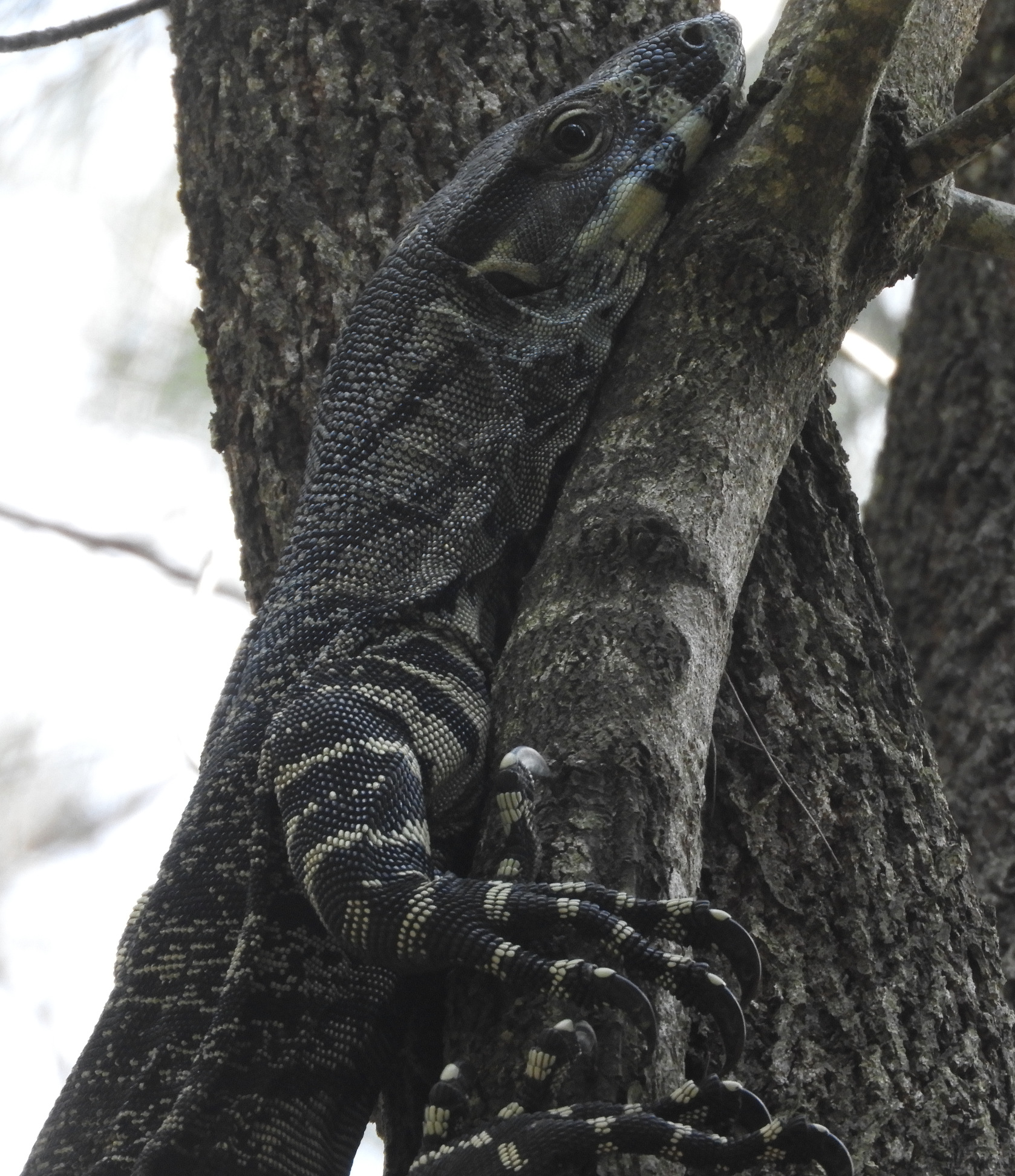
Here’s a far-away picture of the lizard on the tree, to show its size and its surrounds:
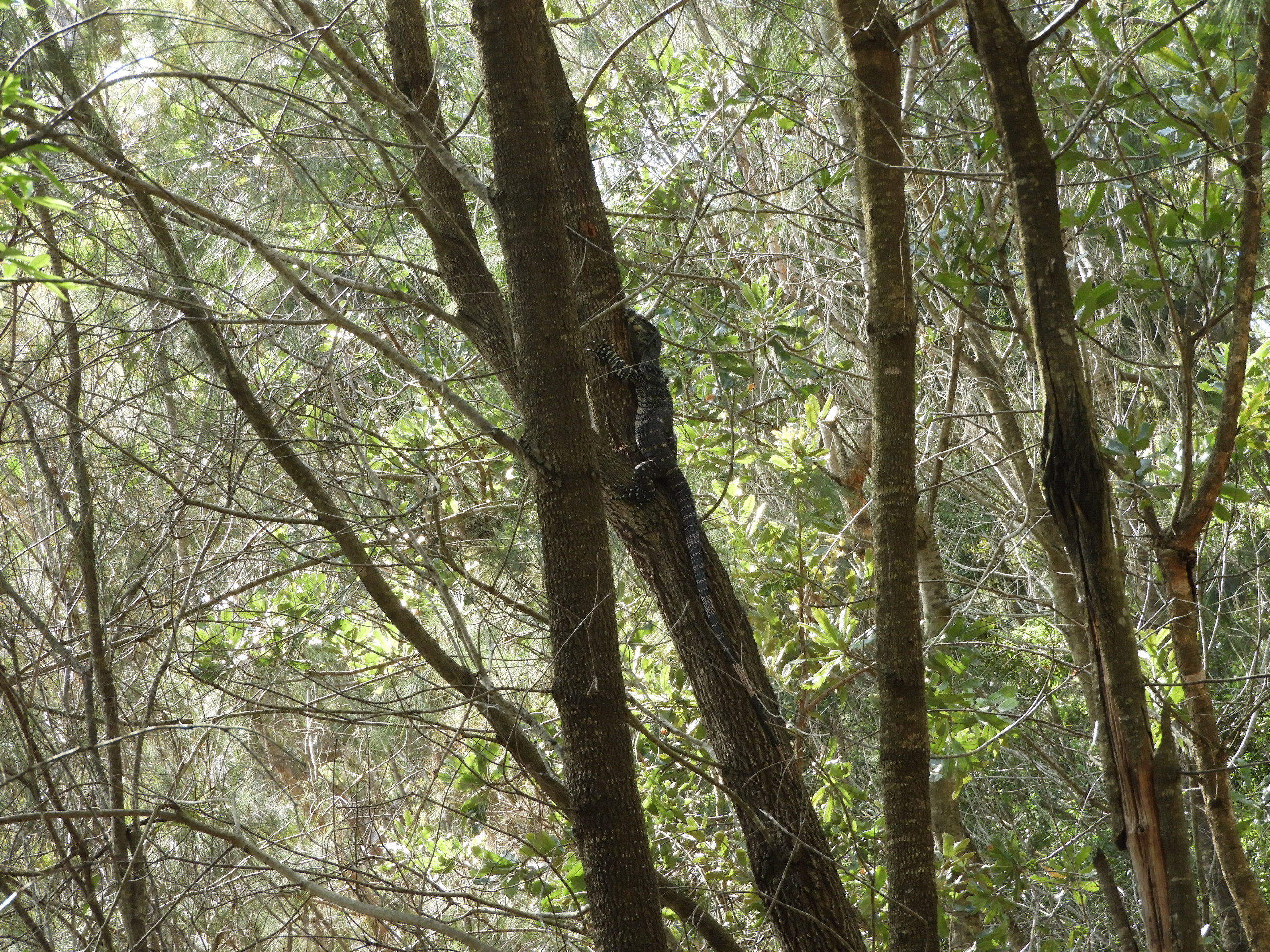
What a gorgeous, wild creature to encounter on a morning walk.
Cuckoo bee visits my study
Bees in Australia can look different from what you might expect. This little creature buzzed into my home study yesterday, explored the room, then tried to exit via a closed window:
It’s a cuckoo bee. More specifically, it’s a Domino Cuckoo Bee (Thyreus lugubris). Why the word “cuckoo” in the name? Like their avian counterparts, cuckoo bees lay their eggs in the nests of other bees, rather than building their own nest.
Here’s a still photo of the bee:
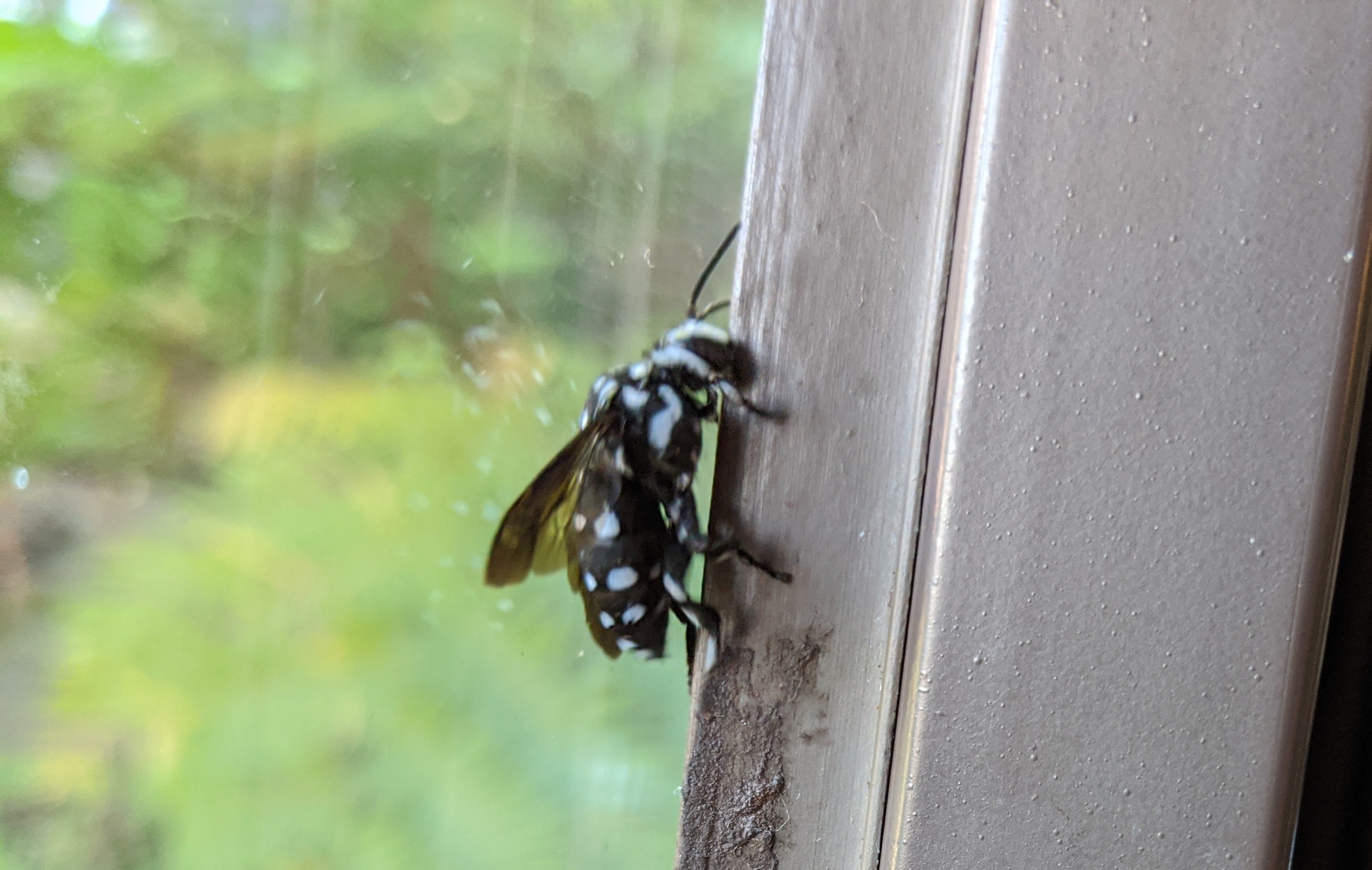
After taking the photographs, I used the glass-and-paper trick to capture the bee, and released it outside. It zoomed off quite happily.
Kookaburras at dawn
In my previous post about birdsong at dawn, I mentioned that dawn is a calm but not quiet time around here. One bird that was remarkable for its absence in yesterday’s video was the kookaburra. This morning the laughing cacklers made up for that!
Birdsong at dawn
Dawn is a calm time of day in early autumn in this part of the world. Calm, but not quiet. I shot this video from my lounge window two days ago. You can hear a cockatoo coughing and lorikeets chirruping. About half way through, a couple of magpies join in with their warbling:
Blue-tongued Lizard in my garden
Every now and then we spot a Blue-tongued Lizard in our garden. These lizards are large and slow-moving. This one was about the length of my forearm and about the width of my wrist.
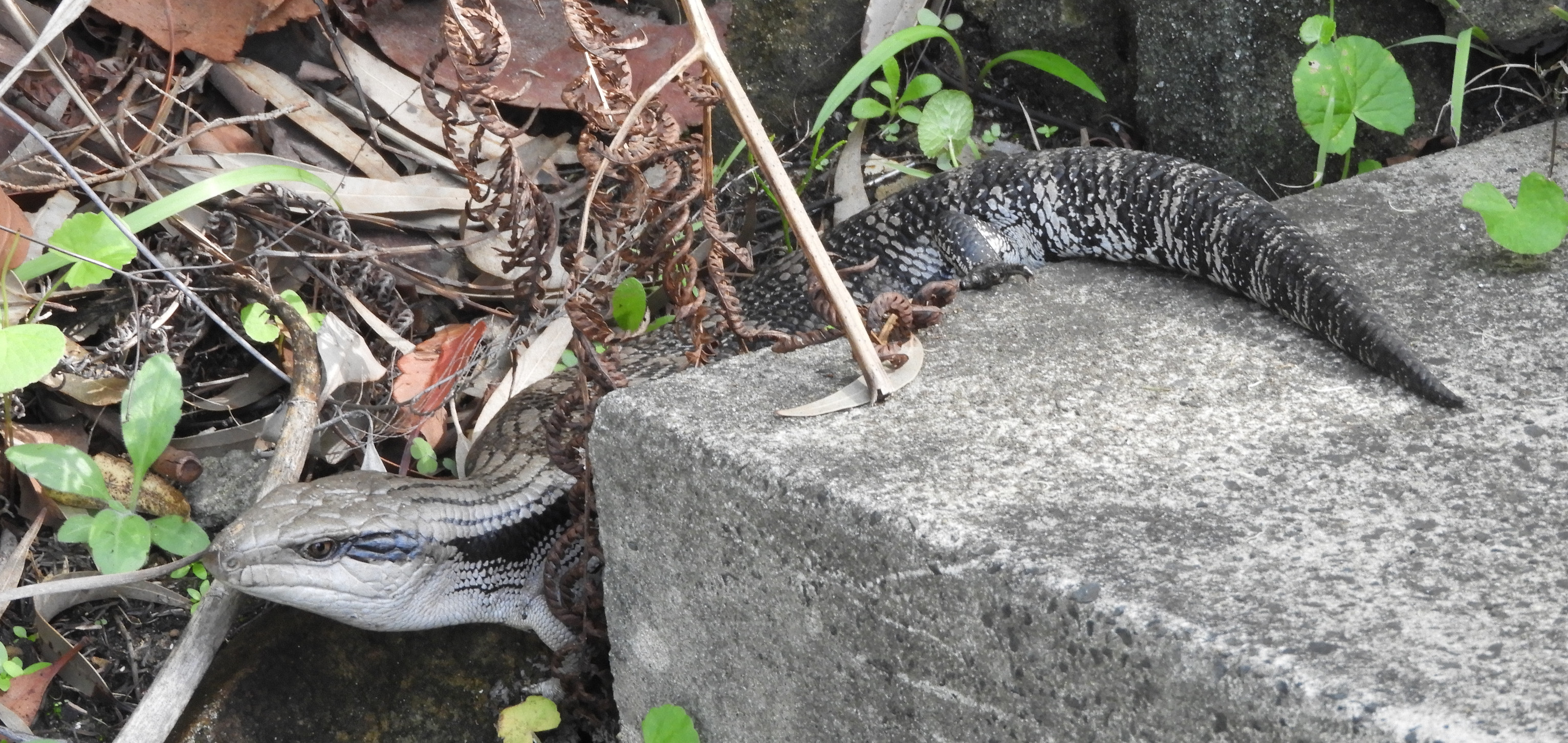
Blue-tongues are skinks, a type of lizard that has overlapping scales, with a small bony plate in each scale on its head. They have small legs, and the back legs in particular often don’t do much.
In this video you can see the lizard’s blue tongue flicking in and out:
Blue-tongues live a long time, sometimes up to 20 years. They eat small creatures, including small snakes and funnel-web spiders. A good friend to have in your garden!
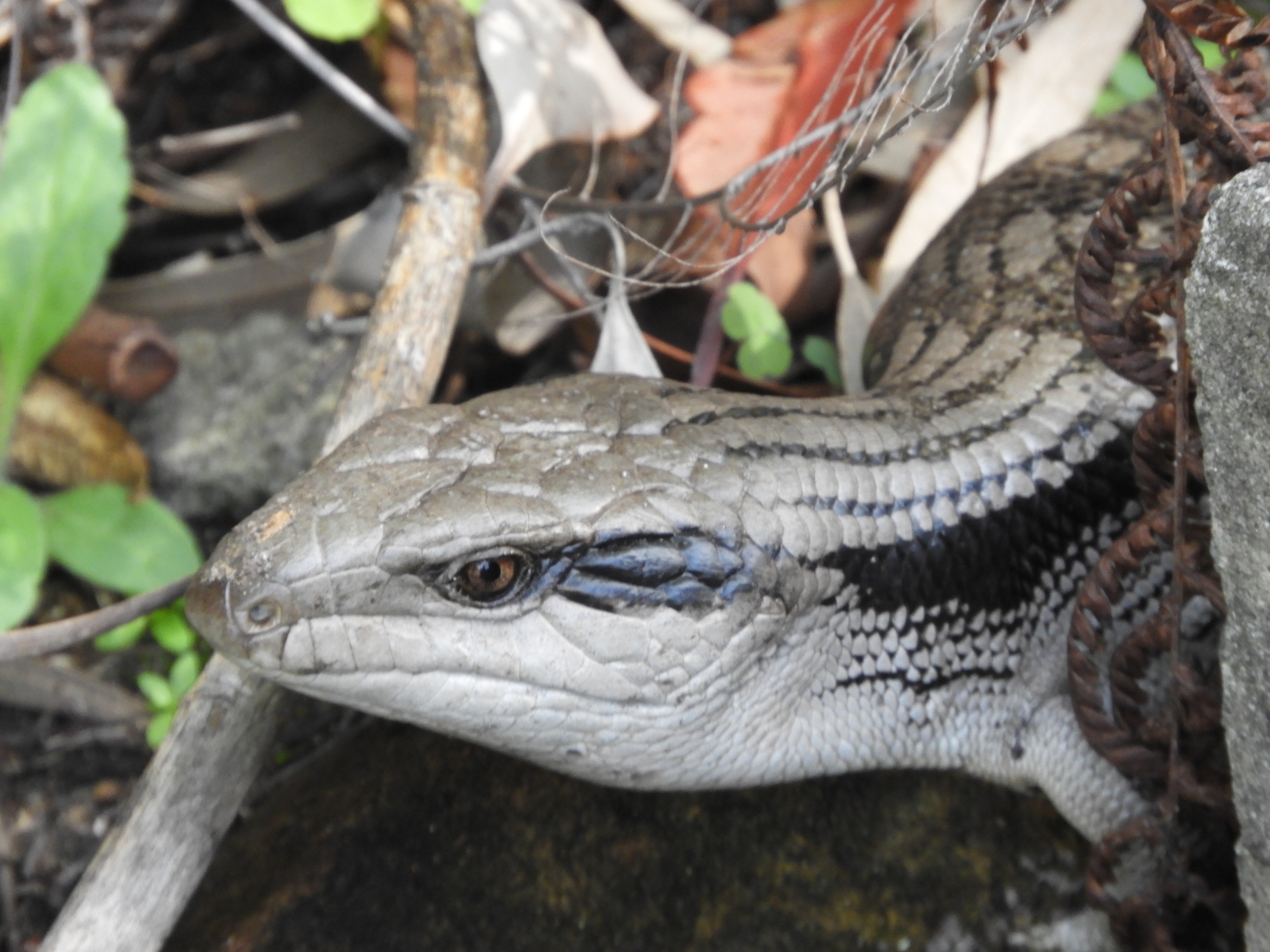
It’s always a pleasure to see such a lovely wild creature living amongst us.
Olive-backed Oriole looking a bit fierce
Olive-backed Orioles are lovely, with their smooth olive-green backs and mottled chests. I caught this one facing directly into the camera, and noticed how fierce those eyes look.

The fierceness fits the bill, if you’re a worm or some other prey for this bird. The oriole was bashing a worm around, softening it up before swallowing it, just before I took the above picture.
The next picture shows the bird with the worm in its beak. But, as is so often the case with bird photography, a branch got in the way!
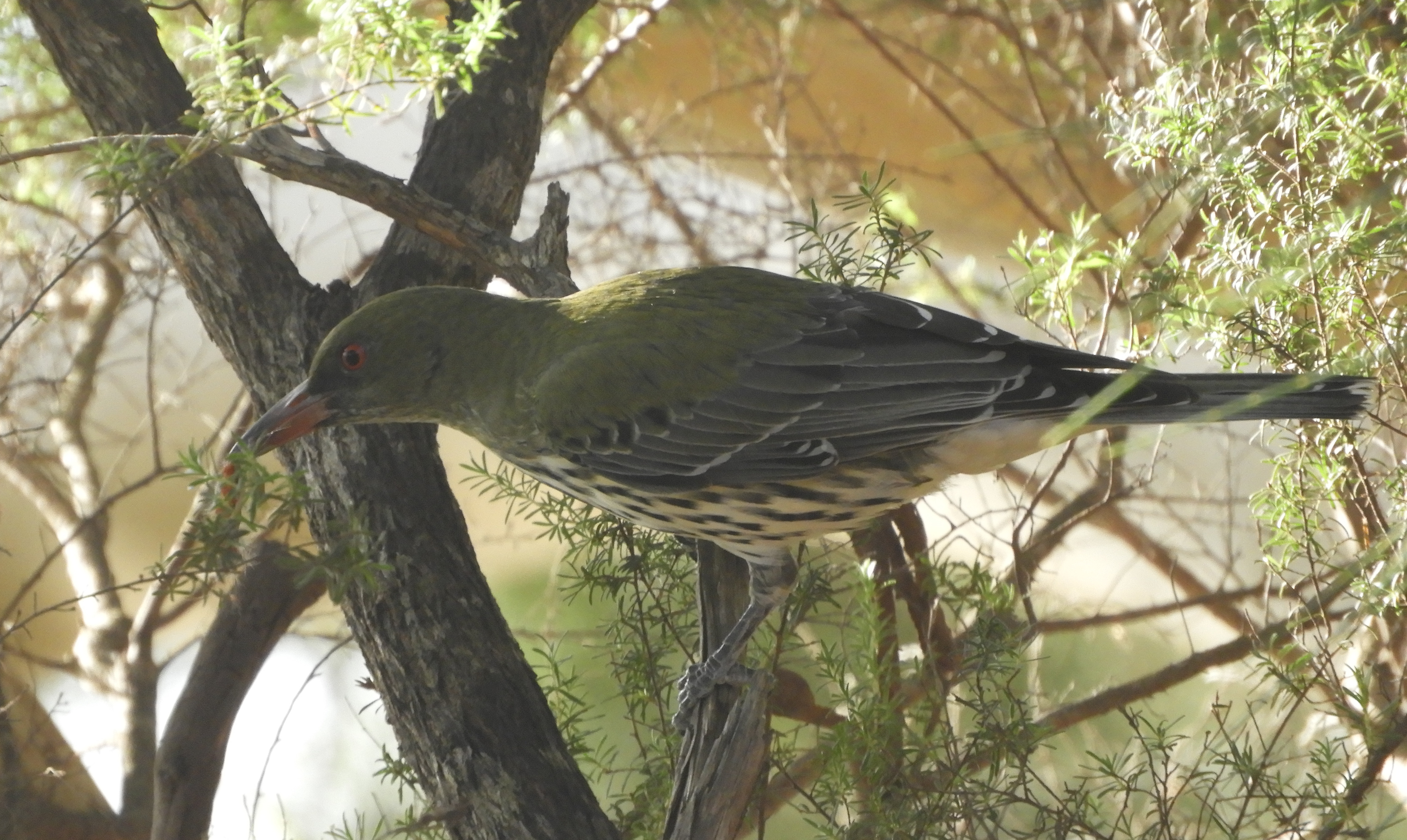
Not fierce, just inquisitive:

Common name: Olive-backed Oriole
Scientific name: Oriolus sagittatus
Approximate length: 25-28 cm
Date spotted: 18 April 2020 (autumn)
Location: Manly Dam National Park, New South Wales, Australia: 33°46’39.5″S 151°14’57.9″E
Here’s a picture of the bird’s surrounds. In the background is the water of Manly Dam:

Fluffy Australasian Grebe, not a duckling
Update on 19 April: The bird is actually an Australasian Grebe, not a duckling as I originally thought. Thanks to Pamela and Carol for helping to identify the bird (see comments on this post).
This tiny ball of fluff was zooming around an inlet of Manly Dam. I thought it was a Mallard duckling, because it seemed to spend most time close to an adult Mallard. Despite its size, the little thing was independent of spirit and a fast paddler.

Common name: Australasian Grebe
Scientific name: Tachybaptus novaehollandiae
Approximate length: 23-25 cm
Date spotted: 6 April 2020 (autumn)
Location: Manly Dam National Reserve, near Sydney: 33°46’34.8″S 151°14’49.6″E
This is the Mallard that the little one seemed to home in on:

Mallards are an introduced species in Australia. Their original home is the northern hemisphere, but they’re quite common in south eastern Australia now too.
Common name: Mallard
Scientific name: Anas Platyrhynchos
Approximate length: 50-70 cm
Date spotted: 6 April 2020 (autumn)
Location: Manly Dam National Reserve, near Sydney: 33°46’34.8″S 151°14’49.6″E
Musk Lorikeet feeding off gum tree flowers
Musk Lorikeets are small, colourful parrots found in south-eastern Australia. A few of them have been visiting the gum tree outside our window over the past few weeks, to eat the nectar from the flowers.

These birds have rough, brush-tipped tongues to collect nectar and pollen from flowers. Musk Lorikeets are a little smaller than the more common Rainbow Lorikeets, which have been visiting the same flowers. Things can get quite noisy when the birds scold each other! Musk Lorikeets are nomadic, in that they move up and down the east coast of Australia in search of the flowering eucalypt trees that constitute their main source of food.

Common name: Musk Lorikeet
Scientific name: Glossopsitta concinna
Approximate length: 23 cm
Date spotted: 26 March 2020 (late summer)
Location: Allambie Heights, New South Wales, Australia
Red-browed Finch
A Red-browed Finch in the sunlight, pausing on the way between here and there.
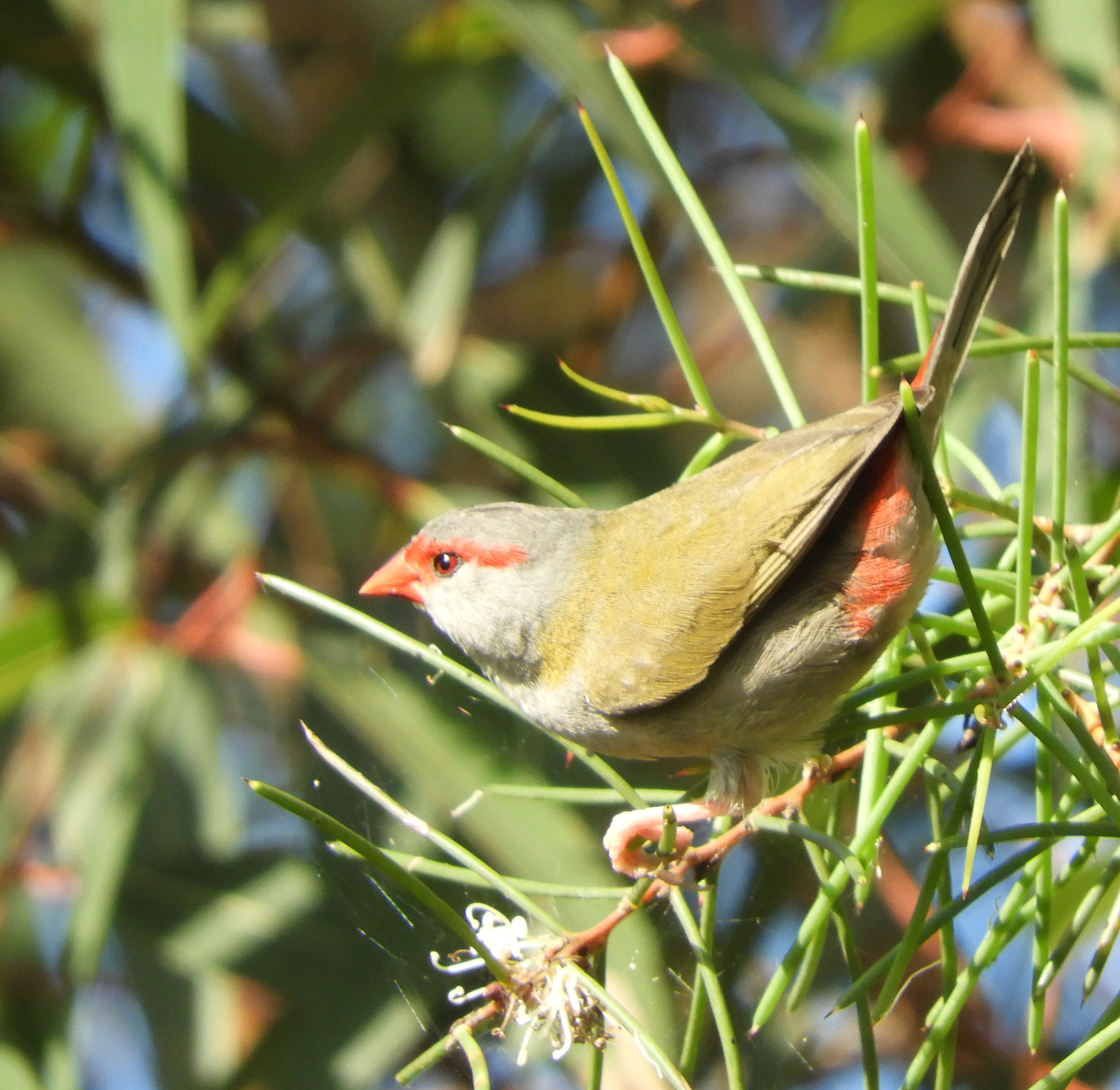
Common name: Red-browed Finch
Scientific name: Neochmia temporalis
Approximate length: 12 cm
Date spotted: 31 March 2020 (late summer)
Location: Manly Dam National Reserve, near Sydney: 33°46’54.5″S 151°15’08.7″E
Echidna at Manly North Head
Echidnas are not birds, but I decided to blog about this one anyway because it’s such a cute animal. An Echidna is a mammal, about the size of a fat cat. It has a long, very tough nose that it sticks into the ground in search of ants and termites.
This is a short-beaked echidna (Tachyglossus aculeatus), which is the only living type of echidna found in Australia. There are three other types, which have longer snouts and live in New Guinea.
Echidnas and platypuses are the only mammals that lay eggs. Echidnas look like a cross between an anteater, a porcupine, and a bear. I saw this one at North Head in Manly, near Sydney. As you can hear on the video, the animal attracted a few interested people. It was entirely unfazed by its audience.
The echidna pottered about on the border between the bush and the walking track. We humans kept our distance from each other, due to the social distancing rules currently in place, and we kept our distance from the echidna out of respect for its wildness. It was a pleasure to see this creature going about its everyday life while we’re entangled in a situation of unprecedented weirdness.


 Sydney Birder