Channel-billed Cuckoo in our garden
It seems to me that the Channel-billed Cuckoos were late in arriving from their annual migration this year. Some people were pleased about that, as these birds make a tremendous noise in the early morning hours! But I was pleased when I eventually heard their raucous calls earlier this week.
Today, one dropped in on a tree in our garden. As usual, the other birds were harassing it.
Channel-billed Cuckoos are impressive birds. They have fierce red eyes and a large, hooked beak. Like many other types of cuckoos, they lay their eggs in the nests of other birds rather than making their own nests. They also leave the task of caring for the young birds to the substitute parents!
This particular cuckoo was a little wet and bedraggled. What with the rain and the harassment of the other birds, the cuckoo doesn’t seem to be enjoying life much.
Common name: Channel-billed Cuckoo
Scientific name: Scythrops novaehollandiae
Approximate length: 58-65 cm
Date spotted: 20 September 2020 (spring)
Location: Allambie Heights, New South Wales, Australia
3 Glossy Black-Cockatoos and a tale of a Brush-turkey and a Raven
Two days ago, I encountered a group of three Glossy Black-Cockatoos on a Casuarina tree. These large cockatoos are not a very common sight. When I noticed them, I stopped walking and said “ooh” out loud. Luckily there was no-one around to hear, and the birds ignored me!
While I was watching the cockatoos, a couple of other characters appeared and contributed to the encounter. Read the story below!
First, the glossies
This picture shows two of the Glossy Black-Cockatoos. They’re quite different in appearance from the more common Yellow-tailed Black-Cockatoos. The feather arrangement around the glossies’ necks and the general setting of their heads make me think of a lion:

I think the bird on the left is a female, as she has a lot of yellow around her head. The one on the right is, I think, a male.
In the video below, the birds are munching happily on Casuarina seed pods. About half way through the video (at around 50-53 seconds on the timeline) the birds mutter to each other in low-pitched raspy calls. This munching and muttering is typical of the birds’ behaviour.
Below is a solo shot of the first of the three birds. This one has a lot of yellow around its head, which means it’s probably a female:
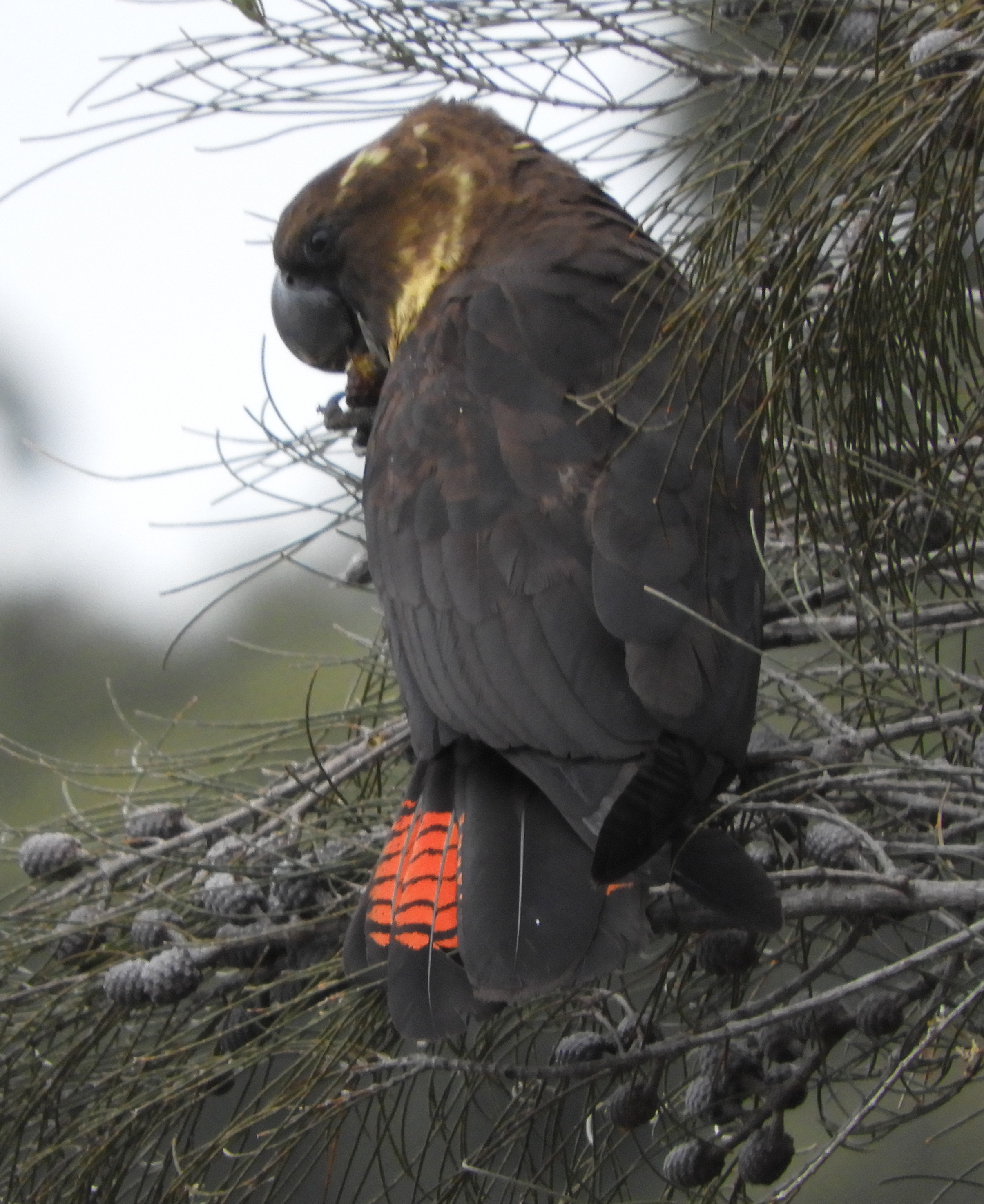
Glossy Black-Cockatoos depend on Casuarina seeds for their food. This choosiness puts the birds at risk when the tree coverage is depleted by land clearance or bush fires. Casuarinas, also called sheoaks or she-oaks, are a group of trees and shrubs native to Australia and other Asian countries. Evidently the name Casuarina is derived from cassowary (a big bird) because the branches look like cassowary feathers.
Next comes a solo shot of the second of the three birds. I think this one is a male. The feathers around its head and neck are quite brown in comparison to the darker black feathers on the rest of its body. The bird is holding a Casuarina seed pod. You can also see a few of the tree’s tiny red flowers:
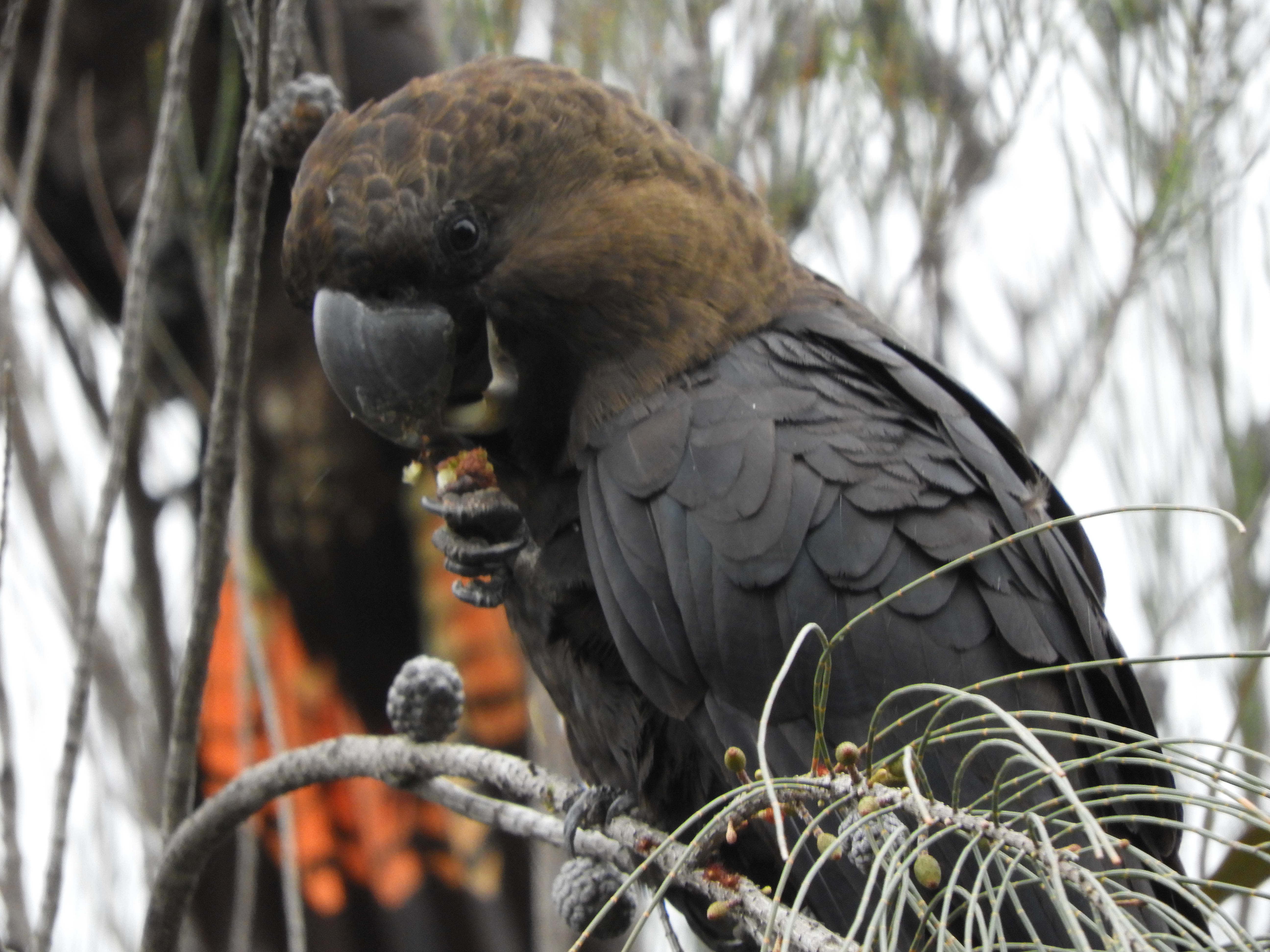
It’s a treat to see these unusual, gorgeous birds. Definitely a moment for oohing and aahing.
Unwell Glossy Black-Cockatoo – beak and feather disease?
One of the three cockatoos has an illness which has affected its beak. It may be Psittacine beak and feather disease, or some sort of cancer, or maybe the result of a fight or accident?

I didn’t notice the hole above the bird’s beak until I got the pictures home and put them on a big screen. The birds were quite a distance away, and I was using my camera’s super zoom to photograph them. But even from the long distance, I did think that the bird looked duller and more skeletal than the other two.
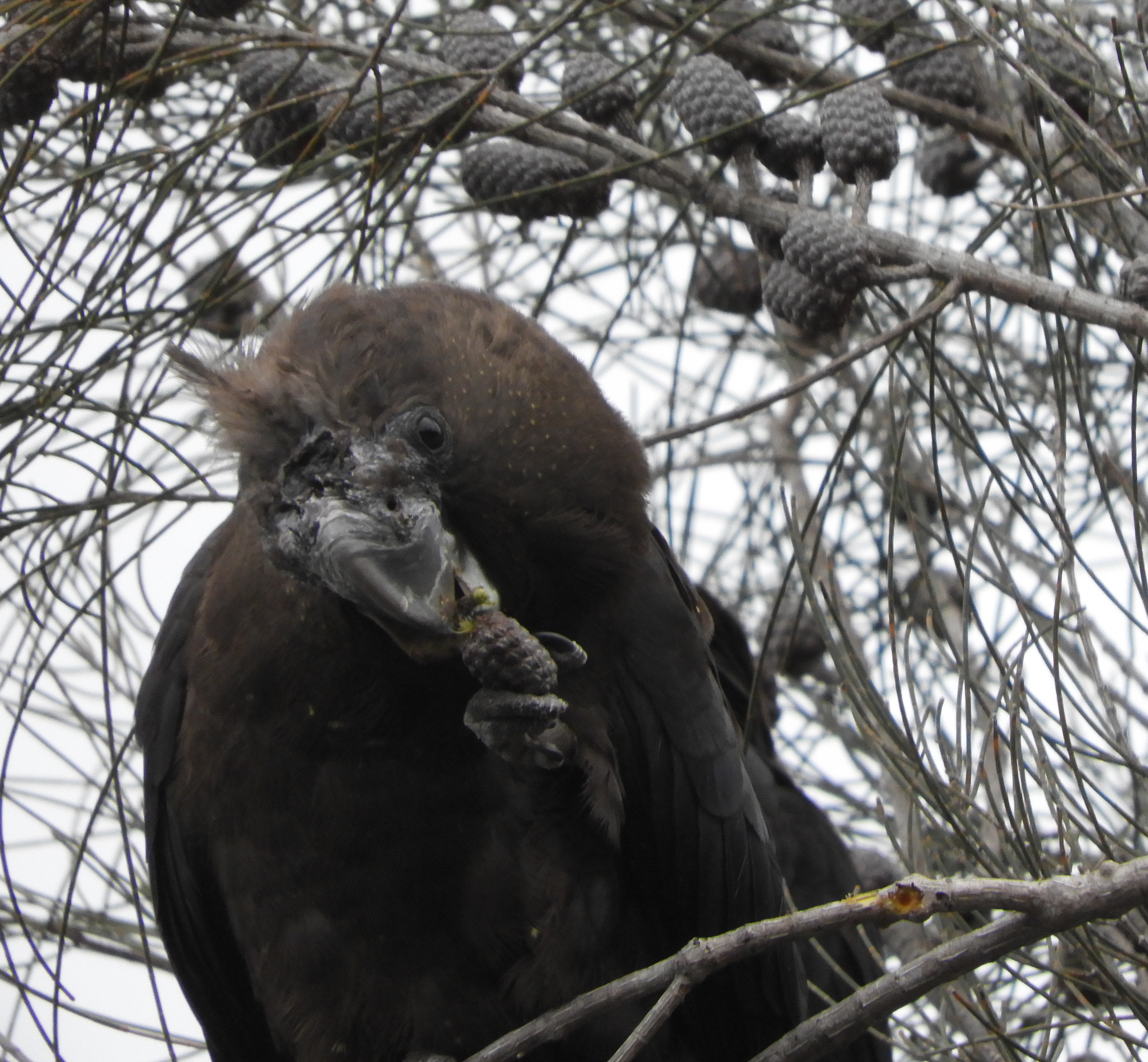
Poor bird, I hope the condition isn’t causing it too much discomfort.
Video featuring the female Glossy Black-Cockatoo
Here’s another video of two of the birds, this time featuring the female. Hint: At the start of the video you can hear a bit of thrashing around in the undergrowth. That background noise leads into the story below!
Common name: Glossy Black-Cockatoo
Scientific name: Calyptorhynchus lathami
Approximate length: 50cm
Date spotted: 18 September 2020 (spring)
Location: Manly Dam Park, near Sydney: 33°46’55.0″S 151°15’10.1″E
A tale of a Brush-turkey and an Australian Raven
If you listen carefully in the first half of the above video, you’ll hear a bit of a kerfuffle in the background. I heard it too, and turned to look when I stopped filming. I saw an Australian Brush-turkey flapping around among the trees a few metres away from me. “Ah, just a brush-turkey,” I thought, and turned back to the cockatoos. Brush-turkeys seem to specialize in making a fuss about nothing.
The kerfuffle turned into a whoosh of large wings, followed by a downdraft of air and the sound of claws on metal. I turned around again, to discover that the brush-turkey had landed on a gate less than two metres away from me. (The gate was one of those that the authorities use to close the park when the danger of bush fires is critical.)
“Hallo, mate,” said I. “What are you up to?” I do talk to birds when they approach me, partly to make us both feel comfortable.
The brush-turkey look at me, then teetered slightly and looked down at the ground with some apprehension. They do that, when they’re off the ground. They’re no doubt thinking, “I got myself up here, but now that ground is a long way down. How do I get down there?”
Two seconds later, a large, fierce Australian Raven arrived. Eyes ice blue. Beak long, strong, and pointy. Being the focus of that glare is rather daunting, even if you’re a large human.
The raven glared at me. I stood my ground. One point five metres of empty space between me and that beak.
The raven decided I wasn’t a threat, and turned its attention back to the brush-turkey. Obviously, the raven wanted to continue the altercation that had been the cause of all that kerfuffle in the trees.
The brush-turkey looked at the raven, looked at me, and hopped off the gate. A few hurried steps, and it was at my feet. It got as close to my knees as it could, then started walking round my legs. When it comes to a choice between a raven and me, it seems I’m a safe haven.
The raven looked thoroughly peeved. It leapt into the air and spotted the Glossy Black-Cockatoos, who were still peacefully munching and muttering in the Casuarinas. With a caw and a swoop, the raven dislodged the glossies. They floated into the air with easy grace, and came to land again a few trees away. “Ah, ravens,” the glossies were no doubt thinking. “They seem to specialize in making a fuss about nothing.”
The brush-turkey was still jittering around my legs. I wanted to continue filming the cockatoos, so I waited for a gap in the brush-turkey’s circle, and strode out along the path towards the cockatoos’ new roosting area.
Within a second, I heard the tick-tick-tick of brush-turkey claws on the path. The turkey had decided to stay with its safe haven for a while, in case that nasty bird with the ice-blue eyes and big strong beak came back.
So there we were, the cockatoos munching and muttering, I oohing and aahing, and the brush-turkey click-clacking companionably at my heels.
I wish I’d got all of that on camera! Anyway, I hope you enjoyed the story. 🙂
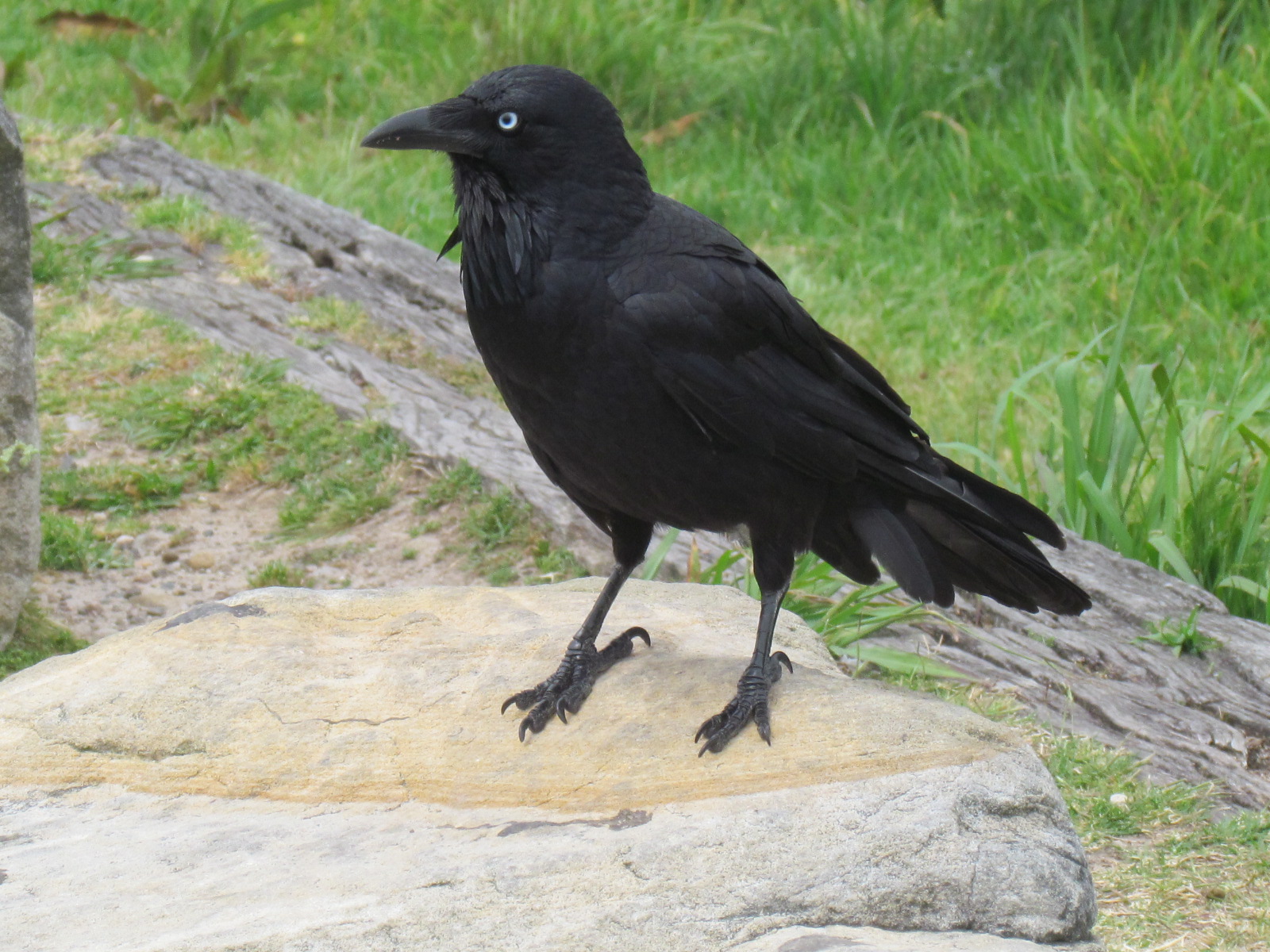
Here are a couple of pics of a brush-turkey and a raven, though these are not the same birds that appear in this story.

Pale-yellow Robin eating a spider
This robin was cheeping loudly enough to attract my attention. I snapped a shot of it, to see what it was up to. When I zoomed in to the picture, I could see that the bird had caught a spider. Perhaps the loud noise was a boast or an expression of glee at the coming feast.
I think this is a Pale-yellow Robin, though it could be an Eastern Yellow Robin. Pale-yellows are smaller than Eastern Yellows (12 cm in length as opposed to 15) and have more white around the beak and throat.
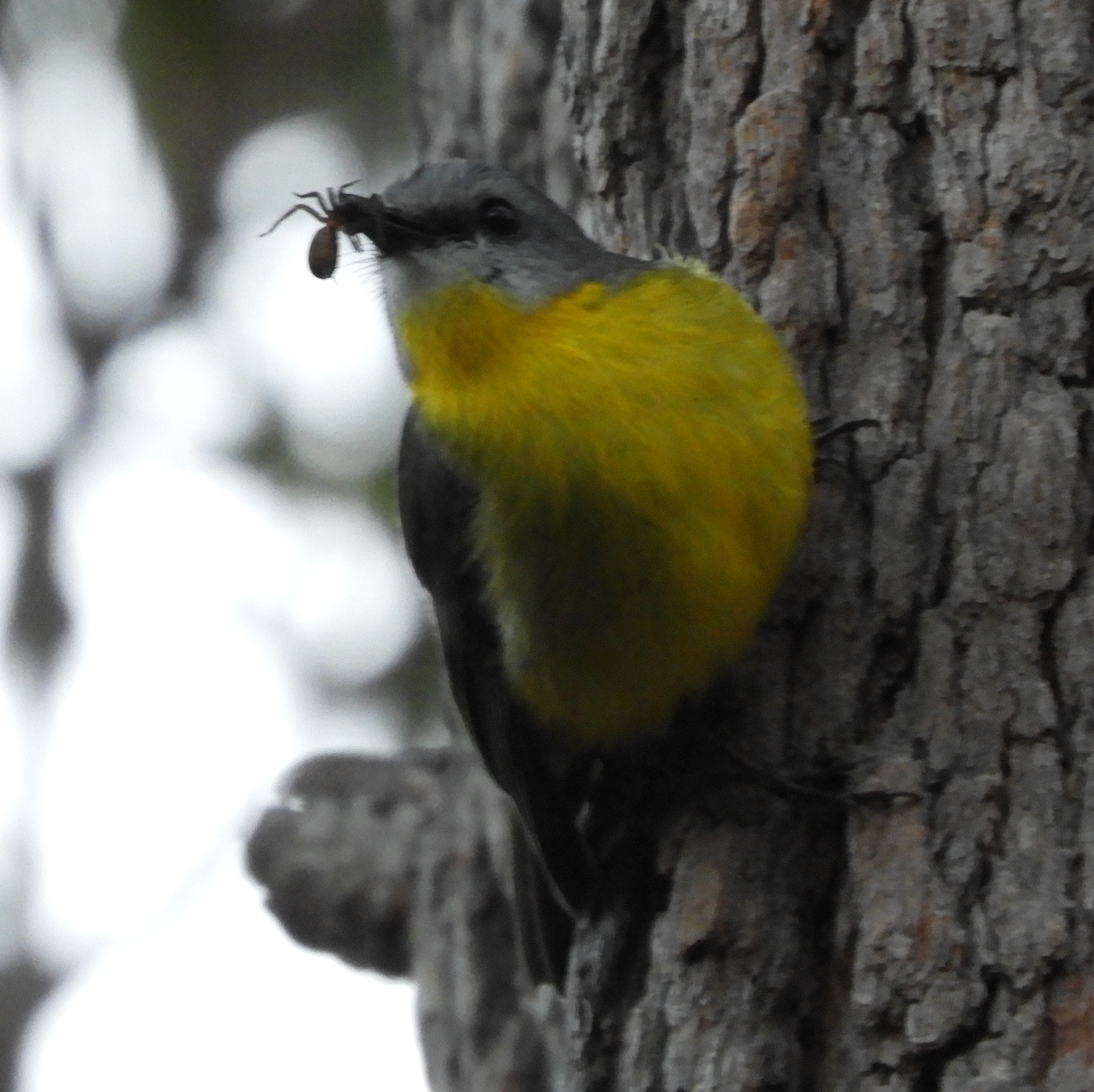
Common name: Pale-yellow Robin
Scientific name: Tregellasia capito
Approximate length: 12 cm
Date spotted: 12 September 2020 (spring)
Location: Manly Dam Reserve, New South Wales, Australia: 33°46’24.0″S 151°15’08.0″E
Grey Fantail
This is only the second time I’ve managed to get a picture of a Grey Fantail. Grey Fantails are smaller than Willie Wagtails, and softer in colouring. They make a similar squeaky call, but not quite as piercing as Willie Wagtail.
I’ll try to get a good photo of a Grey Fantail, if one of them will stay still long enough! In the meantime, here’s the earlier video that I took of one of these birds, about three years ago. The bird was showing off its tail-fanning skills.
Common name: Grey Fantail
Scientific name: Rhipidura fuliginosa
Approximate length: 14-17 cm
Date spotted: 4 September 2020 (spring)
Location: Manly Dam Reserve, New South Wales, Australia: 33°46’23.8″S 151°15’05.8″E
Two varieties of the Eastern Whipbird call
The call of the Eastern Whipbird is a fairly common sound, for those of us lucky enough to live near a patch of Australian bush. The birds make a weird whistling noise that ends in an abrupt burst of noise, a little like the crack of a whip. Hence the name whipbird.
In the first of these two videos, the bird ends its call with an upward tone, while in the second video it chooses a descending tone. First, the upward tone:
Next, the more squeaky downward ending:
The call seems to take a lot of effort, including a little hop and a flap of the wings. I was surprised at how short the bird’s wings are. They seem quite stubby, compared with the elegance of the rest of the body.
Whipbirds are shy, sticking to the undergrowth and making it difficult to get a good picture. Here’s a photo that shows the olive green colouring of the bird’s feathers:

Common name: Eastern Whipbird
Scientific name: Psophodes olivaceus
Approximate length: 30 cm
Date spotted: 3 September 2020 (early spring)
Location: Manly Dam National Reserve, New South Wales, Australia: 33°46’36.2″S 151°14’47.9″E
Blue Laughing Kookaburra at The Bluff above Bantry Bay
Today I hiked from Seaforth Oval to Natural Bridge. Phew! Almost 12,000 steps, 7.7 km, and three climbs down into the valley and back up again! It’s a good walk with lovely views of Bantry Bay, which is one of the inlets of Sydney Harbour.
Close to a lookout point called The Bluff was this fine-looking Laughing Kookaburra. It has a lot more blue in its feathers than most kookaburras that I’ve seen. Perhaps it’s clothed in its spring finery.

This is the view of Bantry Bay from The Bluff Lookout:

Common name: Laughing Kookaburra
Scientific name: Dacelo novaeguineae
Approximate length: 47 cm
Date spotted: 31 August 2020 (Late winter)
Location: Bluff Trail, Killarney Heights, New South Wales, Australia: 33°46’00.3″S 151°13’42.3″E
Soothing musings about birds and more
I’ve started a YouTube channel called Soothing musings with Sarah. The first musing features birds! It’s called If I were a coot:
I have more soothing musings in mind. The next few are about other things I’ve come across in nature. Not birds, but there may be more avian musings in future! If you’re interested, you can subscribe to the YouTube channel to get a notification when the next musing comes out.
Masked Lapwing (Spur-winged Plover) screeching
A pair of Masked Lapwings (also known as Spur-winged Plovers) strutted companionably on the shore of Manly Dam. Every so often, one of them took off and flew a circuit around the area. The bird left on the ground started calling, and watched the progress of its companion carefully from the ground. The bird in the air replied occasionally, as if to assure its mate that it was still around.
To me, the yellow attachments on the faces of these birds seem rather strange. I guess they do make the birds stand out from other species. Not much chance of making a mistake when a bird is looking for a mate!
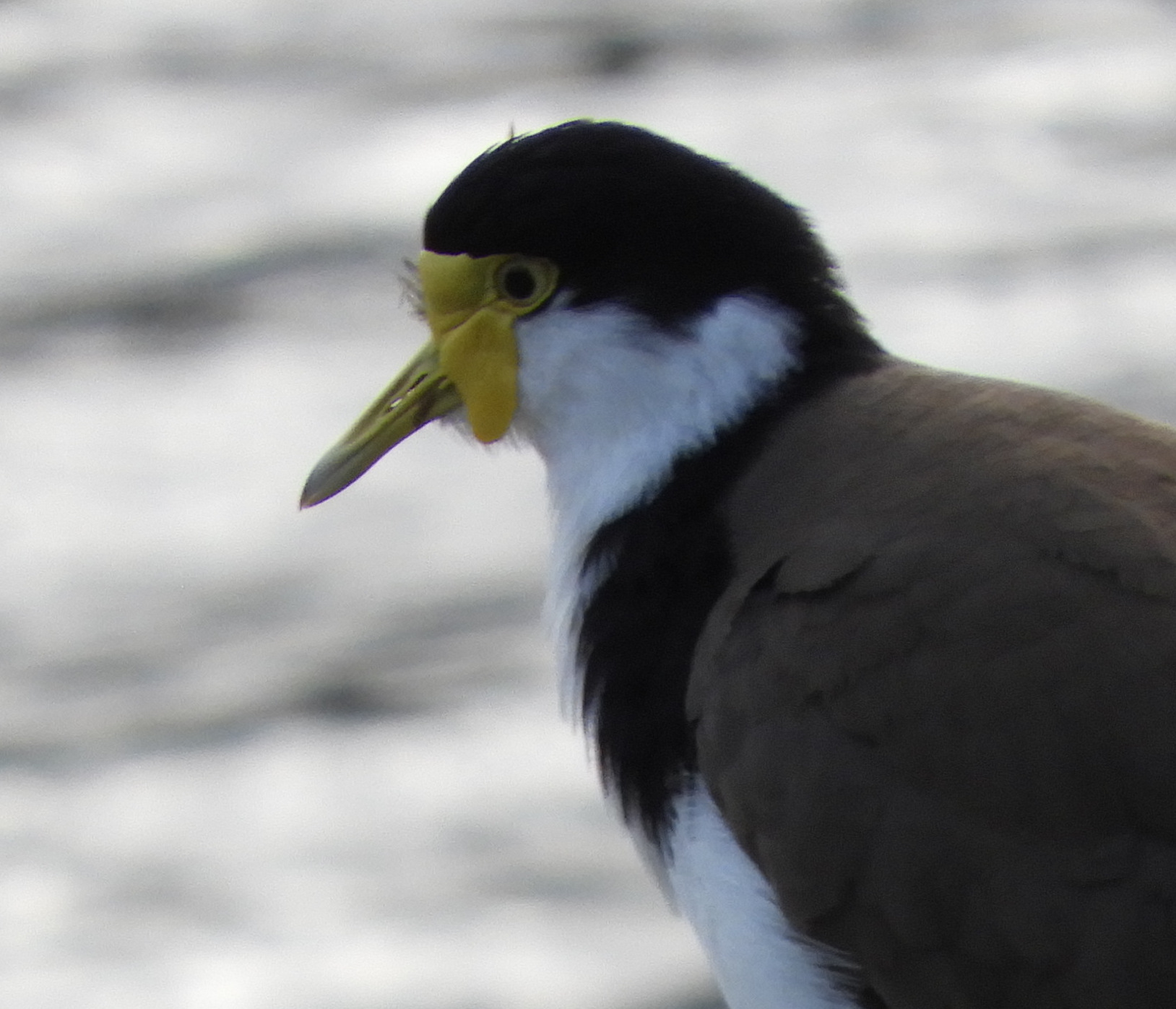
The birds have two names: Masked Lapwings, due to that strange yellow mask, and Spur-winged Plovers. The second name comes from the hooks (spurs) on the birds’ wings that they use to fend off any creature that threatens them or their young. If a Spur-winged Plover flies at you, it’s best to duck or hold your arms around your head!

Common name: Masked Lapwing, or Spur-winged Plover
Scientific name: Vanellus miles
Approximate length: 37 cm
Date spotted: 8 August 2020 (winter)
Location: Manly Dam Nature Reserve, New South Wales, Australia: 33°46’35.0″S 151°14’50.4″E
Red Wattlebird on Banksia
Red Wattlebirds are large, noisy honeyeaters. They get their name from the red flaps of skin below their eyes. This one was feeding on the nectar of a Heath Banksia flower:

The next picture shows both wattles on the bird’s neck:
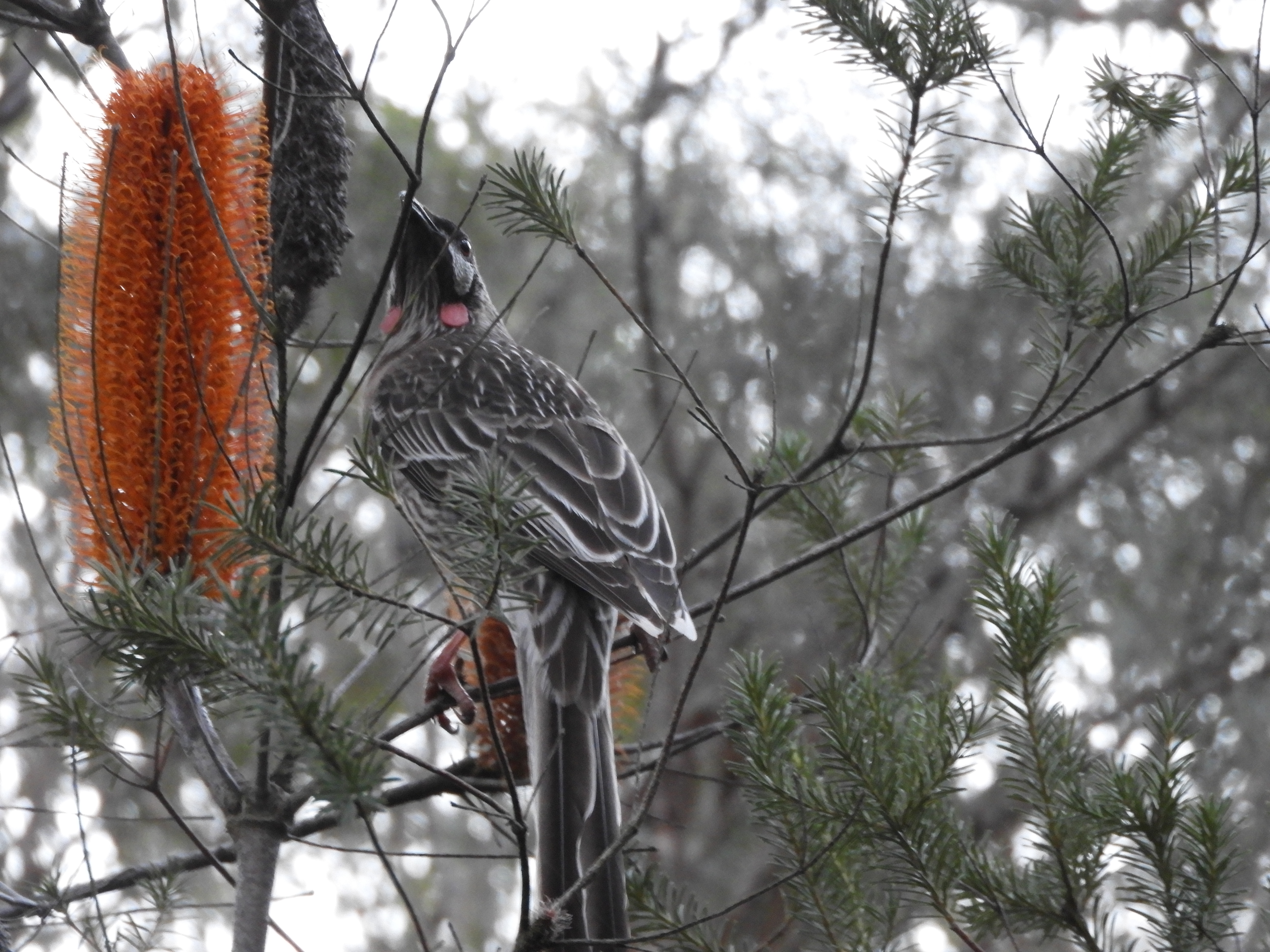
Common name: Red Wattlebird
Scientific name: Anthochaera carunculata
Approximate length: 35 cm
Date spotted: 18 July 2020 (winter)
Location: Manly Dam National Park, New South Wales, Australia. Approximate map reference: 33°46’27.0″S 151°14’57.6″E
Little Wattlebirds are common in the area too. The two birds can be hard to tell apart. Red Wattlebirds are larger (approx 35 cm from head to tail) whereas Little Wattlebirds measure approximately 30 cm. Little Wattlebirds don’t have the large red wattles. Here’s a Little Wattlebird that I photographed a while ago:

The sinuous neck of a Darter
Darters are sometimes called snakebirds, because of their long, sinuous necks. I came across this small darter sheltering on a branch close to the footpath at Manly Dam.

The bird didn’t seem to be worried by my presence. I stood and watched it for a while, enjoying the supply movements of its wings and neck:
At one stage a couple of ravens started cawing. The darter showed some concern, looking skywards to see if there was any threat:
Darters use that long neck to hunt underwater, straightening it suddenly to dash out and catch their prey.
Here’s a close-up shot of the bird’s head, neck, and shoulders, with the neck coiled up in the resting pose:
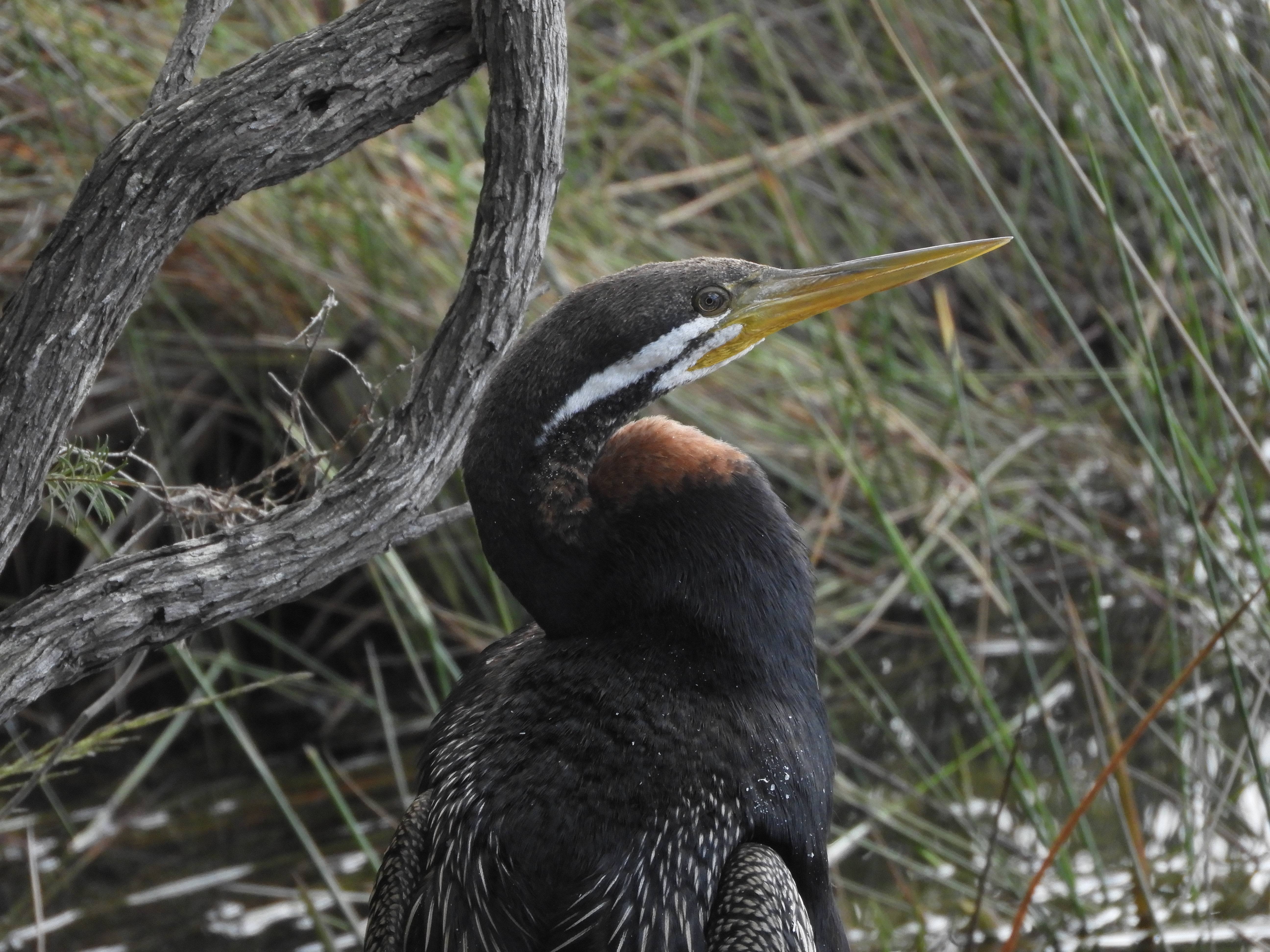
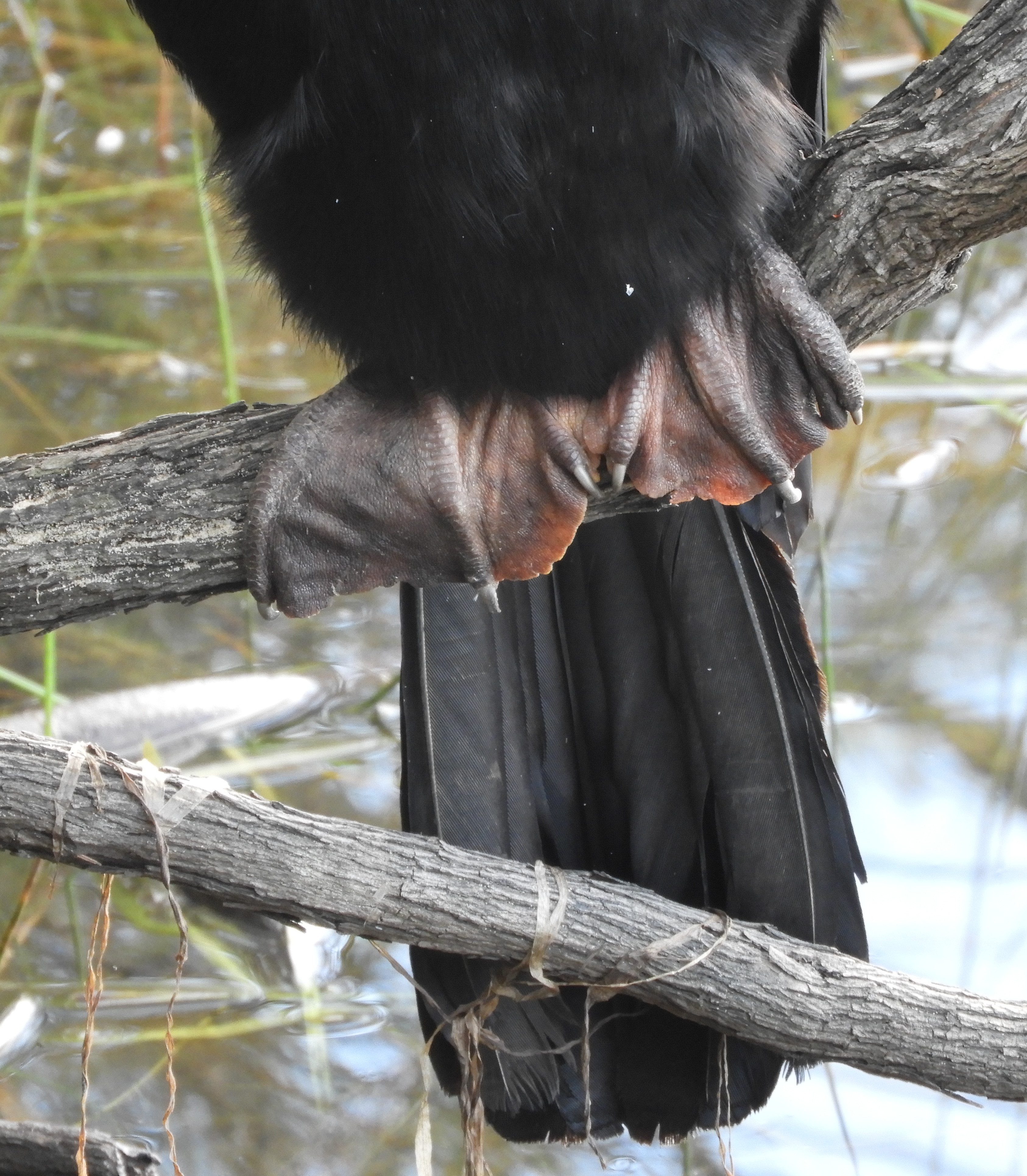
The bird’s feet are webbed, good for swimming and for clasping a branch:
Spreading its feathers prior to a stretch:

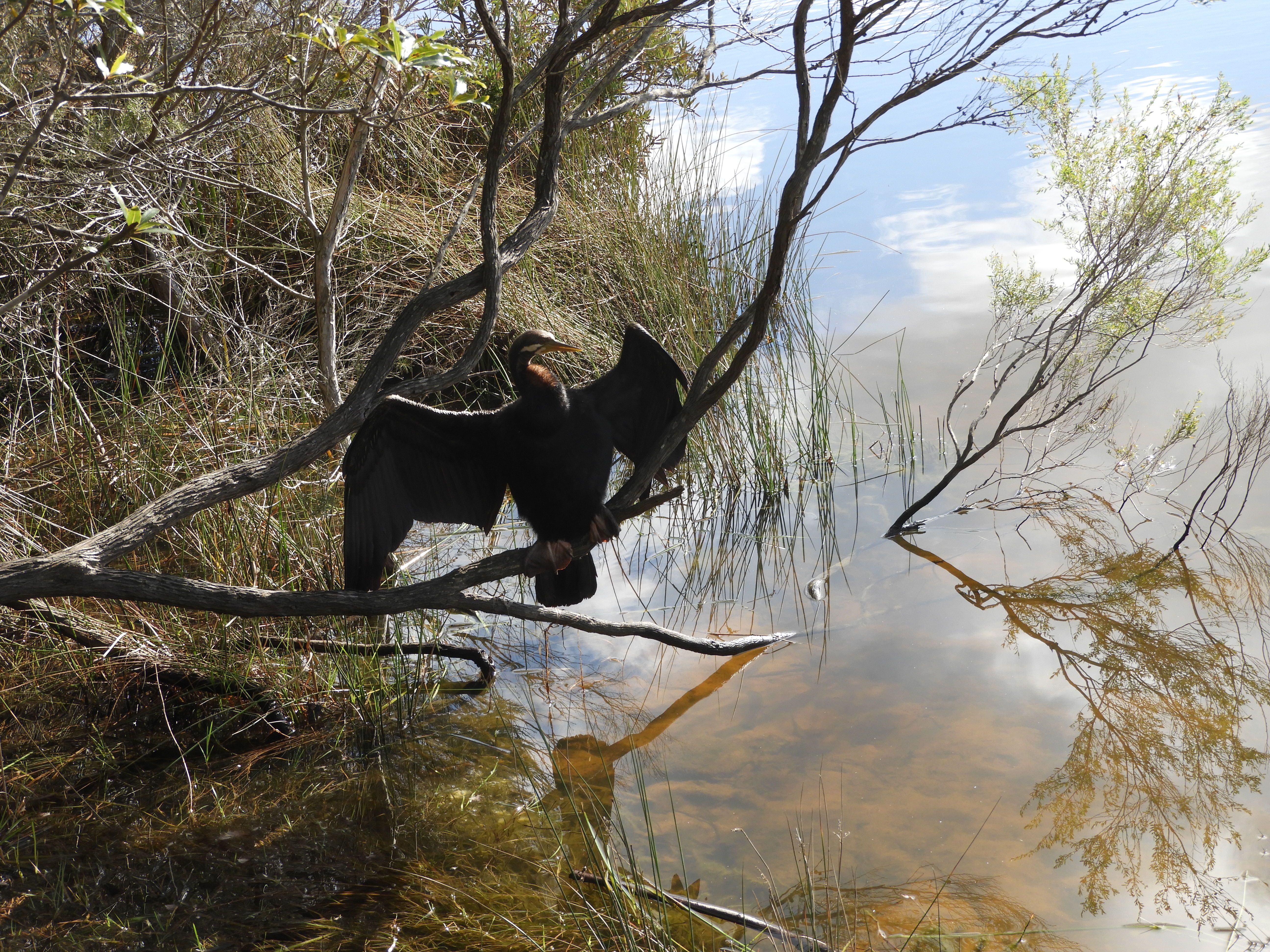
Like cormorants, darters need to hold out their wings to dry:
Common name: Darter
Scientific name: Anhinga melanogaster
Approximate length: 90 cm; wing span: 1.2 m
Date spotted: 30 June 2020 (winter)
Location: Manly Dam Reserve, New South Wales, Australia: 33°46’38.5″S 151°14’57.0″E


 Sydney Birder