
Another White-plumed Honeyeater
This is my second-ever White-plumed Honeyeater, spotted this time in Denman NSW, about three hours’ drive north west of my usual haunts on the east coast of Australia. The picture shows nicely the white stripe that gives the bird the name “white-plumed”. As I remarked when posting my first sighting of a White-plumed Honeyeater, I’d expect a grander plume to match the name. Something along the lines of an ostrich’s tail feathers, perhaps!
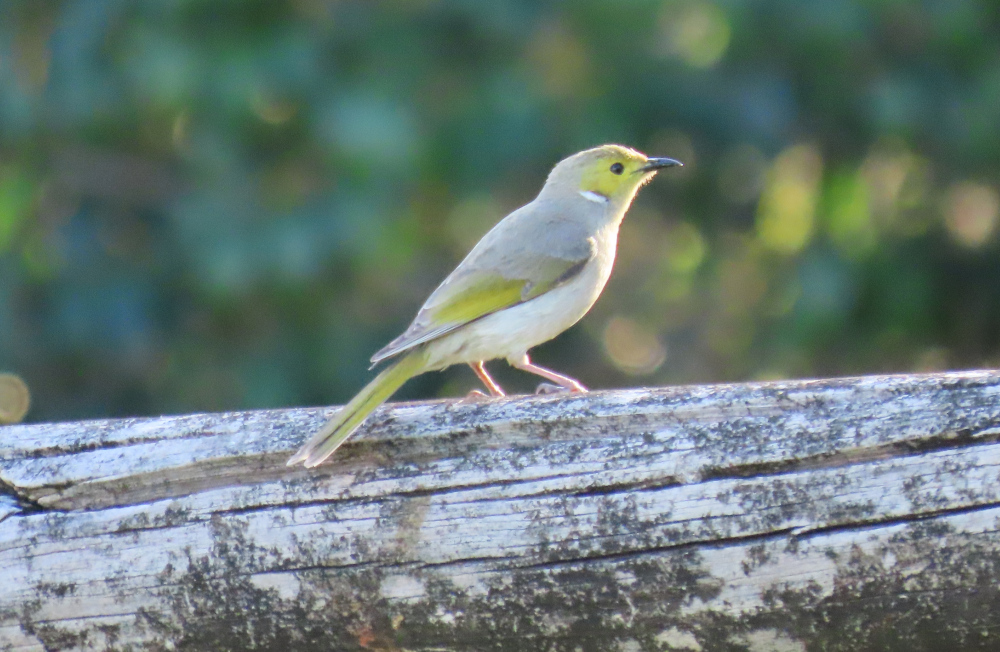
Common name: White-plumed Honeyeater
Scientific name: Lichenostomus penicillatus
Approximate length: 15-17 cm
Date spotted: 12 September 2025 (spring)
Location: Denman, NSW, Australia: 32°23’35.5″S 150°41’08.9″E
Peaceful Dove calling
In Merriwa, NSW, the call of a Peaceful Dove sounds out above the early morning bird chorus:
Peaceful Doves are small doves, coloured shades of grey with an apricot tinge, and a blue ring of bare skin around the eye.
Common name: Peaceful Dove
Scientific name: Geopelia placida
Approximate length: 20-24 cm
Date spotted: 13 September 2025 (spring)
Location: Merriwa, New South Wales, Australia: 32°23’36.0″S 150°41’07.8″E

Brown Falcon and Black-shouldered Kite having a barney
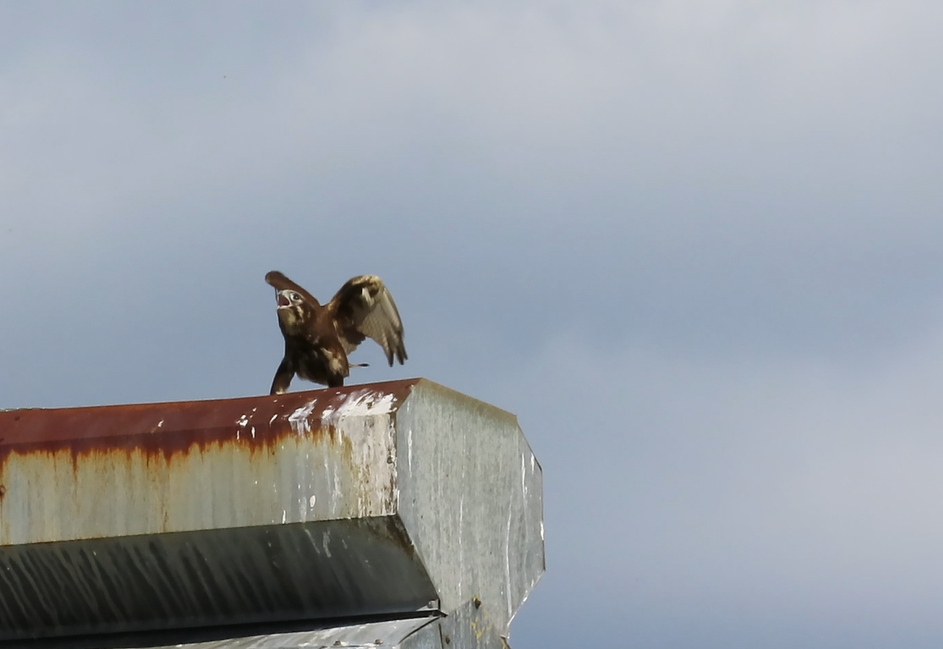
I was looking for the silo art in Merriwa, New South Wales, when I came across a Brown Falcon and a Black-shouldered Kite having a disagreement.
This is my first sighting of a Brown Falcon. It was cool to see the bird doing some aerial acrobatics!
The action goes down very fast! I’ve taken some stills from the video, to make it easier to see what happens:


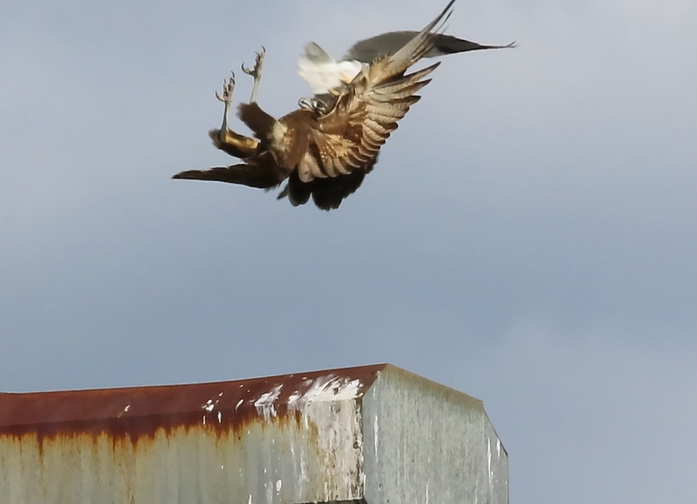
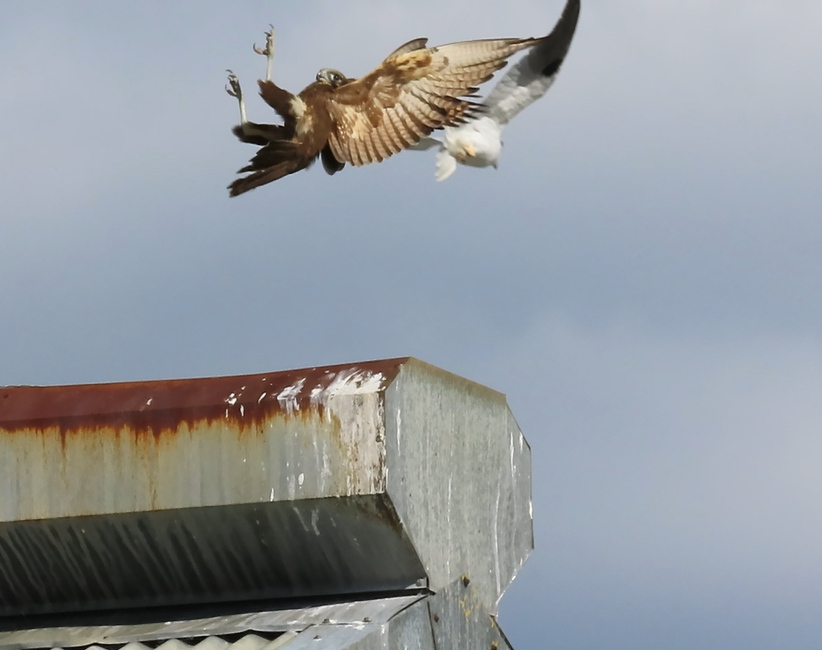

Despite the aerial competence, Brown Falcons feed mostly on the ground, eating reptiles, beetles and grasshoppers, mice, and carrion. Look at those long legs and strong feet, good for picking off the unwary prey as it makes its way across a field or a road.
Here’s a shot of the Brown Falcon taking a rest after the action was over:

Common name: Brown Falcon and Black-shouldered Kite
Scientific name: Falco Berigora and Elanus axillarus
Approximate length: 40-50 cm (Brown Falcon) and 35 cm (Black-shouldered Kite)
Date spotted: 12 September 2025 (spring)
Location: Merriwa, New South Wales, Australia: 32°08’14.9″S 150°21’50.6″E
For those interested in the silo art, here it is! The Merriwa Silos are the 29th addition to the Australian Silo Art Trail Collection. The artwork was completed by David Lee Pereira in April 2019:


Red-rumped Parrots in Merriwa and Denman
Recently, I spent a couple of days in the area around Denman and Merriwa, New South Wales. The bird life there is abundant, with some birds that we don’t see in my area (the eastern coast near Sydney). Among those are Red-rumped Parrots. This is my second sighting of these birds, and this week I was lucky enough to see three groups of them.
My first sighting was in Denman, in the early morning when the lighting was too dim for good photographs. I’ve posted just one photograph, because it’s my only shot of a female Red-rumped Parrot:

In Merriwa, the birds were busy in the middle of the day, when the lighting was much brighter. First, a video of a male bird foraging amongst the grass stalks:
Here’s a still photo of the same male bird:

Red-rumped Parrots get their name from the red patch on their backs, near the base of the tail. This photo shows the red rump nicely:
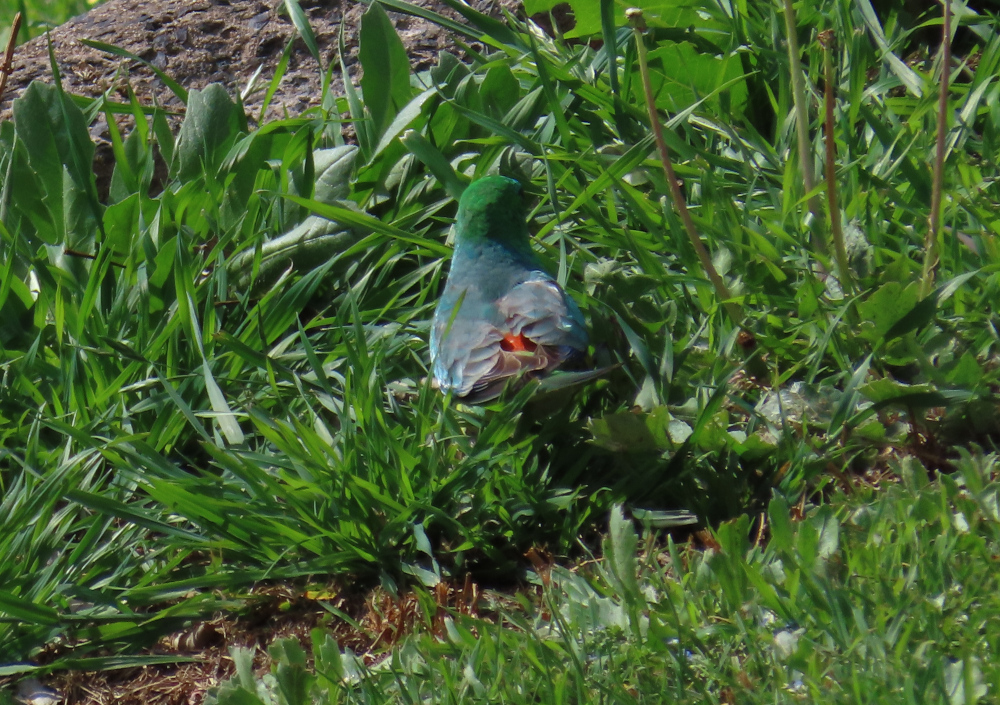
These little parrots are small and hard to spot when they’re on the ground. Often, all that you see is an eye looking at you:

Common name: Red-rumped Parrot
Scientific name: Psephotus haematonotus
Approximate length: 26-28 cm
Date spotted: 12 September 2025 (spring)
Location: Merriwa, New South Wales, Australia: 32°08’18.7″S 150°20’58.8″E

Rose-crowned Fruit Dove near Sydney
My first sighting of a Rose-crowned Fruit Dove in the wild!
A few days ago, I saw a social media post saying that people were seeing a Rose-crowned Fruit Dove in Manly, just north of Sydney. I was surprised, because these birds are more common further north. I verified the sightings on eBird, then went to see if I could find the bird.
My first few trips were fruitless, though there was a lot of fruit around, in the form of Blueberry Ash berries! When I later spotted a Rose-crowned Fruit Dove, it was in the midst of these blue berries.
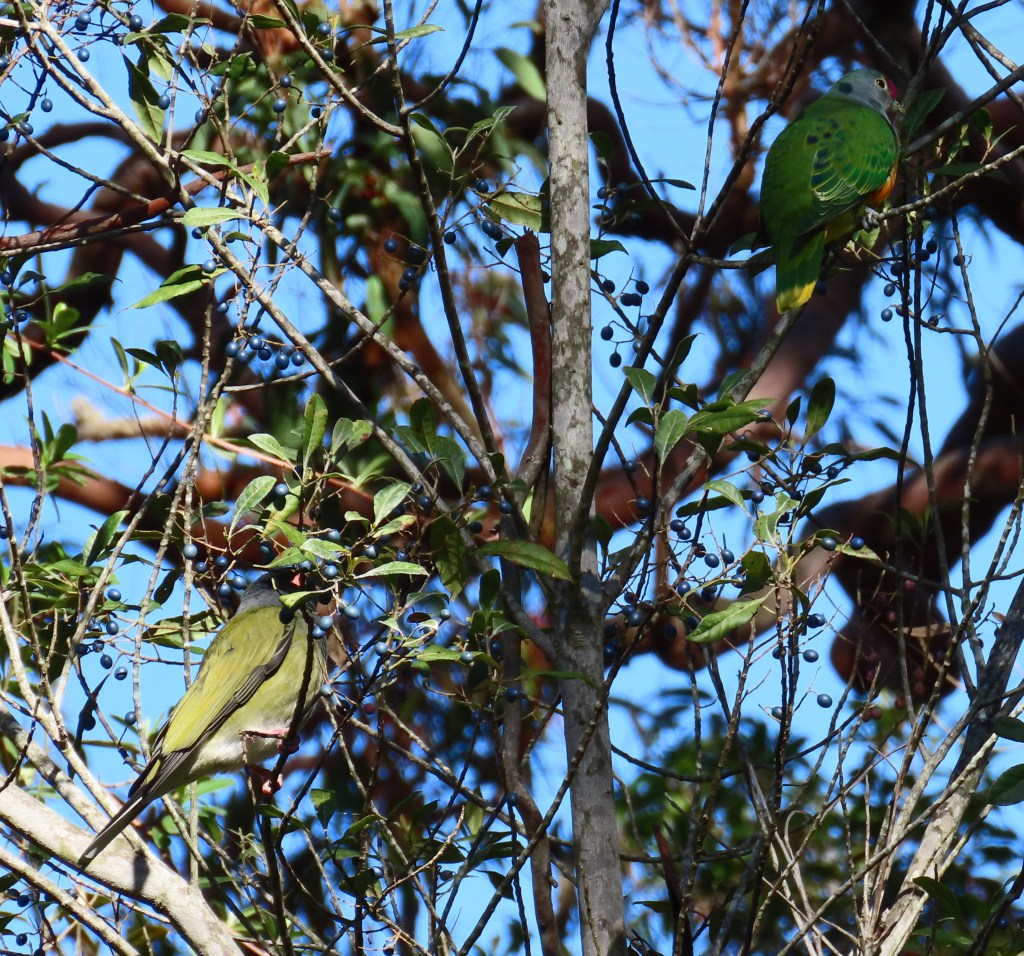
Rose-crowned Fruit Doves are amazingly colourful — not what first comes to my mind when I think of doves. They get their name from the pink patch just above their beaks. The back and wings are a striking emerald green, and the front is a soft grey on the chest, moving to bright yellow and orange on the belly, then merging into a more lime-coloured green under the tail:

A frontal view shows the chest and belly, as well as the good strong legs and feet:

The dove had some competition for the berries from other birds. In particular, a group of figbirds moved in and started a bit of a squabble. The next photo shows the Rose-crowned Fruit Dove at top right and a figbird at bottom left. The photo gives a good view of the dove’s emerald green back:
Here’s a short video of the dove moving around:
Common name: Rose-crowned Fruit Dove
Scientific name: Ptilinopus regina
Approximate length: 22-24 cm
Date spotted: 7 September 2025 (spring)
Location: Manly North Head, Sydney Harbour National Park, New South Wales, Australia: 33°48’35.7″S 151°17’32.8″E
Evidently Rose-crowned Fruit Doves migrate to follow the fruit. They’ve been spotted breeding in this area too, and other people have seen a couple of juveniles in the same area recently.
One of the nicest experiences about this sighting was the bird watchers that I met. On the day when I actually saw Rose-crowned Fruit Dove, there was a group of people all pointing their cameras in the same direction. I was immediately fairly sure the bird was there, and indeed it was. People were generous in pointing out the bird and making sure I had a good spot to get my photos:


Wild cockatoos come up close for a chat
This morning, I was out for a walk in the bush near Sydney, Australia, when I spotted two Sulphur-crested Cockatoos on a bush overhanging the path. As I came along the path, I spoke softly to the birds, as I often do. It’s partly because they’re so friendly-looking (anthropomorphism, I know!) and partly in the hope that I won’t scare them unduly. Many birds seem to respond well to being spoken to.
When I was close, the two cockatoos glided down to join their mates on the bank of a creek just below. I crouched down to take some photos. After a couple of minutes, the group of birds fluttered up and joined me on my rocky outcrop. They were on the ground next to me, just a foot or so away. It was a lovely, though slightly daunting, experience.
In the video, you can hear some Grey Fantails and a Golden Whistler, as well as the cockatoos.
Here’s one of the cockatoos on the bush overhanging the path, before the bird dropped down to join the gang on the bank of the creek. It’s enjoying an Acacia seed pod:

Common name: Sulphur-crested Cockatoo
Scientific name: Cacatua galerita
Approximate length: 50 cm
Date spotted: 29 August 2025 (winter)
Location: Manly Dam Reserve, New South Wales, Australia: 33°46’50.9″S 151°14’52.3″E

Two fairy-wrens amid the eggs and bacon flowers
Fairy-wrens are pretty little puffs of feathers, with long tails that stick up into the air rather endearingly. They move fast and are notoriously difficult to photograph. Most of my fairy-wren photos end up as blurs. This morning, I was luckier.
The fairy-wrens in our area are Variegated Fairy-wrens. Here’s a male, with his stunning coat of blue, black, rusty red, and creamy-white:
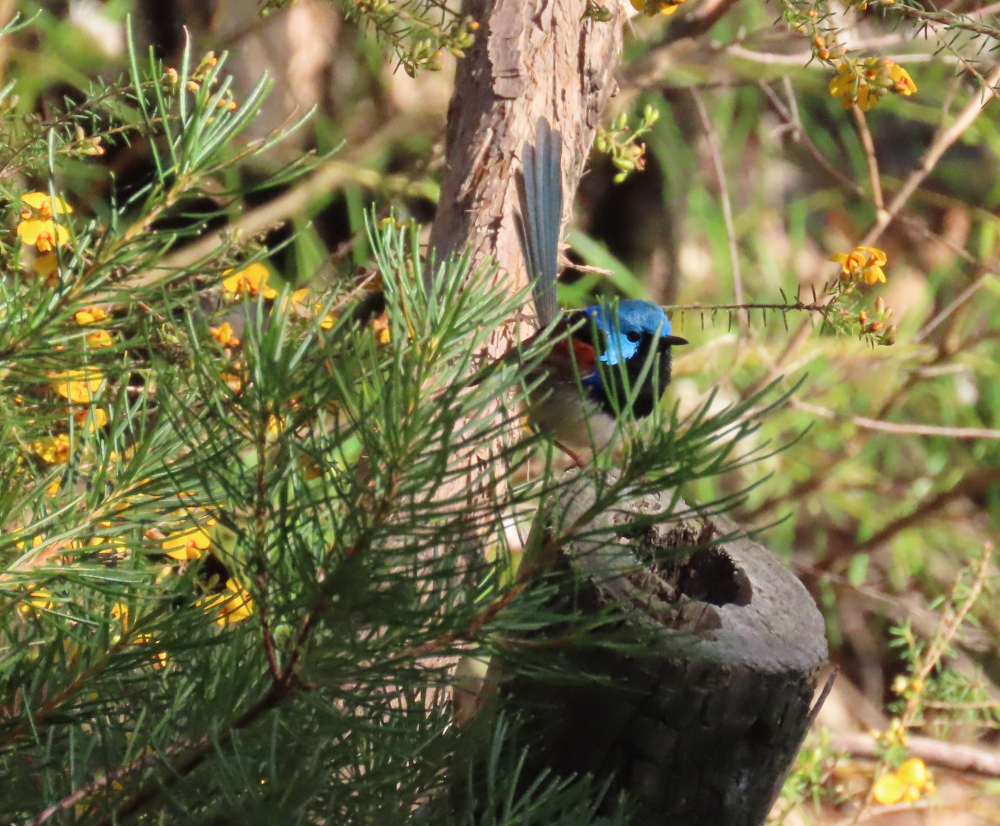
The flowers are, I think, Dillwynia elegans — also known as the Eggs And Bacon Flower or Parrot Pea. These flowers are tiny, but look a decent size next to the little wrens.
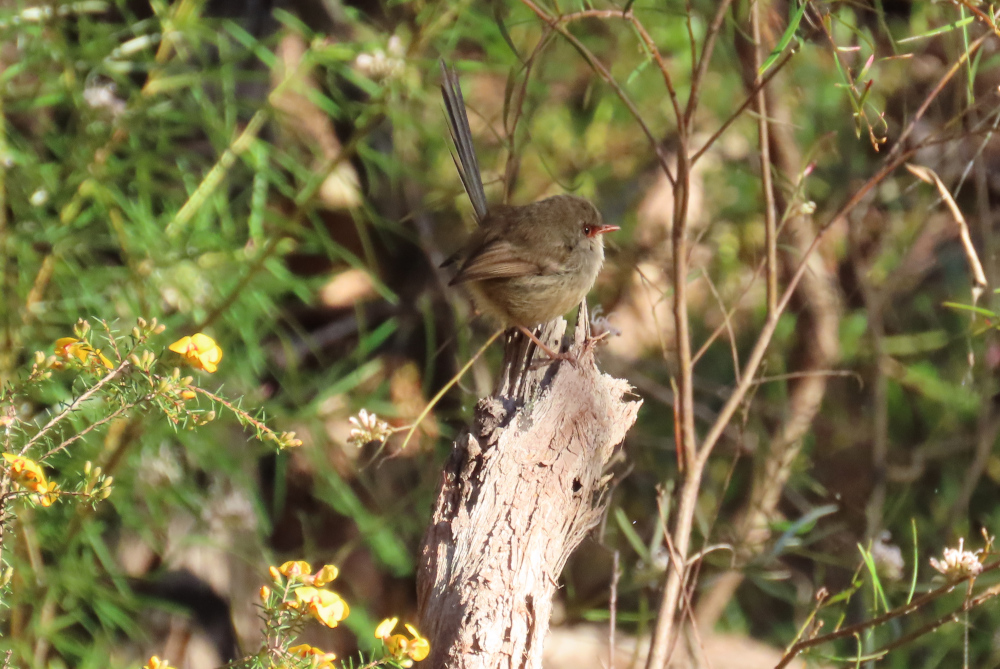
Here’s the female (or perhaps a juvenile), with her red eye mask and muted brown colouring. In the right light, her tail gleams a soft blue:
Common name: Variegated Fairy-wren
Scientific name: Malurus lamberti
Approximate length: 13 cm
Date spotted: 29 August 2025 (winter)
Location: Manly Dam park, near Sydney: 33°46’53.5″S 151°15’01.8″E
Swamp Wallaby in the flowers
A few days ago in Manly Dam park, I saw this sweet little wallaby on a hillside covered with pink flowers (Boronia). In recent weeks, there’s been a wallaby on this hill each time I’ve passed by. I don’t know if it’s the same wallaby, but I’m thinking maybe it (or they) like the flowers as much as I do.
Swamp Wallabies are a type of small kangaroo (macropod) found in eastern Australia. They’re dark grey in colour, with rust-red fur around their ears and chest particularly during breeding season. They’ll hop away as you approach, then turn round and watch you from a safe distance.
Although this is primarily a bird blog, I’ve published a few other posts about wallabies too!

Sooty Oystercatcher
Every now and then, I spot an Oystercatcher on one of the rocky plates on our sea shores. They’re usually hard to photograph, being such a sooty black and usually keeping far away from humans. This weekend, two of them broke the pattern.
I was in Wollongong, on the east coast of Australia just south of Sydney. Two Sooty Oystercatchers were pottering around on the rocky plate right next to the beach, prying food out of the crevices. This video shows only one of the birds:
They have long thin beaks, a striking orange in colour. Their eyes are ringed in a matching orange, and their legs are pinky-orange too, turning to yellow around the toes.
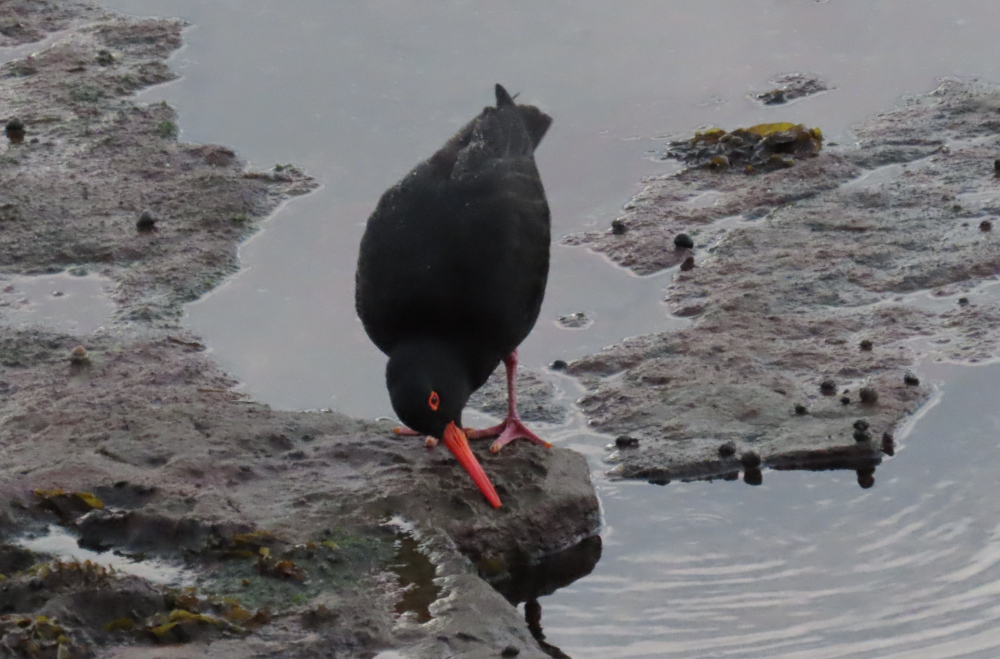
These birds are listed as uncommon, and scarce on disturbed beach areas. It’s good to see them just doing what Oystercatchers do.
Common name: Sooty Oystercatcher
Scientific name: Haematopus fuliginosis
Length: 40-52 cm
Date spotted: 9-10 August 2025 (winter)
Location: Wollongong, New South Wales, Australia: 34°25’04.4″S 150°54’08.8″E
Learning how to be a Yellow-tailed Black Cockatoo
Strolling along a path at Manly Dam, I came across a group of Yellow-tailed Black Cockatoos. It’s always a treat being with these birds. They’re the quiet giants of the cockatoos in south eastern Australia. They sit on Banksia trees or, in this case, Casuarinas, chewing the seeds and chuntering to each other. Occasionally, one of the birds floats up into the air and glides to another branch.
In the group were two juveniles, making that almost-constant crooning noise that characterises them. I think it’s partially a request for food, and partially a reminder to the adult birds of where the little ones have got too.
This youngster hasn’t quite figured out what to do with a Casuarina seed pod. He finds one on the ground, touches it to his beak, then drops it. Nearby, an adult shows him how it’s done:
A little later, the youngster has climbed into a tree. Instead of tackling those hard seed pods, though, he practices wielding his beak on the bark:
Common name: Yellow-tailed Black Cockatoo
Scientific name: Calyptorhynchus funereus or Zanda funereus
Length: 58-65 cm
Date spotted: 24 July 2025 (winter)
Location: Manly Dam Reserve, New South Wales, Australia: 33°46’42.5″S 151°14’59.1″E


 Sydney Birder