Category Archives: Birds
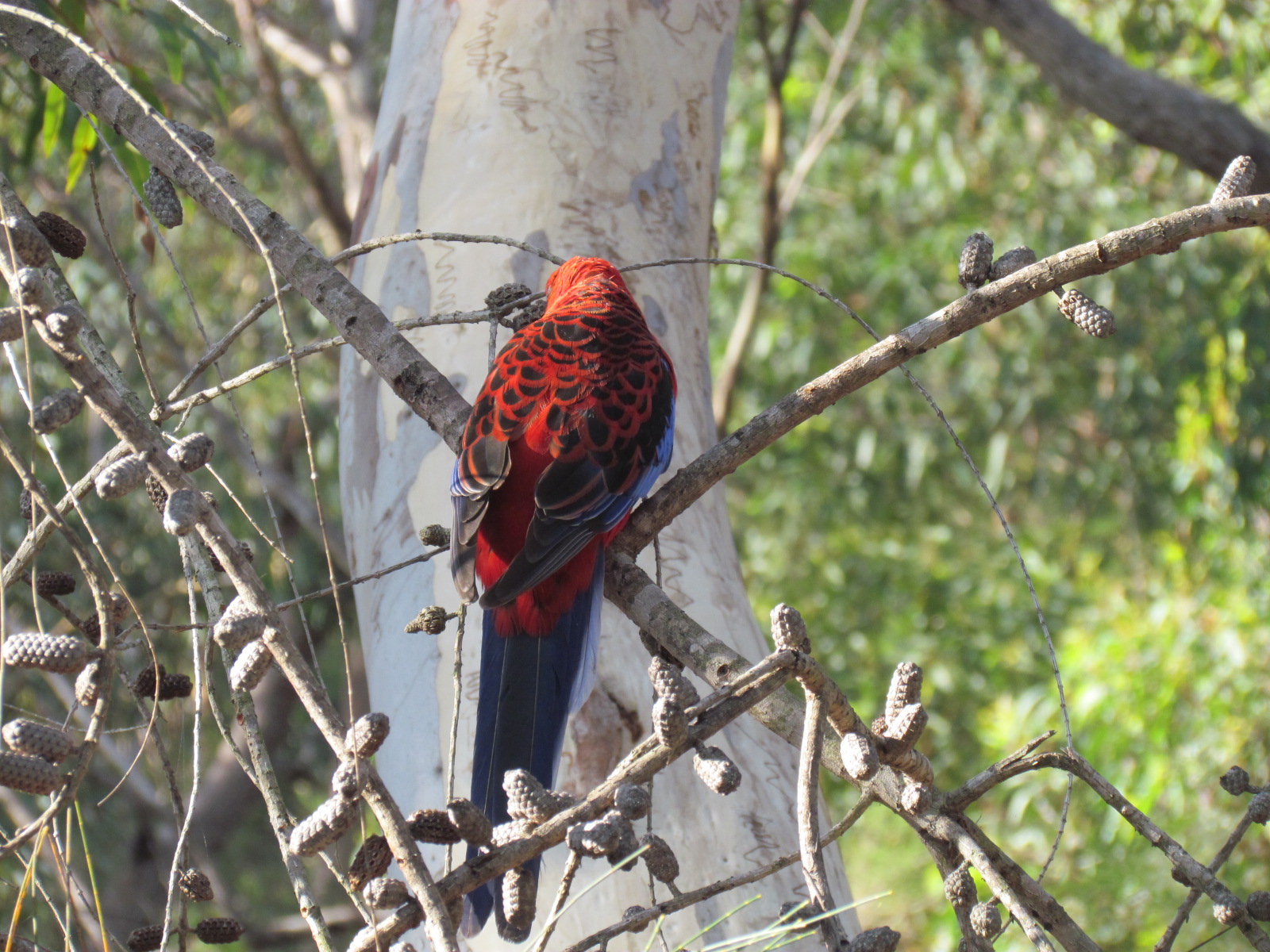
Crimson Rosella feeding on bottlebrush seeds
Usually when you spot a Crimson Rosella, there’s another one close by. This time, though, I could only see one. It was contentedly nibbling at the seeds on a bush – a bottlebrush, I think. [Update on 24 April: It’s not a bottlebrush, but Scrub She-oak, Allocasuarina distyla. Thanks to Carol Probets for the comment!]
The male and female Crimson Rosella look very similar, with the male being larger. I don’t know whether this one was male or female.

These birds are so pretty, even though this one was moulting, so a little shabby in places.

From the rear, the feathers are quite intricate in pattern:
Common name: Crimson Rosella
Scientific name: Platycercus elegans elegans
Approximate length: 35 cm
Date spotted: 12 February 2017 (Summer)
Location: Manly Dam Reserve, New South Wales, Australia: 33°46’58.4″S 151°15’11.8″E
Darter drying wings then taking off
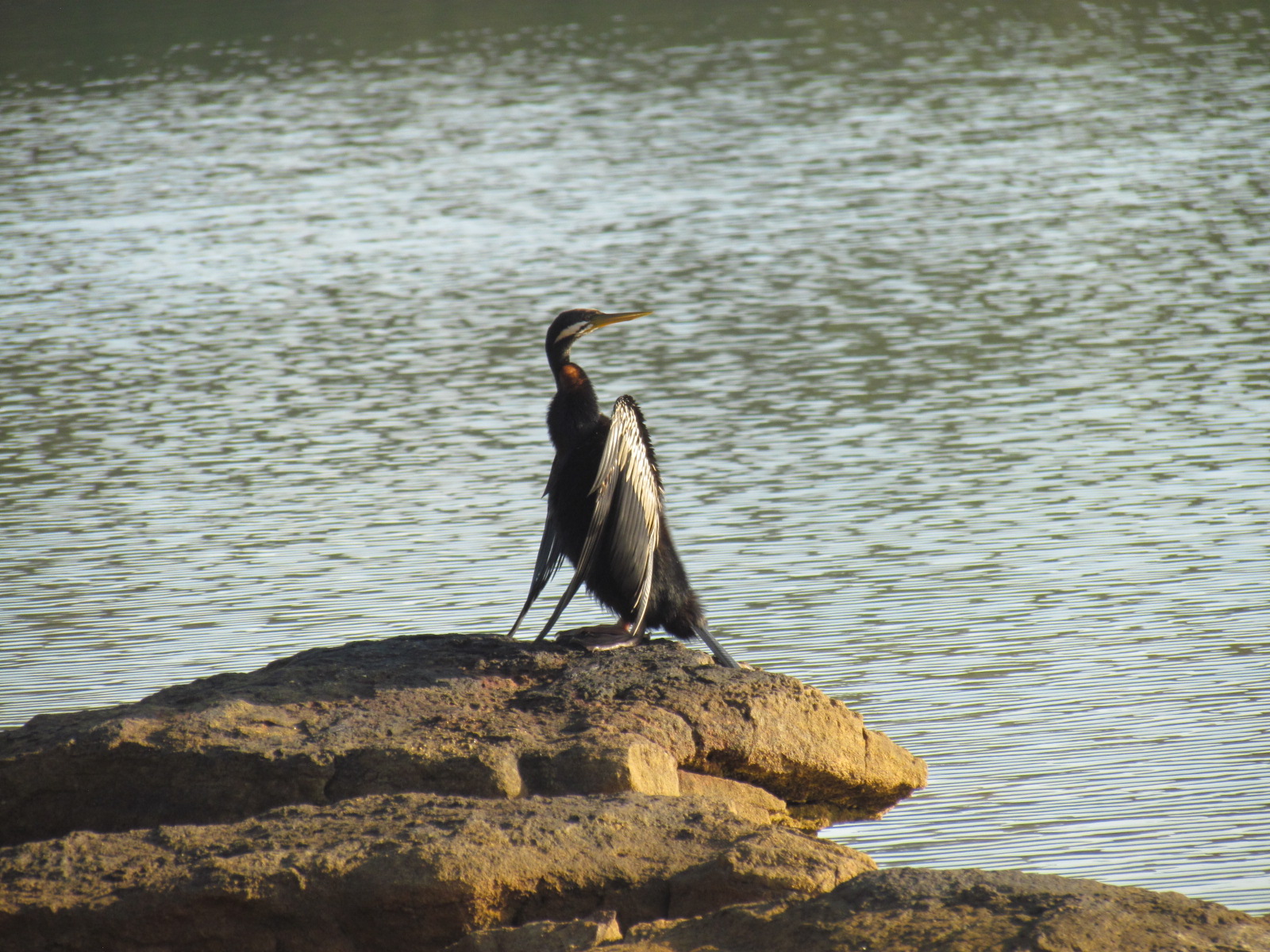
At first sight I thought this bird was a cormorant, but it’s actually a darter, also known as a snake bird because of its long, snake-like neck. Darters are related to cormorants, and also to boobies and gannets. They swim fast under water, hunting and impaling fish with their formidable long, thin beak.
Like cormorants, they sit on shore with their wings spread to dry. After I’d been watching this one for a few minutes, it decided to take off and fly over the water. It’s interesting to see how low it flies, with the wing tips actually tapping the water as it goes.
This pose reminded me of the ballet, the Dying Swan:

Here you can see the characteristic chestnut colouring at the base of the darter’s neck:
Common name: Darter
Scientific name: Anhinga melanogaster
Approximate length: 90 cm; wing span: 1.2 m
Date spotted: 12 February 2017 (Summer)
Location: Manly Dam Reserve, New South Wales, Australia: 33°46’49.6″S 151°15’05.7″E
Two chirpy Variegated Fairy-wrens
Followers of this blog will know that I’m building up a collection of pictures of fairy wrens, bit by hard-won bit! They’re tiny little birds that like to flit around the undergrowth, granting observers tantalising glimpses but not much more.
These two female Variegated Fairy-wrens were out in the open for a few seconds, which has to be some kind of record. They’re chirping sociably to each other as they hop along next to a bush path.
Common name: Variegated Fairy-wren
Scientific name: Malurus lamberti
Approximate length: 13 cm
Date spotted: 12 February 2017
Season: Summer
Location: Manly Dam Reserve, New South Wales, Australia: 33°46’47.9″S 151°15’02.7″E
Purple Swamphens tending a nest
A pair of Purple Swamphens busily tends a nest. This video shows the changing of the guard, as one parent arrives to relieve the other from nest duties.
Sometime later, the bird on the nest had been calling for some time, perhaps growing lonely or bird. The roaming parent suddenly started flapping its wings and making a big fuss about approaching the nest. But then it veered away and continued foraging, apparently not yet ready to resume nest sitting.
I don’t know if there are eggs in the nest yet, though the way the bird moves around in the second half of the video makes me think it’s carefully positioning itself over an egg or two.
Common name: Purple Swamphen
Scientific name: Porphyrio porphyrio
Approximate length: 50 cm
Date spotted: 29 January 2017
Season: Summer
Location: Manly Dam Reserve, New South Wales, Australia: 33°46’35.4″S 151°14’49.1″E
Mystery bird at Manly Dam
This bird puzzles me. It’s about the size of a Red Wattlebird, and I’m thinking it’s some sort of Honeyeater, but I can’t find a match in my bird book. Perhaps it’s a juvenile.
Does anyone have any ideas what it is? I saw it today at Manly Dam Reserve near Sydney (on the map: 33°46’37.5″S 151°14’49.5″E).
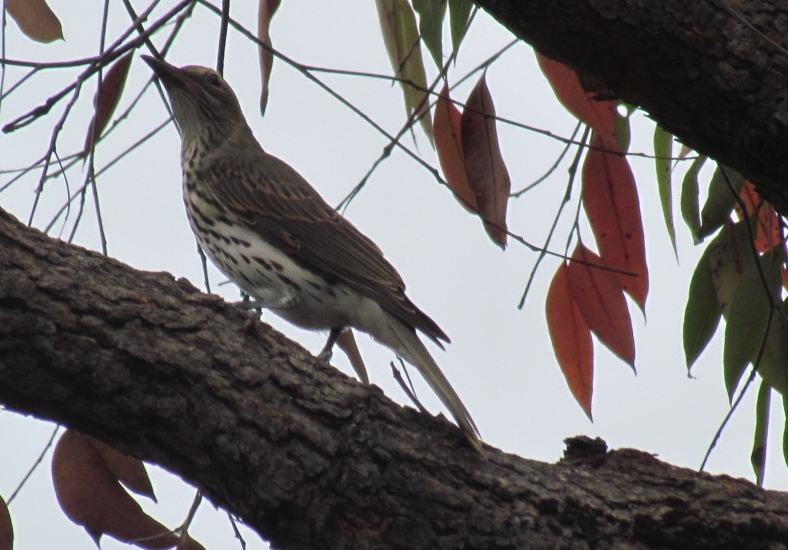
Here’s the uncropped version of the same picture:

Update on 24 April 2017: Carol Probets identified the bird as a young Olive-backed Oriole, in a comment on this post.
Common name: Olive-backed Oriole
Scientific name: Oriolus sagittatus
Approximate length: 25-28 cm
Date spotted: 29 January 2017 (Summer)
Location: Manly Dam Reserve, New South Wales, Australia: 33°46’37.5″S 151°14’49.5″E
Magpie serenade
Two magpies hopped onto a branch and serenaded each other as I walked past. They had to battle a fairly fierce wind, as you can see from the ruffled state of their feathers.
Common name: Australian Magpie
Scientific name: Gymnorhina tibicen
Approximate length: 40 cm
Date spotted: 26 January 2017
Season: Summer
Location: Long Reef near Dee Why, New South Wales, Australia: 33°44’21.1″S 151°18’30.8″E
Reflection symmetry and a coot
Manly Dam was quiet and calm when I strolled along its shores early this morning. I was struck by the patterns made by these reeds and their reflections in the water.

It’s a little mind boggling, isn’t it? Where does the real reed start and end? The finest of abstract art. Here’s the same set of reeds but with more around them:
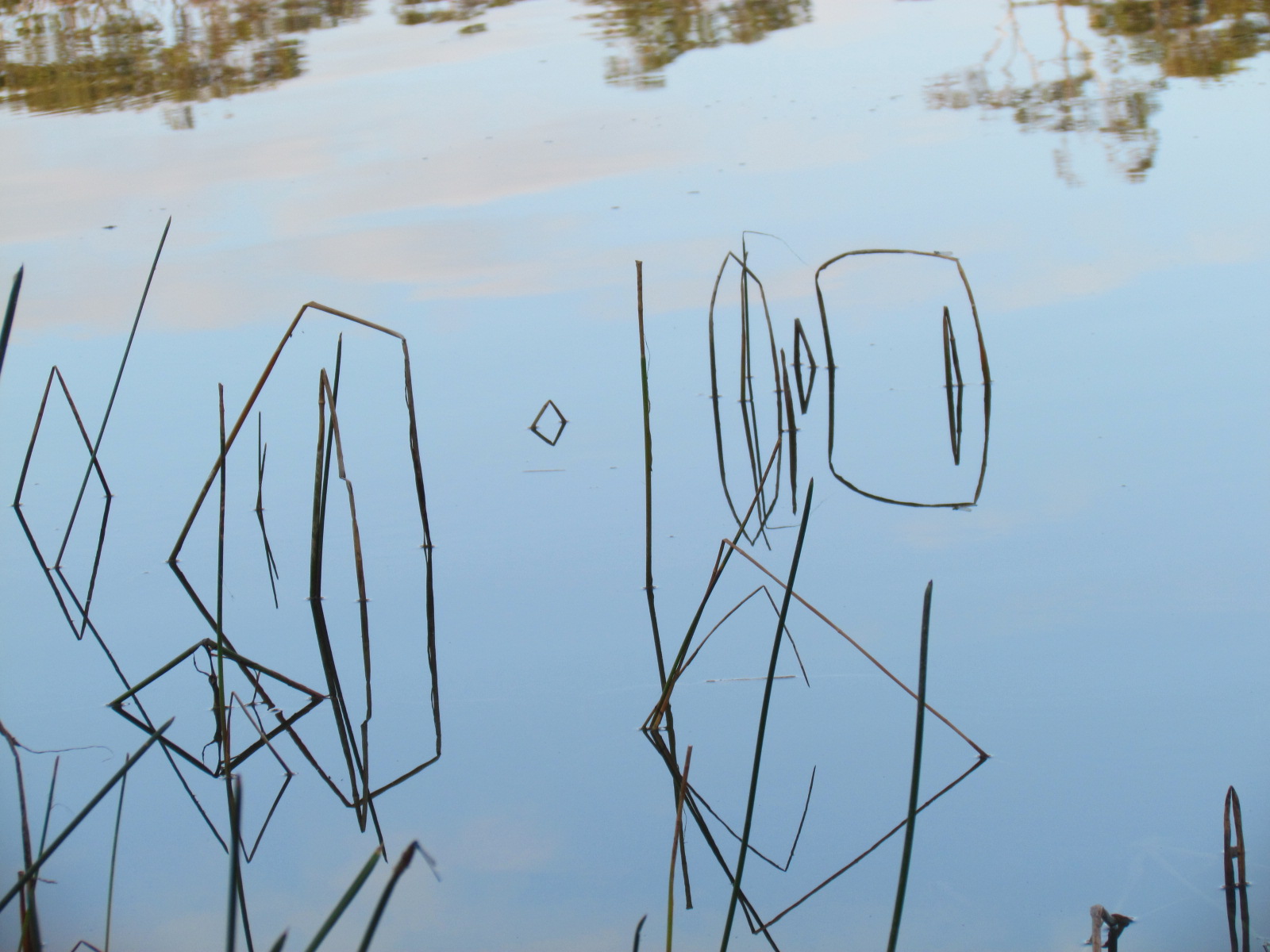
A different configuration:
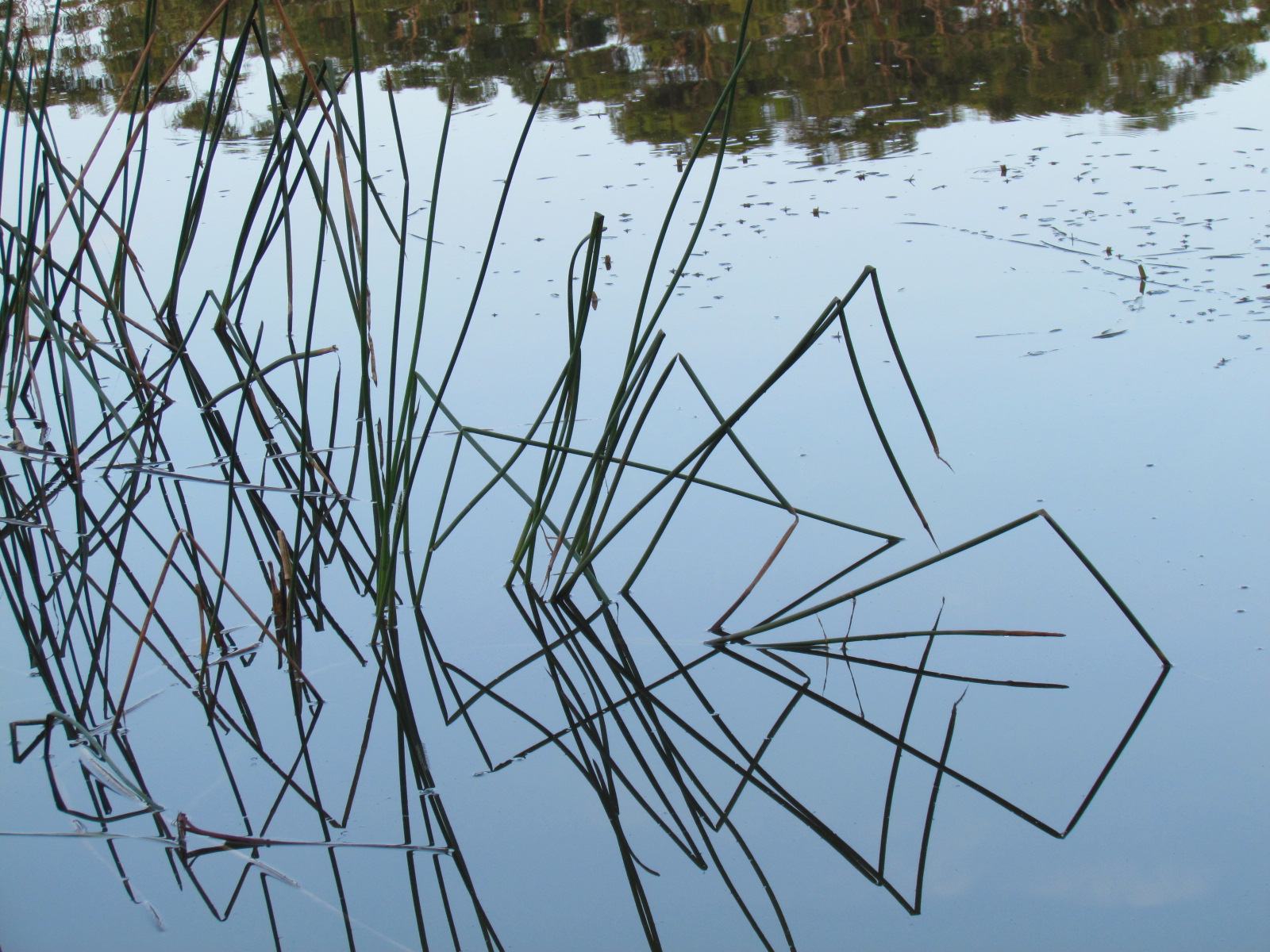
Another shape to bend your mind:

Bubbles had reflections too:

Since this is a blog about birds, I should probably include one. 😉 This Eurasian Coot was enjoying the morning quiet:

Here’s the bird again, tucked away in the centre left of this mass of reflections:
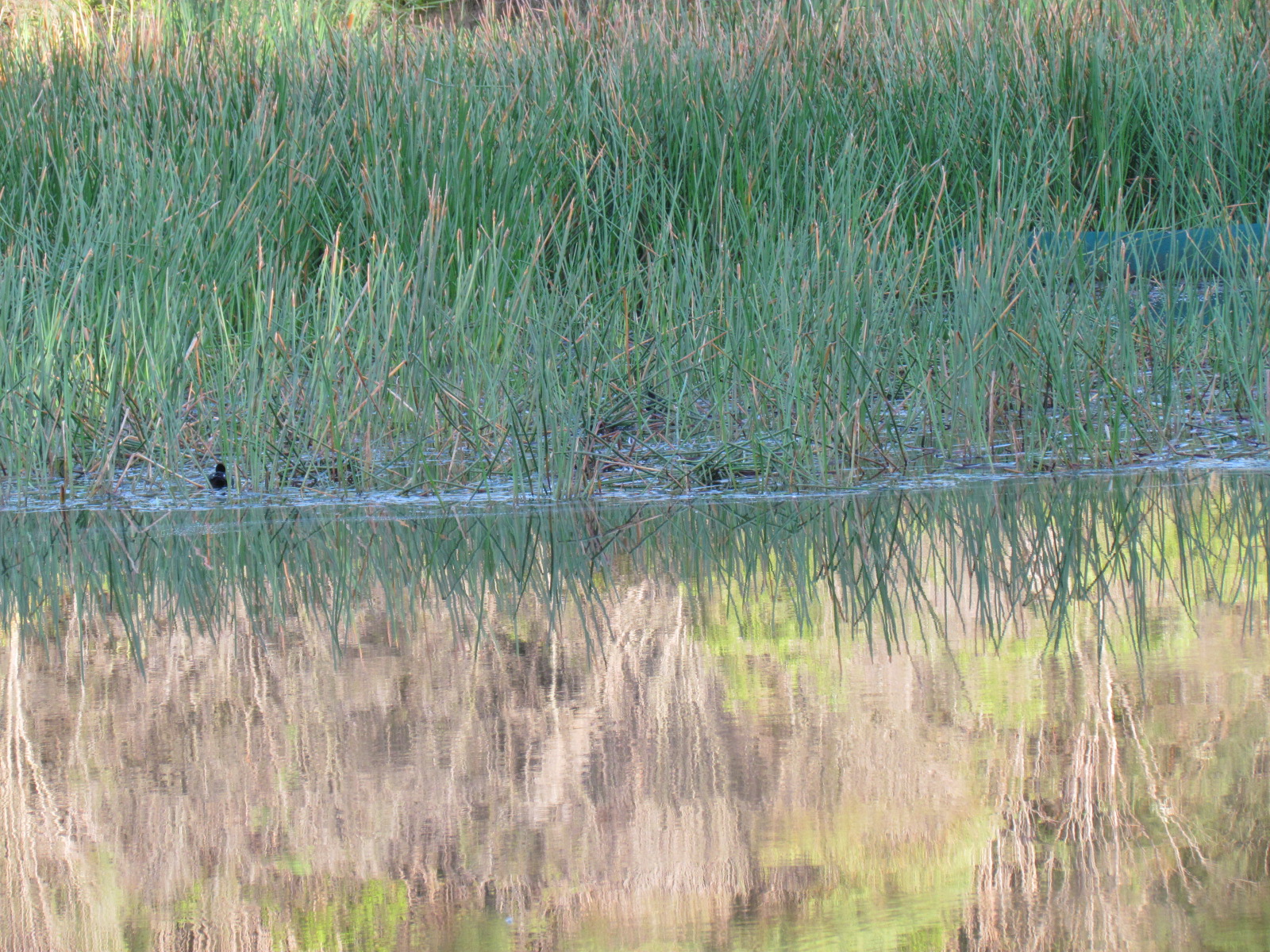
Common name: Eurasian Coot
Scientific name: Fulica atra
Approximate length: 35 cm
Date spotted: 22 January 2017
Season: Summer
Location: Manly Dam Nature Reserve, New South Wales, Australia: 33°46’27.9″S 151°15’05.5″E
Masked Lapwing’s face looks like a Lego model
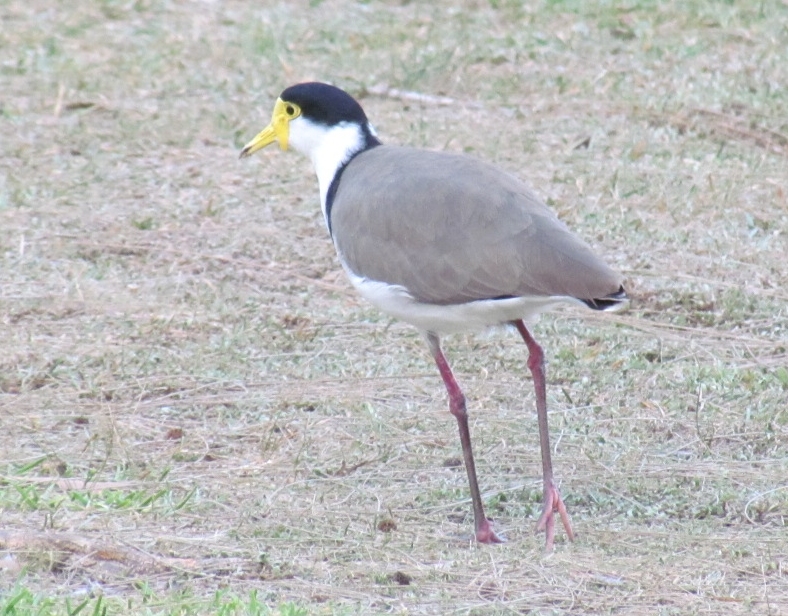
I spotted two Masked Lapwings at Manly Dam, near Sydney, Australia, this morning. They’re also known as Spur-winged Plovers. They can be quite aggressive, especially in nesting season. The name “spur-winged” is apt, because they have hooks on their wings, one on each, which they use as weapons, stretching the wings then dragging back to wound their enemy. But these two were quietly going about their business, pottering around the edges of Manly Dam.
Their faces make me think of a model put together with Lego. They’re so perfect, and yet they seem not quite real.

They have lovely knobbly knees and big pink feet:
In this video, one of the birds advances tentatively, testing each step:
Here’s a zoomed out shot showing the two birds in their environment:

Common name: Masked Lapwing, or Spur-winged Plover
Scientific name: Vanellus miles
Approximate length: 37 cm
Date spotted: 15 January 2017
Season: Summer
Location: Manly Dam Nature Reserve, New South Wales, Australia: 33°46’58.8″S 151°15’18.4″E
Kookaburra baby cackling and feeding
The kookaburras around our neighbourhood are very noisy at the moment. A couple of juveniles drop by regularly to practise their cackling skills. They’re cute and funny.
In this video, you can see one youngster crooning to himself, and another behind the branches. In the background, other birds chime in to show him how it’s done. A parent comes by a couple of times too, to feed the ever-demanding little one.
Common name: Laughing Kookaburra
Scientific name: Dacelo novaeguineae
Approximate length: 47 cm
Date spotted: 31 December 2016
Season: Summer
Location: Allambie Heights, New South Wales, Australia
Kookaburras cranking up for a cackle
You’ve probably heard kookaburras in full voice, cackling and hooting raucously. I think the sound they make when they’re preparing for a full-voice yodel is funny and cute. It happens in particular when there’s a group of birds. They chunter at each other, perhaps in warning or perhaps companionably. They sound a bit like rusty saws in a dusty attic.
These two were in a tree high above my lounge window:
I encountered this disreputable, slightly dangerous looking character deep in the bush:
Common name: Laughing Kookaburra
Scientific name: Dacelo novaeguineae
Approximate length: 47 cm
Date spotted (second video): 26 December 2016
Season: Summer
Location (second video): Manly Dam Nature Reserve, New South Wales, Australia: 33°46’50.4″S 151°14’59.6″E


 Sydney Birder