Monthly Archives: June 2023

My first Lewin’s Honeyeater
Australia hosts several types of honeyeater, and I’ve spotted a few of them over the lifetime of this blog. Recently I saw my very first Lewin’s Honeyeater:
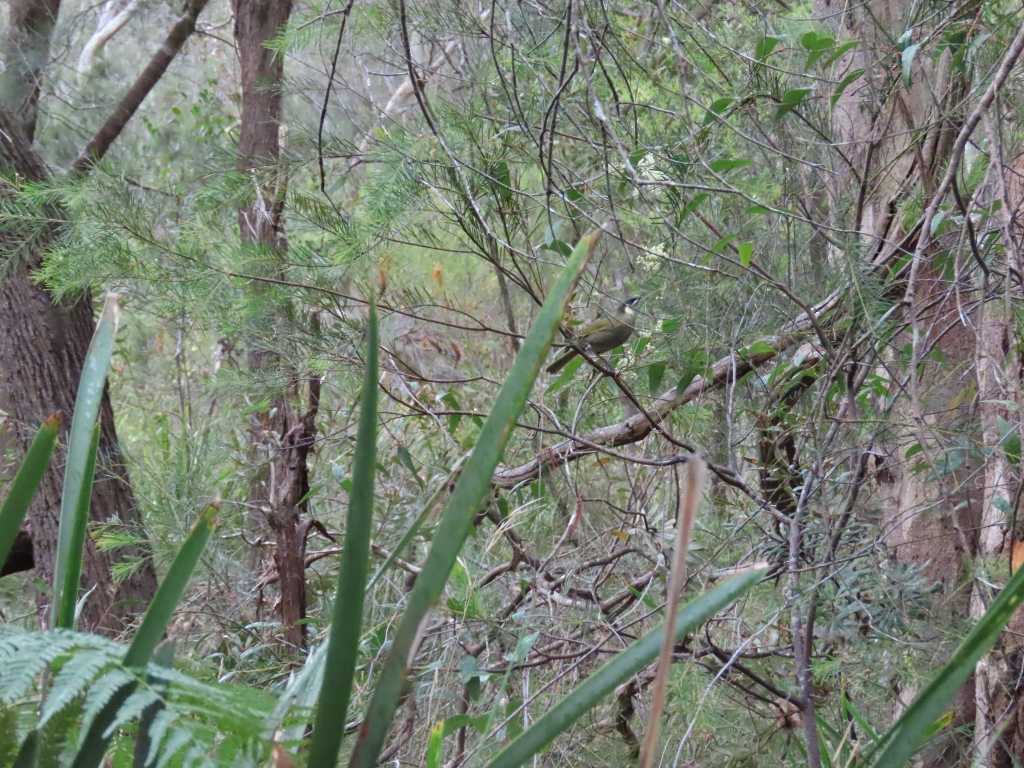
Lewin’s Honeyeater is a medium-sized bird. As is the case with other honeyeaters, nectar forms a major part of their diet. They also eat fruits and insects. They have a distinctive, crescent-shaped yellow ear patch as well as a light yellow stripe under each eye.
According to my bird book, they’re “abundant”, especially in the wetter areas of eucalypt forests. I’ll keep a look out now that I know they’re around.
Common name: Lewin’s Honeyeater
Scientific name: Meliphaga lewinii
Approximate length: 19-22 cm
Date spotted: 5 June, 2023 (winter)
Location: Manly Dam Reserve, New South Wales, Australia: 33°46’47.6″S 151°14’53.2″E

Female Golden Whistler?
It’s taken me ages to identify this bird. At first I thought it was a robin of some sort, but the colouring isn’t quite right. My best bet is a female Golden Whistler:
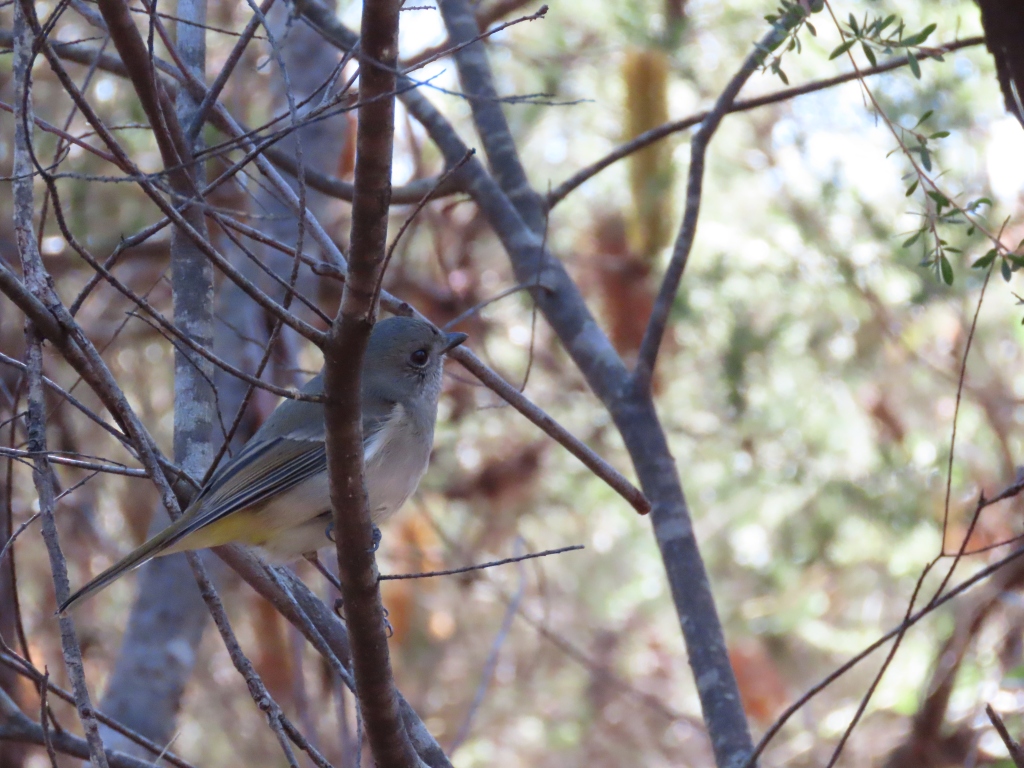
The bird is small and neat, with large dark eyes. It’s mostly grey in colour, with a striking yellow patch under the tail and olive hints on the wings. The bird was quite inquisitive, and perched not far off to examine me, with a green twig in its beak.

I’ve filmed male Golden Whistlers before: pictures and videos of the Golden Whistler’s song.
Common name: Golden Whistler
Scientific name: Pachycephala pectoralis
Approximate length: 16-18 cm
Date spotted: 16 June, 2023 (winter)
Location: Manly Dam Reserve, New South Wales, Australia: 33°46’52.4″S 151°15’07.2″E

Grey Fantail waving its tail
Grey Fantails are fairly common around my neck of the woods. The problem is that they move so fast, it’s hard to get them in a camera frame. A couple of days ago, one of the little birds kept going back to the same tree to show off its skills. So, with a bit of patience, I was able to get some video footage:
In the video, you can see the bird’s typical behaviour pattern: it makes its way up a tree trunk, waving its tail, then it drops suddenly down to ground level, before starting again. In the background, the orange Banksia flower heads glow in the sunlight.
Here’s a still picture of that fanned tail catching the light:
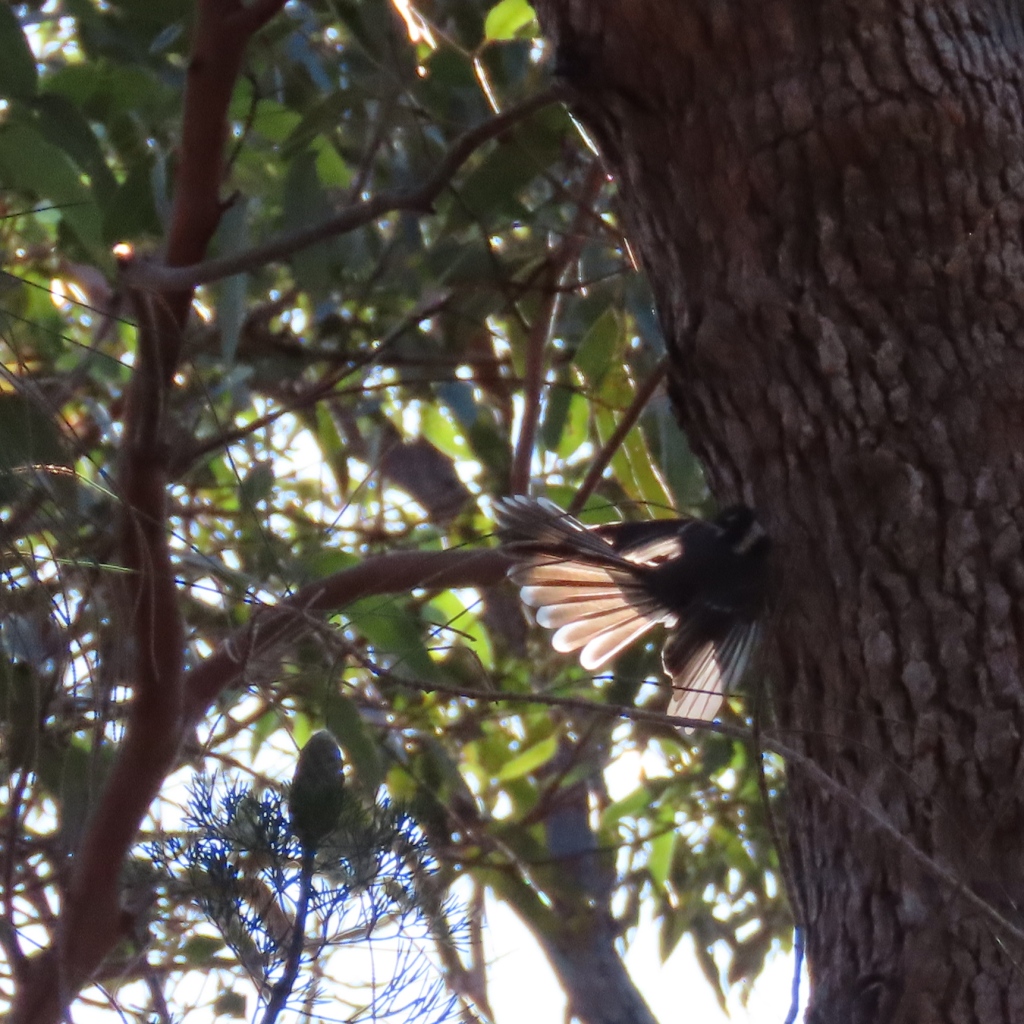
A couple of slightly-fuzzy images give you a better idea of what the bird looks like:
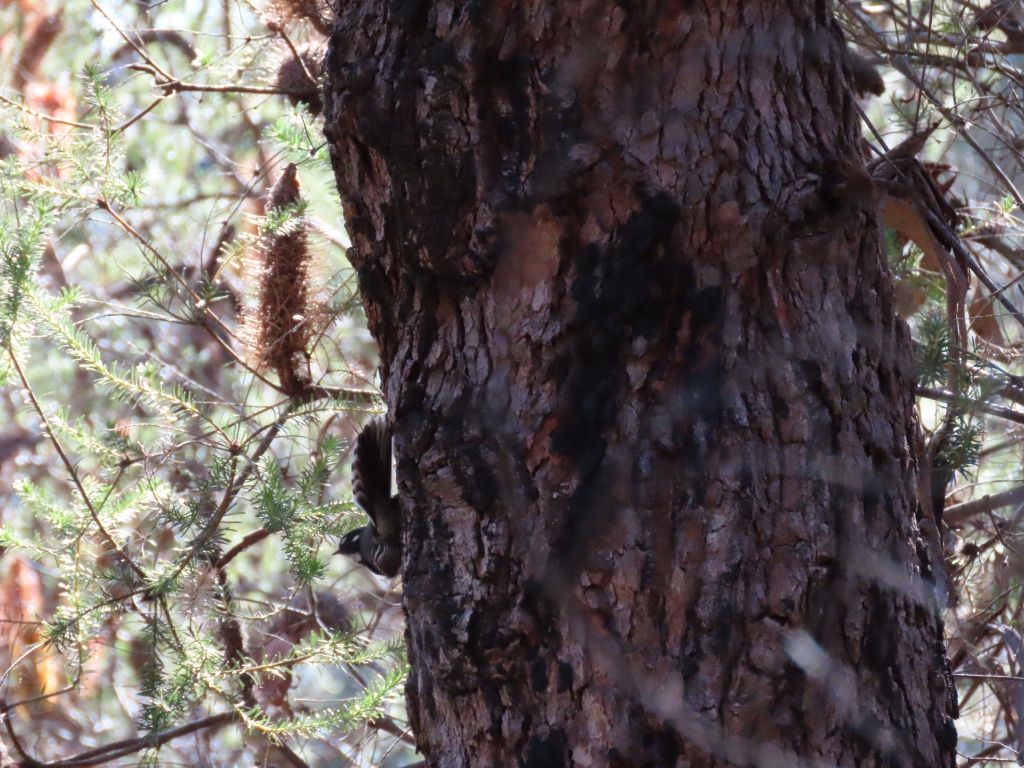
It’s a small bird (about 15 cm from head to tail). This one is quite dark in colour, with its black head and collar markings below the white throat.
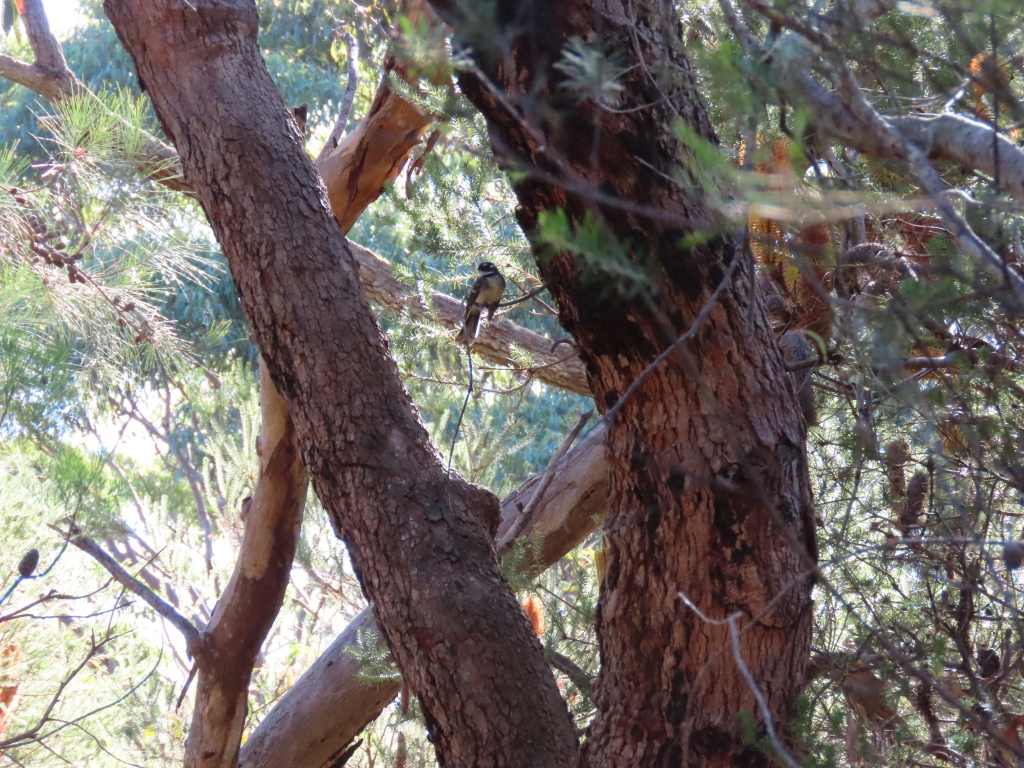
A few weeks ago, I saw another Grey Fantail in a location close to this one. Both birds were on the shores of Manly Dam, about 700 meters apart. This one is quite a lot lighter in colour:


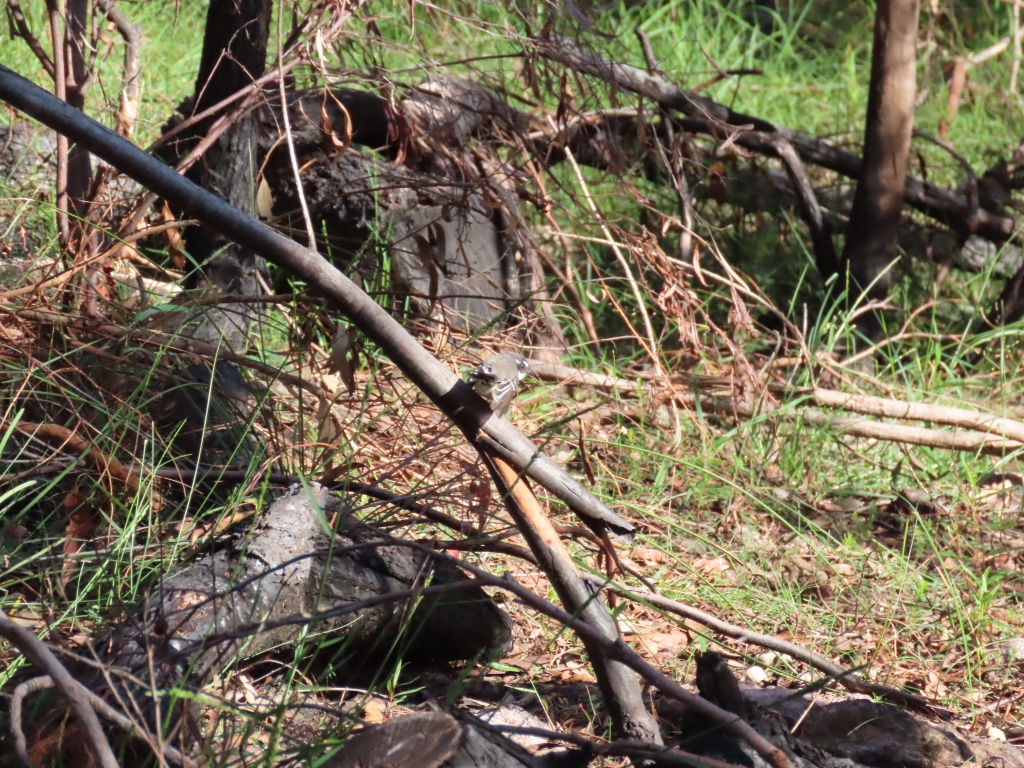
If you’d like to hear what Grey Fantails sound like (squeaky) or see other videos and photos of these birds, check out the list of my fantail blog posts.
Common name: Grey Fantail
Scientific name: Rhipidura fuliginosa
Approximate length: 14-17 cm
Date spotted: 16 June and 10 June, 2023 (winter)
Location: Manly Dam Reserve, New South Wales, Australia: 33°46’52.4″S 151°15’07.2″E and 33°46’37.9″S 151°14’48.5″E

Post-fire scenes from the Australian bush
The National Parks and Wildlife Service recently conducted a hazard reduction burn in one of my favourite bush-walking areas. The NPWS lights these controlled fires to burn away excess vegetation, which reduces the chance of a more severe fire raging out of control during fire season.
Many of the plants in the Australian bush are adapted to cope with fires. For example, these Hakea seedpods popped open after the fire, allowing the seeds to escape:
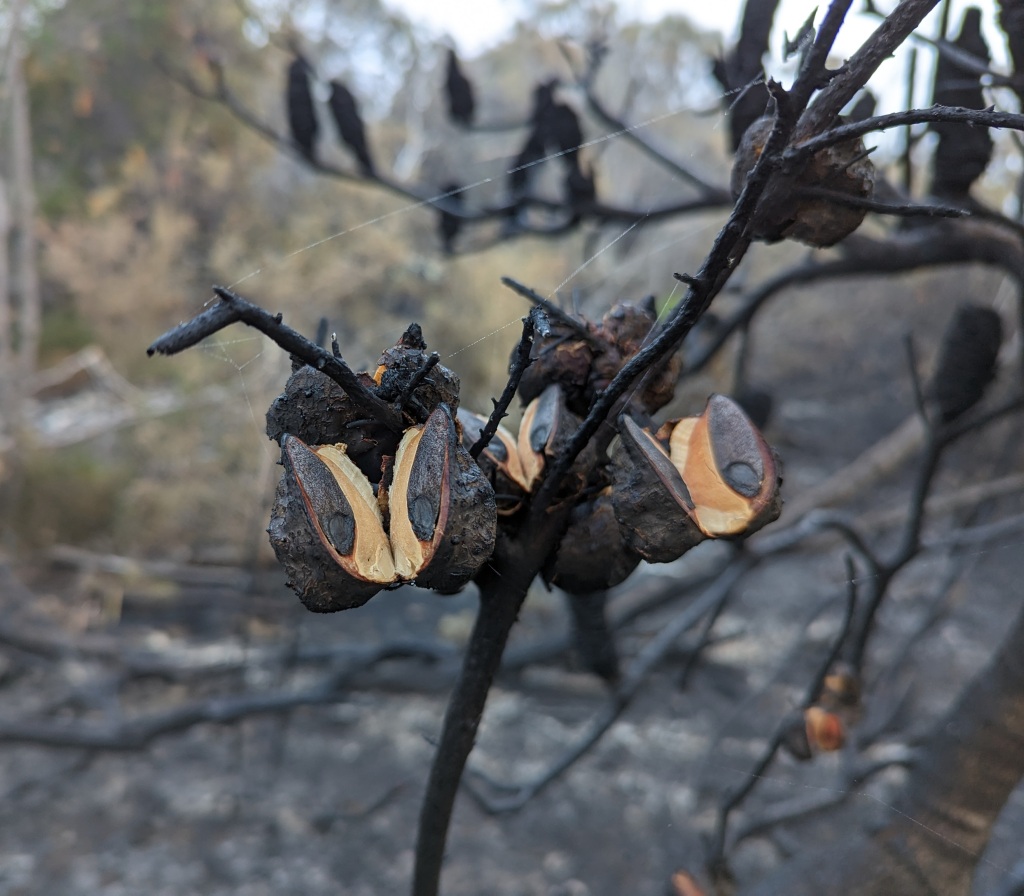
The above seed pods have both seeds still in place — the seeds are black and oval-shaped. Each seed is attached to a thin membrane, which acts as a wing: when the seed is released, it spirals gently to the ground. If there’s any wind around, the seed can travel a short distance from its parent bush.
In the next photo, only one of the seeds remains in the pod:

The next photo shows the seed head of a Banksia bush, also popped open to release the seeds. The open pods look like smiling mouths:

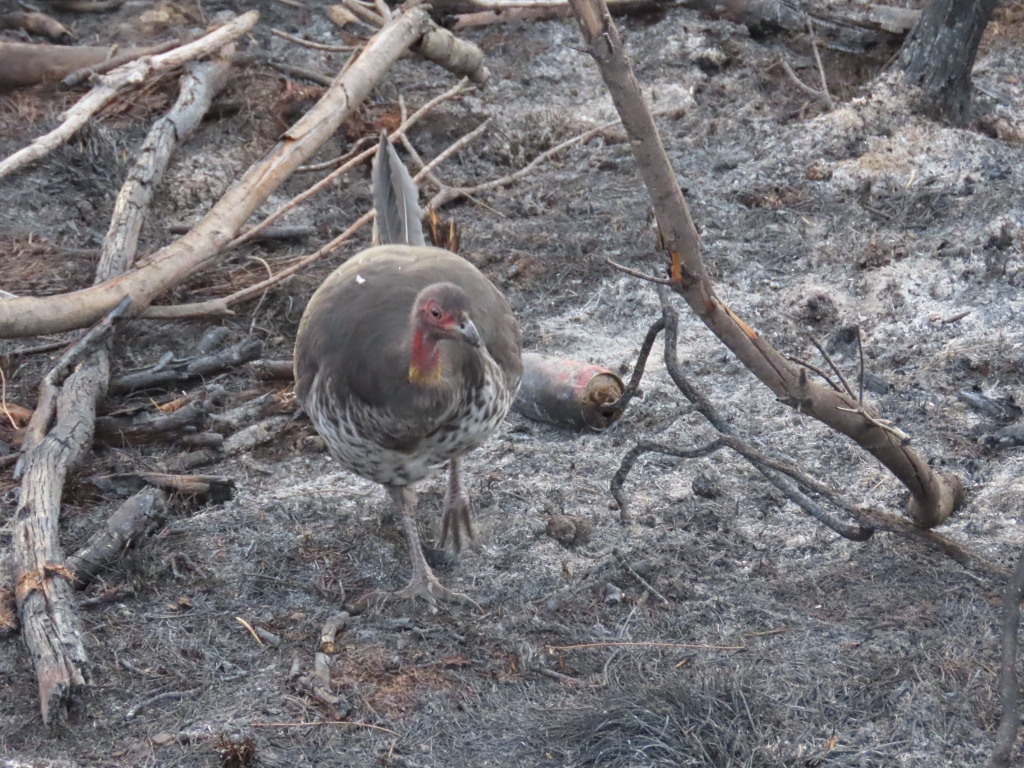
An Australian Brush-turkey wanders over the ashes, looking for pickings. A discarded can echoes the bird’s colouring:
Nearby, Australian Ravens look for insects and other goodies:

A Currawong keeps a watchful eye over the proceedings:

A Rainbow Lorikeet adds a splash of colour, hoping to snag a Casuarina seed or two:
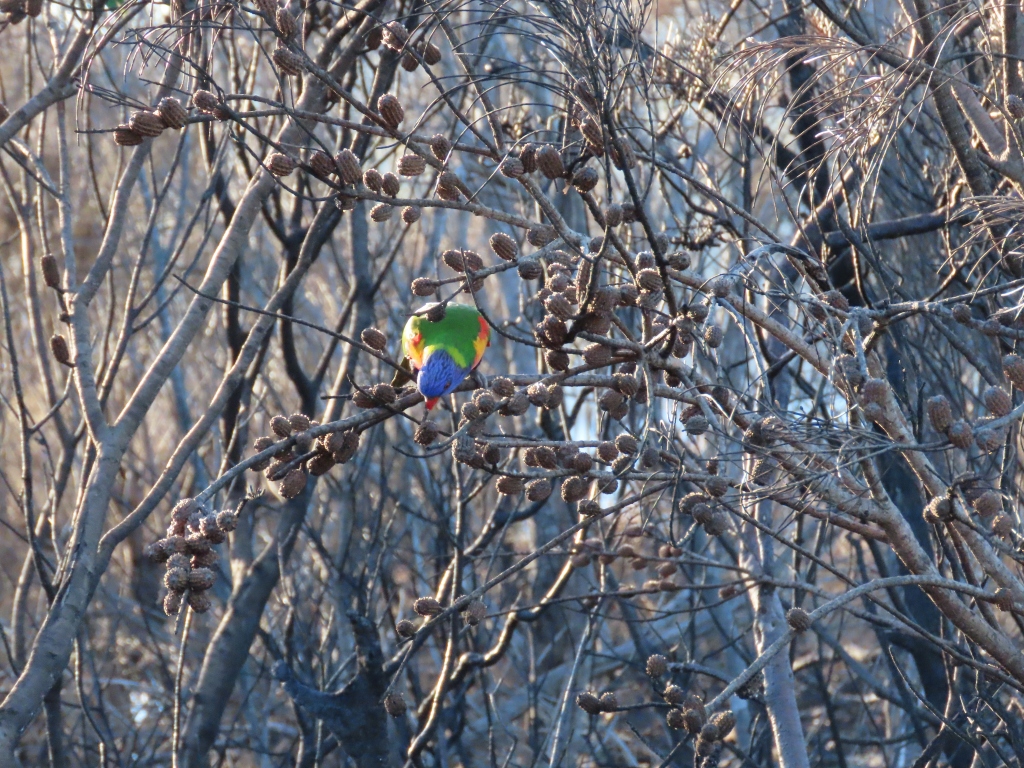
It’s much easier to grab a seed now that the fire has dried out the seedpods!
A week later, a Swamp Wallaby shared the browns and greys of the burned area too:
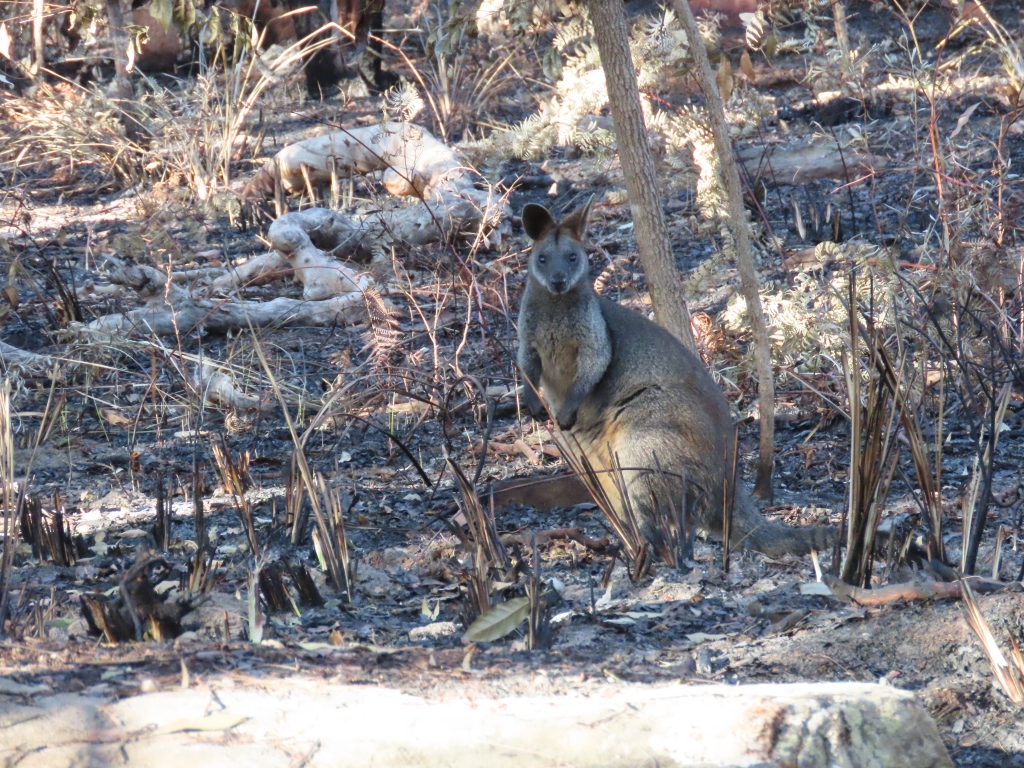
Here’s a video of the wallaby. At one stage, a plane flies overhead and a group of birds squawk loudly. The wallaby looks at me, checking whether I’m the cause of the disturbance, then goes calmly about its business:
To close, here’s a restful scene of the post-fire forest in the early morning light:

Date spotted: Early June, 2023
Location: Dobroyd Head, Sydney Harbour, NSW, Australia; between this point and this point on the map.
Territory! Ravens vs Lorikeets
The National Parks and Wildlife Service recently did a hazard reduction burn in the area where I often go for a walk. This morning, a group of Rainbow Lorikeets occupied some bare branches with a strategic view of the newly cleared area. Right next door, a collection of ravens had the same idea. They viewed each other for a while, then all hell broke loose.
Turn up the volume to get the full effect! Listen to the bawling ravens and the scolding parrots. When things really get hectic, hear the whop-whop-whop of wings swooping overhead.
Here’s a closeup of some of the ravens, in their best villain pose:
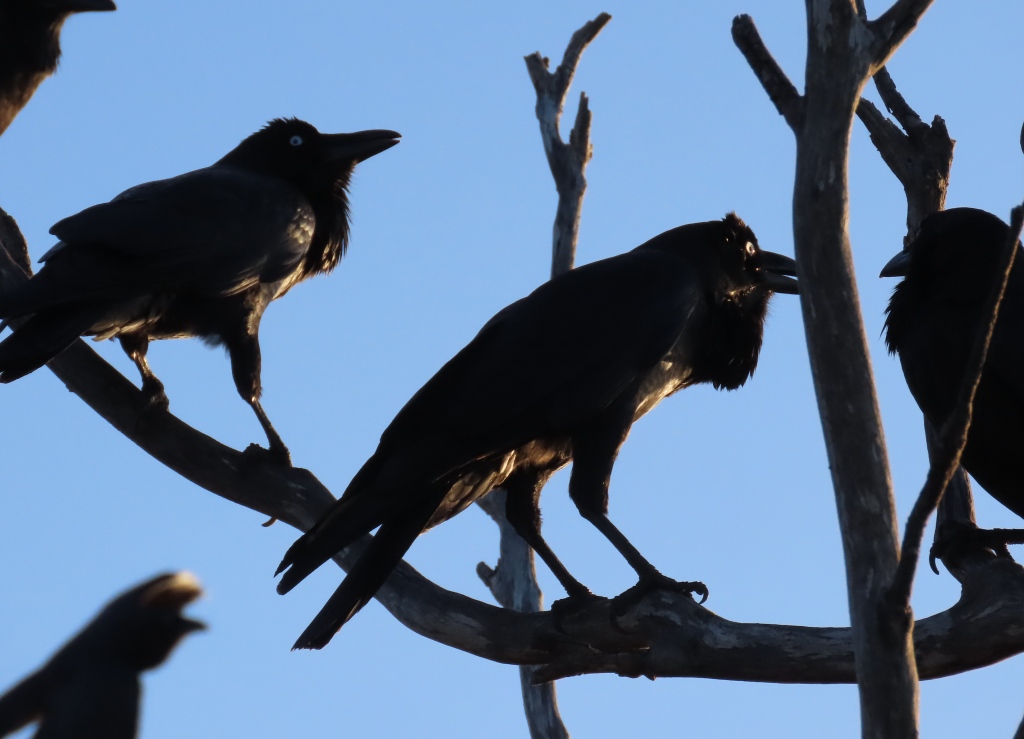
Common name: Australian Raven
Scientific name: Corvus coronoides
Approximate length: 50 cm
Date spotted: 10 June 2023 (winter)
Location: Dobroyd Head, New South Wales, Australia: 33°48’36.6″S 151°16’23.9″E
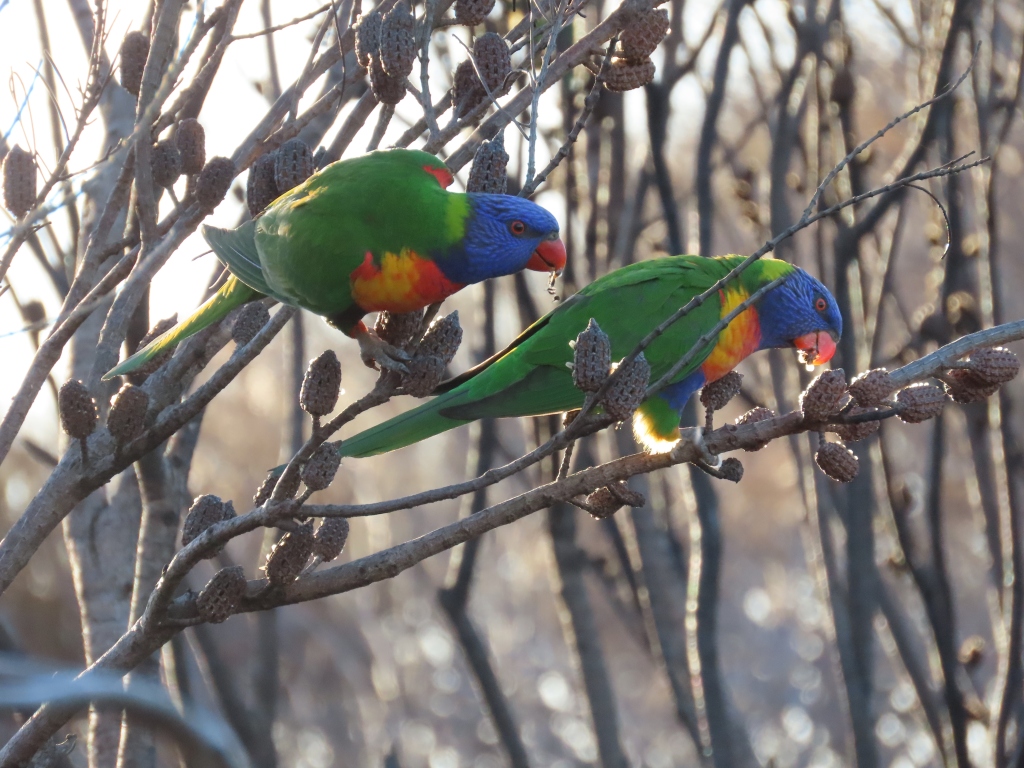
And the I’m-so-pretty, butter-wouldn’t-melt-in-my-mouth pose of the lorikeets:
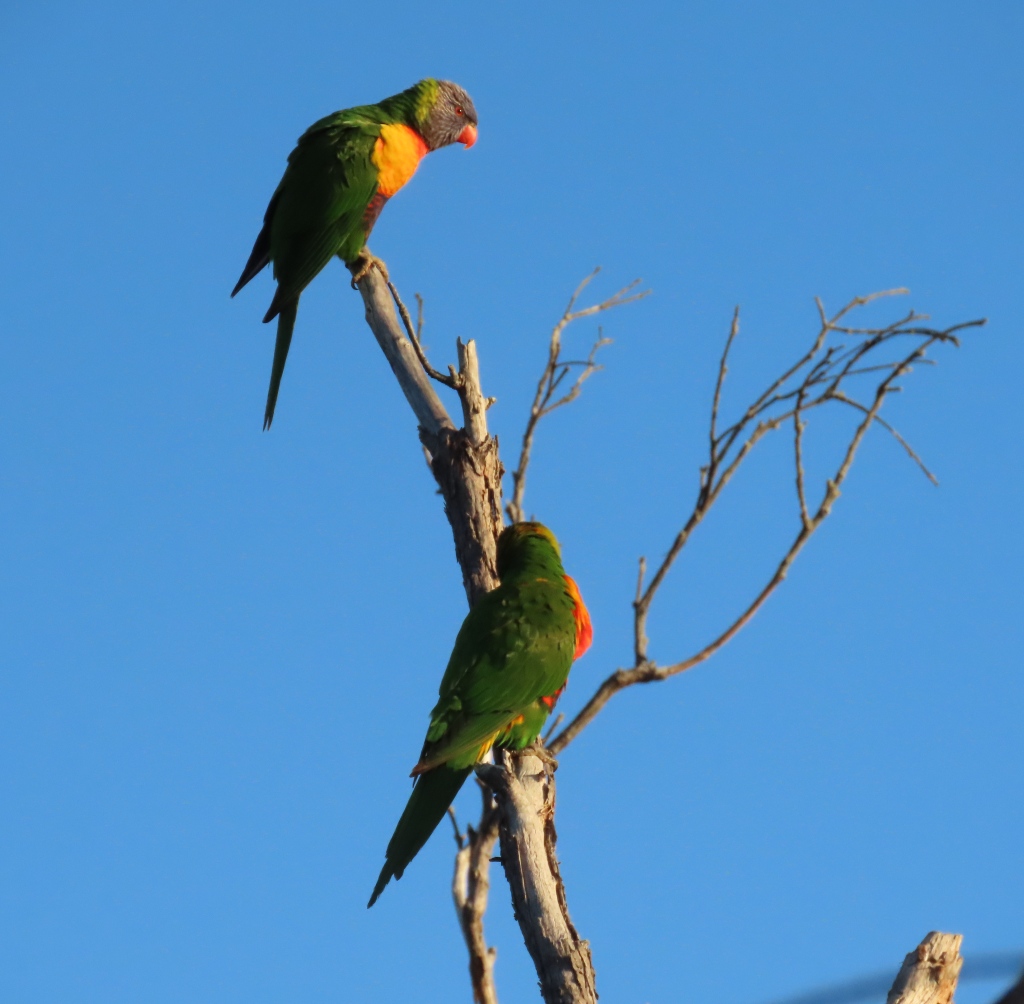
Common name: Rainbow Lorikeet
Scientific name: Trichoglossus haematodus
Approximate length: 30 cm
Date spotted: 10 June 2023 (winter)
Location: Dobroyd Head, New South Wales, Australia: 33°48’36.6″S 151°16’23.9″E

Darter with cream-coloured neck
This lovely light-coloured Darter took me by surprise!
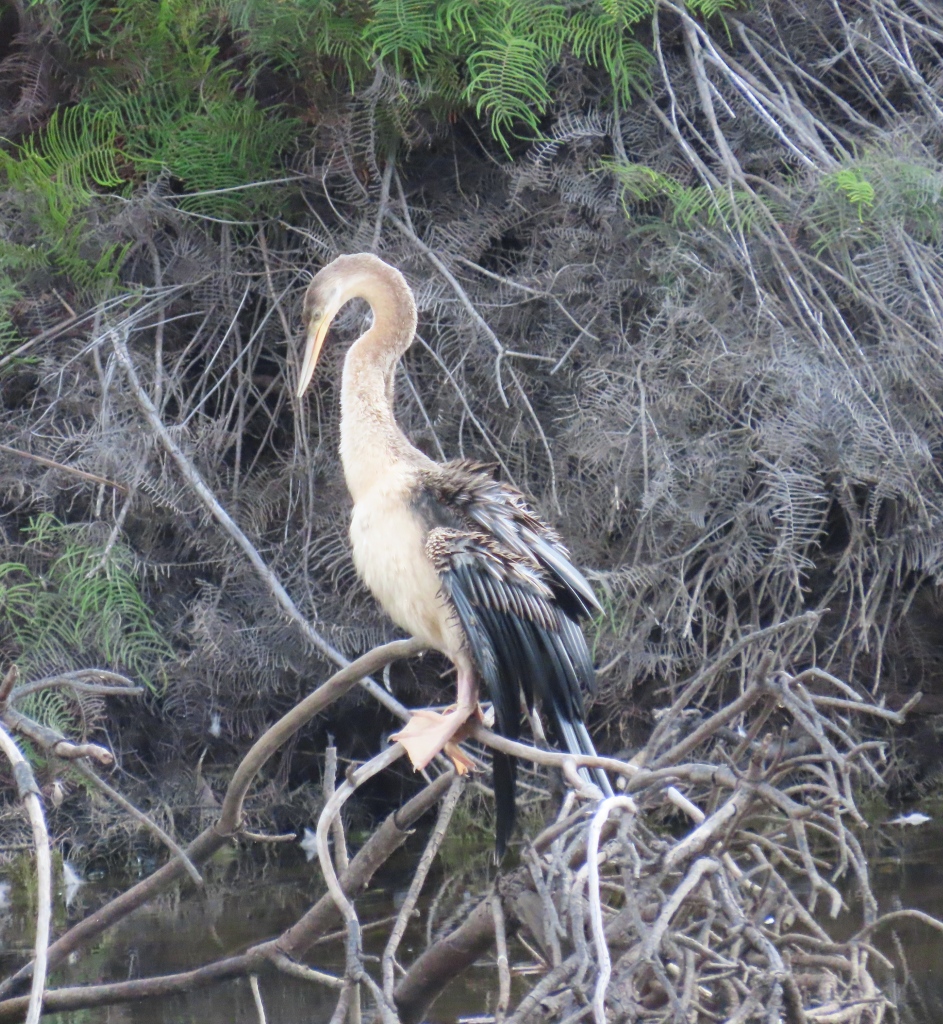
The only Darters I’ve seen up to now have been very dark in colour, with black necks and bodies. You can see them in my posts about the sinuous neck of a Darter and a Darter drying its wings then taking off.
Evidently it’s the males that are dark in colour, whereas the females and juveniles are lighter. Judging by the overall state of dishevelment of this bird’s feathers, I’d say it’s a juvenile.
This video shows the impressive length of the bird’s neck when the bird lifts its head to listen to an unusual sound:
The next video shows another neck stretch, with the bird looking in the direction of the camera:
Common name: Darter
Scientific name: Anhinga melanogaster
Approximate length: 90 cm; wing span: 1.2 m
Date spotted: 2 June 2023 (winter)
Location: Manly Dam Reserve, New South Wales, Australia: 33°46’34.7″S 151°14’48.9″E


 Sydney Birder