Those magnificent black cockatoos are back!
For the past couple of years, a group of Yellow-tailed Black Cockatoos has visited our garden to snack on our Banksia tree when the seeds are ripe. This happens around May-June and again in October. It’s a real privilege to have such magnificent birds in the garden. At approximately 65 cm (more than 2 feet) from head to tail, they’re much larger than the more common white Sulphur-crested Cockatoos (50 cm).
The bird on the left is a female. Toward the end of the video, you see the male higher up in the tree (he’ll be near the top right), keeping watch. You can tell the male by the pinkish colour of the ring surrounding his eye.
The bird on the right at the start of the video (in the middle when all three birds are in view) is making a constant low crooning sound. I think the noisy one must be a juvenile, because I’ve noticed that the juvenile birds of many species keep up a constant noise, perhaps to reassure their parents that they’re still around. Early on in the video, the female on the left calls out in that lovely, wild squeal that’s characteristic of these birds. They also chitter companionably to each other throughout.
Here’s a still picture of the male:
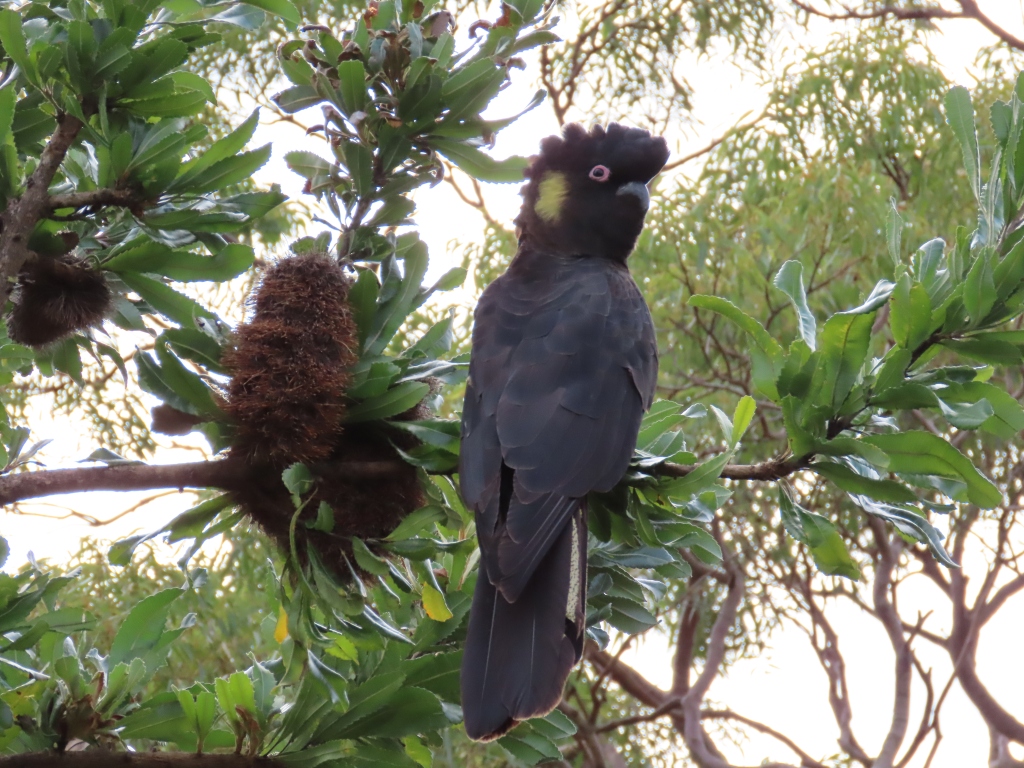
The next video shows one of the birds (probably the female, though it might be the juvenile) tucking into a Banksia seed pod:
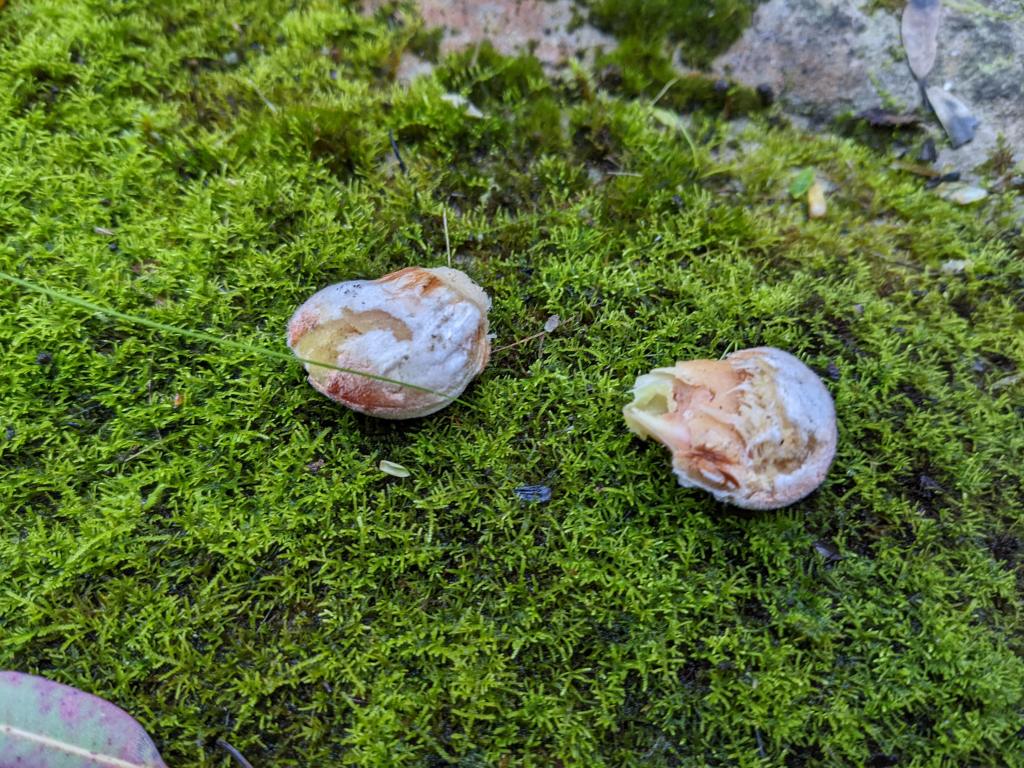
It’s funny to see how ruthless the bird is. She basically tears the dead flower apart, chucking bits onto the floor seemingly at random, until she finds a tasty morsel. Our neighbour was giggling from his verandah, from where he had a birds’ eye view of the feasting! Our garden quickly became littered with half-eaten seeds:
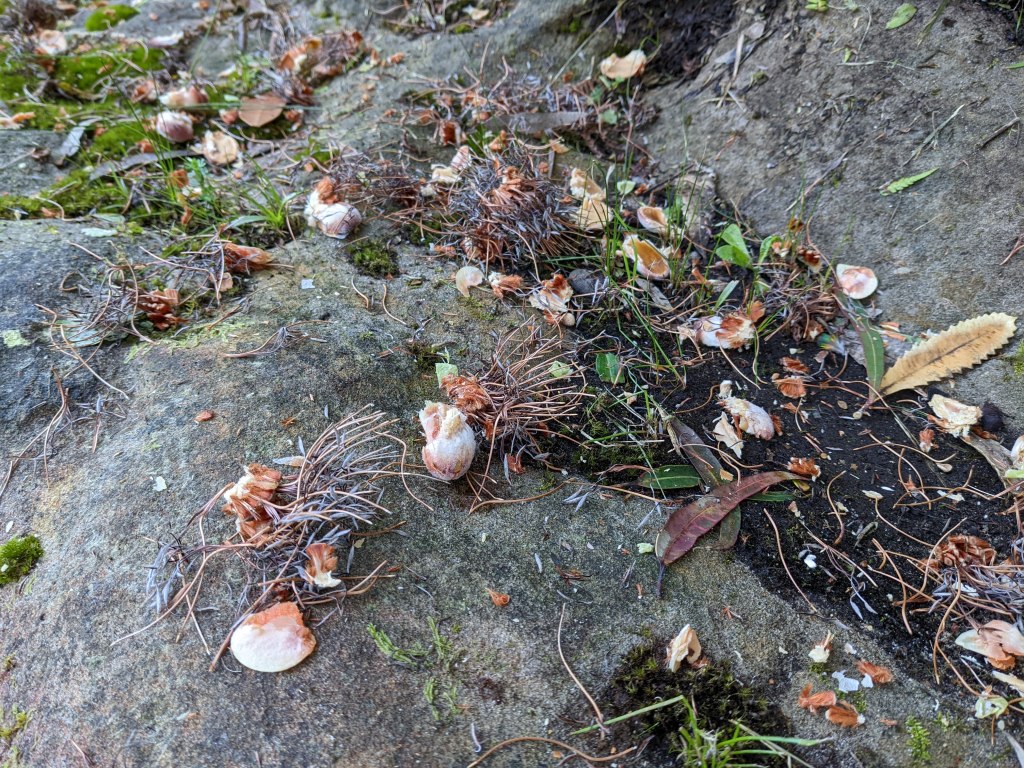
The tree is a Banksia serrata, also known as Old Man Banksia. See the marks of that huge beak on these seeds!
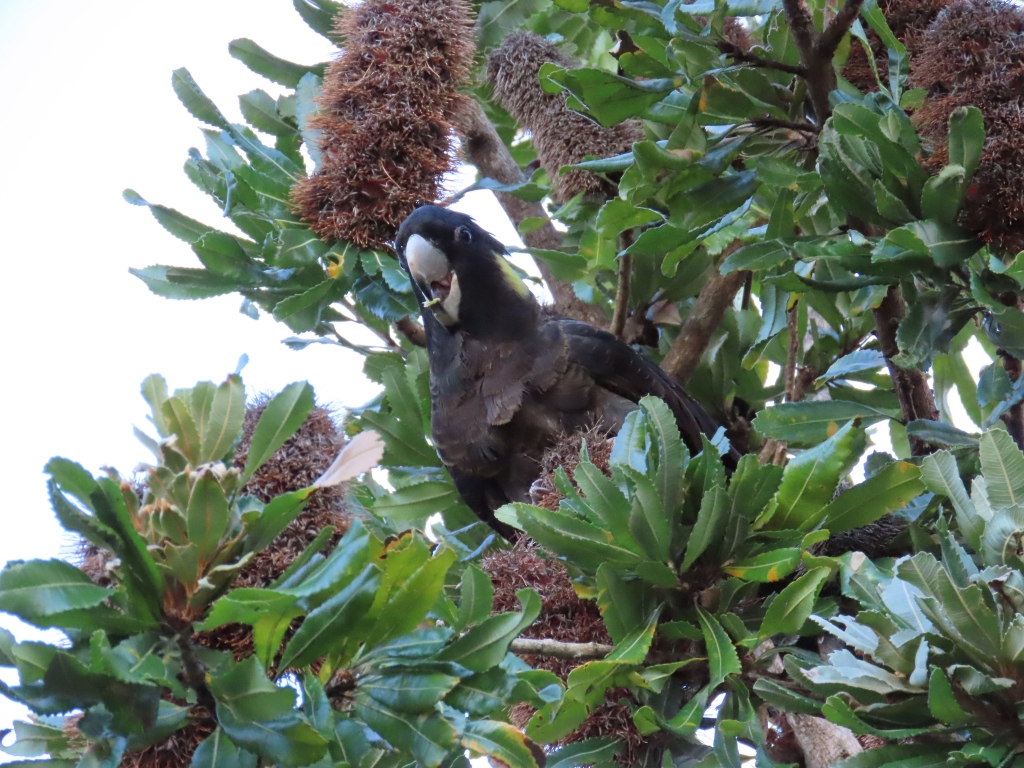
Here’s a closeup of a cockatoo on a seed pod:
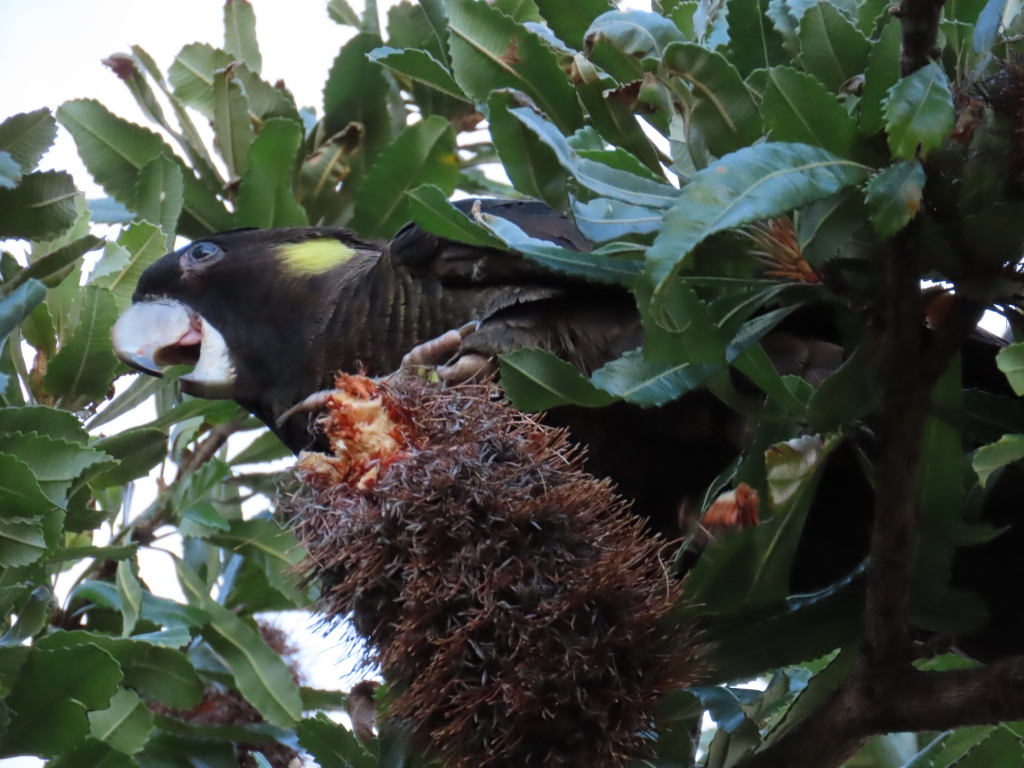
The scientific name of these birds is Calyptorhynchus funereus. Evidently the funereus part of the name stems from the dark, somewhat gloomy colouring of the birds. George Shaw, the naturalist who first named the birds, thought that the colouring was suited to a funeral! The bird was even called the “funereal cockatoo” for a while.
There’s also some dispute in the birding community about whether these birds are actually part of the genus Calyptorhynchus. Some people group them into a different genus, Zanda, based on genetic diversity.
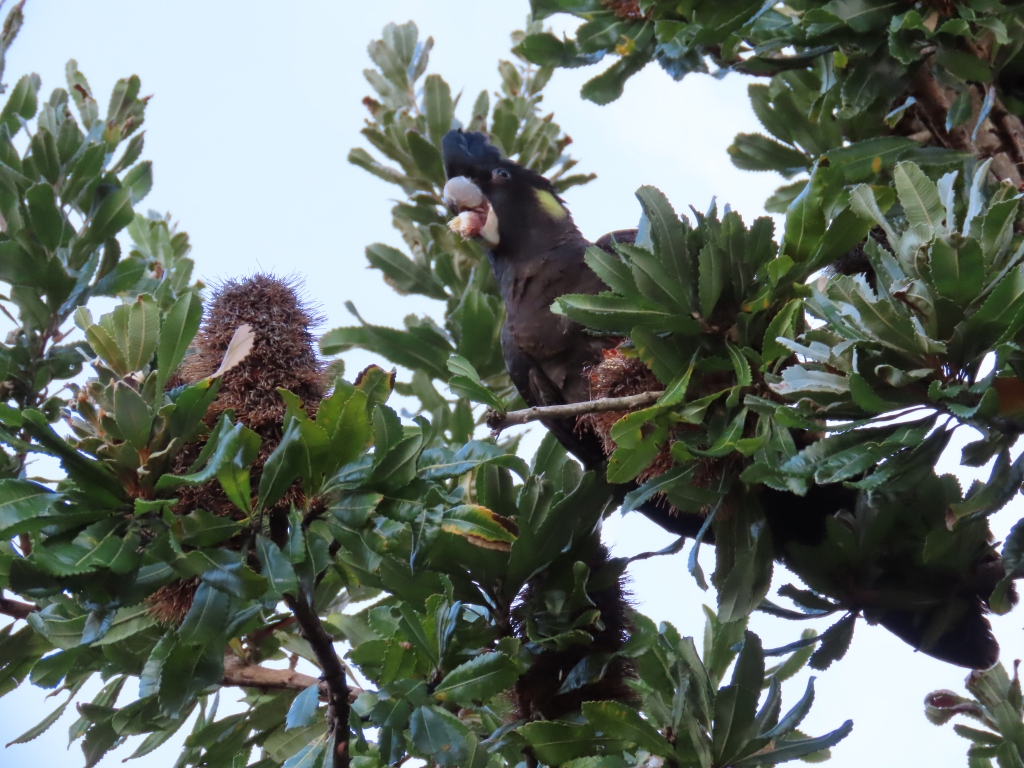
The next photo shows the bird that I think is a juvenile. With its beak feathers fluffed up, it seems to be sleepy or wanting attention!

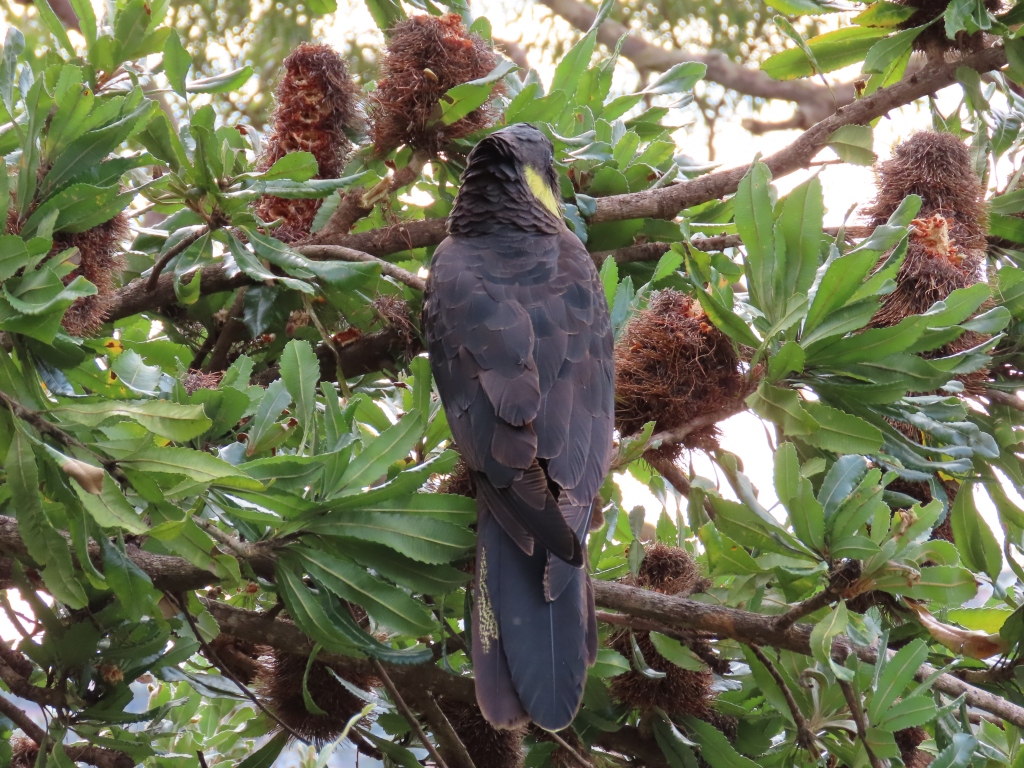
A shot from the back gives a nice view of the crest on the bird’s head:
Common name: Yellow-tailed Black Cockatoo
Scientific name: Calyptorhynchus funereus or Zanda funereus
Length: 58-65 cm
Date spotted: 2nd and 3rd June 2022 (winter)
Location: Allambie Heights, NSW, Australia

Posted on 2022/06/04, in Birds, Cockatoo, Parrot and tagged australia, bird calls, birds, birdsong, birdwatching, Black Cockatoo, Cockatoo, parrots, Sydney birds. Bookmark the permalink. 2 Comments.


 Sydney Birder
I saw a pair of glossy black cockatoos today in Hallstrom park, near Tunks Park and next to the Willoughby leisure centre. They had a juvenile with them making sift sounds. It really made my day. I could just here a quiet clicking noise and could not see them for 5 minutes. Once I focused on them I was amazed at how huge they are, I’m used to seeing the sulphur crested cockatoos up close. These were 2x bigger at least. Just amazing creatures.
What a lovely sighting! Glossies are beautiful. Not seen as often as sulphur crested or yellow-tailed black cockatoos. The quiet, companionable noises they make are lovely too.