Blog Archives

The quiet of the duck
It’s early morning on New Year’s Day in the park. The air is still, the crowds haven’t yet arrived. The ducks putter around as only ducks can do.
I’m at Manly Dam park near Sydney. On a quiet morning, the dam water reflects the hills and forest all round. The oranges, browns, and reds in this scene aren’t seasonal, though they do bring autumn to mind. They show the path of a recent fire — a hazard reduction burn conducted to reduce the risk of more damaging fires as summer draws on.
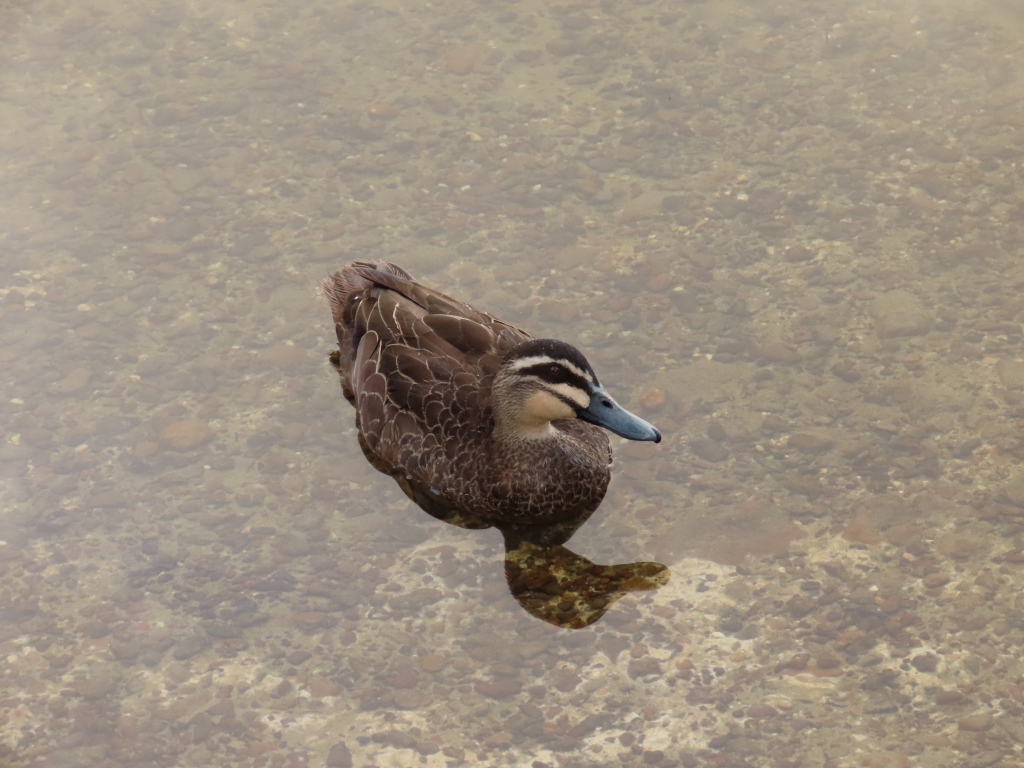
Among the ducks were this Pacific Black Duck:
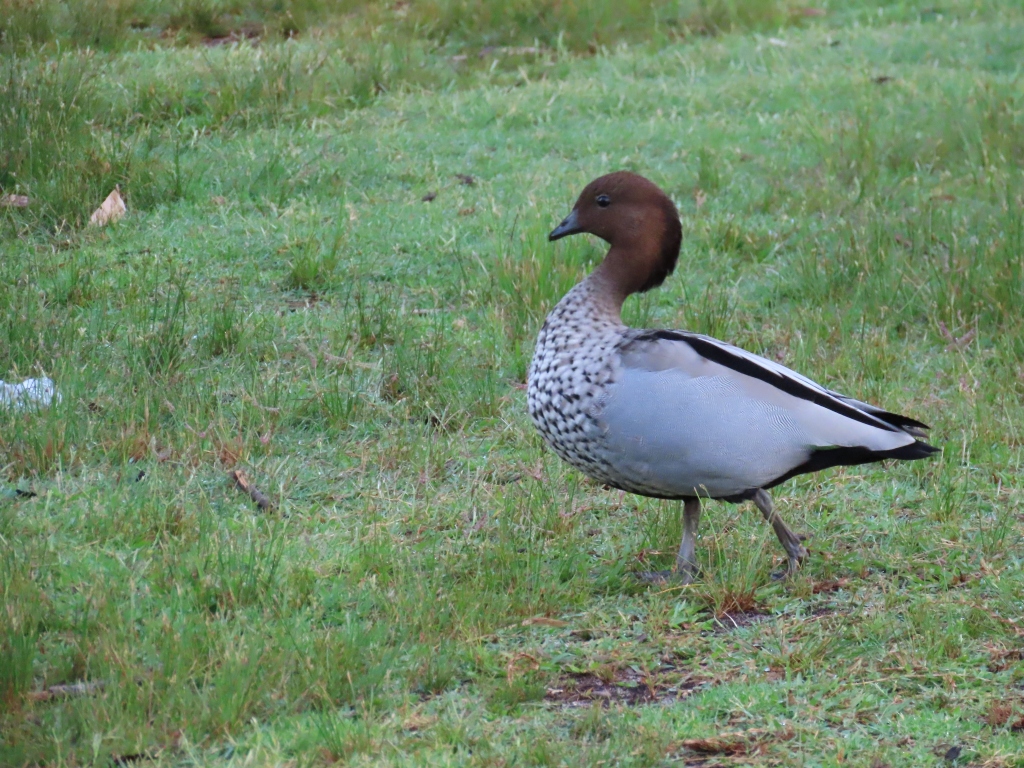
A male Australian Wood Duck:
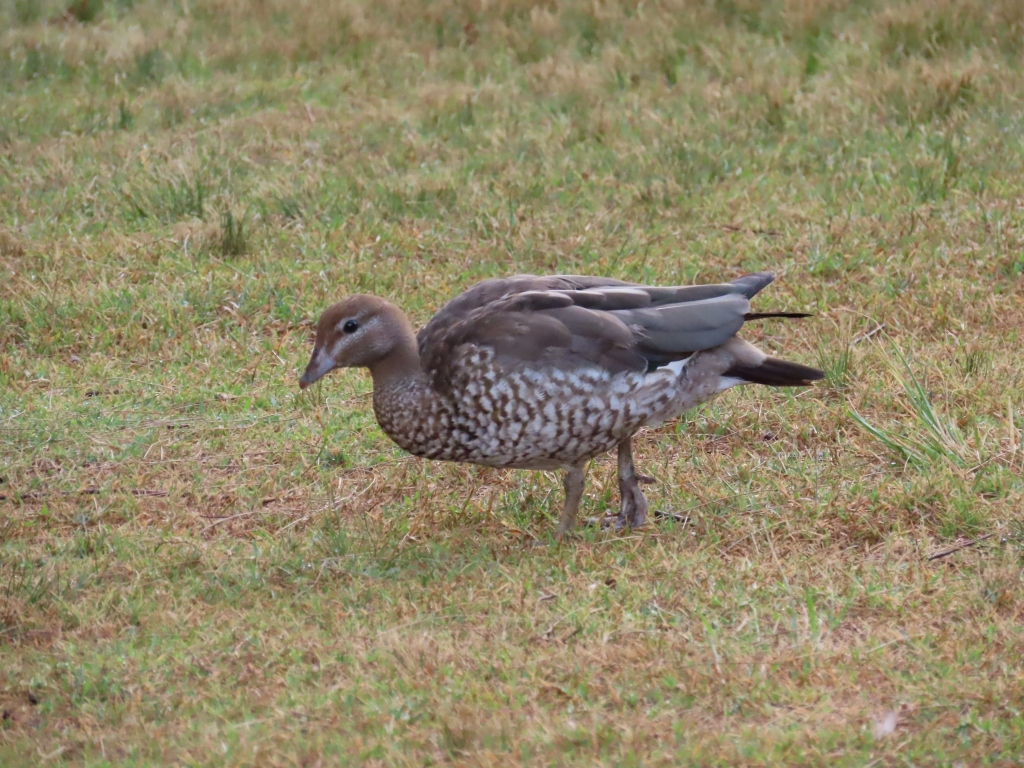
A female Australian Wood Duck:
And a female Mallard with a gorgeous yellow-green beak:

For me as watcher, the meanderings of the ducks enhanced the quiet of the early morning scene.
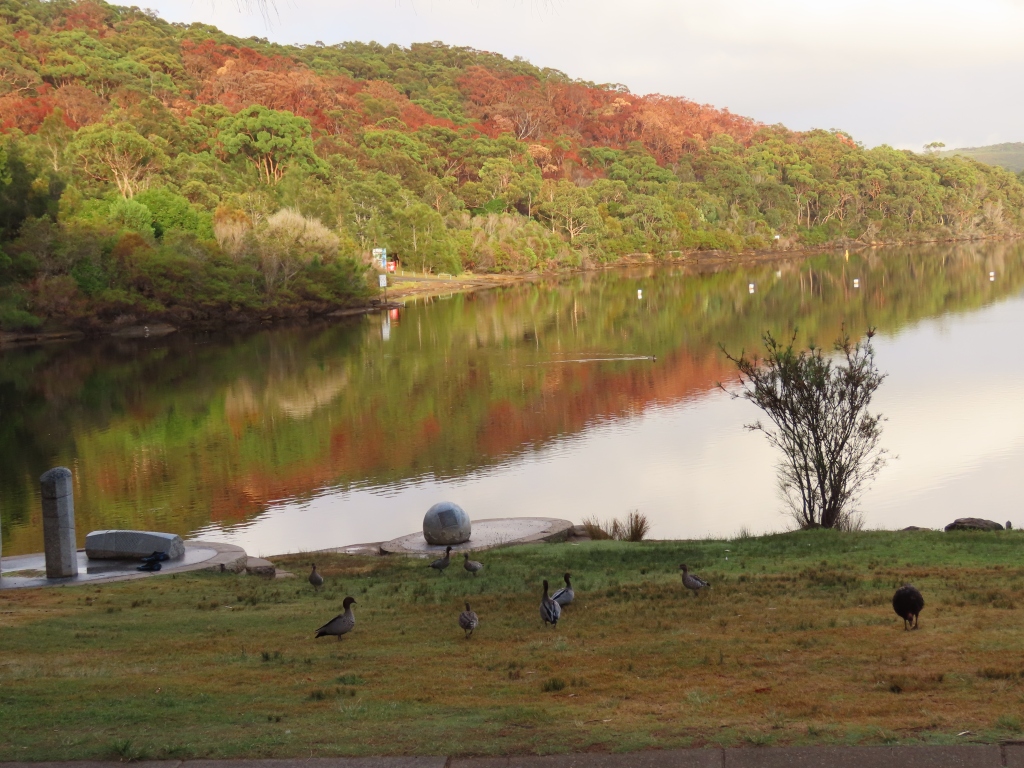
Oh yes, and there’s a Brush Turkey on the right too!

Baby black swans and ducklings
Baby swans are called cygnets. Pictures of cygnets from white swans are quite common, but what do baby black swans look like? Very similar to the white-swan babies, it turns out. They’re grey and fluffy, with black eyes, feet, and beak. I was delighted to spot a family of black swans while out walking a couple of days ago.

The parent swans were watchful, taking care to keep their little ones in a group. A male swan is called a cob, and a female is a pen. Five babies! That’s a lot of curiosity and cuteness to look after.

Did I say five babies? Yes. One of the cygnets was fossicking around in the undergrowth at the water’s edge. You can see the fifth little one in this video:
Common name: Black Swan
Scientific name: Cygnus atratus
Approximate length of adult: 120 cm
Date spotted: 9 October 2020 (spring)
Location: Manly Dam Park, New South Wales, Australia: 33°46’58.5″S 151°15’18.6″E
Nearby was a family of Australian Wood Ducks. The ducklings are almost as cute as the cygnets. But not quite!
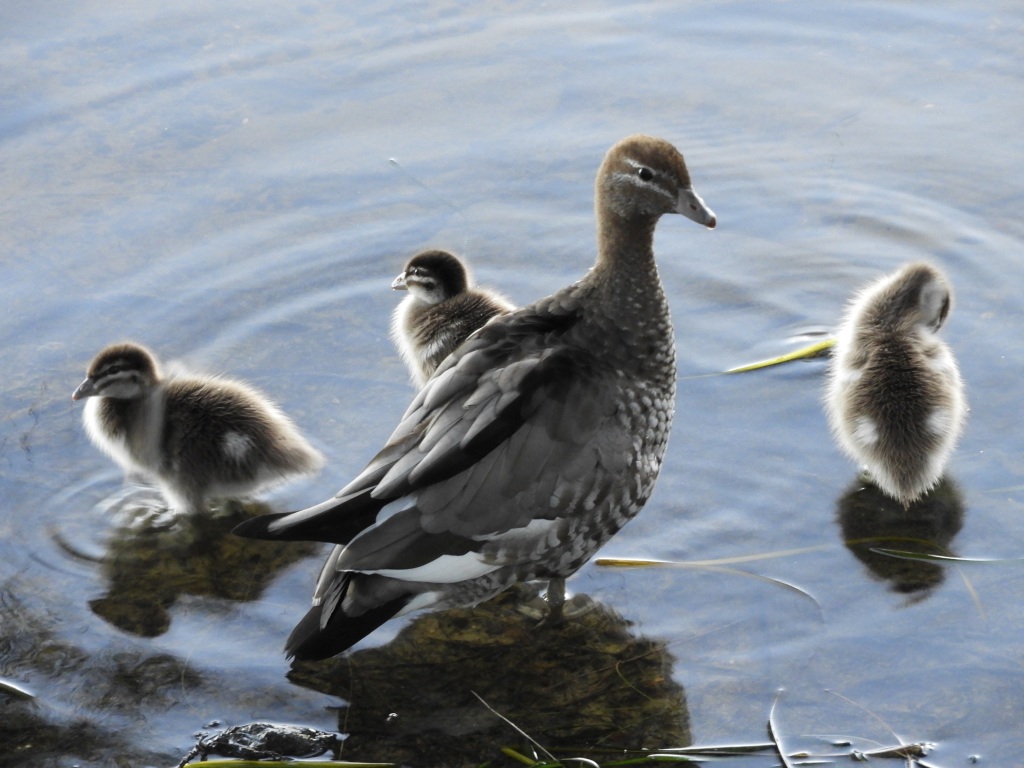
Common name: Australian Wood Duck
Scientific name: Chenonetta jubata
Approximate length of adult: 50 cm
Date spotted: 9 October 2020 (spring)
Location: Manly Dam Park, New South Wales, Australia: 33°46’58.5″S 151°15’18.6″E
Australian Wood Duck
Australian Wood Ducks are a fairly common sight. They stand out, with their neat round head and short beaks. Up close, I noticed the soft frilly feathers on the sides of this bird’s body under the wings. This one is a male, as its head is dark brown and lacks the females’ white markings around the eyes.

Common name: Australian Wood Duck
Scientific name: Chenonetta jubata
Approximate length: 60cm
Date spotted: 3 June 2017 (Winter)
Location: Manly Dam Reserve, New South Wales, Australia: 33°46’58.1″S 151°15’14.7″E
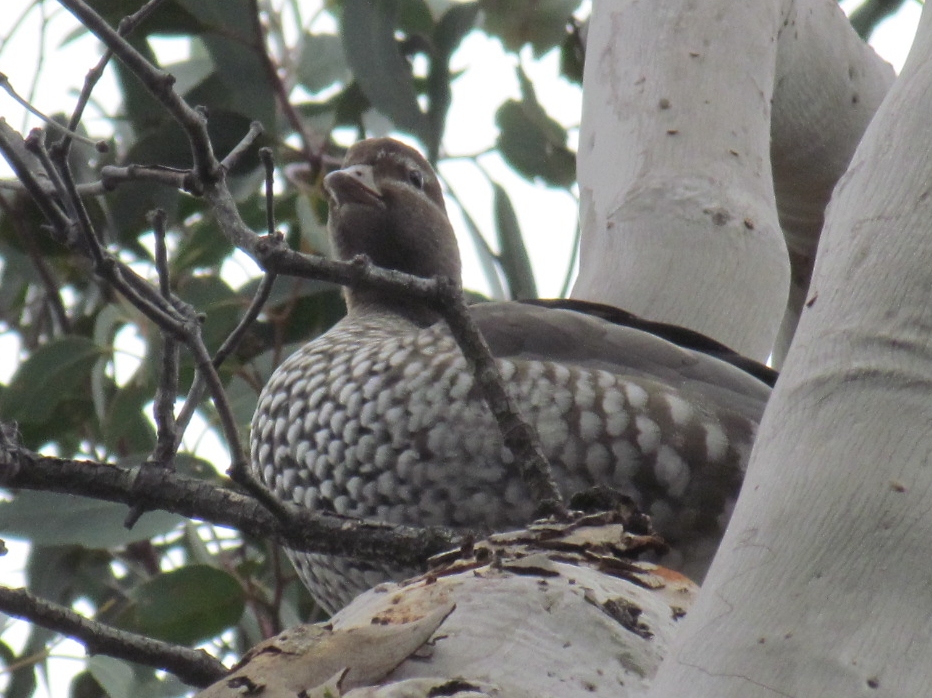
Wood duck quacking high in a gum tree
For some reason I’ve never expected to see a duck high up a gum tree. I know they fly, but somehow I think of them as spending their lives on the ground or on the water. Walking through the bush, I’ve occasionally heard a muttering, rolling sound coming from the tree tops. Imagine my surprise when I tracked it down to this Australian Wood Duck.
Here’s a still photo of the duck:
And in profile:
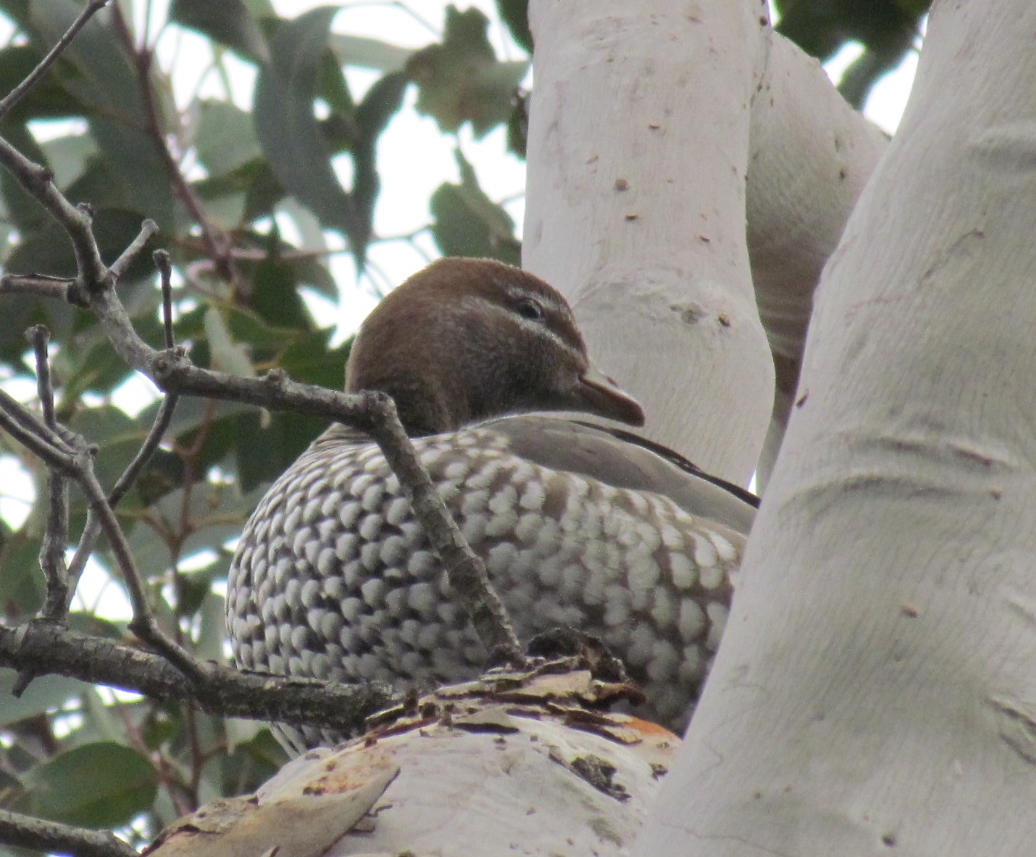
Common name: Australian Wood Duck
Scientific name: Chenonetta jubata
Approximate length: 50 cm
Date spotted: 31 July 2016
Season: Winter
Location: Manly Dam Reserve, New South Wales, Australia
Latitude/longitude: 33°46’41.1″S 151°14’54.9″E


 Sydney Birder