Blog Archives
Reflection symmetry and a coot
Manly Dam was quiet and calm when I strolled along its shores early this morning. I was struck by the patterns made by these reeds and their reflections in the water.

It’s a little mind boggling, isn’t it? Where does the real reed start and end? The finest of abstract art. Here’s the same set of reeds but with more around them:
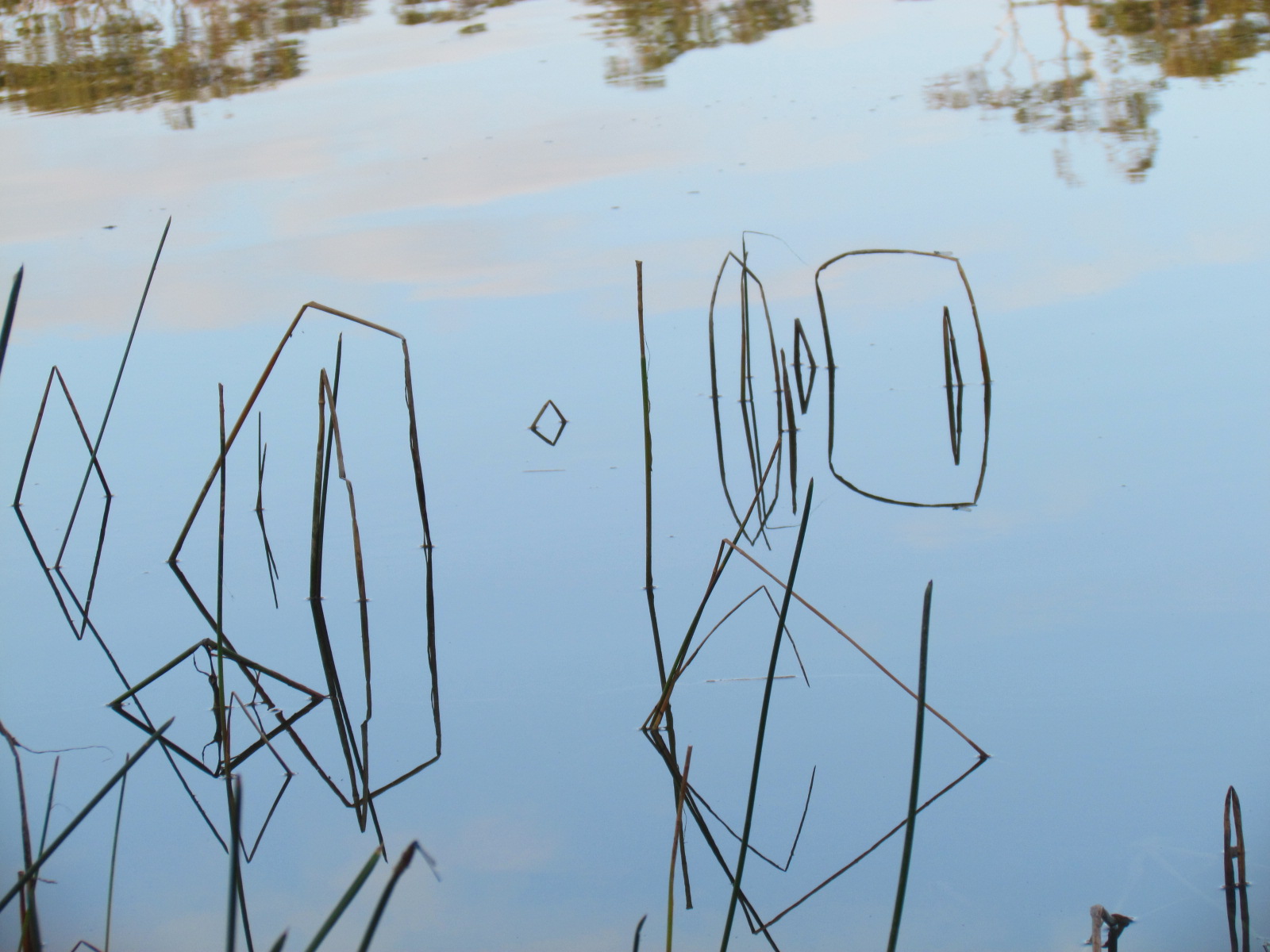
A different configuration:
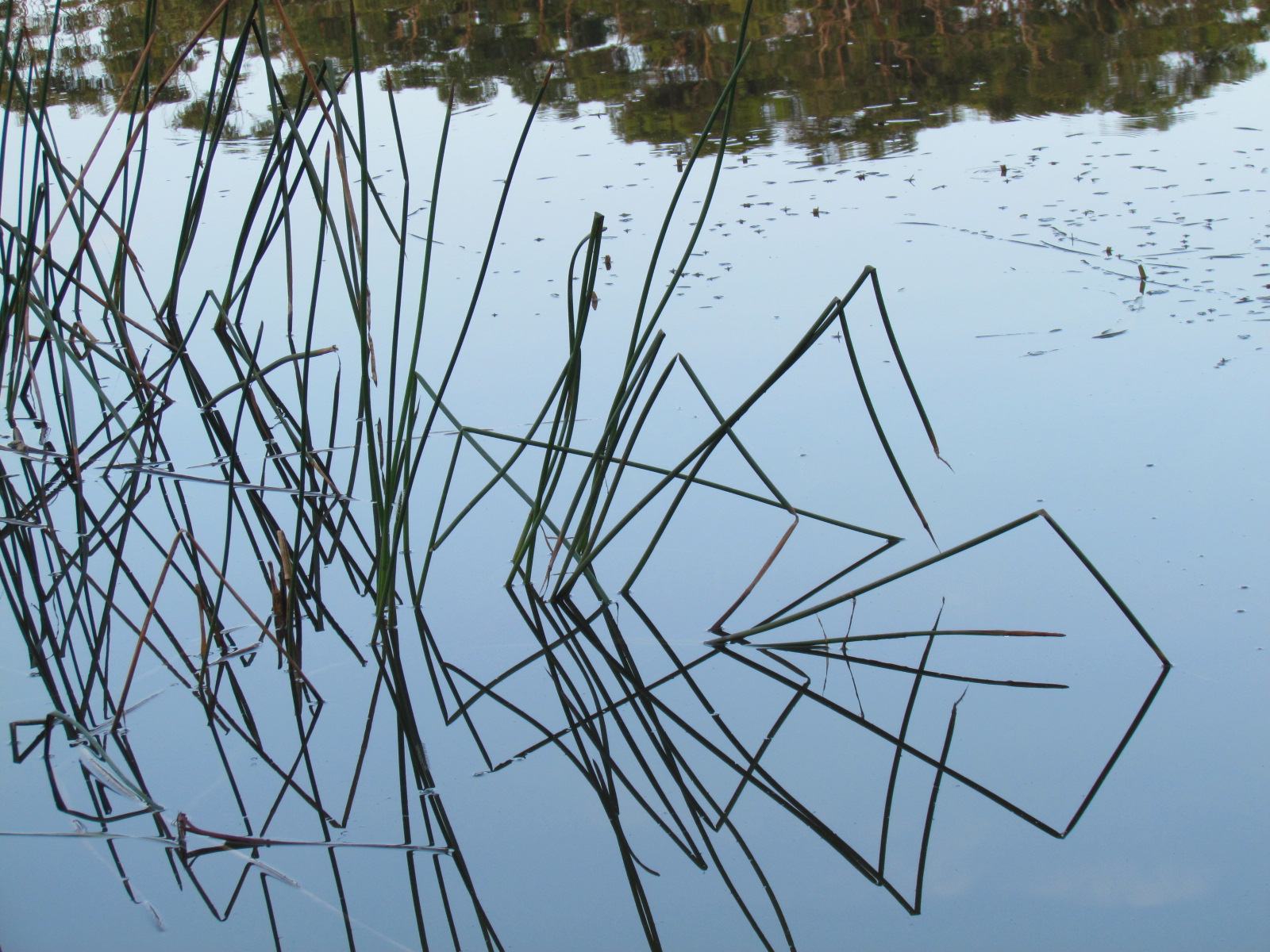
Another shape to bend your mind:

Bubbles had reflections too:

Since this is a blog about birds, I should probably include one. 😉 This Eurasian Coot was enjoying the morning quiet:

Here’s the bird again, tucked away in the centre left of this mass of reflections:
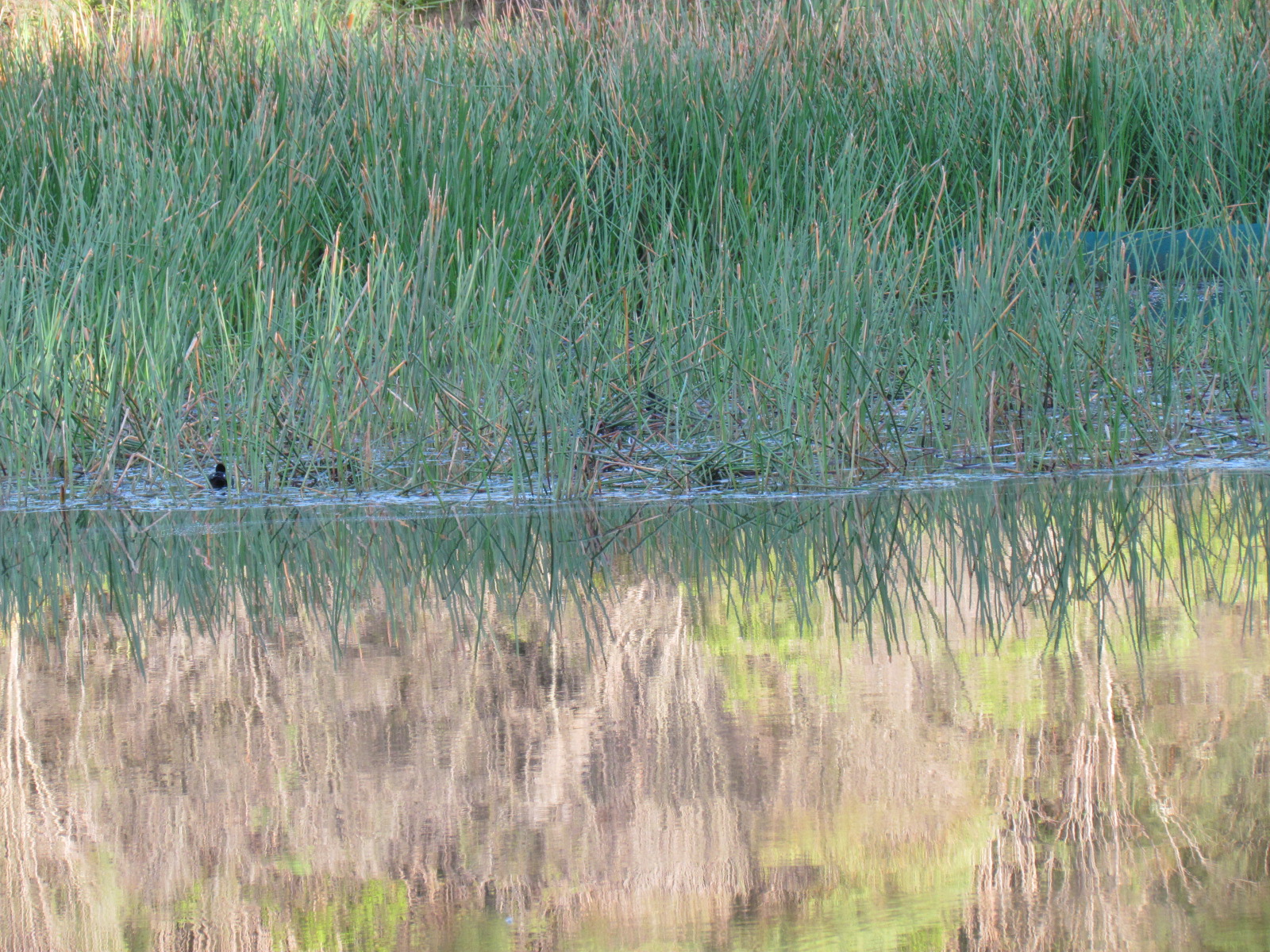
Common name: Eurasian Coot
Scientific name: Fulica atra
Approximate length: 35 cm
Date spotted: 22 January 2017
Season: Summer
Location: Manly Dam Nature Reserve, New South Wales, Australia: 33°46’27.9″S 151°15’05.5″E
Masked Lapwing’s face looks like a Lego model
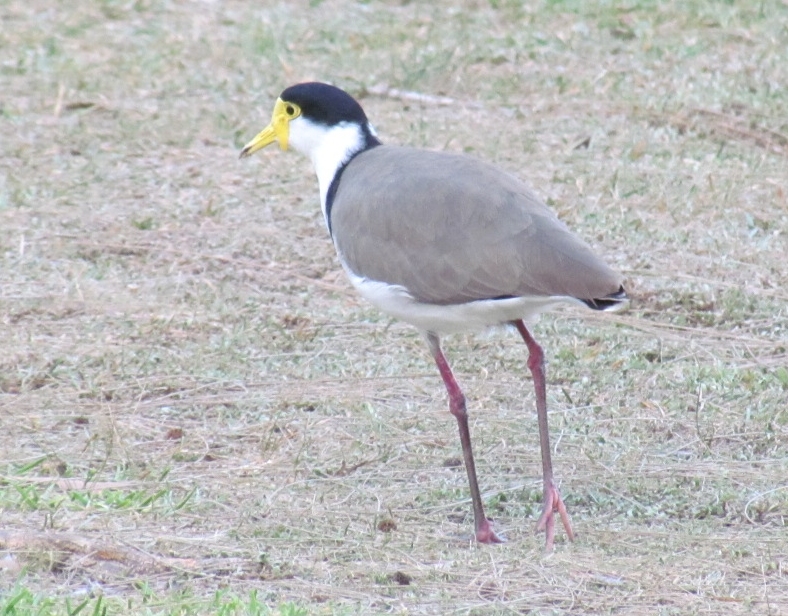
I spotted two Masked Lapwings at Manly Dam, near Sydney, Australia, this morning. They’re also known as Spur-winged Plovers. They can be quite aggressive, especially in nesting season. The name “spur-winged” is apt, because they have hooks on their wings, one on each, which they use as weapons, stretching the wings then dragging back to wound their enemy. But these two were quietly going about their business, pottering around the edges of Manly Dam.
Their faces make me think of a model put together with Lego. They’re so perfect, and yet they seem not quite real.

They have lovely knobbly knees and big pink feet:
In this video, one of the birds advances tentatively, testing each step:
Here’s a zoomed out shot showing the two birds in their environment:

Common name: Masked Lapwing, or Spur-winged Plover
Scientific name: Vanellus miles
Approximate length: 37 cm
Date spotted: 15 January 2017
Season: Summer
Location: Manly Dam Nature Reserve, New South Wales, Australia: 33°46’58.8″S 151°15’18.4″E
Kookaburra baby cackling and feeding
The kookaburras around our neighbourhood are very noisy at the moment. A couple of juveniles drop by regularly to practise their cackling skills. They’re cute and funny.
In this video, you can see one youngster crooning to himself, and another behind the branches. In the background, other birds chime in to show him how it’s done. A parent comes by a couple of times too, to feed the ever-demanding little one.
Common name: Laughing Kookaburra
Scientific name: Dacelo novaeguineae
Approximate length: 47 cm
Date spotted: 31 December 2016
Season: Summer
Location: Allambie Heights, New South Wales, Australia
Bird nest with blue trimming
This tidy little bird nest was resting at about knee height on some spiky grass. I guess it must have fallen out of a tree, though it’s possible a bird built it there. I didn’t touch it, so I don’t know how well bound it was to the vegetation.
It’s interesting how the bird wove a piece of blue plastic ribbon into the nest.

I don’t know what type of bird made the nest. It was at Manly Dam, near Sydney, Australia.
Koel Cuckoo regurgitates food
Today I spotted a young female Koel Cuckoo. The males are so dark in colour that it’s hard to see them in fine detail. Photographs end up being just a black blob. But this female is quite pretty.
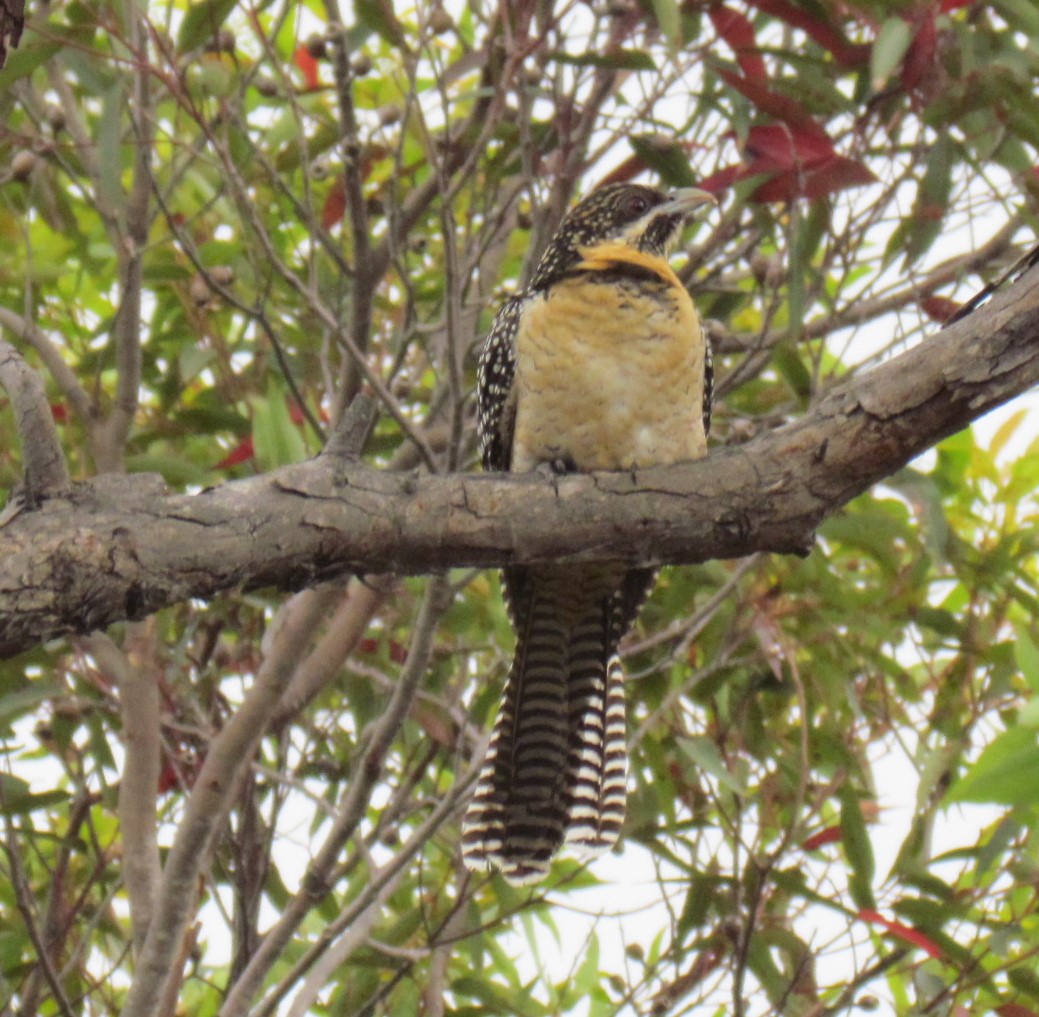
This video shows the bird sitting quietly on the branch, not doing much. At around 20 seconds into the video, she regurgitates some fruit and then swallows it again.
Adult Koel Cuckoos have red eyes, but youngsters can keep the brown colour into their second summer. I thought I glimpsed a glint of red every now and then, but her eyes are still mostly dark brown.
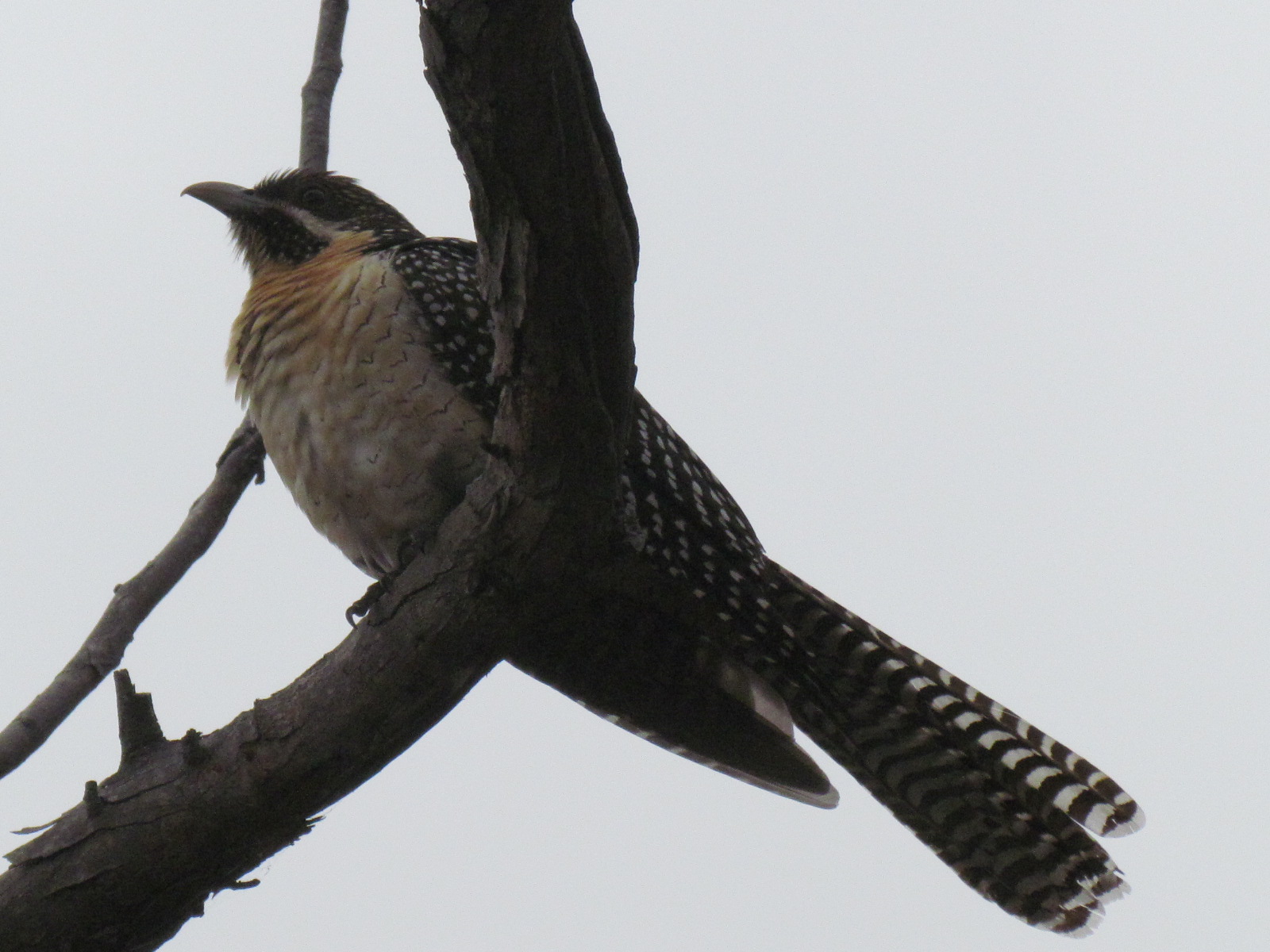
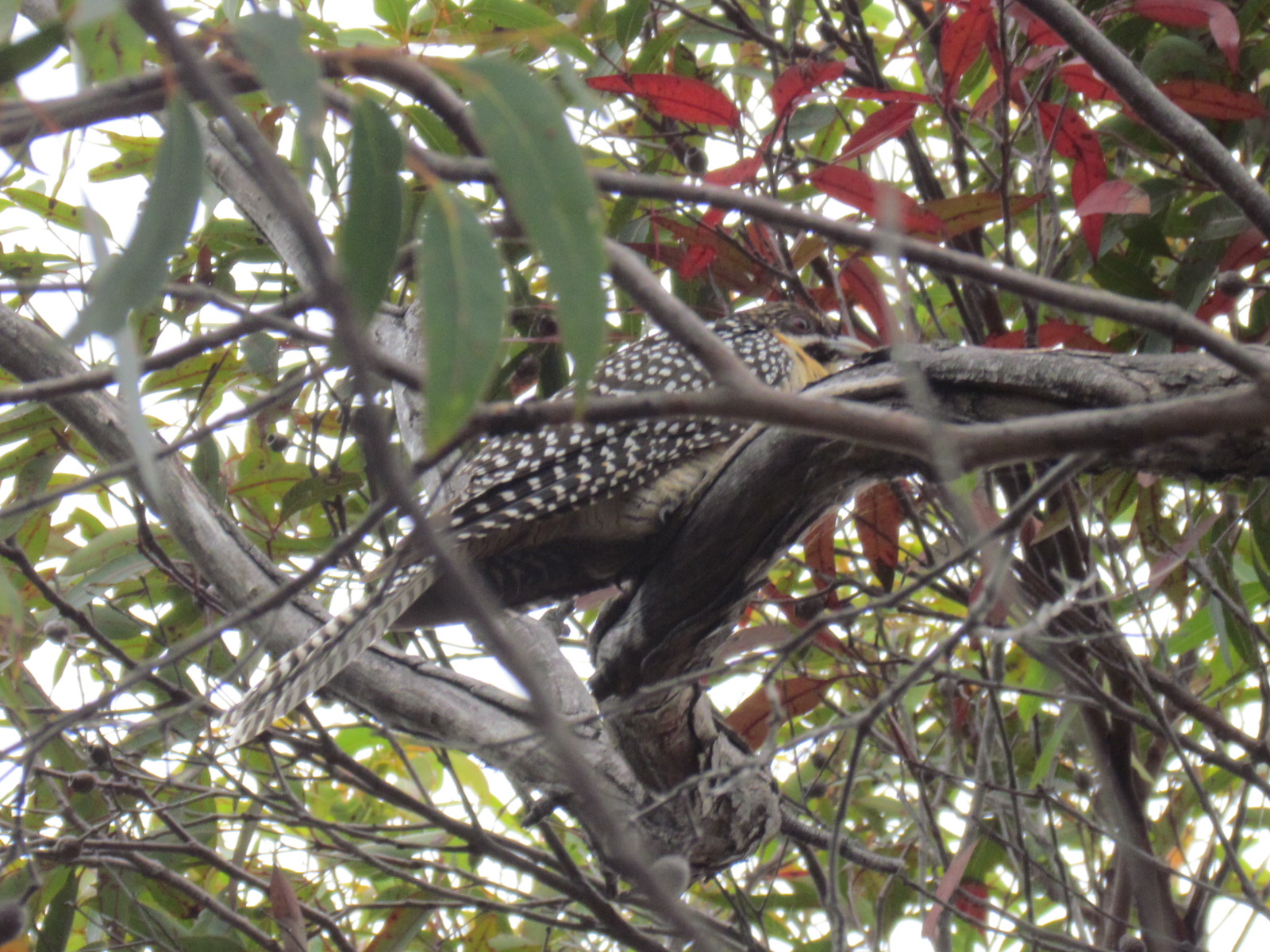
Here’s another side view of her, sheltering behind the foliage:
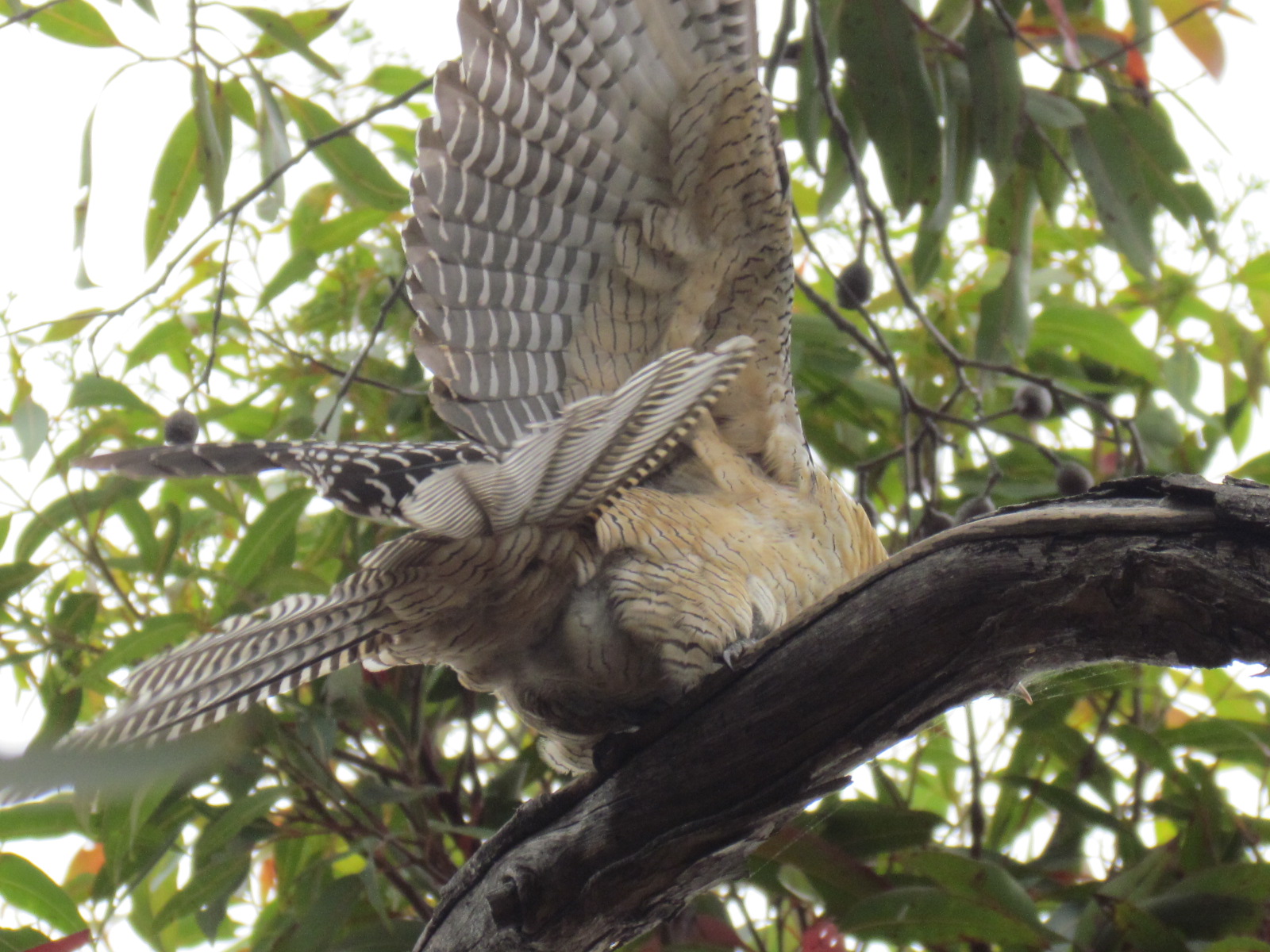
She decided to stretch her wings. I was behind her at the time, so there’s a lovely view of soft down and the underside of her wings:
Common name: Common Koel or Eastern Koel
Scientific name: Eudynamys scolopacea
Approximate length: 45 cm
Date spotted: 27 November 2016
Season: Spring
Location: Manly Dam Reserve, New South Wales, Australia
Latitude/longitude: 33°46’35.6″S 151°15’16.8″E
Paradise Shelduck at Manly Dam, Australia
If this is a Paradise Shelduck, it’s rather far from its usual home in New Zealand. I spotted it at Manly Dam, near Sydney in Australia.
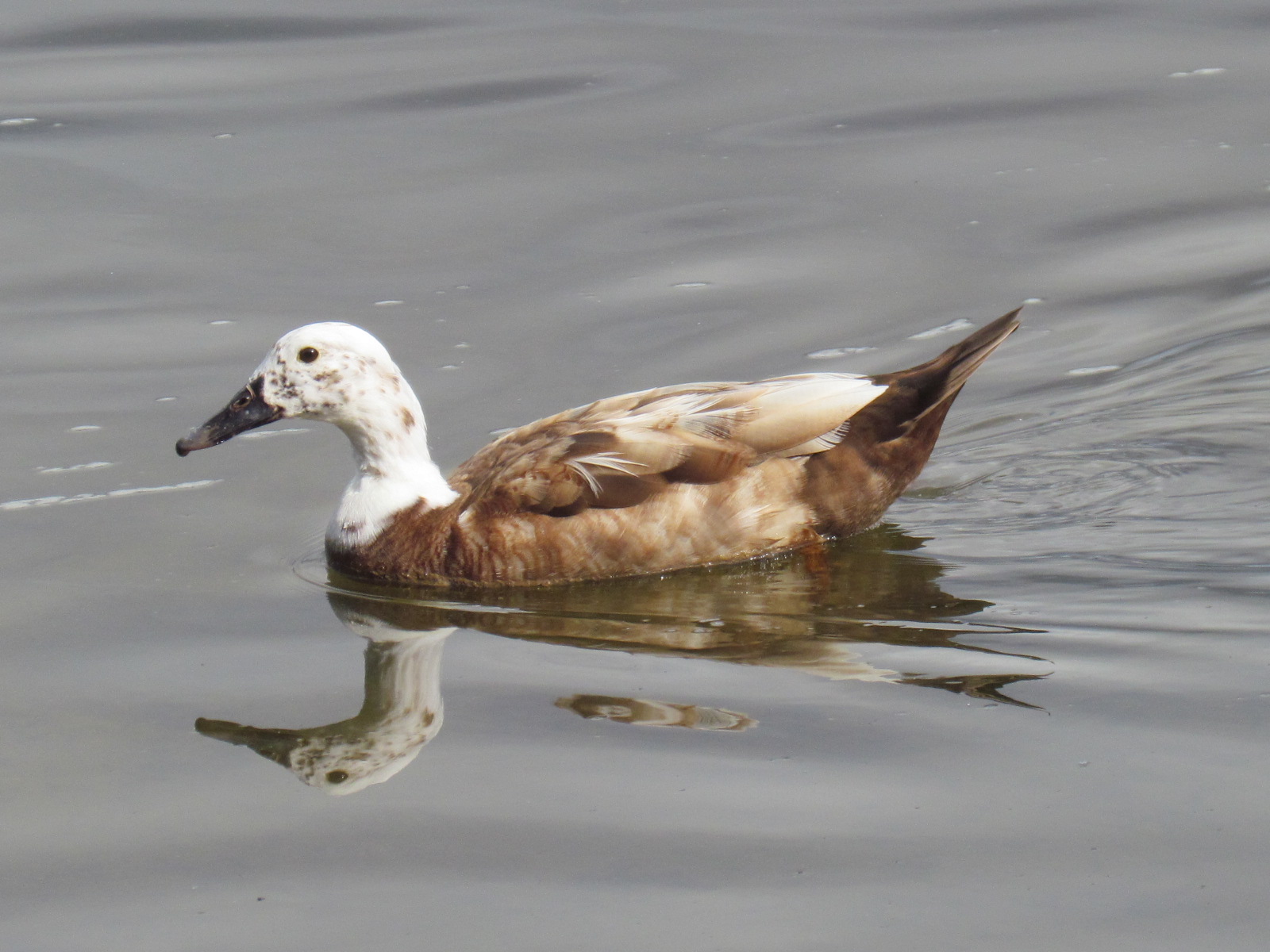
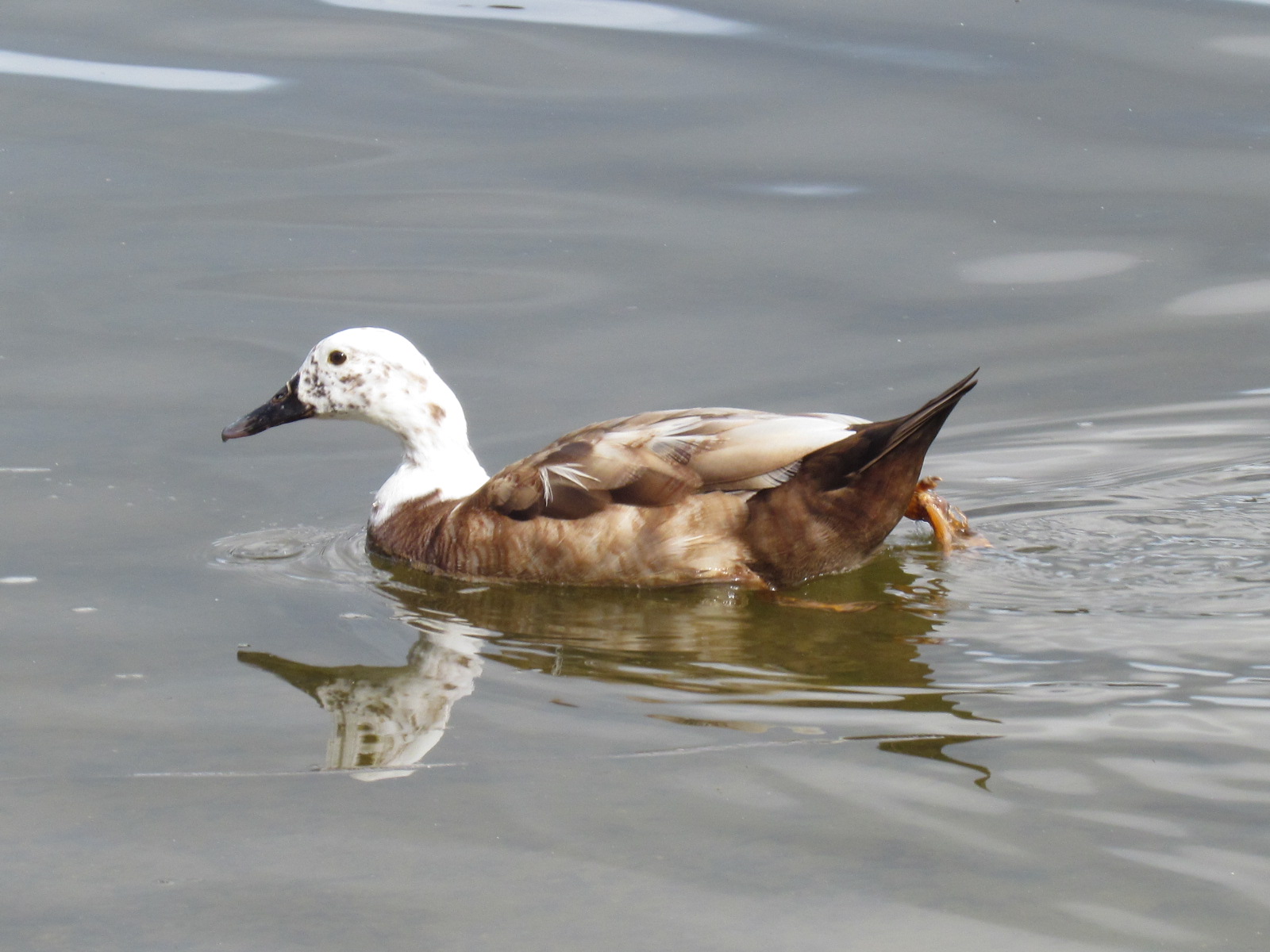
It’s a big duck. At first I wasn’t sure whether it was a duck or a goose. This one is a female, as you can tell from its white head and neck. The male has a dark head.
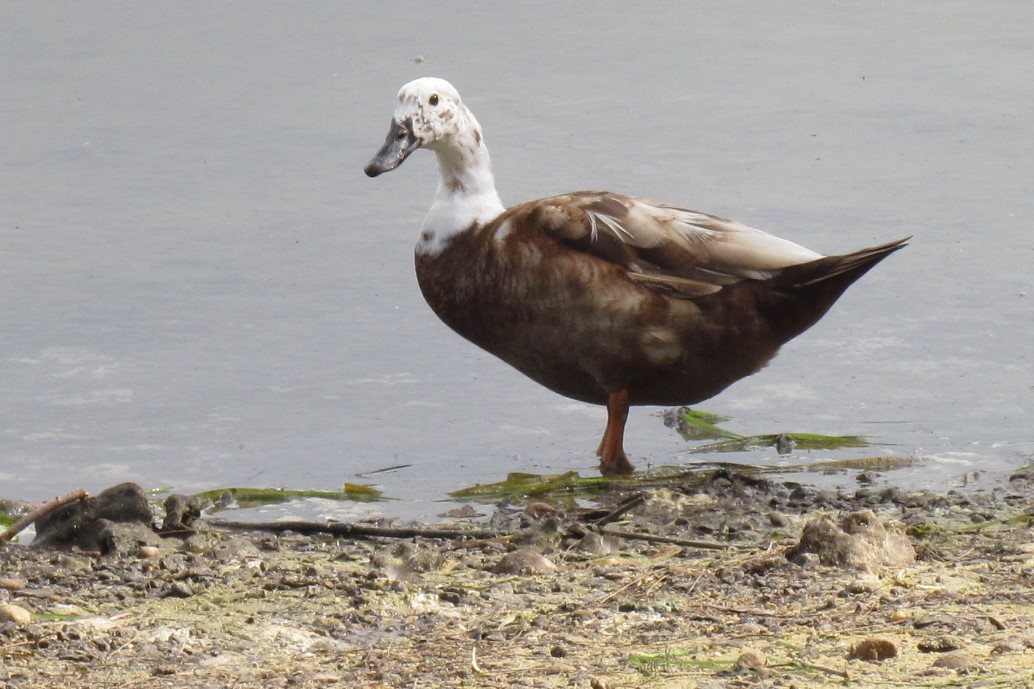
She took to the water:
And showed a bit of ankle:
Common name: Paradise Shelduck
Scientific name: Tadorna variegata
Approximate length: 63-70 cm
Date spotted: 26 November 2016
Season: Spring
Location: Manly Dam Reserve, New South Wales, Australia
Latitude/longitude: 33°46’58.0″S 151°15’18.9″E
Purple Swamphen chick
So cute and fluffy! This little Purple Swamphen chick treads lightly on the lily pads, learning survival skills from its mother.
Here’s a nice shot of its stubby wings, and its well-developed feet under a couple of centimetres of water:

Setting off on a bit of exploration:

But staying close to mother:

Common name: Purple Swamphen
Scientific name: Porphyrio porphyrio
Approximate length: 50 cm
Date spotted: 30 October 2016
Season: Spring
Location: Manly Dam Reserve, New South Wales, Australia
Latitude/longitude: 33°46’36.1″S 151°14’48.8″E
Magpie-lark or Peewee
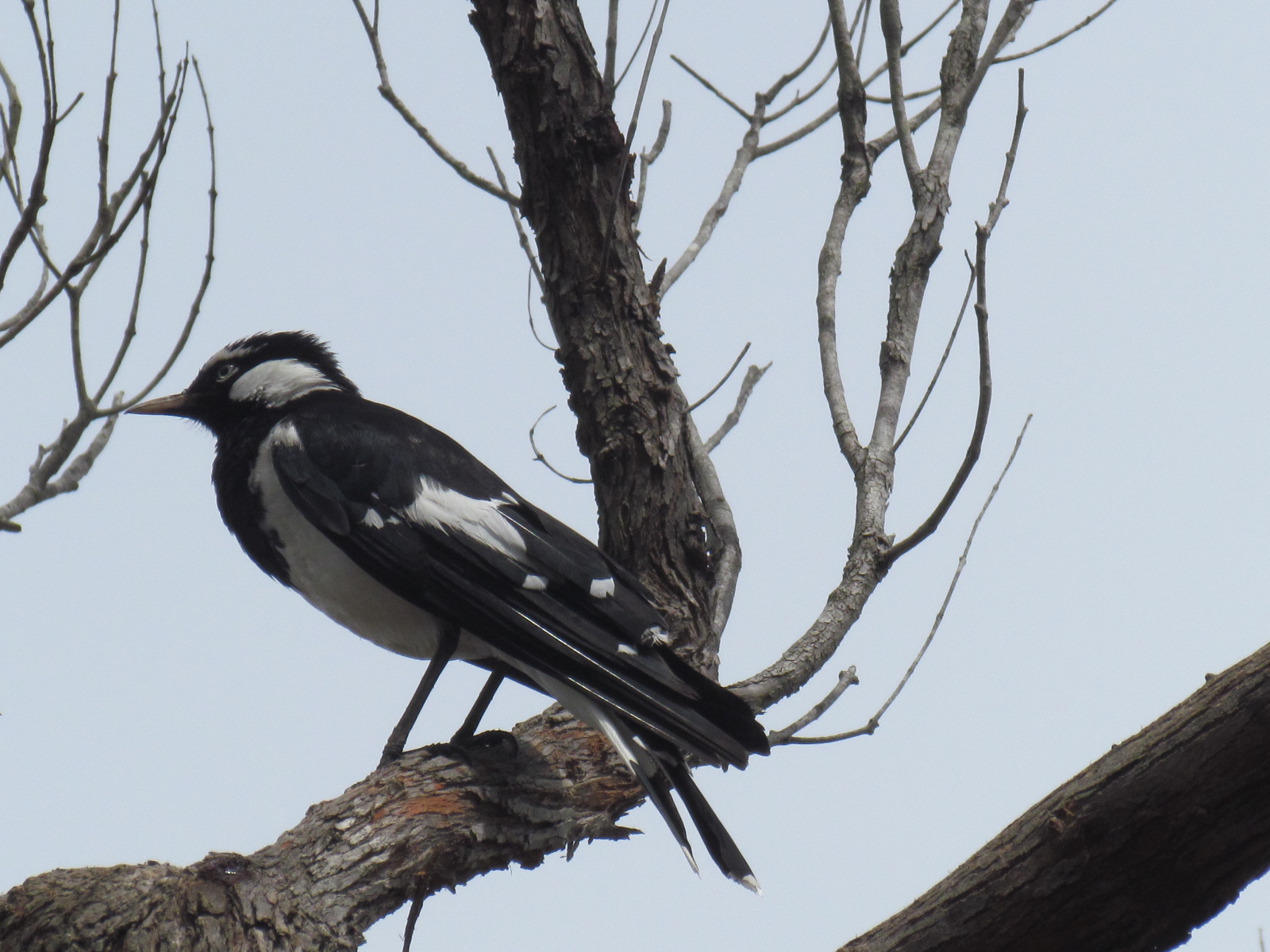
We don’t seem to quite know what to call these birds. Their most common name is Magpie-lark, but they’re neither magpies nor larks. They are sometimes called Peewees in imitation of their call, “pee wee, pee wee”. Other people call them Mudlarks, because they use mud to build their nests.
Magpie-lark usually look quite dapper, their feathers sleek and smooth. This one is a little ruffled, perhaps blown about by the strong wind.
Common name: Magpie-lark
Scientific name: Grallina cyanoleuca
Approximate length: 30 cm
Date spotted: Sunday 30 October 2016
Season: Spring
Location: Manly Dam Reserve, New South Wales, Australia
Latitude/longitude: 33°46’35.5″S 151°14’50.3″E
Australian Raven with eyes like ice
Australian Ravens are fierce, proud birds. Their black plumage shimmers blue in the sunlight, and the icy cast of an eye is enough to send shivers down your spine. They’re inquisitive, intelligent, and sociable. This one perched on a rock at North Head near Manly, eyeing us with interest.
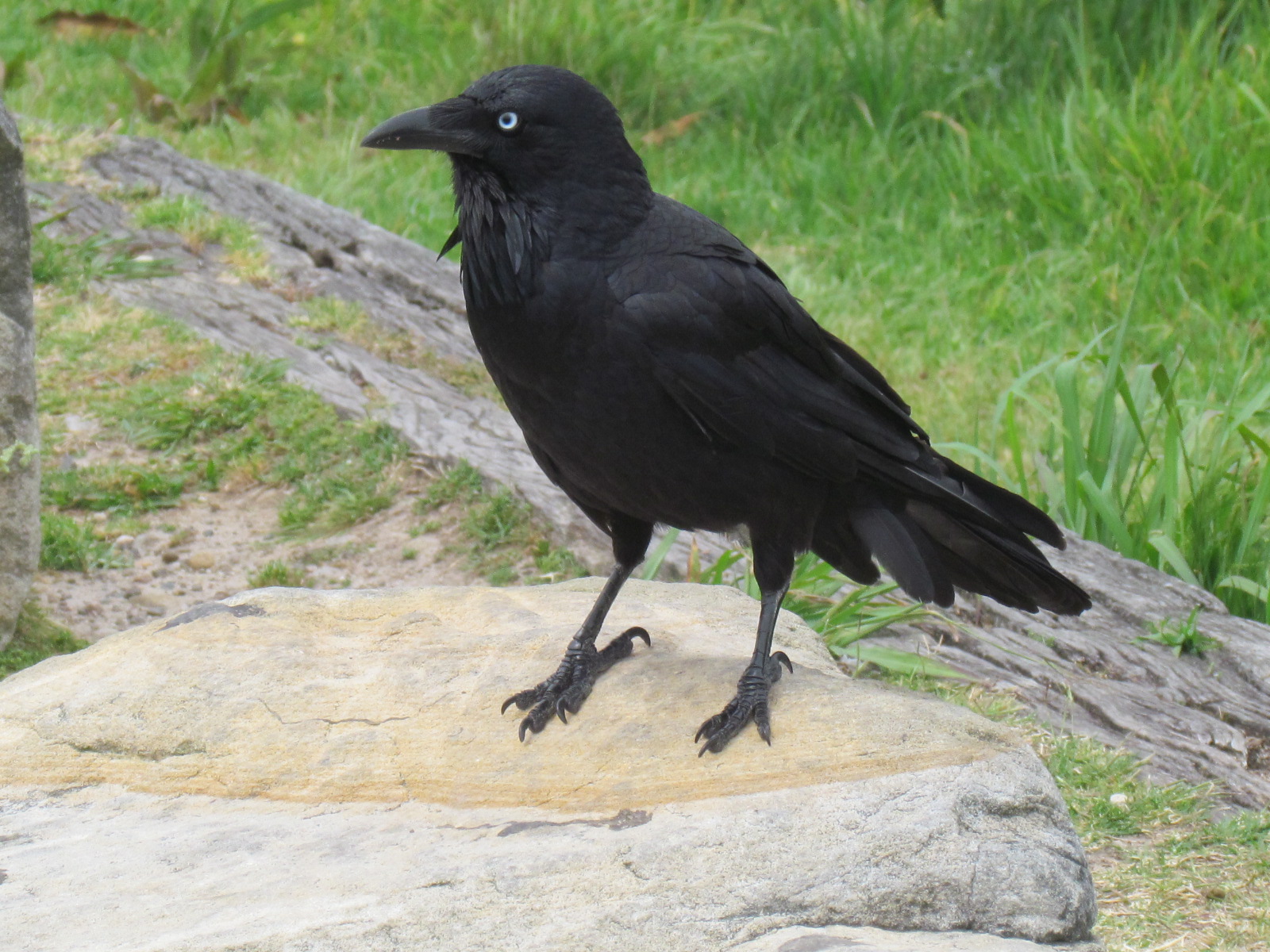
Common name: Australian Raven
Scientific name: Corvus coronoides
Approximate length: 50 cm
Date spotted: Sunday 30 October 2016
Season: Spring
Location: North Head, Manly, New South Wales, Australia
Latitude/longitude: 33°49’10.1″S 151°17’49.6″E
Currawong in song
Currawongs are medium-sized birds that look similar to magpies and butcher birds. An easy way to tell them apart is that currawongs don’t have white markings on their heads, where magpies and butcher birds do have white collars or caps. Currawongs have yellow eyes, where magpies’ eyes are red.
The song of the currawong is varied, with clear bell-like sounds, whistles, and yodels. This video shows a currawong listening to the song of others around him, and responding every now and then.
Common name: Pied Currawong
Scientific name: Strepera graculina
Approximate length: 45 cm
Date spotted: 16 October 2016
Season: Summer
Location: Manly Dam National Park, New South Wales, Australia
Approximate latitude/longitude: 33°46’42.1″S 151°14’59.3″E


 Sydney Birder