Blog Archives

New website ready for more birds!
This bird blog has moved to a new address! You can now find the birds and me at sydneybirder.com. Don’t worry — if you go to the original birdsinsydney.wordpress.com, you’ll be redirected to this site. All the birds and readers comments have moved here too.
Did you notice some advertisements interrupting the bird pics in the past? Through the magic of commerce, the ads have disappeared now too.
Happy birding!

Little Black Cormorants in a row
A few days ago, at Forty Baskets Beach on Sydney’s Northern Beaches, seven Little Black Cormorants swam, fished, and sunned themselves.
Little Blacks are easy to distinguish from other types of cormorant in this area of Australia. Apart from being entirely black, they have green-blue eyes that can look quite eery at times.
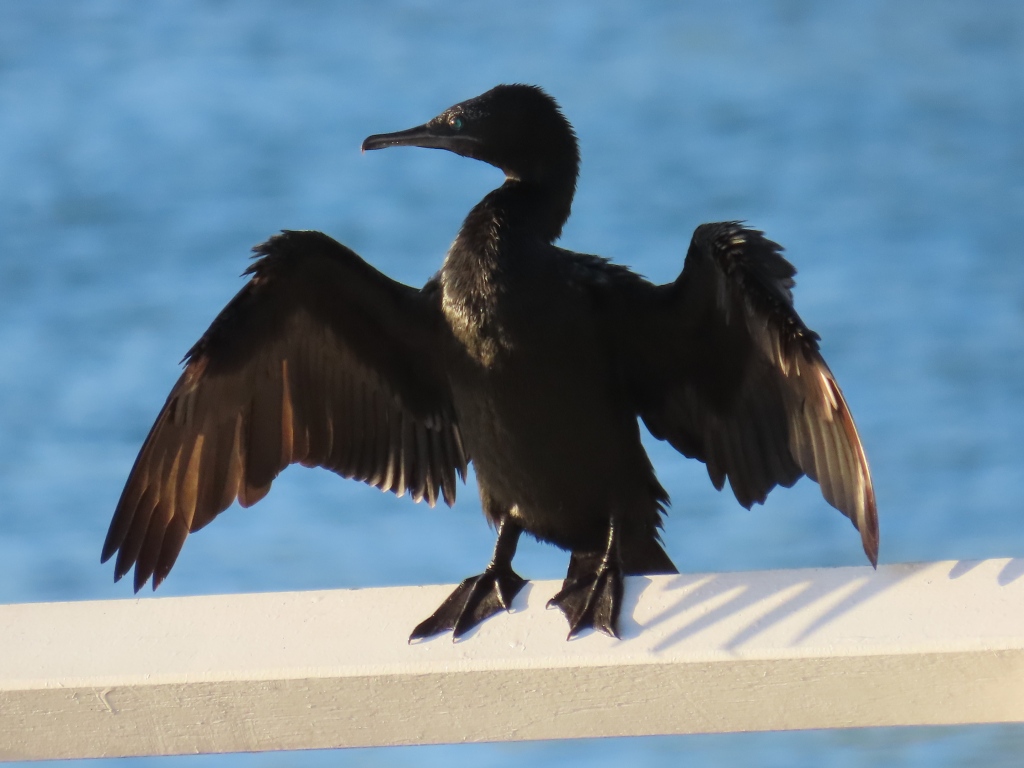
Here are six of the seven Little Black Cormorants, hanging their wings out to dry:

The group stayed together most of the time, both in and out of the water.

Here’s another of the birds showing that pretty blue eye.

Common name: Little Black Cormorant (see other cormorants)
Scientific name: Phalacrocorax sulcirostris
Approximate length: 65 cm
Date spotted: 25 April 2024 (autumn)
Location: Forty Baskets Beach, New South Wales, Australia: 33°48’12.6″S 151°16’12.2″E
Interestingly, a White-faced Heron and a few Silver Gulls followed the cormorants around.
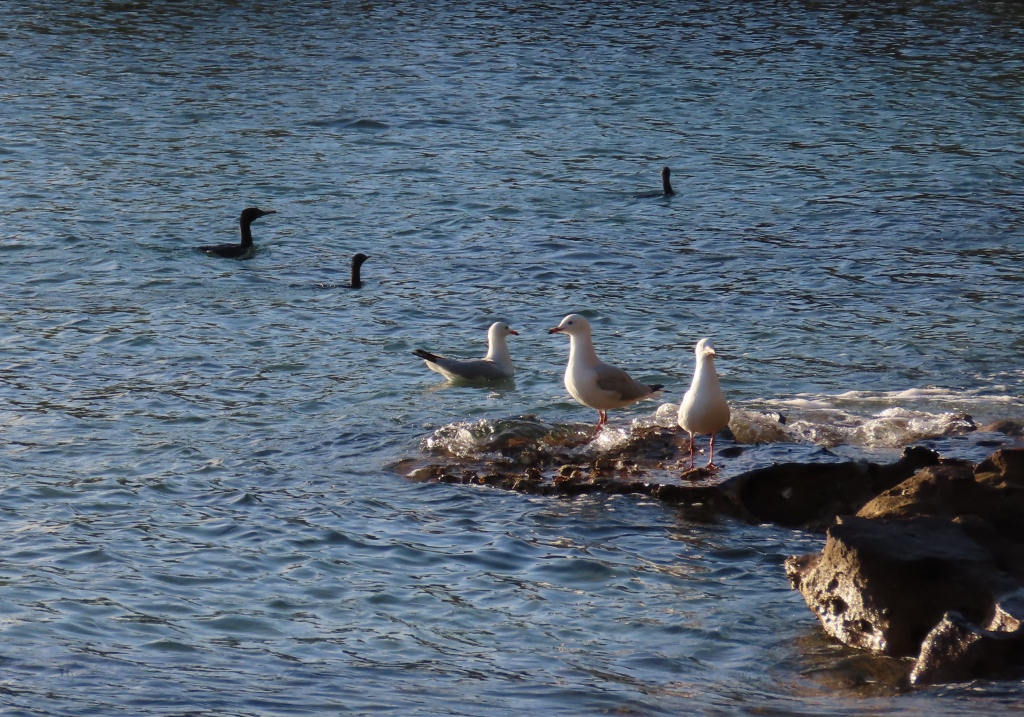
I guess they were interested in any fish that the cormorants might find!
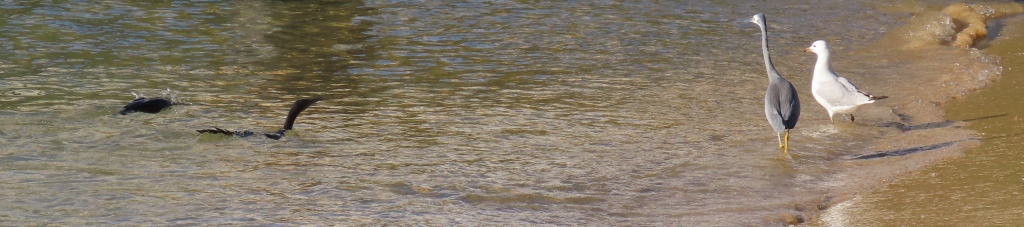
Here’s a better picture of the heron:


An intrepid Kookaburra and a fallen tree
A tree came down in our neighbourhood this week. A Kookaburra decided to keep an eye on the resulting activity, despite all the heavy machinery and noise.
If you look carefully, you can just make out the Kookaburra perched on the trunk of the fallen tree, right next to that big, thrumming truck:

After surveying the activity at ground level (and snacking on a passing worm or lizard), the bird flew up onto the street lamp on the newly-erected power post. The tree had taken down the old post and all the power lines. Getting a bird’s eye view:

The team of electricians down below needed to reset the switches at the top of the post. They used a long, bright green pole to do this. The bird stayed right where it was, checking the job with interest:

This video gives a good idea of the noise and machinery at work down below:
I’ve noticed before how fearless Kookaburras are, and how they seem to be interested in what we humans are doing. This particular Kookaburra takes the cake!
Common name: Laughing Kookaburra
Scientific name: Dacelo novaeguineae
Approximate length: 47 cm
Date spotted: 23 April 2024 (autumn)
Location: Near Sydney, New South Wales, Australia

Black swans asleep on one leg
In the early morning sunshine, two black swans sleep. Both swans sleep with one leg raised, one leg holding the bird up, and head tucked under a wing. This swan has a watchful eye open:
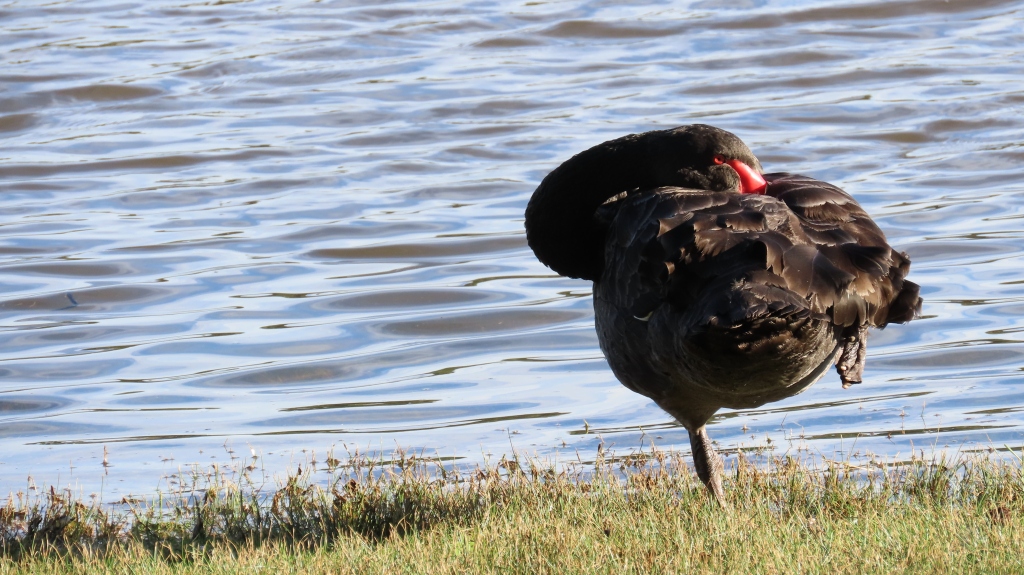
The other swan’s eyes are closed. Its foot is tucked close to its body:
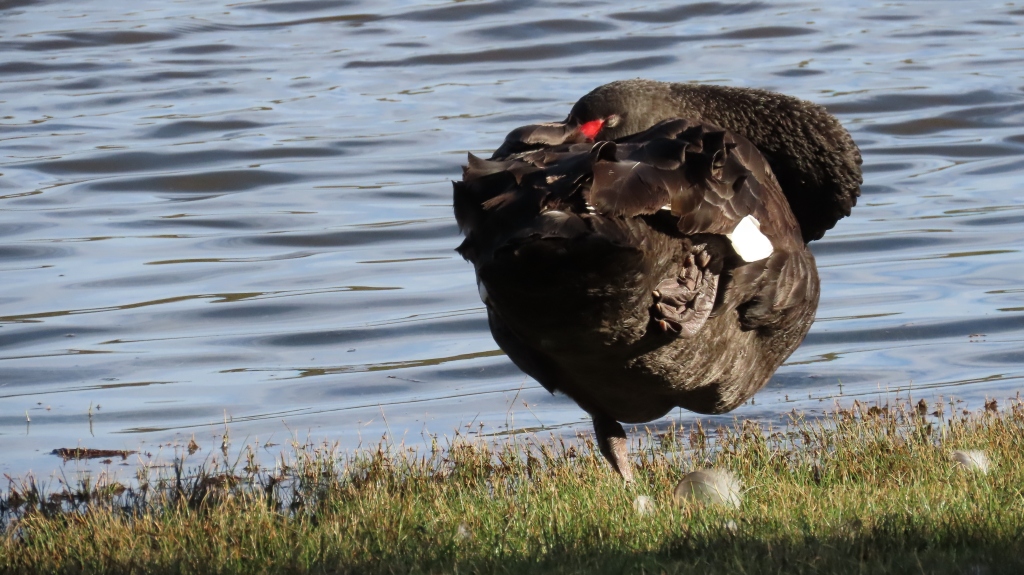
When I pass the same spot a few days later, a swan drifts peacefully on the water:

Black Swans are native to Australia, and are common around Sydney.
Common name: Black Swan
Scientific name: Cygnus atratus
Approximate length: 120 cm
Date spotted: 8th and 17th April 2024 (autumn)
Location: Manly Dam Park, New South Wales, Australia: 33°46’35.4″S 151°14’49.8″E
Bad hair day and goofy look from this Kookaburra
Yesterday I encountered a Kookaburra. It sat still on a branch, as they do, letting me take copious photos, as they do. (Why don’t other birds take a leaf out of a Kookaburra’s book?) Here’s the bird in half profile, looking cute and kind of noble:

However, the other profile gives a different impression. A twig is tangled in the feathers on the Kookie’s head. Bad hair day?

Here’s a shot of that goofy look they have when they gaze right at you:

Common name: Laughing Kookaburra
Scientific name: Dacelo novaeguineae
Approximate length: 47 cm
Date spotted: 8 April 2024 (autumn)
Location: Manly Dam park, New South Wales, Australia: 33°46’52.4″S 151°15’08.3″E

Little Wattlebird bathing in the tree tops
A Little Wattlebird, high in the gum trees, dives through the leaves. I’ve seen birds doing this a few times. They’re taking advantage of the early-morning dew to freshen up their feathers.
Here’s a still photo of the Little Wattlebird:

Common name: Little Wattlebird
Scientific name: Anthochaera chrysoptera
Approximate length: 30 cm
Date spotted: 1 April 2024 (autumn)
Location: Manly Dam Park, New South Wales, Australia: 33°46’39.6″S 151°14’55.7″E

Colourful Oriole singing
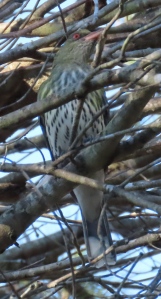
The colours on this Olive-backed Oriole are gorgeous: bright red eyes, olive green neck and shoulders, white underbelly with black stripes. The bird was uttering its typical ringing call, interspersed with the sounds of other birds that it was mimicking. The music in the background is from some nearby picnickers.
The sound that first drew me to look for this bird was the call of a Black-faced Cuckoo-shrike. Instead, I found an Olive-backed Oriole mimicking the call! (I didn’t catch that particular sound in the video, alas.)
The bird was on a Casuarina tree, looking for insects among the seed pods. Here’s a still photo:
Common name: Olive-backed Oriole
Scientific name: Oriolus sagittatus
Approximate length: 25-28 cm
Date spotted: 25 March 2024 (summer)
Location: Manly Dam Park, New South Wales, Australia: 33°46’52.3″S 151°15’07.9″E

Birds galore at Long Reef Aquatic Reserve, Collaroy
Last week I spent a couple of hours at Long Reef Aquatic Reserve in Collaroy, NSW. I was there just for a walk with my partner, but I was delighted at the number and variety of birds we encountered.
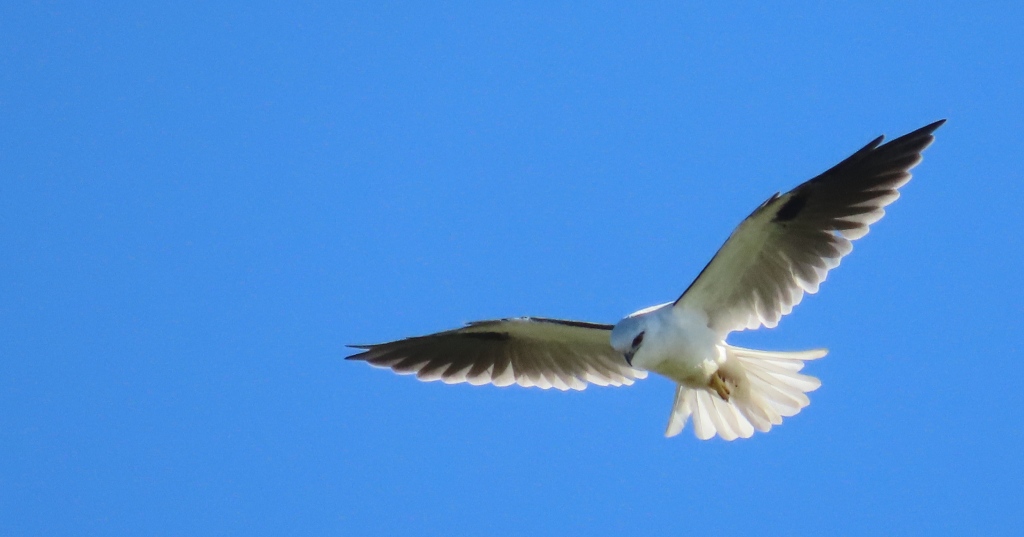
First up were two raptors, a real treat to see. A Black-shouldered Kite (Elanus axillarus) hovered in the air, effortlessly riding the currents and looking out for prey:
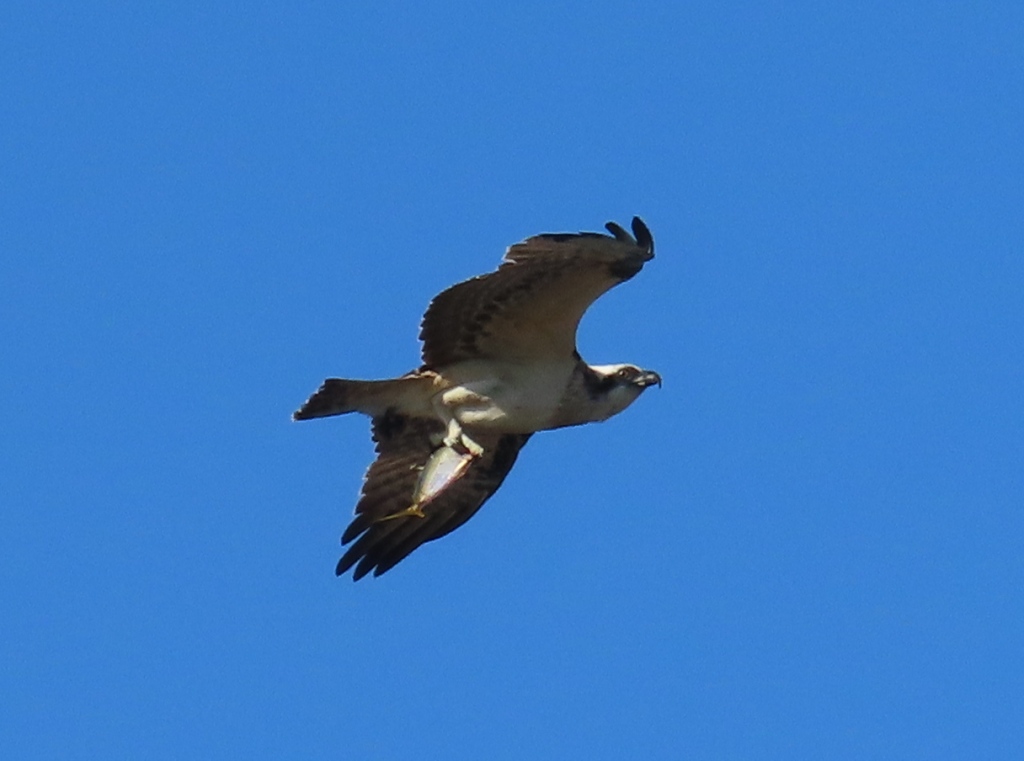
An Eastern Osprey (Pandion cristatus) soared in circles, grasping a half-eaten fish in its feet:
I’ve written a separate post about these two birds, a third raptor, and some paragliders who shared the air currents with the kite: Three raptors in one day.
Huge Pelicans (Pelecanus conspicillatus) perched on the lampposts and glided above my head. Here’s one of them, looking sad and wise:
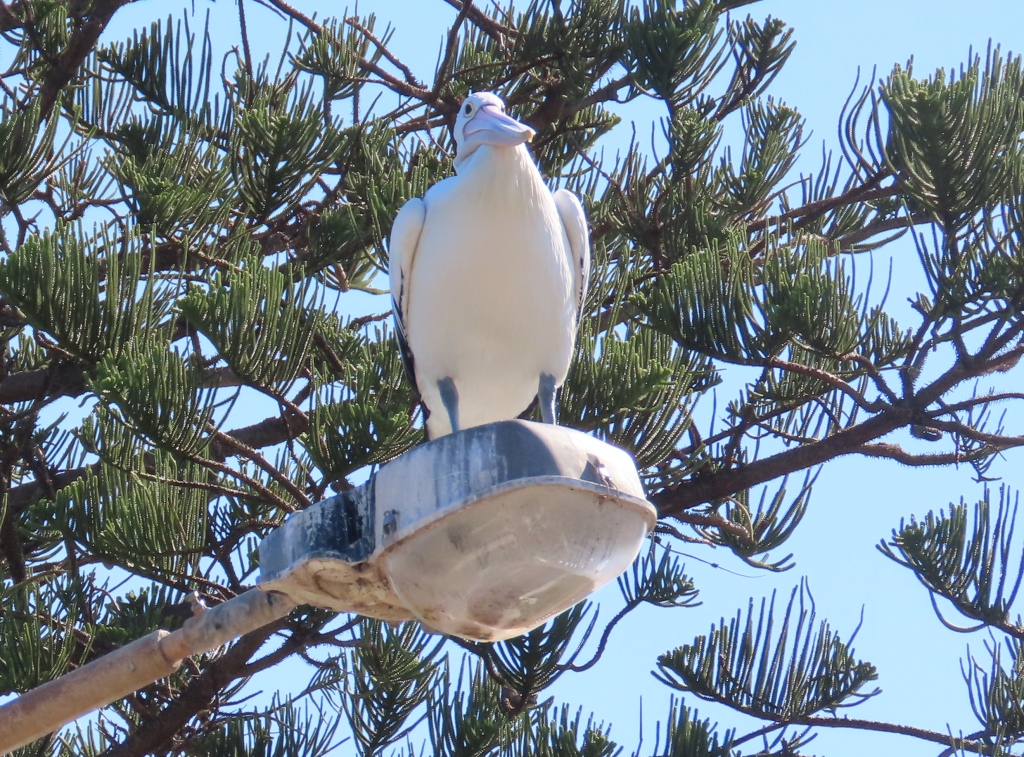
Another post has more pictures of these magnificent birds: Three pelicans on a lamppost.
A female Darter (Anhinga melanogaster) sat on a metal structure above the beach, surveying all the action with a cautious eye:

Silver Gulls (Larus novaehollandiae) wheeled around the fishermen at the edge of the rock plate:

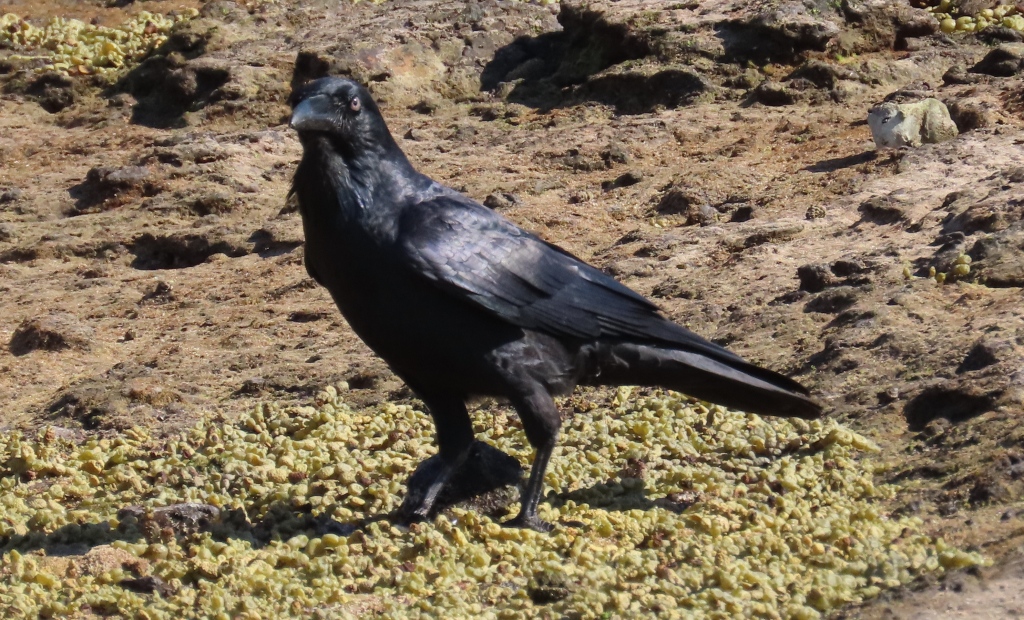
Australian Ravens (Corvus coronoides) picked through the stranded seaweed in search of a snack:

Here’s a close-up of one of the ravens:
Fish skulked in a nearby rock pool:

A crab came out from under a rock, ready to dash back in at the slightest sign of danger:

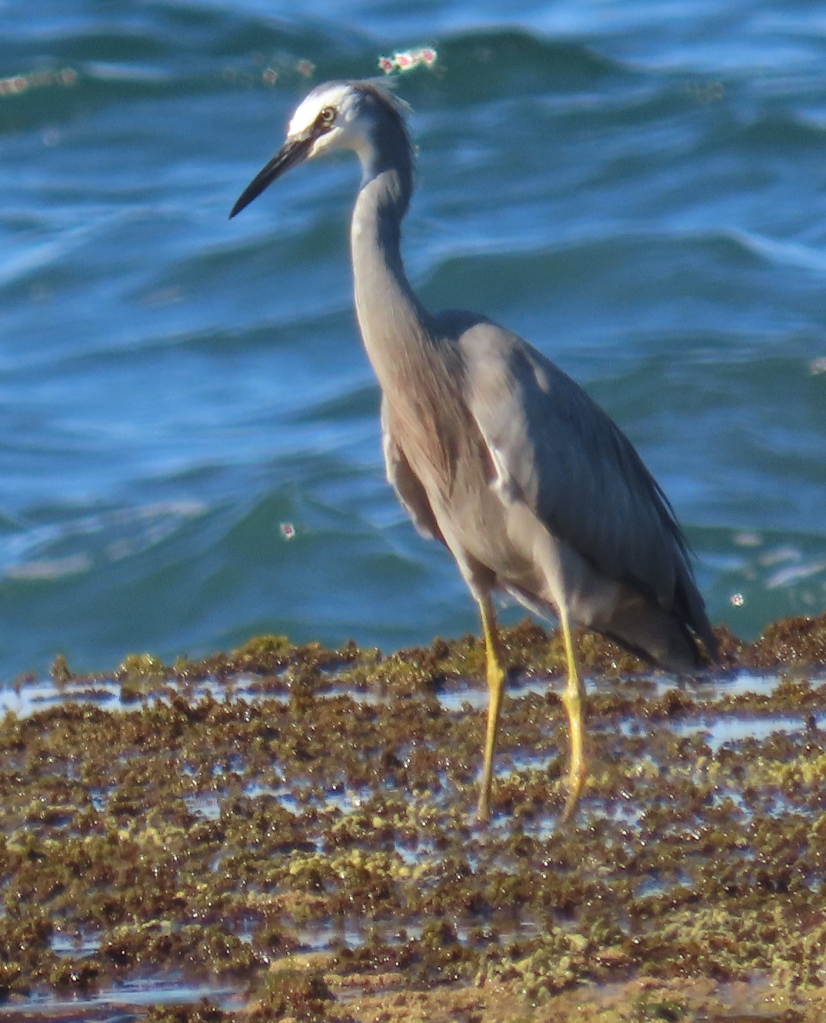
A White-faced Heron (Ardea novaehollandiae) patrolled the border between land and sea:
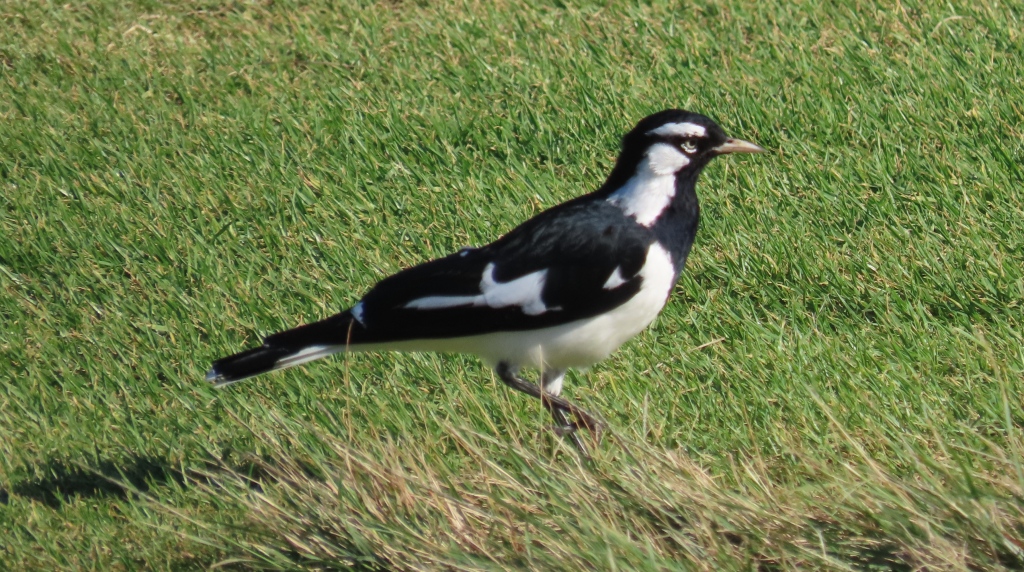
On the grassy headland above the beach, a Magpie-lark (Grallina cyanoleuca) owned the land. These birds are also called Peewees, because of the loud shrill call (peeee-wheee) that they make whenever a person or anything else comes too close:
To close off with, here are a couple of shots showing the colours and serenity of the Long Reef Aquatic Reserve that afternoon. First, looking from the rock plate towards the land:
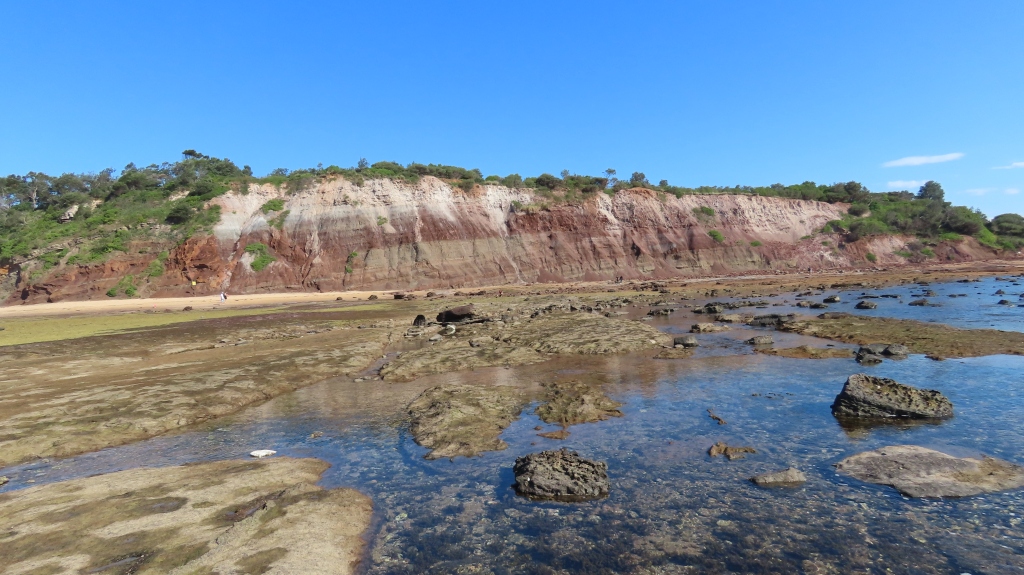
Then looking out to sea:


Three pelicans on a lamppost
Pelicans are very large and weighty birds: 1.7 metres from head to tail, weighing up to 13 kilograms. So, not a bird that you’d expect to see perched on a street lamp. The idea of three of them perched on the same lamp at the same time sounds unlikely, if not bizarre.
Yet, when I arrived at Long Reef Aquatic Reserve in Collaroy, I was greeted by this sight:

No wonder the street lamps are of sturdy construction!
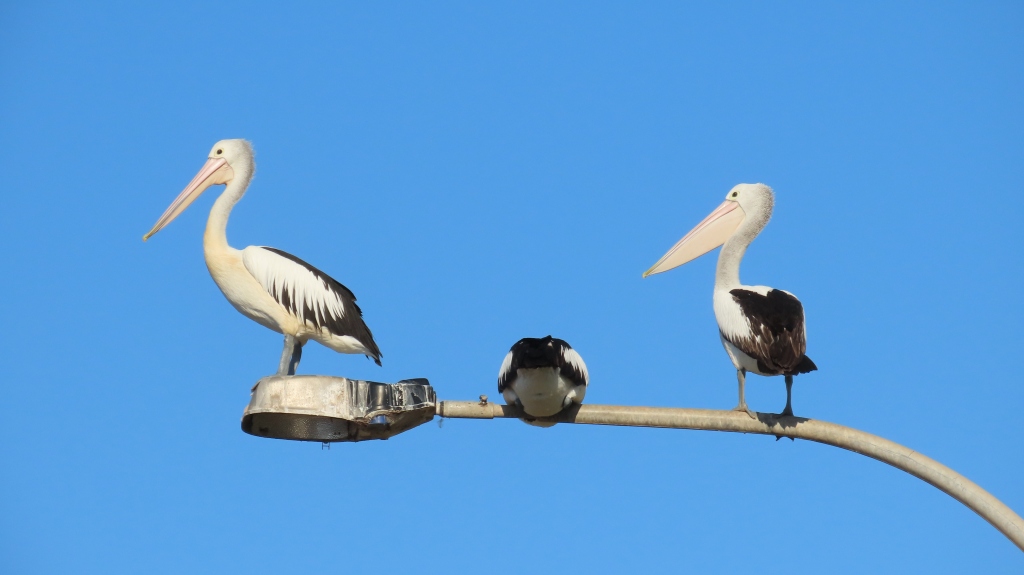
What a face! A little glum, a little world-weary, but so wise:
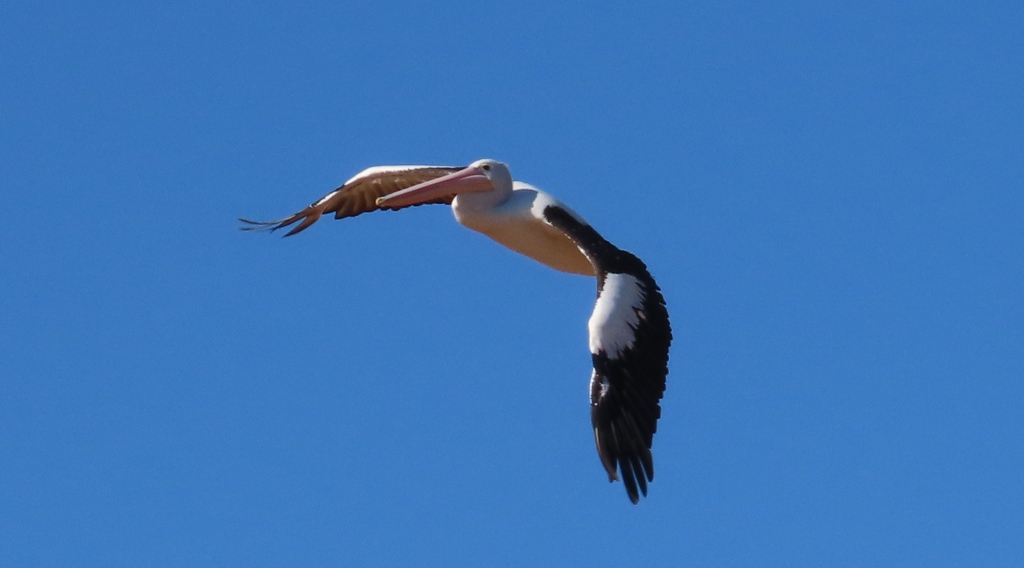
When flying, a pelican is graceful and beautiful. Even so, it reminds me of an armchair in the sky:
Three Australian Pelicans head off towards the ocean, with a White-faced Heron in the distance:

Common name: Australian Pelican
Scientific name: Pelecanus conspicillatus
Approximate length: 170 cm
Approximate wingspan: 2.5m
Date spotted: 24 March 2024 (summer)
Location: Long Reef Aquatic Reserve, Collaroy, New South Wales, Australia: 33°44’19.7″S 151°18’42.0″E

Three raptors in one day
A few days ago, I was super lucky: I saw three birds of prey in one afternoon. The first was an Eastern Osprey, holding a fish in its claws. The second was a Black-shouldered Kite, hovering above the grasslands near the beach. For a short time, there were two of these birds quite close to each other. The third was a Peregrine Falcon, soaring in the sky above the suburbs.
Eastern Osprey
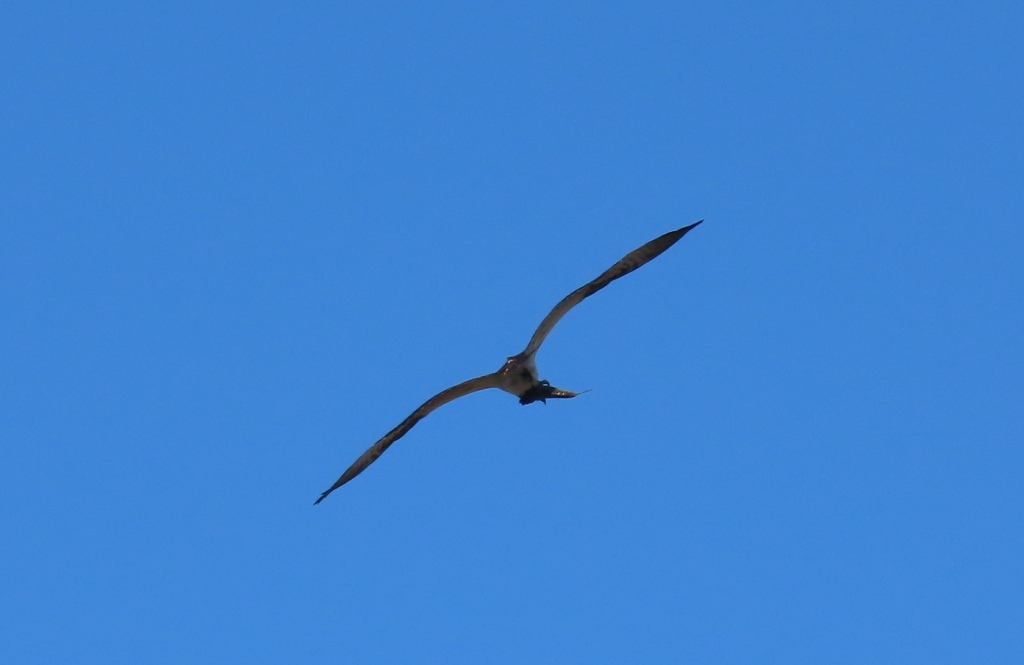
The Eastern Osprey was exciting to see. It was quite large, flying high in the sky above Long Reef Aquatic Reserve in Collaroy. At first I thought this large bird was one of the pelicans that were floating about. When I saw it through my camera lens, I spotted the fish in the bird’s grip.
The next picture is fuzzy and only a partial shot of the bird, but it gives a good idea of the colouring of the underside:
The next picture shows the Osprey’s long wingspan — about 1.5 metres. The bird is flying away from the camera:
Common name: Eastern Osprey
Scientific name: Pandion cristatus
Approximate length: 57 cm
Date spotted: 24 March 2024 (summer)
Location: Long Reef Aquatic Reserve, Collaroy, New South Wales, Australia: 33°44’19.7″S 151°18’42.0″E
Black-shouldered Kite
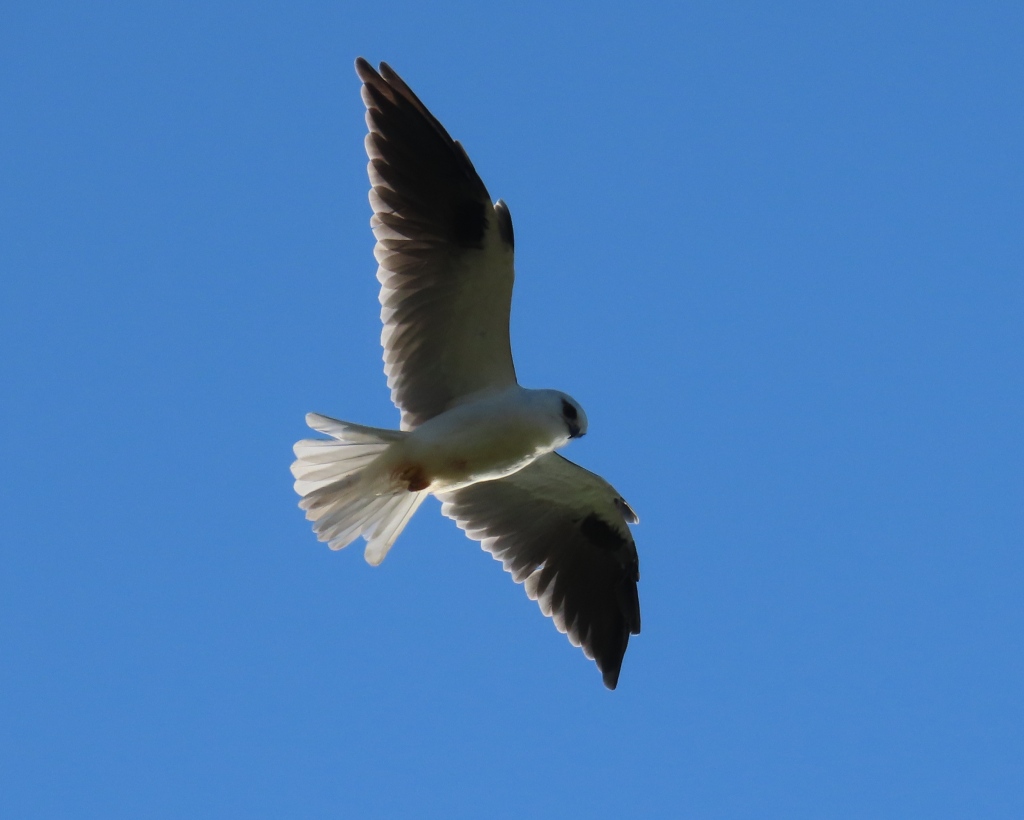
Nearby, a Black-shouldered Kite hovered above the grassy, bushy stretch that runs along the coast. It was amazing how the bird hung almost motionless in the air, held aloft by the air currents:
The next photo shows a slightly different angle. It might be the same bird or a different one, as there were two in the area:
Also in the area were some paragliders, enjoying the same up currents as the birds. The gliders kept a respectful distance, and the birds didn’t seem worried at all, as you can see in the next video. The second Black-shouldered Kite makes a brief appearance part-way through:
Common name: Black-shouldered Kite
Scientific name: Elanus axillarus
Approximate length: 35 cm
Date spotted: 24 March 2024 (summer)
Location: Long Reef Aquatic Reserve, Collaroy, New South Wales, Australia: 33°44’19.7″S 151°18’42.0″E
Peregrine Falcon
On my way home, I saw a Peregrine Falcon soaring high in the sky. As I took the photo, the bird turned its head and looked down at me:

The images are fuzzy because my camera isn’t super powerful, but you can still make out the features of the Peregrine Falcon:
Common name: Peregrine Falcon
Scientific name: Falco Peregrinus
Approximate length: 42 cm
Date spotted: 24 March 2024 (summer)
Location: Allambie Heights, New South Wales, Australia: 33°46’18.2″S 151°15’39.4″E
It’s not often that I see one of Australia’s birds of prey. To see three different types in one day was a raretreat.


 Sydney Birder