Blog Archives

Black Swan baby is no longer an ugly duckling!
Back in November, I posted some pictures of a lone Black Swan cygnet with its parents. The baby was actually very cute, not an ugly duckling at all, unless you’re a duck, I guess. Since then, I’ve been keeping an eye on the young family and hoping that the little one makes it through its first difficult months. So far, so good.
Here’s the little one in December, just a few weeks after I first saw it:
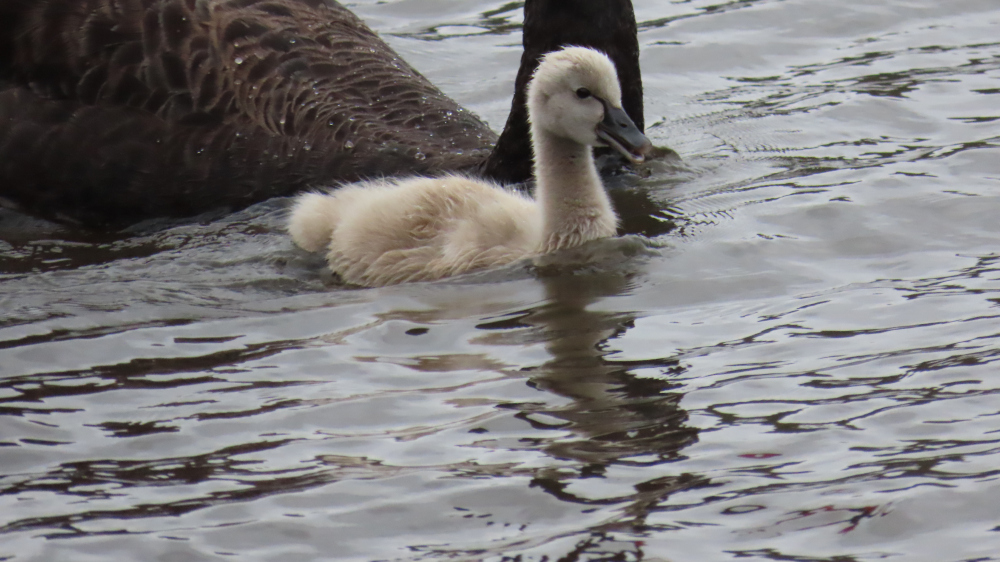
It’s very small next to its parents, and doesn’t look much like a swan:
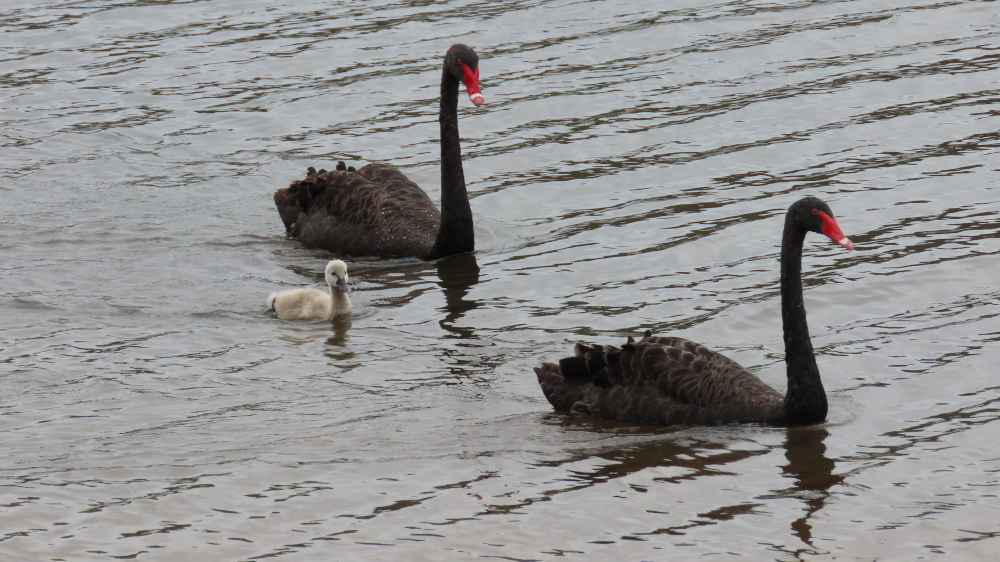
Now we’re in early February, three months after I first saw the baby, and what a difference! The little one is nearly the size of its parents and already looks more like a swan than a bundle of fluff:
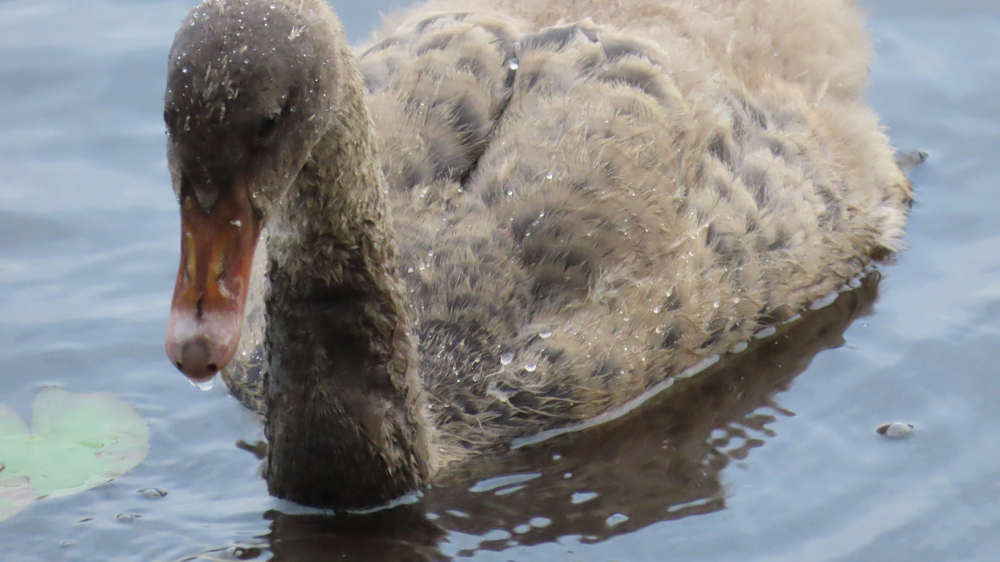
Black Swans face several dangers: foxes, dogs, getting snagged and injured by fishing line, boats, and pollution. I don’t know how many there were in the brood, but it’s great to see one youngster doing well.
This video from December shows the little one bravely battling the choppy waters of the dam where they live. If you listen carefully, you’ll hear the cygnet cheeping continually. The rushing sound is the wind:
Now, in February, the youngster sails majestically around the adult birds. The noisy birds off-camera are Rainbow Lorikeets:
Common name: Black Swan
Scientific name: Cygnus atratus
Approximate length of adult bird: 120 cm
Date spotted: 3 February 2026 (summer)
Approximate location: Sydney’s Northern Beaches, New South Wales, Australia

Longest nest-sitting ever: Black Swans abandon nest after 8 months (part 2 of story)
Over the past 8 months, two Black Swans have been diligently tending a nest in Manly Dam Park, in Sydney’s Northern Beaches. In the early days (August 2024), spring was in the air. Nature was blooming and the swans were devoted and diligent. As spring turned to summer, the heat bore down. Cicadas shrieked, reeds grew up and died down again. Still, the pair tended the nest, rebuilding regularly, looking after each other, and clearing the water around their nest. (Story of two nesting Black Swans: Part 1)
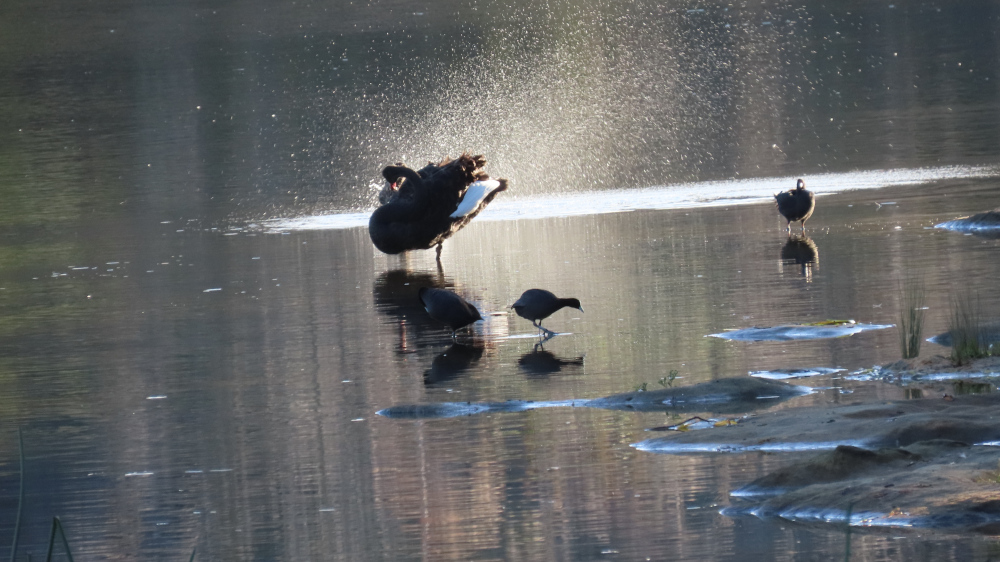
Yesterday (9 April 2025), for the first time, the nest was empty when I walked past. The nest is the large circle of brown reeds lying horizontal behind the green reeds:

A hundred metres away, one of the swans was drifting on the water, hooting quietly and persistently:
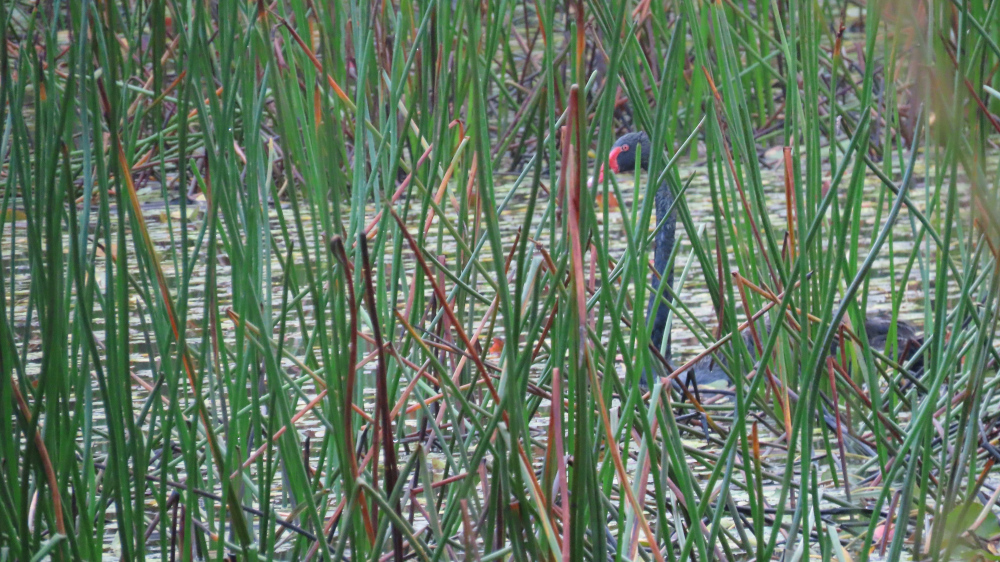
Once or twice I heard the other swan replying from deep in the reeds, but I didn’t see it.
At my previous visit a week ago, the swans had moved their nest to a slightly different location, just ten metres or so away from the original location. I wondered if this meant that at last, there was hope for an egg or two. Who knows, perhaps the pair will proudly emerge with a train of cygnets to show. Alas, though, I doubt that there were ever any eggs in the nest. From a discussion on Reddit, it seems that the most likely explanation is that the swans are two males, practising nest-building and nest-sitting in the absence of a female to lay an egg.
Here’s a photo from October 2024, showing both swans at the nest:

Here’s one of the swans in early February 2025, off shift for a moment while its partner sits on the nest:
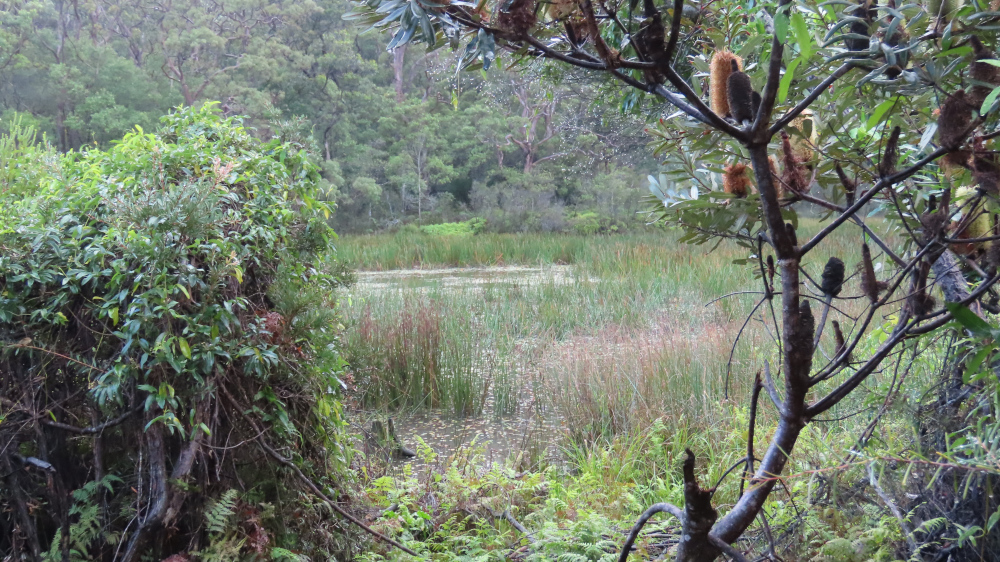
This is the tranquil site of the nest, now empty, but ready perhaps for a new attempt come spring:
Common name: Black Swan
Scientific name: Cygnus atratus
Approximate length: 120 cm
Date spotted: 23 August through to 9 April 2025 (late winter, through spring and summer, into autumn)
Approximate location: Manly Dam Park, New South Wales, Australia

Black swans asleep on one leg
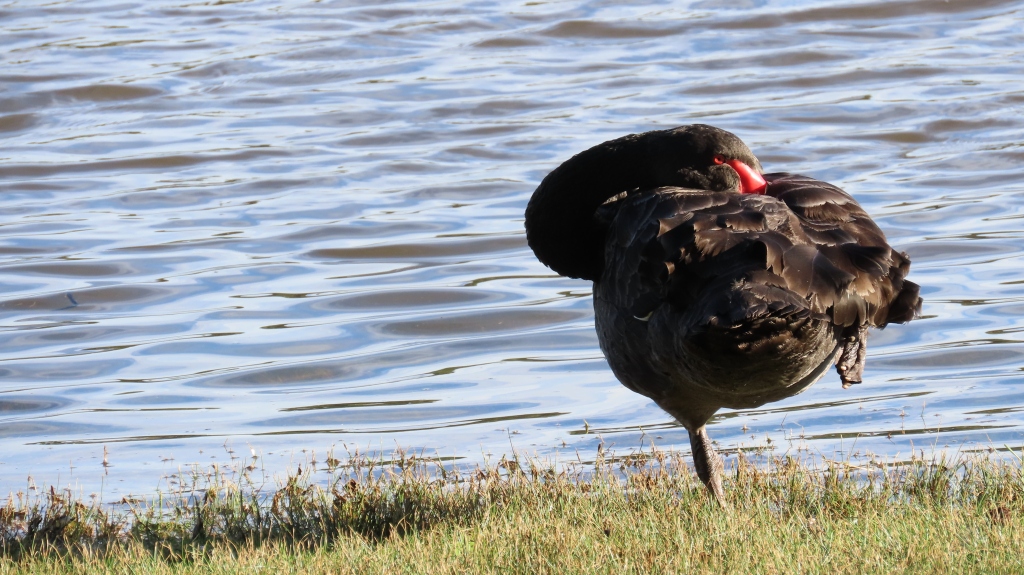
In the early morning sunshine, two black swans sleep. Both swans sleep with one leg raised, one leg holding the bird up, and head tucked under a wing. This swan has a watchful eye open:
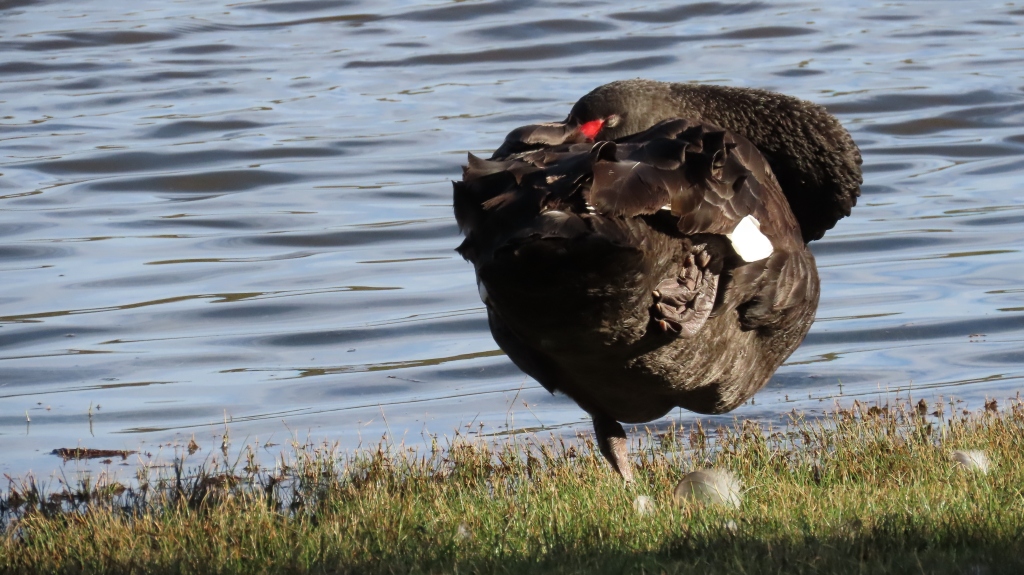
The other swan’s eyes are closed. Its foot is tucked close to its body:
When I pass the same spot a few days later, a swan drifts peacefully on the water:

Black Swans are native to Australia, and are common around Sydney.
Common name: Black Swan
Scientific name: Cygnus atratus
Approximate length: 120 cm
Date spotted: 8th and 17th April 2024 (autumn)
Location: Manly Dam Park, New South Wales, Australia: 33°46’35.4″S 151°14’49.8″E

Swans enjoying flooded picnic area
It’s been a bit wet on the east coast of Australia. For many people, the recent floods have been devastating and very sad. I’ve been lucky to be largely unaffected. I’m so sorry for all those who’re still suffering the effects of the flood
Yesterday it stopped raining and I went for a walk. I came across these swans exploring a picnic area:
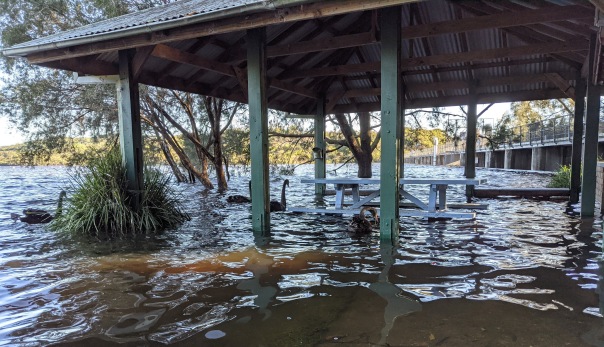
Today the water has already receded quite a bit:
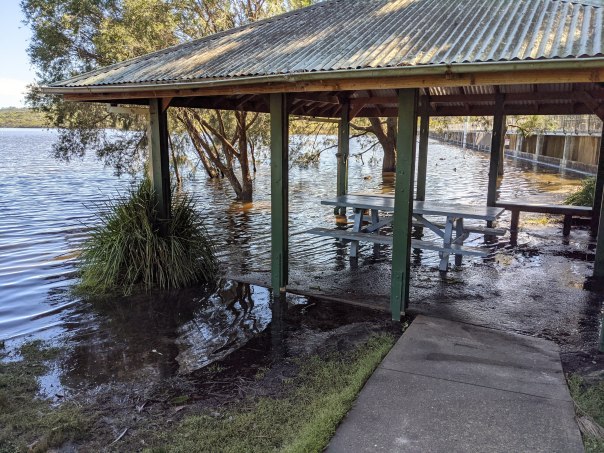
The swans are nearby, relaxing on the recently-emerged grass:

For those who’ve seen my posts about the family of swans over the past few months: yes, this is the same family. The babies are pretty much grown up already.
Common name: Black Swan
Scientific name: Cygnus atratus
Approximate length: 120 cm
Date spotted: 25 March 2021 (autumn)
Location: Manly Dam Park, New South Wales, Australia: 33°46’58.5″S 151°15’18.6″E

Eat your greens! Baby swans growing up
Early in October I spotted a family of swans at Manly Dam. These are Australian Black Swans. When I first saw them, there were five baby swans (cygnets), closely watched over by two adults. This was one of the little ones, just a few days old then, I think:

Since then, I’ve been watching the cygnets grow. Alas, two of them disappeared over the weeks. But there are still three of the cygnets, still with their parents in late December, and much bigger and stronger.
The video below shows a cygnet and a parent feeding on water weeds. This was towards the end of November, when the cygnets were around six weeks old. Near the beginning of the video, the adult swan grabs a clump of weed and dumps it near the baby.
Eat your greens!
Later the video zooms out to show the entire family of three babies and two adults:
Here’s one of the cygnets swimming with an adult, also at around six weeks old:

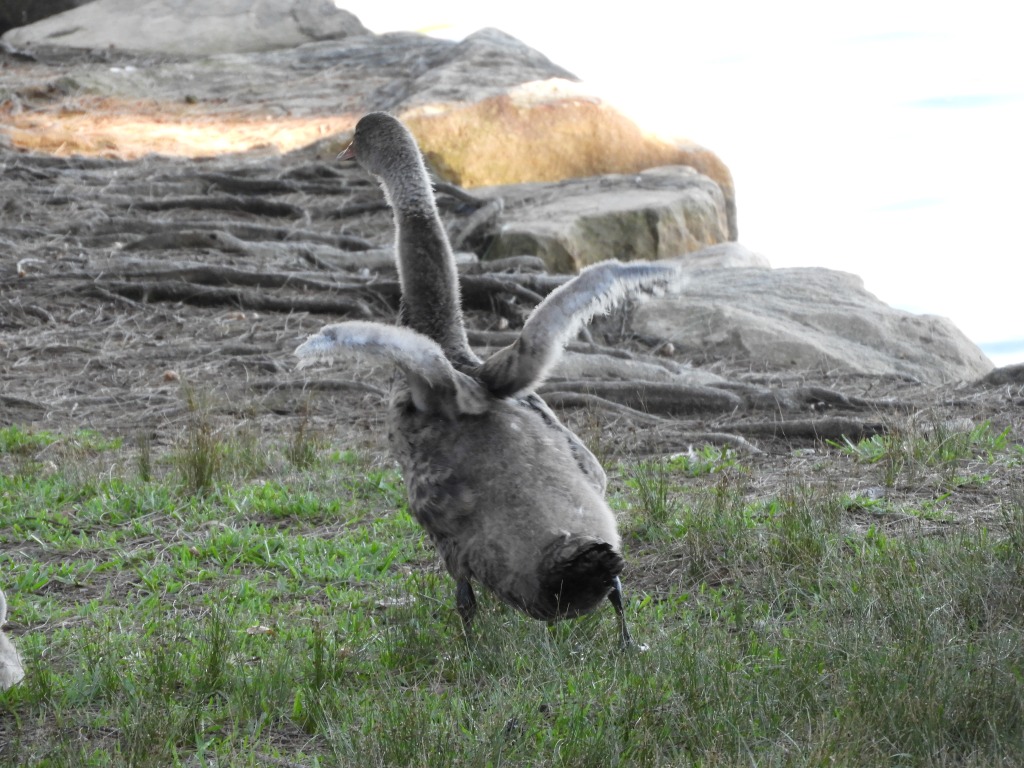
On 23 December, at ten to eleven weeks old, the cygnets are much bulkier and their faces look more swan-like:

Even at this age, their wings are still small and stumpy, nowhere near ready for flight:
Common name: Black Swan
Scientific name: Cygnus atratus
Approximate length of adult: 120 cm
Date spotted: 9 October 2020 (spring) through to 23 December 2020 (summer)
Location: Manly Dam Park, New South Wales, Australia: 33°46’58.5″S 151°15’18.6″E
Black Swans are back
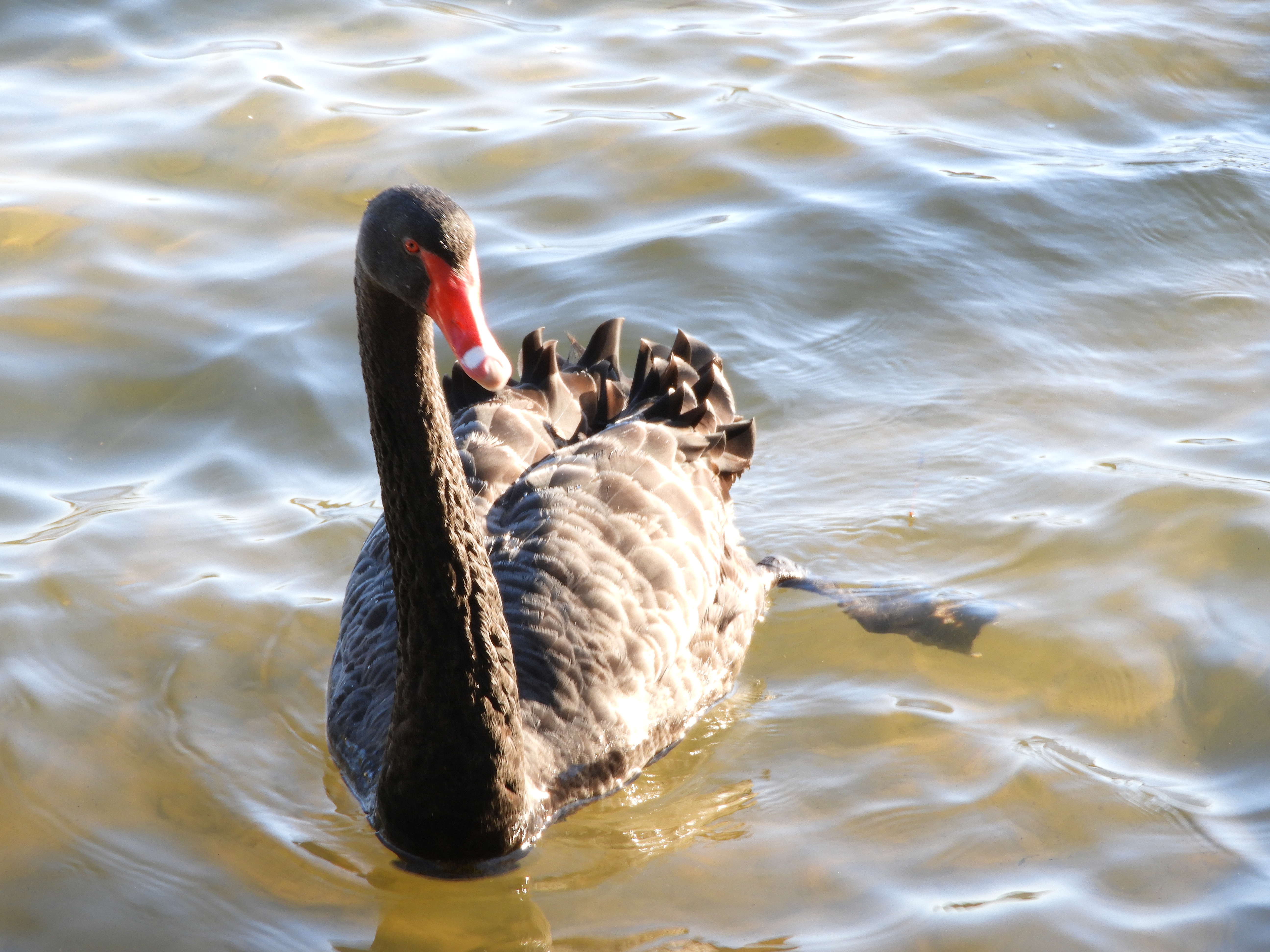
It’s been a while since I’ve seen Black Swans on Manly Dam. Now they’re back, and four of them at that. Black Swans are native to New South Wales, Australia.
The call of a Black Swan is a soft hoot, a little like an apologetic cuckoo clock. You can hear it about 6 seconds into this video:
In the next video, the swans are caught in the converging melee of waterbirds when someone throws some scraps into the water. Again, the swans hoot about 6 seconds into the video:
This swan slides a bit of green weed through its beak, presumably to scrape off slime and small creatures as food:
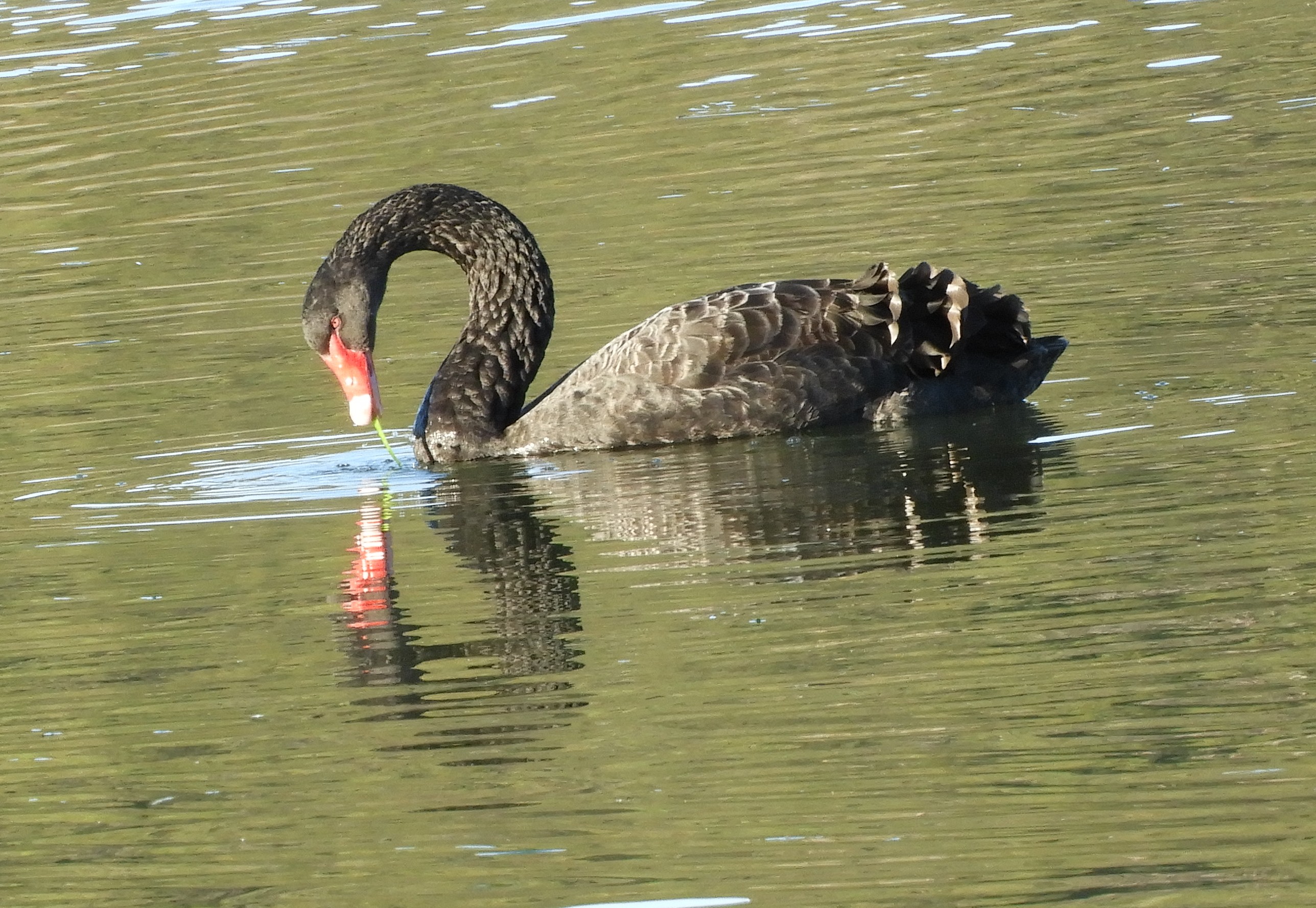
Reflecting on reeds:
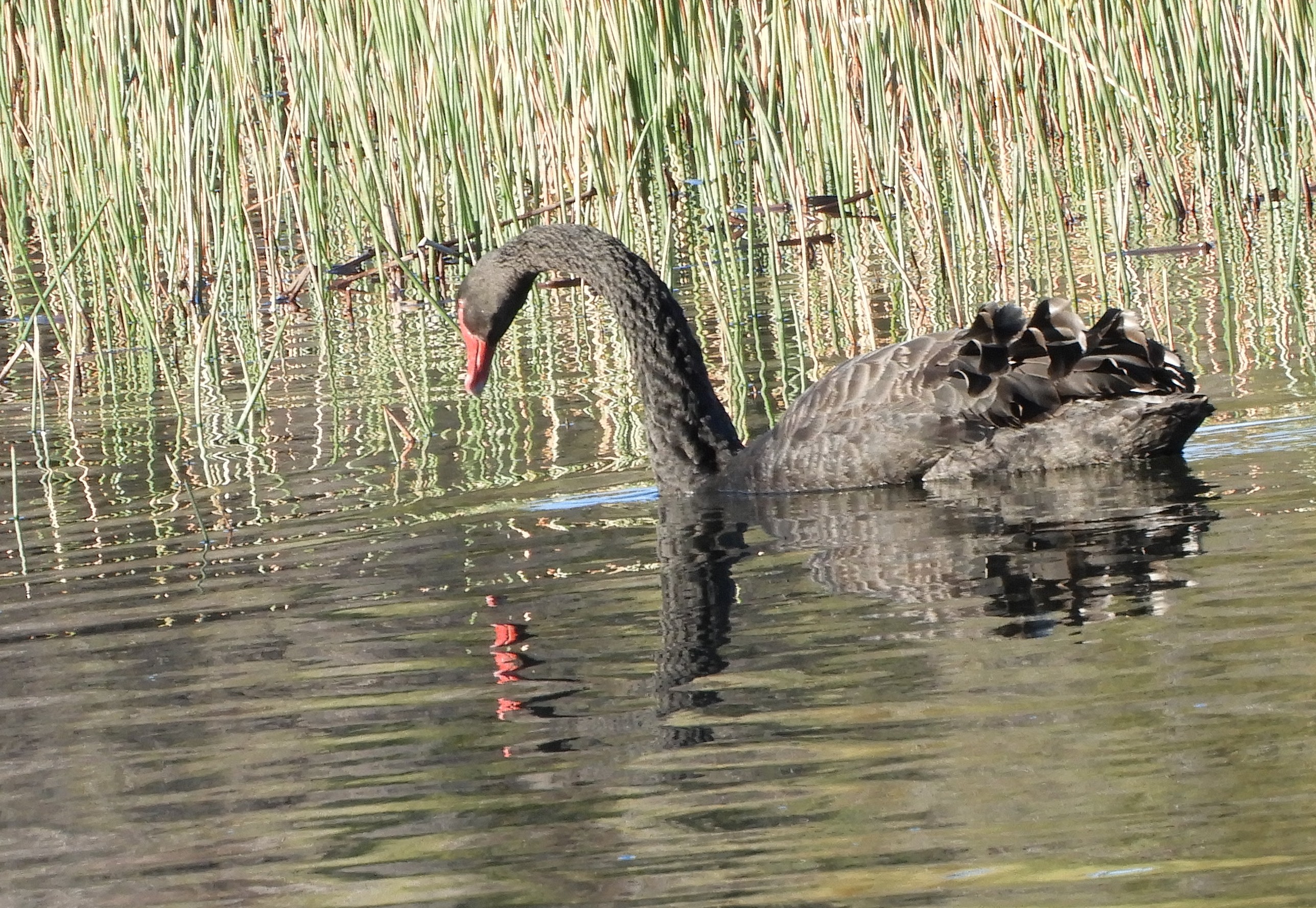
Common name: Black Swan
Scientific name: Cygnus atratus
Approximate length: 120 cm
Date spotted: 7 July 2018 (Winter)
Location: Manly Dam National Park, New South Wales, Australia: 33°46’58.3″S 151°15’18.7″E


 Sydney Birder