Blog Archives
Swamp Wallaby in the flowers
A few days ago in Manly Dam park, I saw this sweet little wallaby on a hillside covered with pink flowers (Boronia). In recent weeks, there’s been a wallaby on this hill each time I’ve passed by. I don’t know if it’s the same wallaby, but I’m thinking maybe it (or they) like the flowers as much as I do.
Swamp Wallabies are a type of small kangaroo (macropod) found in eastern Australia. They’re dark grey in colour, with rust-red fur around their ears and chest particularly during breeding season. They’ll hop away as you approach, then turn round and watch you from a safe distance.
Although this is primarily a bird blog, I’ve published a few other posts about wallabies too!

Post-fire scenes from the Australian bush
The National Parks and Wildlife Service recently conducted a hazard reduction burn in one of my favourite bush-walking areas. The NPWS lights these controlled fires to burn away excess vegetation, which reduces the chance of a more severe fire raging out of control during fire season.
Many of the plants in the Australian bush are adapted to cope with fires. For example, these Hakea seedpods popped open after the fire, allowing the seeds to escape:
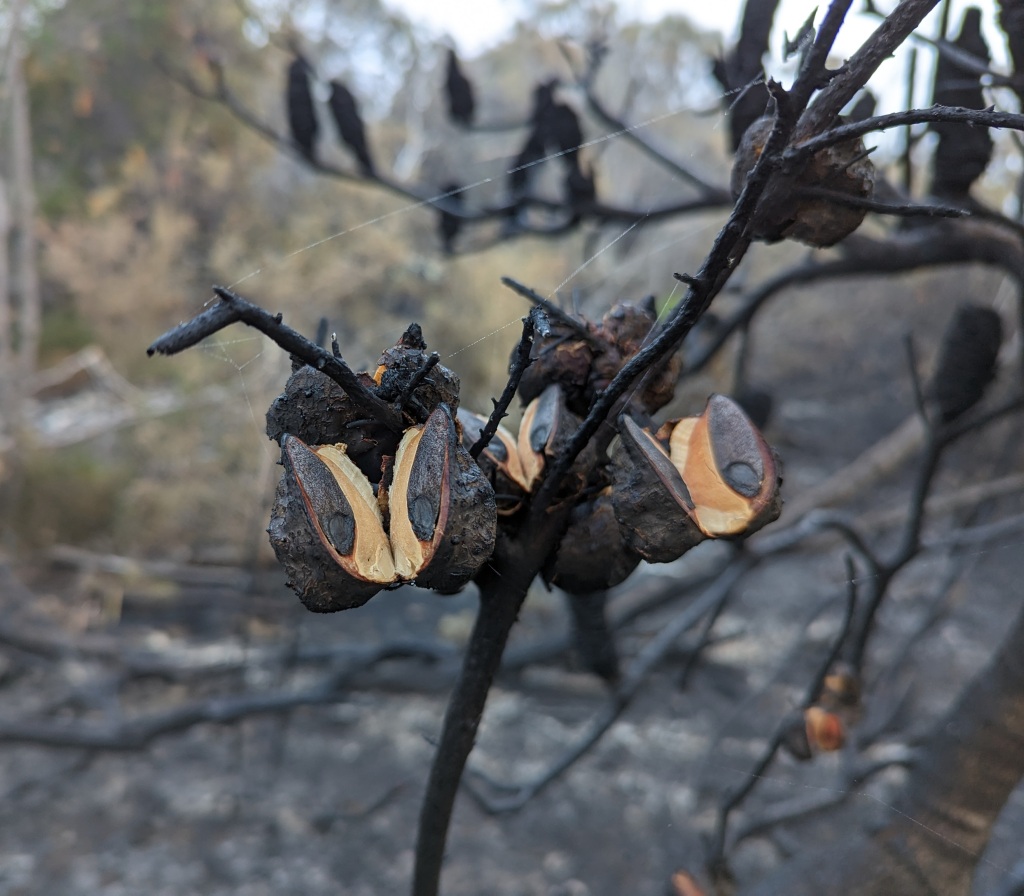
The above seed pods have both seeds still in place — the seeds are black and oval-shaped. Each seed is attached to a thin membrane, which acts as a wing: when the seed is released, it spirals gently to the ground. If there’s any wind around, the seed can travel a short distance from its parent bush.
In the next photo, only one of the seeds remains in the pod:

The next photo shows the seed head of a Banksia bush, also popped open to release the seeds. The open pods look like smiling mouths:

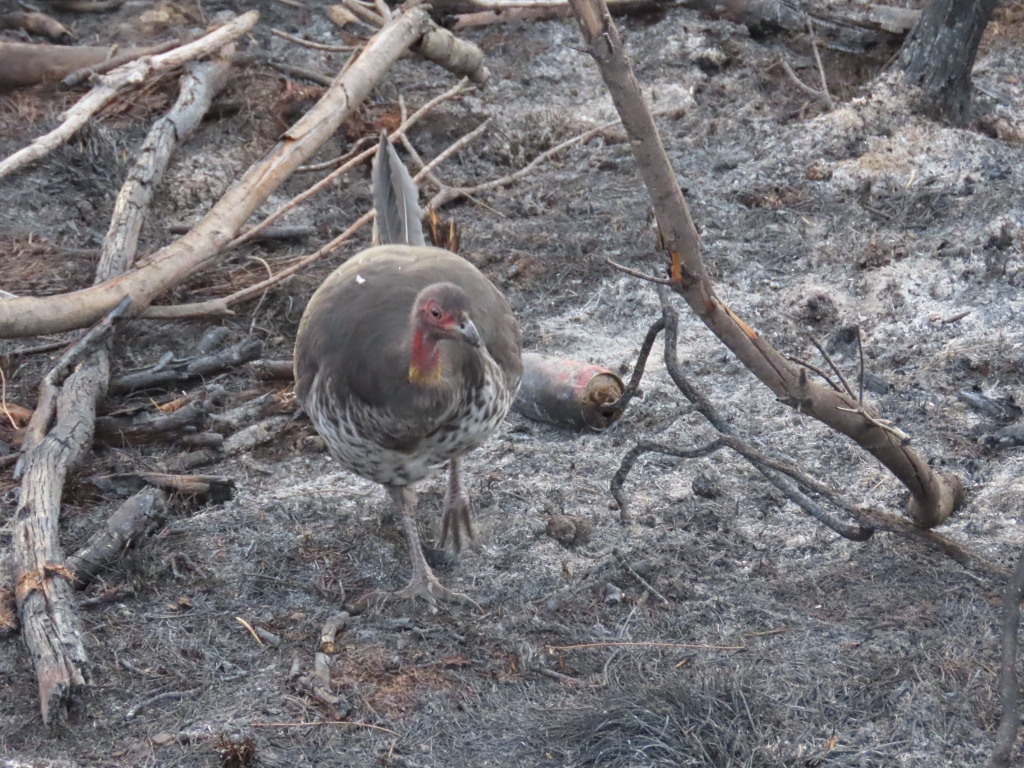
An Australian Brush-turkey wanders over the ashes, looking for pickings. A discarded can echoes the bird’s colouring:
Nearby, Australian Ravens look for insects and other goodies:

A Currawong keeps a watchful eye over the proceedings:

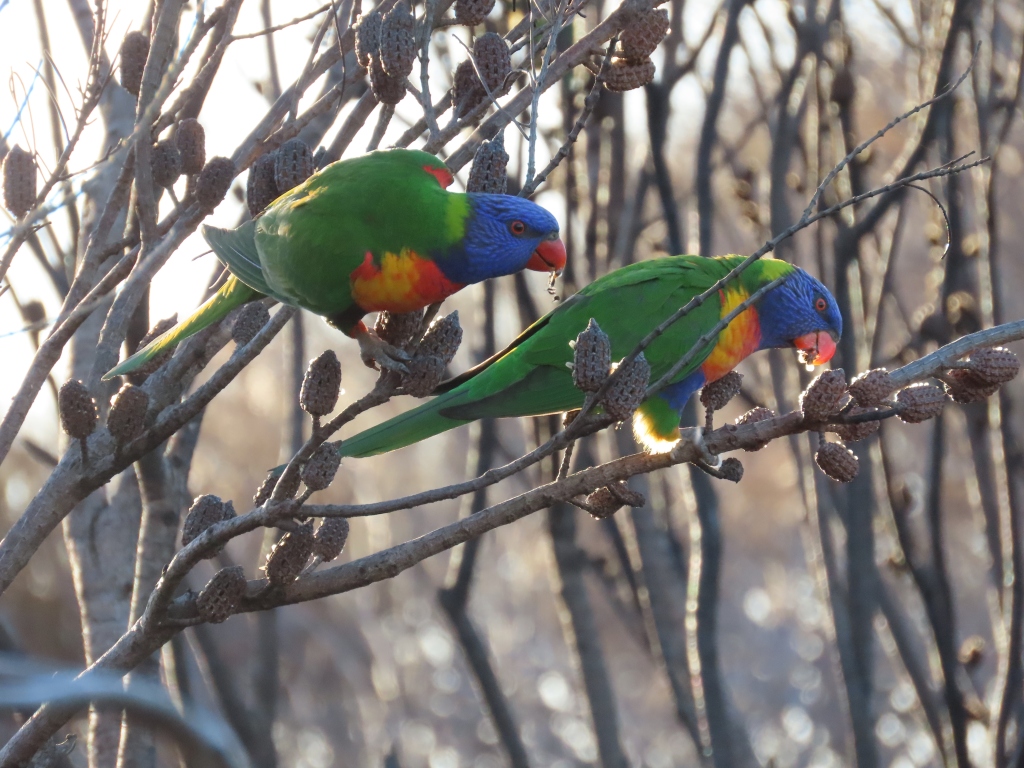
A Rainbow Lorikeet adds a splash of colour, hoping to snag a Casuarina seed or two:
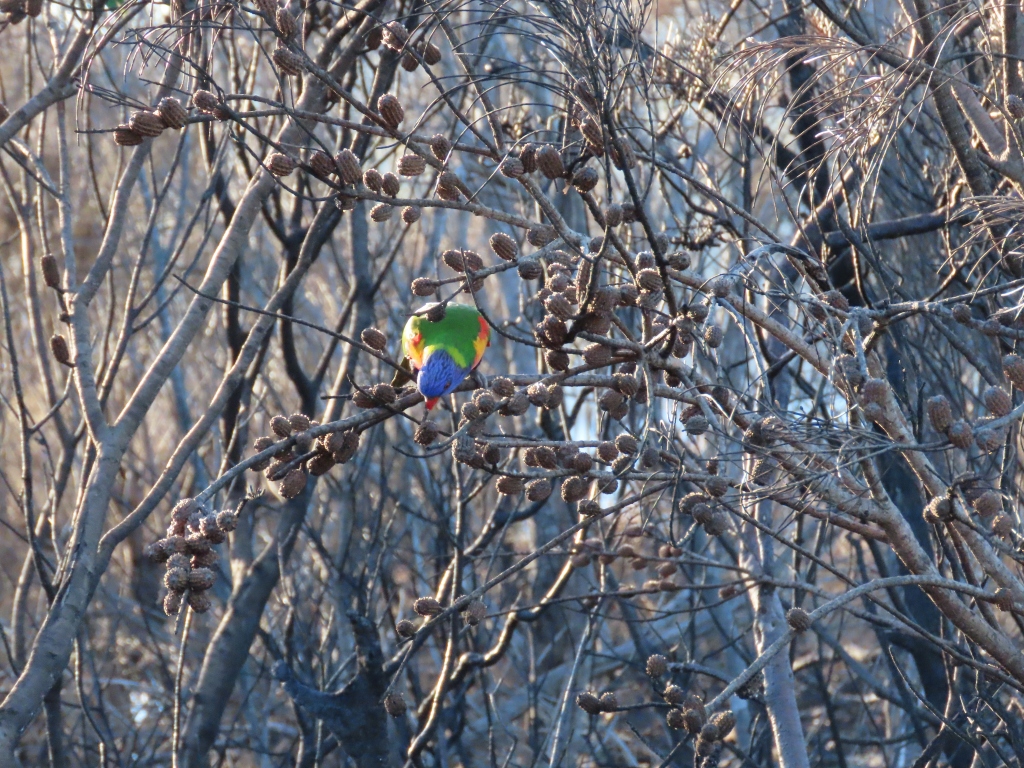
It’s much easier to grab a seed now that the fire has dried out the seedpods!
A week later, a Swamp Wallaby shared the browns and greys of the burned area too:
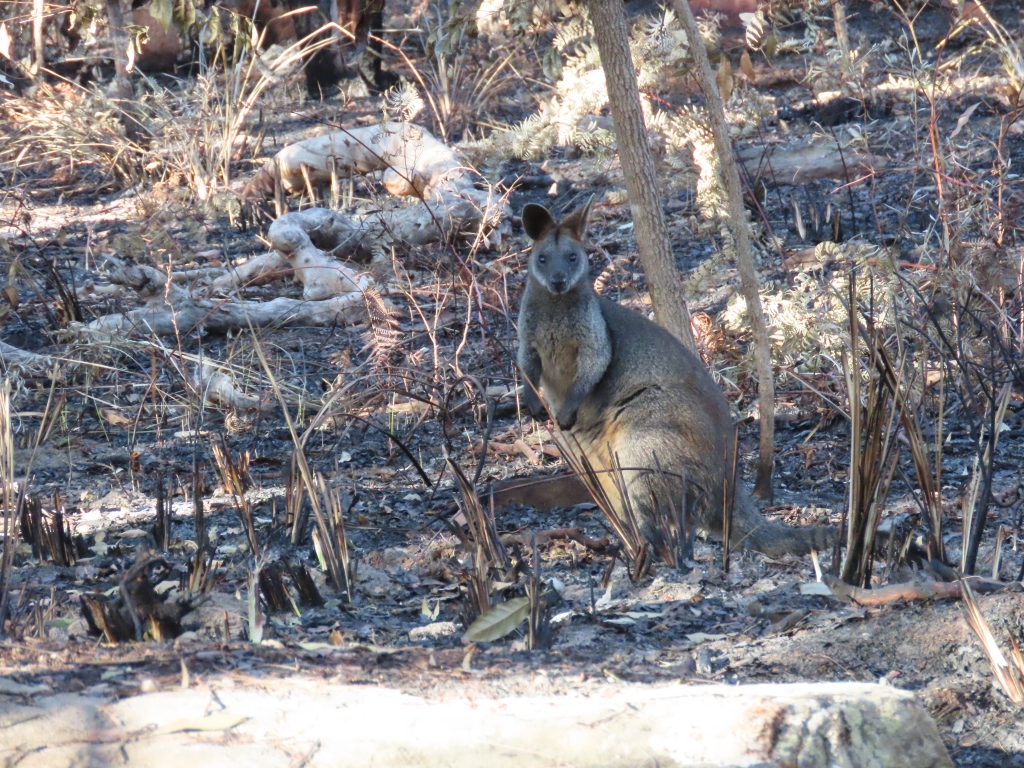
Here’s a video of the wallaby. At one stage, a plane flies overhead and a group of birds squawk loudly. The wallaby looks at me, checking whether I’m the cause of the disturbance, then goes calmly about its business:
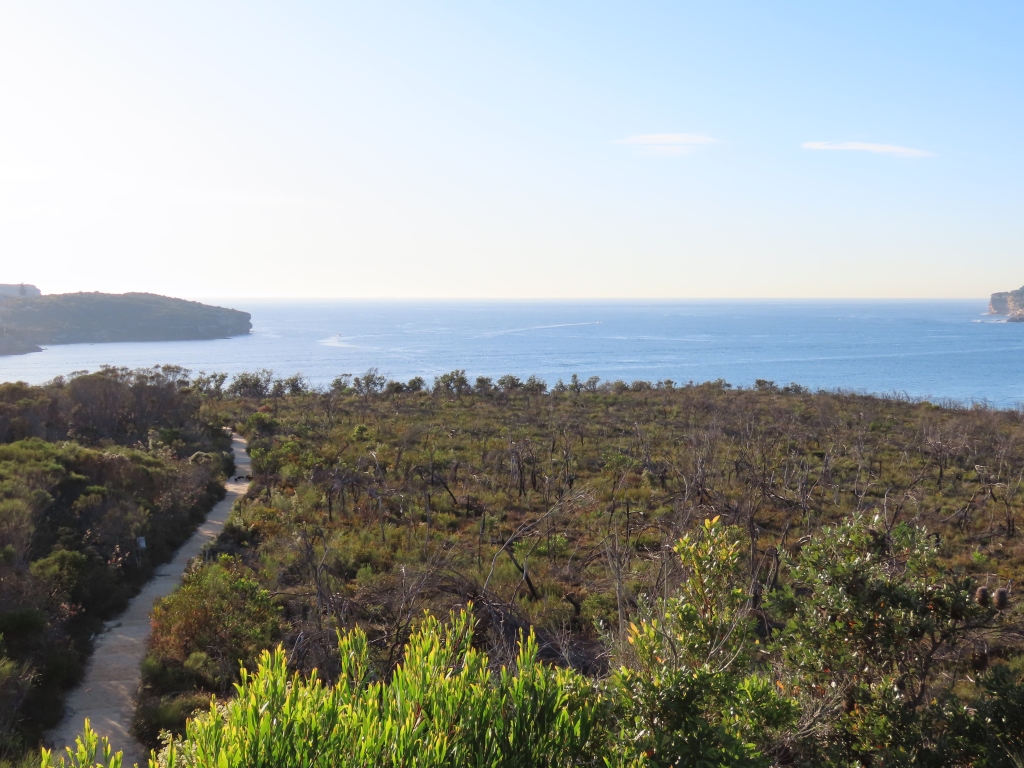
To close, here’s a restful scene of the post-fire forest in the early morning light:

Date spotted: Early June, 2023
Location: Dobroyd Head, Sydney Harbour, NSW, Australia; between this point and this point on the map.

Australian Brush-turkeys, a wallaby, and me
Back in Sydney after a short visit to South Africa, I’m delighted to walk among the Ozzie birds again. Among them are the endearingly stupid Australian Brush-turkeys.
Here I am, following some Brush-turkeys along a path. The birds make that peculiar grunting noise that is all their own. I suppose it’s a big chicken’s version of a cluck:
Australian Brush-turkeys are funny to watch when you’re sharing the same path as them. They’re a little concerned that you’re there, but they’re also very reluctant to cede the path to you. So if you walk at normal speed, they get quite flustered and rush around trying to race you. (While taking the video, I was walking very slowly.) Eventually, one smart bird stands aside just off the path. With luck, the others decide this is a wise strategy and do the same. Alas, though, they come to this conclusion at varied times, which means there’s a lot of clucking and fluttering involved to rally troops again after the danger (you) has passed.
Here’s a still picture of the birds making their way up the path ahead of me:

A closer view of one of the birds, who has realised that she’ll have a more peaceful life if she stands on the side of the path and waits for me to pass:
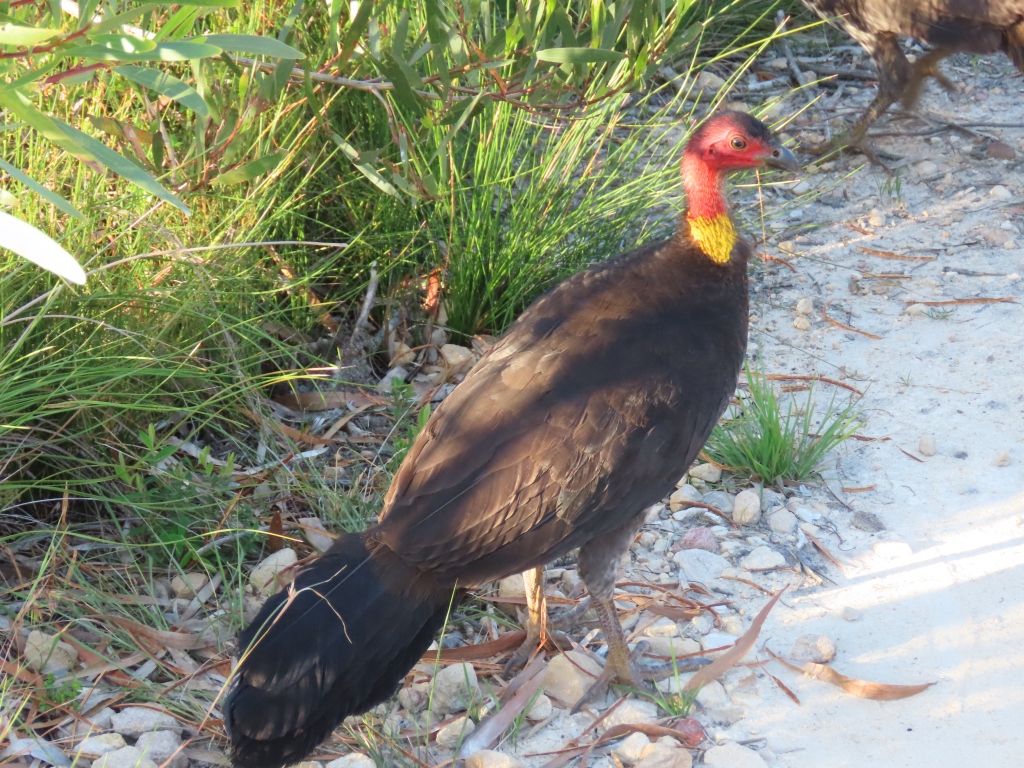
I reached the highest point of my walk and looked back down the path. The birds have found each other again and have the path to themselves:
On my way back, I encountered the same group of birds, but this time with an interloper:
A Swamp Wallaby, sometimes called a Black Wallaby, was peacefully examining the path alongside the brush-turkeys. I often see these kangaroo-like marsupials out in the early morning. They’re much smaller than kangaroos, typically reaching the height of my hips when standing on their back legs. Here’s a still photo of the wallaby with the brush-turkeys:

A few weeks ago, I filmed a Swamp Wallaby in the same area of the path. It could easily be the same animal. The video shows a good view of the animal’s head and front paws as it munches away at a bush:
In the background on the video, you hear some magpies carolling, a wattle bird squawking, and a lone whip bird calling.
Australian Brush-turkey
Scientific name: Alectura lathami
Approximate length: 60-70 cm
You can see more about this bird, including some chicks and the male’s strange call, in my other posts about Australian Brush-turkeys.
Swamp Wallaby
Scientific name: Wallabia bicolor
Approximate length: 66-85 cm
Date spotted: 12 November 2022 (spring)
Location: Dobroyd Head Track, New South Wales, Australia: 33°48’35.5″S 151°16’19.7″E


 Sydney Birder