Blog Archives

Little Black Cormorants in a row
A few days ago, at Forty Baskets Beach on Sydney’s Northern Beaches, seven Little Black Cormorants swam, fished, and sunned themselves.
Little Blacks are easy to distinguish from other types of cormorant in this area of Australia. Apart from being entirely black, they have green-blue eyes that can look quite eery at times.
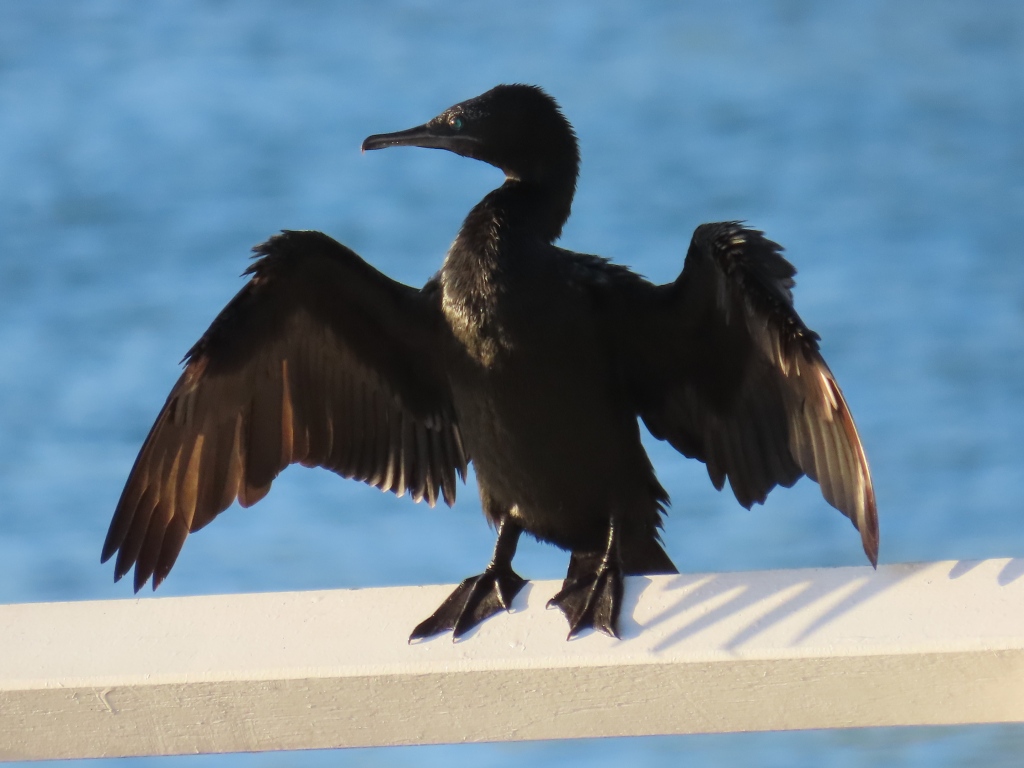
Here are six of the seven Little Black Cormorants, hanging their wings out to dry:

The group stayed together most of the time, both in and out of the water.

Here’s another of the birds showing that pretty blue eye.

Common name: Little Black Cormorant (see other cormorants)
Scientific name: Phalacrocorax sulcirostris
Approximate length: 65 cm
Date spotted: 25 April 2024 (autumn)
Location: Forty Baskets Beach, New South Wales, Australia: 33°48’12.6″S 151°16’12.2″E
Interestingly, a White-faced Heron and a few Silver Gulls followed the cormorants around.
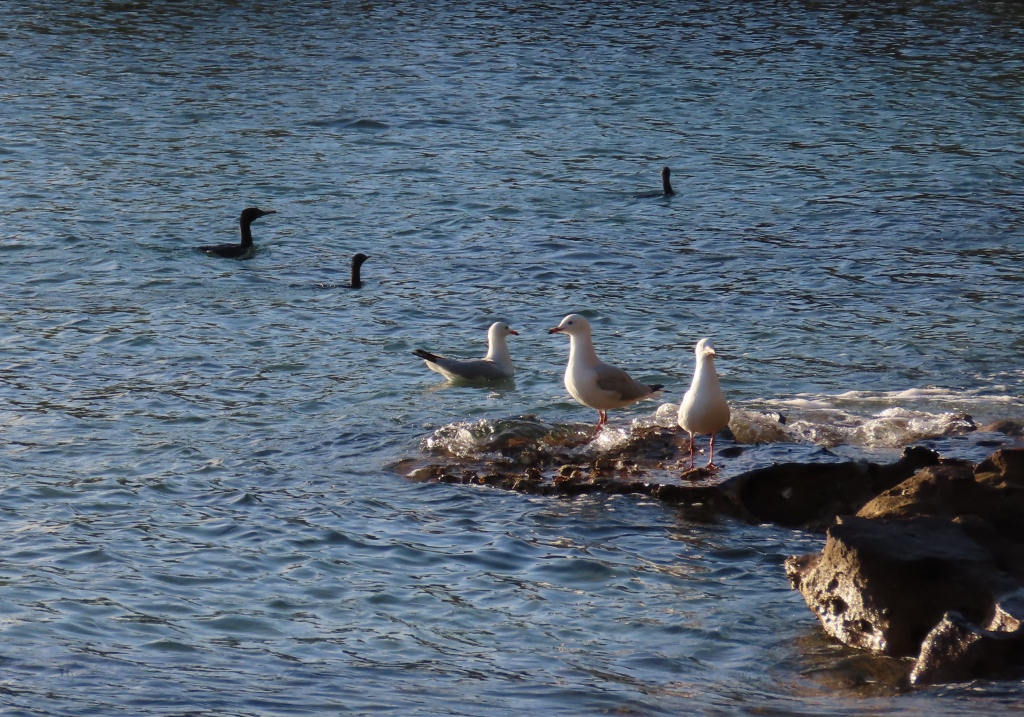
I guess they were interested in any fish that the cormorants might find!
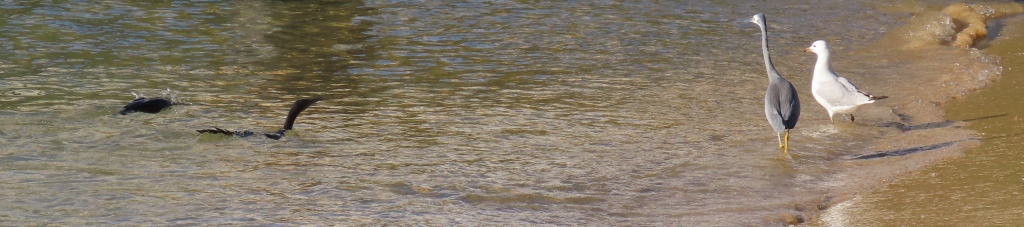
Here’s a better picture of the heron:

Ibis raiding the trash
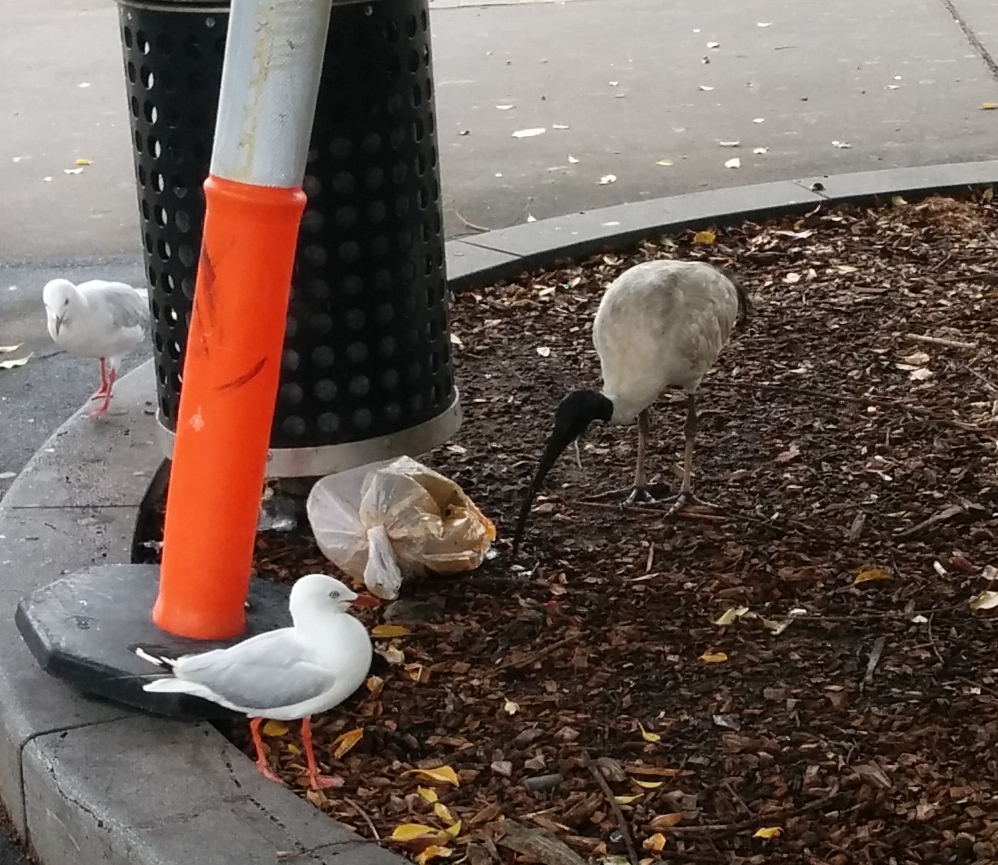
Australian White Ibises are a common sight in the city, raiding the trash or swooping between the buildings. Their natural habitat is near water, nesting in colonies on trees and bushes on the water’s edge.
This video shows an ibis in Pyrmont, Sydney, guarding its booty from other raiders: screaming, strutting Silver Gulls and a curious but cautious Common Myna.
Here’s a close-up of the ibis.
Common name: Australian White Ibis
Scientific name: Threskiornis molucca
Approximate length: 70 cm
Date spotted: 4 December 2014
Season: Summer
Location: Pyrmont, in Sydney, Australia
Latitude/longitude: 33°51’56.4″S 151°11’46.6″E
Silver Gulls on Manly Beach
Silver Gulls are the most common type of seagulls you’ll find in Manly.

Common name: Silver Gull
Scientific name: Larus novaehollandiae (also called Chroicocephalus novaehollandiae)
Approximate length: 40 cm
Date spotted: 26 December 2013
Season: Summer
Location: Manly Beach, New South Wales, Australia
Latitude/longitude: -33.794021,151.287893
The next photo shows a youngster, as indicated by the dappled brown plumage on the wings. The birds often make themselves a shallow pit in the sand to sleep in, as this one has done.

Skimming the wave tops:


 Sydney Birder