Blog Archives

Little Black Cormorants in a row
A few days ago, at Forty Baskets Beach on Sydney’s Northern Beaches, seven Little Black Cormorants swam, fished, and sunned themselves.
Little Blacks are easy to distinguish from other types of cormorant in this area of Australia. Apart from being entirely black, they have green-blue eyes that can look quite eery at times.
Here are six of the seven Little Black Cormorants, hanging their wings out to dry:

The group stayed together most of the time, both in and out of the water.

Here’s another of the birds showing that pretty blue eye.

Common name: Little Black Cormorant (see other cormorants)
Scientific name: Phalacrocorax sulcirostris
Approximate length: 65 cm
Date spotted: 25 April 2024 (autumn)
Location: Forty Baskets Beach, New South Wales, Australia: 33°48’12.6″S 151°16’12.2″E
Interestingly, a White-faced Heron and a few Silver Gulls followed the cormorants around.
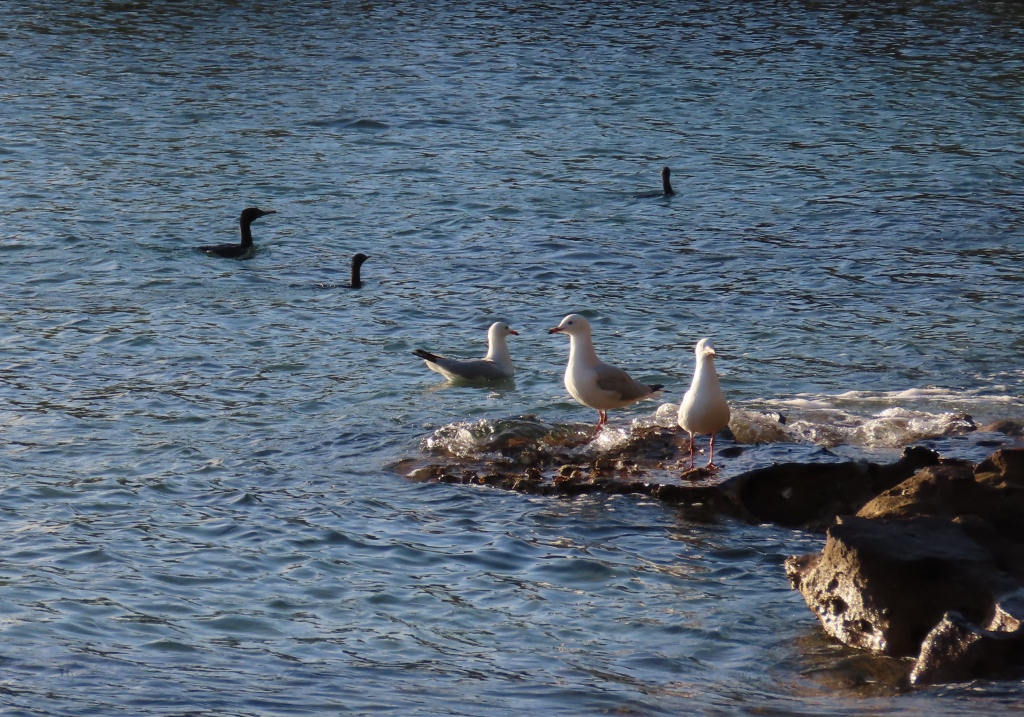
I guess they were interested in any fish that the cormorants might find!
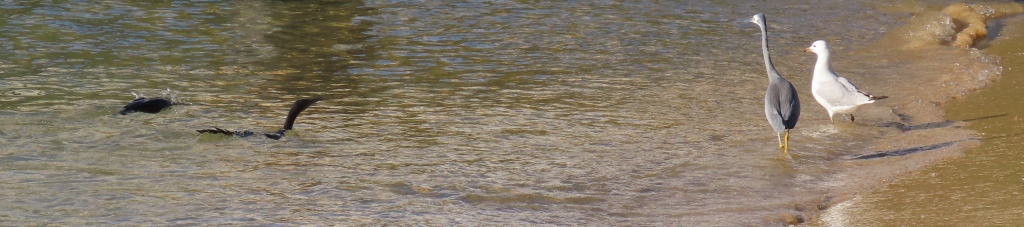
Here’s a better picture of the heron:


Little Black Cormorant swimming underwater
Today I managed to catch some footage of a Little Black Cormorant swimming in a quiet offshoot of the Hawkesbury River.
We were at Akuna Bay in the Ku-ring-gai Chase National Park. The bay is home to a marina, with boats and jetties and restaurants, yet it was quiet and peaceful when we were there.
This is a still shot of the cormorant under the water:

Little Black Cormorants are one of five types of cormorants found in Eastern Australia. I don’t have many photos of them yet. As well as being entirely black, Little Black Cormorants are distinguishable by their bright green eyes. The next photo gives some idea of the eye colour, though it’s rather blurry:

Common name: Little Black Cormorant (see other cormorants)
Scientific name: Phalacrocorax sulcirostris
Approximate length: 65 cm
Date spotted: 29 December 2023 (summer)
Location: Ku-ring-gai Chase National Park, New South Wales, Australia: 33°38’46.1″S 151°14’04.9″E
The creek was still and smooth. A haven for mosquitoes, alas, but pretty too:
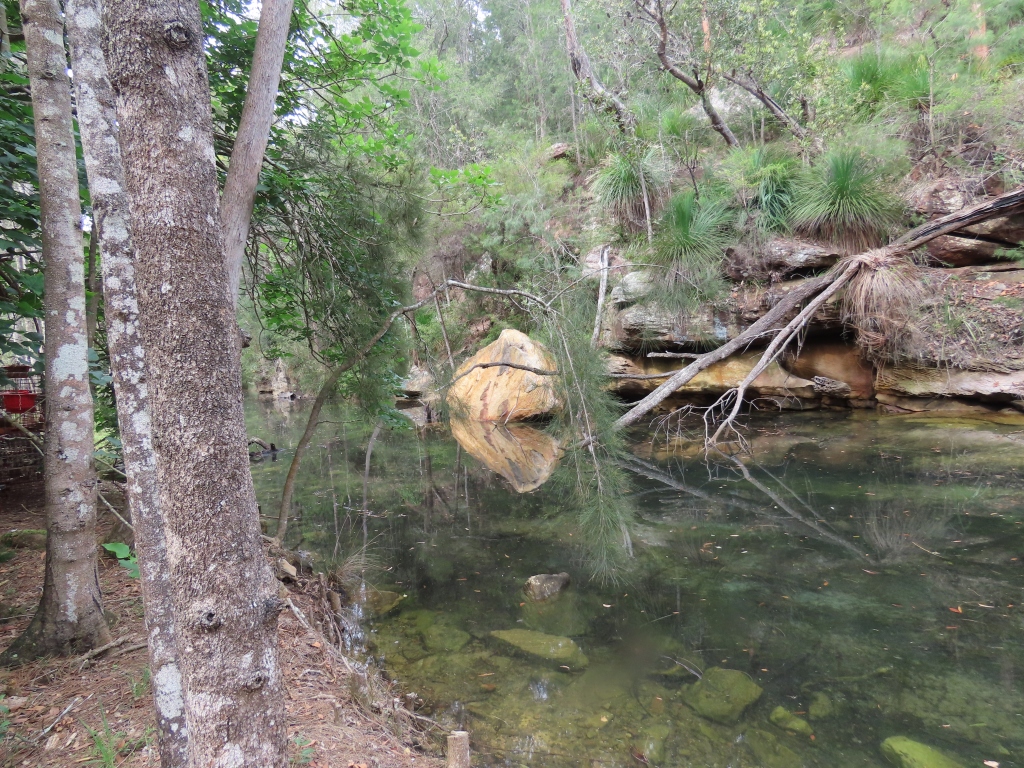
Here’s a rare picture of me examining another part of the creek:

Little Black Cormorant catching the sun
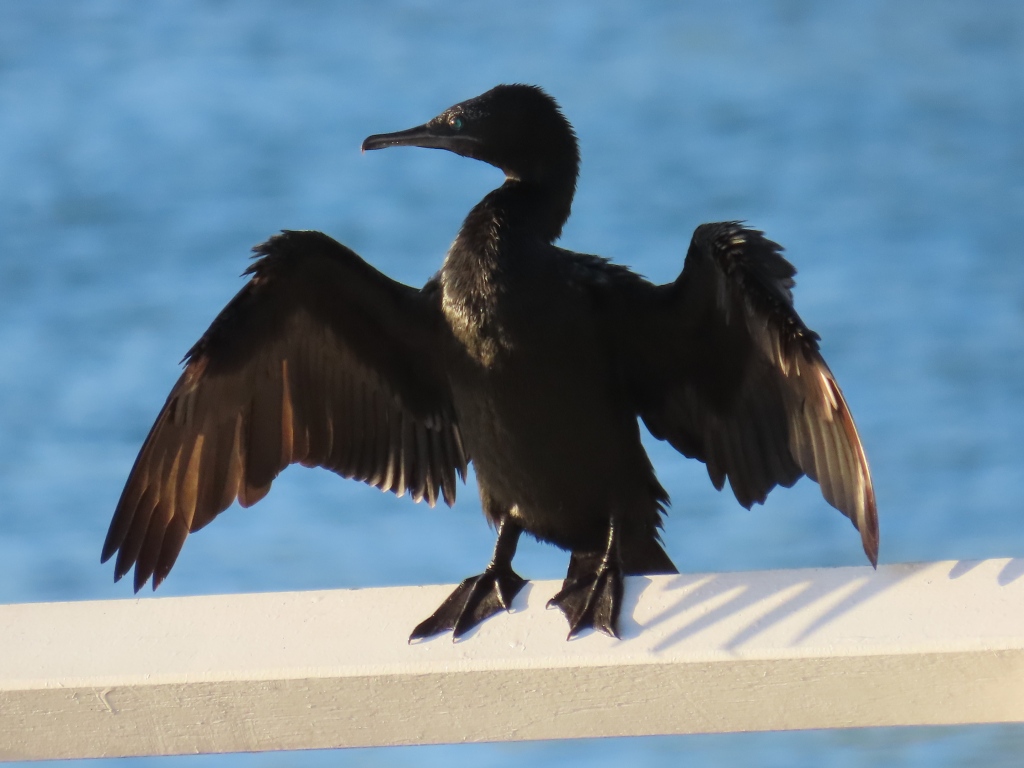
I went for a late afternoon walk near Spit Bridge today, and saw this Little Black Cormorant catching the last of the sun:
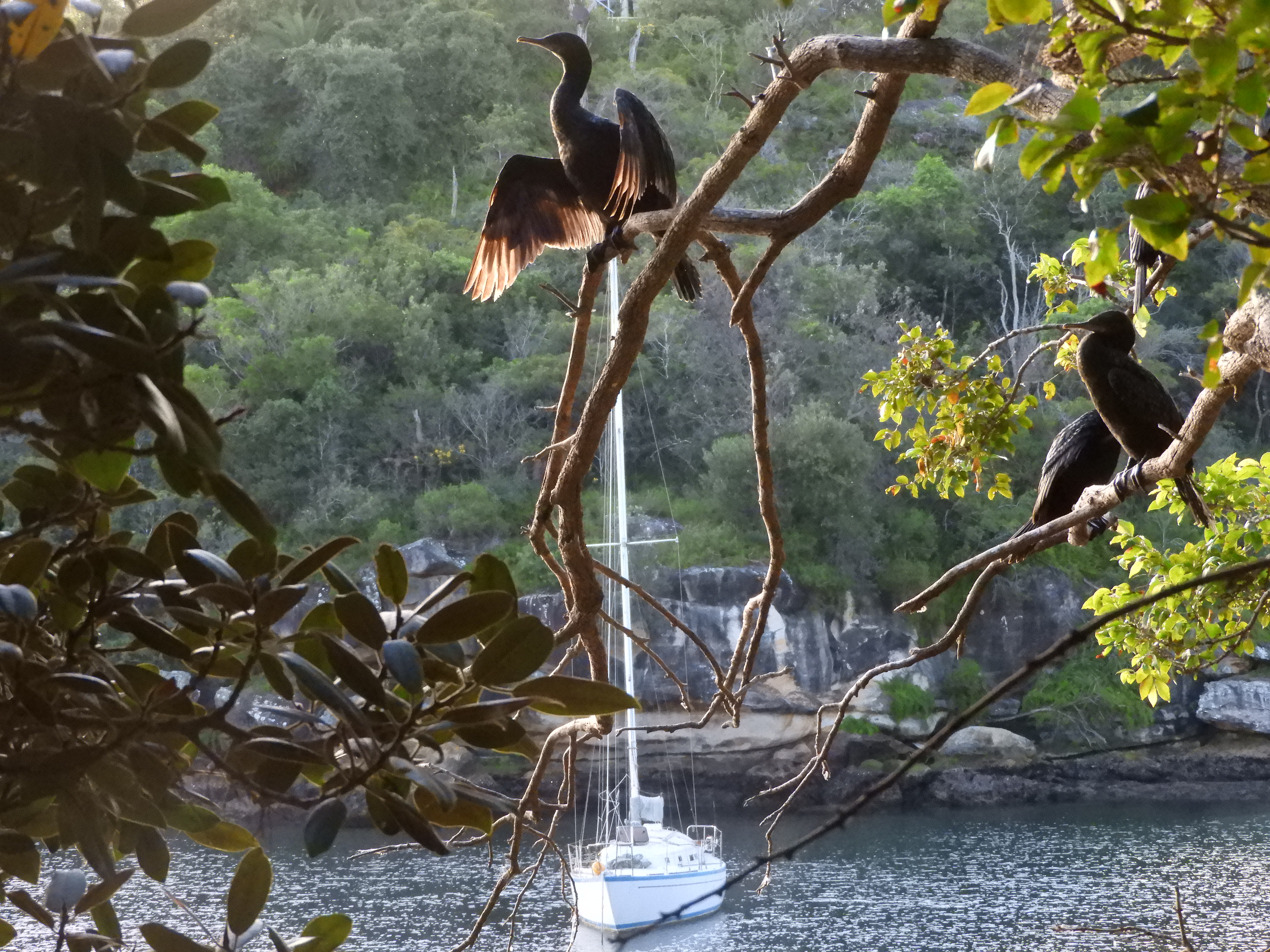
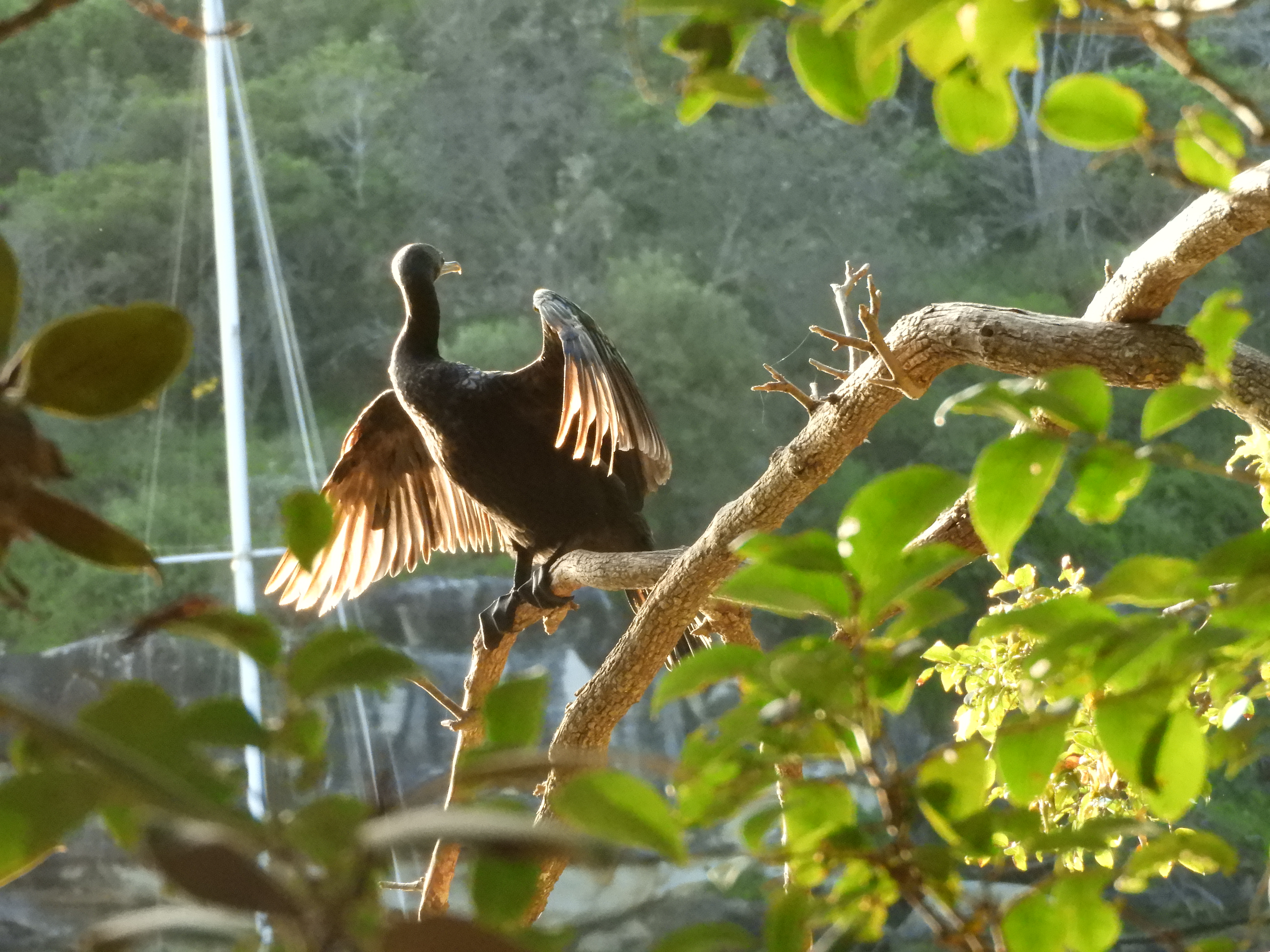
In the next photo you can see the bird’s webbed feet nicely. Cormorants are very fast and agile under water, where they catch their prey. Their feathers are not waterproof, which is why they spend so much time with their wings spread out to dry.
Common name: Little Black Cormorant (see other cormorants)
Scientific name: Phalacrocorax sulcirostris
Approximate length: 65 cm
Date spotted: 20 April 2019 (Autumn)
Location: Near Middle Harbour, Clontarf, New South Wales, Australia: 33°48’07.8″S 151°15’00.2″E


 Sydney Birder