Blog Archives
Ninja wattlebird – now you see it now you don’t
Spot the bird:

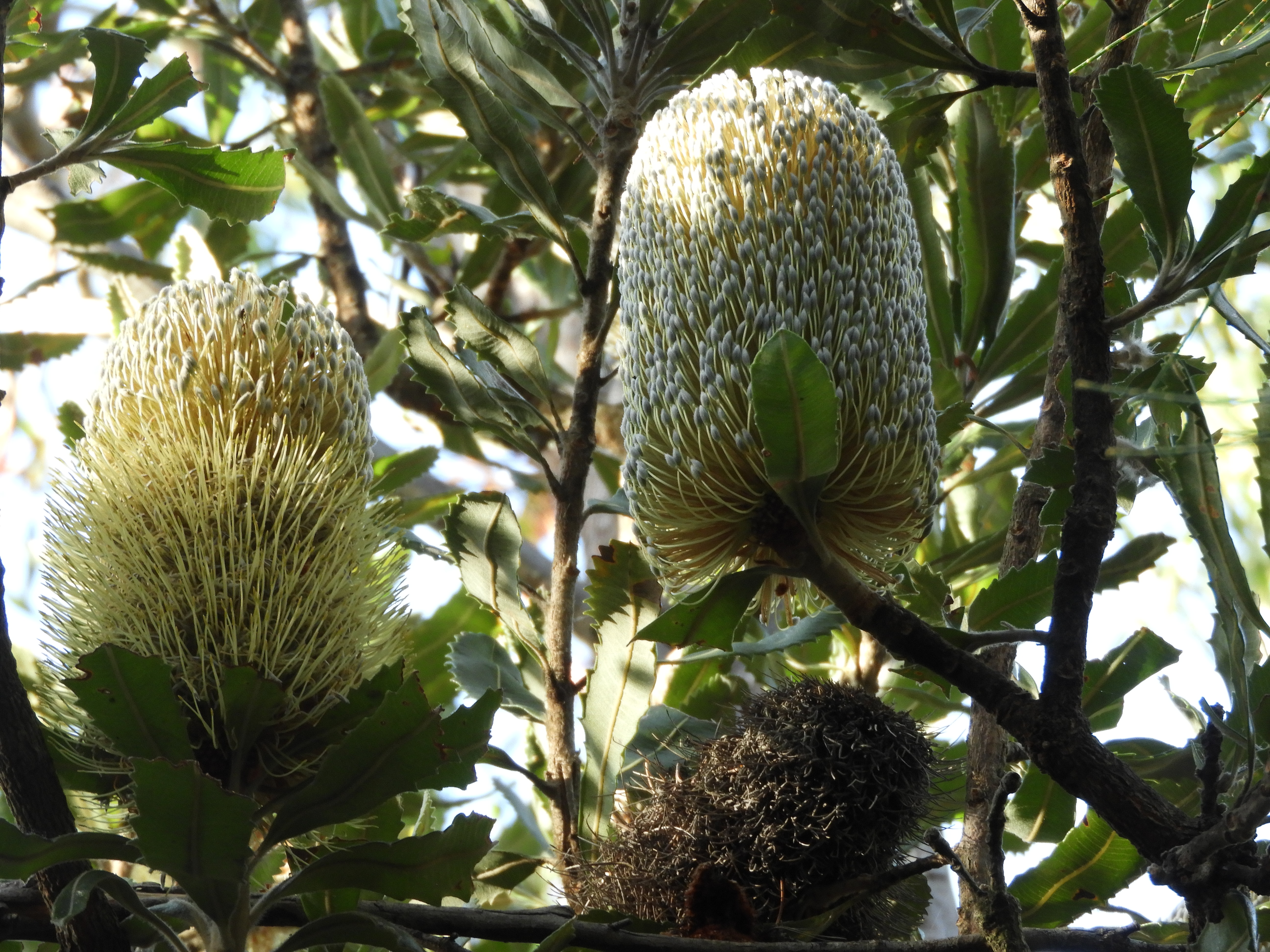
It’s a common sight to see a Little Wattlebird on a banksia flower, digging its beak between the florets to find the nectar. I hadn’t realised until now, though, how perfectly camouflaged the bird is on the grey branches of a mature banksia, particularly when surrounded by dead flowerheads.
Here’s a closeup pic of the bird, looking supremely confident though, dare I say it, not very well groomed:

These are the flowers of the Banksia Serrata tree where I saw the bird:
The wattlebird later moved to a bare branch to do a bit of grooming. Caught in dishevelled silhouette against the morning sun:

Common name: Little Wattlebird
Scientific name: Anthochaera chrysoptera
Approximate length: 30 cm
Date spotted: 26 December 2018 (Summer)
Location: Manly Dam National Park, New South Wales, Australia: 33°46’15.4″S 151°14’45.0″E
Red Wattlebird eating lerp
Red Wattlebirds are large honeyeaters, often seen diving through the foliage and chasing other birds away from a prized source of sugar. This one was making a lot of noise crashing through the branches. Probably on a sugar high. I think the white fuzzy stuff attached to its beak is lerp – crystalised honeydew exuded by bugs as a protective covering. A sweet treat for a bird. Red Wattlebirds get their name from the red wattles hanging below each cheek.

Common name: Red Wattlebird
Scientific name: Anthochaera carunculata
Approximate length: 35 cm
Date spotted: 11 November 2018 (Spring)
Location: Manly Dam National Park, New South Wales, Australia: 33°46’36.6″S 151°15’17.9″E
Eastern Spinebills and peaceful patterns
Eastern Spinebills are pretty little birds, with dramatic white and dark grey markings at their throats, and soft orange chests. Their long thin beaks give them their name. They’re honeyeaters, feeding on nectar from flowers, with the occasional insect too.

This video shows what it’s like to be in the Australian bush surrounded by Eastern Spinebills. You can hear the spinebills and other birds all round. The video doesn’t zoom in on the birds, but every now and then you can spot them flitting through the foliage.
The birds were in one of my favourite spots in the Manly Dam national park. Here’s a pic showing the patterns and peace in the area of the bush where the spinebills hang out:

Common name: Eastern Spinebill
Scientific name: Acanthorhynchus tenuirostris
Approximate length: 16cm
Date spotted: 15 September 2018 (Spring)
Location: Manly Dam Reserve, New South Wales, Australia: 33°46’24.3″S 151°15’03.8″E
Little Wattlebird calling, mate unimpressed
A male Little Wattlebird does its best to impress (or intimidate) the bird sharing its branch. The other bird is unimpressed. In fact, its reaction seems to be, “Oh, please, are you really going to keep doing that?”
The call of a Little Wattlebird is strange. It often starts with a click-clack, as if the calling mechanism is turning over before getting into full gear. Then out comes the harsh bray that’s characteristic of the male bird. It seems to take a fair bit of effort to make this noise, as you can see in the video:
I went back to the same spot a day later, and snapped a picture of this male Little Wattlebird. It’s probably the same bird, given their fierce territoriality:
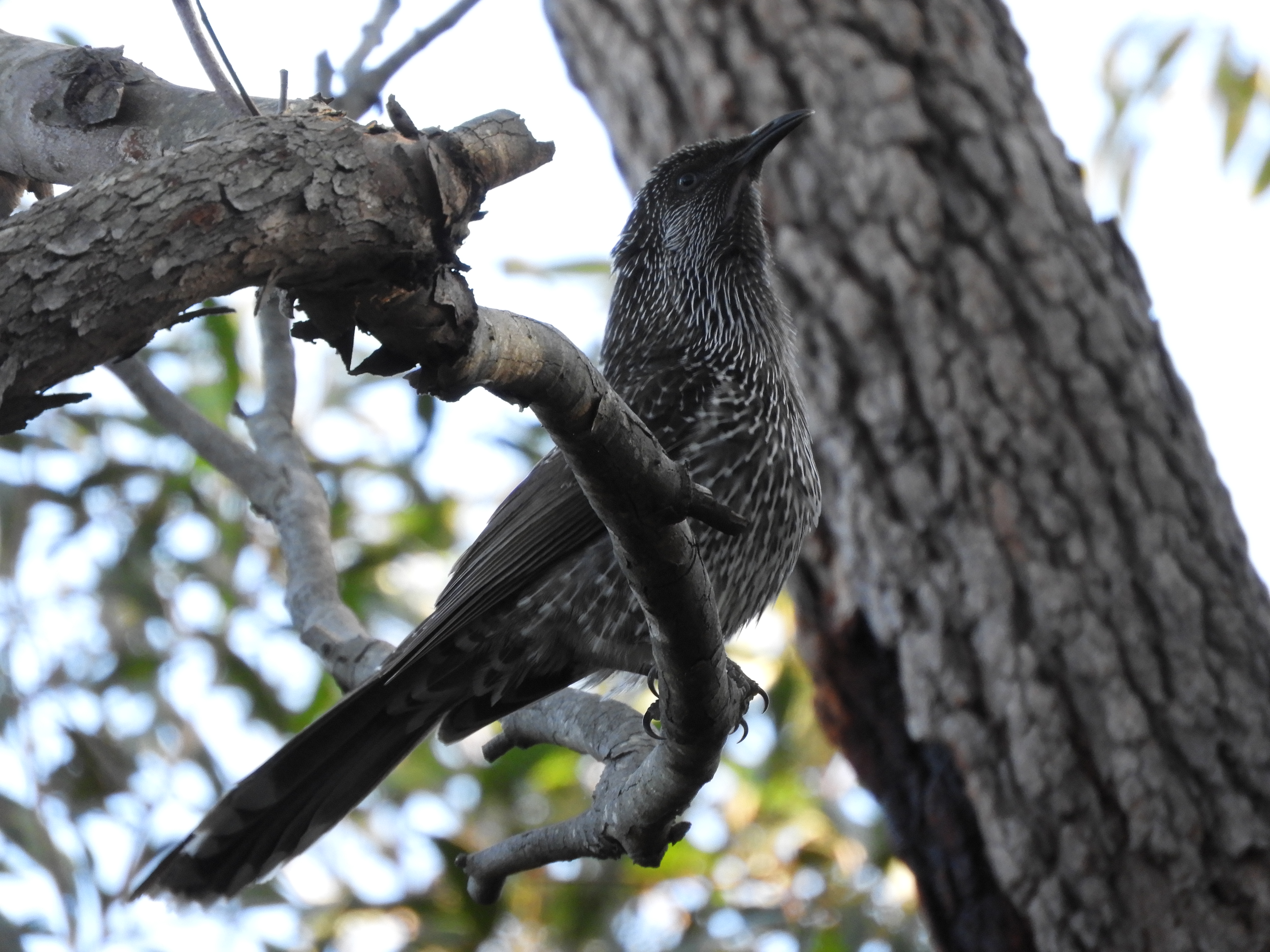
Common name: Little Wattlebird
Scientific name: Anthochaera chrysoptera
Approximate length: 30 cm
Date spotted: 7 July 2018 (Winter)
Location: Manly Dam National Park, New South Wales, Australia: 33°46’36.9″S 151°15’10.4″E
Red Wattlebird nest may be in peril
My previous post introduced the nest that a pair of Red Wattlebirds have built in a tree fern in my garden. Things are looking a little perilous for the nest. The tree fern has put in a growth spurt, its new fronds lifting parts of the nest into an untidy jumble.
This is what the nest looked like yesterday. Notice the new, brown fern fronds unfurling in the midst of the grey matter that forms the birds’ nest:
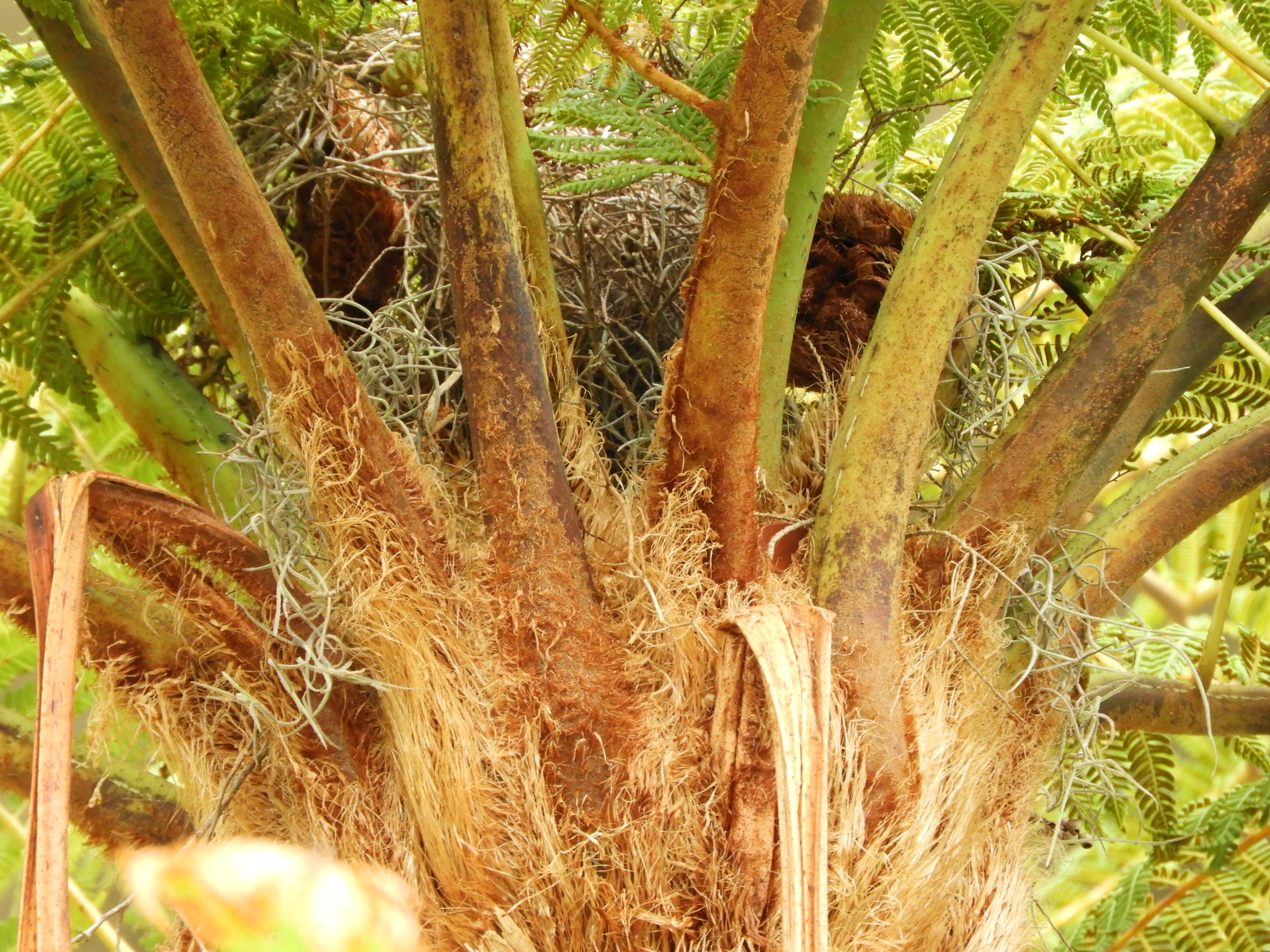
Compare that with the photo I took a week earlier, on 22 December, as shown in my previous post:

The parents still seem attentive. I’ve seen them flit in and out of the nest. Here’s one of them grabbing nourishment yesterday, from the nearby Banksia that seems to be their principle source of nourishment while nesting. The ghastly noise in the background is the cicados, who are out in full force this summer:
Birds are quite handy with their beaks and feet. I hope they manage to push the nest and eggs into a safe place as the fern tree grows.
Common name: Red Wattlebird
Scientific name: Anthochaera carunculata
Approximate length: 35 cm
Date spotted: 29 December 2017 (Summer)
Location: Allambie Heights, near Sydney, Australia
Red Wattlebird nesting in a tree fern
Red Wattlebirds are the second largest honeyeaters in Australia. They’re noisy, aggressive, and sleekly pretty. And now we have a couple nesting in our garden.
I’d noticed recently that a Red Wattlebird was more aggressive than usual. It started swooping at me when I was hanging up washing. At the best of times, hanging the washing is a precarious activity in my backyard. It involves a bit of rock climbing and a skilled balancing act. Add a fierce bird, and things get interesting.
A few days later, I noticed the bird land on a high branch, take a careful look around while trying to appear nonchalant, then duck quickly into the top cover of a tree fern. Interesting. So I got out my zoom lens to take a look.
The nest is in the right-most tree fern in this photo. I’ve put up my washing line on the left, for local colour:

(In case you’re wondering: the house up above belongs to the neighbours. Mine is below, not in the picture)
A closer view of the tree fern:

Even closer, you can see the nest with a bird’s tail pointing out to the right:

Occasionally the parents leave the nest unattended. I haven’t spotted any movement, so I think the eggs haven’t hatched yet:
The birds have picked up some of the Spanish Moss from our garden, and used it to decorate the nest. This is our supply, handily positioned just a few metres from the tree fern:

Sitting on a nest is demanding work. One of the parents emerged for a good stretch:

And a bit of grooming:

Then dived down to sip some nectar from a Banksia tree, which we’ve also positioned just a handy few metres from the fern tree. In this picture you can see the two red wattles below the beak that give the bird its name:
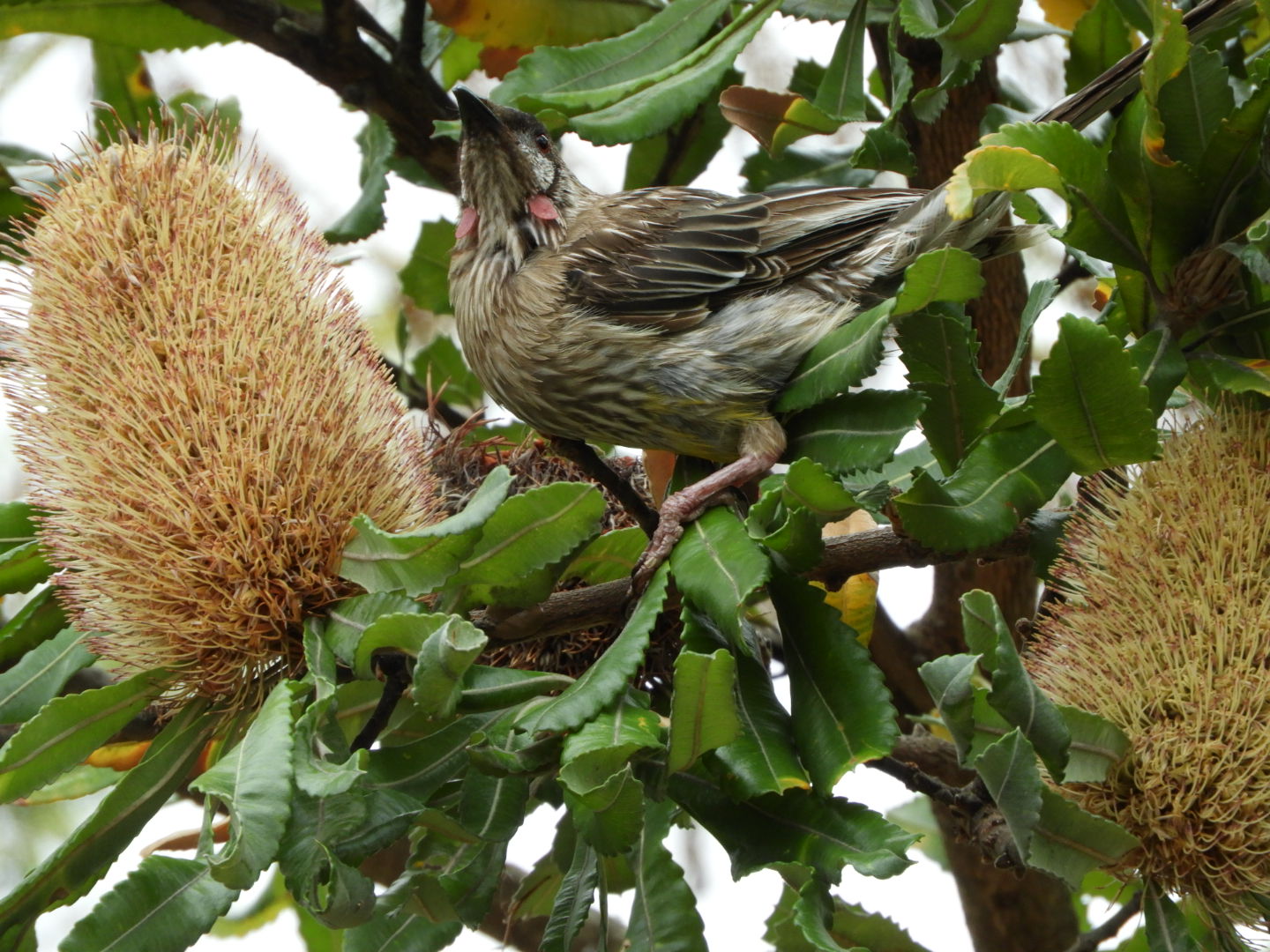
Here’s a picture of one of the local Red Wattlebirds on a nearby tree a few days earlier. It’s likely to be one of the nesting birds, though I don’t know for sure:

Common name: Red Wattlebird
Scientific name: Anthochaera carunculata
Approximate length: 35 cm
Date spotted: 22 December 2017 (Summer)
Location: Allambie Heights, near Sydney, Australia


 Sydney Birder