Blog Archives

Alas, butcherbirds nest abandoned when tree fern sprouted
In my previous post, I wrote about a pair of Grey Butcherbirds that had built their nest in a tree fern below our house. The problem with tree ferns is that they sprout new fronds from the centre of the trunk, exactly where the birds had built their nest.
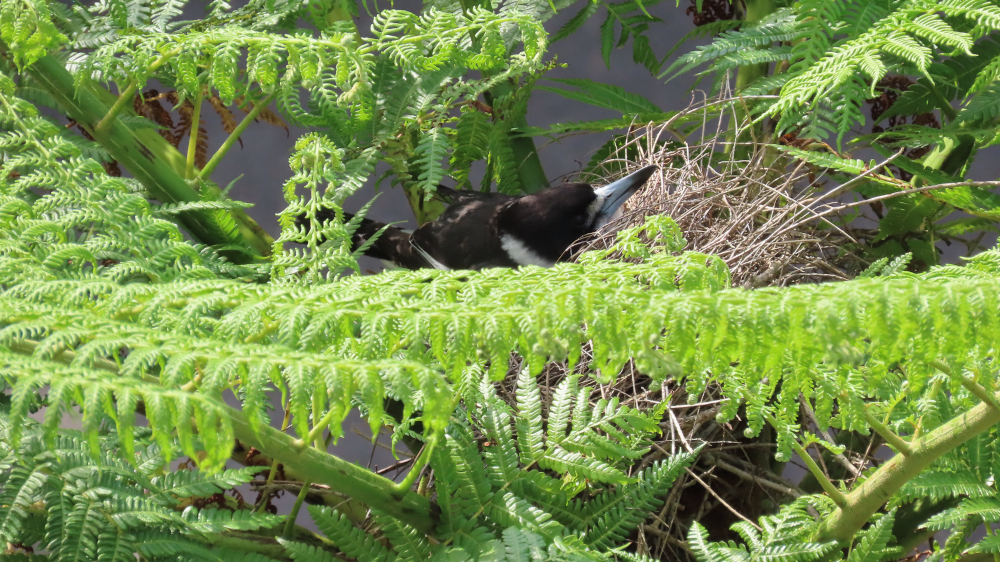
The photos of the nest in my earlier post were taken on the 18th of September. Just a few days later, the tree fern did indeed sprout a new frond, putting the nest at an uncomfortable angle. Still, the butcherbirds persevered. This photo, taken on the 25th of September shows one of the birds sitting determinedly on a very slanted nest, which presumably still contained the three eggs:
Just a day later, the birds had abandoned the nest. I don’t know if the eggs were still in the nest. The tree fern is way too high for me to go up and take a look:

By yesterday, the 5th of October, the new fern frond had pushed the nest to the top of the canopy:

Never mind little butcherbirds, there’s still plenty of time left this season to try again. Or next year perhaps.
Perhaps they’ll have learned something about real estate from this experience. Grey Butcherbirds live for around 20 years, so there’s plenty of time for learning!
Common name: Grey Butcherbird
Scientific name: Cracticus torquatus
Approximate length: 30 cm
Date spotted: 18 September to 5 October 2025 (spring)
Location: Allambie Heights, NSW, Australia

Butcherbird nest in tree fern – hope it survives
A pair of Grey Butcherbirds have built their nest in a tree fern below our house. The problem with tree ferns is that they sprout new fronds from the centre of the trunk, exactly where the nest is now. And these are big fronds! I hope the butcherbirds manage to hatch the eggs and raise their young before the next sprouting happens.
Here’s the nest with a butcherbird sitting on the eggs:

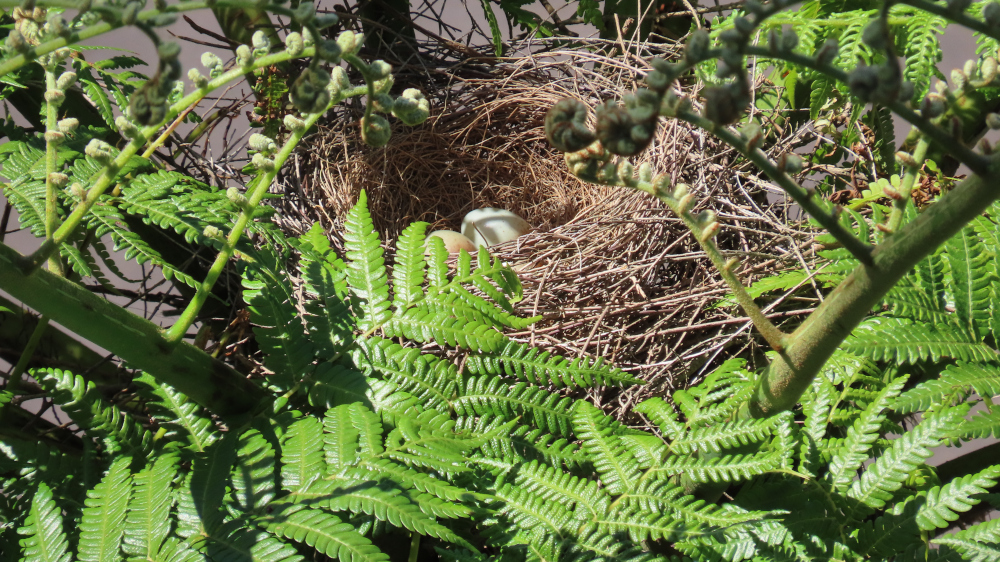
There are at least two eggs, maybe three, in the nest. Here’s a shot taken when the nest was briefly unattended:
Here’s another shot of the bird on the nest, not as closely zoomed in:

This is the tree fern, as seen from my window without zooming in:

It’s interesting to see that inexperienced avian parents can make mistakes about where to place their nests. A while ago, a Red Wattlebird nest appeared in a similar tree fern in another area of our garden. Alas, that nest was very soon skewed and then skewered by a new frond, and had to be abandoned. However, a family of Noisy Miners was more successful.
Grey Butcherbirds incubate the eggs for about 25 days, and the fledgelings leave the nest after about four weeks. Evidently Grey Butcherbirds live around 20 years. That’s a long time, and gives them plenty of time to learn about the best place to build their homes.
Good luck, little butcherbirds!
Common name: Grey Butcherbird
Scientific name: Cracticus torquatus
Approximate length: 30 cm
Date spotted: 18 September 2025 (spring)
Location: Allambie Heights, NSW, Australia

Butcherbirds sang to me!
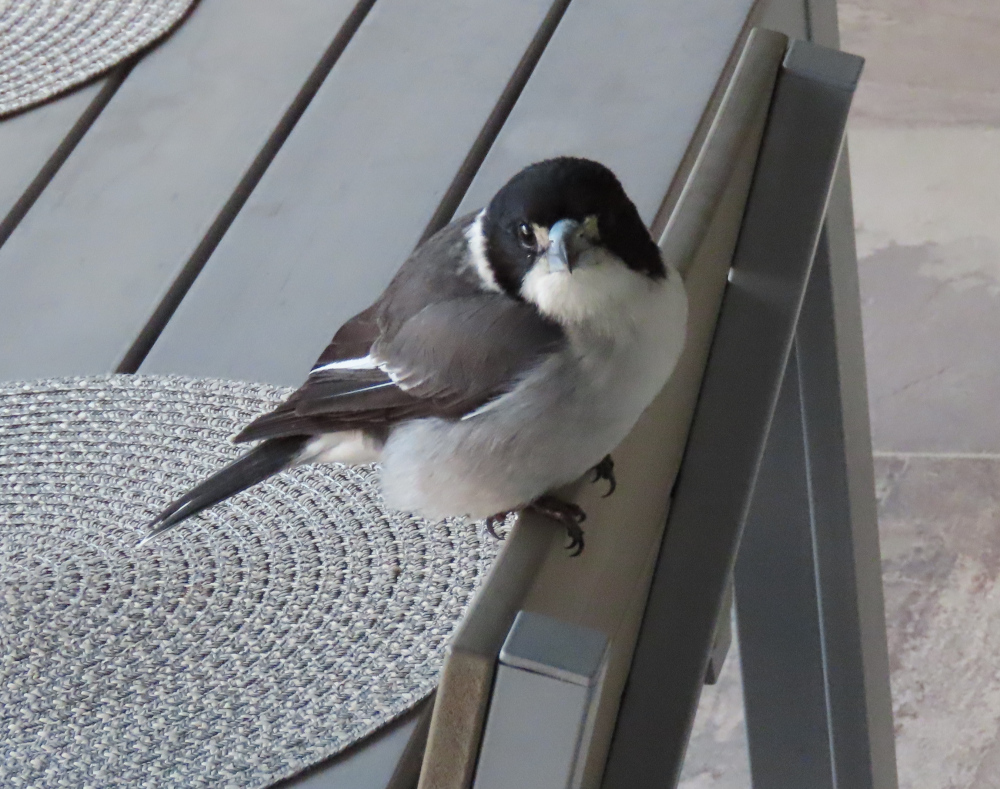
Early one morning, at the place I was staying at near Brisbane, two Grey Butcherbirds dropped down and sang to me.
It felt very special to have these birds come so close and sing their song. I suspect they were hoping I’d produce a snack. This is the first time I’ve had this experience, though a few magpies have sung to me in the past.
Here’s a still picture of one of the birds:
Butcherbirds are medium-sized songbirds, widely spread in Australia. They’re only distantly related to the South African shrikes that are also known as butcherbirds. Both groups of birds get their name from their habit of securing their captured prey on spikes or in crevices, to store the prey for youngsters or to make it easier to eat.
Common name: Grey Butcherbird
Scientific name: Cracticus torquatus
Approximate length: 30 cm
Date spotted: 6 July 2024 (winter)
Location: The Gap, Brisbane, Queensland, Australia: 27°26’55.3″S 152°55’50.2″E
Grey Butcherbird on blue sky
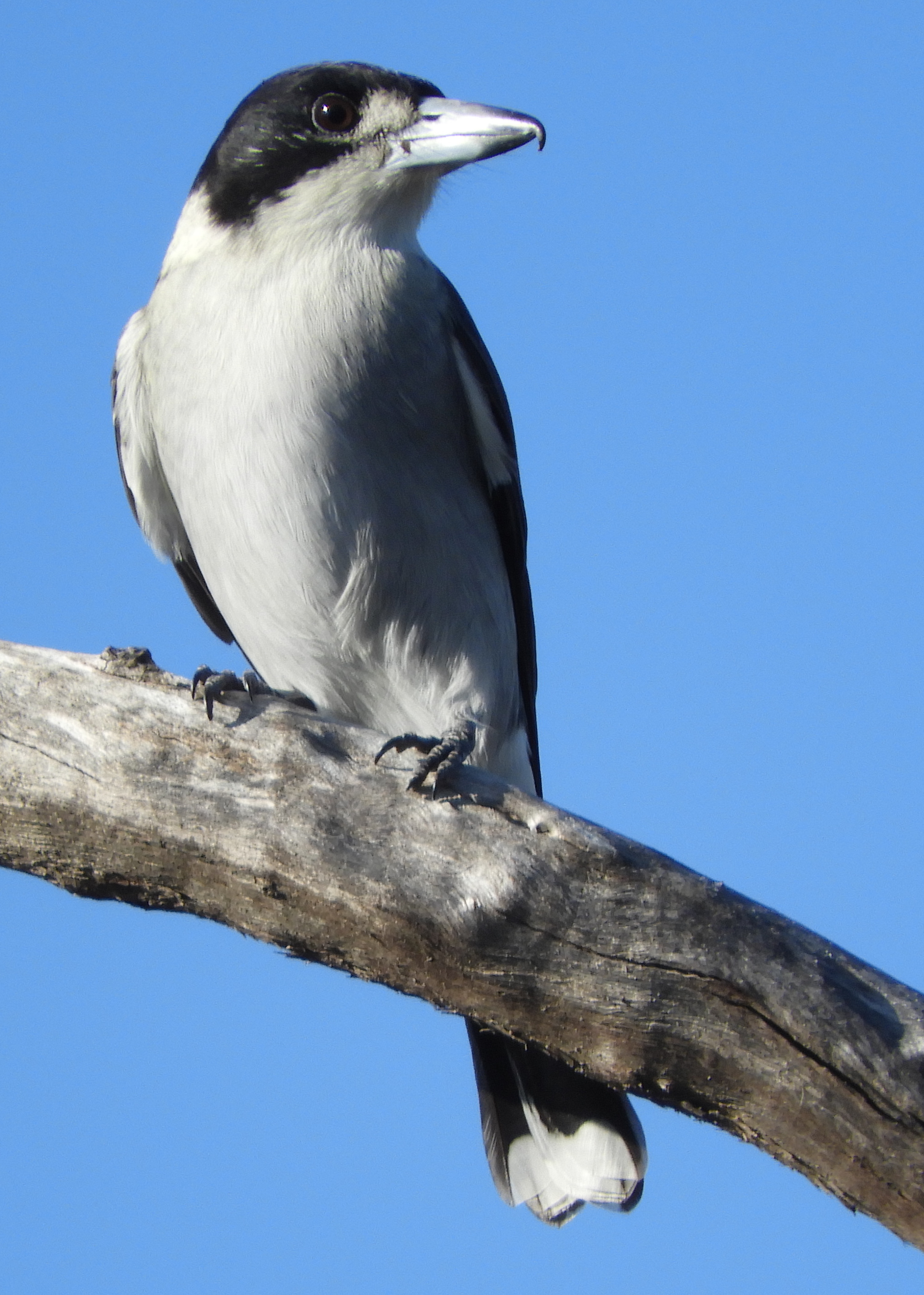
A Grey Butcherbird posed on a dead tree branch against an autumn-clear sky:
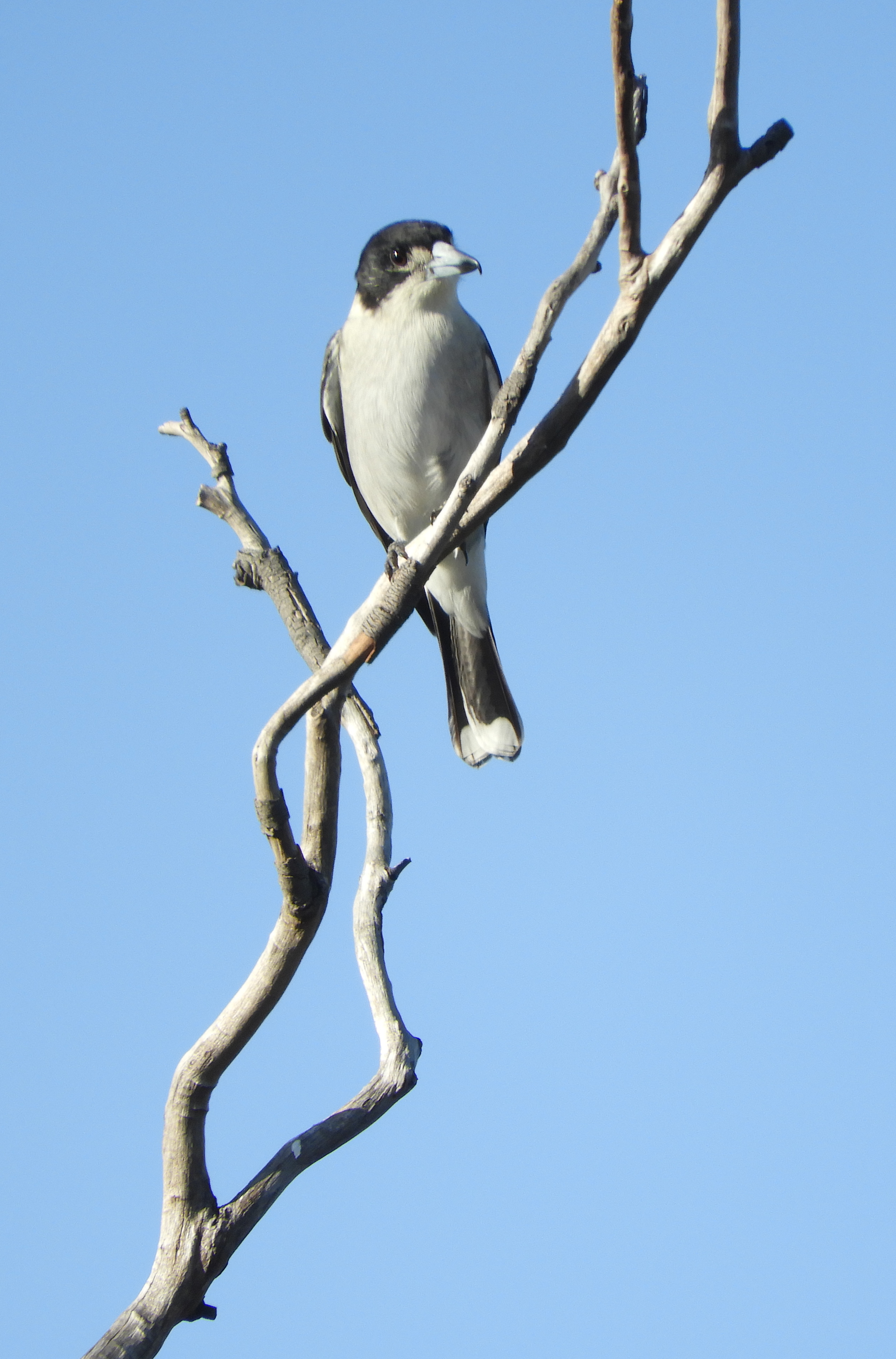
Butcherbirds are one of the types of black-and-white birds that frequent our area. They’re smaller than magpies and currawongs. When you manage to get a close-up view of a butcherbird’s beak, you notice the hook on the end. Magpies and currawongs have straight beaks without a hook:
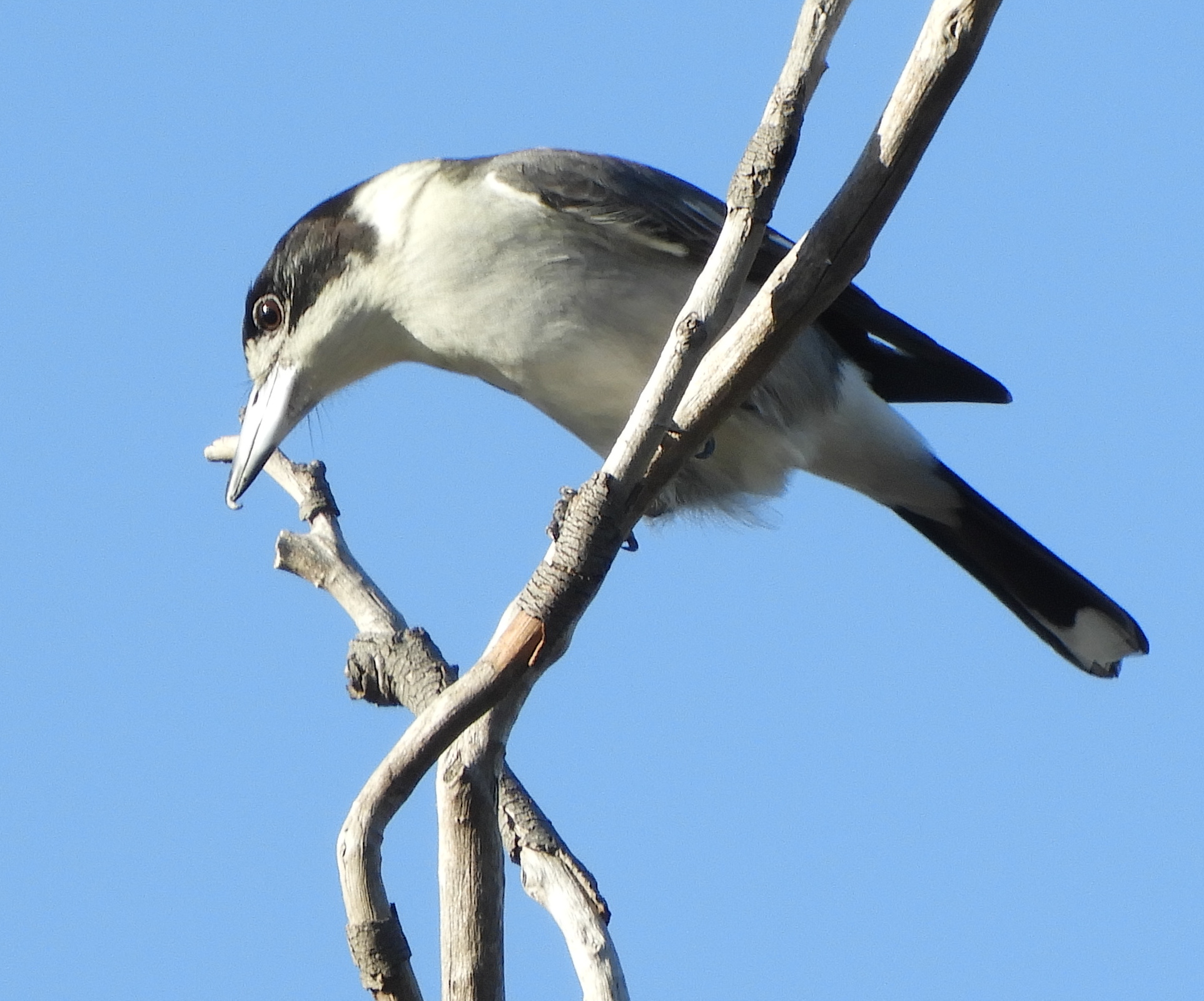
Butcherbirds eat lizards, mice, small birds, insects, and other small creatures. The next photo shows the bird spotting some small creature in the scrub below. After I captured this shot, the bird swooped down then returned to its perch without its prey.
Common name: Grey Butcherbird
Scientific name: Cracticus torquatus
Approximate length: 30 cm
Date spotted: 8 May 2020 (autumn)
Location: Manly Dam National Park, New South Wales, Australia: 33°46’33.1″S 151°14’47.9″E
Birding at home
Like many people, I’m currently working from home to stave off the Coronavirus. There’s a great hashtag on Twitter at the moment: #BirdingAtHome. As a contribution to that hashtag, here are some of the birds I’ve seen at home over the last few days.
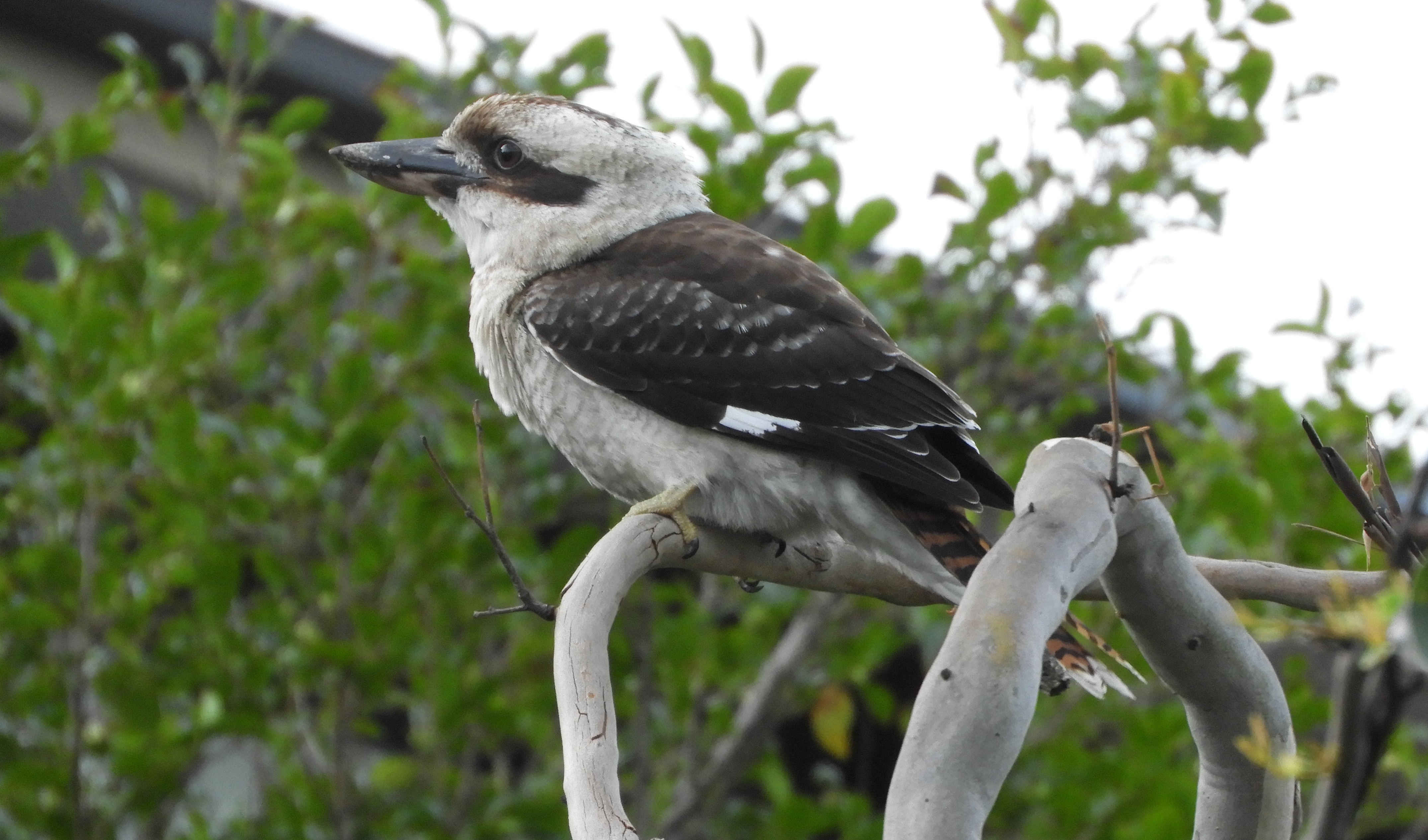
Laughing Kookaburra
Scientific name: Dacelo novaeguineae | Approximate length: 47 cm | Date: 17 March 2020
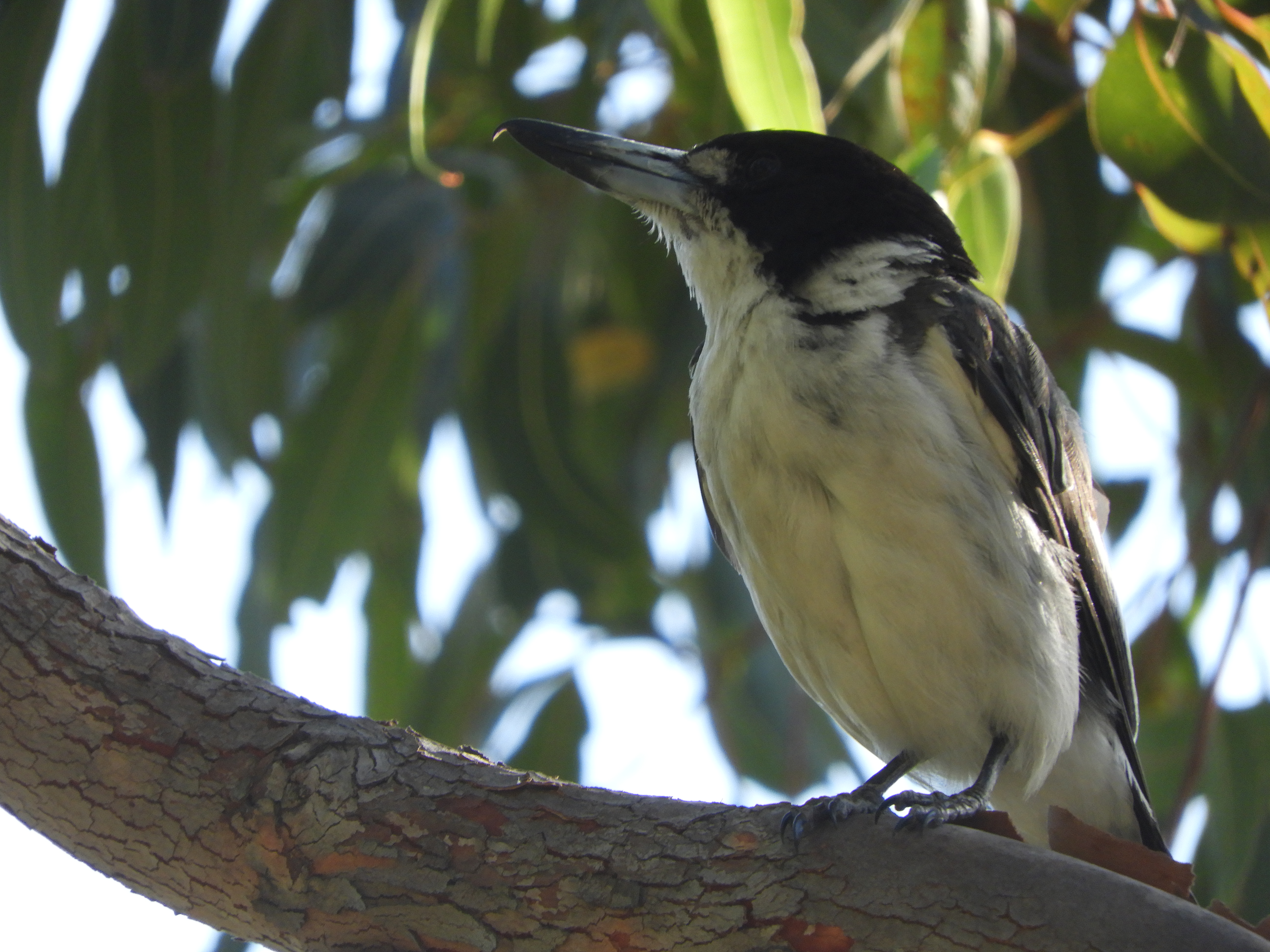
Grey Butcherbird
Scientific name: Cracticus torquatus | Approximate length: 30 cm | Date: 17 March 2020
I think this may be a juvenile, as the lines between the black and white sections of plumage are not well defined. The bird is on a Sydney Red Gum, one of my favourite trees, and currently the biggest tree in our garden:

Australian Magpie
Scientific name: Gymnorhina tibicen | Approximate length: 40 cm | Date: 17 March 2020
This inquisitive Australian Magpie landed on the roof of our porch and peered down at us. It was in a perfect spot to achieve a weird doubling effect with its reflection in the window. The real bird is on the left:
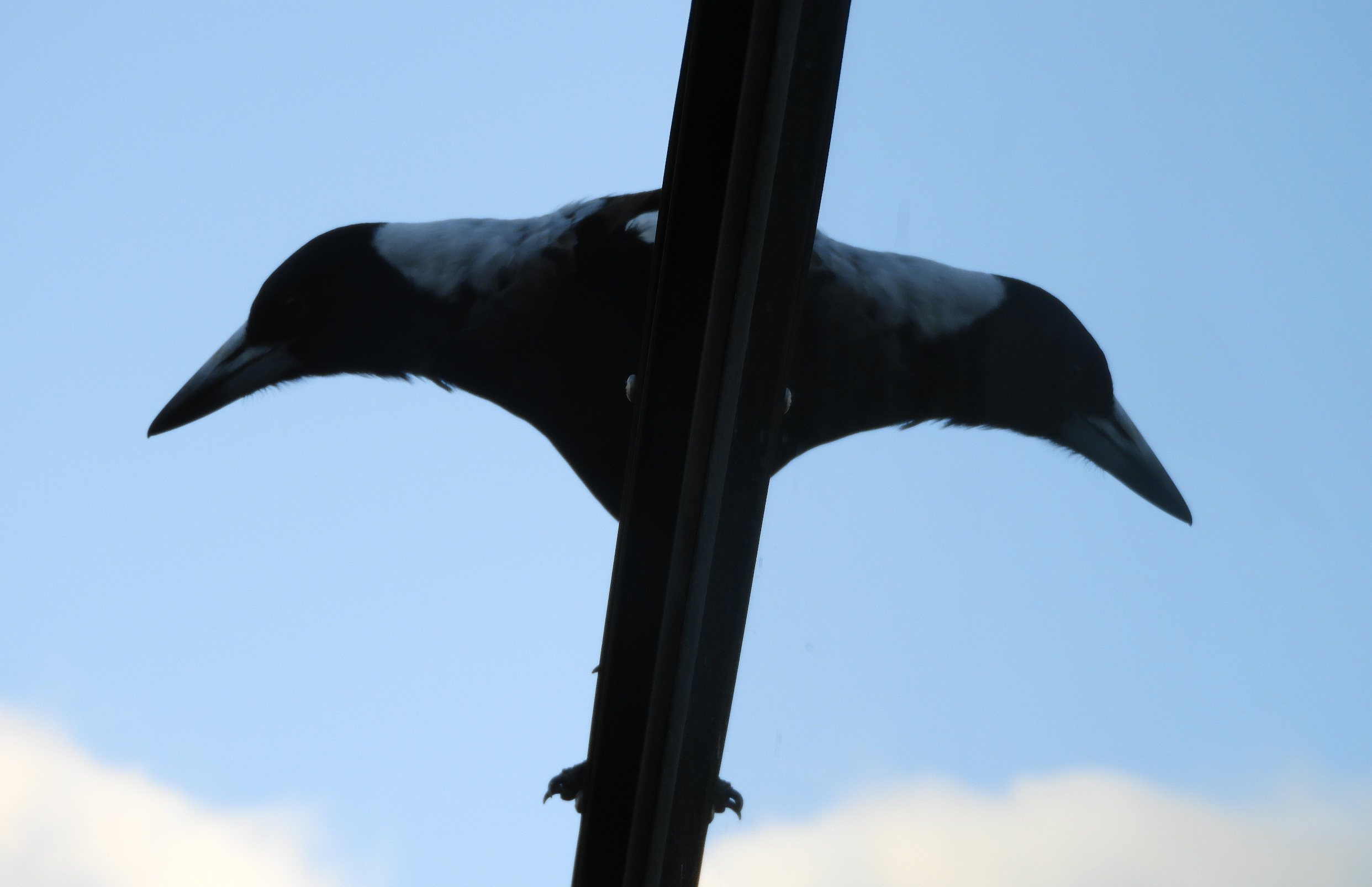
You can see the bird’s head and shoulders at the top and its feet at the bottom. Here’s another pose by the same bird in the same spot on the roof:
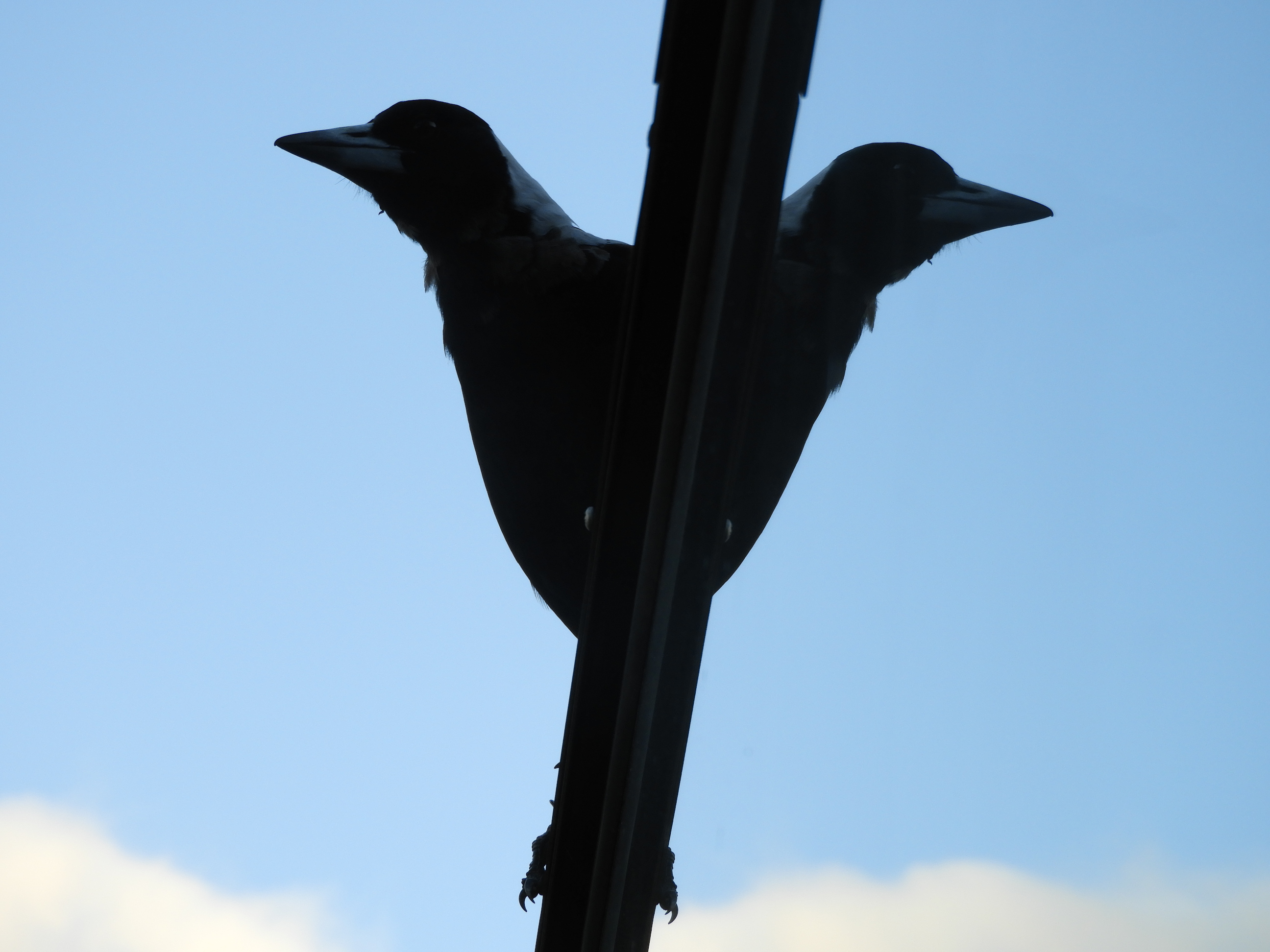
The magpie then hopped in through the window and examined the place:

A couple of days earlier, a juvenile magpie (note the soft grey colouring) posed like a statue on a pedestal. The pedestal is the trunk of a tree fern that died off a while ago:
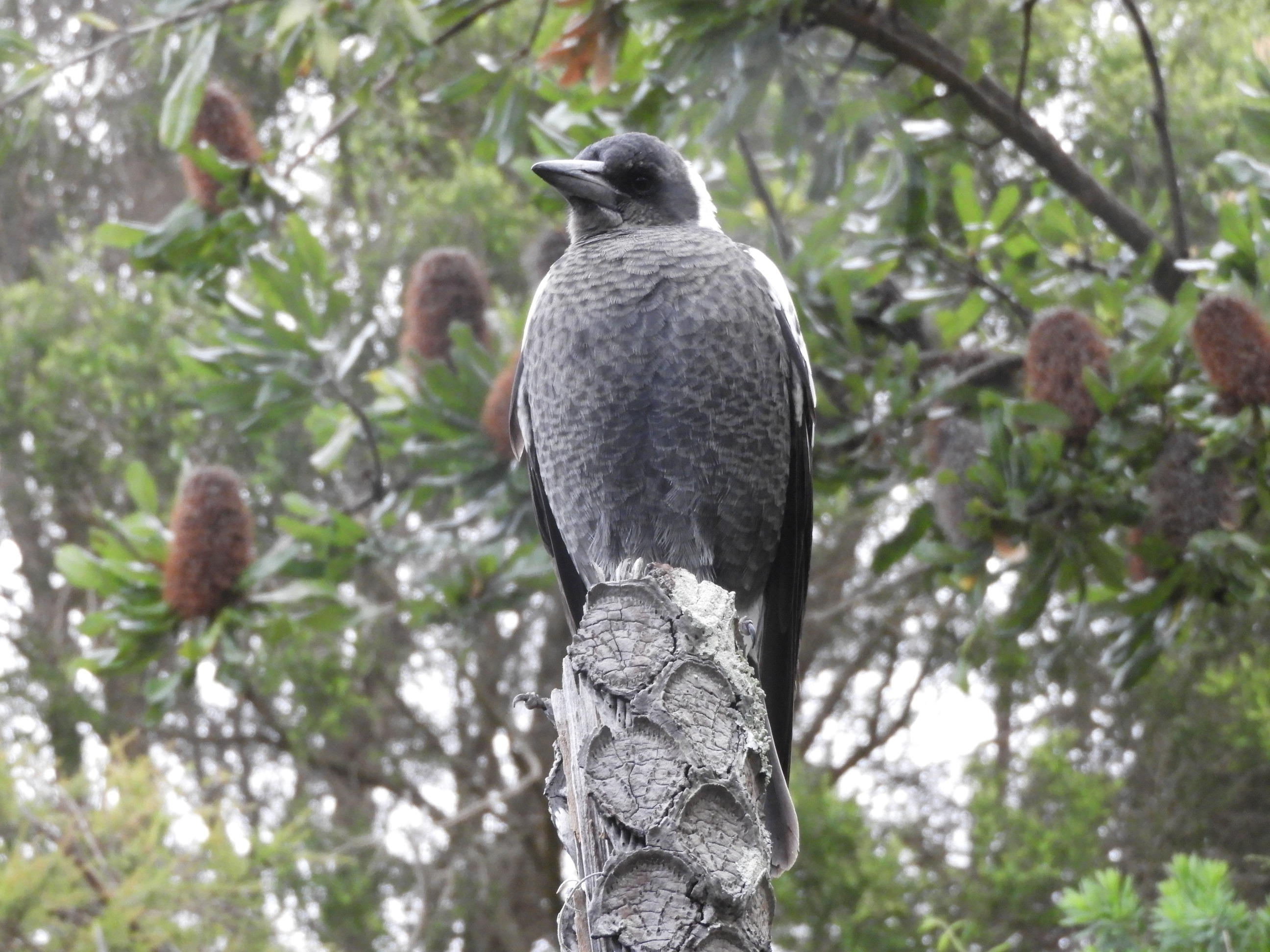
A side view of the same bird on the same perch:

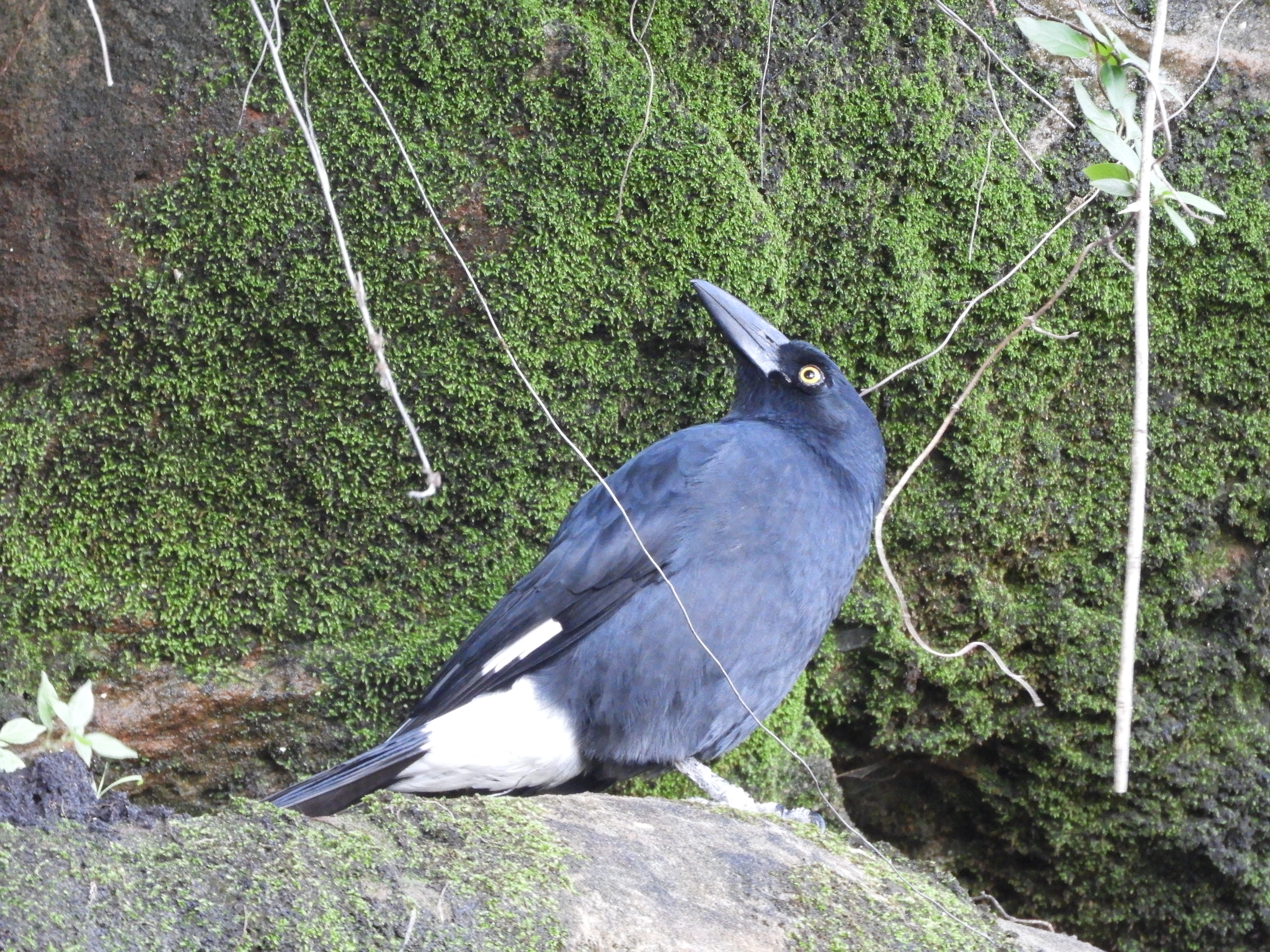
Pied Currawong
Scientific name: Strepera graculina | Approximate length: 45 cm | Date: 11 March 2020
Currawongs are not quite as bold as magpies. They tend to view human activity from afar and swoop past when something interesting is going on. This one chose a mossy perch that showed off its dark plumage and yellow eyes:
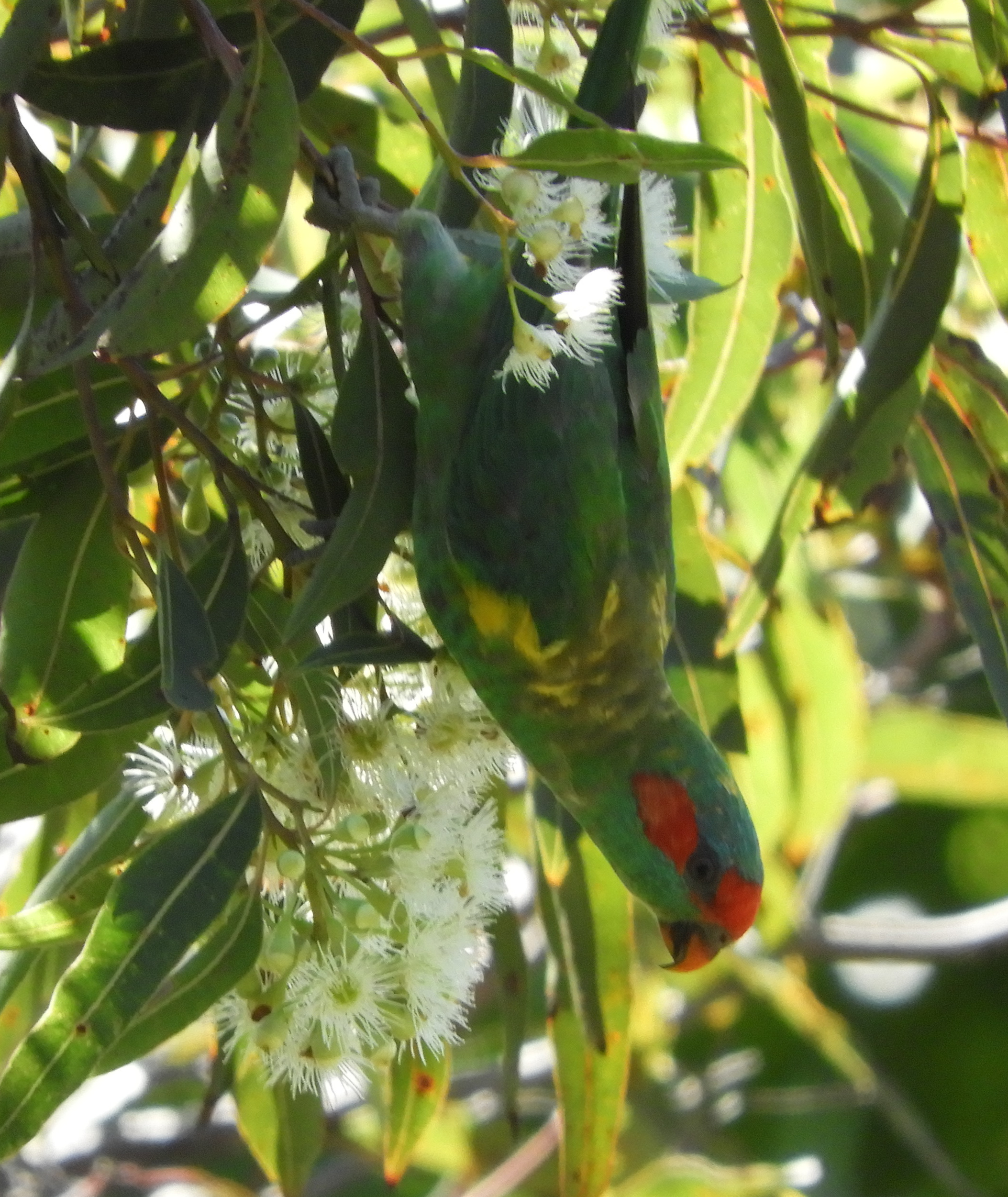
Musk Lorikeet
Scientific name: Glossopsitta concinna | Approximate length: 23 cm | Date: 18 March 2020
I don’t often see Musk Lorikeets. At the moment, a number of the gum trees are in flower and are attracting a variety of birds. It’s hard to get a good picture of a Musk Lorikeet. They seem to be more shy than other birds and take care to hide within the foliage as much as possible.
Rainbow Lorikeet
Scientific name: Trichoglossus haematodus | Approximate length: 30 cm | Date: 17 March 2020
We see many of these colourful, quarrelsome birds, and these last few days have been no exception. They were competing with the Musk Lorikeets for the same flowers:

Australian King Parrot
Scientific name: Alisterus scapularis | Approximate length: 44 cm | Date: 15 March 2020
A couple of days ago, I blogged about the two King Parrots that spent some time above our patio. Here’s the male again:

Grey-headed Flying Fox
Scientific name: Pteropus poliocephalus | Approximate length: 30 cm | Date: 18 March 2020
To finish off with, below is a very dark pic of a Flying Fox, which is a bat not a bird. In fact, it’s a megabat (yes, that’s a thing) and is one of the largest bats in the world. These bats eat fruit and flowers, and they visit the flowering trees at night. They make quite a noise, but it’s a privilege to have them around!

The bat is, as usual, upside down. You can see an ear near the bottom of the picture, slightly to left of centre. The nose is higher up on the left. The spiky bit to the right is a folded wing. The feet are attached to a branch at top centre. A Grey Headed Flying Fox is about 30 cm long and has a wing span of one metre.
Happy #BirdingAtHome everyone!
Butcherbird has whiskers!
A few butcherbirds are frequenting my area at the moment. This one is a Grey Butcherbird:
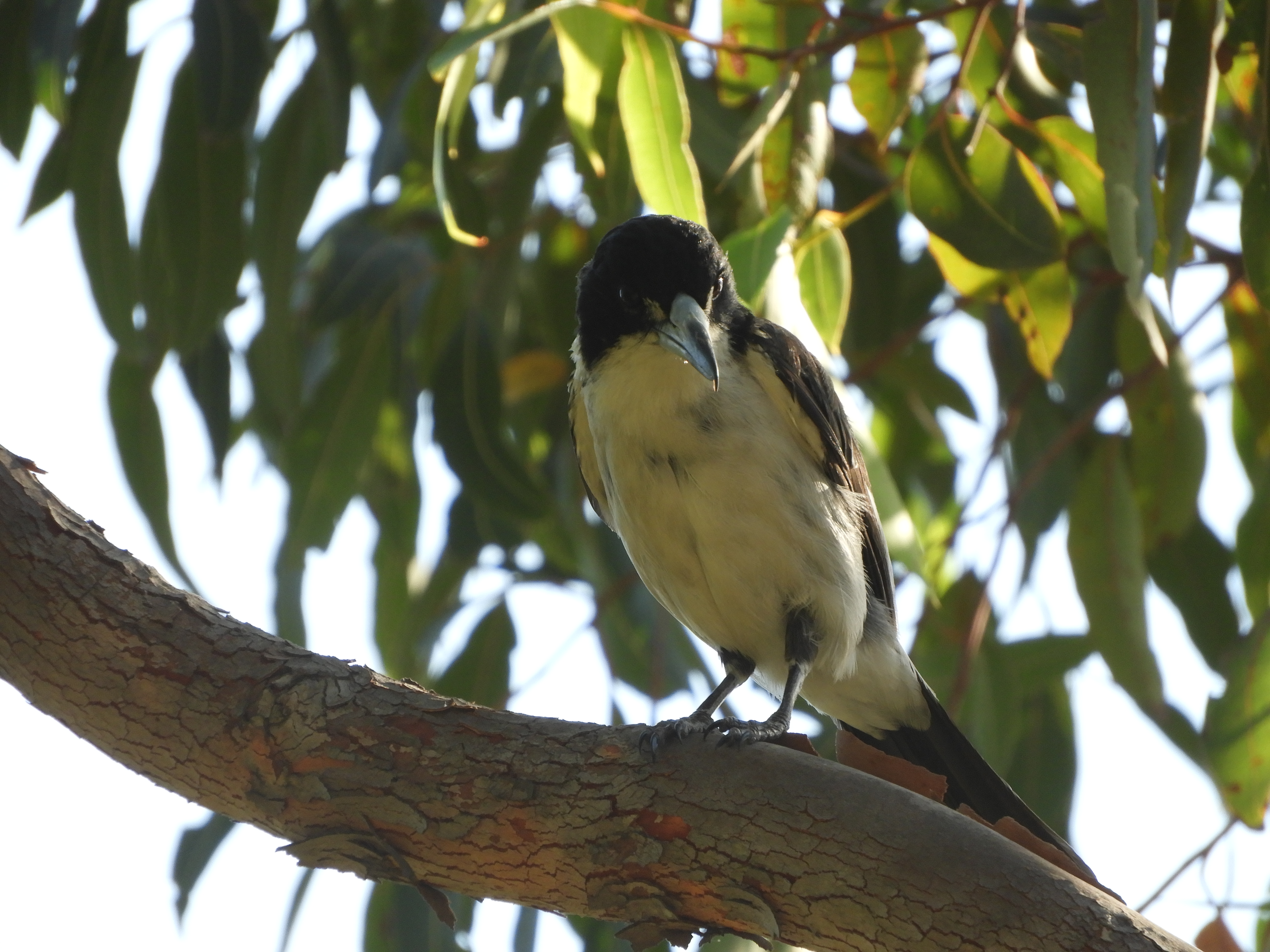
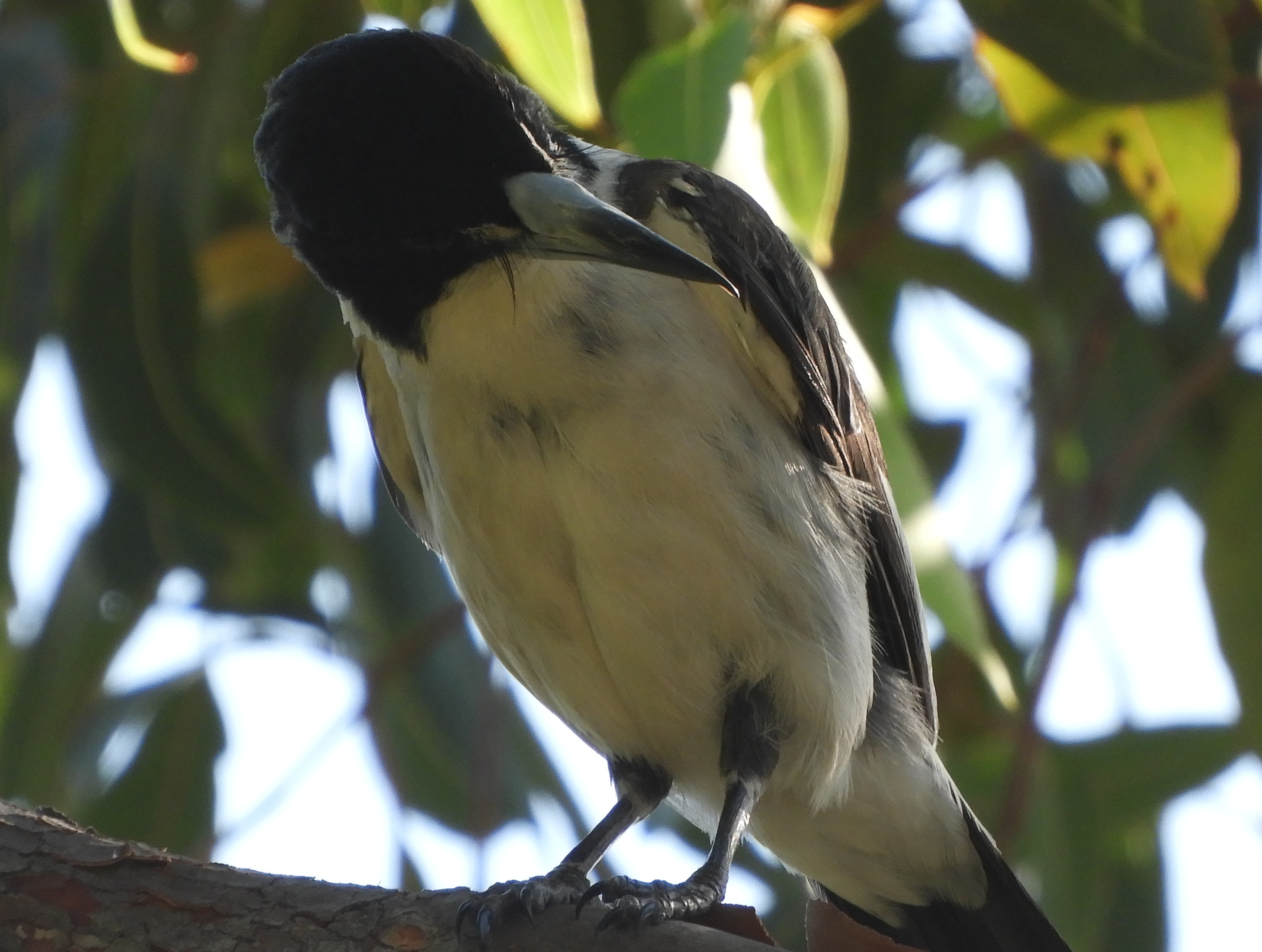
When it tilted its head, I noticed some dark whiskers below its eye:
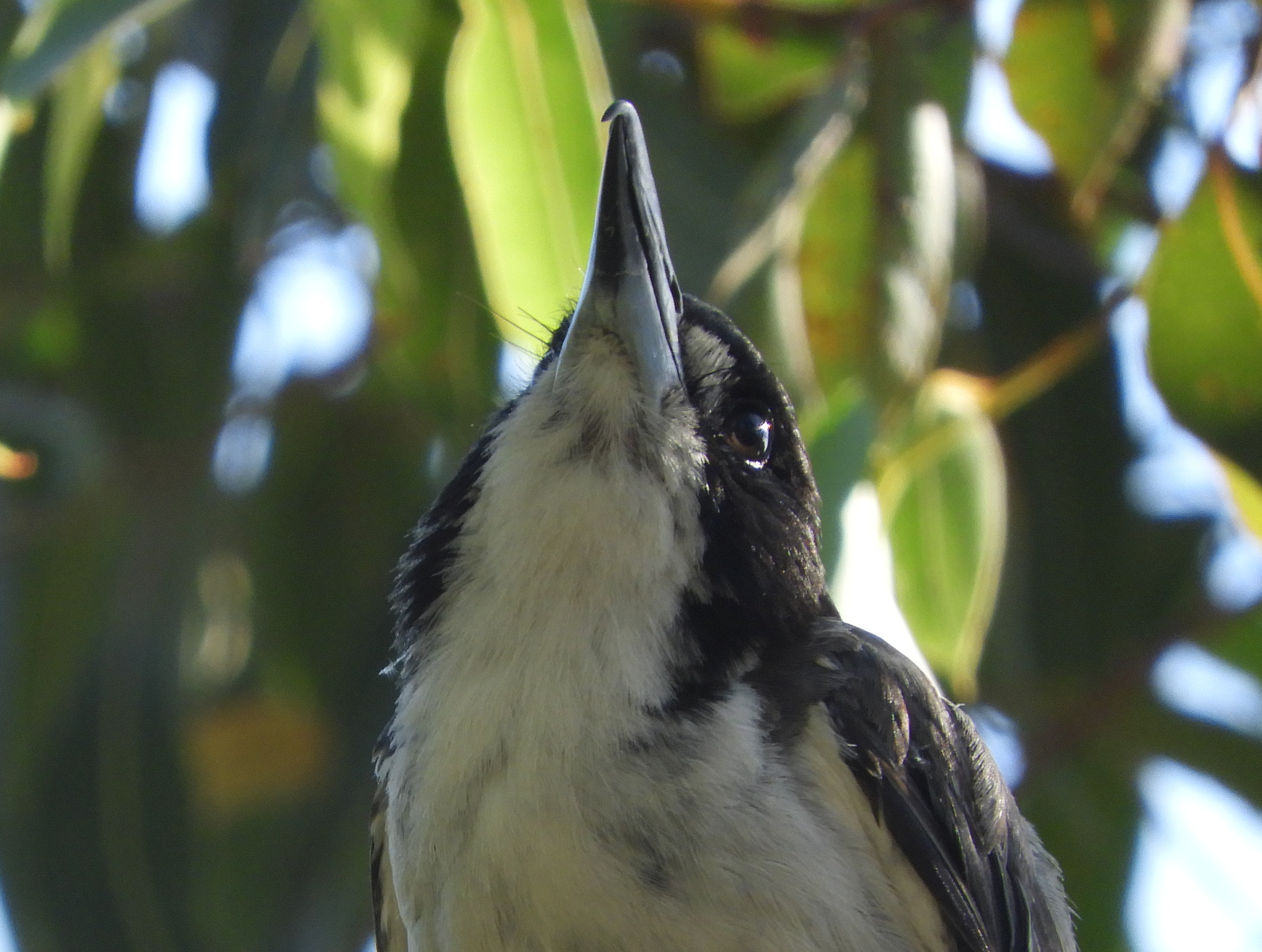
When it looked upwards, I could make out the whiskers on both sides of its beak:
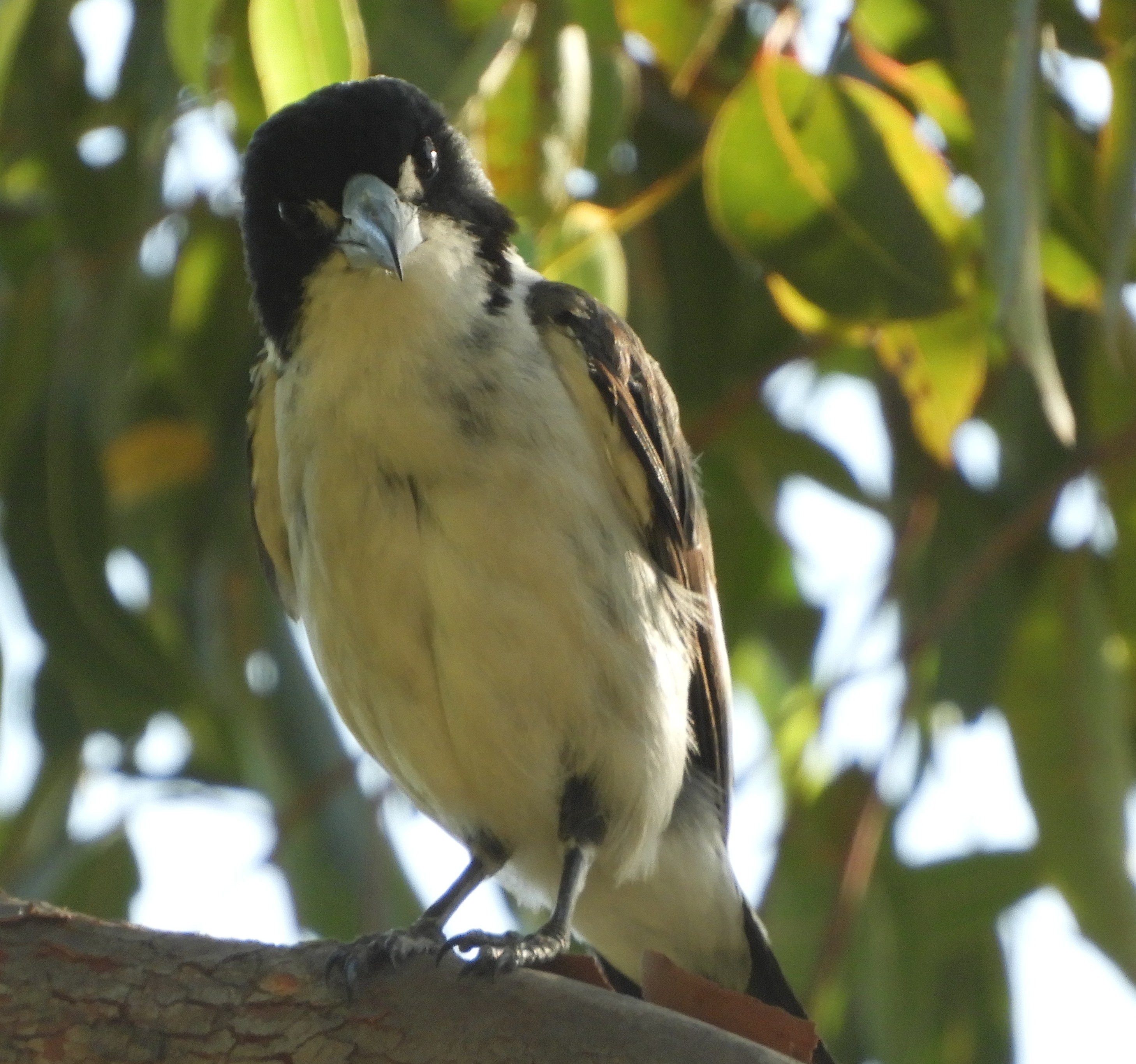
A full-frontal gaze shows off the white patches (lores) in front of its eyes:
A yawn shows its tongue off nicely:

Here’s a profile to close the post. The hook on the end of the beak is for stabbing prey, which the butcherbird then hangs on a branch or a fence until it’s ready to eat:
Common name: Grey Butcherbird
Scientific name: Cracticus torquatus
Approximate length: 30 cm
Date spotted: 5 January 2019 (Summer)
Location: Allambie Heights, New South Wales, Australia


 Sydney Birder