Blog Archives

Two fairy-wrens amid the eggs and bacon flowers
Fairy-wrens are pretty little puffs of feathers, with long tails that stick up into the air rather endearingly. They move fast and are notoriously difficult to photograph. Most of my fairy-wren photos end up as blurs. This morning, I was luckier.
The fairy-wrens in our area are Variegated Fairy-wrens. Here’s a male, with his stunning coat of blue, black, rusty red, and creamy-white:
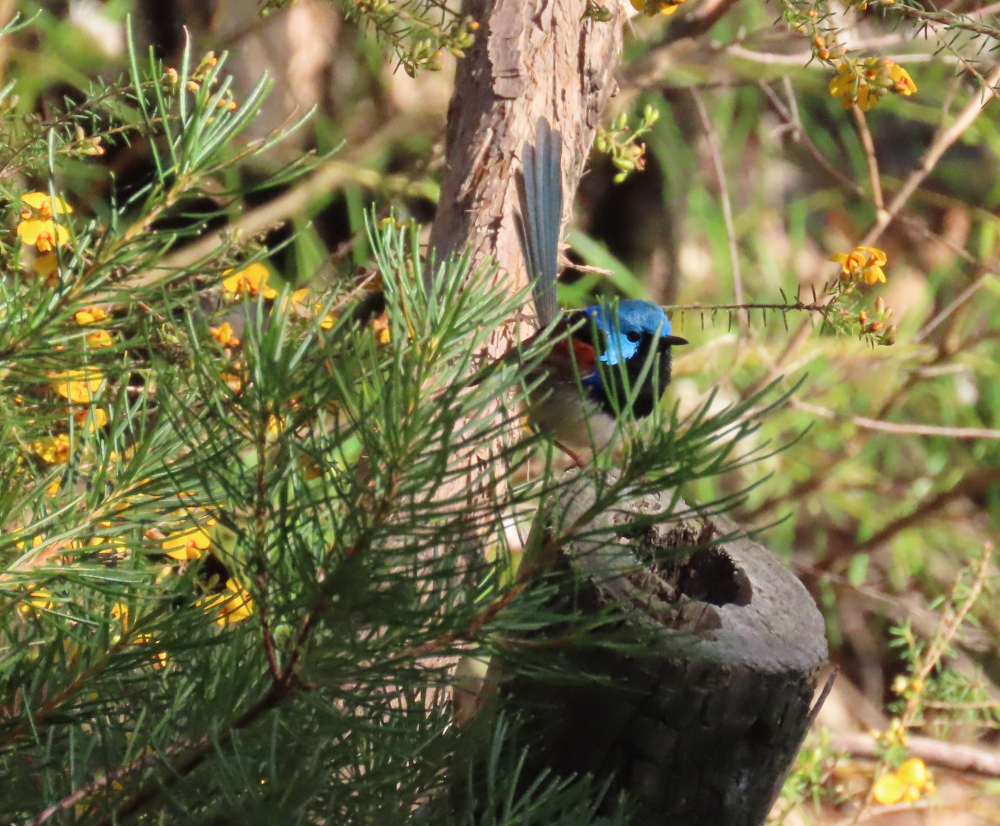
The flowers are, I think, Dillwynia elegans — also known as the Eggs And Bacon Flower or Parrot Pea. These flowers are tiny, but look a decent size next to the little wrens.
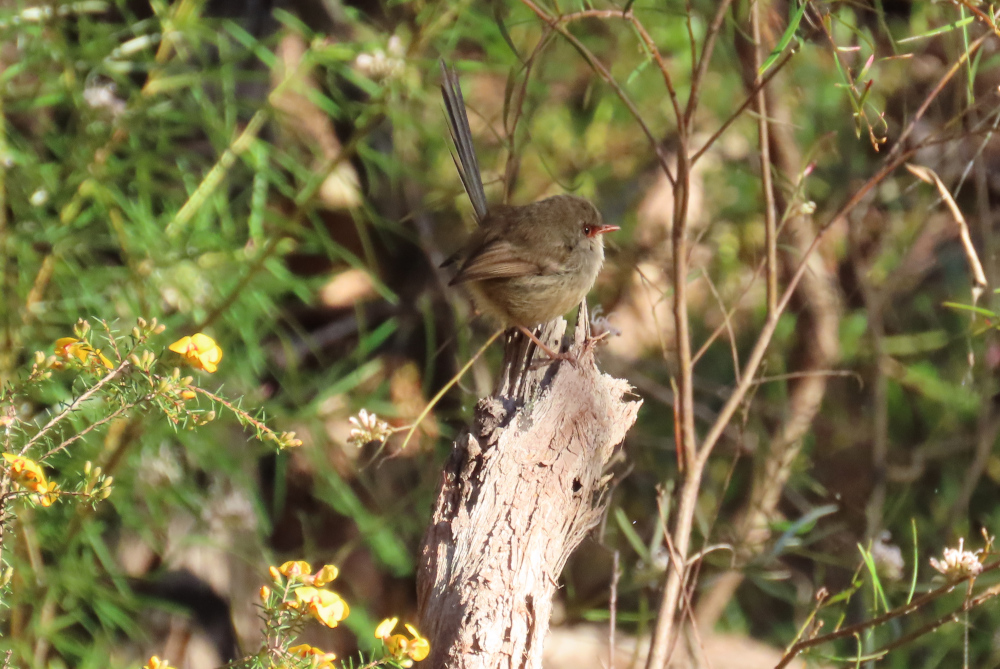
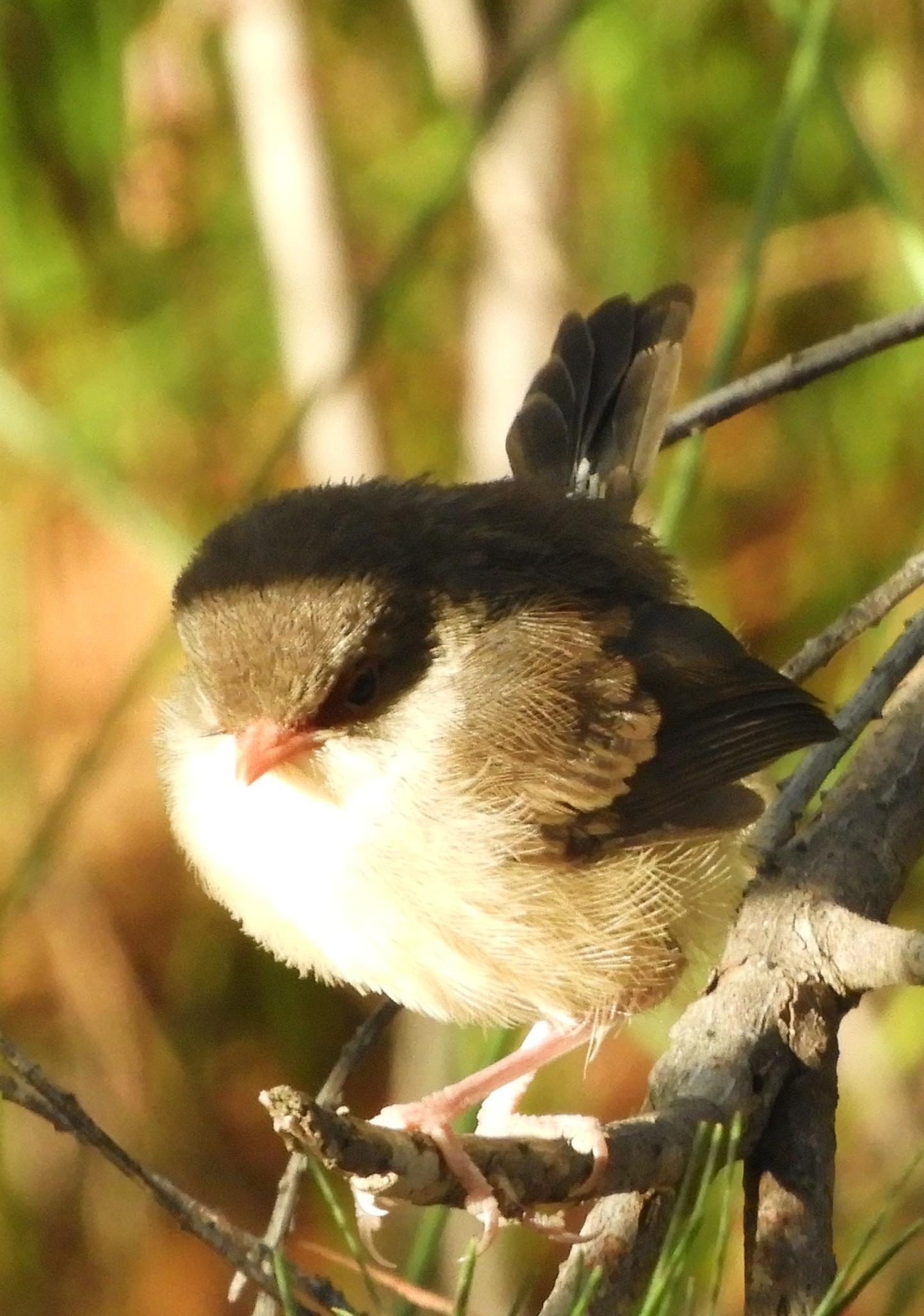
Here’s the female (or perhaps a juvenile), with her red eye mask and muted brown colouring. In the right light, her tail gleams a soft blue:
Common name: Variegated Fairy-wren
Scientific name: Malurus lamberti
Approximate length: 13 cm
Date spotted: 29 August 2025 (winter)
Location: Manly Dam park, near Sydney: 33°46’53.5″S 151°15’01.8″E

Fairy-wren an early Christmas decoration
A Variegated Fairy-wren paused for a second on a tree draped with lichen. It brought to mind a Christmas scene, with the bird a bauble that adds its bright colours to the grey of the tree and the rather surreal green tinsel formed by the lichen.

Common name: Variegated Fairy-wren
Scientific name: Malurus lamberti
Approximate length: 13 cm
Date spotted: 17 October 2024 (spring)
Location: Manly Dam park, near Sydney: 33°46’23.1″S 151°14’35.9″E

Video of a Superb Fairy-wren
At last, a Fairy-wren stayed visible for long enough to star in a short video! This one is a male Superb Fairy-wren chirping, wagging its tail, and hopping across open ground. Spotted at Dixons Long Point in NSW, on the banks of the Macquarie River.
A female was nearby too, but true to form it didn’t stay still long enough for a good photo. Here’s what I have:

Here’s a still photo of the male:

Common name: Superb Fairy-wren
Scientific name: Malurus cyaneus
Approximate length: 13-14 cm
Date spotted: 20 September 2024 (spring)
Location: Dixons Long Point, New South Wales, Australia: 33°01’13.5″S 149°16’53.6″E

My first Superb Fairy-wrens
I was out in the Putty Valley area this weekend, and spotted my first Superb Fairy-wrens. We often see Variegated Fairy-wrens closer to home, but I’m delighted to see a Superb at last. The familiar squeaky trills drew my attention, and I snapped a couple of shots, but it wasn’t until I downloaded the photos that I saw these were not the usual catch!
First the female:
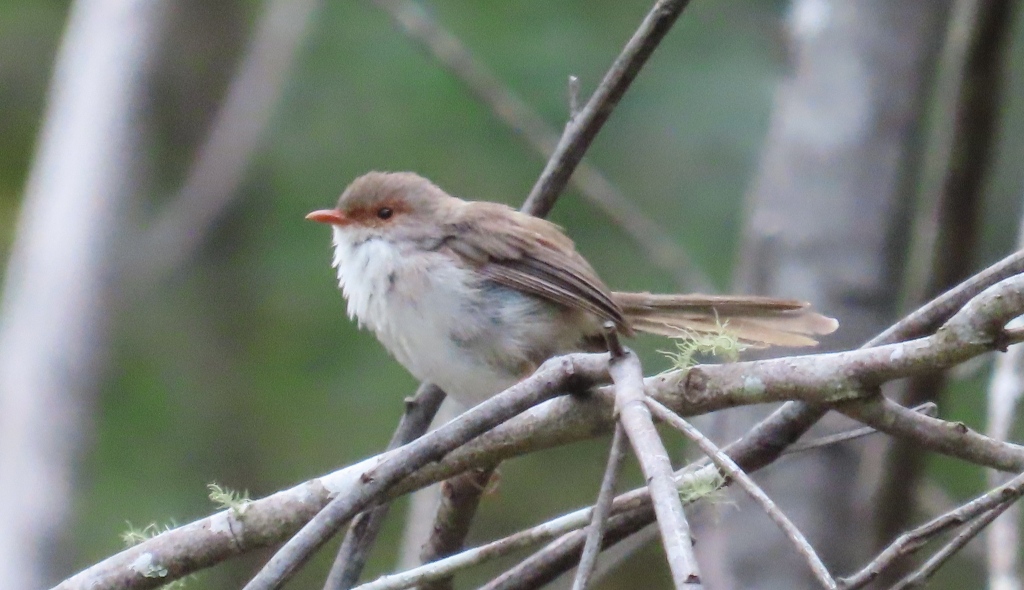
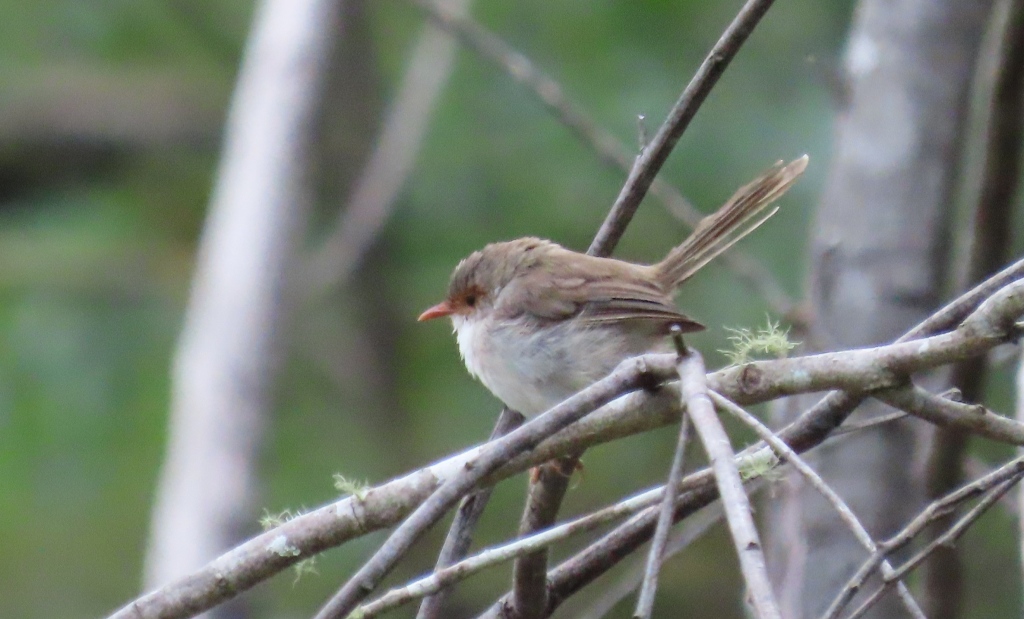
Overall, her colouring is similar to the Variegated Fairy-wrens. The differences are that the brownish patch around the eye is more cinnamon than chestnut, and her tail lacks the blue of her Variegated cousin. Here’s another shot of the same bird:
The male was, as usual, hard to photograph. He’s partially obscured by a twig, but you can still make out the bright and darker blues. He lacks the chestnut shoulders of the Variegated Fairy-wren:
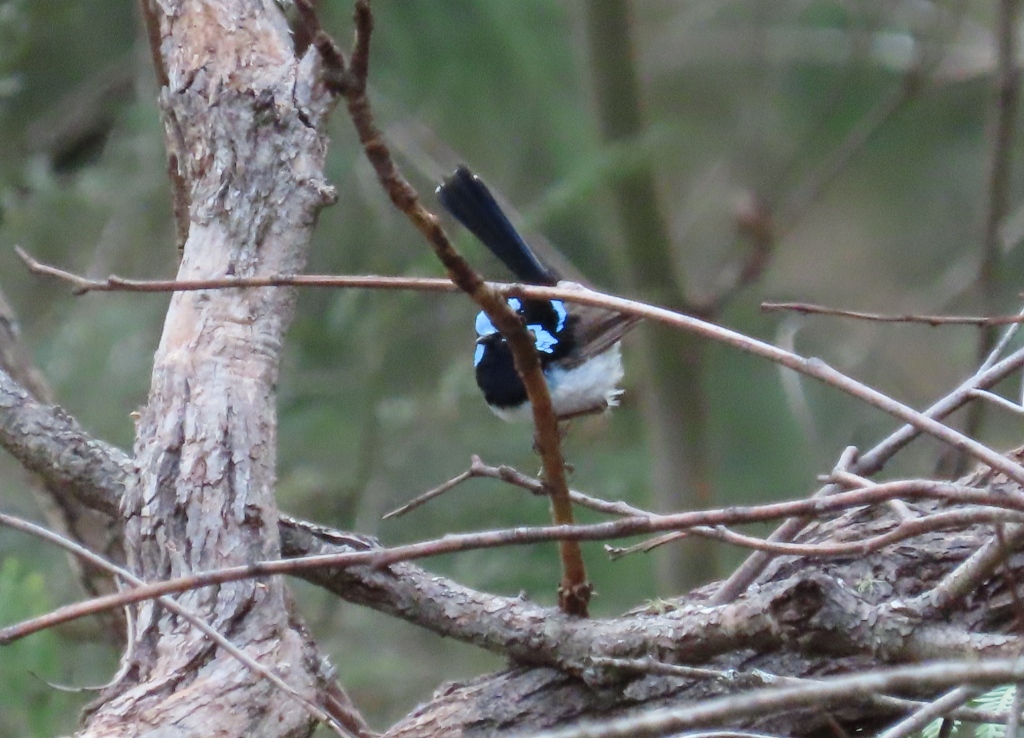
The next one is, I think, a juvenile male. The blue colouring is just starting to appear:
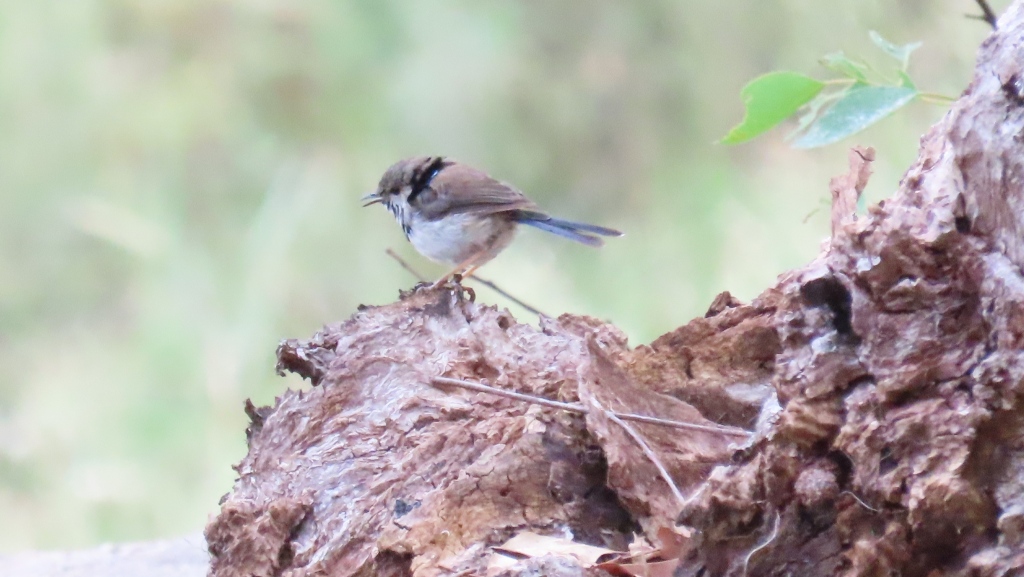
Common name: Superb Fairy-wren
Scientific name: Malurus cyaneus
Approximate length: 13-14 cm
Date spotted: 15 March 2024 (summer)
Location: Putty Valley, New South Wales, Australia: 32°54’00.8″S 150°38’16.9″E

Gorgeous male Fairy-wren with glossy blue tail
I took a number of shots of this lovely little Variegated Fairy-wren. As usual, only one of the shots was anywhere near usable. Here it is:

Like many bird names in Australia, the name “fairy-wren” is misleading. These birds aren’t actually wrens. They’re related to honeyeaters and pardalotes.
This one is a male, and in full breeding colour. I haven’t seen such a glossy blue tail before!
Common name: Variegated Fairy-wren
Scientific name: Malurus lamberti
Approximate length: 13 cm
Date spotted: 5 October 2023 (spring)
Location: Manly Dam Park, New South Wales, Australia: 33°47’00.6″S 151°15’19.5″E

Fairy-wrens in full finery
Variegated Fairy-wrens are quite common in my neck of the woods, but they’re very difficult to photograph. They move fast, pause only briefly, and prefer to keep hidden in the shrubbery. I took these shots over a few days, collecting mosquito bites at the same time as usable photos.
It’s spring, and the males are decked out in their breeding finery. They’re like blue fireflies lighting up the bush:
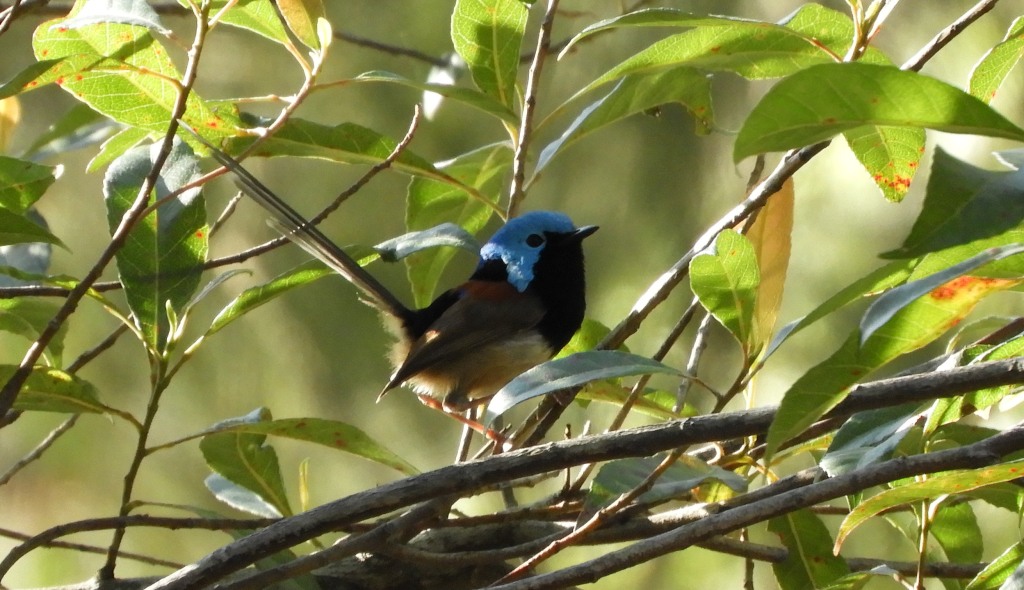
The long tail often sticks straight up. It must present quite a challenge to dashing around the shrubbery:

The females are a soft brown with pale blue hints in the tail. They have a red eye mask which can make them look slightly sardonic:
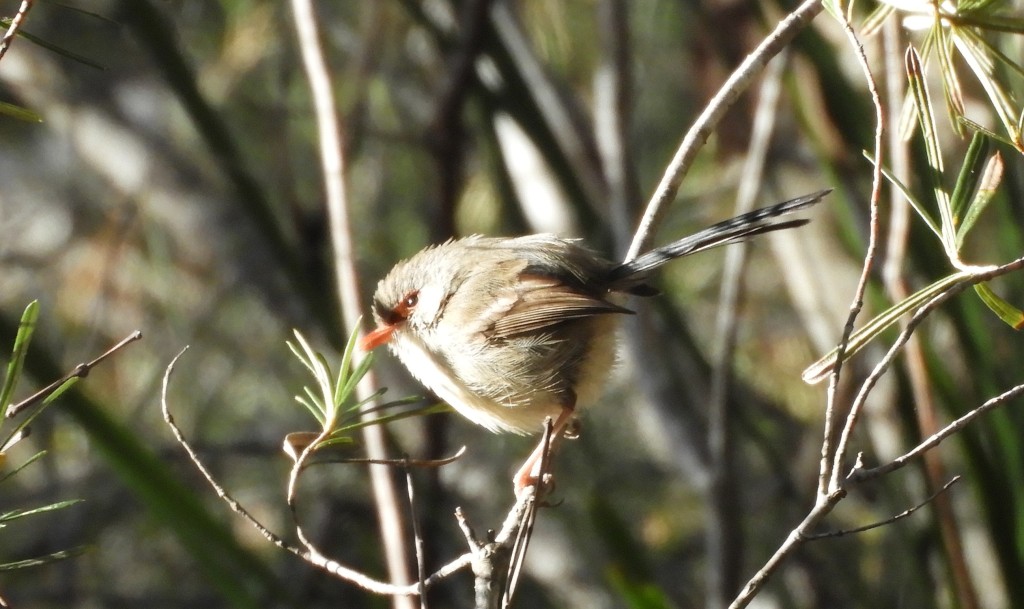
They’re like tiny little puffballs:

Like many bird names in Australia, the name “fairy-wren” is misleading. These birds aren’t actually wrens. They’re related to honeyeaters and pardalotes.
Common name: Variegated Fairy-wren
Scientific name: Malurus lamberti
Approximate length: 13 cm
Date spotted: September 2021 (spring)
Location: Manly Dam Park, New South Wales, Australia: 33°46’49.9″S 151°15’04.2″E (the male) and 33°46’20.8″S 151°14’30.6″E (the female)
Yaayyy a Fairy-wren
Fairy-wrens are a reasonably common sight in this area of Australia. What’s not common is my being fast enough to catch one of them in the camera lens! Most of my photos of Fairy-wrens show a blue blur or an empty branch.
Today I managed to catch this male Variegated Fairy-wren fairly and squarely in my sights:
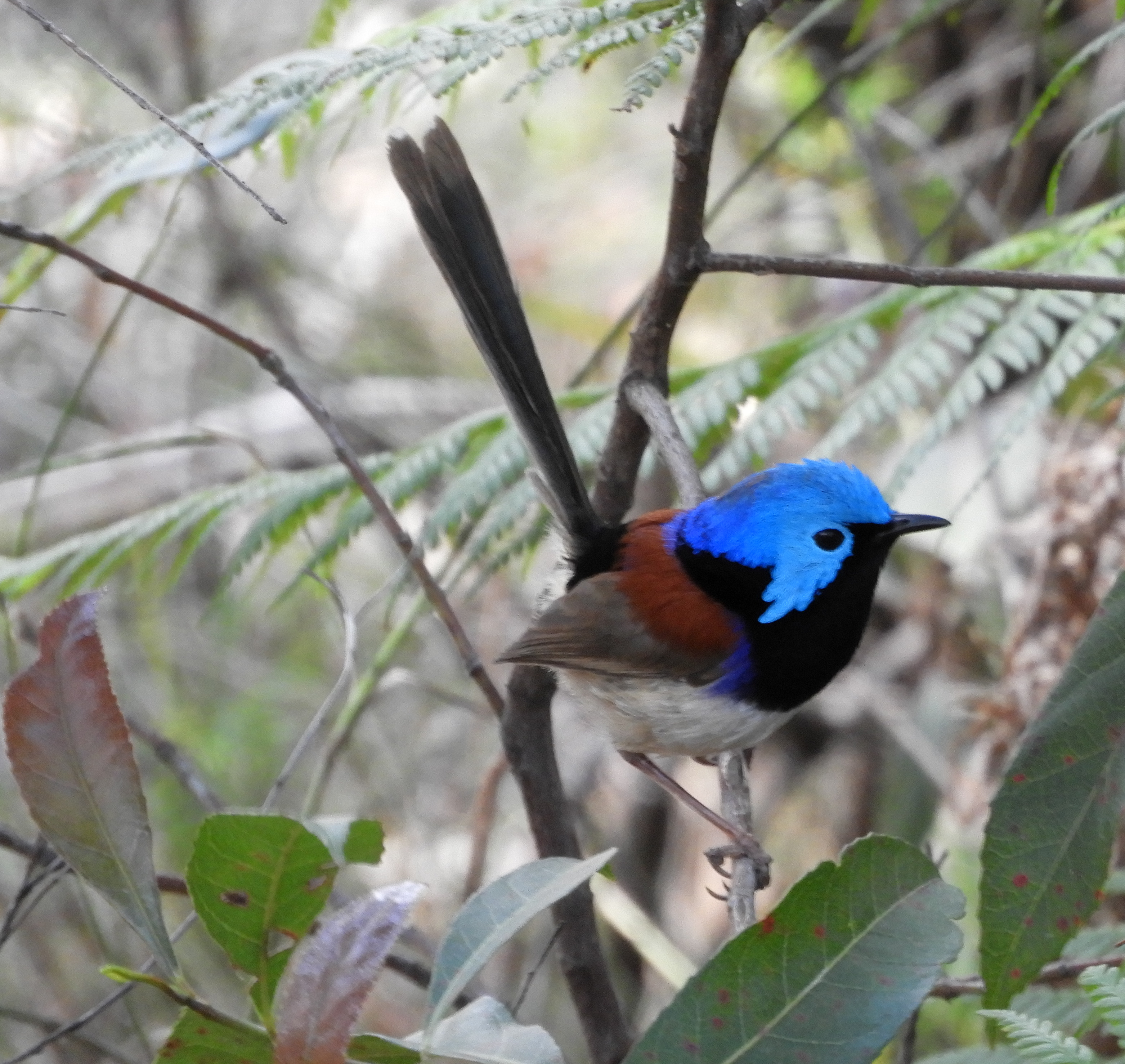
There’s something about the solid blocks of colour on this bird that makes it difficult to capture a clear image, even when the bird is still long enough for a photo.
The bird was with two other males, which is also fairly uncommon. Usually I’ve seen a male with a group of females.
That ridiculous tail, so much at odds with the round puffy appearance of the rest of the bird, makes you think there’s something wrong with the photo:
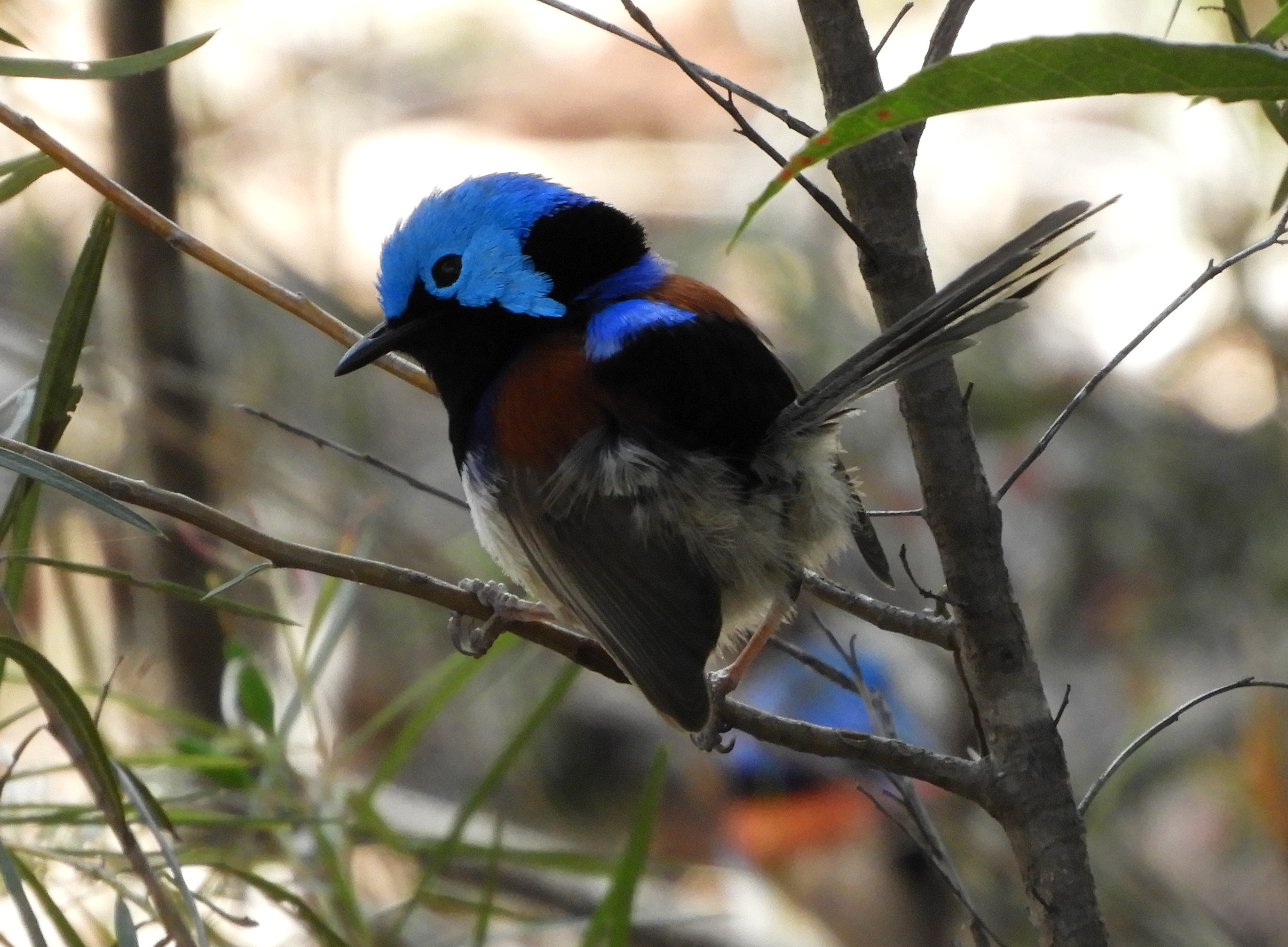
Common name: Variegated Fairy-wren
Scientific name: Malurus lamberti
Approximate length: 13 cm
Date spotted: 25 September 2020 (spring)
Location: Manly Dam Park, New South Wales, Australia: 33°46’50.6″S 151°15’04.7″E
The strange case of the hooded Variegated Fairy-wren
I spotted this bird at Manly Dam this morning. It’s a female Variegated Fairy-wren, cunningly positioned half in shadow to give itself a dark grey hood. I was excited, thinking I may have found a very unusual bird, until I realised what was happening!


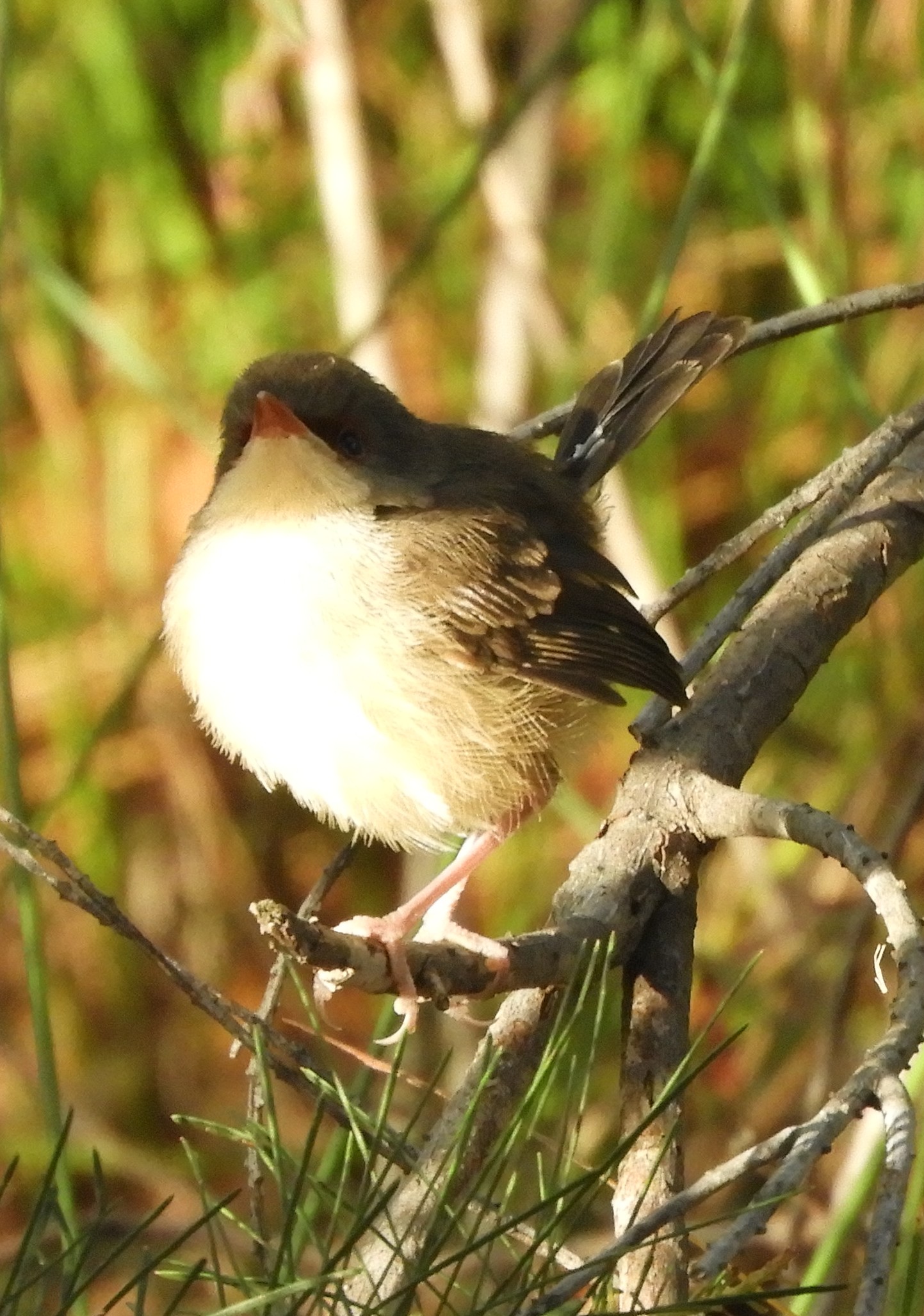
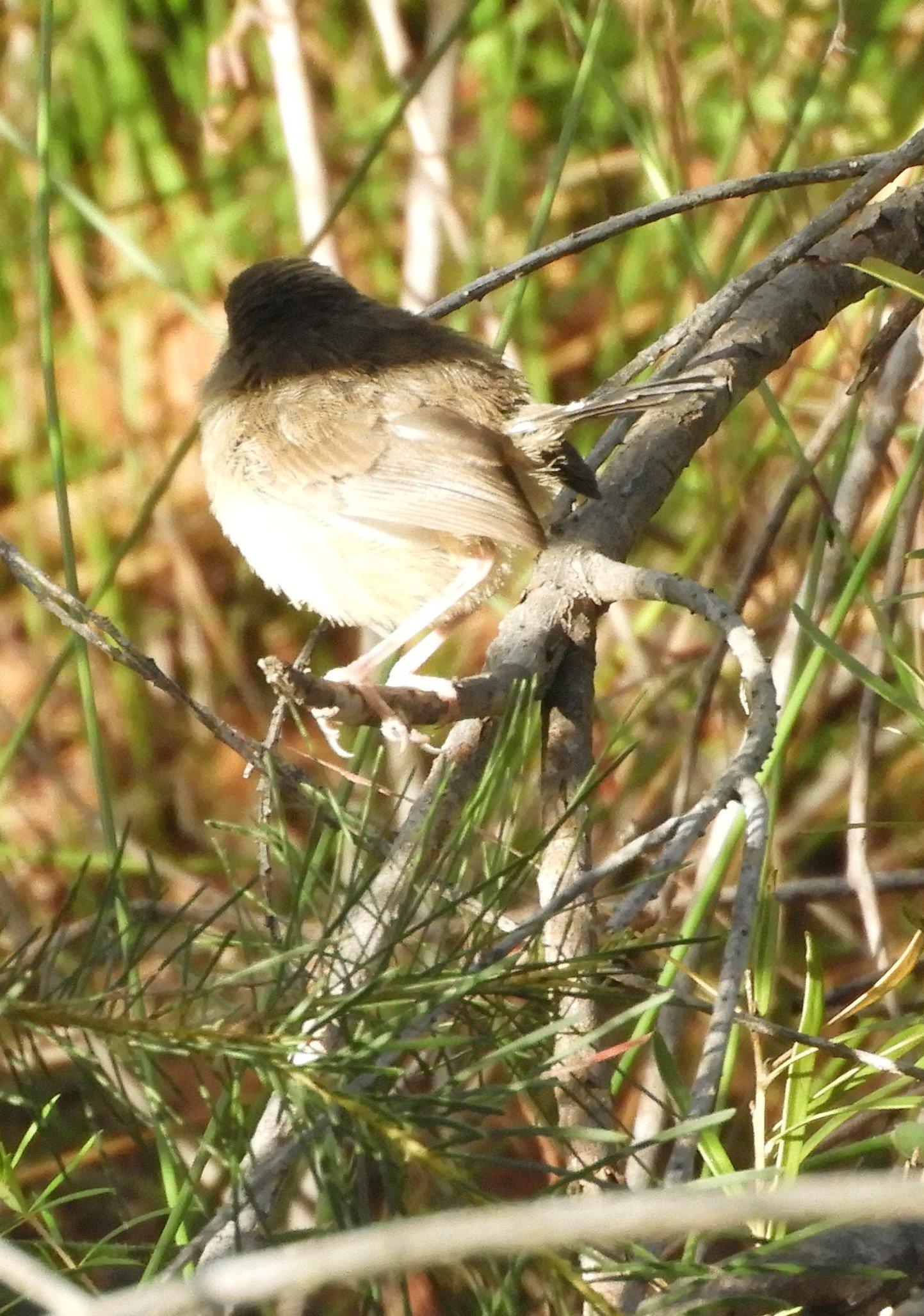

Common name: Variegated Fairy-wren
Scientific name: Malurus lamberti
Approximate length: 13 cm
Date spotted: 3 November 2019 (spring)
Location: Manly Dam Reserve, New South Wales, Australia: 33°46’44.8″S 151°14’57.9″E
Peek at a male Fairy-wren
I’ve had a bit of luck recently spotting Fairy-wrens darting through the undergrowth. You can usually hear them chirping, rustling, and trilling, but it’s rare to see one stay in one spot long enough to film them. Here’s a male Variegated Fairy-wren showing off his spring plumage:
Common name: Variegated Fairy-wren
Scientific name: Malurus lamberti
Approximate length: 13 cm
Date spotted: 3 September 2017 (Spring)
Location: Manly Dam Reserve, New South Wales, Australia: 33°46’52.6″S 151°15’08.2″E
Blue puffballs: Male Variegated Fairy-wren and partner
Two Variegated Fairy-wrens dropped in for a flying visit. The most visible one, with electric blue feathers, is male. The female has softer colouring, with blue tail feathers. Their excited chirping drew me to the window in time to make a quick video.
Common name: Variegated Fairy-wren
Scientific name: Malurus lamberti
Approximate length: 13 cm
Date spotted: 13 February 2017 (Summer)
Location: Allambie Heights, New South Wales, Australia


 Sydney Birder