Blog Archives
Pied Butcherbird singing on the beach
As I walked past this tree, on a grassy patch next to the sea at Port Macquarie, I heard a gentle experimental whistling. I thought it might be a person, but then I heard some bird sounds mixed in. It was a Pied Butcherbird, trying out its repertoire while perched in an Old Man Banksia tree. In the background is the sound of the surf, rather noisy alas.
We don’t see these birds around Sydney, so I’m not familiar with their calls. I wonder if this one is different from most, or perhaps they sing a variety of songs?
Common name: Pied Butcherbird
Scientific name: Cracticus nigrogularis
Approximate length: 33-36 cm
Date spotted: 5 June 2025 (winter)
Location: Town Beach, Port Macquarie, NSW, Australia: 31°25’47.6″S 152°55’09.5″E

Pied Butcherbird makes 3 out of 4
There are four types of Butcherbird in Australia: Grey Butcherbirds, Black Butcherbirds, Black-backed Butcherbirds, and Pied Butcherbirds. Grey Butcherbirds are common on Australia’s east coast, where I live. I’ve seen a Black Butcherbird when travelling in the far north of Australia. And now, travelling west of Sydney into the Outback, I spotted a Pied Butcherbird. Three out of four ain’t bad!

The white collar of this bird extends in a straight line, all the way round the back of the neck, whereas the Grey Butcherbird’s collar is narrower and doesn’t go all the way round.
Common name: Pied Butcherbird
Scientific name: Cracticus nigrogularis
Approximate length: 33-36 cm
Date spotted: 21 May 2024 (autumn)
Location: Mungo Lodge, Mungo National Park, New South Wales, Australia: 33°44’31.4″S 143°00’06.1″E
Birds in Witkoppen, South Africa
I’m currently in South Africa, a little outside the usual geographical range of this blog! While here, I’m taking in a bit of the bird life. I photographed the birds in this post in a little patch of green called Witkoppen Spruit Park. Witkoppen is an outer suburb of Johannesburg, near Sandton. For such a small piece of land surrounded by residential suburbs, there’s an amazing variety of birds in the park. Well worth a visit, if you’re in the area.
To get in the mood, watch this short video and listen to the sounds of the birds all round:
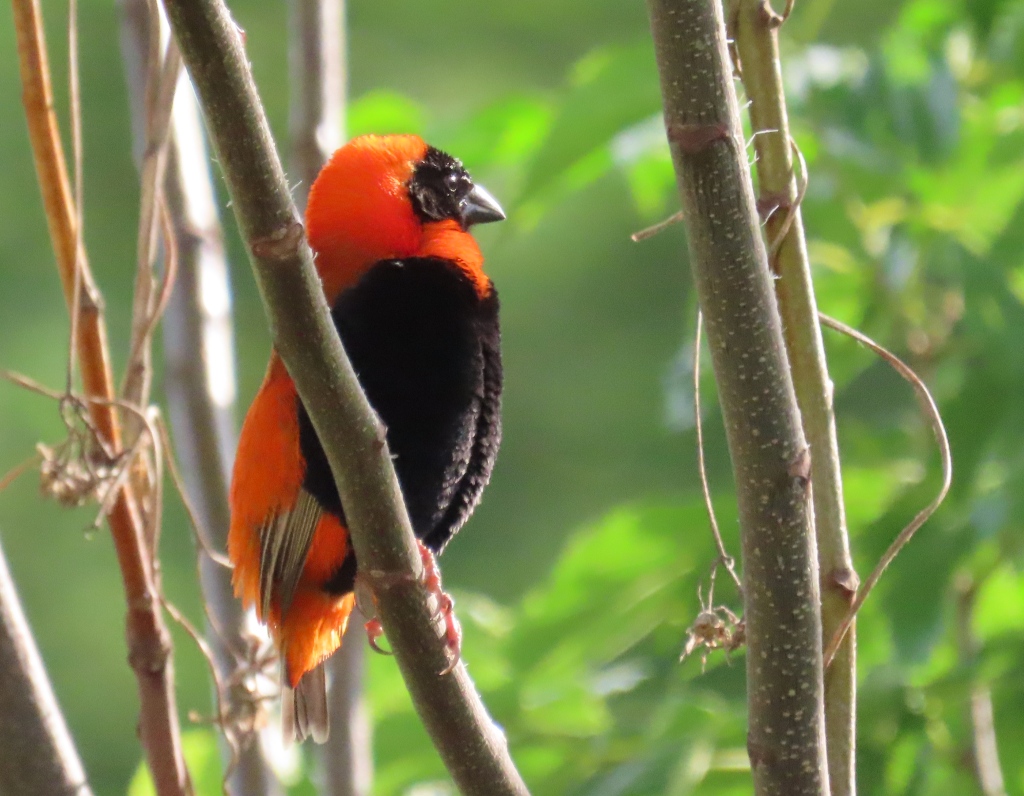
The flashes of red that you see in the video are Southern Red Bishops, a little bird in the weaver family. Here’s one of them caught in a rare moment of stillness:
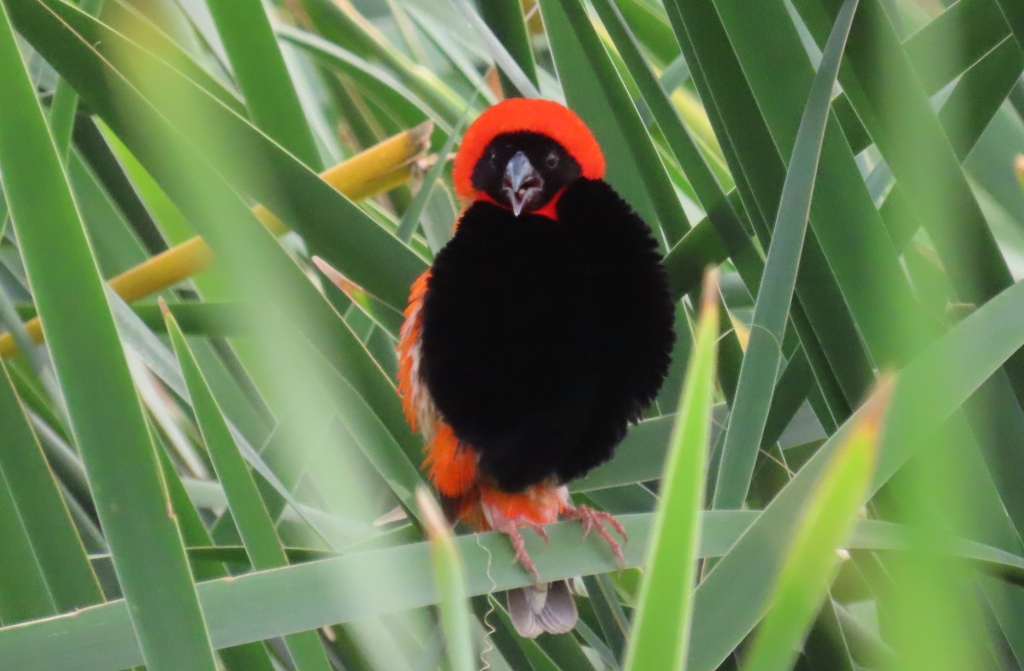
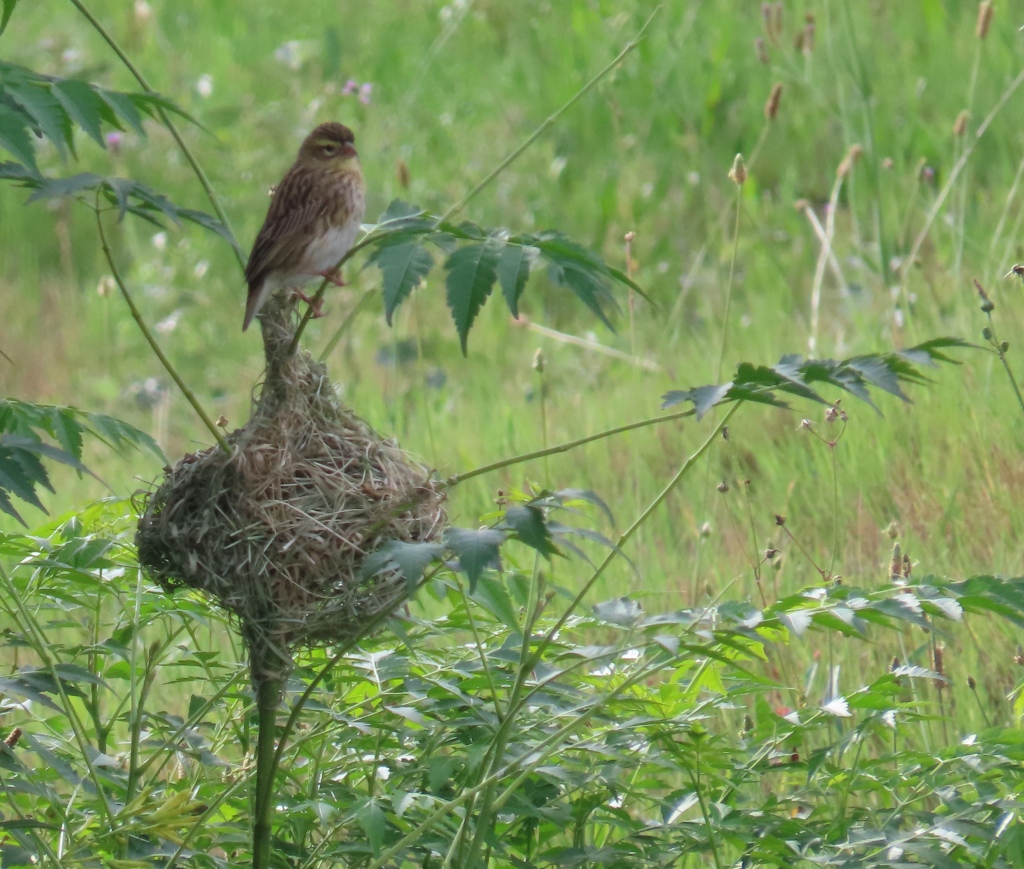
Like other weavers, Southern Red Bishops build nests of intricately woven reeds hanging from tree branches or tall reed stems:

Here’s one of the birds in a quarrelsome mood:
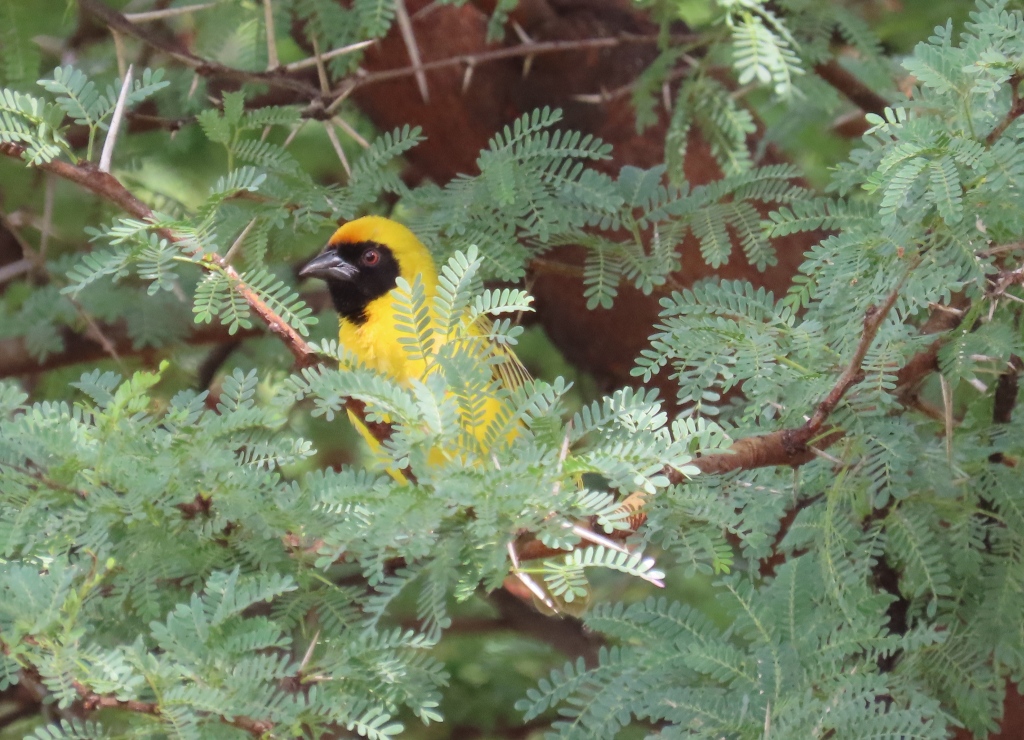
Nearby, a Southern Masked Weaver peers out from behind the leaves of a tree:
The bright colours belong to the males of the species. Here’s a female weaver perched above a nest. I don’t know if it’s a Red Bishop or a Masked Weaver:
Perched high in a tree, a Grey Lourie shows that you can look smart even in a low-key colour:

Grey Louries are also called the grey go-away bird. Here’s another one:

A Pin-tailed Whydah sports its long tail. This tiny bird’s body is about 12 cm long, while the tail adds another 20 cm to the bird’s overall length:

Some Lesser Striped Swallows gather around a small puddle in the middle of the path:
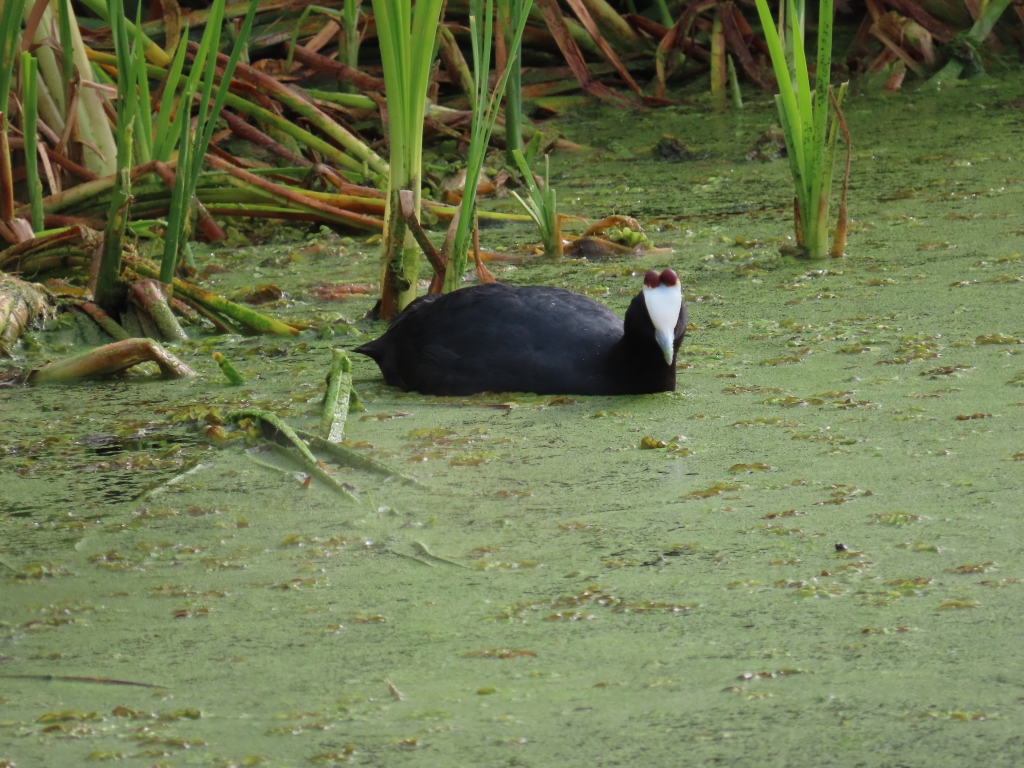
In the nearby pond, a Red-knobbed Coot feeds in the algae-rich water:
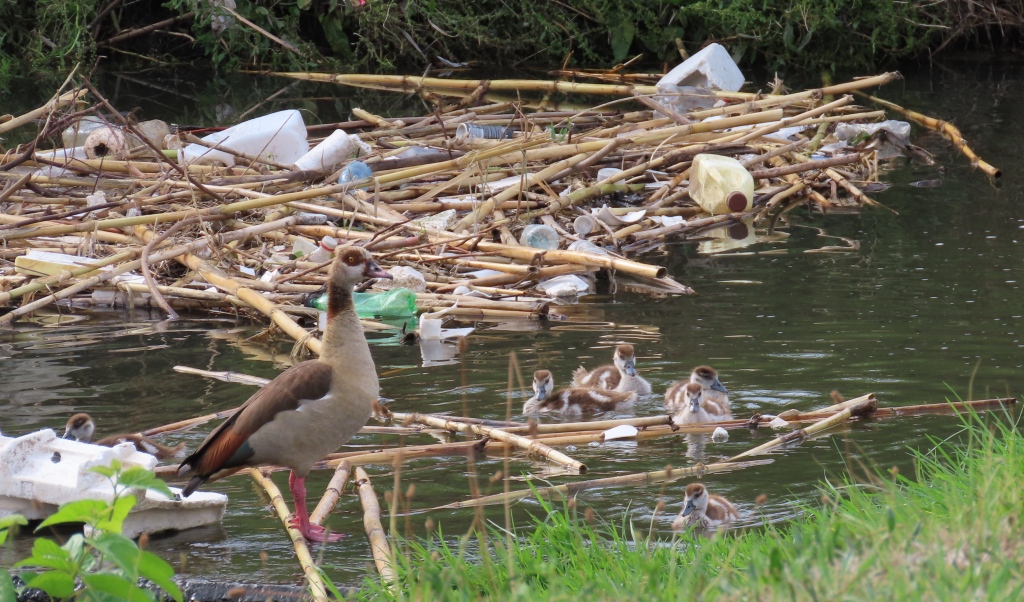
An Egyptian Goose shepherds its chicks through the flotsam and jetsam of the surrounding suburbs:
Sunlight adds a gloss to the plumage of a Hadada Ibis:

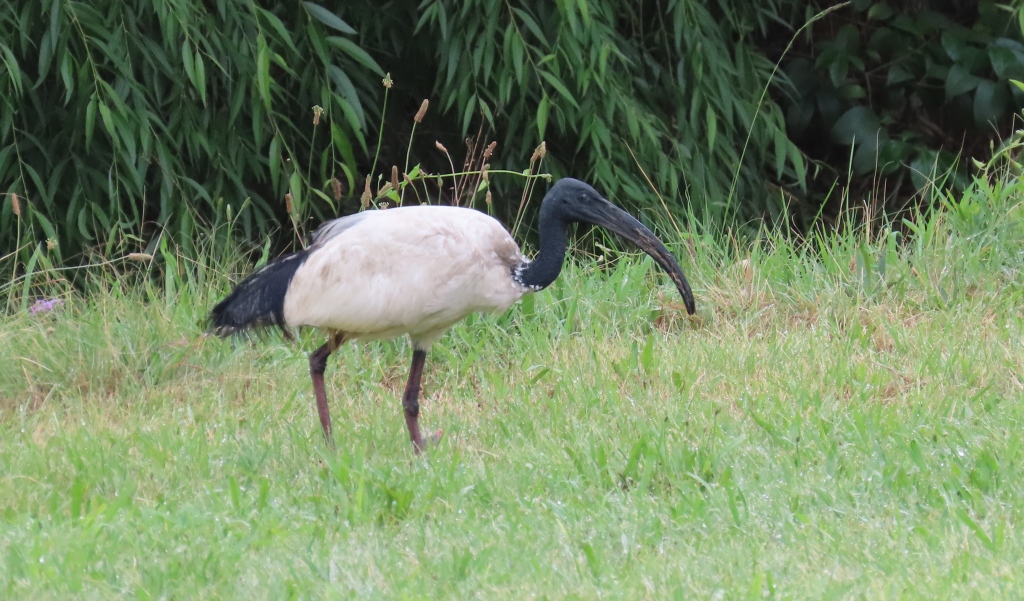
An African Sacred Ibis stalks through the undergrowth:
Another bird stalks the undergrowth, sometimes standing so still that it was almost impossible to spot. My camera’s super zoom brings it close enough to see that it’s an African Wattled Lapwing:

Fiscal Shrikes, also known as Butcher Birds, zoom from cover to cover. Here’s one that stayed still long enough to be caught in a photograph:

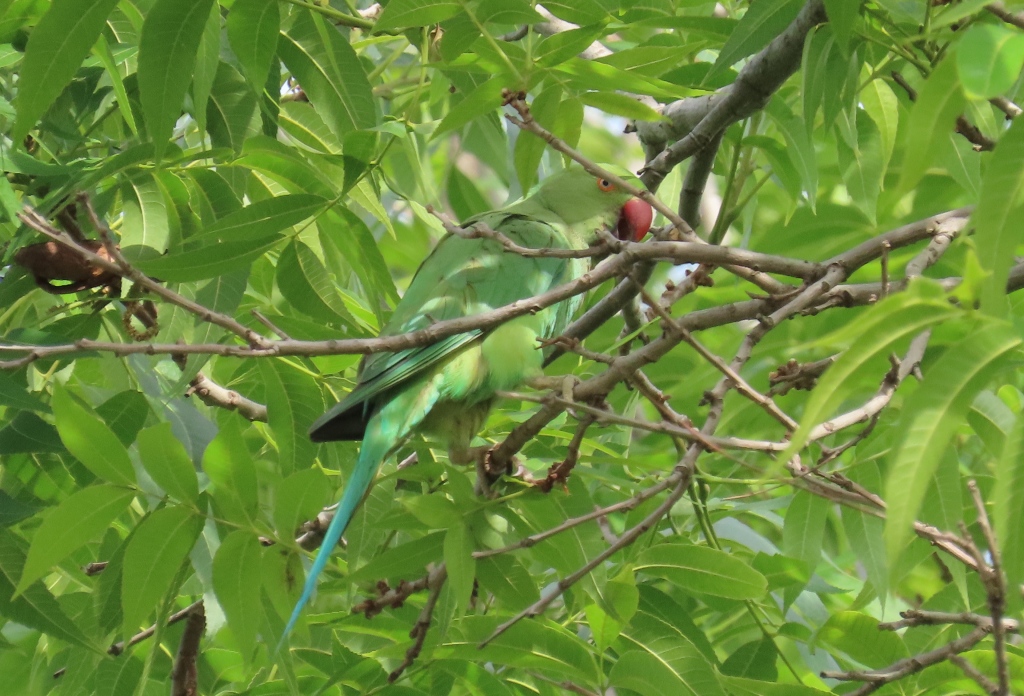
High in the trees, Rose-ringed Parakeets chat and screech. These little parrots aren’t native to South Africa. They established themselves in the suburbs after escaping from captivity in numbers large enough to start breeding:
In my next post I’ll show you some birds in Lonehill, a neighbouring suburb to Witkoppen.


 Sydney Birder