Blog Archives
King Parrots on my commute
Not many people in the world are lucky enough to be able to say this: I bumped into a couple of King Parrots on my way home from work the other day.
We see a few different varieties of parrots around the neighbourhood. King Parrots aren’t a very common sight – I see them maybe two or three times a year. One of their charming characteristics is that they’re always in pairs. See one, and the other isn’t far away.
These two were investigating some seeds on the ground. They let me get quite close, and flew off when I was about a metre away.
Common name: Australian King Parrot
Scientific name: Alisterus scapularis
Approximate length: 44 cm
Date spotted: 5 October 2016
Season: Spring
Location: Allambie Heights, New South Wales, Australia
Approximate latitude/longitude: 33°46’13.2″S 151°15’41.1″E
Little Wattlebird plumage like shooting stars
This shy Little Wattlebird led me a merry dance before letting me snap a picture. It has an intricately patterned plumage. The little bursts at the end of each stripe remind me of shooting stars.

Common name: Little Wattlebird
Scientific name: Anthochaera chrysoptera
Approximate length: 30 cm
Date spotted: 25 September 2016
Season: Spring
Location: Manly Dam National Park, Sydney, Australia
Latitude/longitude: 33°46’30.7″S 151°15’09.1″E
Noisy Miner chicks just out of their nest
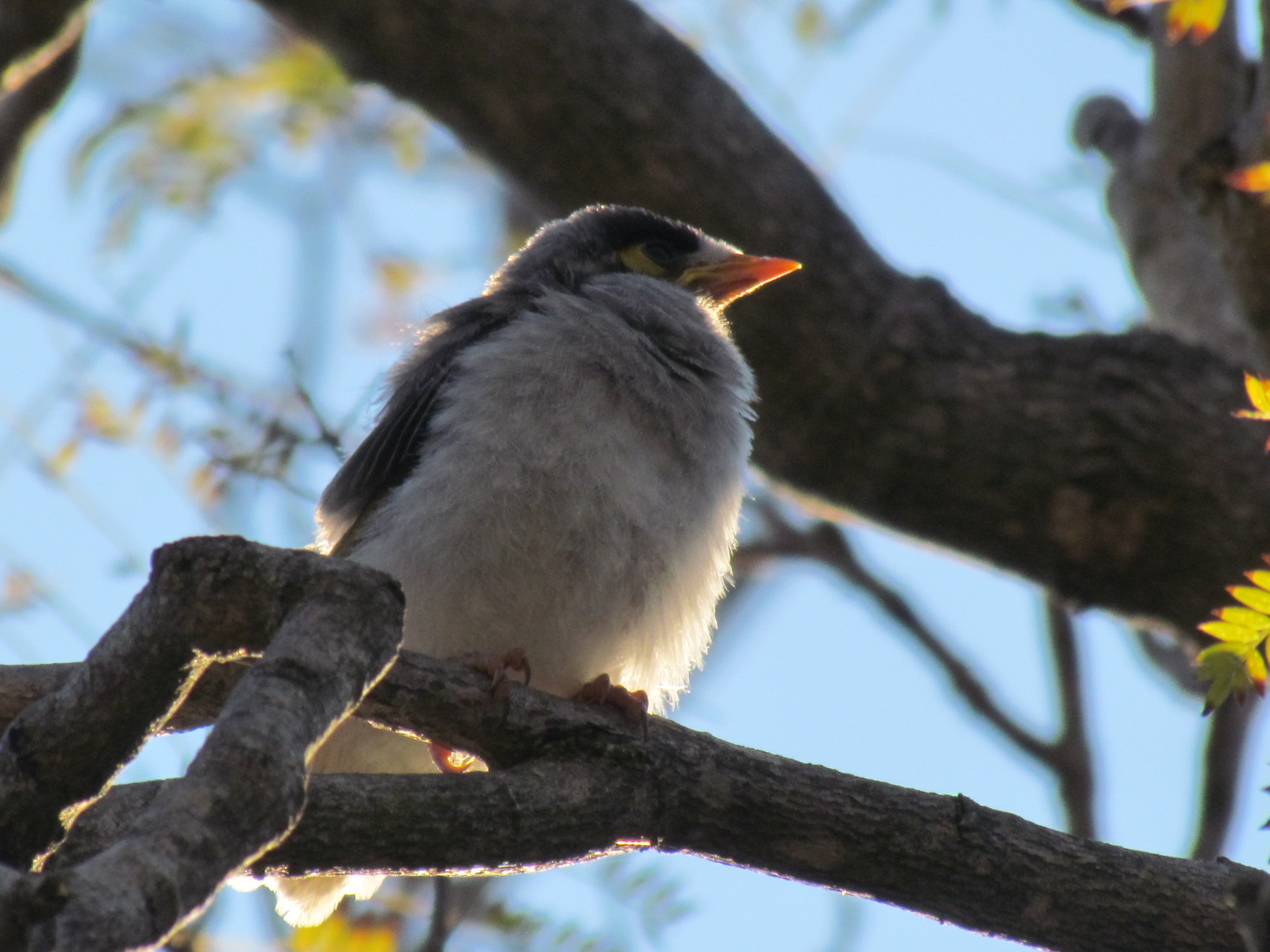
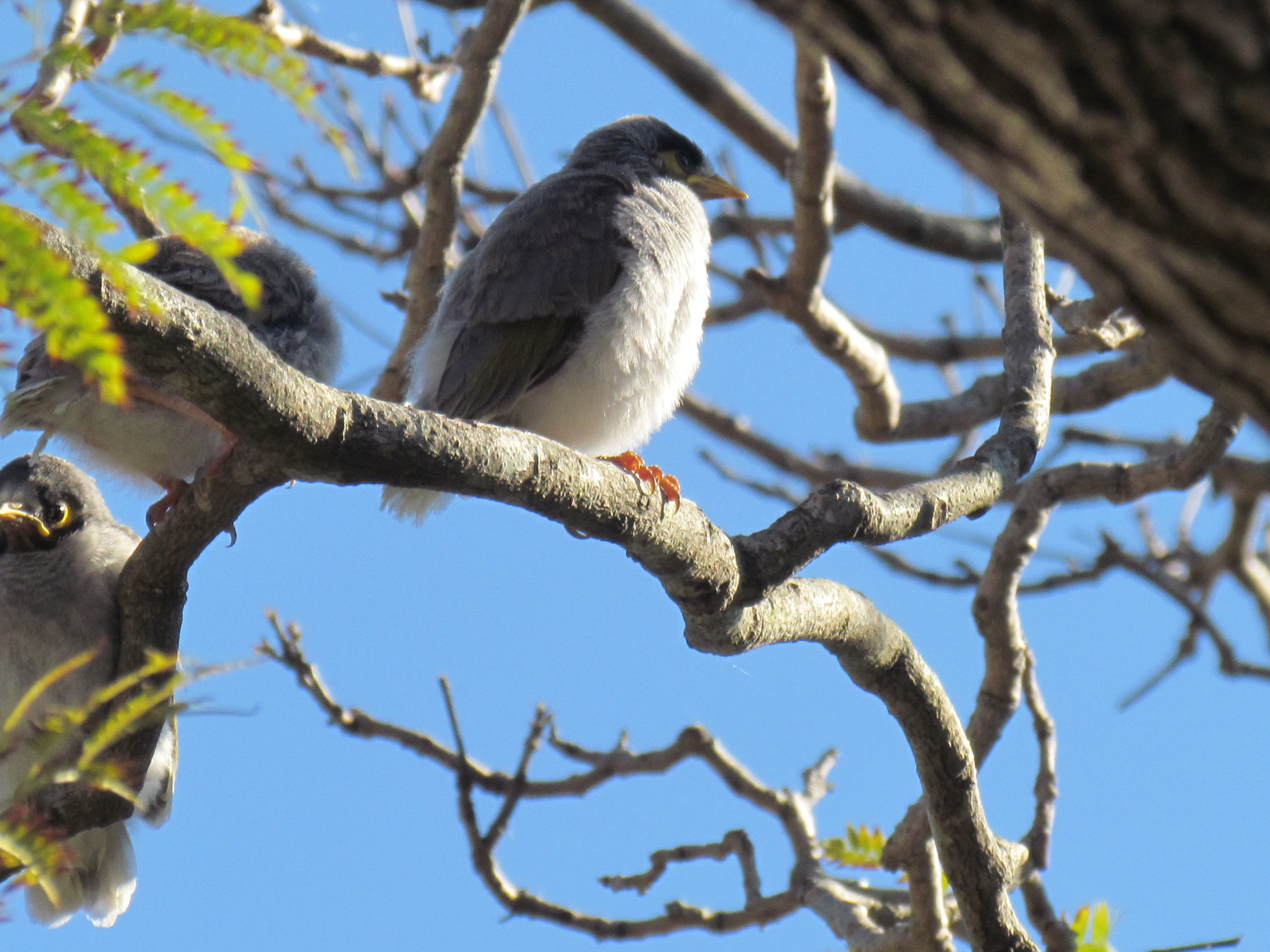
All fluffy and chirpy, three little Noisy Miners have taken their first steps out of their nest.
My previous post showed the chicks being fed in the nest. Now, just four days later, they’re on a branch, bunched together, preening and demanding food. The adults are still very much in attendance.
This still shot shows a chick outlined in the early morning sun:
Here are the three chicks, looking fluffy and cute but with the characteristic gimlet glare of the Noisy Miner:
Common name: Noisy Miner, also called Australian Miner
Scientific name: Manorina melanocephala
Approximate length of adult bird: 26 cm
Date spotted: 17 September 2016
Season: Spring
Location: Allambie Heights, New South Wales, Australia
Latitude/longitude: 33°46’13.7″S 151°15’39.8″E
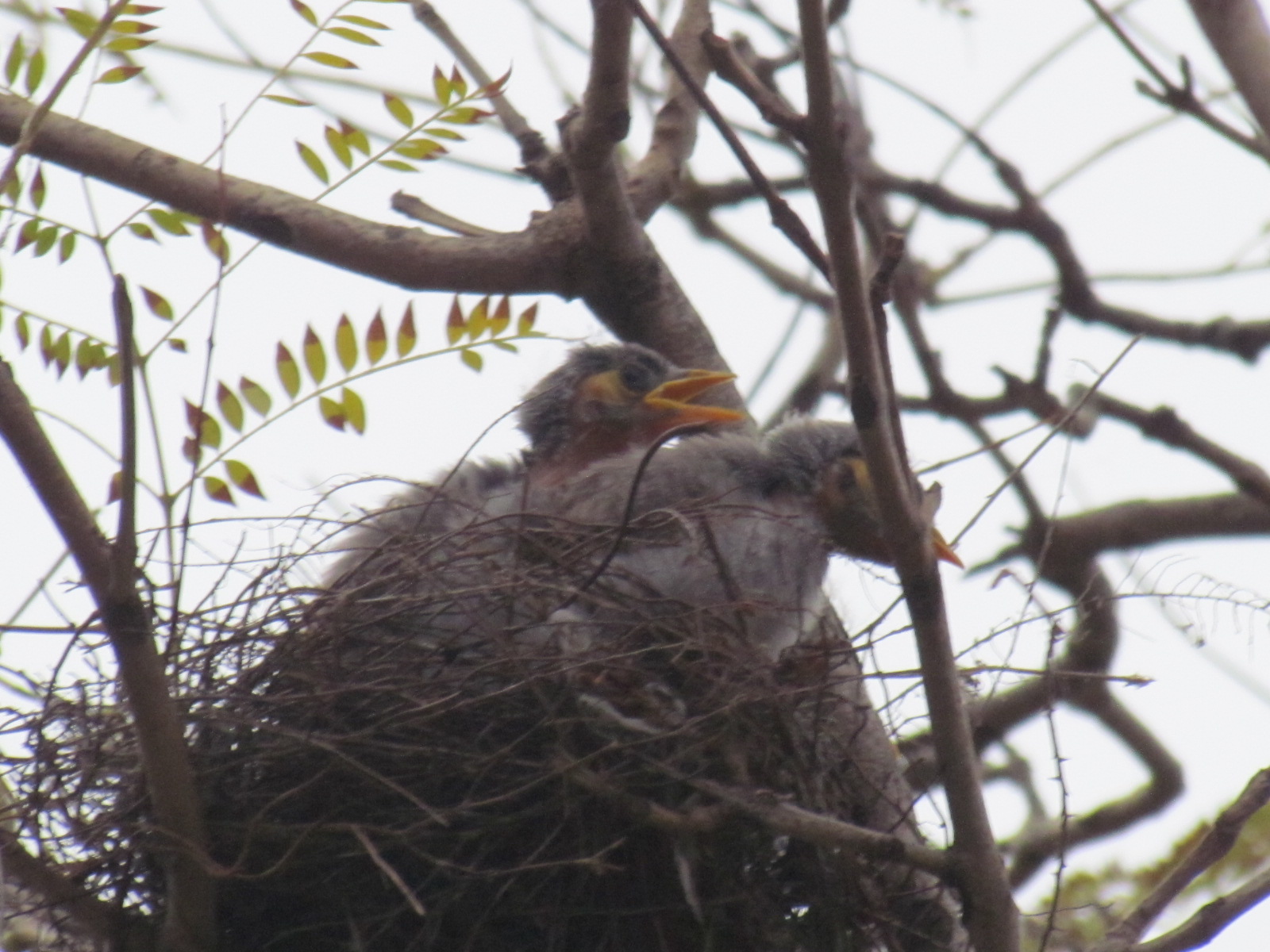
Noisy Miners feeding chicks in nest
Noisy Miners live up to their name. If they lived in California, Hitchcock would surely have used them as inspiration for The Birds. They cheep and squeak at everything in sight, and frequently attack everything in sight too. They’re also known as Australian Miners.
This nest has three chicks, cheeping continuously. The adult birds drop in to feed them every now and then. At one stage in the video, one of the chicks stretches up and flaps its wings. Getting ready for that first flight.
Interestingly, the adult birds feeding the chicks aren’t necessarily the parents. Other birds in a Miner colony often help to feed the babies. Noisy Miners are honeyeaters. They eat nectar, fruit and insects.
Common name: Noisy Miner, also called Australian Miner
Scientific name: Manorina melanocephala
Approximate length of adult bird: 26 cm
Date spotted: 13 September 2016
Season: Spring
Location: Allambie Heights, New South Wales, Australia
Latitude/longitude: 33°46’13.7″S 151°15’39.8″E
Why we plant native bushes and trees
One of the reasons we plant native bushes and trees in our garden is to provide food and shelter for the birds and animals. So that they’ll drop in and share this tiny patch of Australia with us. We see possums, lizards, bats, and birds of many kinds. Last week a wallaby passed through on its way from somewhere to somewhere else – but that’s most unusual, as ours really is a very small patch.
Rainbow lorikeets are frequent visitors, snacking on the nectar from the flowers. They’re noisy and quarrelsome, and very pretty.
The bush is a grevillia that we planted a couple of years ago, specifically to attract birds. It works!

Common name: Rainbow Lorikeet
Scientific name: Trichoglossus haematodus
Approximate length: 30 cm
Date spotted: 3 September 2016
Season: Spring
Fairy-wrens in motion
Fairy-wrens are always in motion. That’s what makes them so difficult to capture on film. Today I caught a number of smudges and smears of blue, and a few good shots too.
This still photo is of a female fairy-wren. She’s not really headless, but it’s the best shot I could get. Her colouring is less spectacular than the male, but she’s still pretty.

(I managed to get a good shot of a male fairy-wren about a month ago.)
This video shows her flitting from branch to branch:
This is her male companion:
And the male again:
Common name: Variegated Fairy-wren
Scientific name: Malurus lamberti
Approximate length: 13 cm
Date spotted: 27 August 2016
Season: Late winter
Location: Manly Dam Reserve, New South Wales, Australia
Latitude/longitude: 33°46’53.5″S 151°15’09.4″E
Wild call of the black cockatoo
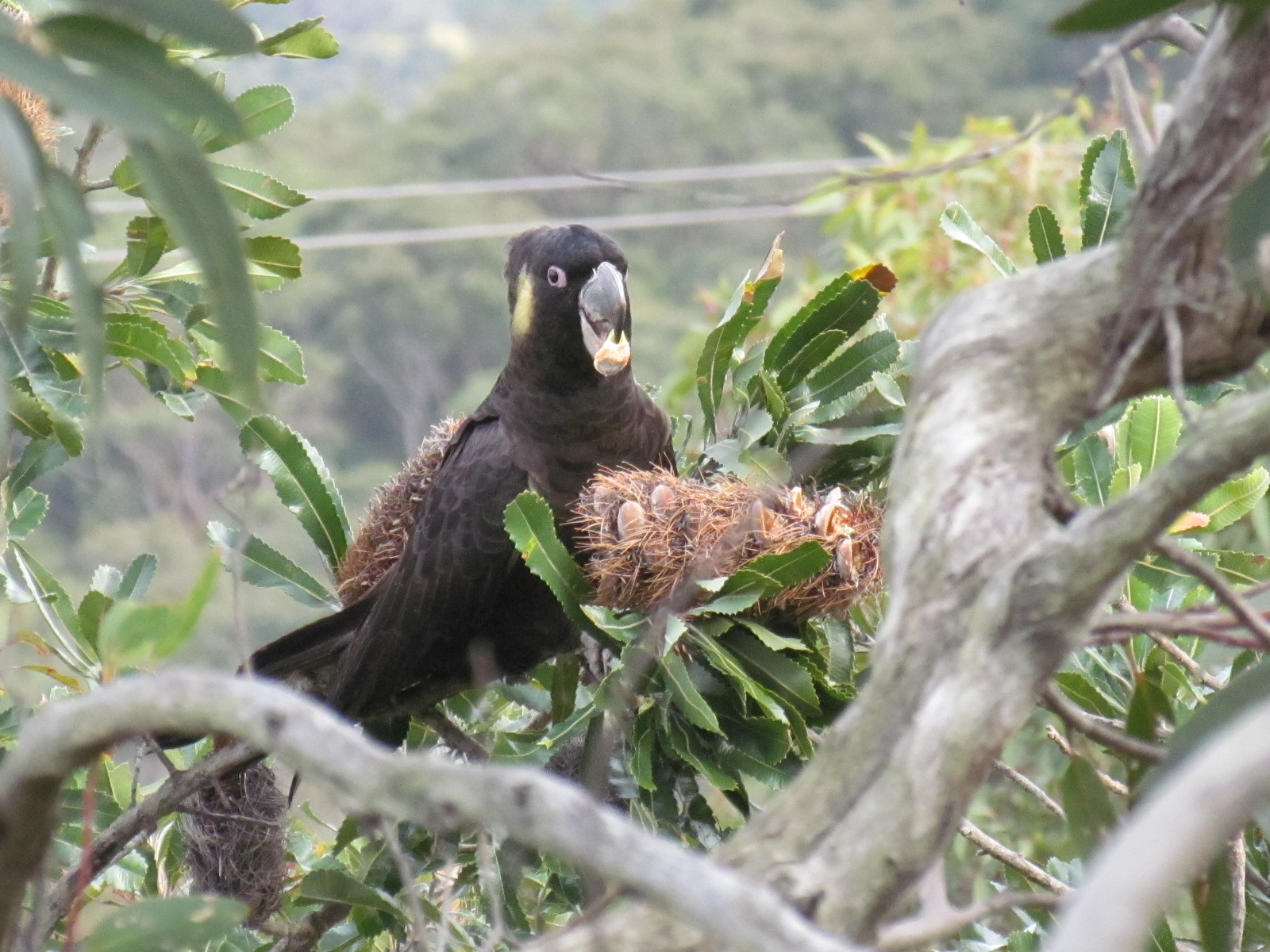
The banksias are in seed, and the black cockatoos are in town! Out strolling in the bush today, I came across a large group of these majestic birds. Their raucous squawks are typical cockatoo, but they add a wild, shrieking call that sounds more like a fish eagle, and a chitter chatter that’s all their own.
The first video shows a dead tree with plenty of interesting cavities and perches for a curious cockatoo. You can hear the wild calls as the birds take off and land.
In the next video, the birds chatter and call to each other as they clamber around the same dead tree. I hadn’t heard this type of chatter from black cockatoos before today.
What does a gum tree full of black cockatoos sound like? This is the same flock, high up in a gum tree.
Details of this sighting
Common name: Yellow-tailed Black Cockatoo
Scientific name: Calyptorhynchus funereus
Approximate length: 65 cm
Date spotted: 27 August 2016
Season: Late winter
Location: Manly Dam Reserve, New South Wales, Australia
Latitude/longitude: 33°46’50.7″S 151°14’53.7″E
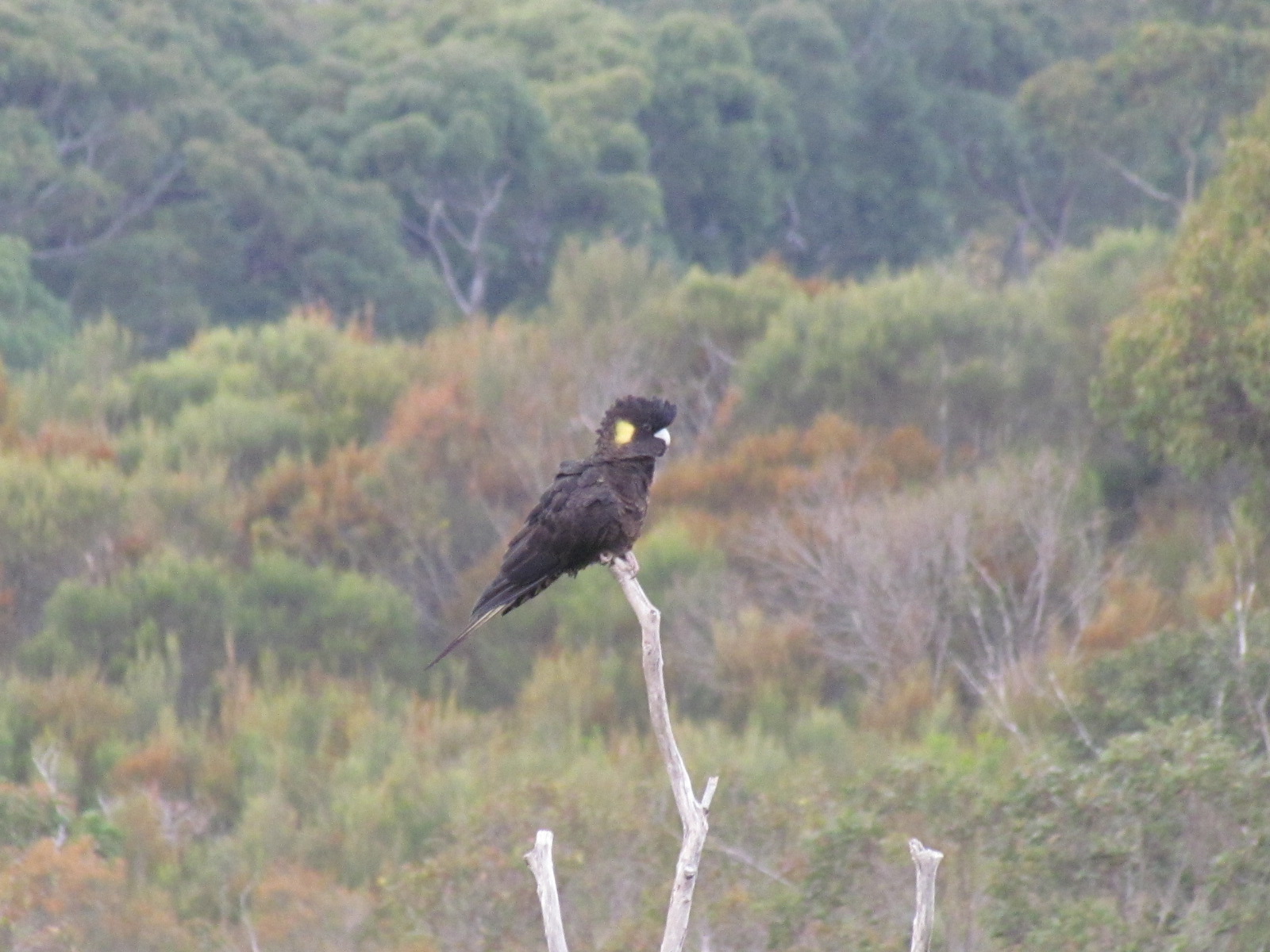
A few days earlier
The following video and photos show an encounter with a group of the birds a few days earlier (22 August) in a different area of the reserve (33°46’35.1″S 151°15’16.7″E).
Perched high above the bush:
A final cheeky look:
New Holland Honeyeater enjoying a foretaste of spring
New Holland Honeyeaters are attractive in their neat black and white stripes, with yellow flares on their wings and tail feathers. This one darts from flower to flower, enjoying a foretaste of spring in the closing weeks of winter.
Common name: New Holland Honeyeater
Scientific name: Phylidonyris novaehollandiae
Approximate length: 17-19 cm
Date spotted: 22 August 2016
Season: Late winter
Location: Manly Dam Reserve, New South Wales, Australia
Approximate latitude/longitude: -33.772336, 151.249022
Kookaburra pair swaying in the wind
Kookaburras have an endearing habit of swaying back and forth when sitting on a branch. Today a pair sat cosily together on a branch, chewing the breeze. It’s soothing to watch their synchronised swaying.
For a giggle, here’s a short extract from the above video showing my favourite bit:
Common name: Laughing Kookaburra
Scientific name: Dacelo novaeguineae
Approximate length: 47 cm
Date spotted: 23 August 2016
Season: Winter
Location: Allambie Heights, New South Wales, Australia
Latitude/longitude: 33°46’13.9″S 151°15’39.2″E
Juvenile Australian Magpie calling and investigating his surrounds
It took me a while to identify this youngster. My choice was a magpie (but magpies’ eyes are red), a butcher bird (but this little fellow’s white cap is too big), or a currawong (but there’s too much white on this youngster). Then I read that a juvenile magpie has dark eyes. That clinched it.
So, here’s a juvenile Australia Magpie, playfully investigating a hole in a tree and a stray bit of fluff. Every now and then, the bird ducks and eyes the skies fearfully, as if expecting a sudden attack from above. As anyone knows who’s ever watched Australian birds in action, that fear is completely justified.
At one stage in the video, the warbling call of adult magpies makes the little one perk up and fluff his feathers in expectation of a feed.
Common name: Australian Magpie
Scientific name: Gymnorhina tibicen
Approximate length: 37 cm
Date spotted: 6 August 2016
Season: Winter
Location: Manly Dam Reserve, New South Wales, Australia
Latitude/longitude: 33°46’58.6″S 151°15’18.9″E


 Sydney Birder