Blog Archives
Olive-backed Oriole chirruping and looking for bugs
It was the unusual chirruping that made me look up into the trees and see this Olive-backed Oriole. At first I thought it was a Wattle Bird, but the sound it made was unusual. So I snapped a few shots and took them home to examine them on the big screen.
In the video, you can hear the sound the bird makes:
This is the first view I had of the bird. Very well camouflaged!

Here the bird looks with gimlet eye at a termite nest (out of shot above its head) no doubt hoping for some food to wander by.

This is a general picture of the trees in the area – the bird’s habitat:

Common name: Olive-backed Oriole
Scientific name: Oriolus sagittatus
Approximate length: 25-28 cm
Date spotted: 8 April 2018 (Autumn)
Location: Manly Dam National Park, New South Wales, Australia: 33°46’25.6″S 151°14’56.8″E
Sharing a treetop shower with King Parrots
This was one of those magical moments that happen when you walk in the Aussie bush. I was strolling along under the canopy of tall gum trees…
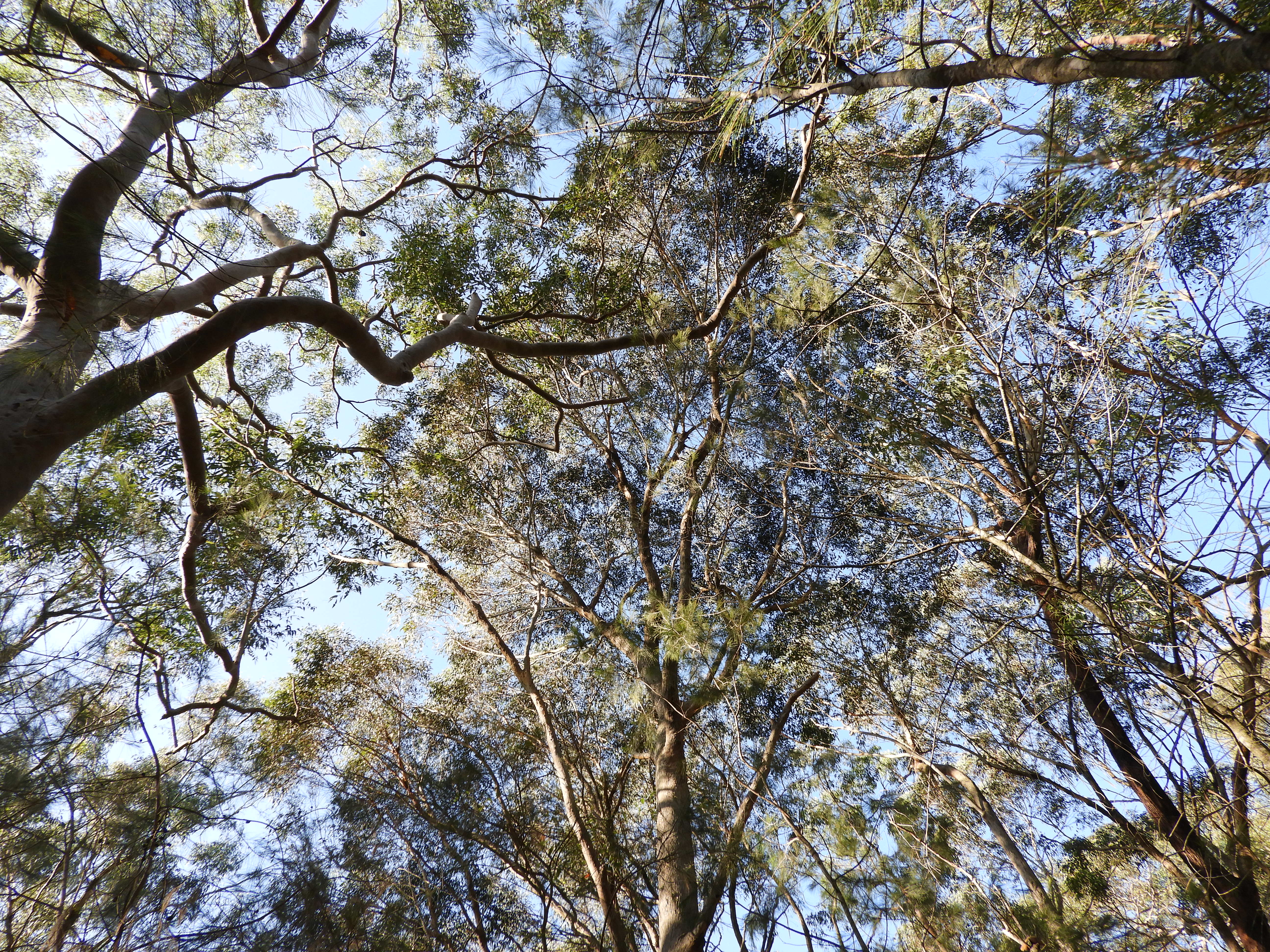
… when I heard a swooshing and clattering of wings. I looked up, just in time to receive a spattering of large droplets on my face.
Oops, I thought, some bird had a little accident.
But then it happened again. And I saw this face looking down from high in a leafy cluster:

Looking around, I saw four or five other birds – all Australian King Parrots.
(The birds were very high up indeed. My camera’s zoom has done a good job, though some of the images are a little fuzzy.)

They were swooping through the wet clusters of leaves at the top of the trees, then coming to rest for a good grooming session.

And I was lucky enough to share the resulting shower of droplets!
Here’s a female King Parrot. It’s interesting how short her tail is in comparison with the male birds. It’s perhaps a trick of perspective:
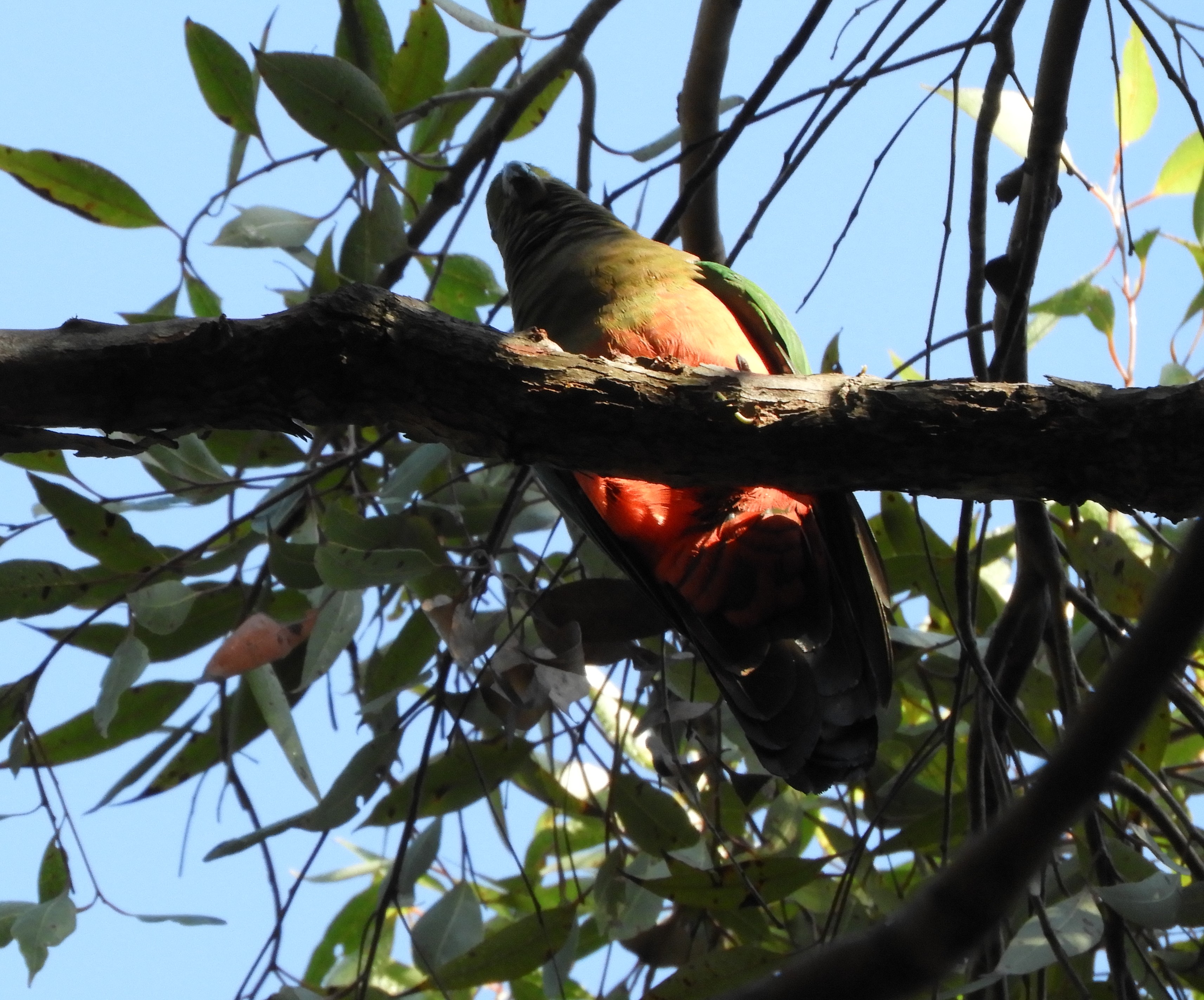
Common name: Australian King Parrot
Scientific name: Alisterus scapularis
Approximate length: 44 cm
Date spotted: 1 April 2018 (Autumn)
Location: Manly Dam National Park, New South Wales, Australia: 33°46’51.3″S 151°14’52.3″E
Call of the whipbird
The birds in Australia make strange noises, and the call of the Eastern Whipbird is one of the strangest.
A sound bite:
Common name: Eastern Whipbird
Scientific name: Psophodes olivaceus
Approximate length: 30 cm
Date spotted: 10 March 2018 (Early autumn)
Location: Manly Dam National Reserve, New South Wales, Australia: 33°46’36.5″S 151°15’16.0″E
Australian Miner auditions for The Birds and Psycho
This little Australian Miner landed on a branch near me and started that incessant eep-eep noise that they’re renowned for. It’s as if the bird is auditioning to do the soundtracks for two Hitchcock movies at once: The Birds and Psycho.
Well? Do I get the job?

How about if I spin my head around. You know, like in The Exorcist?

No? OK then, on to the next audition…

Common name: Noisy Miner, also called Australian Miner
Scientific name: Manorina melanocephala
Approximate length: 26 cm
Date spotted: 3 March 2018 (Summer)
Approximate location: Allambie Heights, NSW, Australia: 33°46’23.3″S 151°15’43.1″E
Call of the Glossy Black-Cockatoo
Today I spotted a group of Glossy Black-Cockatoos, and I recorded a video so you can hear them chatting to each other. For two consecutive weeks I’ve seen a group of these birds at Manly Dam Reserve. I guess they’re the same birds each time, though on opposite sides of the dam. According to my bird book, this bird is reasonably uncommon, perhaps declining in number.
It’s a short video. As I was recording it, a bush ranger drove up and startled the birds. They flew off and came towards me, which gives you a good view of the orange-red flashes in their tails.
Last week’s post has still pictures of a Glossy Black-Cockatoo, probably from the same group.
Common name: Glossy Black-Cockatoo
Scientific name: Calyptorhynchus lathami
Approximate length: 50cm
Date spotted: 3 March 2018 (Summer)
Location: Manly Dam National Reserve, near Sydney: 33°46’49.2″S 151°15’04.1″E
Glossy Black-Cockatoo spotted near Sydney
Quite exciting! According to my bird book, this bird is reasonably uncommon, perhaps declining. It’s a Glossy Black-Cockatoo, and I saw three of them for the first time ever this morning.
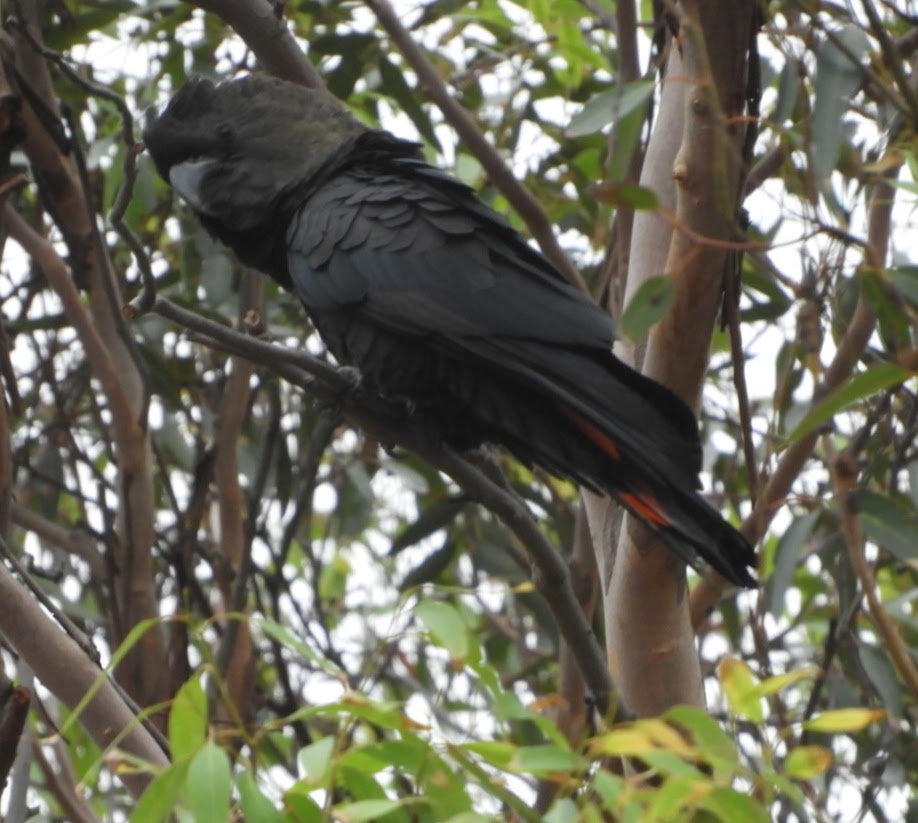
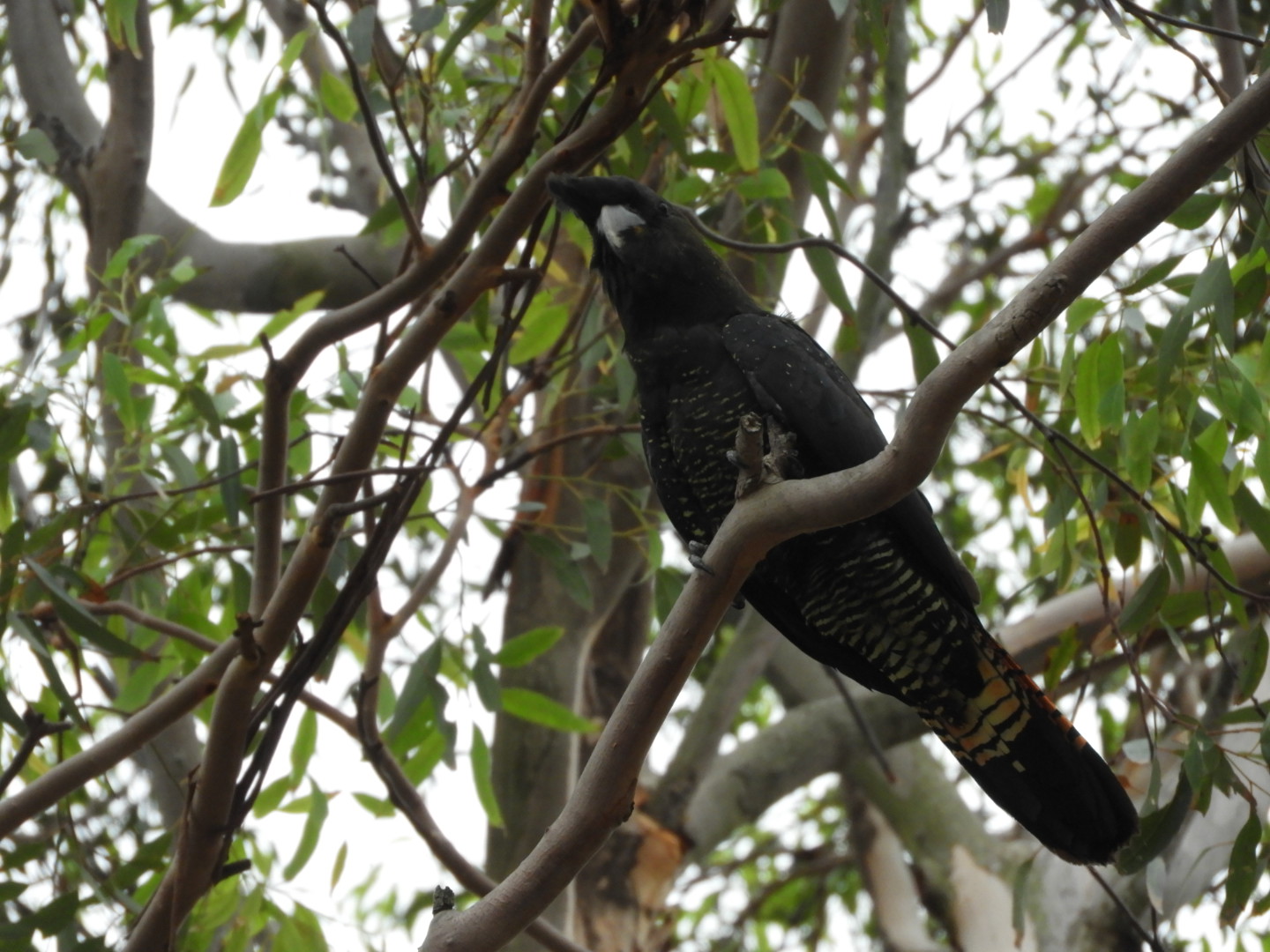
The raised crest gives the bird a typical look of parrot curiosity:
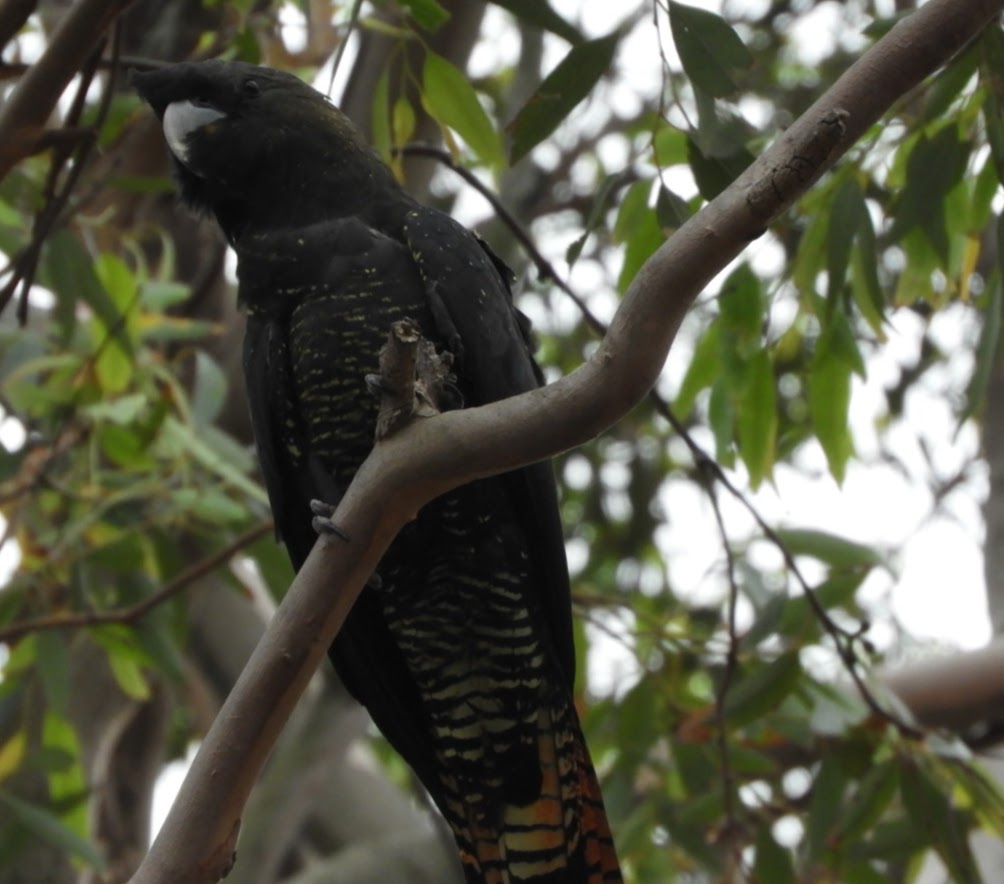
In this photo, the bird did a bit of grooming and showed the orange-red flares in its tail feathers:
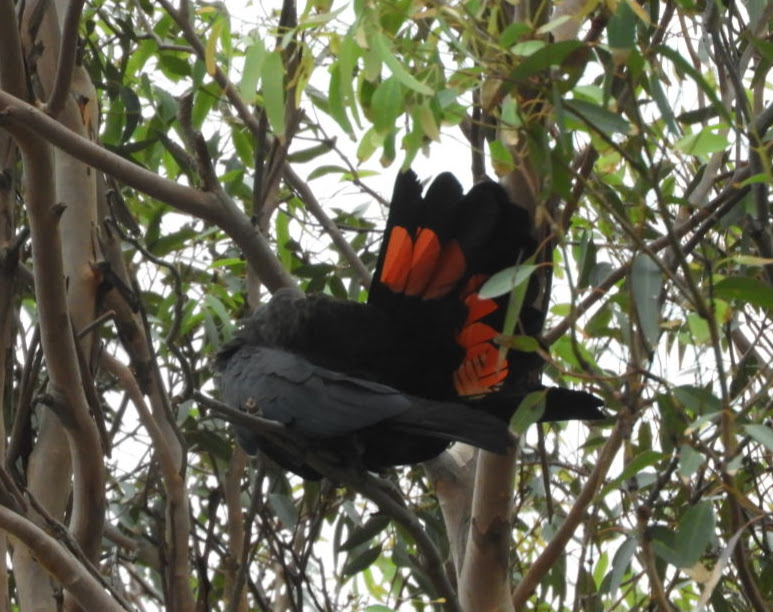
In our area we see a lot of the white sulphur-crested cockatoos. Occasionally the yellow-tailed black cockatoos pay us a visit, when their favourite trees are in flower. I’ve never before seen any of these glossy black cockatoos.
From underneath, the tail feathers look entirely yellow, white, and black:
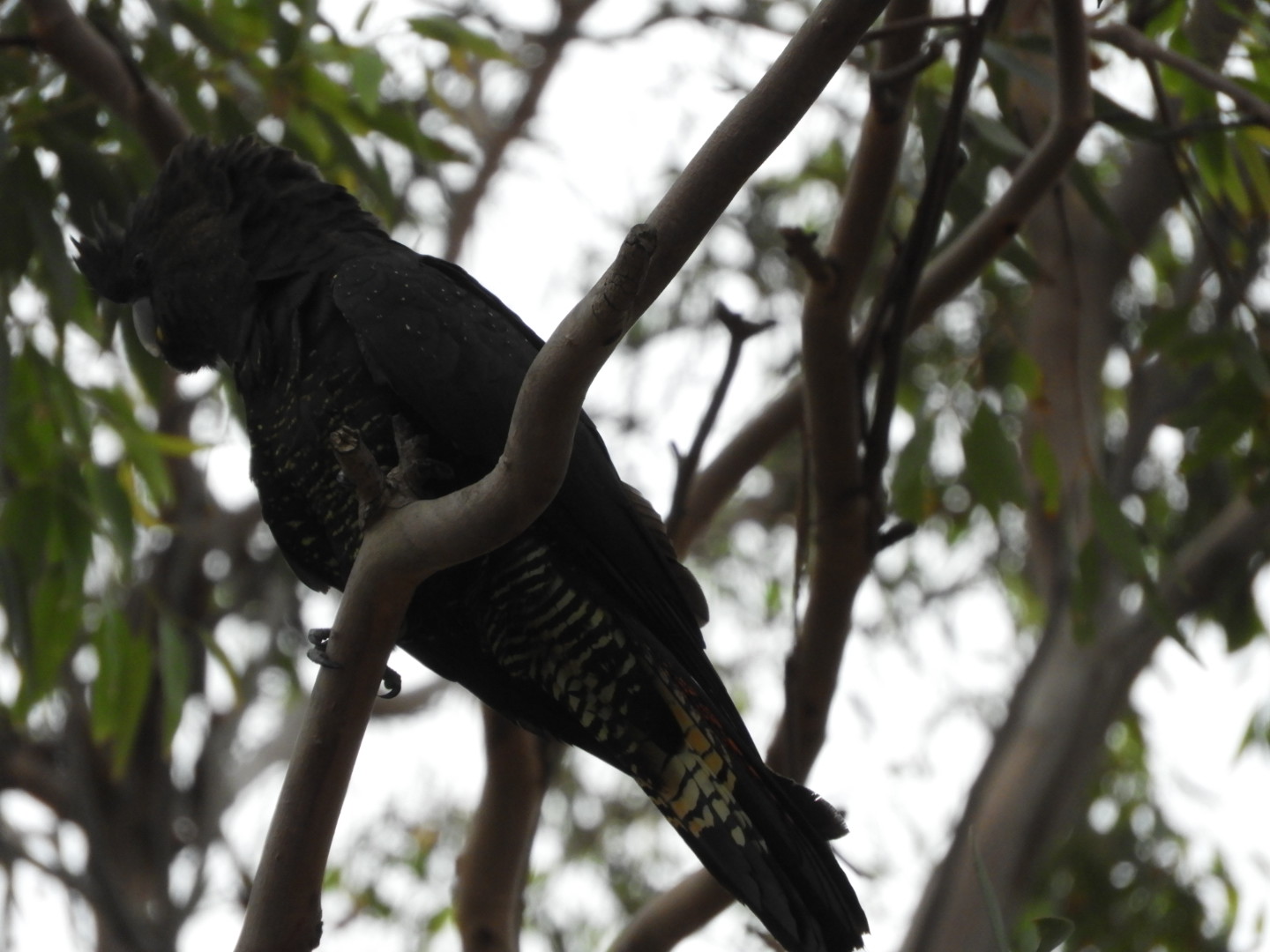
In the photo below, you can see more of the orange in the tail, and the small crest on the bird’s head:
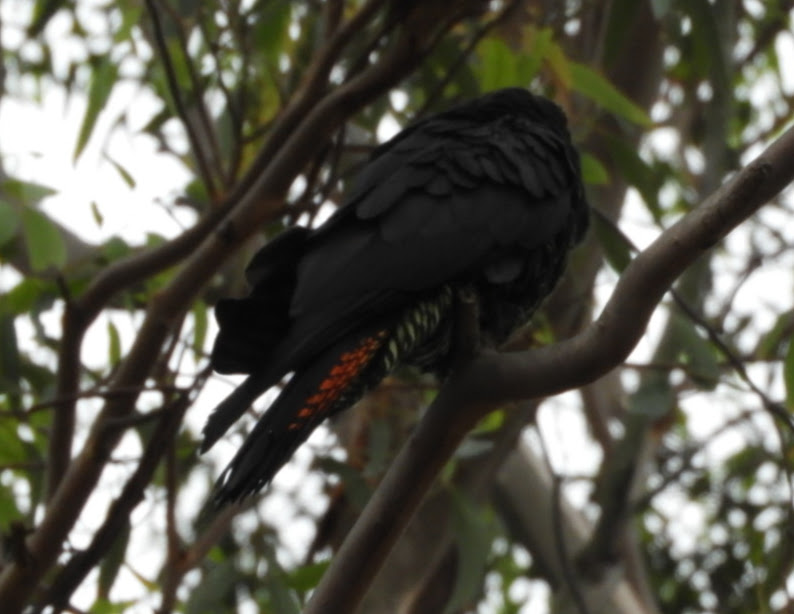
From the rear, the orange is more visible:
Another frontal view:
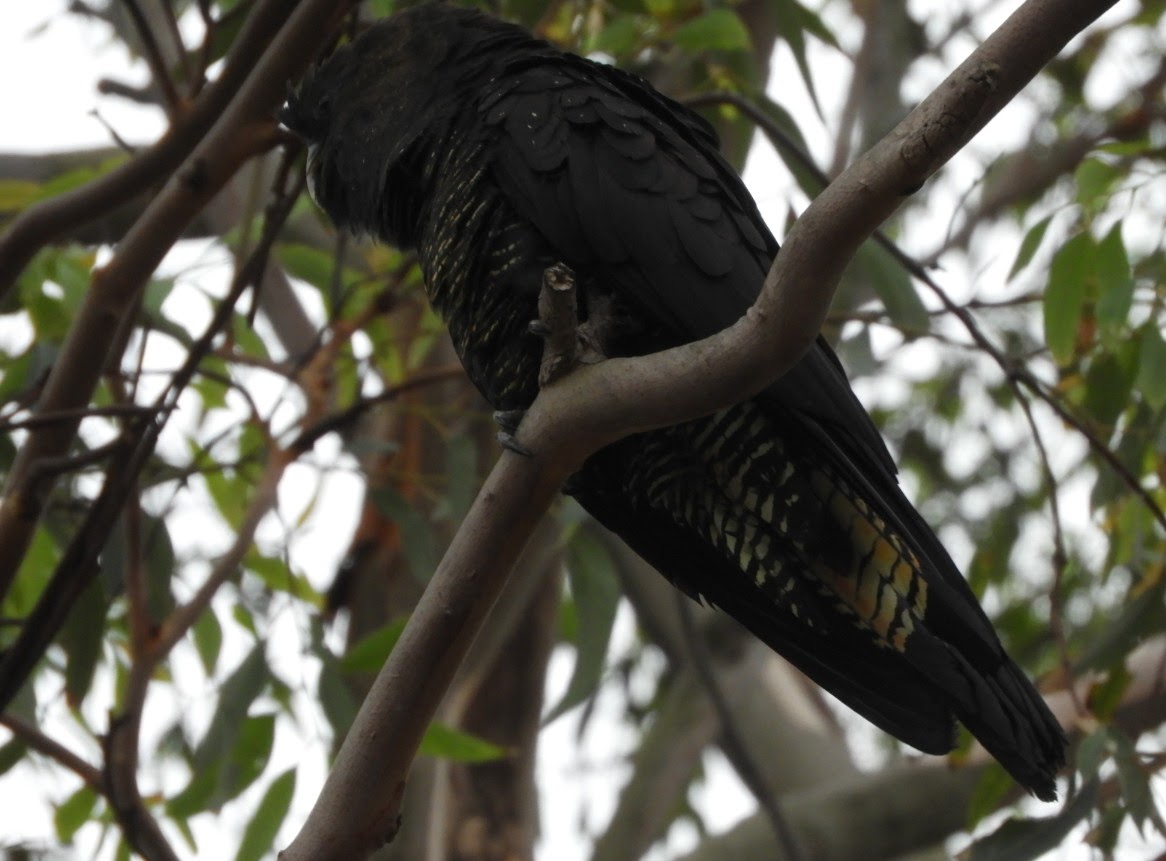
Common name: Glossy Black-Cockatoo
Scientific name: Calyptorhynchus lathami
Approximate length: 50cm
Date spotted: 25 February 2018 (Summer)
Location: Manly Dam National Reserve, near Sydney: 33°46’36.5″S 151°15’18.2″E
Red-browed finch on Casuarina tree
A few of these pretty little red-browed finches were feeding on a tree as I passed this morning. This one sat still long enough for me to snap a picture. I think the tree is a Casuarina, also known as a swamp she-oak.
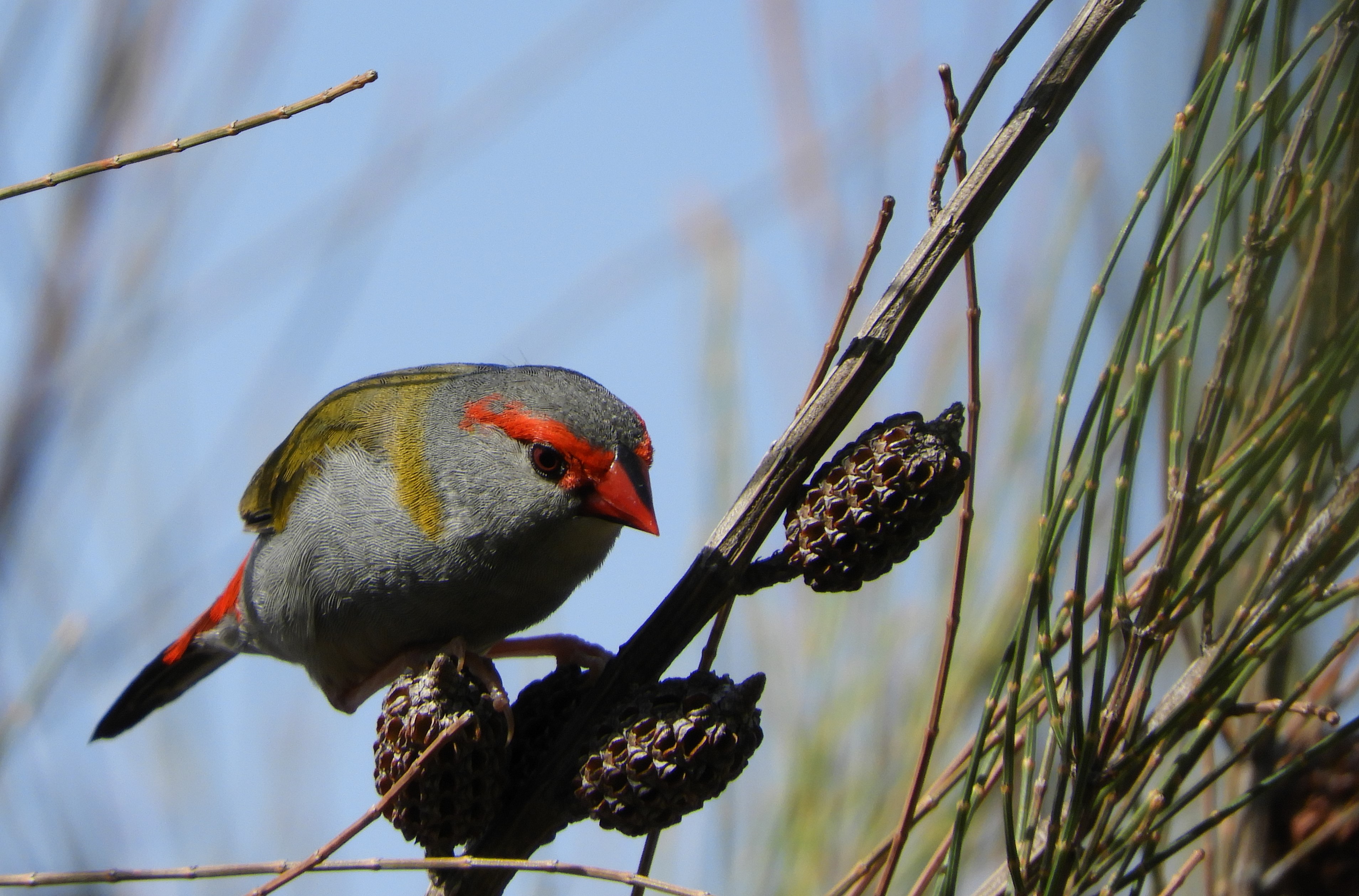
Common name: Red-browed Finch
Scientific name: Neochmia temporalis
Approximate length: 12 cm
Date spotted: 4 February 2018 (Summer)
Location: Manly Dam National Reserve, near Sydney: 33°46’36.6″S 151°15’16.4″E
Red Wattlebird nest may be in peril
My previous post introduced the nest that a pair of Red Wattlebirds have built in a tree fern in my garden. Things are looking a little perilous for the nest. The tree fern has put in a growth spurt, its new fronds lifting parts of the nest into an untidy jumble.
This is what the nest looked like yesterday. Notice the new, brown fern fronds unfurling in the midst of the grey matter that forms the birds’ nest:
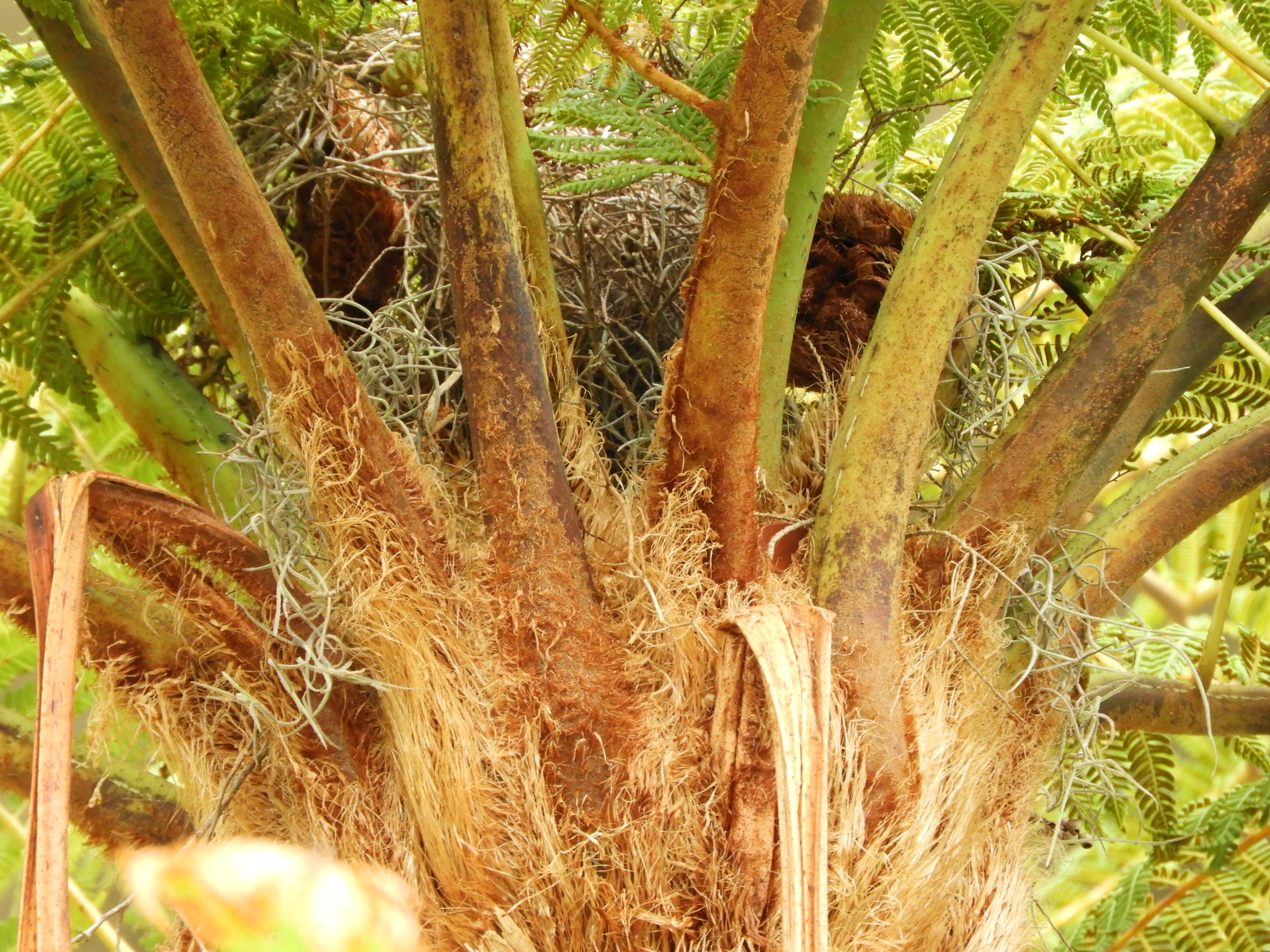
Compare that with the photo I took a week earlier, on 22 December, as shown in my previous post:

The parents still seem attentive. I’ve seen them flit in and out of the nest. Here’s one of them grabbing nourishment yesterday, from the nearby Banksia that seems to be their principle source of nourishment while nesting. The ghastly noise in the background is the cicados, who are out in full force this summer:
Birds are quite handy with their beaks and feet. I hope they manage to push the nest and eggs into a safe place as the fern tree grows.
Common name: Red Wattlebird
Scientific name: Anthochaera carunculata
Approximate length: 35 cm
Date spotted: 29 December 2017 (Summer)
Location: Allambie Heights, near Sydney, Australia
Red Wattlebird nesting in a tree fern
Red Wattlebirds are the second largest honeyeaters in Australia. They’re noisy, aggressive, and sleekly pretty. And now we have a couple nesting in our garden.
I’d noticed recently that a Red Wattlebird was more aggressive than usual. It started swooping at me when I was hanging up washing. At the best of times, hanging the washing is a precarious activity in my backyard. It involves a bit of rock climbing and a skilled balancing act. Add a fierce bird, and things get interesting.
A few days later, I noticed the bird land on a high branch, take a careful look around while trying to appear nonchalant, then duck quickly into the top cover of a tree fern. Interesting. So I got out my zoom lens to take a look.
The nest is in the right-most tree fern in this photo. I’ve put up my washing line on the left, for local colour:

(In case you’re wondering: the house up above belongs to the neighbours. Mine is below, not in the picture)
A closer view of the tree fern:

Even closer, you can see the nest with a bird’s tail pointing out to the right:

Occasionally the parents leave the nest unattended. I haven’t spotted any movement, so I think the eggs haven’t hatched yet:
The birds have picked up some of the Spanish Moss from our garden, and used it to decorate the nest. This is our supply, handily positioned just a few metres from the tree fern:

Sitting on a nest is demanding work. One of the parents emerged for a good stretch:

And a bit of grooming:

Then dived down to sip some nectar from a Banksia tree, which we’ve also positioned just a handy few metres from the fern tree. In this picture you can see the two red wattles below the beak that give the bird its name:
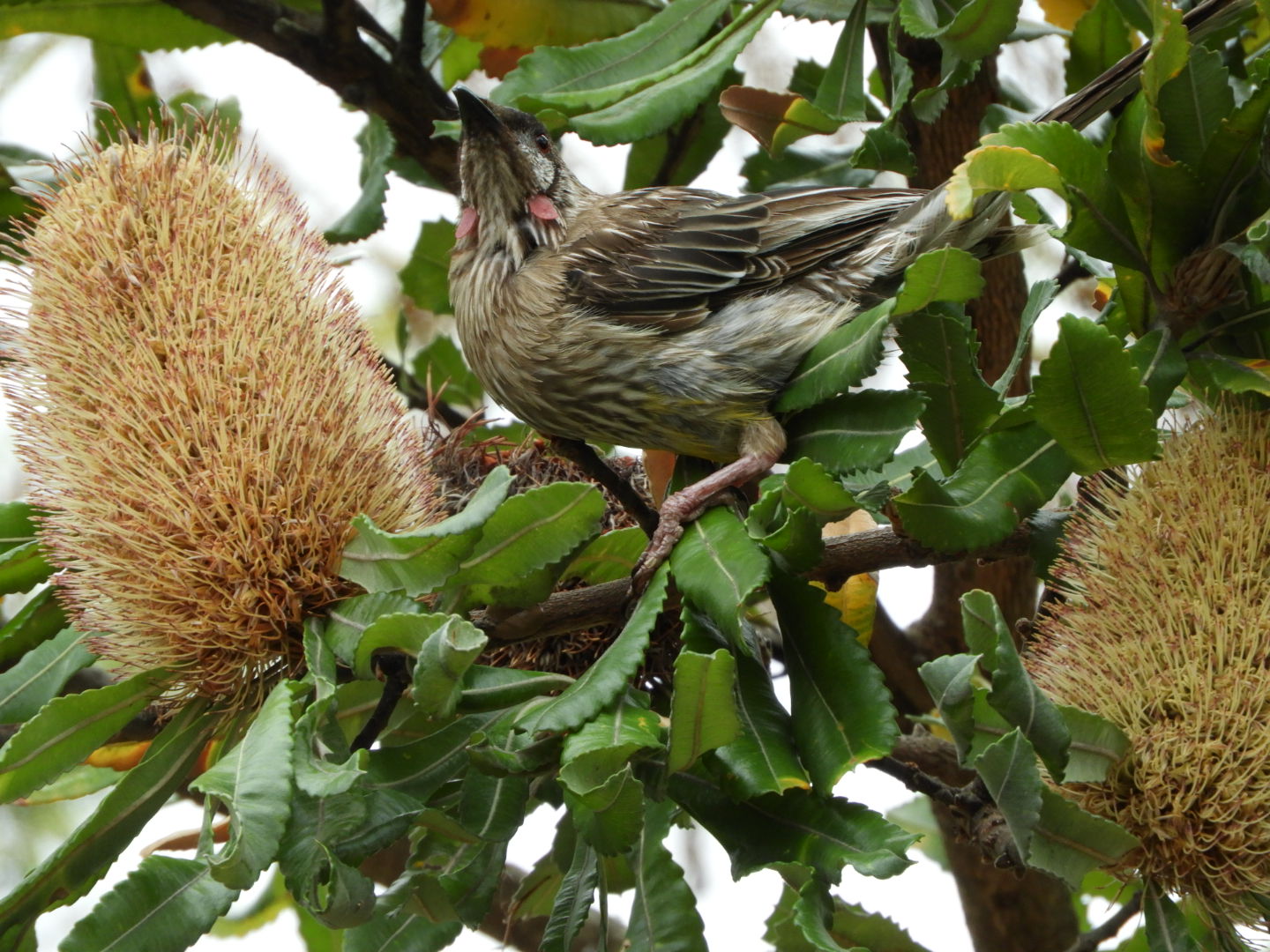
Here’s a picture of one of the local Red Wattlebirds on a nearby tree a few days earlier. It’s likely to be one of the nesting birds, though I don’t know for sure:

Common name: Red Wattlebird
Scientific name: Anthochaera carunculata
Approximate length: 35 cm
Date spotted: 22 December 2017 (Summer)
Location: Allambie Heights, near Sydney, Australia
Eastern Yellow Robin near Sydney
A quick glimpse of an Eastern Yellow Robin from my walk today. The bird was in a dry creek, in Manly Dam National Park near Sydney. Eastern Yellow Robins are quite a common sight. I’ve seen them frequently in this particular spot, though it’s rare for one to sit still long enough for a decent photograph.

This short video shows the short shrift that the robin gives a worm, You can also hear the sounds of the other birds in the bush around the robin:
Common name: Eastern Yellow Robin
Scientific name: Eopsaltria australis
Approximate length: 15 cm
Date spotted: 8 October 2017 (Spring)
Location: Manly Dam National Reserve, near Sydney: 33°46’24.3″S 151°15’05.5″E


 Sydney Birder