Blog Archives
Little Corella and Sulphur-crested Cockatoo
Yesterday I came across a large group of Little Corellas on the sidewalk. In the midst of them was a Sulphur-crested Cockatoo. It was interesting to see the two birds up close, because from afar they look very similar. This video shows an interaction between the cockatoo and one of the corellas. You can also hear the corellas chatting to each other constantly.
These two corellas were cuddling up:
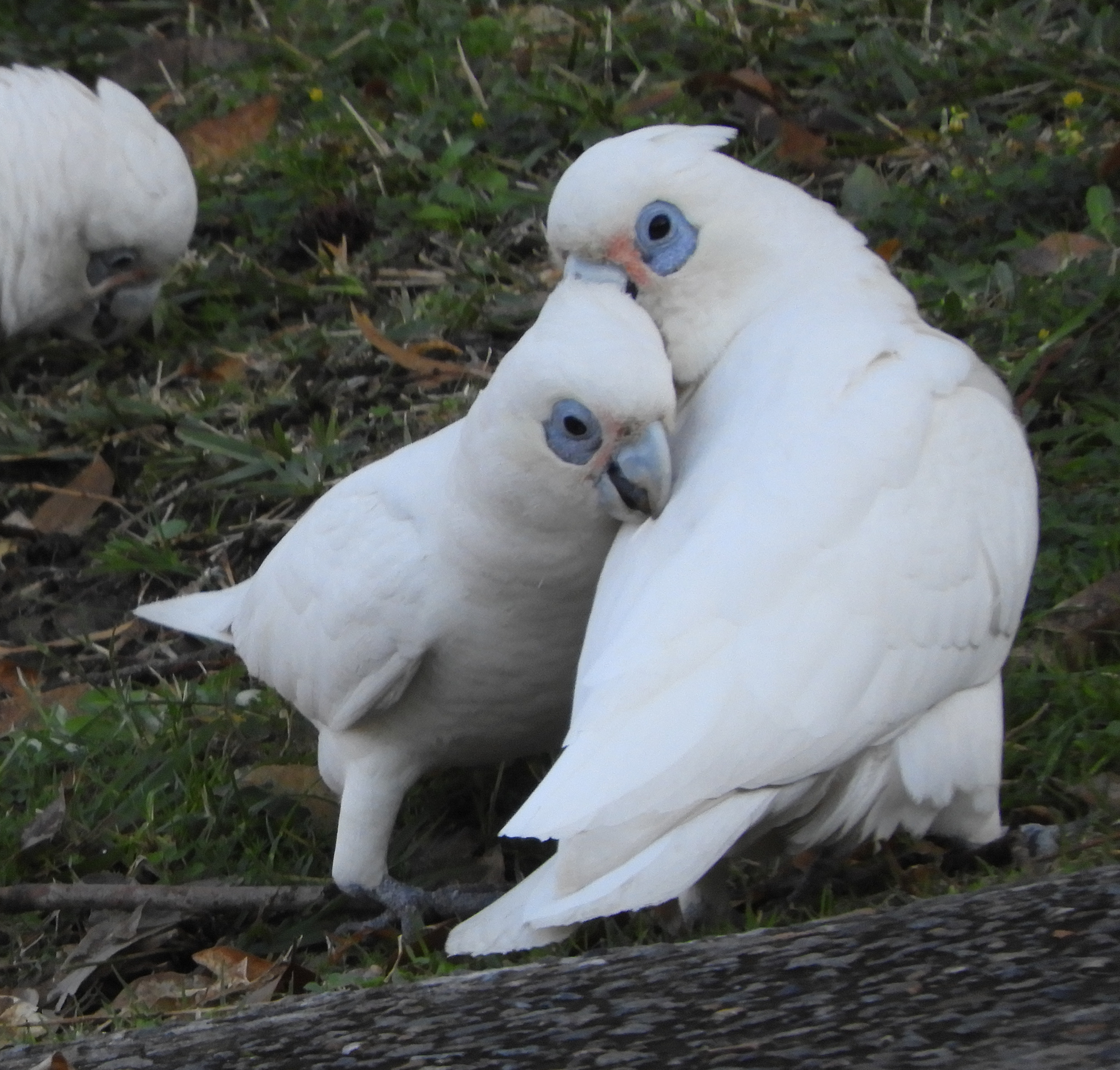
The crest of a Little Corella is white, and smaller than that of a Sulphur-crested Cockatoo:

Little Corellas have blue-grey feet, a blue patch of skin around the eye, and a pinkish patch of feathers between the eye and beak. The birds’ overall colouring makes them look rather cadaverous!
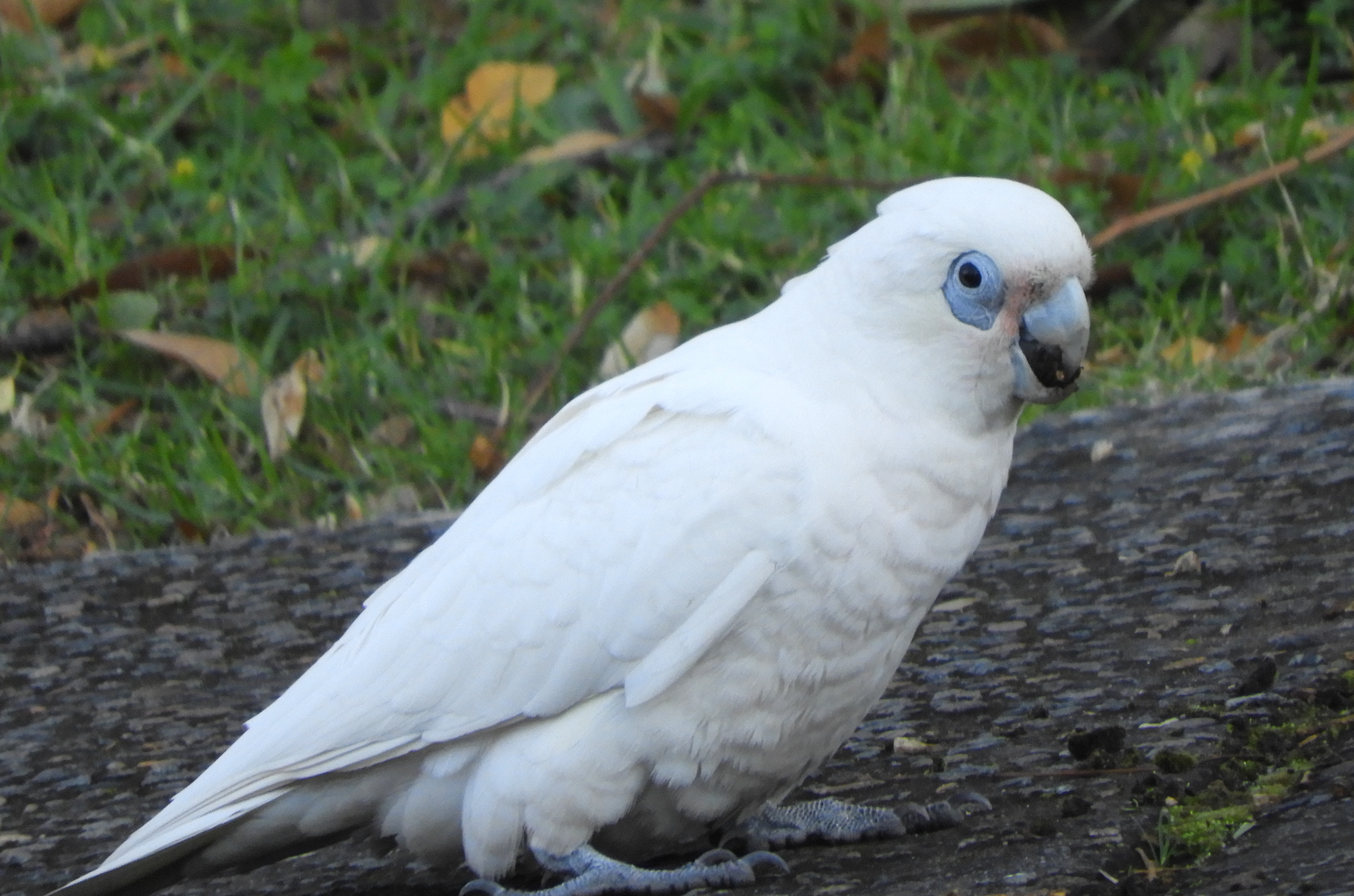
Common name: Little Corella
Scientific name: Cacatua sanguinea
Approximate length: 36-39 cm
Date spotted: 23 May 2020 (autumn)
Location: Allambie Heights near Sydney, Australia
Yellow-tailed Black Cockatoos in the garden
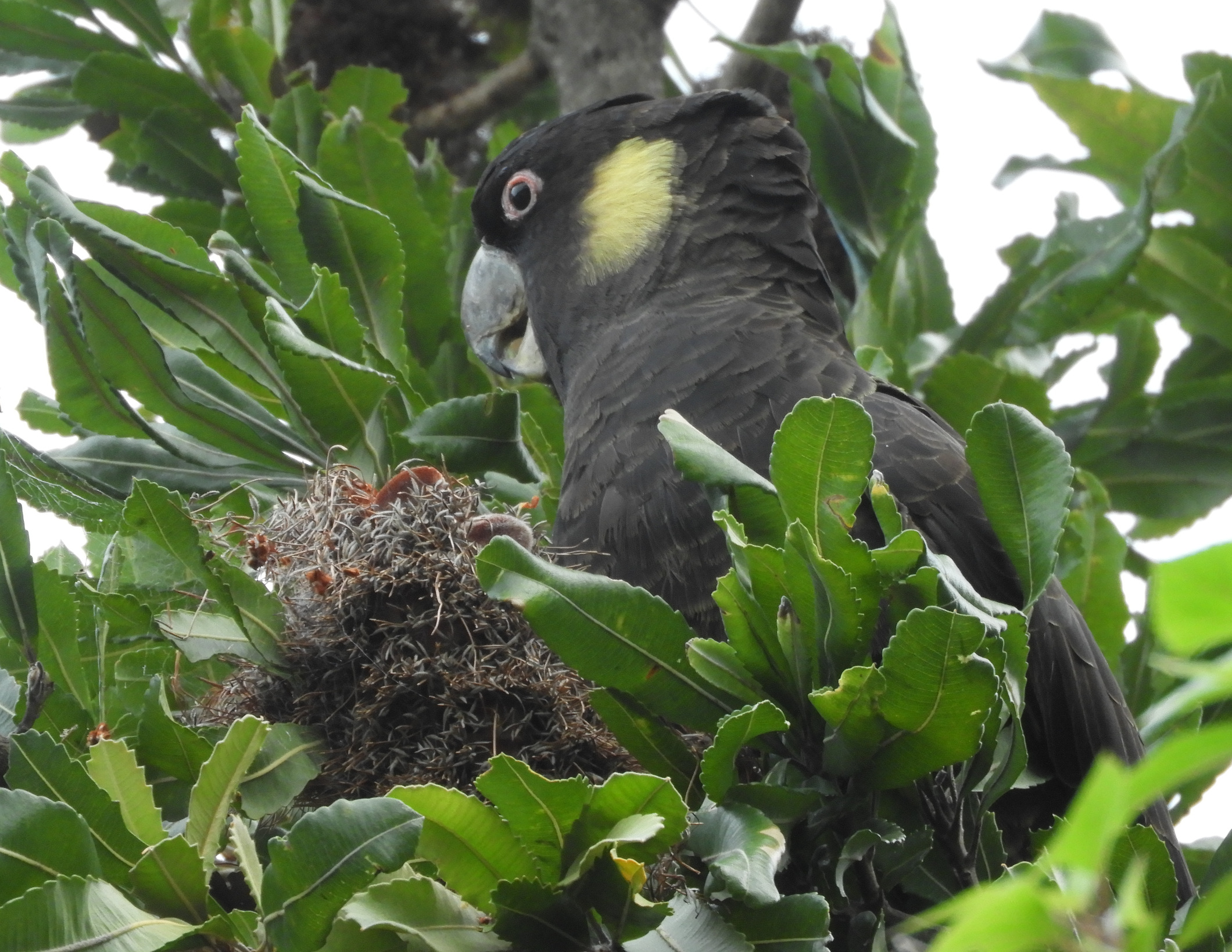
Three Yellow-tailed Black Cockatoos dropped in this afternoon. They chatted to each other with their weird squealing call, while demolishing parts of our Old Man Banksia bush.
Here’s one of the birds. The pink ring around the eye identifies it as a male:
In this short video, you can hear them chatting to each other:
It’s lovely to have these big, gracious birds paying us a call.
Common name: Yellow-tailed Black Cockatoo
Scientific name: Calyptorhynchus funereus
Approximate length: 65 cm
Date spotted: 20 May 2020 (autumn)
Location: Allambie Heights, NSW, Australia
Yellow robin in shades of blue
A yellow-breasted robin contemplated a piece of blue plastic:
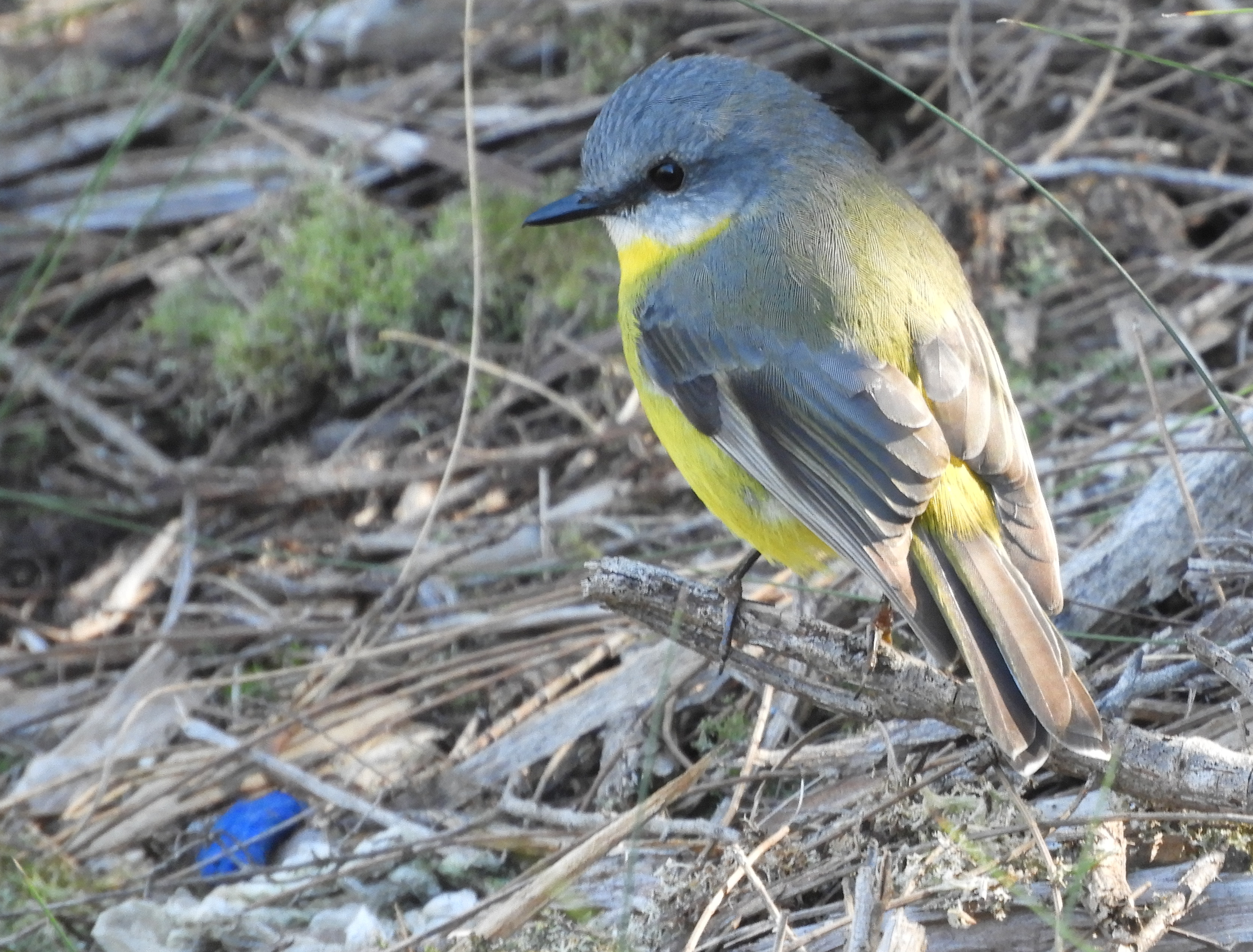
The bird then hopped onto an artistically faded green fence. The muted autumn light added shades of blue to its plumage:
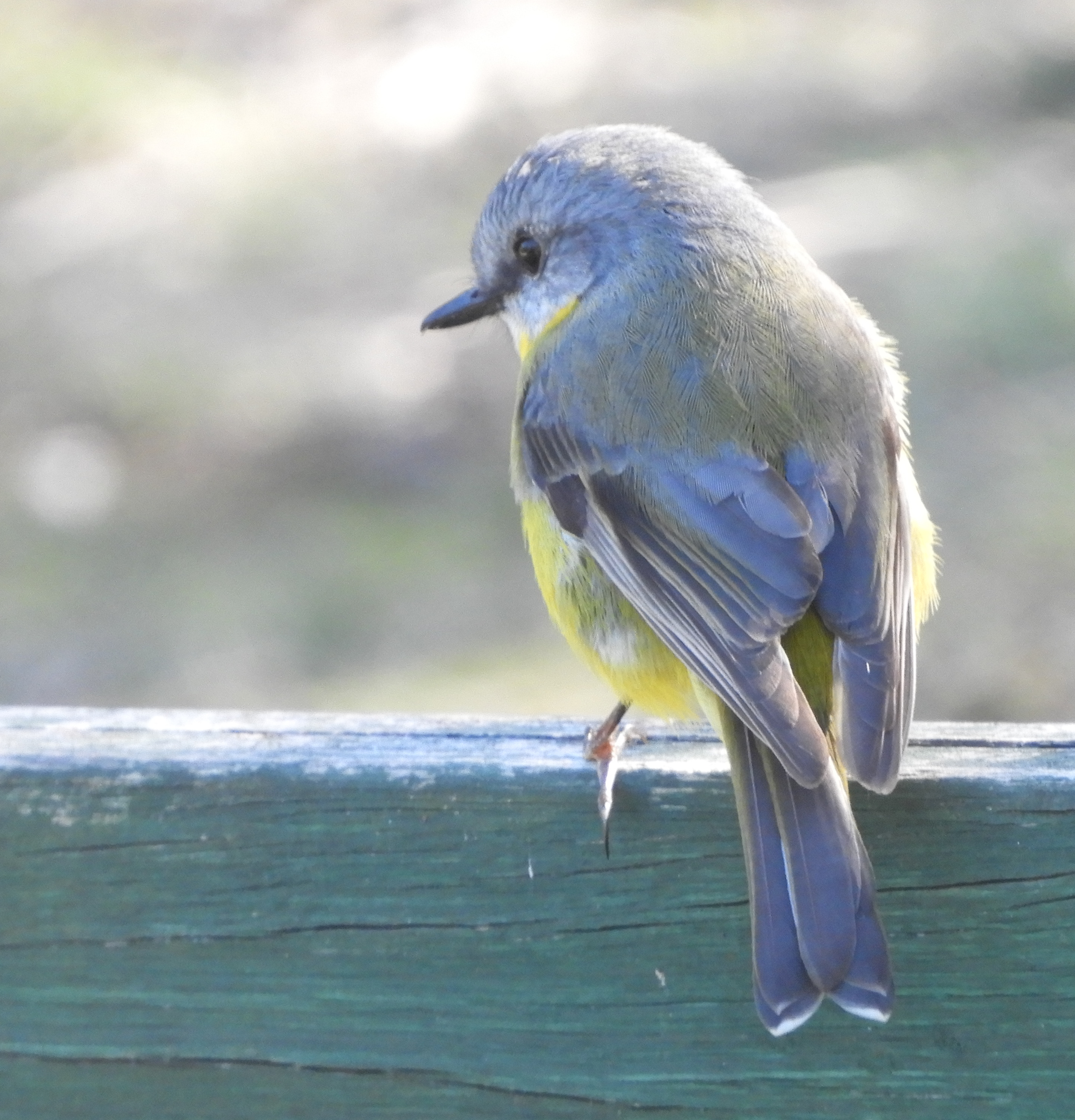
Common name: Eastern Yellow Robin
Scientific name: Eopsaltria australis
Approximate length: 15 cm
Date spotted: 12 May 2020 (autumn)
Location: Manly Dam National Park, New South Wales, Australia: 33°46’36.7″S 151°15’16.6″E
Grey Butcherbird on blue sky
A Grey Butcherbird posed on a dead tree branch against an autumn-clear sky:
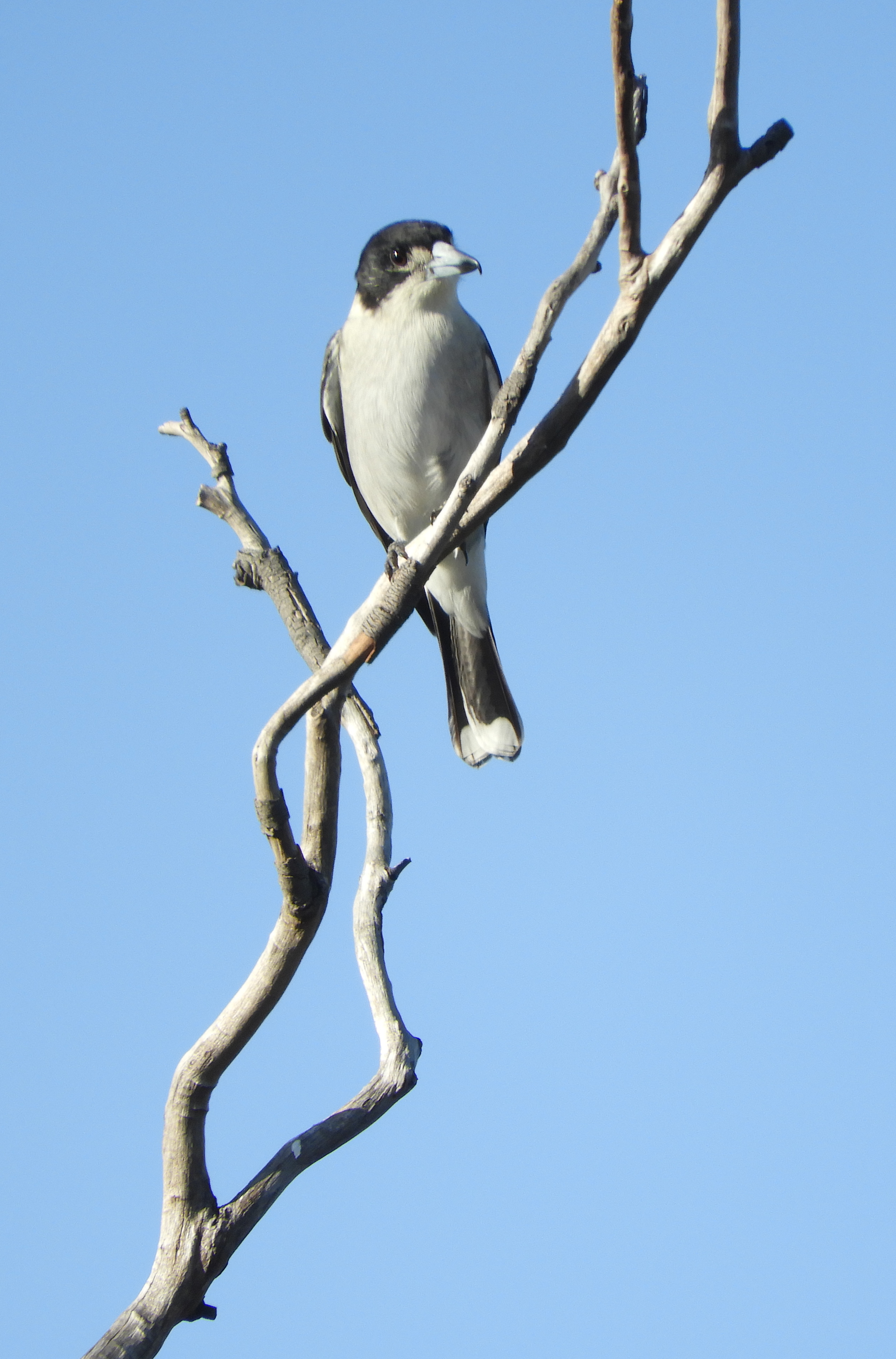
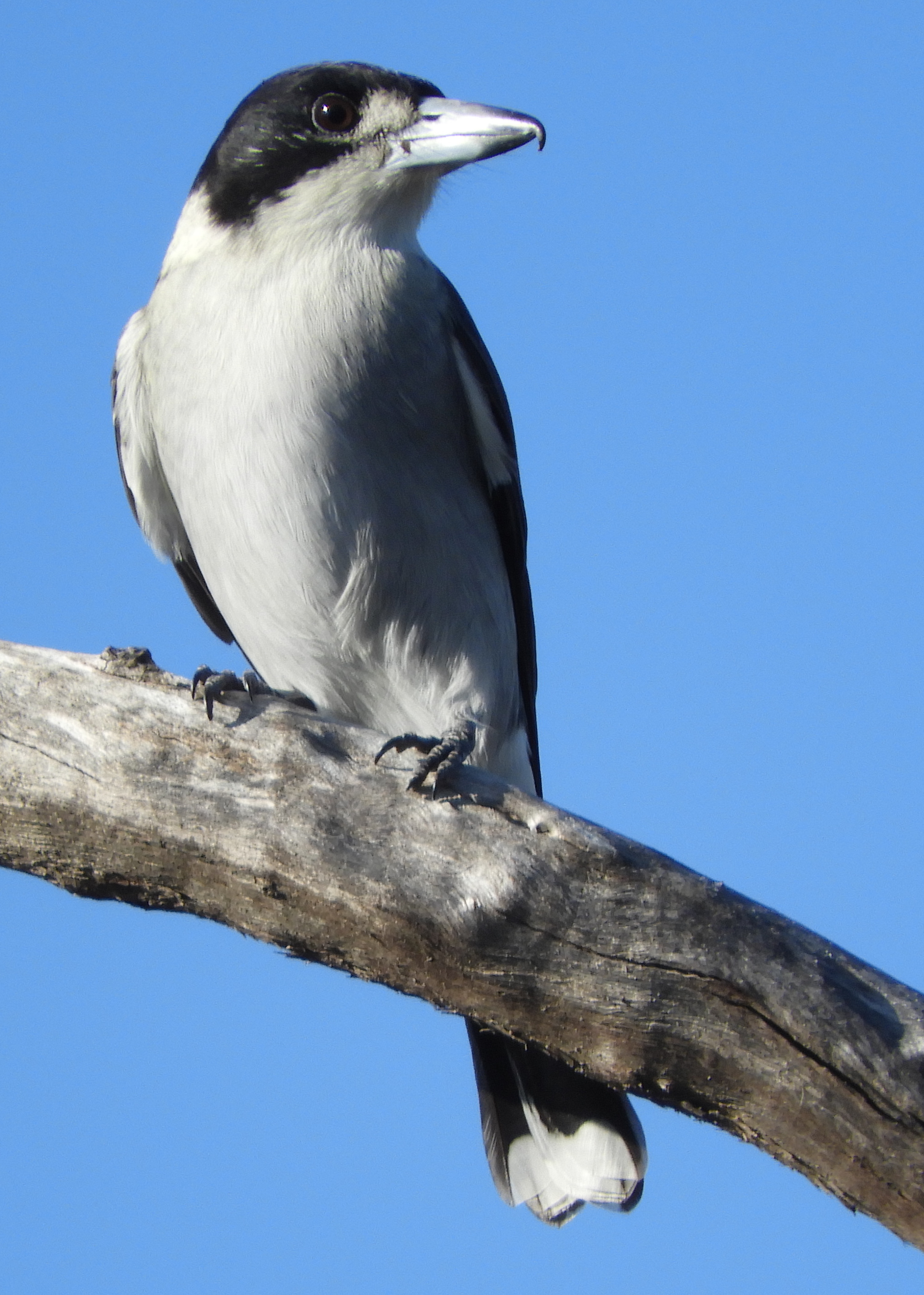
Butcherbirds are one of the types of black-and-white birds that frequent our area. They’re smaller than magpies and currawongs. When you manage to get a close-up view of a butcherbird’s beak, you notice the hook on the end. Magpies and currawongs have straight beaks without a hook:
Butcherbirds eat lizards, mice, small birds, insects, and other small creatures. The next photo shows the bird spotting some small creature in the scrub below. After I captured this shot, the bird swooped down then returned to its perch without its prey.
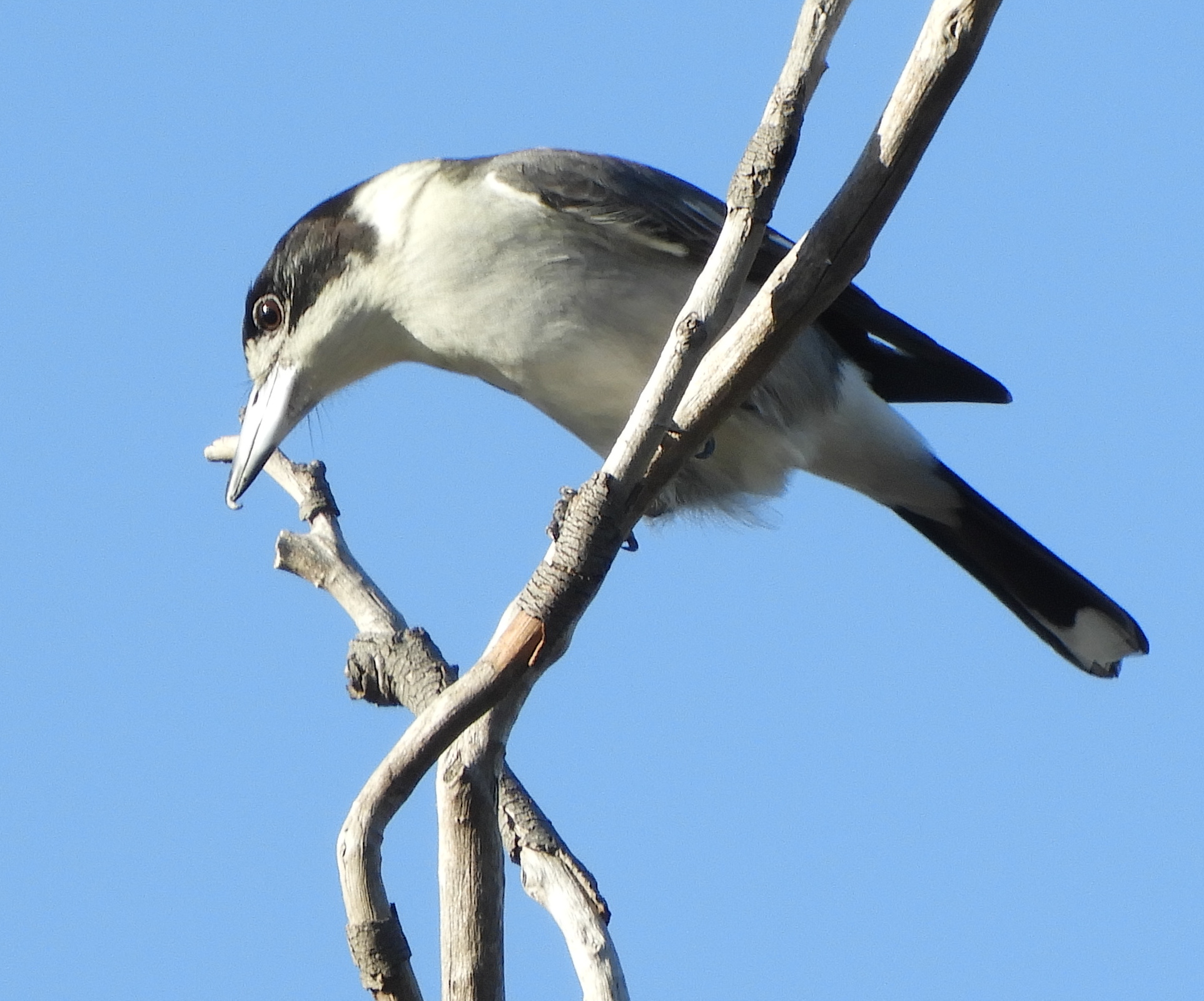
Common name: Grey Butcherbird
Scientific name: Cracticus torquatus
Approximate length: 30 cm
Date spotted: 8 May 2020 (autumn)
Location: Manly Dam National Park, New South Wales, Australia: 33°46’33.1″S 151°14’47.9″E
Willie Wagtail
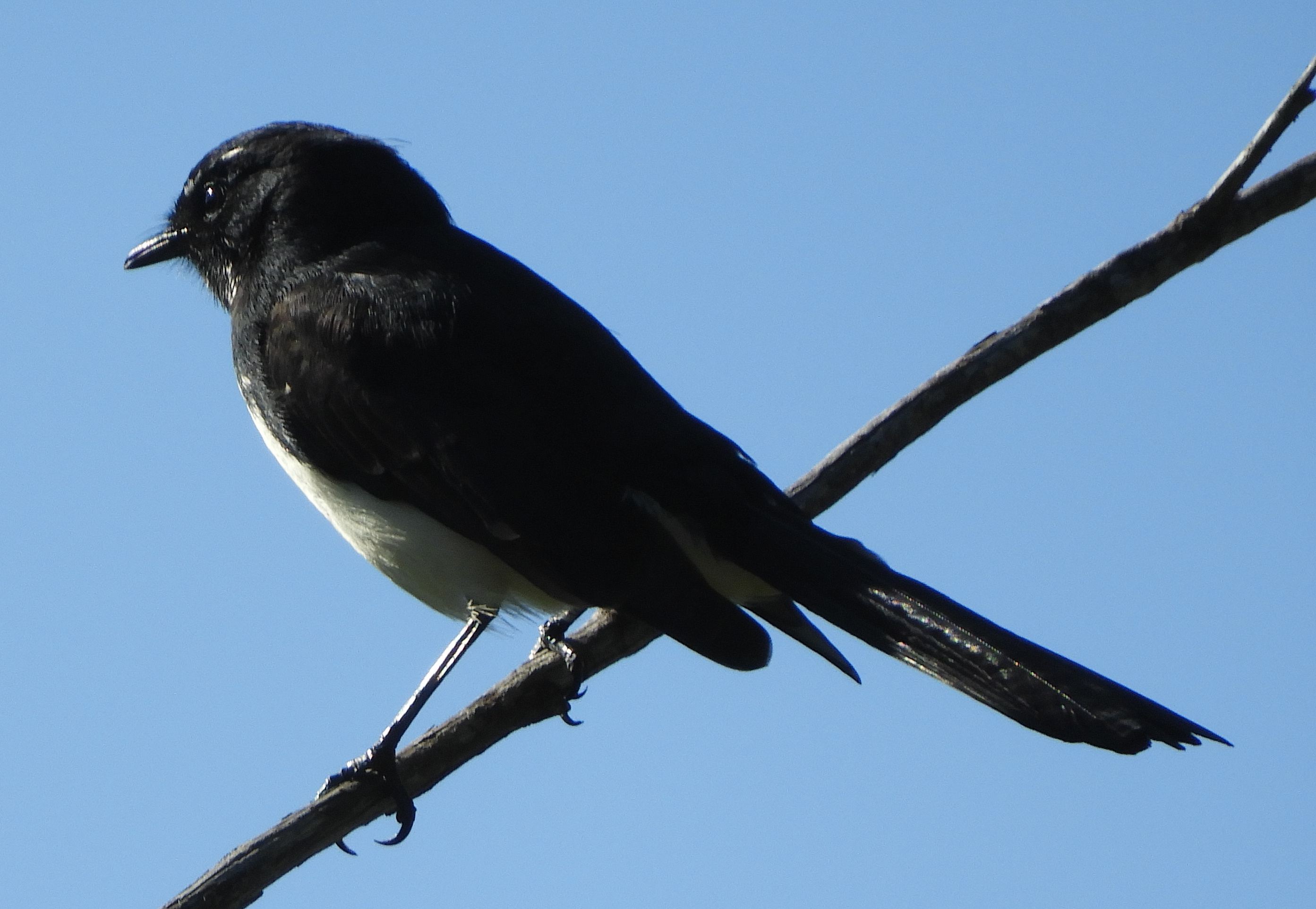
Each time I walk around a particular area of the Manly Dam national park, there’s a little Willie Wagtail darting from branch to branch. I don’t know if it’s the same bird each time. It’s cute and cheeky. In this shot, I caught the bird in a rare contemplative mood:
In a previous post, I published a couple of videos of a Willie Wagtail in Pyrmont, near the Sydney city centre. In particular, the first video shows the bird carolling its song to all passers-by, with the Sydney harbour in the background. It’s worth a look: Willie Wagtail sings to beauty at dawn.
Common name: Willie Wagtail
Scientific name: Rhipidura leucophrys
Approximate length: 20 cm
Date spotted: 6 May 2020 (autumn)
Location: Manly Dam National Park, New South Wales, Australia: 33°46’34.3″S 151°14’47.4″E
Collared Sparrowhawk
This sparrowhawk was sitting quietly on a branch above a scrubby patch of bush, on the edge of Manly Dam.
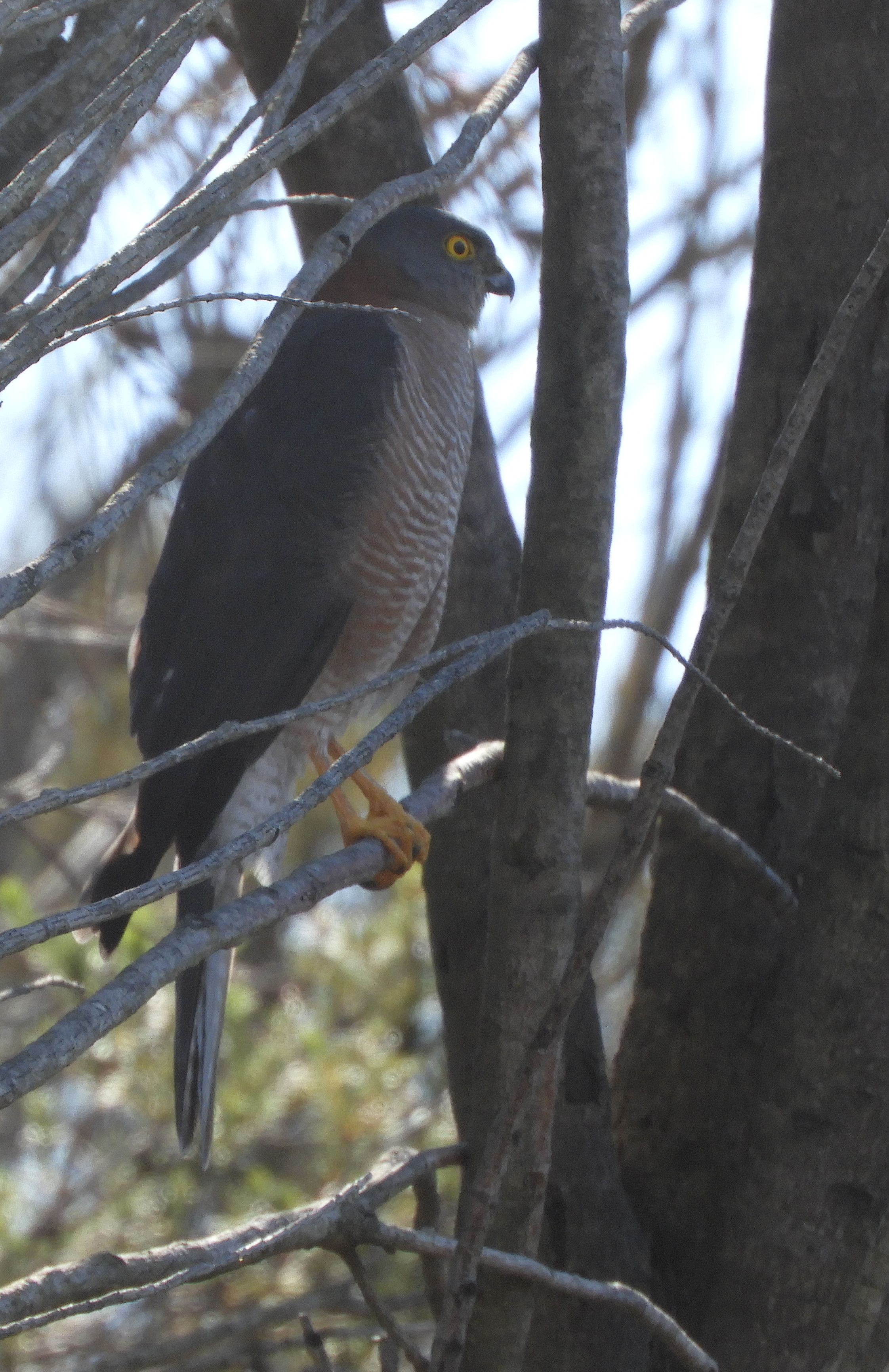
I think it’s a sparrowhawk, but it could be a Brown Goshawk. They’re very similar in appearance. Collared Sparrowhawks have a very long middle toe. This was the only photo I managed to take before the bird flew away, and the photo doesn’t show the toes too well. Brown Goshawks are larger than Collared Sparrowhawks, but it’s hard to judge the size of a bird.
Common name: Collared Sparrowhawk
Scientific name: Accipiter cirrhocephalus
Approximate length: 30-40 cm, wing span 55-80cm
Date spotted: 6 May 2020 (autumn)
Location: Manly Dam National Park, New South Wales, Australia: 33°46’31.8″S 151°14’46.8″E
Kookaburras at dawn
In my previous post about birdsong at dawn, I mentioned that dawn is a calm but not quiet time around here. One bird that was remarkable for its absence in yesterday’s video was the kookaburra. This morning the laughing cacklers made up for that!
Birdsong at dawn
Dawn is a calm time of day in early autumn in this part of the world. Calm, but not quiet. I shot this video from my lounge window two days ago. You can hear a cockatoo coughing and lorikeets chirruping. About half way through, a couple of magpies join in with their warbling:
Olive-backed Oriole looking a bit fierce
Olive-backed Orioles are lovely, with their smooth olive-green backs and mottled chests. I caught this one facing directly into the camera, and noticed how fierce those eyes look.

The fierceness fits the bill, if you’re a worm or some other prey for this bird. The oriole was bashing a worm around, softening it up before swallowing it, just before I took the above picture.
The next picture shows the bird with the worm in its beak. But, as is so often the case with bird photography, a branch got in the way!
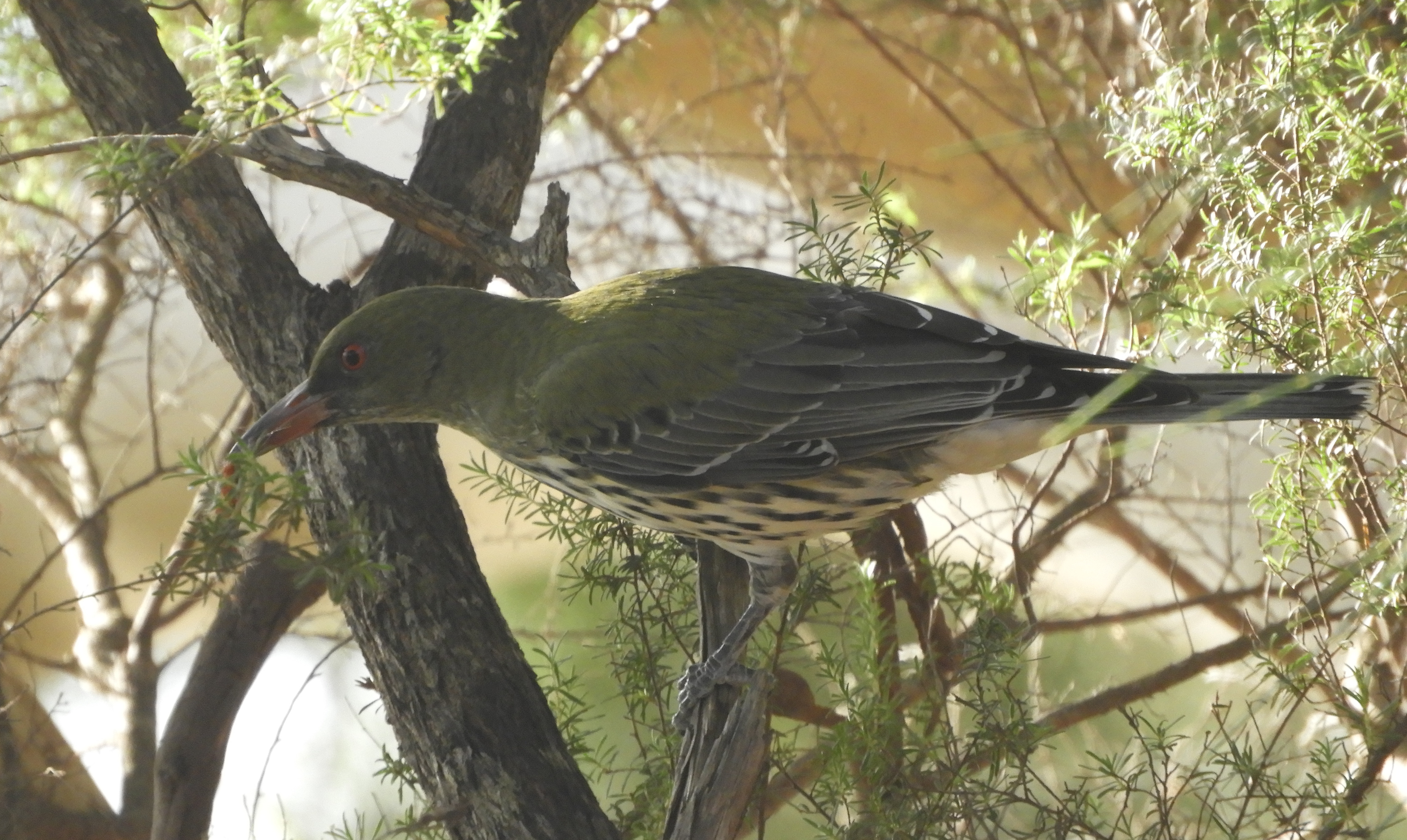
Not fierce, just inquisitive:

Common name: Olive-backed Oriole
Scientific name: Oriolus sagittatus
Approximate length: 25-28 cm
Date spotted: 18 April 2020 (autumn)
Location: Manly Dam National Park, New South Wales, Australia: 33°46’39.5″S 151°14’57.9″E
Here’s a picture of the bird’s surrounds. In the background is the water of Manly Dam:

Musk Lorikeet feeding off gum tree flowers
Musk Lorikeets are small, colourful parrots found in south-eastern Australia. A few of them have been visiting the gum tree outside our window over the past few weeks, to eat the nectar from the flowers.

These birds have rough, brush-tipped tongues to collect nectar and pollen from flowers. Musk Lorikeets are a little smaller than the more common Rainbow Lorikeets, which have been visiting the same flowers. Things can get quite noisy when the birds scold each other! Musk Lorikeets are nomadic, in that they move up and down the east coast of Australia in search of the flowering eucalypt trees that constitute their main source of food.

Common name: Musk Lorikeet
Scientific name: Glossopsitta concinna
Approximate length: 23 cm
Date spotted: 26 March 2020 (late summer)
Location: Allambie Heights, New South Wales, Australia


 Sydney Birder