Blog Archives

Oriole singing and mimicking other birds
A little Olive-backed Oriole had me intrigued for a while. I couldn’t see the bird, but I could hear a mixture of lyrical calls that seemed to come from a variety of birds. Eventually I tracked down the singer.

This looks like a young male bird. It has the dark head of a male, but its eyes are brown rather than red. It was lively and curious, hopping from branch to branch and examining its surrounds with evident interest. Or perhaps it was hungry and looking for food!
In this video, the oriole starts with a good preening session then launches into song. You can’t see the bird very well but you can hear its song:
Common name: Olive-backed Oriole
Scientific name: Oriolus sagittatus
Approximate length: 25-28 cm
Date spotted: 10 November 2020 (spring)
Location: Manly Dam Park, New South Wales, Australia: 33°46’52.3″S 151°15’07.9″E

Noisy currawongs enjoying blueberry ash berries
Currawongs are intelligent, curious, and noisy birds. The Australian dawn and dusk ring with their calls. Yesterday I was walking along a bush path when I heard a tremendous ruckus up ahead in the treetops. Currawongs whistling and whooping, branches swishing, and twigs clattering to the ground.
“Uh-oh,” thought I. “What have they found? Some possum caught in the harsh light of the day, or a bird of prey that dared to venture into currawong territory?”
The sound was all round me. At first it was difficult to find a single bird to focus the camera on:
Drawing closer, I saw the source of all the fuss. The blueberry ash trees are fruiting. Here’s a closeup of the berries from one of the trees that the currawongs were feasting on. The berries are small, and a pretty blue in colour. If you look closely, you can see the characteristic tiny yellow spots on the berries:
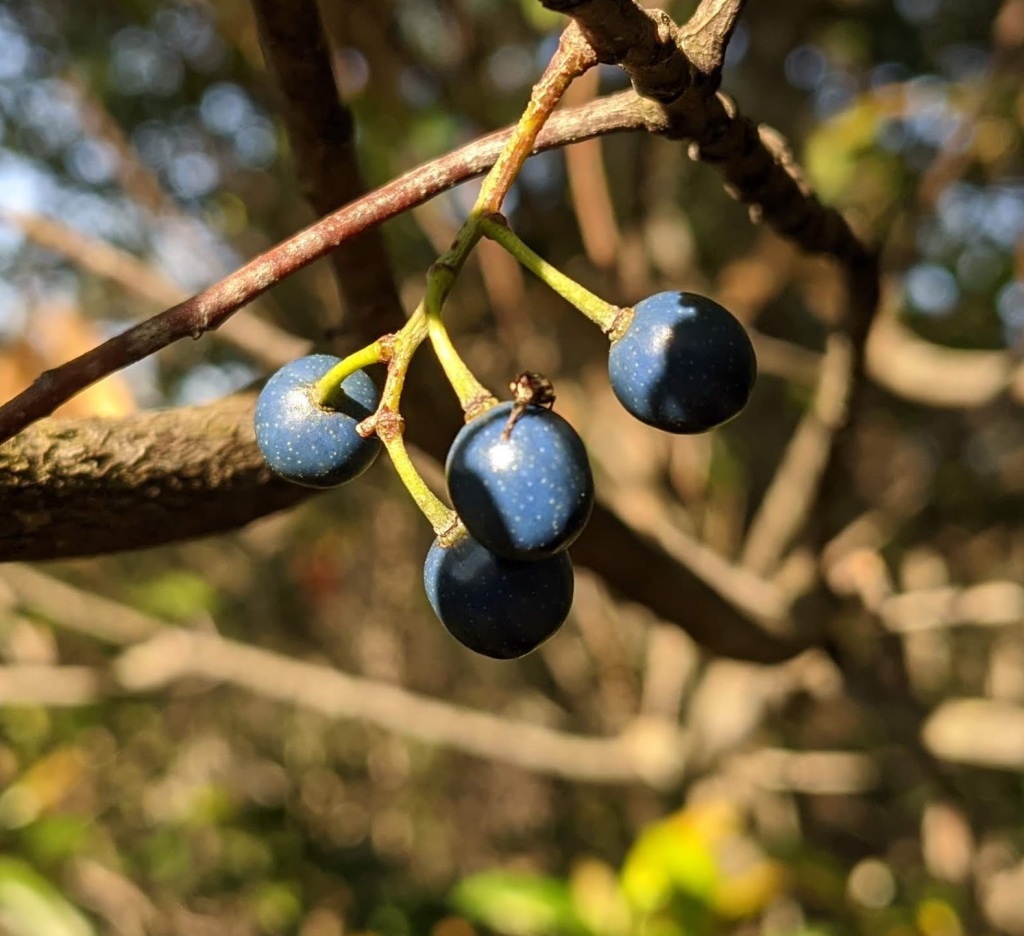
It seems these berries are irresistible to a currawong. What’s more, from all the commotion, you’d think there weren’t enough berries to go round! In the next video, I managed to catch some pictures of the currawongs themselves. At times you can hear a butcher bird interjecting too:
Here’s a cheeky glare from one of the critters making all the noise:
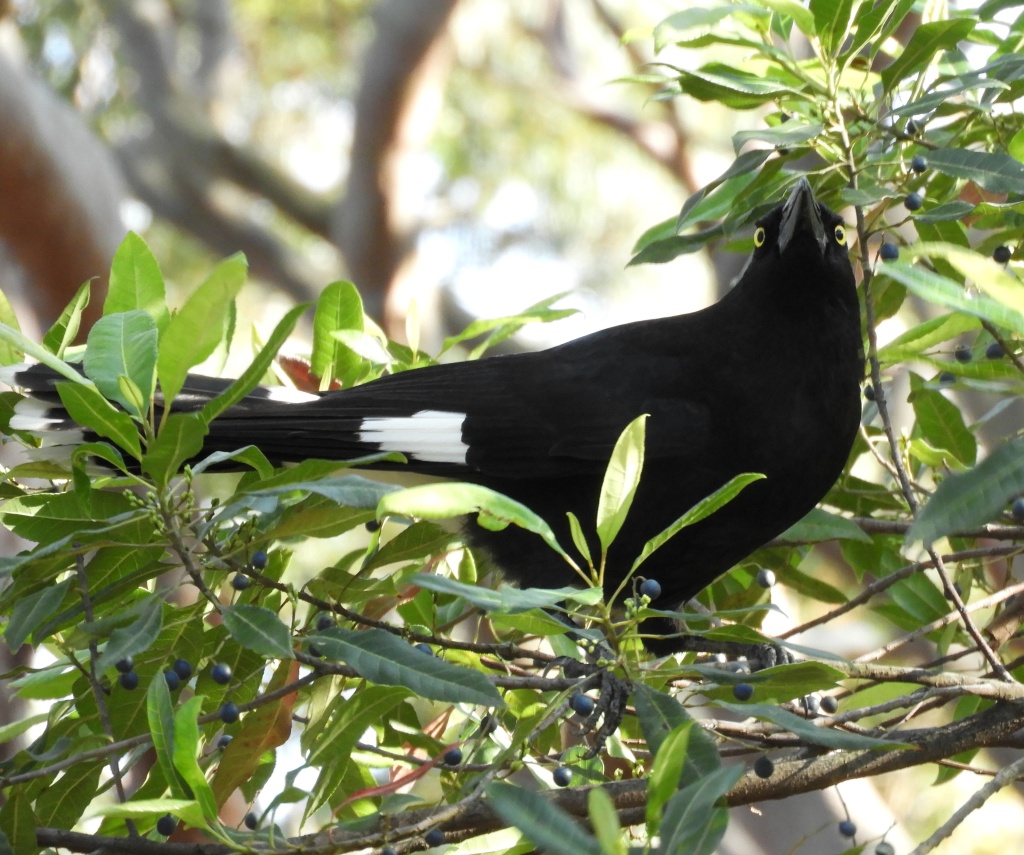
Common name: Pied Currawong
Scientific name: Strepera graculina
Approximate length: 45 cm
Date spotted: 3 October 2020 (spring)
Location: Manly Dam Park, New South Wales, Australia: 33°46’28.2″S 151°14’58.4″E
Grey Fantail
This is only the second time I’ve managed to get a picture of a Grey Fantail. Grey Fantails are smaller than Willie Wagtails, and softer in colouring. They make a similar squeaky call, but not quite as piercing as Willie Wagtail.
I’ll try to get a good photo of a Grey Fantail, if one of them will stay still long enough! In the meantime, here’s the earlier video that I took of one of these birds, about three years ago. The bird was showing off its tail-fanning skills.
Common name: Grey Fantail
Scientific name: Rhipidura fuliginosa
Approximate length: 14-17 cm
Date spotted: 4 September 2020 (spring)
Location: Manly Dam Reserve, New South Wales, Australia: 33°46’23.8″S 151°15’05.8″E
Two varieties of the Eastern Whipbird call
The call of the Eastern Whipbird is a fairly common sound, for those of us lucky enough to live near a patch of Australian bush. The birds make a weird whistling noise that ends in an abrupt burst of noise, a little like the crack of a whip. Hence the name whipbird.
In the first of these two videos, the bird ends its call with an upward tone, while in the second video it chooses a descending tone. First, the upward tone:
Next, the more squeaky downward ending:
The call seems to take a lot of effort, including a little hop and a flap of the wings. I was surprised at how short the bird’s wings are. They seem quite stubby, compared with the elegance of the rest of the body.
Whipbirds are shy, sticking to the undergrowth and making it difficult to get a good picture. Here’s a photo that shows the olive green colouring of the bird’s feathers:

Common name: Eastern Whipbird
Scientific name: Psophodes olivaceus
Approximate length: 30 cm
Date spotted: 3 September 2020 (early spring)
Location: Manly Dam National Reserve, New South Wales, Australia: 33°46’36.2″S 151°14’47.9″E
Masked Lapwing (Spur-winged Plover) screeching
A pair of Masked Lapwings (also known as Spur-winged Plovers) strutted companionably on the shore of Manly Dam. Every so often, one of them took off and flew a circuit around the area. The bird left on the ground started calling, and watched the progress of its companion carefully from the ground. The bird in the air replied occasionally, as if to assure its mate that it was still around.
To me, the yellow attachments on the faces of these birds seem rather strange. I guess they do make the birds stand out from other species. Not much chance of making a mistake when a bird is looking for a mate!
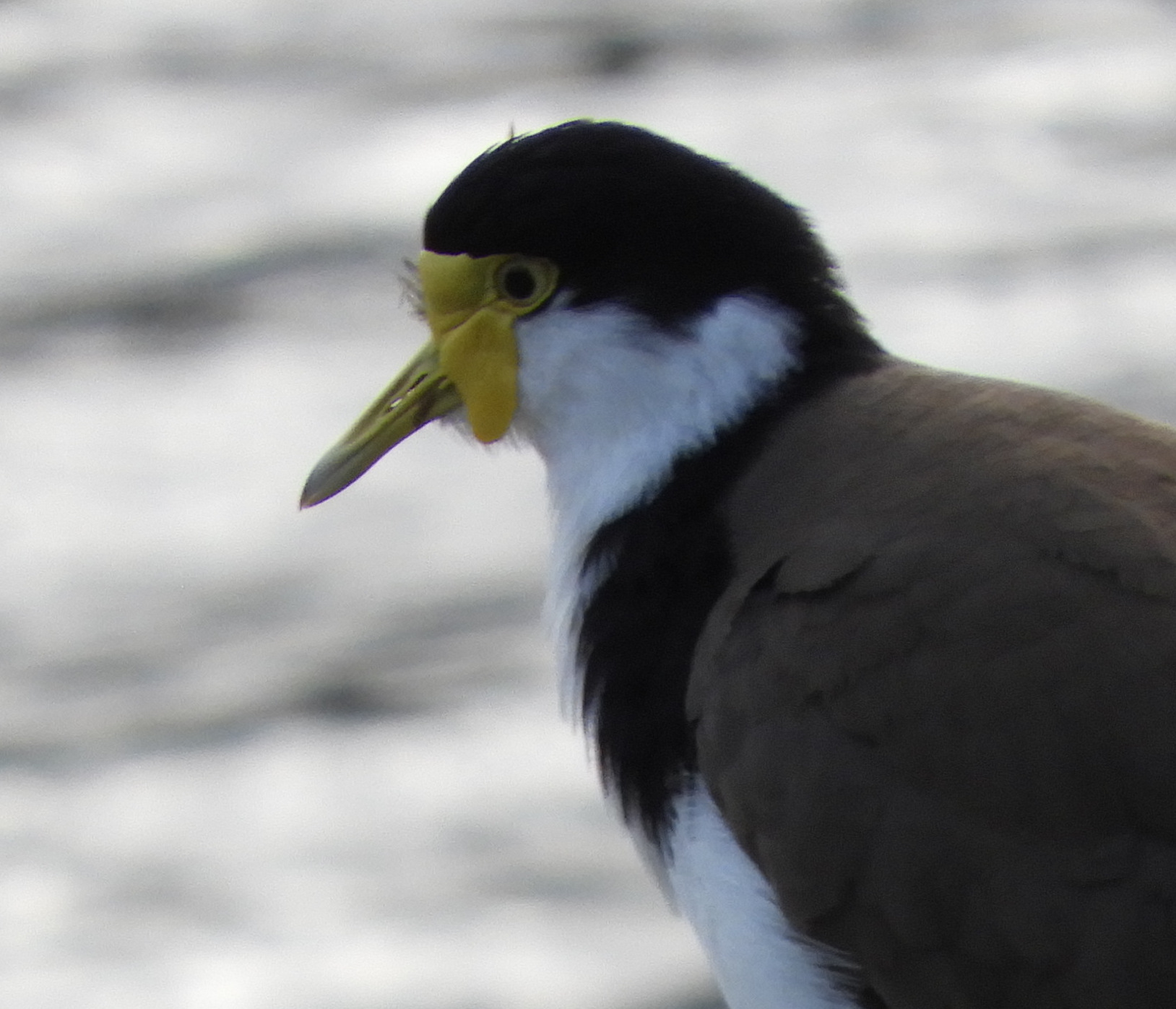
The birds have two names: Masked Lapwings, due to that strange yellow mask, and Spur-winged Plovers. The second name comes from the hooks (spurs) on the birds’ wings that they use to fend off any creature that threatens them or their young. If a Spur-winged Plover flies at you, it’s best to duck or hold your arms around your head!

Common name: Masked Lapwing, or Spur-winged Plover
Scientific name: Vanellus miles
Approximate length: 37 cm
Date spotted: 8 August 2020 (winter)
Location: Manly Dam Nature Reserve, New South Wales, Australia: 33°46’35.0″S 151°14’50.4″E
Superb Lyrebird – excited to see and hear one in the wild
This morning I went for a stroll along the Berkeley Trail in Berowra. I stopped at the Naa Badu lookout point, to admire the view. From just below me, hidden by the rocks and trees, I heard a busy scratching and rustling. After a few minutes, a male Superb Lyrebird hopped up onto a rock and started whistling:
The bird is rather hidden by the bushes, but you can hear the lovely, clear sounds it makes, and you can get an idea of its appearance, including that impressive tail:
Common name: Superb Lyrebird
Scientific name: Menura Novaehollandiae
Approximate length: 80-95 cm
Date spotted: 3 July 2020 (winter)
Location: Naa Badu Lookout, Berowra, New South Wales, Australia: 33°37’04.8″S 151°07’41.4″E
Superb Lyrebirds are known for their ability to mimic other birds and the sounds around them. I plan to return to the Berowra area and film more of these birds!
This is the view that the lyrebird and I shared from the Naa Badu lookout:

Song of the Fan-tailed Cuckoo
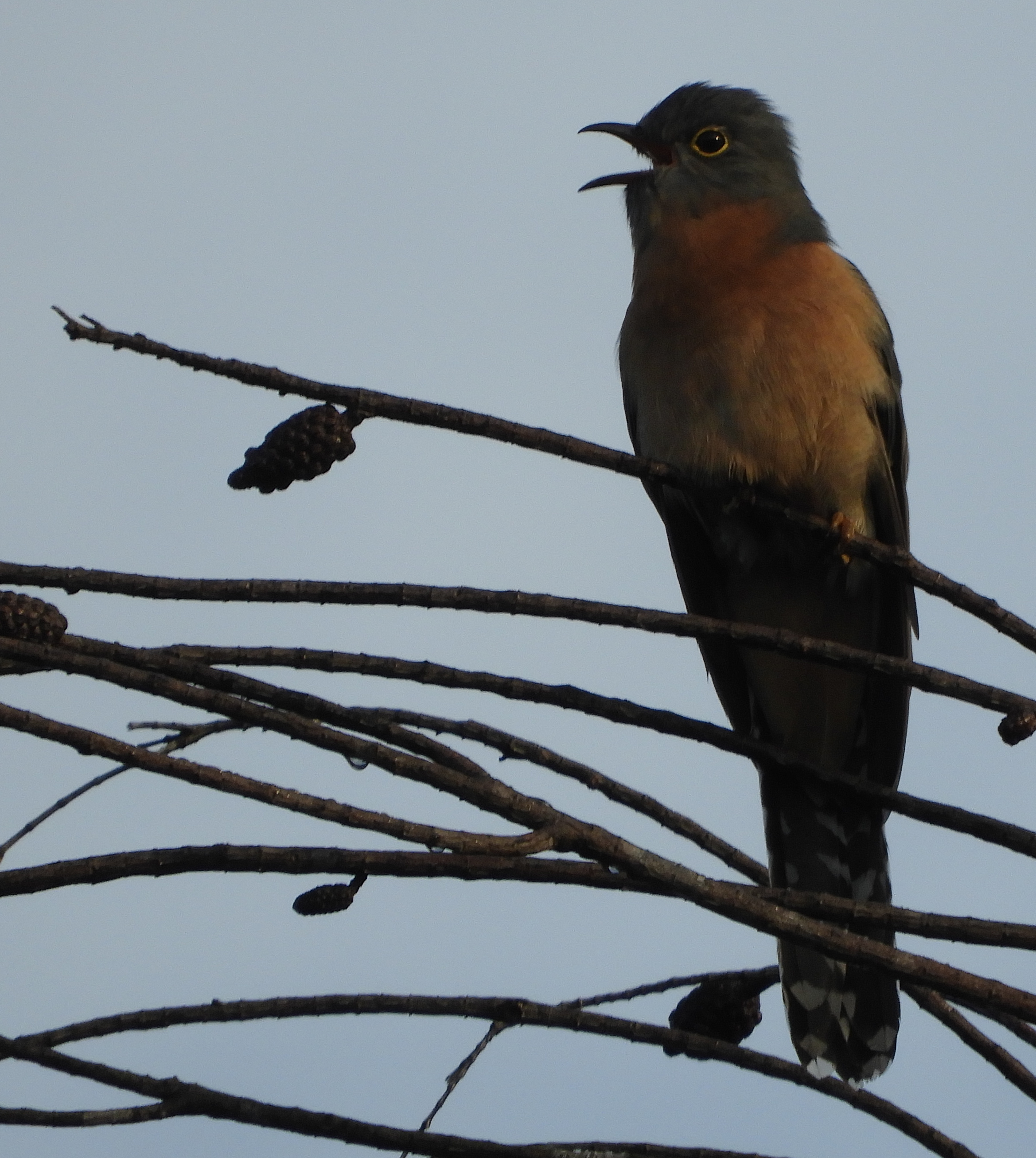
Walking through the Aussie bush, I’m sometimes intrigued by a musical trill coming from the hidden depths of the forest. The sound starts high and drops rapidly down the scale to a lower pitch. Today, for the first time, I managed to spot the bird that makes this lovely noise: a Fan-tailed Cuckoo:
At first I thought it couldn’t be a cuckoo, because don’t all cuckoos leave for warmer climes when winter arrives on the Australian east coast? Evidently not. For the most part, Fan-tailed Cuckoos brave the cold weather, although those in Tasmania do move north into the mainland.
Here’s the cuckoo caught in mid trill:
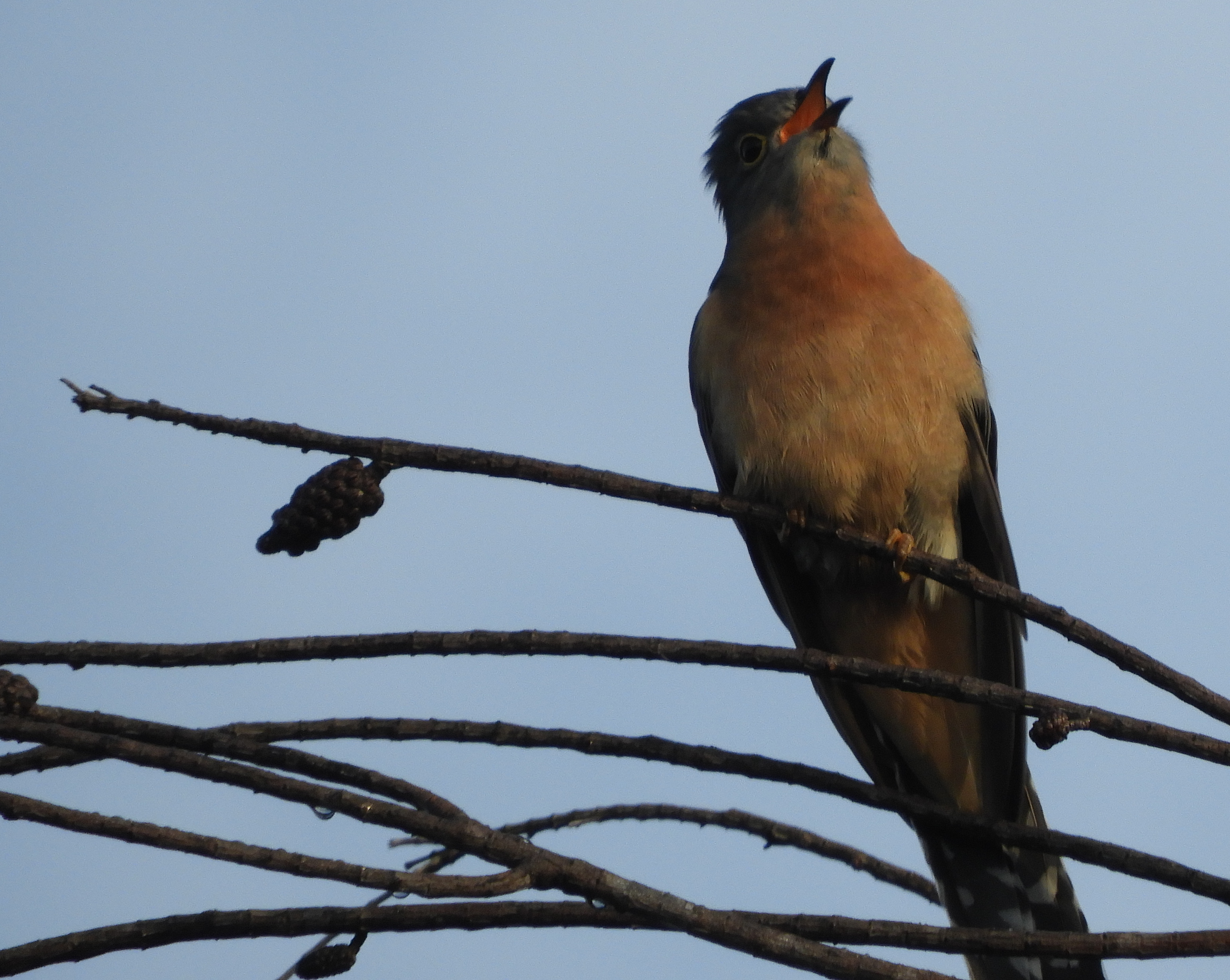
Like other cuckoos, these birds lay their eggs in the nests of other species. Fan-tailed Cuckoos choose fairy-wrens and thornbills as their hosts. Such small little parents to raise a cuckoo!
Here’s another shot of the bird, this time with its beak closed:

This particular bird has a lovely rich coloring. Other photos I’ve seen show less orange in the chest feathers, and a lighter grey on the head and back.
Singing again:
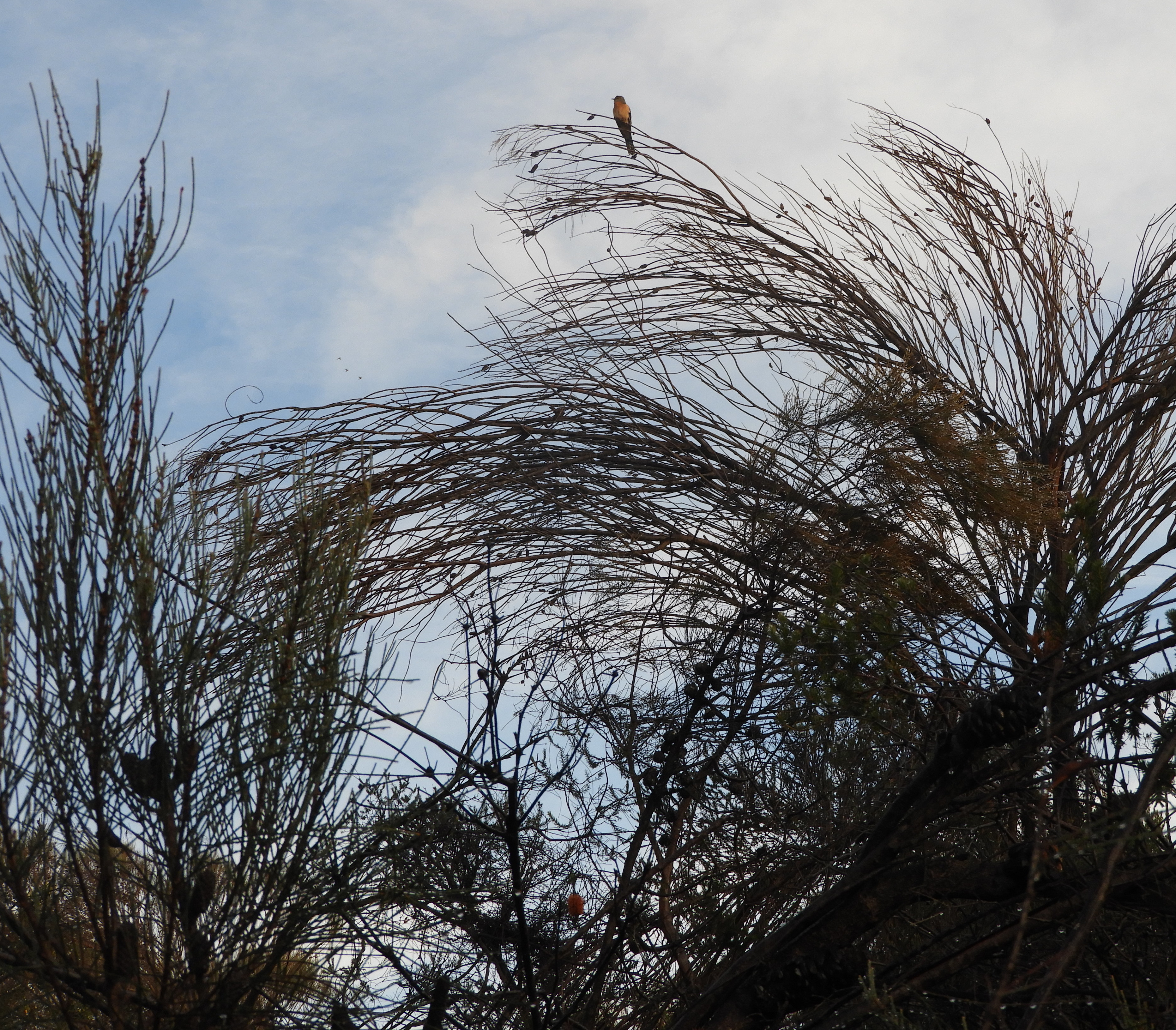
Fan-tailed Cuckoos feed on insects. Typical behaviour is to sit high up on a branch then swoop down when a meal crawls or flutters into view. Here’s a non-zoomed-in view of the bird:
Common name: Fan-tailed Cuckoo
Scientific name: Cacomantis flabelliformis
Approximate length: 26 cm
Date spotted: 13 June 2020 (winter)
Location: Manly Dam National Park, New South Wales, Australia: 33°46’29.5″S 151°14’46.3″E
Yellow-tailed Black Cockatoos in the garden
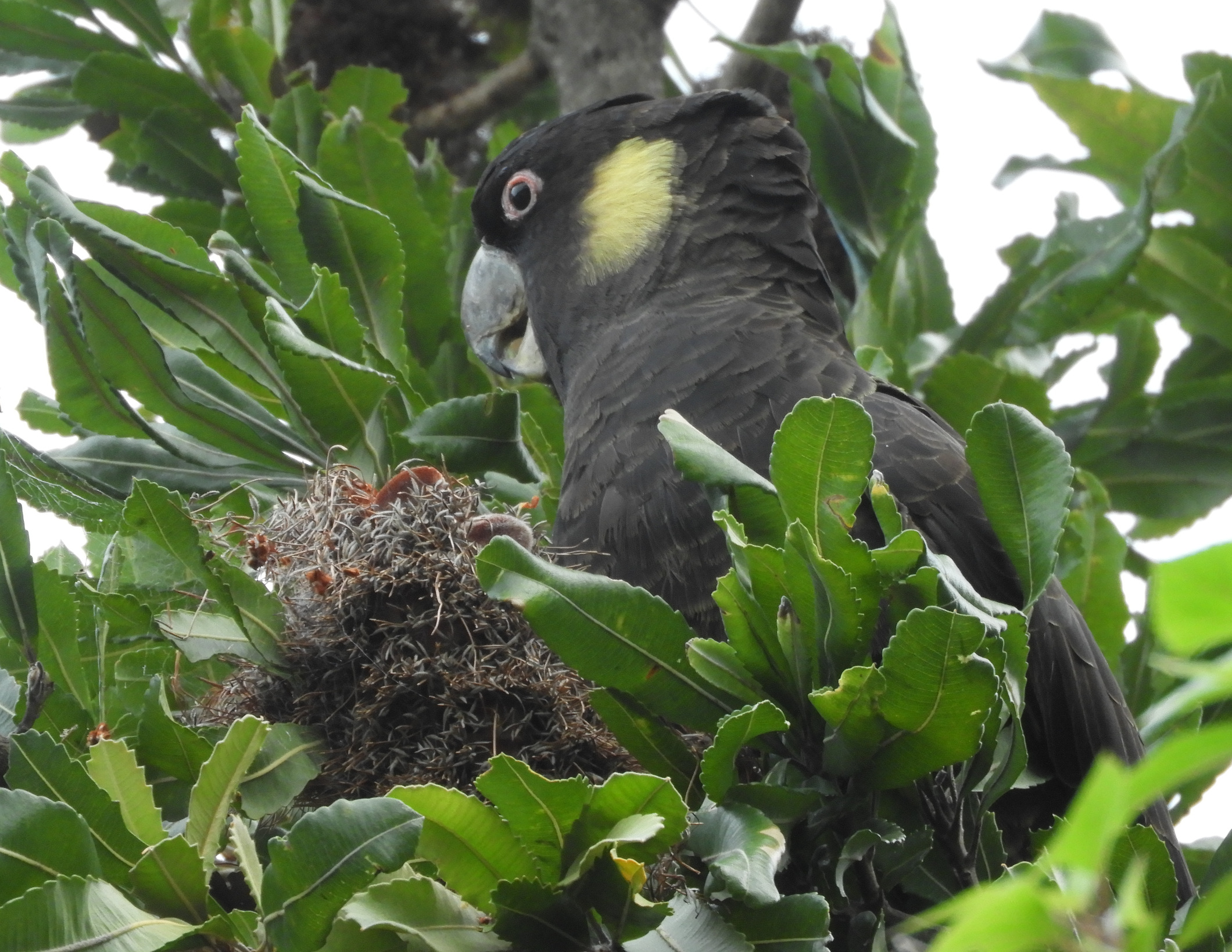
Three Yellow-tailed Black Cockatoos dropped in this afternoon. They chatted to each other with their weird squealing call, while demolishing parts of our Old Man Banksia bush.
Here’s one of the birds. The pink ring around the eye identifies it as a male:
In this short video, you can hear them chatting to each other:
It’s lovely to have these big, gracious birds paying us a call.
Common name: Yellow-tailed Black Cockatoo
Scientific name: Calyptorhynchus funereus
Approximate length: 65 cm
Date spotted: 20 May 2020 (autumn)
Location: Allambie Heights, NSW, Australia
Kookaburras at dawn
In my previous post about birdsong at dawn, I mentioned that dawn is a calm but not quiet time around here. One bird that was remarkable for its absence in yesterday’s video was the kookaburra. This morning the laughing cacklers made up for that!
Birdsong at dawn
Dawn is a calm time of day in early autumn in this part of the world. Calm, but not quiet. I shot this video from my lounge window two days ago. You can hear a cockatoo coughing and lorikeets chirruping. About half way through, a couple of magpies join in with their warbling:


 Sydney Birder