Blog Archives
Rescued a Powerful Owl from Australian Ravens
As I was walking in the bush this morning, I heard a lot of noise coming from an open space just off the track. Currawongs chiming, ravens yowling, miners bleating. I went to investigate, and found a Powerful Owl under attack.
Here’s the Powerful Owl, looking decidedly jaded after facing off the most recent jabs from a couple of Australian Ravens:
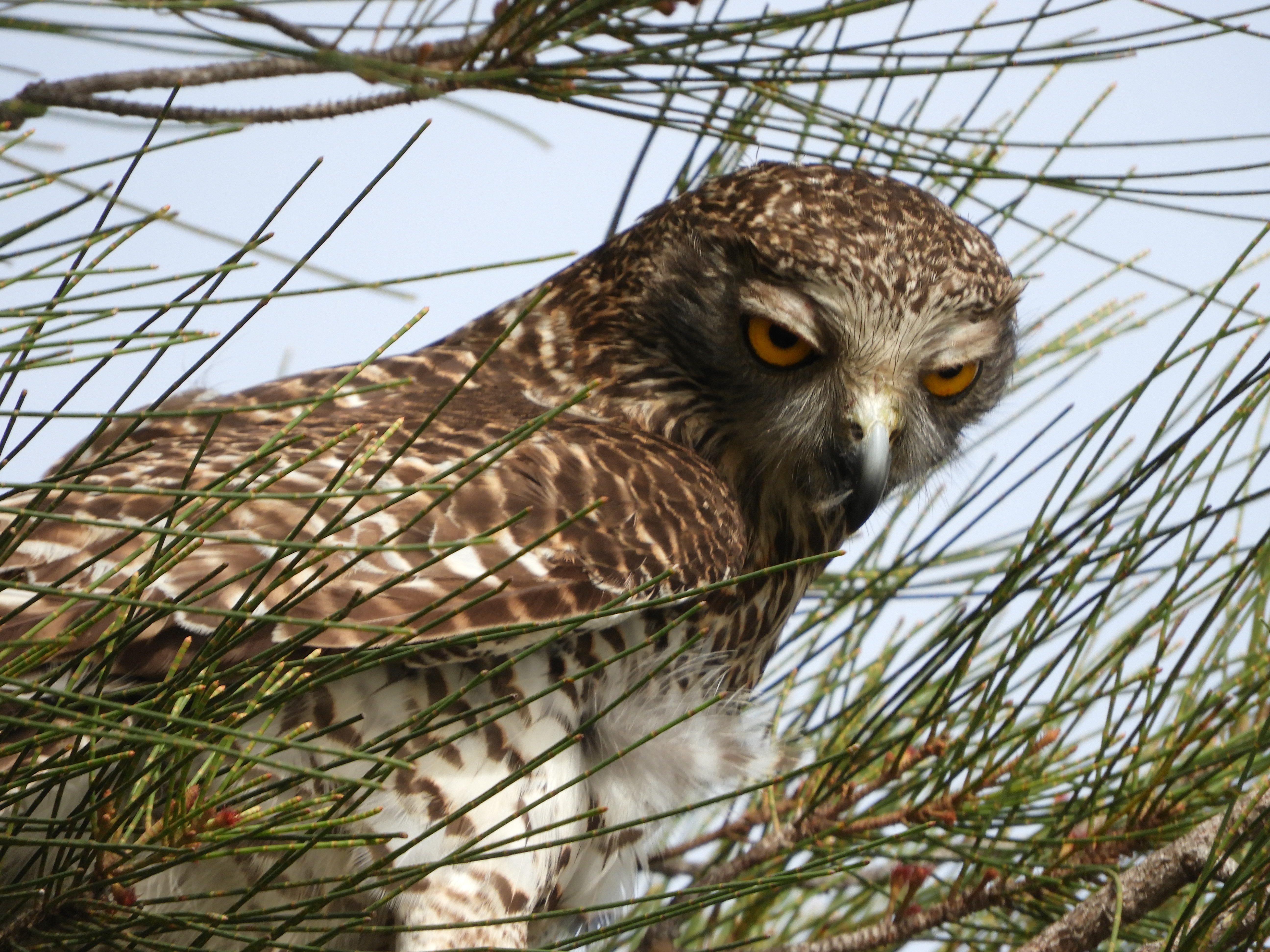
The Australian Miners and Currawongs were making a lot of noise, and even a couple of kookaburras swooped in to join the fight. But the principal attackers were the Australian Ravens.
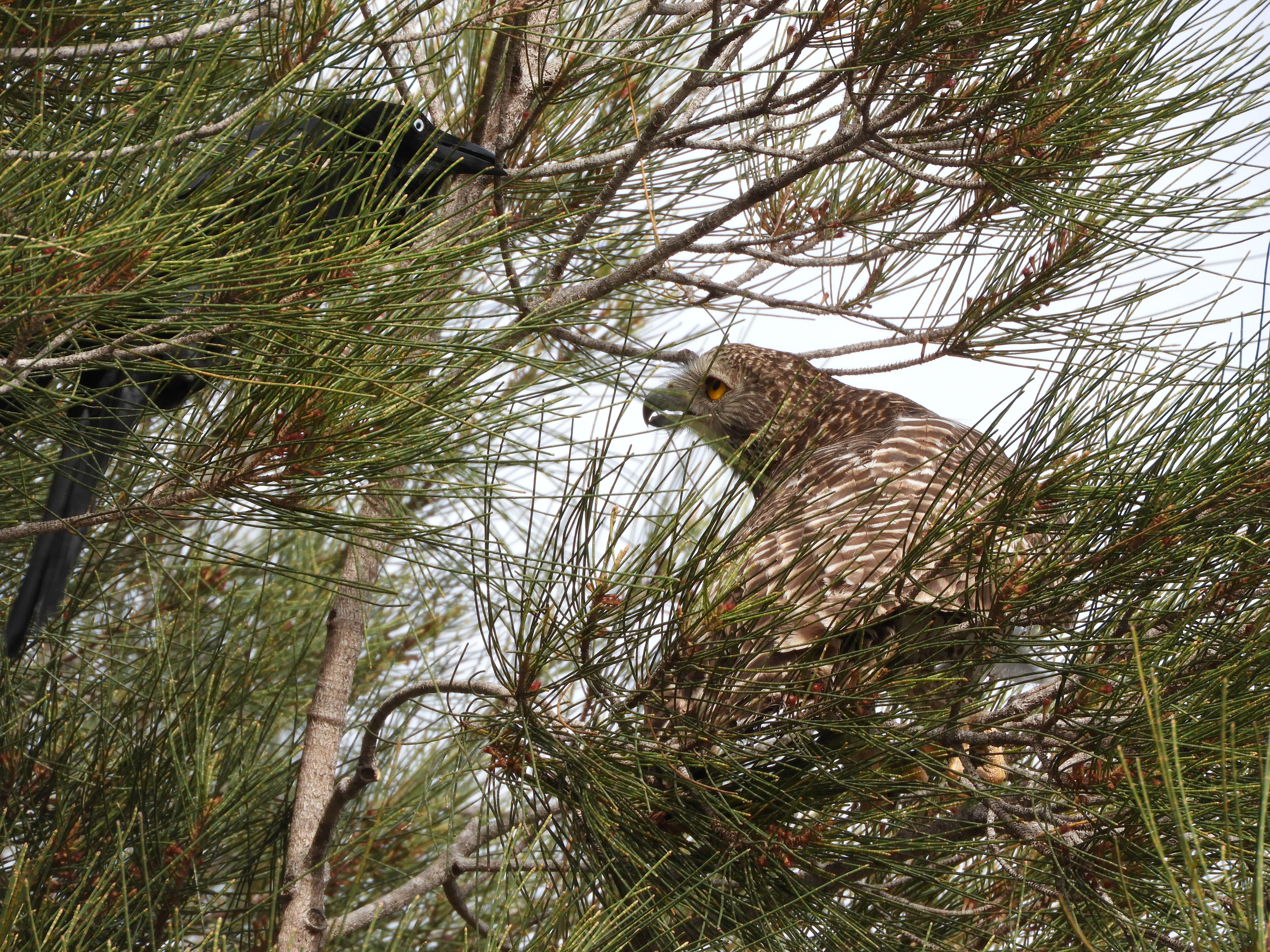

At first, the Powerful Owl was able to fend off the attack:
But the ravens were pretty vicious. The owl was high in the tree at this point, and there was nothing I could do to scare off the attackers.
I phoned the Manly Dam bush ranger centre and reported the problem. A ranger promised to come immediately. In the meantime, the owl was suffering and it was distressing not to be able to help:
At last, the owl ceded ground and flew to a lower spot in the tree:
At the same time, the attacks became more vicious, with the ravens grabbing both wings and pulling at the same time, stretching out the owl’s wings.
The owl was at this point only about 2.5 metres above the ground. A jogger came rushing in to help, and together she and I were able to scare off the ravens and other attackers.
The bush ranger arrived soon afterwards. After a bit of discussion, we decided the best thing was to phone WIRES for advice. WIRES is the Australian Wildlife Information, Rescue and Education Service.
In the meantime, we had to keep chasing away the ravens. They were extremely persistent, returning every few minutes to see if the coast was clear for another attack. The owl looked on, more relaxed than when under attack, but still alert:
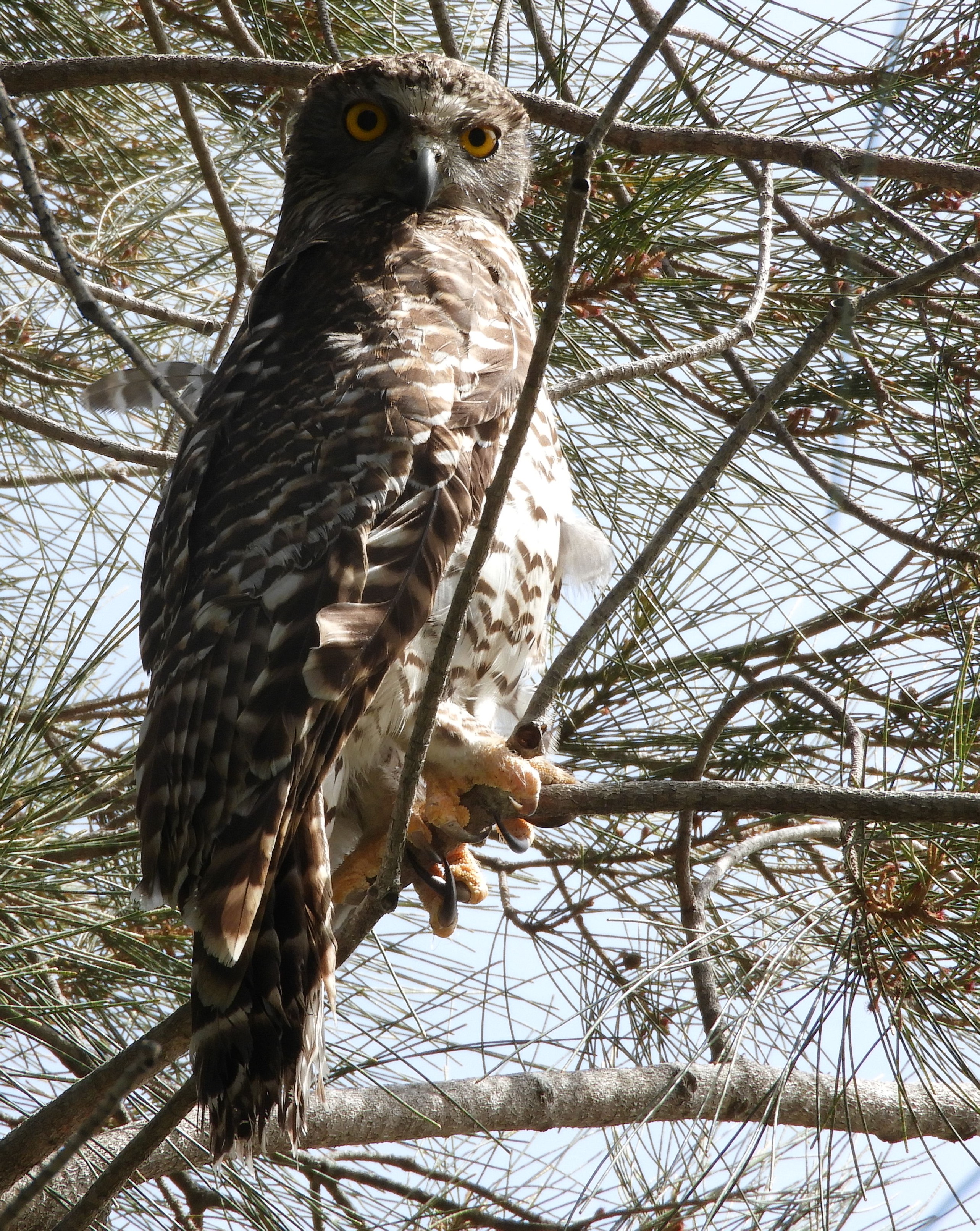
Common name: Powerful Owl
Scientific name: Ninox strenua
Approximate length: 65 cm
Date spotted: 7 October 2019 (spring)
Location: Manly Dam National Park, New South Wales, Australia: 33°46’55.8″S 151°15’12.1″E
The advice from WIRES was to leave the owl where it was (don’t try to scare it into flying away) and to keep chasing away the ravens. Evidently Powerful Owls tend to stay in one place during the day, even when under attack. Besides which, the jogger had seen the owl flying from one tree to another earlier that morning, with the ravens dive-bombing it in flight. So flying off was probably not a good option anyway.
So we kept chasing away the ravens. After a couple of hours, two families arrived and settled in for a day of boating and picnicking. We handed over the job of raven-scaring to them, and the bush ranger said she would drop by every couple of hours to check up on the owl.
Not a restful day for this nocturnal bird. But at least this is one case where it was a good thing for the bird that people were around. I do hope the Powerful Owl had a more peaceful time for the rest of the day.
Azure Kingfisher in Ku-ring-gai Chase Park near Sydney
Today I visited Bobbin Head in Ku-ring-gai Chase National Park. I started at the Mangrove Boardwalk, then followed the Gibberagong track along Cockle Creek. It’s a lovely walk. Quiet and cool.
At one point I started hearing something plopping into the water at regular intervals. A flash of colour swooped up into a tree. I stopped to watch. It was a tiny bird, shining blue and orange. Only the long zoom of my camera revealed what I was seeing.
An Azure Kingfisher, sitting on a rock, waiting for prey to pass by in the river below:
Azure Kingfishers are common further north in Australia, but are uncommon this far south due to loss of habitat. They like banks of creeks with lots of vegetation and mangroves. This area of Ku-ring-gai Chase National Park certainly fits the bill.
The next video shows the bird diving into the water. It’s far away, so all you get is an impression, but it’s pretty to watch:
Here’s a still shot of the bird – fuzzy because of the max zoom on my camera:

Kingfishers are related to kookaburras. (See my previous post about a wet kookaburra.) At only 17-19 centimetres long, this kingfisher is a tiny cousin of the Laughing Kookaburra, which comes in at a whopping 40-47 centimetres.
The next photo gives a good idea of the very short length of the tail, which is an identifying mark of this bird:
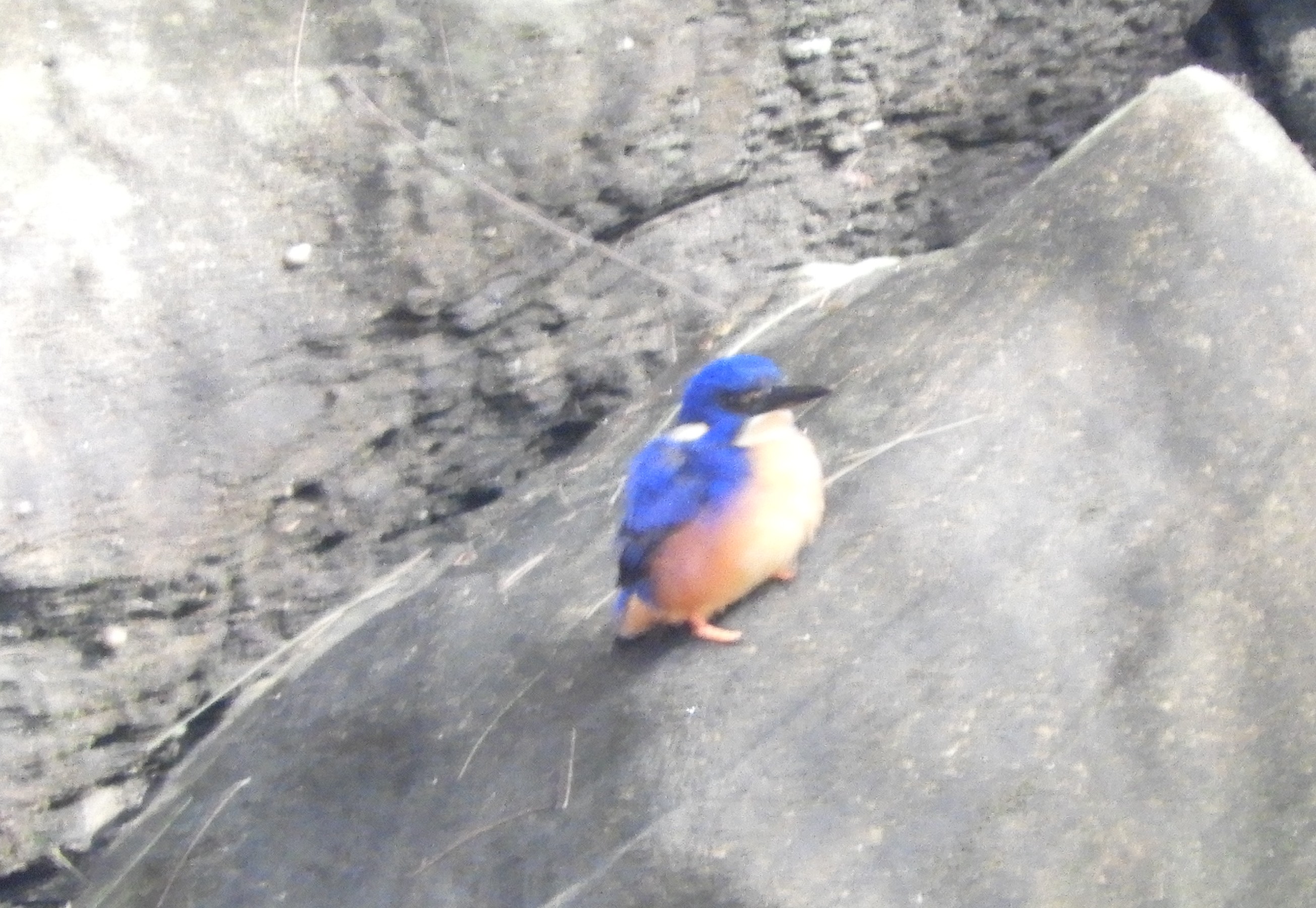
Common name: Azure Kingfisher
Scientific name: Alcedo azurea
Approximate length: 18 cm
Date spotted: 28 August 2019 (late winter)
Location: Bobbin Head, Ku-ring-gai Chase National Park, New South Wales, Australia: 33°40’10.5″S 151°08’54.9″E
Wakeful Southern Boobook at Manly Dam
A little Southern Boobook was wide awake when I walked beneath its tree this morning. This is the first time I’ve seen one of these owls, though I’ve heard them hoot during the night hours.
I sat down on the ground and watched the bird for a while. It wasn’t disturbed by my presence, and grew quite sleepy, as you can see in the next video. At the end of the video I zoomed out so that you can see a bit of the bush surrounding the bird:
Southern Boobooks are quite small, at around 30cm in length from head to tail. Compare that to the Powerful Owl, which is around 65cm.
Here’s a still photo of the bird, showing a deep yellow eye and fluffy white feathers above its beak:
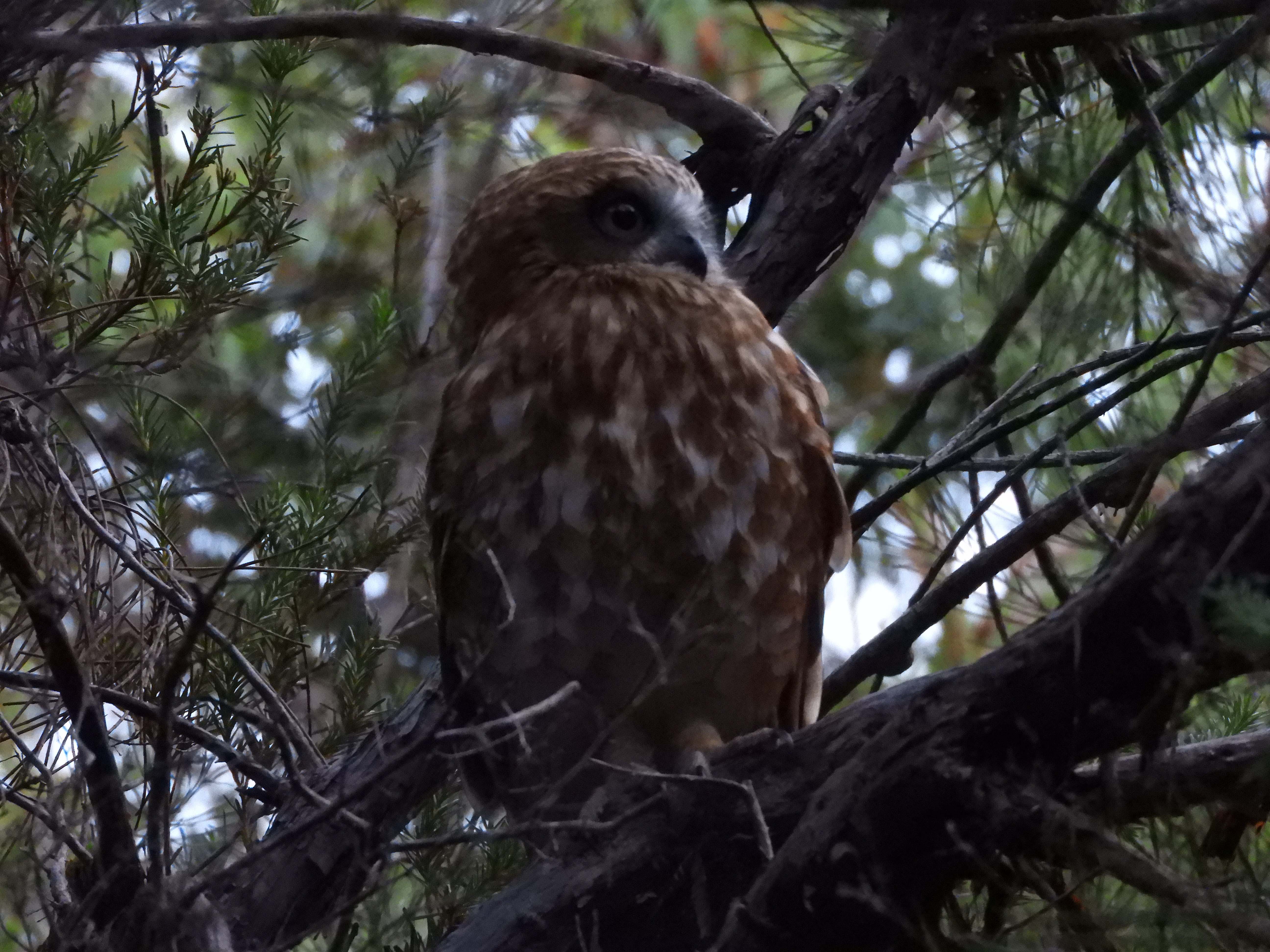
Southern Boobooks are quite common. They feed mostly on insects and spiders, but they do take the occasional small bird or animal too. Here’s a closeup of the owl’s face:

Common name: Southern Boobook
Scientific name: Ninox novaeseelandiae
Approximate length: 30cm
Date spotted: 20 March 2019 (late summer)
Location: Manly Dam National Reserve, near Sydney: 33°46’30.0″S 151°15’09.2″E
Powerful Owl pellet, also known as owl vomit or regurgitation
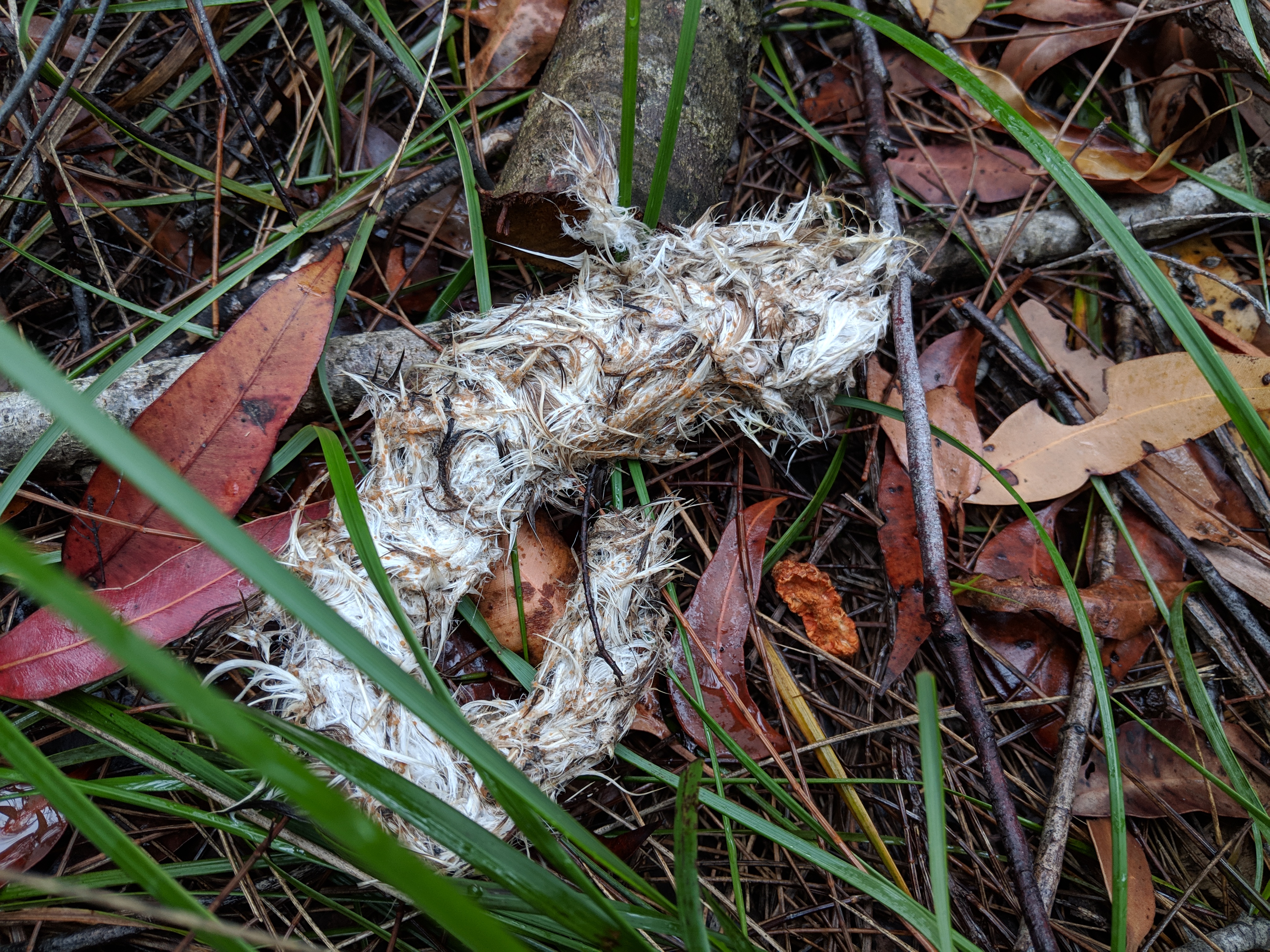
This morning I came across this weird-looking bundle of hair and stuff in the bush surrounding Manly Dam National Park near Sydney:
Date spotted: 20 January 2019 (Summer)
Location: Manly Dam National Park, New South Wales, Australia: 33°46’24.5″S 151°15’04.4″E
At first I thought it was some weird creature, but it had no visible eyes and didn’t really look alive, although it was obviously animal in nature. I picked up a stick and turned the object over gently. It didn’t try to move away. Definitely not alive. It looked the same on both sides. No obvious undercarriage.
So then I thought, maybe it’s some dead creature that’s become covered in a thick fungus. It’s summer here in Sydney—hot, humid, lots of fungus on the trees and mould on animal poo in the forest. In fact, I’ve seen animal poo that’s completely white and fuzzy, with long tendrils of mould standing up straight.
Still, the fungus idea didn’t quite fit the bill. The stuff covering this object looked more like fur than fungus.
So I took a photo and moved on.
When I got home and showed my husband the photo of this weird thing I’d seen, he suggested it might be owl’s vomit. They do that, he said. They regurgitate fur and stuff. So I looked it up. Indeed they do.
The official name for owl vomit is owl pellet. I think this one must be from a Powerful Owl (Ninox strenua), because I’ve seen those birds in the same area of the bush before, and because this pellet was big. It was around 6 inches long (15 cm) and 2 inches (5 cm) at its widest.
Here’s a Powerful Owl that I saw a while ago, also at Manly Dam. This owl has its prey (a dead possum) in its grip:

An owl’s pellet consists of fur, bones, and other bits and pieces of its prey that the owl can’t digest. An owl needs to regurgitate a pellet once or twice every night, six hours or more after the owl has eaten.
If you like, you can see more about the Powerful Owls I’ve seen around Manly Dam.
Butcherbird has whiskers!
A few butcherbirds are frequenting my area at the moment. This one is a Grey Butcherbird:
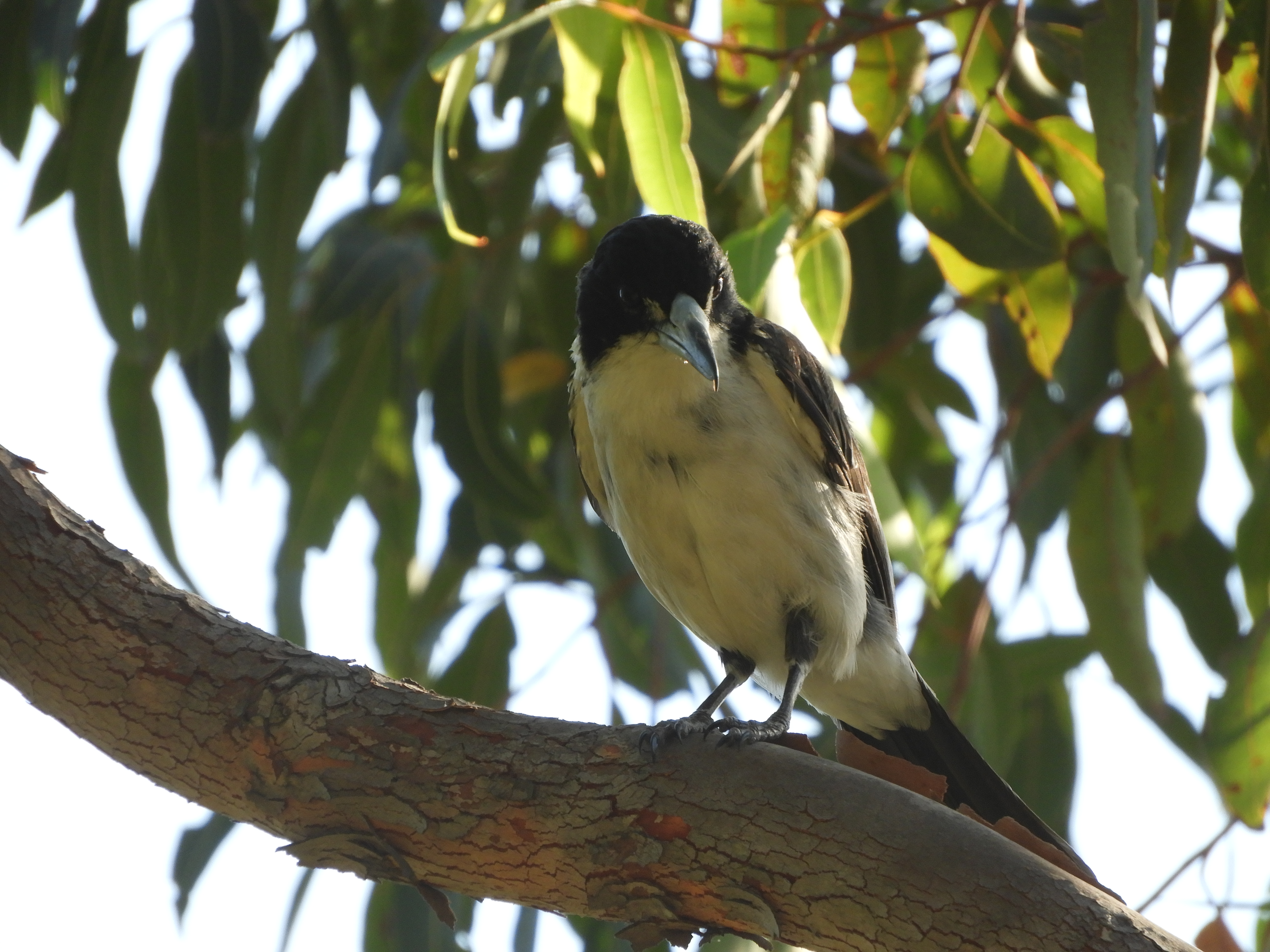
When it tilted its head, I noticed some dark whiskers below its eye:
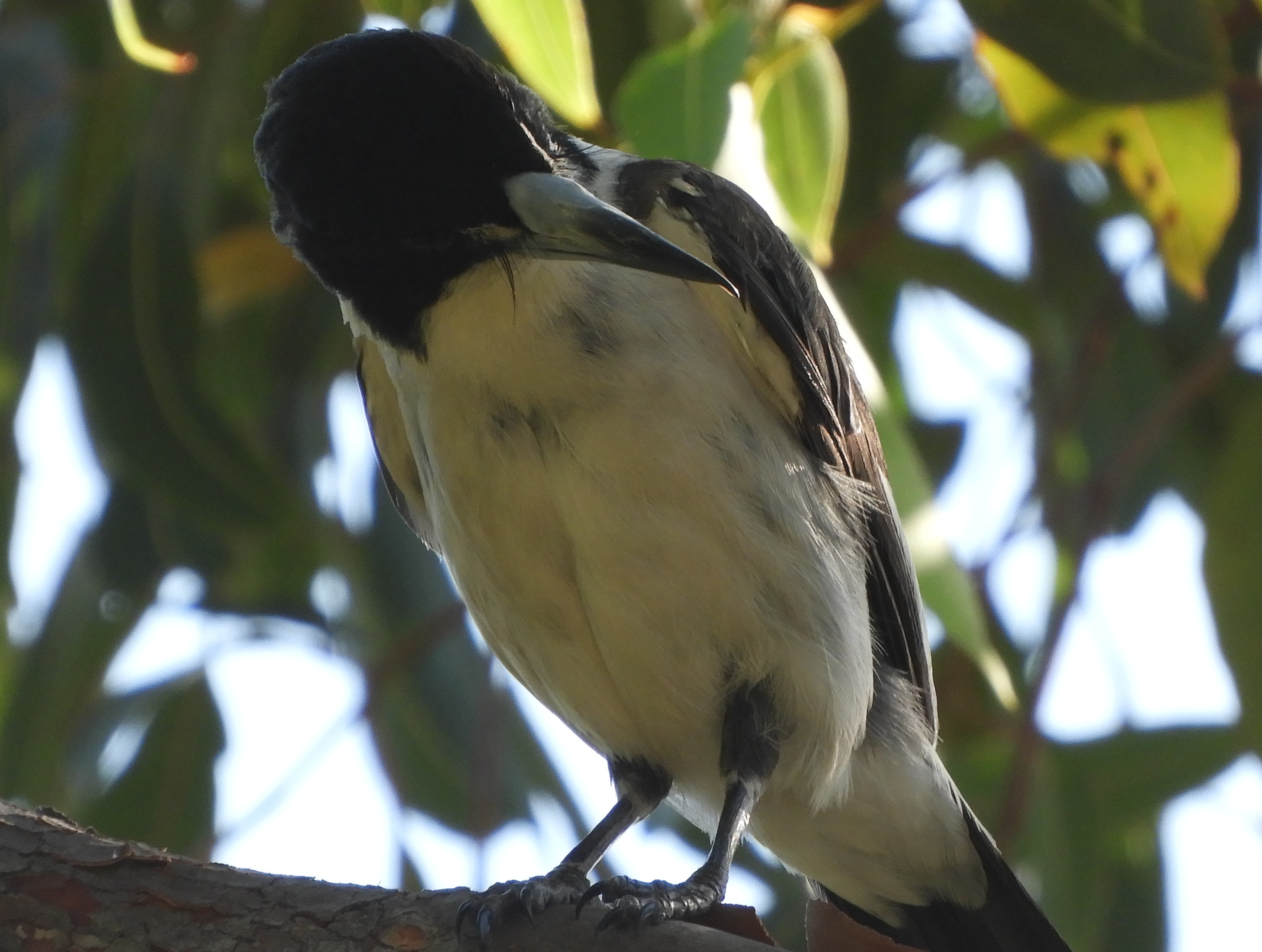
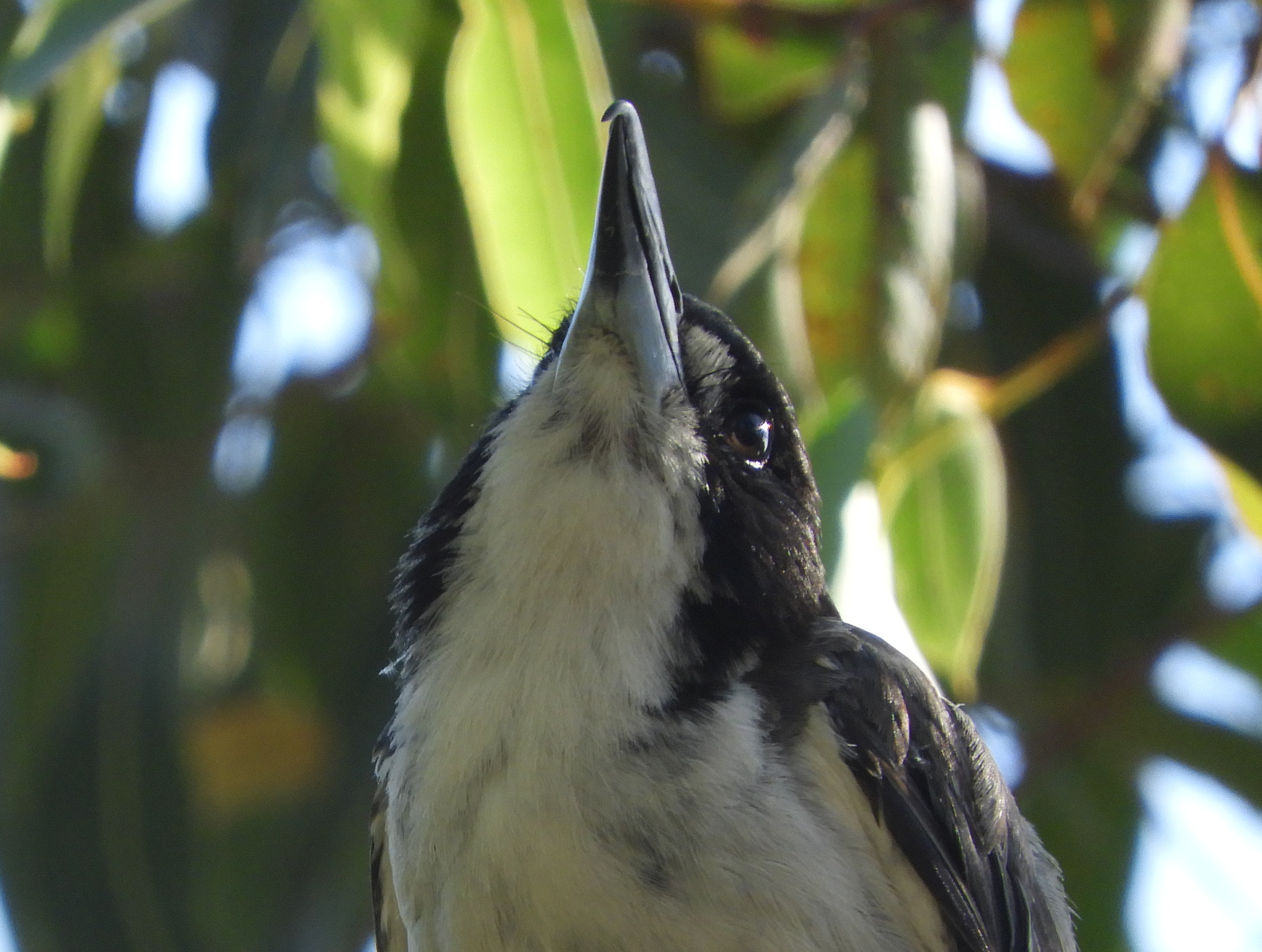
When it looked upwards, I could make out the whiskers on both sides of its beak:
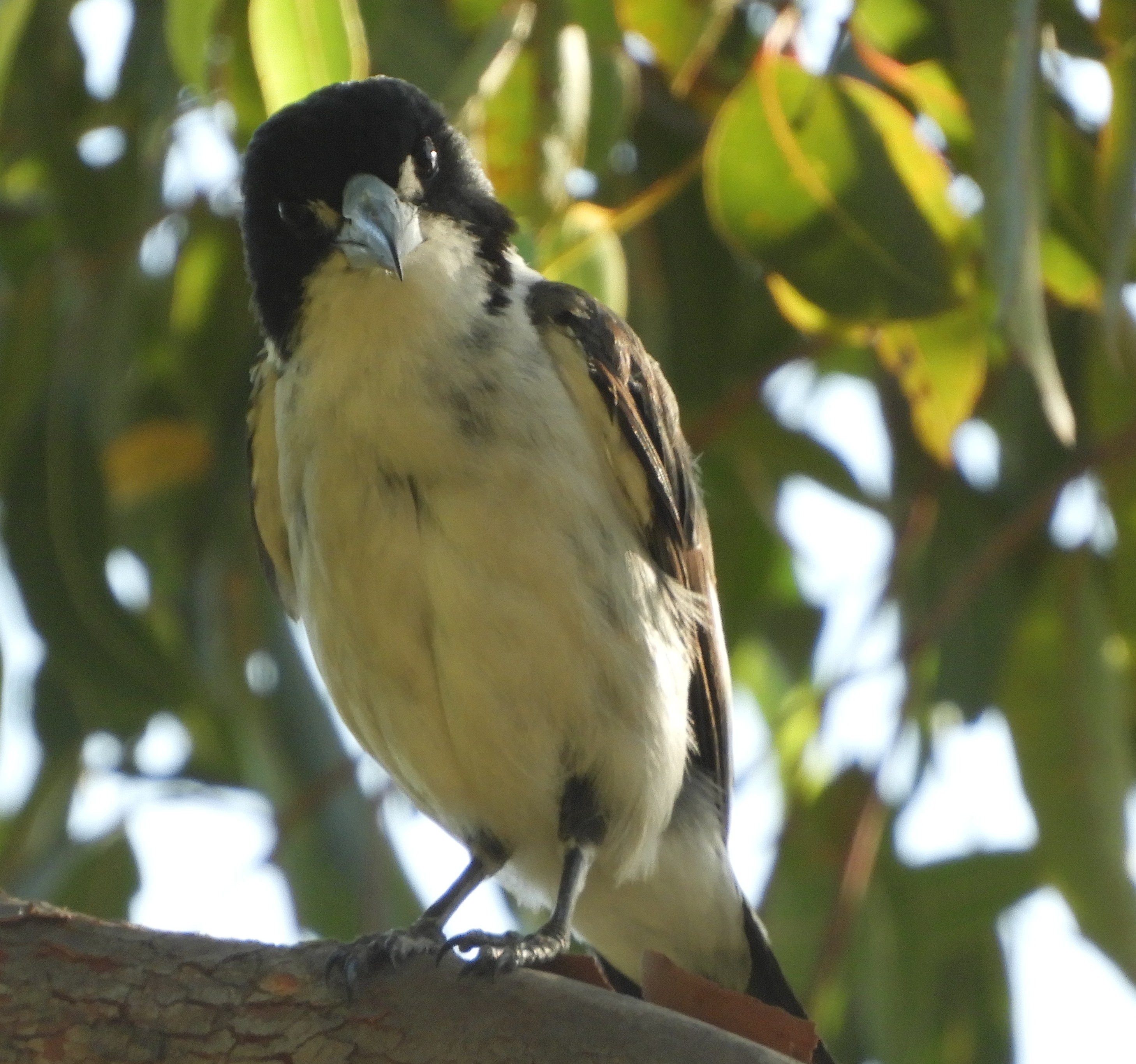
A full-frontal gaze shows off the white patches (lores) in front of its eyes:
A yawn shows its tongue off nicely:

Here’s a profile to close the post. The hook on the end of the beak is for stabbing prey, which the butcherbird then hangs on a branch or a fence until it’s ready to eat:
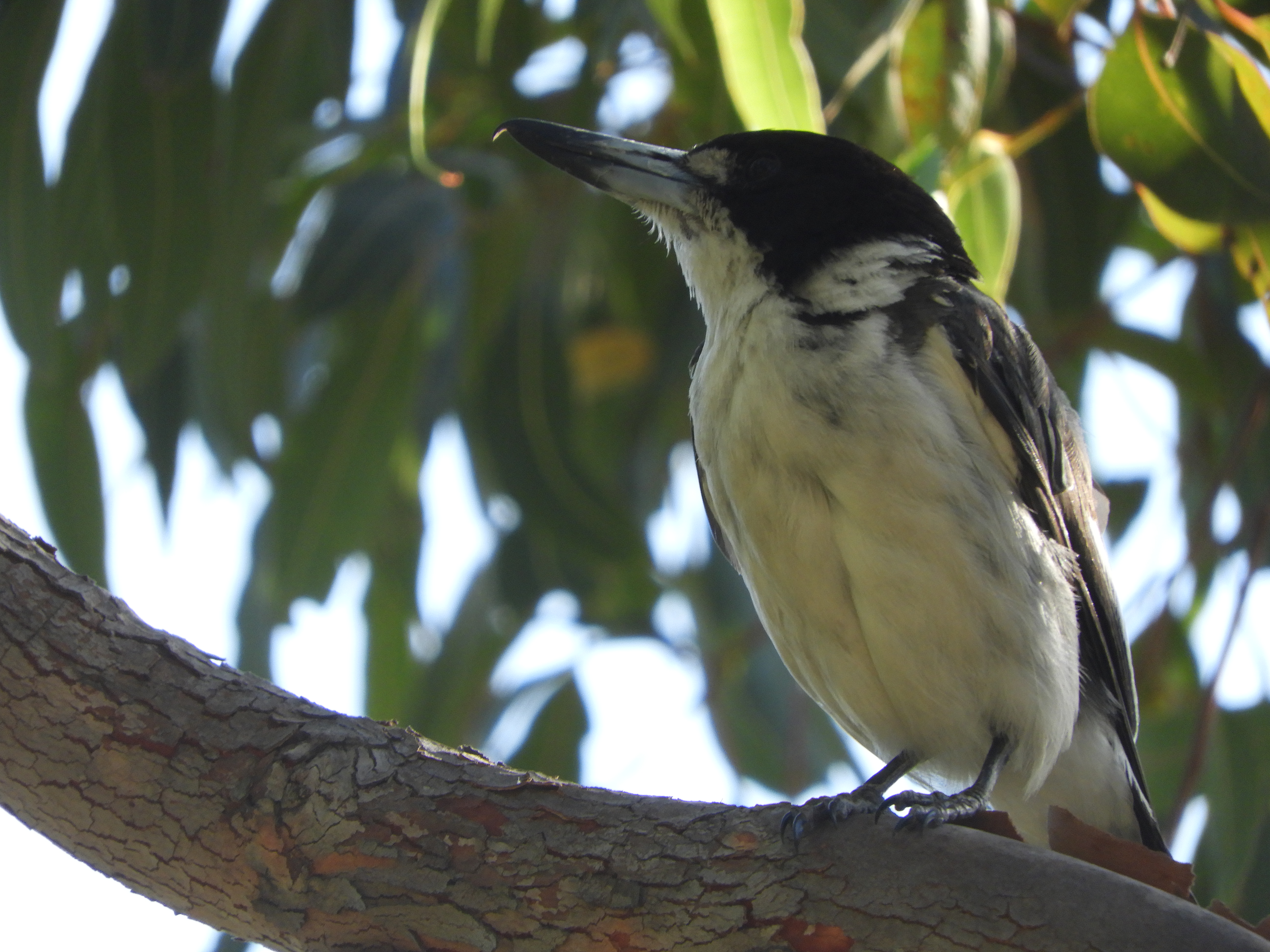
Common name: Grey Butcherbird
Scientific name: Cracticus torquatus
Approximate length: 30 cm
Date spotted: 5 January 2019 (Summer)
Location: Allambie Heights, New South Wales, Australia
Growing up – juvenile Powerful Owls near Sydney
Two months ago I spotted a family of Powerful Owls in Manly Dam National Park, near Sydney. Last week I spotted two of them again in the same area of bush. Given their fluffiness, I think these are the two juveniles of the family.
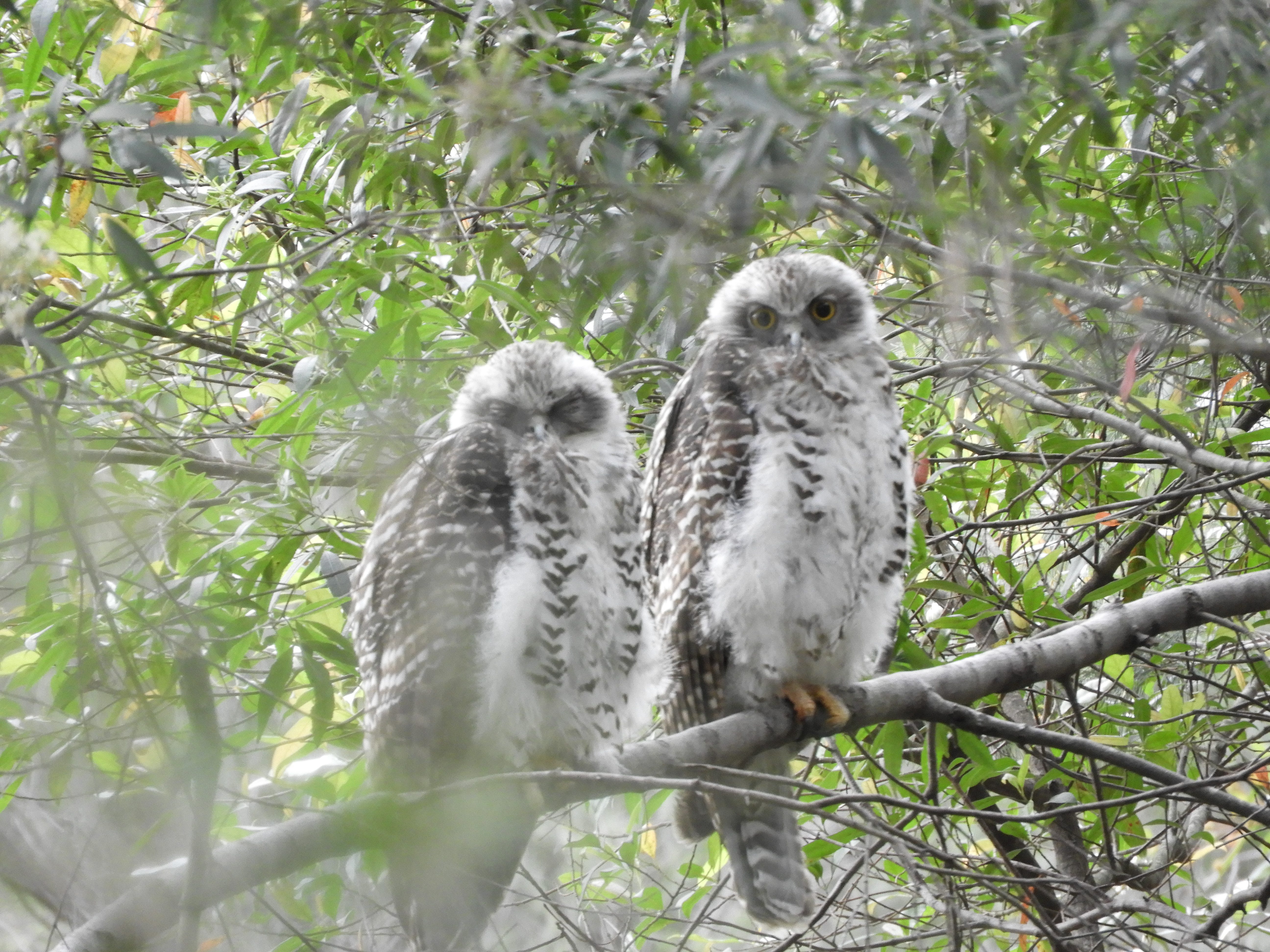
This is what the scene looked like without my camera’s powerful 60x zoom. If you look carefully, you can just make out the two owl-shaped dots in the centre of the picture:
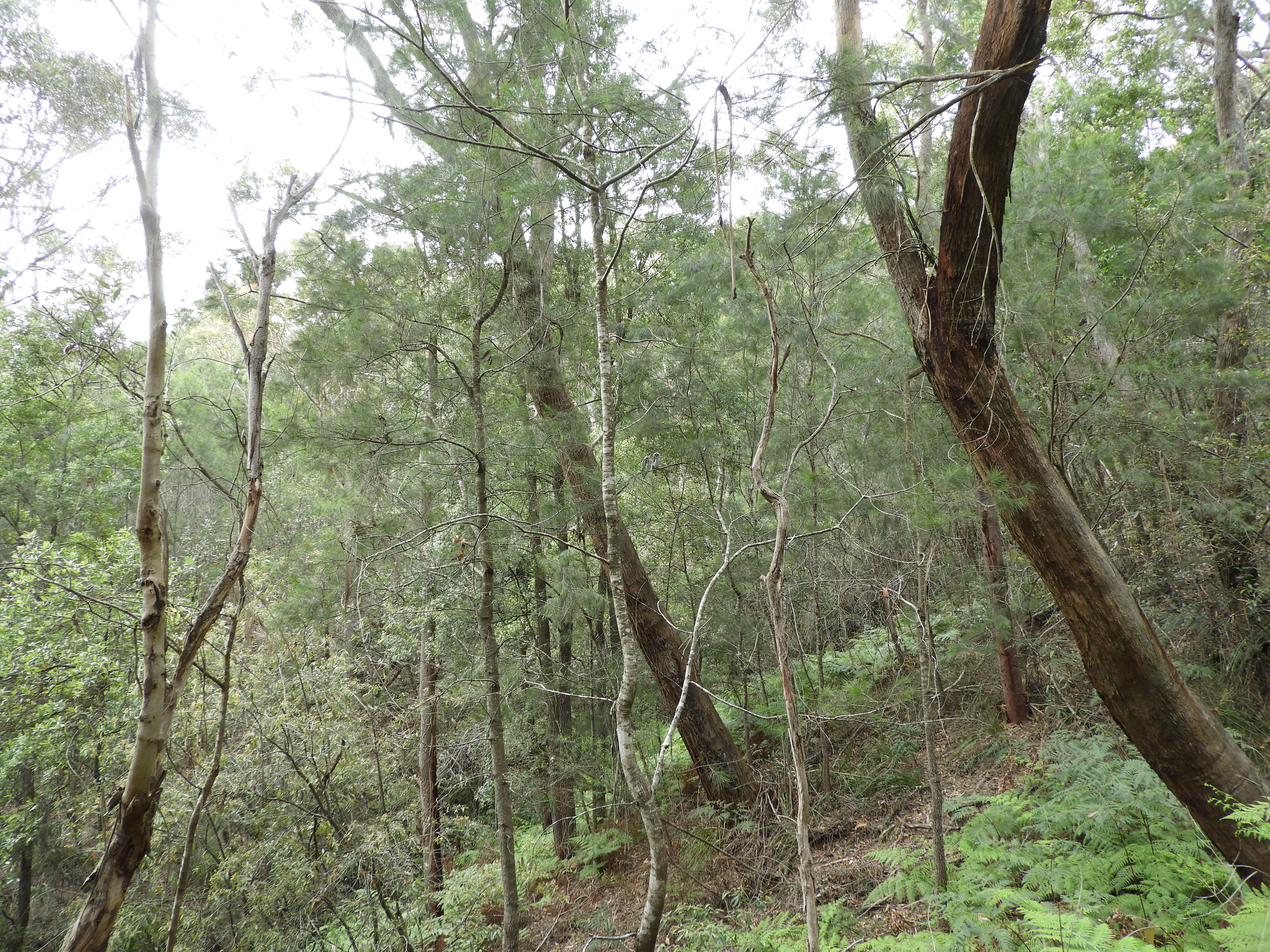
Below is a closer view. It seems to be usual for one bird to be awake and vigilant while the other sleeps:

In this video, the awake owl blinks a slow, wise blink and wiggles its head from side to side in that endearing yet terrifying manner they have. A little later, the call of a passing Currawong attracts the owl’s attention:
Common name: Powerful Owl
Scientific name: Ninox strenua
Approximate length: 65 cm
Date spotted: 25 November 2018 (Spring)
Location: Manly Dam Reserve, New South Wales, Australia
White-bellied Sea-Eagle at Manly Dam near Sydney
Yesterday I spotted a White-bellied Sea-Eagle flying along the shore of Manly Dam. It flew up and down the shore a few times, and across the water, then landed at the edge of the water in a baylet, with its legs in the water.
I was on the opposite side of the dam, so I couldn’t get a close look at the bird. I did take some photos and videos, but they’re fuzzy and unsatisfactory, although they’re good enough to satisfy me about the identification of the bird. So I decided to record the sighting here, and hope I get to see this beautiful bird again soon.
Common name: White-bellied Sea-Eagle
Scientific name: Haliaeetus leucogaster
Approximate length: 85 cm. Wing span: 2.2 m
Date spotted: 22 April 2017 (Autumn)
Location: Manly Dam Reserve, New South Wales, Australia: 33°46’35.2″S 151°15’08.0″E
Square-tailed Kite at Manly Dam near Sydney
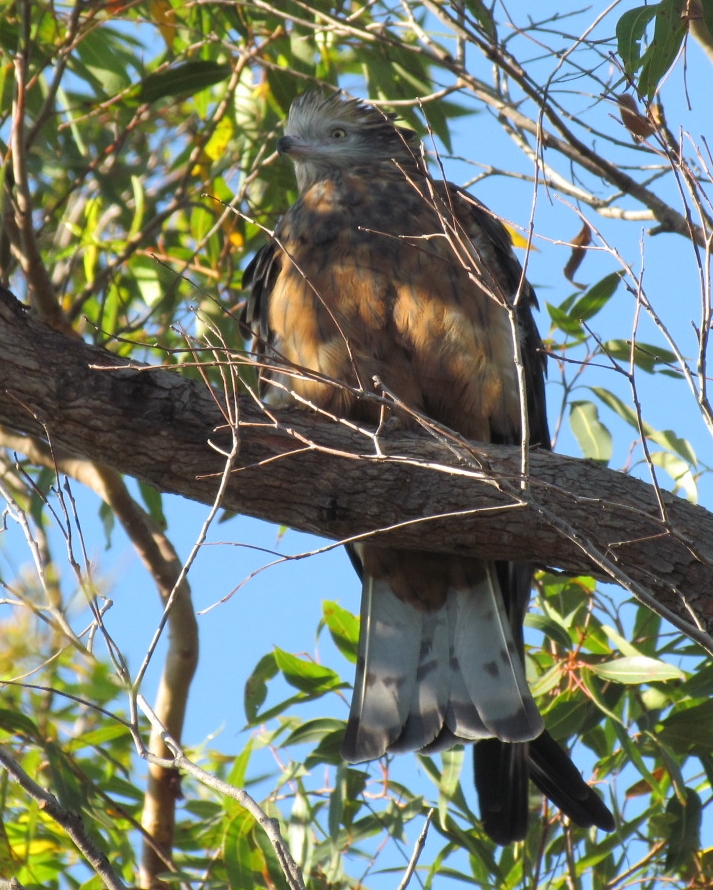
This magnificent bird was sitting quietly in a tree, occasionally squinting down at the path, when I passed by. It’s a Square-tailed Kite – a large bird, at approximately 55 centimetres from head to tail (half a metre) with a wing span of 1.4 metres.

Square-tailed Kites are classified as rare in my bird book. Also, they’re not often seen around Sydney. I identified this one by the white markings around the face, and the characteristically long wing tips. When folded, they’re significantly longer than the tail, as you can see in the photo below:
This video shows the bird having a good grooming session, feathers flying:
In the next video, the bird moves its head back and forward in a slightly eery way, perhaps scanning for prey:
Common name: Square-Tailed Kite
Scientific name: Lophoictinia isura
Approximate length: 55 cm. Wing span: 1.4 m
Date spotted: 15 April 2017 (Autumn)
Location: Manly Dam Reserve, New South Wales, Australia: 33°46’35.3″S 151°15’13.3″E
Funny-faced kookaburra
Kookaburras are gorgeous, but sometimes they can look a little goofy.

Here’s the whole bird:

Common name: Laughing Kookaburra
Scientific name: Dacelo novaeguineae
Approximate length: 47 cm
Date spotted: 6 August 2016
Season: Winter
Location: Allambie Heights, New South Wales, Australia
Latitude/longitude: 33°46’55.4″S 151°15’10.3″E
Juvenile Powerful Owl with two adults
Today I went back to a spot in the bush where I’ve seen a Powerful Owl a few times. This time, there were three owls, one of them a juvenile: white and fluffy, with dark patches around its eyes. It heard me, and checked me out:

It’s hard to get a good day’s sleep when you’re an owl. Listen to all the noise they have to put up with from the other birds:
Here’s a still photo of the three owls:
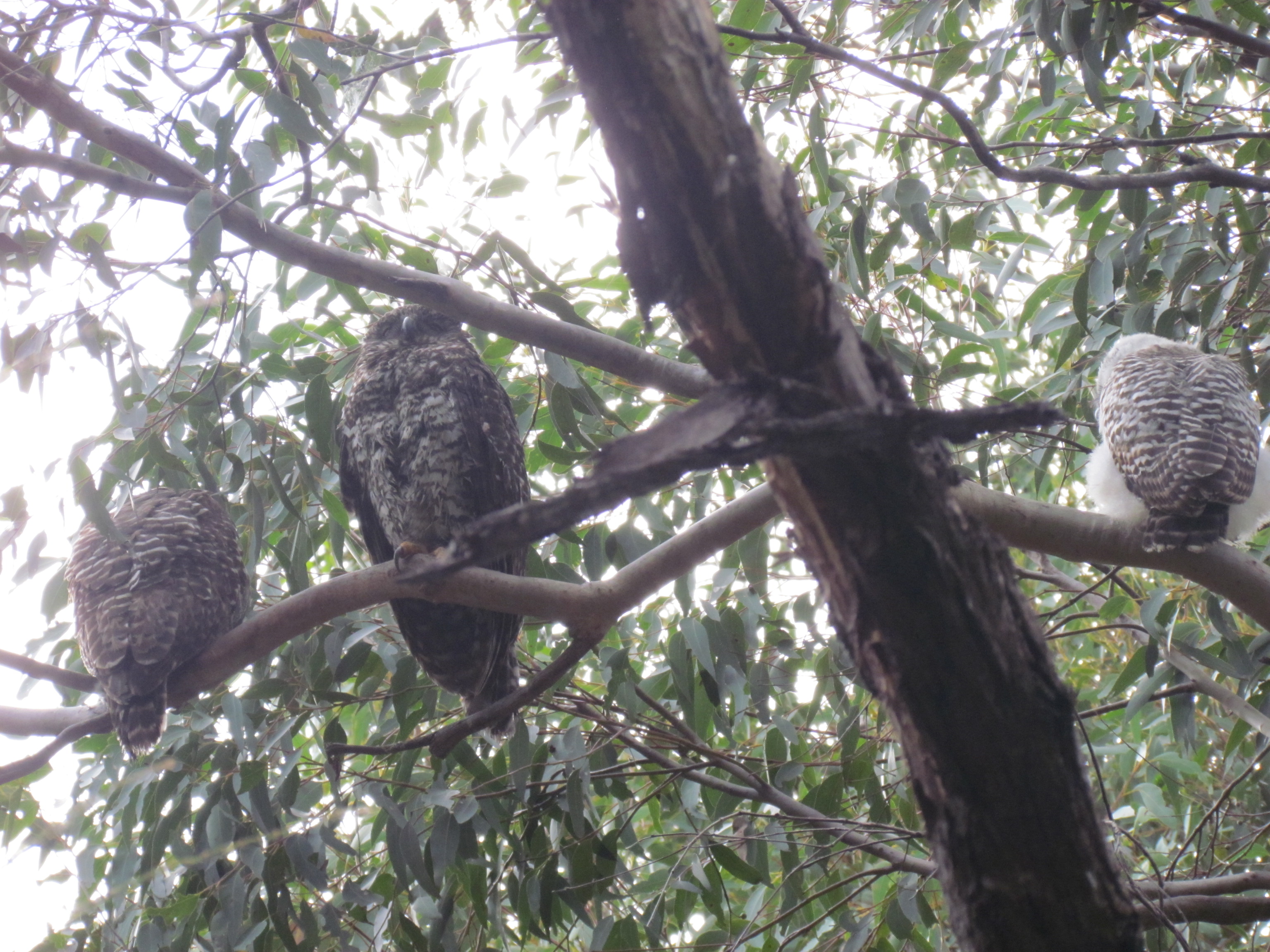
And here’s a rear view of the juvenile:

Common name: Powerful Owl
Scientific name: Ninox strenua
Approximate length: 65 cm
Date spotted: 6 October 2014
Season: Spring
Location: Manly Dam National Park, New South Wales, Australia
Latitude/longitude: 33°46’51.0″S 151°14’52.1″E


